The Rivian R1S is Rivian’s bigger electric SUV with three rows of seats. The host says it costs a lot more and is much larger than the R2, which is why the R2 is meant to appeal to more people.
The Rivian R1T is Rivian’s electric pickup. The host brings it up to explain that the R2 is aimed at people who like Rivian but don’t want a truck or a very large vehicle.
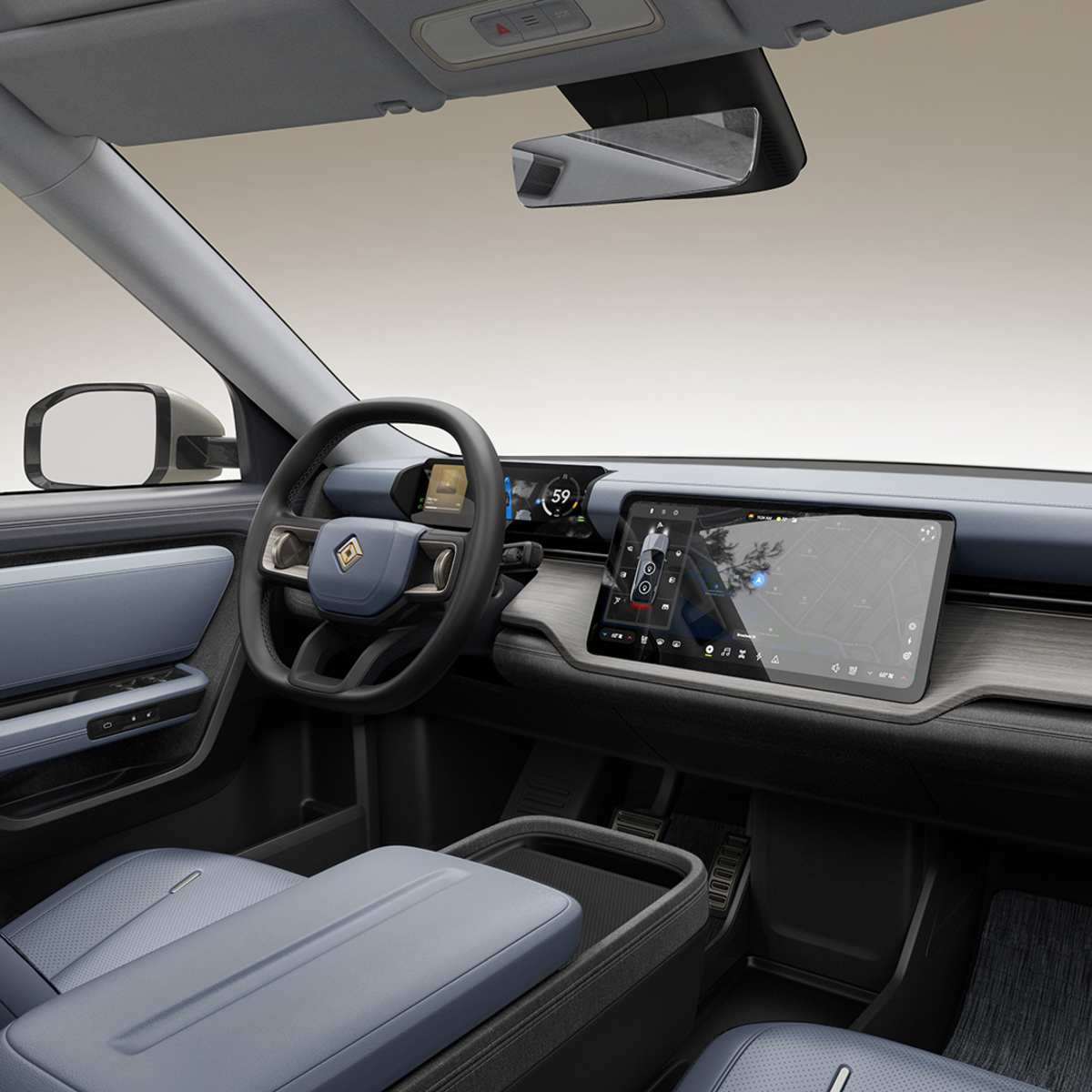
The Rivian R2 is an electric SUV that’s meant to be easier to buy than Rivian’s bigger vehicles. The host says it’s about the same size as a Tesla Model Y and is aimed at people who want an EV but not a huge, pricey SUV.
“Holds its value” means the car doesn’t lose its resale price as quickly as others. The host is saying the R1S has been keeping its value well, so you don’t see many heavily discounted used ones.
A “launch model” is the first version of a new car that goes on sale. The host says the first R2 version starts around $60k, with cheaper versions coming later.
The host is comparing the R2’s target buyers to people who might shop a Toyota adventure SUV instead of an EV. It’s meant to show the R2 isn’t only competing with electric cars.
The host brings up the BMW X3 as another type of SUV shoppers might choose instead of an EV. It’s used to show the R2 has to win over people who are considering luxury gas SUVs too.
Term
drive it for half an hour
This is basically a short test drive—just enough time to get a first impression. It’s not a long-term ownership test, but it can still help you judge how the car feels.
HUD means “heads-up display.” It shows important info on the windshield so you can keep your eyes on the road instead of looking down at the dashboard.
The Tesla Cybertruck is Tesla’s very unusual-looking electric truck. The host brings it up to compare marketing strategy: Tesla went for a dramatic, distinctive design, while Rivian is portrayed as taking a more gradual path with a smaller, cheaper model.
The Rivian R1 is Rivian’s earlier, bigger electric vehicle. The host’s main takeaway is that it can go a long way because it has a big battery, but it’s also very heavy, which hurts efficiency and charging performance.
“Overengineered” means the car has more complicated stuff than it really needs. In the example the host gives, that extra complexity can add weight and make the car less efficient.
“Software-driven” means the car uses software to control and coordinate lots of its systems. The host’s point is that newer cars are better at having different parts work together through electronics.
Here “efficiencies” means ways the car uses energy more effectively. Less wasted energy can translate into better range and overall performance from the battery.
A “steep learning curve” means a new company has a lot to figure out quickly. In car terms, that includes making the cars well and supporting customers as sales grow.
“Make or break” means this product could decide whether the company succeeds or fails. The hosts are saying Rivian R2 is crucial for Rivian to keep going.
Tesla’s Model Y is one of the best-selling electric SUVs. The hosts mention it to show how hard it is for a newer company to sell at the same huge numbers.
The Toyota RAV4 is a very common, popular SUV. The hosts are saying Rivian needs to attract people who already like a mainstream gas SUV, which is a tough challenge.
The Tesla Model 3 is an all-electric car that’s shaped like a sedan. It’s known for being a popular early EV choice. The podcast brings it up to describe the type of people who bought it when it first became available.
Lucid is an electric car brand. In this segment, it’s brought up mainly as a comparison point for how clearly the brand’s identity comes across to buyers.
All-wheel drive means the car can send power to multiple wheels. That helps it grip better on wet or snowy roads, which is why the host calls it an all-weather vehicle.
Ground clearance is how much space there is between the road and the bottom of the car. More clearance can help you avoid hitting bumps, curbs, or rough patches.
Air suspension is a type of suspension that can change how high the vehicle sits. Raising it helps with rough roads or snow, and lowering it can make the ride feel more normal on regular streets.
A Bluetooth speaker is a wireless speaker that can play audio without cables. The host says some Rivian models have a removable one in the center console, but the R2 is expected to skip it to save cost.
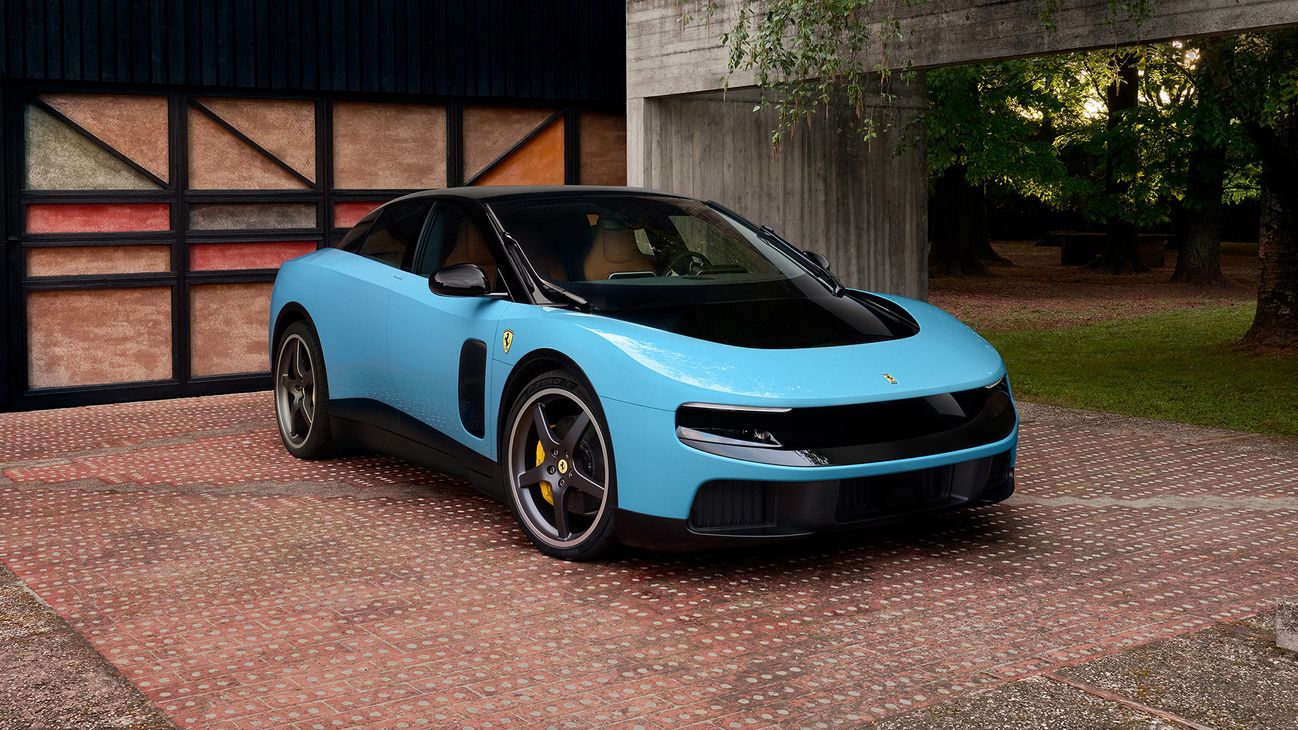
The Ferrari Luce is a car that the podcast talks about mainly from a design point of view. It’s being discussed to explain the ideas behind how it looks and what the designers were aiming for. The focus is on the design process rather than basic driving details.
Wireless phone charging charges your phone without plugging in a cable. It works best when the phone sits in the right spot, which is why alignment matters here.
MagnaSafe is a wireless phone charger design that helps keep your phone lined up. Because the phone stays in the right position, it’s more likely to charge every time.
The idea here is that if a company tries to save money, it shouldn’t do it on the parts you touch all the time. If it does, the car can feel lower quality even if everything else is okay.
“Long range” usually means the EV version is set up to go farther on a single charge. Here, they’re comparing the long-range model’s range to a shorter-range version.
Rear wheel drive means the power goes to the back wheels only. It can be a bit more efficient, but it may not grip quite as well as an all-wheel-drive setup in bad weather.
“Standard range” is the cheaper EV version that’s designed to go a shorter distance on a charge. They mention it uses a smaller battery compared with the long-range model.
Term
0 to 65.9 seconds
They’re quoting a time-based acceleration number to show how quickly the car gets up to speed. The transcript cuts off the exact speed target, but the idea is comparing different versions’ quickness.
Term
275
The “275” number is the estimated distance this EV version can drive on a charge. It’s meant to help you compare range between the different trims.
Aerodynamics is how the car’s shape affects how easily it moves through the air. If a car is more slippery through the air, it uses less energy and can drive farther on the same battery.
The battery is what stores the electricity for an EV. A bigger battery can usually go farther, but it can also make the car heavier and more expensive.
GM is a major automaker. In this discussion, the host is basically saying that some companies try to get more EV range by just putting in bigger batteries, which can make the car heavier and pricier.
Alloy wheels are wheels made from a lightweight metal mix. The host is saying the wheel design can be shaped to help air flow better around the car, which can improve efficiency.
A compromise means you can’t optimize everything at once. The host is saying the vehicle has to balance looks and big wheels with the need to be efficient so it can get more range.
Price point just means the price level where enough people will actually buy the car. The host is saying the design has to be efficient enough to meet range goals without making the vehicle too expensive.
Autonomy means how much the car can drive by itself. The more autonomy a system has, the more it tries to handle things like speed and lane changes without you doing everything.
Solid-state is a type of battery design that could be safer and store more energy than today’s common batteries. The host is saying people talk about it, but it’s not clear yet when it will be widely available.
Car
Rivian
Rivian is an electric vehicle company. Here, they’re mentioned because they’re working on software that aims to make the car drive more on its own.
RJ Scaringer is a key executive at Rivian, described here as running the company. The host uses him to connect Rivian’s leadership mindset to the company’s focus on autonomy and advanced technology.
FSD stands for Full Self-Driving. It’s Tesla’s software that tries to help the car drive more on its own, like handling traffic and lane changes, but you still have to stay alert and ready to take over.
A “confidence point” here refers to the system deciding it’s sufficiently sure about what it sees and predicts—so it allows more driver inattention or more automated behavior. As the software improves, the threshold for that confidence can change, which is why the speaker says it’s “less sensitive” now.
“Full self driving” is an advanced driver-assist system that tries to do a lot of the driving for you. Even when it’s on, you still have to watch the road and be ready to take over.
“Tesla plug” means the connector type Tesla uses for charging. The big deal is that other brands are starting to use the same connector so their cars can use Tesla’s chargers more easily.
Term
Nax North American Standard
“Nax North American Standard” appears to be a mis-transcription of NACS (North American Charging Standard), the connector standard associated with Tesla’s charging ecosystem. The point is that automakers are aligning to a common standard to reduce friction for drivers and improve charger compatibility.
Burn rate means how quickly a company is running through its money. If it’s high, the company may need to sell cars successfully sooner or find more funding.
Rivian R3 is another future electric Rivian model. The host says it’s designed to look like a classic compact car (like a Mk1 Golf), which they think could help it attract more buyers.
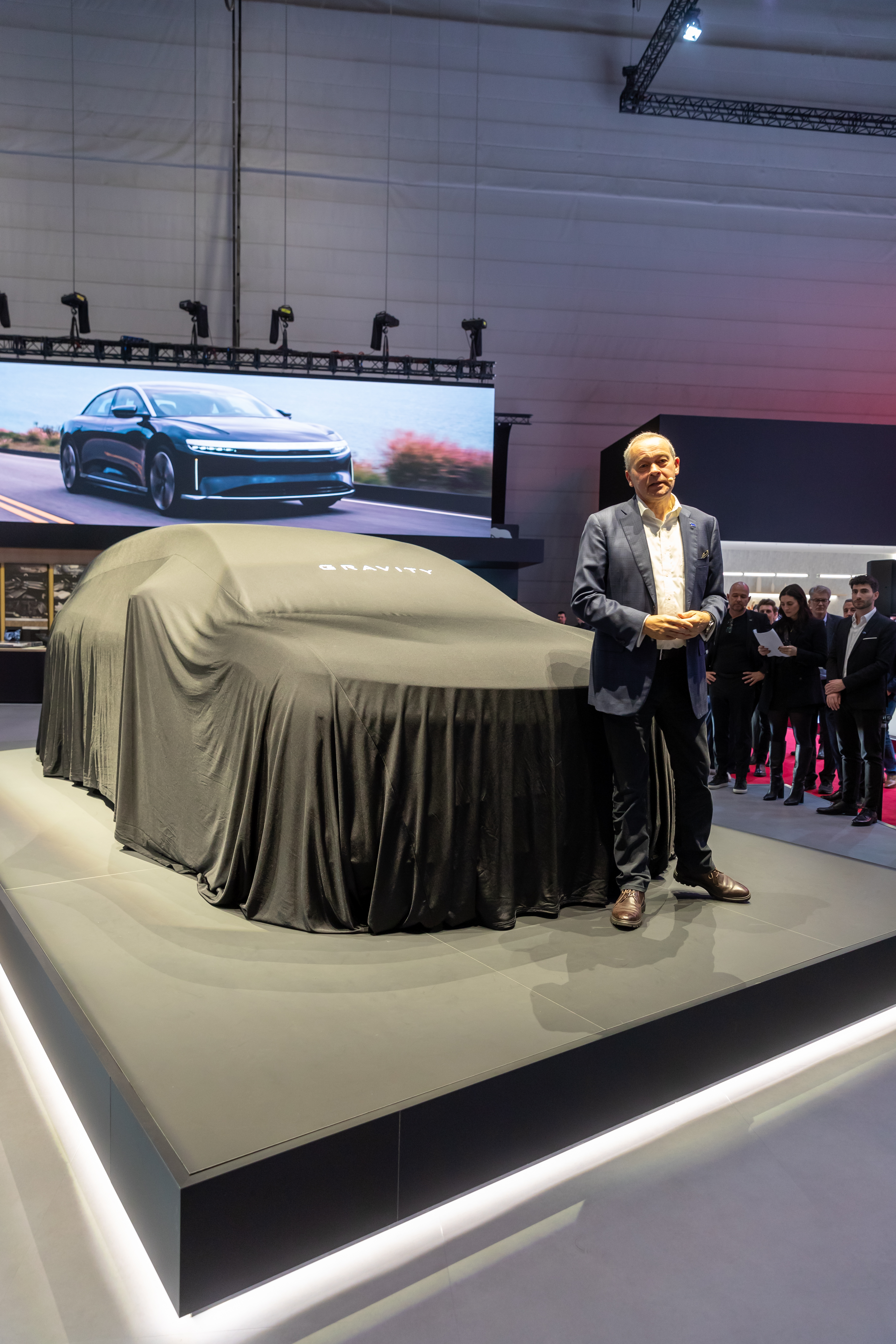
Lucid Gravity is Lucid’s electric SUV. The host thinks it didn’t become as popular as it could have because it arrived before it was fully ready, so early reviews and owner experiences weren’t strong.
Lucid Air is Lucid’s main electric sedan. The host is saying Lucid had problems with the Air too, and that early reviews from car writers and actual owners didn’t go well enough.
A plug-in hybrid is a car that uses both gas and electricity. You can charge it by plugging it in, and it can often drive a while on electric power before the gas engine takes over.
This is a Lexus RX that’s a plug-in hybrid, meaning it has both a gas engine and an electric system. You can charge it from a plug, and Lexus says it can drive about 38 miles on electricity before the gas engine helps again.
“Pure electric” means the car is running on electricity only, using the battery. In a plug-in hybrid, once the battery gets low, the gas engine usually helps or takes over.
A 12-volt outlet is the small power socket you might use for accessories in a car. It’s generally not meant for charging a plug-in hybrid the way you’d use a normal home outlet.
A 120-volt outlet is a normal household plug. Charging on it is often slower than faster charging setups, so you may need to leave the car plugged in longer to get enough range.
The Lexus ES is a luxury sedan from Lexus. In this episode, they’re talking about a new version that can be electric or hybrid, and it’s priced close to the Lexus RX SUV.
The Lexus RX is a luxury SUV. It’s popular because it’s comfortable and easy to live with, and Lexus offers different versions with different types of electric help.
The Mercedes-Benz GLE is a luxury SUV. It’s designed to be comfortable and upscale while still being practical for everyday use. The podcast mentions it to compare the size category of the car being discussed.
Underpinnings are the car’s main “foundation,” like how the body and chassis are built. When a car gets new underpinnings, it usually means it’s a bigger redesign than just cosmetic changes.
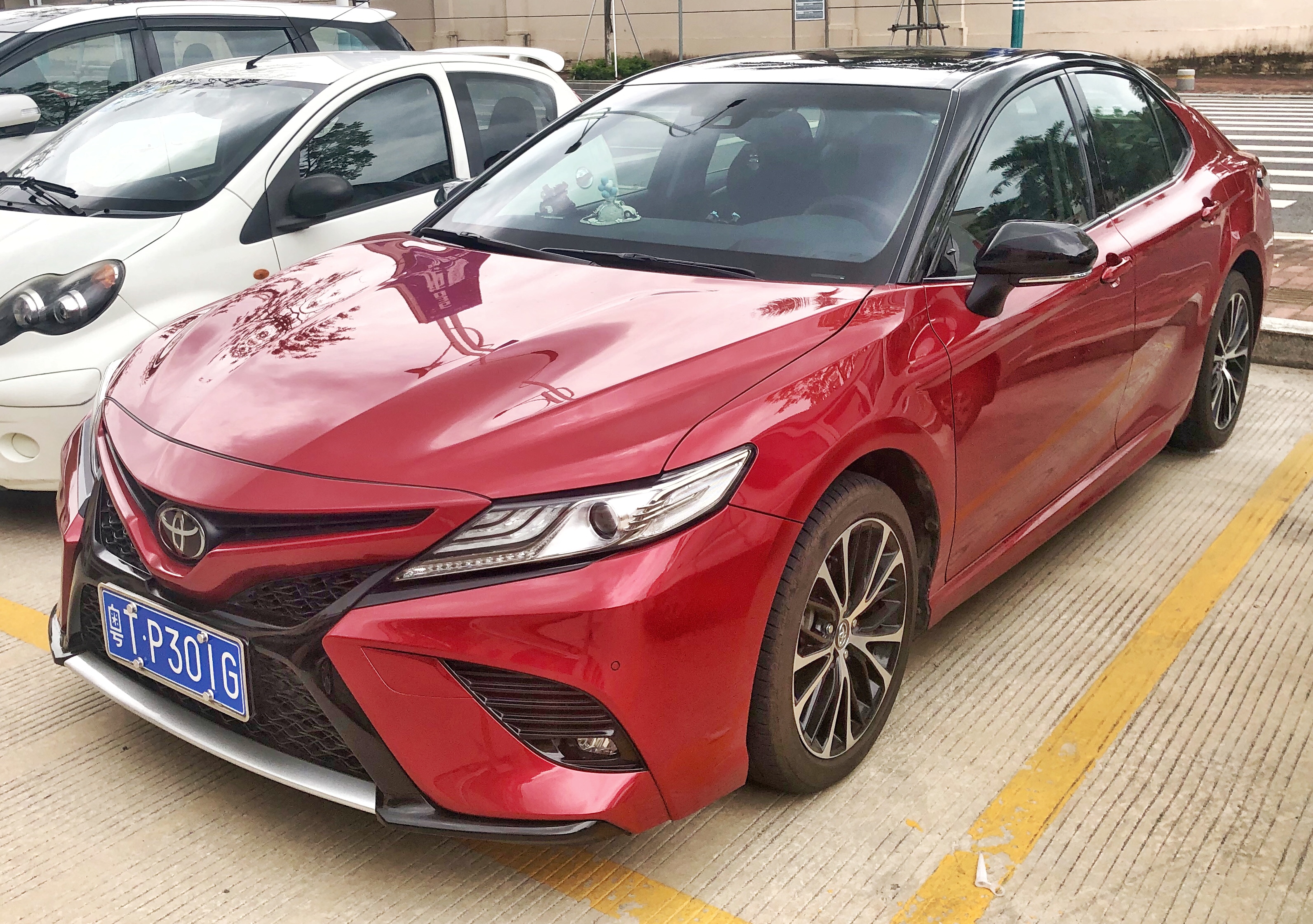
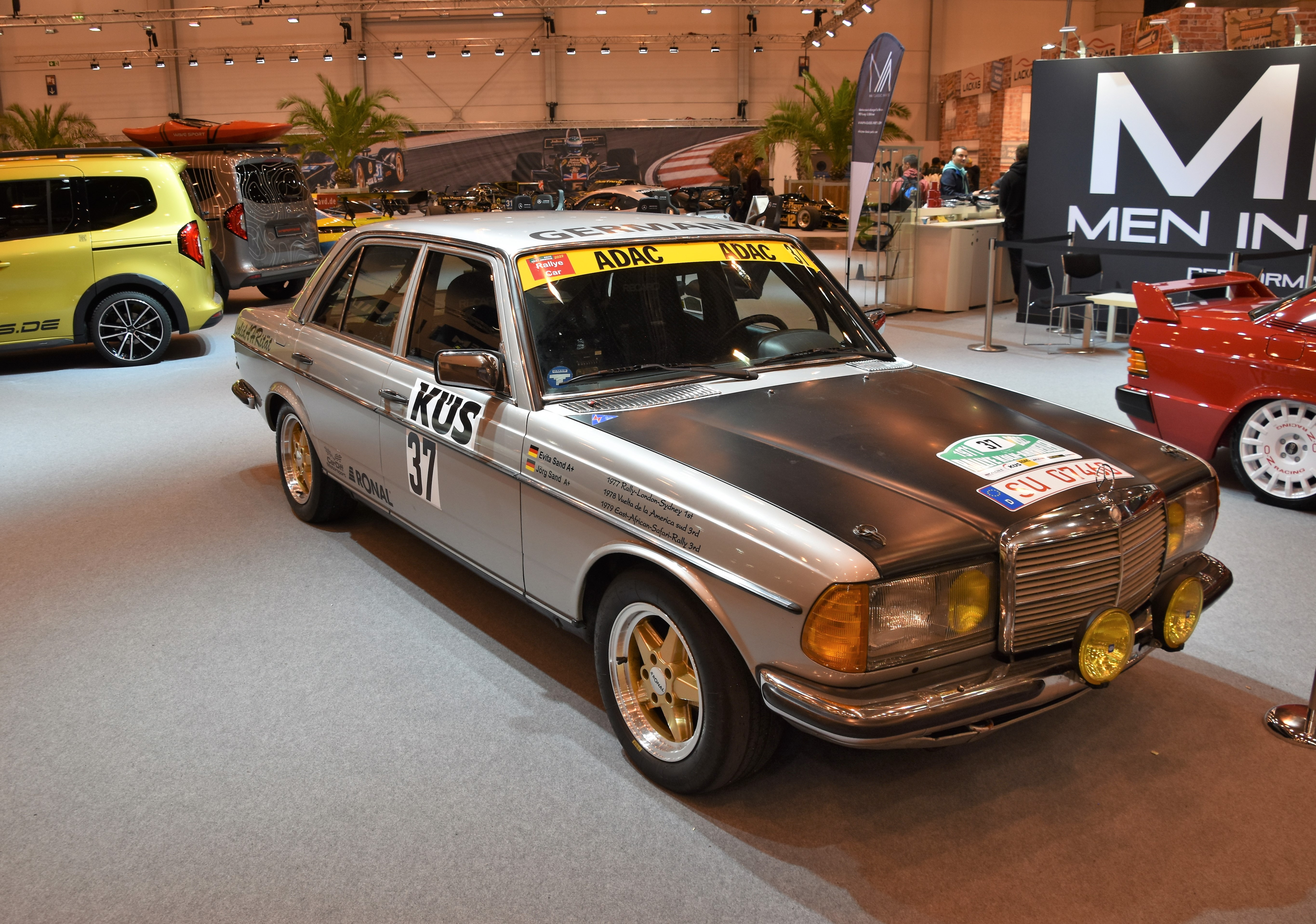
The Toyota Camry is a midsize sedan meant for everyday driving. People choose it because it’s comfortable and straightforward to own. The podcast mentions it as a comparison point for a more upgraded version of that kind of car.
They’re talking about sedans possibly becoming popular again. The reason they give is that SUVs have been dominating, but efficient hybrid or EV options could make sedans more appealing.
Front-wheel drive (FWD) means the engine’s power is sent to the front wheels, which handle both steering and traction. The hosts mention an ES EV setup that’s FWD, contrasting it with an all-wheel drive version.
The Hyundai Ioniq 5 is an all-electric SUV. It’s meant to be a practical EV you can use day to day. The podcast mentions it while comparing different electric options and what people might want from them.
The Hyundai Ioniq 9 is a fully electric family SUV with three rows. The host likes it for long-distance driving because it can go roughly 300 miles on a charge and has a roomy, comfortable interior.
The Hyundai Palisade is a big family SUV with three rows. “Calligraphy” is the nicer, more premium version, and the host thinks some buyers prefer it over the electric Ioniq 9 because it can be easier to live with financially.
The Kia EV9 is an all-electric, three-row SUV. The host is saying the Ioniq 9 feels like a similar vehicle concept—just with different styling and interior choices.
A lease is like renting a car for a few years with monthly payments, and you usually have rules like mileage limits. The host is saying leasing can make the Ioniq 9 more appealing right now.
Depreciation is how much the car’s value goes down as time passes. The host is saying people may worry less about losing money with the Palisade than with an EV.
Captain’s chairs are separate seats in the middle row instead of one long bench. They usually feel more comfortable and can make it easier for people to get in and out of the back row.
The host is talking about mirror cameras—cameras that replace or supplement the mirrors. Instead of looking at the mirror directly, you see the camera image on a screen.
Term
US legislation
The host is saying US rules don’t allow certain camera-mirror setups that other countries can have. So the car has to be modified for the US.
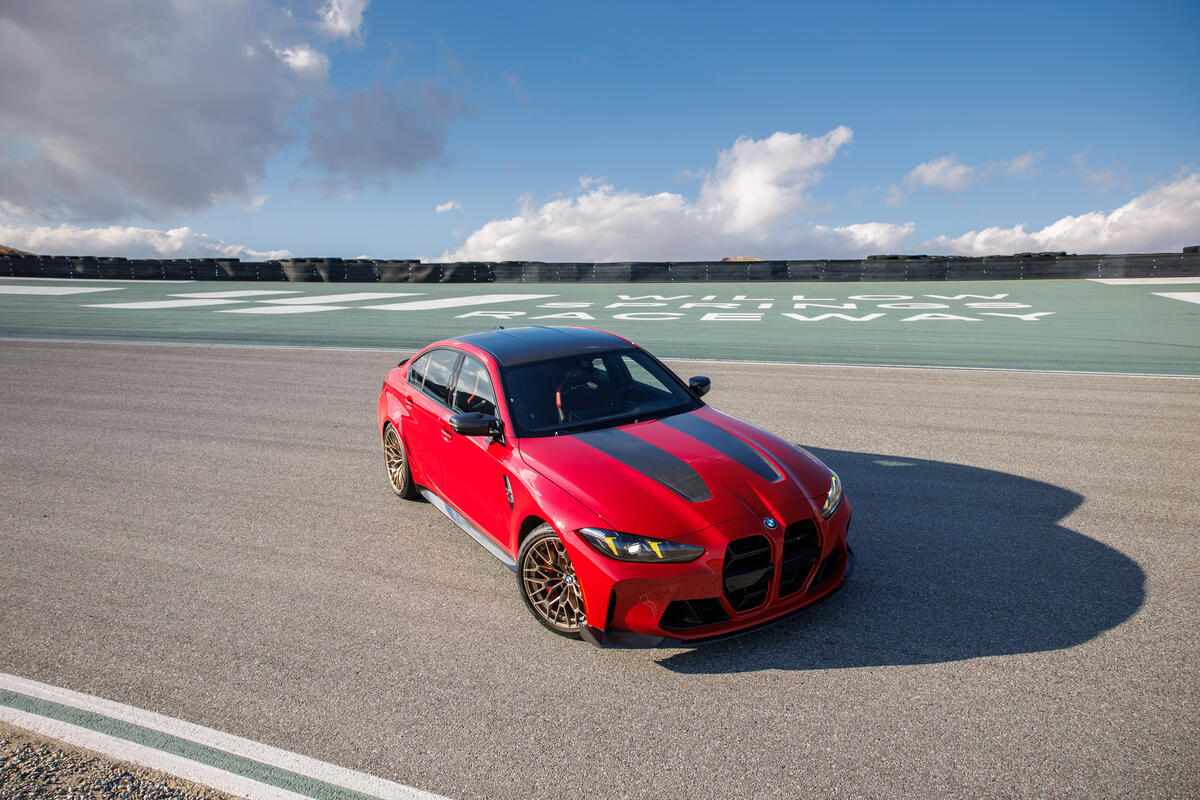
The BMW M3 is BMW’s high-performance model that’s built to drive really well, not just look sporty. Here they’re talking about a new BMW M3 concept and how BMW plans to offer both electric and gas versions next.
Le Mans is one of the most famous car races in the world, known for long endurance racing. Car companies often use it as a big moment to show off new performance cars and tech.
An electric version is a car that uses electric motors for power instead of a gas engine. Here they’re saying the electric BMW M3 would use multiple motors and smart control to manage the car’s behavior.
Four electric motors usually means the car can control power to each wheel separately. That can help the car accelerate harder and stay more stable when the road grip changes.
A turbocharged six-cylinder engine is a gas engine with six cylinders that uses a turbo to make more power. The turbo helps it feel stronger without needing a bigger engine.
The BMW i3 is a small electric car. It was one of BMW’s earlier EVs and is known for having a unique design. The podcast mentions it while talking about BMW’s electric lineup and what models are expected.
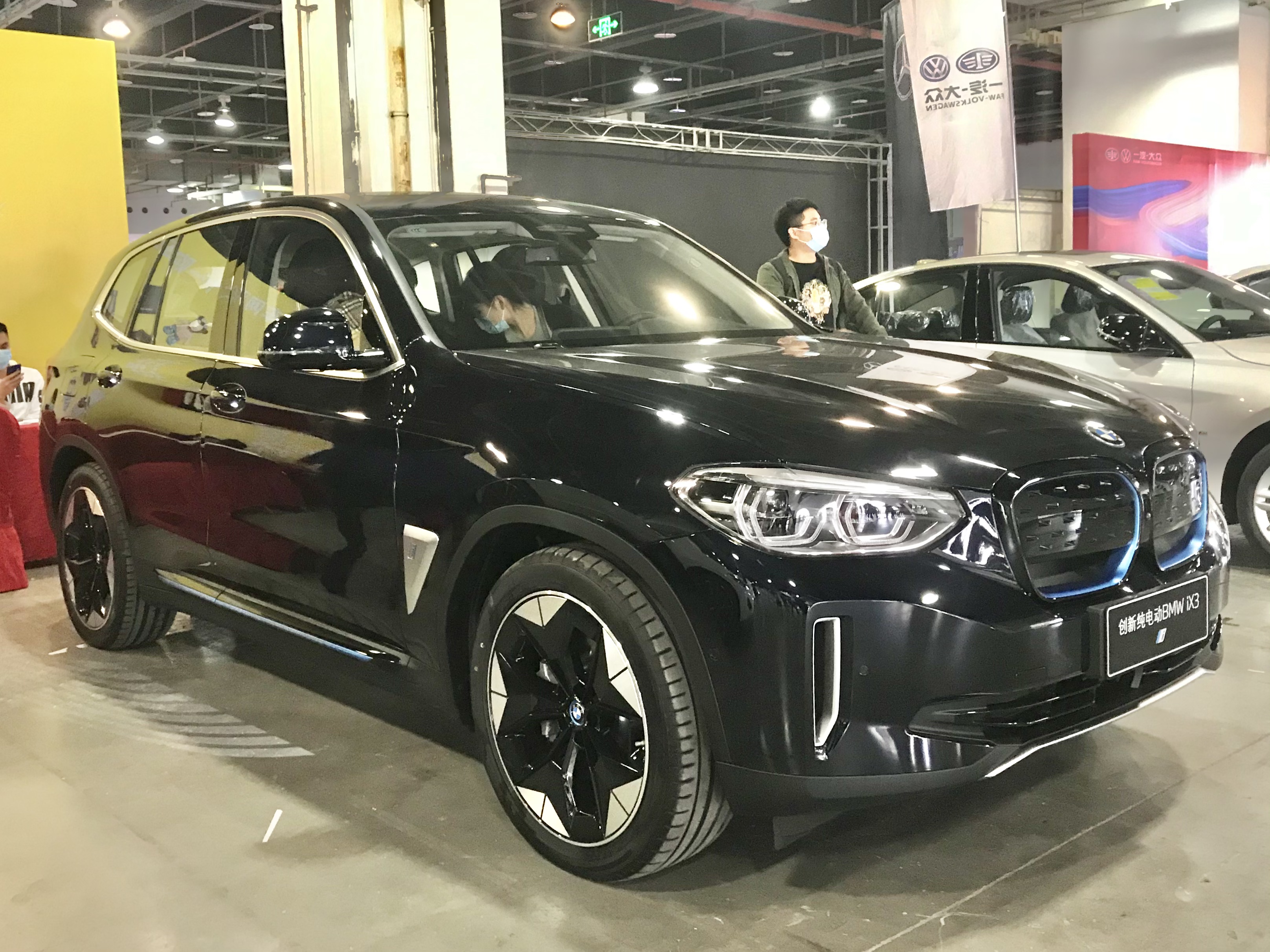
The BMW iX3 is an electric SUV. It’s meant to be a practical size for everyday driving, but powered by electricity. The podcast mentions it to talk about BMW’s plans for electric SUVs.
The BMW M1 is an older, very special BMW supercar that’s known for its distinctive look and racing history. The host is saying the new BMW M3 design reminds them of that classic BMW vibe.
The BMW 8 Series is a more upscale, long-distance BMW model line. The host is saying the new BMW M3 concept looks like it borrows some styling cues from that older 8 Series era.
A ducktail spoiler is a rear wing shape that sticks up a bit at the back. It helps the car feel more planted at higher speeds by using airflow to push the tires down.
A heat extractor is a vent that helps get hot air out of the car. Even electric cars need cooling for the battery and electronics, so vents can help keep temperatures under control.
Downforce is the “pressing down” effect from the car’s shape and airflow. It helps the tires grip the road better, especially when you’re going fast or cornering.
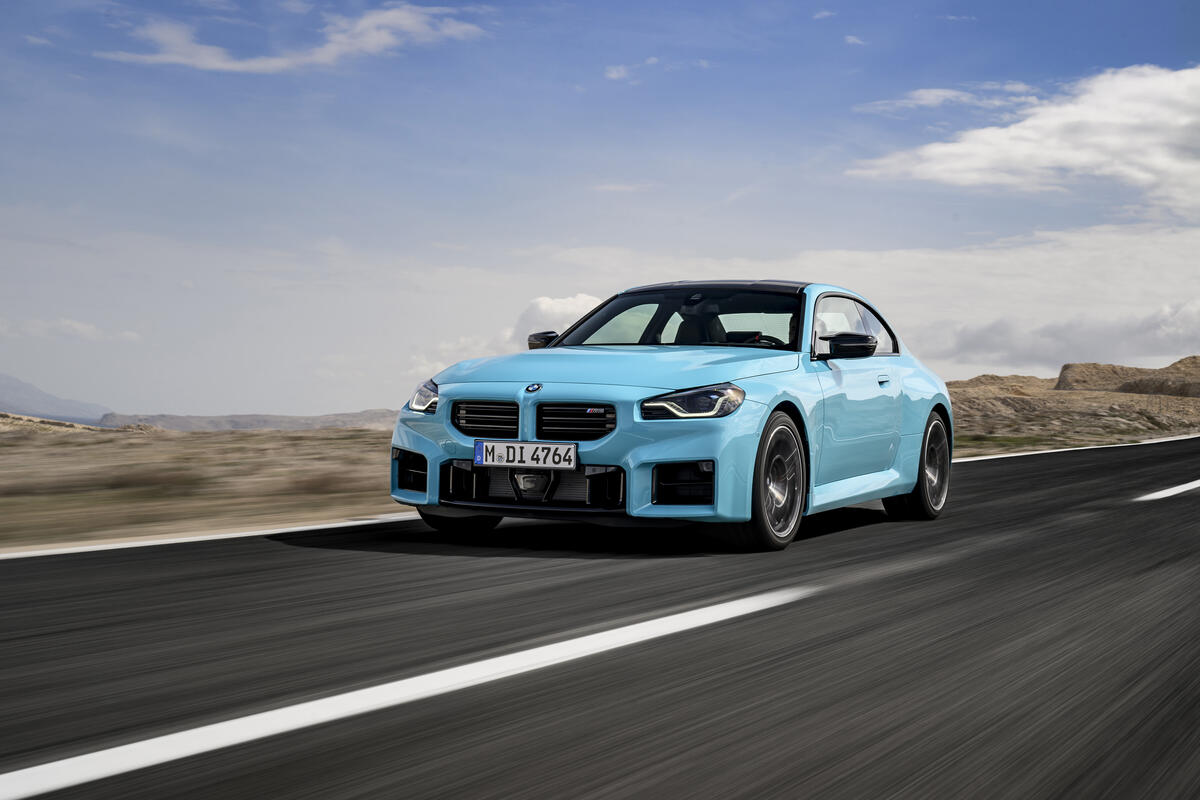
The BMW M2 is a small, sporty performance car. It’s designed to feel fun and quick to drive, with a more compact shape than bigger performance BMWs. The podcast brings it up because the car being discussed seems to share some of that look, even if it feels different.
Bucket seats are shaped to “hug” you more than regular seats. They help keep you in place during aggressive driving, and they’re common in race-inspired cars.
A trapezoidal screen is just a dashboard display that has an angled, non-rectangular shape. It’s a design choice that changes how the cockpit looks and where the information sits.
A rev counter tells you how fast the engine is spinning, usually shown as RPM. EVs don’t work the same way as gas engines, so having a rev-style gauge can feel a bit out of place.
Neue Klasse is BMW’s new approach for future cars, including how they’re designed. The podcast mentions it because the speaker thinks the new design direction looks good. It’s more about the platform and styling direction than one specific vehicle you can buy today.
A “sleeper” is a car that doesn’t look like a super-fast performance car, but it actually is. The speaker is saying the M3s they’re talking about weren’t really that kind of disguise—they were more understated than flashy.
The BMW 3 Series is a compact luxury car. It’s often talked about because it’s meant to drive in a sporty way while still being practical. The podcast brings up an older 3 Series to reference the kind of look or vibe people remember.
The BMW M5 is a powerful, performance-focused luxury sedan. It’s meant to be fast and exciting to drive, not just comfortable. The podcast mentions it to describe how its performance can feel manageable rather than overly complicated.
“Goat modes” is a slang way of referring to selectable drive modes on off-road vehicles (like sand/rock/trail). The speaker’s point is that too many mode choices can confuse drivers—especially when they just want the car to handle the situation without thinking.
The Ford Bronco is an SUV built for off-road driving. It’s designed to handle rough roads and trails better than many regular SUVs. The podcast mentions it because it’s being used to bring new people into off-roading.
Term
M1
On some BMW M cars, M1 and M2 are buttons that save your favorite driving settings. Pressing them lets you switch setups quickly.
The Toyota Prius is a hybrid car that became famous for saving gas. The host is using it as the first example in a long-term test of whether hybrids actually meet the official mileage numbers.
EPA is the U.S. agency that sets the official fuel-economy test results you see on labels. The hosts are saying their real-world driving often gets worse mileage than the EPA estimate.
The Honda Civic Hybrid is a Civic that uses a hybrid system to help save gas. The host is saying even with a popular hybrid like this, real mileage may not match the official EPA number.
The Ford Maverick is a small pickup truck. The host mentions it because even in a hybrid setup, the real gas mileage may not line up with the EPA estimate.
The Toyota Grand Highlander is a bigger family SUV. The host brings it up to say that real-world gas mileage for hybrids may not match the EPA numbers you’d expect.
The Hyundai Santa Fe Hybrid is a family SUV that uses a hybrid system to save gas. The host is using it as another example where real mileage can be worse than the EPA estimate.
A real-world range test tries to measure how far the car goes in everyday driving, not just in a lab. The idea is to see what you’d likely experience day to day.
That phrase is a way of describing a driving route mix: more city driving than highway. Since city driving uses energy differently (more stops), the split helps the test match how people actually drive.
LIVE
Hello, welcome to the Edmunds CarCast podcast. I'm Matt the Motorheader,
DeAndrea here with Alistair Weaver. All right, before we get into it, a word from FanDuel and
right now new FanDuel customers can bet $5 and get 150 and bonus bets if your first bet wins.
That's right, turn $5 and a 150 and bonus bets just for getting started. And when every possession
matters in the playoffs, FanDuel makes it easy to get closer to the action from player props and
your favorite stars to all the tools you need to back them up. FanDuel puts player research at your
fingertips so you can check the stats, trends, and matchups all in one place and make your picks
with confidence. It's everything you need all in one app, so don't miss your shot.
Head to FanDuel.com slash believe to get started. That's FanDuel.com slash B-L-E-A-V to get started.
It's FanDuel, play your game. Must be 21 and over and present in select states. Gambling
problem, call 1-800-Gambler. How are you doing? What's going on? All right, thanks. I didn't become a
SpaceX billionaire, so that's a bit of a shame. I'm a trillionaire, shall we say? As we record this
show, everybody else seems to have done so. It seems like a lot of people did, except us.
First day of the school holidays, so I spent the morning not really working or trying to work
and dealing with all sorts of things and made me laugh. I went into our, we have like
Edmunds executive team meeting at 11 and then halfway through the meeting, I saw somebody
else come in like bouncing a ball and I was like, yep, school holidays have started. So
if you're out there, I can feel you're paying. Yeah. All right, so quite a few things.
Quite a few things in the car world today. It seemed like it was going to be a slow week,
but it turns out there are some interesting things, especially with what you guys have been doing on
the Edmund side. But I kind of want to get into this first because I want to follow on. Well,
I want to talk about the Rivian R2 because we've had a couple of shows in the last month or so.
The interview with their CEO that you did on site with them and then touring the facility,
but now the car is out, the R2 is out. It seems to be good. The overall feeling initially is
this is actually good. This is very interesting. We like the direction this is going in.
Improvements over the larger SUV and truck, the R1S, the R1T. But you went down to the design
studio and did a walkthrough. So there's a great video on the Edmunds website. You can go through
and see that. You are there. You're hosting it. But let's talk a little bit about the R2.
Yeah, so I can now kind of come clean that. I did go down and do that video and that was a sort of
video that's actually done very well for us. There's tons of interest in this vehicle because
I think there's a lot of people who wanted a Rivian but maybe didn't want a truck. And then the R1S
is very big. It's a three row and it's also very expensive, 70, 80 grand upwards. And actually
in the EV world, it actually holds its value pretty well. So it's not even that there were
cheap examples on the used market either. The R2, a lot more accessible. It's the same size as a
Tesla Model Y to within a few inches. The launch model is about 60 grand, but there will be cheaper
versions coming. So it's going to be from about 45 to 60 plus. So kind of in that world where you've
got the, you know, the Model Y is the obvious rival. But if it's going to succeed, they're also
looking at the kind of adventure vehicle stuff. So things like Toyota's forerunner goes into there,
you know, even things like BMW's X3 from the luxury market. So they need to seduce customers,
not just from traditional EVs, but also from gas alternatives of a similar size and a similar
capability. And I can now confess that when I was down there, they said, look, you can't talk about
this right now because legal reasons, blah, blah, blah. And we're waiting for the launch. But
you know, do you fancy having a drive it for half an hour? I'd love to know what you think. So
I did take it out on the roads of California. I can probably now talk about it with impunity.
Yeah. Okay. And Nick from the team also went and drove it. I think he was in Utah, if I remember
right, Utah, Utah, Nevada, somewhere like that. And it's a nice, it's a nice car. I think it is
exactly what it needs to be. It looks like a Rivian. In many ways, I think it looks better than the R1S.
The proportions work a little bit better. Yeah. It's got a, it's got better technology than the
R1S just because we're a few years on and things have evolved and Rivian has learned a great deal.
I think it's a good size. There is plenty of space for me in the back. You know, I'm 6'4".
I can sit behind myself. It's a good size for America. Yes, it's not cheap. And there won't be
cheap lease deals on this car. So, you know, a lot of people are going to have to buy it at 50,
60,000, but again, a lot of cars are sold in that marketplace. I think it's a nice thing. It feels
like a Rivian to drive. It's not, it feels more like an adventure vehicle. You've got this very
kind of commanding driving position like Land Rover's used to have where you can see the edges of
the, you can see the edges of the HUD. It's on kind of off-roadery type tires. So, you know,
so you don't have that kind of ultimate precision that you would have a, you know, car or road
focused SUV, but it's still good to drive. It rides well. It's faster, faster than it needs to be at
the moment and there'll be slower versions coming. So, overall, I was impressed with it. And I think
what they've done well is not try too hard. It's not, it's not what Tesla did with the Cybertruck
where you thought, well, if you just produced a mid-sized truck that kind of looked a bit like
a Model Y to probably sell the bucket full. So, why did you go and do the Cybertruck? Rivian hasn't
tried to do that. They've said, we've got a good brand going here. People like us, but people can't
afford us and people want something a bit smaller. So, let's deliver that. And talking to the chief
designer, the two cars were designed, I think the R2 was actually designed before the R1. So,
this was always part of the plan. And yeah, it's a nice thing. So, some of the things that stood
out in your video to me were, just, you're right, just sort of the evolution of the R1,
where it looks very similar to the R2 and the R1, but some subtle changes on aerodynamics
to improve that. The overall build of it, lessons they've learned. Ford has spoken about this too,
like on the Mach-E, going, we overengineered. We had too much wiring. We had too much of this,
too much of that. We added weight. We added complexity. Not everything's talking to each
other electronically. Like now it's all more software driven and everything talks to each
other. So, efficiencies in aerodynamics, efficiencies in build, efficiencies in adding lightness,
as they say, gave us an overall better vehicle where it's more efficient. Because the R1
has big range with big battery, but it's massively heavy. It's not very efficient. It doesn't charge
very fast. So, they needed to make some changes to that with the R2, right? That's right. Now,
I think this is always challenge with buying the first vehicle from any brand is that there's a
steep learning curve. And even if you bring in people who've done this before in other places,
Tesla, etc., you're still quite an immature company. And Rivian still has that startup vibe
about it. They're still hemorrhaging cash. They're still putting how you cut the
accounting. They're still losing money overall. This R2 is very much a make or break car for them.
They've got significant volume aspirations, not just here in America, but also in Europe as well.
So, they are a more mature company than where they were. But this is still pretty foundational to them.
Going into Europe is a big deal. Selling at this kind of volume is a big deal because they just
haven't had to deal with those kind of pressures before. They've got to sell more vehicles,
service more vehicles. But I think the product is good. And first and foremost,
if you don't get the product right, then you forget the rest of it.
And you're talking about selling more volume. Yeah, that's significant for this company to
survive. But they still don't think they're going to go from 10,000 vehicles or 20,000 vehicles to
a million vehicles. No, that's not going after Model Y. They want like 150,000 vehicles, right?
That's right. I think the interesting is you look at the Model Y. Model Y sells
like a million. I think it kind of all flip-flops between the Model Y and the Toyota RAV4 is what's
the world's biggest selling SUV. I think the RAV4 is currently here. And so, Rivian's got
sensible aspirations. And I think they will find enough customers amongst the techie community who
traditionally looked to Tesla. They don't want to admit that because in their mind,
they need to seduced people out of a Toyota RAV4, out of a BMW X3. But I think there's enough
audience from people who bought a first-generation Model 3 or a Model Y because they were tech
forward and they wanted the cool new thing. And I think there are enough people on the
coast to sell enough vehicles to make it viable. But that's a different thing to trying to go out
there and really build something that takes people out of their gas cars. So I think it's
very interesting to see how it performs. And of course, you've got the risk that two years down
the line when those people have the car, what happens next? I mean, I know within our own company,
my boss at Edmunds has got one on order. Andy, who runs our social media, he's got one on order.
Somebody else was telling me they've got one on order. We as a business have got one on order,
but they are the audience that I'm talking about. They're coming out of Teslas. They are
comparative terms, comfortably off. And they are the natural customer. They live in LA. They
like to get a box in terms of a Rivian customer. The challenge for them will be, can you convert
in the rest of the country? So it's an intro. I like Rivian. I like the product. I think they've
done a terrific job with the brand, much more so than Lucid. I think everybody understands what
Rivian is trying to be. It's an adventure brand that's a little bit cool. I love all the roof
tents and the cooking stoves and all that malarkey. They're still leaning into some of that, but with
the R2, it's less off-roady and presumably has a more compliant suspension. They're starting to
recognize that their audience isn't really as much as they thought that get off the grid for the
weekend type of audience. So I think the R2 is playing a little bit more. The R2 specifically,
I see it as certainly nationwide. Instead of a, hey, Southern California, get off the grid,
pop a tent, go camping. This is more of the all-weather vehicle. It's all wheel drive. It's
decent ground clearance. You can drive it presumably in the snow and the rain or whatever.
It's an all-weather vehicle in my mind, more so than an adventure vehicle. Now, I'm not sure
of Rivian agrees, but that's kind of how I see it. I think they will have varied versions to come,
which might be a little bit more focused off-road. The big thing here is they, for cost reasons,
they took out the air suspension that you get on the R1S and the R1T. So that doesn't give you the
flexibility to have the ride height variants that you can have if you've got air suspension.
There's a compromise there. It's been a tough journey for them. How do you take cost out? Because
this isn't an $80,000 vehicle. Where do you save money and where do you not? So you don't get the
cool Bluetooth speaker that you get in an R1S and R1T that comes out the center console.
But they kept the little torch in the door because although it's expensive to produce,
they realized that people just love that stuff as a bit of a signature.
There's also what I like about it from a product design perspective. We talked a lot about the
Ferrari Luce and how that's a product designer trying to do a car and made a bit of a mess of it.
The R2 was designed by somebody who came from Jeep, but there's a lot of product design thinking
in it. So I love the fact, for example, that Rivian's one first, but the first,
the R1S wireless phone charging was rubbish because it used to like, your phone would move around and
sometimes it would charge, sometimes it wouldn't. And they freely admit this now.
And in the R2, they've got Magna, what do you call it? MagnaSafe. MagSafe. MagSafe, that's what I'm
talking about. Yeah, positions the phone. So now you're like, is it charging? Is
it not charging? I don't know. But it holds the phone and positions the phone in its place, which
is good. Are you charging? You're starting to see other companies do this as well. But I was like,
yeah, that's just little details like that where you go, somebody's actually thought about this or
somebody's driven the R1 home and got, you know, pissed off that their phone hasn't charged.
The other thing that I noticed in the film that you did while you were walking around the design
studio. So the vehicle that you showed was the more well equipped launch edition. But then you
went over to a display that has more of the entry level version. And we've sort of talked about this
before, probably many times now, is when you're looking for ways to save money,
we've seen so many car companies make a mistake on saving money on the most used tactile things.
And one of the things that you pointed out in your film was the base model interior is pretty
nice. It doesn't feel like an all plastic kind of rental car version of it. It's like it's going
to be a nice vehicle, you know, certainly not the more creative like wood textures and things
like that. More uses of cloths and different textured cloths, which are less expensive. But
and taking out some of the features, like you said, in the seats, the USB ports and stuff,
or maybe moving them around or having fewer of them. Yeah, that's right. But they made a nice
interior, right? That's right. And talking to the team there, they say, yes, it's a cheaper version,
but we're very much aware this is still like 45 50 grand, which whichever way you dress it up is
still an awful lot of money. Yeah. And so we have to have a product that, you know, reflects the
fact that somebody's part of with 50 grand, so it can't feel crap. It's, it's something that Audi
and BMW in particular could could do well to learn from, you know, if you get we have a X3 as part
of our ownership fleet and some of the interior plastics are a bit rubbish. So it's, yeah, I
hope I have a lot of loves too strong a word, but I have a lot of admiration for what
Rivian is trying to do. And I think with all the challenges at Tesla, I think there's a big
opportunity for, you know, for the company to do well, I think it's a cool brand. There's a ton of
them where I live, because everybody, everybody wants to pretend that they're like super adventurous,
even if they're really not. It's the Nike air syndrome, isn't it? Yeah. In fact, there's a little,
I forget who does it, but there's like a little cartoon that I follow on Instagram about where
I live. And every time it comes around to ski week, everybody, when everybody makes this joke
about the Rivians get parked and like the old gas car gets taken, you know, because everybody
gets to ski week in the Rivian, but hopefully that's a that's about to change.
Okay, so before wrapping up on the R2 discussion, I've loaded up on to the spring as well for those
of you watching. These are the trims that are available for the R2. And they're starting with
the top of the range here with their launch edition, their performance launch editions
coming out spring of this year. But going from 665 horsepower and about $60,000.
There's also that's a dual motor all wheel drive. There's another dual motor all wheel drive with
less power. It's about 55,000 that comes out later in the year. The standard version with the long
range, this is rear wheel drive, long range, less overall power, about 50 grand early 2027.
And then the standard range one is obviously very interesting, right? Because it's, you know, where
we are the price point rear wheel drive, a little bit smaller battery, by the way, still quick 0 to
65.9 seconds. But instead of around that 330 mile range, we're looking at 275. That seems to come
up a little short. But, you know, in the $45,000 range price, it certainly makes it interesting,
especially as you shown in the video that it doesn't really feel like a much cheaper version.
Like it's a pretty decent standard base model. And that's, you know, that that's all about what
you're going to use the vehicle for. You know, if you're using it as a as a LA car, whatever,
and you're not taking it on long road trips that often, then actually that's 275 miles-ish is probably
probably okay. I mean, looking at that, the sweet spot looks like the either the premium
or the premium all wheel drive or the standard long range. That feels instinctively like where
the sweet spot is. Probably the premium all wheel drive, you know, at 55 grand is the sweet spot.
It will wait till we drive it, but it feels, you know, that feels where you where you're probably
going to end up being because the performance one, which is also I think the launch edition,
the one I drove. Yeah, 650 horsepower, whatever it is. Yeah, that's, you know, but it's not a
it's not like a model three performance, which is a real hoop to drive as a performance car.
It's just a very fast SUV. So yeah, I think that will kind of be unnecessary for most people.
Interesting that the range isn't a little bit more for these for the R2. And I know everyone's
around that 300 mile range, the R2 maybe a little bit more than that. But I still feel like,
listen, when we talk to the car companies, they always downplay it. They're like,
we've asked people, crunched the numbers, nobody needs it,
nobody wants it. I don't necessarily agree. Maybe people don't need it, but people want it.
And right, like in our world, anybody that I've spoken to would go, I'd like to see something
more around that 380 mile range, maybe 400 mile range. And I think this is the problem that the
realities of technology is not really safe. If you want to go that far, then really you're going
to end up with something that's super aerodynamic looking. So it looks like an egg and nobody
wants to buy those. Or you put in a much bigger battery, which is the GM root, but then the price
and the weight go up and you don't make any money. So if you're Rivian, you can do a lot of fancy
things to try and manage the aerodynamics. So the more you get into the R2, and I know we're
going to come on and talk about the Lexus ES, because that's another example of this.
If you get the more you look at the R2 and the more you talk to the designers, there's a lot of very
clever detailing. So even little things like the shape of the alloy wheels is designed to improve
the airflow. But if you want a super aerodynamic wheel, you put like a wheel cover on, but everybody
thinks they're ugly, so don't do that. So then they shape the alloy wheel to try and manage the
airflow, like the corner of the metal. And then if you look at the roof line, then you've got this
kind of rear spoiler, which gives it the look of an SUV, but it's actually tapered. So that you've
tapered into like a little, there's actually a slot between the top of the roof and where the
window line actually runs. And that's all about airflow as well. So there's a lot of things going
on in this vehicle, but ultimately, it is a compromise because they want big wheels. They
want it to look like a kind of tough adventure vehicle. So there's only so much you can do with
the current technology. So somewhere along the line, you've got to say, do we want something that
looks really cool and people are going to buy even if it's got 280 miles? Or do we want something
that looks like an egg and people aren't going to want, but it's got 350 miles? So I've quite a bit
of sympathy actually in this for what they're trying to do. I get it too. And the battery
technology isn't there, or if it is, it's not at a price point that makes sense for a car.
But interesting that every time we speak to people at the manufacturer level,
they keep saying, nobody wants it. Nobody needs it. This is a good range. We've done
all the testing. We've done all the data. I'm just waiting for somebody at that level to go,
we can't do it at that price point. We just can't just admit that the battery technology
isn't there and certainly isn't there at that price point and go, we all want 500 mile range,
450 mile range. We just can't get it to you at a price point that makes sense. So this is what
we're going to do. We're going to try to make the vehicle as efficient as possible through
aerodynamics and reducing weight and getting you at a price point where it's going to sell vehicles.
But nobody's just sort of admitting upfront. We're just kind of funny, just going, we're not there
yet. Listen, I know we're not there yet, but nobody's saying it. We all had plasma TVs that cost
$5,000 and now you can walk into a Costco and get the latest technology for 700 bucks and
it's 85 inches. I know the technology wasn't there, but nobody's saying,
will the technology get there when they feel like it's going to get there because they don't want
to ruin current sales for future sales. And a lot of the time, we don't actually know,
I think, at the moment. Yeah, they probably don't know. There's a lot of talk about solid
state and everything else, but nobody's quite sure where it's coming at scale.
Same with autonomy. I mean, one of the things Rivian's also pushing was autonomy. There's a
lot of similarities, maybe not in politics and personality between Elon Musk and RJ Scaringer,
who runs Rivian. But they're both technologists and they both get excited about similar stuff.
And if you talk to RJ, then autonomy is a huge play for Rivian as well.
That's the big thing. I've been chugging around this week in Edmund's Tesla Model Y with FSD,
the full self-driving technology, which I don't know if we're going to talk about this,
but I'm going to share this at Langdow anyway. I was driving home from Venice Beach back to
where I live in South Bay in LA. And the car suddenly pulled out, overtook a stream of traffic,
and then dived back in just as I might have done if I was trying to get on it. I was like,
oh my God. So it's obviously looked at the road and said, I can be a little bit punchy here.
And it's kind of overtook the stream of traffic and then cut back in. And I didn't even have it.
You can set up whether you want it to be normal or I think it's called rush or something.
And I don't like the rush because it feels a bit too aggressive and a bit too urgent.
So I had it in normal mode and I was like, wow, this is going beyond just drive me home.
This is actually now looking for opportunities to make progress. And I was like,
that's what a human being would do. That would be like if you're a keen driver and you want to
get on a bit, that's what you would do. You would dart out and go around traffic and then
very politely raise your hand and use your body language if you can to nudge in.
And that's exactly what he did. And I was like, wow. And the more time you spend with it.
Was it a little nerve wracking?
Do you know what's strange? It's like I'm learning to trust it more and more. And I think
they've made it less sensitive. So like if I had a few months ago, if you took your eyes
off the road for like a couple of seconds to adjust the, you know, choose a different song
or something, it was playing hell with you. Now they seem to go to a confidence point where you
can sort of look around a little bit more, not quite sit there and do your emails, but getting
close. And it is quite scary how like quickly you learn to trust it. And it also runs a statistic
in the car. And obviously this is a car that's shared across the team. And since this latest
update, it gives you a percentage of time that you've used full self driving. And I hadn't driven
the car for a couple of months and I got into it and it said, since this update, it's been like
59% on full FSD. And I was like, wow, that's not just, this is like, it's not just me then.
Yeah. Yeah. And it's, it's what we talked about. I was driving home from Venice. I'd just been for
dinner. Traffic was a bit rubbish. There was no joy in driving. I was just sort of commuting,
if you like. So I put the, put the FSD on, settle back, listen to some music. And that's
what Rivian is pushing as well. And, you know, if Rivian can also get to a point, you know,
can get really ahead of this stuff, then I think that's where there's a massive opportunity for
them to license the technology to, to others who are further behind.
Yes. It's interesting if, if they are able to license that technology and potentially
one or two companies that become the leader in that technology could, could license it, right?
Yeah. The other thing that Rivian, I think needs to really look at, and I'm sure they are, is,
is that charging infrastructure that Tesla has done so well? Like now everybody's adding Tesla
plug. Yeah. It's got a Tesla plug. Everybody's gone Nax North American Standard, which is basically
Tesla plug. Everybody's, everybody's doing that now. So Rivian's, I said, Rivian's playing with,
like, putting some charges in. I think they had some, I want to think they had, they were
trying to put them in more kind of adventure focused areas, but I don't think that's a priority
for them or it doesn't feel like a priority for them. I think, you know, that's a little bit of
posturing. So yeah, we'll see. I mean, it's, it's a big investment and maybe not necessarily the
best use of their cash right now. No, and they are using a lot of cash. I was speaking to somebody
from Tesla and he was comparing Tesla's burn rate at a similar point in their existence to
Rivian's and Rivian's is far, far higher, possibly because the market's more mature and you've just
got more competition. You just have to have a different product. But yeah, it's, yeah, R2's make
or break for them. And then the R3 is that one that looks like a Mk1 Golf. That's coming down the
line, but that's still a couple of years ago. So I think it's got every chance. It's a desirable
product and in a way that I think like the Lucid, like the Lucid Gravity is a decent car,
but I don't think it has that kind of
desirability. Also released too early. They put it out there and it didn't work well.
And, you know, between journalists and owners of the car, it didn't work well enough.
That's the mistake that they made with the air as well. And it's hard to know what Lucid stands for.
I think as a brand, it's hard to know what Lucid stands for. And interesting, the more you talk to
EV leaders, that experience of coming to market, of producing a car and going back to the Ford
interview, which we did a couple of weeks ago with Alan Clark, one of the big things he said was,
Ford gets deriders being bureaucratic or old school and everything else, but they really
know how to build a car. And if you can get the technology a bit right, combine that with the
industrial knowledge, they really know how to bring a car to market.
You're right. Lucid doesn't know what their identity is. And if they do, the rest of us don't
know. They haven't told us. The air was like a really great looking car. It still is a really
great looking sedan. And I think it could sell on that basis that had really cool technology and was
really, really great to look at. I think the gravity is not as good to look at. And
yeah, Rivian's done a much better job. I think you look at a Rivian and you know what it is.
It's a sort of adventurey vehicle. You look like you go surfing even if you don't.
Yeah. Okay. There's a couple of other things. There's Lexus and an Ioniq 9 that I drove. So
we're going to talk EV and plug in hybrid. Let's take a quick break first and then we'll be right
back. I wanted to tell you about Bio Pro Plus, a liquid formula packed with naturally occurring
growth factors and peptides that support your body's energy, metabolism, and lean muscle.
Fast and 100% drug free. There's no pills, no injections, no prescriptions. Just one quick
daily step that works directly at the cellular level. Bio Pro Plus is clinically backed and
trusted by pro athletes, physicians, and everyday men. I've been taking it because I'm over 40
and I want to feel like I did 10 years ago. Go to bioproteantech.com slash carcast for $100
off your first order. There's no commitment and you can cancel at any time. That's bioproteantech.com
slash carcast. Just a quick reminder, if you're looking to make the game even more exciting,
Fandall makes it easy. Whether you're betting on the big game, building same game parlays,
or just backing your favorite team, Fandall has tons of ways to get in on the action.
Download the Fandall app and place your first bet today.
Okay, we're back. I'm going to kick this off first because I've been driving the Lexus RX.
They're very popular SUV. The one I've driven is the RX 450H Plus or something. Now, this is a
two-row SUV. They have a gas engine version, an electric version, a plug-in hybrid version,
and their F performance version of it. I drove the plug-in hybrid version of it,
which Lexus claims gets about 38 miles on pure electric. No secret here. I'm not the customer
for a plug-in electric. The plug-in hybrid, it doesn't really work for me. Living in an apartment,
if I was just going to plug this thing into a 12-volt outlet, a 120-volt outlet every night,
let it charge for 12 hours, get up in the morning, have my 38 miles of range, then fine.
I'm not the customer for it. I drove it for a while, never plugged it in, just drove it as a gas
engine vehicle. I'm really not going to speak too much on that regard. I would be much more
interested in the pure hybrid version, the non-plug-in version. I think that would be a
fantastic vehicle. In driving this thing, though, it just reminds you that, at least with this vehicle,
I imagine a lot in the Lexus lineup, it's a good vehicle. Lexus just does things well. I enjoyed
it. It had a nice between the leather and the suede inserts, the Alcantara inserts into the
door panels integrated with the audio system. The touchscreen worked. Just stuff just worked,
and it was nice to just get in and go. Everything is just nice on this car. It's not
the prettiest thing in the world. It's not the fastest thing in the world, but you just get into
it. There's this sense of quality that you appreciate. It is. You were driving this this week,
and I was driving the new ES, which is the brand new sedan, which actually costs pretty much the
same money. They're both basically $50,000 to $60,000 in the cars that people buy.
RX has obviously been around about three years now. You're right. It's not class-leading,
but there's a lot of things that just Lexus do well, and the quality always feels good. They've
got that kind of perception of Toyota reliability behind them. The cabin is just a nice Toyota.
It has a lot of the Toyota virtues, and then it just feels nicer. The ES was, I think, really
interesting because the RX gets all the attention as being an SUV, and it's a kind of competitiveness
and the GLE. It's that sort of size, but then the ES is now their new sedan. I think it looks
fantastic. Interestingly, with the RX, as you were saying, they've got gas hybrid,
plug-in hybrid, and then a sporty one. With the ES, they've said, right, we're going to have full
electric or hybrid, and that's actually a lot for now. We're basically going to charge the same price
for both. It's just whatever tickles your fancy. Front-wheel drive, all-wheel drive.
I drove the EV version, and the members of the team have driven both. It's easy as always.
Is it kind of like tarted up Camry? Well, it's a bit more than that because this is a sort of new
underpinnings. It's bigger than before because it's designed to kind of bridge a gap between
the old ES and things like the LS. It's kind of a bit bigger. It's sort of more like a Mercedes
E-Class rival, but a little bit cheaper, BMW 5-Series or i5, that kind of car. I thought it was
great. It's interesting. I like SUVs, and the RX is a decent example, but I go in this
thought. The sedan is having a bit of a renaissance. Why is the RX still
previous generation Lexus? The ES is next generation, so you've got different design
language, particularly inside. Yes, massive screen in the middle, but quite a sort of simple,
elegant cabin. Really interesting on the luxury trim that I had. Really nice. Sounds bizarre,
but really nice. I've used like bamboo wood in the doors, which lights up at night.
Quality feels really good. Plenty fast enough. I had the lesser version, the 350, I think it's
called. They do two EVs, one of which is front-wheel drive, the one I had, and they do an all-wheel
drive one. Plenty fast enough. Great Mark Lemonson Hi-Fi. I thought people would be interesting
because people are going to go, no, I buy the SUV, but I think it's like the thinking person's
choice. They'll still sell a ton more RXs than they do ESs, but I think if you're going into a
Lexus dealership, have a look at the ES. You don't have to have an SUV. There's tons of space,
fuel economy is going to be better. If you want to go distance by the hybrid,
I was really impressed by it. I thought it was just a really nice way to travel.
Yeah, like we were saying, they just seem to do things well. Interesting.
You know, for a while now, they've had this interesting design language, maybe not as
polarizing as what BMW has done in recent years, but this big grill and stuff that they've been
doing in the front, less so on this car because it doesn't really need a grill on the EV version.
I think it's handsome though. Yeah.
I think there's quite a lot going on with the design, but it's handsome and inside it's really
nice and there's tons of space. We might be about to see the rebirth of the sedan as being,
you know, it kind of goes, everybody's gone SUV crazy and I don't know why, but particularly
in a world where if gas stays more expensive and who knows when everything's going to settle down,
then we could see like a little renaissance of the sedan.
You know, I was just talking to somebody else about that as well, going, you know what,
look shopping for a new car and you go, everybody's thinking SUV, but don't necessarily
sleep on the sedan. Now, that being said, what I'm going to talk about next is I swapped out the
Lexus plug-in hybrid for the all-electric Hyundai Ioniq 9 and they said the nice version,
they said a nice version, the calligraphy version of it and, you know, I was already so
impressed with the Hyundai Palisade calligraphy, right, the plug-in hybrid version. So this is
basically, you know, the EV version, like you were talking about the Lexus ES, you get the
gas engine hybrid or you get the full EV version. This is the full EV version and I still have it
now and I've been driving it and I really like it. It's a nice thing, isn't it? I mean, it's the Kia
EV9 in a different dress, basically. Yeah. And I think it's just whether you like the look of the
Hyundai and the interior of the Hyundai versus the Kia, but as electric three roads though,
those are definitely our favorites and there are some mega deals on Ioniq 9s at the moment,
particularly if you want a lease one. You know, rightly or well, probably wrongly in my opinion,
it's not selling well. You know, I think people wanting three roads see it as a road trip car
and so they tend to buy a Palisade instead of an Ioniq 9, which is maybe understandable.
The Palisade is sharp looking. I think it looks great, especially in its price point. Now, the EV,
the Ioniq 9 is more expensive and also looks good, but I can see why the Palisade, you know,
you're going, hey, you know what, maybe I'm not going to lease it or I'm going to finance it or
I'm going to keep it a little bit longer and I feel a little bit better about the depreciation
compared to the EVs and I do want that range and it still gets pretty good gas mileage,
the hybrid version, but the Ioniq 9, you know, again, we're still in this 300 mile, 310, 315
mile range of EVs, but the one that I've been driving, this calligraphy edition, the interior
is fantastic. It's got captain's chairs for the second row. It gives you a little bit more room
in between the second row passengers. Plenty of room in the back when you fold down the seats
as well, but I think it looks good. I mean, I'm looking at the ones you guys had online at the
test track. I wouldn't say the screen that they gave you was the best color. No, I mean, we actually
thought we got the end of getting the Cadillac Optique. We thought about getting an Ioniq 9,
because again, like the Optique, the deals were mega at the time when we were looking.
The only thing is, it's a big vehicle and you've got to make a decision. I parked ours on the
street a little bit and it's a lump of car and last ways of the US, that doesn't really matter,
but it depends where you live. Just parking it, things like that. It's a family car. You just
got to be aware that it's quite a big chunk of car. I mean, the Ioniq 5 is always bigger than
people think. It looks small, but it's actually quite big and the Ioniq 9 is obviously a big,
big 3 row. Yeah, it's almost been forgotten alongside the Palisade and there's all the
success the Palisade's having, but yeah, it's a nicely executed thing.
We're looking at the interior right now. One of the things that you pick up on with the Hyundai
C, Ioniq 5, even the Tucson and this and the Palisade is the infotainment, the gauges in front
of you, the big screen and it goes to the infotainment. This with the one speaker on the side,
like for your car player or navigation, prompts things like that. That's pretty much the same
now across the board, but it works well and it feels appropriate even for the less expensive
cars and the more expensive cars. You don't feel like you're missing something or you're not getting
something by paying extra. That whole electronic screen infotainment package that they put in
there is decent. It works well. It doesn't matter to me if it's in the $35,000 version or the $60,000
version. Do you want to hear something geeky? Yeah. That's not actually a speaker. You know why?
Because it's on the Korean spec cars and I think maybe the European ones as well.
They have cameras for the rear view mirrors, for the wing mirrors. Oh, they do. Yeah. That's the
screen for the camera. But in the US, legislation doesn't allow it. It's not legal. So they have
to put that like bit of foam that looks like Agri looks like a speaker, but actually isn't. There
you go. Fun facts. And you think it is though because when you do get like some of your navigation
prompts, they have a little bit more driver focused, which a lot of cars are doing now,
but in this car, it had that as well. So you assume that it's there. But now that I know that,
I would think about like, oh, what else would I do with that area? I think it's magnetic. Try it,
but I have a feeling that they made it magnetic so you could like stick something to it or something,
which seems even more distracting. But yeah, it's a legislative curiosity. But I like the
yeah, I like the IONIQ 9. But should we talk about another EV that came out today? Yeah.
The BMW M3, which Le Mans is taking place this weekend, which I've been to many, many times.
Do you have any other opportunities? It's a fantastic event. I have not. It's definitely on
my bucket list. It's crazy. I used to, when I lived in Europe, used to go nearly every year.
It's, it's amazing, amazing times there. But BMW took the opportunity to show a concept version
of the M3. So with the next generation car, they're going to do both. And similar to what
Lexus is doing with the ES, they're going to offer an electric version and a gas version.
The electric version sounds like it's going to have four electric motors and some very fancy
software that basically controls each wheel, which should, it should be really interesting
from a dynamic perspective. And then there will be a gas version, which we believe will
have a turbocharged six cylinder engine. And they'll probably end up costing similar money.
And the electric car will be way faster in a straight line and everybody in America will buy
the gas car. So it's the electric version even going to be available in the US. I would be
amazed if they don't make it because they've got the AX3 here. They're going to have the I3,
they've got the I5. I'd be amazed if they don't. I mean, it's going to, there's talk of it having
1,000 horsepower, something like that. If it does, that's not far off the Ferrari
for the seventh of the price. Definitely looks better. I'd be amazed if they don't because
from a brand perspective, I think, you know, BMW is all in on IX3s and everything else. I think
I'd be astonished if they don't do that. And there's nothing that they've told us that it's
not going to come to the US. And if they weren't going to bring it, I think they would have tipped
us off and said, look, it's not really going to happen. So, but do you like it? Do you like the
look of it? I kind of do. I mean, I'm definitely picking up, you know, some DNA of BMW M1 and
M1 Pro car and a little bit of, you know, eight series, you know, old, you know, 850. I'm getting
a little bit of that for sure. CSL at the back, the 1970s, the back wing car. And for people
who aren't watching on YouTube, which let's face it, most of you, this thing is the Neuer
class car, which has been around for a while as a concept, but made spoil. It's got this kind of
very sort of aggressive ducktail spoiler at the rear on the boot lid or sorry, trunk lid, which
looks, which I think that looks looks quite cool. There's quite a lot of aggressive detailing. The
wheel arches are very, very flat. So you've got a very kind of aggressive stance. You've got a
big intake on top of the hood. Yeah, more of a heat extractor, but on an EV,
I don't know. So you're right, Matt. I'm sorry. It's not an intake, because he can't possibly
take intake air at that point. It's an extractor. But even on an EV, there's got, you know,
there's got a lot of cooling requirement for an EV. I'm sure it's got some flow through it, right?
That could just be part of adding some downforce to the front end, have it go through the bottom
of the grille and then through and out through that, that heat extractor on the hood wouldn't
be heat necessarily, but pushing that front end down, which is kind of interesting.
Yeah, there's some interesting. So it's, it looks a little bit like the M2, but feels at least on
the pictures, looks seems better resolved than the M2. But then into the interior as well,
they've got, I mean, the concept cars got bucket seats with race harnesses. But if you ditch the
race harnesses, you pretty much got the interior and, you know, lots of M car cues and the colouring
and everything else. But again, you've got that kind of weird trapezoidal screen that every
X3 and three series will have dials along the top. You know, you're not going to have a big rev count.
And I mean, it's a bit of a shame you have the rev counter in the same way on the,
on the gas car. But I have to say that of all the, you know, I quite like the Neuer class design
stuff. And I looked at this and thought, yeah, that's pretty, that's pretty cool.
You know, looking at the profile, this particular image now, it does look great, right? It has
a good line to it. You know, wide hips, big arches for the, the wheel wells
makes it look very aggressive. It's not subtle. I mean, you go back, you think you go back a
couple of generations of M3 and actually they were quite understated. I wouldn't say there were
sleepers, but they were quite understated. You know, and that's just not the zeitgeist now,
but it's, it's, I like it. I think, I think it's going to be, you know,
the EV is going to be bonkers fast. And maybe we'll sell in Europe.
Is this going to be the design language for the three series and four series? Or is this
meant to really look different so you don't confuse, you know, a three series with an M3?
No, I've already seen that the three series is going to, this is the three series with,
but it's got, it's, it's had its testosterone or it's been on the, it's been juiced, as they say.
It's, it's had the naughty injections. It, yeah, I mean, it's what an M3 has always been,
which is a three series kind of beefed up and, but it's beefed up to the nth degree,
whereas some of the older cars were kind of a little bit more subtle. I think there's a little
bit, even of the E30, which was the famous late 80s, which had the fled wheel arches when you
got into the Evo versions. They had the, I mean, that was the car that I grew up watching race and
kind of got me into cars that, that sort of very, when a wedgie late 80s, E30 M3. So
it's, yeah, it's cool. You know, I think BMW has had a few years of pretty mediocre design and, or
worse than mediocre. I think this new language is actually talking to me more. And I think it
works better on a sedan than it does on an SUV. But the other thing I hope, I just, you're showing
a picture of the interior. I hope it's not too complicated. Like you look at the M5, too much
going on. Yeah. I think there's a time like, okay, guys, we've done, we know you can do electronics.
We know you can do all these configuration, but I think, you know, but like watches just
don't want any of that crap. Just give me a really, you know, give me a great M car experience.
Don't give me 350 different configurations. Tell me what, tell me what I should be using.
Right. Yeah. It's interesting because even on, I don't know, some of like Ford's off-road vehicles
with their goat modes and it has like trail and sand and rock and, and, and even then too many
people were asking like, what mode do I put it in when I'm on this? So they simplified that whole
thing. They're just like, we're just, we're taking some of, we're sort of combining some of the modes
to make it a little bit clearer because you're right. It was just, you know, especially as you're
trying to get new people into something like a Bronco and go, hey, you should start going off-road.
You know, that was new. So, but the M, the M cars for sure, like I'm thinking of my
99 M3 and then my like, uh, 04 M3, like the M buttons and that there's an M1, there's an M2 and
what does it mean? And you got a program stuff and you can set like, it was interesting because
you go, oh, there's so much customization possible here, but it just got confusing.
Yeah. And the reality is you don't, you don't really use it after a while.
Okay. So one of the other things, let's see, do we have enough time for this? I wanted to talk
just briefly about, you guys tested hybrids and the fuel economy on hybrids. Do we have time
for that today? Do you want to jump into that real quick? We can do a quick version if you like.
Yeah. It's on the, on the side. Now we banged on a bit today. I was just looking at my notes,
but I can't find them now. Oh, there we go. Cause some of this is, is there's plenty of data here
and chance to revise it all. Yeah. The long, the short version, the executive summary of this is
we've owned a whole bunch of hybrids over a 20 year period starting with the original Prius
and not one of them, 22 years. Our first one was a 2004 Prius. Not one of them has hit its EPA,
average fuel consumption, and most of them have been a long way off and that's not really improved
with time. So even if you look at the 25 Civic hybrid, which, you know, was a Edmunds top
radar, best, the best, the best winner, great car. You know, that's done 41 miles to gallon up
against 48. And this is like running it for 20,000 miles and living with it day to day.
Ford Maverick 33 against 37. So not like, not necessarily miles away, but if you're basing
your household budgeting around the fact that you're going to hit the EPA, all of our testing says
you're not. You know, our Toyota 400 TRD Pro 18 versus 23. And actually, that's material. That's
five miles a gallon less. You know, and that certainly adds up same Grand Highlander Hyundai
Santa Fe hybrid. I'm not a fan of the EPA stuff generally because same with the EV range tests,
you know, EV range tests can go the other way where they understay, you know, it's, it's,
but I tend to find a lot of the fuel consumption or the hybrid seats, it's, you know, you're really
struggling to ever match what it's, what it's claiming. So it's an interesting read. It's on
edmunds.com slash news. But yeah, if you're in the market for a hybrid, I mean, okay, there's a caveat,
a hybrid will still give you better fuel consumption. So it's like, we're not saying
hybrids are a bad thing. We're just saying, don't expect to hit the EPA, you'll still do better than
a non-hybrid, but you won't do as well as what the EPA says you will. Is that your conclusion?
Can you explain, explain briefly why that is? What is the difference? It's not like it's a flaw
in the car. It could be a flaw in how we get those numbers. What's the difference between,
let's say, the Edmunds real world range test versus the EPAs? What the EPA does?
I mean, this isn't on the EV range test. We actually do a specific route, 60% town, 40%
highway, and that's really simulating worldwide driving. These figures that we're talking about
here are actually more about, we've owned it for a year, and this is where it's landed. So this is,
if you like, even more of a kind of sense of how you would use the car, Dana, because reality is
it's over 20,000 miles or so. So why is it happening? Well, a lot of that, I think, just comes down
to the kind of laboratory nature of the testing, the methodology involved in all the EPA stuff,
and particularly when you've got the complexities of electricity plus gas and everything else.
It's not necessarily a terrible thing in that at least it creates apples to apples,
but it's just a difficult thing if consumers are looking at that and going, oh, this car's
definitely going to get 40 MPG and therefore it's going to cost me 120 bucks a month, and I've now
got 20 bucks left to spend at the grocery store. It's too simplistic. So this real world testing
is also very much sort of a Southern California testing. So just because you're getting 41 instead
of 46 in a Civic, doesn't mean somebody couldn't get 46 in a Civic. It's just a matter of where
you live and how you're going to drive it. But where we are, this is a little bit more of a
realistic because we get this combination of highway, a lot of stop and start and traffic.
Although ironically, Matt, that should favor a hybrid actually. LA stop, start and stuff should
favor a hybrid, whereas just belting up and down the highway is not a good use of a hybrid.
And if you're in the snow belt, you've got challenges as well. So you're right, but at the
conditions here are actually should should actually favor a hybrid. So it's not a very clear,
we're not saying that hybrids are a bad thing. In fact, for all sorts of reasons, not just economy,
but also drivability and low down pull and all the rest of it, hybrids make a huge amount of
sense these days. I think the point that we're making is we've owned a whole bunch of them now
and none of them at the EPA. So maybe it's a conversation with the EPA as much as with the
manufacturers. And a final thought is on the nine non hybrid cars that you have in the Edmunds
fleet, are you seeing similar results? We are seeing, yeah, I mean, I think I would have to go away
and crunch the numbers, which I have no on the on the pure gas cars. But it's just a curious
question. The LA thing then becomes actually more pertinent because hybrids are better suited
for stop start urban driving. So that's one way where if you like the LA bias would probably
become more pertinent because a lot of the time you are just crawling around and sitting in traffic.
So I would anticipate actually that being a bigger disparity than it would be in a hybrid.
But it's an interesting thought. Every time we fill up the car with part of our fleet, we have a
little app on our phones and we always record the data. So yeah, well, makes sense. That's kind
of what you're in the business for. It is. It's kind of the agenda for Edmunds is to
He's literally the job. It is the job. All right. Great. Interesting stuff. I appreciate it.
Yeah, we're going to wrap things up. We got more coming at you next week. And until then,
keep the air and the spare and the bag and the wheel.
About this episode
Rivian R2 takes center stage as the hosts frame it as a smaller, more accessible EV than the R1S/R1T—priced around “60 grand” at launch, with first-drive notes from California. They dig into cost-cutting (air suspension and a center-console Bluetooth speaker) and efficiency trade-offs, from aerodynamics to range targets. The conversation widens to Lexus plug-in and EV plans, Hyundai Ioniq 9 tech, and BMW’s next M3 concept—plus Edmunds’ real-world vs EPA testing perspective and Tesla FSD behavior.