They’re referring to Edmunds’ testing facility. It’s where cars are driven and measured in a controlled way, so results are more consistent than random road driving.
Initial quality is a score about how many problems people notice soon after buying a car. It’s meant to reflect early ownership issues, and in this discussion they suggest it can cover as long as about a year.
A recall is when a car company says there’s a problem and offers a repair. It’s usually done because the issue could affect safety or how the car meets rules.
Ford is the car brand they’re using as an example. They’re saying Ford had a lot of recalls in the past, and then later it ranked very highly for early quality.
The Chevy Blazer EV is an electric SUV. The point here is that sometimes even brand-new EVs can have problems right away, not just after years of driving.
A “one year test” means reviewers drive a car for about a year and track how it holds up. Here they’re saying their test drives a lot more than most people, so it can reflect what you’d see after a couple years.
“Long-term tests” are when a car is evaluated over a longer time, not just right after purchase. The idea is to see how it behaves after lots of driving and normal aging.
“Wear and tear” just means the normal damage that happens as you drive and use a car over time. In this context, they’re saying their testing intentionally drives enough to create that kind of aging sooner.
The Dodge Charger Daytona is a version of the Dodge Charger. Here, the big point is that it had trouble connecting to certain public charging stations, which made it hard to use day-to-day.
Electrify America is a company that runs public EV charging stations. The problem described here is that the car couldn’t properly connect to those stations, so charging didn’t work as expected.
“Level 2” is a type of EV charging that’s slower than the fast chargers you see on highways. In this story, using Level 2 meant the car took a very long time to charge.
The Lexus GX is a luxury SUV made by Lexus. Here, they’re using it as an example to talk about how much money the vehicle keeps (or loses) after a year.
The Fisker Ocean is an electric SUV, meaning it runs on electricity. The podcast mentions seeing a few of them around, which shows it’s still present on local roads. It’s being used as an example of an EV you can actually spot in everyday life.
Forum groups are online communities where owners share troubleshooting tips, workarounds, and information about common failures. For niche or newer EVs, these communities can become a practical source of guidance when official fixes and parts are slow or limited.
Software support means the company keeps helping the car’s computer—like updates or fixes. If the car has a problem, software support can be the difference between it being fixable or basically stuck.
Hardware is the car’s physical parts, not the computer code. The point here is that even if software can be supported, fixing broken physical parts can be tougher if you can’t get the right components.
The Toyota RAV4 is a popular compact SUV. Here, Edmunds is talking about the specific kind they chose for their long-term test fleet—more of the mainstream version, not the plug-in kind.
“Limited” usually means a higher trim level with more features. They’re choosing not to get that version so their test car matches what most people buy.
“Plug-in” usually means the hybrid can be charged by plugging it in, like a phone or an EV. That can be helpful if you have a place to charge at home, but it’s not necessary for everyone.
Front-wheel drive means the front wheels do the work of moving the car. It’s common on many everyday SUVs because it’s efficient and usually costs less than other drivetrains.
“XLE Premium” is a version of the RAV4 with a particular set of features. When you’re shopping used, the trim level helps you compare cars more fairly.
They’re talking about the inside of the car—things like the dashboard and trim. They’re noticing more wear than they expected, which matters when you’re buying used.
The Ford Escape is a compact SUV made for everyday driving. The podcast says it isn’t being sold in California anymore, so people there may not be able to buy one locally. It’s mentioned because availability affects what options are realistic for buyers.
The Chevrolet Equinox is a small-to-medium SUV you can use for daily driving and errands. It’s the kind of car people buy when they want space but don’t need a large truck. The podcast is mentioning it in relation to what’s available to buy in certain areas.
A fuel economy penalty means you end up using more fuel than you would with a more efficient option. In this case, they’re saying a non-hybrid SUV will cost you more at the pump than a hybrid.
The Kia Sportage is a compact SUV that’s designed for daily driving and family errands. Some versions are hybrid, which can help reduce fuel use compared with a standard gas-only SUV. The podcast is comparing it to other hybrid SUVs like the CR-V.
The Ford Bronco Sport is a small SUV from Ford that’s meant to look and feel like a “real Bronco.” The hosts are saying that even though the cargo space sounds big on paper, it can be tight in real life.
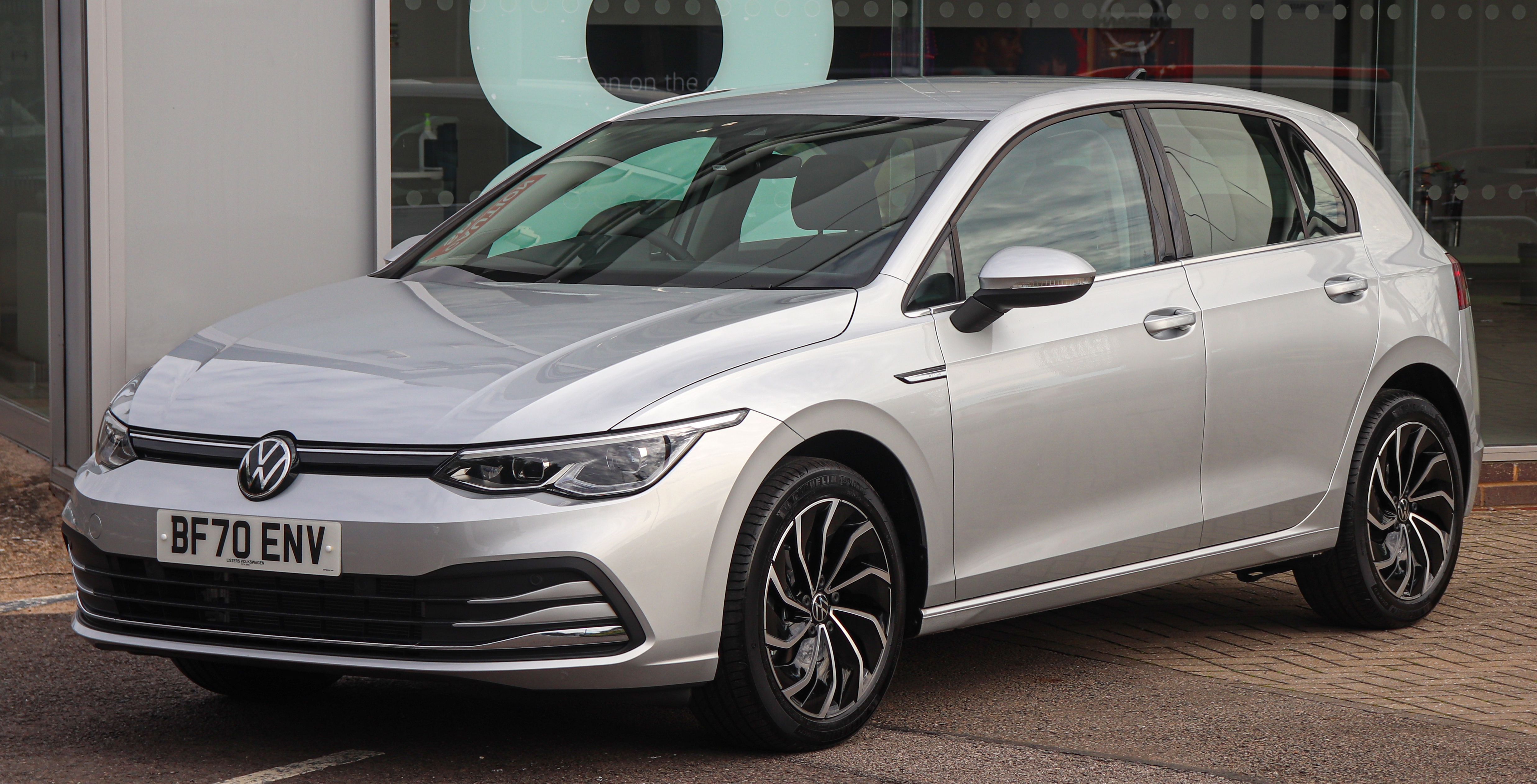
The Volkswagen Golf is a small car with a hatchback rear, meant to be practical for everyday trips. Its trunk space can be limited, so bulky items may not fit unless you adjust the seats. The podcast is using golf clubs as an example of that space limitation.
“Goat modes” is a playful way to describe off-road settings in a car. They change how the car handles things like slippery or uneven ground so it feels more capable off-road.
The Chevy Bolt is an electric car. The hosts are talking about the fact that the Bolt was stopped/discontinued for a while, which is why people were sad when it “died.”
“Over the air” updates are software updates that get sent to the car wirelessly. In this case, they’re saying the screen software couldn’t be updated that way, so the car had to go to the dealership.
Term
reflashed all the software
Reflashing is like reinstalling the car’s software. They used the dealer’s tools (via USB) to put the correct software back onto the system so the screen would function normally.
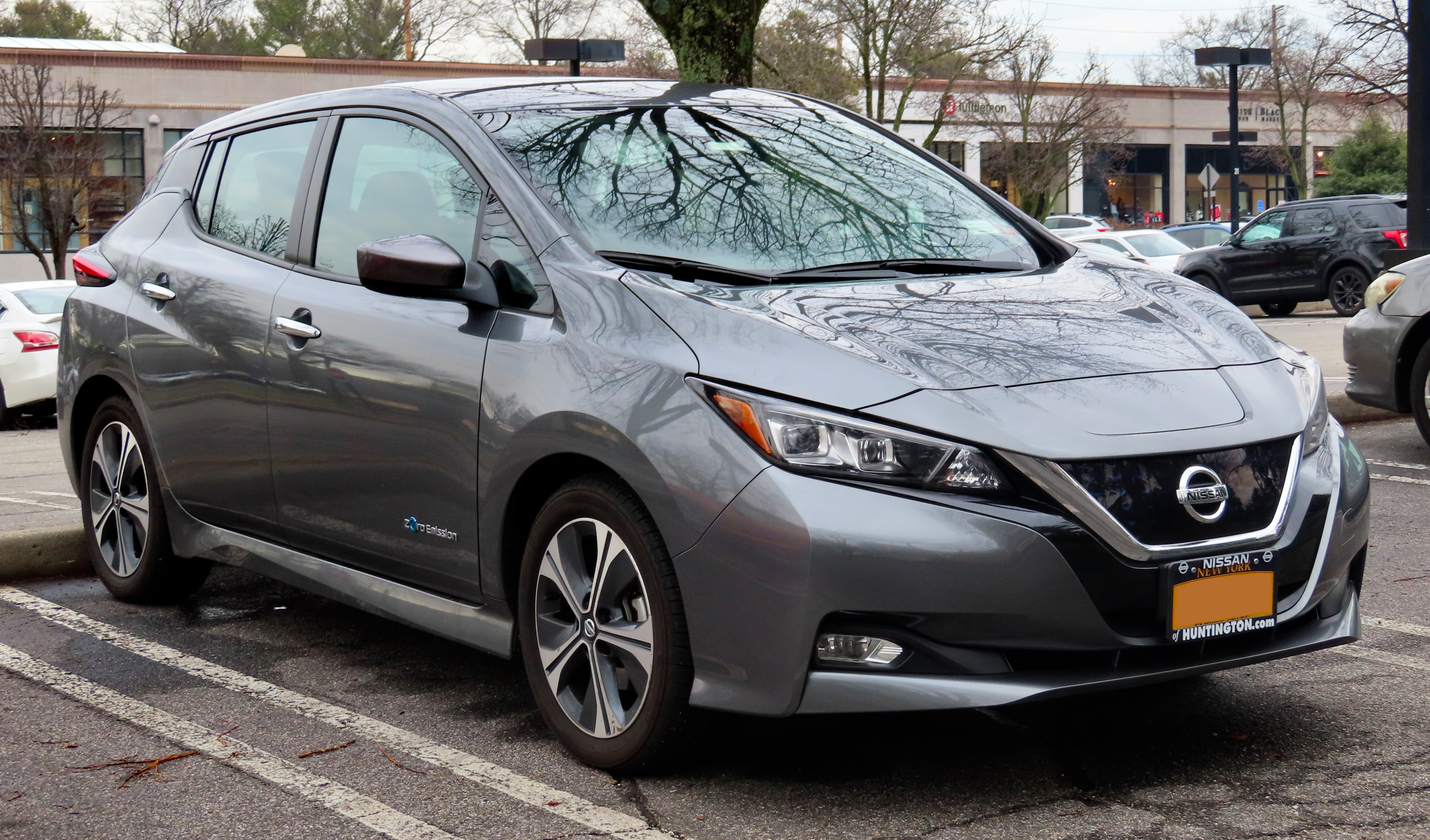
The Nissan LEAF is an electric car that’s usually better for shorter trips. In this discussion, they’re saying older versions didn’t go very far between charges.
A fast charging station is where you can charge an EV much faster than at a normal plug. They’re talking about how long you expect to wait once you see the charging speed.
Modern cars run on computers, and sometimes the manufacturer releases updates to fix problems or improve functions. They’re saying that if you buy the car later, those fixes may already be installed.
“Early models” means the first cars that come out after a redesign or new release. Those cars can have more problems at first, so testing early helps catch bugs before most people buy.
The Subaru Outback is a popular Subaru wagon/crossover that sits higher than a normal car and typically comes with all-wheel drive. Here, they’re talking about a newer (redesigned) Outback and how it compares to another family SUV.
The Honda Passport is a midsize SUV from Honda. They mention it because it’s one of the vehicles people compare against the Subaru Outback when deciding what to buy.
That phrase means the car’s main screen is turned upright (taller than it is wide). It can change how information is shown and how easy it feels to use while driving.
They’re saying the car got a fresh infotainment software update. That usually means the screen menus and behavior were rewritten or improved, so it works better day-to-day.
The Subaru Forester is a crossover SUV that’s built for everyday use and different weather conditions. The podcast is talking about the hybrid version and saying it didn’t work out well for them. The point is that not every hybrid option feels good in real life.
A backup camera is the rear-facing camera that activates when you shift into reverse, showing what’s behind the car. In this segment, the hosts say the camera display was delayed, which made reversing feel unsafe or inconvenient.
They’re talking about computer chips from Nvidia. In cars, these chips help the vehicle’s screens and software run faster and handle more tasks smoothly.
They mean the car’s computer systems and screens can become outdated faster than the mechanical parts. So even if the car is mechanically fine, the tech can start to feel old.
The head unit is the main screen and controls for things like music and navigation. If it has Bluetooth, your phone can connect wirelessly so you can stream music or make calls.
Term
screens, chips
Modern cars use computer parts. The screens are the displays you see, and the chips are the electronics that run the software—so if the car’s design is already built around certain parts, swapping them later is expensive.
The Dodge Ram is a large pickup truck meant for hauling and everyday driving. The podcast is talking about delays because some parts—like screens and electronic components—can be hard to get. That can affect how quickly you can get the truck you ordered.
Over-the-year updates mean the car can get new software over time. Instead of everything staying the same forever, the system can be updated to fix issues or add features.
The Ford F-150 Lightning is an electric pickup truck. It’s built to do the same kind of truck tasks, but it uses electricity instead of gas. The podcast is pointing out the big in-cabin screen and controls.
Heated and cooled seats let you control seat temperature—warm it up in cold weather or cool it down in hot weather. In this example, you tap an icon and then choose different heat/cool levels.
Term
touchscreen icon
A touchscreen icon is just a button you tap on the car’s screen. In this case, tapping it changes the seat temperature settings.
Term
quality of life improvements
“Quality of life improvements” means small upgrades that make the car nicer to use day to day. Here, it’s about software tweaks that make the screen controls easier or more flexible.
A touchscreen adapter is a device that sits on top of a screen to make it easier to control with your hand. Instead of you tapping the screen directly, the car can “read” what you’re doing through the added knob.
A manual transmission is a car where you choose the gears yourself. You use a clutch pedal to switch gears, and it can feel more fun and connected to the driving.
Rev matching is a feature that helps the engine speed match the gear you’re shifting into. It makes downshifts smoother so the car doesn’t jerk as much.
A long-term fleet is a set of cars that a publication or testing group keeps for an extended period to gather real-world data. Instead of short test drives, the goal is to see how the cars behave over time—how they’re used, how they wear, and how they hold up.
The Shelby GT500 is a very high-performance sports car based on the Mustang. It’s made for people who want strong acceleration and a more aggressive driving experience. The podcast is talking about it being discontinued or sold off, and that fans were disappointed.
Tesla is a company that makes electric cars. If they have a Tesla in the fleet, it’s likely for comparison—how an electric car stacks up versus other cars they’re testing.
Car
Hyundai Telluride
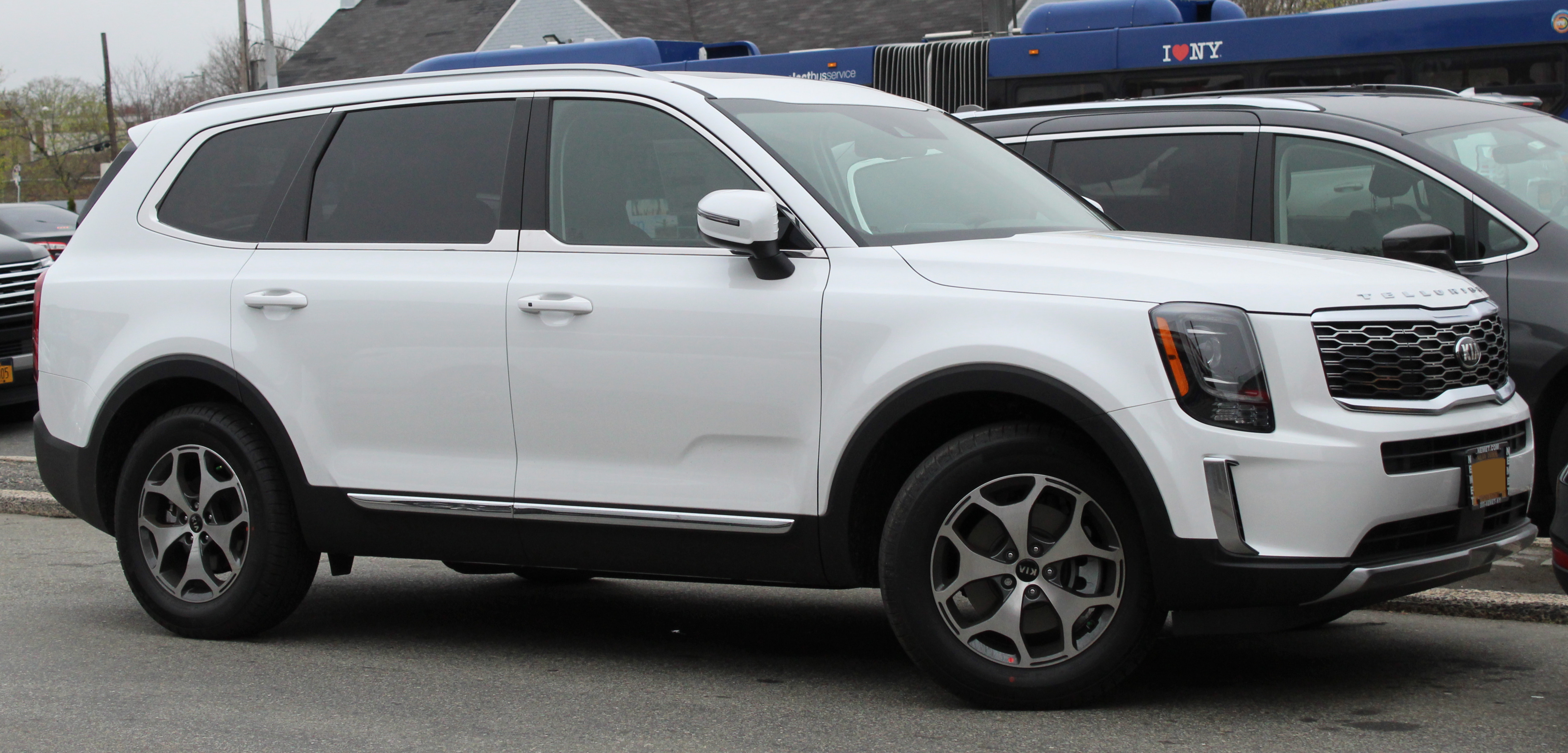
The Hyundai Telluride is a three-row SUV meant for families. It’s being used here as a comparison point to see how different powertrains and trims stack up.
FSD is Tesla’s “Full Self-Driving” software. It’s meant to help the car drive more on its own, but you still have to pay attention and be ready to take over.
The Honda Integra Type S is a sportier version of the Integra. They mention it alongside other performance Hondas to talk about where a new car should land in the lineup.
The Acura Integra is a compact car that’s meant to feel sporty to drive. The podcast is comparing it to other sporty compact models and talking about different versions (like Type S) that change how it drives. The main point is how the Integra can be more performance-focused without being a huge car.
A powertrain is everything that makes the car move and sends power to the wheels. They’re saying the car’s performance is limited because it can’t easily use the best parts from both the hybrid and the Type R.
The Honda Civic Hybrid is a Civic that uses both gas and electricity to improve efficiency. They’re saying using the hybrid setup instead of the more performance-focused one can limit how fast the car can be.
“Turbo 2.5” means a 2.5-liter engine with a turbo that helps it make more power. They’re saying the car can’t use that setup, so it can’t be as quick as it could be.
The Hyundai Palisade is a big family SUV with three rows of seats. Here, they’re comparing the hybrid version to the regular one and saying the hybrid is the better choice for both power and gas mileage. They also bring up a past safety-related stop sale involving the third-row seats.
A stop sale is when a manufacturer or regulator orders dealers to stop selling certain vehicles because of a safety or compliance issue. It’s often followed by a fix (like a parts replacement or software change) before sales resume. In this segment, it’s tied to a third-row seat problem in the Hyundai Palisade.
Third row seats are the rear-most seating position in a three-row SUV, typically used for kids, occasional passengers, or carpooling. Because they’re farther from the driver and often have more complex folding and latch mechanisms, safety issues there can be especially important. Here, the hosts reference a stop sale caused by an issue involving the third row seats.
A software fix means the car’s computer gets updated. Instead of replacing parts, the manufacturer changes the code so the car behaves differently and safer.
Pinch protection is a safety system that helps prevent injuries when something gets caught. If the car senses an obstruction, it can stop the movement so it doesn’t pinch someone.
The Kia Telluride is a family SUV with three rows of seats. Here, they’re talking about a safety recall where Kia updated the car’s software and sensor behavior to help prevent a serious incident.
Car
Kia Palisade
The Kia Palisade is another family SUV with three rows, and it’s very similar to the Telluride. They’re saying the same safety problem led to a software fix on the Palisade too.
Certified pre-owned (CPO) is a used car that a dealer checks more carefully than a typical used car. It usually also includes extra protection like a warranty, so you’re not taking quite as much risk.
A third-party dealer is a used-car seller that isn’t directly part of the car brand’s own dealer group. For CPO, the inspection and warranty are usually handled through the authorized program, which can be different from a regular used-car lot.
An extended warranty is extra protection that can help pay for repairs after the original warranty ends. With CPO cars, it’s commonly included to reduce the risk of expensive problems.
OEM parts are original equipment manufacturer components made by (or to the specifications of) the automaker. The host notes that CPO work is typically done by dealership technicians using OEM parts, which can matter for fit, finish, and how systems are repaired.
Carfax is a report that shows some of a car’s past, like accidents or title problems, based on records that are available. The host is saying you should ask for it before buying.
“Fine print” is the detailed warranty wording that tells you what’s actually covered. It can also say where you’re allowed to take the car for repairs.
A “200-point checklist” is the inspection list a dealer uses for a certified used car. It sounds very thorough, but some items can be simple things like checking fluids or wiper blades.
OBD2 is the car’s built-in computer diagnostics system. A mechanic can plug in a scanner to read error codes so they can see if the car has any problems recorded by the computer.
Scan tools are the devices mechanics plug into the car to check for computer error codes. They help find problems that might not show up just by looking or taking a short drive.
Jaguar is a luxury car brand. The host is saying that Jaguar had a reputation for quality problems years ago, which is why you might want to be extra careful when buying one used.
CarMax is a company that sells used cars. They also offer extra warranty coverage, and the price can change depending on the car you buy.
LIVE
Every team, every topic, everywhere, this is Belize.
Hello, welcome to the EdmundsCarCast podcast. I'm Matt, the moderator, G.
Andrea here with Brian Wong. Once again, Alistair is out, but happy to have you back. How are you doing?
Alistair remains on holiday as they call it, so I'm happy to be here again and fill in.
You know, he's out, he's traveling, and I'm sure he's having a good time all over Europe,
but I just keep hearing about how hot it is over there, and I just don't know if he timed this correctly.
I know he kind of didn't have a choice because he's got the kids and that's the summer break.
You can't go in October when it would be nice or probably.
Yeah, definitely better weather in September, but I mean with England you never really know, right?
In September it could be gray and rainy by then. Yeah, and he was probably having a really good holiday until they lost, so.
Yes.
All right, before we get into it, a word from FanDuel.
And right now, new FanDuel customers can bet $5 and get 150 and bonus bets if your first bet wins.
That's right. Turn five bucks into 150 and bonus bets just for getting started.
And when every possession matters in the playoffs, FanDuel makes it easy to get closer to the action,
from player props and your favorite stars to all the tools you need to back them up.
FanDuel puts player research at your fingertips so you can check the stats, trends, and matchups all in one place
and make your picks with confidence.
It's everything you need all in one app, so don't miss your shot.
Head to FanDuel.com slash believe to get started.
That's FanDuel.com slash B-L-E-A-V to get started.
It's FanDuel, play your game.
Must be 21 and over and present in select states.
Gambling problem, call 1-800-Gambler.
Okay, so a couple of things I just want to get into is you and I were talking before about,
this has come up with Alistair too, is how extensive the testing is with Edmunds.
We've had some of your test team on here before and we've gone through the UDRAX video stuff
and a little bit about what it means to be at the Edmunds test track.
And oftentimes how intense those can be.
When you guys are there, you could do multiple cars in a day.
So there's a lot going on.
But one of the things that we often look at is,
interesting, you see tons of commercials about,
car commercials about number one in initial quality.
And I know you'll pick up where I'm going with this.
For example, Ford very recently, Ford had tons and tons of recalls over the years,
bringing old school people, like people that may have retired, engineers retired and said,
we need you back, to teach the young staff that we have,
the young engineers, young testing people, get that quality up.
And now they've shown up as number one on initial quality, right?
Great for them.
But the idea of initial quality just means,
I don't know what the timeframe is on it.
Is it like when it, when it, the car, when it just leaves the dealer a lot,
when it shows up on the lot, is it a 30 day window, a 60 day window?
But the idea on initial quality is, it's good.
You want to achieve that, but it's kind of limited on what that means.
Yeah, I think if I'm remembering correctly, that survey that actually covers a wider timeframe
than you would think.
So this was initial, but I think it's actually up to 12 months.
Okay.
Then that kind of window is when they can get the survey out to people and get it back.
Which makes more sense because, you know, initial quality is like, everything is pretty good.
I mean, listen, you guys have run into a few things where like you get a brand new Chevy Blazer,
EV and, you know, it doesn't work from day one.
Yes.
So those are anomalies, but most things are pretty good right off the showroom floor.
And then you start to look at what does that mean down the line.
So the more relevant tests, the ones that I think are more interesting are the one year
tests or the long-term tests or everybody kind of calls it differently.
But one of the things that you guys do at Edmunds is you often jam a lot more miles
and wear and tear into that first year than most people.
Because people go, what is the one year test?
People go, one year test.
That's 10,000 miles, 12, maybe 15,000 miles.
What does that mean?
What did it cost me to own that car?
Where depending on the car, because you guys have a bunch of people who can borrow these
cars on staff and take them on trips and write the notes down, you can jam 30,000 miles into
a year.
So the idea of a one year test could be the equivalent of two to three years.
Yeah.
I mean, the goal is usually about a year and about 20,000.
Now that number will go up or down sort of depending on a few factors.
One of them is how much do we like the car?
Yes.
Because there are definitely members of the fleet that don't get, I would say, utilized
as much as others, either because they have some sort of issue or maybe they had to go
in for a repair for a few months or perhaps there's something about the car that makes
it not as suitable for everyone to be taking home or taking on road trips and things like
that.
So I think that we aim for about 20,000 miles.
I would say we usually land somewhere in the 15 to 20 range or so.
But I mean, there have been vehicles that we've had.
I think most notably like our Dodge Charger Daytona definitely did not make it to 15,000.
Definitely.
I don't think he even made it to 10,000 because when we got it, they had the problems where
it wouldn't talk to electrify America chargers.
Yeah.
So like, you know, they actually took it to UDrags and on the way back, one of our staff
members, he had to charge at a level two on the way back because he just wouldn't talk
to any of the fast chargers in the area he was in.
So that means that he sat there for five hours waiting for it to charge.
And once that story sort of circulates around the staff, you get to thinking like, well,
do I want to sit at a level two charger for five hours?
Probably not.
So this is probably not a car that I'm going to take home.
But you know, there are definitely some of the recent additions that we've had.
I think that they're going to end up having a lot of miles put on them for a whole host
of different reasons.
But yeah, no, the fleet is pretty big.
It's robust.
It's about 20 vehicles at any given moment.
And I think that's, I think I could safely say that that's kind of the biggest one in
the business.
And majority of it is cars that we buy.
There are like a few that we get from manufacturers for the purposes of a long term evaluation.
So I think one of the cars we're going to talk about falls in that category, but most
of them we're buying them.
And then we're also seeing, you know, how much value do they keep or lose after a year?
And that is always a really interesting conversation, like the Lexus GX that we just sold.
It's funny.
I was just going to say that the Lexus GS turned out to be a popular car internally
for you guys.
Like, I mean, listen, it's not the best gas mileage out there, but it just is a good all-around
vehicle, good weekend or road trip vehicle.
And I know when the weather was nice, although our weather is usually always nice, but you
know, on the good weather days, that was the one number one was sort of getting in line
for.
Yeah.
And I mean, I think three or four people, like someone moved in it, people took a camping,
people took it all over the place.
But yeah, I think, I mean, for that one, the real interesting story was that it basically
didn't depreciate in his year with us.
And we went back and actually looked up the VIN later on and we found that it's actually
listed for sale for more than we paid for it, which is wild.
That is wild.
So theoretically, you could have bought a GX, used it for a year or so, and then sold it
for more than you paid for it.
That's definitely rare in the car world.
Yes.
Yeah.
All right.
So explain a little bit about the process of what you guys go through to decide what
cars to buy.
There's a committee, or is it Alistair or?
No, Alistair is certainly involved.
I mean, you know, the big boss has to sign off on all these, you know, many thousands
of dollar purchases.
Yeah.
But basically when we're considering which cars are sort of add into the fleet, there's
a few factors.
One would obviously be popularity.
So we want to pick cars that people are interested in.
Two is, are they significant in the marketplace in some way?
Do they present something new?
Do they have a new feature?
Is it a new nameplate?
That brings to mind things like whenever Tesla or Rivian comes out with a new model, we make
sure to pretty much jump on it because, you know, we want to be able to test those things
as quickly as possible.
And then also with new automakers, their reliability over the first year is a really
important marker for them because they simply haven't made too many cars and making cars
is hard.
Yeah.
And then the third thing is, like, are we going to be able to, you know, sort of make
content with it?
Like, is it going to be able to feature in videos?
Is the testing results going to be interesting to people?
Are we going to be able to actually get enough content out of it to justify, you know, the
expenditure of, you know, between $30,000 and $80,000 for some of these cars?
Yeah, for sure.
And then sometimes, you know, sometimes there's an anomaly that doesn't necessarily work
out.
And I know I get on Alastair and I bust his chops a little bit.
But most of the time it's about Fisker.
But...
Yeah, yeah, yeah.
No, I mean, I think that was, was money well spent, to be honest.
Because we got a very, I think at a certain point, if we were just relying on press cars
or, you know, like loans from the manufacturer, I think given the slant of our coverage and
how, like, honest and truthful it was with all the problems that we have or had, I think
they would have at some point stopped giving us cars.
Yeah.
So, owning it was really the only way to tell that entire story front to back.
And I mean, it turned out to be quite a story, so.
It turned out to be quite a story in the company as well.
And I still see a few Fisker Oceans around town over here.
And I look at it and I go, you know, I like it.
It looks good.
I see it on the road.
It seems to work.
It was a $60,000 vehicle you could probably buy for $12,000.
It just, if it stops working, I don't know what you do.
Because, I mean, there's some hardcore owners like forum groups and stuff that are trying
to come up with ways on addressing the issues and fixing things and coming up with parts.
But, you know, you're going to be pretty limited for sure.
Mm-hmm.
Now, it's a, I mean, that's a whole sort of rabbit hole to go down.
But basically, if you own one now and it breaks, they have to provide some level of software
support for it.
But in terms of the hardware.
Yeah.
Tough.
Tough.
Yeah.
Okay.
So let's talk a little bit about the fleet that you guys have.
And I'll bring it up as well.
And let's see, why did you guys, you know, we'll talk a little bit about why you picked
this initial, you know, this group here.
Yep.
No, so I think, so within the last month, we've actually added another vehicle.
So now it's five, but when we did this piece, we only had four in there.
But as you can see, different shapes, different sizes, all blue.
I guess we'll go, we'll go right to left, because that's kind of the easiest way to
do it.
The one on the right is Toyota RAV4.
Our fleet isn't really complete without the best selling vehicle in America in there.
So we've got to have a RAV4, and in particular, when we were trying to spec one out, we didn't
want a limited.
We didn't want the plug-in.
We wanted like the most mainstream one that you could buy.
So this is the volume model.
It is a, I think it's an XLE premium, yeah, and it's front wheel drive.
And so 38 for the other ones that we've tested have been up in the mid forties, low forties.
So this is definitely one that's more affordable.
And we also think with the RAV4 in particular, you don't need the larger screen because the
small screen isn't really small.
It's about 10 point something inches.
So it's pretty big as well.
The one thing that I would note is that already, and it's time with us, we're seeing a bit
more wear on the interior than I think that we anticipated.
There's a lot of plastic on this interior, and I think part of the reason is cost.
And the other part of the reason is because plastic, they think it's durable, but there
are spots on it that are already starting to discolor.
There's already a lot of scratches, especially on the handles of the doors.
So that's something that we're going to keep an eye on for its year with us.
And yeah, having a RAV4 at home, let's just compare it to basically every other compact
SUV that's going to come out.
And there's a lot of compact SUVs coming out all the time.
It's a big category.
It's the big popular category.
When you look at RAV4 and you look at the Honda as well, those two sell a lot.
Some of the car manufacturers kind of seem to miss the mark, like Hyundai's in this area,
Toyota, Honda in this area, like Ford, Chevy, a little less competitive in the area, at
least as far as how they're reviewed and they're tested.
I think Ford has basically sort of seeded ground.
They don't even sell an escape in California anymore.
Yeah.
But any suit of states, you can't buy an escape anymore.
The Equinox is just simply, how do I put this?
We did a 10 car or a 10 vehicle SUV comparison.
We just basically went over the whole, all the compact SUVs at once.
And when you line them all up like that, the Equinox is just clearly sort of a step below
in the way that it drives, but also the materials, the design, it just doesn't feel like a product
that's sort of on the same level as those ones that you mentioned.
And the fact that it's not a hybrid also hurts it because the fuel economy penalty
is going to be severe compared to RAV4, which is hybrid only, Tucson, which offers a hybrid,
Sportage offers a hybrid, CRV, which offers a hybrid.
Yeah.
Yeah.
Interesting because Ford's answer to this category wasn't really escaped because nobody
liked it and nobody bought it.
It was Bronco Sport.
Yeah.
But the Bronco Sport has its own sort of issues.
We actually even did a Bronco Sport versus Equinox comparison last year.
And the Bronco Sports cargo area, even though they list a really big number for it, is actually
quite small.
I couldn't even fit my golf clubs in the back.
I had to lower a seat to do it, which in an SUV doesn't feel good.
Right.
But they're kind of selling it for other attributes.
They're like, oh, it goes off-road and it looks kind of cool and it looks like a Bronco
and it's got goat modes and you know, and it's like they're going after a little bit
of a different audience with it.
Now, do they come out with at some point a hybrid version that's just more of the, you
know, street-able version and more competitive in this category, wouldn't surprise me if
they do that.
Probably Ford's going to be leaning into hybrids almost across the lineup.
But okay, so let's see, next.
Next on the list, Chevy Bolt.
Yeah.
So when the Bolt died, I remember we were all very sad because there's just not a lot
of affordable EVs out there.
And I think that that's part of the reason that we've seen that dip in sort of EV sales
and popularity is simply because they're too expensive.
So Bolt coming back is great news for those who want to go electric but don't want to
spend too much money to do it.
And it made sense to add it to our garage.
This is an LT.
They also offer a sportier kind of, I think it's an RT or RS version that's got like crazy
orange paint.
That's the one that we used for our fully tested video.
But we went a little bit down, down market again for this one, same powertrain between
both of those.
So you're not really giving up much.
The interesting thing for this one was basically the day that we brought it home, we had to
then take it back to the dealership.
Yeah.
Like you were mentioning before, we had problems with our Blazer.
Those were very different.
Those were a bit more like mechanical, like actual concerns about how the car would move.
For the Bolt, it seems that they just didn't update the software right for the screen,
but there's no way to do it over the air.
So it had to go back to the dealership.
They popped in a USB port, reflashed all the software, and then it came back to us and
was working much better.
But still, if you buy a car and you have to bring it back the next day, deals.
Yeah, it's a little cringe.
It's a little cringe.
But you know, the Bolt's interesting because like you said, you want to get into an EV,
you don't want to break the bank.
This thing's about $30,000, has pretty decent range.
The issue with Bolt and LEAF, for example, were very limited range.
And in your head, you're thinking, listen, if you want to go far, you've got to pay
more money.
And Chevy Bolt is going, not really.
No, you're getting about $1,000 you're spending, you're getting about 10 miles of range, which
is a really good ratio for an EV.
Yeah.
And the other thing that they improved was the charging, because the old one, it only
charged at, I think, like 50 or 60 kilowatts.
And so this one goes all the way up to 150, which with the size of the battery means it
actually charges pretty fast now.
And that makes it a lot more viable for road trips.
Yes.
Like I remember being on road trips with EVs, pulling up to like the fast charging station,
seeing a Bolt there and being like, oh, this is going to take a while.
This is going to take a while.
And like you look at the meter, it's like 50 and you're like, I'm upset.
But also, I know that this person doesn't want to be here any more than I do.
So you try not to get too mad, but still you're like, oh, Bolt.
Right.
OK, so Bolt is much better now.
Presumably, if you go and you buy one, these software updates have already happened.
Because if you're buying them new, I'm sure they figured out.
Like you were saying, one of the advantages of Edmunds getting these test results is you
guys often buy very early models.
Yes.
You know, like you get on the list early and try to work out some of the bugs.
If there's going to be bugs, we'd rather, you know, Edmunds figure it out
than the rest of us buying cars.
I don't know.
I don't know.
You can ask them that.
I don't know.
They don't always love it because they know that we're going to spread the news.
But I think that's that's the job, right?
The job is to let people know.
Right. That's the job.
Yeah. They're going to spend all this money on a vehicle.
What are you actually going to get?
All right. Subaru Outback.
You guys picked up a new Outback 26.
Yeah. This is.
So I remember when the redesigned Outback, our first piece of content that we did with it was
actually a heads of comparison with this against the Honda Passport.
This was last fall and usually going into comparison.
You know, I have a pretty good idea of which vehicle is going to win.
But if it's early enough in the process, we're still going through our rating.
So right up until we actually shot the video, we were working on the rating
and, you know, passing it.
They all passed through a few hands.
So in Edmunds rating is not just one person's opinion.
It's the entire staff.
So, you know, up until like the day before we're about to film, I'm sitting there kind of looking
at the script and I'm like, hmm, like this, this has potential.
And it turns out that it actually won the comparison and beat the passport.
And that made it our top rated midsize two row SUV.
And yeah, if it's top rated vehicle for us, we're also probably going to try to buy it
because it's very good to have what we would consider to be the leader of the class in the
garage and then we can put everything else up against it.
The Outback is notable in like a couple ways.
One is that we had an absolutely horrible technology experience with the Forrester
hybrid that we owned.
And this completely changed that paradigm.
The screen is even flipped in the opposite direction.
So the Forrester has that vertically oriented screen.
They turned it sideways and then they gave it brand new software.
And it works so, so much better.
And I think one of the things that is a bit difficult when you're doing automotive journalism
is that we have a bit long memories.
So I think, you know, does the software in the Outback feel better because we're remembering
how bad the Forrester hybrid was?
Yes, I think that's true.
But I think also just objectively, it's a very good system.
It's a much, much improved system, a lot simpler, a lot easier to use.
And most importantly, it actually boots up quicker.
Because the Forrester hybrid had boot up issues where you would like start the car,
put it in reverse, and the camera wouldn't show up for 15, 20 seconds sometimes.
So you're just then sitting in a parking spot like, I would like to back out.
Right, yeah.
Definitely one of the issues that has come up a few times with Subaru is the software seems
a little bit dated.
Honestly, similar issues with Volvo.
Like this software with Volvo just seems a little dated and a little slow.
And some of the new EVs specifically that they have coming out, EV60, the EX60 and the 90.
One of the big things that they were talking about was, you know,
in their initial like, you know, press announcements was, you know, new software,
new Nvidia chips, everything's faster all around, all the hardware, the software,
everything's faster, everything's better.
And, you know, without even using it, without even testing it, we all sort of embraced it
because we were thinking about how terrible it was before, you know.
And it's not that it was really that terrible.
It was just about software is just one of those things that changes so quickly, you know,
electronics especially, that's one of the things that like in the hot rod building world,
one of the things that sort of dates a car the fastest is the technology like,
like your audio system, for example, you can take, you know, you can take even a classic car
and do sort of a more modern Bluetooth head unit, car play and stuff.
And then it's funny because like you may build that car as a project over the course of a year
or two, and at the end of two years, you might have installed a new head unit,
haven't even used it yet, and you're looking at it and going, this is all old technology.
Yeah.
You know, and it was just 18 months ago, two years ago, like it was just, it's all old technology.
So, so many car builders in the hot rod world hide that technology.
It's in a glove compartment, it's behind some sort of panel,
because it just changes the nature of the vehicle.
So, yeah, new cars too, like you've got to be up to date on the technology.
I think, you know, I have some sympathy for the automakers because,
you know, basically anything you're seeing in a new car, you have to remember,
it wasn't developed recently.
It's something that they thought of years ago, and they've had to order screens,
chips, everything, RAM, even like in the back end.
So basically, if they're trying to project a few years out, and then all of a sudden,
they look around and we've already committed to X units of this screen and processor and all that.
You're kind of stuck until you can really work through all of that material,
because it's just so expensive to make the switch midstream.
So they kind of have to let these like poor systems almost run themselves out,
and then be like, oh, okay, here's a new one.
A hundred percent.
And the, the idea now of having over-the-year updates is a huge advantage, by the way.
I mean, it's a little big, big brother-ish on like what the car manufacturers can see
and get data on and find out what you're doing, and that's a different issue.
But the idea of just, as an owner, as a consumer going, you know what,
if we voice our opinion enough and going, we're using this touchscreen, and it's a little slow,
or why isn't, why is this particular feature two menus deep?
Why can't it just be on a home screen?
There are some things like that.
And, you know, some of it makes sense.
Like I have the Ford Lightning, and then it has the big screen with the big dial in the middle,
right? And it's mostly for volume.
But then when you hit the air conditioning fan button, you use that dial to turn the fan up
and down, which, okay, easy, makes sense.
But next to it is another touchscreen icon for heated and cooled seats.
If you touch the icon, it goes from heated to cool, and it goes to the three levels.
So you keep tapping that icon, and it's, you know, level three, level two, level one,
the intensity of that heat.
But what they added early on as one of the over-the-air updates was you touch that icon,
and then you can use that dial to go from level three to two to one as well.
So it gives you the option.
Now, you know, not the most ingenious thing in the world, but it was a nice that it was more
for me going, this is the kind of stuff they can do with over-the-air updates.
You know, they can change the menus, and they can add more features, and
you know, try to make it.
You hope they can also like make it more efficient, but they're only kind of limited
on what they can do the other.
But it's kind of cool.
Yeah, we call them quality of life improvements.
Yeah.
And if you add them all together, because I mean, we had a lightning as part of our fleet,
too, for over a year.
We like that truck a lot.
And yeah, to your point, the software certainly evolved in the time that we had it,
and it made that screen, and in particular the dial part, a lot more usable.
Now, that dial, the engineering behind that dial is actually kind of funny.
Yeah.
It's like it looks like it's basically they cut out the screen, but they did not.
It's actually just one giant screen, and it's a knob that they glued on.
And on the back of the knob are like hundreds of tiny little rubber feet.
Okay.
So when you turn it, they brush the screen, and that's how it detects.
So it's actually not like a hole in the screen that they put the knob on.
It's just a screen, and then something glued on the front of it.
It's a touchscreen adapter, if you will.
Like, you know, sometimes if you wear gloves, and then you can buy those gloves,
these gloves work with touch screens for your iPhone and stuff like that.
The button is kind of like that.
So that's a good idea.
It's a smart idea, going, we don't have to put a hole in the screen.
We don't have to cut it out.
We can just get the screen and just stick this thing on there and have it do what it needs to do.
And it has a good feel, and it has little clicks to it.
It has got a notchiness for sure.
So it works well.
Okay.
So let's get back to the list here.
I'll bring it back up.
All right, Acura, Type-S.
I like the Type-S.
This is one that we did not buy.
So this one was actually given to us for the year by Acura.
So thank you, Acura.
And I feel like we're going to put a lot of miles on this one,
because it is just an absolute joy to drive.
Did you get the manual or the automatic?
The manual, yes.
So it's basically like a slightly more livable Civic Type-R.
Yeah.
It's a Civic Type-R of it without all of the sort of, you know,
it's like the GT3 Touring version of the Civic Type-R.
Yes.
And you're right, but it's the adult version, if you will.
Like it's a little bit more subtle and it doesn't have the big, you know,
sort of boy racer wing and stuff on it.
Both cars are fun to drive, but you're right.
This is the one that is a little bit more subdued.
Although I think it's a cool car.
I think it's a fun car to drive.
It's got some power to it.
I do like you can get it with the manual transmission.
It does add a little bit of fun and sportiness to it.
You know, maybe not the car you want for LA traffic, but, you know,
it wasn't like the clutch was overly heavy when I drove it
and the shifting was very easy and it's pretty livable even in traffic,
if you don't mind driving a manual transmission.
So I like it.
I mean, it's not perfect, but it's a cool car.
No, I think the rev matching system is also pretty good.
And then that helps you when you're driving in traffic too.
It makes things just a little bit smoother.
But yeah, I think, you know, it's definitely not a perfect car, as you said,
but the cool thing about it is when you drive it, it constantly reminds you
like that it's fun.
So you kind of forgive a lot of the other stuff.
Like the seats aren't super comfortable.
The bottom is very firm, but okay.
Zoom. Okay.
I forgot.
I forgot about that.
Like it definitely doesn't feel like a $55,000 interior.
But yeah.
And then the other thing too is like five grand more expensive than a type R.
So that's another factor in there.
But you know, all in all, that one's going to get miles
because everyone loves to drive it.
Yeah, yeah.
Okay.
We'll also be this Monday shooting a video on it at the track
against one of its competitors.
So keep an eye out for that.
So that's, those are the most recent additions to the fleet.
Like, but before we wrap on that, like what else is in the overall fleet?
I know there's more than the four cars.
Those are the ones we highlighted in there.
You talked about the Lexus that just recently got sold off.
For a long time, we talked about the GT 500 that eventually got sold off.
And I think everyone was kind of sad about that one.
Yeah.
Because that was just a fun car to drive.
What else is in the fleet these days?
I'm just trying to remember what I can and can't disclose.
Well, basically ones that you've driven recently, right?
So there's a Tesla in there somewhere, right?
There's always seems to be a Tesla.
So we also added a Palisade Hybrid, which was our,
it's our reigning Edmunds top rated best of the best award winner.
So, you know, we pretty much always try to add one of those.
When we give a car our biggest award, we're going to try to get it in.
So Palisade Hybrid just joined a Telluride just arrived as well.
So now we're going to have both of those.
Those are our top two rated midsize three row SUVs.
And then, yeah, to your point, the Tesla fleet has also,
I mean, there's always usually one or two Tesla's kind of poking around.
Right now we have two.
We have a model three performance and a model wide launch edition.
So basically a premium all wheel drive, fully loaded FSD, all that stuff.
Both are on the newer hardware.
So they're very good platforms to actually test out FSD and see how that's been growing.
Right now we're actually in kind of a holding pattern.
We're waiting for the other automakers to sort of unleash their hands free driving systems.
And once they do that, then we'll be able to put them all up against each other.
So we're just kind of waiting for that to happen.
And then we also have a Ford Maverick down there.
We've got a prelude.
We've got all sorts of stuff.
How do you like the prelude?
Pause, pause, pause, pause.
I like it.
I don't like how much it costs.
Okay.
I don't like how slow it is, but I really like the way that it steers.
Okay.
If that makes sense.
I think it looks cool and I like the idea of bringing back the prelude.
I was kind of, instead of it sort of fitting in between,
you know, like a Civic and a Civic Type R or the Integra and a Type S,
I was kind of hoping they would just go a little bigger and like make a faster,
more performance version of it.
And, you know, especially at that price range, maybe it can be,
if it performed better and you added another couple of grand, I'd be like, it's cool.
Right.
But like if it was faster and just like more of a performance car,
more of a competitive like sports car, if you will, then I think it'd be cool.
Or I mean, I think if they went down with it, it would also have worked because basically what
they released was basically a one box model and it's got a really nice interior.
But like having an option for it where it's like kind of a lower trim level with, you know,
maybe not the fancy two different front seats and maybe not all the suede and the white and
blue accents on the interior, which are nice, but like a more like stripped down version at
like 37, 38, that makes a lot more sense to me with this car.
And I think they're also a bit hamstrung, powertrain wise,
because they kind of had two options, right, is either use the Civic Hybrid's powertrain
or use the Type R's powertrain and they want the Type R to sort of stand on its own.
So then that automatically doesn't allow them to use a Turbo 2.5 in there.
And I think once you do that, you sort of compromise the overall performance ceiling
just because it's not quite quick enough.
Yeah. So it was about sort of where to position it in the lineup.
And that kind of made it difficult.
But it's got a Type R front end. So like it handles absolutely beautifully.
Yeah.
Like the way that it turns in is like addicting.
Like you can just toss it in and then next time around, you're like,
add three miles an hour, toss it in.
Next time around, add three more miles an hour, toss it in.
And it's like, okay, like this car can actually like really, really grip.
But yeah, it's just 44 in change for a coupe.
Yeah.
That's seven seconds to 60.
And all right. So you also mentioned the Hyundai Palisade.
I just wanted to ask, because I just don't know that we've covered this.
We've cleared this up on the podcast.
Yes, it was an Edmunds top rated.
It's one of my favorite cars that's new right now.
I just think it's a lot of bang for the buck.
And I like the nice calligraphy version, the $60,000 version.
I think you're getting a lot there if you get the hybrid.
I just don't think the non-hybrid version is the same.
You kind of want the hybrid, I think, is more power and better fuel economy.
Oh yeah.
Nicer all around.
But there was a stop sale.
There was an issue with the third row seats and somebody got hurt.
And then I just didn't hear about what happened with that now.
So is that issue resolved?
I think, I don't know if I'd use the word resolved.
I would say that if you bought one, the stop sales been lifted.
And they did issue a software fix.
So they changed the way the sensors in both the second and third row operate.
So then they have greater pinch protection.
Obviously, it was very unfortunate, the incident that happened.
But they've made the necessary steps to sort of get the fix out there,
both through existing cars and the new cars that are shipping will come with it.
So hopefully that sort of thing can be avoided in the future.
I'm also seeing more third row recalls sort of generally.
I think there was just another one that came out.
So I think industry-wide it brought attention to that issue.
And hopefully that means that something like that can be avoided forever going forward.
But yeah, I know that they had to fix it on Telluride as well.
They fixed it on Palisade.
Because obviously those two cars are very similar.
And so yeah, I mean resolved in the sense of like,
did they have a recall and issue software updates and try to fix it?
Yes.
Yeah, the issue was, and I don't know all the details.
I don't recall it all completely.
But yes, a child got killed, I believe.
But I didn't exactly understand how it happened.
There was some sort of, the child was in the car,
and then it didn't remind somebody that the child was in the car.
So it's hard to, I don't want to speak sort of out of turn,
because there was never really like an official run down of exactly what happened.
But I think it's safe to say that basically the folding seat,
the powerfulness it was activated, and the sensor didn't properly detect that
there was something in the way as it was moving.
And so it did what it was told to do by someone else hitting the folding seat.
And yeah, unfortunately it led to the child dying.
So yeah, which is terrible, but definitely something that needs to be fixed
and should have been caught probably earlier on.
But anyway, certainly.
All right, let's take a quick break.
And then I want to start talking a little bit about used vehicles,
because it's not something we get into too much.
We do a few times when Jessica Caldwell is on, we're talking about insights,
and we talk about buying new versus used and leasing versus buying and negative equity and loans.
But let's talk a little bit about the used car market.
So hold on one second, we'll be right back.
Just a quick reminder, if you're looking to make the game even more exciting,
Fandall makes it easy, whether you're betting on the big game,
building same game parlays, or just backing your favorite team.
Fandall has tons of ways to get in on the action.
Download the Fandall app and place your first bet today.
Okay, we're back here with Brian Wong from Edmunds.
And so let's talk a little bit about the used car market.
There's a couple of things to look at.
One is the idea of CPO, certified pre-owned.
Do you buy used? CPO? What does that mean? Is it worth it?
And then we can look at some of the maybe the best used hybrids, if you will.
So the idea of CPO came up. What does it really mean?
When you buy certified pre-owned, you're going to the dealer,
you're not necessarily going to a third-party dealer.
Some cases you can. You can go to your Ford Chevy, BMW, Mercedes dealer,
you get your certified pre-owned. There's a version of that with car max and stuff as well.
And the certified pre-owned, it implies that they inspect the car more thoroughly than any other
sort of used car lot. And they have the resources to diagnose it, to test it, to fix it.
If you're buying a used BMW at the BMW dealer, in theory, they have more knowledge about BMW
on getting that fixed. Now, is that the case? Yes. Are they fixing more stuff on the car than
anybody else? Not necessarily the case, right? You're still buying a used car, right? It's
still going to have, it's not a refurbished car, right? This isn't like, hey, I'm going to best
buy and I can get the TV for two grand or I can buy the refurbished one for 1500, right?
It's not an open box special. Right. And it wasn't like a rebuilt thing. So
they went through their checklist of, let's say they have a checklist of 200 items,
doesn't mean they fixed 200 things. They just went through a checklist of all of these items
and felt like everything has the normal amount of wear and tear. Doesn't mean it's new, it just
means has the normal amount of wear and tear. Correct. But that often comes with a warranty
or some sort of extended warranty on that vehicle. And for many cars,
that is probably worth the extra money, depending on the pricing and what the
used car market is versus the CPO price. You look at it and go,
you're buying that piece of mind in these days with how complicated cars are and software issues
and things like that, that we were talking about. There is that level of peace of mind
that you want with warranty. So what is your thoughts on this? What's Edmund's take on CPO
versus used? Yeah, I think, I mean, you hit a lot of it on the head there. One thing that I would
really caution everyone to watch out for is that certified and certified pre-owned are not always
the same thing. So you can go to look for a used car and if it says certified, that can really
sort of mean anything. When we say CPO, what we really mean is that warranty is going to go back
and be reapplied and it's coming from the manufacturer itself. So then you can just
basically go to the dealership and have their technicians work on the car and they're the
ones who are going to use OEM parts mostly and then they're the ones who have the most know-how
because that's the type of dealership. So that's the one thing to watch out for. Certified
and certified pre-owned are not exactly the same thing. And the second thing is, I think,
to recognize that buying CPO doesn't exempt you from doing some of the homework that you need to
do when you're buying a used car. So when someone's going to buy a used car, at the very least,
you want to drive it. You want to get into it. You want to see what the condition is for yourself
with your own eyes. You want to see if it smells funny, all that kind of stuff. Ask them for a
car fax too. Ask for everything. Yeah, get the documentation. And then so for a CPO though,
it does take out... It's kind of the difference between trading in a car to the dealership
versus selling it yourself. Trading it in, you're going to get less money, but it's going to be a
way easier process than listing and selling a car on your own. Buying a CPO car is generally
going to be easier than buying another used car just because, one, the pricing is usually just
straight set on a CPO car. And two, you're getting that peace of mind from the added warranty.
So for something like Hyundai and Kia, for example, they have that really big robust powertrain
warranty, but it actually doesn't transfer. So if you're the second owner on a Hyundai or Kia vehicle,
just recognize that that warranty isn't going to transfer to you. And that's where it's probably
a good idea to get a CPO one because it'll just bump up the warranty again on both bumper to
bumper and the powertrain back up to like a level where you'd basically get the same amount of
coverage that you were getting initially. Now, if you're going through a third-party vendor like
CarMax, or let's say you're going to like a Ford dealership and buying a BMW, most dealerships
will offer some sort of extra warranty protection, but it's important to read the fine print to see
exactly what it covers and like what types of shops you can use because some warranties are like,
you can only go to this shop or these types of shops. So you won't actually have choice or be
able to go to the dealership if you wanted to have the service done there. And then I think the
final point that I would emphasize is, you know, it doesn't preclude you from getting a car looked
at. So if you have like a mechanic that you really trust, if you can find a way to have them check
out the CPO vehicle, that's not the worst idea either because a 200-point checklist, like some
of those 200 points are going to be real small. So 200 points are going to be like, check tire
pressure. Yeah, windshield wiper blades. And then each windshield
wiper blade might be a point, you know? So like when I hear those like 400-point inspection, I'm like,
cool. Yeah. By the way, a lot of those, and I'm guessing this is how it would be these days, is
a lot of those are they hook up their scan tools to the computer, to the OBD2, and they run their
scan on it. And that's probably, you know, that could be 250 of the 400 points, right? Or that
can be 180 of the 200-point certified check is they're scanning it, they're looking for a bunch
of issues. And when they say it's a 200-point check, they just do a scan and the scan comes back
clear or maybe comes back with one particular code. But they're going, yeah, but the scan looks at
200 different things and that's our 200-point check. And, you know, listen, it's better than not
having it, but you're right. I think the most important thing, the advice that you gave was
buying a CPO car doesn't mean you shouldn't still do your diligence. And one, drive the car, maybe
have the car checked out by another person, another mechanic. And then two, definitely look at the
fine print in regards to that warranty. What does it cover? mean? Where can you go to
get it fixed? Listen, I know it was years ago, Jaguar was having some issues with quality,
although may still have issues with quality. And it was a thing where you're like,
you go to the Jag dealer, you can buy a new Jag and it has like a three-year 36,000-mile warranty.
But then you go outside of the showroom and you find the three-year-old used vehicle and the
extended CPO warranty was like eight years. And they're like, the better deal is on these, but
they have such a hard time moving used ones because of that reputation that they just said
the CPO versions have a really good warranty on it. And I was kind of looking at it at the time
going, this is a pretty good deal. If you don't mind bringing your car in every once in a while,
they get some stuff fixed because it will happen. But if it is covered, it's not the worst thing
in the world. It's a pretty good deal. No, this reminds you of so for CarMax, for example. And
we know this sort of area well because admins to his clothes is owned by CarMax. CarMax offers
extended warranties on the vehicles that they sell, but they're actually dynamically priced.
So they have a back-end sort of algorithm that says like, hey, if it's a Jaguar,
that extra coverage you're buying, that's going to cost a lot. And if you're buying a Honda,
it's probably not going to cost as much. So it's kind of interesting there too. You can sort of
add on as much warranty as you want or don't want for these used vehicles. It's just going to come
down to sort of cost, how long you plan on keeping it and how many major repairs is it going to cover.
If it's a car you're going to keep for more than five years, it might be worth getting
really beefed up coverage. But if you're a person who likes to change cars
every 23 years or you're in and out of leases or something like that,
probably don't need to jump it up too much. Right. Yeah, that totally makes sense.
All right, let's talk about a few of the cars, used cars. This is interesting for admins to
jump into the used car world other than when we're talking about buying advice. That's usually
where it comes up. But these are some used hybrids that you guys like. And this is based off of what?
So this is based off of a mix of our ratings, but also how efficient, much they cost.
So I mean, with gas prices being as high as they are, people are trying to look for
new vehicles that are going to, new or used vehicles that are going to save them money
at the pump. And with new cars costing so much, you're going to kind of give all that money back
buying a new car anyway. So that's why the used hybrids hold a lot of appeal. So this is a list
of 10 of the ones that we really like. And we also shot a video that I hosted with three of these
cars in it in particular. And we basically set roughly a $20,000 price cap. And we're like,
hey, like how much hybrid can you actually get for 20 grand? Because the cool thing is like,
if we go back, I think the three vehicles that we featured were between 2019 and 2021.
The fuel economy numbers haven't really shifted all of that much. We had a 2021 Prius in there,
for example, in LE. And it's basically down like two MPG to the new one. But at 50 MPG,
that's like less than 5% Delta. So the amount of money that you're saving, because it costs 20
grand versus like 37 for like a new Prius, because Prius is actually sneaky expensive.
That's a lot of years to make up a difference like that. So it's kind of a question of like,
if I have 20 grand, and I want to save money on gas, what can I actually get? And so we pulled
in three good contenders, I think, that each brought something different to the table. And yeah,
just kind of did the Edmund thing, but did it to a used car. And I think it'll be really helpful
for people who, you know, not everyone is shopping new. So for us to sort of be in this space, I
think it's important. It's pretty cool. And it's a unique opportunity, because we have pretty good
access to used cars as well. All right. Well, let's run through the list real quick. So the
top of the list, we have Honda Insight, although I see where's the Insight? There it is.
Yeah. So the Insight is kind of a weird one, right? Because it's only sold for three years.
It's basically a Civic Hybrid under a different name. And it was kind of cool driving this car
and also having owned a Civic Hybrid in the past year as a part of our one year road test fleet
to see like the DNA from the Insight and like all the things that made it from the Insight
into the Civic Hybrid that made it such a good vehicle. So it's kind of like, you know,
seeing like dad and junior walking around a little bit. But no, the Insight had the best
interior by far between the Prius and the Niro. And it also drove the best.
Honda's front wheel drive Hondas, they do something like with the front end. Like there's
something about the suspension geometry where they all turn in way better than they should,
even the CR-V. And when you drive a Honda sort of back to back, like with another car, like in
the same day or in the same, you know, couple day period, you're like, huh, this is very nice.
So it was the best to drive by far. It was the quickest and it also had the best interior. So
really a lot going for it. I just think, you know, since it was called an Insight,
people might not be searching for it as much as they should. But I think it's a great option if,
you know, you want something with pretty decent tech, you know, it's still got car plan auto,
which is kind of, you know, the bare minimum that we would want in a pretty good package
with a lot more trunk space than you would think to. And I think it still looks good. Like you,
you would look at that and go, ah, that could be a 2026 or that can be a, you know, a 2020.
Like it still looks, looks good. The Lexus CT, this is the,
I call it the fancy Prius. Yeah, And you're right, didn't really, I don't,
didn't, didn't sell all that well. Like people were like, we want the Prius, it's affordable and
it's got the great gas mileage and all that. And then doing the Lexus version, I don't know,
people were like, eh, yeah, I think Lexus, it was basically down 10 MPG to the Prius.
Like it's just not as aerodynamic and it got heavier. So for some reason it was,
you know, high low 40s instead of like low 50s. And that is actually a difference that is sort
of worth mentioning at that point when we're getting like a 10 MPG difference. So the CT 200H
also wasn't sold very long, wasn't very much loved, but you can get them at pretty good prices
these days. I mean, honestly, if, if like you're saying the average price, 12 and a half grand,
that's not bad. I don't know how many miles were on that thing, but it's a little bit older.
Now, average price for us, we actually have a very robust like in-house data team. So we're
pulling in all sorts of transaction data. So the average price isn't like something that we go out
on Google. It's actually based on all of our own in-house data. So when you see stuff like that
from us, just know that it's backed up with like a lot of rigor and a lot of like statistical analysis.
So that's one of the things that I think that we, we do well that it's worth highlighting.
Yeah. Well, that's good. Toyota Camry. I mean, I kind of expected the Camry to be on the list.
I thought, you know, the Camry has just been crushing it for so long and doing so well
and getting one that's a few years old. And again, we're not talking 10 years old. We're talking
just a few years old. And, you know, you get a lot of car for the money, still decent gas mileage.
And again, it looks as new as it did, you know, years ago. You know, if you're not a super
Camry aficionado and you know all the details of the new one, you look at this one and go,
hey, this is a nice Camry. This is pretty new. I mean, if you are a Camry aficionado,
I would love to meet you because I just am curious how you ended up that way. But I think
the Camry is a good example of, you know, for most of these cars on this list, we're going back a
single generation. And when you go back that far, what we, what I sort of discovered through
making that other video was, you know, you're probably not giving up a ton like infotainment
wise. Sure, the screen might be smaller, but if you're going to connect your phone anyway,
you're not really having a fundamentally different experience. The biggest difference is
probably the driver aids. Those have just gotten so much better. I would say in the last four to
five years, in terms of like lane centering, being smooth with the adaptive cruise control,
notifications working better, all that stuff. But if you're not a person who likes to rely on
those things a lot anyway, going back a generation in a car is really, you're not going to give up
that much. Yeah. Okay. Honda Accord. Yeah, because you can't have a list with a Camry and not have
an Accord too. Right. I mean, again, it's kind of the same narrative here. Like it still looks
great. It has a lot of great tech. It's still efficient. And, you know, you only have to go
back a few years. Maybe the Accord maybe held its value a little bit more than the
Camry because you probably got to go back a couple more years on the Accord. But
just a great all-around vehicle. Yeah, the Accord is more like sort of the generational
gap. So that new Accord came out in 23. So that's why the one that we're citing is specifically the
22. The thing to watch out for though, when you're buying between I would say 2017 and 2021 roughly,
is to really look at when the mid-cycle refresh happened. Because that was usually the point
at which the automakers added Android Auto and Apple CarPlay or the wireless versions of
Android Auto and Apple CarPlay. So on the Prius, for example, the 2020, they added CarPlay. And
then in 21, they added Android Auto. So I'm an Android guy. So I'd have to make sure I look for
a 21 or newer. But if I have an iPhone, then go 20. Or if I don't care, then go 19. Because that was
a refresh year when they added new safety features. So looking all that stuff up is going to be really
important when you're considering a used hybrid. Like you can't just pick the model. You actually
kind of look at the progression of that model. And that will help lead you to the model year that
you want. It's interesting that we will literally buy or not buy a car just on its compatibility
with our phones. Yeah. Right? It's like you would never think of that years and years ago. And now
just like, it's just amazing that that's the deal killer or the deal maker.
All right. Hyundai Sonata Hybrid. Yes, the Catfish Sonata. Yep, the Catfish one.
The new one certainly looks better, is what I would say. But I mean, all three of these kind
of mid-sized Sunday ends with hybrid powertrains, they're all good. You can't really go wrong with
any of them. It's just going to kind of come down to, I think, which interior you like,
which styling kind of speaks to you because they're all roughly the same MPG and they're all
roughly the same size. And they all kind of drive roughly the same with some minor differences.
So all three excellent choices. But again, as we talked about during our CPO conversation,
if you're buying that Sonata Hybrid, just be aware that that warranty is going to reset
or actually go away when you're the second owner. And so getting some extra coverage,
you might be inclined to buy that one CPO. Right. Now, compared to the Camry and the Accord,
this one, for me personally, the design is a little dated. You do look at this one and go,
this isn't a modern, this isn't this year's designer, or the last year or two. This is,
you can see the Catfish one is a little bit older. All right, Toyota Prius.
Yeah, I mean, you can't have a used hybrid list that Prius on it. This is also featured in our
video. The funny thing is, I think when the Prius first came out, they had all that screen,
like up in the middle, above the dashboard. Yeah. And everyone was like, this is weird.
Yeah. And then now you have Tesla and a bunch of other companies doing all that kind of stuff too.
So it's almost become less weird as other cars have shifted in that way. Some people like it.
Some people hate it. I personally didn't mind it. But if you didn't like it, I would not begrudge you
that at all. You know, I kind of, I never really liked it. And I still don't, which is
one of the issues I have with Tesla is I just don't like the layout, just let the big screen.
No gauges in front of me. It just, I don't know. I still can't get behind it. And I know there's
some interesting variations of it, like the Lincoln now and what BMW is doing. Lincoln has it
like way up underneath the glass and BMW's version, which is sort of reflected onto this
black bar. And it's a little more interesting, but it's not as appealing to me as the traditional
gauge cluster. And it's kind of in the middle. But yeah, still one of the things that I hesitate on
with Tesla, honestly, is just having it all on that one screen.
One of the few things that Viskar did well. Excellent instrument cluster.
Yes. Not enough to save it, but still should be, you know, RIP Viskar.
RIP Viskar. Oh, it's some small hybrids, these small SUVs. We got the Kia Niro.
Yeah. So the Niro we also featured in our video. And I think the notable thing about the Niro is
that it just price point wise was way cheaper than a Prius and an insight of basically the same
model year in the same mileage. So if you look at the average price there, it's about 14.5.
Whereas I believe for the ones that we were looking at, the Prius was around 20 and the
insight was around 18. So you're saving a ton of money right off the top just by picking a Niro.
Now, the give back is that the interior refinement just isn't great. Very plasticky. Even the knobs
and some of the buttons were starting to stick in the example that we had and it was only like
four years old. Okay. But tech wise, it's going to have all the things that I mentioned and it's
going to give you great MPG. And it's got like a pretty big liftgate. So the cargo area, it's not
very deep, but it is kind of tall and wide. So you can fit some stuff in there. So I think if
you're looking for an alternative to sort of the other two, and you don't want to pay the Honda
Intuitive Premium because I mean, those cars hold their value like crazy, then the key is
definitely worth considering. Also the Hyundai Kona, there's an electric version of that one too
that might be worth checking out if you want an EV. Okay. But the Hyundai, the factory warranty
isn't transferable. So you want the CPO version? You want the CPO version and then, but also you
have to kind of think about what state you're buying it in. So for example, if you buy a hybrid in
California where we live, they mandate much more extensive hybrid powertrain coverage
at the state level. So if you buy one that was built, that was originally purchased in California,
that warranty actually carries. I think if you buy it in another state. So if you're like in Nevada
and you can find a California car and get like up to, I think it's 10 and 100 on a hybrid components,
that one is kind of the way to go. Some plug-in hybrids, you like the Hyundai Ioniq plug-in?
Like is a strong word. I didn't really like it when I drove it, but I got it, if that makes
sense. Okay. I got what they were trying to do. The interior is very cheap on this car.
But if you're looking for a plug-in hybrid and you're looking for
that little bit of electric range is a good option. I mean, it's 29 miles estimated and
nowadays cars are pushing into the 40s and 50s. So I think that's sort of, there's actually a
performance and capability Delta when we're looking at the used plugins versus the newer ones.
I think I mentioned before, like, you know, gas mileage is kind of gas mileage. It's not really
improved all that much. But I think, you know, on these other ones, it has definitely made a
difference in the amount of electric range and also the electric motors and plug-in hybrids have
gotten way more powerful. Yeah. So there's going to be a performance and a range difference when
you're looking at plug-in hybrids on the use side in particular. But if your day-to-day driving is
under 30 miles, have at it. Yeah. All right. All right. We got a BMW, a 330E.
Yeah. Had to have one in here that's fun to drive. I mean, the 330E really gets up and goes.
That's the thing that, you know, five and a half to 60 basically, and you're also getting
some up for an electric range. It functionally is a BMW, just not a BMW when you really want
it to be an EV mode. And yeah, BMW offers plug-in hybrids across a lot more models than I think
people think. So it's not just a three series. There's also an X5 plug-in, a five series plug-in,
all sorts of stuff. Like you were saying with the other car, the Hyundai is it's going to be limited
on its EV range only, you know, in this case, 23 miles. But it is the sportier car and it is quick
and it still looks great. Yeah. This generation of three series I liked.
Yeah. Did I like it more than one before it? I don't know. And did I like it more than one before
that? I'm sort of like a three series, like the earlier, the better kind of guy.
And then wrapping up the list and we'll end it on this is the Volvo S60 Recharge. And a friend
of mine just bought a Volvo and I think it's the hybrid as well and just said, you know what,
it's just got it. It was a good price. It made sense and then loves it. Yes. So whether you're
looking at an S60 Recharge or an XC60 Recharge or any of the recharge models, the model year is
going to be super important because there was an inflection point where Volvo basically was like,
our plug-in hybrids, we didn't build them sort of right in the first place and we're going to flip
it all around and we're going to give them a lot more powerful electric motors and we're going to
give them batteries that are almost like twice as big. So you really want to get after the model
year for that model where they made that switch because the original ones had like
piddling electric range, like, you know, in real world conditions, maybe 20 miles.
Yeah. And then the new ones are up in the 40s. So I think for the S60, it's 2022 and onwards,
but you're really going to want to check and make sure that it's got the updated hardware with it.
Yes. And of all the cars we went through, this is a little bit on the higher end of pricing.
But even then, right? Yeah, it's not, I mean, the average price for 21 to 25, I mean,
obviously you'd want the 22 onwards. I've maybe bumped that up to maybe 35, 35 and a half,
but that's the price these days of like a base model Camry almost,
or like, I guess a mid-grade Camry. And the question is, would I rather drive like a mid-grade
Camry or a plug-in Volvo S60? Yeah. I would rather drive the Volvo for that money.
Yeah. And it's nice. It still looks good. They've nailed their design for many years now.
They've done a good job. Just didn't nail the screens. Didn't nail the screens, but, you know,
not unlivable. Like, you could still make them work.
That's one of the harder parts about evaluating cars is sort of like determining what annoyances
are livable and what annoyances are going to bother you forever.
Yeah. And that's why I really like that we, you know, keep all those cars like you were saying
for a year. It really lets us get in there and figure out and, you know, different people on
staff drive the car, different heights, different sizes, different family sizes, different uses.
And we really get a good sense of what they're like to live with. And after a year,
a lot of things will bother you that maybe didn't at first. And a lot of things that bother you
at first maybe don't bother you at the end. I was just test driving a new Volvo, had a fairly new one
as a, you know, press loader. And having come off a bunch of other cars, Lexus and Toyota,
it was interesting to me that I got in it and it was like, I had to plug my phone in every time.
It wasn't wireless. And I know it sounds silly because it's just easy to do. But
you kind of look at it and go, how do you have a 2026 model and it's not wireless now?
You know, and it's just, I guess, what do you get used to it? If you're plugging in your phone
all the time and you're getting out of your used car that's 56 years old and you get into
this Volvo, no big deal. But if you drive 15 press cars and everything is wireless and then
you get into the Volvo and you go, I don't even have a cable with me. Like, I don't even bring
it down when they drop off the press car. You're like, I didn't even bring my wireless, you know,
my iPhone cord with me. This is why I love getting my non-car people friends into press cars.
Because they cycle in and out of, I just turned 40. So a lot of my friends are actually starting
to buy their second car maybe for like, you know, they're having kids or they're married now. So
they're trying to buy a second car. And a lot of them are coming out of cars like in that like
2010 to like 2012 range. And any new car they get in, their mind is like blown. Any new car. And
so like, I'm looking at like the finer points of like, yeah, like it might not have wireless or
maybe the data port is a USB-A instead of USB-C and that bothers me. And they're like, what do you
mean? I can plug my phone in and then the phone screen appears on the screen and uses all my stuff
and I'm like, oh, yeah, that is cool. I need to remember that. Yeah. Yeah. You're like, oh, wow,
you're, you're still two generations behind. It does all kinds of crazy stuff now.
I mean, hey, good for you. You bought a car that lasted 16 years, you know.
Yeah, totally 100%. All right. Well, listen, we're at a time. It was great. It was a great
list to go through both the test fleet and the use car stuff. I'm glad you guys are taking a look
at that because, you know, as cars get more and more expensive news cars, we need to take a look
at use cars, how to buy them, what it costs and how reliable they are, what kind of efficiency
there are. And you're right. And you do pay attention to some of the tech and what you want
and maybe what's not as important to you. And there are some good buys out there.
For sure. All right, guys, we'll see you next week. And until then,
keep the air and the spare and the bag and the wheel.
About this episode
Edmunds CarCast walks through how its used-hybrid buying guide and long-term fleet testing work, from why “initial quality” can reflect up to 12 months of issues to how a one-year test can mean far more real-world wear. The hosts also share fleet lessons on value retention, depreciation, and even EV charging compatibility problems. Then the conversation pivots to used-car shopping tactics—especially certified pre-owned (CPO), warranty transferability, and what to verify with documentation like Carfax.