Carmakers Were Lying To Us About Manual Transmissions
About this episode
Automakers, the hosts argue, have been “lying” about manual demand—claiming people didn’t want manuals while quietly offering “fake manual transmissions” via gated shifters, clutch-by-wire, and dual-clutch setups. They debate whether a “manual-feeling” Ferrari is truly a manual, explain how electronic control translates pedal inputs, and point to real-world proof that drivers still chase the clutch feel. Porsche data, EV training simulations, and DIY/OBD ideas all reinforce the episode’s core theme: manual-like engagement matters.
Carmakers almost had us convinced. They almost did it. They almost made us believe that no one wanted manuals anymore, that DCTs were better, and that rowing your own gears was going to go the way of POGs, The Hustle, and Freddie Prinze, Jr. They were wrong! And fake manuals from Ferrari and the aftermarket are just proof that demand is there. The question is: Are these real manuals?
fake manual transmissions
"we're talking about fake manual transmissions. Ferrari's got one now. Are these things silly toys?"
It means a car that pretends to be a manual. Instead of a real manual gearbox you shift yourself, the car uses an automatic system but tries to mimic manual driving.
“Fake manual transmissions” is a nickname for cars that imitate the feel of a manual gearbox without actually using a traditional manual. Typically, they use an automatic or dual-clutch transmission with software that provides manual-style shift behavior (often with paddle shifters or a gated shifter).
DCT
"It only came with a dual clutch transmission. And let's just say after the introduction"
A dual-clutch transmission is an automatic gearbox that uses two clutches to shift very quickly. It can line up the next gear ahead of time, so the car feels more responsive than a typical automatic.
A dual clutch transmission (DCT) uses two separate clutches—one for odd gears and one for even gears—so it can pre-select the next gear. When the driver requests a shift, it swaps clutches quickly, aiming for fast, smooth changes with less interruption than a traditional automatic.
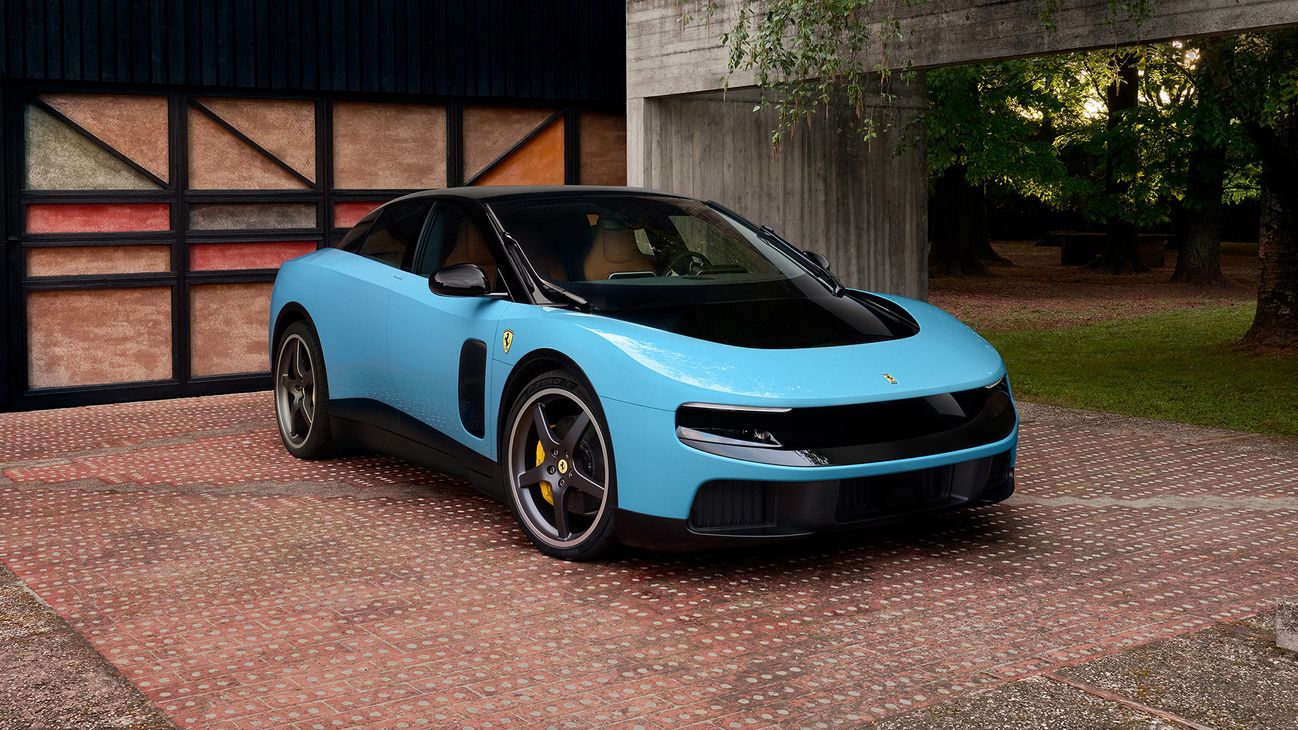
Ferrari Luce
"... introduction of a certain car called the Ferrari Luce, all of a sudden Ferrari was like,"
The Ferrari Luce is a particular model from Ferrari. The podcast mentions it as something that changed how people viewed Ferrari after it was introduced. It’s discussed more as a brand milestone than as a normal daily car.
The Ferrari Luce is referenced as a specific Ferrari model in the podcast discussion, tied to a moment when Ferrari’s lineup or direction shifted. It’s brought up in the context of how the introduction of a particular car changed perceptions or expectations around the brand. In that kind of conversation, the Luce functions as a “turning point” example rather than a general-purpose vehicle.
DSG transmission
"Because it's a DSG transmission, you said, right? So there are physical clutches in there."
DSG is a brand name for a dual-clutch automatic gearbox. It helps the car shift faster by preparing the next gear in advance.
DSG is Volkswagen Group’s branding for a dual-clutch transmission. It uses two clutches to enable rapid gear changes by pre-selecting the next gear, which is why DSG-equipped cars can shift quickly compared with many conventional automatics.
torque converters
"It's not all torque converters. Yeah, it's a DCT. It's a TCT."
A torque converter is a fluid device that lets the engine and transmission connect in an automatic car. It’s different from a clutch-based system, and it can change how the car feels when shifting.
Torque converters are fluid couplings used in many traditional automatic transmissions to connect the engine to the gearbox. Instead of a clutch directly transferring power, the converter uses hydraulic fluid to transmit torque, which can feel different from clutch-based shifting.
TCT
"Yeah, it's a DCT. It's a TCT. So it sort of is."
TCT is an acronym the hosts are using to describe the transmission type. They’re basically arguing about whether it uses clutches like a dual-clutch gearbox or works more like a torque-converter automatic.
TCT is used here as an alternate acronym for the transmission type being discussed, in contrast to a pure torque-converter automatic. In this context, the hosts are debating whether the setup behaves like a dual-clutch system (with a clutch) versus a torque-converter-based automatic.
clutch by wire
"It's a clutch by wire, [120.0s] letting drivers manually control clutch actuation"
Instead of a cable or rod connecting your clutch pedal to the clutch, the car uses electronics. Your foot tells a sensor what you want, and a motor/actuator does the actual clutch movement.
“Clutch by wire” replaces the traditional mechanical linkage (cable/rod) between your foot and the clutch with electronic control. Your pedal input is converted into signals that command an actuator to move the clutch.
throttle by wire
"I'll play my own devil's advocate. [136.9s] Throttle by wire is like that, right? [139.2s] You're not connected."
With throttle by wire, pressing the gas pedal doesn’t mechanically pull the throttle open. Sensors measure your input and the computer controls the throttle electronically.
“Throttle by wire” means the accelerator pedal doesn’t directly move the throttle plate via a cable. Instead, sensors read pedal position and an electronic controller commands the throttle actuator.
throttle body
"While in your cars, the throttle body is connected. [143.5s] Mine and mine are just cables, literal wire cables."
The throttle body is the part that controls how much air the engine gets. More air usually means more power, and in modern cars it can be controlled electronically.
The “throttle body” is the air-control valve assembly that regulates how much air enters the engine. In throttle-by-wire systems, the throttle body is moved by an actuator based on electronic commands.

Honda CRV hybrid
"But in my Honda CRV hybrid, right? [151.4s] It's throttle by wire."
The Honda CR-V Hybrid is a real-world example the host brings up to show how modern cars can control throttle electronically. Even if it’s not a cable connection, your pedal still tells the car what to do.
The Honda CR-V Hybrid is an example of a modern electrified Honda where accelerator and clutch control can be implemented with electronic “by-wire” style inputs. The host uses it to illustrate that even without a direct mechanical connection, your pedal input still results in controlled action.
potentiometer
"It is translating what you do [154.3s] via potentiometer, new electrical signals,"
A potentiometer is a sensor that turns position into an electrical signal. The car reads that signal to know how far you pressed the pedal.
A “potentiometer” is a sensor that converts a physical position (like pedal travel) into an electrical signal. In drive-by-wire systems, it helps translate your input into the data the car’s controller uses.
DSG system
"the DSG system they had set up works great. [167.8s] That's the other problem here."
DSG is a dual-clutch automatic transmission used by Volkswagen and Audi. It’s designed to shift quickly, and the host is saying it works well.
“DSG” is Volkswagen/Audi’s dual-clutch transmission system. The host is referencing how that kind of dual-clutch setup can work well, which is part of the argument about why manuals declined.
automatic transmission
"[181.0s] The automatic transmission is just better at it now. [185.3s] Doesn't mean it's more fun. [187.4s] It just means it's better at it."
An automatic transmission is a car gearbox that shifts gears by itself. You don’t have to use a clutch or move a shifter to change gears.
An automatic transmission is a gearbox that changes gears for you using hydraulic/electronic control, rather than requiring the driver to operate a clutch and shift lever. In modern cars, automatics often shift quickly and can optimize gear selection for acceleration and efficiency.

Ferrari 458
"[215.6s] And I will say that there's a guy named Jeff Siegel [218.4s] and he put a manual in a Ferrari 458. [221.8s] And we did a video on it and people went insane for it"
The Ferrari 458 is a famous Ferrari supercar with a powerful V8 and a sporty, driver-oriented setup. Here it’s mentioned because someone installed a manual gearbox into one, and people reacted strongly.
The Ferrari 458 is a mid-engine supercar from Ferrari known for its high-revving V8 and driver-focused feel. In this segment, it’s used as an example of a manual conversion that proves enthusiasts still want a traditional shift experience even in a modern, automated world.
V12 Cilindri
"[225.0s] because these cars aren't rational. [227.8s] And you're not buying a V12 Cilindri to be the fastest. [230.8s] You're buying it to be fun"
“V12” means the engine has 12 cylinders arranged in a V shape. The point being made is that people buy cars like this for the experience and sound, not just for being the quickest.
“V12 Cilindri” refers to a V12 engine configuration—an engine with 12 cylinders arranged in a V shape. The phrase is used to emphasize that buyers of certain Ferraris aren’t chasing only speed; they’re buying the character and experience of that specific engine.
full automatic mode
"Actually, what's funny about this is that this, it can go in full automatic mode. You can just go drive."
“Full automatic mode” means the car shifts gears for you. You don’t have to choose gears—it's like a normal automatic setting.
“Full automatic mode” means the car handles shifting by itself without you selecting gears. In a manual-capable system, it’s the setting where the transmission behaves like a conventional automatic for easier driving.
MoneyShifting
"Sure, yeah. It prevents you from money shifting, which is actually good."
Money shifting is when you shift into the wrong gear and the engine spins way too fast. It can be really expensive because it may damage the engine.
Money shifting is when you accidentally shift into a gear that makes the engine over-rev (too high RPM), often by skipping the correct gear. It’s called “money” because it can cause expensive damage like bent valves or a ruined engine.
pop the clutch
"Can you burn rubber? Can you just pop the clutch and just lay a wheel? I don't know if you can."
“Pop the clutch” means letting the clutch out very quickly to make the car jump forward. People do it for hard launches, but it can be rough on the car.
“Pop the clutch” refers to quickly releasing the clutch to force the car to launch abruptly, often used for aggressive starts or to provoke wheelspin. It’s a technique that can stress driveline components if done repeatedly or incorrectly.
burn rubber
"Can you burn rubber? Can you just pop the clutch and just lay a wheel? I don't know if you can."
“Burn rubber” means the tires spin and slip so much that they smoke. It usually happens during hard acceleration.
Burning rubber is slang for spinning the tires so they lose traction and the rubber overheats and smokes. It’s typically associated with hard launches or aggressive throttle input.
lay a wheel
"Can you burn rubber? Can you just pop the clutch and just lay a wheel? I don't know if you can."
“Lay a wheel” means the tire starts spinning without gripping the road. It’s basically wheelspin during a launch.
“Lay a wheel” is slang for inducing wheelspin—making one or more wheels spin without gaining grip. It’s often used in the same context as “burn rubber” and hard launches.
gated shifter
"Like or the little buttons are everybody loves a gated shifter So this should be the default and the option you should have is it should be either the the fake Manual or the full manual"
A gated shifter is a gear lever that moves through a set path for each gear. That makes it easier to find the right gear without guessing.
A gated shifter is a manual-transmission shifter that moves through a defined “gate” pattern, so each gear position is physically separated. It’s a feel-and-geometry feature that helps drivers select gears confidently and consistently.
race mode
"You're on the racetrack and for some reason you're racing a Ferrari and time matters You've just put it in race mode you drive off. You're okay now."
Race mode is a setting that makes the car act more “track-focused.” It usually makes acceleration and driving controls more aggressive and responsive.
Race mode is a driving setting that changes how the car behaves for track-style driving—typically by sharpening throttle response, adjusting shift behavior, and altering traction/stability control thresholds. The goal is to make the car react more quickly and predictably under hard acceleration and cornering.
Resvani
"So this is from two companies, but the main company is resvani And we all know a resvani from From the resvani beast they build The Wrangler that's got all kinds of body kit on it and they make a lot of very armored"
Resvani is a small car company that makes very extreme, heavily customized vehicles. The host mentions them to illustrate the kind of wild, modified car they’re talking about.
Resvani is a niche automaker known for extreme, heavily modified vehicles, most famously the Resvani Beast. In this segment, the host uses Resvani as an example of a company that builds cars with lots of visual and performance-focused hardware.
Resvani Beast
"And we all know a resvani from From the resvani beast they build The Wrangler that's got all kinds of body kit on it and they make a lot of very armored"
The Resvani Beast is one of Resvani’s most famous cars. It’s known for being extremely modified and flashy, not a normal everyday vehicle.
The Resvani Beast is a high-extremity, heavily modified vehicle built by Resvani, known for aggressive styling and a “supercar-like” presence. It’s often referenced as an example of Resvani’s approach: taking a base platform and turning it into something visually and mechanically over-the-top.

Jeep Wrangler
"From the resvani beast they build The Wrangler that's got all kinds of body kit on it and they m..."
The Jeep Wrangler is an SUV made for off-road driving. People often modify it with extra parts and body kits because it’s designed to be customized. It’s a common choice when someone wants a vehicle with a very distinctive look and capability.
The Jeep Wrangler is a rugged, off-road-focused SUV known for its removable roof and doors and its body-on-frame design. It often gets discussed in the context of aftermarket customization, like body kits and appearance upgrades, because it’s a popular platform for personalization. In a podcast, it may come up when talking about how certain cars become “projects” or showpieces rather than just daily drivers.
dual clutch
"It's basically it and if you have a dual clutch supercar [497.5s] They can take out some of the and they're building this for the a few cars interestingly"
A dual-clutch transmission uses two clutches to make gear changes faster and smoother. The point here is that the car may already shift automatically, and the device is trying to make it feel more like a manual.
A dual-clutch transmission uses two separate clutches—one for odd gears and one for even gears—so it can pre-select the next gear and shift quickly. The hosts mention it because the “fake manual” interface they’re describing is meant to work with cars that already use a dual-clutch gearbox.

Chevrolet Corvette
"They're doing it for the Corvette C8 [505.1s] But and this is I think actually a great application for the sea [507.6s] So if you get a C8, there's a little plate where you can control where you have all your controls for for selecting gears"
The Corvette C8 is the newer Corvette with the engine in the middle of the car. In this segment, it’s the specific Corvette they’re talking about for a “manual-like” control setup.
The Chevrolet Corvette C8 is the modern Corvette generation with a mid-engine layout. Here it’s important because the hosts describe a device/application being built to let the C8’s automated transmission feel like a manual-style paddle/gear interface.
paddle shifting
"Gearbox a fake 60 piece gearbox and it will translate what you want as if you're paddle shifting, I guess it'll translate that [532.9s] To the car and but there's no clutch"
Paddle shifting lets you change gears using buttons or levers behind the steering wheel. The hosts are saying the setup mimics manual-style gear selection, but the car still shifts automatically and there’s no real clutch.
Paddle shifting is a driver-control method where you use steering-wheel paddles to command gear changes. In this segment, the “fake panel” translates the driver’s paddle/gear requests into commands for the car’s automated gearbox—while explicitly noting there’s no clutch pedal.
sequential
"So it's basically another interface for paddle shifting like also. Does that mean it's always got to be sequential good [543.8s] Could you go from?"
“Sequential” means the gearbox only moves through gears in order. They’re debating whether the device can mimic that strict step-by-step shifting, or whether it can jump around gears.
A sequential gearbox only allows gear changes in order (for example, you can’t jump directly from second to fourth in one step). The hosts question whether the “manual-like” interface can emulate that sequential behavior, or whether it can skip gears like a more flexible system.
skip shift
"What was it like the C4 Corvettes that had that thing for the fuel economy? Oh the skip shift [554.2s] Yeah, could you emulate a skip shift on there for nostalgia value or I have to be"
Skip shift is a feature that can make the car start out in a way that saves fuel by skipping a gear. The hosts are joking about whether the new setup could mimic that older, quirky behavior.
Skip shift is an emissions/fuel-economy feature where the transmission forces the driver to start in a higher gear (or skips a gear) under certain conditions. The hosts bring it up as a nostalgia idea—wondering if the system could emulate skip-shift behavior for the “feel” of older cars.
overdrive
"You just leave it in six because everything after there is basically an overdrive. I guess yeah"
Overdrive is a higher gear that lets the engine spin slower when you’re going steady. That usually makes the car quieter and can help it use less fuel.
Overdrive is a gear ratio designed to keep engine speed lower at cruising speeds, improving efficiency and reducing noise. In a multi-gear transmission, the “overdrive” gears are typically the higher-numbered ones, which is why the hosts connect the idea of “everything after six” behaving like overdrive.
fake six speed
"But like if we're being honest a fake six speed Automatic and a C8 Corvette is like not a bat the best possible application..."
“Fake six speed” here refers to a transmission setup that mimics the feel of a six-speed manual (often via shift simulation or paddle/selector logic) while not being a true six-speed manual gearbox. The hosts argue that this can undermine the point of a manual—driver interaction—especially in a performance-focused car like the C8 Corvette.
manual choke
"[741.0s] Manual choke in and some old cars instead of an automatic choke because there's some people didn't like it, but [747.2s] Not common people don't usually step down"
A manual choke is a knob or lever you pull to help a car start when the engine is cold. It changes the fuel/air mix so the engine catches more easily.
A manual choke is a driver-operated control that helps an engine start by temporarily enriching the air-fuel mixture. It’s most associated with older carbureted engines, where the choke compensates for cold starting conditions.
carburetor
"[750.3s] To having that like nobody was trying to like I mean people do put carbs on fuel injected engines [757.4s] That's a common thing carbs and fuel injected."
Carburetors are fuel-delivery devices that mix gasoline with air before it enters the engine. The host contrasts them with fuel injection, noting that people sometimes choose carburetors because they can be more comfortable to tune or because they don’t want to deal with fuel-injection repair.
fuel injection
"[750.3s] To having that like nobody was trying to like I mean people do put carbs on fuel injected engines [761.7s] But that usually happens because they're either more comfortable with a carb."
Fuel injection is how many modern cars deliver fuel to the engine using valves and sensors. The host is saying older fuel-injection systems were harder for some people to repair, so carburetors sometimes got swapped in.
Fuel injection is a system that delivers fuel to the engine using electronically controlled injectors rather than a carburetor. The host points out that in the 1970s—when fuel injection was just spreading—some owners preferred carburetors because they didn’t know how to repair fuel injection.
manual shift
"[798.0s] It's odd [798.8s] But I mean odd the one things that we know it acknowledges that there's still a demand to manually shift your car"
A manual shift means you choose the gears yourself instead of letting the car do it. The host is saying people still want that more involved driving feel.
A manual shift refers to driving a car by selecting gears yourself, typically with a clutch and gear lever. The host uses it to argue that there’s still demand for driver involvement, even if automatics are objectively easier or faster in some situations.
Koenigsegg
"It's it's interesting and it's it's Koenigsegg. So that you know, Koenig the way Koenigsegg does everything is Insane so it's like that that I like better"
Koenigsegg is a small Swedish company that builds very high-end supercars. The host is using it as an example of a brand that takes unusual engineering approaches.
Koenigsegg is a Swedish hypercar maker known for extreme engineering and unconventional tech choices. Here, the host uses Koenigsegg as an example of a company that does “everything” in a particularly intense, systems-driven way.
torque changes
"had built an EV With a fake manual transmission setup just for teaching purposes and it like emulated the torque You know changes that you would get by going gear to gear, but it was an EV"
Torque is the force that actually moves the car. “Torque changes” means how that force ramps up or down between shifts.
Torque is the twisting force an engine or motor produces, and “torque changes” refers to how that force is altered as you shift gears. The host’s point is that the training EV can simulate those torque transitions to mimic the feel of gear-to-gear driving.

Porsche 718
"Porsche sales last quarter and then year-to-date and you'll see that 9-11's killing it the 718 ... They stop production of the 718"
The Porsche 718 is Porsche’s mid-engine sports car line. The host mentions it to compare sales and to talk about how Porsche is changing what versions get built, including manual options.
The Porsche 718 is the mid-engine sports-car line (Cayman/Boxster) that Porsche sells alongside the 911. Here, it’s used as a comparison point for sales momentum and for how production decisions (including manual availability) affect overall results.

Porsche 911
"Porsche sales last quarter and then year-to-date and you'll see that 9-11's killing it the 718 ... I asked because I was curious I asked Porsche ... what's the take rate on manuals? ... the GT3 ... the take rate is above 50% ... 83% got a manual"
The Porsche 911 is Porsche’s famous sports car. In this segment, the host is talking about how many people buying different 911 versions choose the manual transmission instead of an automatic.
The Porsche 911 is the brand’s iconic rear-engine sports car, and this segment focuses on how many buyers choose the manual gearbox versus automatics. The host discusses manual “take rate” across 911 variants, using sales mix to argue that manuals remain desirable for a meaningful portion of buyers.

Porsche Cayenne
"in the fourth quarter the second quarter it's could Become depending on what happens with cayenne it could become the second best selling model ... there's some change over with cayenne and all that"
The Porsche Cayenne is Porsche’s SUV. In this segment it’s mentioned because its sales could shift the overall ranking of Porsche models.
The Porsche Cayenne is Porsche’s SUV, and it’s mentioned here as a sales wildcard that could affect which 911 variant ranks highest. The host’s point is about how model mix changes quarter to quarter, not about Cayenne’s engineering.
manual take rate
"I asked Porsche I was like, okay. What's what's the take rate on manuals? What are we seeing and what they said was ... Carrera T 100% manual ... the GT3 ... the take rate is above 50%"
Manual take rate means: out of all the people who could buy a manual, what percent actually chose it. The host uses it to show that plenty of buyers still want manuals when they’re offered.
Manual take rate is the percentage of buyers who choose the manual transmission option when it’s available. In this segment, the host uses take rate numbers across 911 trims to argue that manual demand is real and concentrated in specific models.
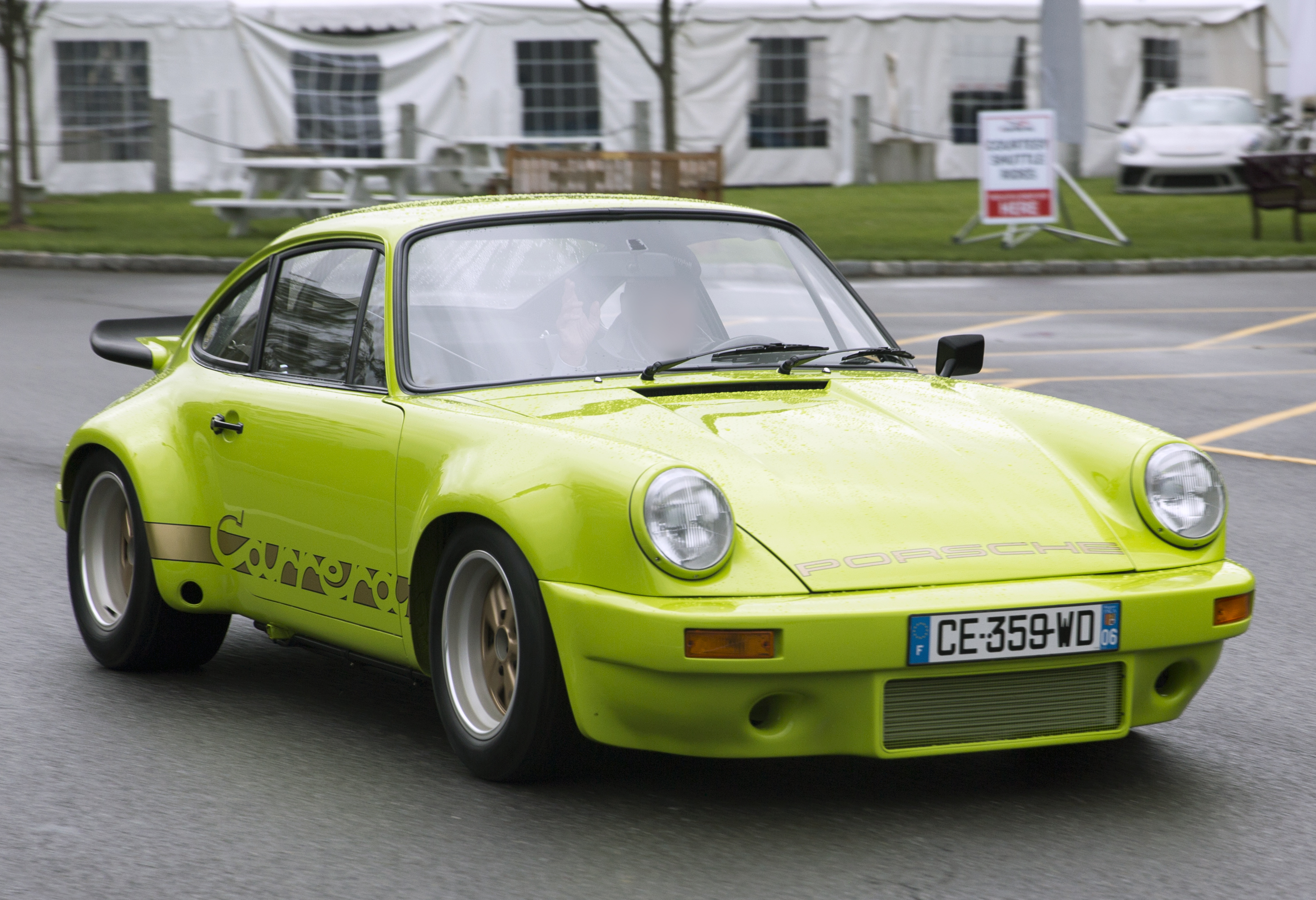
Porsche Carrera T
"They basically said the Carrera T 100% manual because that's what it is now Carrera S is 100% PDK"
The Porsche Carrera T is a specific 911 trim level. In this segment, the host says it’s set up to be manual-only, which helps explain how Porsche is steering buyers toward (or away from) manual transmissions.
The Porsche Carrera T is a 911 trim that, in this discussion, is positioned as being offered with a manual gearbox only. The host uses this to make a point about manual “take rate” by showing that Porsche has already tied certain trims to manual or PDK choices.

Porsche Carrera T
"...thought this was awesome. They basically said the Carrera T 100% manual because that's what it is now Carrera..."
PDK
"They basically said the Carrera T 100% manual because that's what it is now Carrera S is 100% PDK so then but the Carrera T"
PDK is Porsche’s automatic transmission. It uses two clutches to shift very fast, so it can feel close to a manual even though you don’t shift yourself.
PDK is Porsche’s dual-clutch automatic transmission. It’s designed to shift quickly by pre-selecting the next gear, which is why Porsche often pairs certain trims (like the Carrera S, in this segment) with PDK instead of a manual.

Porsche GT3
"The GT3 which is our best bet to look at what the manual take rate is for 9-11 because you have a choice the take rate is above 50%"
The Porsche GT3 is the more track-oriented version of the 911. In this segment, it’s important because Porsche buyers can choose a manual, and the host says more than half pick the manual.
The Porsche 911 GT3 is Porsche’s track-focused 911 variant, and it’s used here as the best proxy for manual demand because buyers can choose between manual and automatic. The host cites a manual take rate above 50%, arguing that manuals aren’t dead—they’re just concentrated among certain buyers.

Porsche GT3 Touring
"and then the GT3 touring which is gorgeous and Perfect and and in some ways the best one out ... 83% got a manual"
The Porsche GT3 Touring is a special GT3 version meant to be a bit more comfortable for real-world driving. The host uses it to show that even expensive GT3 buyers still strongly choose the manual—83% in this example.
The Porsche GT3 Touring is a GT3 variant aimed at buyers who want the GT3’s performance with a more road-friendly, less extreme setup. The host calls it “the ultimate test” for manual interest among high-spending GT3 buyers and cites a very high manual take rate (83%).
OBD port
"because we've been talking all of these things have been expensive things They've been for expensive cars. Yeah, hypothetically you could make a little Shifting do Hickey plugs into your OBD port gets control of things."
The OBD port is a plug in your car that mechanics and scanners use to read the car’s computer data. The idea here is that someone could plug in a gadget to affect how the car behaves, like shifting.
An OBD port (On-Board Diagnostics port) is the standardized connector in most modern cars used for reading diagnostic data and trouble codes. In the segment, the hosts discuss plugging a device into the OBD port to influence shifting behavior, which is why it comes up in the manual-transmission add-on debate.
shifter ninja
"Do you guys know what the shifter ninja is? What's the shifter ninja? So well, I will show you a picture of the shifter ninja because this is hilarious"
The “shifter ninja” is a gadget that looks like a shifter and is meant to make an automatic feel more like a manual. The hosts are skeptical and suggest it may mostly be for show.
The “shifter ninja” is an aftermarket “cup holder shifter” style device that’s marketed as a way to influence shifting feel or behavior. In this segment, the hosts question whether it actually changes anything meaningful versus just looking like a real shifter.
cup holder shifter
"Is a thing for oh The cup holder shifter yeah, that's the model threes and oh, yeah, thank you Griffin for pulling it up so"
A cup holder shifter is a fake-looking shifter gadget that sits in the cup holder. It’s often meant to give you a manual-like vibe, but it may not actually do much mechanically.
A cup holder shifter is an aftermarket device that mounts in the center cup holder area and mimics the look of a traditional gear shifter. The hosts use it to describe the “shifter ninja” concept and to highlight that some add-ons may be more cosmetic than functional.
drive-by-wire
"However, it's kind of weird and the the more effort that they put into making it seem like a manual the weirder it is however [1263.1s] Generally, okay with drive by wire [1265.5s] I do think I agree with you"
Drive-by-wire means the car uses electronics instead of cables or direct mechanical connections to control things like throttle. That makes it easier for the car to imitate manual-style actions.
Drive-by-wire replaces traditional mechanical linkages (like a cable) with electronic controls. For example, the car can translate your inputs into throttle or shifting commands using sensors and actuators, which makes “manual-like” behaviors easier to simulate.
fake shifts
"Even if it's I mean because electric cars now and like hybrids have fake shifts [1279.8s] Yeah, you could even do with an evie. It would make like a little [1283.1s] You could like fake it you could you could down 50."
“Fake shifts” are software-created gear-change sensations in vehicles that don’t use a traditional multi-gear transmission (common in EVs and some hybrids). Instead of real gear ratios changing, the car simulates the feel—often with torque shaping, sound, or timing—so it resembles shifting.

Hyundai 50 Ioniq
"Even if it's I mean because electric cars now and like hybrids have fake shifts [1279.8s] Yeah, you could even do with an evie. It would make like a little [1283.1s] You could like fake it you could you could down 50. Ioniq five does that like it could be done"
The Hyundai Ioniq 5 is an electric car. In some EVs, the computer can make it feel like you’re shifting gears even though there’s no real manual gearbox.
The Hyundai Ioniq 5 is an electric crossover that can use software to create “fake” shift-like behavior. The point in the discussion is that EVs can simulate downshifts/gear changes even though they don’t have a traditional multi-gear gearbox like a manual.

Toyota Corolla
"... cars It's a shame that if you can't get a Toyota Corolla Ahanda Civic ahanda cord with the manual that sti..."
The Toyota Corolla is a small, everyday car that many people use for commuting and errands. Some buyers specifically look for versions with a manual transmission because it changes how the car feels to drive. That’s why it can come up in conversations about finding the “right” setup.
The Toyota Corolla is a compact car that’s widely known for practical everyday transportation and strong demand in the used market. It’s frequently mentioned in discussions about getting the right configuration—like a manual transmission—because buyers often prioritize specific drivability and ownership preferences. In a podcast, it may be brought up as an example of a “normal” car that still has enthusiast appeal when equipped the way someone wants.

Honda Civic
"Ahanda Civic ahanda cord with the manual that stinks because even though those are not high take great cars"
The Honda Civic is a very common small car. People mention it a lot because some versions can be had with a manual transmission, so it’s an easy way to talk about what manuals are like in daily driving.
The Honda Civic is a mainstream compact car that’s often used as a reference point for what “everyday” manual-transmission driving feels like. In enthusiast discussions, it’s commonly brought up because some Civic trims have offered manual gearboxes, making it a practical alternative to pricier sports cars.

Ford Mustang
"...ould be nobody wants to get rid of a manual and a Mustang or a miata But it would be nice if you could just..."
The Ford Mustang is a sporty car that’s meant to feel fun to drive. Some people prefer it with a manual transmission because it gives you more control over shifting. That’s why it often shows up in conversations about finding cars with manuals.
The Ford Mustang is a performance-oriented sports coupe/convertible that’s become a long-running icon in American car culture. It’s often discussed alongside the availability of manual transmissions, because many enthusiasts prefer the engagement of shifting themselves. In a podcast, it may come up when someone talks about what’s worth keeping or buying in a world where manual options can be harder to find.
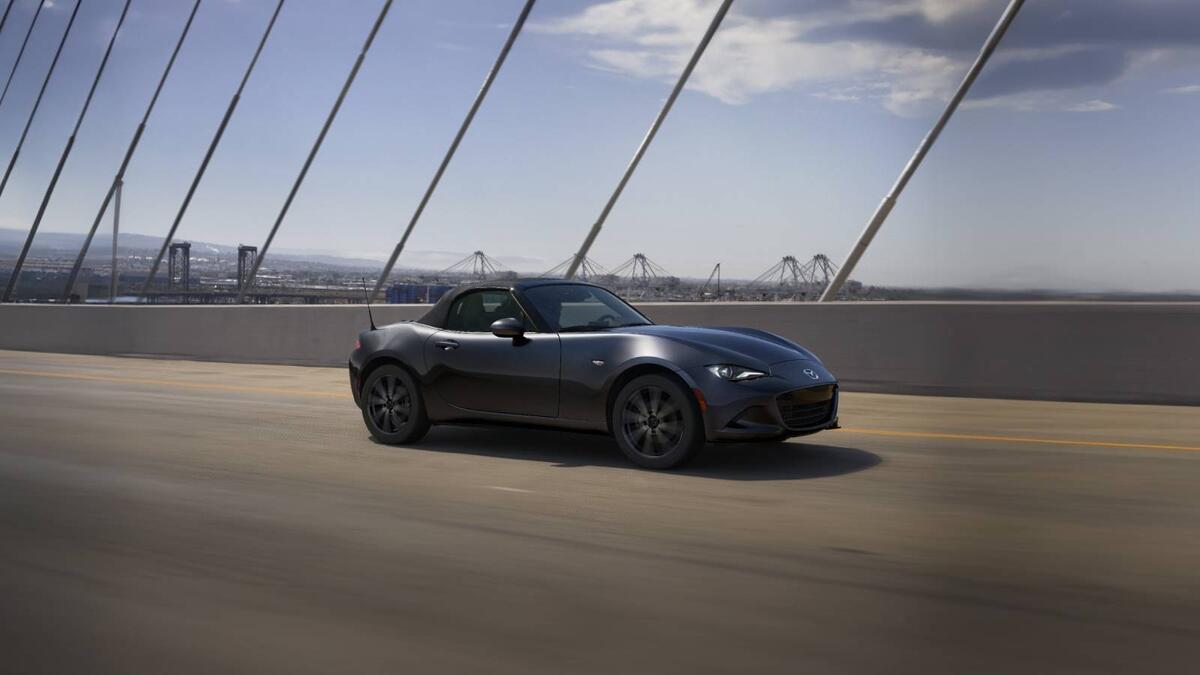
Mazda MX-5 / Miata
"...y wants to get rid of a manual and a Mustang or a miata But it would be nice if you could just get a chea..."
The Mazda MX-5 (Miata) is a small two-seat roadster designed to be fun and easy to drive. Many people like it with a manual transmission because it makes the driving feel more connected. That’s why it often comes up when someone wants a manual sports car.
The Mazda MX-5, commonly called the Miata, is a lightweight, driver-focused roadster known for its simple layout and engaging handling. It’s frequently referenced in enthusiast discussions—especially around manual transmissions—because it’s one of the more accessible “fun” cars to drive. In a podcast, it may be mentioned as a go-to alternative when people want a manual sports car experience.
fuel economy
"But it would be nice if you could just get a cheap car the manual because maybe your fuel economy wouldn't be as good or whatever [1316.9s] Based on mono ones, but repairs will probably be less over the life of the car."
Fuel economy means how far the car can go on a given amount of fuel. The hosts are saying transmission type might change how efficiently the engine runs.
Fuel economy is how efficiently a vehicle uses fuel, typically measured as miles per gallon (MPG) or liters per 100 km. In the context of this discussion, it’s brought up because transmission choice (manual vs CVT) can affect how the engine operates during driving.

Nissan Sentra
"But it would be nice if you could just get a cheap car the manual because maybe your fuel economy wouldn't be as good or whatever [1316.9s] Based on mono ones, but repairs will probably be less over the life of the car. I would bet yeah, I think we're still [1323.0s] Yeah, and I think we're generally like pro it better than a CVT [1327.6s] But that's the thing like this honestly if you if you could get one of these for like a CVT [1332.4s] Nissan Sentra"
The Nissan Sentra is a regular, affordable compact car. Here it’s mentioned as an example of a car where people might want a more engaging driving feel than a typical automatic provides.
The Nissan Sentra is a compact sedan that’s frequently offered with automatic transmissions, including CVTs on many trims. In this segment, it’s used as an example of a “cheap car” where a manual-like experience could be added without changing the whole vehicle.
semi-auto
"I've had a car that had no clutch, but you shifted my old beetle Originally had a semi-auto and the clutch was invoked when you touched the gear shift"
A semi-auto is a gearbox where the car helps with shifting, but you still have to choose gears (or at least start the change). It’s not fully automatic.
A semi-auto transmission is one where the car can automate some clutch or shift functions, but the driver still initiates gear changes. Depending on the system, the clutch may be automated while the driver selects gears, or vice versa.
hydraulic clutch
"It hit a little electrical contact and I had a hydraulic clutch"
A hydraulic clutch uses fluid pressure to move the clutch mechanism rather than relying purely on mechanical force. In many cars, the pedal operates a hydraulic master cylinder, which then actuates the clutch slave cylinder to disengage and engage the clutch.
rear transaxle
"Rear transaxle is it trans I come trying to remember the c I guess it is meninges the setup like papers"
A rear transaxle is the gearbox and final-drive hardware packaged together near the back of the car. If you’re trying to add a manual, where that unit sits can make the job much easier or much harder.
A rear transaxle is a combined transmission-and-axle unit mounted at the rear of the vehicle. It matters for manual swaps because the drivetrain layout (where the gearbox and final drive live) affects how hard it is to fit a manual transmission and linkages.
Corvette C6 Corvette
"...ke a manual is you could just buy A pretty decent c6 corvette or is maybe even stretching at a c5 06 right grif..."
The Corvette is a sports car built for performance. Some versions are available with a manual transmission, which is what the podcast is focusing on. The C5/C6 generations are often mentioned because they can be found used and still feel like real sports cars.
The Corvette is a performance sports car known for offering strong driving dynamics and, in many years, the option of a manual transmission. The podcast context points to older C5/C6-era Corvettes as examples of what you could buy if you want a manual and still get a “pretty decent” performance car. That makes it relevant to discussions about which used models still satisfy enthusiast preferences.
CVT
"[1532.3s] The best cheap car cvt is one that has a fake one that we've somehow developed ... [1588.5s] Like there's that Subaru that has a cvt that has fake shift points."
CVT means continuously variable transmission. It’s a type of automatic that changes ratios smoothly, and the host is talking about how some CVTs can be made to feel like they’re shifting gears even when they’re not.
CVT stands for continuously variable transmission, a gearbox that can smoothly change gear ratios instead of using fixed steps. The host discusses “fake” manual shift behavior on CVTs—where the car pretends to have discrete gears even though the underlying system is still a CVT.

Mazda Miata
"[1542.6s] Just just buy a c6 or that or a miata or literally anything and anything your lives"
The Mazda Miata is a small, fun roadster that many people buy because it’s enjoyable to drive. The host is name-checking it as a cheaper option if you want something that feels more like a real manual.
The Mazda Miata is a lightweight, enthusiast-focused roadster that’s often praised for being fun to drive, especially with a manual transmission. Here it’s mentioned as an alternative to expensive cars if you want a more authentic manual feel.
fake shift points
"[1583.8s] But some there's got to be some that exposes anything that has fake shift points already ... [1588.5s] Like there's that Subaru that has a cvt that has fake shift points."
“Fake shift points” means the car is programmed to act like it’s shifting gears at certain moments. Under the hood it may still be doing something different, like smoothly changing ratios.
"Fake shift points" refers to a calibration/behavior where a non-manual transmission (like a CVT) is programmed to mimic discrete gear changes. The host’s point is that the car can be made to respond to shift commands even if the transmission doesn’t truly have real gear steps.
OBD-II
"[1601.4s] I think it's less about [1603.5s] Whether the obd two works or not it's you're going to hijack the the the specific control ecu like that"
OBD-II is the common diagnostic system most cars use. The host is saying it’s not just about whether the diagnostic standard works—it’s about getting the car to actually do what you want.
OBD-II is the standardized second-generation on-board diagnostics system used in most modern cars. The host argues that even if OBD-II communication works, the real challenge is hijacking the specific transmission control ECU so the car will act on the commands.
control ECU
"[1603.5s] Whether the obd two works or not it's you're going to hijack the the the specific control ecu like that"
A control ECU is the car’s computer for a particular system. The host is saying the key is getting access to the transmission’s computer so it will respond to your commands.
An ECU (electronic control unit) is a computer that controls a specific subsystem, like transmission behavior. The host’s point is that to make a “fake manual” work, you’d need to target the transmission’s control ECU rather than just using generic diagnostics.

Volkswagen Tiguan
"You know at voltwagon tiguan Would be a great car to do this with do we know anybody with a voltwagon tiguan? And it does have a manual. I mean even in my old tig, my 2010 tiguan You can go and shift up and down through the gears like with the you know with the shifter"
The Volkswagen Tiguan is a popular SUV. Here, they’re talking about using one as an example of how an automatic car can be made to feel like it has a manual by controlling the gear changes.
The Volkswagen Tiguan is a compact SUV that, in some markets/years, can be equipped with a DSG automatic transmission that still offers manual-style gear selection. In this segment, the hosts discuss using a Tiguan as a testbed for making a “fake” manual feel by controlling upshifts and downshifts via the shifter inputs.
Request an Explanation
Heard something you'd like explained? We'll add it to this episode.
Sign in to request explanations for terms you heard.
Want to learn more?
Browse our glossary for plain-English explanations of automotive terms, jargon, and concepts.
Help improve this episode
See something that's not quite right? Our annotations are AI-generated and can sometimes miss the mark. Click the flag icon on any annotation to suggest a correction.