Here's How I Made A Brand New WWII Jeep Street Legal In 2026 And More BTS Of My Crazy Jeep Build
About this episode
David Tracy and Jason Torchinski dig into Tracy’s backyard build of a brand-new WWII Jeep using mostly eBay-sourced parts—an idea that started as a joke and turned into a life-consuming, family-and-yard-disrupting project. They discuss the logistics of doing it driveway-style (no shop), the scale of orders and parts, and the stress of partnership review with eBay Motors. Key setbacks hit right before a long trip, including early drivability and vacuum/power issues that ultimately traced to simple fixes like a shifter problem and points gap.
David has completed his WWII Jeep build using parts purchased on eBay, which was a gargantuan undertaking. What was it really like? How did we get it registered? What did it cost? David explains to Jason the background of all of this.
Story here: https://www.theautopian.com/i-bet-my-company-on-an-impossible-jeep-build-then-a-miracle-happened/
Original video here: https://www.youtube.com/watch?v=_oT7xSOcmmo
build it from nothing
"It's one thing to restore a Jeep. It's a whole other thing to build it from nothing."
This means they didn’t just fix up an existing complete car—they started with basically nothing and had to create/build most of it. That’s much harder than a normal restoration.
“Build it from nothing” describes a ground-up build approach, where you start with a bare or incomplete foundation and fabricate the rest. For a WWII Jeep turned street-legal, that usually means sourcing missing components, addressing fabrication and fitment, and then making it road-legal.
eBay Motors
"Because this is a partnership with eBay Motors, which is a huge deal for us. We'll get into that. Obviously, it being a partnership, generally they like to see things before they go up."
eBay Motors is the part of eBay where cars and car parts are bought and sold. The hosts are saying their project is connected to how eBay Motors wants to review items before they’re posted.
eBay Motors is eBay’s marketplace section focused on vehicles and automotive-related listings. When the hosts say it’s a partnership, they’re describing how the build content ties into the platform’s process for listing items.
axle assemblies
"some of the parts would come in as an assembly, like, for example, I bought an axle is I bought four axle assemblies from eBay. But obviously each axle has all these parts on it from, you know, fasteners, differential covers and the differential gears and all that."
An axle assembly is a ready-to-install “bundle” that helps the wheels get power. Instead of buying every little piece separately, you buy a whole set that already has key internal parts inside.
An axle assembly is a pre-built package that includes the axle housing and the internal components needed to transmit drive to the wheels. In a Jeep build, buying axle assemblies means you’re getting more than just a bare axle shaft—you’re also getting parts like gears and covers that would otherwise require separate sourcing and installation.
factor in every individual part
"But obviously each axle has all these parts on it from, you know, fasteners, differential covers and the differential gears and all that. So if you were to factor in every individual part, you know, well over a thousand parts, as for how many eBay orders, I think it was like 200, a little around 200"
He’s basically saying: don’t just count the big boxes or assemblies—count the individual pieces inside them too. That’s why the project feels like it has “a thousand parts” even when you only bought a couple hundred packages.
This is the idea of breaking a build down into its component count—estimating how many separate pieces exist once you consider the sub-parts inside assemblies. It highlights why sourcing and organizing parts for a restoration or custom build can become a logistics-heavy project.
differential gears
"But obviously each axle has all these parts on it from, you know, fasteners, differential covers and the differential gears and all that."
Differential gears are the gears inside the axle that let the left and right wheels turn at different speeds—like when you’re cornering. They’re a big part of how the Jeep transfers power to the ground.
Differential gears are the internal gear set inside the differential that allows the wheels to rotate at different speeds while still receiving power. They also determine how the axle behaves under load, which affects traction and drivability.
differential covers
"But obviously each axle has all these parts on it from, you know, fasteners, differential covers and the differential gears and all that."
A differential cover is the protective housing over the gears that split power between the wheels. It helps keep the fluid inside and protects the gears so the differential can work correctly.
Differential covers are the housings that seal and protect the differential’s internal gears. They’re important because they keep lubricant in, protect the gears from debris, and provide access for service or setup.
H pattern
"It would get stuck in its. So the H pattern, right? And it would just get stuck on this side."
The “H pattern” is the usual map for where each gear goes on a manual shifter. They’re saying the shifter wasn’t moving correctly between the gear positions, so the car couldn’t shift out cleanly.
The “H pattern” is the standard layout of shift positions on a manual transmission shifter. When the speaker says the Jeep’s shifter got stuck in the H pattern, they’re describing how the lever couldn’t reliably move between gates/positions.
shifter issue
"Well, I was praying that it was just a shifter issue, which I ended up being. I took a file to the shifter and I was able to file it down."
A “shifter issue” means the gear lever isn’t moving the transmission into the right gear positions. They fixed it by adjusting the shifter so it could move freely and shift properly.
A “shifter issue” means the mechanical linkage or shifter mechanism isn’t moving the transmission selector correctly. Here, the speaker later confirms it by filing the shifter and getting the gearbox to work “OK,” which points to a physical interference or binding problem.
vacuum gauge
"But the power thing I was worried about because I took a vacuum gauge to the engine, it was making no vacuum."
A vacuum gauge is a tool that checks how much suction the engine is pulling. If it shows “no vacuum,” it usually means something is seriously off with the engine’s intake/vacuum system.
A “vacuum gauge” measures engine manifold vacuum, which is a quick diagnostic for how well the engine is creating suction. The speaker says it was making “no vacuum,” which typically suggests a serious problem like a vacuum leak, incorrect timing, or an engine that isn’t running/producing manifold vacuum as expected.
distributor
"So I just bought this distributor. Yeah, it was a brand new distributor from a World War Two Jeep supplier, and I figured, well, it's a brand new distributor."
A distributor is an ignition-system part that decides which spark plug gets the spark next. It helps time the spark so the engine can run smoothly.
A distributor is part of an older ignition system that routes high-voltage current from the ignition coil to the correct spark plug at the right time. In many WWII-era Jeep-style engines, it uses mechanical timing and a set of contact points to control when the coil fires.
points gap
"It was just the points gap. That's it. I put a feeler gauge in there and set the points gap. So they were just in contact all the time. Instead of having the gap."
The points gap is the tiny space between two metal contacts in the distributor. If that space is set wrong, the engine may not spark at the right time, so it won’t run correctly.
The points gap is the small clearance between the ignition contact points inside a mechanical distributor. If the gap is wrong, the points won’t open/close at the correct moment, which can cause weak or incorrect spark timing and prevent proper engine running.
feeler gauge
"That's it. I put a feeler gauge in there and set the points gap. So they were just in contact all the time."
A feeler gauge is a set of very thin metal strips. You use it to measure the tiny gap between parts, like the distributor points.
A feeler gauge is a thin set of metal blades used to measure small clearances. Here, it’s used to set the correct ignition points gap so the contacts open and close properly.
rings
"It would be like rings or something. You'd have to pull the whole thing apart."
Rings are parts on the piston that help seal the cylinder. If they’re worn, the engine can lose compression and run poorly.
Piston rings are the metal rings on the piston that seal the combustion chamber and help control oil consumption. If rings wear out, cylinder compression can drop because the cylinder can’t seal as well.
compression check
"especially since I checked the compression, it was like 60 psi. Part of me, I've done compression checks with compression testers and I've gotten low readings like that."
A compression check is a test that measures cylinder pressure inside the engine. Low numbers can mean something inside isn’t sealing well, but sometimes the test tool or setup can be the reason.
A compression check measures how much pressure the engine builds in each cylinder while cranking. Low readings can indicate problems like worn piston rings or valve sealing issues, but the host notes that sometimes the gauge itself can be misleading.
compression testers
"Part of me, I've done compression checks with compression testers and I've gotten low readings like that. And usually it's just that the gauge doesn't work right."
A compression tester is the device used to measure cylinder pressure. If it’s used incorrectly (or the tool is off), it can give misleading low readings.
A compression tester is the tool used to perform a compression check by reading cylinder pressure during engine cranking. Different testers, adapters, or incorrect procedure can lead to readings that don’t reflect the engine’s true condition.
compression seems low
"where I'm like, the compression seems low and it's not running right. [757.4s] This is bad."
Compression is how much pressure the engine builds inside its cylinders. If it’s low, the engine may misfire or run poorly because it can’t “push” the power cycle like it should.
“Compression” refers to the engine’s cylinder pressure during the compression stroke. Low compression usually means the engine can’t build enough pressure to run correctly, often pointing to issues like worn rings, valve problems, or head gasket leaks.
vapor lock
"We had a generator that had an issue and, you know, there's some vapor lock. [791.5s] But for the most part, all told you actually came out shockingly good."
Vapor lock is when fuel gets hot enough to turn into vapor in the fuel line. Since vapor doesn’t feed the engine like liquid fuel does, the engine can sputter, stall, or refuse to restart until it cools.
Vapor lock happens when fuel in the fuel line or carburetor/feeding system boils into vapor, preventing liquid fuel from reaching the engine. It’s more common with heat-soaked fuel systems and can cause sudden stalling or failure to restart until things cool down.
tolerance pile up
"This you didn't have that. [827.1s] You had everything like you used a phrase on the when you were on the smoking tire. [831.0s] It's like tolerance pile up or something like that."
Tolerance pile-up means each part is made with tiny allowed measurement differences, and when you stack many parts together, those tiny differences can add up. The result is that the final fitment can be off, even if every single part is “within spec.”
Tolerance pile-up is when small manufacturing/fitment tolerances from multiple parts add up, causing the final assembly to be misaligned or not fit as intended. In builds that mix new parts from different suppliers, this can lead to “everything almost fits” problems that require extra measuring, shimming, or reworking.
wide open throttle
"And that's that's it for the body, really, right? ... it will literally put the pedal on wide open throttle if the body is too far forward."
Wide open throttle means the gas pedal is effectively being held all the way down. The host is saying the body could shift forward enough to mess with the linkage, making the car think you’re flooring it.
Wide open throttle (WOT) means the throttle plate is fully opened, so the engine gets maximum air flow. In a build like this, the host is warning that if the body sits too far forward, it could physically interfere with the pedal linkage and effectively force the throttle to WOT.
accelerator pedal linkage
"So I had to make sure there was enough of a gap so that any amount of flex it doesn't hit my accelerator pedal linkage and accelerate the car."
The accelerator pedal linkage is the set of parts that connect your gas pedal to the throttle. If something shifts and touches it, the throttle can open when you didn’t intend to.
Accelerator pedal linkage is the mechanical connection that translates pedal movement into throttle movement (often via rods/cables or a mechanical lever). The host is describing a clearance problem: flex in the body could contact this linkage and cause unintended throttle opening.
flex
"So I had to make sure there was enough of a gap so that any amount of flex it doesn't hit my accelerator pedal linkage and accelerate the car."
Flex means the car’s body can bend or move a little. The host is making sure that movement won’t cause the gas linkage to get hit.
Flex here means the body or sheet metal moving slightly under load or movement. The host is accounting for that movement so the fender/body won’t shift far enough to contact the accelerator linkage.
fender mounts
"So I now need to find figure out how to fit a fender between this body because it mounts the fender mounts to the body and the grill."
Fender mounts are the places where the fender bolts or attaches to the car. If the spacing is wrong, the fender won’t sit right or will interfere with other parts.
Fender mounts are the brackets/points where the fender attaches to the body and surrounding panels. The host is working out panel fitment: the fender has to fit between the body and the grill while still attaching correctly at its mounting points.
Vin plate
"I found this Vin plate on the frame."
A VIN plate is the metal tag that has the car’s unique ID number. If you can find it, it helps the government know what the vehicle is when you’re trying to get a title.
A VIN plate is the stamped identification plate that carries a vehicle’s VIN (Vehicle Identification Number). Finding it on the frame is important because it ties the vehicle to legal identity and paperwork during registration and title processing.
title
"You'll have the title of the mail two weeks and it came."
A title is the official document that proves who owns the vehicle. Without it, it can be hard or impossible to legally drive the car on public roads.
A vehicle title is the legal document that establishes ownership and identifies the vehicle to the state. In custom builds, getting a title (and sometimes temporary permission to drive) is the key step that turns a project into something you can legally operate on public roads.
building a car from scratch
"And so I went back to him and I was like, hey, I'm building a car from scratch. What do I do?"
“Building a car from scratch” usually means assembling a vehicle using parts (and sometimes a frame) rather than starting with a complete, already-registered car. The big challenge is making it legal to drive, which typically involves receipts, inspections, and title/registration steps that prove what the vehicle is and where its parts came from.
receipts
"And he said, just give me the receipts and I'll handle it."
Receipts are the paperwork showing you bought the parts. For a custom build, they can be needed so the state can verify what you used and help issue a title.
In a street-legal build, receipts are proof of purchase for parts used in the vehicle. They’re often required to satisfy registration rules and to show the parts are legitimately obtained when you’re trying to obtain a title for a custom or incomplete build.
body tub
"OK, I bought a body tub and an engine off eBay motors."
A body tub is basically the main body shell of the vehicle. It’s the part you build the rest of the car’s body around.
A body tub is the main sheet-metal “shell” of the vehicle’s body—often including the floor and inner structure—without the complete exterior bodywork. In Jeep-style builds, swapping or sourcing a body tub is common because the tub can be rusted, missing, or mismatched to the frame.
engine
"OK, I bought a body tub and an engine off eBay motors."
The engine is the part that makes the car move by producing power. When you’re building a car, the engine matters because it has to fit and work with everything else.
The engine is the power unit that produces mechanical power for the vehicle. In a build-from-parts situation, the engine choice affects fitment, wiring, cooling, and how easily the finished Jeep can be made to run and pass any required checks.
CHP office, California Highway Patrol
"I had to take it to a CHP office, California Highway Patrol, to have them assign a VIN to it."
CHP is California’s highway police. Here, they’re involved because the builder needs the state to officially identify the Jeep for registration.
CHP is the California Highway Patrol, the state agency that handles highway safety and enforcement. In this context, the CHP office is where the builder goes to get a VIN assigned for registration.
break and light test place
"And then they call it a break and light test place. We're basically and I have to install turn signals..."
This refers to a vehicle inspection station that checks required safety equipment—especially braking performance and lighting functions. For a street-legal conversion, the vehicle typically must meet specific measurable standards before it can be registered.
turn signals
"We're basically and I have to install turn signals, which is whack because or we're too deep, wouldn't have had turn signals."
Turn signals are the lights that tell other drivers you’re turning or changing lanes. If you’re converting an older vehicle to be street legal, you usually have to add them if they weren’t originally equipped.
Turn signals are the vehicle’s required indicators used to communicate intended direction changes to other road users. For a WWII Jeep street-legal build, adding them is part of meeting modern road-safety and inspection requirements.
break test
"And there's a break test, which I'm concerned about, because it has to go from 20 miles an hour to zero in how many feet."
A brake test checks whether the brakes can stop the vehicle quickly enough and within a required distance. It’s a safety check done during the process of making a vehicle street legal.
A brake test is an inspection procedure that measures how effectively the vehicle can slow down from a specified speed. The transcript describes a standard like going from 20 mph to 0 mph within a set stopping distance, which is used to verify brake performance.
drum brakes
"And I can have drum brakes on this. [1320.8s] I don't know. [1321.7s] I think I think the move is adjust the drum brakes"
Drum brakes use a round metal drum and brake shoes inside it. When you press the brake pedal, the shoes squeeze against the inside of the drum to slow the car down. Older cars often use them, and they may need adjustment so they work well.
Drum brakes are a braking system where brake shoes press outward against the inside of a spinning drum. They’re common on older vehicles and can be adjusted to change how aggressively they apply friction. Compared with modern disc brakes, they often need more frequent adjustment to keep performance consistent.
lock them up
"I think the move is adjust the drum brakes [1325.3s] to where I can lock them up. [1327.7s] Right. So at 25,"
“Lock them up” means the wheels stop rotating and skid because the brakes are applying more force than the tire can grip. That’s a sign of maximum braking effort (often discussed in terms of traction limits and brake adjustment). On older brake setups, getting to wheel lock can be a way to test whether the brakes are adjusted aggressively enough.

Ford Mustang
"But but but at the same time, like you look back and you're like, OK, [1367.8s] well, the 1965 Mustang was a template for a lot of modern pony cars and whatnot. [1372.9s] But it's different."
The 1965 Ford Mustang is one of the most influential classic American cars. It helped kick off the whole pony car idea that many later cars followed. The host is using it as an example of a vehicle that set the pattern for what came after.
The 1965 Ford Mustang is a landmark pony car that helped define the modern “pony car” formula. It’s notable here because the host uses it as an analogy: the Mustang became a template for later performance cars, similar to how the WWII Jeep influenced later vehicle design. The point is about design lineage and what later cars copied.

Honda Civic
"But there's if you were to take a modern not just a modern Mustang, like a modern civic, a modern anything would spank it."
A “modern Civic” is a newer Honda compact car. The host is saying that newer cars—even regular ones—can surprise you off-road compared to older vehicles.
“Modern civic” refers to a current-generation Honda Civic. Here it’s used as an example of how even non-off-road-focused modern cars can outperform older classics in certain off-road head-to-head scenarios due to improved tires, traction control, and chassis geometry.
geometry
"It's basic geometry, right? Like it's that weight that is angles."
In off-roading, “geometry” means how the car’s shape helps it avoid scraping and lets it climb over bumps. The host is saying this matters a lot and doesn’t really get “solved” by newer engines alone.
In off-road driving, “geometry” refers to the vehicle’s shape and clearances—how it approaches, departs, and fits over obstacles. The host argues that this is a major limiting factor that doesn’t change much over time, so it strongly affects which vehicle can win off-road.
gearing
"So when it when it comes to offroading, it's it's a game of geometry and gearing and art and suspension articulation."
“Gearing” is how the car’s transmission ratios help it move slowly and with control. Off-road, the right gearing can make it easier to crawl over rocks and keep traction.
“Gearing” in this context means the transmission and axle ratios that determine how much torque multiplication the vehicle has at low speeds. For off-roading, the right gearing helps the vehicle crawl over obstacles and maintain control when traction is limited.
offroading
"I know a lot of automakers try to cheat this, right? So when it when it comes to offroading, it's it's a game of geometry and gearing and art and suspension articulation."
“Offroading” just means driving on rough terrain like dirt, rocks, or trails. The host is saying that newer vehicles often do better because of how they’re shaped and geared, not only because of engine power.
“Offroading” here is used as the specialized context for how vehicles gain traction and move over obstacles. The host’s point is that modern off-road performance is strongly influenced by vehicle geometry and gearing, not just engine power.
suspension articulation
"So when it when it comes to offroading, it's it's a game of geometry and gearing and art and suspension articulation."
Suspension articulation is how well the suspension can “flex” when one wheel hits a bump and the other doesn’t. Better flex helps the tires stay on the ground for more grip.
Suspension articulation is how much the suspension can move independently as one wheel goes up while the other goes down. More articulation helps keep tires in contact with uneven ground, improving traction and obstacle clearance.
lockers
"There's traction and, you know, lockers are helpful."
“Lockers” are devices that help both wheels on the same axle work together. If one wheel is slipping, lockers can keep the other wheel from spinning uselessly and help the vehicle move forward.
“Lockers” refers to locking differentials—mechanisms that force both wheels on an axle to rotate together. This helps prevent one wheel from spinning freely when it loses grip, improving off-road traction.
sway bar disconnects
"And sway bar disconnects are a more modern thing."
Sway bar disconnects are a feature that lets the suspension move more freely off-road. When the bar is disconnected, the wheels can better follow bumps without the car fighting itself.
Sway bar disconnects let the vehicle temporarily disengage the anti-roll (sway) bar. That increases suspension movement during off-road articulation while still allowing the sway bar to improve on-road stability when it’s reconnected.
rocker panel
"You know, a lot of modern cars, they'll have a really low rocker panel."
A rocker panel is the lower part of the car’s body along the side. If it’s too low, it can hit rocks or ruts off-road and limit how well the vehicle can clear obstacles.
A rocker panel is the body structure along the lower sides of the car. The host mentions “really low rocker panel” to point out that lower bodywork can reduce off-road clearance and increase the chance of scraping on obstacles.

modern Jeep Cherokee
"So like, if you look at the modern Jeep Cherokee, for example, the KL is a good example, the outgoing Cherokee, it's got a huge belly and it's really low to the ground..."
The Jeep Cherokee is a regular Jeep SUV, not a purpose-built rock crawler. The host is saying this particular Cherokee version sits low and has a lot of stuff underneath that can hit rocks.
The Jeep Cherokee is a mainstream Jeep SUV that’s often used as a baseline when comparing off-road capability. In this segment, the host points out that the “KL” Cherokee has a low stance and a “huge belly,” which affects how easily it can clear obstacles.
high center
"but then you're going to high center it on a rock somewhere in the middle of nowhere."
“High center” is when the vehicle’s bottom hits a rock or bump and the car gets stuck on it. Even if the wheels have grip, the body can still get hung up.
To “high center” means the vehicle’s underside contacts an obstacle and the chassis gets stuck on it. It’s a common failure mode for off-road vehicles with insufficient clearance or poor angles, even if they have traction aids like lockers.
ground clearance
"It's just its geometry, period. How much ground clearance is there?"
Ground clearance is how much space there is between the ground and the lowest part of the vehicle. More clearance helps the car avoid hitting rocks underneath.
Ground clearance is the distance between the lowest part of the vehicle and the ground. More clearance generally reduces the chance of scraping or high-centering on rocks, ruts, and uneven terrain.
overhangs
"How much, how short are the overhangs? Its approach, departure, break over angles are everything."
Overhangs are the front and rear parts of the vehicle that stick out past the wheels. Shorter overhangs make it less likely to scrape the front or back on rocks.
Overhangs are the portions of the vehicle’s body that extend beyond the wheelbase at the front and rear. Shorter overhangs help the tires reach obstacles without the bumper or underbody contacting the ground first.
approach, departure, break over angles
"How much, how short are the overhangs? Its approach, departure, break over angles are everything."
These are three “shape” measurements that tell you how easily the vehicle can go up and down obstacles. Better angles mean the front or rear won’t hit the ground and get stuck as easily.
Approach angle, departure angle, and break-over angle describe how well a vehicle can climb up to obstacles and descend without hitting the bumper or underbody. These angles are key geometry metrics for avoiding scraping and high-centering on rocks and ledges.
traction
"There's tired grip, of course. There's traction, there's suspension articulations, very important."
Traction is how well the tires grip the ground. If traction is low, the wheels can spin or slide instead of moving the vehicle forward.
Traction is the tire’s ability to grip the surface and transmit driving/braking forces without slipping. On off-road terrain, traction depends heavily on tire type, surface conditions, and drivetrain features.
spindly little frame
"It's so small and then it's got this spindly little frame that two people can lift, just two people."
This is a description of the Jeep’s frame being light and narrow. The host is saying it can bend a bit without breaking, which helped it handle rough conditions.
A “spindly little frame” describes a lightweight, narrow chassis structure. In the context of the World War II Jeep, the speaker is highlighting how the frame is flexible enough to visibly flex under load, which is part of why these early military vehicles could survive rough use.

World War II Jeep
"That's the beauty of the World War II Jeep. And the story of the World War II Jeep, I don't think people get."
This is the original “Jeep” from World War II. It was built to be light and tough, and the frame/body was so simple and compact that it could flex and be handled by just a couple of people.
The World War II Jeep refers to the original Willys/MB-style light military vehicle built for WWII. It’s known for a very small, lightweight body and a simple, flexible chassis design that could handle rough terrain and even be lifted by just a couple of people.
American Bantam
"Like, just remember where it came from, American Bantam of all places. And if you look at the, that trace the Bantam back, it goes back to the"
American Bantam was one of the companies involved in designing the original WWII Jeep. The point here is that the Jeep didn’t come from a single famous brand—it came from companies competing to build a military vehicle.
American Bantam was an early WWII-era automaker that helped develop the light military vehicle that became the Jeep. The speaker is emphasizing Bantam’s role in the Jeep’s origins and how it was competing under tough circumstances.

Austin Seven
"And if you look at the, that trace the Bantam back, it goes back to the Austin Seven, which is even crazier."
The Austin Seven was an early, very influential small car from Britain. In this segment, the host is saying that the Jeep’s company history can be traced back through the Austin Seven.
The Austin Seven was a famous small British car from the early 20th century that became a major influence on later automotive engineering and company lineages. The speaker is making a “family tree” argument: Bantam’s roots trace back to the Austin Seven, which then indirectly connects to multiple later brands.
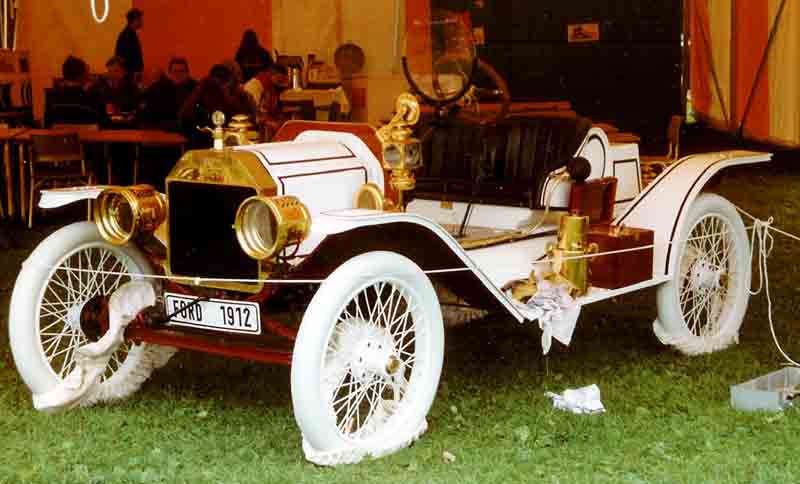
Ford Model T
"...Europe, maybe in the UK, they would, but like the Model T gets a lot of credit, but the model, the model T ..."
The Ford Model T is a very early car that Ford produced in large numbers. It’s important because it helped make cars more common for everyday people. That’s why people still talk about it when discussing the history of cars and why they became popular.
The Ford Model T is an early mass-produced car that became a major milestone in making automobiles widely available. It’s often discussed in automotive history because its design and production approach helped drive the growth of car ownership. In the podcast context, it’s mentioned as a vehicle that “gets a lot of credit,” likely in relation to how it influenced later developments and perceptions of early cars.
minimal approach
"Like the idea of these, like this ideal geometry that makes up the Jeep, you know, great break over angle, great, you know, minimal approach, high ground clearance."
This is the “how steep can you drive up to something” number. A better approach angle means the front won’t hit first when climbing over obstacles.
Approach angle (spoken here as “minimal approach”) is the steepest angle the vehicle can climb toward an obstacle without the front bumper or underbody contacting it. It’s part of the off-road geometry set that determines how capable the vehicle is at tackling rocks, ruts, and steep inclines.

Toyota Land Cruiser
"How could the 16 dudes in Butler, Pennsylvania come up with the quintessential four by four that would be copied by Toyota? [1676.6s] Yeah, the Toyota Land Cruiser."
The Toyota Land Cruiser is a tough off-road SUV that’s built to handle rough trails for a long time. Here it’s mentioned because Toyota took inspiration from the Jeep idea.
The Toyota Land Cruiser is a long-running, body-on-frame style off-road SUV known for durability and serious trail capability. In this segment, it’s referenced as a vehicle that copied the original Jeep’s “four-by-four” formula.
Butler, Pennsylvania
"And they didn't in 39 days, you have to ask yourself, how is that possible? [1660.8s] How could the 16 dudes in Butler, Pennsylvania come up with the quintessential four by four that would be copied by Toyota?"
This is the town in Pennsylvania the host is pointing to as the place where the early Jeep designers were based. It’s used to emphasize how small the team was.
Butler, Pennsylvania is referenced as the location where the early Jeep design team worked. It’s part of the story about how a small group produced a blueprint that influenced later off-road vehicles.
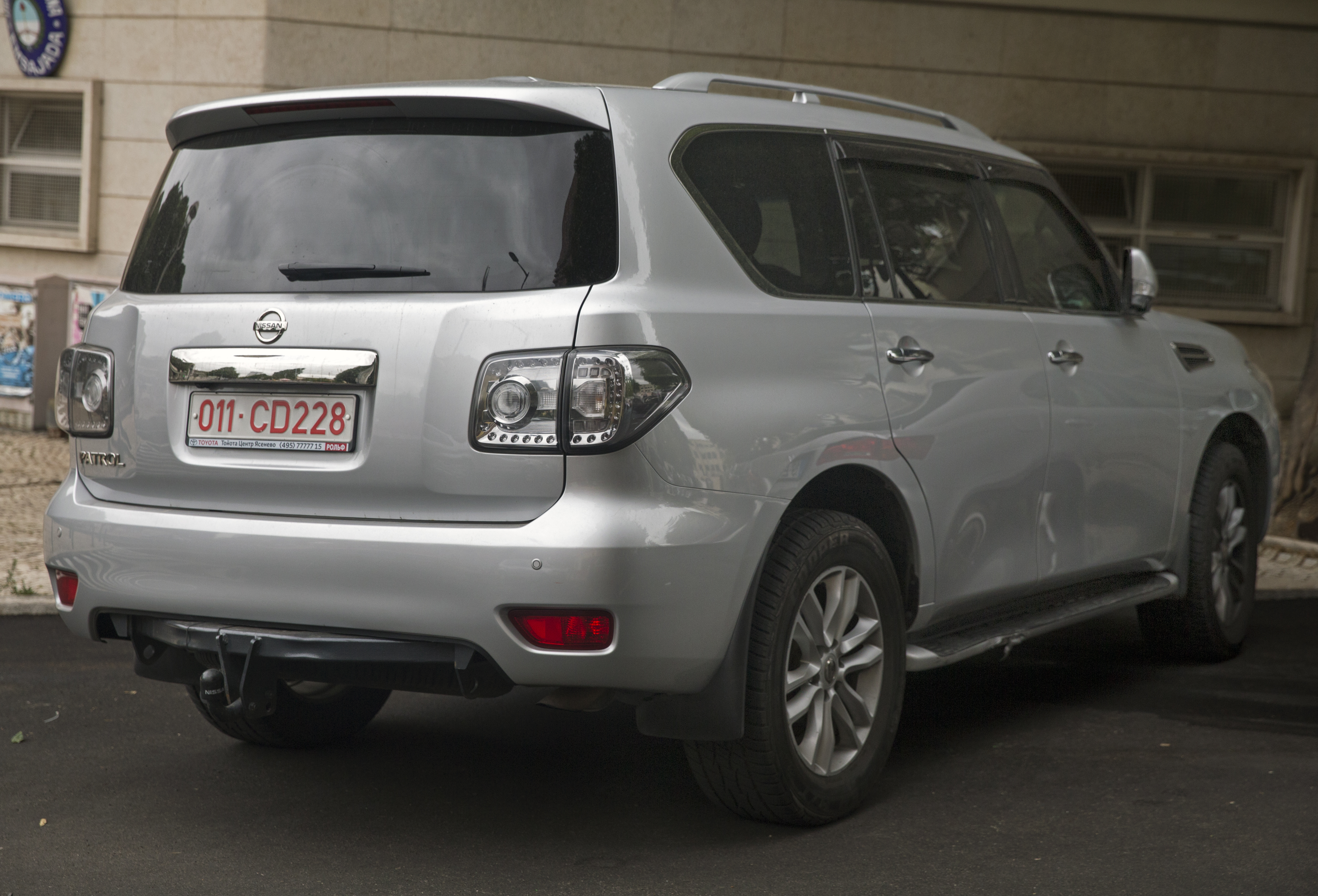
Nissan Patrol
"And here's the other thing to remember. [1686.0s] The Nissan Patrol. [1687.3s] Yep."
The Nissan Patrol is a big SUV built for rough roads and long trips. The host mentions it as another example of a brand that followed the Jeep-style off-road idea.
The Nissan Patrol is a full-size, off-road-capable SUV known for ruggedness and long-distance durability. Here it’s mentioned alongside the Land Cruiser and other brands as part of the broader “Jeep-inspired” four-by-four lineage.
blueprint for every major off-road vehicle
"It's not a dead end. It actually becomes the blueprint for every major off-road vehicle you've ever heard of from the Land Rover to the Land Cruiser to the Nissan Patrol, the Ford Bronco, all of them, all of them."
When they say “blueprint,” they mean the original WWII Jeep set the pattern for what later off-road vehicles tried to copy. It’s about the overall idea of how to build a vehicle that can handle tough terrain.
A “blueprint” here means the WWII Jeep’s core design and capability goals—lightweight mobility, durability, and off-road traction—became the reference model for later 4x4 development. It’s a way of saying the Jeep’s engineering philosophy influenced many subsequent off-road vehicles.

Ford Bronco
"to the Nissan Patrol, the Ford Bronco, all of them, all of them. You name a four wheel drive vehicle."
The Ford Bronco is an off-road 4x4 SUV that’s meant for trails and rough terrain. The host is connecting it to the WWII Jeep’s legacy as the original “go-anywhere” template.
The Ford Bronco is a classic American off-road SUV line built around trail-capable 4x4 hardware and rugged styling. Here it’s mentioned as another example of the WWII Jeep’s influence on later off-road vehicles.
Willys
"And then like Ford and Willys both had their own things that neither of them really met the requirements, right?"
Willys is another company that submitted ideas for the WWII military vehicle. The host says their proposal didn’t fit the requirements as closely as Bantam’s.
Willys is referenced as another company that responded with its own WWII vehicle approach. The host says Willys (like Ford) didn’t meet the requirements as well as Bantam did.
Austen's
"They were taking Austen's from Britain and they were basically modifying them for the American market."
The host is talking about Bantam borrowing ideas from British small cars and adapting them for the U.S. market. That’s why they had experience with small vehicles, even if it wasn’t selling well at the time.
“Austen’s” appears to refer to Austin (a British automaker) in the context of Bantam taking designs from Britain. The host’s point is that Bantam adapted small-car expertise for the American military market.
reconnaissance vehicle
"And then the government basically said, we need this reconnaissance vehicle."
A reconnaissance vehicle is basically a scout car. Its job is to go look for information—like where the enemy is or what the roads and terrain are like—before the bigger units move in.
A reconnaissance vehicle is designed to scout ahead of the main force—gathering information about enemy positions and terrain. In WWII procurement, this drove requirements like size, weight, and mobility so the vehicle could operate close to the front lines.
dimensions, the weights
"And they did give this humongous list. They're like, here's the dimensions, the weights, et cetera."
These are measurements the military gave to car builders. They’re telling them exactly how big and heavy the vehicle needs to be so it can meet the mission needs.
These are the kind of engineering specifications governments used in WWII vehicle contracts. By listing exact dimensions and weights, the requirements constrained the design so multiple contractors could build to the same measurable targets.
World War Two Jeep
"And so a lot of how the World War Two Jeep looks, yes, was kind of prescribed by the government and it's kind of the list of features that it wanted."
“World War Two Jeep” means the original WWII-era military Jeep. The host is saying the government’s rules largely determined what it looked like and what features it had.
“World War Two Jeep” refers to the WWII-era light military vehicle that became iconic for its compact size and off-road capability. The host is emphasizing that its look and features were largely shaped by the government’s detailed requirements.
stamped grill
"OK, they came up with the stamped grill. Great. 1962.2s] The stamp grill. [1963.1s] Give him credit for that."
A “stamped grill” refers to a grille made by stamping sheet metal into shape, rather than using a more complex or cast approach. In this segment, it’s brought up as a specific design contribution the host thinks Ford deserves credit for.
Willis Overland
"it would be Willis Overland because that Go Devil engine was a Willis Overland engine."
Willis Overland is another company involved with WWII Jeep production and parts. Here, the host connects it to the engine used in the Jeep, saying the engine name and supplier matter for who deserves credit.
Willis Overland is referenced as another key WWII Jeep-era supplier, particularly tied to the engine used in at least some Jeep variants. The host claims the “Go Devil” engine was a Willis Overland engine, linking Willis to a major part of the vehicle’s identity.
displacement
"What is the displacement of the Go Devil? It's 134 So it's two point three liters."
Displacement is basically how big the engine is internally—how much space the cylinders move through. Bigger displacement often means the engine can make more power, though it depends on design.
Displacement is the total volume swept by all the engine’s cylinders, usually measured in liters or cubic inches. It’s one of the main specs used to estimate how much air/fuel an engine can move, which often correlates with power potential.
horsepower
"Oh, that's pretty beefy and it makes 60 horsepower, which at the time is pretty damn good. Sixty horsepower is about 2200 pounds."
Horsepower is a measure of how much power the engine can produce. Higher horsepower generally means the vehicle can accelerate more easily, especially if the car isn’t very heavy.
Horsepower is a unit that describes an engine’s power output—how much work it can do over time. In older vehicles, horsepower numbers help listeners understand how “quick” an engine felt relative to the vehicle’s weight.
four wheel drive
"What's what are all these levers? Oh, there's a four wheel drive. Oh, I can I have four wheel drive."
Four wheel drive means power goes to all four wheels instead of just two. That helps the vehicle grip better on dirt, mud, or rough ground.
Four wheel drive (4WD) sends engine power to all four wheels, improving traction on loose, uneven, or slippery surfaces. For a WWII Jeep, 4WD is a major capability because it helps it move where a two-wheel-drive vehicle would struggle.
low range
"Oh, yeah. Then there's a low range. You have a low range gear to help you crawl incredible 60 horsepower."
Low range is a special gear setting that makes the Jeep move very slowly but with more pulling power. It’s meant for rough terrain where you need control, like climbing or crawling over rocks.
Low range is a transfer-case setting that multiplies torque for slow, controlled driving. It’s used for crawling over obstacles because it keeps the engine in a useful power band at very low vehicle speeds.
synchronized second and third gears
"That's crazy, like synchronized second and third gears like this. Like it must have been incredible."
Synchronized gears are designed to make shifting smoother. The transmission “matches speeds” so you can change gears without grinding.
Synchronized gears use synchronizers to match the speed of the gears before they engage. That makes shifting smoother and easier than older non-synchronized transmissions, especially when moving between gears like second and third.
gas tank is underneath the driver's seat
"And then you got all these fun features like the gas tank is underneath the driver's seat. You have to pull the cushion up and then unscrew it and then pull this tube up"
Putting the gas tank under the driver is a different layout than most cars. It can help with protection and keeping the fuel low in the vehicle.
Placing the fuel tank under the driver changes packaging and weight distribution compared to a conventional tank location. On military-style vehicles, it can also help protect the tank from damage and keep it low in the chassis.
headlights that could flip forward
"They had these headlights that could flip forward so you can you could then illuminate your engine bay. Like this thing was incredible in the 40s."
These headlights can swing forward instead of staying fixed. That can make it easier to reach the engine area when you need to work on the vehicle.
Flip-forward headlights are hinged or pivoting headlamp assemblies that move out of the way. This design can improve access to the engine bay for maintenance or inspection, while still providing road lighting.
think outside the box
"And so you have to think outside the box. And I thought this building it from scratch and it's rich history."
It just means trying a different, more creative approach instead of doing things the normal way. For a car build, that can mean taking an unusual path to get the result you want.
“Think outside the box” is a general creativity phrase meaning you look for unconventional approaches instead of following the usual playbook. In car-building terms, it often translates to doing a build in a non-traditional way—like sourcing parts differently or combining eras/technologies.
build from scratch
"And I thought this building it from scratch and it's rich history. It's place in the psyche of the average American"
“From scratch” means you’re not just tweaking an existing car—you’re putting it together using parts you source. That usually takes more planning and work, but it can make the final build more personal.
Building from scratch means starting with a largely blank slate—sourcing components and assembling the vehicle rather than simply buying a finished or lightly modified car. In enthusiast circles, it usually implies more custom work and more decisions about parts, fitment, and systems integration.
new frame
"because I just think it having a new body and a new frame. Are good."
A “new frame” means replacing the main metal skeleton the car sits on. It’s a big, expensive job, but it can make the build safer and more solid.
A “new frame” means replacing the vehicle’s chassis structure, which is the main load-bearing foundation. In classic/WWII-style Jeep builds, swapping in a new frame is a major step that can affect safety, fitment, and how “new” the finished vehicle feels.
new body
"because I just think it having a new body and a new frame. Are good."
A “new body” means the outer metal shell is replaced instead of just patched up. In a big restoration, that can make the project feel much more like a fresh build.
A “new body” in a restoration/build context means replacing the vehicle’s exterior shell rather than repairing the original. The speaker pairs it with a “new frame,” implying major structural replacement to support the “brand new” WWII claim.
brand new World War Two
"But for me to feel comfortable calling it a brand new World War Two, you have to have to be new. Yeah. Yeah."
They’re debating what it really means to call a Jeep “WWII” if you replace a lot of it with new parts. The idea is: if you put in new big pieces like the body and frame, it feels more like a fresh build than a restoration.
The speaker is talking about what it means to call a Jeep a “brand new” WWII vehicle after a modern restoration. In practice, this is about how much of the original car is replaced versus rebuilt, and whether new major structures (like the body and frame) justify the label.
seat cushions
"I mean, these prices on eBay are they're very good prices for, you know, for seat cushions and the top and, you know, all these parts."
Seat cushions are the padded part you actually sit on. If you’re rebuilding an older Jeep, getting the right cushions can be expensive because they’re not always easy to find.
Seat cushions are the upholstered foam/rubber pads that form the seating surface. In a restoration or build, replacing them is often a major cost because you may need period-correct or specialty upholstery.
45 miles an hour max
"So when I come into town, am I going to drive this around town at 45 miles an hour max? You're not going to want to."
“45 miles an hour max” means the vehicle can only go up to about 45 mph. If traffic is moving faster, it can feel slow and uncomfortable to drive.
“45 miles an hour max” is a reference to the vehicle’s top speed limit. For street driving, a low top speed can make commuting stressful—especially in traffic where other cars move faster.

Chrysler PT Cruiser
"I think we should get like a company like PT Cruiser or something just so that you can go faster than 40."
The Chrysler PT Cruiser is a regular modern-ish car (for its era) that’s easier to drive day-to-day than a WWII Jeep. The host mentions it to say you could go faster than the Jeep’s limited speed.
The Chrysler PT Cruiser is a compact car known for its retro styling and practical everyday usability compared with a slow, open-top WWII Jeep. In the segment, it’s used as a reference point for having a higher cruising speed than a limited top speed.
spray cooking oil
"You just cook. You just spray cooking oil in that frame and just cook you up and let the coyotes have at you."
“Spray cooking oil” is just a dramatic joke. The point is that the vehicle feels like it’s asking for trouble—like it would be unsafe or miserable in that situation.
“Spray cooking oil” here is a vivid metaphor for making the vehicle’s frame dangerously slippery or flammable. It’s not a real automotive technique, but it highlights how exposed/unsafe the build can feel in the host’s scenario.

Jeep Wrangler YJ
"One, I have a Jeep Wrangler YJ in really nice condition [2429.6s] that was my wedding Jeep. OK, I got married."
A Jeep Wrangler YJ is an older Wrangler model (a specific generation). People like it because it has a classic, simple Jeep design that’s great for off-roading and easy to work on.
The Jeep Wrangler YJ is a specific generation of the Wrangler, produced in the late 1980s and early 1990s. It’s known for its classic boxy look and simple, straightforward off-road hardware compared with later Wranglers.
electronic helper bullcrap
"There's no no complicated, you know, electronic helper bullcrap in there. It's just just the fundamentals."
The host is talking about modern car electronics that can help you stay in control, especially on slippery or rough terrain. They’re saying the old Jeep doesn’t have those kinds of aids, so you have to learn the basics yourself.
This is the host’s informal way of referring to modern electronic driver-assistance systems that can help with traction, stability, and off-road control. The point is that the WWII Jeep doesn’t have these “helpers,” so driving skill matters more.
Request an Explanation
Heard something you'd like explained? We'll add it to this episode.
Sign in to request explanations for terms you heard.
Want to learn more?
Browse our glossary for plain-English explanations of automotive terms, jargon, and concepts.
Help improve this episode
See something that's not quite right? Our annotations are AI-generated and can sometimes miss the mark. Click the flag icon on any annotation to suggest a correction.