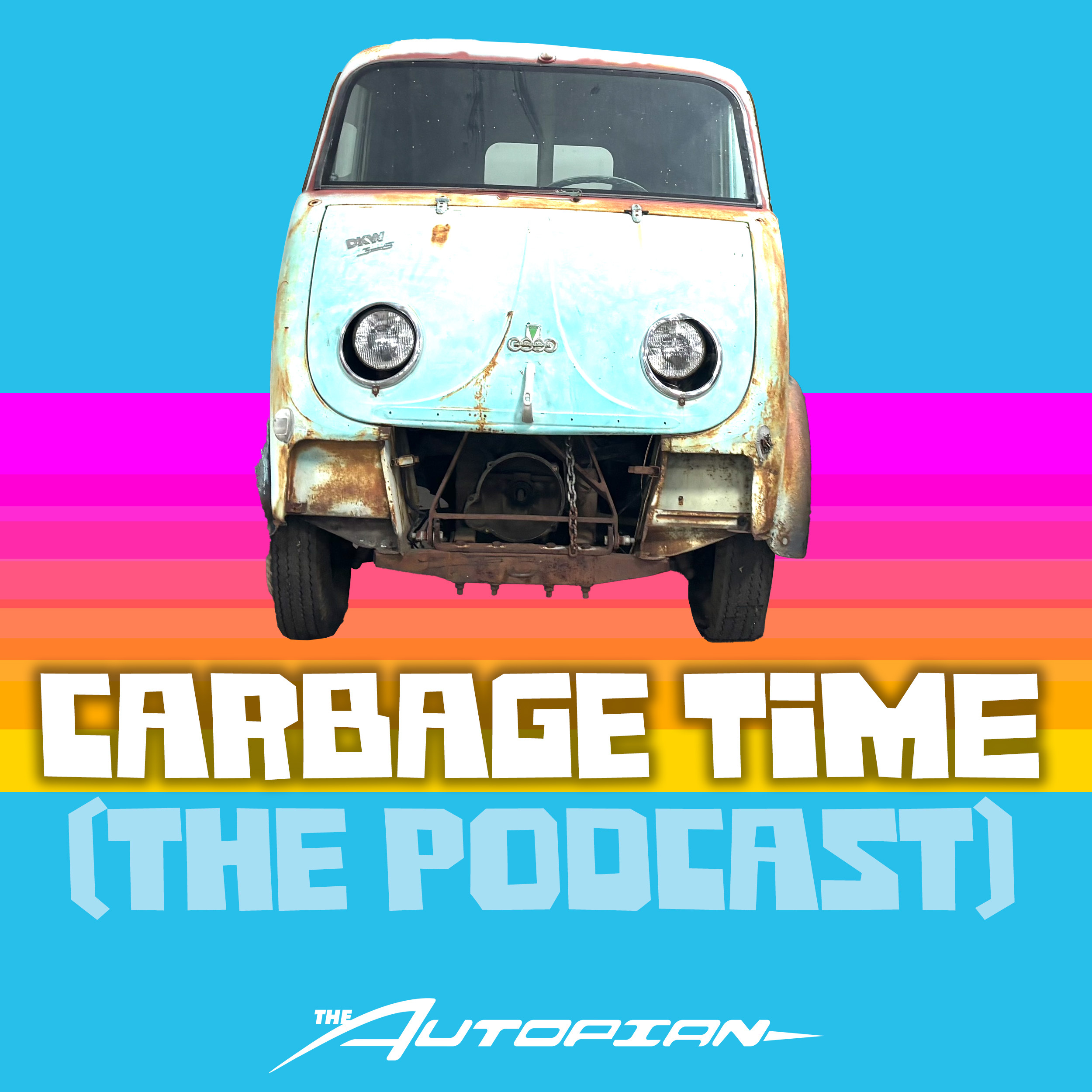
Ford's Tiny $30,000 EV Pickup Truck Is Totally A REAL Pickup Truck
About this episode
Hosts wrestle with whether Ford’s tiny EV “pickup” prototype is a real truck, arguing that truck utility—moving/hauling in an open bed—matters more than size. They also dig into the pitch behind a rumored ~$30k EV pickup: buyers pay for “cool factor,” and range targets around 200 miles minimum, with Ford aiming for about 300 miles via efficiency (aerodynamics, weight reduction, energy management) rather than bigger batteries. They expect to “prove” it’s a truck when they get one.
After David Tracy and Griffin Riley saw Ford's new EV pickup truck testing down in Long Beach, we had a lot of people weigh in with their thoughts about what is and isn't a real pickup truck, which brings us HERE! Listen in now!
Hosts: David Tracy, Jason Torchinsky
Producer: Griffin Riley
Music: Artlist
Read more of our thoughts at our website: https://www.theautopian.com/ And follow us on all your favorite social media pages!
- Instagram: / theautopian
- YouTube: / @theautopian
- TikTok: / the_autopian
- Facebook: / theautopian
- X: https://x.com/the_autopian
Buy your Autopian merch here: https://galpinautosports.myshopify.co... Have any story ideas?
Email them to [email protected]
Jim Farley
"And even CEO, Jim Farley, tell me what he said, David. [140.9s] What do you say? [141.6s] According to AutoLine, he said it's not really a pickup."
Jim Farley is Ford’s top executive. Here, he’s being quoted about whether Ford’s new EV pickup really counts as a proper truck.
Jim Farley is the CEO of Ford. In this segment, he’s quoted as saying the new Ford EV pickup doesn’t qualify as a “real” pickup/truck, which frames the debate about what counts as a truck.
pickup
"According to AutoLine, he said it's not really a pickup. [145.1s] And he said not really a truck specifically, right?"
A “pickup” usually means a truck with an open cargo bed behind the seats. The argument here is whether this EV truck’s bed is big enough to still count as a real pickup.
In automotive terms, a “pickup” is typically a truck body style with an open cargo bed behind the cab. The hosts are debating whether this Ford EV pickup’s bed size and layout still meet that definition.
what actually defines a truck
"Either not really a pickup or not really a truck. [150.3s] What do you think about that, Jason? [152.0s] See, okay, I think, I disagree with Mr. Farley here. [157.3s] And I think we should talk right now [158.5s] about what actually defines a truck,"
They’re about to argue about what makes something a “real truck.” Is it the shape (like having a bed), or is it what it’s meant to do?
“What defines a truck” is a classification debate: whether it’s defined by body style (like having a bed), intended use (hauling/carrying), or traditional expectations (size, capability). This segment sets up the criteria the hosts will use to judge the Ford EV pickup.

Piaggio Ape
"So like obvious examples, Piaggio Ape, three-wheeler, [183.6s] again, not mainstream, but it is used as a truck. ... Look at that Piaggio Ape. [206.0s] I mean, the thing is, it's just a tray, [207.8s] it's just a little tray behind a little cabin."
The Piaggio Ape is a very small three-wheeled vehicle that can carry stuff. People use it like a little truck because it has a cargo area behind the cabin.
Piaggio Ape is a small three-wheeled vehicle made by Piaggio that’s often used like a micro-truck. It’s basically a tiny cabin with a cargo tray, so it can haul goods even though it’s not a conventional pickup.
workhorse
"And a true workhorse, if you've been around. [190.7s] A workhorse, truly a workhorse. [193.0s] If you've been to Italy, these things do F-150 jobs"
A “workhorse” is a vehicle people rely on for real jobs. It’s the kind of truck that’s used to haul things regularly, not just for looks.
“Workhorse” is a car-and-truck term for a vehicle that’s expected to do heavy, repetitive jobs day after day. In this segment, it’s used to describe vehicles that earn their keep by hauling and doing practical work.
F-150 jobs
"If you've been to Italy, these things do F-150 jobs [196.3s] all day long. They're just loaded with stuff, they're hauling."
“F-150 jobs” means the kind of work people expect a normal pickup truck to do—like hauling and getting things done. It’s using the Ford F-150 as an example of a capable work truck.
“F-150 jobs” is shorthand for the kind of everyday hauling and utility work associated with the Ford F-150 pickup. It’s a reference point for “real truck work,” like carrying loads and doing practical tasks.
bed
"You can put gravel in a truck. You can put all kinds of like messy things that you like. The beauty of a truck is whatever happens in that bed stays in the bed and that's that's just for between you and the Lord."
On a pickup truck, the “bed” is the open box in the back where you put cargo. The hosts are saying that’s why pickups are good for dirty or bulky stuff.
In pickup trucks, the “bed” is the open cargo area where you load items. The hosts use it to contrast pickups with SUVs, emphasizing that the bed keeps mess and cargo contained.
two CV
"Yeah, exactly. And that's that's a key definition of what a truck is. That's why even if the bed is small, if you can dump whatever in there and there's no height, because I think that's a good point, David, like you can just stack stuff up there. And if you tie it down or whatever, it's fine. That defines a truck and Griffin, like go to the. There's a weird Citroen there. So in Chile, they made this thing called a Citroenetta. They needed a local version of the two CV"
“2CV” is short for a Citroën car called the 2CV. It’s a simple, old-school small car, and the hosts are saying Chile made a local version inspired by that idea.
“2CV” is shorthand for the Citroën 2CV, a lightweight, front-engine, front-wheel-drive car designed for simple, economical transportation. In this context, the hosts are comparing a local Citroën-based model (“Citroenetta”) to the original 2CV concept.
tailgate
"It's one thing to have, let's just say, a four foot bed. Let's just say you put something that's six or seven feet in a four and a half foot bed, it can hang out of the tailgate. Exactly. Leave the tailgate down."
The tailgate is the back door on a truck that can swing down. It helps you load tall or awkward items, and you can leave it down so the cargo can stick out a bit.
A tailgate is the hinged door at the back of many trucks and some SUVs that swings down to make loading and unloading easier. In the segment, the point is that a short bed can still work if tall items can extend above the bed while the tailgate is left down.
Ford 302 V8 engine
"if I drive my little EV Ford truck to the junkyard and I and I put an entire Ford 302 V8 engine, which is not more than a couple feet, right?"
The Ford 302 V8 is an older Ford engine with eight cylinders. People recognize it because it’s a common engine for classic cars and engine swaps.
The Ford 302 V8 is a classic small-block V8 engine displacement: 302 cubic inches (about 4.9 liters). It’s a well-known American engine family associated with many older Ford performance and swap projects, which is why it’s used here as an example of “real truck” practicality.
gatekeeping with trucks
"I don't understand there's a lot of weird. This is weird gatekeeping with trucks that I don't fully understand. Like this weird urge to define like what people say is a truck and is it like"
“Gatekeeping” means people arguing about who gets to call something a “real” truck. In this case, they’re debating rules like whether it can tow.
“Gatekeeping” here means arguing over who gets to label something as a “truck,” based on rules like whether it can tow. The hosts are questioning whether those criteria should matter for defining a pickup’s identity and purpose.
towing
"Like this weird urge to define like what people say is a truck and is it like 503.3s towing gets brought up a lot. Do you think it does a truck have to be able to tow?"
Towing means pulling something behind your vehicle, like a trailer. Some people think a truck only counts if it can tow heavy stuff.
Towing is pulling another vehicle or trailer behind you, which typically requires enough power and appropriate drivetrain/braking capacity. In pickup-truck debates, towing capability is often treated as a key definition of what counts as a “real” truck.

Ford lightning
"They're not expecting a Ford lightning replacement, except for example. So I guess he was expecting though. Like what is he?"
The Ford Lightning is Ford’s electric pickup truck. The hosts are saying people might assume a new EV pickup would be like the Lightning, but Ford wants to set different expectations.
The Ford Lightning is Ford’s electric pickup truck, built on the F-150 platform. It’s used here as a reference point for what people might expect from an EV pickup—range, size, and “real truck” capability.

F 150
"And when people think truck, they think F 150. I think that's what or Ranger or something. This is not this is very different."
The Ford F-150 is Ford’s most famous pickup truck. The hosts are saying that when most people hear “truck,” they picture something like an F-150.
The Ford F-150 is Ford’s best-known full-size pickup, and it’s often the default “what people think of when they think trucks.” The hosts use it to explain why Ford is trying to manage expectations for a smaller EV pickup.

Ford Maverick
"OK, think about what the Ford Maverick was for Ford. It was basically like, look, we can't sell sedans."
The Ford Maverick is a small pickup truck from Ford. The host is using it as an example of Ford making a compact truck because that’s what customers actually want to buy.
The Ford Maverick is Ford’s compact pickup built around the idea of a small, affordable truck for people who don’t want a full-size pickup. In this segment, it’s used as a reference point for Ford’s strategy: make a “little truck” when other body styles (like small sedans) aren’t selling.
EV
"So let's just take our typical approach, use what we're good at and just make our EV a little pickup truck."
EV means electric vehicle. It’s a car that runs on electricity from a battery, not gasoline.
EV stands for electric vehicle, meaning the car is powered primarily by one or more electric motors instead of a gasoline engine. Here it’s used to describe Ford’s plan to package an electric powertrain into a pickup-style body.
Rivian
"[798.1s] Rivian, I think, has done a great job building a brand like that as well. [801.3s] And I think Ford and Slate, you know, they could have come out with just [804.4s] a sedan or something boring, you know, and they understood we it needs"
Rivian is an electric-vehicle company. The point here is that they’ve made their cars feel like something you’d want, not just something you need.
Rivian is an EV brand that’s built its identity around adventure-oriented electric vehicles, including pickup-style and SUV products. The host credits Rivian with successfully building a brand that feels “cool” rather than purely practical.
front
"[831.0s] I mean, this one is in a way, here's one advantage of an electric [835.0s] pickup over a regular pickup, and that's the front, because one of the things [838.8s] that a pickup like so I took a Maverick on a road trip last year and I wasn't hauling."
On many electric cars, there’s storage up front instead of an engine. The host is saying that front storage can be really useful for carrying bags and luggage.
In EVs, the “front” storage area is often a frunk—an enclosed compartment where a gas engine would normally take up space. The host argues that this front storage is a real, everyday advantage over a traditional pickup when you’re carrying luggage or smaller items.
frunk
"If you know, if you have a laptop bag, camera bag, a frunk is a freaking fortress, man. You'd have to tear into that metal."
A frunk is a trunk at the front of an EV. Since there’s no engine in the front, the space can be used to store bags or gear.
A frunk is the front trunk space on an EV (or other front-engine packaging) where the engine would normally be. It’s created because many EVs don’t have a traditional engine up front, so manufacturers use that volume for storage.
range
"And I mean, range, we're not going to spend too much time on this topic, but like [962.1s] part of the reason why it's small is, is that the whole point is Ford wanted"
For an electric truck, “range” is how far it can go before the battery runs out. It’s basically the EV’s driving distance on one full charge.
In an EV context, “range” means how far the vehicle can drive on a full battery charge. It’s usually expressed in miles or kilometers and depends heavily on speed, weather, and driving style.

Volkswagen Id Buzz
"...e, okay. Um, cause that just like I had, I took a ID buzz and a road trip. It's range is about 200."
The Volkswagen ID. Buzz is an electric van. It’s made to be used like a regular van, but it runs on electricity instead of gas. The podcast mentions a road trip and gives an estimate of its driving range.
The Volkswagen ID. Buzz is an electric van that’s designed around the classic “Bus” shape, but with modern electric power. It’s often discussed in terms of real-world usability, including charging and driving range. In the podcast, the speaker mentions taking a road trip and notes a range of about 200 (likely miles).
charging at home
"[1011.4s] However, you're charging at home. [1013.3s] If you can charge at home, it's totally fine. [1015.9s] If you live in an apartment or you live somewhere where you can't"
“Charging at home” means plugging the EV in at your house or apartment so it’s ready when you need it. The host says it makes a smaller EV much more convenient.
“Charging at home” refers to plugging in the EV where you live, typically overnight, so you start each day with a full or near-full battery. The host argues that home charging makes a limited-range EV much easier to live with.
entry level trim
"[1058.3s] Ford's target range for its upcoming mid-sized universal EV truck is [1062.1s] approximately 300 miles for the entry level trim. [1066.3s] What?"
“Entry level trim” is the base version of a model line, typically with fewer features and a lower price than higher trims. When Ford quotes a range target for the entry-level trim, it implies that even the cheapest configuration is expected to meet roughly the same headline usability goal.
energy management
"Instead of using larger, more expensive batteries, we're focusing on extreme vehicle efficiency through aerodynamics, weight reduction, and energy management."
Energy management is how an EV decides where to send its battery power. It helps the car use electricity efficiently so you get more range.
In an EV, energy management is how the vehicle allocates and controls electrical energy across systems like the motor, battery, heating/cooling, and charging. The goal is to keep efficiency high so you can drive farther on the same battery charge.
aerodynamics
"Instead of using larger, more expensive batteries, we're focusing on extreme vehicle efficiency through aerodynamics, weight reduction, and energy management."
Aerodynamics is how the car’s shape pushes through air. A smoother shape reduces resistance, so the EV needs less power and can go farther.
Aerodynamics is the study of how air flows around the vehicle, and in EVs it directly affects efficiency by reducing drag. Lower drag means the motor needs less energy to maintain speed, which helps range.

Ranger
"When you say midsize pickup, do you mean Maverick or Ranger? With an increased emphasis on aero, does this mean the new truck may introduce a new design image?"
The Ford Ranger is a bigger pickup than the Maverick. They’re tossing it out to figure out what size truck Ford is talking about.
The Ford Ranger is a midsize pickup that’s larger than the Maverick in most configurations. The hosts mention it to clarify what Ford might mean by “midsize pickup,” before shifting to how the EV’s aerodynamics and packaging could differ.
clean sheet
"The truck will be comparable in footprint to a Maverick, but because it's clean sheet and EV design, the only similarity to Maverick is the size comparison."
A “clean sheet” design means the car was designed fresh, not just modified from an older design. That can help the EV be shaped and built for efficiency from the start.
A “clean sheet” design means the vehicle is developed from the ground up rather than being based on an existing platform. That allows engineers to optimize the packaging for an EV layout and aerodynamics instead of adapting a gasoline truck’s architecture.

Honda Ridgeline
"...uld pull this up, but the second generation Honda Ridgeline, the very first one before the facelift, it had a..."
The Honda Ridgeline is a pickup truck that’s meant to feel comfortable and easy to drive. The podcast talks about the second generation and specifically the earliest version before Honda updated it. That usually matters because updates can change features or design details.
The Honda Ridgeline is a pickup truck that’s designed to blend truck utility with a more car-like ride and everyday comfort. The podcast specifically references the second generation and notes an early version “before the facelift,” which implies there were changes later. It’s brought up as part of a discussion about that model’s features or history.

Ford F100
"...g up an example. Griffin, bring up, there's a red F100. Red Ford F100."
The Ford F-100 is an older pickup truck model from Ford. People mention it when they’re talking about classic trucks or pointing out a specific example, like a red one. It’s not a modern model name used for today’s trucks.
The Ford F-100 is a classic older-generation pickup, typically associated with vintage truck styling and a simpler mechanical layout than modern trucks. It’s mentioned in the podcast as a specific example—“a red F100”—which suggests the conversation is about recognizing or comparing older truck models. Because it’s an older nameplate, it often comes up in discussions about automotive history and design.

Dodge Challenger
"...n their, the, the channel, like, remember the 80s challenger? Shit, hold on, hold on, let me see."
The Dodge Challenger is a performance car that’s known for a sporty, muscle-car style. People often talk about it because it reminds them of older muscle cars from past decades. In the podcast, it’s mentioned as a specific model from that era.
The Dodge Challenger is a classic-style American muscle car known for its powerful performance and long-running popularity. It’s often referenced in conversations about the 1970s and 1980s muscle-car era because the nameplate is strongly tied to that look and feel. In the podcast, it comes up as a memory trigger about the “80s Challenger.”

Dodge Rampage
"What was it? Was the, yeah, the rampage, right? ... The Dodge rampage ... it's not modern by modern aerodynamic standards, but a Dodge rampage was a truck with a sloping face and a low hood."
The Dodge Rampage is an older Dodge pickup that looks more like a small car than a typical truck. The hosts are pointing out that its front end is shaped in a way that still looks stylish.
The Dodge Rampage is a compact pickup from the 1980s, known for its car-like styling rather than a traditional truck look. In this segment, the hosts highlight its sloping front face and low hood as key to why it can still look “cool” aerodynamically and visually.

Chevrolet SSR
"I also want to pull up the Chevy SSR if you could, because the SSR, we just kind"
The Chevy SSR is a special Chevrolet pickup that was designed to look more like a fun, stylish car than a work truck. They’re mentioning it as another example of a truck-like vehicle with a distinctive front-end look.
The Chevrolet SSR is an 2000s-era “pickup” styled like a retro roadster, often discussed as a modern example of making a truck-shaped vehicle look stylish. The host brings it up to compare how different manufacturers can shape the front end and overall body style to feel cool.
sports truck vibe
"So a vehicle, if you look at this, right? It's got, it's a retro design, but you could de retro it and it would still kind of work. So I think, I do think that a tapered nose lends itself to more of a sports truck vibe."
The host is talking about making a pickup look more “sporty,” like a performance car. They think the front-end shape—especially a tapered nose—can make a truck feel more athletic.
“Sports truck vibe” is the idea of making a pickup look and feel more like a sports vehicle—through styling cues like a tapered nose and more aggressive front-end proportions. The host argues that certain design elements (like a tapered front) can visually shift a truck toward a sportier identity.
tapered nose
"So I think, I do think that a tapered nose lends itself to more of a sports truck vibe. Yeah."
A “tapered nose” means the front of the vehicle gets narrower as it goes forward. The host thinks that shape makes the truck look faster and more athletic.
A “tapered nose” is a front-end design where the body shape narrows toward the grille and headlights, creating a more aerodynamic, performance-oriented look. In this segment, it’s presented as a styling cue that helps a truck read as “sporty,” not just retro.
fender flares
"They're going to, they're going to have a sport, sporty nose. They're going to maybe have some fender flares in the back potentially. Maybe not."
Fender flares are the plastic or metal pieces that stick out over the wheel area. They can make the truck look wider and more aggressive, and sometimes they help cover tires.
Fender flares are add-on or integrated body panels that extend outward over the wheel arches. They’re often used to visually widen the stance and can also help cover wider tires—here, the host speculates Ford might use them to enhance a sporty look.
four door sports truck
"But this could look like a four door sporty thing that happens to have a bed. It might be unlike anything we've ever seen. That's exciting. Right. Because have we ever seen a four door sports truck, really?"
The host is imagining a pickup with four doors (a crew cab) that’s styled to look sporty, like a performance car. They’re saying this combo is rare in the real world.
A “four door sports truck” is a styling/packaging concept: combining a pickup’s bed with a sportier, more performance-car-like look while using a crew-cab layout (four doors). The host notes it’s unusual—suggesting the market hasn’t really seen this exact blend of “sports” styling and a double-cab truck format.

Hyundai Ioniq
"But you could get an Ioniq five as well, you know what I mean? [1538.9s] But this has to be cool."
The Hyundai Ioniq 5 is an electric SUV/crossover. The host is saying that for similar money, buyers might choose it instead of a pickup if the pickup doesn’t offer a strong reason to switch.
The Hyundai Ioniq 5 is a modern EV crossover that’s often used as a value-and-range comparison against other EVs. Here, it’s brought up as an alternative buyer option if the pickup’s price-to-range isn’t clearly better.
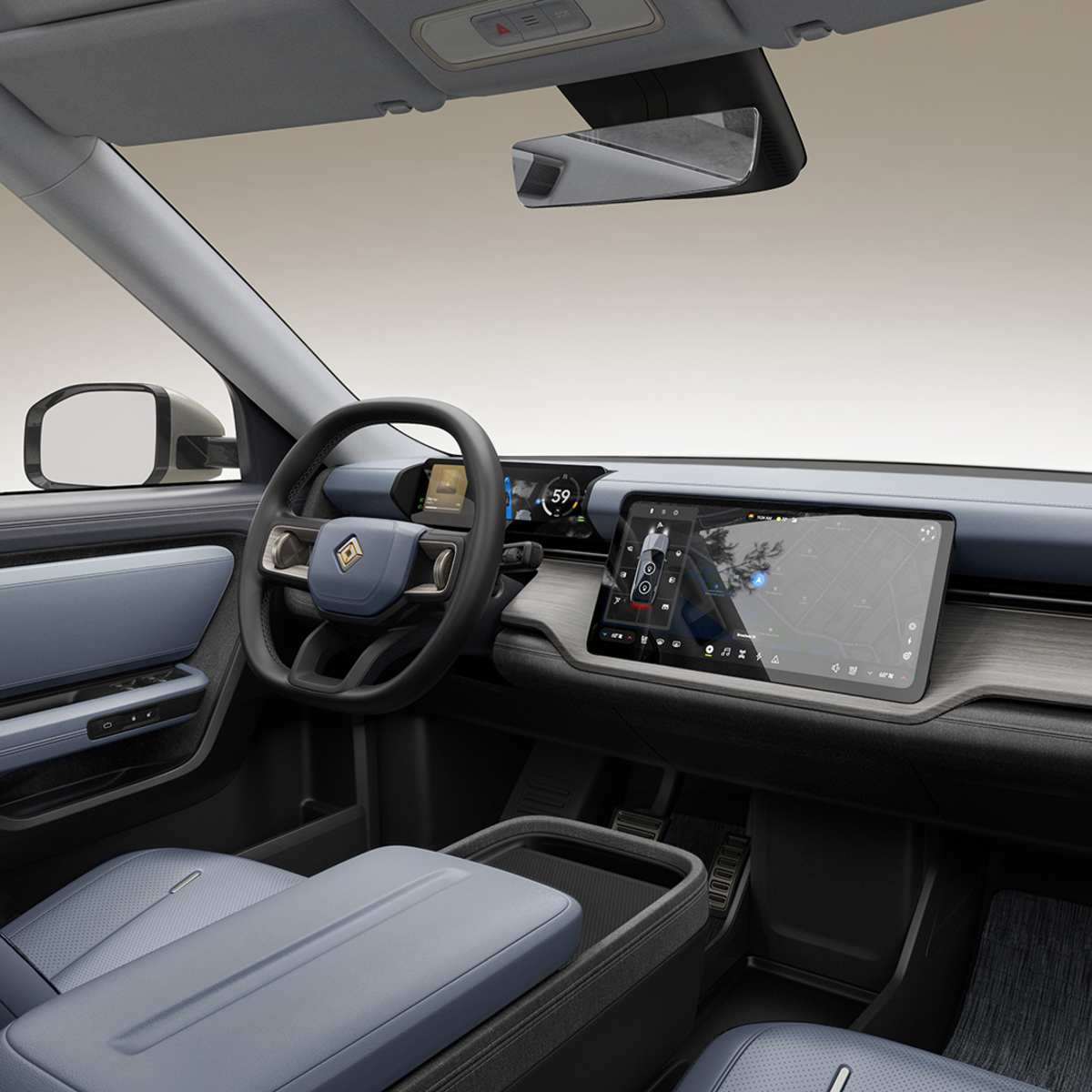
Rivian R2
"More car takes coming up. I just drove the Rivian R2. I got things to say."
The Rivian R2 is an electric vehicle made by Rivian. The podcast mentions it because the host drove it and wants to share what it’s like. It’s part of the conversation about new electric cars coming out.
The Rivian R2 is an upcoming or newly discussed electric vehicle from Rivian, positioned as a smaller, more accessible model than the company’s earlier offerings. It’s being talked about because the host recently drove it and has “things to say,” which usually means impressions about driving feel, features, and practicality. In this podcast context, it’s highlighted as a new car to watch.

Bugatti Veyron
"...ason has some stuff he wants to say about Bugatti Veyron. Wrong things about the Veyron."
The Bugatti Veyron is a very expensive, very fast supercar. It’s built for maximum performance rather than everyday practicality. The podcast mention suggests the conversation is about setting the record straight on details people get wrong.
The Bugatti Veyron is a high-performance supercar famous for extreme speed and advanced engineering. It’s discussed because it represents a top tier of performance and technology, and it’s also a car people often have strong opinions or misconceptions about. In the podcast, the mention is tied to correcting “wrong things” someone said about the Veyron.
Request an Explanation
Heard something you'd like explained? We'll add it to this episode.
Sign in to request explanations for terms you heard.
Want to learn more?
Browse our glossary for plain-English explanations of automotive terms, jargon, and concepts.
Help improve this episode
See something that's not quite right? Our annotations are AI-generated and can sometimes miss the mark. Click the flag icon on any annotation to suggest a correction.