A deep dive into the iconic Porsche 911 Carrera RSR IROC, this episode features Jason Cammisa and Derek Tam-Scott discussing the car's unique history, specifications, and their personal experiences driving it. The RSR IROC, a rare racing variant, was designed for the International Race of Champions and boasts a powerful 3.0-liter engine. The hosts share anecdotes about engine swaps, project cars, and the challenges of working on classic vehicles, all while highlighting the exhilarating sound and performance of the RSR. The episode blends technical insights with humorous banter, making it a captivating listen for automotive enthusiasts.
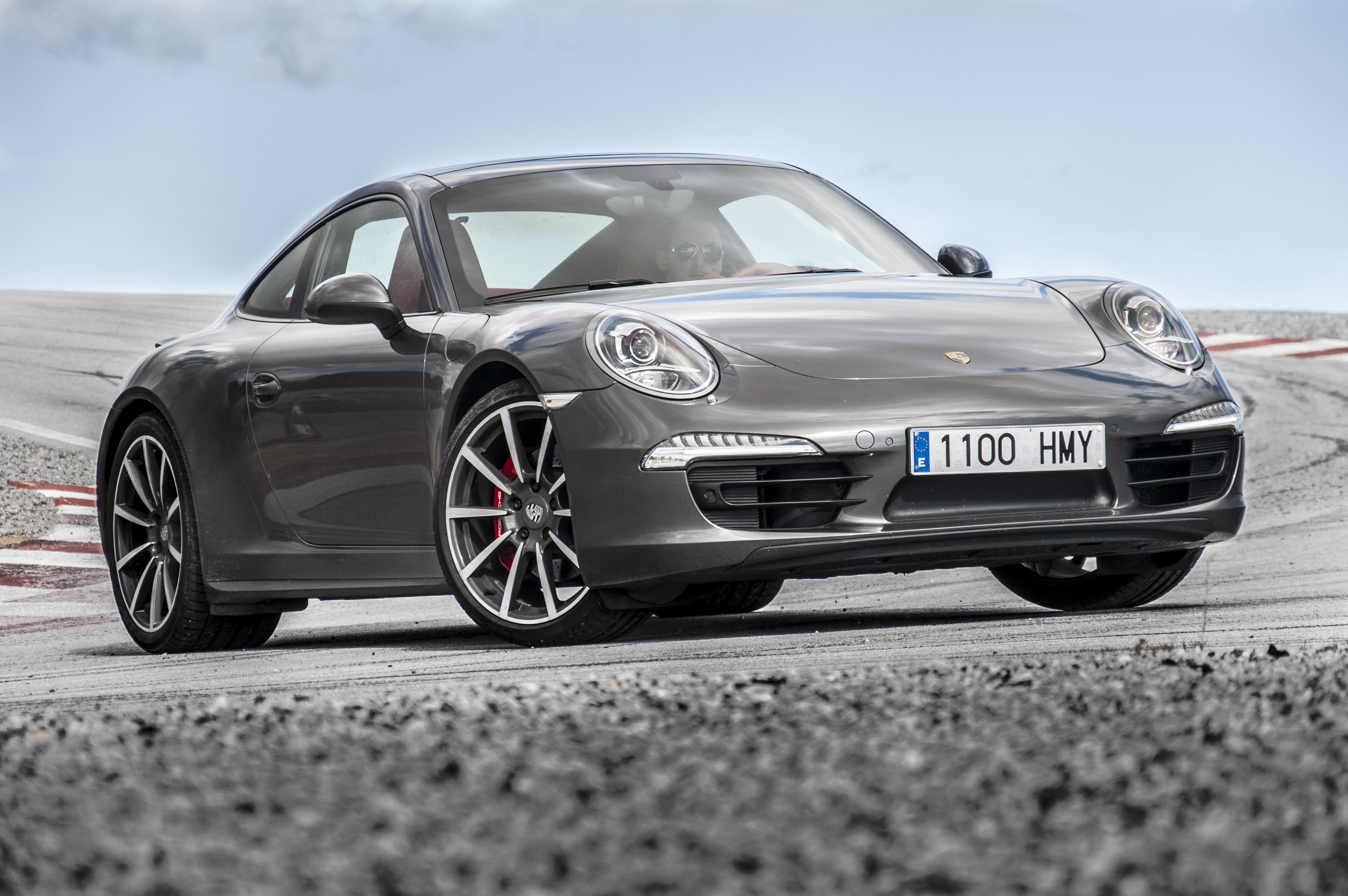
2026 has begun - and we’ve already had a healthy mix of highs and lows. But Carmudgeonation carries on, this week bringing along some pretty heavy metal that ISN’T an IROC-Z Camaro - rather, the 1974 Porsche Carrera RSR IROC.
===
Visit http://JasonSentMe.com to get a Hagerty Guaranteed Value (TM) collector-car insurance quote!
===
Jason is nearing the finish line on his MK3 VW Cabrio VR6 swap - with much of the car torn apart and roughly put back together again, he discovers a fatal engine flaw that will put him back quite some time. While the VR6 runs, a bastardized time-sert has cracked the head - pushing Jason to make the decision to go big and begin the process of a full Techtonics VR6 engine build.
But not all in the land of 6 cylinders is lost. Derek and Jason kick off the new year by driving an iconic race car that happens to be road-legal - the 1974 Porsche Carrera RSR IROC. A car they both agree, is perhaps the most extreme 911 either of them has ever driven.
The story goes - in October of 1973, Roger Penske took delivery 15 of special 1974 cars in Riverside California, which had been built to his order. He acquired the cars to participate in the first ever International Race of Champions (IROC), which was actually a series of four races, three at Riverside in late October and the final race at Daytona in February of 1974. The cars would be driven by a dozen of the best racing drivers in the world, hailing from different racing disciplines including Indy, Can-Am, NASCAR, and Formula 1. In the hands of George Follmer and Mark Donahue at Riverside International Raceway, this particular car won twice - more than any other of the 15 cars it competed against.
All this and more, on this week’s episode of The Carmudgeon Show.
Learn more about your ad choices. Visit megaphone.fm/adchoices
"...these black portion 9-11 behind us. That is a series of letters and names and acronyms in it as a Carrera, RSRIrock. Is that, did I get that right? Okay. Could possibly be the spiciest 9-11 ever..."
The Porsche 911 is a famous sports car that has been around for a long time. It's known for its unique shape and powerful performance, and there are many different versions of it.
The Porsche 911 is an iconic sports car known for its distinctive design and rear-engine layout. It has been in production since the early 1960s and has numerous variants, including the Carrera and RS models.
"...don't tell me that because it's my goal to hear the VR6 in the Cabrio run in 2025 and that, that goal might be stupid..."
The VR6 is a special kind of engine made by Volkswagen that has six cylinders. It's designed to be smaller and lighter while still providing good power for the car.
The VR6 is a type of engine configuration developed by Volkswagen, featuring six cylinders arranged in a narrow V shape. This design allows for a compact engine size while still delivering strong performance and smooth operation.
"...don't tell me that because it's my goal to hear the VR6 in the Cabrio run in 2025 and that, that goal might be stupid..."
The Volkswagen Cabrio is a small convertible car that you can drive with the top down. It was made by Volkswagen and is popular for being fun to drive.
The Volkswagen Cabrio is a compact convertible that was produced from 1995 to 2002. It is known for its fun driving experience and stylish design, appealing to those looking for an affordable convertible option.
"90 pounds for the Cabrio's rear suspension with discs. Oh, with drums. 102 with the discs. I weighed it."
The rear suspension is the part of a car that helps support the back wheels and keeps the ride smooth. It helps the car handle bumps and turns better.
The rear suspension is a critical component of a vehicle that supports the rear axle and helps maintain stability and comfort while driving. It plays a key role in handling and ride quality.
"I was told this was a plug and play engine swap. That construction of that sentence implies that it was not in fact plug and play."
A plug and play engine swap means you can replace an engine in a car without needing to change a lot of other parts or do complicated work. It's supposed to be simple and straightforward.
A plug and play engine swap refers to the process of replacing an engine in a vehicle with minimal modifications required. Ideally, it means the new engine can be easily installed without extensive alterations to the vehicle's wiring or components.
"...the other one's hydraulic and you have to swap the pedal..."
A hydraulic clutch uses fluid to help you press the pedal and change gears. It's often smoother and easier to use than older systems that use a cable.
A hydraulic clutch uses fluid pressure to engage and disengage the clutch mechanism, providing a smoother and more responsive feel compared to a traditional cable-operated clutch. This system is common in modern vehicles.
"...because one is, was a clutch cable and the other one's hydraulic and you have to swap the pedal..."
The clutch cable connects the pedal you push with your foot to the part of the car that helps change gears. It allows you to disconnect the engine from the wheels when you want to shift gears in a manual car.
A clutch cable is a mechanical component that connects the clutch pedal to the clutch mechanism in a vehicle. It allows the driver to disengage the engine from the transmission when shifting gears, which is essential for manual transmission vehicles.
"...I actually had to pull the complete dash of both cars to get the pedal cluster out because one is, was a clutch cable and the other one's hydraulic..."
The pedal cluster is where the gas, brake, and clutch pedals are located in a car. It's important for driving, especially in cars with manual transmissions that require a clutch pedal to change gears.
The pedal cluster is a component in a vehicle that houses the pedals for the accelerator, brake, and clutch. It is crucial for controlling the vehicle's speed and operation, especially in manual transmission cars where the clutch pedal is involved.
"...the wiring harness is in the cabrio on both side, on the engine side and the firewall side..."
A wiring harness is like a bundle of wires that connects different electrical parts of a car. It helps everything work together, like lights and the engine.
A wiring harness is a collection of wires, connectors, and terminals that transmit electrical power and signals throughout a vehicle. It is essential for connecting various electrical components, ensuring they function correctly.
"I have one power steering pump left to replace on the engine, which is a couple of bolts, and then the engine is physically ready to go in once I do the hydraulics..."
A power steering pump helps you steer the car more easily by using fluid pressure. Without it, turning the steering wheel can be much harder.
The power steering pump is a component that helps to provide hydraulic pressure to assist in steering the vehicle, making it easier to turn the steering wheel.
"...I pulled the plugs to do plugs and while I was in there, compression check, and one of them came out a little weird. It just kind of felt weird on the way out and then whatever, it's fine."
A spark plug is a small part in the engine that helps start the car by creating a spark that ignites the fuel. If it's not working well, the car might not run properly.
A spark plug is a component in an internal combustion engine that ignites the air-fuel mixture, allowing the engine to run. It plays a crucial role in engine performance and efficiency.
"...I got to cylinder number 1234 to do compression, and I just couldn't get the compression tester to thread. And I'm like, look down in there. I'm like, what's going on? Whatever."
A compression tester checks how well an engine's cylinders are working. It tells you if the engine is healthy or if there are problems.
A compression tester is a tool used to measure the compression pressure in an engine's cylinders. It helps diagnose engine health by determining if the cylinders are sealing properly and if the engine is functioning optimally.
"It failed in somebody time-cert, and the time-cert came out of the head with the plug. But okay. It's not a time-cert brand."
A time-cert is a tool that helps fix holes in metal where screws or bolts go. If the hole gets damaged and can't hold a screw anymore, a time-cert can make it strong again.
A time-cert is a type of threaded insert used to repair stripped threads in engine components, particularly cylinder heads. It provides a stronger and more durable thread for spark plugs or bolts, ensuring a secure fit.
"...we locked tight it around the insert and then anti-seize around the plug. So the idea is maybe one day I'll be able to get the plug out..."
Loctite is a type of glue used in cars to keep screws and bolts from coming loose. It helps make sure everything stays tight and secure.
Loctite is a brand of adhesives and sealants, commonly used in automotive applications to secure threaded fasteners and prevent loosening due to vibration.
"...you do due diligence when you buy a car for a motor swap, you should really spend a lot of time on the motor. I didn't."
A motor swap is when you take out an old engine from a car and put in a new one. People do this to make their cars faster or to fix broken engines.
A motor swap refers to the process of replacing the engine in a vehicle with another engine, which can be for performance upgrades, repairs, or modifications. It's important to ensure compatibility and proper installation to avoid issues.
"...I could find a head and I have a head gasket sitting around from, from a video that we did on VR6 anyway..."
The head gasket is a part that helps keep the engine's oil and coolant separate. If it fails, it can cause big problems for the engine, like overheating.
The head gasket is a critical component that seals the engine block and cylinder head, preventing coolant and oil from mixing and maintaining compression. A failing head gasket can lead to significant engine problems.
"...at Tectonics tuning. I've always dreamt of having a Colin built 16 valve in any of my cars because he makes major power and he makes great engines."
Tectonics Tuning is a business that helps improve the performance of certain cars, especially those made by Volkswagen and Audi. They make parts and tune engines to make them faster and more powerful.
Tectonics Tuning is a company that specializes in performance parts and tuning for Volkswagen and Audi vehicles. They are known for their high-quality engine builds and modifications.
"...he typically builds 2.9s. He overbores them to 2.9 and I think might do a three liter for me..."
Overbore means making the holes in the engine bigger so it can hold more air and fuel, which can help it produce more power.
Overboring is the process of enlarging the cylinder bore in an engine to increase its displacement, which can lead to more power. This modification is often done to improve performance in older engines.
"...with cams, 12 valve, 12 valve that does two to about 240 horsepower..."
A 12 valve engine has twelve openings that help air and fuel get in and out of the engine. More openings can help the engine run better.
The term '12 valve' refers to the number of valves in the engine's cylinder head, which control the intake and exhaust of air and fuel. More valves can improve engine efficiency and performance.
"...but he typically builds 2.9s. He overbores them to 2.9 and I think might do a three liter for me. So he does a three..."
A three liter engine means the engine can hold three liters of air and fuel in its cylinders. Bigger engines usually produce more power.
A three liter engine refers to the engine's displacement, which is the total volume of all the cylinders in the engine. This measurement is important as it often correlates with the engine's power output and efficiency.
"...12 valve that does two to about 240 horsepower. And so that should..."
Horsepower is a way to measure how powerful an engine is. More horsepower usually means the car can go faster and accelerate better.
Horsepower is a unit of measurement for power, indicating how much work an engine can perform over time. In automotive terms, higher horsepower typically means better performance and acceleration.
"... under duress. You know, there was a guy that the Jetta was being sold by a guy that was parting it out...."
The Volkswagen Jetta is a small car that is comfortable and easy to drive. It's a good option for people who want a reliable car that looks nice.
The Volkswagen Jetta is a compact sedan that offers a blend of practicality and European styling. It is often discussed for its comfortable ride and solid build quality, making it a popular choice among budget-conscious buyers.
"...he then also sold the engine cover, which is fucking not available anywhere in the goddamn world. And so I've been trying desperately to find engine cover parts..."
The engine cover is a part that goes over the engine to keep it safe and make the engine area look nicer. Sometimes, it's hard to find replacements for these covers if they're damaged or missing.
The engine cover is a component that protects the engine and improves the aesthetics of the engine bay. It's often made of plastic or metal and can be specific to certain car models.
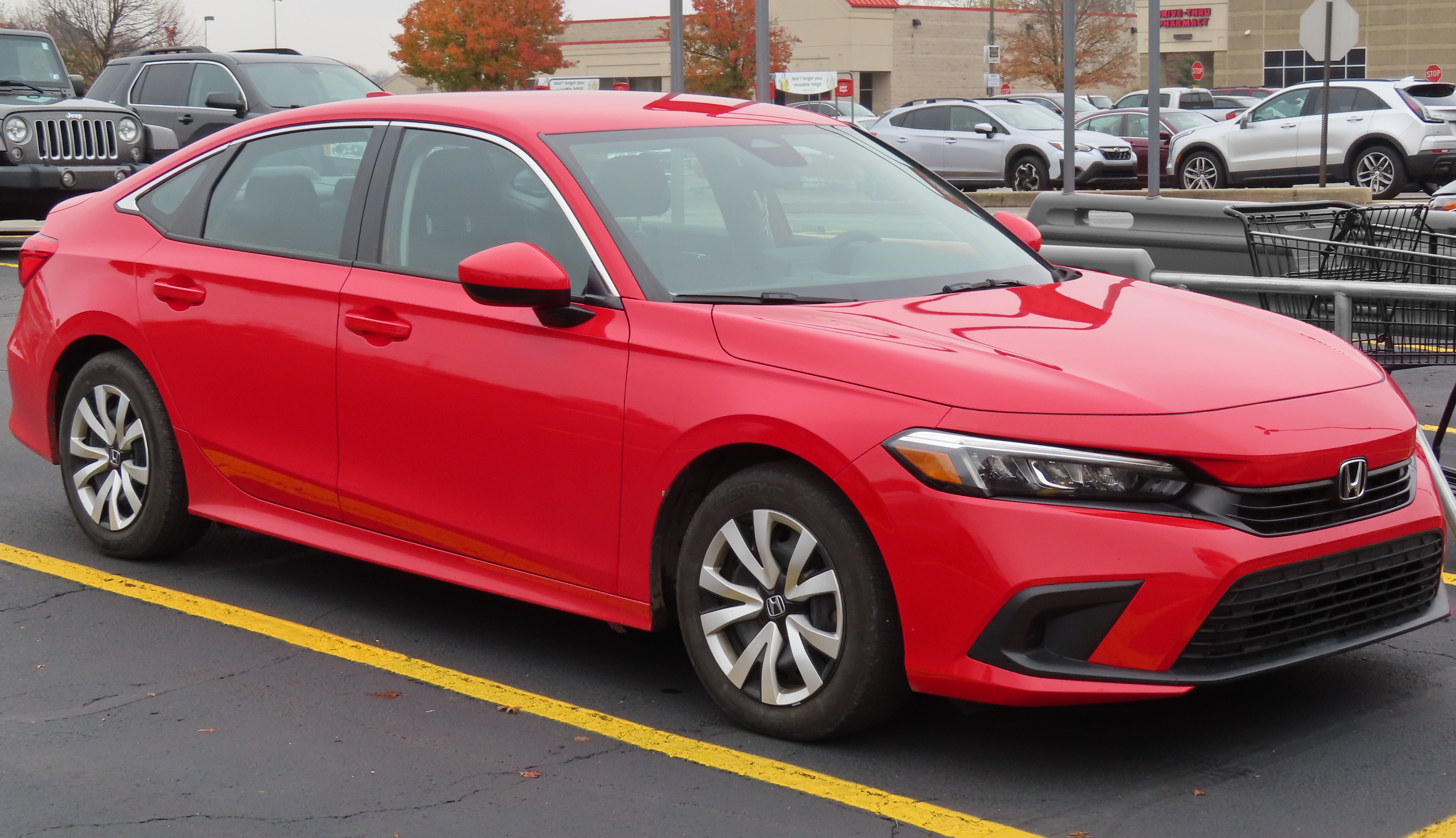
"...ne though it'll still cost less than like a base civic with options on it. If we count my labor at zero...."
The Honda Civic is a small car that many people like because it's dependable and doesn't use a lot of gas. It's a good option for those looking for an affordable and practical vehicle.
The Honda Civic is a compact car known for its reliability, fuel efficiency, and practicality. It has been a popular choice among drivers for decades, often discussed for its affordability and versatility in various configurations.
"that will be the perfect Lemons car, like perfect race car because it's a, an unhit fully functional car."
A Lemons car is a cheap car used for a fun and silly racing event where the goal is to spend as little money as possible. You can only spend $500 on the car.
A Lemons car refers to a vehicle used in the 24 Hours of Lemons race series, which is known for its low-budget, humorous approach to racing. Participants must buy a car for $500 or less and often make creative modifications.
"you get a sticker, you go to a referee and you get a BAR label, we call it. Bureau of automotive repair."
A BAR label is a sticker that shows a car has been checked and approved to meet California's pollution rules after an engine change.
A BAR label is a certification from the Bureau of Automotive Repair in California that indicates a vehicle has been modified in compliance with emissions regulations. It is necessary for legal engine swaps.
"this will be a factory GTI VR6 convertible when I'm done..."
The Volkswagen GTI is a sportier version of the Jetta. It has a more powerful engine and is designed to be more fun to drive.
The Volkswagen GTI is a performance-oriented version of the Jetta, known for its sporty handling and powerful engine. It's a favorite among enthusiasts for its fun driving experience.
"...e to the experience. So, yes, this car is a 1974 Porsche Carrera RSR Iraq, a mouthful. What is the best way to co..."
The Porsche Carrera RS is a special version of the Porsche 911 that is really fast and light. It's a favorite among car collectors because of its racing history.
The Porsche Carrera RS is a high-performance version of the Porsche 911, known for its lightweight design and racing pedigree. It is often discussed for its significance in automotive history and its desirability among collectors.
"And so his idea was to have 15 mechanically identical cars made. This was kind of the first one make race series ever. So it was called International Race of Champions, which is Iraq."
The International Race of Champions was a special racing event where the same type of car was used by all drivers. This way, it was easier to see who the best driver was, regardless of their usual racing background.
The International Race of Champions (IROC) was a unique racing series that featured drivers from various motorsport disciplines competing in identical cars. This concept aimed to level the playing field and showcase driver skill rather than vehicle performance.
"...hing very different because there was all on the Camaros. And it was two different stories that I had hea..."
The Chevrolet Camaro is a sporty car that many people love for its speed and cool looks. It's known for being fun to drive and has a long history of being a favorite among car enthusiasts.
The Chevrolet Camaro is a classic American muscle car that combines performance with aggressive styling. It has a storied history in the automotive world and is often discussed for its powerful engines and sporty handling.
"...amed Iran over Chris was Iraq. And then later, a Mustang guy who owned a Fox body said that, no, no, no, ..."
The Ford Mustang is a famous car known for being fast and stylish. It's been around for a long time and is loved by many people for its performance and cool design.
The Ford Mustang is an iconic American muscle car that has become a symbol of performance and style since its introduction in 1964. It is frequently discussed for its powerful engine options and cultural significance in automotive history.
"And Dodges were used for a while, and Firebirds were also used. Dodges initially were,"
The Pontiac Firebird is a cool muscle car that many people remember from the past. It's known for being powerful and has appeared in a lot of movies, making it a classic favorite.
The Pontiac Firebird is a classic American muscle car that gained popularity in the 1970s and 1980s. It is often discussed for its performance variants and cultural impact, particularly in movies and television.
"...at was also bad is the Plymouth laser, the Dodge Avenger or something like that. They used Avengers."
The Dodge Avenger is a regular-sized car that people bought for its low price. It's not known for being very exciting to drive, but it gets the job done.
The Dodge Avenger is a midsize sedan that was produced in the late 2000s, often discussed for its affordability and practicality. However, it received mixed reviews regarding its performance and reliability.
"they happened to be teammates that year racing for Penske in Can-Am, driving 917s, which were those turbocharged 12-cylinder cars"
The Porsche 917 is a famous race car that was very successful in races. It was known for being light and having a very powerful engine.
The Porsche 917 is a legendary race car known for its dominance in endurance racing during the early 1970s. It featured a lightweight design and powerful engines, making it one of the most successful racing cars of its time.
"which were those turbocharged 12-cylinder cars that in qualifying boost made 1500 horsepower"
Turbocharging is a way to make an engine more powerful by forcing more air into it. This helps the engine produce more power without needing to be bigger.
Turbocharging is a technology that uses a turbine-driven forced induction system to increase an engine's power output by forcing more air into the combustion chamber. This allows for greater efficiency and performance.
"It was this cool. It's not Bugatti Veyron fast, but how hard it pulls in gear is about as ..."
The Bugatti Veyron is an extremely fast and very expensive car that many people dream of owning. It's known for being one of the fastest cars ever made and is a symbol of luxury.
The Bugatti Veyron is a hypercar that was once the fastest production car in the world, known for its incredible speed and luxury. It represents the pinnacle of automotive engineering and is often discussed for its performance and exclusivity.
"...ause that was what they did to the race cars, the 935s, in that period."
The Porsche 935 is a special race car that was really good at winning races in the past. It's known for its advanced design and is a big part of Porsche's history in motorsports.
The Porsche 935 is a race car that became famous in the late 1970s and early 1980s for its dominance in endurance racing. It is often discussed for its engineering innovations and its role in Porsche's racing history.
"... cars. That would be like BMW CSLs and like Ford Capris. And the lap time that this car set at Paul Rica..."
The Ford Capri is a stylish coupe that many people liked in the past. It's known for being sporty and fun to drive, making it a classic favorite.
The Ford Capri is a classic coupe that was popular in Europe during the 1960s and 1970s. It is often discussed for its sporty design and performance, making it a beloved model among classic car enthusiasts.
"...ean, this car makes an ST look like a Rolls-Royce Phantom. It does."
The Rolls-Royce Phantom is a super fancy car that is very expensive and luxurious. It's known for being one of the best cars in the world, with amazing attention to detail.
The Rolls-Royce Phantom is a luxury sedan known for its opulence and craftsmanship. It represents the pinnacle of luxury automotive design and is often discussed for its status and exclusivity.
"...at I can think of that came close to that is the Alpine 110 that I drove. That little, which is."
The Alpine A110 is a small sports car that is really fun to drive, especially on twisty roads. It's known for being light and quick, making it a favorite among driving enthusiasts.
The Alpine A110 is a lightweight sports car known for its agility and performance on winding roads. It has a rich motorsport heritage and is often discussed for its unique design and driving experience.
"...trying to think of, you know, like a really crazy 240Z with like a 3.1 psychomotor is."
The Datsun 240Z is a classic sports car that many people loved for being fast and affordable. It's a favorite among car enthusiasts who appreciate its design and performance.
The Datsun 240Z is a classic sports car that gained popularity in the 1970s for its performance and affordability. It is often discussed for its role in making sports cars accessible to a wider audience.
"...of sound level and fullness of noise, this versus McLaren F1. Oh no."
The McLaren F1 is a super-fast and very expensive car that was once the fastest in the world. It's famous for its unique design and is a dream car for many enthusiasts.
The McLaren F1 is a legendary supercar known for its groundbreaking design and performance capabilities. It was once the fastest production car in the world and is often discussed for its engineering excellence and exclusivity.
Select text to request an explanation
Hello. Hello. It is 2026 for our listeners. Yes. Yes. We have to pretend. Okay. So it's
it's already 2026 for us. Welcome to this week's episode of the Car Margin Show. That is a
Jason Camisa. Yes. I'm a Derek Tam-Scott. This week's episode is driven by Haggerty.
Well, actually it was driven by me and I work for Haggerty. So technically it was driven
by Haggerty. The transitive property of driving in Haggerty's. Yes, exactly. This week's episode,
we're going to talk about two things. We have two main topics. One is I give a heartwarmingly
upsetting update on my double body swap going on in my garage. Some good news, some bad news.
Was there good news? It hasn't killed me yet. And then we will spend some time talking about
these black portion 9-11 behind us. That is a series of letters and names and acronyms in it
as a Carrera, RSRIrock. Is that, did I get that right? Okay. Could possibly be the spiciest 9-11
ever. Yep. I'm one of 15 and we're lucky to have it here with us or happy or deaf to have it here
with us. What? More after the clap. Funny enough, you asked before we started the cameras on, was
that high pitch ringing or is that my ear? And I think it didn't occur to me until right now. This
is tinnitus from the hearing loss from that thing. Yeah. And so congratulations on you.
Race car things. Yes. Yes. On my new disability. Okay. So when you clap, you're going to have to
do a silent clap. Well, you're going to have to tell me whether you actually contacted your hands
or not because I won't be able to hear it. That was shitty, right? Yeah. That was it. You're going
to have to do that again. Yes. I learned. Oh, they've been sitting here waiting for quite some time.
We've been sitting here waiting for them for quite some time. It turns out no one said anything.
Oh, okay. So this episode will be the first to air in 2026, even though we are still in 2025.
Barely, by like a day. Well, okay. Don't tell me that because it's my goal to hear the VR6
in the Cabrio run in 2025 and that, that goal might be stupid. Well, you better get out of here.
This has been a quick episode of the Carmageddon show. Thank you. Join us next week.
We'll see. Because today's the 30th in actuality that we're recording. So you've got all day to
half a day today and tomorrow. Because it's just about noon. You've got 36 hours.
I haven't slept in a week and a half because of this engine swap. I have not been sleeping
much lately, but for an entirely different reason because I got a dog, a puppy. So I'm dealing like
with that. So fat. We might both be extra stupid and slow. Welcome to the sleep deprived episode
of the Carmageddon show. My name is... Yeah. Sorry. Yeah. I keep waking up in the morning in a panic.
So the problem is... Me too, looking for feces.
Is the dog shitting all over you? No, no, no. He's only done that inside once.
Okay. Cause the car is shitting all over my... So I took a video for those of you watching this on
YouTube last night at 10 o'clock at the 13 hour mark when I finally decided to call it...
13 hours of yesterday. To be clear. And this can be playing in the background of just what the shop
looked like. And it reflects my mind. So every... The problem is I'm doing... So
recap, I bought a Mark III Cabrio over in the summer, a 70,000 mile beautiful car. I hate the
two point slow. I genuinely, I should say, hate that engine. I think you had won the award for
worst car you drove last year. No, it was slowest. Slowest car at the racetrack.
I thought you don't nominated the worst drive of the year.
It's amazing to me. Anytime I drove that car, I just thought, who had the gall to put this
engine in this state of tune in a car that had a GTI badge on it. It's just, it's the least GTI.
Anyway, long story short, it's getting a VR6. I found the donor car, but I'm not just doing
an engine swap. I'm doing a full driveline swap. So it's rear suspension, front suspension, steering,
brakes, engine. Rear suspension such as it is, it's like one piece.
It is technically one. I removed it as one piece from the car.
I'll go to the detail in a later episode when I do the recap. 90 pounds for the Cabrio's
rear suspension with discs. Oh, with drums. 102 with the discs. I weighed it.
Oh, so it's the heavy weight. It's the luxury model deluxe.
Yes. It's also a bigger suspension front. It's a bigger torsion bar, I think,
with a bigger engine sway bar. And this just, it's just bigger. Everything is bigger. This
is the plus suspension. Anyway, so I'm doing all of this, but I'm doing a wiring harness to do this.
I was told this was a plug and play engine swap. That construction of that sentence implies that
it was not in fact plug and play. The question that I got yesterday was now that you know what it
took to get to the point where I am. Last night, I hit, yesterday at some point, I hit the inflection
point where I've stopped removing all parts from all cars and now everything from here on is
reassembling, which is a really nice milestone. But so the question was now that you know,
and the answer was no, I wouldn't do this because I actually had to pull the complete dash of both
cars to get the pedal cluster out because one is, was a clutch cable and the other one's hydraulic
and you have to swap the pedal. You don't have to, as it turns out, everyone was wrong.
There's so many variants of different parts. I probably could have gotten away with not
removing the full dash, I think, but either way, it's been a nightmarish job. The best part is
I'm now a week of 12 hour days in, into this. That's the best part. Right. Well, and everything is
labeled and everything's fine. The wiring harness is in the cabrio on both side, on the engine side
and the firewall side. Everything is plugged in as far as I can tell. So in theory, I'm now,
after I do a bunch of, I basically have to. Is the engine in the car? No, but the engines understand
I have one power steering pump left to replace on the engine, which is a couple of bolts,
and then the engine is physically ready to go in once I do the hydraulics, because the brake
and clutch master cylinder are basically inaccessible once the engine is in place,
and I can plug it in and start it or try to start it. So yesterday was that point.
Yesterday was also the point at which I learned that the engine is unsalvageable.
What?
Done. Toast.
The V6?
The VR6, yeah.
Gone.
What happened?
I pulled the plugs to do plugs and while I was in there, compression check, and one of them came
out a little weird. It just kind of felt weird on the way out and then whatever, it's fine.
And I did, I was going through all six cylinders and I got to cylinder number 1234
to do compression, and I just couldn't get the compression tester to thread.
And I'm like, look down in there. I'm like, what's going on? Whatever.
And I put the plug back in and plug threads fine. And then I pull it back out and I realize
the base of the plug is a lot larger than the base of the other plug because it's-
It had been in failed before.
It failed in somebody time-certed, and the time-cert came out of the head with the plug.
But okay. It's not a time-cert brand. It's some other ghetto fucking auto zone, no.
You needed a new head.
I needed a new head.
So, well, here's the thing.
Doesn't have compression?
I don't know. So here's the, yes. So I did it. Here's the thing. I called a bunch of friends
who build motors and whatever. So I've bill Arnold, my good friend who's my awesome, my race
team captain. He's won Dargon Newfoundland four times. We've talked about him. He builds a lot
of engines. And I had him come over and look and he's like, I can absolutely read time-cert that.
The problem is the hole that they made for the time-cert like thing that they put in there
is way too big. Time-cert will just fall in. So we had to reuse the insert that they used,
which is kind of a crappy design. And it went in just fine.
Is it hard to get it off the plug?
Yes. It was a monster to get it off the plug. And he spent three hours filing the threads
down to get it to be right where it needed to be. Got it in and we let it, we locked tight it
around. So we locked tight it around the insert and then anti-seize around the plug. So the
idea is maybe one day I'll be able to get the plug out, but we won't even try. We're just going to
lock tight it, let it sit overnight. And then the next morning I put a battery on it and just
cranked it to see, sounded fine, but then I poured water down the spark plug hole and you can see
bubbles, every compression stroke. So air is leaking past it.
From the bottom end.
From, well, from the plug.
Oh, I see.
So that means the time-cert didn't seal.
So you just need one head.
I mean, it's not the whole motor.
We don't, who knows what the fuck the rest of the, I mean, there's a bunch of little other
fuckery in that. So the guy who sold me the car, look, this is on me. You do do due diligence
when you buy a car for a motor swap, you should really spend a lot of time on the motor. I didn't.
I needed the whole car. So I needed the suspension. I needed the subframes. I needed everything else.
The wiring harness and all of that looked good and it wasn't tweaked and it wasn't hit and the
engine started and ran. It took a while to get it started, but it started and ran. It was powerful
and it had no codes and everything was happy. So I thought, all right, I can deal with the
rest of the stuff later. VR6s are kind of unkillable. So it doesn't really matter.
The engine is unkillable, but when you have a fucking hack
mechanic who uses a fucking impact gun to drive a spark plug in there and fucks it all up,
well, that's what you have. So unfortunately, yes, I could find a head and I have a head gasket
sitting around from, from a video that we did on VR6 anyway, but I'm just, I got to the point
where I'm like, I'm done with this whole project. Like I don't know what to do. So I called Colin
at Tectonics tuning. I've always dreamt of having a Colin built 16 valve in any of my cars
because he makes major power and he makes great engines. I think I have an idea of where this
is going. And I said, will you build me a VR6? And he said, yes. So I'm going to have a factory
fresh, well not factory fresh, a Tectonics tuning fresh VR6. Is he using your existing
motors at core? No, he said, I'll start on it today. He's such a sweetheart. He made me feel
so much better about this because I'm like, I'm crushed over this. You know, I was just
devastated. I'm like, here we go. I'm like, I don't even know how many hours and, and I, and I,
I've bought the parts count that just the dollar amount of that I've spent on parts is
three to four times the parts price of each one of the cars, depending on which one,
it's a lot of money because I'm doing everything. I'm doing it right. And yeah, but he was like,
okay, I got you. Don't worry. So he's going to start, he started yesterday immediately after
we got off the phone and we'll figure out the final spec of the, of the motor, but he typically
builds 2.9s. He overbores them to 2.9 and I think might do a three liter for me. So he does a three
liter with cams, 12 valve, 12 valve that does two to about 240 horsepower. And so that should
shut me the fuck up. That should make me feel a little bit better that I'm spending quite a lot
of thousands of dollars on an engine, but I'll have a fresh monster of a three liter rather
than a fresh, you know, 2.8 and effort not much more. Can you give him the 2.8 as a core?
I will ask him if he wants it. If he needs it. Yeah. If he needs it or wants it. Otherwise,
I mean, the blocks probably fine. I don't think the head is salvageable. So Bill's guess is that the,
when they drilled that time certain, because it's so much bigger than it needed to be,
they probably just cracked the head around it. So we could pull it out and see if we can
find a different insert. It's, to me, it's not worth it. No, no. I mean, it should at
minimum get a head. Right. One head or it's all one head. It should get head. Yeah. It should get
something. Yeah. It should get consolation. You know, it's a lesson for me. Like, you know,
it was too much to look at. I went under duress. You know, there was a guy that the Jetta was
being sold by a guy that was parting it out. I said, stop, I'll take the whole car. He sold a
bunch of things off the car that were no problem, like the seats and whatever,
but he then also sold the engine cover, which is fucking not available anywhere in the goddamn
world. And so I've been trying desperately to find engine cover parts and like stupid
shit like this. This is like the C 36 crossover tube. It costs more for a C 36 crossover tube
than it does for the rest of the engine probably. I could buy the, I could buy a used VR6 for far
less than I can just the cover, the plastic covers. So, you know, I'm hoping, as I look
directly to camera, I'm counting on the generosity of strangers who have one sitting around that'll
sell me the full set because there's, you know, the, I have the silver VR6 cover. I bought it out
of the UK and had it shipped over from eBay, but then there are black trim pieces that where the
spark plug wires go in and I don't have any bolts. Which are beautifully like sort of
it's cool looking. And you know, there are sort of weird bolts that hold the whole thing down
with chamfered edges and whatever. And I just don't have any of it because this dickbag sold it.
He also sold me an engine that he probably knew was fucked. But the rest of the car,
like all the stuff that I needed appears to be fine. So I'm not, yeah. So anyway,
wasn't all for naught. Yeah. It's going to be, I will have a lot of money invested in this car
and to say nothing of time, but I imagine though it'll still cost less than like a
base civic with options on it. If we count my labor at zero. Yes.
Yes. It will be, I think I'm in now. My prediction is by the time this is done,
I will be in 18 and that 18,000 dollars and that'll be
including selling the Jetta. And, and, and the Jetta will have the two liter with 72,000 miles
in and then, you know, the transmission and every, all the dry line from the 70,000 mile
cabriolet, I am not hooking it up. I mean, I could probably make it run in a half an hour.
I'm not doing it. It will be physically in the car and you can, somebody can push it by it,
have videos of it running, have a dyno plot. I don't need to do any more than that. But
that will be the perfect Lemons car, like perfect race car because it's a, an unhit
fully functional car. Well, lemons will fix that. Yeah. But it's, you know,
no longer be unhit, but the suspension, you know, we'll have the bushings all have 70,000
miles on them. You know, so it should, yeah, it'd be a great, great donor car for that. But
18,000 bucks is more than you can buy one on bring a trailer for, but at least I'll know
everything was done and done properly. And this will have a fresh, but I don't think you can buy
one on bring a trailer is the point of all this. No, they do. They come up every so often. BR6 swaps.
Yep. And there, there is a BAR. So California, you know, you can swap a motor from a later car
legally and same age or later, same age or later. And you get a sticker, you go to a referee and
you get a BAR label, we call it. Bureau of automotive repair. Yes. That says this is a smog
legal shop, a smog swap and it's smogged as the newer car. And there is one with a BAR label on it
for sale. And it's not that much money. It's kind of a rough, it's rougher on the edges. So
swaps often are and that's why people, and their labor is so much and so hard and so specialized
that that's why people are always willing to pay up for extra nice stuff because they want a nice
car, but they'd have to write, I mean, if someone were to commission this build, they'd have to
stroke a $40,000 check, maybe. Easy. First of all, find a cabrio and condition. This is why I bought
the cabrio in the first place in this condition. And then I'm doing everything. So it's all
documented in my stories. I don't want to plug up the Instagram and I'll try to limit it to 100
stories, but like even there's emissions components that are inside the fender liner on the VR6 that
aren't there on the two liter. And so we drilled out the spot welds to get that bracket off,
that whole thing off the Jetta and then treated it and then riv-nutted the factory bracket onto
the cabrio with rust treatment in the same spot, whatever. Like I'm going to that great. This will
be a factory GTI VR6 convertible when I'm done. And that's really cool with now a big motor.
Not factory. It's all not factory motor. The motor will be not factory.
There might be factory pistons. It might be from a different VR and it doesn't matter. Either way,
yes, it will be basically as close as you can get to a, you know, whatever upsetting, but that's
where I am now. And everything hurts and my hand is fucked up and my knee is fucked up and whatever,
but my shop is a disaster. So can't wait to get that thing started.
And this is what you do for fun?
This is what I've done on my quote-unquote week off, because I'm stupid.
Fun. Good times.
It would have been fun if it wasn't unfun.
If I didn't have to pull the dash. And when people say you have to swap the engine harness.
Did you figure out the gauges?
No, I'm not even there yet. I mean, I know I can run either cluster,
but I'll figure out the mileage, the odometer later.
But the, you know, when, when people say you swap the engine harness,
I assume you swap the engine harness, the engine harness.
Not the whole car harness.
Well, it's the whole front end harness and it's a lot.
Not like a Mercedes Benz where there's an engine harness.
There is an engine harness on the engine and there is a big 68 pin connector that you just
disconnect and do that.
Oh, but you have to do both.
But then that connector on the car side of that goes through the firewall,
but also includes alarm, air conditioning, wipers and the entire front end harness,
which is headlights, horns.
You mean they didn't engineer this car to be easily motor swappable?
No.
When they designed it?
No.
And really to get to that fuse block, you kind of have to pull the dash.
Even if I hadn't needed to pull the dash to get the pedal box out,
which you absolutely do because you have to remove not only the dash,
but then the dash supports from it to get the pedal box out of the way.
Reaching, you can't really reach under because the wires come down from the top.
So you can't get to it.
Pedal box is not a consumable part.
So it's not designed to be exchanged.
Fair point.
I mean, this is just the way they...
Why would you engineer two different pedal boxes?
One for manual, one for...
Other manual.
One for manual and one for other manual.
They should be the same box where you can just put in a clutch pedal, whatever.
It's fine.
I mean, if the thing starts.
So my thing is I'm actually...
This was yesterday's realization is like, I was going to give up and just say,
well, it's going to...
I have two cars on a lift.
I can't get rid of the Jetta until the Cabrio is running with the VR6 in it
and no codes and no lights to make sure that I didn't forget anything.
Right?
Because I can't throw away the donor car until I'm absolutely sure.
And Colin's going to super like drop everything, expedite this build,
but it's still going to be a couple of months.
You know, by the time the machine job, machine works have done whatever.
And so I can't have two cars and taking up and all the ancillary shit,
taking up my whole shop.
Because I kind of do have a bunch of other cars, if you notice.
But it occurred to me yesterday after like mourning a little bit,
hold on, wait, I will throw in this VR6, start it, make sure it runs.
Make sure it...
Even if it runs poorly on that fifth cylinder runs that everything functions.
And then that gives me two months to do the suspension and the brakes and all the other
stuff that I wanted to do around it.
Oh, you do that while the subframes installed in the car?
Yeah, I can do everything else.
So I'm doing anything that I need the engine out to do now,
but then like suspension stuff you can do with the subframes in the car.
And I will have a startable, movable, drivable VR6 Cabrio
that I won't really go anywhere with,
but at least can move out of the way and I can use the lift for some other stuff.
And dispose of the parts car.
And also probably referee it, like bring it and have it done on this engine.
Because the engine did...
Because it's got stock cams in it.
Stock everything.
And if I can't, then I'll keep, then I will have Colin just not do the three liter,
because we have plenty of time to make that decision.
Just do a stock engine and it just gets a stock engine and goes.
And then it's...
But the three liter with cams should pass smog anyway,
because it'll set monitors and they blow clean enough with cats on them.
But that's not technically smog legal,
so I won't referee it with any mods on it.
And that's just a maybe down the road.
So either way, but I'm going to try to get it refereed with this engine,
which just means get it in, get it started,
make sure function test and then drive it without the dash in it.
So I can see what works, make sure lights, horns, everything else.
There are so many wires behind that fuse block that like...
What a fun adventure.
And there are dead end wires too.
The things that are just dangling.
And they were somewhere there before.
I have one red wire that I can't find anywhere on any wiring diagram.
I don't remember it being there before,
but it's such a one foot in diameter bundle of snakes.
You can't fucking see anything.
You can't see it directly from what angle you need to.
And so that I traced to the headlight switch,
but it goes to the headlight switch harness.
But I don't know if anything's actually there.
And I don't think it does anything.
It's not on any wiring diagrams.
So maybe I'll have lights or maybe that connector fell
out of the back of the fuse block somewhere and I'll never know.
So we'll see.
How fun.
Yeah, should be fun.
Really enjoyable.
So bear with me while I'm sleep deprived and sore and
devastated that my VR project has turned into a fucking VR nightmare.
It is not uncommon with swaps.
I'm glad I'm doing it.
I will be really grateful when it's done.
This is type two fun.
Type one fun is fun while you're having it.
Type two fun is fun after you've had it.
I hope so.
I mean, yeah, anyway, we'll see.
We'll find out.
Maybe I'll hate the VR.
What?
I don't think so.
I mean, I drove it a mile in the in the Jetta
and fucking laughed myself sick the entire time.
I think I have video.
Shall I?
And it had a huge exhaust leak.
So it had a bit of a shh on top of the great VR noises,
but it was it was so fast.
It was so much faster than I thought it was going to be.
Well, because there was a lot that was missing a door and the interior.
Weissach package.
Yeah.
Lightweight.
Yeah.
Competition pack.
Like this car.
Yes.
There's a transition into this car, which is also lightweight.
A Volkswagen, a lightweighted Volkswagen with a very sonorous engine.
Yes.
Almost as sonorous as a VR six.
It sounds very different than a VR six.
Yes.
Interestingly, you've heard on on corked VR sixes.
Which would you say sounds better?
This is more of a barrage or wall of noise.
And there's more melodicness to a VR six, I would say.
This isn't super melodic.
This is brutal.
That is possibly the loudest car I've ever heard in my life.
Really?
Yeah.
So.
No, like a Trans Am car at the Monterey Historic is loud.
Okay.
I mean, like on a road.
Oh.
So this 9-11 behind us for those.
I mean, we've we will have talked about in the intro.
I drove and inside the car, it is 100% experience.
It is amazing.
And then I stepped out and you drove away and, you know, you
blip the throttle a couple of times as you're like backing up.
And I'm like, wow, God, that's meaty.
Like, man, is it whatever.
And you took off and I don't think I think the world ended for a slight.
Holy shit.
It is, it's not a one pitch, like one note.
Like that, you know, if you look on a spectrum analyzer,
some cars have that one note that it's tuned for.
It is, like you said, the whole spectrum analyzer just goes to full,
full max.
It's a water.
Of noise, but it's so deep and bassy.
It carried.
You were long in third gear and it was 100 times louder than the cars
that were driving by right there.
And all of that from three liters.
That's truly the best sounding 9-11,
vintage air-cooled 9-11 I've ever heard, period.
And by a long shot.
Yeah.
It is quite to the experience.
So, yes, this car is a 1974 Porsche Carrera RSR Iraq, a mouthful.
What is the best way to contextualize this car?
There were 15 of these cars made.
They were all commissioned by Roger Penske, who had a racing team.
And he raced kind of in everything.
He did Trans-Am, Can-Am, NASCAR, and kind of if it existed,
and it was done in the U.S. and it was at a high level,
he raced in it and he did so successfully.
And so his idea was to have 15 mechanically identical cars made.
And he would, this was kind of the first one make race series ever.
So it was called International Race of Champions, which is Iraq.
Wait a second.
Growing up, I was told Iraq stood for something very different
because there was all on the Camaros.
And it was two different stories that I had heard.
One was it was named, one of the engineers,
uh-oh, I thought you were chuckling.
I was gonna say that Mike knows this story.
So the story that I was told as a kid,
but like there was sort of like a common lore
among the car guys in eighth grade,
was that the engineer for the car accidentally killed his best friend, Chris.
And so the car was named Iran over Chris was Iraq.
And then later, a Mustang guy who owned a Fox body said that,
no, no, no, that's not.
It's actually stands for Italian retard out cruising because we're,
and I know you're not allowed to say any of those names, words anymore,
but where we grew up, it was all of the like the guineas, all the, you know,
Italian kids, Guidos, that's it.
All the Guidos drove, you had either Fox bodies or Camaro, Iraq seas.
And so it was the time.
Anyway, so yes, it turns out
Iraq stands for International Race of Champions,
which I knew, obviously, but not really, not at the time.
Not in that context.
And there were no guineas driving these cars around.
How are you going over there?
I'm like, Porsche.
Well.
Oh, and ready.
Yeah.
And in ready.
Yeah.
Okay.
And Emerson Fittipaldi, but he was Brazilian.
He's not.
Yeah, I was going to say it's not really Italian,
but it's an Italian name.
There are some Italians in South America for various reasons.
In any case.
Can be nearly moving there in the 1940s.
Anyway.
Okay.
Anyway, so International Race of Champions,
they were as one mark,
one car, everybody's driving the same car.
And the racer, the people who drove the cars
came from all sorts of different types of racing.
And so the goal of the race series
was to answer the question of like,
which types of drivers are fastest?
So there were F1 drivers, there were NASCAR drivers,
there were Can-Am drivers, there were sports car drivers,
all circulating in the same car,
going around the same track at the same time.
And that was the whole purpose of the experiment,
was to see, you know, which cars, which driver,
and which types of drivers were the fastest.
So that was the purpose of doing this.
They ran this like maybe 30 times once a year.
And the last one was like in 06 of IROC.
So it happened a lot of times.
This was the first, this was the first one.
And it was the only time they used Porsche's.
Subsequent races, they used a whole bunch of different cars,
all of which were Americans.
There were Camara, which they used for a long time,
hence the IROC-Z.
And Dodges were used for a while,
and Firebirds were also used.
Dodges initially were,
what was the front-wheel drive laser or something?
The thing that was also bad is the Plymouth laser,
the Dodge Avenger or something like that.
They used Avengers.
And then before that, there were some other,
like actually rear-wheel drive car.
They were always using rear-wheel drive cars,
but when the production of whatever the rear-wheel drive thing
that they were using, the Daytona.
That's right.
When that ended, they re-bodied the replacement,
which was the Avenger as a rear, it was an Avenger body,
but I think it was rear-wheel drive,
because they needed rear-wheel drive for racing,
but they needed it to look like a car
that you could buy at that time.
The dealership, yeah.
The dealership.
That's crazy.
So that's what they did.
This is like late 80s into the early 90s,
and then I think there were Firebirds after that
and Camaros before that.
So the first year they used Porsches, these cars.
So Roger Penske ordered 15 of them.
The cars were all identical,
but every one of them was a different color,
because they developed this because Roger Penske was like,
okay, we're going to create this race series.
It's a race series.
It has to, there has to be some way to make money.
In order to get the world's best drivers to show up,
we have to pay them, because this happened in October,
and there were three races, there were four races total,
three in October, all the same weekend at the same track,
which at Riverside in October,
I think it was 27th and 28th of 1973.
And then the top six after those three races
would go on to the finale,
which was Daytona in February of 74, Daytona Speed Week.
It was one of the events during Daytona Speed Week.
And so in order to get the best drivers to show up,
they had to pay them.
And so they had to come up with a bunch of money,
not only to buy the cars,
which were over $20,000 a piece at the time,
which was probably twice as much as a road going 9-11 at the time,
and paid them a substantial purse and logistics
for getting the cars, places, and spectators,
and tickets, and all that shit.
And so there were three guys together,
including Roger Penske, him plus two others,
who sort of set the whole thing up.
One of the guys was responsible for scrutineering
and legal stuff,
and then there was a guy who was responsible for marketing,
and he was connected in the television world.
And so the races would all be broadcast on ABC in color.
And so all the cars were different colors
because they wanted to be able to tell them apart on track.
And so the drivers were all pretty illustrious,
coming from all those different places,
A.J. Foyt, and Mark Donahue, and George Fulmer,
and Denny Hulme, and Emerson Fittipaldi.
I think there was an Andretti,
but maybe not because all the right,
one of the sponsors that they got
in order to pay for this whole thing to happen was Goodyear.
And I think it was, maybe it was Andretti
and one of the unsers who had a sponsorship with Firestone,
and so they were not allowed to participate
because the races were done on Goodyear tires.
And Goodyear was the title sponsor,
and they would provide tires for the races
and sponsorship money and a blimp as well.
One does.
For, as one does.
Well, no, actually they put a TV camera in it
and used it to get aerial footage of the cars racing.
So it was actually useful to have the blimp,
but the blimp was not racing.
They're not very fast.
They don't handle very well.
So once a year, I think in the April issue of Road and Track,
they would do like an April Fools road test
of some absurd thing.
And I remember one year they did,
and they'll do like the full test panel,
where they'll be like lateral acceleration
and like zero to 60 and all this shit,
or whatever the number is relevant for the thing.
And one year they did do the Goodyear blimp.
Another year it was like a snow cat
and like a, maybe they got a tank one year,
but that would used to be an annual tradition,
like in the 70s and 80s.
I remember that.
At Road and Track, it was always very funny
because you'd see like them trying to go around
the skid pad in a snow cat.
You blimp, right.
The pictures are funny.
I think we probably find an insert for that.
So Goodyear was one of the sponsors.
Champion was, the cars are basically solid colors
with only a few sponsor labels on them,
one of which is Goodyear.
Champion is another one that's on the front bumper,
and then the rear bumper has Union 76 who provided fuel.
So all of these three companies provided stuff
for the race cars, and they were the main sponsors,
plus the TV contracts also paid for it.
So that was how they made the whole thing work,
although it lost money.
And I think it maybe often lost money,
IROC generally, but at least it had a chance maybe
at making money.
So all these guys out there,
and so the cars were all set up the same,
and Porsche would get as close as they could
in every car at a 316 horsepower was the number.
Out of three liters.
Out of three liters, two valves per cylinder.
Single cam.
Single overhead cam.
Right, that's crazy.
Mechanically fuel injected.
And the compression ratio was like 9.8,
like not that insane.
It was a lot for then, but not like,
it wasn't like a 12 to one compression ratio.
They probably run leaded gas too, right?
Yes.
And so the cars were all different colors,
and the deal was that so you didn't get,
like some cars were better than others,
the every race, the drivers would swap cars.
So you didn't get a car that was yours.
And so you can, if you see a picture from an IROC race,
if you like cross-reference it against the,
like who drove each car, each race,
if it's a color photo, you can be like,
you can tell which race number of the four it was,
based on which name is on what color car.
That's correct.
So this is the black car.
The only one.
The only black car.
Each, there were no repeated colors.
So there's like white, black,
there's like a dark purple, aubergine car,
there's orange, you know, a red, magenta,
like three shades of green, two shades of blue,
a like kind of beige color and then like a creamy yellow color.
So each of those cars now has, you know,
different history and was differently successful.
This was one of, so there were 12 drivers, 15 cars,
and they were intended to be three spare cars,
which they did, I think, there was only one car
that never got raced.
One of the green cars was never raced,
but every other of the cars ended up getting raced
because they needed the spares.
So this was intended to be a spare car,
but it actually participated in two of the races,
which tells you, you know, that the cars got used.
Only two races ever in that one year.
Two of the four, I guess it is.
This car participated in two of the four races.
Some cars participated in all four races.
One car participated in zero races.
Some cars, one race, some, you know,
just depending on what happened
and where they needed to spare and whatever.
So this car was raced by George Fulmer
and Mark Donahue, just by luck of the draw.
And they happened to be teammates
that year racing for Penske in Can-Am, driving 917s,
which were those turbocharged 12-cylinder cars
that in qualifying boost made 1500 horsepower
and they weighed 2000 pounds or something like that.
I mean, just Can-Am is famously unhinged.
So it just happened to get drawn by each of those drivers.
And it won both of the races that it participated in.
It's the only of the 15 cars.
It's the only one to have won more than one race.
Really?
And 100% of the races that entered too?
Yes. Yeah.
So it's got interesting history.
There's other parts of the history
which we can talk about in a minute,
which are also interesting for different reasons.
So the races were won by white car, two by black car,
and then the final race was won by the orange car.
And at some point, I guess we should talk about the car itself
and its specs.
But since I'm this far down,
then the car's history may as well finish it.
So the first three races were all at Riverside International
Raceway, which existed until it got torn down
and turned into a shopping mall, of course,
because the land was too valuable
to keep having it be racetrack.
You've paradise, put up a parking lot.
Yep, exactly.
Yeah, if Paradise is a racetrack to you,
then that's exactly what the song is about.
So the three races, yeah,
Saturday and Sunday, the 27th and 28th of October,
and then Sunday, later on in Sunday,
there was a Can-Am race,
which Mark Donahue then won in a 917.
Had a good weekend.
Had a good weekend.
And so Mark Donahue won three of the four races.
And Fulmer won one.
So it just so happened that Pensky drivers,
for some reason, conveniently, convenient.
And so, I mean, I don't think it was fixed,
but what I think it was was those guys
were both really good at driving Porsche's.
And so a lot of the drivers,
like guys who came from NASCAR,
and a lot of guys put up really good fights
and were in contention,
and there were mechanicals and stuff
that weren't related necessarily to driver skill
and reasons why other drivers didn't win.
And some of the races were led from the outset,
but others, one, there were a lot of shuffling around,
and when Fulmer won,
I think he snuck through the field in some sense.
So it was genuine racing.
But a lot of the guys who weren't used to driving 911s
hated them.
And I forget which one it was,
but one of the guys who didn't have any 911 experience
bought a 911 as his personal road car
and took it home and hustled it
so he could figure out how to drive the thing
because he wanted to be reasonably competitive
when it came time to race.
And they did all the three races all during the same weekend
because they wanted the drivers from all around the world
who some of which were doing F1 and stuff.
Like they all had to travel.
And so they've said,
let's do it all at the same place at the same time
because we can't be trying to get this many of these drivers
who are in the middle of other race series seasons
to the same place at the same time.
That's efficient financially too.
And you only find them over once.
Correct.
Because Henskis or IROC,
I guess the organization IROC
was responsible for vehicle logistics.
And so Porsche built these cars
and IROC had a guy who they stationed in Germany
while the cars were being built and shaken down.
And they hired a guy who was a development driver, Al Holbert,
who then after IROC actually bought this car
from the IROC series and raced it the next year, 74.
And he was one of the development drivers together with,
I think it was maybe Peter Gregg.
Peter Gregg.
So now this is maybe the time to transition
into the history of the RS and RSR.
We've talked about the RS story before
about how it was a response to the 917
and they needed to go racing with a less expensive car
and enter the RSR.
And so the RSR debuted at Daytona in 73,
which is in January, the 24 hour of Daytona.
And there were two RSRs racing against each other in that race,
one of which was a Penske car driven by Fulmer and Donahue.
So our dynamic duo.
And then the other car was the Brumos car,
which is white with red and blue stripes.
And that car was being raced by Peter Gregg and Hurley Haywood.
And so those were the two cars, the Penske car broke
because it was that race was the first time
that one of those engines that was, it was a new engine
had been like a new 2.8.
I think it was engine had been run for more than 18 hours ever.
And they did it in a 24 hour race.
So one of the motors, of course, blew up.
It was the Penske motor.
And so the other car, the white car one,
the Penske cars always are dark blue
because it's a Senoko livery,
which is the livery you would always see like on a 917
dark blue with yellow accents, the Senoko oil logo.
So the RSR debuted in 73 and they raced them all through 73.
And the development, they used it as the basis for this car.
This is the new 74 RSR.
The RSR in 74 normally has center lock wheels,
which this car doesn't, and it has wider fender flares.
So this, the IROC spec is unique compared to all the other RSRs
that were built for 74.
And they said, well, we don't need center locks
because it's a 75 mile race.
We're not going to do a tire change in the middle of the race.
Everybody's just going to, it's a sprint.
And so they don't.
So it's a unique spec compared to all the other RSRs
that were built for 74.
Same body though, same flare or less?
No, these are, these are less flared
because the 74 regular RSRs have the flares
where there's like a discontinuity with the door,
like the back of the fender.
There's an open space and there's also these vents
in the front of the fenders.
We'll add an insert here to show that.
So it was, so there were only 15 cars built to this actual spec.
And then there were a bunch of like regular RSRs
which were used for endurance racing
because then you would, you would get some benefit
from center locks and you'd want the flares and all that stuff.
How many RSRs were built?
In what year?
73, there were 55 and then in 74,
the number is probably a hundred or so.
Wow, that many.
Yeah, of which these account for 15.
So the RSR was the racing version of the RS,
the 73-quare RS.
So that lineage of 73-quare RS that you see with the duct tail
is directly related to this car,
which was just an updated version of that original,
the road going version in order to homologate it
for endurance racing and all of that stuff.
So it's, they went, initially there were 2.8 liters
and then they went to three liters.
And the three liter engine is like,
I think it uses like the cam boxes.
And that's it from the original car.
Everything else was different.
Like the spacing on the bolts for the cylinders
and all that is all different.
They switched from magnesium to aluminum cases
because the magnesium, by the time they made everything
thin enough to accommodate three liters,
wasn't strong enough.
So, and it has this mechanical fuel injection system,
which you experienced.
I mean, it sounds like ITBs because it's ITBs.
ITBs and it's just like, they're just trumpets.
When you look in the engine compartment,
it's just composed, you didn't look in the engine.
Yeah, I haven't done that yet.
You should do that.
But it's pretty pornographic looking in there.
And then this is the competition injection pump.
I'd say the injection pump in this car is probably worth more
than the entire engine in like a regular 911.
Like this is a very, the people,
like I took it to a Porsche, a Weenie meet, the Easy.
It's just full of people who,
some of which know a great deal about these cars.
And like when I opened the engine compartment,
they all just like a crowd formed around it.
Because a lot of people do tributes to these cars
because you could basically take a 930
and put fiberglass bumpers on it and stickers.
And it'll look basically like this.
It has nine and 11 inch Fuchs, which are 15,
which are very, very expensive and hard to find,
if you can find a set,
because they were only used on stuff like this.
Even the road RSS never got the 9s and 11s.
So Fuchs, by the way, are wheels.
Fuchs are the, yeah, the forged alloy wheels.
So a lot of people do tributes to these cars
because it's quite easy to do
if you have any wide body 911.
And so I think everyone assumed this car was fake.
And then you open the engine compartment
and then the people who really know 911s,
well, like kind of lost it over the contents
of the engine compartment.
But you know, the thing weighs,
I think it's 2100 pounds or something like that
and has 300 pretty spicy horsepower.
What else did you find experientially?
So it's typical 911 where I am not 100% comfortable
with pedal placement, right?
So bottom hinge pedals,
just sort of not, it's not a fluent,
it's not an experience that you get in
as a driver of any other car and think,
oh, this feels familiar.
It's very different.
Shifter was great.
This one is very easy,
unlike some of the other 911s I've driven.
And it's a 915.
It's the one that everyone shits on,
but it just, some are good, some are not.
This one has a nice linkage, good sinker mesh.
Yeah, never once, even in the middle of a shift,
an upshift in the middle of a corner
that you don't even think about,
you know, sort of side loading or anything.
Brakes are magical, as they are on all Porsches.
There are 917 brakes.
Oh, holy shit.
Okay.
That would explain why it effortlessly
shaved off a lot of speed.
And I was trail breaking into all corners
and just sort of loading the engine.
So let me also say, we just drove this
on the sort of Revelations Hill Climb route.
And it was wet in spots.
And I was not about, this is a, how do I say,
very expensive, very rare car piece of history.
And I was not about to have a moment,
especially because it doesn't have a passenger seat belt
and you were on the passenger seat.
Yes, originally these cars only had one seat in them.
So this one is not correctly presented
because it has two seats in it.
Two seats in it.
I would also say that doing a Comerichin episode
from the ICU with you in a coma
would have been less enjoyable.
Ended up gaining.
So yeah, so I did bring it down.
So I sort of trail-braked in
and then sort of preloaded the engine
to smooth that transition onto power.
And at no point did the brakes even smell.
And often that hill climb, just going up the hill,
will roast brakes on cars.
It is the most experience I've ever had in a 911.
In terms of, like it, it's all of the things
that are missing from a regular 911
in terms of the fizzy nature of it all
are present and accounted for.
The gears are incredibly short.
This isn't like fizzy.
This is like a fricking, like an air gun.
Like a jackhammer.
It's not a fizz.
It's a jackhammer.
It's not rough.
I mean, by the way, so it's the engine itself is smooth,
but the noise is genuinely ridiculous.
It's deafening in the car in the best possible way.
And the gear ratios are so short and so closely stacked.
I think you might be able to hit an indicated 60 in a second,
but I'm not sure.
It's maybe.
And the thing is, there is no red line on the tack.
There's a sticker on the dash
that says 7,700 RPM max engine speed.
But I don't think...
Did you see the other thing that the sticker says?
Yeah, please press the clutch all the way in or something.
It says like depress clutch to floor for up and down shift,
which I think is such an absurd,
like their professional race car drivers driving this car.
Trying to win.
And for some reason, the instructions are like,
please use the clutch when changing gears.
Not their car.
And they know it only has to survive one race,
and the more they damage it.
The slower the other guy will be in the next race.
I'm guessing they never got the same car twice, right?
I mean, if it did, it would be statistical anomaly.
Okay.
Anomaly.
Anomaly.
Anomaly.
And that was also when they were deciding
what car to use for this race.
And we can get into that story in a bit.
But they were like,
these cars are pretty much indestructible,
except for the gearbox was sort of the conclusion
that they came to.
But they were like,
it's pretty otherwise indestructible.
And so that's one of the reasons why they ended up using
these cars for the first IROC.
Although I guess the experience was not good enough
for them to continue to use Porsches in 75 or any other year.
Or maybe Porsche just didn't have a new enough car
or something substantially changed to draw a crowd in.
Right?
Yes.
I mean, if you're trying to draw a crowd,
you're going to have the newest latest car.
I think it was a little bit polarizing
because these cars need unique technique to drive.
And it felt like it gave an unfair advantage
to the two guys.
Let me tell you,
who had won, who had raced 24-hour day,
Tona in one.
Speaking, driving one of these cars every time,
I feel like I'm trying to learn a new language.
They're just different.
And it's not the weight distribution
because they're, you know,
they sort of drive like newer 911s
in terms of the rulebook.
It's the pedal placement, the position of everything.
And just the way everything feels,
the cars just feel foreign to me.
Even the steering, they're kind of vague on center.
But then they're really accurate once they're loaded up.
You're not pivoting around the car center of gravity.
Like the whole experience is just very unsettling.
You're not pivoting around the center of the car.
You're pivoting around some point that is.
This car felt like it has an understeer gradient,
you know, below the limit.
So it just doesn't feel normal.
And so, you know, I don't know.
You were sitting in the passenger seat unbuilt.
It was probably quite an experience too.
But I'm guessing it felt like we were moving at one mile an hour.
And I was, my heart rate was 200.
Because the perception of speed is so high
because of all the noises that it makes.
And so it didn't feel slow.
And I don't think we were going slow,
especially in light of the conditions.
I think it was certainly,
I mean, we definitely never lost traction once.
We did slide around one bend.
Did we?
Yeah.
There was one very minor four wheel drift.
It started on the front, so there was a slick patch.
And it started the front let go a little bit.
And then the back just took it.
It was so, it was a very, very minor thing.
But that was my like, oh, here is the limit.
You're going to slow it way the fuck down, Jason.
But I just, it felt like the whole thing was a lot of work
to go incredibly slow.
And on purpose, I, you know, I wanted a lot of works on the streets
and a lot of downshifts and a lot of noise and a lot of fun.
But I would be terrified to drive that car,
especially in poor conditions on a racetrack until I was used to it.
Well, it was Riverside in October.
So the conditions were perfect and it was 75 mile race during the day.
Yeah. 75 miles is not enough to learn to be comfortable on that car.
Whoever it was that you said that bought one of the cars did the right thing
because you just need to translate.
He hated it and sold it as soon as you could finish the race.
Really?
Yeah.
I don't.
I forget who it was.
One of the, it was an American driver.
There, you know, there are cars on that hill climb.
Again, I've said this before.
I get in the, and we put cameras on the car and I go and there's one shot.
And we go once up the hill and once back down and it's over.
The whole thing is three miles and we're done.
There are cars that turn three.
I am sliding them around and I'm comfortable.
That was absolutely not.
I mean, as great as it was, I wanted to get out of it,
not because of the car, because I was nervous.
But it is truly one of the best experiences.
It's definitely my favorite air-cooled 911.
It's one of the most experiential cars I've ever driven.
The gears fixed the 911 problem.
The noise fixes the 911 problem.
Now, I kind of wish it wasn't as loud as it was.
I wish I didn't know how loud it was on the outside,
because there was a guy who I'm sure called 911 12 times on you.
And all you did was drive by.
You left, you drove by and you came back one more time and then picked me up.
And I'm, he was staring and holding a phone and he was not happy.
And I don't know, I hope the iPhone, I haven't even watched it back.
iPhone video picks up just how fucking loud this car is.
It would be, it's such an amazing noise.
It should not change.
It's perfect, but I would have a really hard time driving this.
If you're not on it, it's that fast.
But in a neighborhood, there is like,
I have a really high limit to what I think is socially acceptable.
This car absolutely obliterates it.
Fucking obliterate.
You know what's funny also is this car has a muffler
and the fact that race cars didn't have mufflers.
I mean, there's something that is muffler shaped and sized.
I think it's got a microphone, amplifier and speakers in it.
I just cannot believe the wall of sound
that's coming out of just three liters.
Absolutely magnificent.
I love it.
I would love to make a ratty looking like 9-11
with skinny tires, whatever, with that level of acoustic interest.
And I don't think you'd be able to do it
because I think part of it is the intake trumpets.
Part of that is exhaust, but it's this full sound unlike.
Both induction and exhaust, it's pretty high revving,
especially for something that old with single overhead cams.
I don't know how high I revved it,
but I did see on the last run I did before I swapped.
But that attack I think is optimistic.
The attack is optimistic.
So I saw 8600 on the attack, but it is getting, it sort of ramps up.
Spring loaded.
And so it has a lot of, some old cars,
you'll see the attack will start to wind up
and then the gear change, it bounces around
until it reaches what its actual RPM is.
So I think what I was trying to do
is I was watching the attack sweep earlier on,
because it's over 6,000 on this car that it,
or 5,000 that it starts to accelerate the attack.
The attack needle moves more quickly
than the engine sound tells me it did.
So I was aiming for acoustically 77,
which is what it asked for.
And I saw I think 86.
And it was probably somewhere around 7500 RPM.
And it was still pulling so hard,
I would swear to you it's got at least another 2,000 past that.
Yep, 2,000.
I mean, the 9,000 no problem.
I think the cars were,
so they were supposed to,
they're placarded to a certain RPM,
but the actual red line, that was for the races.
The actual red line is higher.
I think it's above 8,000 in those cars originally.
It was pulling so hard.
I would love to install a limiter on one,
or just do the math and figure out what's safe
and just figure out where I would love
to see how high that thing would go.
Cause it just wasn't, it was relentless.
The power is.
The power to weight ratio is quite impressive.
All I kept thinking is a Bugatti wishes.
It was this cool.
It's not Bugatti Veyron fast,
but how hard it pulls in gear is about as hard
as you would ever really see from,
let me think about this.
Would a current GT3 actually pull any harder
in any gear than this does?
And I don't think it would.
Yeah, I mean, this car has short gear ratios,
which really helps.
And obviously the power to weight.
Short gears, a lot of torque, a little bit of weight.
So I think actually peak Gs in each gear
would probably be higher than a, you know,
but it lasts for a second and you shift
and last for a second and shift.
As opposed to in a GT3, it's going on for longer
because the gear ratios are so long
and you are going faster.
And a much broader torque curve.
And, you know, even despite how tractable this thing is.
Yeah, but if experientially,
it's one of the quote unquote fastest cars,
fastest feeling cars ever driven.
Yeah, it's quite a sensational piece.
I wish Porsche stuff you could get this level of experience
and they were worth, you know, regular car money.
Yes. Well, you could, you could build something.
The motor character will differ to get this level of power.
Like you can certainly get 300 horsepower
out of an air cooled motor.
But it won't, its character maybe will approach this.
I think with Weber's and like a spicy modern build
where everything's light and balanced and titanium,
although these are titanium connecting rods
in this motor also.
From the factory?
Oh, I didn't know that titanium had ever been invented in 1973.
Yeah, it was being used in the SR 71 airplane also at that time.
Yeah, titanium connecting rods.
What were we just talking about?
Oh, to build a car that,
to try and replicate this car experientially.
Mechanical fuel injection is a big part of it,
but I think that Weber's might do a pretty good job
or a modern EFI would probably do a pretty good job
of it experientially.
As long as it was something with Trumpets
and this kind of exhaust design,
I think you could create this experience for certainly a,
I was going to say a 10th, but it's not,
it's probably more than that.
Maybe it's 150 to $250,000.
It's a lot of money.
Yeah, it is.
But it's a lot less than this car is costing.
Yeah, fair point.
But definitely the most, I've never driven 911 R,
I can't imagine it would be more crazy.
Yeah, because a 911 R weighs comparable to this
and then has 210 horsepower and this car was 316 was the target originally.
So these, you know, the big part of the appeal
is the mechanical fuel injection certainly.
They, the last race was at Daytona.
And that was a banked track, a little bit higher speed.
And so they changed the brake bias and stiffened the suspension
and add a little bit of downforce to the back.
And the cars actually all went,
the ones that were going to be raced at Daytona went back to Germany
and Porsche sort of felt with them a little bit
before they did their final race,
which Mark Donahue won in the orange car.
And this car was then sold into Al Holbert,
who had been like the shakedown guy who Penske had used,
who had also raced an RSR in 73 and crashed it.
And so he then bought this car and raced it in the 74 season
after Daytona, because Daytona is in January or February, February.
74, Irox season?
No, no, no, because Irox last race was February 74
and then that championship was crowned
and then, you know, everybody rode off into the sunset.
This was done in like SCCA.
And Holbert raced the car and won in a couple races in 74.
And then in December of 74, he was testing in Michigan somewhere
and he put the car on its roof and slid 100 yards on its roof
and it blew out the windshield.
And in his telling of the story,
there was like gravel and stuff going in his mouth.
So the car was crashed hard at the end of 74.
And then he had crashed an RSR,
actually his teammate crashed an RSR in 73.
He crashed this car, which was their 74 car in 74.
And so his dad who owned a Porsche dealer
who had been bankrolling all this was like,
you got to stop crashing cars.
We can't afford to keep racing if we have to buy a new car every year.
And so he was like,
what if we take all the stuff out of this car
and that other crashed car and buy a new shell from Porsche
and build another race car for 75, which is what they did.
So they were able to go racing again in 75
using the guts from both of the crashed RSRs,
one of which was this IROC.
And so this car then was like a shell
that had been pillaged for decades.
And then someone was like,
wow, this thing's kind of important and valuable.
We should probably like reconstituted,
especially because its period history is,
it's arguably, it's either the first or second most important
of the 15 cars in terms of its history
because it's one more than one race.
And including by Donahue and Fulmer,
it's just not the car that won the championship race at the end.
Which would have been the orange one.
Which is the orange one.
So the two most important of the IROCs in terms of history
would be the black car and the orange car.
But this car was heavily damaged and reconstituted,
which is a check against it.
So I would say that orange car certainly is worth more
than this car today.
And these are the types of things that influence value
in race cars because the physical object
in terms of what it takes to recreate it
is worth some percentage of its value,
which is seven figures for sure of this car.
Some percentage of it is like,
what is the actual cost of the car stuff?
And then some percentage of the value is its history
and what it achieved.
And that's true of race cars generally.
Would the roll over crash have impacted its value less
if it had happened during an IROC race?
Yeah, I think so.
But it helps that it happened in period.
I mean, the car was less than a year out from,
or a year out from IROC.
Plus with the guy who, the shakedown guy
was the one who was driving it.
Al Holbert, who is a well-known name,
and he went on to drive in IMSA,
and he was a really talented, successful driver.
And this was kind of the beginning of his career,
but he did a whole bunch of really cool stuff in the 80s.
So it was crashed by a big name.
But the question that people ask now about this car
is like how much of the original car is left
because they used bits of it.
So there's pictures of it getting restored
and you can see the tub and them sort of repairing the tub
and putting new this on and that on, but...
But it was married to its original engine and original...
No, it's a replacement engine.
So, you know, that's...
I'm guessing most of them are.
I mean...
A lot of them are, for sure.
I can't imagine they stayed in tune.
A lot of these cars went through weird stuff.
Like one of them, the red car,
I don't know if it was red in period,
but it was painted red when this happened to it,
got like a slant nose, like it looks like a 930 slant nose,
thing done to it in the 80s,
because that was what they did to the race cars, the 935s,
in that period.
And so that was like, you know,
some of them had some pretty ignominious things happen to them
because they were just used race cars.
Some of them, you know, in order to stay competitive,
they say, well, we'll put the wider other RSR flares on them
and we'll put...
Convert them to center locks and like...
The IA is not towards preserving a piece of history.
The IA is towards like, well,
I bought this discounted used race car
and I'm going to try and make it stay competitive
as long as I possibly can,
instead of spending 25 grand,
which was a lot of money back then,
to buy a new race car.
So they have, you know, various colorful histories
and, you know, one of them was owned by Pablo Escobar.
The beige, I think it was car,
was owned by Pablo Escobar at one point.
So it's got further supplemental colorful history.
But to return to the discussion of why they chose to use 911s,
I think a lot of it was due to Mark Donahue,
who was kind of the star driver of the Can-Am team,
because he really liked and was good at driving these cars
and had, you know, had a solid chance at winning at Daytona,
had his car, his motor not popped
when he was first racing the RSR.
And then they spent that whole season racing RSRs
and he went to Porsche and, you know, did a shakedown.
And because when the RSR first came out,
they did testing at Paul Ricard circuit in France
in December of 72, which was like...
And then they set lap times in those cars.
And then those cars in Europe would have raced
against other sort of touring cars.
That would be like BMW CSLs and like Ford Capris.
And the lap time that this car set at Paul Ricard
was like a second and a half faster than the CSL.
And it was like two or three seconds faster than the Ford.
And so everyone lined up to buy these cars
because they trusted Porsche to build
the best off-the-shelf race car.
I'm surprised it's only one, two, three seconds difference
from those other cars.
I mean, CSL was competitive, but it was not, you know.
They did win a fair number of races.
And this would be like on a two-minute lap.
Yeah, so the, let's see.
I was going somewhere else with this discussion,
which I have subsequently lost on account
of probably my supervision.
The reason why they chose Yes for Ireland.
So it was kind of the best race car
you could buy off the shelf in the world
in terms of just like turn the key and go.
And Porsche put a lot of effort into setting
all the cars up identically.
Like they'd run them around the skid pad
and make sure that they were all pulling
approximately the same G and they would dino the motors,
make sure they were all delivering
the same amount of horsepower.
And so I think I rock in order to get spun up
because they did the whole thing in the space of a year.
And that was like designing the point scheme
and getting the money and the sponsorship
and the TV contract and the venue and the racetrack
and the other racetrack and the logistics
and finding what cars to use and how they'd get set up
and all that stuff.
They did all of that inside of a year.
And so I think they wanted to buy kind of a turnkey solution
because it would have made a lot of sense
for Penske also to use Chevrolet products
because his first business venture that he started,
when you see like a Penske truck, that's the same Penske.
He had like this integrated empire of all this shit
that he did in addition to racing Indy cars.
Like he won Indy 500 NASCAR and all this stuff.
They do truck rentals and car dealerships
and it started with a car dealership
which was a Chevrolet dealer,
which is why this roundabout way of me coming to this
is that he owned a Chevrolet dealer
and when they started in Trans Am, they were racing Camaros.
And so they had a deep experience
and like connection with Chevrolet,
but they would have had to sort of like build race cars.
They would have had to buy something
and then set it up as a race car.
Whereas these, you could kind of just buy them
and say, here's what we'd like to do, Porsche,
can you set them up all the same?
And so Porsche was very intimately involved
and like IROC had a staff person that was in Germany
while the cars were being developed and tested
to make sure they were all...
Why did they send them back to Germany
between the two races?
It's kind of...
There was enough like modifications and alterations
in setup to set up for the banked circuit at Daytona,
which is higher speed and banked.
There's an infield.
This is the same way they run the 24 hours at Daytona
where they use part of the banked outer part
and then they drive them on the infield.
So it's to turn it into sort of a road course.
But they needed...
It's got to be so expensive to ship 15 cars to Germany
to modify them, to ship them back.
By that point, there were only six drivers,
plus I think two spares.
So they only did with eight cars, but still a lot of effort.
And of the first...
There's lots of famous photos of...
Because they look like Skiddle
because they're all different colors.
And there's famous photos of the...
There's...
I think the photo actually has 12 cars in it.
There's one where the cars are laid out
in the Porsche work like yard.
And I think it's 12 cars and they're all different colors.
And they have duck tails on them in that photo,
which is the smaller tail,
because what is called the whale tail wasn't ready yet.
And so the whale tails were actually finished
and sent later and installed before being raced.
And because the...
I think most of the cars came over via boat before Riverside.
And then like three or four or five of them came via air
because they weren't finished in time
in order to make it on time for the race.
It's been so interesting.
Then they sent wings over separately
and they got installed after the cars arrived here.
Dealer installed accessory.
Yeah.
So like...
That's wild.
I think they're all...
You never see them now with the duck tails
because the duck tails were removed
and actually know where they all ended up,
but not with the cars.
And so they chose something that was basically a quick solution
and coupled with, I think, Mark Donahue's influence.
He was the golden boy at Penske Racing.
And he said, look, these things are really good.
He made a case for the car and Penske was like,
yeah, that makes sense because we can buy these
and people can immediately use them.
And then he can win them.
And he continued to be the star.
Because he knows there's like a unique technique
to driving these cars
and that the guys who are coming out of NASCAR
are not going to be at a disadvantage.
Even guys coming out of Formula One cars
probably at a disadvantage to some extent.
And he meanwhile is just sailing around Daytona
all through the night for 24 hours.
It's an unfair advantage.
And in fact, that was the name of his autobiography.
Right, exactly.
So that was why...
But then after that,
I think they got enough guff from all the other drivers
where they're like, this is not truly a level playing field
because the car is somewhat particular.
There's no way to have a level playing field
when you have drivers coming from those different...
Yeah, diverse backgrounds.
Yeah.
But the idea was to try and level the playing field
and not have cars with weird handling foibles and vices to try.
So I mean, I think, okay,
I think it makes it more interesting,
especially if every year, everything changes.
Right?
I mean, if one year is a Porsche,
the next year is a Chevy,
the next year is something else that keeps moving around.
That keeps the series interesting,
even if each one individual year isn't particular.
Because you can't...
Somebody will always have more experience
with one type of car than someone else.
That's true.
And that's...
Some guys are really good at X or Y and not Z.
Endurance racing is very different from Formula One racing.
So yeah, they are unique pieces of history.
It was fun to get to hang out with this car
because I, as a child, idolized these cars
and sort of knew what they were,
but not enough to really study them that closely.
So where does it rank on your scale of vintage 911
in terms of experience?
Yeah, it's definitely the most experience
in a vintage 911 that I have experienced.
In some senses, though, it's almost maybe...
There's a usability trade-off.
There's a friendliness to a 73 Carrera,
which is that you could kind of just cruise around in it.
And this car is on the front...
Like, it's friendlier to drive than I expected it to be
based on what it is and what I know it to be.
And honestly, the only thing about it that's unfriendly
is that it's got a pretty aggressive clutch.
Not unspeakably so, but more aggressive than...
And it idols really well, strangely.
Yeah, it idols super well.
It's very trackable.
It's got a sweetheart of a motor.
The steering isn't excessively heavy.
Surprisingly light, considering that it's got
very sticky tires and nine-inch wheels,
actually, at the front.
But there's no weight on the front, which helps.
And geometry probably also plays some role.
But no heat.
Yeah, it doesn't have heat.
It's deafening.
It's really, really loud, for sure.
It's not that loud when you're off of it.
It's when you're on throttle.
It's actually civilized.
And this was particularly festive,
because I drove the car across the Golden Gate Bridge
this morning.
And after the Golden Gate Bridge, there is a long uphill.
And as I'm coming off the bridge, I see a CHP
pulling onto the entering the highway.
And it's like at a situation where if I...
Unless I stand on the brakes, he is going to end up behind me.
And I'm not going to stand on the brakes
while CHP is doing anything while we're on
at sort of highway speeds.
So I am like, I'm not speeding at this point,
but he ends up behind me.
And it's a long steep uphill.
I mean, what do you think the gradient of that hill is?
Is it 8?
12.
You think it's...
8, 10, 12 somewhere in there?
Yeah, it's a steep hill.
A lot of cars that will be maxed out in...
In top gear.
Well, most cars can't make it mad in top gear.
Most cars in the car.
Yeah, most cars, I would say if you have less than 200 horsepower,
you're not staying in top gear.
Probably not.
And so I don't want to do a downshift,
because that's loud.
And so I leave it in fifth at like 3000 RPM,
but it's kind of a non-trivial amount of throttle.
And he changes lanes behind me.
And I'm in the number two lane.
And then he goes one more to the left.
But he is taking his sweet time up the hill.
He was with me the entire way up the hill,
which is, I don't know, how long does this hill last?
It's probably two miles, maybe?
A mile and a half?
A mile, a mile and a half.
But I might have faked a breakdown, faked a misfire.
Bam, bam, bam, bam.
Just to get behind him.
Turn the kill switch off.
Yeah, just something to get him in front of you,
so he's not listening to that.
Yeah, I know.
So he, we did not have an interaction, but I was concerned.
Did he then go through the tunnel?
Because it's tunnel at the top.
Did he go through the tunnel with you?
We went through the tunnel together.
Shit.
He didn't pass me until we were going downhill.
That sucks, because the tunnel, that's a long uphill tunnel.
I know, it was like a lot of throttle.
So I was anxious, but he, then when we started going downhill,
he was like, okay, nothing is going to happen
that I want to intervene in.
So I'm going to fuck off now.
And he did flash his arrow board at me after he passed
the little yellow flashy lights on the car, on the top of the car.
Wide.
I don't know.
Just as a like, salutation.
I honestly don't know.
Salutation or I got you, I'm watching you.
Yeah, or like.
You just barely made it.
Or you just got off easy or something like that.
I mean, the car has a license plate on it.
It's titled and registered.
I also had a dealer plate in the car with me.
So I, you know.
You'd be fine.
But I don't think it was going to get impounded.
It is technically road legal.
I mean, it's got lights and all that stuff.
It is a race car, but it has all the things that are required.
And it's not, it's old enough that it doesn't need emissions testing.
So I genuinely think you could get this car road titled
in California and registered for sure.
So anyway, it's not, yeah, there's some trade-offs and like you,
you drive through some situation where there's detritus on the road
and the sticky tires and the lack of soundproofing,
you hear all the gravel and stuff bouncing around.
You don't notice it until you have a little bit of a gravel under it.
Yeah, or even pine needles or something like that.
You hear everything.
Yeah. It's, it's very uncompromising.
Look at a car, this is the thing I've said a million times.
The better a car is, the worse of a collectible it makes.
This is a terrible car in that you're not going to want to go grocery shopping
in it and sit in traffic.
But you could.
You could.
But it's, you're not, it becomes the part, your primary focus.
You're never going to like-
Yes, you couldn't text and drive in this car.
You couldn't take a phone call.
You couldn't drink a beverage.
You can't hear enough to find your phone.
Yeah, that's what happened to me.
I was, and I arrived this morning.
I was like, I have no idea where my phone is.
Why would you bother?
There's no point even looking for it.
You wouldn't be able to see it.
It's so loud.
Yeah, it's crazy.
It's crazy.
Plus it's a really narrow seat with a four-point harness.
I mean, it's not, it feels very special.
Yeah, it really does.
I would love to have opportunity to take that around a racetrack
because I think it would be spectacular once you're, once I'm used to it.
And with, you have some space and some runoff and all that stuff.
But this is, yeah, it's really interesting because you try to,
there, of all the modern 911s, the most experience of them is a 911 ST.
Of the current 992.
I mean, there's just the difference between that.
I mean, this car makes an ST look like a Rolls-Royce Phantom.
It does.
Absolutely does.
Yeah.
Not so much in ride.
It doesn't ride badly, but in everything else.
Yes.
Yeah.
Old cars with 15-inch wheels with lots of sidewall, for sure.
No, I'm finally satisfied.
The current, the 2.7 RS that we drove two years ago now, I guess,
for the, during the Piacasso, that car was a sweetheart.
You get it on the road and it just becomes a normal car,
but the engine's really spicy up top and it just, it was, it was fabulous.
This shuts me up.
This is the, oh, you want experience?
Fine.
Yeah.
Fine.
Sorry about your ears.
Yeah.
And, you know, you could, this injection system is basically the same as a,
fundamentally in design and functionality, the same as a 73 Carrera system.
And if you put this exhaust on, you could have a motor that delivered,
you know, I think it would probably be 80 to 85% as interesting or exciting,
as long as you had the right power to weight ratio,
which would be hard to do.
We should put this on the scales.
I'm kidding.
We should not.
I don't want to know what it weighs, but it certainly feels fast.
Yeah.
It's fast as shit.
It's pretty terrifying.
I can't imagine, you know, I guess if, if Donahue was driving,
I mean, they were all driving 917s.
They must have thought this was slow.
Yeah.
The thing was slow as shit because it weighs the same as,
as the cars they were racing and those cars.
There's the horsepower.
No.
I mean, let's see 1500, a fifth of the horsepower.
I think when they were racing, then they would put the, turn the boost down.
So they wouldn't 900 horsepower or something.
No, I think it was like 1100.
Oh my God.
1100 horsepower.
I bet they didn't sound this good because they were turbocharged.
Yeah.
It's been a while since I heard one of those cars run.
Either way, fabulous.
Thank you for bringing it.
Yeah, it's my pleasure to share it.
It's been fun to get to hang out with it.
I, I don't know.
It's a small audience, so I don't know how easy it will be to sell.
And it's also a lot of money, but it's a historic artifact.
And it has to go to somebody who appreciates it for historic artifact
and likes the history.
I think you'd have whole history.
Whole history.
But I also, the history aside, I think you'd have a really hard time
replicating this experience in just about anything.
You know, and what's a, in terms of percentage of this car's value,
what's a two seven RS worth?
50%.
50%.
50%.
Yeah.
This is worth twice.
Experientially, it is certainly twice as much experience,
more than twice as much experience as a 73 career RS.
That is absolutely true.
It's like 400 times as much experience.
I'm trying to, I'm sitting here rocking my brain,
trying to think of what to compare it to.
The only thing that I can think of that came close to that
is the Alpine 110 that I drove.
That little, which is.
71.
It was quick, but like no, not different leagues of quick.
This thing is fucking fast.
Yeah.
There's just nothing.
There's nothing.
And what other motors like old, old car, new car motor would never
have this much texture.
Like, and it does all these explosions out the exhaust on trailing throttle
and the overrun noises.
I mean.
And it does that weird on D cell.
The overrun.
The overrun.
I love that.
I don't.
I'm trying to think of, you know, like a really crazy 240Z
with like a 3.1 psychomotor is.
Yeah.
Is.
But it's not going to rev like this.
I mean, you can maybe make them rev to eight.
I don't know.
I don't, there's kind of nothing I can think of.
Ferrari V12s have nothing on this in terms of.
Racing Ferrari V12s would be like this for sure.
I sat in a 250 Tester Rosa around Montrombon many years ago.
And it was wow.
But I'm not sure it was anywhere close to this loud or full of a sound.
330p4.
330p4 I think would deliver this experience for sure.
Where in terms of sound level and fullness of noise, this versus McLaren F1.
Oh no.
That's much more sanitized.
That car has a lot of inside the induction.
That's why I asked, that's why I thought of it.
But this car is like a metal, it's a tin can.
And so there's this sort of like proximity of it.
And also there's like this metallic, I don't know, tinnyness or something of the structure
that sort of transmits the noise in a very different way than a carbon fiber shell does.
Broadcaster amplifies it.
Yeah, yeah.
And this is much, this is, you know, just pure unmitigated filth.
Filled fissures.
Yeah, filth.
Yeah, which the F1 is filthy, but not like this.
Not like this.
Yeah.
Because it might be an F1 race car, potentially.
You'd have a really hard time replicating this.
I can't think of anything else that.
Yeah.
Pretty cool.
Pretty cool.
Anyway, that was, we're starting the year off with Porsche content.
I'm so sorry, air-cooled Porsche content.
That's right.
Let me go back to Volkswagen world as soon as we're done with this.
So we're both on brand.
Godspeed.
Yeah, I know.
What more of the same in 2026.
Thank you for joining us for this week episode of Car Mudge and Show.
Maybe next week there'll be a VR6.
An update about.
Well, then maybe the car will be here.
Oh, you never know.
Okay.
That is pointing the bat.
Request an explanation for:
17 cars
Scroll for more
17 cars featured
Request an Explanation
Heard something you'd like explained? We'll add it to this episode.
Sign in to request explanations for terms you heard.
Want to learn more?
Browse our glossary for plain-English explanations of automotive terms, jargon, and concepts.
See something that's not quite right? Our annotations are AI-generated and can sometimes miss the mark.
Click the flag icon on any annotation to suggest a correction.