
Cayman R: the purest real-world Porsche sports car?
About this episode
Four Cayman R owners dig into why the 987.2 “R” has become a real-world Porsche sports car benchmark—less about rarity on paper and more about what it feels like to drive. They compare specs (buckets, manual vs pdk, LSD, weight savings, aero bits) and discuss how Sport mode and traction control settings change the car’s personality. The group shares ownership stories, track/road value arguments, and even period press skepticism over the “R” name. Weaknesses like braking feel and comfort trade-offs come up too.
Is this the purest modern Porsche ever produced? In this episode of 9WERKS Radio, we are joined by a "quad-squad" of 987.2 Cayman R owners from the Driven Not Hidden Collective to find out why this stripped-out special has become the definitive modern classic of 2026.
While the 981 and 718 GT4s might have more power and "mini-supercar" looks, the Cayman R is the final stand for hydraulic steering and a sub-1,300kg curb weight. Our four guests break down the reality of owning the "R" – from the iconic pull-strap doors and carbon bucket seats to the sublime balance that only 330hp in a mid-engine chassis can provide.
In this Cayman R Owners Roundtable:
- Steering Perfection: Why the transition to electric steering in later models makes the 987.2 R feel "alive" in comparison.
- The Weight Debate: Does saving 55kg over a Cayman S really transform the car on a twisty UK B-road?
- Spec Warfare: Manual vs. PDK, and why the Carbon Buckets (P03) and Sports Exhaust (PSE) are the non-negotiable "must-haves" for 2026 buyers.
- Real-World Values: With Cayman R prices solidifying, is this the last "safe" place to put your money in the Porsche world?
- Living with the R: Four owners share their stories of track days, European tours, and why they haven't "traded up" to a GT4.
The Cayman R "Holy Grail" Checklist
If you're hunting for one of these in 2026, our owners agree these are the specs that define the experience:
- Transmission: 6-speed manual for the purists, though the 7-speed PDK is surprisingly sharp.
- Interior: Carbon fiber bucket seats are essential for both the feel and the future resale value.
- Air conditioning: Yes, it added weight, but it gets hot in there without it!
- Wheels: The ultra-lightweight 19" Spyder alloys are a must for that unsprung weight advantage.
Find your dream Porsche on the 9WERKS Marketplace: 9werks.co.uk/marketplace
Thanks to our friends heritagepartscentre.com for sponsoring this podcast, get up to 10% off your basket by entering the code ‘9WERKS10’ at the checkout on heritagepartscentre.com
‘9WERKS Radio’ @9werks.radio is your dedicated Porsche and car podcast, taking you closer than ever to the world’s finest sports cars and the culture and history behind them.
The show is brought to you by 9werks.co.uk, the innovative online platform for Porsche enthusiasts. Hosted by Porsche Journalist Lee Sibley @9werks_lee, and 911 owner and engineer Andy Brookes @993andy, with special input from friends and experts around the industry, including you, our valued listeners.
If you enjoy the podcast and would like to support us by joining the 9WERKS Driven Not Hidden Collective you can do so by hitting the link below, your support would be greatly appreciated.
Heritage Parts Centre
"NineWorks Radio is brought to you in association with Heritage Parts Centre. Get up to 10% off your basket..."
Heritage Parts Centre is a company that sells car parts. They’re mentioned here because the show offers a discount code for Porsche-related parts.
Heritage Parts Centre is an automotive parts retailer referenced as a sponsor/partner in the episode. The segment mentions using a discount code for Porsche parts, tying it to the show’s audience of owners and restorers.
Porsche
"...your basket for all manner of porches from 356 to 997 inclusive plus the mid-engine and transaxle porches..."
Porsche is the company that makes the cars in this episode. They’re known for sports cars and racing heritage, and the Cayman R is one of their models.
Porsche is the German sports-car brand behind the Cayman R being discussed. The episode frames the Cayman R as part of Porsche’s broader lineup, including classic 356-era cars and later 911 generations.
build numbers
"...What are the total build numbers of the Cayman R and how many in the UK that you know of?..."
Build numbers are how many cars of that model were made. The hosts are talking about how many Cayman Rs exist and how many are in the UK.
“Build numbers” refers to how many of a specific model were produced. Here, the hosts discuss the Cayman R’s total production and how many are in the UK, noting that Porsche did not formally publish some figures.
PDK
"...we believe, roughly speaking, 50-50 PDK versus manual and of those probably 70% carrying bucket seats..."
PDK is Porsche’s “two-clutch” automatic gearbox. It shifts quickly and smoothly, and here they’re saying about half of the Cayman Rs are PDK.
PDK is Porsche’s dual-clutch automatic transmission. The segment uses it to split Cayman R production/ownership between PDK-equipped cars and manual cars, which can matter for driving feel and collectability.
bucket seats
"...and of those probably 70% carrying bucket seats. Okay. That's about just 70% with buckets. It's"
Bucket seats are the more supportive, “hugging” style of seats. They keep you in place better during spirited driving, and they’re common on the Cayman R.
Bucket seats are supportive, contoured seats that hold you in place more firmly than standard seats. The segment claims a large share of Cayman R cars have bucket seats, which ties into the car’s track-focused character.
limited edition
"Just putting some of that in perspective, if you look at other limited editions, I know the Cayman R is the limited edition, but if you look at the Dakar Lee was what, two and a half thousand?"
A limited edition is a production run with a restricted number of cars, which can affect pricing and desirability. In collector markets, “limited” often matters, but this episode argues that the Cayman R’s value is driven more by driving feel than by production count alone.
motorsport infusion
"if not a Porsche motorsport car, capital M, it's kind of a motorsport infusion. It's given a bit of extra pet to that 987 platform."
“Motorsport infusion” describes taking engineering and specification cues from racing—such as engine tuning, chassis setup, and aerodynamic emphasis—and applying them to a road car. The segment uses this idea to explain why some limited Porsches feel more special than others.
blueprinted engine
"But if we go back to 964 RS, which was a motorsport car, that was the standard blueprinted engine with 10 horsepower more, wasn't it? So exactly the same as Cayman R."
A blueprinted engine is built or assembled to tighter tolerances than standard, with components matched and verified so performance and consistency improve. The host uses it to describe how the 964 RS’s engine spec was treated as more “race-prepped,” even if it started from a standard base.
production numbers
"And if you look at the production numbers, 964 RS, 2264, I think, something like that, 227, something like that. The value in the Cayman R has got nothing to do with how many were produced."
Production numbers are the total quantity of a model produced, which strongly influences scarcity and collector pricing. The discussion contrasts production count with “what makes it special,” arguing that the Cayman R’s value is tied to driver experience as much as rarity.
aero kit
"Not really, just looks like an S with the aero kit and a funny wing on the back, doesn't it? But the value of the Cayman R is from the driver's seat."
An aero kit is a set of aerodynamic body components—like front splitters, side skirts, and rear wings—designed to improve airflow and downforce. The hosts mention the Cayman R’s aero kit and “funny wing” as part of why it looks distinct, but they emphasize that the driving feel is the bigger value driver.

Cayman R
"Before we dive into that, could we give for the uninitiated just outline the differences between like, at just top level, what is a Cayman R spec wise? How does that differ from other Caymans of that generation?"
The Porsche Cayman R is a special version of the Cayman that’s meant to feel more focused and lightweight. The idea is to remove extra comfort stuff and add more performance parts.
The Porsche Cayman R is a track-focused, lightweight Cayman variant built around deleting comfort features and adding performance-oriented equipment. In this segment, the host describes it as a “pure” spec compared with other Cayman models from the same generation.
aluminium doors
"So I guess the difference was to add likeness, right? So it's aluminium doors from the GT3, small tank, cup holder, cup holder delete."
Aluminum doors are a weight-saving measure versus standard steel doors. On a lightweight Porsche like the Cayman R, reducing mass helps improve responsiveness and overall feel.
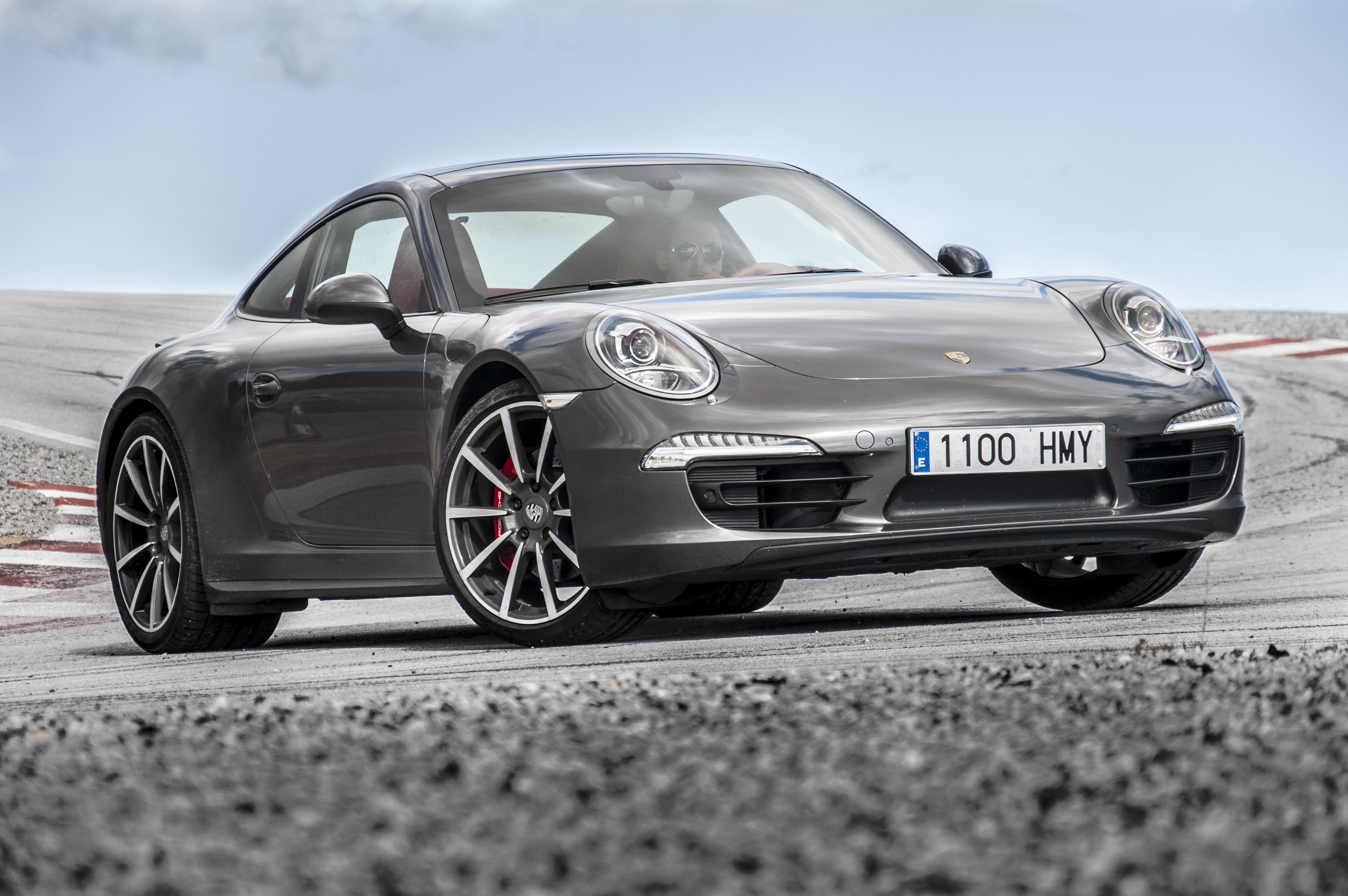
GT3
"So I guess the difference was to add likeness, right? So it's aluminium doors from the GT3, small tank, cup holder, cup holder delete."
The GT3 is Porsche’s hardcore track model. Mentioning GT3 parts is a way of saying the Cayman R uses similar lightweight, performance-minded components.
The Porsche 911 GT3 is known for track-focused engineering and lightweight construction. Here, the speaker references “aluminium doors from the GT3” to explain that the Cayman R borrows parts/approaches from Porsche’s GT3 program.
limited slip diff
"The purest spec would be no aircon, no radio, bucket seats, no rear white, like, yeah, manual or PDK, limited slip diff, which had never been offered, you know, in the mid-engine car before that."
A limited-slip differential helps the car put power down when one wheel starts to slip. It improves traction and stability, especially when cornering.
A limited-slip differential (often called an LSD) helps manage wheel spin by allowing the wheels to rotate at different speeds while still providing some drive to the side with traction. The speaker emphasizes that this was a notable addition for the Cayman R in that mid-engine context.
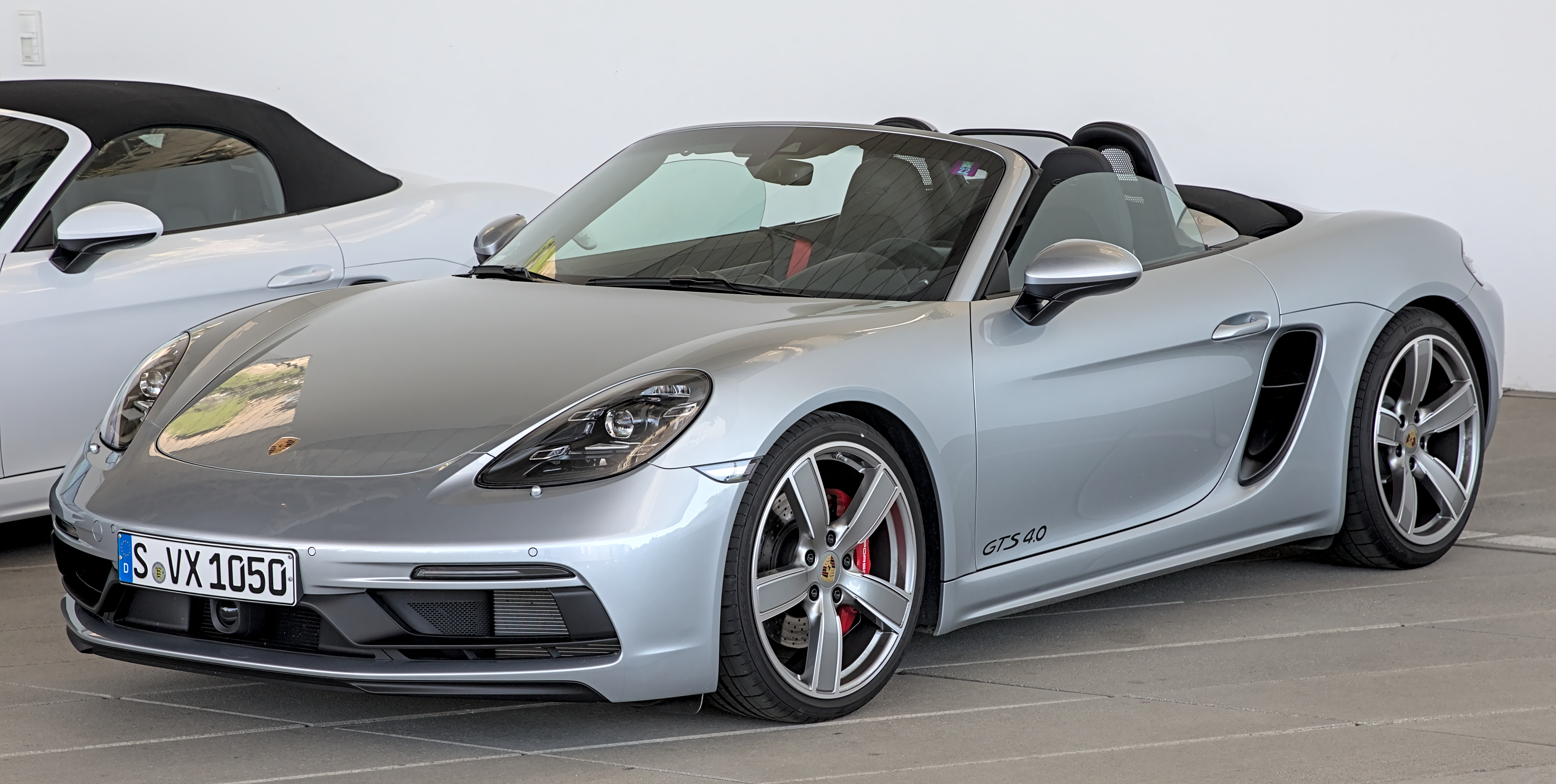
987 Spider
"In my kind of limited experience driving those cars, I found the Cayman R a bit like the 987 Spider to be very spec dependent. Is that fair or not?"
The 987 Spider is a Porsche Boxster convertible. They’re saying both cars can feel very different depending on the options you have.
The Porsche 987 Spider is the Boxster generation with a convertible soft top. The speaker compares how “spec dependent” the Cayman R feels versus the 987 Spider, implying options and settings strongly affect the driving experience.
PSE
"I find that my car without Sport Chrono activated and PSE on doesn't seem to really come alive, so I feel that they are necessary options on those cars."
PSE stands for Porsche Sport Exhaust, an exhaust system option that can change sound and sometimes throttle/exhaust behavior depending on mode. The speaker pairs it with Sport Chrono, suggesting both are key to the Cayman R’s intended character.
Sport mode
"You highlighted that this time a year ago, Ben, when you very kindly let me drive your car, I couldn't quite work out what the fuss was about, and then you came through on the walk talking and said, do yourself a favor, put it in Sport mode, son."
Sport mode is a driving setting that typically sharpens throttle response, steering feel (depending on equipment), and transmission behavior. The speaker’s advice—put it in Sport mode—implies the Cayman R’s performance character is strongly mode-dependent.
throttle
"Yeah, you can feel the throttle. If you put your foot on the throttle, just resting on the throttle pedal, and then press the sports button..."
The throttle is how you tell the engine how much power you want. If it feels “sharp,” the car reacts quickly when you press the pedal.
The throttle is the driver’s input that controls how much air (and therefore fuel) the engine can use. When the speaker says you can “feel the throttle,” they mean the car responds quickly and directly to small pedal movements.
manual
"...I know you said that you're all buckets and manual, but just a little bit more on the spec, colors and whatnot..."
Manual transmission means the driver selects gears with a clutch and gear lever rather than relying on an automatic. The speaker’s mention of “manual” is part of the car’s spec and ties into the “purest” driving feel they’re discussing.
64-litre tank
"...chrono, twinkly lights, whatever they're called, and 64-litre tank is that standard?"
That’s how much fuel the car can hold. A bigger tank usually means fewer stops for gas.
A “64-litre tank” is the fuel tank capacity, which affects how far the car can go between fill-ups. The speaker asks whether that capacity is standard, suggesting they’re comparing their spec to typical factory configuration.
OPC
"...it wasn't something, like walking into an OPC and buying a car and losing 10, 20% on it."
OPC is Porsche’s official dealer network. It’s basically the “official Porsche shop,” not an independent seller.
OPC refers to Porsche’s official dealer network (Authorized Porsche Centers). Buying from an OPC is often associated with more standardized pricing and availability compared with private-party purchases.
sat nav
"And yeah, as much as it's [744.3s] quite, it doesn't have any sat nav as a radio, that's about it, no air conditioning. So, yeah, PCCM Plus will be a great add-on to that."
Sat nav is the built-in GPS for navigation. They’re pointing out that this car is more stripped-down, so it doesn’t include that feature.
“Sat nav” is shorthand for satellite navigation, the built-in GPS system used for directions. The speaker notes the Cayman R lacks sat nav integrated into the radio, highlighting how some track-focused cars omit everyday tech.
mid-engine layout
"So, [810.9s] what makes you love that Cayman R so much over other things in the garage and previous acquisitions? [818.5s] I feel a better driver in it, that's for sure, because of the mid-engine layout. [823.7s] It talks to you when you're driving it, you know, there's a bit of"
Mid-engine means the engine sits nearer the middle of the car. That can make the car feel more balanced and easier to steer, especially when driving fast or through corners.
A “mid-engine layout” places the engine closer to the car’s center, typically behind the driver but ahead of the rear axle. This helps balance weight distribution and often makes the car feel more responsive and communicative in corners—one reason the speaker says they feel like a better driver.
AC
"...couldn't find the car I wanted, manual buckets and I really wanted AC. Like, you know, I get the lightweight ethos..."
AC is the car’s air conditioning. They’re saying that even though the car is track-focused, they still wanted the comfort of cool air.
AC means air conditioning, and in this context it’s a key comfort requirement. The speaker contrasts the Cayman R’s lightweight, track-oriented interior with the real-world heat you can feel when the engine is positioned behind you.
Alcantara
"...I like a car that's, you know, it just feels a little bit more focused. I've got a lot of Alcantara in there. And that always makes it feels a little bit racier..."
Alcantara is a soft, suede-like material used inside cars. It usually makes the cabin feel more sporty and premium.
Alcantara is a synthetic suede-like material used in performance interiors. The speaker says it makes the car feel “a little bit more racier,” which matches how Alcantara is often used on steering wheels, seats, and trim for a sportier look and feel.
cost versus value
"with all of these things, like it's, it's cost versus value. And the Cayman R is a, is a car where the, I feel that for me and what I like and how I drive, the value massively outweighs the cost it really does"
This is basically asking: “Is it worth the money?” They’re talking about whether the driving experience and ownership benefits justify the purchase price.
“Cost versus value” is the idea of comparing what you pay for a car to how much satisfaction, capability, and ownership benefit you actually get. In enthusiast circles, it often includes how the car feels to drive, how usable it is, and how well it holds value over time.
pound per smile
"So the fact that you can get into this car for that kind of money compared to other things, it just seems like pound per smile. Just something I'd like to touch on."
“Pound per smile” is a humorous way to express value: how much fun (smiles) you get for each unit of money spent (pounds). It’s commonly used by enthusiasts to compare cars beyond just specs or raw performance.
flat spot
"...There is a flat spot in the, in the, in the rev range, because it really kicks it... But there is a flat spot between, I don't know, two and three..."
A “flat spot” is when the engine feels a little lazy for a moment—like it’s not pulling strongly—before it suddenly picks up again. It’s the kind of thing you can feel when you accelerate.
A “flat spot” is a noticeable hesitation or reduced acceleration response in a specific engine speed range. The speaker says the Cayman R has a flat spot in the rev range, then “pops,” and also notes another mapped hesitation between certain RPM bands.

Alpine A110
"Well, the obvious one is the Alpine. Yes... But I think the Alpine 110... but of course, that's only a whatever box it is, auto or a sequential... I would probably have an Alpine 110 if they made it with, with a manual gearbox."
The Alpine 110 is a small, sporty car designed to feel nimble and fun. In this segment, they’re comparing how the gearbox choice changes how quickly it feels like it pulls.
The Alpine 110 is a lightweight, mid-engine sports car that’s often compared to the Porsche Cayman because of its focus on driving feel. Here, it’s discussed in terms of gearbox choice (manual vs automated) and how that affects real-world acceleration response.
three-pedal guy
"So I can't fathom why, because I'm a three-pedal guy, I like, I like, I like to, I like to roll the gears."
“Three-pedal guy” refers to preferring a traditional manual transmission with a clutch (three pedals total: clutch, brake, accelerator). The speaker connects this preference to how they like to control gear selection to manage torque delivery and avoid hesitation.
mid-engine-ness
"...not had a GT3, I might have had a GT4. Just that [1749.6s] mid-engine-ness has, has really sort of hit a good chord with me."
“Mid-engine-ness” means the engine sits more in the middle of the car. They’re saying that layout makes the car feel especially good to drive.
“Mid-engine-ness” refers to the engine being positioned closer to the car’s center (rather than front or rear). This layout typically improves balance and turn-in feel, which is why the speaker says it “hits a good chord” for their driving preferences.
B roads
"We've got rutted, twisty B roads, and the way that they are [1774.9s] manages to seem to float over this."
B roads are smaller country roads with lots of bends. They’re saying their home roads are rougher and twistier than smooth roads you might imagine.
“B roads” are smaller, often twistier rural roads in the UK, typically with less predictable surfaces and tighter corners than main highways. The speaker contrasts their local B-road conditions with smooth Swiss-style tarmac to explain why the Cayman R’s compliance matters.
brakes
"So the question I've got for you is, well, what are its weaknesses? Every car has them. Yeah, every car has, has its weaknesses. I would say that the, the brakes, maybe,"
They’re about to talk about the car’s brakes as a potential weak spot. Brakes can feel different depending on the pads and how hard you drive them, especially on longer or more aggressive routes.
The speaker is starting to identify weaknesses and mentions “the brakes” as a likely area. In track-focused Porsches, brake feel and fade resistance depend on pad compound, rotor condition, and cooling—so this is a meaningful ownership/performance topic.
Request an Explanation
Heard something you'd like explained? We'll add it to this episode.
Sign in to request explanations for terms you heard.
Want to learn more?
Browse our glossary for plain-English explanations of automotive terms, jargon, and concepts.
Help improve this episode
See something that's not quite right? Our annotations are AI-generated and can sometimes miss the mark. Click the flag icon on any annotation to suggest a correction.