
BYD Ato3
The BYD Ato3 is BYD’s compact SUV. This episode says the updated version is getting new battery and faster-charging tech, along with suspension changes to improve ride/handling.
flash charging
Flash charging means the car can charge much faster than normal. Whether it’s truly “fast” depends on the battery and the car’s charging system.

Atto Byd Ato3
The BYD Atto 3 is an electric SUV. The podcast says it’s called something else in its home market, but it’s the same vehicle. It’s discussed because it’s selling well and helps show BYD’s growth in EVs.
rear wheel drive
Rear wheel drive (RWD) means the electric motors send power to the rear axle. This affects traction and handling balance compared with front-wheel drive or all-wheel drive setups.
adaptive damping
Adaptive damping is a suspension feature that changes how stiff the shocks feel. It tries to make the ride smoother when you need it and more controlled when you drive hard.
Fang Cheng Bao
Fang Cheng Bao is a BYD brand that makes more rugged, off-road-style electric SUVs. In this episode, it’s getting flash-charging upgrades across multiple models.

Bao 8
Bao 8 is a rugged electric SUV from BYD’s Fang Cheng Bao lineup. This episode says it also has a flash-charging version.

Bao 5
Bao 5 is a rugged-style electric SUV from BYD’s Fang Cheng Bao lineup. The episode says a flash-charging version is available, aimed at faster charging.

Ti7 Fang Cheng Bao
The Ti7 is an EV model associated with BYD’s Fang Cheng Bao sub-brand. The podcast mentions it as having a “flash charging” version, meaning it’s designed to charge faster than standard versions. It’s brought up because charging speed can make EVs easier to use day to day.
blade battery
BYD’s “blade battery” is a special way of building the battery cells. The goal is to make the battery safer and easier to fit in the car.
peak charge rate
Peak charge rate is the fastest charging speed the car can handle. Higher numbers generally mean you can add energy more quickly.
plug-in hybrid range
Plug-in hybrid range is how far the car can go using electricity after you charge it. After that, it leans more on the gas engine.
DSUS P ultra high-end suspension system
DSUS P is an advanced suspension setup that can raise and lower the car for off-road situations. It’s meant to help the car deal with mud, obstacles, and even flat tires.
four-wheel lifting extractions
This is a feature that can lift the car’s wheels to help get unstuck. It’s designed for tough off-road situations like mud.
active stabilization
Active stabilization is the car’s computer helping keep it steady when something goes wrong. In this case, it helps the car stay controllable even if a tire fails.
BESS
BESS means big battery systems used by the power grid. They store electricity when it’s available and release it when it’s needed.
energy storage market
The energy storage market is the business of building systems that store electricity. The episode compares companies by how much of that market they supply.
Benchmark Mineral Intelligence
Benchmark Mineral Intelligence is a research company that studies the battery industry. In this segment, they’re the source for the market-share numbers mentioned.

Renault Fluence
The Renault Fluence is an electric car model. The podcast mentions it while talking about who has what share of the EV market. It’s included because it helps show which EVs are selling and gaining attention.
battery energy storage
Battery energy storage is big battery equipment that saves electricity for later. It helps the power grid handle renewable energy that doesn’t produce at a steady rate.
megapack
Megapack is Tesla’s big battery system for storing electricity. It’s used by the grid, and the episode is saying Tesla relies on specific battery cell suppliers for it.
LFP cells
LFP cells are a type of EV battery chemistry. They’re generally known for being safer and lasting a long time, which is why major battery makers and automakers use them.
year on year export growth
Year-on-year (YoY) export growth compares how many vehicles a country exports this year versus the same period last year. It’s a common way to show whether export momentum is accelerating or slowing, independent of short-term fluctuations.
new energy vehicles
In China, “new energy vehicles” is a label for cleaner cars like fully electric cars and plug-in hybrids. The episode uses it to explain what’s boosting China’s export numbers.
plug-in hybrids
Plug-in hybrids are cars that use both gas and electricity. You can charge them from a plug, but they also have a gas engine for longer trips.
BEVs
BEV means fully electric car. It doesn’t use gasoline—it runs on a battery you charge from electricity.
NEO
NIO is an electric-car brand. Here, the hosts are talking about NIO’s ES8 SUV and how it’s doing very well in China.
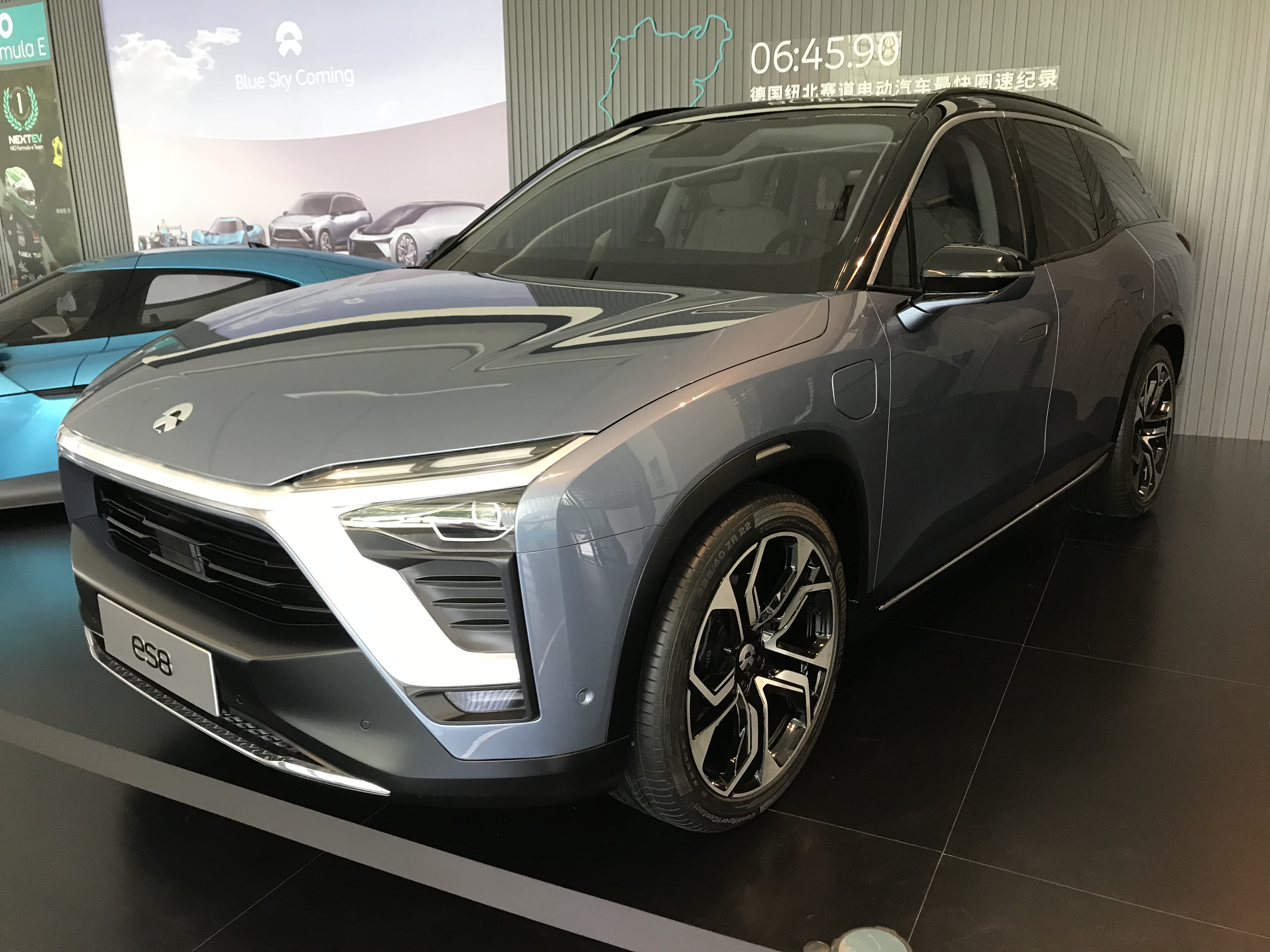
NIO ES8
The NIO ES8 is a big electric SUV with room for a family. The hosts are saying it sold a lot very quickly after it launched.

Xiaomi YU7 GT
Xiaomi YU7 GT is a sportier version of Xiaomi’s electric SUV. It’s meant to look and drive more aggressively, with bigger wheels and upgraded braking and handling features.

Xiaomi SU7
The Xiaomi SU7 is an electric sedan made by Xiaomi. The podcast talks about different versions, including one that’s meant more for track-style driving. It’s mentioned because the lineup and naming help buyers understand what each version is for.
carbon ceramic discs
Carbon-ceramic brakes are a premium type of brake rotor designed to handle high heat. They’re meant to keep braking strong even when you drive hard.
Brembo
Brembo is a company famous for making high-performance brakes. The segment is saying the Xiaomi YU7 GT uses Brembo braking tech.
rear axle torque vectoring
Torque vectoring means the car can send different amounts of power to the left and right rear wheels. That helps the car grip better and turn more confidently.
air suspension
Air suspension uses compressed air instead of traditional steel springs to control ride height and damping. That lets the car lower for a sportier stance at speed and raise for comfort or rough-road clearance.
Maestro S800
The Maestro S800 is a high-end sedan in China, priced over 700,000 yuan. The hosts say it sold the most in April among its premium rivals.
Mercedes
Mercedes is a luxury car brand. In this segment, it’s mentioned as one of the cars the Maestro S800 is competing against.

Porsche Panamera
The Porsche Panamera is a luxury sedan from Porsche. The segment uses it as an example of the kind of premium car the Maestro S800 is trying to beat in sales.

Mercedes-Benz Sclass
The Mercedes-Benz S-Class is a top-level luxury car from Mercedes. It’s designed to be very comfortable and packed with technology. It’s mentioned because it’s a major “flagship” model, so its sales can show how well luxury cars are doing in a market like China.

Bmw 7
The BMW 7 Series is BMW’s most upscale, high-comfort sedan. It includes an electric version called the i7. It’s discussed because it shows how BMW is competing in the premium luxury market as more buyers move toward EVs.
Huawei
Huawei is a big tech company, and here it’s getting involved in EVs by providing technology and systems. The hosts say Huawei can lead the product/tech side while automakers handle the vehicle work.
JAC
JAC is an automaker. In this segment, it’s described as working with Huawei in a partnership where one side brings the tech and the other side builds the vehicles.
CATL
CATL is a major company that makes EV batteries. Here, they’re talking about using computer “learning” to design batteries faster and improve how they’re made.
AI driven design
AI driven design means using computers to help design batteries. Instead of engineers trying combinations by hand, AI can search through lots of options and find better settings faster.
solid state batteries
Solid state batteries are a newer type of EV battery that uses a solid material inside instead of a liquid. The goal is often better safety and more energy, but making them reliably is harder than today’s batteries.
conductivity
Conductivity is a measure of how easily electricity can move through a material. In batteries, better conductivity can help the battery charge and work more efficiently.
HIMA model
The HIMA model is a partnership approach. One company leads the technology and product side, while the automaker partner focuses on building the EVs.
Maserati
Maserati is an Italian luxury sports-car brand. The hosts are saying Maserati is struggling, especially in China, where sales have fallen a lot.
Stellantis
Stellantis is a big car company. Here, they’re mentioned in connection with possibly taking over Maserati, which would change how Maserati cars are designed and sold.
proprietary chip
A proprietary chip is a computer chip a company designs for its own cars. It can help the car run advanced features more smoothly because it’s built to match that company’s software and systems.
mass production
Mass production means the product is being built in large numbers, not just a few test units. For chips and EV tech, that’s important because it shows the design can be made reliably and affordably.

Li Auto L9
The Li Auto L9 is a top SUV from Li Auto. The episode connects it to new in-house computer chips that the company says will power its next tech features.
first mover advantage
First mover advantage means being early to use a new idea and getting a head start. The hosts are saying Li Auto isn’t the earliest company to do this kind of chip strategy.
silicon, software, and hardware
They’re talking about the whole system: the chip inside the car, the software that runs on it, and the physical parts it controls. The claim is that better coordination between these can make the car’s features work better.
Lotus
Lotus is a sports-car brand from the UK. In this segment, they’re changing direction: instead of going fully electric, they’re planning a hybrid supercar.

Lotus Type 135
Lotus Type 135 is a new supercar project planned for 2028. It’s a hybrid with the engine mounted in the middle, and the hosts say it will use a V8—something Lotus hasn’t done in about 24 years.
mid-engined
Mid-engined means the engine is placed near the middle of the car. That can help the car feel more balanced and easier to steer, which is why many supercars use this layout.
V8 engine
A V8 engine is an engine with eight cylinders arranged in a V shape. The hosts are pointing out that Lotus hasn’t used one for a long time, so this is a big change for the brand.
multi-pathway strategy
A multi-pathway strategy means the company keeps more than one plan running at once. Instead of betting everything on one powertrain, they’re trying different approaches so they’re ready for whatever the market demands.
Coventry design centre
Coventry is where Lotus says it will do the design work for this car. It’s basically telling you where the team building the car’s design is based.
Hethel
Hethel is where Lotus plans to build the car. That’s the manufacturing location, so it tells you where the production will happen.
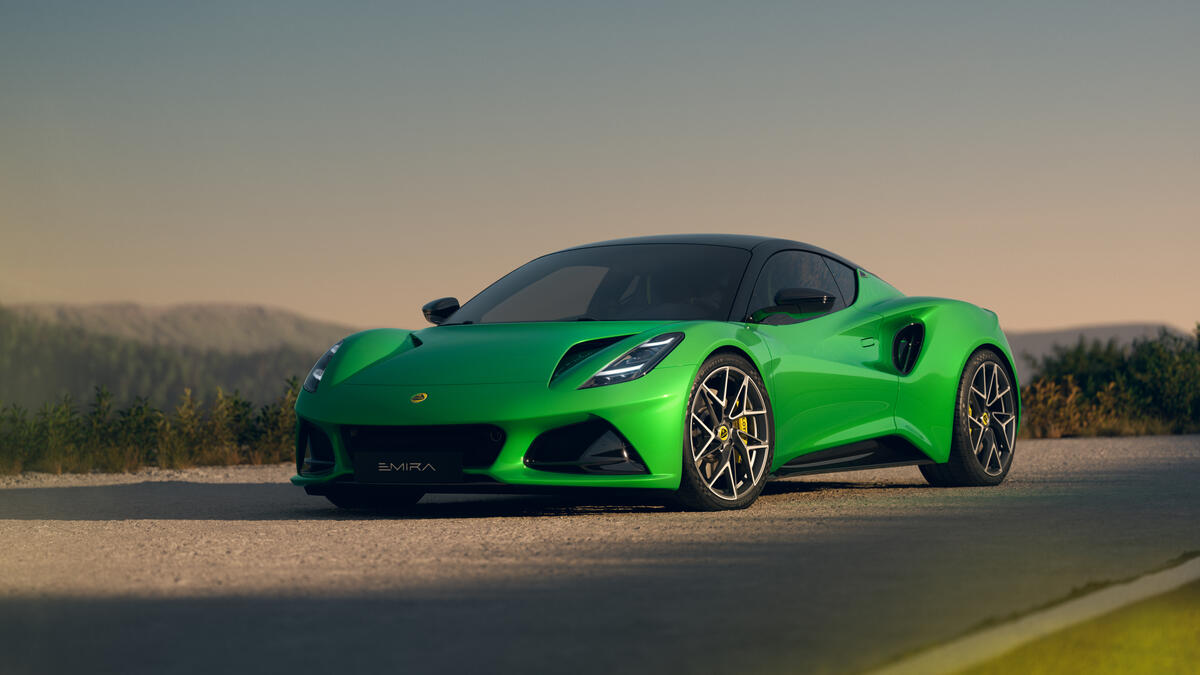
Lotus Amira
The Lotus Emira is a sports car made to feel fast and fun to drive. It’s described as having a V8 option and also a hybrid setup. It comes up because it’s an example of how sports-car makers are changing their powertrains.
EREV
EREV means the car is mainly an electric vehicle, but it can use a gas engine to generate electricity if the battery gets low. So it’s not just a pure EV with no backup.
twin-turbo
Twin-turbo means the engine uses two turbochargers. They help the engine make more power by pushing more air into the cylinders.
HEV
HEV means hybrid electric vehicle. It uses both gas and electricity, but you usually don’t plug it in—the battery is charged through driving and braking.
900-volt system
A 900-volt system is a higher-voltage battery/electrical setup than many EVs use. Higher voltage can make it easier to move lots of power—often helping with faster charging.
0-62
“0-62” is how fast a car accelerates from a standstill to 62 (usually mph). Lower time generally means quicker acceleration.
mild hybrid
A mild hybrid is a car that uses a small electric motor to help the gas engine. It usually can’t run the car on electricity alone for long.