
CHINA: BYD Adds Flash Charging To Atto 3, China Set For 10 Million EV Exports and NIO ES8 Dominates SUVs | 13 May 2026
About this episode
BYD refreshes the Atto 3 with “second generation blade battery” tech and adds “flash charging technology,” while Fang Cheng Bao rolls out flash-charging editions for the Bao 5 and Bao 8. The show also zooms out to China’s battery and EV export momentum, including a claim that “China's auto exports should pass 10 million units this year.” NIO’s ES8 is highlighted for strong SUV sales and rapid delivery milestones, alongside broader talk on AI-driven battery development at CATL.
You can read all the latest news on the blog here: https://EVne.ws/blog
Subscribe for free and listen to the podcast on audio platforms:
➤ Apple: https://EVne.ws/apple
➤ YouTube Music: https://EVne.ws/youtubemusic
➤ Spotify: https://EVne.ws/spotify
➤ TuneIn: https://EVne.ws/tunein
➤ iHeart: https://EVne.ws/iheart
UPDATED BYD ATTO 3 REACHES DEALERS https://evne.ws/4fifZGP
BYD EXTENDS FLASH CHARGING TO BAO SUVS https://evne.ws/4wyX8Of
BYD TOPS TESLA IN GLOBAL BESS https://evne.ws/4udZJLO
CHINA AUTO EXPORTS SET TO TOP 10 MILLION https://evne.ws/3RCSSgl
NIO ES8 DOMINATES CHINA’S BIG SUV MARKET https://evne.ws/4358gol
XIAOMI YU7 GT SHOWS UP IN CHERRY RED https://evne.ws/42xVA9h
MAEXTRO S800 LEADS CHINA’S LUXURY SEDAN MARKET https://evne.ws/4tBy8TE
CATL USES AI TO SPEED BATTERY R&D https://evne.ws/4uIiEy5
HUAWEI, JAC AND MASERATI HOLD EV TALKS https://evne.ws/3PffKlw
LI AUTO PUTS MACH 100 INTO PRODUCTION https://evne.ws/4wqmTA3
LOTUS PLOTS HYBRID TURN WITH TYPE 135 https://evne.ws/4nzhW44
BYD Ato3
"Welcome back to EV News China. Today, BYD adds flash charging to the Ato3, China set for 10 million EV exports, and the Neo ES8 dominates in SUVs. ... The new BYD Ato3, sold domestically as the OnePlus, has reached dealerships."
The BYD Ato3 is BYD’s compact SUV. This episode says the updated version is getting new battery and faster-charging tech, along with suspension changes to improve ride/handling.
The BYD Ato3 is a compact SUV from BYD that’s being updated with faster charging hardware. In this segment, the hosts say BYD added second-generation Blade battery tech and “flash charging,” plus a revised chassis and adaptive damping.
flash charging
"Welcome back to EV News China. Today, BYD adds flash charging to the Ato3, China set for 10 million EV exports, and the Neo ES8 dominates in SUVs. ... BYD has added its second generation blade battery and flash charging technology."
Flash charging means the car can charge much faster than normal. Whether it’s truly “fast” depends on the battery and the car’s charging system.
Flash charging is marketing shorthand for very fast EV charging—typically aiming to deliver a large amount of energy in a short time. It usually depends on both the battery’s ability to accept high power and the car’s charging electronics.

Atto Byd Ato3
"... the global landscape. Let's get into it. The new BYD Ato3, sold domestically as the OnePlus, has reached de..."
The BYD Atto 3 is an electric SUV. The podcast says it’s called something else in its home market, but it’s the same vehicle. It’s discussed because it’s selling well and helps show BYD’s growth in EVs.
The BYD Atto 3 is an electric compact SUV that the podcast says is sold domestically as the “OnePlus.” It’s highlighted as part of BYD’s broader global push, and the mention of reaching a certain sales milestone shows how quickly the model is gaining traction. In an EV business news context, it’s a useful example of how BYD scales EV volume.
rear wheel drive
"Buyers get two rear wheel drive versions, either 200 or 240 kilowatt motors. Depending on variants, up to 630 kilometers."
Rear wheel drive (RWD) means the electric motors send power to the rear axle. This affects traction and handling balance compared with front-wheel drive or all-wheel drive setups.
adaptive damping
"BYD also revised the chassis. The upgrade package includes its new Yun-NC adaptive damping."
Adaptive damping is a suspension feature that changes how stiff the shocks feel. It tries to make the ride smoother when you need it and more controlled when you drive hard.
Adaptive damping is a suspension system that automatically adjusts shock absorber behavior to match driving conditions. BYD’s “Yun-NC adaptive damping” implies it can soften or firm the ride for comfort versus control.
Fang Cheng Bao
"Let's move on and we'll stay with BYD though. Their sub-brand, Fang Cheng Bao, has launched flash charging editions of the Bao 5 and Bao 8."
Fang Cheng Bao is a BYD brand that makes more rugged, off-road-style electric SUVs. In this episode, it’s getting flash-charging upgrades across multiple models.
Fang Cheng Bao is BYD’s sub-brand focused on rugged, off-road-oriented EVs. Here, the hosts say it’s rolling out flash-charging versions across its lineup, showing how BYD is applying fast-charging tech beyond mainstream models.

Bao 8
"Fang Cheng Bao, has launched flash charging editions of the Bao 5 and Bao 8."
Bao 8 is a rugged electric SUV from BYD’s Fang Cheng Bao lineup. This episode says it also has a flash-charging version.
Bao 8 is an off-road-oriented electric SUV in BYD’s Fang Cheng Bao sub-brand. The hosts mention it specifically in the context of “flash charging editions,” indicating a fast-charging upgrade for this model line.

Bao 5
"Their sub-brand, Fang Cheng Bao, has launched flash charging editions of the Bao 5 and Bao 8."
Bao 5 is a rugged-style electric SUV from BYD’s Fang Cheng Bao lineup. The episode says a flash-charging version is available, aimed at faster charging.
Bao 5 is an off-road-focused electric SUV model under BYD’s Fang Cheng Bao sub-brand. This segment specifically calls out “flash charging editions,” meaning the charging hardware/software has been updated for faster charging.

Ti7 Fang Cheng Bao
"... and we'll stay with BYD though. Their sub-brand, Fang Cheng Bao, has launched flash charging editions of the Bao ..."
The Ti7 is an EV model associated with BYD’s Fang Cheng Bao sub-brand. The podcast mentions it as having a “flash charging” version, meaning it’s designed to charge faster than standard versions. It’s brought up because charging speed can make EVs easier to use day to day.
The podcast references “Ti7” as part of BYD’s sub-brand lineup under Fang Cheng Bao, and it mentions “flash charging editions.” That’s significant because fast-charging capability is a key selling point for EV buyers and a competitive differentiator in markets where charging speed matters. The discussion frames these models as part of BYD’s push to improve charging convenience.
blade battery
"Both models use the second generation blade battery, which all BYD's are getting by the way."
BYD’s “blade battery” is a special way of building the battery cells. The goal is to make the battery safer and easier to fit in the car.
A “blade battery” is BYD’s battery design where the cells are arranged in a long, thin format like a blade. That structure helps improve safety and packaging efficiency compared with more traditional cell layouts, which is why BYD highlights it across multiple models.
peak charge rate
"With a big enough battery, in good conditions, that's a 1,500 kilowatt peak charge rate."
Peak charge rate is the fastest charging speed the car can handle. Higher numbers generally mean you can add energy more quickly.
Peak charge rate is the maximum power the car can accept from a charger at a given moment, usually measured in kilowatts (kW). A higher peak charge rate can shorten charging time, especially when the battery is cool and not yet near full.
plug-in hybrid range
"The Bao 8 has a combined plug-in hybrid range of almost 1,400 kilometers."
Plug-in hybrid range is how far the car can go using electricity after you charge it. After that, it leans more on the gas engine.
Plug-in hybrid range refers to how far a plug-in hybrid can travel using its battery (and electric drive) before it relies more on its engine. It’s often reported as a combined figure that assumes a mix of driving and charging conditions.
DSUS P ultra high-end suspension system
"The two SUVs also bring BYD's new DSUS P ultra high-end suspension system. This thing's really impressive by the way."
DSUS P is an advanced suspension setup that can raise and lower the car for off-road situations. It’s meant to help the car deal with mud, obstacles, and even flat tires.
DSUS P is BYD’s electronically controlled suspension system designed to give off-road flexibility. It enables large ride-height changes (body height adjustment), high lifting capacity, and advanced functions like independent wheel lifting and tire-change assistance.
four-wheel lifting extractions
"it offers 200 millimeters... of body height adjustment and a nine tonne lifting capacity with four-wheel lifting extractions."
This is a feature that can lift the car’s wheels to help get unstuck. It’s designed for tough off-road situations like mud.
Four-wheel lifting extractions describe a suspension capability where the system can lift the vehicle’s wheels to help free it from obstacles like deep mud. By raising wheels and controlling traction, it aims to reduce the chance of getting stuck.
active stabilization
"You can also drive on three wheels if you get a blowout, for instance, with active stabilization."
Active stabilization is the car’s computer helping keep it steady when something goes wrong. In this case, it helps the car stay controllable even if a tire fails.
Active stabilization uses sensors and control algorithms to keep the vehicle stable during unusual conditions, such as a blowout or when one or more wheels lose normal contact. It typically coordinates braking and steering assist to reduce loss of control.
BESS
"BESS, Integrator Market, Tesla on 10%. BYD shipped over 60 gigawatt hours of battery energy storage for the grid last year."
BESS means big battery systems used by the power grid. They store electricity when it’s available and release it when it’s needed.
BESS stands for Battery Energy Storage System—large-scale battery installations used to store electricity from the grid and deliver it later. These systems can help balance supply and demand, support renewables, and provide grid services.
energy storage market
"Benchmark Mineral Intelligence, say BYD, had 13% of the global energy storage market."
The energy storage market is the business of building systems that store electricity. The episode compares companies by how much of that market they supply.
The energy storage market refers to the industry for storing electrical energy for later use, often using battery systems. In this segment, the hosts compare BYD and Tesla based on their share of global energy storage deployments.
Benchmark Mineral Intelligence
"Benchmark Mineral Intelligence, say BYD, had 13% of the global energy storage market."
Benchmark Mineral Intelligence is a research company that studies the battery industry. In this segment, they’re the source for the market-share numbers mentioned.
Benchmark Mineral Intelligence is a market research firm that tracks battery and energy supply chains. Here, it’s used as the source for BYD’s reported share of the global energy storage market.

Renault Fluence
"... up there. Hyperstrong as well. Huawei, Envision, Fluence, Sunwoda, about 4% of the market. Eight of the to..."
The Renault Fluence is an electric car model. The podcast mentions it while talking about who has what share of the EV market. It’s included because it helps show which EVs are selling and gaining attention.
The Renault Fluence is an EV model mentioned in the context of market share and the competitive landscape. The podcast groups it with other companies and suppliers, indicating it’s part of a broader set of players gaining traction in EV sales. It’s discussed because its presence helps illustrate how different brands and ecosystems are performing in the market.
battery energy storage
"China's not [343.1s] hanging around. And China knows he has to move away from fossil fuels, the investment in everything [348.0s] from solar to wind to now battery energy storage is impressive."
Battery energy storage is big battery equipment that saves electricity for later. It helps the power grid handle renewable energy that doesn’t produce at a steady rate.
Battery energy storage refers to large battery systems that store electricity for later use, helping balance the grid when renewable output (like solar and wind) fluctuates. In EV-focused markets like China, growth in stationary storage also supports faster renewable build-out and grid stability.
megapack
"Tesla doesn't [365.0s] follow that model. They source their megapack cells from BYD and CATL. And I think they're [370.7s] going to get them from LG as well, the LFP cells from LG."
Megapack is Tesla’s big battery system for storing electricity. It’s used by the grid, and the episode is saying Tesla relies on specific battery cell suppliers for it.
Megapack is Tesla’s large-scale battery energy storage product used to store electricity for the grid. The transcript ties it to cell sourcing (BYD/CATL/LG), which matters because cell chemistry and supply availability affect cost and delivery timelines.
LFP cells
"And I think they're [370.7s] going to get them from LG as well, the LFP cells from LG. Deliveries for that deal should start [377.1s] this August."
LFP cells are a type of EV battery chemistry. They’re generally known for being safer and lasting a long time, which is why major battery makers and automakers use them.
LFP stands for lithium iron phosphate, a battery chemistry known for strong safety and long cycle life. The episode mentions LFP cells from LG as part of Tesla’s energy storage cell sourcing, which signals how chemistry choices affect supply and performance.
year on year export growth
"That would mean year on year export growth of 41%. [396.5s] It would follow growth of 21% in 2025, when China shipped 7 million vehicles overseas"
Year-on-year (YoY) export growth compares how many vehicles a country exports this year versus the same period last year. It’s a common way to show whether export momentum is accelerating or slowing, independent of short-term fluctuations.
new energy vehicles
"New energy vehicles, [409.5s] as you can imagine, are what driving the growth. China's EV exports reached 2.6 million units [416.5s] last year."
In China, “new energy vehicles” is a label for cleaner cars like fully electric cars and plug-in hybrids. The episode uses it to explain what’s boosting China’s export numbers.
“New energy vehicles” (NEVs) is a China-specific category that includes battery-electric vehicles (BEVs) and plug-in hybrids (PHEVs), rather than only traditional gasoline cars. The transcript uses it to explain why EV-related exports are driving overall export growth.
plug-in hybrids
"And a lot of plug-in hybrids being exported, [422.5s] of course, there's no import taxes in Europe, unlike full BEVs."
Plug-in hybrids are cars that use both gas and electricity. You can charge them from a plug, but they also have a gas engine for longer trips.
Plug-in hybrids (PHEVs) combine an internal-combustion engine with an electric motor and a battery that can be charged from an external outlet. The transcript notes that many exported vehicles are plug-in hybrids, which affects how they’re treated by import rules and incentives.
BEVs
"And a lot of plug-in hybrids being exported, [422.5s] of course, there's no import taxes in Europe, unlike full BEVs. NEO's next in the news, their [427.9s] big ES8, that's their large 3-row SUV, which is really impressive."
BEV means fully electric car. It doesn’t use gasoline—it runs on a battery you charge from electricity.
BEV means battery-electric vehicle: a car that runs only on electricity stored in its battery. The episode contrasts BEVs with plug-in hybrids in the context of European import taxes, implying different policy treatment by powertrain type.
NEO
"NEO's next in the news, their [427.9s] big ES8, that's their large 3-row SUV, which is really impressive. Onto the third generation of [434.2s] that vehicle now, it is topping, once again, China's SUV retail sales chart"
NIO is an electric-car brand. Here, the hosts are talking about NIO’s ES8 SUV and how it’s doing very well in China.
NIO is an EV brand known for premium electric SUVs and a focus on the Chinese EV market. In this segment, NIO’s ES8 is discussed as a top-selling large, three-row SUV and a major contributor to the company’s sales.
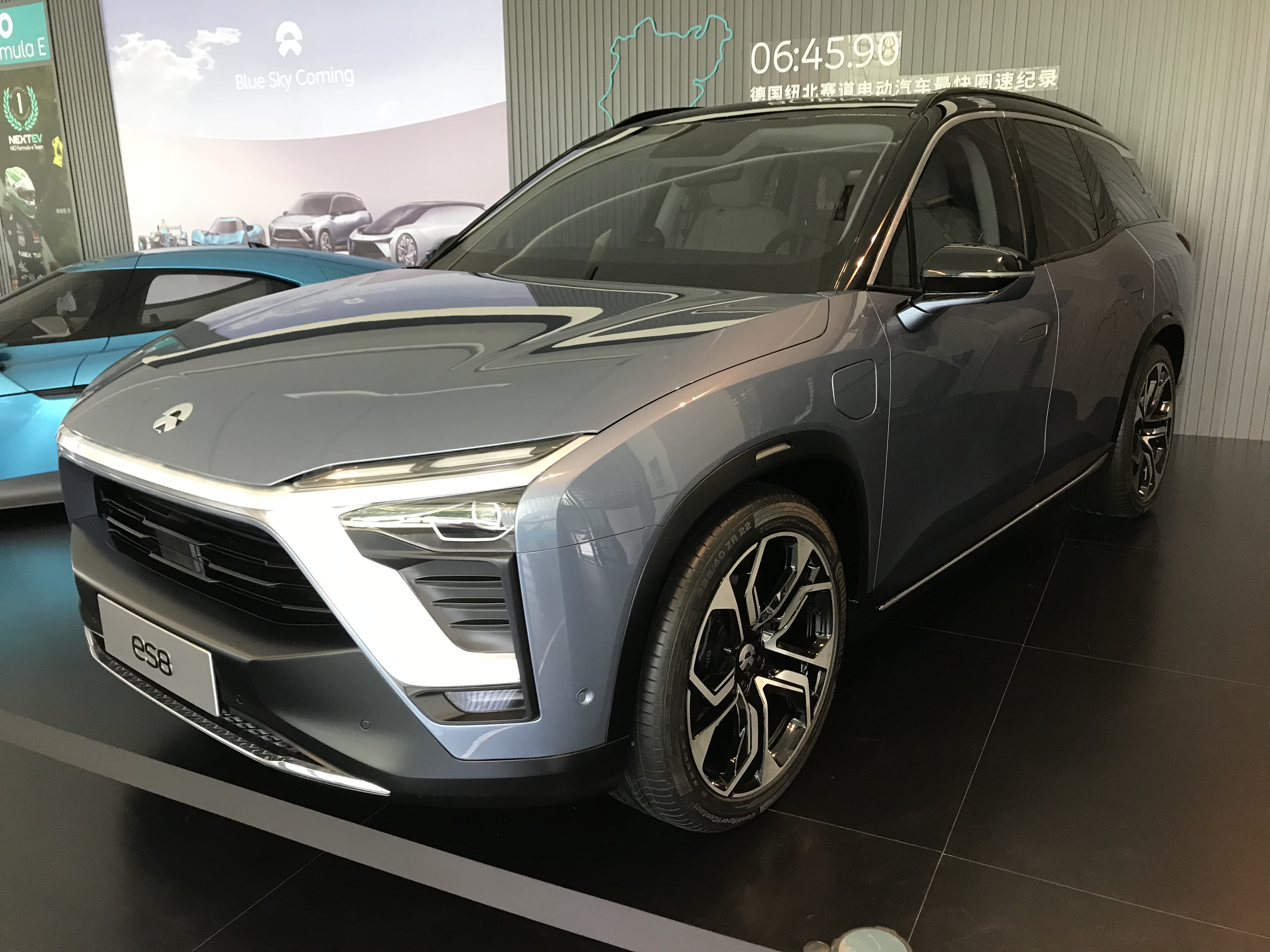
NIO ES8
"of course, the ES8 reached 100,000 total deliveries last month as well, just 215 days after it launched."
The NIO ES8 is a big electric SUV with room for a family. The hosts are saying it sold a lot very quickly after it launched.
NIO ES8 is a three-row, six- or seven-seat electric SUV from NIO, aimed at the premium family market. In this segment, the hosts highlight its rapid delivery milestone—100,000 total deliveries reached just 215 days after launch—showing strong early demand.

Xiaomi YU7 GT
"Xiaomi's next, the YU7 GT version is coming... Xiaomi will pitch the GT version of the YU7 as a sports, well, supercar-level performance in an SUV body... The hardware matches the bodywork, new 21-inch wheels, bright red brake calipers, and the braking package will use carbon ceramic discs and Brembo technology."
Xiaomi YU7 GT is a sportier version of Xiaomi’s electric SUV. It’s meant to look and drive more aggressively, with bigger wheels and upgraded braking and handling features.
Xiaomi YU7 GT is a performance-focused variant of Xiaomi’s YU7 electric SUV, positioned as a sportier, wider-body take on the standard model. The segment describes GT-specific styling and aero (front splitter, rear diffuser/spoiler), plus performance hardware like 21-inch wheels, carbon-ceramic brakes, and rear-axle torque vectoring.

Xiaomi SU7
"...he GT name rather than Ultra to keep clear of the SU7 Ultra. That really is a track car. The YU7 GT wan..."
The Xiaomi SU7 is an electric sedan made by Xiaomi. The podcast talks about different versions, including one that’s meant more for track-style driving. It’s mentioned because the lineup and naming help buyers understand what each version is for.
The Xiaomi SU7 is an electric performance-oriented sedan, and the podcast references naming details like “GT” versus “Ultra” to clarify which version is track-focused. That matters in EV news because different trims can target different customer needs—daily driving versus more aggressive performance use. Mentioning these variants signals how Xiaomi is positioning the SU7 lineup in the EV market.
carbon ceramic discs
"the braking package will use carbon ceramic discs and Brembo technology."
Carbon-ceramic brakes are a premium type of brake rotor designed to handle high heat. They’re meant to keep braking strong even when you drive hard.
Carbon-ceramic discs are high-performance brake rotors made from ceramic composites reinforced for heat resistance. They can resist fade better than conventional brakes and are often paired with performance calipers for repeated hard stops.
Brembo
"the braking package will use carbon ceramic discs and Brembo technology."
Brembo is a company famous for making high-performance brakes. The segment is saying the Xiaomi YU7 GT uses Brembo braking tech.
Brembo is a well-known performance-brake brand that supplies calipers and braking systems to many sports cars and racing programs. Here, the hosts mention Brembo technology as part of the YU7 GT’s braking package.
rear axle torque vectoring
"Top speed, 300kmh, the 101.7kWh battery backs up a range of 705kmh, air suspension, and rear axle torque vectoring."
Torque vectoring means the car can send different amounts of power to the left and right rear wheels. That helps the car grip better and turn more confidently.
Rear-axle torque vectoring is a driveline control strategy that varies how much torque each rear wheel receives. By shifting torque side-to-side, it can improve turn-in, traction, and stability—especially during cornering.
air suspension
"Top speed, 300kmh, the 101.7kWh battery backs up a range of 705kmh, air suspension, and rear axle torque vectoring."
Air suspension uses compressed air instead of traditional steel springs to control ride height and damping. That lets the car lower for a sportier stance at speed and raise for comfort or rough-road clearance.
Maestro S800
"the Maestro. Now, the Maestro S800 has been topping China's premium luxury sedan market. These are 700,000 Yuan plus vehicles."
The Maestro S800 is a high-end sedan in China, priced over 700,000 yuan. The hosts say it sold the most in April among its premium rivals.
Maestro S800 is a Chinese-market premium electric sedan positioned above 700,000 yuan. The segment uses its monthly sales performance to argue it’s leading the premium luxury sedan category in April.
Mercedes
"which are, by the way, Mercedes, My Buck S-classes, and Porsche Panamera, as I suppose, in April."
Mercedes is a luxury car brand. In this segment, it’s mentioned as one of the cars the Maestro S800 is competing against.
Mercedes is the luxury car brand referenced as one of the Maestro S800’s premium competitors. The hosts specifically mention Mercedes S-Class as part of the comparison set for April sales.

Porsche Panamera
"Mercedes, My Buck S-classes, and Porsche Panamera, as I suppose, in April."
The Porsche Panamera is a luxury sedan from Porsche. The segment uses it as an example of the kind of premium car the Maestro S800 is trying to beat in sales.
Porsche Panamera is Porsche’s luxury performance sedan, commonly used as a benchmark for premium sedan buyers. The hosts cite it as one of the competitors to the Maestro S800 in China’s premium segment.

Mercedes-Benz Sclass
"And so not huge volume, but it says a lot that China is just pummeling the German competition in this segment as well. So far this year, it's sold over 5,500 units. The My Buck S-class May Buck is 3,000 in the BMW 7 series, which includes the electric i7, just slightly under as well."
The Mercedes-Benz S-Class is a top-level luxury car from Mercedes. It’s designed to be very comfortable and packed with technology. It’s mentioned because it’s a major “flagship” model, so its sales can show how well luxury cars are doing in a market like China.
The Mercedes-Benz S-Class is the brand’s flagship luxury sedan, known for high-end comfort, advanced tech, and a premium driving experience. In an EV-focused business discussion, it can come up because it represents how major automakers compete in China’s luxury market and how sales momentum can signal shifting demand. The podcast’s mention of “My Buck S-class” and sales volume highlights its role as a benchmark in that segment.

Bmw 7
"...its. The My Buck S-class May Buck is 3,000 in the BMW 7 series, which includes the electric i7, just slig..."
The BMW 7 Series is BMW’s most upscale, high-comfort sedan. It includes an electric version called the i7. It’s discussed because it shows how BMW is competing in the premium luxury market as more buyers move toward EVs.
The BMW 7 Series is BMW’s flagship luxury sedan, positioned at the top of its lineup for comfort and technology. The podcast specifically references the electric i7 within the 7 Series, tying it to the broader shift toward EVs in premium segments. Mentioning sales figures like “3,000 in the BMW 7 series” underscores how competitive that luxury category is.
Huawei
"So my extra is from Huawei and JAC's Harmony Intelligent Mobility Alliance. So you can get any rev version of it or a pure Bev version…"
Huawei is a big tech company, and here it’s getting involved in EVs by providing technology and systems. The hosts say Huawei can lead the product/tech side while automakers handle the vehicle work.
Huawei is a technology company that, in the EV context, is partnering with automakers to supply software and systems for electric vehicles. In this segment, Huawei is described as leading product and technology within an alliance model for EV development.
JAC
"So my extra is from Huawei and JAC's Harmony Intelligent Mobility Alliance…"
JAC is an automaker. In this segment, it’s described as working with Huawei in a partnership where one side brings the tech and the other side builds the vehicles.
JAC (Jianghuai Automobile) is an automaker that partners with tech firms and other brands to develop EVs. Here, it’s referenced as part of Huawei’s alliance structure, where JAC handles vehicle execution while Huawei leads technology.
CATL
"CATL is next in the news. Let's talk batteries. The chief scientist at CATL, Wu Kai, using the 18th International Battery Fair in Shenzhen earlier today to set out how artificial intelligence is changing batteries."
CATL is a major company that makes EV batteries. Here, they’re talking about using computer “learning” to design batteries faster and improve how they’re made.
CATL (Contemporary Amperex Technology) is one of the world’s largest battery manufacturers, supplying cells and battery tech to many automakers. In this segment, CATL’s chief scientist describes how AI is being used to speed up battery material discovery and improve manufacturing.
AI driven design
"Wu said that the industry now moves towards AI driven design. The shift matters because battery development involves many variables and in fact too many variables for an engineer or a team of engineers obviously to juggle by instinct or regular technology."
AI driven design means using computers to help design batteries. Instead of engineers trying combinations by hand, AI can search through lots of options and find better settings faster.
AI driven design means using machine-learning systems to explore and optimize battery design choices rather than relying only on human intuition. For batteries, that matters because performance depends on many interacting variables (materials, chemistry, and manufacturing conditions).
solid state batteries
"It also shapes how CATL are working on solid state batteries as well, saying it's team using AI to identify seven target materials in just three months to boost conductivity as well in three months."
Solid state batteries are a newer type of EV battery that uses a solid material inside instead of a liquid. The goal is often better safety and more energy, but making them reliably is harder than today’s batteries.
Solid state batteries replace the liquid electrolyte found in conventional lithium-ion packs with a solid electrolyte. That can potentially improve safety and enable higher energy density, but they’re challenging to manufacture reliably at scale.
conductivity
"…identify seven target materials in just three months to boost conductivity as well in three months."
Conductivity is a measure of how easily electricity can move through a material. In batteries, better conductivity can help the battery charge and work more efficiently.
Conductivity is how easily ions or electrons can move through a battery’s materials. In battery R&D, higher conductivity in the right places can help charge/discharge performance and reduce losses, which is why it’s a key target when screening new materials for solid state designs.
HIMA model
"The proposed idea follows, well, the alliance I just talked about, the HIMA model where Huawei leads on products and supplies the technology. JAC handles"
The HIMA model is a partnership approach. One company leads the technology and product side, while the automaker partner focuses on building the EVs.
The HIMA model (Harmony Intelligent Mobility Alliance) is described as an alliance structure where Huawei leads on products and supplies technology, while an automaker partner handles vehicle work. This kind of split approach is meant to speed up EV development by combining software/tech leadership with manufacturing know-how.
Maserati
"Of course, if Stellantis bought the Maserati badge, ... [867.1s] They posted a net loss of 22.3 billion euros last year. Maserati's global deliveries fell from 27,000 units ... to just shy of 8,000 units last year."
Maserati is an Italian luxury sports-car brand. The hosts are saying Maserati is struggling, especially in China, where sales have fallen a lot.
Maserati is an Italian luxury sports-car brand. The segment focuses on Maserati’s financial and sales decline, especially in China, where the brand’s market share and deliveries have dropped sharply.
Stellantis
"Of course, if Stellantis bought the Maserati badge, [847.0s] well, they would do styling and brand. The plan points to dual badged models."
Stellantis is a big car company. Here, they’re mentioned in connection with possibly taking over Maserati, which would change how Maserati cars are designed and sold.
Stellantis is a major global automaker formed from the merger of Fiat Chrysler Automobiles and PSA Group. In this segment, it’s discussed as a potential buyer of the Maserati brand, which would affect Maserati’s styling/branding and product strategy.
proprietary chip
"Li Auto is next in the news. Their first proprietary chip is called Mac100, entering mass production now ahead of the launch of the L9."
A proprietary chip is a computer chip a company designs for its own cars. It can help the car run advanced features more smoothly because it’s built to match that company’s software and systems.
A proprietary chip is a custom-designed semiconductor made specifically for a company’s products rather than using a generic off-the-shelf part. In EVs, these chips often handle AI, driver-assistance, and vehicle control tasks, letting the automaker tune performance and software integration.
mass production
"Their first proprietary chip is called Mac100, entering mass production now ahead of the launch of the L9."
Mass production means the product is being built in large numbers, not just a few test units. For chips and EV tech, that’s important because it shows the design can be made reliably and affordably.
Mass production is the stage where a product moves from prototypes into high-volume manufacturing. For EV chips and vehicle platforms, reaching mass production matters because it’s when reliability, supply, and cost targets are tested at scale.

Li Auto L9
"Their first proprietary chip is called Mac100, entering mass production now ahead of the launch of the L9. [910.8s] The new model will use dual Mac100 chips."
The Li Auto L9 is a top SUV from Li Auto. The episode connects it to new in-house computer chips that the company says will power its next tech features.
Li Auto L9 is a flagship SUV from Chinese EV maker Li Auto, positioned as a premium family-oriented electric vehicle. In this segment, it’s notable because its upcoming launch is tied to Li Auto’s in-house computing platform using the Mac100 chips for the car’s new technology.
first mover advantage
"Li Auto casts the chip as the base of their new tech push. Li Auto doesn't enjoy first mover advantage in case you're wondering."
First mover advantage means being early to use a new idea and getting a head start. The hosts are saying Li Auto isn’t the earliest company to do this kind of chip strategy.
First mover advantage is the benefit a company gets by being early to market with a new technology or product. The segment says Li Auto doesn’t have this advantage, implying other automakers have already started using similar approaches to in-house chips or advanced vehicle computing.
silicon, software, and hardware
"It's really about control. Li Auto wants tighter links between silicon, software, and hardware. ... prove that this control gives drivers a better product."
They’re talking about the whole system: the chip inside the car, the software that runs on it, and the physical parts it controls. The claim is that better coordination between these can make the car’s features work better.
This phrase describes the full stack of EV computing: the silicon (chips), the software (operating systems and algorithms), and the hardware (vehicle sensors/controls). The segment’s point is that tighter integration can improve performance and enable faster feature development, but the company still has to prove it improves the driver’s experience.
Lotus
"And finally, Lotus. What is G-League going to do with Lotus? Well, the plan was to go all electric, but they've changed their mind."
Lotus is a sports-car brand from the UK. In this segment, they’re changing direction: instead of going fully electric, they’re planning a hybrid supercar.
Lotus is a British sports-car brand known for lightweight performance and engineering-focused designs. Here it’s discussed in the context of changing plans: Lotus was aiming to go all-electric, but the segment says it’s now confirming a hybrid supercar (Type 135) instead.

Lotus Type 135
"Confirming development of the Type 135. It's a mid-engined hybrid supercar, which all sounds good so far. It's coming in 2028, and it's the first Lotus with a V8 engine in, well, 24 years."
Lotus Type 135 is a new supercar project planned for 2028. It’s a hybrid with the engine mounted in the middle, and the hosts say it will use a V8—something Lotus hasn’t done in about 24 years.
Lotus Type 135 is described as a mid-engined hybrid supercar coming in 2028. The segment highlights two key points: it’s mid-engine (engine placement behind the driver) and it marks Lotus’s return to a V8 engine after a long gap, which is a big deal for brand identity and driving character.
mid-engined
"Confirming development of the Type 135. It's a mid-engined hybrid supercar, which all sounds good so far."
Mid-engined means the engine is placed near the middle of the car. That can help the car feel more balanced and easier to steer, which is why many supercars use this layout.
Mid-engined describes an engine layout where the engine sits near the center of the car, typically behind the driver but ahead of the rear axle. This layout is often used in supercars because it helps balance weight distribution and can improve handling response.
V8 engine
"It's coming in 2028, and it's the first Lotus with a V8 engine in, well, 24 years."
A V8 engine is an engine with eight cylinders arranged in a V shape. The hosts are pointing out that Lotus hasn’t used one for a long time, so this is a big change for the brand.
A V8 engine is a gasoline engine with eight cylinders arranged in a “V” shape. The segment treats it as significant because Lotus hasn’t used a V8 in about 24 years, so it’s a notable return to a traditional performance configuration.
multi-pathway strategy
"The announcement also kills off the Lotus plan to go electric in its place is what they call a multi-pathway strategy. Hmm, that sounds like hedging your bets."
A multi-pathway strategy means the company keeps more than one plan running at once. Instead of betting everything on one powertrain, they’re trying different approaches so they’re ready for whatever the market demands.
A multi-pathway strategy means a company pursues multiple technology routes at the same time (for example, continuing hybrid development while also working on full-electric options). The segment frames Lotus’s decision as hedging bets, because it’s not committing to only one powertrain direction.
Coventry design centre
"Lotus will develop the car in Coventry at their design centre, and they'll build [993.1s] it at Hethel..."
Coventry is where Lotus says it will do the design work for this car. It’s basically telling you where the team building the car’s design is based.
Coventry is referenced as the location of Lotus’s design center, indicating where the car’s design work is being led. For listeners, this is a clue about the development workflow—design and engineering can be separated from final production.
Hethel
"Lotus will develop the car in Coventry at their design centre, and they'll build [993.1s] it at Hethel..."
Hethel is where Lotus plans to build the car. That’s the manufacturing location, so it tells you where the production will happen.
Hethel is mentioned as the production location for the Lotus Type 135. In automotive terms, naming the build site matters because it can indicate manufacturing capability, supply chain setup, and the company’s existing production infrastructure.
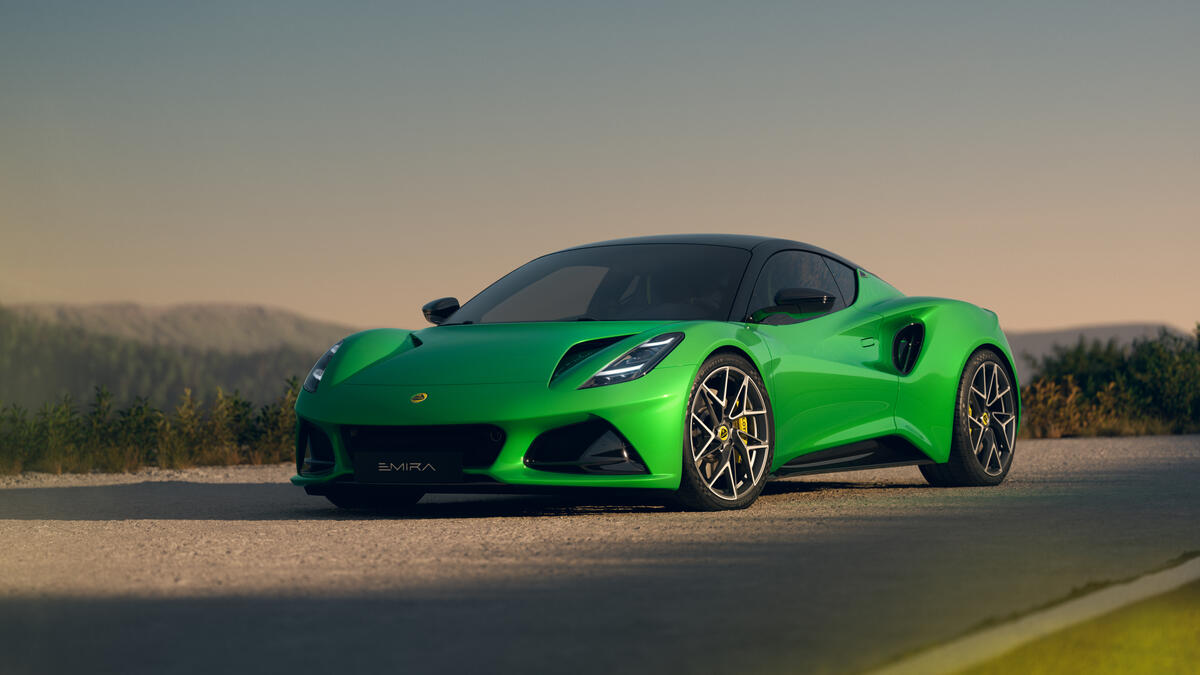
Lotus Amira
"...ot to build the vehicles there, but they make the Amira and the would be a V8 engine and a hybrid system...."
The Lotus Emira is a sports car made to feel fast and fun to drive. It’s described as having a V8 option and also a hybrid setup. It comes up because it’s an example of how sports-car makers are changing their powertrains.
The Lotus Emira is a sports car built for driving feel, typically offered with performance-focused powertrains. The podcast context mentions a V8 engine and a hybrid system, which is significant because it reflects Lotus’s approach to electrification while still targeting enthusiasts. It’s brought up as part of the broader conversation about what manufacturers are building and how they’re transitioning.
EREV
"would be a V8 engine and a hybrid system. No, no, not EREV. [1015.2s] going properly back to the Dark Ages."
EREV means the car is mainly an electric vehicle, but it can use a gas engine to generate electricity if the battery gets low. So it’s not just a pure EV with no backup.
EREV stands for “extended-range electric vehicle.” It’s an EV-first design where the car can drive primarily on electricity, while a generator (often from a combustion engine) extends the range when the battery runs low.
twin-turbo
"They have a partnership with Mercedes AMG for the four-litre twin-turbo charge V8s [1027.8s] for the combustion stuff, but still a standard HEV non-plug-in hybrid."
Twin-turbo means the engine uses two turbochargers. They help the engine make more power by pushing more air into the cylinders.
Twin-turbo refers to using two turbochargers to force more air into the engine, improving power and efficiency compared with a single turbo in many setups. The goal is often better response across a wider range of engine speeds.
HEV
"for the combustion stuff, but still a standard HEV non-plug-in hybrid. [1036.4s] going properly back to the Dark Ages."
HEV means hybrid electric vehicle. It uses both gas and electricity, but you usually don’t plug it in—the battery is charged through driving and braking.
HEV means hybrid electric vehicle. In this context, the speaker contrasts it with plug-in hybrids, implying the car’s battery is charged by the engine and regenerative braking rather than by plugging in.
900-volt system
"They've also got their own hybrid system, because in China, they call it the Lotus 4Me model. The Lotus 4Me [1050.6s] is a 900-volt system, 1,000 horsepower, 3 seconds 0-62, starting at 75,000 US dollars equivalent."
A 900-volt system is a higher-voltage battery/electrical setup than many EVs use. Higher voltage can make it easier to move lots of power—often helping with faster charging.
A 900-volt electrical architecture uses higher voltage than the more common 400-volt systems. Higher voltage can reduce current for the same power, which can help enable faster charging and more efficient high-power operation.
0-62
"The Lotus 4Me [1050.6s] is a 900-volt system, 1,000 horsepower, 3 seconds 0-62, starting at 75,000 US dollars equivalent. [1059.8s] They've got the technology they could use, but they're not."
“0-62” is how fast a car accelerates from a standstill to 62 (usually mph). Lower time generally means quicker acceleration.
“0-62” is shorthand for acceleration time from 0 to 62 mph (or sometimes 100 km/h depending on region). It’s a common performance metric used to compare how quickly cars reach highway-relevant speeds.
mild hybrid
"Lotus has chosen breadth of technologies, keeping their foot in every camp. Internal combustion, gas guzzling, [1074.9s] mild hybrid, even pure electric one day, but to do it all at once, that makes them an outlier."
A mild hybrid is a car that uses a small electric motor to help the gas engine. It usually can’t run the car on electricity alone for long.
A mild hybrid uses an electric motor to assist the engine, but it typically can’t drive the car purely on electricity for long distances. It’s usually designed to improve efficiency and smoothness rather than deliver full EV-like capability.
Request an Explanation
Heard something you'd like explained? We'll add it to this episode.
Sign in to request explanations for terms you heard.
Want to learn more?
Browse our glossary for plain-English explanations of automotive terms, jargon, and concepts.
Help improve this episode
See something that's not quite right? Our annotations are AI-generated and can sometimes miss the mark. Click the flag icon on any annotation to suggest a correction.