
Christopher Runge of Rünge Cars
About this episode
Rünge Cars’ Christopher Runge is traced from post-war German racing inspiration and Porsche coachbuilding roots to modern, coachbuilt “future-past” builds. The conversation moves through his path from pro-am snowboarding to fuel-tank cleaning tech, then back into metal shaping: English wheels, wooden bucks, and Formula V chassis work. They connect design choices to real-world packaging, serviceability, and airflow testing, before diving into high-RPM Porsche-based engines, CAD/CNC workflows, and bespoke pricing.
In the Northwoods of Minnesota, Christopher Runge hand-builds thrilling and beautiful sportscars inspired by the timeliness designs of early Porsche competition models like the 550 Spyder, 718 RSK and 904.
Runge is a self-taught coach builder and an advocate of "Superlicht" construction methods, shaping aluminum panels with traditional tools and techniques in the old European tradition. Only a precious handful or Runge cars exist, and each is unique.
Even as he honors the past, Chris is always looking to the future. In collaboration with Swindon Powertrain in the UK, he has now developed the "Hetzer" Flat 8, an air-cooled, normally aspirated flat eight cylinder engine developing over 600 horsepower, which will power coming project and will also be available to Porsche 964 owners who want a monster upgrade.
SUBSCRIBE to Horsepower Heritage on YouTube
HELP us grow the audience! SHARE the Podcast with your friends!
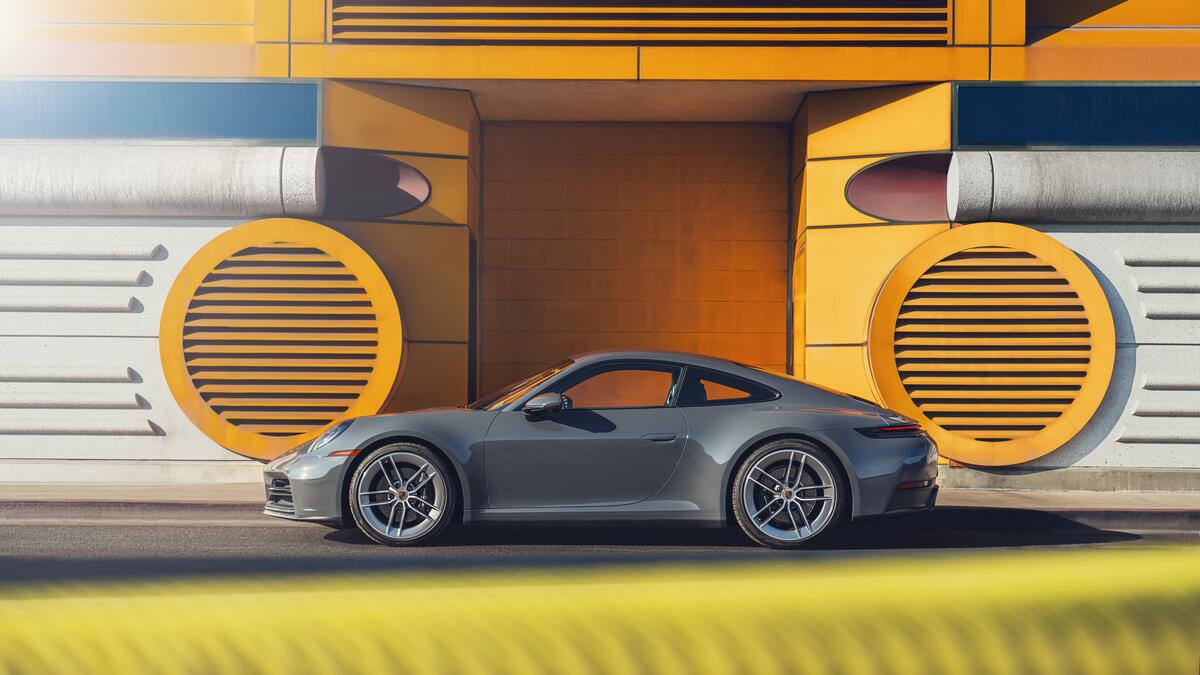
Porsche 911
"The body was hammered by hand over wooden bucks and that basic shape still endures today in the newest 911."
The Porsche 911 is one of the most famous sports cars ever made. It has a very recognizable shape, and the host is saying that even today, the basic body style still echoes older hand-built methods.
The Porsche 911 is defined by its rear-mounted air-cooled flat-six heritage and distinctive rounded body shape. In this episode, Maurice uses it as a reference point for how coachbuilt hand-formed bodywork can still influence the newest 911’s look.
coach building tradition
"Runge cars creates timeless machines in the old European coach building tradition."
Coachbuilding is an old-school way of making car bodies, usually by hand and often for specific customers. The host is saying Runge Cars builds cars in that traditional, craft-focused style.
Coach building is the traditional practice of constructing a car’s body by hand or in small batches, often tailored to a specific customer. The episode frames Runge Cars’ approach as part of the old European coachbuilding culture, where metalwork and form are central to the final product.
flat eight-cylinder engine
"With exciting new developments like a flat eight-cylinder engine."
A flat eight-cylinder engine is an engine where the cylinders are arranged in two sides that sit opposite each other. It’s a layout that helps keep the engine low and can improve how the car feels when driving.
A flat eight-cylinder engine (often called a “boxer” layout) places two banks of cylinders opposite each other, creating a low, wide engine profile. In Porsche context, this is a key part of why the brand’s engines feel distinctive and help with vehicle balance.

Ford Gt
"I got off my motorcycle and the parking lot is full of stuff like coach-built Ferraris from the 50s, McLarens, a Ford GT, 356s and 911s, and even a 1929 Blower Bentley."
The Ford GT is a famous high-performance supercar from Ford. The host brings it up to describe the impressive mix of cars at the event where he first noticed a Runge car.
The Ford GT is a mid-engine supercar built to deliver high performance with a focus on track credibility. It’s mentioned here alongside coach-built classics to set the scene for the kind of enthusiast crowd and cars that drew Maurice to the Runge display.
Runge Speedsters
"So I got off my motorcycle, walked over there to see what all the fuss was about, and it was one of your cars. Wow. It was one of the Runge Speedsters, the Frankfurt Flyers, as you like to call them."
Runge Speedsters are the special sports cars Christopher Runge makes. They’re the exact kind of car Maurice saw at the event, and that’s what started his interest in Runge Cars.
Runge Speedsters are the custom sports cars Christopher Runge builds, positioned as a modern continuation of classic roadster styling and hand-fabricated coachbuilding methods. The episode treats them as the specific car Maurice saw at the event, and they’re central to the story of how Runge’s work caught his attention.
Helios
"cars was in Monterey last summer, the Helios. Yes. Which is this Gullwing Coupe. It is so race-inspired [192.0s] and it's weird, Chris, because it's a future-past look."
The Helios is a special coupe with a “Gullwing” look, and it’s meant to feel like it belongs to racing culture. The host is saying it looks old-school, but it’s also trying to capture a future design idea people once expected.
The Helios is a Gullwing-style coupe that’s described as “race-inspired,” meaning its design language borrows from motorsport aesthetics rather than being purely a production-car look. In this conversation it’s framed as a “future-past” concept—vintage in feel, but aiming at the kind of future design people expected decades ago.
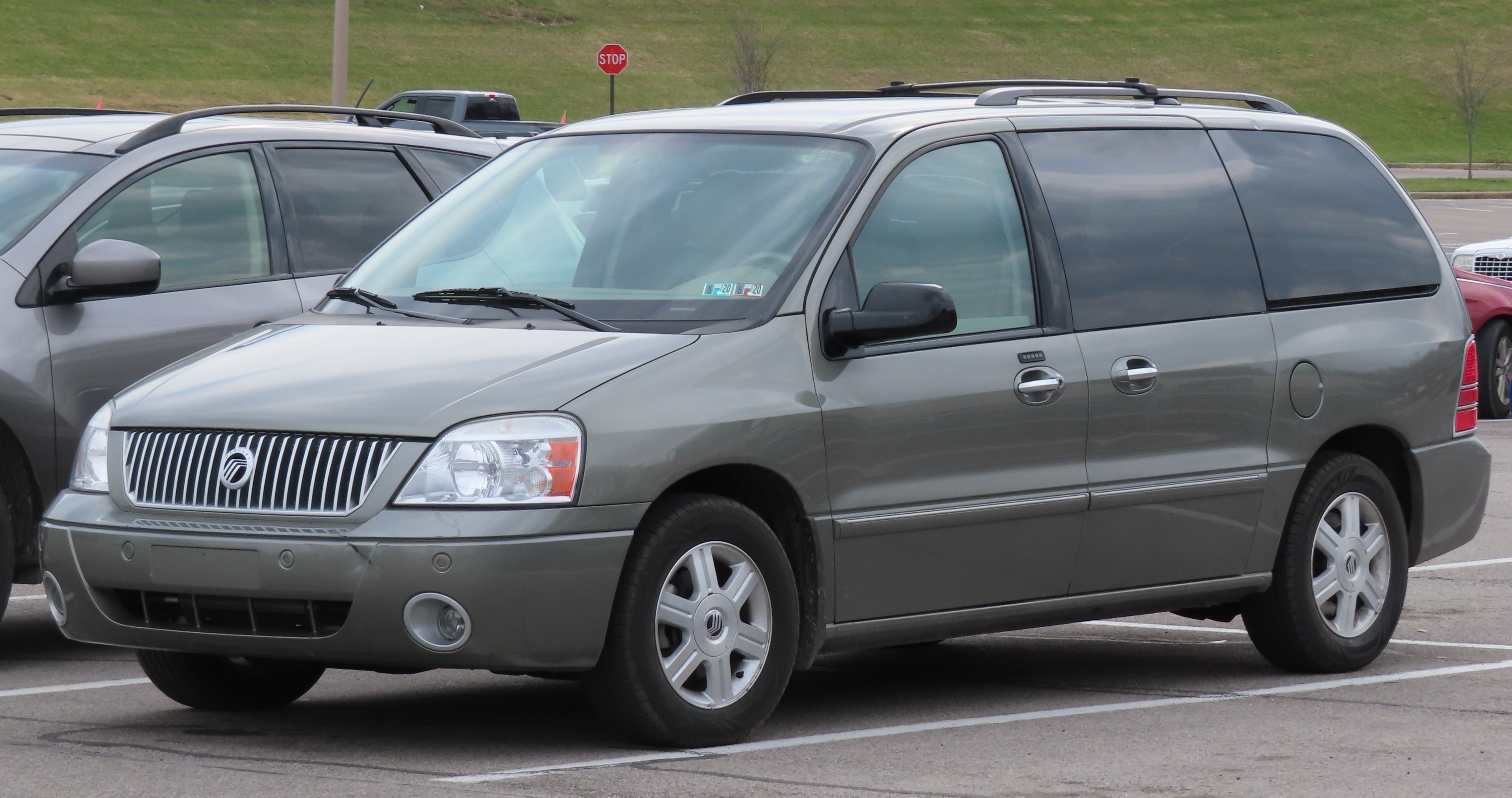
Mercury Monterey
"...hen the second time I saw one of your cars was in Monterey last summer, the Helios. Yes. Which is this Gullw..."
The Mercury Monterey is a mid-size car made by Mercury, which was part of Ford. It was typically built for comfortable everyday driving. In the episode, it’s mentioned because a special version or related project based on a Monterey is being discussed.
The Mercury Monterey is a mid-size car from Mercury (a Ford brand), known for its classic styling and role as a family-oriented model. In the podcast, it’s referenced through a specific example—the “Helios” and a “Gullw…” mention—suggesting a custom or special vehicle based on the Monterey. That makes it relevant as part of a story about distinctive builds and automotive history.
Gullwing Coupe
"the Helios. Yes. Which is this Gullwing Coupe. It is so race-inspired [192.0s] and it's weird, Chris, because it's a future-past look."
“Gullwing” means the doors open upward, like wings. It’s a recognizable design cue that makes a car look dramatic and special.
A “Gullwing” coupe refers to a door design where the doors hinge upward, opening like a bird’s wings. It’s a distinctive bodywork feature often associated with iconic performance cars and is used here to emphasize the Helios’s retro-race styling.
unfinished business
"I always think about this term unfinished business, you know? Like there was just so much good stuff [223.8s] that we missed. Right. We weren't given."
They’re using “unfinished business” to mean there were great ideas in the 1950s and 1960s that didn’t get finished or built. A lot of those concepts never made it beyond sketches.
“Unfinished business” is used here as a metaphor for promising design ideas from the 1950s and 1960s that never fully made it into production. The speaker argues that optimism and bold concepts existed, but many stayed on paper instead of becoming real cars or consumer products.
retro-futurism
"So I really appreciate the Helios and a lot of your other builds for [252.4s] that matter, just because of that. Because you've taken some retrofuturism and you've made it a [259.1s] reality."
Retro-futurism is when people picture what the future might look like using the style and imagination of the past. In this episode, they’re saying the builder didn’t just sketch the idea—he made cars that look like that vision.
Retro-futurism is the design idea of imagining the future through the lens of an earlier era’s technology and aesthetics. Here, the speaker credits the Helios and other builds for taking that retro-futurist concept and turning it into a real, drivable car.
post-war German racing cars
"I know you have some very strong inspiration from, you know, post-war German [271.8s] racing cars."
This phrase points to German race cars from after World War II. The host is saying the builder draws inspiration from that time’s racing style and engineering.
“Post-war German racing cars” refers to the era of German motorsport after World War II, when racing engineering rapidly evolved and produced distinctive, influential cars. The speaker says their inspiration comes from that period, implying the builds borrow engineering and styling cues from that racing lineage.
phase separation
"Yes. Yes. So you get phase separation. That's when, if you have E10 or E15, especially with the lower alcohol volume in the fuel, when you get 68 10 inches of water in the bottom of one of those 20,000 gallon tanks..."
Phase separation means the fuel and water don’t stay mixed. When water gets into ethanol-blended gas, it can separate out, making the fuel act “wrong” and potentially causing engine and fuel-system issues.
Phase separation is when fuel components separate into different layers instead of staying mixed. With ethanol-blended gasoline (like E10 or E15), water contamination can separate from the fuel, which can reduce fuel quality and cause problems at the pump and in engines.
E10 or E15
"So you get phase separation. That's when, if you have E10 or E15, especially with the lower alcohol volume in the fuel..."
E10 and E15 are types of gasoline mixed with ethanol. E10 has less ethanol than E15, and both can be more affected by water getting into the fuel.
E10 and E15 are gasoline blends that contain ethanol: E10 is 10% ethanol and E15 is 15% ethanol (by volume). These blends are more sensitive to water contamination, which can contribute to phase separation and fuel quality issues.
octane rating
"...it gets blended in and you get phase separation and it drops the octane rating of the fuel and it just gets out of spec and it can make a mess of things."
Octane rating is basically how “stable” the gasoline is inside the engine. If the fuel gets contaminated and changes, it can lose octane and cause knocking or other running problems.
Octane rating is a measure of how resistant gasoline is to knocking (premature combustion) in an engine. If water contamination and phase separation push the fuel out of spec, the effective octane can drop, which can lead to drivability issues or engine protection strategies.
water separator
"So with our new system, we used an intrinsically safe camera, explosion proof, better valve system, water separator, and better holding tanks."
A water separator is a fuel-system component that removes water from stored or delivered fuel. In ethanol-blended fuels, separating out water helps prevent phase separation and helps keep the fuel within specification.
intrinsically safe camera
"So with our new system, we used an intrinsically safe camera, explosion proof, better valve system, water separator..."
An intrinsically safe camera is designed for hazardous environments where flammable vapors could be present. The electronics are engineered to limit electrical energy so they’re less likely to ignite fuel vapors during inspection or operation.
explosion proof
"So with our new system, we used an intrinsically safe camera, explosion proof, better valve system, water separator..."
“Explosion proof” refers to equipment designed to contain an internal explosion and prevent it from igniting the surrounding flammable atmosphere. In fuel-tank or pump environments, this is used to reduce the risk of ignition from electrical or mechanical faults.
head pressure
"…set up dairy operations for pumping dairy products on dairy farms. And so with his understanding of pumping, head pressure, you know, when you get a tank 20 feet underground…"
“Head pressure” means how much pressure comes from the height of a liquid. If the tank is buried deep, the liquid has more “push” to deal with, and the system has to be set up to move it correctly. It’s basically a fluid physics factor that changes how the pumping works.
“Head pressure” is the pressure created by the height of a fluid column. In the episode’s context—pumping from a tank buried about 20 feet underground—it affects how hard the system must work to move contaminated liquid and how the plumbing needs to be designed. It’s a key concept in fluid-handling systems, not just a general “pressure” idea.
patent
"So did you were you able to patent the technology and all of that? I mean, no, didn't even try to we just were first to market…"
A patent is a legal way to protect an invention so other people can’t copy it easily. In this story, the speaker says they didn’t bother trying to get that protection and instead tried to sell the technology quickly to customers. That’s a different strategy than licensing or exclusive rights.
A “patent” is legal protection that gives an inventor exclusive rights to make, use, or sell an invention for a set period. The speaker says they didn’t even try to patent their technology, instead focusing on being first to market and selling to customers. That choice affects how they monetize the idea versus licensing it.

Mercedes SL 500
"we'd come back with like a Mercedes SL 500 that we knew we could fix up, you know, or all kinds of cars, VW buses,"
The Mercedes SL 500 is a luxury roadster from Mercedes-Benz. It’s the kind of car people often buy to fix up because it’s a well-known model with lots of parts and support.
The Mercedes SL 500 is part of Mercedes-Benz’s SL “Sport Leicht” roadster line, known for luxury plus a V8-powered grand-touring character. In enthusiast circles, it’s often a popular used-car project because many examples are mechanically straightforward compared with more exotic classics.

912 Porsche 912
"...thing. So I called this ad on Craigslist for a 67 Porsche 912. That would have been in 2010. And it was like th..."
The Porsche 912 is an older Porsche sports car. It’s from the same general family as the 911 and has a similar recognizable Porsche shape. The podcast brings it up because the host found one listed for sale.
The Porsche 912 is a classic Porsche model closely related to the 911 era, often seen as a more accessible version of the lineup. It’s significant because it shares the recognizable Porsche sports-car layout and look, while being part of the brand’s early history. The podcast mentions it in a personal story about finding a 1967 Porsche 912.
English wheel
"she said she took like gasped and she said, I have barns full of stuff. I don't even know what all is out there, but there's tools. There's this English wheel that he was so proud of."
An English wheel is a workshop tool used to shape thin metal into smooth curves. Metalworkers use it to make body panels look “right” when they’re building or repairing custom car sheet metal.
An English wheel is a metal-shaping tool used to form and refine sheet metal panels by gradually stretching and smoothing the metal over a set of rollers. It’s a key tool in traditional coachbuilding and custom bodywork because it helps create smooth, compound curves.

Lotus 7
"because she her husband is so proud of he built a Lotus, the low cost, Lotus 7. Sure. Yeah."
The Lotus 7 is a very light, simple sports car that’s known for being fun and “connected” to the driver. It’s also a famous platform for people who build their own cars or kits.
The Lotus 7 is a lightweight, minimalist sports car concept that became famous for its go-kart-like feel and focus on driver involvement. It’s also widely associated with kit-car culture, so mentioning it in a coachbuilding context signals a build philosophy centered on simplicity and weight savings.

Chevrolet Corvair
"...uld barely walk through. There was so many parts, Corvair stuff, Jeep stuff, just tons and tons of stuff. W..."
The Chevrolet Corvair is an older Chevrolet car. It’s known for having its engine in the back, which is unusual compared with many cars. The podcast mentions it because there were lots of Corvair parts and related items around.
The Chevrolet Corvair is a classic American compact car known for its rear-mounted engine layout. The podcast references it as part of a large pile of parts and projects, emphasizing how much “Corvair stuff” was involved. That context makes it relevant as a platform that supports restoration and collecting.
post war German racers
"Yeah. Well, I had, I had kind of developed a real fascination with the post war German racers at about 15 years old."
“Post-war German racers” means race cars from Germany after World War II. People were building and racing again, and many cars were creative experiments because resources were limited.
“Post-war German racers” refers to the racing cars and racing culture that emerged in Germany after World War II. This era is known for innovative, often small-batch engineering as manufacturers and private builders tried to compete with limited resources.
Glockler post war German Eigenbau home built racers
"And, and on the way back from the Twin Cities, it's like a two hour drive, [1317.1s] we stopped at that's car museum and I hobbled around the library and found the book excellence was expected. It's like the original Porsche Bible. [1322.1s] It's like the original Porsche Bible. And that's where I learned about the [1327.3s] Glockler post war German Eigenbau home built racers."
“Eigenbau” means a car that was built privately, often by individuals or small teams, not by a big factory. Glockler’s cars were part of that post-war scene—creative home-built race machines using VW-related ideas.
“Eigenbau” (German for “built by oneself”) describes home-built or privately constructed racing cars rather than factory production machines. Glockler’s post-war German Eigenbau racers are associated with Walter Glockler, who developed and raced unusual, experimental cars using Volkswagen-based components.
Volkswagen engine
"Walter Glockler was really the guy that [1343.2s] he, he pushed the boundaries of the Volkswagen engine, set it up mid engine in very much like a formula V race chassis or what would become formula V later on."
They’re talking about using a Volkswagen engine as the starting point for a race car. Instead of leaving it in a normal car setup, the builder modified it and used it in a more racing-focused layout.
The Volkswagen engine reference here is about using VW’s air-cooled flat-four architecture as the basis for racing development. In this story, Walter Glockler is described as pushing that engine’s limits and adapting it for a mid-engine layout.
mid engine
"Walter Glockler was really the guy that [1343.2s] he, he pushed the boundaries of the Volkswagen engine, set it up mid engine in very much like a formula V race chassis or what would become formula V later on."
A mid-engine car puts the engine near the middle of the vehicle. That can help the car feel more balanced and easier to handle in corners.
A mid-engine layout places the engine near the center of the car, typically just ahead of the driver and behind the front axle. This helps balance weight distribution and can improve handling response compared with front- or rear-engine layouts.
formula V
"set it up mid engine in very much like a formula V race chassis or what would become formula V later on. And he went out and went racing and he was really pushing the 350 sixes to their limit."
“Formula V” is a type of racing category or rule set. The host is saying Glockler’s car was built in a style that later matched what people would call Formula V.
Formula V refers to a racing formula/class concept associated with lightweight, open-wheel-style competition. In the transcript, it’s used as a reference point for the kind of chassis Glockler’s mid-engine setup resembled, before the “formula V” name became established.
350 sixes
"And he went out and went racing and he was really pushing the 350 sixes to their limit. Porsche saw the potential in that they made a deal with him to put Porsche parts in that car."
“350 sixes” means a racing engine based on an inline-six design in the roughly 3.5-liter class. The point is that the builder was pushing that engine to its limits for speed.
“350 sixes” refers to inline-six engines with an approximate 3.5-liter displacement (often discussed as “350” class) being pushed hard for racing. The key idea is that Glockler was extracting maximum performance from that engine family.
Porsche parts
"Porsche saw the potential in that they made a deal with him to put Porsche parts in that car. And one thing led to another and ultimately Porsche had the first five fifties made by the same coach builder, C.H. Feidenhausen."
“Porsche parts” means parts Porsche provided for a race car that wasn’t originally a factory Porsche. It’s an example of Porsche working with private builders to make the car faster.
“Porsche parts” here means components supplied by Porsche to a privately built racing car. The story highlights how Porsche supported and collaborated with private builders early on, using their parts to improve the performance of Glockler’s machine.
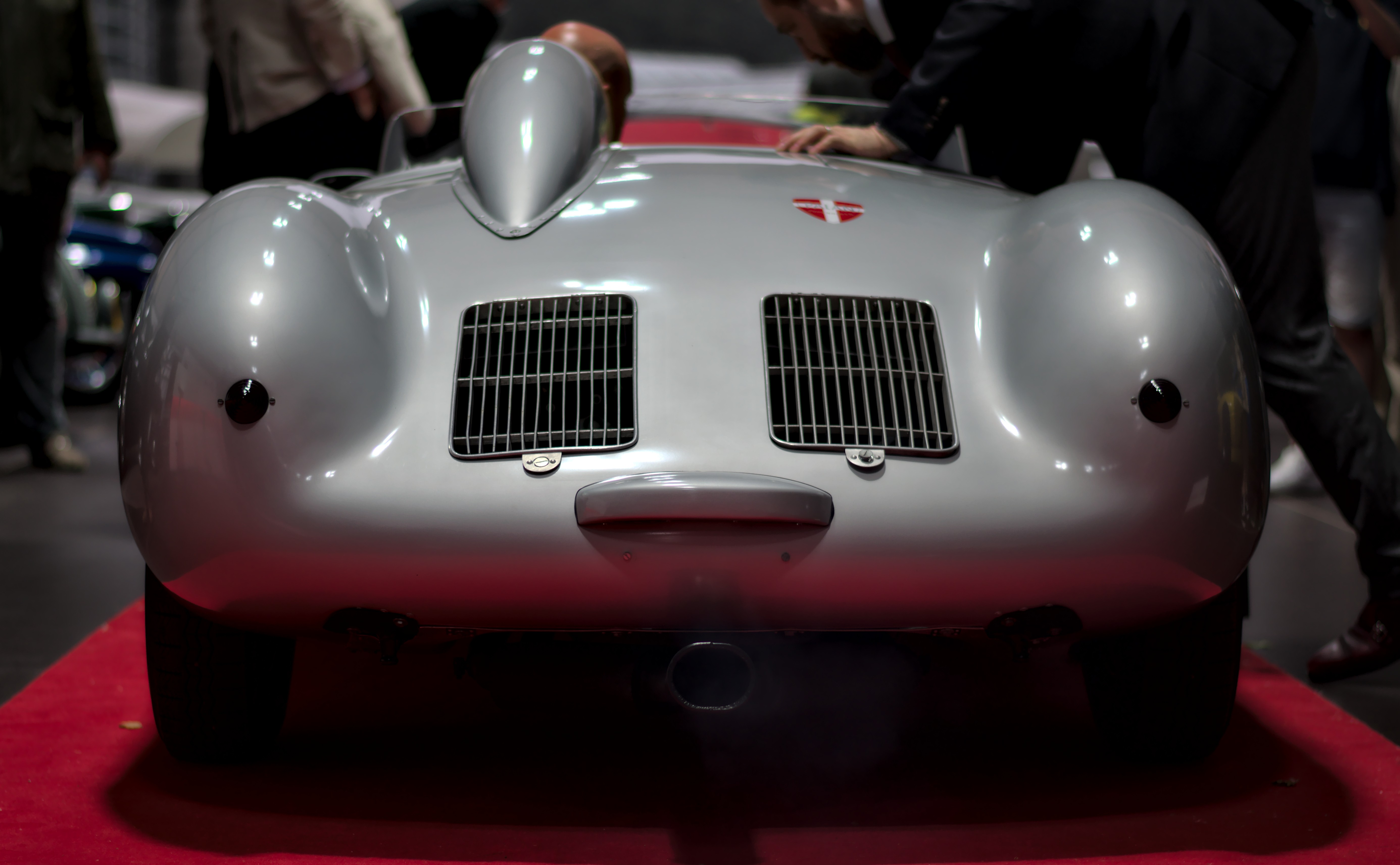
Porsche 550
"And one thing led to another and ultimately Porsche had the first five fifties made by the same coach builder, C.H. Feidenhausen. That's who Glockler had build his cars and Herman Ramelow was the designer,"
The Porsche 550 is an early Porsche race car. It’s famous because it helped Porsche build credibility in racing, and this story says the early cars were made with help from a coach builder working on Glockler’s cars.
The Porsche 550 is an early Porsche race car best known for its lightweight, competition-focused design and its role in establishing Porsche’s motorsport reputation. In this episode, it’s specifically tied to Porsche’s collaboration with private builders, including the early “first five fifties” produced by the same coach builder.
C.H. Feidenhausen
"And one thing led to another and ultimately Porsche had the first five fifties made by the same coach builder, C.H. Feidenhausen. That's who Glockler had build his cars and Herman Ramelow was the designer,"
C.H. Feidenhausen is mentioned as the coach builder who helped build the early Porsche 550 race cars. A coach builder was a specialist shop that made the car’s body/chassis for special or racing projects.
C.H. Feidenhausen is named as the coach builder who made the early Porsche 550s (the “first five fifties”) in the story. Coach builders were specialist firms that constructed or assembled the body/chassis for racing and specialty cars, often before modern mass production.
Herman Ramelow
"That's who Glockler had build his cars and Herman Ramelow was the designer, [1386.4s] the engineer behind it. So that story to me was so cool because Porsche relied early on,"
Herman Ramelow is named as the person responsible for design and engineering in this Porsche-related story. The host is highlighting that specific engineers shaped these early race cars.
Herman Ramelow is credited in the transcript as the designer/engineer behind the cars associated with Glockler’s setup and the early Porsche 550 production. The mention underscores how early Porsche racing success relied on specific engineering talent rather than only factory branding.
private tears
"So that story to me was so cool because Porsche relied early on, [1389.4s] on private tears and their feedback. And Bugatti did as well pre war Bugatti's on what people were doing with the cars"
The host is talking about “privateers”—small racing teams not run by the big factory. The idea is that Porsche (and Bugatti) learned from what these smaller teams were doing with their cars.
“Private tears” appears to be a transcription error for “private teams” (or “privateers”), meaning non-factory racing efforts run by individuals or small groups. The transcript contrasts Porsche’s early reliance on privateers’ feedback with Bugatti’s similar pre-war approach.
Bugatti
"And Bugatti did as well pre war Bugatti's [1400.0s] on what people were doing with the cars and how they were developing them to make their production cars better."
Bugatti is a famous old European car brand known for racing. Here it’s mentioned because the host says Bugatti also improved its cars based on what private racers were doing.
Bugatti is referenced as another historic racing-focused automaker that, like Porsche, benefited from feedback from people running its cars. The transcript uses Bugatti as a comparison point for how early performance development was influenced by private owners and racers.
Walter Glockler
"But then Walter Glockler wanted to make these bespoke competition cars. And I think his cousin was, ... And then Walter Glockler owned the VW franchise dealership in Frankfurt."
Walter Glockler is the person in this story who helped create early race cars. The host says he also ran a Volkswagen dealership in Frankfurt, which gave him access to parts.
Walter Glockler is presented as the key figure behind building early competition cars using Volkswagen parts. The segment also links him to the VW franchise dealership in Frankfurt, which is described as the source of access to VW components.
bespoke competition cars
"But then Walter Glockler wanted to make these bespoke competition cars. And I think his cousin was,"
“Bespoke” here means the race car was made to fit a specific person or plan. Instead of buying a standard race car, it was tailored for competition use.
“Bespoke” means custom-built to a specific customer or purpose rather than mass-produced. In racing context, “bespoke competition cars” implies a one-off or highly tailored race car built around the driver and intended events.
VW components
"And that's why he had access to all these VW parts and built the first car using VW components. And didn't Frankfurt also resonate with you because"
“VW components” just means parts from Volkswagen. The host is saying Glockler built the first car using Volkswagen parts he could access through his dealership.
“VW components” means parts sourced from Volkswagen. The segment claims Walter Glockler built an early car using Volkswagen parts, tying the car’s design to what was available through his Frankfurt dealership.
Porsche distributor
"I learned that Max Hoffman, who was the Porsche distributor on the east coast of the United States very early, Hoffman got ahold of a Glockler, Spider."
A “Porsche distributor” is basically a company/person responsible for getting Porsche cars to a region and selling them there. The host says Max Hoffman did this early on for the U.S. east coast.
A “Porsche distributor” is a regional business that handled Porsche sales and logistics for a specific market. In this segment, Max Hoffman is framed as an early distributor who helped bring Porsche-related cars into the U.S. racing and dealer ecosystem.
Johnny von Neumann
"And then Johnny von Neumann raced that car at Bridgehampton, which is amazing history. And then of course, von Neumann became, he founded competition motors in Los Angeles and was a Porsche dealer here."
Johnny von Neumann is the person who raced the Glockler Spider at Bridgehampton. The host also says he later started a competition-focused business and became a Porsche dealer.
Johnny von Neumann is mentioned as the driver who raced the Glockler Spider at Bridgehampton. The segment also notes that he later founded competition motors in Los Angeles and became a Porsche dealer.
Bridgehampton
"Hoffman got ahold of a Glockler, Spider. And then Johnny von Neumann raced that car at Bridgehampton, which is amazing history."
Bridgehampton is where the host says the Glockler Spider was raced. It’s mentioned as part of the car’s early racing history in the U.S.
Bridgehampton is referenced as the venue where Johnny von Neumann raced the Glockler Spider. It’s used here as a historical anchor point for early American Porsche/competition-car activity.
Frank Lloyd Wright
"There's some interesting history, us being close to Wisconsin and the Frank Lloyd Wright, where Frank Lloyd Wright kind of got his start. ... Frank Lloyd Wright designed the Hoffman Motors showroom in Manhattan."
Frank Lloyd Wright is a famous architect. Here, the host says he designed the Hoffman Motors showroom in Manhattan, linking the Porsche dealer story to a real building Wright worked on.
Frank Lloyd Wright is referenced as the architect who designed the Hoffman Motors showroom in Manhattan. The segment connects Wright’s early career and his relationship with Hoffman to the broader Glockler/Hoffman Porsche history.
Vashik Pollak Jr.
"A few years ago, I interviewed Vashik Pollak Jr. Oh, wow. And we got to talking about Max Hoffman..."
Vashik Pollak Jr. is the guest the host interviewed. The host says Pollak Jr. stayed close to Max Hoffman and helped him with day-to-day needs later in life.
Vashik Pollak Jr. is the person the host interviewed, and he’s presented here as someone with personal ties to Max Hoffman late in Hoffman’s life. The host says Pollak Jr. and his father stayed close to Hoffman until the end, including bringing him meals and running errands.
Max Hoffman
"And we got to talking about Max Hoffman because he was so instrumental in Porsche's rise in the United States in the 1950s. It was Hoffman who persuaded Porsche to build the Speedster as a low cost model for the US and all of that. And he persuaded Mercedes-Benz to build the 300 SL as a production car after the race cars came out."
Max Hoffman was an influential car dealer/importer in the U.S. who helped bring Porsche to American buyers. The host says he also helped Mercedes-Benz turn its race car ideas into a production car.
Max Hoffman was a major American car importer/dealer who helped introduce Porsche to the U.S. market in the 1950s. In this segment, he’s credited with pushing Porsche to build the 356 Speedster as a lower-cost model for the U.S. and encouraging Mercedes-Benz to produce the 300 SL as a production car after the race cars.

Porsche Speedster
"It was Hoffman who persuaded Porsche to build the Speedster as a low cost model for the US and all of that."
A Porsche Speedster is a more basic, lightweight Porsche roadster. Here, the host says it was created (in part) because Max Hoffman pushed Porsche to offer a cheaper Porsche option for the U.S.
The Porsche Speedster is a specific Porsche roadster-style model/derivative known for a stripped-down, lower-cost approach compared with more fully equipped variants. In this episode, the host ties Max Hoffman’s U.S. influence to Porsche building a Speedster for American buyers in the 1950s.

Mercedes-Benz 300 SL
"And he persuaded Mercedes-Benz to build the 300 SL as a production car after the race cars came out."
The Mercedes-Benz 300 SL is a famous Mercedes sports car. In this story, it’s described as a production version of race-car ideas—pushed along by Max Hoffman.
The Mercedes-Benz 300 SL is a landmark Mercedes sports car that became famous for turning race-car technology into a production model. The host specifically says Max Hoffman persuaded Mercedes-Benz to build the 300 SL as a production car after the race cars came out.

1954 beetle pan
"I originally bought a, I think it was a 54, 1954 beetle pan. And my plan was to do a Romesh style."
A “beetle pan” is the main floor/chassis base from a Volkswagen Beetle. The speaker bought a 1954 one as the foundation for a custom build.
A “1954 beetle pan” refers to the chassis pan/underbody platform from a 1954 Volkswagen Beetle. In this segment, it’s the starting base the speaker bought with the intention of building a custom Porsche-inspired “Romesh style” car.
Romesh style
"And my plan was to do a Romesh style. I don't know if you're familiar with the Romesh. Sure. There's a Romesh Porsche that is at the prototype museum in Hamburg where they sliced the pan and they kind of shifted the overall aesthetic of how the driver would sit in the pan."
“Romesh style” is a custom-car approach that uses a Beetle chassis as the base but reshapes it to look and feel like a Porsche. The host explains that the example car has a longer nose and changes the driver’s seating position.
“Romesh style” refers to a specific custom Porsche-inspired body conversion concept built from a Volkswagen Beetle pan. In the segment, the host describes a known example: a Romesh Porsche prototype where the pan is sliced and the body proportions are shifted to change how the driver sits, including a longer nose.
Hamburg
"There's a Romesh Porsche that is at the prototype museum in Hamburg where they sliced the pan and they kind of shifted the overall aesthetic..."
Hamburg is a German city referenced here as the location of a prototype museum that houses a Romesh Porsche example. The host uses it to ground where the specific custom build is displayed.
Samba
"It's a beautiful car. And I was reading the story about that car being unearthed on the Samba. There was a whole thread on it."
“Samba” is the name of a big online community for Volkswagen enthusiasts. The host means they saw the story and thread there.
“Samba” here refers to the online Volkswagen enthusiast community/forum called TheSamba.com. The host says they read a story about the Romesh-style car being unearthed “on the Samba,” meaning it was discussed by that community.
fan shroud
"the fan [1806.9s] shroud always sticks up too high. And so you have this weird, it's like, you have these cool cars,"
A fan shroud is the ducting/cover around a cooling fan that helps direct airflow where it’s needed. In air-cooled designs, shroud shape strongly affects both cooling effectiveness and how the engine bay looks from the outside.
Predator Formula V
"And that's what I did. I found a [1867.3s] Predator Formula V in Virginia for like, I think it was about $2,800 or $3,000, if I remember right. [1876.8s] I think it was on eBay and the auction didn't sell."
They found a “Predator Formula V” race car/chassis to start their project. It was affordable enough for their budget, and they planned to build a custom body on top of it.
The speaker bought a “Predator Formula V,” using it as the starting point for their first build. It’s a Formula V–class race chassis they could afford on a shoestring budget, and they’re treating it as a platform for designing and fabricating a new body.
MIG weld
"The most frustrating part early on, I think was the welding. I didn't know, I knew how to [1919.3s] mig weld steel. And I had done, you know, building rails for skateboarding and snowboarding and [1927.0s] a little bit of fabrication on cars that I had over the years."
MIG welding is a common metal-joining method that uses a wire and shielding gas to make a weld. It’s widely used for fabrication, but aluminum often needs special equipment to do well.
MIG welding (Metal Inert Gas) is a process that uses a continuously fed wire electrode and shielding gas to create welds. It’s popular for fabrication because it’s relatively fast and beginner-friendly, but aluminum can still be tricky without the right setup (like a spool gun).
spool gun
"But mig, I bought a spool gun. [1934.3s] I don't know if you're familiar with what that is. It's, yeah, I bought a spool gun to mig weld [1940.7s] 50,000 aluminum."
A spool gun is a special MIG welding gun that feeds the welding wire more reliably, especially for aluminum. It makes it easier to get steady welds without the wire getting messed up.
A spool gun is a welding tool used for feeding wire—commonly aluminum—more smoothly than a standard MIG setup. Because aluminum wire is softer and more prone to feeding issues, a spool gun helps prevent jams and improves weld consistency.
metal shaping
"was pretty challenging. In my mind, shaping the metal, it made sense to me along the way as I learned what metal does, what it doesn't want to do."
Metal shaping is the process of bending and forming sheet metal into the right shape. Here it’s about getting the body panel to match the design before it gets welded on.
Metal shaping is the craft of reshaping sheet metal into a desired form—like body panels—using tools and techniques such as hammering and careful forming. In this context, it’s about learning how metal behaves so the panel fits correctly before welding it in place.
super light construction
"And one of your other inspirations obviously has been the super light construction or super legetta, as the Italians call it, but it's a thin framework, an armature. Yes."
This is a way of building a car to be as light as possible. The idea is to use a strong frame and only as much material as needed, so the car doesn’t get heavy.
“Super light construction” is a lightweight-building approach aimed at reducing mass by using thin, strong structures and efficient materials. In practice, it often means building a rigid frame/armature and then forming the body around it so the car stays stiff without excess weight.
legetta
"legetta, as the Italians call it, but it's a thin framework, an armature. Yes. You lay the panels over that, but you also use a traditional wooden body buck."
“Legetta” here means a lightweight skeleton inside the car. Instead of building a thick, heavy body, you build a thin frame and attach the body panels to it.
“Legetta” (as the Italians call it) is described here as a thin framework/armature. The key idea is that the bodywork is supported by a lightweight structural skeleton rather than a heavy traditional body structure.
armature
"but it's a thin framework, an armature. Yes. You lay the panels over that, but you also use a traditional wooden body buck."
An armature is basically the car’s internal skeleton. It’s the framework that holds everything in the right shape while the outer panels get attached.
An “armature” is a structural framework that provides the shape and support for the rest of the build. In custom car bodywork, it’s the internal skeleton that the panels are laid over and then attached to.
wooden body buck
"You lay the panels over that, but you also use a traditional wooden body buck. Yeah, I've done it both ways."
A wooden body buck is a big template used to shape the car’s body panels. You form the metal over it so the curves come out right.
A “wooden body buck” is a full-size form used to shape body panels. Builders use it like a mold: they form the metal over the buck so the panel matches the intended contours before it’s attached to the chassis/frame.
weld it, rivet it
"wrap the panel work, weld it, rivet it, and it would become one with that aluminum tube buck."
They’re describing how they attach metal parts together. Welding melts/fuses metal, while riveting uses small metal fasteners to lock pieces together.
“Weld it, rivet it” refers to two metal-joining methods used in custom fabrication. Welding fuses metal together, while riveting mechanically fastens parts with metal pins, often used where heat or access makes welding harder.
fixtured
"and then shape the panel work to that and then that would be fixtured or fastened to the steel framework underneath as well."
“Fixtured” means the parts are held in place with tools/clamps while work is done. That way everything lines up correctly when they weld or attach it.
“Fixtured” means clamped and positioned using fixtures so parts stay aligned during welding or assembly. It’s a shop process term that helps ensure repeatable fitment and reduces distortion.
running gear
"And it's a, it's an SRT-10 viper chassis and running gear but with a bespoke, rungy body. Yeah, and interior."
Running gear means the parts that make the car actually drive. If you change the body, you usually keep the running gear so the car still works the same underneath.
“Running gear” is the car’s functional mechanical package—typically the drivetrain and the components that let it move (like suspension and axles). In a rebody project, it’s what you keep so the car still drives normally even after changing the body.

Viper Srt10 Viper
"Yes. Which means poison or venom in Italian. Yes. So yeah, perfect name. And it's a, it's an SRT-10 viper chassis and running gear but with a bespoke, rungy body. Yeah, and interior. And interior, of course, yeah. Was that,"
The Viper is a high-performance sports car made by Dodge. In the episode, they’re talking about a custom project that uses Viper mechanical parts, but with a special body and interior. That’s why the Viper name comes up in the context of a unique build.
The Viper is Dodge’s performance sports car line, and the podcast notes the name’s meaning (“poison or venom”) while describing it as an SRT-10 Viper chassis and running gear with a custom, bespoke body and interior. That’s why it’s discussed here: it’s not just the production car, but a modified build using Viper mechanicals as the foundation. The focus is on how the Viper platform can be adapted into a unique one-off style.
rungy
"And it's a, it's an SRT-10 viper chassis and running gear but with a bespoke, rungy body. Yeah, and interior."
“Rungy” is basically the builder’s signature style. In this context, it means the body and interior are custom-made by Rünge Cars.
“Rungy” is used as a shorthand for Rünge Cars’ own design language—here referring to a bespoke body and interior. It signals that the exterior and cabin are custom work from the builder, not a factory kit.
cars and coffee
"Lewis, he ran cars and coffee in the Twin Cities area and he saw pictures of the car and I think he may have even come up and visited my shop and he said, you got to bring this thing down, people would flip their lids, you know, cars and coffee."
“Cars and coffee” is a relaxed car meet where people show up with their cars, hang out, and talk about them—usually early in the day. The speaker brought the car because that’s where other enthusiasts would see it.
“Cars and coffee” is a casual car meet-up format where enthusiasts gather—often in the morning—to show their cars, talk to other owners, and attract attention from the local community. In the transcript, it’s used as the reason the speaker brought the car out for public viewing.

Shelby Cobra
"a guy named Jason and I don't think he asked me at that show. I think that he saw it and he went back to home, told his wife about it. He was a big Shelby Cobra fan, loved aluminum bodied cars"
The Shelby Cobra is a legendary classic sports car known for being light and very fast. The guest mentions it because the person he’s talking about really loved that kind of classic roadster.
The Shelby Cobra is an iconic American roadster built around a lightweight chassis and a powerful V8, famous for its raw, high-performance feel. In this story, Jason’s fandom helps explain why the speaker was motivated to build a car inspired by that classic style.
aluminum bodied cars
"He was a big Shelby Cobra fan, loved aluminum bodied cars and the show after that, which would have been an October Fest, probably October of 2012, that's when he approached me"
“Aluminum bodied cars” means the car’s body is made from aluminum instead of heavier steel. Lighter bodywork can help a car feel more responsive.
“Aluminum bodied cars” refers to vehicles that use aluminum panels or an aluminum body structure instead of steel. Aluminum can reduce weight and change how the car feels and handles, which is why enthusiasts often associate it with classic performance builds.

Frankfurt Flyer 002
"So that's when I pulled the trigger. That would have been 2013, early 2013, I think. Okay, so that was Frankfurt Flyer 002, right?"
“Frankfurt Flyer 002” sounds like the name and build number of a specific car the speaker made. It’s basically “version 2” of that project.
“Frankfurt Flyer 002” appears to be a specific numbered build in the speaker’s project line, tied to the car they were discussing earlier in the episode. The “002” indicates it’s not a generic model name—it’s a particular iteration/build that the host is referencing.
jig
"because we had to jig that whole chassis up and fixture it and then cut it apart and widen it for two people"
A jig is a tool that holds parts in the exact right spot while you work. They used it to keep the chassis aligned while they cut it and widened it for a two-person layout.
A jig is a precision fixture used to hold parts in the correct position while you build or modify a structure. Here, the builder had to jig the whole chassis so it could be cut apart and widened accurately without losing alignment.
slab-sided
"You know, when I look at your early cars, a lot of them are kind of slab-sided. They don't tuck under so much in contrast to your more recent builds."
“Slab-sided” means the car’s sides are more flat than rounded. In aerodynamics, flat sides can still work well if the airflow and pressure around the body are shaped correctly.
“Slab-sided” describes bodywork with relatively flat, vertical side panels rather than smoothly tucked-in curves. Aerodynamically, slab sides can create predictable airflow behavior and pressure distribution, which the host argues can be efficient depending on the overall shape.

BMW 328 Milimilia
"And it always makes me think of cars like the BMW 328 Milimilia, which is an enclosed streamlined car, but it's got that slab side."
The BMW 328 Mille Miglia is a famous old BMW race car. In this conversation, it’s used as an example of a streamlined car that still has flat-looking sides, which changes how air flows around it.
The BMW 328 Mille Miglia is a classic BMW race car associated with the Mille Miglia road-racing event. It’s notable here because it uses an enclosed, streamlined body shape while still having pronounced slab-like body sides, which affects airflow and drag.
high and low pressure spots
"So we had three leaf blowers aimed at it, watching the yarn, you know, and seeing where the high and low pressure spots were."
Airflow creates areas of higher and lower pressure on the car’s body. By watching yarn move, they could see how the air was flowing and then adjust the shape so the airflow stays smooth.
High and low pressure spots are regions on a body where airflow creates different static pressure levels, strongly influencing drag and lift. The host describes using yarn to visualize the flow so they could see where pressure changes occur and then correct the shape with the canopy.
canopy
"Yeah. So I didn't have the canopy built quite yet. When I built the canopy, that canopy came in and corrected the low pressure areas to get good steady flow over the whole car."
A canopy is the enclosed upper section over the cockpit or driver area on a streamlined race car. Here, the canopy wasn’t built yet initially, and once it was added, it corrected low-pressure areas to create steadier airflow over the whole car.
ladder frames
"I want to delve into a little bit more of the underlying construction, because of course, the bodies are beautiful, but we're talking about essentially ladder frames and tube frames."
A ladder frame is a simple, strong car frame made of two main long beams with bars connecting them. It’s mentioned because the builder’s cars use this kind of structural approach (or something similar).
A ladder frame is a body-on-frame style chassis made from two long rails connected by crossmembers, resembling a ladder. It’s commonly used in trucks and some classic builds because it’s strong and straightforward to fabricate, and the host is comparing it to tube-frame construction.
tube frames
"because of course, the bodies are beautiful, but we're talking about essentially ladder frames and tube frames."
A tube frame is a car frame made from welded metal tubes. It can be lighter and stiffer than some other frame styles, which helps when you’re rebuilding the chassis for a new layout.
A tube frame is a chassis built from welded metal tubes, typically forming a rigid space-frame-like structure. Compared with ladder frames, tube frames are often lighter and can be tuned for stiffness and packaging, which matters when widening a chassis and reworking suspension mounting points.
bulkheads
"And then there are also bulkheads all throughout the car, sort of transverse bulkheads. Some of them are longitudinal, but those then tie into the, the ladder, I mean,"
Bulkheads are internal structural walls inside the car. They help the car stay stiff and resist twisting, especially when the chassis is being modified.
Bulkheads are structural panels or internal walls used to add rigidity and to separate sections of a vehicle. The host mentions transverse bulkheads (across the car) and longitudinal ones (along the car) that tie into the frame, helping the chassis resist flex.
longitudinal
"Some of them are longitudinal, but those then tie into the, the ladder, I mean,"
Longitudinal refers to structures oriented along the length of the vehicle (front-to-back). The host contrasts longitudinal bulkheads with transverse ones, noting how both types can tie into the ladder frame to improve overall stiffness.
SCCA
"the fourth car I built was, he wanted to do SCCA, just club events with it. And so inside of those bulkheads were additional structural framing, more of a, not a full on cage, but safety,"
SCCA is a big U.S. group that organizes amateur and club car racing events. If a car is built for SCCA, it’s meant to be safe and eligible for those races.
SCCA stands for Sports Car Club of America, a major U.S. motorsports organization that runs club racing and autocross events. When someone builds a car “for SCCA,” they typically mean it’s set up to meet the safety and rules requirements for those events.
VW two piece case
"which was a VW two piece case. So it's a pre, what would that be, pre 58 VW case with the portion of 912 engine that I bought in South Dakota, the guts of that inside of it."
This is a description of an older Volkswagen engine’s internal housing. It’s split into two main parts, and that design helps identify the exact engine generation.
“VW two piece case” refers to an older Volkswagen engine crankcase design made in two halves. The speaker is using it to identify a specific vintage engine architecture used for their land-speed/record setup.
912 engine
"pre 58 VW case with the portion of 912 engine that I bought in South Dakota, the guts of that inside of it."
The “912 engine” here refers to the Porsche 912 powerplant family, which is commonly discussed in air-cooled VW/Porsche hybrid builds. The speaker is describing using the “portion” of that engine’s components inside a VW-based case.
iski 2J cam
"and then an iski 2J cam. And I got to remember here, oh, we put Ocrasa heads on it. So dual port heads that were made for the 36 horsepower case."
The camshaft controls when the engine’s valves open and close. A specific cam “profile” like this one is chosen to make the engine pull harder in the RPM range you want.
A camshaft “grind” like “Iski 2J” identifies a specific aftermarket cam profile that changes valve timing and lift. That directly affects how the engine breathes at different RPMs, which matters for record attempts and racing.
Ocrasa heads
"and then an iski 2J cam. And I got to remember here, oh, we put Ocrasa heads on it. So dual port heads that were made for the 36 horsepower case."
These are special performance cylinder heads made for certain Volkswagen engines. They change airflow and can help an engine make more power, but the original parts are very hard to find.
Ocrasa heads are air-cooled Volkswagen cylinder heads associated with performance and racing history. The speaker emphasizes their rarity and notes they’re used here as “dual port” heads for a specific early VW engine case.
dual port
"So dual port heads that were made for the 36 horsepower case. Original Ocrasa heads. No, they're reproduction."
Dual port means the engine has two intake pathways instead of one. That can help the engine breathe better and make more power when tuned correctly.
“Dual port” describes an intake design where the cylinder head has two separate intake ports per cylinder (instead of a single port). This typically improves airflow and tuning flexibility, especially for performance builds.
36 horsepower case
"So dual port heads that were made for the 36 horsepower case. Original Ocrasa heads. No, they're reproduction."
This is an early VW engine type identified by the original “36 hp” rating. It matters because parts like cylinder heads must match the correct engine case design.
“36 horsepower case” refers to an early Volkswagen engine crankcase/engine family commonly identified by its original factory rating. The speaker is saying the dual-port Ocrasa heads were made to fit that specific case generation.
flow bench
"I was in Tom's basement and he pulled it off the shelf, and he's like, it'll still work. And you know, he's old school. His whole thing in his basement, he had this beautiful flow bench."
A flow bench is a tool that checks how easily air can pass through engine parts like cylinder heads. If the parts flow better, the engine can make more power.
A flow bench is a test device used to measure how well cylinder heads and intake/exhaust components move air. Builders use it to compare setups and optimize port shapes for better breathing, which can improve power.
land speed records
"and that was his whole thing was just getting flow on the heads and the intakes and doing all that work for for set and land speed records."
Land speed records are attempts to drive as fast as possible over a measured stretch of land. The engine and airflow tuning matter because you need strong, steady power at high speed.
Land speed records are speed benchmarks set by vehicles over measured distances on land, typically emphasizing sustained top speed and stability. The speaker connects the engine/airflow work (heads, intakes) to achieving those record results.
gearbox
"But but then it comes down to power plant and gearbox, transaxle, all that stuff."
A gearbox is the part of the car that changes gears so the engine can stay in the right rev range. It helps the car accelerate smoothly and efficiently.
A gearbox is the transmission’s gear-changing unit that selects different gear ratios to match engine speed to driving conditions. In performance builds, the gearbox choice affects how the engine’s power is delivered and how the car behaves under acceleration and at speed.

Porsche 356
"Yeah. So I've relied heavily on other people to do the engine work. I I'm now more fascinated. And I mean, I built my 356 motor for my my own 356 over the winter. Just this last year."
The Porsche 356 is an old-school Porsche sports car from the 1950s and 1960s. It’s famous for a simple, classic engine layout, and here they’re talking about building and having engines made for a 356.
The Porsche 356 is an early Porsche sports car known for its lightweight, air-cooled flat-four engine and classic 1950s–60s design. In this episode, it’s specifically referenced as the engine model the guest built and had other builders create, tying the conversation to period-correct engine building for a 356.
engine builders
"I've leaned heavily on engine builders, because I've always kind of considered it just a whole like it takes so much effort and in so many years to really master that."
Engine builders are mechanics who specialize in building and tuning engines. They can make sure the engine is put together correctly and performs the way you want.
Engine builders are specialists who assemble, machine, and tune internal engine components to achieve a target performance and reliability goal. For classic cars like the Porsche 356, engine-building expertise matters because small changes in parts and clearances can strongly affect output and durability.
four cam engine
"Like Tom's story is incredible, you know, his that car that he set the first land speed record with with was a speedster that he pulled the four cam engine out of and put a 36 horse engine in."
A four-cam engine has more camshafts that control the engine’s valves. More precise valve timing can help the engine make power, especially at higher revs.
A four-cam engine uses two camshafts per cylinder bank (or four total camshafts) to operate the valves, typically allowing more precise valve timing and higher potential performance. In the context of classic racing-era builds, it’s a notable performance architecture compared with simpler cam setups.
36 horse engine
"out of and put a 36 horse engine in. Wow, that's hilarious. A little wheezy little push rod 36 horse."
“36 horse” means the engine makes about 36 horsepower. In this story, they swapped to that smaller output engine for the land-speed attempt, likely to make it work reliably and predictably.
“36 horse” refers to an early engine’s approximate horsepower rating (horsepower is the engine’s power output). Swapping to a lower-power “36 horse” engine in a land-speed context highlights how builders may prioritize reliability, gearing, and drivability over peak power.
push rod
"Wow, that's hilarious. A little wheezy little push rod 36 horse. So those kind of story, I just I love that kind of stuff."
A pushrod is part of the engine that helps move the camshaft’s motion to the valves. It’s a common design and often feels simple and sturdy.
A pushrod valvetrain uses pushrods to transfer motion from the camshaft to the rocker arms that open the valves. It’s a common, durable layout in many engines, and in this episode it’s used to describe the character of the “36 horse” setup.
Jay Leno's
"But I did get to take him out to Jay Leno's with me before he you know, slowed down a lot. We took him out there."
Jay Leno’s is a famous place where car people show off vehicles and talk about them. Here, it’s where the guest took Tom to experience the car world.
Jay Leno’s is a well-known U.S. car-related media venue where collectors and builders often bring interesting vehicles. In this episode, it’s mentioned as a place the guest took Tom before he slowed down, connecting the engine-building story to the broader classic-car community.
Land Speed Racing Hall of Fame
"he was inducted into the Land Speed Racing Hall of Fame. He always gravitated towards things that people would never even consider."
It’s an award/recognition for people who helped advance land-speed racing. That’s the kind of racing where cars or engines are pushed to set speed records on land.
The Land Speed Racing Hall of Fame is an honor recognizing people who have made significant contributions to land-speed racing. It’s specifically tied to record-setting attempts on land (not road courses), where engine design and stability at extreme speeds matter a lot.
counterweighted
"And the other bank was counterweighted, like any went for a land speed record with that."
Counterweighted means balancing the engine so it doesn’t shake as much. It’s like adding the right weight in the right spot to keep things steady at high speed.
Counterweighted means adding mass in a specific place to balance an engine’s rotating forces. In this story, the “unused” bank is counterweighted so the engine can still run smoothly enough for land-speed work.
CAD
"you've never been a CAD guy. You've always sketched, right? ... I still to this day don't use CAD."
CAD (computer-aided design) is software used to create precise digital models of parts and assemblies. The speaker contrasts CAD with “old school” methods like sketching and paper templates, and notes they still don’t use CAD in their own process.
CNC milling
"my friend Jeff who does our CNC milling for like door handles, badges, things like that."
CNC milling is a machine-cutting process guided by a computer. It’s used to make parts accurately by cutting metal (or other materials) to exact shapes.
CNC milling is a machining process where a computer controls a rotating cutting tool to remove material with high precision. The speaker mentions a friend who does CNC milling for small exterior components like door handles and badges.
coach built
"And I have to say that I've seen a lot of hand built cars, coach built cars, whether they're hot rods, or maybe Porsche specials, or what have you."
“Coach built” means the car’s body was made or customized by hand, usually in small batches. Because it’s more custom, you may see more of the building process in the final details.
Coachbuilding (often described as “coach built”) is the traditional practice of constructing or customizing a car’s body, frequently in small numbers. It’s associated with hand finishing, bespoke panel shapes, and visible fabrication details like welds and tool marks.
tool marks
"And a lot of the time you, you'll see the tool marks, and you'll see, you can see welds, all of the hand finished nature, which I love."
Tool marks are small scratches or impressions left by the tools used to shape and weld metal. They can show how much of the work was done by hand.
Tool marks are visible impressions left by fabrication tools on metal surfaces. In hand-finished or coachbuilt work, enthusiasts may notice them as evidence of the manual process, even though builders often try to minimize them for a cleaner final finish.
Request an Explanation
Heard something you'd like explained? We'll add it to this episode.
Sign in to request explanations for terms you heard.
Want to learn more?
Browse our glossary for plain-English explanations of automotive terms, jargon, and concepts.
Help improve this episode
See something that's not quite right? Our annotations are AI-generated and can sometimes miss the mark. Click the flag icon on any annotation to suggest a correction.
1 community members have helped improve this episode.