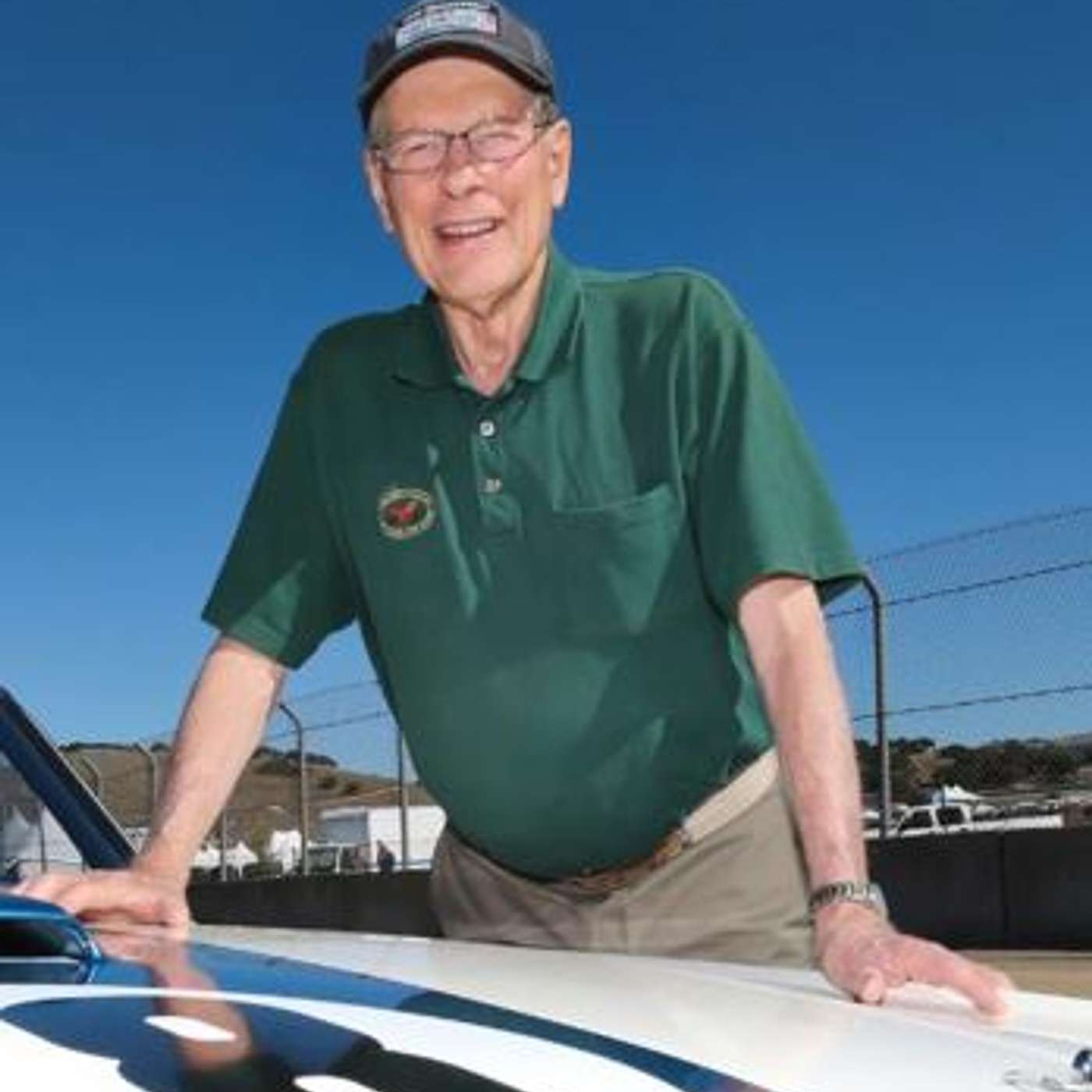
Stewart Howden hosts a lively discussion with Chuck Cantwell, a key figure in the development of the Shelby GT350. They delve into Cantwell's journey from working at Allison to joining Shelby American, where he played a crucial role in both production and racing. The episode highlights fascinating anecdotes about the iconic GT350, the challenges of title regulations in classic car sales, and the evolution of the automotive market. Cantwell shares insights on the racing culture of the 60s, his experiences with legendary drivers, and the legacy of Carroll Shelby.
Archive show #071 airdate 01-14-23 Stewart welcomes Chuck Cantwell of Shelby America. Nicknamed "Mr. GT350" for his involvement with the iconic race car, they discuss his long career from Indianapolis to Detroit and #GM Styling to California and engineering the #Shelby #Mustang. https://shelby.com
GET OUR FREE APP: https://ClassicAutoMall.appimize.app When it opens click on the ORANGE button to install on your phone or computer for DIRECT ACCESS to our VIDEO and AUDIO shows and our website.
CONTENT NOTE: Contests, Prizes, Offers, Vehicles & other items may no longer be available or offered after each show's original broadcast or posting date.
Recorded in our Showcase Studio just inside the entrance of the Classic Auto Mall in Morgantown, PA, Host Stewart Howden, Classic Auto Mall President and Classic Car Specialist Steve Saffier talk about this unique and amazing place often with amazing guests.
YES...Classic Auto Mall is a REAL former shopping mall that covers almost EIGHT football fields with an average of nearly ONE THOUSAND classic vehicles under one, climate controlled roof and they're all FOR SALE!
Be sure to LIKE and SUBSCRIBE to be informed of new episodes and SEE them on the Classic Auto Mall YouTube Channel. We also invite you to VISIT US IN PERSON at Classic Auto Mall, one hour west of Philadelphia at PA Turnpike Exit #298, VISIT us online at ClassicAutoMall.com or talk to real, live people about visiting, buying or selling your classic on consignment at 888-227-0914.
"We have 900 consignments and 200 barn finds in the building. We're busting at the seams."
A barn find is a car that was hidden away for a long time and is often found in places like barns. People like these cars because they can be special or rare.
A 'barn find' refers to a vehicle that has been discovered after being stored away for a long time, often in a barn or garage. These cars can be valuable due to their rarity and the nostalgia associated with them.
"...there was a lot of guys tinkering around with Model A's and Model T's and they'd buy a barn find with no title because they needed most of the parts off of it..."
The Model A is a car made by Ford that was popular in the late 1920s and early 1930s. It was one of the first cars that many people could afford and is often seen as a classic today.
The Ford Model A was produced from 1927 to 1931 and is known for being one of the first mass-produced cars following the Model T. It features a more modern design and improved performance compared to its predecessor.
"They have to have a title. No, they don't have titles."
A title is a paper that proves who owns a car. When you buy or sell a car, you need to have this document to show that you are the legal owner.
In the context of automobiles, a title is a legal document that establishes ownership of a vehicle. It is crucial for registering the vehicle and transferring ownership during a sale.
"I am going to be the first to raise my hand to vote for federalization of titles and bills of sale of automobiles because back in the day when you sold a car,..."
A bill of sale is a document that shows a car has been sold from one person to another. It includes information about the car and the people involved in the sale.
A bill of sale is a legal document that records the transfer of ownership of an item, in this case, an automobile. It typically includes details about the buyer, seller, and the vehicle being sold.
"Nowadays, most cars are bought probably past state lines."
State lines are the invisible lines that separate one state from another. When you buy a car from a different state, you might have to follow different rules than if you bought it in your own state.
State lines are the boundaries that separate different states in the United States. When buying or selling a car across state lines, different laws and regulations may apply, complicating the transaction.
"...some of the new inventory this week, 1956 Pontiac Star Chief Catalina Custom Sedan. I just wanted to say all those words together."
The Pontiac Star Chief Catalina is a classic car from 1956. It's a large vehicle that was known for its unique design and style, making it a favorite among collectors today.
The Pontiac Star Chief Catalina was a full-size car produced by Pontiac in the 1950s. It was known for its distinctive styling and was part of the Star Chief series, which was popular during that era.
"... new inventory this week, 1956 Pontiac Star Chief Catalina Custom Sedan."
The Pontiac Catalina is a big car that was made for families from the 1950s to the 1980s. It is known for being comfortable and having a lot of space inside. People talk about it because it has a classic American look and was popular in its time.
The Pontiac Catalina was a full-size car produced by Pontiac from the 1950s to the 1980s, known for its spacious interior and comfortable ride. It was popular among families and is often discussed for its classic American styling and performance. The Catalina represents a significant era in American automotive history.
Brakes are the parts of a car that help it stop. When you press the brake pedal, they create friction to slow down the wheels.
Brakes are a crucial component of a vehicle that allow it to slow down or stop. They work by applying friction to the wheels, which reduces speed and brings the car to a halt.
Wheel cylinders are parts that help the brakes work by pushing the brake pads against the wheels. They are important for stopping the car safely.
Wheel cylinders are components of a drum brake system that push the brake shoes against the drum to create friction and stop the vehicle. They are essential for the proper functioning of the brakes.
"One family owned 317 cubic inch V8 rebuilt hydramatic transmission. Really a cool car."
A V8 engine is a type of engine with eight cylinders that are arranged in a V shape. This setup helps the car go faster and produce more power.
A V8 engine is an eight-cylinder engine configuration where the cylinders are arranged in a 'V' shape. This design allows for a more powerful engine that can produce higher horsepower and torque, making it popular in performance and muscle cars.
"One family owned 317 cubic inch V8 rebuilt hydramatic transmission. Really a cool car."
Hydramatic transmission is a type of automatic transmission that helps the car change gears smoothly without the driver having to do it manually. It was popular in older GM cars.
Hydramatic transmission is an automatic transmission system developed by General Motors, known for its smooth shifting and reliability. It was widely used in many GM vehicles from the 1940s through the 1960s.
"One family owned 317 cubic inch V8 rebuilt hydramatic transmission. Really a cool car."
Cubic inch is a way to measure how big an engine is. A bigger number usually means the engine can produce more power.
Cubic inch is a unit of measurement used to describe the displacement of an engine, indicating the total volume of all the cylinders in the engine. A larger cubic inch measurement generally means a more powerful engine.
"...you think of 55, 56, 57 Chevys or Pontiacs or Oldsmobiles from that era. They just have that look and feel of an antique or classic car."
A classic car is an older car that many people find special because of its design and history. These cars are often collected and cared for by fans.
A classic car is typically defined as a vehicle that is at least 20 years old and has historical significance, often appreciated for its design, performance, and cultural impact. Classic cars are often collected and restored by enthusiasts.
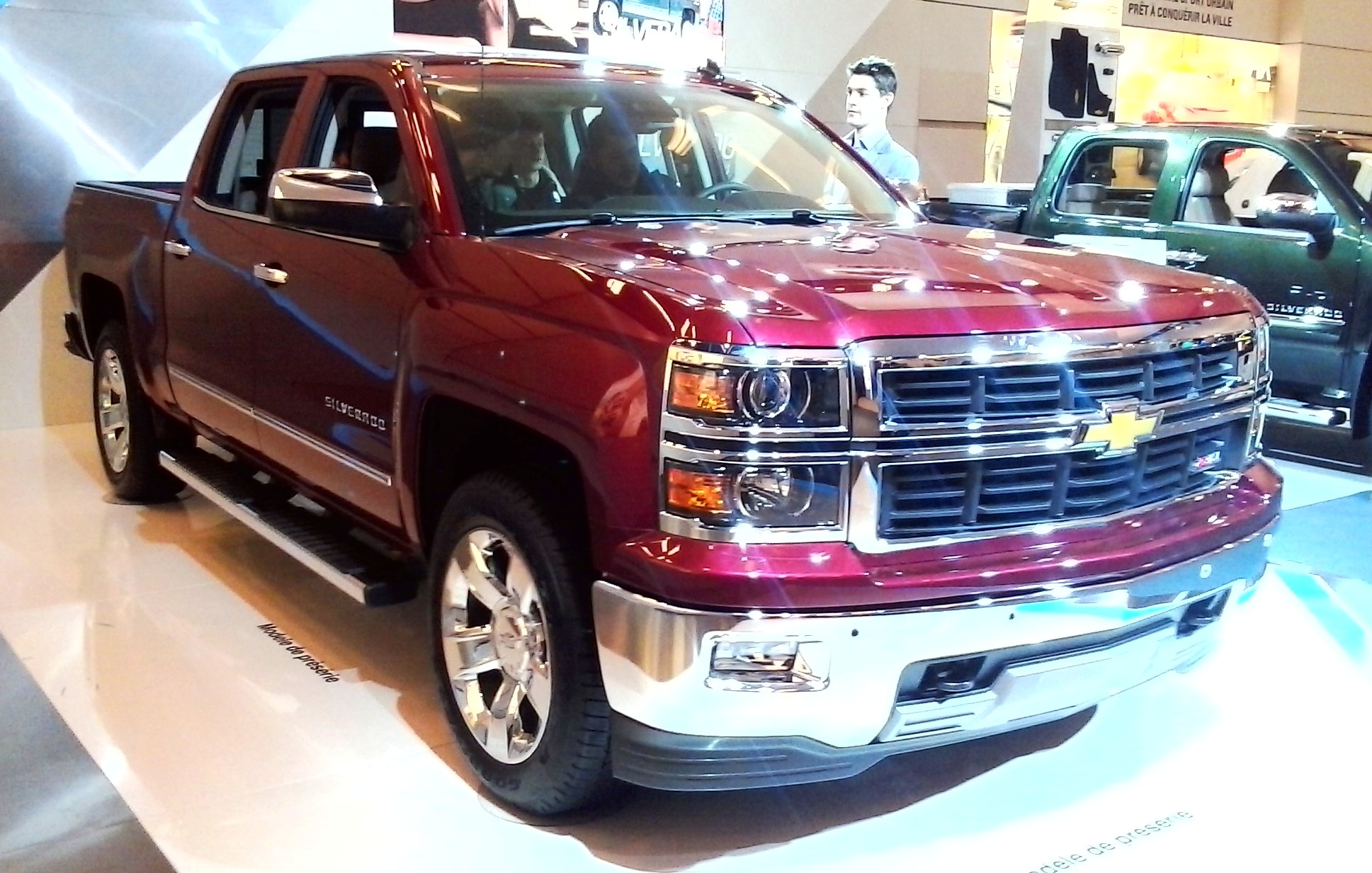
"...the new Silverado, the electric one is the new Denali Electric. A hundred and eight thousand dollars is the starting price on it."
The Chevrolet Silverado is a popular truck that many people use for work and everyday driving. The electric version is a new type of truck that runs on electricity instead of gasoline.
The Chevrolet Silverado is a full-size pickup truck known for its durability and performance. The electric version, referred to as the Silverado EV, represents Chevrolet's move towards electric vehicles in the truck segment.
"How about the 2000 F 750 crew cab? Now this is way outside the realm of what we do in classic car world."
The Ford F-750 is a big truck that can carry heavy loads. It's not a typical car but is used for work and can be very useful for businesses.
The Ford F-750 is a heavy-duty truck known for its large size and capability, often used for commercial purposes. It's part of Ford's F-Series lineup, which includes a range of trucks from light-duty to heavy-duty models.
"...my dad used to drive me to school and his XK-E 67. And oh, it wasn't nice in the wintertime."
The Jaguar XK-E, or E-Type, is a classic British sports car famous for its stylish looks and speed. It was made in the 1960s and is still admired today.
The Jaguar XK-E, also known as the E-Type, is a British sports car that was produced from 1961 to 1975. It is renowned for its stunning design and performance, often considered one of the most beautiful cars ever made.
"...it's got a 7.2 liter Detroit Detroit cat diesel. Allison six feet."
A 7.2 liter diesel engine is a large engine that uses diesel fuel. It's designed to produce a lot of power and is often used in big trucks because it can handle heavy loads.
A 7.2 liter diesel engine refers to the engine's displacement, indicating its size and capacity. Diesel engines are known for their torque and fuel efficiency, making them suitable for heavy-duty applications like towing.
"...Allison six feet. It's got 605 foot pounds of torque."
Allison transmissions are special types of automatic gear systems used in big trucks. They help the vehicle shift gears smoothly, especially when carrying heavy loads.
Allison transmissions are a brand of automatic transmissions known for their durability and performance, especially in heavy-duty vehicles. They are commonly used in trucks and buses for their ability to handle high torque loads.
"...It's got 605 foot pounds of torque. You can tell with it."
Foot pounds of torque is a way to measure how much twisting force an engine can produce. More torque means the engine can pull heavier things, like trailers.
Foot pounds of torque is a measurement of rotational force. In vehicles, it indicates the engine's ability to do work, such as towing heavy loads. Higher torque values are beneficial for tasks like hauling trailers.
"Here's my lovely bride. 48 Chevrolet Fleetmaster Sport Coupe with the wood on the sides, Oxford maroon and wood over 10."
The Chevrolet Fleetmaster Sport Coupe is an old car from 1948 known for its stylish look and wooden sides. It's a classic model that many car enthusiasts appreciate.
The Chevrolet Fleetmaster Sport Coupe is a classic car produced by Chevrolet in 1948. It features a distinctive design with wood accents, which was popular in that era.
"...216 cubic inch inline six, three speed manual tranny and on the column shift."
An inline six engine has six cylinders lined up in a row. This setup helps the engine run smoothly and is often found in many cars.
An inline six engine is a type of engine configuration where six cylinders are arranged in a straight line. This design is known for its smooth operation and good balance, making it popular in various vehicles.
"...but how about three on the tree? Oh my goodness."
'Three on the tree' means a car has a three-speed manual transmission that you shift using a stick on the steering column instead of on the floor. It's an old-school way of changing gears.
'Three on the tree' refers to a three-speed manual transmission that is mounted on the steering column. This setup was common in older vehicles and allows the driver to shift gears using a lever located on the column rather than on the floor.
"But anyway, how about a 62 this Corvette Roadster that we got in? It's a magnetic red metallic over tan. This thing is unbelievable."
The 1962 Chevrolet Corvette Roadster is a classic car that can be driven with the top down. It's known for its stylish look and fast speed, making it a popular choice among car enthusiasts.
The 1962 Chevrolet Corvette Roadster is a classic American sports car known for its sleek design and powerful performance. It features a convertible top and is part of the first generation of Corvettes, which were produced from 1953 to 1962.
"It's a it's a Resto mod, which, you know, I'm I have mixed emotions about a Resto mods. You know, I hope that it didn't do away with a really good car."
A restomod is when someone takes an old car and fixes it up with new parts to make it better. It keeps the classic look but adds modern features for better driving.
A restomod is a vehicle that has been restored to a certain extent but also modified with modern components for improved performance, comfort, or aesthetics. This approach allows classic cars to retain their vintage appeal while benefiting from contemporary technology.
"It's got a 5.7 liter LS1 408 horsepower Magnuson supercharger."
The LS1 is a powerful V8 engine that makes cars go faster. It's known for being lightweight and is used in many sports cars.
The LS1 is a 5.7-liter V8 engine produced by General Motors, known for its performance and lightweight design. It is commonly used in various GM vehicles, including the Corvette.
"It's got a 5.7 liter LS1 408 horsepower Magnuson supercharger."
A Magnuson supercharger helps an engine produce more power by pushing in extra air, which makes the car go faster.
A Magnuson supercharger is a type of positive displacement supercharger that increases an engine's power by forcing more air into the combustion chamber, resulting in higher horsepower.
"I always liked the Bonneville and the Star Chief. Yeah, I know, me too."
The Pontiac Bonneville is a large car that was made by the Pontiac brand. It was popular for many years and known for being comfortable and powerful.
The Pontiac Bonneville was a full-size car produced by Pontiac from 1957 to 2005. It was known for its performance and luxury features, making it a popular choice among American car buyers.
The T56 is a type of manual transmission that allows drivers to change gears themselves, giving them more control over the car's speed.
The T56 is a six-speed manual transmission known for its strength and performance, commonly used in high-performance vehicles like the Chevrolet Corvette and Camaro.
"Yeah, so, so and the, you know, the GT 500 and the KR, we all know that that stood for King of the Road."
'King of the Road' is a nickname for some special versions of the Ford Mustang GT500 that are known for being very powerful and fast.
'King of the Road' (KR) is a designation used for certain high-performance versions of the Ford Mustang GT500, emphasizing its superior performance and status as a top-tier muscle car.
"a four speed is great, maybe in racing and great when you're running around the neighborhood on the twisty roads, but get out on the highway with a four speed."
A four-speed transmission means the car has four different gear settings to choose from. This can be good for racing or driving on curvy roads, but on the highway, it might feel like the car needs more gears to run smoothly.
A four-speed transmission has four gears for the driver to choose from, which can be beneficial in certain driving conditions like racing or on twisty roads. However, it may lack the higher gear options needed for highway driving, leading to higher RPMs and potential engine strain.
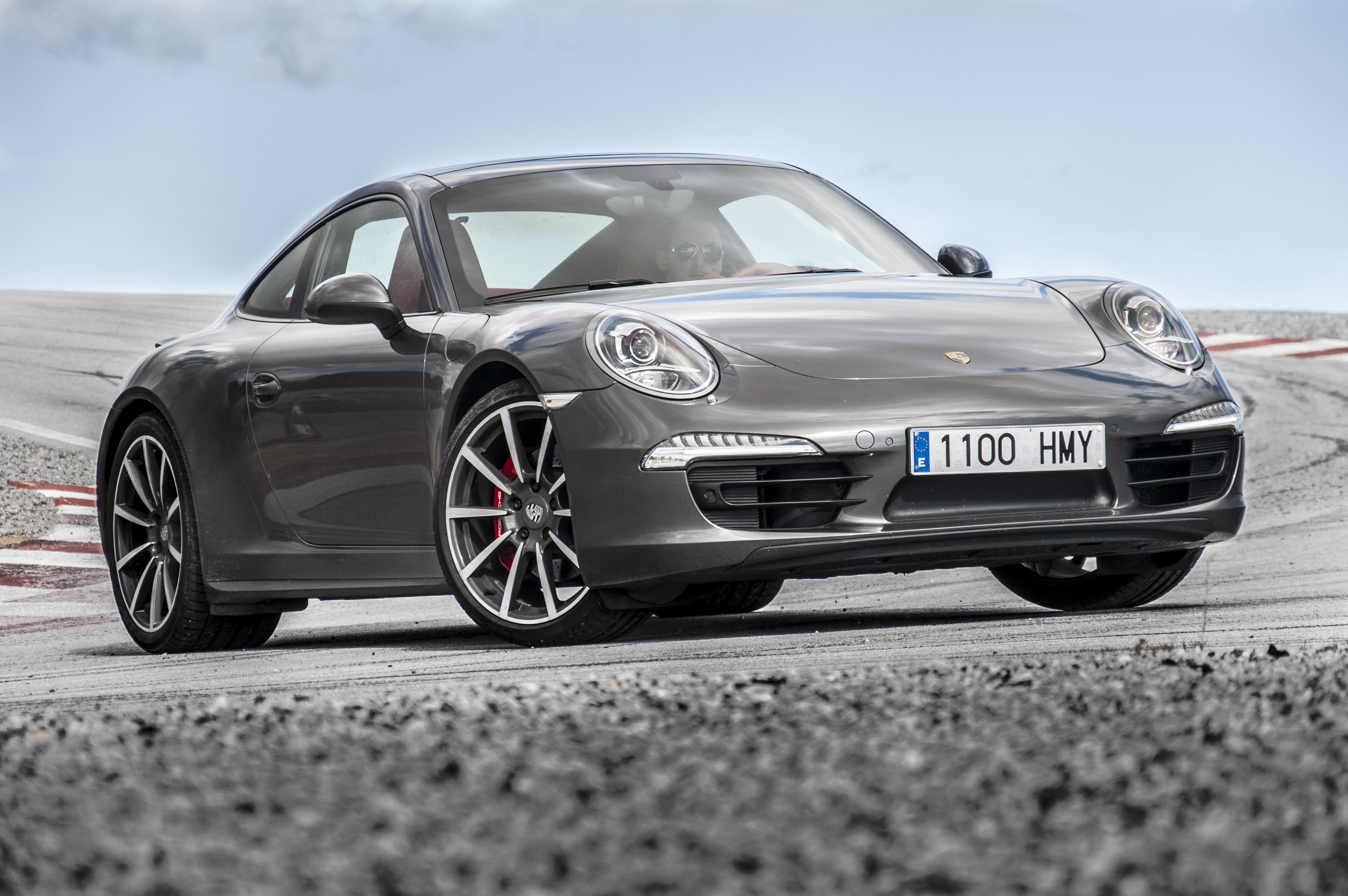
"So another new car we got in this one's a little outside the box to an 07 911 turbo Porsche and this thing is beautiful GT silver over terracotta."
The 2007 Porsche 911 Turbo is a fast sports car that has a turbocharged engine, which means it gets extra power from a device that forces more air into the engine. It's known for being very stylish and performing well on the road.
The 2007 Porsche 911 Turbo is a high-performance sports car known for its powerful turbocharged engine and all-wheel drive. It features a distinctive design and is part of the iconic 911 lineage, which has a strong motorsport heritage.
"It's the 3.6 liter twin turbo all wheel drive. Man, oh man, oh man."
A 3.6 liter twin turbo engine is a type of car engine that is 3.6 liters in size and uses two turbochargers to make it more powerful. Turbochargers help the engine get more air, which improves performance.
The '3.6 liter twin turbo' refers to an engine configuration that has a displacement of 3.6 liters and is equipped with two turbochargers. This setup enhances power output and efficiency by forcing more air into the engine.
"...another kind of a driver quality car 2008 Jaguar XKR coupe. It's salsa over charcoal black leather and walnut interior 4.2 liter supercharged V8. This thing is really cool."
The Jaguar XKR is a fast and stylish sports car made by Jaguar. The 2008 version has a powerful engine that makes it fun to drive, and it has a fancy interior with nice materials.
The Jaguar XKR is a high-performance version of the Jaguar XK sports car, featuring a supercharged V8 engine that delivers impressive power and speed. The 2008 model is known for its luxurious interior and sporty design.
"... don't know if you like this nickname or not. Mr. GT 350. Was that how they referred to you?"
The Lamborghini 350 GT is a fancy sports car that was one of the first cars made by Lamborghini. It has a powerful engine and a beautiful design, which helped Lamborghini become famous for making fast and stylish cars. People admire it for its luxury and performance.
The Lamborghini 350 GT, introduced in the mid-1960s, was the first production car from the Italian manufacturer Lamborghini. It is known for its luxurious design and powerful V12 engine, setting the stage for Lamborghini's reputation as a maker of high-performance exotic cars. The 350 GT is often discussed for its role in establishing Lamborghini's legacy in the supercar market.
"me about the program there. The Shelby Mustang. And of course I knew Shelby Shelby's operation"
The Ford Mustang is a famous sports car that people love for its speed and style. It was first made in the 1960s and has become a symbol of American cars. The Shelby Mustang is a special version that is even faster and more powerful.
The Ford Mustang is an iconic American muscle car that was first introduced in 1964. It has become a symbol of freedom and performance, often celebrated for its powerful engines and distinctive design. The mention of the Shelby Mustang highlights its performance variant, developed by Carroll Shelby, which further enhances the Mustang's racing pedigree.
"I guess it is. You get up there in that northern tundra area. Well, and I, you know, I told him I raised"
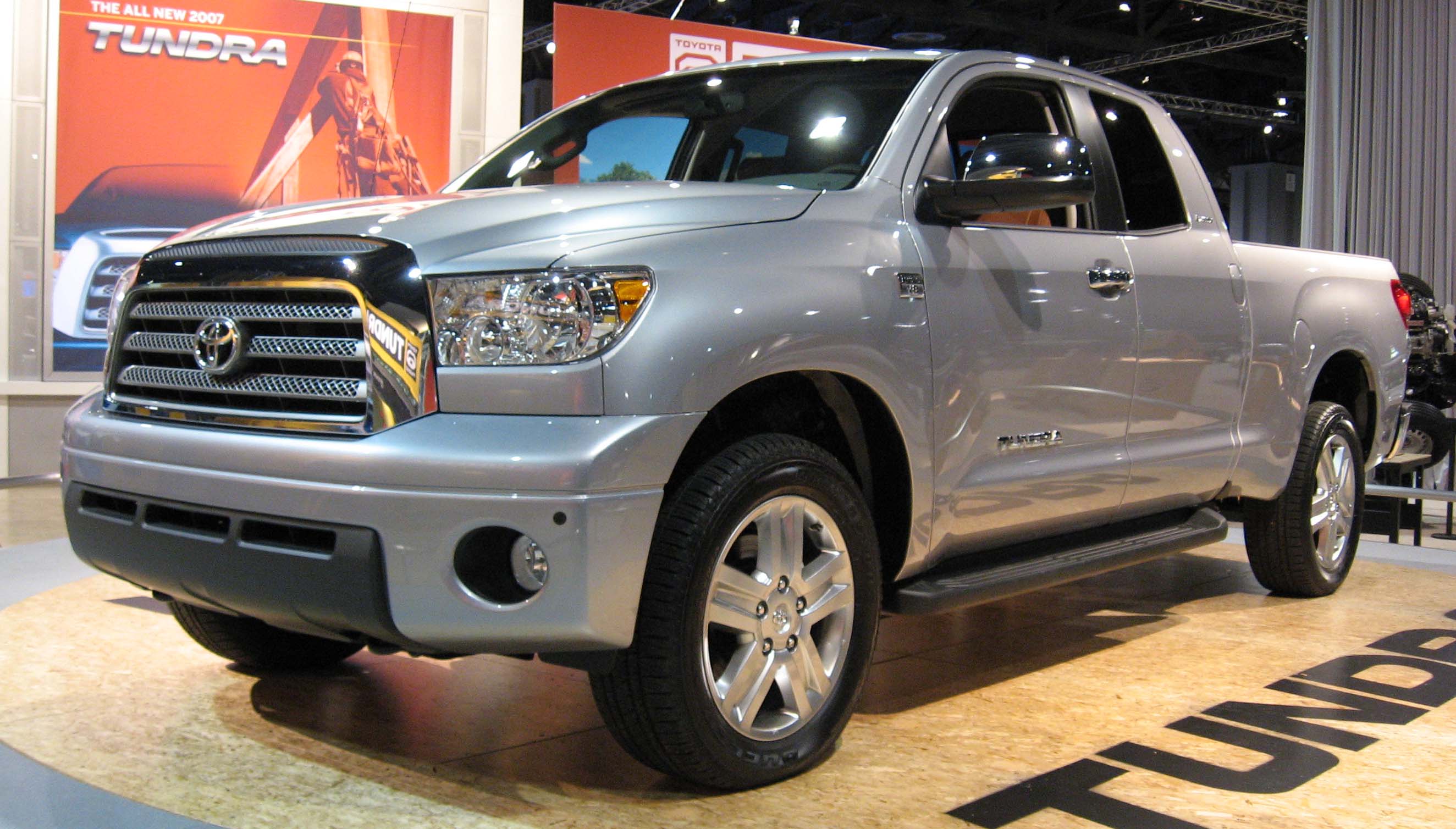
The Toyota Tundra is a big truck that can carry heavy loads and is great for tough weather. It's built to last and is popular among people who need a reliable vehicle for work or outdoor activities. Many people like it for its strength and comfort.
The Toyota Tundra is a full-size pickup truck known for its durability and off-road capabilities. It is particularly popular in regions with harsh weather conditions, such as northern areas, due to its robust build and reliability. The Tundra is often discussed for its strong performance and versatility in both work and leisure.
"... I was left styling, we had started on the on the Camaro. That was in the styling of the studio"
The Chevrolet Camaro is a sporty car that people love for its cool looks and fast performance. It was first made in the 1960s to compete with other muscle cars like the Ford Mustang. Many people enjoy driving it because it feels powerful and exciting.
The Chevrolet Camaro is a classic American muscle car that has been a competitor to the Ford Mustang since its introduction in 1966. Known for its aggressive styling and performance options, the Camaro has a strong following among car enthusiasts. Its design and engineering have evolved over the years, making it a frequent topic of discussion in automotive circles.
"We weren't competing with it and the police interceptor engine was a good engine for what it was and so w..."
The Jensen Interceptor is a stylish sports car that was made in the 1960s and 1970s. It is known for being luxurious and fast, with a unique design that stands out. Many people find it interesting because it's not very common.
The Jensen Interceptor is a luxury sports car produced from the 1960s to the 1970s, known for its distinctive styling and powerful performance. It combined British design with American V8 engines, making it unique in its class. The Interceptor is often discussed for its rarity and blend of luxury and performance.
Car
Ford Gt350S
"...e it and go for it. I tested like 70 cars all the GT350s and two years of Trans Am cars. So was it fun or ..."
Ford is a well-known car company that makes many types of vehicles, including trucks and sports cars. They have been around for a long time and are famous for making cars that people love to drive. Many people talk about Ford because of its history and popular models.
Ford is one of the oldest and most recognized automotive manufacturers in the world, known for producing a wide range of vehicles from trucks to sports cars. The brand has a rich history in motorsports and innovation, often discussed for its impact on the automotive industry and culture. Models like the Mustang and F-150 are particularly iconic.
"...after afterward when we got to get together at at Cobra Shelby collection that in Boulder once a year, th..."
The Shelby Cobra is a fast sports car that was made in the 1960s and is loved for its speed and style. It has a powerful engine and is known for winning races. Many car fans admire it for its design and performance.
The Shelby Cobra is a high-performance sports car that was developed in the 1960s by Carroll Shelby. It is known for its lightweight design and powerful V8 engine, making it a formidable competitor on the racetrack. The Cobra's legacy in automotive history is significant, often discussed for its racing success and influence on sports car design.
"...hat car was new and went back 50 years, you had a Model T. It looks so nice."
The Ford Model T is one of the first cars that many people could afford, which changed how people traveled. Made over 100 years ago, it helped start the car industry as we know it today. It's famous for being simple and reliable.
The Ford Model T, produced from 1908 to 1927, is often regarded as the first affordable automobile, making car ownership accessible to the masses. Its innovative assembly line production revolutionized manufacturing and set the stage for modern automotive production. The Model T's significance in automotive history makes it a frequent point of reference.
"...long lived. Well, our buddy Lee Cross puts on the Shelby GT350 tour every year and he does an amazing job."
The Shelby GT350 is a special version of the Ford Mustang that is made for speed and racing. It was created by a famous car designer named Carroll Shelby and is loved by many for its powerful engine and sporty look. People often talk about it because it's a classic muscle car.
The Shelby GT350 is a high-performance variant of the Ford Mustang, developed by Carroll Shelby in the 1960s. It is celebrated for its racing heritage, lightweight construction, and enhanced performance features, making it a favorite among car enthusiasts. The GT350's legacy continues to influence modern muscle cars.
"What a loss that was. And did you work on the 917 program with him as well, too?"
The Porsche 917 is a famous race car that was really successful in big races like Le Mans. It was known for being very fast and well-designed, making it a favorite among racing fans. People talk about it because it changed how race cars were built.
The Porsche 917 is a legendary race car that gained fame in the late 1960s and early 1970s, particularly for its success at the 24 Hours of Le Mans. Its innovative design and powerful flat-12 engine made it one of the most successful sports cars in racing history. The 917 is often discussed for its engineering excellence and impact on motorsport.
"Trans-M Series, you switched to AMC Javelins, right? Yes, that must have been a risk."
The AMC Javelin is a sporty car that was made in the late 1960s and early 1970s. It was designed to compete with other fast cars and is known for its cool looks. Many car fans appreciate it for being different from the more common muscle cars.
The AMC Javelin is a pony car produced by American Motors Corporation from 1967 to 1974, known for its sporty design and performance. It was a competitor to other muscle cars of the era and is often discussed for its unique styling and place in automotive history. The Javelin represents a distinctive chapter in the American muscle car narrative.
"...le bit and driving that car as if it was a Toyota Camry. I love that."
The Toyota Camry is a popular family car that is known for being safe and reliable. Many people choose it because it is comfortable to drive and doesn't use too much gas. It's a great option for everyday use.
The Toyota Camry is a midsize sedan known for its reliability, comfort, and fuel efficiency. It has been one of the best-selling cars in the United States for many years, making it a staple in family transportation. The mention of driving it in a casual context highlights its reputation as a practical and dependable vehicle.
"...by never rode Ford around on the racetrack in the GT40. Did he or did he?"
The Ford GT40 is a super-fast race car that was built to win big races in the 1960s. It became famous for beating other top cars, especially Ferrari, at the Le Mans race. People love it for its speed and racing history.
The Ford GT40 is a high-performance sports car that was designed specifically for racing in the 1960s. It is best known for its victories at the 24 Hours of Le Mans, where it famously beat Ferrari. The GT40 is often celebrated for its engineering and racing heritage, making it a significant part of automotive history.
Select text to request an explanation
This is the Classic Automall Show.
Broadcast from the studios inside the Classic Automall in Morgantown, Pennsylvania, just one
hour west of Philadelphia at Pennsylvania Turnpike Exit 298, featuring nearly 1,000 classic
vintage and barred-fine vehicles for sale under one climate-controlled roof.
Now, here's your host, Classic Automall president and the man with all the toys,
Stuart Houghton.
Good morning, Steve.
Good morning, Ethan.
So, today is January the 14th.
It's our 71st show, although that CarJaw guy's done 2,200 I saw on his website the other
day.
So, it's going to take us a while.
He does five a week.
I think he does five a week.
Wow.
Yeah, I think he does.
He's got everybody on there.
He had Zach Brown from McLaren, and he's had some really interesting Ari Lyandike.
I think Stuart Houghton's on the list.
I think I'm on the list if I ever call him back.
I need to call him until ... Thanks to the Pat Travers Band for our theme music.
We love them, and appreciate them allowing us to play their song, Off Beat Ride, which
is one of my favorites from back in the days when I was a youngster.
Way back.
Way back.
My goodness gracious, what a busy week we've had here, and an unbelievable week watching
me come.
We'll get into that at Kissimmee 4,200 cars they've got down there.
It's staggering.
I don't know how they process it.
We've been here five years.
We haven't consigned 4,200 cars yet.
They drew it in 10 days.
Amazing.
And then two weeks from now, they're going to Glendale and have 2,000 cars there.
What the heck?
A lot of cars out there.
It makes you wonder how many cars are out there.
If there's that many changing hands and moving through the market, think about it.
Where we are, 75% of our cars come within a 75-mile radius of our place, where we
stand right here.
So think about that.
That's that many cars that are for sale using our format.
It's not to say that those guys aren't going to bear it and meek them and all the other
auction houses and Carlisle and different places you can go.
So there's a lot of cars out there.
So a lot of hidden away treasures in the garages around here.
And we sold quite a few.
We're on a little bit of a roll lately.
We sold 22 last week.
Nice.
Yeah.
So it keeps them busy.
It keeps Kathy honest and keeps her from getting electrocuted.
Keep her at work more often.
Anyway, where might we say we sold cars to last week, Steve?
Yep.
How about...
I'm always going to ask that.
You never do.
You chew me.
I'll cue you.
I'll cue you.
So last week we sold cars to Pottstown, Pennsylvania, Stanfield, North Carolina, Freehold, New Jersey,
Linwood, Washington, Tom's River, New Jersey, Edinburgh, Virginia, Holland, Pennsylvania,
LaGrangeville, New York, Walbridge, Ohio, Batavia, Illinois, Brownstown, Michigan,
Santa Paula, California, Nottingham, New Hampshire, Gordonville, Pennsylvania, Enoree,
South Carolina, Mulberry, Florida, Phoenix, Arizona, Tracy, California, Millbray, California,
York, Pennsylvania, and Hanover, Pennsylvania.
Wow.
They were everywhere.
Yeah.
13, 14 states.
You are so good at that quick math.
Yeah.
That's so impressive, Steve.
So anyway, if you have a great car to sell, classicautomall.com is our website.
You can reach us there or info at classicautomall.com is our website or our email address or
you can call us at 888-227-0914 and talk to one of our car specialists and they
can help you guide you through the process and the procedure of consigning a car and it's
simple.
There's no upfront fees, no monthly fees.
We only get paid when we sell, when we perform.
So we're kind of like real estate agents, except it's cars and no admission to come in and
see the collection as well too.
So we have over 900.
We have 900 consignments and 200 barn finds in the building.
We're busting at the seams.
200 barn finds down from 350 is where we were.
I finally did a real count.
You know, I've just been spouting out numbers and I don't even really know
where they come from.
But down from our original 350, we've sold about 125 of them.
But barn finds are not as easy to sell as they used to be because in the old days, there
was a lot of guys tinkering around with Model A's and Model T's and they'd buy a barn find
with no title because they needed most of the parts off of it and the whole is cheaper
than the parts.
So if you went and bought the parts individually, you'd pay more than if you bought the
whole car.
But nowadays, we advertise some of these cars, no title.
So the guy says, yeah, I got it.
No title.
And then we sell it to him.
They go, so how do we get a title?
How do you get a title in 1928 Chevy?
Well, you've got to be very creative.
There are ways to get titles for cars.
There's legal things that you do that you fill out and bond and you've got to
go before a judge and there's a whole procedure and I don't know really much of any of
it.
And it's state to state.
Yeah.
And it's state to state.
So it all depends on where you're from and some states don't have titles anymore.
So like New Hampshire in New York, anything that's 25 years or older doesn't even have
a title.
It just has a registration.
And sometimes you'll sell a car on a registration to a buyer in California and
California says, no, no, no, no.
You can't.
That's not possible.
They have to have a title.
No, they don't have titles.
So I am going to be the first to raise my hand to vote for federalization of titles
and bills of sale of automobiles because back in the day when you sold a car,
you generally sold it within five miles of your dealership.
So you the state laws were right there.
You know, you didn't, you didn't worry about what North Carolina did or didn't do or South
Carolina or Florida or whatever.
Nowadays, most cars are bought probably past state lines.
So a lot of internet, a lot of internet stuff and especially in the classic car world.
So I think if we federalize the titles, careful what you wish for.
If we federalize the titles, then I think that it would make everybody's job easier
because I can't tell you how many people sign in the wrong space on an unfamiliar title
because they are used to being a certain place to sign and then they go on the back of it
and you sign in the wrong spot.
And of course that creates difficulties and so, but that's what we're here for.
Because we can take the headache out of selling your car and dealing with the paperwork
and dealing with, you know, cashier's checks and you remember the old days,
cashier's checks were gold, right?
Not anymore, right?
How'd you like to give your car to a guy on Saturday night?
He gives you a cashier's check.
He takes off Sunday morning, you go into the bank.
No, it's not any good.
We don't recognize this at all.
This bank doesn't exist.
Your checks are about as good as personal check.
They're still five business days to clear.
So if you want to bring a cashier's check, don't.
If you want to take the car home today, bring greenbacks or wire the money from
your bank directly to our bank.
And once that happens, then we're good to go.
So anyway, some of the new inventory this week, 1956 Pontiac Star Chief Catalina
Custom Sedan.
I just wanted to say all those words together.
Sandalwood tan and sun beige over rust and beige.
I don't think that they would call a color rust these days.
I would think that would have a negative connotation, right?
New brakes and wheel cylinders.
This thing is rebuilt.
One family owned 317 cubic inch V8 rebuilt hydramatic transmission.
Really a cool car.
I mean, you talk about, you know, antique car and what you think of
and you think of 55, 56, 57 Chevys or Pontiacs or Oldsmobiles from that era.
They just have that look and feel of an antique or classic car.
It's a beautiful car.
Lots of chrome and just beautiful curves and lines and reasonable.
I think if you're getting in the classic car market and you're looking
for something like this, it's a reasonable car.
I think it's mid 20s or something on that, which is about an entry level car.
I mean, I know it's that you say that's not a lot of money,
but go price a new car these days.
The new Silverado, the electric one is the new Denali Electric.
A hundred and eight thousand dollars is the starting price on it.
Who in that?
What that I just don't get it.
It's not as pretty as the Pontiac.
No, it's not the 56 star chief, which is probably politically incorrect
to somehow some way, right?
How about the 2000 F 750 crew cab?
Now this is way outside the realm of what we do in classic car world.
This thing.
Have you seen this thing?
Yeah, it is huge.
I've always dreamed about picking up my kids in one of those at school.
How embarrassing for the kids, right?
I'll never forget Kathy picked up the kids one time in an orange
and white Volkswagen van again, and the kids were horrified.
Really?
They were so embarrassed and she thought it was going to be so cool.
And yeah, I thought it was cool.
And the kids are like, oh, mom, please never ever pick us up
in that again.
That is so embarrassing.
What were you thinking?
And I'm like, gosh, my dad used to drive me to school
and his X K E 67.
And oh, it wasn't nice in the wintertime.
That thing leaked like a sieve and it was cold and, you know,
the defroster didn't work and, you know, just, you know,
it wasn't a lot of fun.
It was cool to look at.
My dad bought it at night in the rain.
And of course he found out that he probably shouldn't have
bought it at night in the rain because all cars look good
in the rain for some reason.
That's right.
But but anyway, this is like a pedestrian level freight
liner freight liner.
Yeah, yeah.
And that's that's that's hard to describe what it is,
but it's huge.
I mean, an F 750, you know what an F 350 or 250 is.
So it's got a 7.2 liter Detroit Detroit cat diesel.
Allison six feet.
It's got 605 foot pounds of torque.
You can tell with it.
You might be able to tow a trailer or two with it.
Of course, I don't know what the diagram thing weighs,
but air brakes air suspension.
It's got a 33,000 pound GVWR, which I'm not even sure
when I say that.
And then I go, I don't really know what that.
What does that mean?
Really?
I mean, does that mean you can haul 33,000 pounds
or does that mean the total weight of the rig and the trailer?
And I don't know.
So I should stop saying things that I don't know the answer to
and I say that more often than I should.
So but anyway, if you're in the need for a F 750.
Yeah.
And by golly, we have, I think we've got another one
that's similar to that too.
Anyway, how about let's get back to something
that more normal.
Here's my lovely bride.
48 Chevrolet Fleetmaster Sport Coupe with the wood
on the sides, Oxford maroon and wood over 10.
And it's the country club package.
So rarely seen, so they say.
216 cubic inch inline six, three speed manual tranny
and on the column shift.
No doubt.
Talk about confusing the millennials bad enough
with a four speed on the floor, but how about three
on the tree?
Oh my goodness.
You know, and they're not there.
People even that are car guys that get confused by three
on the tree.
I'm like, it's it's the same pattern.
It's just at a different angle.
It's weird if you're never doing it.
It is weird, but the wood sides on this thing look
really beautiful.
Beautiful car.
That's why my wife was she wanted a grand wagon here
until she found out they weren't going to put the wood grain
on the sides on the new ones that they just came out
with last year.
And she's like, well, why wouldn't they do that?
That's the way the grand wagon ears were.
They had wood on the sides.
So I digress.
But anyway, how about a 62 this Corvette Roadster
that we got in?
It's a magnetic red metallic over tan.
This thing is unbelievable.
Won so many awards.
It's a it's a Resto mod, which, you know, I'm I
have mixed emotions about a Resto mods.
You know, I hope that it didn't do away with a really good
car.
I'm hoping that it's a car that was sans engine and, you
know, didn't have any of the drivetrain.
And so they said, hey, you know what?
No harm, no foul if we're going to make something out
of it.
But this thing is unbelievable.
It's got a 5.7 liter LS1 408 horsepower Magnuson
supercharger.
Now think about this on a 62 vet, the hop horsepower
for them back in the day would have been 245 maybe
with a fuel.
I mean, my goodness have double the horsepower and
it's a Newman's car creation chassis.
And it's a T 56 manual, Tremac five speed manual,
which are great to have because we all know that
a four speed is great, maybe in racing and great
when you're running around the neighborhood on the
twisty roads, but get out on the highway with a
four speed.
You are begging for a fifth gear.
I feel like the car is just going to explode,
especially with the rear end gearing.
So another new car we got in this one's a little
outside the box to an 07 911 turbo Porsche and this
thing is beautiful GT silver over terracotta.
It's the 3.6 liter twin turbo all wheel drive.
Man, oh man, oh man.
This thing is just smoking fast.
It is really it's they are there.
They're almost deceivingly fast.
You know, they're not loud loud.
You hear the noise and you hear it spooling
up and those, you know, six cylinder Porsche
engines are pretty cool to begin with.
But man, this thing is just it's a beast.
And and but you can drive it in normal traffic.
And then that's not, you know, a few years ago.
That wasn't is yet something that powerful.
You really couldn't drive it and bump bumper to bumper
traffic would like to say.
Also got a newer another kind of a driver quality car
2008 Jaguar XKR coupe.
It's salsa over charcoal black leather and walnut
interior 4.2 liter supercharged V8.
This thing is really cool.
Red that red.
It's bright red.
It's fire engine red.
Yeah, it rests me red.
So but, you know, listen, if you if you're buying
a car to be noticed, then buy it in red.
If you're not buying gray or white or something like that.
You know, they say that I've said this before.
They say some of the car dealers will tell you that
they they don't like a lot of choices of colors
because it confuses people.
People who come to buy a car and they oh, well,
I really like the red one.
But oh, I like the brown one.
Oh, but that's, you know, that silver is really,
you know, they're like Mercedes guys will tell you
look, just give us a couple of colors one or two,
maybe three and and that's all we need.
Black, white and silver.
That'll cover all the bases.
So word has gotten out that the world famous Chuck
Cantwell here with us had a nickname back in the day.
I don't know if you like this nickname or not.
Mr. GT 350.
Was that how they referred to you?
That's what Shelby told me.
Not a bad not a bad way to be recognized right by Shelby.
So you were the lead engineer,
I guess on the GT 350 and more the racing side of it though,
or were you in both sides?
I was on both sides production and the racing and right
and the trans am is that came along and you grew up in
Speedway, Indiana.
So how perfect for you to be in the car business?
How did you go to the Indy 500 every year?
Every year.
I missed the first year after the war, right?
And then 47 until I moved away right in the 60s.
Right.
And then I'd come back and I always encounter winter in
California.
They used to show the move with a race on theater.
No, no.
Grownman's Chinese theater.
No kidding.
I didn't know that.
How cool is that?
There are different things.
Yeah, I want.
So did they get so it was it was it a day or two delayed
or was it?
No, it was real time live.
No kid fill a theater up with people and.
Oh, my God, how fun would that be to go watch a race
in a movie theater?
That would be cool.
Well, you know, you see that in like pro sports now or
sports, even college sports where the team will be
playing in a bowl somewhere in California and teams
from Florida and they'll watch it in the stadium.
You know, everybody will gather in the stadium,
even though there's no game going on there.
So how cool was that?
Can't imagine it was terribly expensive back in the
day.
It was a couple of bucks to go see that or a couple
bucks.
I had a couple of bucks for qualifying.
We always went to qualifying because they had 100,000
people there for qualifying.
Right.
Weekend and then the race that was five bucks for
general mission, I think, and if you didn't think
out of the fence, which we did a few times.
Well, a lot of people lived right there.
I mean, right next to like across the street from
the track.
There was yeah, it was right and I was surprised
the first time I went to the Indianapolis 500.
I thought it would be kind of out in the middle
of nowhere and it was not.
No, not at all like in a neighborhood.
You know, probably be tough to get that zoned in
these days.
Yeah.
Kind of like Maple Grove up the street from us.
I don't think that in this day and age, you could
get a two lane road into bringing that many people
into a race course.
So you you left Indianapolis or Indiana and
moved to California.
No, I was I worked at Allison.
I'd be pretty sure the GM company on your school
at GMI General Motors Tech and they co-opted
Allison Allison at that time built jet engines
and transmissions and and they had a had a one
shop, the original race shop, which was part of
the Jim Allison's initial shop as one of the founders
of the Speedway.
Oh, really?
I didn't know that.
They built railroad bearings for box cars.
No kidding.
They're poured poured bad but bearings with big
big things.
They had these tanks around the cruddy looking
stuff where they dip the bearings and everything.
How funny and Allison transit missions are still
around.
Just talking about them missions.
Yeah, they're there at the top of the top of the
heat.
You know, they're really good.
Absolutely.
So you loaded up the truck and moved to Beverly
at some point in time in the early 60s.
Right?
Well, what I and yeah, in 60 I moved to Detroit
right and work for GM styling.
I transferred.
There's some people from styling came around
looking for looking for people and interviews.
So I thought, well, see what that's all about.
That's a car car place and they're right in
the aircraft business with Alice.
So I talked to them and they were sports car
people.
They got was looking for people as a sports car
guy and I was racing sports cars and at that
time in Indianapolis.
And so I got a job with them and worked for
them for four years in Detroit.
Then after that, I went out to California
when a friend of mine who worked for GM at
the tech center was he said, let's go.
Let's go to dinner.
I want to talk to you about so he was in the
middle of middle of 1964 somewhere and he told
me about the program there.
The Shelby Mustang.
And of course I knew Shelby Shelby's operation
and successes and everything.
I'd seen them race at Elkhart Lake when
I was up there racing.
And so we talked.
I went out and interviewed and they offered
me a job.
So it's project engineer and that was Wow.
So you went from you were working in the styling
department, right?
Yeah, which is unusual for is that an unusual
for an engineer to be in the styling department?
That was I worked in a I worked in preliminary
engineering at Allison and this group was
called preliminary engineering also.
We did all kind of odd stuff on different
projects and that was and working in amongst
the all the talented people.
Styling operation.
It was in the middle of the Tech Center there
and Warren, Michigan.
That was some of the best styling and of our
ever.
They were good good people.
Yeah, just a pleasure to know them and just
to see what they did.
See the work.
It was enlightening.
And was it always a battle between, you
know, the accounting department and the
styling department on, you know, getting
something approved because the styling said
this and then accounting said that's
too expensive.
They're all kind of battles.
Yeah, that that being one of them, right?
Mitchell had ideas and he was the head of the
styling and the studio's had their heads
and everybody had to varying people in
in the divisions had their own ideas.
And so they had to separate all that out
and combine it and come to common level.
Mitchell got some great things through though.
Didn't I mean look at the 64 Riviera.
Oh, it's still a beautiful car to this day.
Yeah, he he did.
Was he was an interesting guy to know?
Yeah, yeah, yeah, yeah, I would.
He was a race fan.
I mean, he goes.
Oh, really?
He'd be always have something to take the
Elkhart Lake in the fall 500.
Yeah, that's right.
Elkhart Lake was probably his close the closest
road call.
It was it was 400.
I wasn't that far.
I guess it is.
You get up there in that northern tundra area.
Well, and I, you know, I told him I raised
some mgs and I towed flat towed them for a while
and then you do 450 mile flat tow.
That's a long drive.
And then you're going to race again.
Yeah, that was worth it.
Yeah, great race.
Well, at the time we were, you know, younger
and more energetic and more enthusiastic, right?
But California had to be a little bit.
Was it a culture shock back then?
I mean, did you know much about
California before you moved there?
I did not.
It was sort of a just go and adventure set up
and I had just gotten engaged to it.
And when I went out to California,
I was out there for about three months
and then came back at Christmastime to
Michigan and day after Christmas,
we got married and and drove our car
and U-Haul trailer out to California.
That was our honeymoon.
Oh, well, hey, not a bad honeymoon though.
Right?
Right.
I mean, could be worse things to go places to go.
Right.
And you saw a lot of stuff on the way.
So your official title was project engineers.
I jokingly said or not jokingly said Mr.
GT 350 was that everybody calls you
because that was your baby, right?
I mean, that was that was the engineer on that car.
We designed everything.
Sure.
I had the my responsibility was getting
all put together and making it work
and supporting the production people
that were trying to build the car.
Sure.
What were your initial thoughts of the Mustang?
Did you think it was the right car
for the project or did you like it?
Or did you just say, OK, this is what we're dealt.
We'll deal with it.
Well, yeah, I guess that was more of a thing.
I didn't see anything wrong with it.
I didn't know anything about it much.
And before I was left styling,
we had started on the on the Camaro.
That was in the styling of the studio
and that was coming along partway.
I wasn't released yet.
But it was it was seemed like a good car.
And then Sam Smith, who is my friend that went to work
for Ray Gettys and Ford Special Vehicles.
Right.
And he was liaison with with Ford
and Shelby American when Carol Shelby.
So he he introduced me to the situation.
Sure.
And before I even went to California,
we spent three weeks with big counting table paper
and laying out every every single part.
We're going to have to do anything with them.
What the situation was with with the particular part
and even nuts and bolts.
We were trying to get down a list of everything.
I mean, they had a lot of Ford knew what they wanted to do.
What they wanted to achieve with it pretty much.
But it wasn't all detailed and the parts were in all.
We had a purchasing guy that worked with us in California.
But when Sam and I laid out all the stuff on these tablets
and we laid out every component and put the situation
of the component was laid out whether or not it was.
It was a purchase for component from somebody
like we bought transmissions from Board Warner
and they would be installed on the on the cars at Ford.
They could shift them to Ford.
They could be installed other things.
That saved you a little bit of time and effort.
Anything we could do in San Jose had to be in the Ford system.
So it was couldn't do everything there.
That's why we had Shelby American.
But we had parts, some things we had to buy
from specialty manufacturers and headers and things like that.
What about, and did you fabricate stuff as well too?
We fabricated stuff as well.
And usually we didn't fabricate it in-house
except for the early ones we made in the first 15 cars
or so we probably made a lot of parts for.
We had suppliers that we did some drawings.
I mean, some of them were like back of the envelope drawings
or here's a sample we built.
Try to say for you.
We built one or two and here's something you want.
Yeah, here's the specs there.
Yeah, built a couple hundred.
And were y'all working at a Venice at the time
or had you moved to?
Well, no, when we started there, we were in Venice
and gradually moved into the LAX airport.
When the race guys went to Daytona,
they'd take their trailer loads full of race stuff.
When they come back, they'd go over to the,
they'd drop them off at the hangers.
And then that was how you moved kind of.
That's sort of how we moved a lot of it.
And then we had one big major move
which was very well laid out.
And I think I only lost one part.
I had a little box about six inches cubed
and I forget even what was in it.
But that didn't show up till about three months later.
I had a little better idea.
Yeah, I've been looking for that stupid thing.
Well, but in the nice thing about the LAX
is you really had basically a test track there, right?
Because from what I understand, the test track,
prior to that would have been Sunset in Mulholland or?
Well, actually, they did some running around on the marina.
Right.
Santa Monica marina was too far away from the Venice,
Venice place.
But that wasn't, if they really wanted to test race cars
only went to Riverside or Willow Spring.
We did most of the Mustang testing.
We did a couple at the very beginning at Riverside.
And then we did all the rest of Willow Springs.
Fantastic.
Yeah.
They were both good tracks.
Oh, great tracks.
They were both 90 miles away from the shop.
So it didn't make any difference.
Either one, right?
Whoever had the free time and availability.
So when we returned, we will continue our conversation
with Chuck Cantwell, former shelving boy
and talking to bed tonight.
A classic and clunker lovers,
March, September 19th, 2025 on your calendar
for the second classic automobile auction.
A little aid for spring house cleaning.
But nonetheless, this very special auction will be as is.
Where is with no reserve?
That means highest bidder wins.
That's right.
No reserve means highest bidder takes it cars,
trucks, military vehicles, running, not running titles.
No titles, barn finds and project and parts vehicles
in in person by phone or online.
Now's your chance to be the last one standing
with no reserve on the second classic
auto mall auto auction.
This one as is.
Where is September 19th at 11 a.m.
Eastern daylight time on the lot of the classic
auto mall Turnpike exit number 198 Morgan town,
Pennsylvania.
See the inventory and all applicable rules
and conditions at classicautomall.com.
Are your calendars of September 19th
for the classic automobile auction?
This is the classic automobile show.
If you have questions or comments,
write podcast at classicautomall.com.
Chuck Cantwell here with us.
So the biggest question about the GT 350
is where did the name come from?
Is it?
Well, there's stories and I've heard it first hand
from Shelby.
Right.
He and Remington were sitting in his office
and talking about what should we call this thing
because it had been a mustang.
Shelby mustang is the name we had attached to the project.
But they were talking and for some reason
we had two in Venice.
We had two buildings and they were around the corner
from each other, but there was a field in between.
So dangly, so Shelby asked Remington,
how far is it from this building to the other building?
And Rem said, oh, it's about 350 feet or something
like that and Shelby said, okay,
that's what we'll call it.
I love that.
And 500 just was another number.
Right, right.
Somebody said that it was because it weighed
five hundred four pounds than the GT 350,
but I don't think nothing is at all meaningfully at all.
Right.
How funny is that though?
But I think Shelby was quoted as saying
that the name wouldn't make the car
and if it's a bad car, the name won't save it.
So it didn't really matter.
And of course, nowadays cars don't even have names anymore.
It's crazy.
It's ridiculous.
They're all numbers and, you know, letters
and I don't quite understand it.
I always liked the Bonneville and the Star Chief.
Yeah, I know, me too.
Yeah, so, so and the, you know, the GT 500 and the KR,
we all know that that stood for King of the Road.
So, which was really a great name.
Although it's surprising they never put,
they put 428s and 429s and not the 427.
Was there a reason that the 427 was never used in them?
It was money.
I think the 427 been a much better engine
if you were going to compete with it.
We weren't competing with it
and the police interceptor engine was a good engine
for what it was and so we used that engine
and they did a lot of, we did a lot of discussion
back and forth of which engine to actually use in the car.
But that's the one they came up with.
Well, and people don't realize that back in the day,
a couple hundred dollar difference between something
was a huge amount of money.
Not like today where, you know, you know,
a set of wheels are ten thousand dollars, you know.
I mean, it was really, you know, people say,
why didn't you get the convertible?
Well, it was two hundred dollars more.
Okay, well, but you know, getting to drive and test,
I mean, did you really test drive every GT350R
that came out of Shelby?
Was that?
Yes.
Wow.
Essentially, actually the first couple that we tested
were the first two we built and they were,
most of that testing was done by Bondran and Miles,
Ken Miles and I got to ride with Ken Miles.
He would let me ride with him at Willow Springs.
That's how I learned Willow Springs.
So when they got involved with all the European racing
and other racing projects where they were needed
as drivers and once we had the two cars tested,
John Tamanus tested a couple of the cars.
He was running the driver's school at the time.
Right.
Which became Bondran school, right?
Yeah, in theory, yeah.
Yeah, I guess it rolled over to Bondran.
So he tested those two cars.
So about four cars that we built, I didn't test.
But then everything after that, I don't even know
how it started.
I think Tamanus couldn't run one day we wanted to test.
And so I said, well, I'll just do it.
Right.
And it didn't test anybody.
Nobody appointed me.
I just sort of slipped it in there.
I like that kind of thinking.
That's the way to do it, man.
Just, ah, just assume it and go for it.
I tested like 70 cars all the GT350s and two years of Trans Am cars.
So was it fun or was it a job at that point in time?
I mean, did you enjoy the moment?
No, I enjoyed it.
Yeah.
Anytime on the track.
When Ken Miles, when you rode with him,
would he talk to you through the track
and tell you the points and things?
Well, no, he just sort of, you just knew where to.
Couldn't hear anything in those cars.
True.
Never thought about that.
One place at the end of the straightaway,
he could go through there flat out.
Well, if you hadn't had a demonstration of doing that,
it didn't take you a while to work up to that.
But then after he knew, you know, I could,
I knew you could do it.
It's doable.
You just do it.
I rode with the instructors at Bondurant in Arizona
and it was frightening because you think there's no way
these cars can make this turn.
Right.
And they do somehow.
Well, that's the thing that, you know,
when you give people a ride, I gave a couple of mechanics
rides different times.
And that's the thing that they couldn't believe
how deep you can go into the corners and still make the corner.
In fact, one of our Indian guy, he was riding with me
and there's a uphill turn, right-hand turning going
on the back straight at Willow Springs.
And I blew a tire.
It was near the end of the day.
We'd been testing all day.
The tires were worn down and for some of you
know that I blew a tire.
Didn't go off the course or anything,
so I blew a tire and then spun the car and he was...
Well, Kim, I was...
This year is up in the air.
He didn't do any more.
They figured they'd leave that to you guys, right?
Well, I mean, you're test driving a new car
if things can go wrong.
There's a lot of opportunity for failure, right?
And for things to happen.
But it was a...
We knew what the design was.
It wasn't exploratory too much.
I had the first race car we built, 002,
was the tightest run in the first half of the season
and I ran that one race and one that at Willow
and another, Ed Leslie, ran it at Candlestick Park and then...
In San Francisco, was that where that was in?
Yeah, and Miles ran it in a race in the fall of 65.
Well, you had the advantage at Willow Grove, right?
Because that was your home track.
Yeah, I do a lot of laps on that.
I ran within a tenth of a second of Miles' good time.
No kidding.
And I kept trying to knock that tenth of a second off
and then my crew guys, they said,
come on, let's get there.
It's only a tenth of a second.
I know.
Finally, one day, near the end of the day,
the temperature was going down.
I had good tires on there and the gas about out of the gas.
Perfect scenario.
So the GT350Rs, whether it was 34 or...
Well, I said 36, maybe.
I think it was really 35 that turned out later.
And of course, those are quite valuable these days.
Oh, those are incredibly valuable.
The first one sold for what?
3.7 million.
Was that Miles' personal 350R or not really?
Miles ran the first race in that car.
Gotcha.
And then Titus ran it after that.
Ran several races in the divisional championship series.
Oh, he ran a couple of weren't points or point races
and then switched over to the second car.
Right.
It was 001 and then he ran the rest of the season in that
and then ran it at Daytona and won the national championship.
Wow.
002 and practiced at Daytona.
Because I had won the one race during the season that I ran.
They figured.
I got nine points and that was enough for like fifth in the divisional.
That's crazy.
I love it.
And they took the first three cars for the divisional
or for the end of the division and they could run the runoff.
And that was at Daytona in the runoff?
At Daytona in the runoff.
And that was B production, right?
That was the class?
B production, yeah.
Which you raced against what?
Tigers and well Tigers Tigers and Jaguar.
Yeah, where the in the West Coast anyway.
But sure.
Mostly it was a lot of GT three fifties.
Right.
The Corvettes.
I mean, the object shall be explained to me when I interviewed
was to beat the Corvette.
That was it.
Damn Corvette.
Damn Corvette.
Yeah.
Well, like Ford versus Ferrari beat the Ferrari.
You know, I mean, yeah, that's the same thing.
Right.
And the beep.
I mean, the GT three 51 B production Nationals like the
five or four or five years in a row or some crazy number.
Yeah.
Yeah.
Yeah.
And you know, of course, Shelby's 100th birthday was just
this past week.
Hard to believe.
Golly.
It is just amazing.
You know, and he passed in what 2012?
I guess it was or how he lived as long as he did with
his health and well and he had a heart transplant.
Yeah.
He was he was pretty tough.
Six million dollar man or something that, you know, all
the parts in him.
So were you were you and Shelby?
I mean, were you co-workers?
Were your friends?
Were you what was your relationship with?
Well, I wasn't on the inside route with them.
But when we were starting the project, we had a lot of
meetings together with Ray Gettis and Ford Smith,
who I guess they work for him myself and and Shelby
and we have meetings.
How we go on.
What's happening?
Right.
What's is informal kind of we'd have dinner or something
like that.
And so we were always on good terms and after afterward
when we got to get together at at Cobra Shelby
collection that in Boulder once a year, they had
an event, which was a fun fundraising event for them
had dinner, but they had Jack Sears have come over
from England, one of the Cobra Coop driver and Shelby
to be there and Bondarant and and a lot of people and
I didn't I wasn't in on the beginning of that.
But but I got in for several, several times with
Shelby was always there and and he was always very
appreciative of of the early people that work
for him.
Sure.
Sure.
And he was always interesting to talk to.
Oh, yeah, I've got the chance to visit with him
for a brief time at Bear Jackson one time and
it was just, you know, for 15, 20 minutes, but he
was just an interesting guy to talk to, you know,
and and always seemed like he really was interested
in what somebody else was saying and not just,
you know, listening, blowing people off or something
which a lot of guys do that.
How was this chilly, by the way?
I don't think I had a couple cans.
I don't remember whether he did.
Oh, so you tested all those that these cars.
I think the price point was like $3,500 to $4,500.
They were back in the day.
Yeah, I think our models were $39.95 or something like that.
God, couldn't we have just bought everyone of them?
Yeah, right, which shouldn't we have.
Oh, I tell you, I was watching this Meekam auction
going on in Kissimmee.
I think so many cars that I saw.
Hemi Superbirds.
I used to remember seeing one on the car lot for $3,500.
They couldn't give it away.
Nobody wanted it.
So still visiting here with our friend Chuck Cantwell
talking about the early Shelby days and other things
as well, too.
I've got enough, I got enough questions.
I could bring you on like three or four different shows.
And we were just talking about souvenirs and memorabilia.
Did your address book sell at a Meekam auction for $846
a couple of years ago?
Yes, it did.
Is that crazy?
And then my sweet jacket, which I had wore one time
during a test that was spring.
Right.
And there's a picture of that with me and Bon Ratten Miles.
That is so funny.
I had that worn out.
Just threw it aside, right?
Joanne was saying, get that out of here.
I said, well, I'll call John see if he wants it.
So I gave it to John.
And it was sort of ratty at the sleeves and stuff.
But that thing is so funny.
I was looking something yesterday and I'm on Meekam site
looking at cars and I don't know somehow.
And I was like, what is that?
I mean, that's just so funny.
Of course, there's probably some good names in there.
Interesting names anyway, right?
Yeah, I mean, it was back in the heyday of racing
and everybody was talking to everybody, right?
So, man, oh man, I think one of the things that I had read
though about Shelby and the Mustang part of that
was when he said to Iacocca, you want me to make a race
horse out of a mule?
Yeah.
But you know, I mean, I think the Mustang, I mean,
what an amazing success that was.
And right out of the gate, the Mustang was a successful
car just in general.
Forget about the Shelby aspect of it, an amazing car
that sold unbelievable amounts of cars.
Still is.
They did.
And you look at that car now, how old is that?
50, 60 years?
Yeah.
Or something and it looks nice sitting on the street.
It does.
It's a good car.
And if you went back to when that car was new
and went back 50 years, you had a Model T.
It looks so nice.
And 66.
Exactly.
That car has been long lived.
Well, our buddy Lee Cross puts on the Shelby GT350 tour
every year and he does an amazing job.
And it's so cool to see 40, 50 Shelby GT350s all lined
up in a parking lot at a hotel somewhere.
Yeah, the one I was a guest at the last one
just this year.
Oh, in Missouri?
Yeah.
In Missouri.
And I'd run that two years before my wife
and I'd driven that then and she can't come anymore,
unfortunately.
Right.
So we had, but there were, you go out there
and there are all these white cars, the blue stripes.
And I was riding with one particular guy.
Right.
I go out there and try to find the car.
I mean, which car is that?
It's like living in a condo.
They all look the same.
Yeah, they had their numbers on the sign
so you didn't have to list the numbers.
You didn't know whose car was which.
Oh, that's funny.
But it was amazing to see that many, see how many,
there's no place anywhere that's ever going to be that many
GT350s, 65 and 66.
Absolutely.
It'll be in one place.
And how was the relationship with Hertz in the rental car
thing in 66?
Was that a pain or is it, I mean, it probably was good
for cash flow?
Well, I guess it was.
That was Peyton Kramer, who was the general manager
at the time.
It was his deal he put together.
Great deal, right?
Oh, great deal.
Yeah.
For us, we made about a thousand Hertz cars and about
1300 regular cars and we used automatic transmissions
and started out in the Hertz cars with four speeds
and automatic transmission because they had a new high
performance automatic.
They were trying to promote and they were trying
to promote it.
It was a good, really good transmission for the car.
So they had them with the people would fry the clutches
of people in places like San Francisco on the hills.
They had a lot of problems with that, but the
automates were good.
Sure.
I didn't realize until I wrote a book, which I wrote
a couple years ago, that there were as many
automatics in the regular Hertz line as there were.
Right.
Like 40% or something.
Wow.
Really high percentage.
Sure.
I knew there was a few, but I didn't think
there was that many.
And was it true?
People would take them and race them on Sunday
and then bring them back or steal the motors and replace
them with a different motor.
Got a lot of stories about that.
A couple of times that probably.
Yeah, but not it wasn't prevalent.
Right.
Wholesale.
What about the story of this?
And I don't know if you know if this is true or not
that Shelby would put a $20 bill on the dash of a
Cobra and put it in first gear and tell the
passenger if you can reach up and grab that you
can have the 20.
Well, you know, there's all kinds of.
It's called folklore.
Well, and he lived on folklore, right?
I mean, the driver.
Yeah, exactly.
Fame.
Well, you know, it's funny.
It's, you know, somebody was talking about some of
the things that folklore like the victory champagne
spring that Dan Gurney supposedly started.
But Shelby was standing right next to him.
I guess apparently with the first time he ever
sprayed champagne.
And so they say maybe Shelby whispered in his
ear to spray that.
You know, it's all fun and speculation.
It's no harm, no foul to have fun and telling
stories like that, right?
You know, it's just it's not like anybody's going
to get hurt by it or, you know, something so no
malicious.
No, exactly.
So so you ended up going to work for Pinsky
after Shelby, right?
Yes.
And that I mean, was he a perfectionist then
as much as he is now?
Oh, yeah.
Yeah, the same kind of.
That was that was right.
His personality.
He was he was an interesting guy and then
very proficient anything he wants to undertake.
My wife, we used to do in his office on down on
Chestnut Street.
I think we'd come out and my wife would say,
you ever see a clean desk like that?
There was anything on his desk.
My desk.
But in the beginning, when we started in Newtown
Square, Mark and I had had one desk and one
payphone.
Oh, yeah.
We had with a bowl of dimes, right?
So you got to work with Donahue a lot,
right?
I mean, how amazing.
Five years, yeah.
What a loss that was.
And did you work on the 917 program with him
as well, too?
I did, but I did mostly administrative
and operational stuff and required shipping
and all that everything.
All the boring stuff, right?
Just like I was talking about just a minute ago.
But and then in the middle of y'all,
when y'all prior to the 917 running the
Trans-M Series, you switched to AMC
Javelins, right?
Yes, that must have been a risk.
Well, it wasn't a way, but we had our shop.
We had a five-day shop, which is still there.
And there was a little house down in front,
which we didn't have.
And we had our payphone and our one desk.
When we went to GMC, we took over the little
house and set up an office down there.
We had a couple of computers.
Don Cox came to work for us from Chevrolet
Engineering, and then he bought computers,
a computer that we had.
We could do a few things with computers.
This was way before computers were very prevalent.
Yeah, they were very, yeah, yeah.
They'd used them a lot at Chevrolet Engineering.
Don was involved with all the Jim Hall stuff,
the chaperones, that kind of stuff.
So he had a lot of good background for that.
And the computers were all the punch cards
back in the day, weren't they?
Or were they those big or were these
actual calculating computers?
They were just like desktops.
Really?
Wow, how cool.
And what's in that building now?
You said it's still there.
What's in that building?
Well, it's actually, it's a shop, an auto shop.
Really?
Yeah.
And the little building, I don't know
whether there's anything in there.
I was, it was so funny.
I remember the first time I ever saw a picture
of Pinsky's racing operation in Moresville,
I think, down in North Carolina,
and how clean and pristine it is.
It was just unbelievable.
So one of the things too, we're talking about,
sorry, we're jumping around a little bit,
but can get back to Ken Miles a little bit.
Was, I mean, was he an engineer's driver?
Was he the guy who could convey to the engineers
what needed to be done to a car as good
as anybody, or did?
Yeah, he was pretty good at it.
And he, he, he, he could have been,
he could have applied himself.
I mean, if he had bothered going to school.
Right.
I guess he, he could have been a very good engineer
himself, same as Remington.
Right.
And they worked together a lot.
They could figure things out.
Yeah.
And they had a good rapport between each other.
And so they, you know, Miles could find problems
and, and he could fix them too.
And, right.
But Rem, he and Rem worked together a lot
on different things.
A lot of, a lot of engineers, I guess, will tell you
that the most successful drivers are the ones
that can convey how, what the car's doing
and be right about it, you know.
And it's one thing to drive fast.
Yeah.
Right.
And then you've got to have the people
that know what to do when you can.
Right.
Right.
And of course, back then,
you didn't have huge budgets.
You know, it wasn't like you had unlimited money
like some of these teams have nowadays.
I mean,
It was like when we switched from Camaro,
which we got somebody from.
Right.
Camaro, the American Motors,
and we had a good budget
and then we could have a, a good program.
Right.
And so, had a secretary.
Right.
Woo, fancy.
Some room for, right.
Room for offices.
Some help and.
Yeah.
A little stuff like that.
That's the.
So I got to tell you my funniest Chuck Cantwell story.
So I'm coming back from Radner Hunt this year,
or last year now, I guess it is.
And it's pouring down rain on Sunday.
And I hear this car rumble up next to me
and it sounds pretty impressive.
So I wonder, what is that?
And I look out and it's you in a floppy hat
in your GT 350.
It's raining.
I think you're trying to wipe off the windshield
a little bit and driving that car
as if it was a Toyota Camry.
I love that.
I was, you won me over when,
when I saw you driving that car.
So you have 6S796, I believe it is.
The blue one that has got an interesting story
and you've owned it, what, 10 years now or so long?
Yeah, about the end of 2009.
Gotcha.
From a friend in New Hampshire
who I had met when we went,
he worked at the Ford dealer
when we went there for races.
Right.
And Trans Am races.
Oh, in New Hampshire, yeah.
Yeah, in New Hampshire.
And he had this car staged away for 35 years.
Wow.
So I, and he kept saying in recent years,
you've got to have this car.
But then he wouldn't come.
I said, well, what do you want for it?
He would never.
Hey, what do you want to give me for it?
Well, I didn't want to give him enough.
It was what that was.
But eventually we, you know,
it took about a year.
What a negotiation, right?
He was a car salesman.
And, and I love.
Here comes a very good friend.
Well, there you go.
You know, what's funny is,
is that people will say all the time to our car guys,
they'll say, what's the least you'll take for it?
And I said, ask them back.
What's the most you'll pay for it?
Yeah, that's a beautiful, beautiful car.
Is that original mileage on that car?
Is it like 30?
Yeah, it's under 30.
Twenty-seven dollars.
How cool.
And it was and when Stan,
Stan had Helen and who owned,
owned that car, right?
Had Cobra number twenty-four or thirty-four.
Right.
It was a woman sector car.
Right.
With a 260 into the 260.
And he had it.
It had less than 5,000 miles on it.
And it hadn't been running years.
And when I first met him in sixty-seven.
Wow.
That car was in his garage.
And he sold that for a million,
eight or something.
Wow.
Yeah.
And a street car that didn't run.
Could you just kick yourself on the Cobra Daytona for never buying one?
When you probably saw him,
you could have bought him for nothing, right?
Yeah, but I'd have done the same thing Bonran did.
He bought one for ten thousand,
or for five thousand dollars.
Right.
Right.
And as soon as the price got to ten thousand,
he sold that car right away.
Look at me.
We all would have done that, right?
Yeah, sure.
We'd have done that in a couple of years.
Oh, man.
That's so fantastic to talk to you.
I tell you what.
The history of what you've experienced over the years,
and just watching the Shelby things happen in the Mustang,
still continues to today.
You know, the Shelby Mustang is still prevalent today,
if not more so than it was twenty-five years ago.
Yeah, it's amazing.
I mean, it just was a car that hit the note in everybody's mind
of what a car like that should be.
And it's such a tragedy for Ken Miles,
the way he passed number one.
And also the loss at Le Mans when he, you know,
could have won, you know.
Yeah, that was everybody who was unhappy about it.
Yeah, that was such a bummer.
I mean, you know, last question I'll ask you,
Ford versus Ferrari, I have to ask you,
did you love the movie?
Oh, I loved it.
Yeah, I mean, I'm sure it was,
they took liberty as they do in any movie,
but it was a good movie, right?
It was a good movie.
Well, well, well made Hollywood,
but then, you know,
Carolyn and Ken Miles never wrestled in middle of the street.
And stuff, a lot of the stuff was emphasized the point
that racing was dangerous.
Exactly, which is an important point to make,
that it is a dangerous thing.
And it should be dangerous.
I mean, if you make it so it's beyond,
you know, approach of safety,
then it takes the mystery and mystique out of the racing,
you know, and Shelby never rode Ford around
on the racetrack in the GT40.
Did he or did he?
Well, I think he probably did, but I don't know.
He wasn't bawling.
Yeah, we had a time there where we had all the Ford executives
out to the airport and ran them around in the cars.
Right, showed them what they would do
and what they were paying for.
I just drove the GT350 around with Henry and...
Oh, how fantastic.
Yeah, that was good.
Yeah, good times, I would imagine.
Very good times.
Well, we'll have to do this again
because I got plenty of more questions, as I said,
and I really enjoyed it.
Thank you so much for being on the show today
and coming to Classic Auto Mall and hanging out with us.
Well, you're welcome, and it's my pleasure to be here.
Oh, and Happy Anniversary.
I just read you just celebrated your 58th anniversary.
Yes, we were married the day after Christmas
when I went to California.
Fantastic, and she's put up with you for this long.
She made me stick.
Oh, that's fantastic.
Anyway, thanks for everybody for listening
and we'll catch you next week.
Talk to you soon in the Classic Auto Mall podcast.
You've been listening to the Classic Auto Mall show
with their host, Stuart Howden, executive producer,
Steve Sefair, produced and engineered
by yours truly JR Russ, video editor, Randy Lambie.
Available on ClassicAutoMall.com, YouTube,
or wherever you get your podcasts.
Questions, answers or comments,
write us at ClassicAutoMall.com
and if you want to talk about buying a classic car
seen on our website, you're looking for a particular vehicle
or want to consign your classic for sale,
write us at info at ClassicAutoMall.com
or call and talk to a real live classic car specialist
at 888-227-0914.
That's 888-227-0914.
Music, courtesy of the Pat Travers Band,
for tour dates, contact and stuff,
visit PatTravers.com.
Produced by CarSmart Media,
copyright all rights reserved.
Do you hear that?
That's the sound of uncertainty lurking under your hood.
You know the feeling, I know I do,
that sudden sinking sensation
when you see a check engine light
or your car unexpectedly breaks down
and you're faced with sky high repair bills.
It's time to shield against unexpected repairs
with car shield.
Car shield is America's most trusted
auto protection company
and has an A rating with a better business bureau.
Call now, you'll thank me later.
800-245-4139.
Don't let the fear of a breakdown keep you up at night.
Trust the shield, car shield
and say goodbye to terrifying repair business
and hello to peace of mind.
Your plan also comes with 24-7 roadside assistance,
courtesy towing, rental car options and so much more.
Don't wait till it's too late.
Call car shield now before a breakdown.
Protect your wallet, protect your car with car shield.
Get our best protection ever.
800-245-4139.
That's 800-245-4139.
Request an explanation for:
21 cars
Scroll for more
21 cars featured
Request an Explanation
Heard something you'd like explained? We'll add it to this episode.
Sign in to request explanations for terms you heard.
Want to learn more?
Browse our glossary for plain-English explanations of automotive terms, jargon, and concepts.
See something that's not quite right? Our annotations are AI-generated and can sometimes miss the mark.
Click the flag icon on any annotation to suggest a correction.