The Ferrari 512 Berlinetta is a classic sports car with a powerful engine and a stylish look. It was made by Ferrari and is known for its speed and performance.
The Lamborghini Countach is a famous sports car with a unique design and doors that open upwards. It was very popular in the 1980s and is still admired today.
The Chevrolet Camaro is a sporty car that many people love. It's known for being fast and stylish, and it has a long history of being a favorite among car fans.
Car
Ferrari GTO
The Ferrari GTO is a famous and rare sports car made by Ferrari. It's known for being very fast and is considered a classic among car enthusiasts.
The Porsche 935 is a special race car that was built to be really fast and win races. It’s based on another car called the Porsche 911 and is known for its success in competitions.
The 200 mile an hour club is a term used for cars that can go really fast—200 miles per hour or more. To be part of this group, drivers usually have to break a speed record, which is a big achievement.
Car
Sunbeam 1000 horsepower
The Sunbeam 1000 horsepower is a very old car that was designed to go really fast. It set a speed record back in 1929, which means it was one of the fastest cars of its time.
The Yellowbird is a famous version of the Porsche 911 Turbo that was built for speed. It's known for being very fast and having a unique design that helps it cut through the air better.
The Ferrari 275 GTB is a famous sports car made by Ferrari in the 1960s. It's loved for its beautiful looks and strong engine, and many people want to own one today.
GTO stands for Gran Turismo Omologato, and it's a special type of Ferrari that was made for racing. The 250 GTO is particularly famous and very valuable today.
The Testarossa is a famous sports car made by Ferrari, known for its unique look and powerful engine. It's a classic car that many people dream of owning.
Car
Porsche
Porsche is a famous car brand from Germany that makes high-performance sports cars. They are known for being fast and stylish.
Max Hoffman was a key figure who brought European car brands like Porsche and Mercedes-Benz to America. He played a big role in making these cars popular in the U.S.
A bonded warehouse is a special storage place where items, like cars, are kept until the owner pays the necessary taxes. It's a way to keep things safe until they can be sold legally.
Ken Miles was a famous race car driver who helped make the Cobra sports car successful. He is well-known in the racing world for his talent and achievements.
Retrobobile is a car event in Europe where people showcase and admire classic cars. It's a place for car lovers to gather and celebrate older vehicles.
The Shelby Cobra is a very fast and powerful sports car that was made in the 1960s. It’s known for being lightweight and great for racing, which is why many car lovers admire it.
The BMW M6 is a fancy and fast car that is part of the BMW family, designed for people who want a mix of luxury and performance. It’s known for being fun to drive and very comfortable.
The Volkswagen Beetle is a small car that has a unique, round shape and was very popular for many years. It’s known for being fun to drive and has a lot of history, which is why people still talk about it today.
The AMC Pacer is a small car from the 1970s that is known for its funny shape and roomy inside. It’s often talked about because it looks different from most cars and has a unique history.
The GMC Typhoon is a sporty SUV from the early 1990s that is known for being fast and powerful. It’s special because it combines the features of an SUV with the performance of a sports car.
The Ford Model T is one of the first cars that many people could actually afford to buy, made a long time ago from 1908 to 1927. It changed how cars were made and helped more people own cars.
The Ford Mustang is a sporty car that has been around since the 1960s and is famous for being fast and stylish. People love Mustangs for their powerful engines and cool looks, making them a popular choice among car enthusiasts.
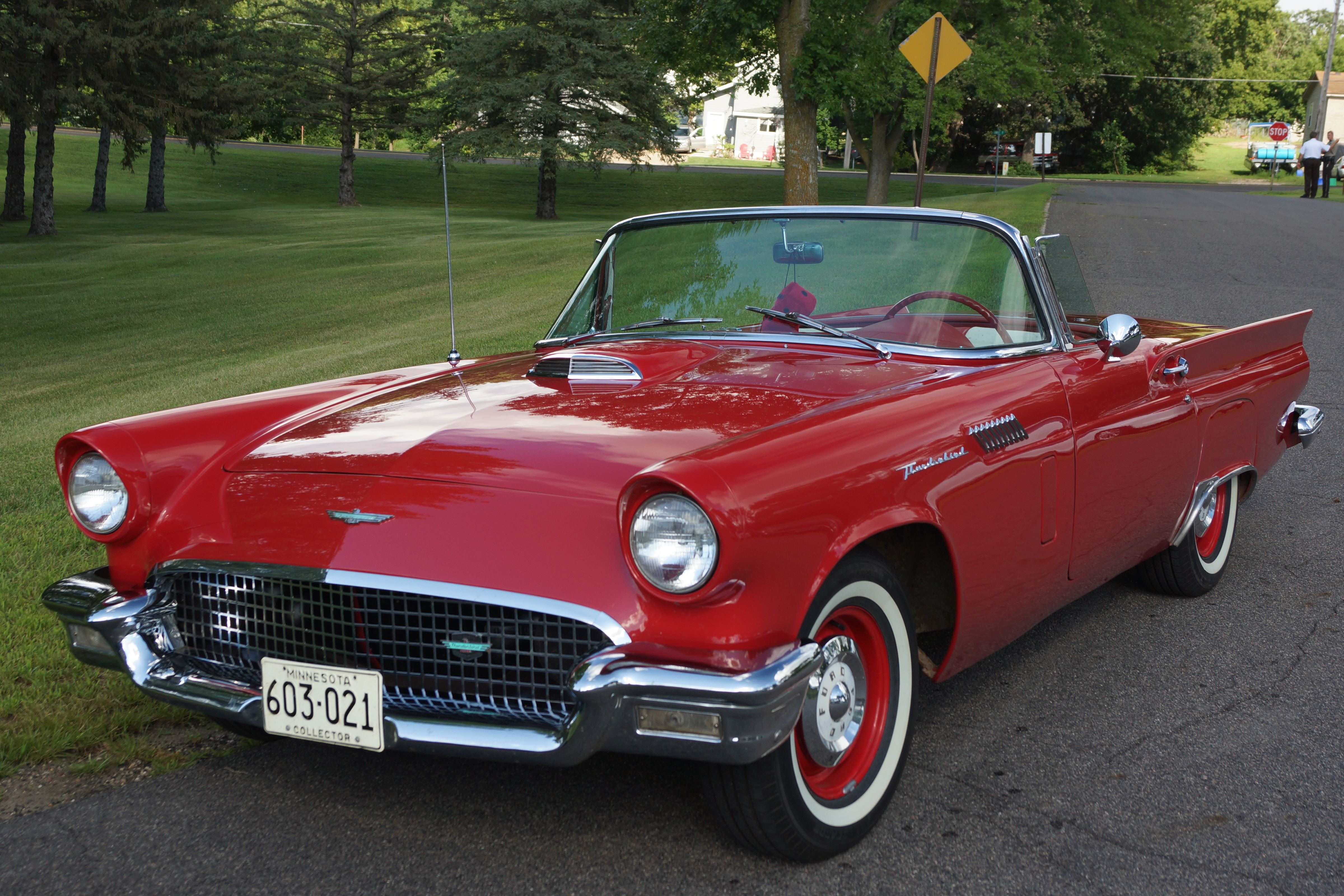
The Ford Thunderbird is a stylish car that was first made in the 1950s and is known for being comfortable and luxurious. It’s often talked about because of its unique design and place in American car history.
The Pontiac Trans Am is a powerful and stylish car that was very popular in the 1970s. It’s known for its speed and cool looks, and many people love it because of its appearances in movies.
The Tesla Semi is a big electric truck made by Tesla that is designed to carry heavy loads. It’s important because it uses electricity instead of gas, which can help reduce pollution.
LIVE
This is the Classic Automall Show.
Broadcast from the studios inside the Classic Automall in Morgantown, Pennsylvania,
just one hour west of Philadelphia at Pennsylvania Turnpike Exit 298,
featuring nearly 1,000 classic vintage and barred fine vehicles for sale under one climate-controlled roof.
Now, here's your host, Classic Automall president and the man with all the toys,
Stuart Howden.
And welcome show number 219 on a beautiful sun-shiny...
No, it's not sun-shiny.
We call it overcast.
The worst in overcast is cold in an overcast.
That's right.
All right, before we get to our guest, how many cars in inventory, JR?
You go first.
I'm going to say 942.
Interesting.
I was going to go 915.
938.
So he did good, Steve.
I win again.
Win the prize again.
That's all right.
Darn you.
938 cars, it's growing back.
We're gaining our inventory back because we either sell too much or do something about it.
So quit selling so much, guys.
Come on.
Yeah, really.
Slow down.
Let's get to our guest.
Joining us from the west coast, Mr. Bruce Meyer, automotive enthusiast on the board of directors
and co-vice chairman of the Peterson Museum, founder of the Rodeo Drive Concorde elegance,
and I hear former mail order candle salesman.
I'd heard some.
You get a deep dime on that one.
Well, you know, I got nothing better to do.
So they'd like to keep me off the floor.
They say I get a little snarky out there.
So I just sit back in my office and work on spreadsheets and that kind of thing.
Good morning to you, sir.
Good morning, Stuart.
And I got to tell you that your operation, it has to be unique in the world.
I was at a place called Auto World in Germany about a month ago.
Right.
And it was described kind of like your place.
But then when I saw your place, there's nothing like your place.
I mean, it is amazing.
You know, I was moving, you know, your video moves so fast.
It's hard to, you know, there's a hot rod.
I love hot rods.
And then over here is a muscle car.
It's just fabulous.
So if you want a car, I mean, what an opportunity for somebody to see them all.
You know, we did it on a wing and a prayer.
We weren't sure that it was going to work.
My partner had the building.
We just didn't know if we could get enough cars on consignment.
It was the first real hurdle to know that, you know, hey, is there enough cars out there?
Turns out there is plenty of cars.
We can sign probably 12 or 1300 cars every year.
And we decided that we wanted to be good at the marketing and we wanted to be good at consignment
and didn't want to own the vehicles.
Because how do you go find a thousand cars for sale and do that every, you know, every
six months and have the turnover?
So it worked out better than expected.
So I'm hoping this will be my last job ever.
So.
Well, it's fabulous.
And what an opportunity for, for, you know, people, you know, nationwide to find a place
for their car and hopefully find a new home for their car.
And in a clean environment, somebody that understands it and can talk about it.
I think it's, anyway, great service.
Yeah, it's worked out very well.
And of course, we tell our customers a lot of times, the most famous statement attributed
to you, which is buy the best and cry only once.
I love that.
Is that yours?
I love that.
You know, I heard, actually my mom used it one time, but it really pertains to my love
of cars and I'm very picky.
Sure.
And, you know, I've just, I learned early lessons of thinking I was buying a bargain
and I just bought a lot of trouble.
Yeah.
So, yeah.
Anyways, I live by that and I've overpaid for every car I have.
Yeah.
Well, you just, or bought too soon, right?
So, yeah.
Yeah.
Did your mom also come up with the Neverlift?
I like that as well too.
No, my mom was super type and kind of gave me my work ethic and that.
Sure.
But yeah, Neverlift is just, I live by that.
I'm an old man and I think you just, when you slow down, I've had friends that slow
down and it usually comes to a stop.
Yeah.
And I don't want to do that just yet.
I hear you.
Yeah.
You know, we're all, it's amazing how much longer people are living.
And of course, you know, it begs the question of, you know, how long will you live and how
much money do you need to live and all of that?
I think that makes it a little bit difficult.
But as long as you continue to have fun, you know, I think that's the, that's the antidote
to death.
I'm with you.
I'm with you.
And of course, growing up in Southern California and being a car guy, I mean, is there, you
know, not many better places to be in the world if you love cars?
I just thank God every day that I was born, when and where.
Yeah.
Because, you know, I buy a little bit of real estate.
And if I were like, you know, in some small town, USA, I probably would have done the
same thing and wouldn't have had the success stuff.
Sure.
You know, I was born at a time when you could really start with nothing and end up with
something.
It was the perfect time for cars and hot rods and bull car culture.
I mean, I just can't imagine being born at any other time, you know, when you could work
on your cars and, you know, so.
Yeah.
I'm with you.
And music, too, of that era.
I mean, there's arguably no better music than what we grew up with in the 50s, 60s and 70s.
Yeah.
Yeah.
Well, I actually grew up in the 40s.
No, but you're right.
No music in this.
I mean, I still, you know, listen to music, you know, the 60s and 70s music.
That was just what we did.
Absolutely.
It was all part of it.
And of course, I lived in Los Angeles.
I moved out there in 1981 and lived there for about three years in Pasadena and the culture
of cars out there.
You know, I came from East Tennessee, which there was one Rolls Royce in the whole state,
I think, you know, and I've never forget the first time I drove down Wilshire Boulevard.
My buddy and I were like, there is a lot of Rolls Royces.
We must have counted 100 in about a 10 block period.
And it was like, wow.
Yeah.
I think we're in car world.
Oh, yeah.
And it is car world out here.
And Pasadena is a good, good town for that.
Oh, yeah.
It was great.
And I love going home.
We'd go, we'd hang out on the sunset strip and act like we were, you know, cool and rock stars.
And we drive home at night.
And those guys would be running down the Pasadena freeway, doing those bonsai runs at about two
in the morning and Countashes and 512 Berlinetta boxers.
And it was just almost every night I would be driving home.
A couple of three cars would just pass you like you were sitting still.
Yeah.
Yeah.
Yeah.
So it was.
So founder of the Rodeo Drive Concorde Elegance, that was an event that you started and started
having on Father's Day back in what year was that that you started that?
Us.
There were, there were four of us that started it because the city of Beverly Hills had a
fire truck that they bought brand new and it was just kind of derelict in the back of
the firehouse.
And I want to say it was a 1926 Aaron Fox.
Yeah.
And so there were four of us that got together and decided we were going to do a car show
and raise some money to benefit the restoration of that fire truck.
So that was when we started.
I want to say it's, it's got to be, you know, 25, 30 years.
Right.
I should have these numbers rather than taking my time, but we started with a little, with
a car show.
It was a phoneme Andy Cohen who had, he started Beverly Hills Motor Accessories and Jimmy
Duffy and, oh God, one other guy and myself and I'm the last one standing, sadly they've
all passed.
Sure.
And, but we started with a little car show in front of our high school and, and, and
it grew.
And then Ferrari reached out to me because they, they wanted to close Rodeo Drive to
do a car show.
This was probably in the early nineties and, and they couldn't close Rodeo and I had some
cloud.
I had some property on Rodeo.
So I went to the city and I got it closed for them.
And then we started thinking, you know, this is the perfect place.
This is where we should move our car show.
And then we, and then the LA Roadster Club, which is a hot rod club here in town, did an
event on Father's Day and Father's Day seemed to be a good day because there were no other
at that point conflicting events.
And it was a day that, you know, dads could do what they wanted to do, you know, and come
on down.
Sure. And, and so we, we switched it over to Father's Day and it's been that way.
I'm going to say probably 20 years or more.
And, and it's a great show.
It's free to the public.
We get the city of Beverly Hills have cameras and facial recognition, they're state of the
art. And they, they counted last year that we had over 40,000 people on the street and
then there's an additional street.
So we, we figured we're pushing 50,000 people through there.
Wow.
And, and I love that it's, yeah, I love that it's free to the public to come in.
Now we are, our place here is free to the public to come in.
And, you know, we want to share, we want to, we want to perpetuate this hobby.
And, and that's a great way to do it, to get people, especially people who would say,
oh, if you're going to have to pay, I'm not going to go in, or if I'm going to have to
pay to see that, but they don't have to pay.
They see it and they go, oh, I'm in love with this now.
And now I want to be a part of whatever this is, a concourse or here or wherever.
I got to think your showroom is the best car show and on the East Coast.
Yeah. I mean, it's, you know, it's, it's kind of warm in the winter and kind of cool in the summer.
Yeah. Now do cars and coffees, you know, or something to support that?
You have a big party?
We do. We have the Camaro Nationals here every summer and they bring 700 Camaros to,
to our facility here.
So in addition to a thousand cars in the building, you've got 700 cars in the parking lot.
And that's all free to spectate as well, too.
I don't know how you see that many cars in one day.
It's a, it's a task. Yeah.
And we do, we do charity events here as well, too.
We're local churches and things want to hold shows and have been doing that.
We're in our eighth year here and they've been doing that.
And we don't ever charge them to have the event here because look, it's good for business.
You bring car guys to a car place.
It's invariably, we're going to sell a few cars because of it.
But it's nice. It's nice to be able to give back.
It's when I had 20 cars in a warehouse, I really couldn't do this.
So it's it's nice to be in this position.
Well, Stuart, you really build an amazing, you know, business.
Well, I appreciate that.
And I know that you have quite the collection of cars.
And I've I've seen video and interviews with you in the past
and some of the collection of cars you have quite the place, too.
Now, you're not open to the public.
Do you ever open it up for charity events and things like that or your collection?
Or, you know, I I don't want to say yes.
Right.
Yeah, I have, I you know,
we're the Peterson, we have an event there tomorrow night for the Peterson.
Right. And so I'll open it up for friends.
I mean, obviously, look at it.
Sharing is is great joy for me.
I just it's just not open to the public. Sure.
And and I do share it with different clubs,
Porsche Club and Ferrari Club and a few other people have come by and and enjoyed it.
And that's the fun thing.
I say, if you're the last man on earth and you've got the Ferrari GTO
and you have nobody to share it with, what's the point?
And that the truth?
Well, you certainly have quite the collection of cars and bought too soon,
bought too late, doesn't matter.
I mean, one of my favorites is when I lived out in Los Angeles,
my favorite thing to do was go to Riverside and watch the 935 screaming down
that back straight. And you happen to have one of the coolest ones,
the Whittington Brothers 935 K3, which was, I guess, one in 1979.
Right. Overall, yeah.
It's it's a great story and an unbelievable car.
And I take it out.
I do track days, but of course, if I'm not qualified to.
I say, you know, people say, do you bring these cars out and race them?
I said, you know, the only history that I could add to my cars would be bad.
Right.
I'd be the guy that put that into the wall, you know, exactly.
Because these cars were a handful, apparently, especially the 935s.
Oh, my God. Yeah.
A friend of mine, Pasadena guy, Jim Busby, yeah,
raised a 935 and a couple of my other friends had a Bruce Canapa.
And they just said, Bruce, just make sure you put your foot into it.
Make sure you're going laser straight, you know, in the same at Bonneville,
you know, if you're anything but absolutely straight, you're going to
sure reverse in real quick.
Because with a 935, you got about 800 horsepower that wants to pass the front
and give it any opportunity.
It will do so.
I saw the video of you at Bonneville in your 29 for Bonneville Roadster.
And what an amazing thing.
It sounded like you were spinning the tires at close to 200.
It sounded in the video.
I heard the wine get a little higher and you were listening.
You were paying attention.
I wasn't going 200 at that point.
But yeah, you have to you have to apply the throttle.
You don't just mash on it, you know, and it was a great run.
It was like one of the to go over 200 in a roadster is something very special.
And it's something I always wanted to do as a hot rod, you know.
So we built that car and and just had a great time.
Yeah, it looked like a lot of fun.
And of course, you know, you get the hat, too.
So there's that, you know, yeah, yeah.
Well, that you get the hat.
I got the hat in a Jack Rogers Camaro.
I saw that what's interesting is the 200 mile an hour club.
It's not it's not just going 200 miles an hour.
Right. You have to break an existing Bonneville record.
Gotcha. So, you know, because there's a lot of cars,
you can just go out and drive 200 miles an hour.
You don't get a hat. Right.
So you've got to have to break an existing 200 mile an hour record
and then back it up to do it twice. Right.
And so that hat red hat is a pretty there are fewer.
Well, it told me there are fewer red hats than than than than client
climbers that did ever show something. Oh, right. Right.
Well, it's a it's a great club. It's amazing.
And I just saw I just got an email this morning that Pebble Beach
is going to have the Sunbeam 1000 horsepower
land speed record car from 1929
at the Concorde elegance this this this coming year in 2026.
And that car went 203 in Daytona in like 1928 or 29
somewhere in that era, probably with a big arrow engine.
Yeah, you know, I'll tell you, it is it's an interesting thing
because, you know, we all like to drive fast, but, you know,
you get over 125, you know, in 150 mile an hour and over,
things can happen very quick and it can end very badly.
And so I really admire those guys that, you know,
that went out and did those fabulous things in that period.
Yeah, crazy. And I mean, people say, well, you go to the autobahn
and run unlimited. Well, you can, but you really can't.
It's yeah, you got to be careful when a lot of bad things happen,
you know, when guys decide they're going to go flat out.
Well, because your perception of depth and distance and all that
is kind of distorted when you're going that fast.
And plus, you're probably, you know, half scared to death.
Well, also, you know, what what I realize how important aerodynamics are, right?
You know, like, like, like Alois Roof, when he built the Yellowbird, right?
He used the narrow body, he took the drip rails off.
He used, you know, aero mirrors.
It's the little stuff.
It's the little things that matter and it's slow the car down.
And it's also the little things that can get you airborne and airborne.
When you get into those speeds, it's it's you take flight.
I mean, it's it can be it can end very badly. Sure.
Well, and looking at just like for you on in your
Bonneville run in your twenty nine roadster.
I mean, just getting in and out of it was difficult.
It doesn't look that easy just to hop in.
You know, you're not, you know, Bonneville and and land speed racers
take safety very, very seriously. Sure. Sure.
You can be, you know, Jimmy Johnson and and you have to qualify in that car.
And you've got to go 125 and you've got to go 150 and 175.
And then you're then you can go 200.
So you just can't just hop in one of those cars and go fast.
The other thing is you're in the car, they strap you down.
They say you're on fire.
So you have to get out of that car within a matter of seconds.
They watch you to make sure you shut off the fuel and the battery.
And, you know, because they want you to I mean, my biggest fear was fire.
Yeah, I just thought because you're a long way from a fire truck.
And so and you've got to get out of that car really quick.
Right. And it's amazing how you can fly out of that car.
You need to. Right.
There's a cage over your head and you're strapped in and you're sitting low
and you're buried in that car.
But, you know, if you if you need to get out in the hurry,
it's like you find a way somehow. An idea. Yeah, somehow, some way.
There's a will. There's a way. I think, you know, people lift, you know,
heavy cars off of somebody that's trapped underneath them.
You see people do superhuman things when put to the test.
Exactly right. And so some of the other cars in your collection,
the I think here's one that you probably didn't overpay for.
And that would be the two seven five GTB and yellow fly the yellow Ferrari.
I think you did OK on that one.
I did. You know, what's interesting?
So I bought that car in 1970.
Who even knew about those in 70? Yeah.
And, you know, I paid about $10,000 for the car. Right.
And and you could buy a GTO in the eights for 8,000, 8,500.
Right. So and I remember when I bought the car, a friend of mine,
wanted to trade me a GTO and he had an average for 8,500.
And I thought, like, how stupid do you think I am?
You know, you know, I could buy your car for less money.
So sure. That I think the two seventy five is just one of the most
sublimely beautiful cars. Absolutely.
And yeah, although, you know, the the Testarosa
isn't too shabby either, though, that silver color. Oh, yeah.
That that has an interesting story.
I bought a Porsche in 1960 from a fellow named John Von Neumann.
And he was the Porsche distributor.
He was kind of the Max Hoffman on the West Coast.
Right. Max Hoffman did so much for Porsche and Mercedes and so forth
out of the on the East Coast.
And and Von Neumann was the distributor for Ferrari and Porsche
in Hollywood, California.
And I grew up in Hollywood.
That's where I grew up.
And and I used to ride my bicycle by his showroom and so forth.
So he had that Testarosa and it was driven by Richie
Ginther and Ken Miles.
So it was a and a sublimely beautiful car.
So about 20 years ago, I decided I got to find that car.
And and, you know, Stuart, there's guys that and just find stuff.
They know where things are.
And I went to a couple, a couple of them and I said,
see if you can find this car.
Well, it turned out that they both found the car that it was in
seized by Interpol.
It was owned by a famous drug dealer that put in prison in in the Hague.
Right. Nice.
And Interpol had seized the car and it was sitting in some kind
of bonded warehouse for for years.
Wow. So I bought that car at a at a sealed bid auction
probably 25 years ago. Wow.
And and but I think that car is so beautiful.
And by Ferrari's records, it never raced at the Targothoria
or or or any of the big time European races just was local.
But Santa Barbara, you know, you know, I say New Mexico, Texas,
Mexico, California, but it won a lot of races.
And by their records, it was the most winning Ferrari ever.
And I won like 50 races, you know, with Ginther and Ken Miles
and Von Neumann driving it.
They were all very accomplished drivers.
Sure. And it wasn't.
Yeah, it wasn't some kind of, you know, charity race that they were running back
there and they were running seriously.
So it's a testament to that car to have that.
Of course, you know, with the Ken Miles connection,
also you have Cobra, the first retail Cobra ever CSX 2001.
God, that is my favorite car.
It has to be. And I was going to say, you know, and I bought that.
I say a blind squirrel can find an acorn every now and then.
And that is my acorn. Yeah.
I was at an event in Europe called Retrobobile.
Sure. About again, about 20 years ago.
And and a very well known dealer had put that on his stand.
It was before Retrobobile officially opened.
It was setup day. Right.
And I and I love that picture behind you.
I I love Cobras.
I knew Carol Shelby very, very well.
And and, you know, Cobra really is a hot ride effort.
I can go deep into that.
But so I'd always I'd had a Cobra since the 60s.
And and I and I ran into this car and the dealer Lucas Hooney said,
Bruce, that's the very first Cobra ever built CSX 2001.
I'm going, there's no way it had different flares on it.
Sure. It just didn't look like like like a like the first one.
Right. So anyways, he brought out all these files.
Turned out that that the car was was built by Ed Huges, who was back your way.
Yeah. And Pittsburgh, Pittsburgh.
I mean, Ed Huges is a very, very important cog in the Cobra wheel
because he's the one that financed Carol Shelby and also, you know,
took delivery of the first few cars and took delivery of this car
and then sold it to a fellow named Lloyd Casner, Lloyd Lucky.
Casner, he had a race team, a Marati racing. Right.
And he took the Lamar.
So he took the car pretty, you know, when it was just a year old to Lamar
and and and it stayed in France until I repatriated the car, you know, 20 years ago.
Right. And it's it's very unusual.
It has, well, I don't want to I mean, I can spend the whole time on this.
Basically, basically, he sold it to a very wealthy Frenchman.
At the time he at the time he bought the car in 1964,
Shelby just came out with the FIA car, which is kind of a notch
backdoor, right, those Weber car barriers.
And so so Lloyd, so so his name was Jean-Marie Vincent or Vincent.
He said, I want this car to be an FIA car.
Well, at whatever it costs. Wow.
So they sent the car to Ford Racing of Europe and they and that's where it got
the big rear flares and the Weber's and the kind of the cool stuff that I like
about the car that was all done in 1964.
So and then he raced the car in 64, 65 and 66 and did quite well with it.
And the car was a number of different colors, right?
I mean, it was originally delivered red and then it was yellow, green,
black, red, four or five different colors, maybe over the years.
Well, that's interesting because now, OK, there's two cars that CS.
So every every Cobra is known by a CSX shirt.
By the way, you're absolutely right.
CSX 2000 was was his prototype.
And whenever you give it to a magazine, you change the color.
So people, people, people kind of knew that CSX 2000 was a lot of different
color, right? Turns out that this car of mine was was born red.
And then it sold to a fellow in Morocco.
He painted a yellow, right?
And I think it was then and then it was back to red.
And then when I bought it, it was Aston Martin Green.
Right. And so I always preferred the, you know, the black
kind of sebring car look. Yeah.
And so it was my choice to go black.
Yeah. And what it is today.
Well, I saw the car when we were in Pebble Beach this year when you took
off for the tour and, man, that's just that car had the best sound of any car that was there.
I'm with you. I love that V8 sound.
And is there and I know you've got oddball stuff too.
I mean, not oddball, but you have hot rod stuff, your huge hot rodder.
And you feel like probably most of us feels that hot rodding is arguably one
of the most important things that ever happened to the automobile
because of racing and just everything that the connotation that it came.
The the desirability of a car went from that's a, you know, 1932 Ford
to 32 Ford Roadster lowered shop channeled all that.
Wow. And you've got a few of those, you know, Stuart.
I am such a proponent of the importance of hot rodding.
It was a period. Sure.
And, you know, for me, it was really the 40s and 50s and 60s,
but mostly the 40s where where the GIs came back with their combat pay
and picture their girlfriend and their green car and their wallet, you know,
they couldn't wait to get going.
So they so hot rodding really flourished in the 40s and and the hot rodders
were geniuses.
They were the Bill Remington's and Carol Shelby's and Dan Gurney's and
Parnella. All those guys had hot rods.
And so so the technology, the performance, the ingenuity,
that all came out of hot rodding.
That built the cobra, the scarab, you know, and so meant so much of what we love
it. And then they, you know, they went back to Detroit and, you know,
carried that that that information and that that talent back there.
So I'm in a hot rodders to me, started it all.
Just started it all. Absolutely.
I mean, it's just it was such an important thing because most of those
guys didn't have very much money back then.
So in order to make these things, they had to be pretty darn creative
and, you know, using the part from somewhere, whatever they had, they used
100 percent, you know, and they did it themselves.
Right. Right. You know, for the most part.
And and, you know, there was guys like, you know,
Edelbrock and Alex Exidius, you know, just talented craftsmen that, you know,
grim stuff, put it together.
And yeah, it was just a wonderful period in the automotive and the history
of the automobile, in my opinion.
And so I I my we didn't have the money for cars in and my parents thought
wasting your time and your resources on a car was just Bruce, you know,
don't do it. Yeah. And of course, if it's in your DNA, it's in your DNA.
You can't take that out. You can't help it.
No. And you can't put it in because I've got some friends with great cars
and their kids have no interest.
But I'm lucky. Yeah.
My my my my middle son shares that the love of cars.
But I don't know where I'm going with this except that.
Well, that's we're just so I finally.
So in the 70s, I decided I'm going to get a hot rod.
Right. And I and I bought a hot rod and I wasn't sure if it was a 32 Ford.
I bought it from Jim Busby, who is a vintage racer.
And I wasn't sure how people were going to accept, you know, hot rods
because it was at that time, it was, you know, they weren't Porsche guys.
You know, they were, you know, I just saw, you know, this is
is this going to dumb down my reputation or help it?
You know, right?
Anyway, to make a long story short, I people were loving it,
giving me thumbs up.
And I just it just took off from there.
And I decided what I'm going to do is I'll see if I can look
at some of these seminal hot rods that were on the cover of Hot Rod magazine.
And I went through a lot of covers of hot rods and did a lot of research
into old hot rods and I picked out a few that I thought were pretty special.
And then research where they were and who had them.
And another guy that was doing this at the same time was on him, Kirk White.
Yeah, our buddy from here in Pennsylvania.
I'm telling you, I mean, Kirk, I mean, he looked like the country club guy,
always dressed in pink and bright, you know, just color turned up.
Yeah, he always had that.
Yeah, yeah, yeah.
That's the guy. Yeah.
And so he, so he and I became that's when we really became great friends.
And that had to be in the 80s, you know, when we were both researching
and finding old hot rods and he found some and I found some.
And we were just enjoying the hobby together.
Yeah. What a what a character.
Oh, and he was a Ferrari dealer back in the day.
I mean, he the stories of Ferrari GTOs that he sold and barely, you know,
just scraped by to get eight or nine thousand dollars for a GTO Ferrari
or a three thirty L, you know, M.M. or, you know, just name it.
Every kind of cool Ferrari you could ever imagine.
He had it and sold it at one point in time.
And, you know, crystal ball would all be great to have if we if we knew
what was coming in the future.
Well, I could spend the rest of this podcast, the two of us good about Kirk
White. Sure. I used to I used to win back to Hershey every year.
And he'd always set up a little tent with very expensive toys.
They're usually a motorcycle and a car. Right.
And asked outrageous prices.
Set the market. They were very special.
And he he his taste were at a very high level.
And and there's a book he wrote called Don't Wash Mine.
Great book, compilation of of emails that he would send to his friends
about his history. Yeah.
It's the most colorful history.
I'm really not much of a reader.
And that book is a big book.
But I tell you, I don't I read every word, savored every word.
It was all written by Kirk.
It sounded like Kirk.
And he talked about how it's how it is.
I think his stepfather took him to a midget race.
Right. And then got involved.
He loved racing and then took off.
And, you know, he had one of the first auctions.
1970 or 71, I believe it was a classic car auction for lack of a better term.
Yeah. I mean, that man was a renaissance man.
Yeah. And in the world we love. Sure.
And sadly, you know, it's probably our generations,
the last generation that can tell real Kirk White stories.
I'm afraid that's probably the truth.
And it's interesting, you know, you hit on it just a minute ago, Bruce,
about the fact that there's guys that used to be just hot rod guys
or guys were just Ferrari guys or guys were just Harley guys.
Now you go in a garage and he's got a hot rod.
He's got a Ferrari. He's got a Harley. He's got a muscle car.
He's got a M6 being, you know, it runs the gamut.
Guys are just car guys, whatever that may be.
My kind of guys. Yeah.
And you've got a guy. Absolutely.
Seeing in your in your show, you've got bikes and hot rods.
And I mean, it's just like the best car show in the world.
Yeah. Our guys have got to be well versed in lots of things,
because, you know, we never know what's showing up.
We just meet guys out at shows and we give them the paperwork and say,
when you're ready to bring your X, Y, Z, bring it on in.
And today it may be a Pantera and tomorrow it may be a Volkswagen Beetle
and AMC Pacer rolls it.
We just we're like kids in a candy store.
I love it when my phone rings and the guys will be up front
and I'm back in my office and they'll go, get up here right now.
You know, something cool is just rolled in.
So I don't delay. I get right up there.
And another wonderful place to visit.
Nice segue into this is the thing that you're heavily involved in.
That's the Peterson Museum, which is the coolest museum ever.
And and and not an easy business to be in, for lack of a better term.
Well, so so my hero growing up was Robert E. Peterson.
And he he created and published an owned hot rod magazine,
which was really the first magazine that I ever subscribed to.
I mean, I didn't even know there was such a thing as a subscription.
My parents had my parents had life magazine.
I had hot rod.
And by the way, they were they were similar because Rodney Peterson
was such a brilliant businessman.
He figured, you know, like magazines, the most popular magazines.
So if you look at the early hot rod magazines,
it's the format of life magazine, you know, a life in the red.
Reversed on a red hot rod, reversed out in red.
But anyway, so Peterson, he was a car guy in that he started a lot
of car titles, but he wasn't a car guy like you and I.
Right. Was it? It was it wasn't full.
He wasn't corrupted.
So he was a really good businessman.
And he I say Peterson was an opportunistic buyer.
In other words, if there was something somebody needed money
or it was a real opportunity purchase, he would find a way.
And he bought real estate, art, businesses.
I mean, he was a brilliant business. Right. Right.
Oh, so he found this entire city block in Los Angeles
and didn't know what to do with it.
And so I had met him through a there's a group
called Young Presidents Organization, YPO.
We'd met together and he came and he said, Bruce,
I just bought this big old building and it was a it was a department store.
Let's make it a car museum, of course.
You know, yeah, it didn't take you twice to hear that.
Yeah. So I was kind of I guess the lead guy that kind of put it together
and and he owned the building and he put his money
and I didn't have the money to do, you know, to to to invest like he did.
So we put it together.
That was 30 years ago.
And and, you know, at the beginning, it was kind of the place
that Pete could put his cars, I could put my cars.
It was just kind of a bunch of guys hanging out, Levi's and T-shirts.
Right. And now we have reinvented ourselves.
We are a cultural institution.
By the way, our vault is very much like the Auto Mall.
If you go into the vault, did you go into the vault downstairs?
I haven't been there because the last time I was there was like 22 years ago.
So. Oh, no, no, you've got to you've got to make a trip.
I'm already planning on it.
Well, you'll let me know, right?
I will absolutely will because you really need to see our vault,
And and and that has become a big feature of our museum.
And then upstairs, we have three floors of really great displays.
Yeah. Fabulous.
And, you know, we have the one we have now is called
Totally Awesome.
It's in our main display in its cars of the 80s and 90s.
And it's a hot button with all my guys here.
They love those 80s and 90s cars.
And that is so does my son.
Yeah. And and the kutash and the
and the, you know, cyclone and the typhoon and all that stuff.
But anyways, so we have that.
We have a great artistic display.
We have the history of Aston Martin.
We have supercars, hypercars.
There's a fellow in Chicago bought a porch.
Yeah, Joe Bortz, Joe Bortz.
We have some of his cars.
I mean, we honestly, it we have something for everybody.
And what's interesting is that our demographic.
When we first opened, it was like probably 80 percent.
My age, guys. Right.
Now, now it's probably, you know, probably 55 percent men,
45 percent women. Wow.
Age group.
I mean, total across the horizon age variation. Right.
We have grandmothers bringing their grandsons in.
Grandsons bringing their grandmothers.
Right.
It really is a huge success.
We'll have a half a million people through this year.
That's fantastic.
Because the car museum business, as I said, is very difficult.
It's difficult to make money.
It's difficult to raise money.
It's because, remember, the old days, a car museum was 20 a row
of 20 Model T's in black, dimly lit and real dusty.
And so not very exciting.
You know, that did you ever know Mark Smith?
Yeah, that was the first thing that came to mind.
Another guy.
But so you're 100 percent.
You know, there was a great museum in Reno, Nevada, the Harrison.
Sure.
And whenever I get a little spare time, I'd run up and see that
because I went to school in Northern California.
But, you know, there's a situation where it was like buildings.
You have, I think, 12 or 1300 cars.
Yeah.
And you could hardly make it through the first building before you were just bored.
They had every year for it.
You know, it's just it just it's it's the variety.
And that's what we have at the Peterson.
We have a great variety.
Sure. Well, I'm definitely going to come see it the next time I'm in the area,
which won't be too terribly long.
And I will definitely take a look you up when when I get there.
And this was wonderful.
My last question I always like to ask people is, oh, well, there are two questions for you.
Number one, is there a car that shows up at your doorstep that you can't say no to?
Is that a Bugatti Royale?
Is there is there anything left on the list of of of what you just would have to have?
And the good news is it's unobtainium.
But it's there is a car.
You know, I I I I don't really look at my group of cars as a collection
because they're all cars that I've raced or used or lusted over.
But there's one car that that I and I like three cars ago, I said I was done.
But I managed to find a few that needed to be.
But it's a scarab. Oh, wow.
Lance Reventlow was a local Beverly Hills guy.
And now I didn't grow up in Beverly Hills, but he was local to Beverly Hills.
He was the heir to Woolworths had all the money in the world.
And he decided he spent some time in Europe and he decided he was going
to build a car in America in California, all hot rodders.
And they built the scarab.
And and it was, you know, Troutman and Barnes and and Phil Reming.
It was all the guys, you know, all the all the genius hot rodders.
They were all hot rod fabricators.
Yeah, fabricated 100 percent.
And what's it?
So they built this car called a scarab.
And it kicked every Ferrari in Maserati.
Every nothing in Europe could touch it.
And that fantastic.
And what's interesting is he he kind of he was going to go formula one race.
It kind of lost interest and then sold his shop to Carol Shelby. Wow.
So Shelby. So the, you know, I know Shelby went to Dean Moonshop
for the very first one. Right.
But all the Shelby's guys started with the scarab.
Wow. And so anyways, the answer is the scarab.
Now, there's there's only three of them.
And one of them is owned by John Mozart, a big collector in Northern California.
That's going nowhere. Nowhere. Yeah.
The other is Miles Collier. Not going anywhere.
That's not going anywhere.
And the other is Rob Walden.
That doesn't have to be anywhere.
So there's only three there in good hands.
I'm glad they're there because I couldn't afford it if it came my way.
What's them well on that?
OK, so last question is what's your daily driver?
Oh, well, you know,
I'm very proud of this car.
It's a 1996 Suburban.
I love it. I love it. I love it.
You know, it's and I sent it up to Bruce Canipa.
We took all the chrome off of it and let's see if I got a picture here.
Because it's it's my family wants to burn it.
But the more they the more they dislike it, the more I like it.
Right, exactly.
And probably we would love to be able to go back and pick them up at school in it,
just to really embarrass them. Oh, God, yes.
You can email it to me and we'll put it on the screen when we're talking about this.
I love that aerodynamic and a suburban.
Oh, yeah, on the ground, you know, down in front, biggie littles, you know.
Yeah, I'm telling you, if you to pick the kids up at school,
they don't they don't really not like you.
It's so funny because they're kind of getting around to liking it now.
When I first got it, my son had a typhoon.
I've driven Suburban since 80.
Sure. And they were usually the four wheel drive 2500.
So this one is a 1500.
I put a supercharger on it, headers.
And, you know, it had a gob of horsepower for like 50 feet.
Right. And then it would just run out of everything.
A little bit too much weight, right?
It didn't even touch me for the first time feeding my son.
This little typhoon was turbocharged.
So it couldn't spool up.
It was a way of showing my son who boss will send me that picture
because I enjoyed the other pictures and videos that you sent me the other day.
And I really appreciate having you on the show today, Bruce.
Just a wonderful conversation.
We could certainly do it again.
And I'll certainly look you up next time I'm in SoCal.
I'll leave the light on for you, Stuart.
All right. Take care, Bruce Meyer, everybody.
We'll be back in just a couple of minutes on the Classic Automall Show.
Here's a special offer from Sportscar Market Magazine.
Get a six month subscription for just
nineteen ninety five by going to sportscarmarket.com
slash test drive in the number six.
That's sportscarmarket.com slash test drive six.
If you're a buyer, a seller or just general classic car
enthusiast, publisher Keith Martin says, we've been around almost 40 years.
This is the Wall Street Journal of the collector car world.
Activate your six month trial of Sportscar
Market Magazine by going to sportscarmarket.com slash test drive six.
That's sportscarmarket.com slash test drive in the number six.
Offers for a limited time.
Be in the know with Sportscar Market.
Now, more of the Classic Automall Show with your host Stuart Howden
from our Showcase Studio just inside the Classic Automall,
Morgantown, Pennsylvania, just off Turnpike Exit 298.
And we're back with the Classic Automall Show from the Classic Automall
Studio in Morgantown, Pennsylvania, with our new friend, Bruce Meyer,
who is a fantastic guest as always.
Thanks again to Judy Stropas for getting us these wonderful guests.
And next week we got Spike Ferreston,
who has got his own podcast and show and buddies with Seinfeld
and the big Porsche guys as well, too.
So we're looking forward to having him on as well as our current guests,
Keith Martin, publisher of Sportscar Market Magazine.
We're bringing the blog to life this week, Keith,
and good morning to your afternoon or evening or wherever you are.
And you know, it's a beautiful sunny day here.
Oh, yeah.
When we get a good fall day and you're up in the 60s and it's not raining,
this is the best place in the world.
It really is. No humidity, no, no, no mosquitoes, I bet, either.
I bet y'all don't have any mosquitoes.
No mosquitoes, no. We send them back.
Send them down here so it'll keep people from moving from there to here,
wherever, here, from there and all that.
So your blog this week is Could You Really Love an Automatic?
That's funny.
It's funny.
The pressing question in our era,
but not the one that means anything like peace or food,
having the real question is automatic versus manual.
Right. And of course,
a manual transmission has its limitations, obviously.
And one of them is if you have a late 60s muscle car
and you have a four speed automatic, you are desperate for either
a four speed manual, you're either desperate for a fifth speed in the manual
or an automatic transmission because it sounds like it's going to completely
disintegrate when you're driving down the road at 60 miles an hour.
So don't you think with those Tremac five speeds that they've solved that problem?
I think so. And I'd say no harm, no foul and putting one of those in a muscle car.
I mean, it will save the original one for the purest guy who's going to buy it
20 years from now and want to have the original transmission.
That's fine. But I see no harm and no foul in doing that,
because it's a much more enjoyable experience.
And ultimately, isn't that what it's all about?
Well, very well said, Stuart.
We we had a reader forum a couple of months ago and Bruce Kanopas said some good things.
He said, you know, it's your car.
If you want to put AC in your Gullwing because it makes it makes it better
for you on the Colorado Grand. Sure.
I mean, as long as there's one left that's perfect originally,
what should be allowed to make it more pleasant to drive?
Sure. I have a friend who has a dual gear and he put air in it and he said,
you know what, I want to enjoy it and I didn't do any damage to it.
And I didn't hurt the value of it and and it can come out if need be.
But he said, you know, it's much more pleasurable for me to drive it and enjoy it.
And again, that's what it's all about.
And automatic transmissions, you know, Shelby Mustangs with an automatic transmission,
you should be able to not give away.
And now they're becoming a little bit more popular.
People are like, you know what, I kind of prefer the automatic.
I hate to say it out loud because I know I'm a car guy.
But I kind of like the automatic.
Well, the other thing is that if you if you think about it with a manual,
you shift for the first 35 to 45 seconds, you're driving the car.
Right. For the second, third, fourth, and then you're done.
But, you know, because at that point, you're on the freeway,
you're on a two lane road, you're doing something.
But you're not the only place that a manual gearbox is essential is in a small motor car.
Right. Like a two eighty nine.
Oh, no, a tiny car, like a tiny like a four cylinder.
Oh, I see what you're saying.
Maybe or something like that.
You know, I had a Volvo one twenty two S that had a three speed automatic.
And I don't know if I'm allowed to say the word turd on this.
You can say turd.
Oh, my God, you know, you would you would put a brick on the accelerator pedal.
Get out of the car, go across the intersection.
Chase the car down, jump back in and do it.
It was so, so terrible.
My V twelve Jags got two hundred seventy horsepower.
It's got it's got a three speed automatic and it's got more power than God.
And way more fun to drive and enjoyable.
And listen, you know, a manual transmission in the right circumstance,
you know, you're on a racetrack and certainly it makes a lot of sense
and in a lot of respects, although four of the one cars aren't manual
transmissions anymore, because they're inefficient in time, because you can't,
you know, you can certainly paddle a lot quicker than you can, you know,
shifting with a gear shift and a clutch and all that.
I just think it's it's interesting the stigma that's attached to why can't drive
a stick. Oh, you can't drive a stick or you can't know.
And I've taught my son, who's 18, said he doesn't care whether it's
automatic or he drives them both.
Right, right. And certain applications work well for is a certain thing.
You know, if you're going down the back country roads and a manual
transmission is a lot of fun, if you get stuck and stop and go traffic,
you would kill for an automatic transmission at that juncture.
Well, that's our 75, 9, 11 s, 4 automatic is a very unloved car for a long time.
But I will tell you, when you're in rush hour traffic, just leaving the car
in gear and and put some with no shifting, sure, is is is pretty nice.
Well, and then you put that adaptive cruise control on and you don't even have
to slow down or break or you can just you're just kind of sitting there
and reading the paper.
I was coming home in traffic last night and I had this thought and I almost
got hit by a Tesla that was changing lanes.
And I thought, I don't know.
I'm on on one hand, I'm a fan of self driving cars because the accident
rate is less with self driving cars than with people. Right.
On the other hand, I don't really know if I want to be on a crowded roadway
with a bunch of self driving cars.
The only advantage I see to self driving cars is the fact
that I think you would eliminate the what the heck traffic jam that there's no
explanation, there's no construction, there's no wreck, there's no nothing.
They just especially I 81 coming out of the South coming up towards Pennsylvania.
It just stops for no reason.
And I can't fathom how that happens until you see the guy who's got 22 car
links between him and the guy in front of him.
And and the domino effect just happens.
Or what I love is that you find out you slow down for half an hour and you find
out it's because there's an accident on the other side of the road.
Everybody's baffling or a policeman pulling over somebody because, you know,
that's you got to and, you know, I get slowing down and moving over a lane
and all that a little bit, but you don't have to come to a stop.
Sure. You you have been tempting me with this TR two that you have on your website.
So it's a two, right? Or a two, a two way. Yeah. Is it a two way?
Yeah, I think it's a three because three has that big grill.
Yeah. Yeah. No, it's it's a two a, I believe it is.
Right, Steve. Steve's going to check it out.
We've got too many cars here.
We're having a hard time keeping up.
What's a car like that worth, you think?
That one, I think is probably in driver quality condition.
I know I haven't really looked at this one, but I would say driver quality
condition is going to be low twenties and and something a little nicer,
maybe up in the 30 range.
I think this one's a TR two, not an A.
It's got the 1991 CC four cylinder and it's at 31.
It's nicely done, apparently.
And, you know, probably high twenties would be the real number on that car, I would think.
The market has gotten really tough on those cars.
Yeah. Well, who knows about them?
Big Helis are half price. Yeah.
And I love big Helis. I think they are a fun car to drive.
And I go to the I think it was the 50th anniversary of the Austin
Heli and Lake Tahoe when they were like eight or nine of us in Big Helis.
Right. And you're up at seven in the morning
and you're all in fourth overdrive and you're cruising on back roads.
And the sound from that six is just amazing.
And great looking cars, too.
They're really the big Helis are good looking cars,
and especially in the right color combination and and with that navy
blue seats with the white piping or silver blue and the white coves.
That's a, you know, that's a damn good looking car.
And and much more of a car than an MG is any day,
although MG's are arguably more popular.
Well, they're cheaper, too. Right.
That that probably helped some of these guys.
I remember watching a Kurt Tanner restoration.
I was in the booth at Barrett Jackson, break a hundred thousand dollars.
And for a while, they were all breaking a hundred thousand dollars.
Would they come from either him or other well known Heli restoration shops?
No different than Amos Mintner and the the Thunderbirds
and and the amphicars when they went over a hundred and everybody went what?
And you know, I was in the booth when that car crossed the block
and suddenly every sixty thousand dollar amphicar in the world became a hundred.
Yeah. Yeah. And they were all just, you know, even the nicest restored ones are still kind of,
you know, they're just they're just funny.
They're you want to be sure they've got new door seals.
Yeah. We had a buddy who had one and he said,
you want to take it across the lake? It's only about three miles.
And we're like, yeah, that sounds like fun.
And it was 110 degrees and the thing goes four miles an hour.
And you're like, this is this was cool for about the first 30 seconds.
And now I'm miserable and want to get out.
You know, Lyndon Johnson had one and used to scare reporters.
He just go driving to the water and they were like, whoa.
Yeah. Good old Lyndon. He he liked to scare people.
I think that was on his resume.
He liked to scare people.
So I think that that the automatic certainly has its place.
And I think the stigma that you said, you know, us car guys who grew up
in the sixties, muscle cars, you know, it's got to be a manual transmission.
I think that's that's going away somewhat.
I mean, listen, I, you know, I grew up loving 70s Pontiac Trans Ams
and a 79 Trans Am 404 speed.
A pretty cool car.
But if you went out and drove it on any amount of regular basis,
you probably would say, I wish it had a fifth gear.
Yeah. Yeah.
Oh, there's no there's no question about the fifth gear
because our cars from the sixties were really designed for top speed.
Sixty five, seventy mile an hour freeways.
Right.
Freeways are 80 miles an hour now.
And you cannot avoid getting on a freeway or interstate
hardly anywhere anymore.
I mean, you almost have to without it taking an extra three hours to get home
if you want to take the back roads.
And so, you know, you you've got to be out there
and there's nothing worse than feeling like you're just going to get completely
run over, you know, Pac-Man by the by the semi truck coming up
at 80 miles an hour behind you and you're doing 48.
Well, the other thing is the it's there's nothing worse than the buzzy feeling
when your car is revving forty five hundred or sixty five.
And you're you're sitting there.
It's like you put yourself in a wall of a spin dryer on, you know,
and it on you just is with all my alphas.
Most alphas come with a four or five rear end.
And I swapped them all out to a four or one rear end.
And so that means that 60 miles an hour is 3000 RPM.
Yeah, a little bit more management.
I feel like every bolt in the car is going to come popping off
while you're going down the highway.
Yeah, or you're buzzing the car to death.
I got a lot of comments on it.
Most of them there's no question that a small displacement car
with a good gearbox is engaging.
Sure, because you have to be busy doing something.
And the car responds.
You feel good because you know just how to shift that car.
Exactly. And you feel like you're a better driver and you probably are a better driver.
You pay more attention to your circumstances when you're driving
a manual transmission versus just putting it in drive and punching the gas and going.
That's right. On the other hand, in today's world,
it really like I've got friends who have PDK transmissions.
And what they say with those porches that for the first week they have them,
they're flipping the battles up and down and up and down and up and down.
And then after the second week, they put it in drive and leave it alone and say,
I don't don't bother me. I mean, I'm thinking about this.
I'm on myself or whatever it is you do is.
So well, as as always, wonderful show.
And thanks for being on again.
And we appreciate you getting up in the early dawn hours
that you have to come on.
But we love talking to you every week.
And we'll look forward to talking to you again next week.
It's a great treat for me.
And remember, anybody out there who has a nine, nine, six Porsche.
Yeah. With a chiptronic, I'm a money buyer.
Thanks again, Keith Martin, publisher, sports car market magazine.
We'll see you next week.
And we'll catch you next week on the Classic Automall Show. We'll see you then.
The Classic Automall Show with their host, Stuart Howden,
executive producer, Steve Seth here, produced and engineered by your truly
J.R. Russ, video editor, Randy Lambie, available on ClassicAutomall.com,
YouTube or wherever you get your podcasts, music, courtesy of the Pat
Travers band for tour dates, contact and stuff.
Visit Pat Travers.com produced by Carsmart Media Copyright All Rights Reserved.
Attention, investors, this is a simple commercial on the investment value of gold.
Gold continues to make new highs in good markets and in bad markets.
You need to have your portfolio balanced with gold.
Learn about owning physical gold or getting a gold backed IRA.
Make this simple call right now.
800-360-1917, 800-360-1917.
That's 800-360-1917.
Sponsored by Reagan Gold.
We are offering a 100% risk-free gold guide.
Gold continues to make new highs and unlike stocks, gold has never been worth zero.
You owe it to your nest egg and future to own some physical gold or set up a
gold backed IRA.
Call right now for your free report.
800-360-1917, 800-360-1917.
That's 800-360-1917.
Sponsored by Reagan Gold.
About this episode
Stuart Howden hosts a lively discussion with automotive enthusiasts Bruce Meyer and Keith Martin, exploring the unique offerings of Classic Auto Mall and the Peterson Museum. Bruce shares insights on his impressive car collection, including rare models like the Ferrari Testarossa and the first Cobra. The trio delves into the evolution of car culture, the significance of hot rodding, and the impact of automatic versus manual transmissions in modern driving. With anecdotes from their experiences, this episode highlights the passion and camaraderie that define the automotive community.
Show #219 airdate 11-12-25 Bruce Meyer Co-Vice Chairman of the Petersen Automotive Museum. They discuss the Museum "VAULT", Founding the Rodeo Drive Concours d'Elegance and his collection including the very FIRST Shelby Cobra sold. Also joining is Keith Martin of Sportscar Market Magazine with his special subscription offer, adding A/C to a classic sports car and & Automatic vs. Stick shift. Petersen.org https://www.rodeodrive-bh.com/events
GET OUR FREE APP: https://ClassicAutoMall.appimize.app When it opens click on the ORANGE button to install on your phone or computer for DIRECT ACCESS to our VIDEO and AUDIO shows and our website.
CONTENT NOTE: Contests, Prizes, Offers, Vehicles & other items may no longer be available or offered after each show's original broadcast or posting date.
Recorded in our Showcase Studio just inside the entrance of the Classic Auto Mall in Morgantown, PA, Host Stewart Howden, Classic Auto Mall President and Classic Car Specialist Steve Saffier talk about this unique and amazing place often with amazing guests.
YES...Classic Auto Mall is a REAL former shopping mall that covers almost EIGHT football fields with an average of nearly ONE THOUSAND classic vehicles under one, climate controlled roof and they're all FOR SALE!
Be sure to LIKE and SUBSCRIBE to be informed of new episodes and SEE them on the Classic Auto Mall YouTube Channel. We also invite you to VISIT US IN PERSON at Classic Auto Mall, one hour west of Philadelphia at PA Turnpike Exit #298, VISIT us online at ClassicAutoMall.com or talk to real, live people about visiting, buying or selling your classic on consignment at 888-227-0914.