Stuart Howden hosts a lively discussion with automotive enthusiasts Bruce Meyer and Keith Martin, exploring the unique offerings of Classic Auto Mall and the Peterson Museum. Bruce shares insights on his impressive car collection, including rare models like the Ferrari Testarossa and the first Cobra. The trio delves into the evolution of car culture, the significance of hot rodding, and the impact of automatic versus manual transmissions in modern driving. With anecdotes from their experiences, this episode highlights the passion and camaraderie that define the automotive community.
Show #219 airdate 11-12-25 Bruce Meyer Co-Vice Chairman of the Petersen Automotive Museum. They discuss the Museum "VAULT", Founding the Rodeo Drive Concours d'Elegance and his collection including the very FIRST Shelby Cobra sold. Also joining is Keith Martin of Sportscar Market Magazine with his special subscription offer, adding A/C to a classic sports car and & Automatic vs. Stick shift. Petersen.org https://www.rodeodrive-bh.com/events
GET OUR FREE APP: https://ClassicAutoMall.appimize.app When it opens click on the ORANGE button to install on your phone or computer for DIRECT ACCESS to our VIDEO and AUDIO shows and our website.
CONTENT NOTE: Contests, Prizes, Offers, Vehicles & other items may no longer be available or offered after each show's original broadcast or posting date.
Recorded in our Showcase Studio just inside the entrance of the Classic Auto Mall in Morgantown, PA, Host Stewart Howden, Classic Auto Mall President and Classic Car Specialist Steve Saffier talk about this unique and amazing place often with amazing guests.
YES...Classic Auto Mall is a REAL former shopping mall that covers almost EIGHT football fields with an average of nearly ONE THOUSAND classic vehicles under one, climate controlled roof and they're all FOR SALE!
Be sure to LIKE and SUBSCRIBE to be informed of new episodes and SEE them on the Classic Auto Mall YouTube Channel. We also invite you to VISIT US IN PERSON at Classic Auto Mall, one hour west of Philadelphia at PA Turnpike Exit #298, VISIT us online at ClassicAutoMall.com or talk to real, live people about visiting, buying or selling your classic on consignment at 888-227-0914.
"It's hard to, you know, there's a hot rod. I love hot rods."
A hot rod is an old car that has been changed to go faster and look cooler. People often modify them to make them more powerful.
A hot rod is a modified car, typically an older model, that has been enhanced for performance and speed. These modifications often include engine upgrades, weight reduction, and custom bodywork.
"And then over here is a muscle car. It's just fabulous."
A muscle car is a fast American car with a big engine. They are designed to be powerful and are often used for racing.
A muscle car is a high-performance vehicle, typically American-made, known for its powerful engine and aggressive styling. They are often characterized by rear-wheel drive and a focus on straight-line speed.
"You know, I came from East Tennessee, which there was one Rolls Royce in the whole state, I think, you know, and I've never forget the first time I drove down Wilshire Boulevard."
Rolls Royce is a very expensive car brand that makes luxury cars. They are known for their quality and custom features.
Rolls Royce is a luxury automobile manufacturer known for its high-end vehicles and bespoke craftsmanship. The brand is synonymous with luxury and prestige in the automotive world.
"...doing those bonsai runs at about two in the morning and Countaches and 512 Berlinetta boxers. And it was just almost every night I would be driving home..."
The Ferrari 512 Berlinetta is a classic sports car with a powerful engine and a stylish look. It was made by Ferrari and is known for its speed and performance.
The Ferrari 512 Berlinetta is a high-performance sports car produced in the 1970s and 1980s, known for its powerful V12 engine and sleek design. It is part of Ferrari's legendary lineage of sports cars.
"...doing those bonsai runs at about two in the morning and Countaches and 512 Berlinetta boxers. And it was just almost every night I would be driving home..."
The Lamborghini Countach is a famous sports car with a unique design and doors that open upwards. It was very popular in the 1980s and is still admired today.
The Lamborghini Countach is a classic supercar known for its distinctive wedge shape and scissor doors. It was produced from the 1970s to the early 1990s and is often considered an icon of automotive design.
"We do. We have the Camaro Nationals here every summer and they bring 700 Camaros to, to our facility here."
The Camaro Nationals is a big car show focused on the Chevrolet Camaro. It happens every summer and features many Camaros for people to see and enjoy.
The Camaro Nationals is an annual event that celebrates the Chevrolet Camaro, bringing together enthusiasts and showcasing a large number of these vehicles. It's a great opportunity for fans to connect and admire various models and modifications of the Camaro.
"We do. We have the Camaro Nationals here every summer and they bring 700 Camaros to, to our facility here."
The Chevrolet Camaro is a sporty car that many people love. It's known for being fast and stylish, and it has a long history of being a favorite among car fans.
The Chevrolet Camaro is a popular American muscle car known for its performance and style. It has been a favorite among car enthusiasts since its introduction in the 1960s, often competing with the Ford Mustang.
"...if you're the last man on earth and you've got the Ferrari GTO"
The Ferrari GTO is a famous and rare sports car made by Ferrari. It's known for being very fast and is considered a classic among car enthusiasts.
The Ferrari GTO is a legendary sports car known for its performance and racing pedigree. It was produced in limited numbers and is highly sought after by collectors.
"...e cars were a handful, apparently, especially the 935s. Oh, my God. Yeah."
The Porsche 935 is a special race car that was built to be really fast and win races. It’s based on another car called the Porsche 911 and is known for its success in competitions.
The Porsche 935 is a race car that was developed in the 1970s, based on the Porsche 911, and is known for its impressive performance on the track. It became famous for its success in endurance racing, particularly at the 24 Hours of Le Mans. The 935's engineering and design have made it a significant model in Porsche's racing history.
"Make sure you're going laser straight, you know, in the same at Bonneville..."
Bonneville is a place in Utah where people race cars really fast on a flat area made of salt. It's known for setting speed records.
Bonneville refers to the Bonneville Salt Flats in Utah, a famous location for land speed records and racing events. The flat, hard surface allows vehicles to achieve high speeds in a controlled environment.
"Because with a 935, you got about 800 horsepower that wants to pass the front and give it any opportunity."
Horsepower is a way to measure how powerful an engine is. The more horsepower an engine has, the faster and stronger the car can be.
Horsepower is a unit of measurement for power, commonly used to quantify the power output of engines. In automotive terms, it indicates how much work an engine can perform over time, affecting a vehicle's acceleration and top speed.
"I saw that what's interesting is the 200 mile an hour club. It's not it's not just going 200 miles an hour."
The 200 mile an hour club is a term used for cars that can go really fast—200 miles per hour or more. To be part of this group, drivers usually have to break a speed record, which is a big achievement.
The 200 mile an hour club refers to a group of vehicles that have achieved speeds of 200 miles per hour or more, often in a controlled environment like a racetrack or during record attempts. To join this club, drivers typically need to break existing speed records, particularly at venues like the Bonneville Salt Flats.
Car
Sunbeam 1000 horsepower
"...I just saw I just got an email this morning that Pebble Beach is going to have the Sunbeam 1000 horsepower land speed record car from 1929..."
The Sunbeam 1000 horsepower is a very old car that was designed to go really fast. It set a speed record back in 1929, which means it was one of the fastest cars of its time.
The Sunbeam 1000 horsepower is a historic land speed record car that was built in 1929. It was notable for its powerful engine and was part of the early era of automotive speed records.
"And that car went 203 in Daytona in like 1928 or 29 somewhere in that era, probably with a big arrow engine."
Daytona is a well-known racetrack in Florida where many car races take place, including the famous Daytona 500.
Daytona refers to the Daytona International Speedway, a famous racetrack in Daytona Beach, Florida, known for hosting the Daytona 500, one of the most prestigious events in NASCAR.
"Yeah, crazy. And I mean, people say, well, you go to the autobahn and run unlimited. Well, you can, but you really can't."
The autobahn is a famous highway system in Germany where there are parts that don't have speed limits, so cars can go really fast.
The autobahn is a network of high-speed highways in Germany known for sections without speed limits, allowing drivers to travel at very high speeds under certain conditions.
"Well, also, you know, what what I realize how important aerodynamics are, right? You know, like, like, like Alois Roof, when he built the Yellowbird, right?"
Aerodynamics is about how air moves around cars when they drive. Good aerodynamics helps cars go faster and use less fuel by reducing wind resistance.
Aerodynamics refers to how air interacts with moving objects, particularly vehicles. It plays a crucial role in vehicle performance, affecting speed, fuel efficiency, and stability at high speeds.
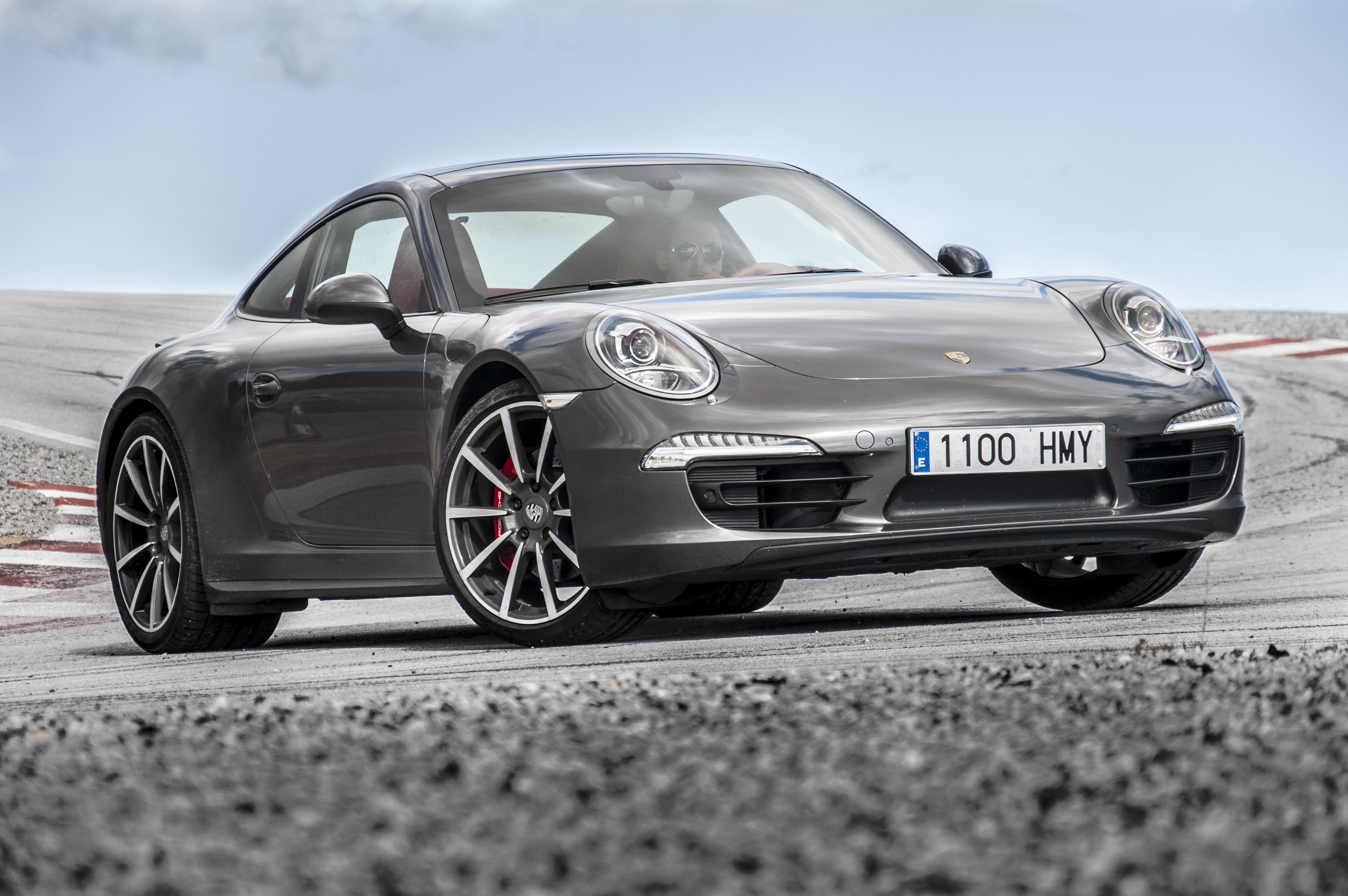
"...like Alois Roof, when he built the Yellowbird, right? He used the narrow body, he took the drip rails off."
The Yellowbird is a famous version of the Porsche 911 Turbo that was built for speed. It's known for being very fast and having a unique design that helps it cut through the air better.
The Porsche 911 Turbo, often referred to as the Yellowbird, is a high-performance variant of the iconic 911 sports car. It is known for its exceptional speed and handling, largely due to its aerodynamic design and powerful turbocharged engine.
"You can be, you know, Jimmy Johnson and you have to qualify in that car. And you've got to go 125 and you've got to go 150 and 175."
Qualifying is like a test for race car drivers. They need to drive fast enough to earn a good spot at the start of the race.
In racing, to 'qualify' means to complete a timed lap that determines the starting position for a race. Drivers must achieve a certain speed to secure a good position on the starting grid.
"Yeah, I just thought because you're a long way from a fire truck."
A fire truck is a vehicle that helps put out fires. In racing, they are there to help if a car catches fire during a race.
In racing, fire trucks are stationed nearby to respond quickly to any fire incidents during a race. Their presence is crucial for driver safety, especially in high-speed motorsport events where the risk of fire is elevated.
"They watch you to make sure you shut off the fuel and the battery. And, you know, because they want you to I mean, my biggest fear was fire."
After a crash, drivers need to turn off the fuel and battery to stop any chance of fire or electrical problems. It's an important safety step.
Shutting off the fuel and battery is a safety procedure in racing to prevent fires and electrical hazards after a crash or during an emergency. It ensures that the car is safe for both the driver and rescue personnel.
"...the two seven five GTB and yellow fly the yellow Ferrari. I think you did OK on that one."
The Ferrari 275 GTB is a famous sports car made by Ferrari in the 1960s. It's loved for its beautiful looks and strong engine, and many people want to own one today.
The Ferrari 275 GTB is a classic sports car produced by Ferrari from 1964 to 1968. It is known for its elegant design and powerful V12 engine, making it a highly sought-after collector's item.
"...you could buy a GTO in the eights for 8,000, 8,500. Right. So and I remember when I bought the car..."
GTO stands for Gran Turismo Omologato, and it's a special type of Ferrari that was made for racing. The 250 GTO is particularly famous and very valuable today.
The GTO refers to the Ferrari 250 GTO, one of the most iconic and valuable classic cars ever made. It is renowned for its racing pedigree and limited production, making it a coveted collector's item.
"So sure. That I think the two seventy five is just one of the most sublimely beautiful cars. Absolutely. And yeah, although, you know, the the Testarosa isn't too shabby either, though, that silver color."
The Testarossa is a famous sports car made by Ferrari, known for its unique look and powerful engine. It's a classic car that many people dream of owning.
The Ferrari Testarossa is a mid-engine sports car that was produced from 1984 to 1996. It is known for its distinctive design, particularly its side strakes, and its powerful flat-12 engine, making it a symbol of 1980s and 1990s automotive performance.
"I bought a Porsche in 1960 from a fellow named John Von Neumann. And he was the Porsche distributor."
Porsche is a famous car brand from Germany that makes high-performance sports cars. They are known for being fast and stylish.
Porsche is a renowned German automotive manufacturer known for its high-performance sports cars, including the iconic 911. The brand has a rich history in motorsport and is synonymous with luxury and performance.
"He was kind of the Max Hoffman on the West Coast. Right. Max Hoffman did so much for Porsche and Mercedes and so forth out of the on the East Coast."
Max Hoffman was a key figure who brought European car brands like Porsche and Mercedes-Benz to America. He played a big role in making these cars popular in the U.S.
Max Hoffman was a prominent automotive importer and dealer in the mid-20th century, known for introducing European brands like Porsche and Mercedes-Benz to the American market. His influence helped shape the automotive landscape in the U.S.
"And Interpol had seized the car and it was sitting in some kind of bonded warehouse for years."
A bonded warehouse is a special storage place where items, like cars, are kept until the owner pays the necessary taxes. It's a way to keep things safe until they can be sold legally.
A bonded warehouse is a secure storage facility where goods are kept under customs control until duties and taxes are paid. This is often used for vehicles that are imported but not yet cleared for sale.
"And by Ferrari's records, it never raced at the Targa Florio or or or any of the big time European races just was local."
The Targa Florio was a famous car race that took place on public roads in Italy. It was known for being very difficult and beautiful at the same time.
The Targa Florio was a historic open-road endurance race held in Sicily, Italy, known for its challenging mountain roads and picturesque scenery. It was a significant event in the motorsport calendar, particularly for manufacturers like Ferrari.
"...with the Ken Miles connection, also you have Cobra, the first retail Cobra ever CSX 2001."
Ken Miles was a famous race car driver who helped make the Cobra sports car successful. He is well-known in the racing world for his talent and achievements.
Ken Miles was a renowned British-American race car driver and engineer, known for his contributions to the development and racing of the Shelby Cobra. His skills and achievements in motorsport have made him a legendary figure in automotive history.
"I was at an event in Europe called Retrobobile. Sure. About again, about 20 years ago."
Retrobobile is a car event in Europe where people showcase and admire classic cars. It's a place for car lovers to gather and celebrate older vehicles.
Retrobobile is a classic car show held in Europe that focuses on vintage and classic automobiles. It attracts enthusiasts and collectors who appreciate automotive history and design.
"...d I and I love that picture behind you. I I love Cobras. I knew Carol Shelby very, very well."
The Shelby Cobra is a very fast and powerful sports car that was made in the 1960s. It’s known for being lightweight and great for racing, which is why many car lovers admire it.
The Shelby Cobra is a high-performance sports car that was produced in the 1960s, known for its lightweight design and powerful V8 engine. Developed by Carroll Shelby, it became a dominant force in racing and is celebrated for its speed and agility. The Cobra's legacy continues to influence sports car design and performance.
"... got a Harley. He's got a muscle car. He's got a M6 being, you know, it runs the gamut. Guys are jus..."
The BMW M6 is a fancy and fast car that is part of the BMW family, designed for people who want a mix of luxury and performance. It’s known for being fun to drive and very comfortable.
The BMW M6 is a high-performance version of the BMW 6 Series, known for its powerful engine and sporty handling. It combines luxury with performance, making it a desirable choice for enthusiasts who appreciate both comfort and speed. The M6's reputation for driving dynamics often leads to discussions about its place in the luxury sports car market.
"... be a Pantera and tomorrow it may be a Volkswagen Beetle and AMC Pacer rolls it."
The Volkswagen Beetle is a small car that has a unique, round shape and was very popular for many years. It’s known for being fun to drive and has a lot of history, which is why people still talk about it today.
The Volkswagen Beetle is an iconic compact car that was first produced in the late 1930s and became a symbol of the 1960s counterculture. Its distinctive rounded shape and rear-engine layout made it a favorite among many drivers worldwide. The Beetle's significance lies in its long production run and cultural impact, making it a topic of discussion in automotive circles.
"...d tomorrow it may be a Volkswagen Beetle and AMC Pacer rolls it. We just we're like kids in a candy sto..."
The AMC Pacer is a small car from the 1970s that is known for its funny shape and roomy inside. It’s often talked about because it looks different from most cars and has a unique history.
The AMC Pacer is a compact car produced in the 1970s, known for its unique design and spacious interior. It became a symbol of the quirky automotive designs of its era and is often discussed for its unusual styling and cultural references. The Pacer's distinct look and history make it a notable mention in automotive conversations.
"...utash and the and the, you know, cyclone and the typhoon and all that stuff. But anyways, so we have that..."
The GMC Typhoon is a sporty SUV from the early 1990s that is known for being fast and powerful. It’s special because it combines the features of an SUV with the performance of a sports car.
The GMC Typhoon is a high-performance SUV produced in the early 1990s, known for its turbocharged engine and sporty handling. It was one of the first SUVs to combine performance with utility, making it a unique offering in the automotive market. The Typhoon's rarity and performance capabilities make it a topic of interest among collectors.
"It's because, remember, the old days, a car museum was 20 a row of 20 Model T's in black, dimly lit and real dusty. And so not very exciting."
The Ford Model T is one of the first cars that many people could actually afford to buy, made a long time ago from 1908 to 1927. It changed how cars were made and helped more people own cars.
The Ford Model T, produced from 1908 to 1927, is often regarded as the first affordable automobile, making car ownership accessible to the masses. Its simple design and mass production techniques revolutionized the automotive industry and laid the foundation for modern manufacturing. The Model T's significance in automotive history makes it a frequent topic of discussion.
"...t. And automatic transmissions, you know, Shelby Mustangs with an automatic transmission, you should be ab..."
The Ford Mustang is a sporty car that has been around since the 1960s and is famous for being fast and stylish. People love Mustangs for their powerful engines and cool looks, making them a popular choice among car enthusiasts.
The Ford Mustang is a classic American muscle car that debuted in 1964, known for its powerful performance and stylish design. It has become a symbol of freedom and rebellion, often associated with the American car culture. The Mustang's various models, including the Shelby versions, are frequently discussed for their performance and racing heritage.
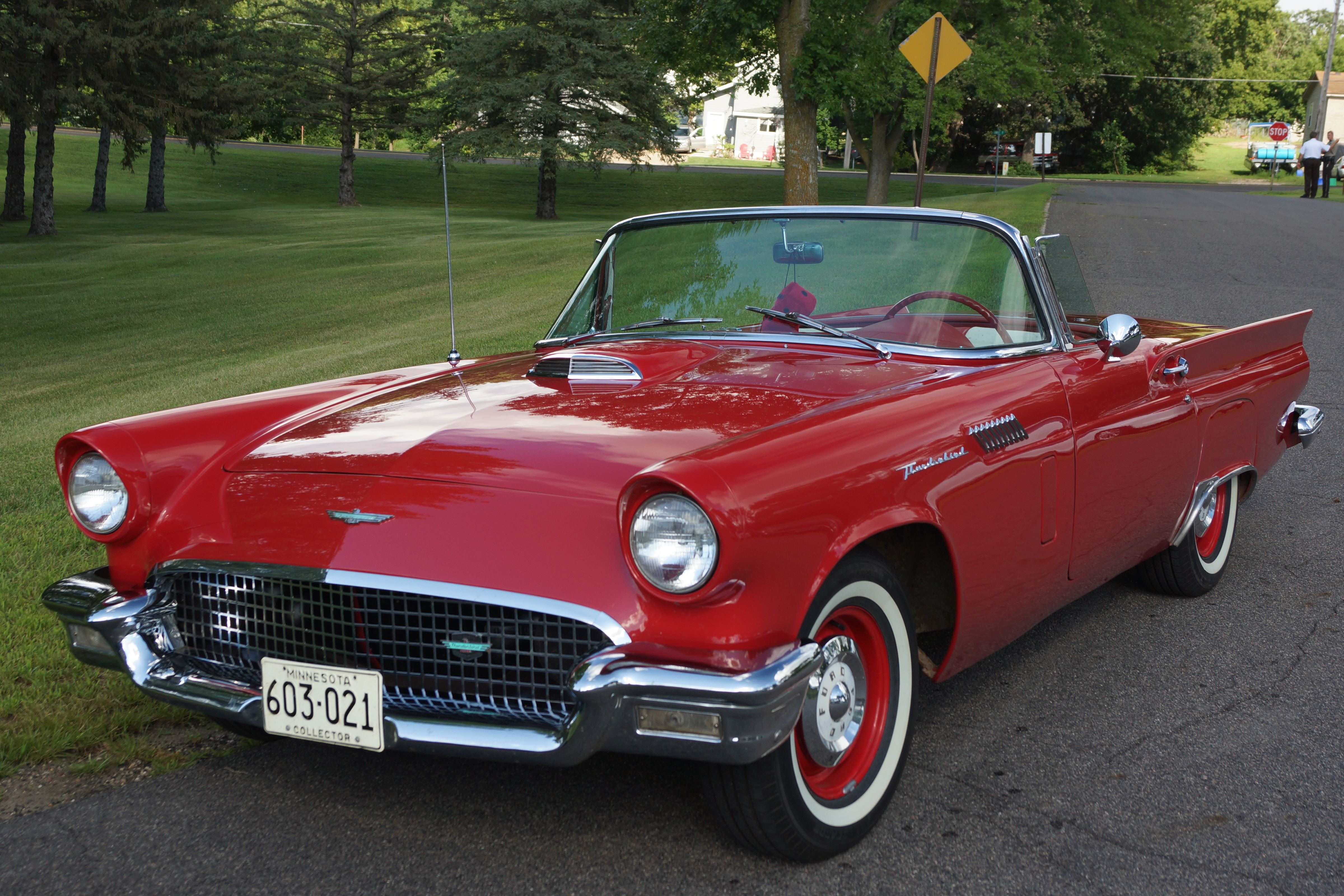
"...hops? No different than Amos Mintner and the the Thunderbirds and and the amphicars when they went over a hund..."
The Ford Thunderbird is a stylish car that was first made in the 1950s and is known for being comfortable and luxurious. It’s often talked about because of its unique design and place in American car history.
The Ford Thunderbird is a classic American car that was first introduced in 1955, originally designed as a personal luxury vehicle. Over the years, it has undergone several redesigns and has become a symbol of American automotive history. Its stylish design and comfortable features make it a popular topic among classic car enthusiasts.
"...I mean, listen, I, you know, I grew up loving 70s Pontiac Trans Ams and a 79 Trans Am 404 speed."
The Pontiac Trans Am is a powerful and stylish car that was very popular in the 1970s. It’s known for its speed and cool looks, and many people love it because of its appearances in movies.
The Pontiac Trans Am is a classic American muscle car that gained fame in the 1970s, particularly for its performance and distinctive styling. It became a cultural icon, especially after its appearance in films and television shows. The Trans Am's powerful engines and sporty design make it a popular topic among car enthusiasts.
"...letely run over, you know, Pac-Man by the by the semi truck coming up at 80 miles an hour behind you a..."
The Tesla Semi is a big electric truck made by Tesla that is designed to carry heavy loads. It’s important because it uses electricity instead of gas, which can help reduce pollution.
The Tesla Semi is an all-electric truck designed for freight transport, aiming to revolutionize the trucking industry with its efficiency and lower operating costs. It features advanced technology, including autopilot capabilities and impressive acceleration for a vehicle of its size. The Semi represents Tesla's commitment to sustainable transportation solutions.
Select text to request an explanation
This is the Classic Automall Show.
Broadcast from the studios inside the Classic Automall in Morgantown, Pennsylvania,
just one hour west of Philadelphia at Pennsylvania Turnpike Exit 298,
featuring nearly 1,000 classic vintage and barred fine vehicles for sale under one climate-controlled roof.
Now, here's your host, Classic Automall president and the man with all the toys,
Stuart Howden.
And welcome show number 219 on a beautiful sun-shiny...
No, it's not sun-shiny.
We call it overcast.
The worst in overcast is cold in an overcast.
That's right.
All right, before we get to our guest, how many cars in inventory, JR?
You go first.
I'm going to say 942.
Interesting.
I was going to go 915.
938.
So he did good, Steve.
I win again.
Win the prize again.
That's all right.
Darn you.
938 cars, it's growing back.
We're gaining our inventory back because we either sell too much or do something about it.
So quit selling so much, guys.
Come on.
Yeah, really.
Slow down.
Let's get to our guest.
Joining us from the west coast, Mr. Bruce Meyer, automotive enthusiast on the board of directors
and co-vice chairman of the Peterson Museum, founder of the Rodeo Drive Concorde elegance,
and I hear former mail order candle salesman.
I'd heard some.
You get a deep dime on that one.
Well, you know, I got nothing better to do.
So they'd like to keep me off the floor.
They say I get a little snarky out there.
So I just sit back in my office and work on spreadsheets and that kind of thing.
Good morning to you, sir.
Good morning, Stuart.
And I got to tell you that your operation, it has to be unique in the world.
I was at a place called Auto World in Germany about a month ago.
Right.
And it was described kind of like your place.
But then when I saw your place, there's nothing like your place.
I mean, it is amazing.
You know, I was moving, you know, your video moves so fast.
It's hard to, you know, there's a hot rod.
I love hot rods.
And then over here is a muscle car.
It's just fabulous.
So if you want a car, I mean, what an opportunity for somebody to see them all.
You know, we did it on a wing and a prayer.
We weren't sure that it was going to work.
My partner had the building.
We just didn't know if we could get enough cars on consignment.
It was the first real hurdle to know that, you know, hey, is there enough cars out there?
Turns out there is plenty of cars.
We can sign probably 12 or 1300 cars every year.
And we decided that we wanted to be good at the marketing and we wanted to be good at consignment
and didn't want to own the vehicles.
Because how do you go find a thousand cars for sale and do that every, you know, every
six months and have the turnover?
So it worked out better than expected.
So I'm hoping this will be my last job ever.
So.
Well, it's fabulous.
And what an opportunity for, for, you know, people, you know, nationwide to find a place
for their car and hopefully find a new home for their car.
And in a clean environment, somebody that understands it and can talk about it.
I think it's, anyway, great service.
Yeah, it's worked out very well.
And of course, we tell our customers a lot of times, the most famous statement attributed
to you, which is buy the best and cry only once.
I love that.
Is that yours?
I love that.
You know, I heard, actually my mom used it one time, but it really pertains to my love
of cars and I'm very picky.
Sure.
And, you know, I've just, I learned early lessons of thinking I was buying a bargain
and I just bought a lot of trouble.
Yeah.
So, yeah.
Anyways, I live by that and I've overpaid for every car I have.
Yeah.
Well, you just, or bought too soon, right?
So, yeah.
Yeah.
Did your mom also come up with the Neverlift?
I like that as well too.
No, my mom was super type and kind of gave me my work ethic and that.
Sure.
But yeah, Neverlift is just, I live by that.
I'm an old man and I think you just, when you slow down, I've had friends that slow
down and it usually comes to a stop.
Yeah.
And I don't want to do that just yet.
I hear you.
Yeah.
You know, we're all, it's amazing how much longer people are living.
And of course, you know, it begs the question of, you know, how long will you live and how
much money do you need to live and all of that?
I think that makes it a little bit difficult.
But as long as you continue to have fun, you know, I think that's the, that's the antidote
to death.
I'm with you.
I'm with you.
And of course, growing up in Southern California and being a car guy, I mean, is there, you
know, not many better places to be in the world if you love cars?
I just thank God every day that I was born, when and where.
Yeah.
Because, you know, I buy a little bit of real estate.
And if I were like, you know, in some small town, USA, I probably would have done the
same thing and wouldn't have had the success stuff.
Sure.
You know, I was born at a time when you could really start with nothing and end up with
something.
It was the perfect time for cars and hot rods and bull car culture.
I mean, I just can't imagine being born at any other time, you know, when you could work
on your cars and, you know, so.
Yeah.
I'm with you.
And music, too, of that era.
I mean, there's arguably no better music than what we grew up with in the 50s, 60s and 70s.
Yeah.
Yeah.
Well, I actually grew up in the 40s.
No, but you're right.
No music in this.
I mean, I still, you know, listen to music, you know, the 60s and 70s music.
That was just what we did.
Absolutely.
It was all part of it.
And of course, I lived in Los Angeles.
I moved out there in 1981 and lived there for about three years in Pasadena and the culture
of cars out there.
You know, I came from East Tennessee, which there was one Rolls Royce in the whole state,
I think, you know, and I've never forget the first time I drove down Wilshire Boulevard.
My buddy and I were like, there is a lot of Rolls Royces.
We must have counted 100 in about a 10 block period.
And it was like, wow.
Yeah.
I think we're in car world.
Oh, yeah.
And it is car world out here.
And Pasadena is a good, good town for that.
Oh, yeah.
It was great.
And I love going home.
We'd go, we'd hang out on the sunset strip and act like we were, you know, cool and rock stars.
And we drive home at night.
And those guys would be running down the Pasadena freeway, doing those bonsai runs at about two
in the morning and Countashes and 512 Berlinetta boxers.
And it was just almost every night I would be driving home.
A couple of three cars would just pass you like you were sitting still.
Yeah.
Yeah.
Yeah.
So it was.
So founder of the Rodeo Drive Concorde Elegance, that was an event that you started and started
having on Father's Day back in what year was that that you started that?
Us.
There were, there were four of us that started it because the city of Beverly Hills had a
fire truck that they bought brand new and it was just kind of derelict in the back of
the firehouse.
And I want to say it was a 1926 Aaron Fox.
Yeah.
And so there were four of us that got together and decided we were going to do a car show
and raise some money to benefit the restoration of that fire truck.
So that was when we started.
I want to say it's, it's got to be, you know, 25, 30 years.
Right.
I should have these numbers rather than taking my time, but we started with a little, with
a car show.
It was a phoneme Andy Cohen who had, he started Beverly Hills Motor Accessories and Jimmy
Duffy and, oh God, one other guy and myself and I'm the last one standing, sadly they've
all passed.
Sure.
And, but we started with a little car show in front of our high school and, and, and
it grew.
And then Ferrari reached out to me because they, they wanted to close Rodeo Drive to
do a car show.
This was probably in the early nineties and, and they couldn't close Rodeo and I had some
cloud.
I had some property on Rodeo.
So I went to the city and I got it closed for them.
And then we started thinking, you know, this is the perfect place.
This is where we should move our car show.
And then we, and then the LA Roadster Club, which is a hot rod club here in town, did an
event on Father's Day and Father's Day seemed to be a good day because there were no other
at that point conflicting events.
And it was a day that, you know, dads could do what they wanted to do, you know, and come
on down.
Sure. And, and so we, we switched it over to Father's Day and it's been that way.
I'm going to say probably 20 years or more.
And, and it's a great show.
It's free to the public.
We get the city of Beverly Hills have cameras and facial recognition, they're state of the
art. And they, they counted last year that we had over 40,000 people on the street and
then there's an additional street.
So we, we figured we're pushing 50,000 people through there.
Wow.
And, and I love that it's, yeah, I love that it's free to the public to come in.
Now we are, our place here is free to the public to come in.
And, you know, we want to share, we want to, we want to perpetuate this hobby.
And, and that's a great way to do it, to get people, especially people who would say,
oh, if you're going to have to pay, I'm not going to go in, or if I'm going to have to
pay to see that, but they don't have to pay.
They see it and they go, oh, I'm in love with this now.
And now I want to be a part of whatever this is, a concourse or here or wherever.
I got to think your showroom is the best car show and on the East Coast.
Yeah. I mean, it's, you know, it's, it's kind of warm in the winter and kind of cool in the summer.
Yeah. Now do cars and coffees, you know, or something to support that?
You have a big party?
We do. We have the Camaro Nationals here every summer and they bring 700 Camaros to,
to our facility here.
So in addition to a thousand cars in the building, you've got 700 cars in the parking lot.
And that's all free to spectate as well, too.
I don't know how you see that many cars in one day.
It's a, it's a task. Yeah.
And we do, we do charity events here as well, too.
We're local churches and things want to hold shows and have been doing that.
We're in our eighth year here and they've been doing that.
And we don't ever charge them to have the event here because look, it's good for business.
You bring car guys to a car place.
It's invariably, we're going to sell a few cars because of it.
But it's nice. It's nice to be able to give back.
It's when I had 20 cars in a warehouse, I really couldn't do this.
So it's it's nice to be in this position.
Well, Stuart, you really build an amazing, you know, business.
Well, I appreciate that.
And I know that you have quite the collection of cars.
And I've I've seen video and interviews with you in the past
and some of the collection of cars you have quite the place, too.
Now, you're not open to the public.
Do you ever open it up for charity events and things like that or your collection?
Or, you know, I I don't want to say yes.
Right.
Yeah, I have, I you know,
we're the Peterson, we have an event there tomorrow night for the Peterson.
Right. And so I'll open it up for friends.
I mean, obviously, look at it.
Sharing is is great joy for me.
I just it's just not open to the public. Sure.
And and I do share it with different clubs,
Porsche Club and Ferrari Club and a few other people have come by and and enjoyed it.
And that's the fun thing.
I say, if you're the last man on earth and you've got the Ferrari GTO
and you have nobody to share it with, what's the point?
And that the truth?
Well, you certainly have quite the collection of cars and bought too soon,
bought too late, doesn't matter.
I mean, one of my favorites is when I lived out in Los Angeles,
my favorite thing to do was go to Riverside and watch the 935 screaming down
that back straight. And you happen to have one of the coolest ones,
the Whittington Brothers 935 K3, which was, I guess, one in 1979.
Right. Overall, yeah.
It's it's a great story and an unbelievable car.
And I take it out.
I do track days, but of course, if I'm not qualified to.
I say, you know, people say, do you bring these cars out and race them?
I said, you know, the only history that I could add to my cars would be bad.
Right.
I'd be the guy that put that into the wall, you know, exactly.
Because these cars were a handful, apparently, especially the 935s.
Oh, my God. Yeah.
A friend of mine, Pasadena guy, Jim Busby, yeah,
raised a 935 and a couple of my other friends had a Bruce Canapa.
And they just said, Bruce, just make sure you put your foot into it.
Make sure you're going laser straight, you know, in the same at Bonneville,
you know, if you're anything but absolutely straight, you're going to
sure reverse in real quick.
Because with a 935, you got about 800 horsepower that wants to pass the front
and give it any opportunity.
It will do so.
I saw the video of you at Bonneville in your 29 for Bonneville Roadster.
And what an amazing thing.
It sounded like you were spinning the tires at close to 200.
It sounded in the video.
I heard the wine get a little higher and you were listening.
You were paying attention.
I wasn't going 200 at that point.
But yeah, you have to you have to apply the throttle.
You don't just mash on it, you know, and it was a great run.
It was like one of the to go over 200 in a roadster is something very special.
And it's something I always wanted to do as a hot rod, you know.
So we built that car and and just had a great time.
Yeah, it looked like a lot of fun.
And of course, you know, you get the hat, too.
So there's that, you know, yeah, yeah.
Well, that you get the hat.
I got the hat in a Jack Rogers Camaro.
I saw that what's interesting is the 200 mile an hour club.
It's not it's not just going 200 miles an hour.
Right. You have to break an existing Bonneville record.
Gotcha. So, you know, because there's a lot of cars,
you can just go out and drive 200 miles an hour.
You don't get a hat. Right.
So you've got to have to break an existing 200 mile an hour record
and then back it up to do it twice. Right.
And so that hat red hat is a pretty there are fewer.
Well, it told me there are fewer red hats than than than than client
climbers that did ever show something. Oh, right. Right.
Well, it's a it's a great club. It's amazing.
And I just saw I just got an email this morning that Pebble Beach
is going to have the Sunbeam 1000 horsepower
land speed record car from 1929
at the Concorde elegance this this this coming year in 2026.
And that car went 203 in Daytona in like 1928 or 29
somewhere in that era, probably with a big arrow engine.
Yeah, you know, I'll tell you, it is it's an interesting thing
because, you know, we all like to drive fast, but, you know,
you get over 125, you know, in 150 mile an hour and over,
things can happen very quick and it can end very badly.
And so I really admire those guys that, you know,
that went out and did those fabulous things in that period.
Yeah, crazy. And I mean, people say, well, you go to the autobahn
and run unlimited. Well, you can, but you really can't.
It's yeah, you got to be careful when a lot of bad things happen,
you know, when guys decide they're going to go flat out.
Well, because your perception of depth and distance and all that
is kind of distorted when you're going that fast.
And plus, you're probably, you know, half scared to death.
Well, also, you know, what what I realize how important aerodynamics are, right?
You know, like, like, like Alois Roof, when he built the Yellowbird, right?
He used the narrow body, he took the drip rails off.
He used, you know, aero mirrors.
It's the little stuff.
It's the little things that matter and it's slow the car down.
And it's also the little things that can get you airborne and airborne.
When you get into those speeds, it's it's you take flight.
I mean, it's it can be it can end very badly. Sure.
Well, and looking at just like for you on in your
Bonneville run in your twenty nine roadster.
I mean, just getting in and out of it was difficult.
It doesn't look that easy just to hop in.
You know, you're not, you know, Bonneville and and land speed racers
take safety very, very seriously. Sure. Sure.
You can be, you know, Jimmy Johnson and and you have to qualify in that car.
And you've got to go 125 and you've got to go 150 and 175.
And then you're then you can go 200.
So you just can't just hop in one of those cars and go fast.
The other thing is you're in the car, they strap you down.
They say you're on fire.
So you have to get out of that car within a matter of seconds.
They watch you to make sure you shut off the fuel and the battery.
And, you know, because they want you to I mean, my biggest fear was fire.
Yeah, I just thought because you're a long way from a fire truck.
And so and you've got to get out of that car really quick.
Right. And it's amazing how you can fly out of that car.
You need to. Right.
There's a cage over your head and you're strapped in and you're sitting low
and you're buried in that car.
But, you know, if you if you need to get out in the hurry,
it's like you find a way somehow. An idea. Yeah, somehow, some way.
There's a will. There's a way. I think, you know, people lift, you know,
heavy cars off of somebody that's trapped underneath them.
You see people do superhuman things when put to the test.
Exactly right. And so some of the other cars in your collection,
the I think here's one that you probably didn't overpay for.
And that would be the two seven five GTB and yellow fly the yellow Ferrari.
I think you did OK on that one.
I did. You know, what's interesting?
So I bought that car in 1970.
Who even knew about those in 70? Yeah.
And, you know, I paid about $10,000 for the car. Right.
And and you could buy a GTO in the eights for 8,000, 8,500.
Right. So and I remember when I bought the car, a friend of mine,
wanted to trade me a GTO and he had an average for 8,500.
And I thought, like, how stupid do you think I am?
You know, you know, I could buy your car for less money.
So sure. That I think the two seventy five is just one of the most
sublimely beautiful cars. Absolutely.
And yeah, although, you know, the the Testarosa
isn't too shabby either, though, that silver color. Oh, yeah.
That that has an interesting story.
I bought a Porsche in 1960 from a fellow named John Von Neumann.
And he was the Porsche distributor.
He was kind of the Max Hoffman on the West Coast.
Right. Max Hoffman did so much for Porsche and Mercedes and so forth
out of the on the East Coast.
And and Von Neumann was the distributor for Ferrari and Porsche
in Hollywood, California.
And I grew up in Hollywood.
That's where I grew up.
And and I used to ride my bicycle by his showroom and so forth.
So he had that Testarosa and it was driven by Richie
Ginther and Ken Miles.
So it was a and a sublimely beautiful car.
So about 20 years ago, I decided I got to find that car.
And and, you know, Stuart, there's guys that and just find stuff.
They know where things are.
And I went to a couple, a couple of them and I said,
see if you can find this car.
Well, it turned out that they both found the car that it was in
seized by Interpol.
It was owned by a famous drug dealer that put in prison in in the Hague.
Right. Nice.
And Interpol had seized the car and it was sitting in some kind
of bonded warehouse for for years.
Wow. So I bought that car at a at a sealed bid auction
probably 25 years ago. Wow.
And and but I think that car is so beautiful.
And by Ferrari's records, it never raced at the Targothoria
or or or any of the big time European races just was local.
But Santa Barbara, you know, you know, I say New Mexico, Texas,
Mexico, California, but it won a lot of races.
And by their records, it was the most winning Ferrari ever.
And I won like 50 races, you know, with Ginther and Ken Miles
and Von Neumann driving it.
They were all very accomplished drivers.
Sure. And it wasn't.
Yeah, it wasn't some kind of, you know, charity race that they were running back
there and they were running seriously.
So it's a testament to that car to have that.
Of course, you know, with the Ken Miles connection,
also you have Cobra, the first retail Cobra ever CSX 2001.
God, that is my favorite car.
It has to be. And I was going to say, you know, and I bought that.
I say a blind squirrel can find an acorn every now and then.
And that is my acorn. Yeah.
I was at an event in Europe called Retrobobile.
Sure. About again, about 20 years ago.
And and a very well known dealer had put that on his stand.
It was before Retrobobile officially opened.
It was setup day. Right.
And I and I love that picture behind you.
I I love Cobras.
I knew Carol Shelby very, very well.
And and, you know, Cobra really is a hot ride effort.
I can go deep into that.
But so I'd always I'd had a Cobra since the 60s.
And and I and I ran into this car and the dealer Lucas Hooney said,
Bruce, that's the very first Cobra ever built CSX 2001.
I'm going, there's no way it had different flares on it.
Sure. It just didn't look like like like a like the first one.
Right. So anyways, he brought out all these files.
Turned out that that the car was was built by Ed Huges, who was back your way.
Yeah. And Pittsburgh, Pittsburgh.
I mean, Ed Huges is a very, very important cog in the Cobra wheel
because he's the one that financed Carol Shelby and also, you know,
took delivery of the first few cars and took delivery of this car
and then sold it to a fellow named Lloyd Casner, Lloyd Lucky.
Casner, he had a race team, a Marati racing. Right.
And he took the Lamar.
So he took the car pretty, you know, when it was just a year old to Lamar
and and and it stayed in France until I repatriated the car, you know, 20 years ago.
Right. And it's it's very unusual.
It has, well, I don't want to I mean, I can spend the whole time on this.
Basically, basically, he sold it to a very wealthy Frenchman.
At the time he at the time he bought the car in 1964,
Shelby just came out with the FIA car, which is kind of a notch
backdoor, right, those Weber car barriers.
And so so Lloyd, so so his name was Jean-Marie Vincent or Vincent.
He said, I want this car to be an FIA car.
Well, at whatever it costs. Wow.
So they sent the car to Ford Racing of Europe and they and that's where it got
the big rear flares and the Weber's and the kind of the cool stuff that I like
about the car that was all done in 1964.
So and then he raced the car in 64, 65 and 66 and did quite well with it.
And the car was a number of different colors, right?
I mean, it was originally delivered red and then it was yellow, green,
black, red, four or five different colors, maybe over the years.
Well, that's interesting because now, OK, there's two cars that CS.
So every every Cobra is known by a CSX shirt.
By the way, you're absolutely right.
CSX 2000 was was his prototype.
And whenever you give it to a magazine, you change the color.
So people, people, people kind of knew that CSX 2000 was a lot of different
color, right? Turns out that this car of mine was was born red.
And then it sold to a fellow in Morocco.
He painted a yellow, right?
And I think it was then and then it was back to red.
And then when I bought it, it was Aston Martin Green.
Right. And so I always preferred the, you know, the black
kind of sebring car look. Yeah.
And so it was my choice to go black.
Yeah. And what it is today.
Well, I saw the car when we were in Pebble Beach this year when you took
off for the tour and, man, that's just that car had the best sound of any car that was there.
I'm with you. I love that V8 sound.
And is there and I know you've got oddball stuff too.
I mean, not oddball, but you have hot rod stuff, your huge hot rodder.
And you feel like probably most of us feels that hot rodding is arguably one
of the most important things that ever happened to the automobile
because of racing and just everything that the connotation that it came.
The the desirability of a car went from that's a, you know, 1932 Ford
to 32 Ford Roadster lowered shop channeled all that.
Wow. And you've got a few of those, you know, Stuart.
I am such a proponent of the importance of hot rodding.
It was a period. Sure.
And, you know, for me, it was really the 40s and 50s and 60s,
but mostly the 40s where where the GIs came back with their combat pay
and picture their girlfriend and their green car and their wallet, you know,
they couldn't wait to get going.
So they so hot rodding really flourished in the 40s and and the hot rodders
were geniuses.
They were the Bill Remington's and Carol Shelby's and Dan Gurney's and
Parnella. All those guys had hot rods.
And so so the technology, the performance, the ingenuity,
that all came out of hot rodding.
That built the cobra, the scarab, you know, and so meant so much of what we love
it. And then they, you know, they went back to Detroit and, you know,
carried that that that information and that that talent back there.
So I'm in a hot rodders to me, started it all.
Just started it all. Absolutely.
I mean, it's just it was such an important thing because most of those
guys didn't have very much money back then.
So in order to make these things, they had to be pretty darn creative
and, you know, using the part from somewhere, whatever they had, they used
100 percent, you know, and they did it themselves.
Right. Right. You know, for the most part.
And and, you know, there was guys like, you know,
Edelbrock and Alex Exidius, you know, just talented craftsmen that, you know,
grim stuff, put it together.
And yeah, it was just a wonderful period in the automotive and the history
of the automobile, in my opinion.
And so I I my we didn't have the money for cars in and my parents thought
wasting your time and your resources on a car was just Bruce, you know,
don't do it. Yeah. And of course, if it's in your DNA, it's in your DNA.
You can't take that out. You can't help it.
No. And you can't put it in because I've got some friends with great cars
and their kids have no interest.
But I'm lucky. Yeah.
My my my my middle son shares that the love of cars.
But I don't know where I'm going with this except that.
Well, that's we're just so I finally.
So in the 70s, I decided I'm going to get a hot rod.
Right. And I and I bought a hot rod and I wasn't sure if it was a 32 Ford.
I bought it from Jim Busby, who is a vintage racer.
And I wasn't sure how people were going to accept, you know, hot rods
because it was at that time, it was, you know, they weren't Porsche guys.
You know, they were, you know, I just saw, you know, this is
is this going to dumb down my reputation or help it?
You know, right?
Anyway, to make a long story short, I people were loving it,
giving me thumbs up.
And I just it just took off from there.
And I decided what I'm going to do is I'll see if I can look
at some of these seminal hot rods that were on the cover of Hot Rod magazine.
And I went through a lot of covers of hot rods and did a lot of research
into old hot rods and I picked out a few that I thought were pretty special.
And then research where they were and who had them.
And another guy that was doing this at the same time was on him, Kirk White.
Yeah, our buddy from here in Pennsylvania.
I'm telling you, I mean, Kirk, I mean, he looked like the country club guy,
always dressed in pink and bright, you know, just color turned up.
Yeah, he always had that.
Yeah, yeah, yeah.
That's the guy. Yeah.
And so he, so he and I became that's when we really became great friends.
And that had to be in the 80s, you know, when we were both researching
and finding old hot rods and he found some and I found some.
And we were just enjoying the hobby together.
Yeah. What a what a character.
Oh, and he was a Ferrari dealer back in the day.
I mean, he the stories of Ferrari GTOs that he sold and barely, you know,
just scraped by to get eight or nine thousand dollars for a GTO Ferrari
or a three thirty L, you know, M.M. or, you know, just name it.
Every kind of cool Ferrari you could ever imagine.
He had it and sold it at one point in time.
And, you know, crystal ball would all be great to have if we if we knew
what was coming in the future.
Well, I could spend the rest of this podcast, the two of us good about Kirk
White. Sure. I used to I used to win back to Hershey every year.
And he'd always set up a little tent with very expensive toys.
They're usually a motorcycle and a car. Right.
And asked outrageous prices.
Set the market. They were very special.
And he he his taste were at a very high level.
And and there's a book he wrote called Don't Wash Mine.
Great book, compilation of of emails that he would send to his friends
about his history. Yeah.
It's the most colorful history.
I'm really not much of a reader.
And that book is a big book.
But I tell you, I don't I read every word, savored every word.
It was all written by Kirk.
It sounded like Kirk.
And he talked about how it's how it is.
I think his stepfather took him to a midget race.
Right. And then got involved.
He loved racing and then took off.
And, you know, he had one of the first auctions.
1970 or 71, I believe it was a classic car auction for lack of a better term.
Yeah. I mean, that man was a renaissance man.
Yeah. And in the world we love. Sure.
And sadly, you know, it's probably our generations,
the last generation that can tell real Kirk White stories.
I'm afraid that's probably the truth.
And it's interesting, you know, you hit on it just a minute ago, Bruce,
about the fact that there's guys that used to be just hot rod guys
or guys were just Ferrari guys or guys were just Harley guys.
Now you go in a garage and he's got a hot rod.
He's got a Ferrari. He's got a Harley. He's got a muscle car.
He's got a M6 being, you know, it runs the gamut.
Guys are just car guys, whatever that may be.
My kind of guys. Yeah.
And you've got a guy. Absolutely.
Seeing in your in your show, you've got bikes and hot rods.
And I mean, it's just like the best car show in the world.
Yeah. Our guys have got to be well versed in lots of things,
because, you know, we never know what's showing up.
We just meet guys out at shows and we give them the paperwork and say,
when you're ready to bring your X, Y, Z, bring it on in.
And today it may be a Pantera and tomorrow it may be a Volkswagen Beetle
and AMC Pacer rolls it.
We just we're like kids in a candy store.
I love it when my phone rings and the guys will be up front
and I'm back in my office and they'll go, get up here right now.
You know, something cool is just rolled in.
So I don't delay. I get right up there.
And another wonderful place to visit.
Nice segue into this is the thing that you're heavily involved in.
That's the Peterson Museum, which is the coolest museum ever.
And and and not an easy business to be in, for lack of a better term.
Well, so so my hero growing up was Robert E. Peterson.
And he he created and published an owned hot rod magazine,
which was really the first magazine that I ever subscribed to.
I mean, I didn't even know there was such a thing as a subscription.
My parents had my parents had life magazine.
I had hot rod.
And by the way, they were they were similar because Rodney Peterson
was such a brilliant businessman.
He figured, you know, like magazines, the most popular magazines.
So if you look at the early hot rod magazines,
it's the format of life magazine, you know, a life in the red.
Reversed on a red hot rod, reversed out in red.
But anyway, so Peterson, he was a car guy in that he started a lot
of car titles, but he wasn't a car guy like you and I.
Right. Was it? It was it wasn't full.
He wasn't corrupted.
So he was a really good businessman.
And he I say Peterson was an opportunistic buyer.
In other words, if there was something somebody needed money
or it was a real opportunity purchase, he would find a way.
And he bought real estate, art, businesses.
I mean, he was a brilliant business. Right. Right.
Oh, so he found this entire city block in Los Angeles
and didn't know what to do with it.
And so I had met him through a there's a group
called Young Presidents Organization, YPO.
We'd met together and he came and he said, Bruce,
I just bought this big old building and it was a it was a department store.
Let's make it a car museum, of course.
You know, yeah, it didn't take you twice to hear that.
Yeah. So I was kind of I guess the lead guy that kind of put it together
and and he owned the building and he put his money
and I didn't have the money to do, you know, to to to invest like he did.
So we put it together.
That was 30 years ago.
And and, you know, at the beginning, it was kind of the place
that Pete could put his cars, I could put my cars.
It was just kind of a bunch of guys hanging out, Levi's and T-shirts.
Right. And now we have reinvented ourselves.
We are a cultural institution.
By the way, our vault is very much like the Auto Mall.
If you go into the vault, did you go into the vault downstairs?
I haven't been there because the last time I was there was like 22 years ago.
So. Oh, no, no, you've got to you've got to make a trip.
I'm already planning on it.
Well, you'll let me know, right?
I will absolutely will because you really need to see our vault,
See something that's not quite right? Our annotations are AI-generated and can sometimes miss the mark.
Click the flag icon on any annotation to suggest a correction.