Stewart Howden hosts an engaging discussion with race car driver Jack Baldwin and automotive expert Keith Martin. Baldwin shares his incredible journey from a young drag racer in Florida to becoming a champion in IMSA, detailing his struggles, triumphs, and the evolution of his racing career. The conversation touches on the challenges of securing sponsorships, the importance of perseverance, and the changing landscape of car ownership and comfort. Martin adds insights on classic car events and the balance between originality and modern conveniences in the automotive world.
CAM Show #225 airdate 12-31-25 Stewart welcomes Jack Baldwin Racecar Driver and so much more as they discuss his diverse career at the beginning of @IMSA, in storied racecars like the #MarchFormulaFord and #ShelbyGT plus what helped him make the money to go racing: designing and selling T-shirts for not only race cars, race products and even #Motorcycle #DareDevil #EvilKnievel but, rock bands like @Aerosmith @AC-DC @BostonBand @Kiss and #TedNugent as well as time with @NissanRacing and @IROC. Also Sportscar Market Magazine's Keith Martin brings his blog to life with a New Years ponder: Resolution or Conundrum?. #FordCortina #RoadAtlanta #OldsmobileCutlass #RCcola #Dodge #Winnebago #Chrysler #ShelbyCharger #MidOhio @CarrollShelby #Goodyear @HotWheels @Ram @SCCA @IMSA @VIR @Chattanoogamotorcar #Tail of the dragon @RoadAtlanta #DriverEducation #TommyKendall
GET OUR FREE APP: https://ClassicAutoMall.appimize.app When it opens click on the ORANGE button to install on your phone or computer for DIRECT ACCESS to our VIDEO and AUDIO shows and our website.
CONTENT NOTE: Contests, Prizes, Offers, Vehicles & other items may no longer be available or offered after each show's original broadcast or posting date.
Recorded in our Showcase Studio just inside the entrance of the Classic Auto Mall in Morgantown, PA, Host Stewart Howden, Classic Auto Mall President and Classic Car Specialist Steve Saffier talk about this unique and amazing place often with amazing guests.
YES...Classic Auto Mall is a REAL former shopping mall that covers almost EIGHT football fields with an average of nearly ONE THOUSAND classic vehicles under one, climate controlled roof and they're all FOR SALE!
Be sure to LIKE and SUBSCRIBE to be informed of new episodes and SEE them on the Classic Auto Mall YouTube Channel. We also invite you to VISIT US IN PERSON at Classic Auto Mall, one hour west of Philadelphia at PA Turnpike Exit #298, VISIT us online at ClassicAutoMall.com or talk to real, live people about visiting, buying or selling your classic on consignment at 888-227-0914.
"...I was into drag racing, obviously. And that's what, and the way it happened was it's kind of a crazy story. I was drag racing. I was pretty good at driving..."
Drag racing is a fast-paced car race where two cars race in a straight line to see who can go the fastest. It's all about speed and quick starts.
Drag racing is a type of motor racing where cars compete to see who can cover a straight distance in the shortest time, typically a quarter mile. It emphasizes acceleration and speed, often featuring modified vehicles for maximum performance.
"...I was pretty good at driving and I was just, you know, a hot rod kid doing what I could..."
A hot rod is a car that has been changed to make it faster and look cooler. People often modify older cars to create hot rods for racing or showing off.
A hot rod is a modified car, typically an older model, that has been enhanced for performance, speed, and style. Hot rodding is a popular automotive hobby that often involves custom modifications to the engine, body, and suspension.
"Well, we took, first thing we did is we took my brother's Cortina. He had a G, a little Cortina GT with a little four cylinder motor."
The Cortina GT is a sporty version of a small car made by Ford. It was popular in the UK and is considered rare in the United States.
The Ford Cortina GT is a sporty variant of the Ford Cortina, a compact car produced by Ford of Britain from the 1960s to the 1980s. It is known for its lightweight design and performance-oriented features, making it a popular choice among enthusiasts.
"...back in those days, you know, it was SCCA drivers."
SCCA stands for the Sports Car Club of America. It's a group that organizes car races and events for people who love motorsports, especially at the amateur level.
The Sports Car Club of America (SCCA) is an organization that promotes motorsports and organizes amateur racing events across the United States. It is well-known for its role in grassroots motorsports and for providing a platform for drivers to compete.
"...Glenn made me a sway bar for it. He just whipped it up. He said, I'm going to make you a sway bar. We set the car..."
A sway bar is a part of a car's suspension that helps keep it stable when turning. It prevents the car from leaning too much to one side, making it safer and more comfortable to drive.
A sway bar, also known as an anti-roll bar, is a suspension component that helps reduce body roll during cornering. It connects opposite wheels and helps maintain stability by distributing weight more evenly across the vehicle.
"The car got wrecked at Daytona. A guy from behind just crashed in the car. Well, because yeah, that happened a lot in Daytona with the disparity in the classes."
Daytona is a well-known racetrack in Florida where many car races take place. It's famous for its fast cars and exciting races.
Daytona refers to the Daytona International Speedway, a famous motorsport track in Florida known for hosting various racing events, including NASCAR and sports car races. The track is known for its high speeds and challenging turns, making it a significant venue in the racing world.
"And that was the very beginning of IMSA. Wow. Wow. It's kind of amazing how IMSA what IMSA grew into."
IMSA is a group that organizes car racing events, especially for sports cars. They help set the rules and run races where different types of cars compete against each other.
IMSA stands for the International Motor Sports Association, which is known for organizing sports car racing events in North America. It has played a significant role in the development and popularity of endurance racing, featuring various classes of cars competing in events like the WeatherTech SportsCar Championship.
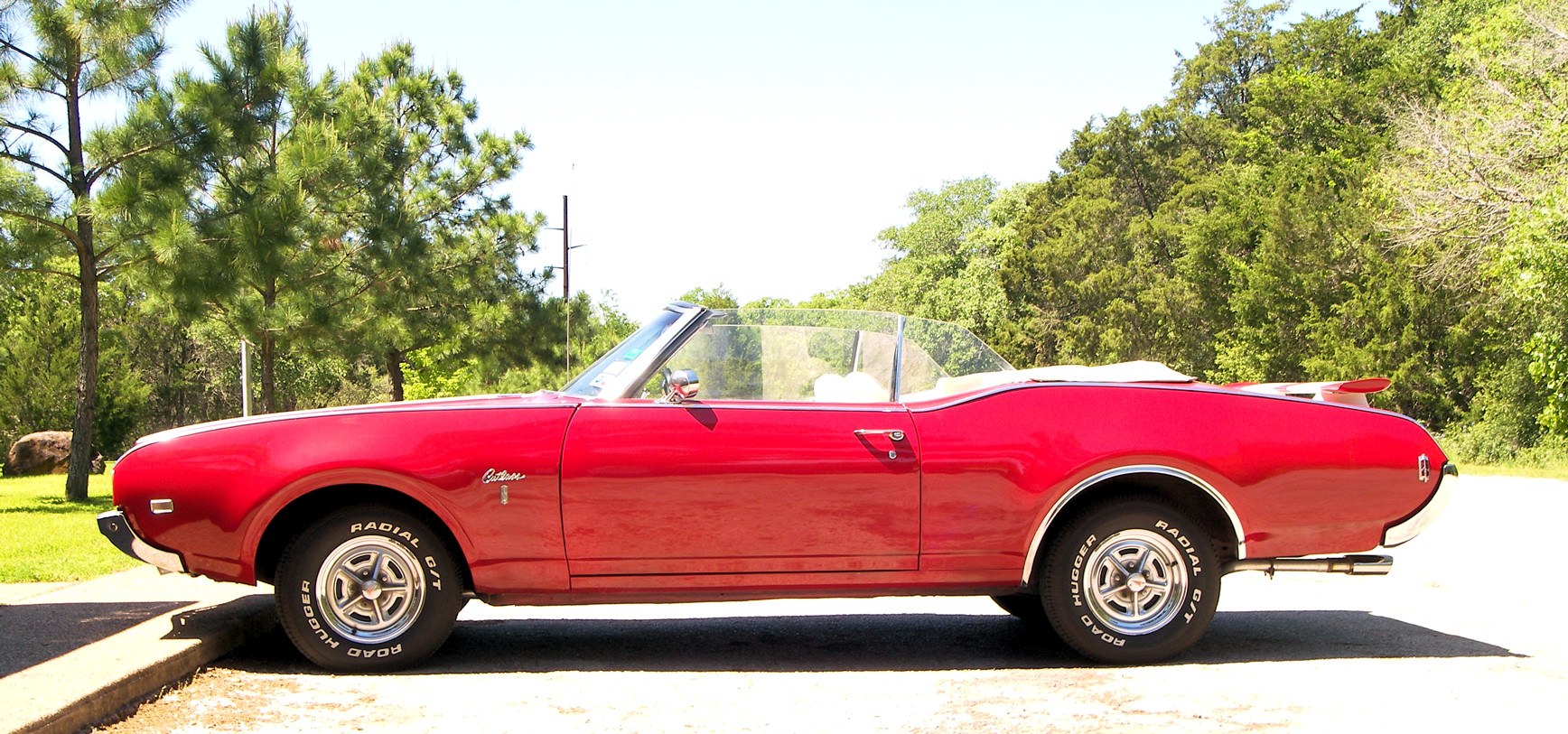
"...ece of paper, two hundred dollars. And I'm in my cutlass, my sixty six color, sixty seven colors. No. And..."
The Oldsmobile Cutlass is an older car that many people remember fondly. It was popular for being a good mix of style and comfort, making it a favorite choice for families back in the day.
The Oldsmobile Cutlass is a classic American car that was produced from the 1960s until the early 1990s, known for its stylish design and versatility. It was one of the best-selling cars in the United States during its production run and is often celebrated for its combination of performance and comfort. The Cutlass has a nostalgic appeal among car enthusiasts and collectors.
"Here's a brand new March Formula Ford. Brand new trailer. Wow. Wow."
The March Formula Ford is a race car made by a company called March. It's used in a type of racing called Formula Ford, which is great for beginners because it helps drivers learn the basics of racing.
The March Formula Ford is a type of race car designed for the Formula Ford series, which is a popular entry-level racing category. March Engineering was known for producing competitive racing cars, and the Formula Ford variant is particularly notable for its lightweight design and focus on driver skill.
"...I just drove the hell out of it. Just figured it out, right? Wanted a bunch of races, figured it out, went to the went up to Atlanta."
Formula Ford is a type of racing that uses small, fast cars. It's often where new drivers start their racing careers because it's affordable and helps them learn how to drive well.
Formula Ford is a category of single-seater racing that serves as an entry point for many aspiring race car drivers. It features lightweight cars with a focus on driver skill, using a standardized chassis and engine to keep costs down and competition close.
"...they were doing that that race in Branshatch, you know, the world of Formula 4 thing. And every country got to send two or three people, depending on the size of the country."
Formula 4 is a type of car racing for beginners. It's a way for new drivers to learn how to race in a safe and competitive setting before moving on to more advanced racing series.
Formula 4 is a category of single-seater auto racing that serves as an entry-level series for aspiring racing drivers. It is designed to provide young drivers with a platform to develop their skills in a competitive environment, often leading to higher levels of motorsport.
"I had a Ford van, a stick shift van with a five liter little V8 Ford motor in it."
A stick shift is a type of car transmission where you have to change gears yourself using a lever. It gives you more control over how the car drives.
A stick shift, also known as a manual transmission, requires the driver to manually change gears using a clutch pedal and gear stick. This type of transmission can offer more control over the vehicle's performance compared to automatic transmissions.
"I had a Ford van, a stick shift van with a five liter little V8 Ford motor in it."
A V8 motor is a type of engine with eight cylinders. It usually gives more power to the car, making it faster and stronger.
A V8 motor is an engine configuration that has eight cylinders arranged in a 'V' shape. This design allows for more power and smoother operation, making it popular in performance and heavy-duty vehicles.
"...d van, a stick shift van with a five liter little V8 Ford motor in it. And I had the van and I had this fl..."
A Ford V8 Sedan is a car that has a powerful engine, which helps it go fast and drive smoothly. It's a good choice if you want a car that feels strong and can handle different driving conditions.
The Ford V8 Sedan refers to a class of vehicles equipped with a V8 engine, which is known for delivering strong performance and power. These sedans are often appreciated for their robust build and capability, making them popular choices for both daily driving and performance enthusiasts. The V8 engine configuration is a hallmark of Ford's performance heritage.
"...the opportunity came with the Malibu Grand Prix Master. That's how it all starts. Sure. Without me. And for those of you don't know, Malibu Grand Prix was a go-kart track..."
Malibu Grand Prix was a place where people could race go-karts. It started in Southern California and later had locations in other parts of the country, making it a fun spot for racing fans.
Malibu Grand Prix was a popular go-kart track and entertainment venue that operated in Southern California and expanded to other locations. It provided a fun and competitive environment for racing enthusiasts of all ages.
"...He says, well, I just wondered. He says, I got this brand new Chrysler New Yorker. I said, where the hell did you get that?..."
The Chrysler New Yorker is a big, fancy car that Chrysler made for many years. It was known for being comfortable and having a lot of space inside, which made it a nice choice for people who wanted a luxury vehicle.
The Chrysler New Yorker is a full-size luxury car that was produced by Chrysler from 1940 to 1996. It was known for its spacious interior and advanced features for its time, making it a popular choice among buyers looking for comfort and style.
"So I said, wait a minute, you have the factory dogs shall be charger program. He said, yep, I got it."
The Shelby Charger program was a project to make the Dodge Charger sports car even faster and more exciting. Carroll Shelby, a famous car designer, worked on this to improve the car's performance.
The Shelby Charger program refers to a collaboration between Carroll Shelby and Dodge to create a performance-oriented version of the Dodge Charger. This program aimed to enhance the Charger’s performance and appeal through modifications and tuning.
"So I said, wait a minute, you have the factory dogs shall be charger program. He said, yep, I got it."
Dodge is a car brand that makes many types of vehicles, including fast and sporty cars like the Charger. They are known for their powerful engines and performance.
Dodge is an American automotive brand known for producing a wide range of vehicles, including muscle cars like the Charger. The brand has a rich history in performance and sports cars.
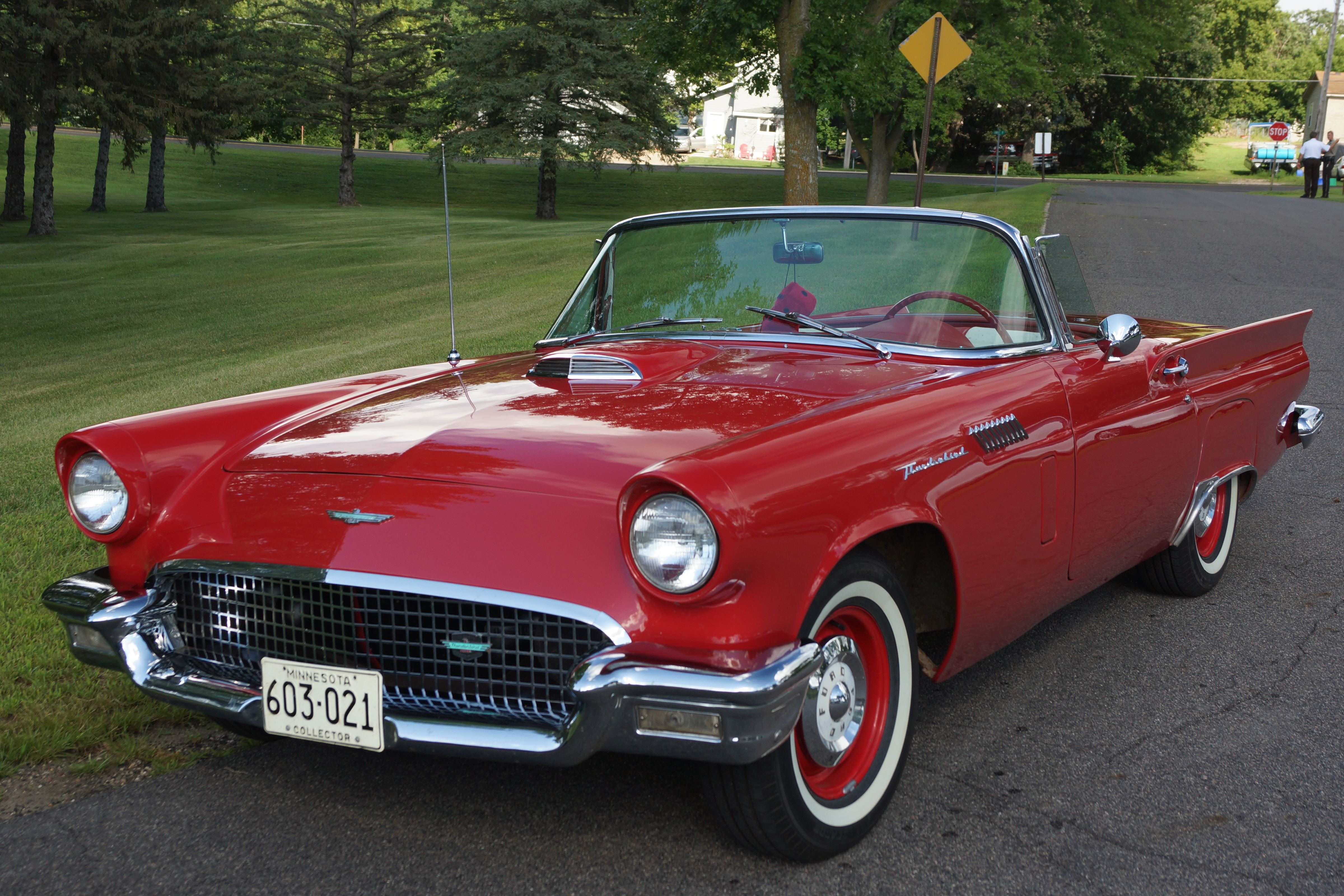
"We're in the Thunderbird. You know, I come drive like, you know, let's go in style."
The Ford Thunderbird is a well-known car that has been around for many years. It's famous for its sleek look and was often seen as a luxury vehicle.
The Ford Thunderbird is a classic American car known for its stylish design and performance. It was produced from 1955 to 2005, with various generations that evolved over the years.
"...Clayton ran the Nissan program and get all that stuff. So so it's Clayton."
Nissan is a car company from Japan that makes many different types of vehicles, including cars and trucks. They are known for their reliability and innovation.
Nissan is a Japanese automotive manufacturer known for producing a wide range of vehicles, from compact cars to trucks and SUVs. The brand has a strong presence in both the domestic and international markets.
"Yeah, what's your daily driver now? My daily driver is a Ram Limited Pickup Truck."
A daily driver is the car you use every day to go to work, run errands, or just get around. It's usually a practical choice that you can count on.
A daily driver refers to a vehicle that someone uses regularly for commuting or everyday tasks. It's typically practical and reliable, rather than a performance or luxury vehicle.
"My daily driver is a Ram Limited Pickup Truck. That's the good. That's a good."
The Ram Limited Pickup Truck is a fancy version of the Ram truck, which is designed for people who want a comfortable ride while still being able to haul things. It's popular because it combines luxury with utility.
The Ram Limited Pickup Truck is a high-end trim of the Ram pickup line, known for its luxury features and powerful performance. It's popular among both everyday drivers and those who need a reliable work vehicle.
"...it's OK to have an automatic. Maybe it's OK to have power steering. Maybe it's OK."
Power steering is a feature in cars that makes it easier to turn the steering wheel. It helps you steer without having to use too much strength, especially when parking or driving slowly.
Power steering is a system that helps drivers steer the vehicle by using hydraulic or electric actuators. It reduces the amount of effort needed to turn the steering wheel, making driving easier, especially at low speeds.
"...I want a more comfy car. My Alpha S4 91. We call that car old Weezer, right?"
The Alfa Romeo S4 is a car made by the Italian company Alfa Romeo in 1991. It's known for its stylish look and is considered a classic car.
The Alfa Romeo S4 is a model from the early 1990s known for its unique design and performance characteristics. It represents a blend of classic Italian styling and engineering, appealing to enthusiasts of vintage cars.
"...I spent a couple of grand to have the air conditioning fixed. Oh, you know how it is. Air conditioning just needs a recharge. Yeah, that's all it needs. It works perfectly except a recharge."
An air conditioning recharge is when you add special fluid to your car's AC system so it can cool properly again. Sometimes, the fluid leaks out and needs to be replaced.
An air conditioning recharge involves adding refrigerant to the AC system to restore its cooling efficiency. Over time, the refrigerant can leak out, leading to reduced performance.
"...that's just a can you buy down at the local car part store. And it's like $12, right? AutoZone. Right."
AutoZone is a store where you can buy car parts and accessories. They have everything from batteries to oil and even tools for fixing your car.
AutoZone is a retail chain that specializes in automotive parts and accessories. They offer a wide range of products, including tools, batteries, and fluids for vehicle maintenance.
"It turned out mine had a bad compressor. Well, yeah, of course, because it's never just it's out of freon or the fluid."
A compressor is a part of the car's air conditioning system that helps cool the air inside the car. If it breaks, the AC won't work properly, and fixing it can be complicated.
An automotive compressor is a critical component of the air conditioning system, responsible for compressing the refrigerant and circulating it through the system. A malfunctioning compressor can lead to inadequate cooling and is often a more complex issue than simply needing refrigerant.
"...aly. Right. I don't think you pull up in a Buick Regal and be accepted. Well, you you you'd park over i..."
The Buick Regal is a type of car that is known for being comfortable and easy to drive. It's a good option for families or anyone who wants a reliable car that doesn't stand out too much.
The Buick Regal is a mid-size car that has been produced by Buick since the 1970s, known for its comfortable ride and spacious interior. It has undergone various redesigns and has been a popular choice among families and older drivers looking for a reliable vehicle. The Regal is often discussed for its blend of performance and comfort.
"...gs he talked about, he said, if you've got a 300 SL and it's too hot and you want air conditioning a..."
The Mercedes-Benz SL is a fancy sports car that's designed to be both stylish and fast. It's been around for a long time and is known for being very luxurious, making it a popular choice for people who want a high-end driving experience.
The Mercedes-Benz SL is a luxury sports car known for its elegant design and high performance. It has a rich history dating back to the 1950s, particularly with the iconic 300 SL model, which was famous for its gullwing doors and advanced engineering. The SL series continues to be a symbol of luxury and innovation in the automotive world.
Select text to request an explanation
This is the Classic Automall Show.
Broadcast from the studios inside the Classic Automall in Morgantown, Pennsylvania.
Just one hour west of Philadelphia at Pennsylvania Turnpike Exit 298.
Featuring nearly 1,000 classic vintage and barred-fine vehicles for sale under one climate-controlled roof.
Now, here's your host, Classic Automall President and the man with all the toys, Stuart Howden.
And welcome, show number 225, just back from Christmas holiday. Everybody having a nice Christmas?
Yeah, happy day 365.
Yeah, that's hard to believe. It's the end of the earth. I mean, the end of the world.
It's the end of 2025.
Is it a leap year? Is it 366?
No, no, no. I don't think so.
So let's don't get into the leap year thing.
Let's not, please. It's very confusing.
Yeah, exactly. I'm confused enough. I'm not sure what day it was for a couple of days.
I was once slept. It was no fun.
All right. So quickly, before we get to our wonderful guest, how many cars in inventory JR?
I've been so out of this with not missing a show, and I'm going to guess 950.
Oh, okay.
Well, with the holidays and everything, it's been a little slow. We had some weather, too, which infected things.
What did you say? 950?
Yeah.
I'm going to go 951.
Oh, you bum.
957.
Oh, you know, I hated those people on the price.
Me, too.
2000. I think I bet it's 2000.
$1.
2001.
And you're one of them now.
Exactly.
So let's get to our guest.
Jack Baldwin, race car driver joining us this morning.
Where you at, Jack?
Good morning.
Well, I'm in beautiful Blairsville, Georgia.
Blairsville?
Small Mountain Town in the mountains of North Georgia.
I love North Georgia, and I love East Tennessee, and I love Western North Carolina.
That's my favorite little hub of the world right there.
I'm right there.
I grew up in East Tennessee, so I know that area well.
So, and too bad, you know, they were doing a great event down in Chattanooga, the Chattanooga
Motoring Festival that they were doing for a few years, and they didn't do it this past
year.
And it was such a shame because so many people that had not been to that part of the world
didn't realize how cool that part of the world really is.
Oh, and Chattanooga is a happening place.
It really is.
Youngest daughters are getting ready to move there.
And a lot of young people I know have moved there.
So, it's a good little town.
Yeah.
It's on point.
Yeah, it's, you know, we were in Knoxville.
We used to look down our nose at Chattanooga, and I think Chattanooga said, Haha, we'll
show you.
I mean, it's not that far from Atlanta.
I mean, it's an easy drive on the interstage.
Sure.
Real quick.
Well, growing up in Knoxville, Atlanta was the only thing that we had that resembled
a big city.
It had a pro sports team.
They had shopping.
They had, you know, we grew up.
But that was where you went once a year down to Atlanta to the big city.
Yeah, we are.
I'm just due south.
If you look at a map, right, just out the Knoxville, just over the North Carolina line
into Georgia.
Oh, that's a wonderful part of the world.
And of course, you got, you know, one of the greatest roads in the history of roads of
the tale of the dragon right there.
The little dragon.
Yeah.
That's big.
That's a big, it's a big motorcycle area.
Sure.
Sure.
Yeah, it makes a lot of sense on motorcycles.
It's a little tricky in a car.
It's, it's almost too many car herbs, if that even makes sense, right?
Yeah.
So you started out a race car driving like everybody probably go carts in Formula One
or I mean, Formula Ford or what, what was your, what was your starting point?
Well, you know, I grew up in Tampa, Florida.
So the home of Don Garlets.
Right.
And so we had all the roads are flat and straight.
We had three drag strips and two ovals.
So I was into drag racing, obviously.
And that's what, and the way it happened was it's kind of a crazy story.
I was drag racing.
I was pretty good at driving and I was just, you know, a hot rod kid doing what I could,
you know, and I, I, from an early age, I wanted to be a race car driver.
Never, I've never been able to figure out where I got that from, but I just wanted to
do it.
So I did what I could do in those years.
And, you know, drag racing, and that's what I could do.
That's what was available.
So that's what I did.
And we'd hang out at Don's shop and just, you know, I was just a kid, you know,
hanging out at the fence, that type of thing.
And when they built Gainesville Dragway, I was telling Judy, I want to build Gainesville.
That's where I met Linda Vaughn.
Right.
Was 18 years old.
I transferred from Miami Dade Junior College to Santa Fe Junior College in Gainesville
only because of the drag street.
That was your, that was your carrot, right?
It was, it had nothing to do with school.
Yeah.
So I, and this is kind of crazy, but I would, at Gainesville, you know,
they've got return roads and they're a little bit banked.
They're off to the right and they're a little bit banked.
And I'd find myself going through the corner and kind of throttling off the corner
and thinking to myself, man, you know, I'd like to keep going.
Yeah, this is fun.
So I had a friend of mine.
Well, we took, first thing we did is we took my brother's Cortina.
He had a G, a little Cortina GT with a little four cylinder motor.
And a little, yeah.
Rare car for the States at the time, too, I would imagine.
It was rare car.
It was a good little car.
And he had had a minor accident with it.
And so I, he was at a dealership getting fixed.
And I was talking to some people about, you know, what, how do you get started in this?
What do you do?
And I got, and I asked this one guy and call it clear water.
I said, well, what about a Cortina?
Did they make good little, because you got to start somewhere.
Sports car.
The back in those days, you know, it was SCCA drivers.
So he said, oh, they make great little cars.
Oh, yeah.
I call up, I call up Bill Curry Ford.
I called the body shop.
I said, have you painted that car yet?
And it was, it was like that gold, that Ford gold.
Yeah, yeah.
I said, forget it.
Do not put the interior in a car painted hugger orange.
Put a flat black hood on it and leave.
That's it.
We're done.
We're done.
That's a race car.
They did it.
They did it.
So here comes the car.
My mom sees it.
Oh, it's like, what?
My word is that my brother drove it to school and back.
We'd stick the muffler on it and stole the school and back.
And then on the weekends, we would take it to a little list.
He said, I had to go to driver's school and stuff.
And Glenn Blakely, who is a pretty famous fabricator,
right, where Don did build a lot of Don's cars, ended up in the end.
He worked for Gurney.
Don had the Glenn had the shop out there and Glenn made me a sway bar for it.
He just whipped it up.
He said, I'm going to make you a sway bar.
He whips up a sway bar.
We set the car.
The car was awesome.
I want every race.
It was like, that's how he started.
So that's what happened.
The car got wrecked at Daytona.
A guy from behind just crashed in the car.
Well, because yeah, that happened a lot in Daytona with the disparity in the classes.
Right. Right.
And, you know, we just a couple, we had no money, zero money.
So now the car is behind the garage.
It's wrecked. My mom's not happy.
You know, my dad owns a driving school.
So if we drive to school, this is the whole thing was just not right.
It wasn't calm.
And then a buddy of mine.
I was having my buddy, a buddy of mine and about the Cortina,
we got I got a call during that period.
And they said, we're trying to start a new organization.
And would you be willing to bring your car to Daytona for a race?
And I said, yeah, but I was thinking like, hey, I need some money for gas.
Well, we can't give you any money, but we can maybe give you 50 bucks or something.
It was like that.
Right. I drove it over there.
And that was the very, very beginning of IMSA. Wow.
There was a and I don't think enough of it showed up.
Sure. But it was a group of guys from the area showed up.
And that was the very beginning of IMSA. Wow. Wow.
Just a little, you know, little point there.
It's kind of amazing how IMSA what IMSA grew into.
And it still is to this day.
And I mean, that's how it started.
And but anyway, so then a friend of mine who I knew in Gainesville,
a little young entrepreneur, somebody owed him some money.
He called me up and he says, hey, some guy, I loan somebody some money
and he owes me money and I've got this car.
It's collateral you want to drive.
It's supposed to be a race car.
We don't know about it.
I said, sure, what is it?
And he said, I don't even know it's on a trailer in Washington, D.C.
He says, come by pick up.
This is how we did it in those days.
He says, I'm up here. I'm in Tampa.
He said, stop by Gainesville.
I'll give you a couple hundred bucks.
All right. You go pick it up.
Find the car and pick it up.
He gives me a piece of paper, two hundred dollars.
And I'm in my cutlass, my sixty six color, sixty seven colors.
No. And I have and I drive.
Me and my buddy, Ray Brooks, who's I still know him today.
He's a personal attorney.
We drive up to Washington, D.C.
to this address. We go in this warehouse.
We open the door.
Here's a brand new March Formula Ford.
Brand new trailer. Wow. Wow.
I mean, they only made like five of these marches.
So it was it was like a brand new March sitting there, red on a trailer.
I bet your heart just about jumped out of your chest.
Well, I'm like, what the hell is it?
Yeah, not a cortina.
I'm thinking like, OK, well, I would watch the I am C.A.
Sprint car races at the fairgrounds, you know.
And so I got the car.
I now I'm a Formula Ford racer.
Wow. I mean, I listen and I just hopped in it.
I didn't know what I was doing.
I just drove the hell out of it.
Just figured it out, right?
Wanted a bunch of races, figured it out, went to the went up to Atlanta.
That's what brought me to Atlanta. Right.
Well, yeah, because we're out Atlanta,
you said was built there in 1970.
So they had their first race around 69 70.
And I was in I did a race in November of 1970.
It was like the second race they ever had.
Oh, right, right.
And I drove up there and, you know, it's just like when we went to V.I.R.
We went to V.I.R.
We found it in the middle of the woods.
Yeah, it was hard, not easy to find.
They didn't have GPS back then, you know, you know.
So a lot of these tracks, you had dirt road getting in.
But with Atlanta.
So I went up there, wrote one and I've got my my my cutlass
and my little flappy little me.
It's just me, you know, I don't know what I'm doing.
I've got no team.
No, I've got a little toolbox.
I mean, you know, I'm pretty good with tools.
I mean, I'm a mechanic, you know.
So and then so Bobby Rinsor, if you remember that name.
My name's familiar. Yeah.
Oh, yeah, yeah.
R.C. Kola can't am.
Yeah, I remember that car, Collie.
That was a cool leverage.
Collie Kemp drove it or something like that.
But anyway, so he sees he's in a little Winnebago and the paddock
the original and the original paddock is still there.
Right. It's the same paddock.
So he's in a little Winnebago.
He's the only one with Winnebago.
You know, it's like probably about a 24 foot Winnebago.
And that was Mr. Fancy Pants, right?
And that was that was Bobby Rinsor, who was the man, you know,
the only man in the car.
He had this big race team at the Pichu de Cab airport
and so on and so forth.
And so he calls me over, you know,
over there, I sit down.
He says, Who does your motors?
I said, Me.
He does my motors.
He said, Who? Who do you? Who's your who you?
I said, I use. Look out the window.
That's it. That's it. That's me and everything.
And it's all coming into pits.
I go by the car, change the gears, jump back in the car.
I could do it like nine minutes or so.
And so that's how it started.
He said, you know, you you could be you're pretty good.
You could be a rescuer or you should move to Atlanta.
And I said, OK, well, so I had $250 to my name.
I got the race car put on trailer.
Jim didn't care.
Jim Forsman is the guy that owns that formula for sure.
And I used to get to Atlanta and $250 and moved in to Bobby's
partner's basement. Oh, wow.
I read somewhere that you said you got into
M's as a poor boy with fast aspirations and a slow income.
That's that's very accurate, you know,
honestly, thinking back, I didn't have I didn't have a mentor.
Right. I didn't have my dad was a good man.
He wasn't a bad man, but he just wasn't.
He wasn't engaged with what I was doing.
He owns Safeway Drive.
Yeah, when you say driving school,
people are thinking Bob Bondron and Skip Barber.
No, no, no, this is teaching you how to drive around.
He was one of the founders of driver education as it is today. Wow.
So he in Florida, he was like the guy who started driver education.
Right. So I was nothing more than a hot rod crazy kid.
He couldn't he forbid me to go to the drag strip.
I went to drag strip anyhow.
I was the biggest one.
It was so that's how it was.
I didn't have any money and no and no support from anybody.
So no sponsor, no nothing.
So no, my dad was good.
Honestly, you know, if I did everything good and I was great,
I didn't get thrown school and made grades, you know,
20 bucks on a Friday. Right.
I could that was what I could get.
I could hit that up for $20 bill. Yeah.
And that was here. That was my that was the math.
I mean, could they come up with maybe 500, which would be big. Right.
Right. You know, so I don't know.
You know, that's how we did it.
Well, to fast forward two years later, I moved to Atlanta, got into somebody else
called me and said, hey, you want to drop my race car?
And so one thing led to another two years later,
I'm U.S. Formula 4 champion 1972. Right.
So that was in Wentzville, Missouri.
They had a race. Where in where in Missouri?
Wentzville. Oh, wow.
Outside of Wentzville.
Mid-America. Yeah. Yeah.
Well, they had a race.
And what they did is they were doing that that race in Branshatch, you know,
the world of Formula 4 thing.
And every country got to send two or three people, depending on the size of the country.
Right. So U.S. got three.
We got three candidates.
So the way the SCC decided, who were we going to choose?
They had a race and they invited all the current champions, all the past champions
and all the current regional point leaders.
And I was a regional point leader.
I never lost a regional race when I'm on.
So so I got invited.
So I literally, I mean, this is crazy.
I mean, I live in an apartment.
I had this car that, you know, that this man named Jack Miller owned.
Right. And, you know, the night before I was leaving to go up there,
a guy calls me and I can't remember his name, but he was just a guy.
It worked at a car dealership and I knew him.
He says, who's going with you?
I said, well, nobody.
It's just me.
I had a Ford van.
I had a Ford van, a stick shift van with a five liter little V8 Ford motor in it.
And I had the van and I had this flatbed trailer and that race car.
And I had some tools.
And so we, I, he said, well, I'll go.
And I said, OK, we'll be over here.
You know, he jumps in the truck and then we go up there and we pull in
dirt road coming in, you know, we're old in and I got there about three
o'clock in the afternoon and shortly after I got up, who showed up?
Who came? I heard somebody coming.
And it was Bruce McGinnis who at the time was, you know, Bruce was like the man.
Right. It was him and I and long story short.
We had a classic race of back and forth and back and forth.
And on the last lap, the old, you know, pass on the very last lap,
I'll give you the race, but I ended up winning by about a car
length on the very last lap at a lab, you know, right?
And so it was it was me, Bruce and a guy named Ron Dykes from California
that went to because he finished third in that race.
So we went to Europe in racing the world champion.
It was a huge mess.
Right.
Americans gave no chance.
They made sure they told us flat out, we don't care who wins,
but we just want to make sure you don't.
You're not the one who's going to win.
You're not the one.
And they were. Yeah.
And there was a whole story about that that I won't get into.
But I did it.
You know, I did it.
And I mean, I literally had Ford gave us, I think Ford contributed
five hundred dollars to, you know, to a scholarship if you to go over there.
Right. And and that's what we did.
I went over there and I did my best.
And when I came back, you know, I thought, OK,
forming a Ford is a pretty recognized class.
If you're good, you know, you're worldwide, right?
I mean, it wasn't. Yeah, I mean, I was like, yeah, I wasn't pretty good at it.
You know, and my phone, I thought, well, I'm going to this is going to open some doors.
Right. Right.
I still live at home, my parents, you know.
And get mom back like your secretary.
I'm actually back and forth.
Sure. Like this.
Because I in those years, I took the guy that owned the car.
Was he was a big deal with a steel erection company.
Right. So I came an iron worker. Right.
And I was walking high steel because they paid a lot of money.
They paid a huge money.
Yeah, I did.
I still have my American bridge belt and my spud ribs.
Just back from those days, I always kept them.
But, you know, I did that.
And you know, you see the like the cable with the iron and like this.
I did that. I did all crazy.
Watching those guys work is nuts.
I used to go up every morning and walk the perimeter beam and they would get me this.
The they would call me down and say, you cannot walk the perimeter beam.
I go, well, I'm just warming up.
I want to get used to it.
You know, I decided you got to walk a straight line and don't don't.
If you fall, don't it's what's in between falling 20 feet or a thousand.
I don't know. You know, anyway, that's that's what happened.
I mean, I I my phone rang and everyone wanted to know how much money I had.
Right. I didn't have any money.
I mean, I had no money.
And so it was a long haul.
So it was a long it was 15 years of struggle.
I'm not giving up. Right.
Well, I mean, I read somewhere that you said in the SCCA runoff,
you might have had three different tire brands on your car at any given time.
And if it was black and held air, you raced on it.
That was that was absolutely true.
I would walk through the paddock when I was doing this.
It was right. I would go to the paddock
and I would look for tires that, you know, were not like we're old,
but they didn't have a hole in them. Right. I didn't have any.
So I've got it.
I've actually got a picture of a car with, you know,
it done a lot for good year in the firestone.
I mean, I didn't have I didn't have a choice.
It was either make it happen, make it work, do what you can.
Right. Or don't do it.
And that could never happen today.
I got to imagine when kids come up to you and say,
what do I got to do to get in a racing?
Your response would be, if you're asking me, you're already behind the curve.
I mean, either start as a kid and, you know, in carts or you have money.
You have to have, yes, today it's you really have to have money.
Right. I mean, it's you and you have to have talent.
At the end of the day, you have to have talent.
You have money and no talent.
You can do it, but you won't do it for long.
You'll do it till the money runs out. Sure.
Or to the money you decide to stop spending.
Yeah, you say, I'm tired of I took two million and made it into one million.
Right. So, I mean, through those 15 years, I mean, I went and of course,
1974 was, you know, that was when we had this depression, I guess,
whatever, the fuel fuel crisis. Right.
The fuel crisis. I had no idea.
I didn't even watch the news, nothing.
So I'm in I'm pitching all my people.
So I'm working for Rhode Atlanta. Right.
So I'm thinking, you know, I've got a job.
It's not paying me a ton of money, but I'm the very first instructor for Rhode
Atlanta. Wow.
So we did we did the very first Highway Patrol school.
Right. That must have been fun driving those big sedans back in 74.
And wow, the big Plymouth giant Plymouth with the four forties.
And we had the fours with the four sixties or four twenty seven in it.
Yeah, four twenty nine or yeah, one of those.
Twenty nine, whatever the thing was, a big galaxy giant.
And we did all that.
And and I just tried to and then but I couldn't find money.
I just couldn't I couldn't get there.
And then I I did spend some time in the rock and roll business.
I came up with the silver wings on the black shirt for Aerosmith.
Nice. Absolutely true.
So I I got into the t-shirt business
because I needed a job. First of all, I needed a job.
I had to have some money to live.
So my neighbor was in the t-shirt.
He's like, I've worked for this company.
And I went and I walked in.
I said, look, I'm not I'm not saying I'm not going to sell
twelve dozen to the bar down the road.
Right. Never.
But I'm I want to make a lot of money doing this because I have a plan.
And my plan was to make a bunch of money and then sponsor myself.
Sure. Well, my first.
So I had big, big vision.
Sure. So my my first big account,
my first customer was Evil Caneval.
How cool is that?
Here is.
So, you know, that was when evil was hot.
Oh, he was the biggest thing in the world.
Probably probably the most famous guy in the world. Right.
Well, in those years, evil is pretty famous.
So I I tracked him down.
I mean, this we didn't have cell phones.
Right.
So I figured out, you know, Boseman, I think,
Boseman, Montana is where he was.
Sure. Lived her.
What a thing. So I got his wife on the phone and hi, you know,
it was evil. Well, he was in Clearwater.
Do you know where he's staying?
Well, not not really.
He's staying at some holiday in.
I know it's on the beach.
So I'm in Tampa, so I well, I'm in Atlanta now.
So I get in my car and I go down there and I have a picture of me
flying to the air on a motorcycle, because I was I'm still in the motorcycle.
Right. Still like, but I was into them then.
So I'm on the official bike for Rotorland with Huston Barnett.
So I'm riding on the bar now.
So I got a picture of me flying through the air on this motorcycle.
I find evil in this.
And back in those days, you know, is he here?
Yes, he's in room 302. Yeah, yeah, they didn't care.
Nine o'clock in the morning.
I'm serious, nine o'clock.
I drove all night.
You know, back in those days, you just did it.
You just went and you didn't care.
You didn't care.
And I found the room nine o'clock in the morning.
I'm knocking on the door and the door opens and it's evil.
Can you why he looked he looked you can imagine what he getting up in the morning?
A guy with that many broken bones.
Yeah, yeah.
I mean, yeah, he was he looked rough.
Yeah, I bet.
And I said, hey, I'm like you.
I like you.
I'm and I show I hold held up a picture of my validation picture.
I said, I just want to talk to you about an idea that I've got.
And so he said, come in.
I mean, that's that's crazy.
I said, look, I'm in the I want to do your t-shirts.
Know what he was doing his t-shirts.
Wow.
So I ended up with the international
merchants and merchandising rights marketing.
Right. The evil.
Can evil. Wow.
Stuart, I'm going to tell you something.
I didn't have a clue.
Well, that's what if you'd have if you'd have thought it through,
you'd have never knocked on the door in the first place.
Right. I was just going, but it's like so I so my so I get he says, OK,
I'll do it. There was no contract.
There's no evil.
You know, he just so I so I come back to Atlanta and I go to the regional
office of Sears and Roebuck because back in those days, Sears was a big deal.
Right. I go into Sears.
I said, I want to talk to the God buys the t-shirts.
And they said, OK, come in here.
You know, back in those days, they would actually let you come in.
And I said, well, I want to.
And I had a bunch of samples.
I said here, I want to say he says, well, how do you do you have any proof
that you got him on the phone?
I said, no, but we can call him and I call you go and I go here.
Tell this guy I'm good.
I mean, you know, I mean, I had nobody like if I'd have had an adult,
say, you wait a minute, this is a bad idea.
Let me let me work with you a little bit here.
We could turn this into something good.
You know, anyway, listen, I sold a bunch of shirts.
So that so that got things going.
Now I've got the evil can evil things.
So now I'm down at Daytona in the Goodyear Lounge and I'm sitting up there
and there's a guy named Maury Eisen.
I still know Maury to this day.
Listen, so Maury and a lot of footnotes here, a lot of sure.
He was the promoter for the original rock and road race at Road Atlanta,
which was the first concert race, the biggest race in Atlanta.
And it was a huge event right up until like the fatigue came.
Yeah, until the 70s.
I remember we went to concerts there in the 70s and 80s.
It was called Rock and Road. Yeah.
And so anyway, so I'm sitting up there.
I'm talking to Maury and Maury says, look, I got this group of guys.
You need to call this guy.
You need to call this guy Ray DiBano.
Here's his number.
He said there's a group of guys up in Boston.
There's they're starting out.
They're called Aerosmith and they're starting out and they need somebody to do the t-shirt.
OK, sure. We glad to.
I call them up, you know, come on up to Boston and come up to the deal.
So here they are, a bunch of kids.
It's not they're Aerosmith, but they're not Aerosmith.
Right, right, right.
So we start doing their t-shirts and, you know,
and then the companies start doing more and more rock and roll. Sure.
But we're doing, honestly, we had assorted darks and assorted lights, right?
And that's what we had. That's all. Yeah.
So I'm sitting there, you know, we're putting a bunch of shirts
and that's what we're selling to them.
And I said to myself, you know, this, I just don't see Aerosmith on a Bay shirt.
I mean, a powder blue. Come on.
Yeah, doesn't fit.
I went in and I said to the production guy, I said, hey,
you ever print on black? How about you ever print black shirts?
He said, well, they're hard to print.
And we. Right. I said, OK.
I went into the president at the time, Steve Cohen.
And I said, Steve, I said, get me get universal ink.
They sent a guy over here.
That's just how I did it.
I said, send him a guy over here, get by a washer and dryer
and hook it up in the back and get the guy from Universal Ink over here,
because I want to do some silver and black shirts.
And why do you want the washer and dryer?
I said, because I want to make sure it won't wash off.
Right. Yeah, that'd be a kind of a bummer.
It took us a while to figure it out.
But we planted the black with the silver wings.
And we I listen, we we we sold thousands of
thousands and thousands and thousands.
And it's a black T-shirt is now the most like, you know,
that's what you have a concert shirt.
Even to this day, it's always a black shirt.
First one, nobody did black until I did black on the black.
And then now we were we were probably doing some black
with some different colors, but you couldn't do silver.
Right. Silver, because it takes some silver flake in the in the paint
to make it stick.
Right. Yeah.
The first one just washed right off, you know.
So that's kind of a crazy time.
I did that. And then we ended up I ended up with
my accounts were we did 80 percent of the rock and roll business
in the United States.
And but my accounts were KISS, ACDC,
Aerosmith, Ted Nugent and Boston.
Wow. I mean, you couldn't get any bigger.
L.A. Yeah. How could you get any bigger in the 70s?
I mean, there was no. I mean, we were that was it.
I mean, I get a call the the you know, Boston, we got a new group
called Boston. They just come to LA.
We go to Mahon Drive.
We go to this guy's mansion.
You know, sit down, make the T-shirt deal.
I did it. Yeah, I was just I was just doing it.
You know, so funny.
And then I opened the T-shirt retail store across from the largest
across from the largest record store in the United States.
Peaches. Peaches. I knew I knew.
Peaches on Peachtree. I know it well.
And so right across the street, I put up the T-shirt company store.
That had to do well.
That did real well.
But understand, I was the only doing this so I could go racing.
It's all for the racing.
And not into rock and roll.
And it gave you a great lesson because that picture behind you,
there's a good story about getting some sponsor,
getting a Mattel and Hot Wheels back into racing.
Right. Well, that was that's a whole story in a cell.
I mean, it's, you know, back in those days here, just it was like
if you got a hunt, if you want to eat a hundred a day.
So nobody ever gave me a thing.
You know, unfortunately, nobody, my phone didn't ring and say, hey, you know,
people would say to me, which act, what are you going to do next?
I'm going to do whatever I can do next.
I don't know what I'm going to do next.
And it will be the opportunity comes along. I'm going to do it.
And listen, there were some real, real lean years.
There were some real, real, tough people were.
You had to dig deep.
And but the one thing that I couldn't get past, the one thing I said, you know,
the easiest way to fail is to quit.
And if I quit, then in my life, I'm going to look back and say, I didn't get there.
I didn't make it because I quit.
Right. I wasn't willing to do that.
And a lot of people around me were saying, Jack, you know, this is crazy.
How long are you going to keep doing this?
And, you know, I, I, it was it was tough.
It was hard. And but but I just kept trying.
And then I get to drive a race car about once a year.
And every time I drove one, I drove it to the front.
Right. I'm like, well, I know I can do this.
I just need the opportunity.
And and the opportunity came with the Malibu Grand Prix Master.
That's how it all starts. Sure.
Without me. And for those of you don't know, Malibu Grand Prix was a go-kart track
for lack of a better term, basically in Southern California.
But I guess it expanded a little bit beyond that for a while.
It went all over the country. Yeah.
And it was crazy. Open wheel go-karts that were like little Formula One cars
or Indy cars at the time. They were.
It was and I were I were young was a Canadian.
Right. As a developer.
He lived on Malibu Beach, right on the right on the right there next to all the hot
you know, right there.
I'd sit and have breakfast with him in the waters, literally splashing up on his deck.
Oh, yeah.
And so I, you know, I was down to that.
So the t-shirt business was good.
I made a living.
But my accountant called me one day and he said, look, well, a couple of things.
I was the first one to ever put a sublimity t-shirt.
IBM walked in and says, we're going to give you a machine
or you can somebody take a picture and put it on a t-shirt.
Right. And that was huge.
I was the first one to ever do that.
So anyway, so moving forward, my accountant called me and he says,
and listen, I was making money, but I was not getting rich.
Right. The whole object was my plan was to spend this I'm naive.
I was going to spend five years and not going to try to race.
I'm not going to look for sponsors. I'm going to spend five years.
I'm not making that money.
I'm sponsoring myself. Right.
And so now we're at about the five year mark.
My accountant called me, says, look, unless you're willing to go down there
and work every day because the business is getting bigger.
And unless you're willing to work there every day, this is not going to work.
Right. I said, so you're telling me I can't get there from here.
He said, that's your choice, Jack.
He said, honestly, it's not going to work unless you spend all your, you know,
you, it's your business. Right.
Well, the next I called up the Coen brothers who wanted to buy it.
I said, I'm done. Right.
And they went, what? I said, no, I'm going to sell this.
I sold it to him with her cash in a paper bag. Right.
You know, all my debts were paid or so.
Oh, anybody, my credit was good.
My word was good. Right.
Nobody put it over.
You know, I got a fair chunk of change.
Not enough to make any difference in life.
Sure. About I don't know what I got.
Right. 15.
And I, it wasn't a bunch.
But it was a lot back then.
And so and I walked away.
I never walked back in because once I realized that wouldn't get me where I wanted to go.
Wasn't the path. I didn't need to do it.
Yeah, wasn't. So then it was rough again.
Then I was in. So now I'm selling t-shirts
and now I'm doing corporate stuff.
I'm a copper tone and things like that.
You know, a POP point of purchase stuff that, you know, you go to Canada.
Sure. I'm making a living.
I'm making a living on board to death.
Joe Vardy, you know, you know, Joe Vardy, you know, that.
So Joe calls me. Joe says, hey, because I had told Joe about a year earlier.
I said, listen, if I were you, this is what I would do.
And I told him how to pitch dodge on their front wheel drive K car program.
Right. So and I kind of laid out my idea, you know,
because I had one I had a good idea every year, you know, so I told him.
So I'm sitting on my desk one day and he calls me up. He says, what are you doing?
I said, I'm sitting here aboard to death.
He says, you want to go to Middle Ohio?
I said, no, not really. He says, well, I just wondered.
He says, I got this brand new Chrysler New Yorker.
I said, where the hell did you get that?
He says, you know that Chrysler deal you told me about?
He said, I got the deal, Jack.
He said, I have I don't know what the hell to do with it.
I don't know he got that.
So I said, wait a minute, you have the factory dogs shall be charger program.
He said, yep, I got it.
And he said, Jack, you got to go with me because you got to help me.
We got to figure this out.
We got to figure out what we're going to do here. Wow. Seriously.
So he comes up the next day, picks me up and we go to Middle
Ohio and we start with Carol Shelby and, you know,
the Shelby charger and the whole thing that we were two years later,
we won the championship and and and then that program ended.
And then I'm back to square one.
And it was, you know, it was like, listen, it was grass rootsy.
Right. But it worked.
There was a lot there. But I mean, it was crazy.
Those times are crazy.
But good and good exposure to right.
It was, you know, I drove the second car when we ran the second car,
but it always broke because Joe was always trying stuff at the second car.
So, you know, it was, it was, you know, like when Daytona,
when NASCAR wanted to, they were thinking it was going to be a front wheel drive
future, right? So a front wheel drive card never go around the speedway ever.
Ever. They ever.
So they had us come over, bring the thing.
And they said, we're down on Pit Road.
There's Jim France, Bill France, Junior, you know, all the people down there.
They're all down there, John Cooper and whatever.
They're all down there.
And they're like, good years down there.
We're like, OK, so talking to Joe, and I'm kind of stalking off to the side.
So what are we going to do?
You know, well, Jack's going to get in that and I won't go.
So me. Oh, yeah, I did not tell you, you're going to do.
You're the driver. Yeah.
So anyway, we went around Daytona wide open, three laps to see what would happen.
We had no idea what would happen.
Our 100 and I think if we got it up to like 150, 60 miles and out of the thing
was fast and a front wheel drive.
Yeah. And and it went around there.
Beautiful, beautiful. Right.
So that just a little footnote, the first car to ever go around there
like its speed as a test, that was what we did.
And so we won the championship.
Joe went on to do other things and I was back to square one.
And then I finally got to the point where I was
35 years old, I was in debt and I didn't have any money.
And I was like, I got to do.
My mother called me and said, what are you going to do?
You got to do something.
And I said, OK, I'm going to do go to the end of the month
and I'm going to I'm going to go to the end of the month.
And if I can't get a job and get things going, I'm going to I'm going to change directions.
Right. It was hard for me to think that way.
But it was the right thing to think.
The point where I mean, I was at point where I'm like, you know,
I'm 35 years old, I got nothing.
I put my whole life trying to get on this road.
I'm not getting there.
And so at first, I was like, all miserable.
Like all bummed out.
Then I said, you know what?
Hell, no, this is the way it's going to be.
I'm going to go down in flames.
I was on the phone all the time.
I mean, I was around the clock and one of my calls was to Jim Downing
and because Jim had a shop in Atlanta and a friend of mine.
And I was if there's any opportunities.
So I called Jim and Jim said, you know, a guy named Ira Young.
I said, I don't know him, but I've heard his name.
He says, well, I recommended you to him.
And as somebody that could help build his team, he's buying my G.
He's buying my most of my seven because I'm going to Camelite.
And he says, so here, call Ira.
So I mean, I got to meet.
I just want to call him.
Sure. I don't even think he's in California.
So I'm calling him at 430 in the morning.
Nice. You know, it's like, oh, gee, I'm so sorry.
But while I've got you anyway, so I went out.
So our irises, I want you to come out.
Jim might have told him a little bit, but he said, I want you to come out.
I want to meet you. We're in talk and I'll pay your expenses
because I was sitting there thinking, Jesus, I'm going to get there.
You know, I had a credit card, but I kept my credit.
I'm sitting there thinking, OK, I can I can squeeze getting a trip out there.
You know, and he said, no, I'll pay your expenses.
You come out and just whatever.
So I remember at the LAX airport and I'm like, we're in the car.
And I'm renting some little car and I said to myself, wait a minute,
hold stop. No, we're not doing that.
We're in the Thunderbird.
You know, I come drive like, you know, let's go in style.
But if you're going out and go out in flames, right?
I walk in the room with me and Ira first time, walk in, sit down.
There's Ira Young, me and Clayton Cunningham.
And if you know that name, Clayton ran the
you end up running the Nissan program and get all that stuff.
So so it's Clayton.
And I remember that Ira said to me when his first questions was he says,
so why should I choose you?
I looked right at him and said, because I'm going to win. Wow.
So he chose me. Good answer.
And that changed everything.
We went to Daytona. We won that.
That was the opportunity and everything changed.
I won Daytona.
I won two championships back to back.
The rest is history.
That car went on to Tommy Kendall, Tommy, you know, Bob,
I've known Tommy Smith as a teenager.
So later I asked Ira, I said to Ira, I said,
so when I walked into your office and I sat down, what was what was your first
thought when you saw me?
He said, I saw the look of a desperate man.
It was written all over your face.
It was like, and he said, I knew you were the guy.
You were hungry in the guy.
I remember the first time I won the Daytona.
That's when I won my Daytona 24 hours.
I mean, I got the trophies right there.
And I drove 13 of those hours.
We got behind. Wow.
And we got behind and I had to drive 13 and a half hours of the 24.
And I just remember running all night long at qualifying laps.
And I said to myself, I kept saying every lap, I'd say, when you got nothing,
you got nothing to lose. You got nothing to lose.
Yeah, you got nowhere but up.
And every seven laps or something, I'd get back a lap.
Something every hour, every 45 minutes, I'd get back one lap or something.
And now we take a lead and we ended up winning.
So in the rest of history, and then yeah, amazing.
Over to the then it moves along from there.
Sure. So I rock and tell you all the things you've done.
We could do this all day.
I enjoyed this so much talking to you.
We didn't even scratch the surface.
There's a good.
You didn't even scratch the surface.
I know it.
But you got to promise me you'll come back on the show.
I'd love to.
I'd love to have you back on and we will.
I have one last question, though.
Yeah, what's your daily driver now?
My daily driver is a Ram Limited Pickup Truck.
That's the good. That's a good.
It seems like that's the most popular answer.
And guys, it's always the pickup truck is that the race car drivers drive.
Well, I'm still riding dirt bikes in a pretty serious way.
That's awesome.
Got to shop and I've got dirt bikes and I we don't we I don't do motocross.
I do single track ride all over the country.
And I ride with a bunch of guys that can really ride.
Sure. I'm still keeping up with them.
And we're still doing fine.
And that's what we're doing.
Thank you so much.
I really appreciate your time today.
And we'll we'll plan on having you on again, maybe in the late spring,
early summer and we can continue.
I want to hear about the Hot Wheels.
Why we transition from GTOM.
So sure. And to the Hot Wheels and how that all happened with.
Oh, yeah, I mean, the nominal story.
And it's this and every time it's absolutely true.
That's so awesome.
Jack Baldwin, thank you so much for being on the show today.
We really appreciate it.
And we'll we'll look forward to having you on again.
I'd love to come back and talk. Absolutely.
We'll be back in just a couple of minutes with the Classic Automall show.
We'll see you then.
The Classic Automall is like going to the greatest indoor car show
room in the country with more than 1000 classic and collectible vehicles
for sale via consignment in our eight acre climate controlled showroom.
We've got something for everyone.
We're open to the public most days.
Plus, you can easily search our inventory online at ClassicAutomall.com.
Buying and selling via consignment is safe, easy and secure.
Plus, we advertise, sell and ship worldwide.
Find your dream classic vehicle at ClassicAutomall.com.
This is the Classic Automall show.
If you'd like to get more information on vehicles or anything else,
contact us by email or phone.
All the info can easily be found at ClassicAutomall.com.
Here's a special offer from SportscarMarketMagazine.
Get a six month subscription for just
nineteen ninety five by going to SportscarMarket.com
slash Test Drive and the number six.
That's SportscarMarket.com slash Test Drive six.
If you're a buyer, a seller or just general classic car enthusiast,
publisher Keith Martin says we've been around almost 40 years.
This is the Wall Street Journal of the collector car world.
Activate your six month trial of SportscarMarket magazine
by going to SportscarMarket.com slash Test Drive six.
That's SportscarMarket.com slash Test Drive and the number six.
Offers for a limited time.
Be in the know with SportscarMarket.
And we're back with the Classic Automall show from the Classic Automall
studio. That sounds like the entourage on entree.
That's a great show.
You're a rocker.
If you haven't watched entourage, you've got to watch it.
It's great. It's it's what every guy would dream of to go to California
and hang out with his buddy.
Really? Yeah.
What a great guess we just finished up with Jack Baldwin,
who had an amazing career and we didn't even scratch the surface.
So we'll have to have him back on because there's plenty more to
plenty more where that came from.
So joining us on our weekly segment, Mr.
Keith Martin, publisher of SportscarMarket magazine.
Good morning, sir.
Morning. Glad to be here.
Yeah. How was your Christmas?
It was quiet. I had my family here.
Sure. They had they had stockings and I got in each one of my kid stockings.
I gave them a portable air compressor.
Because why not that in a wrench?
Well, that seems to be the big thing today.
And this this Christmas, the big push on social media was these
little portable air compressors.
And they're amazing.
Everything I've read says that you need to carry your own air with you.
I like that. I think that's very smart.
But you know, it's interesting when we air up tires here around the mall,
a lot of these tires are older tires that haven't, you know,
that that are well past their life expectancy.
And we like those little compressors that you can put on
and you don't have to lean into the tire the whole time while you're feeling it
because God forbid something were to happen and your face is right there.
It's not a good thing.
So to be able to plug these in, set a number and walk away is much, much, much smarter.
Yeah, I've got my kids trained that sometimes we don't drive our cars
for a couple of weeks that the number one thing they have to do
is just go and top off the tires.
Yeah, absolutely. Absolutely.
It's the way to do it.
So your blog this week is Resolutions in Conundrum.
See, I got that in conundrum.
That's a big word.
So it's that time of year when we all start thinking about our
resolutions and everything that we're doing and what we're going to do
for the next year and what we won't do from the last year.
Well, I got myself kind of caught in a trap with these thoughts that I had
because they're really two separate things.
Number one is I want to be driving cars that are easier for me to drive.
Sure. And I'll tell you that blog got a huge response to it from people.
You know, my left knee is starting to hurt.
I can't get in and out of the car as much.
We're all we are all kind of as we're aging.
There are just limitations that are coming up.
And so maybe it's OK to have an automatic.
Maybe it's OK to have power steering.
Maybe it's OK.
So so on the one hand, I'm saying I want a more comfy car.
My my Alpha S4 91.
We call that car old Weezer, right?
Because it's incredible.
It's 1966 technology, suspension, not much of a motor.
But it's so comfortable.
Right. And I spent a couple of grand to have the air
conditioning fixed. Oh, you know how it is.
Air conditioning just needs a recharge.
Yeah, that's all it needs.
It works perfectly except a recharge.
And that's just a can you buy down at the local car part store.
And it's like $12, right? Auto zone. Right.
Twelve bucks. No.
No. My son was actually working as a manager
in auto zone store. And when I had the AC not working, he said,
well, let let me go get the kit, dad.
And I said, Bradley, do you know what it's like to be lost at sea?
And you don't have an or or a sale or wind or.
You're going to take that kit and try to install it.
And it's not going to work.
And you're not going to understand why.
And you're just going to be standing there in the parking lot of auto zone crying.
Yeah, crying.
And the people in auto zone are going to be pointing at you going.
I know. You know, it never it never.
It turned out mine had a bad compressor.
Well, yeah, of course, because it's never just it's out of freon or the fluid.
It's always something way more than that.
It's like beating your starter with a hammer.
You know, that never works.
But it actually does work every once in a while.
The first compressor they got was from China and it didn't work.
Right. You know, but when I was I went to there's one really good
AC shop in Portland called Max Radiator been here forever.
And they're the kind of guys that this is what they do.
Right. Yeah. This is what they do.
It's normal for them.
Right. And they just solve the problem.
And it was about maybe two grand, but I took the car
to a couple of real hot places this summer and I hate to admit it.
But here I am in a convertible with the top up and the AC on.
Right. That's that's getting old.
That's yeah.
Well, I had my AARP blinking
lighting on the back of my car.
Exactly. If you renewed your dues, I've renewed mine.
That kind of sticker.
I love that AARP discount, man.
That thing, that's hot.
There's a whip out that car. Here we go.
Well, you put that next to your handicapped parking thing.
Right. Exactly.
That's what it's like getting blackjack.
Yeah, that's what somebody told me when you go to Monterey
that the best investment you can have is to somehow get a handicapped
parking ticket sticker because you only need one on a color copier.
True. Yeah. A good color copier, right?
Not even that good.
So and in all your collecting years,
you've owned, gosh, a couple of hundred cars, at least, if not more.
And you've driven in every kind of rallying driving type of event
that you could possibly imagine.
What's left on what's left on the agenda?
What what do you know?
You just said in a minute ago, the comfort level is important.
Well, there are two things coming up, Stuart.
The we're reaching the kind of the golden age
of the last of the giant car shows, in my opinion, for instance,
that the Healy Club is having its 75th anniversary next year.
Wow. Right.
And they expect about 600 Healy's to be at Lake Tahoe.
Wow. How cool is that?
But my guess is the 100th Healy show will be smaller.
Yeah, I would imagine even the 85th will probably be smaller.
Yeah. So what I've kind of made a mission of is I'd like to try to go
to some of these the national car shows that are close to me.
Like Lake Tahoe is two days away.
Yeah, so it's close enough.
Yeah, it's not it's not across the country.
But I've been to I went to the 50th anniversary of the Healy.
And I had a big Healy I drove down and it was really wonderful.
You know, those cars, because they have that fourth fourth year overdrive,
they'll go 70 all day long.
Yeah, nothing worse than a four speed car that needs a fifth gear
and driving down a highway and you feel like the thing is going to rattle
itself to death because it's just turning just too hard.
It just it needs that fifth gear.
No, it's actually a friend of mine has got a bug eye sprite
and they just sent it to Europe to keep it for events over there.
And the first thing they're having done is a Toyota five speed put in it.
And it works well.
I guess it mates up well with that engine.
Yeah, enough, you know, we could.
It's kind of like when that Apollo 13, when they had to make a box
with anything that they had on the spaceship to order to filter out the air.
And they were putting Coke cans and remote controls and so.
But I think the event thing is important
because there's a lot of events that I have.
I mean, I've been in the car for a long time,
but there's a lot of things I've never done.
I've never been to Woodward Dream Cruise.
I've never been to Iola with the big swap meet that they do down there.
So there's always lots of things left on the list to do.
And if you don't do them now, I don't know when to tell you you're going to do them.
I think it's the time.
I mean, but here's my here's the conundrum.
I want to drive a more comfortable car. Right.
But if I'm going to the Healy Convention, I want to drive a Healy.
Right. I don't think you pull up in a Buick Regal and be accepted.
Well, you you you'd park over in the, you know, in the bad spot by the Porta Potties.
Right. Right.
So and and, you know, listen, we all have things on our list that we want to do.
There's only so many hours in the day that you can do them.
Are you mapping out this whole year of what you're going to do already?
Or are you just going to wing it?
Well, we may do an SCM tour.
That's the secret I can't talk about. Right.
In 2028, because it's our 40th anniversary.
So that's a big thing.
Next next June, I'm doing a five day all inclusive Porsche tour.
And I bought a new car to go on that, but I can't talk about it on this
because it's a secret.
We've got a lot of secrets going on here, Keith.
I do. Well, you know, between you and me, this is kind of like the Cold War.
And you're trying to extract information and I'm trying to hold it back
so that all the watchers they'll come back next week.
That's right.
It's like my buddy.
It's like my buddy says, you know, when he goes out of town,
he doesn't post on Facebook that he's out of town.
He posted when he's in town that he was out of town.
And then I said, oh, great.
So now when the robbers show up at your house, you're going to be home.
I said, exactly.
If they're going to rob you, make sure you're gone.
You're in Europe or something.
And then they just take what they want and leave the rest for you.
Here's the other thing I've been thinking of, Stuart.
I talked to some guys of friends of mine in the Healy Club and I said,
would you rent me your Healy for two weeks for five grand?
Oh, I like that idea.
You know, I mean, that's assuming I'm a trustworthy driver
and I'm responsible for damages and I carry my own insurance.
But if you've got a good solid Healy and you can't go,
it's a lot cheaper for me to spend five grand.
And I'd rather spend three, but I'll spend five.
You start at three and then work your way up to five.
So yeah, well, with Healy guys, you start at five hundred.
And then you do what you do is you you it's cheaper.
It'd be cheaper for me to rent one for five grand than to go buy one for 30.
Absolutely. And it's just like owning a boat.
If you've got a place close to you that you can rent the boat
that you would like to buy and it's a thousand dollars a day to rent it,
go just rent it and see how many times you go out in the summer on it by renting it.
And you'll go out five times and it's five grand.
And if you own the boat, it'd be 50 grand.
No, I don't. I totally understand.
I am I am trying to kind of make a list of events,
that multi-day events that I'd like to go on.
I really I think this Healy event is important.
Absolutely. That's very important.
And it's something that I'm certain you would write about in the magazine as well.
Yeah, that's and I and I don't really care
whether I have a hundred four or a three thousand or one hundred six
or which of the models, because it's not I've owned all of them.
Right. And they're all relatively brutal.
Yeah. And then you're not trying to impress anybody or unimpress them.
You're just you want to show up and be part of the crew.
You want to have a Healy and enjoy the event.
And it doesn't matter if you got the top of the line or the bottom of the line.
It really doesn't make a difference.
That's right. That's right.
So that's that's my what I'm trying to figure out is how to drive
a more comfortable car and at the same time,
go to these events that are two or three days away.
Right. So that's a conundrum.
So I imagine you did get a lot of response from that.
And hopefully you'll get some more response from our show as well, too.
Maybe people come up with some ideas for you.
Yeah, people are, you know, we're we're not alone.
Those of us that are have been around the car hobby for a long time.
And just all of us are kind of trying to figure this out.
You know, my power, my MGA steering is too heavy for me.
Stuff like that that just didn't matter 25 years ago.
Didn't even think about.
Well, no, and it's been and you owe it to yourself
to set the car up the way you want it so that you enjoy it.
That's exactly right.
I think that is so important.
And if you like some aftermarket wheels
on a car that's original, then so be it.
And if that's your thing, then that's what your thing is.
And we shouldn't make fun of anybody in this hobby
because we need all the camaraderie we can get in this world
when it comes to the car hobby.
Otherwise, like you said, the Healy Club and their 100th anniversary,
nobody's going to be there.
And the rest of these events, nobody's going to be at either.
Well, I was Bruce Canapa did an interview with us.
And one of the things he talked about, he said,
if you've got a 300 SL and it's too hot and you want air conditioning
and it's your car, he said, I'm putting it in.
Putting it in.
Yeah, I'm putting it in.
And if you know, be damned and who cares?
Well, I think that that's the it's funny.
We learn these things as we get older.
Listen, I love an original car and I love all originality.
And that's my favorite part of the hobby.
But I don't fault anybody for wanting to make a rest
or wanting to make a hot rod or add air conditioning to a dual
gear or a Healy. It's it's it's it's OK.
Well, it's it's all OK.
I think that those that world is changing for us, Stuart,
that people are becoming more accepting of, you know,
putting electric steering on a Daytona.
Absolutely, because if it's not enjoyable to drive,
you're not going to drive it.
And if you're not driving it, I don't get the point.
I don't understand the point of owning it and not driving it.
So we 100 percent.
Well, Keith, I hope you have a wonderful new year and New Year's Eve.
And, you know, don't party it up too hard tonight.
And we will see you next week.
The same bat channel.
Yeah, well, just are we a year older next week or are we just a year's past?
I think we're just a year's past.
So I'm going to turn my back on the New Year's Celebration and go back a year.
I like that. I think I'm going to write that down. So there you go.
Thank you very much.
Keith, have a great week and we'll see you next week.
Thank you. Keith Martin, everybody.
And join us next week for the Classic Autumn All Show
where we'll be joined by a guest of unknown origin.
We'll see you then.
We'll see you next year because the old jokes are the best, aren't they?
That's exactly right.
And thanks for stopping by.
You've been listening to the Classic Autumn All Show with your host, Stuart Houdin,
executive producer, Steve Saffir, produced and engineered by yours truly, JR Russ.
Available on ClassicAutomall.com, YouTube or wherever you get your podcasts.
Music, courtesy of the Pat Travers Band for tour dates, contact and stuff.
Visit PatTravers.com, produced by CarSmart Media Copyright All Rights Reserve.
Do you hear that? That's the sound of uncertainty lurking under your hood.
You know the feeling.
I know I do that sudden sinking sensation when you see a check engine light
or your car unexpectedly breaks down and you're faced with sky high repair bills.
It's time to shield against unexpected repairs with car shield.
Car shield is America's most trusted auto protection company
and has an A rating with a better business bureau.
Call now. You'll thank me later.
800-245-4139.
Don't let the fear of a breakdown keep you up at night.
Trust the shield, car shield and say goodbye to terrifying repair bills.
And hello to peace of mind.
Your plan also comes with 24-7 roadside assistance, courtesy tolling,
rental car options and so much more.
Don't wait till it's too late.
Call car shield now before a breakdown.
Protect your wallet, protect your car with car shield.
Get our best protection ever.
800-245-4139.
That's 800-245-4139.
Request an explanation for:
7 cars
Scroll for more
7 cars featured
Request an Explanation
Heard something you'd like explained? We'll add it to this episode.
Sign in to request explanations for terms you heard.
Want to learn more?
Browse our glossary for plain-English explanations of automotive terms, jargon, and concepts.
See something that's not quite right? Our annotations are AI-generated and can sometimes miss the mark.
Click the flag icon on any annotation to suggest a correction.