Stuart Howden welcomes Roger Werner, a media pioneer and founder of Speed Vision, to discuss his journey in the automotive broadcasting world. They delve into the early days of ESPN, the challenges of launching Speed Vision, and the evolution of motorsport coverage. Werner shares insights on the niche audience of motorsport enthusiasts and how he capitalized on the growing interest in racing. The conversation also touches on the changing landscape of automotive journalism and the increasing quality of modern vehicles, reflecting on the industry's growth and the nostalgia for classic racing content.
Show #230 airdate 02-11-26 Stewart is joined by Roger Werner, Businessman, Media Investor and Cable TV executive. Discussed are his days as CEO/COO of #ESPN and the founding of #Speedvision (now #FoxSports1) and #OutdoorLifeNetwork and the #OutdoorChannel. Also discussed is his making the live auto auctions prime programming and his new venture @SpeedSport1 which focuses on live events including #ShortTrackRacing and even #raceboats. @F1, @IMSA #MarchMadness @CBS @GettyOil @Castrol @Shell #Motorsports @Barrett-Jackson @Mecum #BobbyAkin #Youtube @Hagerty @NASCAR @Porsche
GET OUR FREE APP: https://ClassicAutoMall.appimize.app When it opens click on the ORANGE button to install on your phone or computer for DIRECT ACCESS to our VIDEO and AUDIO shows and our website.
CONTENT NOTE: Contests, Prizes, Offers, Vehicles & other items may no longer be available or offered after each show's original broadcast or posting date.
Recorded in our Showcase Studio just inside the entrance of the Classic Auto Mall in Morgantown, PA, Host Stewart Howden, Classic Auto Mall President and Classic Car Specialist Steve Saffier talk about this unique and amazing place often with amazing guests.
YES...Classic Auto Mall is a REAL former shopping mall that covers almost EIGHT football fields with an average of nearly ONE THOUSAND classic vehicles under one, climate controlled roof and they're all FOR SALE!
Be sure to LIKE and SUBSCRIBE to be informed of new episodes and SEE them on the Classic Auto Mall YouTube Channel. We also invite you to VISIT US IN PERSON at Classic Auto Mall, one hour west of Philadelphia at PA Turnpike Exit #298, VISIT us online at ClassicAutoMall.com or talk to real, live people about visiting, buying or selling your classic on consignment at 888-227-0914.
"...bers, so I'm going with a word this time, either Cayenne or Panorama America. No, I'm going to say 944."
The Porsche Cayenne is a fancy SUV that can go fast like a sports car but also has space for families and luggage. It's important because it helped Porsche make more money and attract new buyers who want a mix of luxury and performance.
The Porsche Cayenne is a luxury SUV that combines the performance characteristics of a sports car with the practicality of an SUV. Introduced in 2002, it has played a significant role in expanding Porsche's market reach and profitability, appealing to both traditional Porsche enthusiasts and new customers seeking versatility.
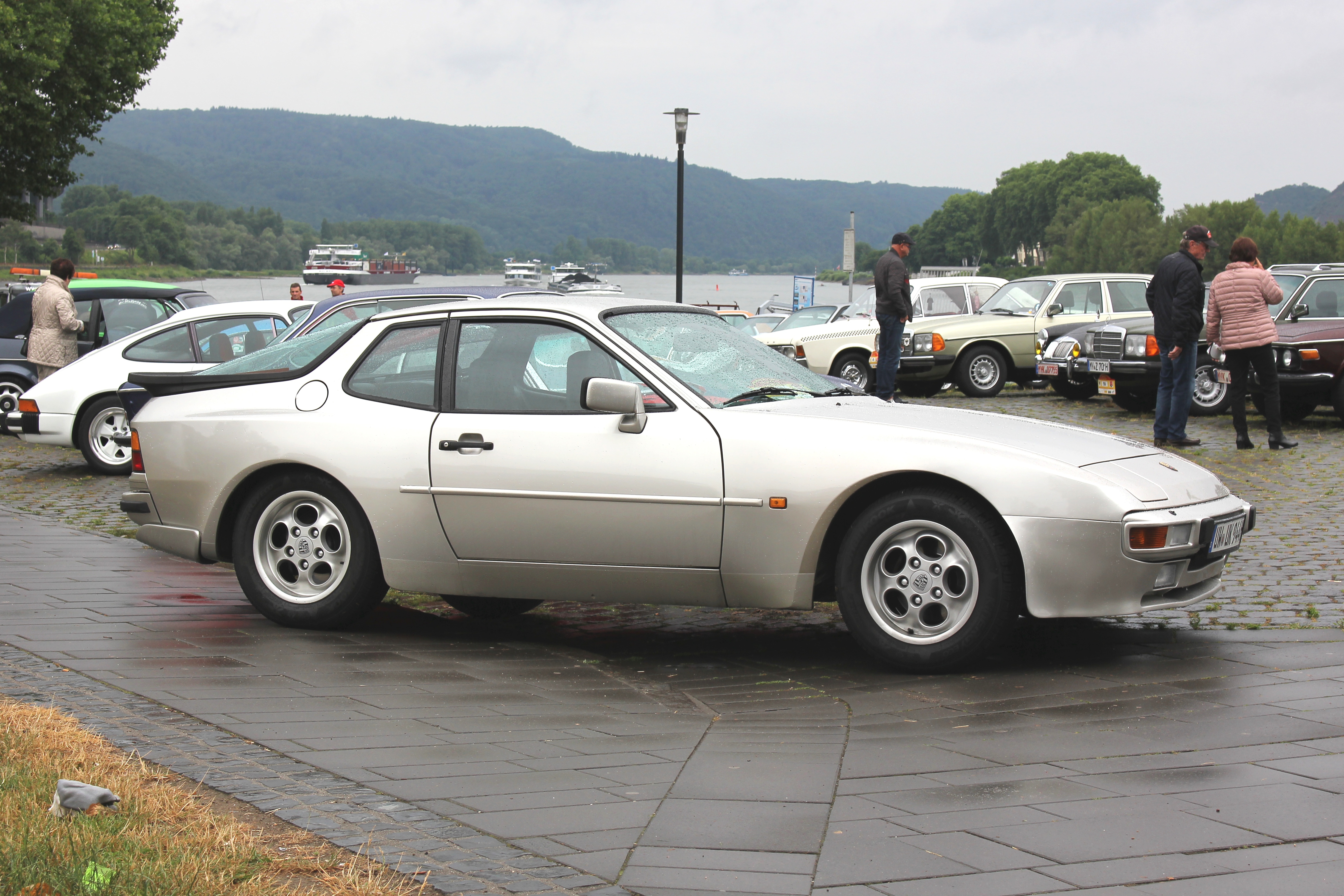
"...either Cayenne or Panorama America. No, I'm going to say 944. 944? Well, that's a force of reference, barely."
The Porsche 944 is a type of sports car made by the German company Porsche. It was popular in the 1980s and is known for being fun to drive and having a good balance.
The Porsche 944 is a sports car produced by Porsche from 1982 to 1991. It is known for its balanced handling and front-engine layout, making it a popular choice among enthusiasts.
"to things like IMSA and Formula One and various other series
and build a dedicated service for gearheads like me."
IMSA is a group that runs car races, especially for sports cars, in the United States. They organize events where different types of cars compete against each other.
IMSA stands for the International Motor Sports Association, which is known for organizing sports car racing events in North America. It features various classes of racing, including prototypes and GT cars, and has a rich history in endurance racing.
"Yeah, and people don't realize that Formula One back then was not
nearly what it is today and even in the US it's not nearly what it is
around the rest of the world."
Formula One is a type of car racing that involves very fast cars competing in races around the world. It's known for being very exciting and using the latest technology in cars.
Formula One is the highest class of international auto racing for single-seater formula cars. It features a series of races known as Grands Prix, held on various circuits around the world, and is known for its advanced technology and high-speed competition.
"I remember going over to England, to Bernie Eccleston's office, which was in a little industrial park in between downtown London and Surrey."
Bernie Ecclestone is a businessman who helped make Formula One racing very popular around the world. He was in charge of many important decisions for the sport.
Bernie Ecclestone is a British businessman known for his role in the commercial rights and management of Formula One racing. He played a significant part in transforming Formula One into a global sport and business.
"And literally it was the Brabham offices and he still had the race team running out the back, but we paid almost nothing for the rights."
Brabham was a famous racing team in Formula One, started by a driver named Jack Brabham. They were known for creating some really advanced race cars and winning many championships.
Brabham is a former Formula One team founded by Australian driver Jack Brabham. The team was known for its innovative designs and has won multiple World Championships during its active years.
"especially the stuff that I used to love the historical where you'd have a Le Mans from 1968 or Monaco from the 50s or love that stuff."
Le Mans is a famous car race that lasts for 24 hours. Cars race around a track, and it's known for being very challenging and exciting.
Le Mans refers to the 24 Hours of Le Mans, a prestigious endurance race held annually in France. It is known for its grueling length and has a rich history in motorsport, showcasing innovations in automotive engineering and performance.
"But you know what's interesting about the auction business is that you would think that what we used to remember as an auction in a tent, in a field somewhere was what Meekam was, what Barry Jackson was. Crews and Auburn, Indiana kind of took it to the next level with a purpose built building for an auction."
The auction business is where cars are sold to the highest bidder. It used to be small and informal, but now it's a big deal with large events and lots of money involved.
The auction business has evolved significantly, moving from informal settings to large, organized events that attract serious buyers and sellers. Companies like Meekam and Barrett-Jackson have transformed car auctions into major entertainment events, generating substantial revenue.
"But I mean, these were just kind of hokey little low down, low rent type of deals. And all of a sudden, you know, these things are big business. Meekam did $411 million in Kissimmee this year and Barrett did almost $200 million in, you know, half the time in Scottsdale."
Meekam is a well-known company that sells cars at auctions. They have big events where people can bid on classic and collectible cars.
Meekam is a prominent auction company specializing in classic and collector cars. They have gained a reputation for hosting large-scale auctions that attract significant attention and high-value transactions.
"Meekam did $411 million in Kissimmee this year and Barrett did almost $200 million in, you know, half the time in Scottsdale. Yeah."
Barrett-Jackson is a famous auction company that sells collectible cars. They hold big events where people can bid on rare and valuable cars.
Barrett-Jackson is another leading auction company known for its collector car auctions. They have a strong presence in the automotive auction market and are recognized for their high-profile events and sales.
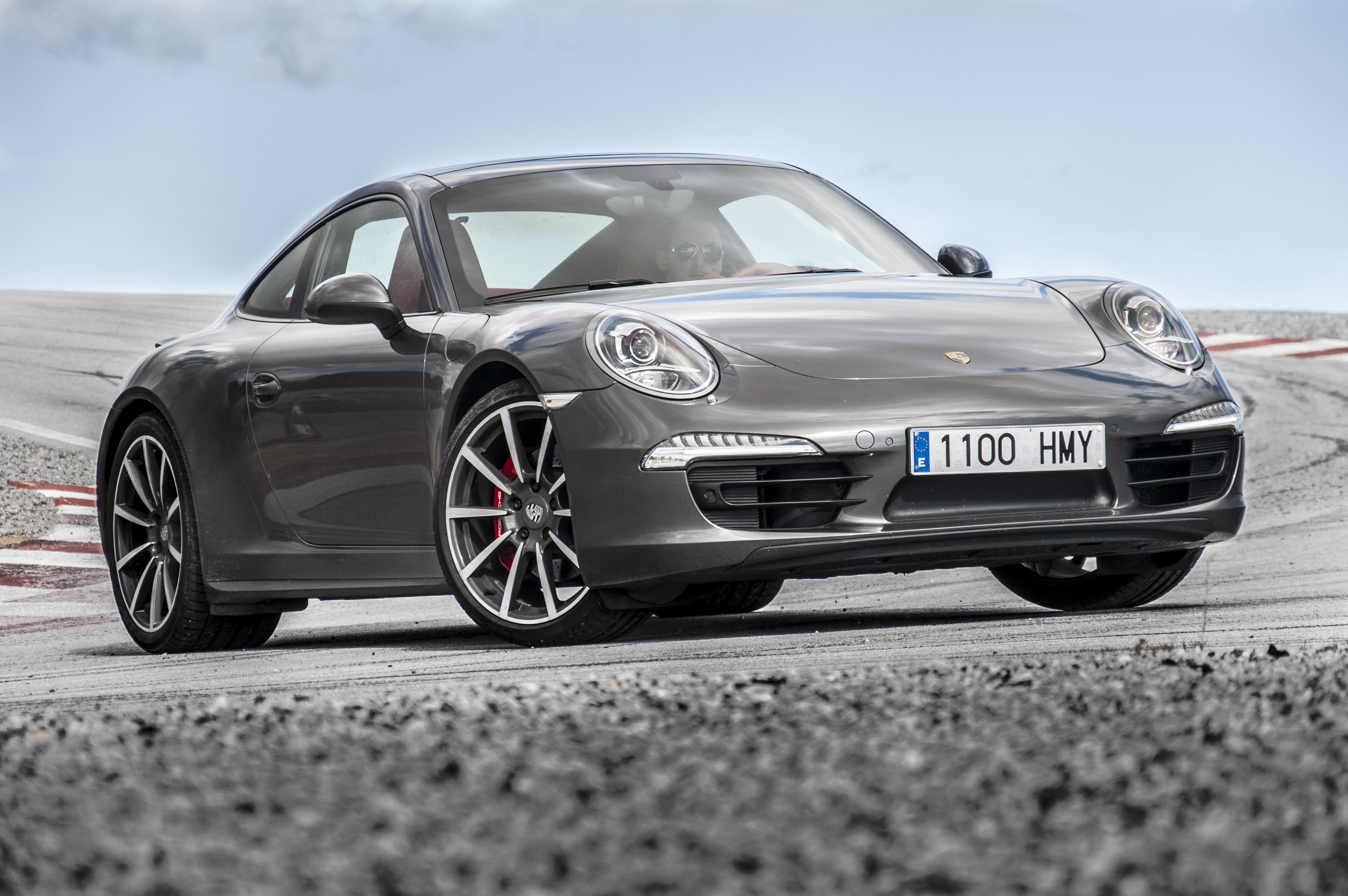
"...talk to a guy about, you know, changing this on a Porsche 911 or whatever."
The Porsche 911 is a famous sports car known for its unique shape and powerful performance. It's been around for many years and is loved by car enthusiasts.
The Porsche 911 is a high-performance sports car that has been in production since the early 1960s. Known for its distinctive design and rear-engine layout, it has become an icon in the automotive world.
"...I think that drive to survive had to be a huge revenue boost for Formula One in the United States. I mean, it really it did something that I was surprised that it was able to do."
'Drive to Survive' is a Netflix show that gives viewers a behind-the-scenes look at Formula One racing. It has helped make the sport more popular, especially in America, by showing the excitement and stories of the drivers.
'Drive to Survive' is a documentary series on Netflix that provides an inside look at the Formula One World Championship. It has played a significant role in popularizing the sport, especially in the United States, by showcasing the drama and personalities of the drivers and teams.
"It had a tremendous, a tremendous uplifting effect on the, on the profile of F1 in the U.S. My wife looks forward to F1 in the U.S."
Formula 1 is a top-level car racing series where teams compete in races called Grands Prix. It's famous for fast cars and exciting races that happen all over the world.
"And then of course, now we've got Cadillac coming into it, which I think can be nothing but good for the sport, especially in the U.S., right?"
Cadillac is a brand that makes luxury cars in the United States. They are known for their high-quality vehicles and have been around for a long time.
Cadillac is a luxury vehicle division of the American automobile manufacturer General Motors (GM). Known for its premium vehicles, Cadillac has a rich history and is recognized for innovation and performance in the automotive industry.
"...IndyCar is still, still produces some of the best racing in the world and the highest speeds in the world."
IndyCar is a form of car racing that features fast cars racing on different types of tracks, including ovals. It's popular in the U.S., especially during events like the Indianapolis 500.
IndyCar is a type of open-wheel car racing in the United States, known for its high-speed races on oval tracks and road courses. The Indianapolis 500 is one of the most famous races in this series, showcasing powerful cars and skilled drivers.
"...and NASCAR itself as well and IMSA, I mean, the grids are huge."
NASCAR is a type of car racing in the U.S. where specially designed cars race on oval tracks. It's very popular and has many fans, especially during big races like the Daytona 500.
NASCAR (National Association for Stock Car Auto Racing) is a popular form of auto racing in the United States, featuring stock cars that race on oval tracks. It is known for its close competition and large fan base, with events like the Daytona 500 being highly anticipated.
"...that car was a vintage racer for me for a number of years. And then when the values started going up..."
A vintage racer is an old car that people race today, usually because it was popular or successful in racing a long time ago.
A vintage racer refers to a classic car that is used for racing, typically from a specific era, often before the 1980s. These cars are often restored to their original racing specifications and participate in vintage racing events.
"And my daily driver is a McCann GTS, a new McCann GTS. Those drive really well."
The Porsche Macan GTS is a sporty version of the Macan, which is a small luxury SUV. It drives well and is fun to use every day.
The Porsche Macan GTS is a performance-oriented version of the Macan, a compact luxury SUV. It combines sporty handling with the practicality of an SUV.
"Hard to believe it's a SUV for lack of a better term."
An SUV is a type of vehicle that is bigger than a regular car and can carry more people and things. It's good for driving on different types of roads.
An SUV, or Sport Utility Vehicle, is a versatile vehicle designed for both on-road and off-road use, often characterized by higher ground clearance and spacious interiors.
"...birds. Of course, who doesn't love the power for firebirds? Studebaker Lark and Hawks."
The Pontiac Firebird is a classic car that many people love because it looks cool and can go really fast. It was popular in the past for its powerful engines and sporty design.
The Pontiac Firebird is a classic American muscle car that was produced from 1967 to 2002, known for its distinctive styling and performance. It gained popularity for its powerful engine options and became an icon of the muscle car era, often associated with high-speed performance and a rebellious spirit.
"...Studebaker Lark and Hawks. Buick Skylarks. Place AMZ Eagle..."
The Studebaker Lark is a small car that was made in the late 1950s and 1960s. It's known for its unique look and was one of the last cars made by the Studebaker company before they went out of business.
The Studebaker Lark was a compact car produced by Studebaker from 1959 to 1966. It was known for its distinctive styling and was one of the last models produced by the company before it ceased operations.
"...Buick Skylarks. Place AMZ Eagle. And the difficult to catch Roadrunner..."
The Buick Skylark is a car that has been around since the 1950s. It is known for being a mix of sporty and luxurious, making it popular among many drivers.
The Buick Skylark is a nameplate that has been used on various Buick models since 1953. It is known for its combination of performance and luxury, appealing to a wide range of buyers.

"...Place AMZ Eagle. And the difficult to catch Roadrunner..."
The AM General Eagle is a tough vehicle made for off-road use, often used by the military. It's built to handle rough terrain and challenging conditions.
The AM General Eagle is a vehicle produced by AM General, known for its rugged design and off-road capabilities. It was primarily used in military and utility applications.
"...And the difficult to catch Roadrunner. There's no better place for birdwatching than Classic Auto Mall..."
The Plymouth Road Runner is a famous muscle car from the late 1960s and 1970s. It's known for being fast and has a fun cartoon character as its mascot.
The Plymouth Road Runner is a classic American muscle car produced from 1968 to 1980. It is known for its performance and distinctive cartoon branding, appealing to car enthusiasts and collectors.
The Turbo Hydramatic 400 is a type of automatic transmission that helps cars change gears smoothly. It was used in many cars made by General Motors.
The Turbo Hydramatic 400 is a three-speed automatic transmission developed by General Motors, known for its durability and widespread use in various GM vehicles from the 1960s through the 1980s.
"Another new arrival is the 2004 Dodge Ram SRT 10 pickup. We've had quite a few of these."
The Dodge Ram SRT-10 is a special version of a pickup truck that has a very powerful engine. It's designed for speed and performance, making it unique compared to regular trucks.
The Dodge Ram SRT-10 is a high-performance version of the Ram pickup truck, featuring a powerful V10 engine derived from the Dodge Viper. It was produced in limited numbers and is known for its impressive speed and performance for a pickup.
"These are the V10. This is basically a Viper pickup truck."
A V10 engine is a type of car engine that has ten cylinders. It helps the vehicle go faster and perform better, making it popular in sports cars and powerful trucks.
A V10 engine has ten cylinders arranged in a V configuration, providing a balance of power and smoothness. This type of engine is known for its high performance and is often used in sports cars and high-performance trucks.
"This is basically a Viper pickup truck. Viper truck."
A Viper pickup truck is a pickup truck that has a very powerful engine, just like the Dodge Viper sports car. It combines the speed of a sports car with the usefulness of a truck.
The term 'Viper pickup truck' refers to the Dodge Ram SRT-10, which features a V10 engine similar to that found in the Dodge Viper sports car. This concept highlights the blending of sports car performance with pickup truck utility.
Horsepower is a way to measure how powerful an engine is. More horsepower means the vehicle can go faster and perform better.
Horsepower is a unit of measurement for power, often used to describe the power output of engines. In this context, it indicates the Dodge Ram SRT's engine performance.
The Dana 80 is a strong part of a truck that helps it carry heavy loads and perform well.
The Dana 80 is a heavy-duty axle commonly used in trucks and performance vehicles. It is known for its strength and ability to handle high torque loads.
"It's a Viper in trucks clothing. 8.2 liters and fast."
The Dodge Viper is a fast sports car made by Dodge. It's famous for being very powerful and fun to drive.
The Dodge Viper is a high-performance sports car known for its powerful V10 engine and aggressive styling. It is often celebrated for its speed and handling, making it a favorite among car enthusiasts.
"...tting broken in. Next up on the list is the 1950 Willys Jeepster VJ3, 463 convertible. Yellow over black..."
The Jeep Wrangler is a tough little SUV that's great for driving on rough trails and having outdoor adventures. It's popular because it can handle tough conditions while still being fun to drive.
The Jeep Wrangler is a compact SUV known for its rugged design and exceptional off-road capabilities. Since its introduction in 1986, it has become a symbol of adventure and outdoor exploration, appealing to those who enjoy off-road driving and a more adventurous lifestyle.
"1988 Jeep Grand Wagoneer, silver and wood grain over burgundy. I like the silver."
The 1988 Jeep Grand Wagoneer is an older SUV that has a unique look with wood accents. It's popular among collectors because of its style and history.
The 1988 Jeep Grand Wagoneer is a classic SUV known for its distinctive wood grain trim and luxurious interior. It features a powerful engine and is considered a collectible vehicle today.
"And they're fun. 1988 Jeep Grand Wagoneer, silver and wood grain over burgundy. I..."
The Jeep Grand Cherokee is a type of SUV that is great for driving on rough roads and also feels nice to drive on regular streets. It's popular because it offers a lot of space and comfort for families while still being tough enough for adventures.
The Jeep Grand Cherokee is a mid-size SUV known for its off-road capabilities and comfortable ride. Since its debut in 1992, it has become a popular choice for those looking for a vehicle that can handle rugged terrain while providing a spacious and well-appointed interior.
"Next up on the list is the 1964 Chevrolet Corvette convertible Daytona blue metallic. What a great color."
The Chevrolet Corvette is a famous sports car from America. The 1964 version is known for being stylish and fast, making it a favorite among car enthusiasts.
The Chevrolet Corvette is a classic American sports car known for its performance and distinctive styling. The 1964 model is part of the second generation of Corvettes, which featured a more refined design and improved handling compared to its predecessor.
"...e list is the 1964 Chevrolet Corvette convertible Daytona blue metallic. What a great color."
The Chrysler Daytona is a sporty car from the 1980s that was designed to be fast and fun to drive. It was popular because it had a cool look and was more affordable than other sports cars.
The Chrysler Daytona was a sporty coupe produced from 1984 to 1993, known for its aerodynamic design and turbocharged engine options. It was significant for its role in the automotive market during the 1980s, appealing to those looking for a performance-oriented vehicle at an affordable price.
'Numbers matching' means that the important parts of the car, like the engine and transmission, are the original ones that came with it. This is good for collectors because it shows the car is authentic and can be worth more.
'Numbers matching' refers to a vehicle where the major components, like the engine and transmission, have their original serial numbers that match the vehicle's VIN. This is often important for collectors as it indicates authenticity and can enhance the car's value.
"They had a GNX on display, which was probably my favorite vehicle. I said to my son, I go, that's a GNX."
The Buick GNX is a special version of the Buick Grand National, known for being very fast and powerful. It was made in limited numbers, which is why many people find it exciting and valuable.
The Buick GNX is a high-performance version of the Buick Grand National, produced in limited numbers in the late 1980s. It is known for its turbocharged V6 engine and distinctive styling, making it a sought-after collector's item today.
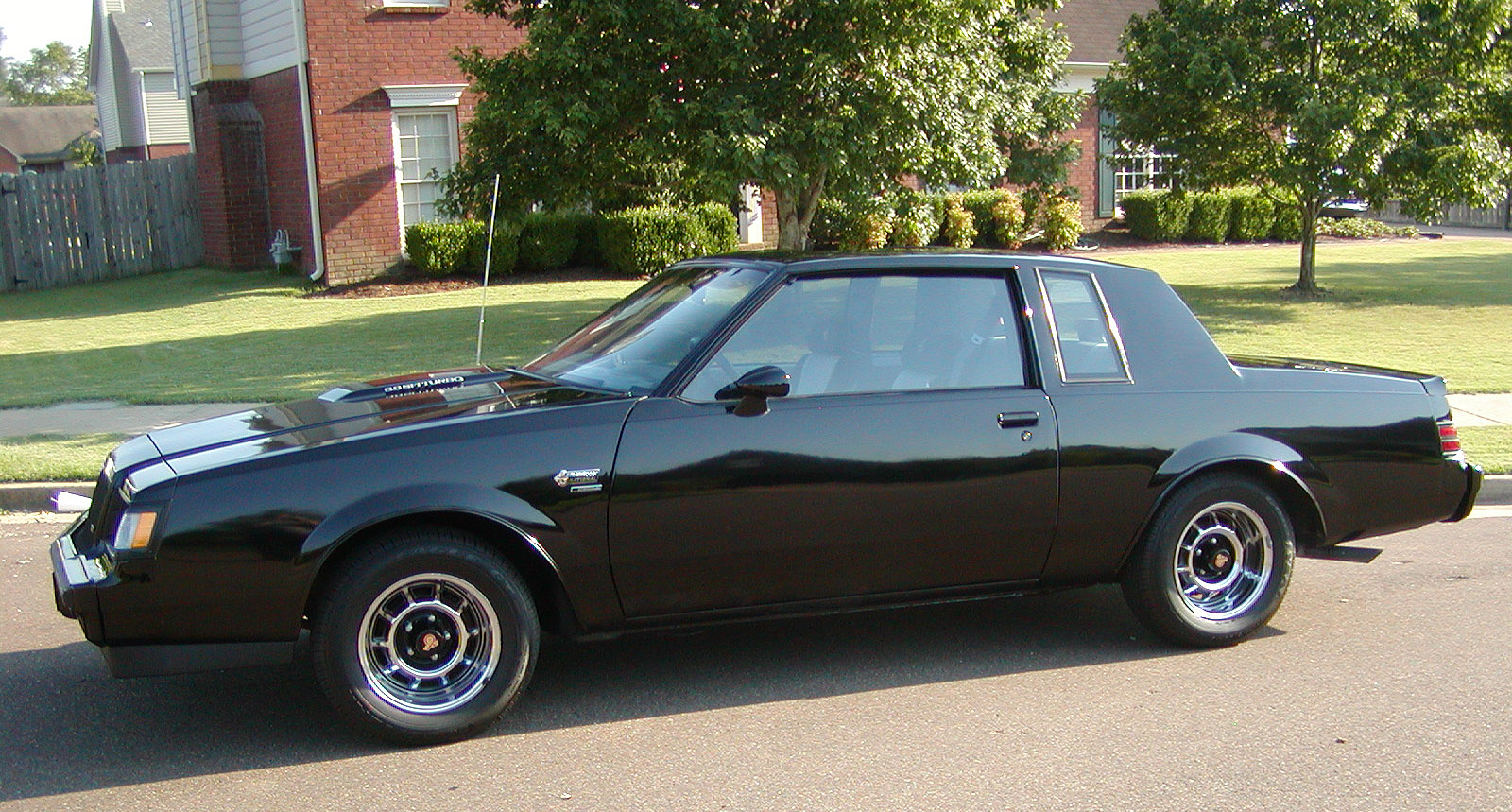
"Probably not. Well, he's a Grand National, but not GNX's. There's a difference."
The Buick Grand National is a special version of a Buick car that was made in the 1980s, known for being fast and having a cool black look. It's loved by car fans because it was powerful for its time and stands out from regular cars.
The Buick Grand National is a high-performance variant of the Buick Regal, produced in the 1980s, known for its turbocharged V6 engine and distinctive blacked-out styling. It gained a cult following for its impressive performance and is often celebrated as one of the classic American muscle cars of its era.
The Dodge Charger is a big car that looks sporty and can go really fast. It's popular because it combines a fun driving experience with enough room for passengers and their stuff.
The Dodge Charger is a full-size sedan that has a strong performance heritage, particularly known for its muscular styling and powerful engine options. Originally introduced in the 1960s, the modern Charger continues to attract enthusiasts with its blend of performance, technology, and practicality.
Select text to request an explanation
This is the Classic Automall Show.
Broadcast from the studios inside the Classic Automall in Morgantown, Pennsylvania.
Just one hour west of Philadelphia at Pennsylvania Turnpike Exit 298.
Featuring nearly 1,000 classic vintage and barn-fine vehicles for sale under one climate-controlled roof.
Now, here's your host, Classic Automall president and the man with all the toys, Stuart Howden.
And welcome to show number 230 where we still have snow.
Yes, we're out of the deep freeze though.
That's 30-something degrees today. I want to see that stuff melting.
I just saw the bill from last year's parking lot and the assaulting of our lot.
We have a big lot.
Yeah, we have a big lot, first of all, and the bill was frightening.
Is it more than four figures?
It was more than my first house.
And that was just for one year.
And that wasn't even this year with the 18 inches of snow that we got.
So, before we get to our guest, how many cars did Inventory JR go first this week?
I'm going, I always lose with the numbers, so I'm going with a word this time,
either Cayenne or Panorama America.
No, I'm going to say 944.
944? Well, that's a force of reference, barely.
I don't know what he's talking about.
It is. I'm going to go slow.
I'm going to say 909.
Oh, Steve's the winner, 915.
Oh, always.
I remember because I remember last week.
And the other thing this damn snow is doing to us is slowing down our consignment.
So, we either got to quit selling or get more consignment.
And I hope for the former we don't do, we'll do the latter.
It'll pick up.
You say that to me every time I start panicking about this, right?
So, let's get right to our guest who's joining us from more sunny climb,
Roger Warner, former CEO, ESPN founder, speed vision, media investor,
probably everything to do with television and media.
You've probably done it. Good morning, evening, afternoon, Roger.
Thanks, Stuart. Nice to be with you.
Oh, so glad to have you on.
And our friend who helps us get guests on the show is always does a great job
of getting us wonderful, interesting guests who've had a career,
whether it's in racing or broadcast and media or, you know,
just automotive personalities, if you will.
And you're certainly one of those.
I mean, as the founder and the guy who started speed vision,
you're my hero because I miss speed vision the way it used to be.
I do too.
Yeah.
That was a project really close to my heart.
And, you know, it was a reflection of my kind of lifelong enthusiasm
for racing and all things kind of automotive, aviation,
marine and motorcycle.
Sure.
It was kind of a dream to kind of be able to build that thing.
Sure.
And it was, I mean, I know it wasn't just a gut feeling,
but in essence, it kind of was one.
And I mean, didn't you kind of just go off heart and soul on this thing
and say, I think this thing is going to work because I don't imagine
it would be easy to get a lot of research for something like this to know
other than you knew that there was a lot of car magazines out there,
which was something I think that weighed into that equation.
Yeah.
That was one observation that there was a huge amount of content in the
print space and having been at ESPN and then having been involved
in building a regional sports network group that we ultimately sold to Fox.
That was called Prime Sports Network Group.
I had watched some of my previous employers and partners move away
from motorsport.
There was kind of less interest, I think, among the mainstream
executives that were running sports media at that time.
And I thought there was an opportunity there to acquire rights
to things like IMSA and Formula One and various other series
and build a dedicated service for gearheads like me.
And that was the whole idea.
I mean, that was a very personal project, a network designed to satisfy
my friends and really no one else.
It turned out to be more broadly popular than that, of course,
but it was really designed for the motorsport enthusiast audience.
Yeah, and people don't realize that Formula One back then was not
nearly what it is today and even in the US it's not nearly what it is
around the rest of the world.
I mean, Formula One was a handful of guys watching it back in the day.
Yeah, it really was.
It was a niche audience, a specialty audience that had very attractive
demographics and when we first put it on ESPN back in the early 80s,
I remember going over to England, to Bernie Eccleston's office,
which was in a little industrial park in between downtown London and Surrey.
And literally it was the Brabham offices and he still had the race team
running out the back, but we paid almost nothing for the rights.
It was really a very exotic specialty item in the menu,
but in the early days of ESPN, a necessity was a mother of invention
in many cases.
We didn't have access to the NFL and Major League Baseball
and a lot of the staples that were on the three big broadcast networks.
So we had to create franchises where we could and sports news was one of those.
Motorsport was one, college basketball was a third and there were various others
including boxing, which was a regular staple.
So we did the best we could and ultimately as we built that business
into something bigger and stronger, we were able to do deals with the NFL
and baseball and the Major League American stuff.
And correct me if I'm wrong.
The basketball, really the games that were not the marquee games,
you guys got at ESPN and really turned it into what has become March Madness.
Yes, we effectively did the sort of quarterfinals and regional championships
and things building up to the Final Four, which had been a network staple for a while,
but there's a huge volume of basketball content that never really saw the light of day,
except on a regional syndicated basis.
So that became a very significant part of the ESPN menu.
What surprised me when I was reading up and doing some research on today's show,
ESPN first show was 1979.
I can't even, that didn't even seem right.
It was like too long ago.
I know it went, ESPN went on the air, I believe in September or October of 79.
I got involved with it as a young management consultant about five, six months after it launched.
The founders essentially had unrealistic expectations, I guess the best way to say it.
And they ran out of money in the spring of 80.
And we were called in by Getty Oil, which was the parent company, believe it or not.
Wow, that's still nice.
Oil company was the funder and founding sort of funder of ESPN.
And a team of us went in and helped them figure out what a realistic business plan might look like.
And I won't bore you with all the details, but Getty Oil decided that they could invest in that plan.
And we were able to get them to put up the $100 million plus to get the thing to break even and not win.
Well, and it wasn't without risk.
I mean, CBS Cable failed during that era, right?
I mean, they couldn't make it work.
That's true.
CBS Cable did fail.
And when they pulled the plug, they essentially created panic within the investment community
and the cable system community, where the public market values of a lot of those stocks dropped dramatically
like 25, 30% following the announcement of CBS's failure.
And the conventional wisdom was if CBS can't make a cable network work,
how in the world can these startups like ESPN possibly succeed?
So that was our opportunity at ESPN to go back to our customers, the cable operators,
and say, guys, if we can't get some help, if we can't get a subscription subsidy,
even a few cents a month per home, we may have to pull the plug too.
So it was an opportune time for us to invert that model and actually build a solid business model and business case for ESPN.
Because you got paid on both sides of the equation.
You got paid from the provider and you got paid by the consumer, right?
We adopted a model much like the magazine model where there was a modest amount of subscription revenue and ad revenue in addition.
And that two revenue stream model propelled the cable TV content business to great heights over a couple of decades.
I mean, really, that was kind of the golden age for the creation of unique and differentiated entertainment content for cable TV.
I always found it interesting that magazines and television programs could review a vehicle.
And maybe the vehicle wasn't that great of a vehicle and yet they were an advertiser.
And that had to be a tight walk that probably had a lot of uncomfortable meetings over things like that, I would imagine, over the years.
Some, yeah, some. But again, mostly we were, you know, the guys that were running ESPN and then later Speed Vision.
We were all enthusiasts ourselves and we tended to focus on the high performance, high margin segment of the automotive industry.
And generally the reviews were unbiased and fact based and so on.
But our enthusiasm for all the product came through.
I don't think any manufacturer felt like they got a black eye.
Right.
But it was not because we were, it wasn't because we were literally shilling for them.
Sure, sure.
It was just that we respected what all the engineers had done and come up with.
And so there was certain amount of respect for every product in that performance segment.
Well, I hear journalists today who say there's really not a bad car out there.
You know, there's, I mean, even the lowest end of the car spectrum today is a pretty good car and has, you know, great performance and reliability and all of those things that you didn't used to have.
So it's tougher and tougher to kind of pick at them like they used to.
Yeah, it is.
And of course, there's also been a kind of, I guess, a growing homogeneity in terms of styling, too.
They've all tended to, you know, adopt similar shapes and styles, I guess, form following function, you know, aerodynamics and that contribution to fuel economy has made them all kind of, you know, streamlined the same way.
Sure.
Except for the big trucks, which can get bigger and more barn door like every year.
I can barely park my GMC pickup truck.
It's so big anymore.
You know, you think, goodness, how did this thing get out?
Well, now I'm looking at a smaller version of it because they've gotten so big, the cars have.
And of course, like you said, you know, every car is pretty darn good and it's interesting to go and get a rental car.
And it used to be there were certain ones that you'd get at a rental car company and go, oh, not that one.
But now, again, there's always something positive about everyone.
Yeah, they're all pretty good.
They're all pretty darn good.
It's come a long way.
Did did did speed?
I mean, speed vision, obviously, pet project.
You loved it.
You're an enthusiast yourself.
But it had to be surprising that it did as well as it did right out of the gate.
I mean, there was a lot of us out there that were looking for something like that.
And especially the stuff that I used to love the historical where you'd have a Le Mans from 1968 or Monaco from the 50s or love that stuff.
Yeah, I did too.
And that was that was a pure expression of personal interest.
I think we I spent a fair amount of time in England before we launched acquiring rights to a bunch of those old archives that had been produced by Castrol and Shell and British Leyland and various other companies over the years.
And some of it was really fun stuff that it was it was a video that I hadn't seen before in many cases.
Right.
So good, good fun.
Yeah.
And in a way to fill again, we had to fill a menu for for a service that didn't exist, you know, a full full time motorsport enthusiasts channel.
And so all of those program formats gave us some scope and allowed us to build a menu that wasn't just repeats of the same race from Sunday afternoon over and over again.
Right.
And the amount of content today, I mean, the amount of content today that you have to it's crazy.
I don't I don't know how they fill it all these channels.
Well, if you if you look at a lot of the channels, the repeat factor is very high.
Right.
There's not, you know, there's not a an infinite amount of great new content that can be produced, either, you know, from intellectual capital or or economic capital.
There's there's a limit to how much good stuff can can get to air.
And so, you know, to to to fill the kind of thousand channels that are on the free streaming platforms and so on.
A lot of it's just repeat content.
But you know, an interesting anecdote from that period that kind of describes what we had to do was the automotive auction.
Right.
The automotive auction programming that we pioneered in January of 96, I believe it was, was a result of our, you know, having to fill time in January in the off season from racing.
We didn't have live racing content.
And we took a flyer.
I have known Craig Jackson and it actually attended an auction or two of his when when his brother was still alive and his mom and dad were involved.
And they had a little tent in downtown Shotsdale or Phoenix and very limited amount of inventory.
But, you know, seeing that in person, seeing those old interesting cars and and the audience and and how that went down, you know, gave me the the the sort of conviction that maybe if we put that on the air and and dressed it up
and made it a kind of entertainment production, it could really attract an audience and help us fill a week or so with live content in a period of the year when there was no racing going on.
Except maybe in a few Sunbelt markets, there were some short track events, you know, but not much.
It's amazing.
And we were talking, our guest last week was Bobby Akin who was involved with that a little bit as well, too, with you guys.
And and the thing that was interesting that I took away from that conversation last week was the fact that the concern was is that were people going to be shot, you know, not want to be shown on television buying these cars.
And at some of the, you know, listen, the catalog sales, the highbrow auctions are like that.
But Barry Jackson and Meekam, the guys are standing in front and cheering and yelling and all hugging and completely the opposite of what you would have expected.
Yeah, I think that's right.
I think maybe a little guy named Jose Cuervo has something to do with that.
Oh, Jose.
Yeah.
Yeah.
Yeah, what a brilliant, you know, a free bar and an auction.
What a brilliant.
What could go wrong?
Okay.
Yeah, nothing.
You just see the guys waking up the next morning going, I did.
I paid what?
I paid what?
And I'm on TV doing it.
Yeah.
Who's that wife of my girlfriend?
Yeah, exactly.
But you know what's interesting about the auction business is that you would think that what we used to remember as an auction in a tent, in a field somewhere was what Meekam was, what Barry Jackson was.
Crews and Auburn, Indiana kind of took it to the next level with a purpose built building for an auction.
But I mean, these were just kind of hokey little low down, low rent type of deals.
And all of a sudden, you know, these things are big business.
Meekam did $411 million in Kissimmee this year and Barrett did almost $200 million in, you know, half the time in Scottsdale.
Yeah.
It really, it truly is amazing to see how that business has grown as an entertainment business.
Right.
I was at the Meekam auction for a couple of days this year and it's extraordinary how many vehicles they have and how they process all that inventory and the prices that they're getting for some of this stuff were just off the charts.
Well, and they're getting cars that used to only go to the kind of the boutique catalog sales are starting to go to the more mainstream auctions are seeing that.
But like you said, I mean, to your point, the machine that Meekam is built with regards to the process of it.
I mean, I know running a car with 200 cars in an auction is a difficult task.
I can't imagine 4,000 cars over a, you know, 10 or 12 day period just mind boggling.
Yeah.
And it really is.
As is, I guess, the appetite on the part of the American consumer.
Which thank God for that.
Yeah.
For that entertainment, for that video entertainment.
They generate a pretty consistent audience year in, year out.
To those deals, I mean, most of their revenue is based on, is it mostly based on sponsorship now or is it a combination?
I mean, obviously they get paid for the broadcast rights, but is it mostly sponsorship that pays for that or is it, is there more money in just, you know, from the broadcast rights on this thing?
Well, the broadcast rights are not that significant actually.
And in recent years, some of the auction firms have actually paid for the airtime.
But kept the inventory so they've generated advertising and sponsorship sales to recoup their production and time buy costs.
But it varies from event to event series to series.
I think maybe Barry Jackson at one point recently had some rights fees in addition to some sponsorship revenue.
But I don't know for sure.
But generally speaking, the economic model was one where the auction company helped defray at least the cost of production and some of the airtime.
Sure.
And shared in the ad revenue, shared in the selling and the ultimate revenue from those sales.
Well, it sounds like a good deal for the networks or actually for both.
I mean, it's a good way to get yourself out there and get your name out there.
It was.
It turned out to be.
I mean, you know the power of television better than anybody.
I think it worked well.
You know the power of television.
Sorry, we're talking over each other.
I apologize for that.
We're getting a little bit of a delay here.
Yeah.
The power of television, though, still stands true today.
I mean, no question about it.
People, I see it on a firsthand basis just doing our little YouTube show that people say, oh, he's the guy on television.
You know, I mean, that's it's powerful still.
Yeah, it is.
It is.
And it's had a it's had a dramatic effect on the on the size and profitability of businesses like Eric Jackson and Meekam and others.
It's really it's grown those businesses in ways that probably none of us imagined they they could grow, you know, when this all started back in 1995.
Is it the fact?
Is it the fact that people know what the car sold for that you think is the intriguing part of it?
What is it?
What's the hook to this?
I think I think it's all of the above.
I think it's the suspense of watching a car go across and wondering what what it might bring.
And, you know, maybe maybe betting with your buddies on on the outcome.
But I think it's also just it's a function of the quality of the inventory that makes it to the TV shows.
Right.
Most of the auction firms tend to put their best, most interesting stuff in prime time.
Sure.
And those programs air.
And so a lot of those million dollar plus cars have not only are they beautiful and great eye candy, but they also have an interesting back story in many cases.
And so there's there are multiple there are multiple elements to those shows that make them interesting.
Is YouTube the future of network television?
I hate to say that.
Wow.
You know, if you ask me to if you ask me to name the number one culprit responsible for destroying the economics of broadcasting TV, yeah, it's YouTube.
Yeah, because everybody can be a star.
Yeah, YouTube has essentially conditioned a new generation of viewers to expect everything for free.
Right.
Right.
And it literally it literally has has disrupted the economic model for broadcasting cable.
Well, and I think not only like that when we were talking about before we went on the air is about AI and all of the ramifications of that and the ability to create content of things that don't really even exist.
I don't even know where that go, you know, it's I mean, I would imagine being the head of a network today is the least fun time in the history of networks to be the head of a network.
Yeah, it's certainly not as fun as it was when I was doing that.
You live the corporate lifestyle, right?
I mean, you did the everything corporate that you took the jet to the West Coast and all that.
And we did.
We had a lot of fun in the 80s and 90s, you know, but the economics supported the economics supported all of that and encouraged, encouraged that.
So the spending on content was high, the spending on a marketing and client entertainment was high.
And those were fun days.
Sure.
Those were those were the glory days for cable TV.
You know, the the the advent of Internet, Internet protocol, Internet distribution like we're doing today really, really changed that.
Sure.
Yeah, go ahead.
Is it amazing to you that this the success really the only successful automotive themed things are that are not racing are the auctions bear Jackson Meekam particular and the build shows.
And basically, that's what's out there anymore.
And is there room for a show that's not a build show, but that's a automotive themed show?
I don't even know what that means, but it seems like there ought to be some more content like that out there.
I've often thought that again, if if if you're targeting a demographic that's sort of say 45 years old and up, there may still be a market for some of the historical documentary content if it's well put together.
And I think that's right.
I think there's still plenty of room.
And we've seen success for this on various channels, but sort of the travel and destination related content that could be automotive or motorcycle themed.
There's still a market for that, although you don't you don't see as much of it these days.
But yeah, I think I think there's room.
There's still room for innovation.
Right.
I know nobody nobody's cornered the market on good entertainment because there's plenty of guys out there's plenty of car guys out there.
I mean, I heard that there's auto passionate audience viewers, like 30 million in the US people that are really passionate about automotive content, whether it be racing or auctions or any of the above.
Yeah.
Yeah, I think I think there's a sizable enough audience segment there that there could be and should be some continued innovation and some new shows and different
program formats beyond live, you know, live racing and builder shows.
Well, and the thing that I think that we want to see more than anything is more interaction between humans, you know, not, you know,
from like the garage socials that Hagerty had some was trying out where they would have a area where you could gather and bring your car and put it on a lift and meet fellow friends and talk to a guy about,
you know, changing this on a Porsche 911 or whatever.
Yeah.
You know, I think we've gotten so far away from face to face interactive.
I mean, and because as you, you know, to your point about YouTube, I mean, the Internet basically did that in a lot of respects to a lot of different things, too.
There's really not many car magazines left.
They're there, but I don't know.
I don't think car and driver sells five million copies a year anymore.
No, no.
Yeah.
The the the reach is a lot smaller and the number of titles that can survive an action and paper and ink is way, way, way smaller than it used to be.
Sure.
Yeah.
And I'm kind of with you.
I mean, a lot of the action in our space is in the action is in the is in the experiential side, the live event side and and getting people to participate in that.
And I agree with you, Stuart, there's certainly going to be growth there.
And where some of those activities and events succeed, perhaps they'll spin off some video entertainment someday.
Well, as you were saying earlier, you know, the there's not as much good content as there used to be.
I mean, all you have to do is turn your television on and see everybody loves Raymond Seinfeld, the King of Queens, all these shows that are still there just might as well have their own channel.
I mean, they're just a lot of them do.
A lot of them do have their own channel in what we call the fast universe.
You know, that's an acronym for free ad supported television.
Right.
And that's what you see when you're now when you turn on your Samsung TV and you see you see all those apps that are available within those platforms and and within some standalone cases, you've got all of that and it's free.
And, you know, the big entertainment companies have have huge libraries that there's hundreds of episodes of stuff going back into the 60s.
Right.
They can build whole channels out of that.
You know, we were talking.
Yeah, absolutely.
We were talking earlier about the popularity of Formula One.
And I got to think that, you know, as much as I hate to admit that drive to survive had to be a huge revenue boost for Formula One in the United States.
I mean, it it really it did something that I was surprised that it was able to do.
You know, I liken it to our success with the America's Cup back in the 80s at ESPN.
Well, that was, you know, really out of a blue oddball live television coverage from the Indian Ocean.
And it ended up being a front page on the New York Times as, you know, kind of phenomenon that people were tuning in to watch.
Drive to survive, I think, got that lightning in a bottle effect for a couple of reasons.
One, it was great content.
It was very well produced.
And number two, we were all stuck at home and watched, you know, and watched our 85th
episode of, you know, of, you know, of friends or sign tell them we're looking for something else to see.
And that's a truth.
Yeah.
So, so it arrived at exactly the right moment to find an audience, including a substantial female audience.
Right.
And you're right.
It had a tremendous, a tremendous uplifting effect on the, on the profile of F1 in the U.S.
Sure.
My wife looks forward to F1 in the U.S.
I mean, watching it with us now, she's enjoying it and doesn't matter if it's at 6 a.m.
She's ready to get up and, you know, watch this and enjoy it.
And of course, you know, a lot of the personalities being, you know, everybody likes to see behind the curtain and, you know, Mr.
Mr. Steiner was certainly, you know, an interesting character that helped fuel that as well too.
And then of course, now we've got Cadillac coming into it, which I think can be nothing but good for the sport,
especially in the U.S., right?
Yeah.
Well, that's, that's what F1 has always lacked with, with a few exceptions when Dan Gurney
or Mario Andretti or somebody was, was running at the front with a, you know, with a front running team in F1.
Outside of those years and those examples.
Yeah.
The sport has suffered here because of a lack of American teams of drosgers.
And I think that the choice that Cadillac made for their drivers was perfect.
I don't think they could have picked two better, you know, veteran guys who understand cars, who understand how to race in Formula One.
You know, to get some young upstarted 18 years old, I think would have been a huge mistake for them starting out of the gate.
They'll go to that, but.
Yeah.
But I think so too.
They'll rely on experience for a few years because of necessity.
But yeah, but, you know, we're blessed in this country.
You know, part of the reason why F1 was, was a niche sport for so long and still is to some extent, I think.
We have a, you know, we have an abundance of fantastic racing content right here at home.
Right.
You know, IndyCar is still, still produces some of the best racing in the world and the highest speeds in the world.
And NASCAR itself as well and IMSA, I mean, the grids are huge.
The quality of the teams and drivers is, is tremendous.
And, you know, the way that they are produced for television is absolutely first rate.
So, you know, we have no shortage of alternatives.
If you're a race fan, you're lucky you're living here in the USA.
Absolutely.
And NASCAR has become more universal because they've done a better job of the programming side of it and the personalities that they have with it and all of that.
We're a lot of guys who used to kind of look down their nose on NASCAR now watching it fairly regularly.
Well, the new car, as you know, is a real race car.
I mean, that's a much more interesting race car.
That's part of it.
And of course, the driver, the skill level of the drivers as kids are now getting training and coming up through carts and little formula cars.
And stuff that quality of drivers is great as well.
So got a lot of very young guys running at the front in that sport.
And that didn't used to be the case.
No, not at all.
It was always the veterans that were up there.
So, yeah.
So when you, when you sold speed vision to Fox, I mean, everybody knew that there was going to be more NASCAR stuff in the content because they, that was, they had the rights to that.
But were you surprised that it changed and how it shifted dramatically, pretty dramatically, right?
Well, yeah, it did.
It moved away from a, from a sort of broadly focused product for gear heads, you know, performance enthusiasts to a much more focused service that was much more dependent on NASCAR.
You know, we'd been trying, by the way, to get some NASCAR rights since the day I launched that thing.
I mean, we were, we were, we were trying to license the archive.
We were trying to do everything we could to get in business with NASCAR, but we didn't really have the scale or the economic cloud to make a compelling offer to Bill France at that time.
But so, so I think when, when Fox shifted to more of a NASCAR focus, they did build some audience.
And I think they were able to hold that audience for a while, but they may have, they may have lost a lot of the audience segments.
It didn't cross over so much with NASCAR.
Well, you know, and, and I don't know, at the end of the day, it's, there's no, there's no way to prove that that was a better,
a better or worse economic outcome for them.
It was what they wanted to do.
And once they bought it, I had no control over where it went.
Well, and the timing of NASCAR on the time of day when they run the races is much better than Formula One.
It's not 6 a.m.
So that was, that's always been kind of the problem with Formula One is the actual timing of the race.
And that's always complained about football games or any games.
Like, thank God the Super Bowl started at 6 30 because I don't want to be up till 4 a.m. watching the diagram game.
Particularly this year.
Well, I wasn't going to say it.
I'm glad you did.
Direct all your fan mail to him.
From, from a standpoint of automotive gear hit, how do we, how do we move forward?
How do we get better content?
Is it going to be, unfortunately, whether we like it or not YouTube or is there going to be better content out there?
And can the networks, you know, somehow, I'm surprised that networks don't have more automotive type content, be it ABC or NBC or CBS.
Yeah.
Well, you know, it's interesting.
I think you kind of answered that question in part with your show.
A lot of the creativity, a lot of the new and interesting content is coming from creators that are on the Internet that are doing podcasts or other other types of program formats.
I think, you know, the net, the networks and perhaps the big cable networks that are left are a little bit in a box.
Right.
They have to deliver audience tonnage and there aren't too many things that can do that.
Right.
That's their last great claim to fame is that they can deliver big audiences.
Right.
And so they're spending big money to license big events.
Right.
And that probably won't change for a while.
But what that does is it sucks up most of the budget for everything else.
Right.
Oh, you know, if you're going to do major licensing deals with leading, say automotive or race series like NASCAR, IndyCar, whatever, you may not have a lot of dollars left for documentary programming or other entertainment stuff that's targeted at that audience.
Almost PBS like, if you will, you know, that's, you know, that's the issue that you see.
And of course, you know, I mean, there's still don't don't get me wrong.
There's great content.
The problem we're so spoiled because there is so much content out there.
You know, I'd go back to the three channel days.
And if I could have watched any kind of racing on television, except on ABC's Wild World of Sports, I'd have watched every minute of it.
Yeah.
Yeah.
Well, you're right.
There's a tremendous amount of content available now.
The real trick is just finding it is navigating to it and finding it on a consistent basis.
And, you know, it's it's it's definitely gotten harder.
But there's a tremendous amount of stuff there that we didn't have access to years ago and the new sort of creative energy is in your space.
Right.
It's on the internet.
Well, to do it professionally, I mean, you know, you see lots of people who are doing it kind of halfway and, you know, they're in their basement and in a pair of sweatpants.
And bad lighting and a bad camera and a bad microphone and all that.
We're trying to take it to the next level and spend a little money to hopefully get a return on our investment that it looks professional and therefore it is professional.
Yeah, it is.
And and, you know, Joe Rogan, Joe Rogan was one of the pioneers of that.
He spent the money.
He did the research.
He got the guests.
He produced interesting program content.
And then suddenly people found it and said, hey, this is this is a great alternative to what I was looking at on NBC a minute.
Exactly.
And the funny thing about his show is that you can watch like an hour and a half and you're thinking, this has got to be about done.
And you say, oh, my God, there's two hours left.
But it's but it's so intriguing.
You want to watch it so you go back to it.
You may not watch it all in one fell swoop, but you'll go back and catch most of it.
And that's the cool thing about television today is that I can watch it on my schedule, not your schedule.
Yeah.
More personalized.
Much more, much more fragmented audience as a result.
Exactly.
It's hard to define the guys, but but they're there.
Yeah, they're there.
And the industry can support some very, you know, very specialized, focused entertainment content.
Sure.
Absolutely.
You know, my new effort, Speed Sport One, our little live streaming service.
Right.
Covers a lot of the short track stuff that that happens right in your backyard there.
And New York are hotbeds of all of that.
So we we do a lot of sprint car modified midget racing on that service that you might enjoy it.
Grassroots Motorsports around here is still huge, whether it's drag racing or short track or anything.
I mean, it's just still a huge, huge part of this part of the world is car country.
Believe it or not, as much so, maybe as anywhere we've ever seen, be it Southern California
or Scottsdale or South Florida.
There are car people through and through here.
I know.
I mean, going back to the old Indie car days when I was a kid, Langhorn and and all all of
that kind of stuff and the big shows at Hershey and all the other things that you've had going
on in your part of the world.
We cover some of that.
So I appreciate you so much being on the show.
My last question is always what's your daily driver and especially down in Florida, I got
to know.
It's got to be the you still don't have the old nine ninety sixty five nine eleven, do
you?
Well, I don't have the sixty five nine eleven, but I have my seventy three nine eleven RS.
I've owned that car.
I've owned that car for thirty five years now.
I bought it when I was living in California and we we kind of finished the restoration
that Jim Oppenheimer and Peter Kitschak at Toad Hall Racing had started.
They imported the car.
I finished it and that car was a vintage racer for me for a number of years.
And then when the values started going up into multiple hundreds of thousands, I thought
I'm not going to lean on this thing anymore.
I got I got the old sixty five and raised that.
But I still have the seventy three RS.
I have one other kind of collector Porsche twenty nineteen GT three RS.
Nice car.
And my daily driver is a McCann GTS, a new McCann GTS.
Those drive really well.
Sort of a Porsche.
I'm a Porsche guy now.
Yes, I can tell you.
I can tell you are the McCanns are great driving cars, too.
They're nimble and they're amazing.
Hard to believe it's a SUV for lack of a better term.
I've probably sold a dozen of those to friends.
Just, you know, answering the question you just asked me about what's your daily driver
and the McCann GTS, I think is the is the best daily driver a person could could have.
I mean, the car does everything from carrying five adults to driving like a sports car
to providing all the sort of luxury and feel of a Porsche.
Sure.
I mean, it's just a really good all around all around car.
So hopefully we'll sell a few more because of this show.
So there you go.
Maybe Porsche, if you want to come knocking, we're here.
We're just waiting for you.
Roger, such a pleasure having you on the show today.
We could do this all afternoon, but I know you got other things to do.
But thank you again and we'll hope to see you down the road sometime soon.
Hey, Stuart, thanks.
It's a pleasure.
I hope I'll have a chance to meet you in person and see that fabulous show review built.
Thank you.
I watched the drone footage and couldn't believe it.
It's crazy, isn't it?
You've got at least two of everything ever made.
We're kind of like Noah's Ark is what we are.
The automotive equivalent of Noah's Ark, but it's fantastic.
Thanks again, Roger.
And we'll be right back with a Classic Auto Mall show in just a couple of minutes.
This is the Classic Auto Mall show from our studio near Philadelphia in Morgantown, Pennsylvania.
Admission is free.
Directions hours and more at classicautomall.com.
The Classic Auto Mall is located not far from Audubon, Pennsylvania.
Named after James Audubon, the famous ornithologist.
And there's probably no better place for birdwatching.
Look there, a flock of thunderbirds.
Of course, who doesn't love the power for firebirds?
Studebaker Lark and Hawks.
Buick Skylarks.
Place AMZ Eagle.
And the difficult to catch Roadrunner.
There's no better place for birdwatching than Classic Auto Mall.
And we're back with a Classic Auto Mall show from the Classic Auto Mall studio in Morgantown, Pennsylvania.
Mr. Roger Warner, what a great guest.
Fascinating insight into the broadcast world.
And basically he's the one who started the Barrett Jackson auction television that's become so popular nowadays.
That's amazing.
And he's got a new adventure speed sport one that I'm sure we'll find out some information about
and put up on our, Randy will put up on the thing and we'll have him on the show again.
And we'll talk about that and other things that he's doing.
And we could, I mean, he's done everything.
He's done it all.
Done it all.
How cool is that?
It is pretty amazing.
That's what we do here.
We expose people who have done it all.
That's true.
And how would anybody know if it wasn't for us?
You know, we're just so good like that.
That's right.
We're sleuth.
We're sleuth like.
Of success.
We're not sloth.
We're sleuth.
How about the new arrivals this week?
How about them?
How about those?
How about the 1972 Oldsmobile 98 Cottner Bevington ambulance?
Oh, the ambulance.
Yeah.
White and orange over olive green.
That's an odd color combination.
Oh, he has a green interior.
That's right.
Twenty-two thousand and one.
It wasn't odd in seventy-two.
Right.
Twenty-two thousand and one actual miles.
Sure.
It was a military magazine feature car.
How about that?
That's odd.
I don't know why.
I think it was green at some point.
Maybe it was.
It was probably green-green.
Yeah.
So that makes sense.
455 cubic inch Oldsmobile V8.
Turbo hydromatic 400.
Ready to roll.
Yeah.
My father drove one of these back in the day.
So it was a volunteer ambulance driver.
Wow.
That was a good gig.
You can drive fast and run red lights.
I just remember playing in the back of the...
That's why I like this one.
And I think I wrote that in the thing.
This is what kids are attracted to at car shows.
You can get to run around the back and sit in the seats and stuff.
It's fun.
Another new arrival is the 2004 Dodge Ram SRT 10 pickup.
We've had quite a few of these.
Black over black.
These are the V10.
This is basically a Viper pickup truck.
Viper truck.
Yeah.
Just like he was saying about his McCann GTS.
That's like, oh man.
They are sweet.
Yeah.
The GTS is a way to go on that car too, I wanted to say.
Yeah.
As opposed to the Turbo or the base model.
Yeah.
I think the GTS is absolutely the way to go.
And you know, he's a Porsche guy.
There you go.
Another one.
911 RS73.
Gosh.
That wouldn't suck.
No.
Anyway, back to our old Dodge Ram SRT.
Yeah.
500 horsepower, 8.3 liter V10.
A Dana 80.
I thought it was always Dana 60.
So Dana 80.
It's a big truck.
It's a big truck.
It's a Viper in trucks clothing.
8.2 liters and fast.
Yeah.
You know, I love fast trucks.
And 46,000 actual miles.
Just getting broken in.
Next up on the list is the 1950 Willys Jeepster VJ3, 463 convertible.
Yellow over black, 92,000 actual miles.
That's a lot of miles on one of those because, you know, you don't go in long distances on
these things.
They're usually beach cars or whatever.
So this one's been driven and used and well maintained.
And it's such a classic look.
They are.
They're really cool looking.
And they do really well here.
Well, they don't last very long.
They absolutely don't.
And they're fun.
1988 Jeep Grand Wagoneer, silver and wood grain over burgundy.
I like the silver.
It's a good color on those Grand Wagoneers.
And that's got the 360 cubic inch VA with a two barrel and a Dana 44 axle.
And these are, these are, I'd say they're beyond up and coming collectibles.
I think there are collectibles and people absolutely people and especially the last
year, the 91 last year they made them.
So it's got this luxury interior.
Yeah.
It really does.
Burgundy and wood grain.
Yeah.
Cool.
Yeah.
And the 360, which wasn't nothing back in 88.
There wasn't many engines over any bigger.
That's right.
In 88.
That's true.
Next up on the list is the 1964 Chevrolet Corvette convertible Daytona blue metallic.
See something that's not quite right? Our annotations are AI-generated and can sometimes miss the mark.
Click the flag icon on any annotation to suggest a correction.