Potholes don’t feel the same in every situation. If you hit one slowly in stop-and-go traffic, the car has more time to drop into it, and a smaller car can feel the jolt more.
Car
Cadillac Denali
Denali is a Cadillac trim that’s usually tuned for a smoother, more comfortable ride. The host is saying it soaks up rough roads better than smaller cars.
A tunnel in the context of a race facility is typically a controlled underpass that lets vehicles or staff move between areas without crossing active track zones. Here, it’s used as a vivid detail to describe daily access around the Indianapolis Motor Speedway.
General Motors, or GM, is a big American car company. If your family worked for GM, it often means you grew up around cars and mechanical stuff, which can lead to a love of racing.
The Indy 500 is a famous IndyCar race in Indianapolis. It’s one of the biggest races in the U.S., and saying it’s his 38th shows he’s been involved for a very long time.
IMS Speedway is the Indianapolis Motor Speedway, the famous race track where the Indy 500 is held. People in racing often treat it like a special place with a lot of history.
The Indianapolis 500 is one of the biggest car races in the U.S. It’s run on a big oval track, and the cars are built specifically for racing. People who love cars usually know it, even if they don’t follow other racing.
A tractor pull is a type of competition where tractors try to drag a heavy sled as far as they can. It’s more about pulling power and grip than racing around a track.
Horsepower is a way to describe how strong an engine is. Higher horsepower usually means the car can accelerate harder, but it’s not the only thing that affects speed.
PRI stands for Performance Racing Industry, a major motorsports trade organization. The segment describes PRI as hosting a large annual trade show in Indianapolis, which is a hub for racing technology, teams, and industry suppliers.
In this context, “agnostic” means PRI doesn’t favor one type of motorsport over another. The speaker is emphasizing that the organization covers a wide range of racing disciplines, from go-karts to F1.
F1 is the most famous high-level race series in the world, with very advanced race cars. It’s different from oval racing or local fair events, but it’s still part of the big motorsports world.
Drag racing is a race where cars line up and race straight down a short track. The goal is to get to the finish line as fast as possible. It’s popular because it’s simple to watch and the acceleration is really exciting.
Formula One is a major type of race where teams build specialized open-wheel cars. It’s run on tracks around the world and has a big fan base. When people say “Formula One,” they usually mean that specific racing series, not all racing in general.
IndyCar is a big open-wheel racing series in the U.S. The cars and rules are different from Formula One, even though both are “open-wheel” racing. So when someone says “IndyCar,” they’re talking about a different league than F1.
Topic
F1 controversy
They briefly mention a debate around Formula 1. That kind of “controversy” usually means people disagree about how the sport is being run or how fair the racing is.
NHRA is an American drag racing organization. “Top Fuel” is the quickest drag racing category, and the cars are so powerful that the launch is physically intense—almost like a shockwave.
Antron Brown is a famous drag racer. The point here is that the speaker is describing what it feels like to watch a top-level driver right before the launch.
In drag racing, there’s a set of start lights called the “tree.” “Light up the tree” means the lights begin the countdown that starts the race, and drivers try to launch at the right moment.
Brand
Ron Caps
Ron Caps is another drag racer mentioned in the same Top Fuel setting. They’re saying they were close to the action right before the race starts.
NASCAR is a popular U.S. racing series with stock cars. It’s different from IndyCar, so switching between them is like switching sports with different rules and cars.
A go-kart track is the course where people race small, lightweight karts. It’s a common first step for future race drivers because it teaches you how to steer, brake, and drive through corners.
Racecraft is how you actually race well—not just how fast you can go. It includes things like where to drive in a turn and how to pass or defend without making mistakes.
It’s basically saying that getting people to notice you and care about what you’re doing matters a lot. In this context, the museum is trying to create excitement so more people show up and pay attention.
Concept
steward of history
It means taking care of the museum’s history so it doesn’t get lost. The goal is to keep the stories and cars accurate for future visitors.
Concept
disruptive storyteller
It means telling the story in a new way that grabs people’s attention. Instead of just showing cars, the museum tries to make the experience feel exciting and modern.
Concept
$70 million renovation
A major renovation budget like “$70 million” typically signals significant upgrades—often including new galleries, restoration spaces, climate control, and improved visitor flow. In a museum setting, these changes can directly affect how well cars and artifacts are preserved and displayed.
Big anniversaries are a way for the museum to celebrate how long it’s been around. They often use the moment to bring in more visitors and tell the story of the sport.
The hosts explain that some museum cars were acquired as loans or gifts, rather than being historically connected to the Indy 500 itself. This matters because a museum’s collection is often judged by how directly it supports the story it’s trying to tell.
The guest notes that the Ferrari had never raced on “this track,” meaning it didn’t have direct provenance tied to the venue’s competition history. In classic-car collecting and museum curation, race history and track provenance are often key to a car’s interpretive value.
“Turn two” is just the name of a particular corner on the race track. Different corners behave differently, so people pay attention to them when watching or setting up cars.
In motorsports, “caretaker” or stewardship refers to the people responsible for preserving a track’s legacy while keeping it relevant and well-run for future generations. Here, the hosts frame Roger Pinsky’s role as continuing the work of prior stewards and maintaining community trust.
Topic
Pagoda area
They’re talking about a particular place at the Indianapolis track where people gather and watch events. It helps listeners picture where the action is on race day.
“Turn three” refers to a specific corner/section of the Indianapolis Motor Speedway track layout. Different turns give different sightlines, noise levels, and viewing experiences, which is why fans talk about watching from various parts of the circuit. For listeners, it helps to know that track position changes what you notice during a race.
Topic
38th and 500
“38th and 500” is almost certainly shorthand for the Indianapolis 500 (often said as “the 500”), with “38th” indicating the speaker’s 38th time attending. The Indianapolis 500 is a major open-wheel race, and repeated attendance is a common way fans describe their connection to the event. Listeners may benefit from recognizing that “500” refers to the Indy 500.
The “Wienermobile race” is a humorous, crowd-pleasing event associated with the Indianapolis 500 festivities. It’s notable because it shows how Indy isn’t only about the main race—it also has themed entertainment leading up to it. For listeners, it’s a good example of how motorsport culture blends with pop culture.
Rotating a collection means they don’t show everything all the time. They store some items and swap them in later so the display stays interesting and the stuff lasts longer.
They’re joking that the vault is like Area 51—something secret and not easy to get into. It’s just a way to say it’s hidden and not usually accessible.
Racing isn’t just about going fast—it’s also where new technology gets tested. When something works well on the track, car makers may use it in regular cars so more people can benefit.
ABS is a safety system that stops your wheels from locking up when you brake hard. When the wheels don’t lock, you’re more likely to keep steering control.
Seatbelts are what keep you from flying forward during a crash. They’re a key safety feature, and racing helped prove and refine safety ideas over time.
Disc brakes use a spinning metal disc and pads to slow the car down. They tend to work better and handle heat well, which is why they became common on modern cars.
R&D means “research and development,” basically how new ideas get tested and improved. Here, the host is saying the museum helps you see how engineers learn from racing and turn that into real car technology.
A hybrid car uses two types of power: a gasoline engine and an electric motor. The electric part can help the car move faster and can also make the overall system use less fuel.
When they say “110th running,” they mean the race has been held about 110 times over the years. It’s a way of saying the event is really established and has a long track record.
Firestone is a tire brand that also works on tires for racing. The idea is that what they learn from race tires can help make regular tires safer and better for everyday driving.
Passenger tires are the tires you’d put on a normal car you drive every day. The hosts are saying that racing tire technology can eventually make those everyday tires safer and perform better.
From a safety standpoint means the changes aren’t only about going faster—they’re about helping the car stay controllable. Better grip and stability can reduce the chance of losing control.
They’re talking about how busy the parking lot is, which is a sign that lots of people are visiting. At a track or museum, that usually means the place is drawing a lot of motorsport fans.
Concept
bus tours
Bus tours are just organized group trips. Here, they’re used to bring visitors around the track area so more people can see it easily.
Topic
Time Magazine voted us ... top 100 destinations
They mention Time Magazine ranking the place among the top destinations. It’s basically a big-name endorsement that helps explain why lots of people want to visit.
“Wow factor” is the idea that certain exhibits or displays create an immediate, emotional impact that encourages people to keep looking. In automotive museums, that often comes from rare cars, dramatic presentation, or interactive storytelling.
They’re talking about a renovation project for the museum and how it changed the place after it reopened. It’s basically the “what’s new” story for the museum.
“Standing room only” means the event was so popular there weren’t enough seats, so people had to stand. It suggests a lot of interest in the car unveilings.
Gasoline Alley is a themed area that celebrates cars and racing history. Here, it’s the first stop you walk through before entering the museum’s “starting line” experience.
Company
Big Machine Label
Big Machine Label is a music company. In this conversation, it’s mentioned because Scott Borchetta is involved and connected to the motorsports world.
Topic
Heritage Invitational in Charlotte
They mention an event called the Heritage Invitational in Charlotte. Scott was racing there, but the clip doesn’t explain exactly what kind of event it was.
Car
pace car
A pace car is the car that leads the race cars at the beginning (or when things need to be controlled). It sets the speed and helps get everyone lined up safely.
Term
on the track
“On the track” means driving on a race course instead of regular roads. It’s where drivers can push the car harder and learn how it behaves at speed.
Topic
Indianpolis Motor Speedway Museum
The Indianapolis Motor Speedway Museum is a place that shares the history of racing from the Indianapolis Motor Speedway. It often has hands-on activities so visitors can learn more than just by reading.
Charlotte Motor Speedway is a famous race track in the Charlotte area. People go there for big racing events, so it helps set the scene for what the museum is connected to.
Concept
educational initiatives
This is basically the museum’s organized teaching programs. Instead of just looking at cars, visitors get activities and lessons that help them understand how things work.
Facility rentals refer to renting out a venue space for events. For museums and motorsports facilities, this can include private gatherings, corporate events, and community programming that help fund operations.
Summer camps are learning programs during the summer. Here, the museum uses them to teach kids through activities and guided experiences, not as a job/internship.
STEM is a school approach focused on science, technology, engineering, and math. “STEAM” adds the arts so learning isn’t only technical—it also includes creativity.
Driving simulators are video-and-control setups that mimic driving. They let people experience racing or driving situations safely, without actually getting behind the wheel of a real car.
This is about “succession” in motorsports culture—keeping racing and classic-car enthusiasm alive by recruiting younger people. Museums and volunteer programs often serve as a bridge by offering education, hands-on involvement, and access to history.
They started a new volunteer program to get people helping out. The host says it was launched after reopening and the team worked hard to make it successful.
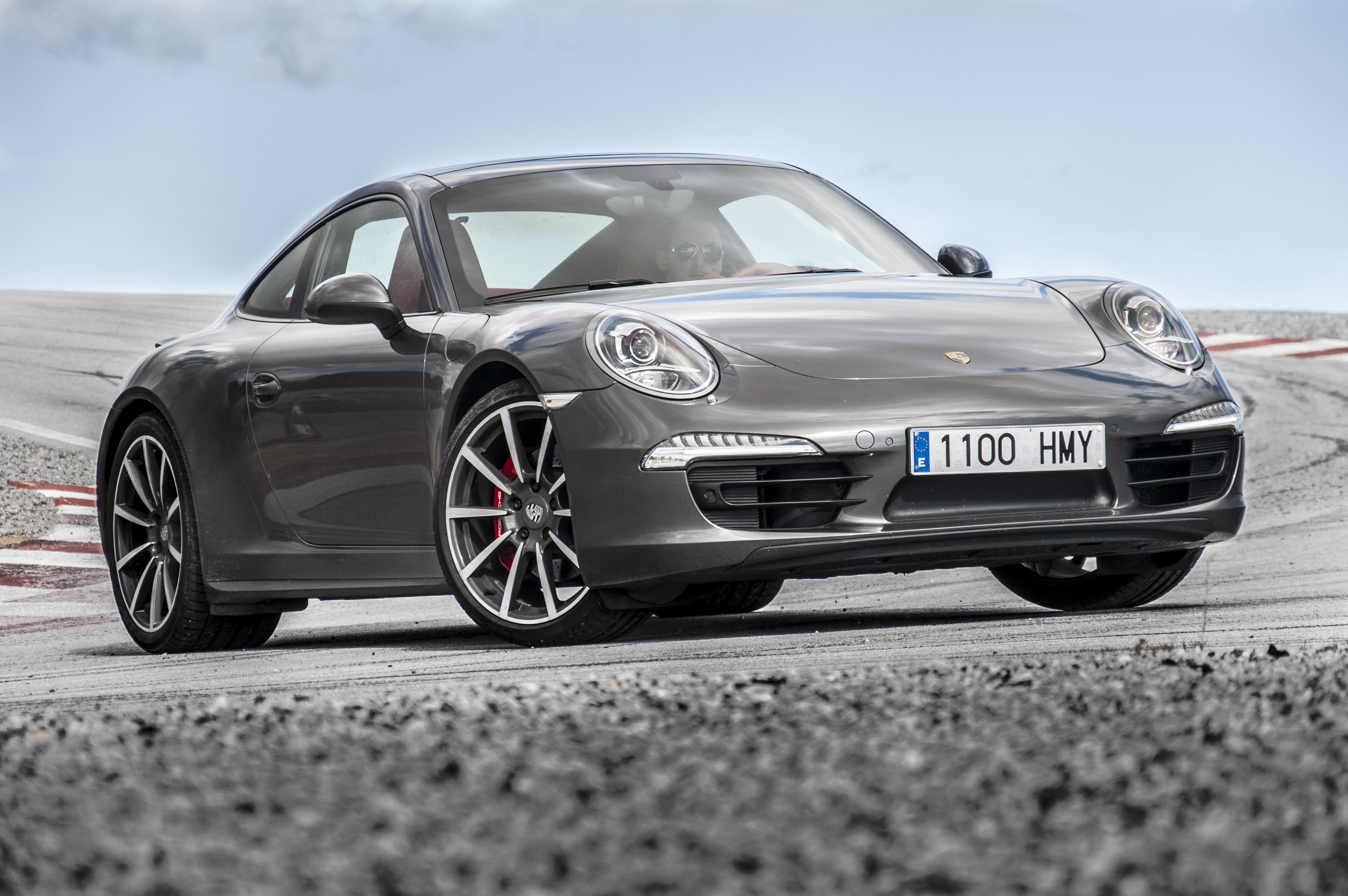
A Porsche 911 (997) is a specific generation of the 911 from the mid-to-late 2000s. The host is saying this era feels more like you have to drive actively, instead of the car doing all the work for you.
When someone says a Porsche is “analog,” they mean it feels more old-school and connected. Instead of lots of electronic corrections, you steer and drive it more directly.
The odometer shows how many miles the car has. For special cars, people sometimes check it often (like weekly photos) to make sure the mileage stays low.
A “Fox body” Mustang is an older Mustang generation from the late 1970s through the early 1990s. It’s popular because parts are widely available and it’s a common platform for learning how to work on cars.
“Build up the stable” just means collecting more cars over time. It’s basically the idea of starting with one fun car now, then adding more later when life is less busy.
Two-wheel drive means the car only powers two wheels instead of all four. That can make it simpler and sometimes cheaper, but it may not grip as well on slippery roads.
A six-speed transmission has six gears for the car to use. It can help the car feel smoother and more responsive, and it can keep the engine from working too hard at highway speeds.
“Point and shoot” is how drivers describe a car that turns in quickly and goes where you aim it. It feels confident and easy to control, especially when you’re driving fast or cornering.
Concept
annual
“Annual” just means it happens once every year. It’s the kind of schedule that makes events easier to plan around.
Evel Knievel (spelled “Evil Knievel” in the transcript) was a famous American stunt performer known for motorcycle jumps. Mentioning him signals a connection to mainstream pop-culture motorsports history and the kind of celebrity-driven branding that can grow a business.
A convertible is a car you can drive with the roof down. On classic cars, convertibles are often more desirable because they’re a different style and can be harder to find.
Term
his and hers, shifter
They’re describing the shifter setup as something like a “two-person” style. It’s a way of talking about how the gear selector is arranged on that car.
Term
455
“455” refers to a 455 cubic-inch V8 displacement, a common engine size in early 1970s American muscle cars. When someone mentions “455” alongside color/stripe details, it usually indicates the car’s engine identity and performance heritage.
Term
W-30
“W-30” is a performance code that tells you this Oldsmobile had a stronger engine setup than the standard version. It’s one of the clues collectors use to figure out exactly what the car was.
“Triple black” usually means the car is black in several places, like the outside and the inside, making it look extra dark and uniform. It’s a common way people describe special color combinations.
LIVE
This is the Classic Automall Show.
Broadcast from the studios inside the Classic Automall in Morgantown, Pennsylvania, just one
hour west of Philadelphia at Pennsylvania Turnpike Exit 298, featuring nearly 1,000 classic
vintage and barred-fine vehicles for sale under one climate control roof.
Now, here's your host, Classic Automall president and the man with all the toys,
Stuart Houdin.
And here we are on a delightfully dreary, rainy, another beautiful day in Pennsylvania.
April showers.
Bring ready flowers, yeah.
That's right.
And hopefully we'll wash all the salt off the road.
Well, I've been dodging potholes all day.
I have fixed all my potholes the other day, so you didn't dodge them here.
No.
You may have dodged them on the Turnpike.
Man, there's some killer ones.
Oh, yeah.
And it's funny.
If you go over them fast, you don't feel them.
But if you're in, like, stop-and-go traffic and you hit one of those ones, it's
like, it's a cavern.
But if you're in a Denali, you don't feel them.
But if you're in a Mini Cooper, you feel them everywhere.
All right.
So whatever.
I was in something else.
I don't remember what it was.
So anyway, before we get started with our guest today, how many cars in inventory?
How about you go first, Steve?
All right.
Based on last week, I'm going to go 820.
Oh, okay.
I'll go with 837.
You're both wrong.
805.
Oh.
We're selling them on the wrong way.
Yeah.
Please bring us your cars.
If we hit the 7s, my wife says, I'm going to lose it.
There'll be some kind of thing where I freak out.
Do you hear yourself as our guest wants that?
Yeah, exactly.
So anyway, joining us via Zoom this morning from the great state of Indianapolis.
Oh.
There we go.
Mr. Michael Good.
Michael, good morning.
How are you this morning?
Doing well, sir.
Thank you for having me on.
Michael is the president of the Indianapolis Motor Speedway Museum.
God, that's a great gig.
God.
And you've been on the job since what?
January 1st?
Yeah.
First Monday in February.
Right.
It was February 2nd.
So coming up on, wrapping up three months.
Wow.
So the track will be noticeably different in about three or four weeks compared to what
you've been used to.
Right.
Yes.
How cool is that?
You get to drive under the tunnel every day to go to work?
I do.
It's pretty surreal.
Yeah.
Yep.
And you grew up in Indianapolis.
So it's not like, you know, this is a new place for you, right?
I did.
No, I've lived here.
I'm, I'm, I know you're southeastern Pennsylvania.
Yeah.
I was born in Ohio, Youngstown, Ohio.
Yeah, I know Youngstown.
And my father was a General Motors guy.
He transferred here in 1984.
I was 12 years old and lived in Central Indiana ever since and raised a family here, started
a company here and just built a life here and it's been phenomenal.
And obviously my first race was 1984.
We moved here in April and first one was 1984 with Rick Mears and been going
ever since.
This will be my 38th Indy 500 this year.
So it's truly a humbling privilege to be able to come into here every day for work.
Oh, I imagine so.
And was your dad a car guy and a racing guy or was it just you?
No, he was.
He definitely planted the seed and, you know, was dragging me to the tracks when I was
a young kid and up in northeast in Ohio, you know, we'd go to sprints of dirt tracks
and tractor pools and, you know, things like that.
It wasn't until I moved here in 84 that I had walked into something as, you know,
grandiose as the IMS Speedway, the sacred ground, I call it.
But exactly.
Yeah, so it's I've been around it my whole life and been fortunate to work in
the industry for a number of years and it's really exciting.
You know, what's fun about motorsports is that you can enjoy the Indian
apolis 500 as much as you can enjoy a tractor pull at the local fair on a
Friday night. I mean, it's it's just power and horsepower and engines and
loud and burning your eyes with the fuel and the whole night.
You know, it's just one of those things that it doesn't matter really what
type of motorsports.
If you're a motorsports type person or a car guy, it doesn't matter.
It's just anything with an engine, right?
That that's well said.
Well said.
Prior to this, I was leading an organization called PRI stands for
the performance racing industry.
And we put on the largest motorsports trade show in the world right
here in Indianapolis every December.
And that the reason I'm bringing that up is at PRI.
I always said PRI was agnostic.
I got to see every form of motorsports from go-karting to F1 and
everything in between.
Emsa Sprint cars and you really get to see the full gamut of all
motorsports through a very cool lens.
And it's the only industry I've worked in health care.
I've worked in IT.
I've worked in tech.
This is the only industry that's truly is rooted in passion.
Right.
It's the only industry where people spend their free time in the
industry that they work in.
And, you know, pharmaceutical reps aren't doing anything with
pharmaceuticals on weekends.
Well, let's hope not anyway.
But let's hope not.
Let's hope that.
But, you know, so it's a it's a really cool world to play in for sure.
I love when I take somebody who I'll say to somebody about drag
racing and they'll look at me like I'm a hillbilly.
And I'll say let's just go to the let's go to the drag race and
you take them there and they're completely hooked.
And they think for all these years they've seen it on TV.
They had no idea what they were seeing or missing or didn't
understand or any of that.
And that's a lot of way and a lot of different racing
disciplines.
You know, popularity of Formula One is huge right now.
And it's gaining a lot of moment.
Well, I'd say it's gaining momentum.
They go on any longer breaks.
We're going to be in trouble.
But, but it's interesting that that's carrying over to
the other disciplines because people go, oh, Indy car.
That's not the same as Formula One.
Yes, it is.
It's not exactly the same, but it's equally as probably more
competitive, more interesting racing going on, I would argue,
than what goes on in F1.
Yes, yes, that's a whole other controversy.
I think Indy car has a lot of momentum right now.
Back to your earlier point of the racing.
If you ever get a chance to stand on the start finish line
at an NHRA top fuel event standing behind Antron Brown
or Ron Caps or somebody when they're getting ready to light
up the tree.
I've done skydiving.
I've done a lot of crazy things.
And it's right up there and just gut wrenching like, you know,
shakes the whole insides of your body.
And you can't explain it to anyone unless you've done it.
So, you know, all of these different avenues put a,
put a different sensory into the world.
And back to your latter point about Indy car
and its current state, I think there's a tremendous
product being put out there right now.
And I'm not saying that I'm removing my bias of working
in just if I look at it as a spectator and as a fan,
not necessarily because I'm working in it.
I just think they've got likable drivers.
They've got competitive racing every weekend.
There's a lot of uniqueness and parity
with what's going on in the sport.
And it's on a great trajectory of growth
and momentum right now.
It's a very exciting time.
Yeah, you know, people say, oh, there's no more AJ Ford.
There's no Mario Andretti.
Well, yeah, they're still coming to the race.
A, A-R-C-S, and B, there are those guys.
Alex Pillow, I mean, this guy's unbelievable.
Him and Tyler Reddick must be on the happy pills of something
because those guys are just winning everything.
You turn around from NASCAR to Indy car.
And is odds on favorite?
I mean, are favorites already predicted for Indy 500?
And is it got to be Pillow?
Is the odds on favorite, you would you think?
I mean, he's got the momentum right now.
We had the good fortune of just last night.
Coincidentally, we announced the acquisition
of his 2025 Indy 500 winning car.
And we pulled the cover off of it last night
with a large group at an event.
And Alex was here and he spoke with us
and he sat on stage and kind of told a story.
And he was being interviewed by Dave first.
And he, you know, this guy, he came from nothing.
Right.
And, you know, and he was telling the story of,
on his way to school, to and from school every morning,
there was a go-kart track between where he lived
and where he went to school.
And he went back and forth by it every day.
Osmosis, it's wearing on him, right?
Yeah.
And it was really neat to hear Alex just tell his story
of how he, you know, got excited about the sport.
And his dad built him a little go-kart.
It was not fast.
His dad could run alongside it.
And, you know, he was five years old
and he was teaching him how to navigate it.
But hearing him tell that story to where he is today,
I think he's winning 20% of his races.
I think he's been around 102 races
and he's won over 20 of them.
So you do the math on that.
It's pretty staggering that he could go down
as one of the top drivers in the history of the sport.
Absolutely.
And likable and well-known and, you know,
one of those guys that understands all the,
you know, the ins and outs of,
it's not just driving well on the track.
It's having sponsors and dealing with all that stuff.
And there's way more to it than people talk about.
You know, you'd mentioned earlier
about your previous gig at PRI.
You know, PRI really had a great,
I don't want to say resurgence,
but last year was really a great event.
It seemed like it had more traction
and more exposure than ever.
I heard more about it this past year
than probably I've ever heard about it.
Yeah, 2025 was, so I didn't want to exit PRI
until after the PRI show.
I wanted to fulfill my commitment to them.
They, we ended up delivering the biggest show we've had
since the start of PRI in 1988
and what Steve Lewis built.
It's so great to see it still have such life
and, you know, driving impact in the industry.
At the end of the day, the PRI show exists
to bring the manufacturers of all of the racing industry parts
into one building with the buyers and the drivers
and the teams and share best practices.
And last year, it was the largest show we've ever had
and really knocked it out of the park.
So it was great to leave on a high note.
There's a ton of momentum there right now
and it's a very exciting time for PRI.
And I'm really pleased with the time that I had there
and it was just a tremendous team.
Sure. And a different animal what you're doing now.
I mean, the museum business and the event business,
I mean, they're kind of the same,
but I guess there's carryover or no?
It's different, you know, the PRI,
we put on one enormous event one time a year.
This, we're open 363 days here at the museum.
So you bring your A game every day.
We do have a lot going on.
We have some, a new announcement
that'll be coming out here in just a few weeks
about an expansion that we're doing.
And, you know, it's really bringing the museum to life
and bringing it out to the people and creating something.
You know, there's a saying that attention is the new currency.
And, you know, we live in a world
of very low attention span, short attention span
and very little tolerance for something
that is not going to excite somebody's senses.
And, you know, when I think about that,
that's really what excited me about the museum
is being able to be a steward of history
and a protector of it,
but also being a disruptive storyteller
and finding new ways to engage with new audiences
and attract the next generation into the sport.
And I believe the museum is really set right now.
I got to come in after they did the $70 million renovation.
And, you know, they did a lot of hard work
to get where it is today,
but this year is pretty pivotal.
We're celebrating the 70 year anniversary of the museum,
the 50 year anniversary of it being in this building,
and April 2nd was the one year anniversary
of the renovation that we just had.
And I think, you know, the next 70 years
are going to be equally exciting, if not more exciting.
And so it's a really fun time.
Sure. We had Rob Dyson on the show not too long ago.
We were talking about it. Yeah, he's great.
And his son as well, too,
was on the show at an earlier time and Chris.
But Rob was, you know, it was funny.
You think about the cars that they sold,
the Mercedes and the, for the end, you know,
to continue the endowment of the museum
and the Ferrari that they sold and all brought huge numbers.
But I, it made so much sense when it was,
when he explained it that, you know, these cars,
although historically as significant as they come,
didn't have significance to the Indy 500.
They were just on loan from years ago
or gifts from years ago for whatever reason.
And they didn't really have anything to do
with the story of the Indy 500.
And so as painful as it must be to sell the,
the Mercedes or the Ferrari,
it was the right thing to do, I think.
I would think you've got to make sure that
you're selling your brand, not something that doesn't connect.
Well, very well stated.
And I'm sure Rob, you know, delivered that perfectly.
It was, you know, that Ferrari spectacular vehicle.
You know, there's a picture of it actually here in my office.
It had never raced on this track.
It had no ties to the speedway
and what the speedway represents.
It was a great car to have in our collection,
but, you know, we have over 200 cars,
so we have a fraction of what your 805.
We have 25 percent of your your inventory,
but a pretty cool collection of vehicles.
And, you know, at the end of the day,
we don't want to take our eye off the ball.
We are here to represent the legacy of the of the speedway.
And that's what, you know, that's what we're going to continue to do.
Sure. I just realized that the static picture behind you is not a static picture.
There's actually people moving around on there.
So that must be that's not a live shot of the track, is it?
That's a that's a TV and that is a live feed of the start, finish line.
Cool. It's one of the many cameras.
My office overlooks turn two in the speedway.
But the TV behind me, it's a it's a it's a blessed thing.
There's no question about it.
But yeah, that's a live shot of the of the start, finish line as we speak.
I love that.
That's amazing.
It is so cool.
And I'm so glad to hear that you guys are, you know, working on something
and continuing to improve and expand.
And, you know, I guess we can't say enough what the impact of Roger
Pinsky has been on the Indianapolis Motor Speedway.
Not well before he bought it.
I mean, to see the picture of him with 20 many Borgs
tells you everything you need to know.
But he's had a huge impact on on Indianapolis 500 and will continue to
he's had a huge impact on motorsports as a collective.
And obviously his fingerprints are all over this place now.
And the legacy that he's leaving and building for this for Indianapolis
and the Speedway, you just can't put enough behind it.
It is it's beyond expectations.
And, you know, as a citizen of Indianapolis that's grown up here,
when that news broke in 2020, that, you know, he was going to be
the new caretaker of this, there was a huge sigh of relief
that he's going to be able to carry on what the Holmans and the
Georges did for so many decades and give it that same amount of equal
respect and care and importance to the community.
And so it's wonderful.
Yeah, there's no other person on the planet who could give it that same
respect, I think you could you could have the smartest guy on the planet
come in, you know, we see it all happen all the time.
Consultants come in and tell you this and that about, you know,
how to do this or how to do that.
And really, you've got to have somebody who's passionate about it.
You know, we were talking before we came on the air about,
you know, being passionate about certain things and the ability
to be passionate about your industry that you work in is the coolest thing ever.
And to have that with Roger Pinsky.
Oh, my God, he's he's living the dream.
No, it's tremendous.
It's definitely a privilege to be able to work here and see his
how he does things and how he runs the Speedway and Indy car
and everything else. It's really exciting.
So during the month of May, you probably have to start getting up
a little earlier and come into work a little sooner.
We got we got a lot going on.
It really this week was kind of the start of it.
And I think it will bore until June.
So where will you where will you actually watch the race come race day?
I'll be over in the Pagoda area right there.
Walking around various visiting with a lot of different donors
and members and just the public.
And I'll hopefully get to see some of the race as well.
Right. You know, a lot of it.
And I said this at PRI, I think I was at 38 or 39
different racing events last year and from the Rolex to
Indy to King of the Hammers, you know, it ran the gamut in that industry.
But, you know, 38 races.
I think I've watched collectively two hours of racing, you know,
it's we're working and we're really it's about nurturing relationships.
And but I will say my most excited time for the month of May,
the thing that I get most excited about is really seeing it
through the eyes of children and seeing it through the eyes of people
that have never taken it in before, that are seeing it all for the first time.
Because you can't describe the largest sporting event in the world to anybody
or the festivities that lead up to it all through the month of May.
And to see people experience that for the very first time
is probably one of the coolest things.
So have you experienced it from where you'll see it this year ever in the
past, were you ever in that part of the track and area of the track?
Or is this going to be new?
I have. I've seen it from.
I think I've seen the race from everywhere, but turn three.
So you get that on the list.
So yeah, this will be my 38th and 500.
And so I've had the good fortune of kind of mixing it up from one year
to the next. Sure. Yeah, it's nice to go to different perspectives.
And yeah, 100 percent.
Yeah. But we had Bobby Ray Hall on the show
when we were talking about the Wienermobile race. That's brilliant.
Whoever came up with that, that is absolutely brilliant.
I love that. And he loved it, too.
It's as it gets as much excitement as the actual race does.
It's unbelievable. Crazy.
Yeah, it's it's great.
The the this isn't even word.
The iconicness of that thing is still to this day.
You see one going down the road.
You just whip your head around because it's just you remember.
It's just a childhood thing that we've all grown up with.
And it's got kind of a resurgence.
You didn't hear about it for a lot of years.
And now all of a sudden they're everywhere.
It's back and it's strong.
And it is a it's a showstopper.
People will change their plans to see those Wienermobile race around the track.
You talked about you had over 200 or close to 200 vehicles
in your all's care and perfect.
But how many like 55,000 artifacts of Indy's stuff?
Trophies and yes, it's unbelievable, man.
That's a lot to keep up with.
It's a lot.
And we try to rotate it out and to keep it fresh.
And we have a is for lack of a better word of vault
right down underneath and, you know, I'm three months into the role.
So I didn't know about the vault.
I knew it existed, but I never been in it.
Right. It's like Area 51, right?
Right. And this is a, you know, I don't even think
they've given me the passcode to get in the vault.
But I was taken back there and shown everything that's back there.
And I could have spent the whole week.
Oh, sure. It's going through things.
It's truly mind boggling what all is in there
from every chapter of this place's existence.
Sure. Well, the history of the Indianapolis 500
is the history of not only racing, but also the history of the world.
I mean, it's history of everything, you know, it's right.
It's everything tells a story that is from a certain era
and how cool is that to be able to, you know, see all that in one place
and the ability to, you know, understand what it really means.
It's not just a bunch of cars running around the circle.
This means a lot to a lot of people and has for a lot of years.
Very, very well stated.
You know, the racing to me, there's the cultural aspect of it,
but there's also the innovation aspect of it and what takes place here.
Because a lot of times what you'll see take place on in a racing circuit.
You'll eventually start to see a form of that take place in a consumer car.
Whether it's seatbelts or ABS brakes or, you know, disc brakes fell in the blank.
We could go on and on and on.
You probably know 50 different iterations of things that have come into the consumer
car that were born out of motorsports and racing.
And to see it from an R&D perspective, from an engineering perspective,
just brings this natural curiosity.
And here we are at a time, you know, Alex Palos 2025 winner.
That was the first car to ever have a hybrid motor to win the race.
So here we are in 2025, getting ready to do our 110th running.
And we're still having firsts.
Right. We're still having new things take place.
So, you know, it's such an exciting breakthrough area, I guess.
Well, we had Lisa Boggs, director of motorsports for Firestone Tires on
a couple of weeks ago. She's great.
And we talked about, you know, how that how that transfers over to the
passenger tires and how it transfers over to the real world and how neat is that?
And for them to be able to see it kind of firsthand and say, oh,
that makes sense for this or or different things like that.
It's and it's from a safety standpoint as much as anything.
Right. You know, that's that's the thing that's most interesting.
So you all you're you're they don't announce the actual total visitors,
but you guys are getting a lot of visitors.
You're the exposure that the Motor Speedway Museum has had
in the last year is got to be the best it's ever been, I would venture to say.
It's definitely been breaking records.
You know, it's last year we had over 50,000 people
come through the museum just during the month of May.
And that's that'll be it'll be significantly higher this May.
You know, and all of our monthly visitor numbers are up.
It's really shocking to me.
So I've lived here again all of my life for the most part.
But, you know, there was a January or a February.
It was early February.
I'd been here like a week.
It was, I don't know, 17 degrees outside.
It was a horrible day. It was a Tuesday.
And I'm looking at my office and the parking lot is packed.
Wow. And I'm just like, unbelievable.
And people are on bus tours going around the track on our shuttle buses.
And it's just the place never sleeps.
And the curiosity that this place has, it was just voted.
I take zero credit for this, but it's a really cool accolade.
Time Magazine just voted us about a month ago
as one of the top 100 destinations on the globe of a place you could visit.
You should visit. Wow.
And so it really is proving out.
I'm actually looking into the parking lot right now,
but you can walk through our parking lot
and I always walk through and look at all the license plates.
Yeah, exactly.
And, you know, of all the different, you know,
whether it's Florida or Kansas or Wisconsin,
you know, there's a wide variety of visitors from all over the globe.
So it's a really neat thing in this place is on any given day.
Right now, if I turn to my camera around,
you'd see a completely packed parking lot.
Here we are on a Thursday in April.
Yeah, exactly.
And not, you know, not the perfect weather
and not even really the start of the month of May yet.
And I think that and people don't realize if you've never been
and I have been in this business,
the museum business is a very difficult business.
It's very hard to be profit, you know,
to cover your expenses on admissions.
And it's there's a lot of there's a lot of pitfalls
in being in this business.
And, you know, I've learned lots of different things
about the museum business.
And one of them is the reveal that that you just can't walk in
and see everything because that'll do one of two things.
It'll be like, oh, I don't have enough time or,
oh, this is not as big as I thought it was.
You know, it's that coming around the corner and oh, my God, the wow factor.
Right. So, you know, the renovation,
they called it the reimagined museum campaign.
When this reopened in April of last year,
you know, I've been here over the years, dozens and dozens of times.
Obviously, post renovation, I've been here a ton too.
So, PRI is about an eighth of a mile from where I sit right now.
So, I've been in the speedway community for a number of years,
but it's it's profound how much traffic comes in here
and what goes on here.
But it's there's a lot to it.
Yeah, absolutely.
So, you were mentioning you had an evening last night
with Alex Blow and unveiled the car.
And then you've got another one coming up with Tony Kanan, right?
That's coming up in May.
And I imagine both of those are sold out the minute you announce them, right?
They sell out pretty quick.
It goes out to our members first.
And last night was standing room only with Alex.
And I'm sure it'll be the same for Tony Kanan.
He's a great personality and also a great ambassador of the sport.
And, you know, we have 50 cars,
give or take in the museum right now.
We have a total of 200 cars.
So we have another let's call it 150 cars
right now that are kind of hidden around the city.
But to those 150 cars to the 55,000 artifacts,
there's a constant rotation and change out of bringing all this stuff in.
So if you've if you were in the museum a month ago and you're here today,
you're seeing a different museum the way it should be right.
So it's it's a living, breathing, changing entity.
And I don't know if if you've had the chance
to come through there since since we reopened, not since reopening.
No, you have to make it here.
Let me know when you do.
I will definitely.
There's a it's called the starting line experience when you come in,
you'll walk through Gasoline Alley and then you go into the starting line
experience. I call it the goosebumps room because it you'll just get goosebumps
when you stand in that room. It's it's pretty it's pretty cool.
Yeah, I've heard people tell me about it and how amazing it is.
And of course, not only, I mean, you know, it takes a mountain to do these things
and you have a great staff and a great board of directors.
I mean, we're going to Bobby Ray Hall is on the board with Larry Foyt.
That name sounds familiar.
Scott Borchetta from Big Machine Label, great boy.
He's become quite the spot.
You know, the yes, Scott's great ambassador to your all's world.
And we hope that Indy car racing will happen on the streets in Nashville
again once they finish the stadium.
Just don't have nothing to do with you, but it needs to come back to that.
I was just with Scott at the Heritage Invitational in Charlotte a few weeks
back and he was racing.
He owns Alunzer Junior's Irock car.
Yeah. And he was on track racing it.
And Alunzer was Alunzer Junior was driving the pace car.
It was really cool surreal and very surreal.
But it's got, you know, he's a competitor.
He's a racer, like he knows what he's doing on the track.
And so it was really cool to have those types of people that are not
just personalities, but they are true passionate drivers of motor sports
on our board.
You know, Bobby Ray Hall, just tremendous ambassadors all across the board.
Yeah. And, you know, it's interesting
to see these guys that they spend a lot of time that, you know, Bobby Ray
Hall is also on the RRDC board and all that.
And there's, you know, it takes a lot of time to be on these boards
and to give back.
But to see that happen is so great.
And I think that, you know, when you got a board like that
who are enthusiasts to begin with, that makes it just that much better.
Smart and enthusiast is right.
You know, one of those great combinations and that heritage
Invitational. I'm so mad I didn't get to go.
They had a dinner honoring Bruce Meyer up here,
who's a great, yeah, to our hobby more than the sport.
Right. Still a sport guy, too.
And we had an event for him up here.
So next year I'm going to the Heritage Invitational
because everybody says, do not miss it. It's a great event.
Ray Eberham. Yeah.
Marcus Smith, those guys are knocking it out of the park like that.
It's it was its fourth year.
I don't know if you've been to the 10 tents club across the street
from Charlotte Motor Speedway, just an absolutely phenomenal facility
and great track and a great experience.
What I know that there's lots of things that you're doing
with the museum, with regards to events and things like that,
like obviously there's facility rentals, but you do some kind of summer camps.
Is it like a quasi internship or is that what is how does the summer camp program work?
No, it's not really an internship, but we have a there's a gentleman named
Jake Apollos who's on our team overseas, all of our educational initiatives.
And he's a former, you know, high level educator.
And he comes in here with this discipline and understanding of, you know,
how to use the steam or stem or steam, depending on what acronym you want to use.
We call it steam because we want to include the arts.
Sure.
But the educational programs that we have here, they're going on every day.
And we had family day this past weekend
and the place was packed on Saturday and all throughout the museum
were these areas where children could stop and do all kinds of activities
to really understand whether it's changing attire on an car and going through
the motions of that or we have driving simulators now in the museum
where people can race.
And so the educational programs, the camps, their areas of investment,
I would say I call it the double initiative education and events.
We're doing a ton on both fronts and having a lot of momentum behind that.
And and that's just fantastic.
Any time you can give back, it's a feel good thing and it's the right thing to do.
And when you have the capability to do it, it just it's a warm fuzzy and it's perpetuating.
You know, we need to get the next generation into racing and into old cars
and into all the things that we're talking about here.
Our viewers and listeners, if they wanted to get involved, I mean,
you can become a corporate membership.
There's there's you can become a member of the Indianapolis
500 Motorsports Museum.
There's all kinds of good ways to get involved and just go to your website,
I'm sure, and they can find all the information they need, right?
100 percent.
There's tons of ways to get involved.
But obviously, there's memberships and there's
whether they're individual memberships or family memberships.
You can buy a family plus grandparents membership
and there's bus tours and golf cart tours.
So there's all kinds of ways.
We have one hundred and fifty five volunteers.
That's brand new since the reopening.
We launched this volunteer initiative, not really knowing how it was going to go over.
And Kristen Kramer, that oversees our volunteer program, has just, again,
like Jake Apollo, so on education, has just swung for the fences and connected.
And, you know, we have these volunteers that come in here.
And I'll tell you, you come in here.
I feel like I know a lot about cars until I walk up
to one of these volunteers and hear them talk about, you know, the bolt pattern
on transmission or something. Oh, yeah.
And so it's it's really cool.
It's like the docents down at the Revs Institute.
Those guys are all 80 years old and the breadth of knowledge
that they have is staggering.
They'll they're whispering in your ear stuff and you're like,
you're overloading me. I can't I can't hear anymore.
Got to love that, though.
So, well, it's going to be a fun month for you, I'm certain.
And especially your first one in this position that you're in,
certainly will be exciting as it gets, right?
Yes, sir. Yes, it's it's an exciting time.
And I invite you if if you're able to make it
in to Andy for the month of May, definitely let me know.
Absolutely. I would love to take you around and show you what we do here.
But it's it's an exciting time.
And I am s museum dot org is how you can find us
for all the social channels as well.
But lots going on.
So my last question I'd like to ask is what's your daily driver?
Oh, a daily driver right now.
It's an Audi Q eight. Oh, just an SUV.
Yeah, I like those.
Yeah, it's been great.
I had a Macan that my 20 year old son totaled.
And so it was not his fault in his defense.
I have Audi Q eight as my daily as your daily.
Anything else in the garage?
You got any toys that you play around with?
I have a couple of toys in the garage right now.
I have a 2008 9 11 for us.
So it's it's a nine nine seven Porsche
that's the last year of the kind of the analog
Porsches where you really got to be a driver and the cars
not going to do all the correcting for you.
And I really wanted that.
And then there's also a 20 25 7 18
RS Wysock Porsche sitting in there, which is now that one.
Funny, funny connection.
And that one's not mine, but I'm I'm the caretaker of it.
My childhood best friend from since we were 12 years old
lives in Dallas.
He acquired that car here in Indianapolis
through the Porsche dealership and didn't have a place to keep it.
So I'm like, oh, I'm your guy.
And I think it has eight hundred and eighty miles on it,
of which seven hundred of them I put on the car.
Is he asking for a picture of the odometer every week?
No, he's he's pretty trusting.
We could do a life together for 40 sub years.
You don't trust him by now.
Right. Yeah.
You have to take that down to Flat Rock down in Tennessee to that track.
That would be spectacular.
But I've had a lot of old American muscle.
Quick finishing story.
When COVID happened, my son's 20 now.
I have three kids, two daughters and a son.
I wanted to teach him how to work on cars.
And my dad worked for GM, as I said earlier,
but I always loved being in high school in the late 80s.
Nothing sounded like a 50 mustang.
Oh, nothing better.
Yeah. So I bought a Fox body mustang
and we ripped it apart in that I learned a couple of things.
One that my son does not like to work on cars.
We had a great time with that.
And so I've had some old school muscle
and but right now with two kids in college
and one of them getting married later this year
after she graduates, you know, I've got my one fun car
and then I'll build up the stable later in life.
I hear you. That's the same pattern I followed as well.
I've got a 997 as well to a 2006.
It's an S2, so it's only the two-wheel drive.
But that car, it's six speed and it's point and shoot
and so much fun to drive, you know, same, same.
Yeah, absolutely.
For us, annual.
So we can do this all day, Mike.
I really appreciate you being on the show today.
And we'll we'll definitely take you up on the offer
to come visit you up in Indianapolis sooner rather than later.
Michael Good, everybody, President Indianapolis Motor Speedway Museum.
We'll be back with a classic
Auto Mall show in just a couple of minutes.
Thank you, Stuart.
Now, another classic Auto Mall show.
Here's host, Stuart Houdin, with Racer and T-shirt mogul, Jack Baldwin.
I got into the T-shirt business.
My neighbor was like, I'd work for this company.
I walked in, I said, look, I'm not saying I'm not going to sell
twelve dozens to the bar down the road.
Right. But I have a plan to make a bunch of money
and then sponsor myself. Sure.
So I had big vision.
So my first customer was Evil Knievel.
How cool is that?
Hear more of what Stuart and Jack Baldwin talked about
on the New Year's Eve, 2025 episode number 225.
Because if you haven't heard it, it's new to you.
Flashback.
The Classic Auto Mall Show.
Whether you want to buy or sell a classic,
collectible or special interest vehicle,
you need to visit the classic Auto Mall website for more information.
If you're looking to buy,
you can easily search our inventory of more than one thousand vehicles
on the web at classicautomall.com.
And if you'd like to know all the advantages of selling your car
through consignment, the information is available on our website
or you can talk to a classic car specialist
who can answer all your questions.
It's easy, safe and convenient.
Plus we sell worldwide.
We're always adding new vehicles to our inventory.
So make sure you subscribe to our YouTube channel,
follow us on social media and check our website,
classicautomall.com.
This is the Classic Auto Mall Show.
If you have questions or comments,
write podcast at classicautomall.com.
OK, OK.
You win.
It's good. It's catchy. It catches to you, finally.
Yeah.
Eventually it gets you, right?
Yeah. I like it a lot.
Eventually you hook them in there.
Yeah.
It's like when artists put out new songs.
It takes a little while and then suddenly you're singing it all the time.
Mm-hmm. Stuck in the air.
Sure Heart Attack from Queen came out
and I went and bought the album and I was probably, I don't know,
I was young, 12 or 13 years old.
I was like, what in that?
You know, I bought an album based on the cover.
I didn't know anything about Queen or Uriah Heap or any of these bands.
I was like, that looks like a good cover.
I'll buy that one.
And of course, I got it home and I was like, this sucks.
What is this? I don't know, this opera?
What is it? I don't know.
Well, so then one night, you know,
maybe six months later, I'm sitting in my living room just bored.
It's a rainy night on Thursday night or something.
And I go, I'll try that one more time.
And I put it on and Sheer Heart Attack, the song was the first one I played.
I've skipped ahead of a couple of songs or something.
I was like, oh, my God, this is this is different than anything I've ever heard.
Yeah, I do traffic reports on a top 40 station in D.C.
And so I just up by Osmosis, I picked these songs.
I'm all of a sudden I got an earworm of a Taylor Swift song in my head.
Earworm. It gets in there, doesn't it?
Don't it? Who lives nearby?
You're welcome to come by and see the Auto Mall, Taylor.
You and Travis. Yeah, they live close by.
They should come by. Speaking of Queen,
I heard somebody to love on the way in today.
And that is just you just can't turn that off.
You cannot. It's such a great song.
All the harmonies are just so tight.
Well, you know, it's like anything.
Good music is good music, no matter what genre it is, whether it's country,
whether it's pop, whether it's rock, heavy metal.
If it's good, it's good.
You know, there's some great bands out in, you know,
Seattle area who, you know, wasn't necessarily my genre of music,
but Soundgarden, a great band.
And of course, Ann and Nancy Wilson, Harder out there.
So anyway, welcome back to the music show.
Classic Auto Mall music show.
I think we can probably make one.
We could make one. We could. We could, don't we?
Jingles are us.
I wonder if there's any engineers available.
Yeah, yeah, maybe so.
I hope so in some video.
We'll put the word out.
Yeah, let's see what we can come up with.
At least I didn't have to plug in for it.
So where did we sell cars the past week?
We'll start with that.
Where?
Well, how about Louisville or Louisville?
Or Louisville.
Or Louisville.
Well, everybody of mine was at a restaurant in Louisville,
and him and a buddy were arguing about how to pronounce it.
And he told the waitress, he said, come here, darling.
He said, real slowly, tell us where you where we are.
And she said, Burger King.
Love that old joke.
That's a good old joke.
It's on episode 26, 201.
Yeah, I have said that before.
That's all right. It's a good one.
Jokes are the best.
It's like, it's like Queen.
It's good to hear over and over again.
I don't know.
I don't know.
My wife will argue with that on YouTube videos.
But how about Louisville, Kentucky?
How about Westchester, Pennsylvania?
Titusville, New Jersey.
Enola, Pennsylvania.
Jackson, New Jersey.
Reading, Pennsylvania.
Freehold, New Jersey.
Mount Waverly, Victoria, Australia.
Wow.
Wrightsville, Pennsylvania.
Joppa, Maryland.
Norwalk, Connecticut.
Littitz, Pennsylvania.
Rowlett, Rowlett, Texas.
Dripping Springs, Texas.
Dripping.
Waynesville, North Carolina.
South Amboy, New Jersey.
San Leandro, California.
New Orleans, Louisiana.
Dublin, Ohio.
Logan, Ohio.
Naples, Florida.
Hamburg, Pennsylvania.
And Roper, North Carolina.
Pretty good.
Pretty good.
Pretty good.
That's good.
That's good.
That was actually perfect.
Your timing was excellent on that, Jared.
We tried.
Yeah.
So, got a new car in today.
Oh, you got a new car in today.
Not the mall.
Not the mall.
Private collection.
I should have talked about it with our guest.
It was good because it has something to do with him.
That's right.
The 1972.
Hurstoles, convertible.
HO.
HO, convertible.
Convertible.
His and hers, shifter.
Did I see it in here somewhere?
I don't know.
Is it white?
It's white.
Yeah, I saw it.
Gold stripe didn't make much of an impression on you.
I've seen one.
You've seen them all.
Yeah, 455 white with the gold stripe.
Brand new white.
Beautiful.
Top.
Awesome.
It's just...
Are you driven?
No, it's raining today.
No, I haven't driven it.
And what was the story of the driving by your house
when you were young?
Bill McMillan in Swan Brown.
And I'd hear that.
72 Hurstoles, triple black, W-30.
Yeah.
It was trumpet exhaust.
Coming down the street and he had his arm around.
So I'd be looking at the second story window in my bedroom.
I was like nine years old.
Well, it was the one day that could be me
and he's smoking a cigarette, you know.
I totally get the neighborhood thing.
Our neighbor had a GT5,
70 GT500 white with the blue stripes.
That's cool.
Every, maybe every six months he'd take it out.
And you knew it when you heard it.
That's right.
When you heard that sound,
I knew on a Friday night.
I want one.
You know, exactly.
That's like one day.
And here I finally got one one day later.
Very cool.
I'll never drive it and won't appreciate it.
Congratulations.
But just think of what kind of miles does it have on it?
I don't know.
So I mean, is it enough, you know,
enough where you won't mind driving?
Yeah, it's not like a low mileage deal
like 5,000 original miles or anything.
But it's clean.
But it's just drive that down to the boat.
Take that for the day down to Maryland.
Yeah.
And be double bald headed sunburned.
That's what they make classic
autumn all hats for you, which you can buy.
And we buy the good hats too.
We don't buy the crappy hats.
Remember, we've talked about this.
It's been a long time.
Episode 22.
That's right.
Earlier, we talked about the hats and how nice.
We were giving them away.
We used to have a trivia contest back in the day.
That's right. Exactly right.
So how about new arrivals?
How about that new arrival?
About the 1997 Mazda MX-5 Miata convertible.
Miata.
Yeah.
Black over black, 8,174 actual miles.
That's one you'd think twice
about taking for a long trip
just because, A, it's small and B,
it's got low miles.
Right.
All stock final year for the first gen Miata,
1.8 liter double overhead cam inline four.
And if you think that's not enough power,
go drive one and tell me how much fun they are.
Right.
There's so much fun to drive.
Yeah.
It's not too little of power.
It's great amount of power
for what the car is and what it does.
And it feels balanced and fun.
Just a fantastic car.
And it's got the original window sticker.
How cool is that?
So save all that stuff.
When you buy a car, new, used, classic,
whatever, special interest, save everything.
Every sticker, every description,
every note, print off anything
you can find about it.
Historically, if it's an older car,
do all that you can to preserve
all the history of that car
and that car, a particular make and model
that'll pass on to the next owner's plural.
Because that's what's going to happen to this car.
It's not staying with me forever.
I bet you that'll be the first.
No.
Did you get a stack of literature with your car?
I got some stuff.
I haven't gone through it yet.
But I've been printing out stuff ahead of time.
OK.
You know, you're able to find
a lot more information these days.
Old road and track, road test results
or motor trend that talks about the car.
It's interesting how they talk about the performance
in 0 to 60 in 6.6 seconds.
You know, my suburban will do that.
Yeah, yeah, exactly.
And but back then that was fast.
That was that was getting her done.
Here's the most important question
about your new acquisition.
Do you have a die cast of it?
Not yet.
OK, but I'm working on that on the Christmas list.
The suck up list.
I know where to get one.
Yeah, you get the big one.
I'll get them one of the Matchbox.
One forty three. I'll go one eighty.
I can afford that.
Perfect. Thank you, guys.
And document this on for Randy.
Make sure that I know ahead of time
where Christmas time.
If I don't get these gifts
and some heads are going to tell me
you'll have one by Christmas.
Yeah, probably early just to cover it.
This is for Christmas.
It's like Kathy and I buy stuff for each other.
And then we're like, this is for Christmas.
Right.
Christmas. I'm like, oh, we're going to buy something else.
Yeah, we're going to buy something else.
Other new arrival.
The 1958 Chevrolet Corvette convertible.
Roman red and snow crest white over black.
Blueprint racing three eighty three stroker.
Yes, it is odd in a fifty eight.
Tremac five speed manual.
Updated gauges, posi axle three fifty five.
Ready to kick some ass.
Modified that.
Yeah, what you don't see in a fifty eight very off.
I'm very off.
And fifty eight is not always the most loved version
of that C one Corvette.
I mean, or that, you know,
yeah, that generation of Corvette
because it's got the extra chrome strips on the trunk.
It's got the louvered hood.
It was the only one year only stuff on these cars
and they got rid of it.
I think because people maybe didn't care for it.
I kind of like it.
Oh, listen, I think it's a you look up the word classic
in the dictionary.
That would definitely be a classic vet in there.
Our next week's guest, by the way.
Yes.
Design this Corvette.
Oh, no.
1963 Corvette thing.
There's a little hint for you.
Peter Box.
Oh, you're going to give me.
Make a quiz out of it.
Well, I don't know these things.
So I'm going to do that.
So next on the list is the 1970 Mercury cyclone.
Hard top cyclone.
Sounds sounds like a whirlwind of past of energy.
Dark ivy green metallic over saddle.
Long term ownership.
The rare rare mercury must.
Yeah, they don't see a lot of mercury muscle.
Correct.
429 4 barrel VA and a correct C6 three speed automatic.
When we say correct, you know what we mean.
That's the original.
That's right.
It's just it's era correct.
No car as a front end fascia.
Like no, it's a mercury cyclone.
It's it's really unbelievable.
And it also has the Deluxe Marty report.
So that tells you what the car was born with.
I would have generally necessarily has now
but what it was born with when it was new.
And they can get it down to it was one of one
that had an AM radio that the second button didn't go in.
I mean, it's like they can make it one of one
of just about it pretty much.
But another new arrival is another Ford product.
The 1963 Ford Galaxy 500 two door fastback.
Tucson yellow over black.
It's a cool looking car.
Beautiful car.
And I'm not a big Galaxy fan, but the fastback.
It's just a special bag.
I like any type of.
It's hard not to like a fast car
because it looks fast in the back, the fast back.
And it's the next sports roof.
Yeah, sports roof.
Yeah, their name.
Those flat pieces of glass back there.
Yeah, you know, it's hard to.
It's a beautifully well done, well restored car.
Yeah, 76,000 actual miles, 289, two barrel V8.
Lots of new parts.
It's got the cruzometic three speed automatic transmission.
This is very well done.
This is not this is not cut corners restoration.
This was nicely done and it's not cheap to do these things.
If you think you can do them, I don't know.
It's hard to do what some of these people have done
to these cars for the same amount of money.
There's more money in this car than there is on the on the list price.
That's exactly so other new arrival.
The 1985 Mercedes Benz 380 SL convertible.
You know, these were on love for a long time and there's that coming back.
They are really just sold one couple of weeks ago.
We're selling a couple of them.
Yeah, this one's got 36,000 actual miles, champagne metallic over 10.
Very nicely preserved, 3.8 liter single overhead cam VA four speed automatic.
Three cars in one.
It's three, three, three cars in one.
Riggle, really gum.
Yeah. And why do we say that?
Because it can be a convertible.
Yes, it can be a soft top or it can be a hard top.
You know, it's got the removable hard top that you have to get a pulley system
in the garage to take it on, put it back on or my friend and I, we did his.
His was beat. Yeah.
And it's it was rough, rough car and he went, it's a classic.
It's a classic.
Well, you know, the problem is taking them off two people on either on either side.
If you're the guy like me with the short arms and you're like, you're
about to leave. Oh, sure, come back this way a little bit.
He was a bachelor, so he just kept it in his living room.
He just kept the top there.
Anyway, I saw an SL on the road on Sunday and I was like,
and with the top down, beautiful day.
And I said, you know what, that's a great car.
There's one up at the place where I just got my CO 55 back from being
serviced and it's silver with navy blue interior and navy blue top.
That's a great color combination.
You know, in an SL Mercedes in back in the 70s and 80s,
whether it's a 450 SL or a 560 or whatever,
that was a status symbol of all status.
It was you even more so probably than a Rolls Royce because they were actually
seen, you know, people would actually see them out on the road.
You wouldn't see a Rolls Royce Knoxville, Tennessee.
You saw one, but, but, you know, not very prevalent.
But the SL was, you know, that was Learjet SL and a Rolex watch.
And you have died.
And I think I'd make this point in some of the write ups.
So I think it still is a status.
Like I saw the guy yesterday, the other day, a white one with the top down.
Like that guy's got that's the guy.
He's got something going on.
He's a good looking guy, gray hair and, you know, cool sunglasses.
I didn't look that closely, but I imagine he's got it going on.
Last but not least, the 2007 Chevrolet Corvette 3L T-Coupe.
What do you get more performance for the buck?
Yeah, exactly. 2007 or late model Corvette.
I mean, Le Mans blue over metallic over ebony, 59,000 actual miles.
It's got three LT package, six liter LS2 V8, one of 2200 change built.
Yeah.
And the 256 posi axle, which is kind of interesting.
But man, that's just a lot of car for the money.
It really is.
Any Corvette from about 2000 to 2010 or so.
It's good.
That 10 year period.
I mean, it's a lot of performance.
They're reasonably priced.
You find them that they're very well maintained.
Of course, for these Corvette guys are fanatical when it comes to that.
So if you get a chance and you're looking for an entry level car
that's got way more performance than dollar.
That's right.
That's that's your.
100%.
So and we talked about the new car, but the auction coming up June the 19th.
Okay, we're going to do another auction.
We'll probably have a hundred cars.
You can go to our website in the next, I don't know, a little bit.
Yeah, we'll have some stuff on there.
Working on that working on some fun stuff, some fun stuff in this.
Yeah, we're going to have some barn finds.
We're going to have some stuff.
We're going to have a couple of go-karts on got my eyes.
Yeah, we're going to have some newer stuff.
We're going to have a variety.
It's not going to all be no reserve.
There's going to be reserves on some of them.
Some will have no reserve.
We announced that before everyone.
You'll be able to bid ahead of time on proxy bid and on Gaier auctions.
Their website and Randall throw those up on the screen so you can get to those.
And you can register to bid and we decided to one more year, probably not
for next year, but for this year, we're going to waive the $50 bidder fee.
Okay.
So to be free to register to bid, you just got to provide us some credit
card deposit and things that's fully refundable if you don't buy anything.
And you can go.
All the details will be on the website.
So we're looking forward to it.
It'll be on a Friday and it'll start around 10 a.m.
And we'll go for a couple of three hours and then we'll have you out of here.
And hopefully you'll be with the car of your dreams or the car of your nightmare.
It'll be fun.
No, it'll be a lot of fun.
We're really looking forward to it.
We're going to try to do these a little more regularly.
Okay.
And and next week, we're going to talk about something that's come up
quite a bit lately, we haven't had a chance to get to.
And that's this Montana registration.
Oh, good.
Yeah, yeah.
It's it's become a thing.
It's an issue and we knew it was coming.
I mean, yeah, even even 10 years ago, people were saying cops were pulling
people over and saying, you know, you're in wherever South Carolina and you've
got Montana tags and I've seen you for like the past year.
Why is your car still registered in Montana?
Well, it's because it's registered there through an LLC.
Anyway, we'll go all into that next week when we have a little extra time
and joining us next week.
We actually know our guest ahead of time will be Peter Brock, the designer
of the Cobra Daytona, sure is Shelby.
Yep.
The designer of the Stingray 1963 for Chevrolet, also founded BRE racing
and those Aero Vault trailers, which are so cool.
That's right.
So join us next week on the Classic Auto Mall show.
We'll see you then.
And thanks for stopping by.
The Classic Auto Mall show with their host, Stuart Howden, executive
producer, Steve Sefair, produced and engineered by yours truly J.R.
Russ, video editor, Randy Lambie available on ClassicAutoMall.com,
YouTube or wherever you get your podcasts, music, courtesy of the Pat
Traverse band for tour dates, contact and stuff.
Visit Pat Traverse.com, produced by CarSmart Media, copyright, all rights reserved.
If you're going on a trip and you need a car reservation, call the car
reservation hotline now for access to every major rental car deal across
the United States.
We can save you a ton of money.
Don't get lost searching and don't get lost in an endless phone tree
nightmare. When you call us, there's never a whole time.
You'll get connected to a real human.
We have access to crazy rental car deals and we make it easy.
Just one phone call to access everything.
How much simpler can it get?
Find out right now for free.
What kind of car rental deals we can get you.
You'll be amazed.
Pick up the phone and call the car rental hotline right now.
Call 800-917-1103-800-917-1103.
We'll even give you one free rental car day with your reservation.
Write this number down right now and call.
Call 800-917-1103.
That's 800-917-1103.
About this episode
Stewart Houdin chats with Michael Good, president of the Indianapolis Motor Speedway Museum, about his first months in the role and what’s next for Indy 500 season. They cover the museum’s 70-year legacy, the “reimagined” renovation, record-breaking visitor numbers, and how the museum rotates 200 cars and 55,000 artifacts to keep the experience fresh. Good also discusses motorsports culture across disciplines, Alex Palos’ 2025 Indy 500 win, and the museum’s education programs, volunteers, and upcoming events—plus a quick Classic Auto Mall inventory and auction rundown.
Show #240 airdate 04-22-26 Stewart welcomes Michael Good, President of the Indianapolis Motor Speedway Museum Discussing is his background in events with PRI, Museum ranking in the "Top 100 best museums n the globe" his incredible office views and how much of the Indy500 he has actually watched and his belief that in marketing "Attention is the new currency." IMSmuseum.org, PerformanceRacing.com, REVSinstitute.org, TenTenths.org, @RayEverinham, @IROC, @AlexPalou @F1 @NHRA @PenskeRacing @OscarMayer #Wienermobile @Rolex, @BobbyRayhal #AlUnser, #AudiQ8, #PorscheMacan, #gokart #Porsche911 #Mustang5.0 #FoxBodyMustang #MarcusRobinson #Queen, #Indianapolis, #hybrid, @TaylorSwift
GET OUR FREE APP: https://ClassicAutoMall.appimize.app When it opens click on the ORANGE button to install on your phone or computer for DIRECT ACCESS to our VIDEO and AUDIO shows and our website.
CONTENT NOTE: Contests, Prizes, Offers, Vehicles & other items may no longer be available or offered after each show's original broadcast or posting date.
Recorded in our Showcase Studio just inside the entrance of the Classic Auto Mall in Morgantown, PA, Host Stewart Howden, Classic Auto Mall President and Classic Car Specialist Steve Saffier talk about this unique and amazing place often with amazing guests.
YES...Classic Auto Mall is a REAL former shopping mall that covers almost EIGHT football fields with an average of nearly ONE THOUSAND classic vehicles under one, climate controlled roof and they're all FOR SALE!
Be sure to LIKE and SUBSCRIBE to be informed of new episodes and SEE them on the Classic Auto Mall YouTube Channel. We also invite you to VISIT US IN PERSON at Classic Auto Mall, one hour west of Philadelphia at PA Turnpike Exit #298, VISIT us online at ClassicAutoMall.com or talk to real, live people about visiting, buying or selling your classic on consignment at 610-901-3804.