Classic Auto Mall - #242 - Stewart Howden with Guest Jim "Buzz" Busby, Race Driver & Team Owner + Kieth Martin of Sports Car Market
Classic Auto Mall SHOW
Classic Auto Mall - #242 - Stewart Howden with Guest Jim "Buzz" Busby, Race Driver & Team Owner + Kieth Martin of Sports Car MarketClassic Auto Mall SHOW · May 7, 2026
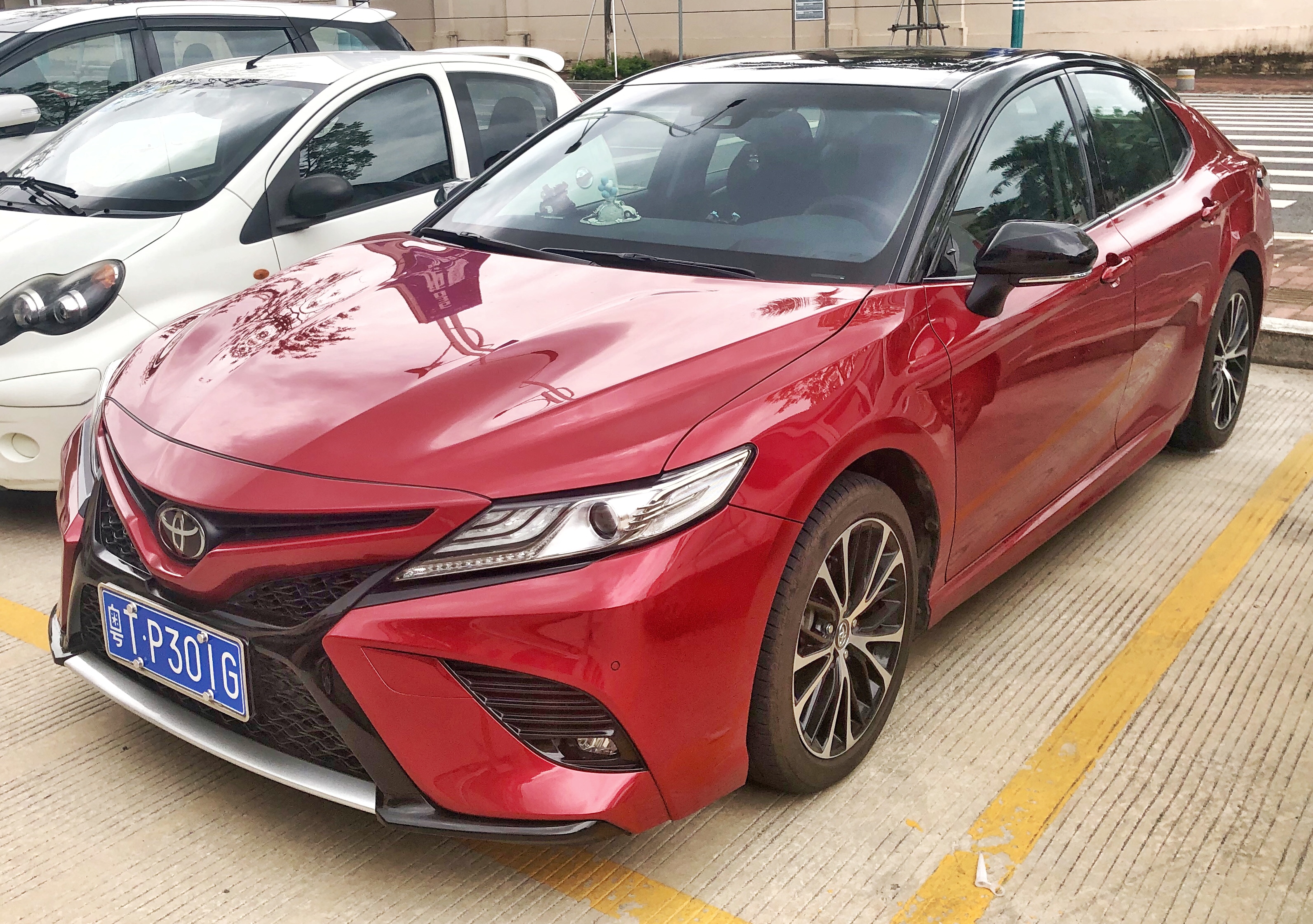
The Toyota Camry is a regular family-style car (a sedan) made for everyday driving. People talk about it a lot because it’s usually dependable and not overly complicated. It may come up simply because it’s a common, useful car to have or buy.
They’re talking about a classic Ford pickup/roadster that was modified for racing. Instead of staying stock, it had a Chevy engine swapped in so it could go faster.
They’re describing a racing setup: a three-speed manual gearbox and “slicks,” which are special tires made for racing. Slicks have little or no tread so they can grip better when the road is dry.
This sounds like a racing class where the cars were purpose-built race cars, but the engine size was capped at around 2.0 liters. That kind of rule affects what the teams can build and how they compete.
The “Arab oil embargo” refers to the 1970s oil-supply shock that led to fuel shortages and higher fuel prices. Motorsport was affected because many series were seen as wasteful “burning fuel,” so racing activity was curtailed in Europe.
IMSA is a big sports-car racing series in North America. It’s the kind of racing where teams run race cars for long events and different car classes compete.
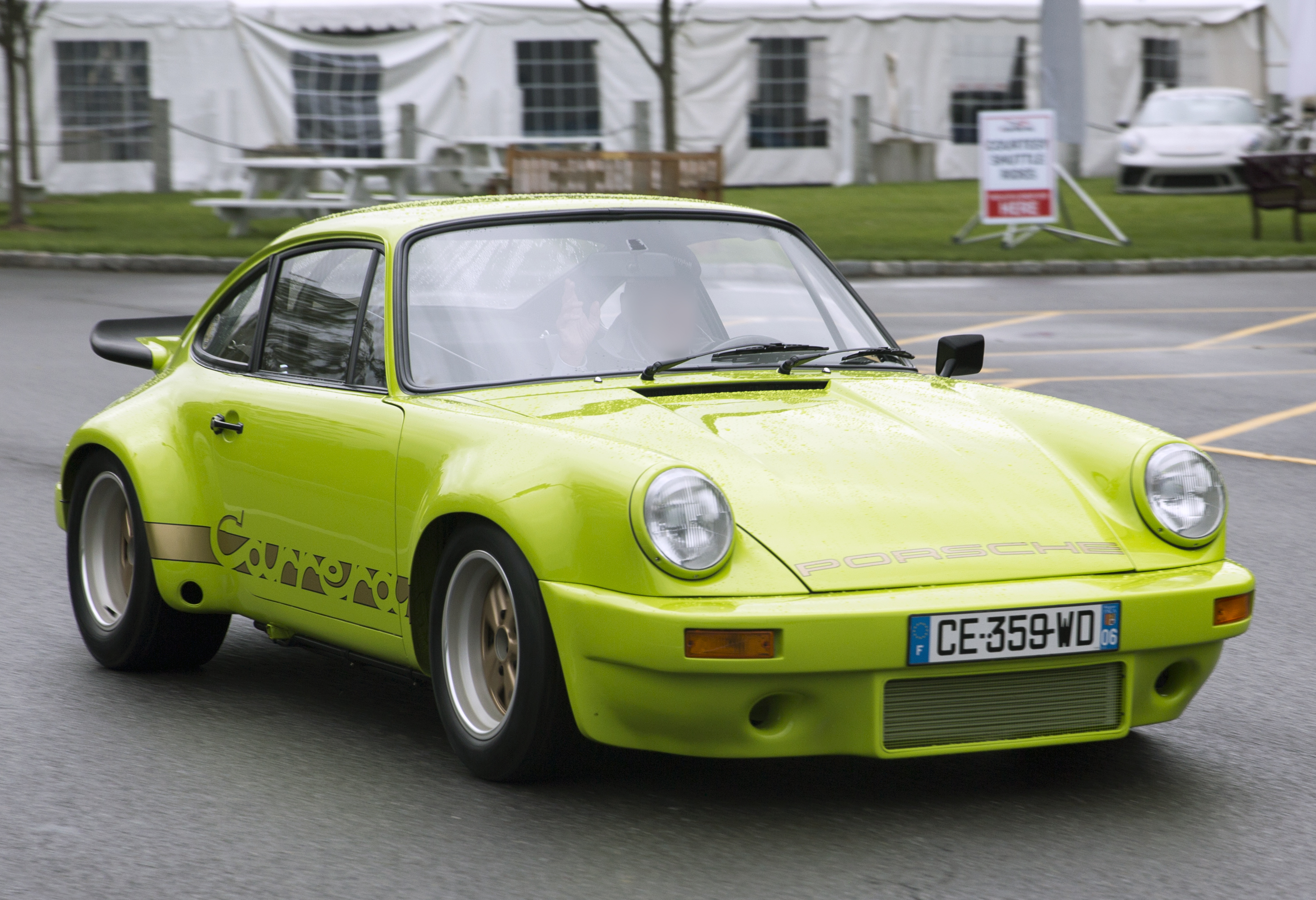
The Porsche Carrera RS is a high-performance version of the 911. It’s made to be faster and more track-like than a regular version. People talk about it because it’s a special, performance-heavy model.
“Open exhaust” means the car’s exhaust is louder than normal. With a loud exhaust, you can have trouble hearing what’s going on around you, especially in a closed cockpit.
“Blue laws” are historical rules that restricted certain activities on Sundays, often including commercial activity or events. Here, the speaker uses it to explain why racing couldn’t happen on Sundays at that time/place.
The Renault Wind is a small convertible made by Renault. It’s designed to let you drive with the top down, but in a compact size. The podcast mention suggests it’s a car that may need repair or rebuilding work.
The chassis is the main frame of the vehicle. If it gets bent, the car can end up “out of alignment,” which can cause handling problems and uneven tire wear.
Concept
straighten them out
When a frame is bent, the shop has to pull it back into the right shape. They usually measure it carefully so the car goes back together correctly.
Bonneville is a well-known salt-flat race location where people try to set land-speed records. You have to follow the course rules closely or your run can be disqualified.
Car
32 Ford Roadster
A 1932 Ford roadster is an old-school car that hot-rodders love to modify for speed. Here, they’re using it as a purpose-built car to try to set land-speed records at Bonneville.
Term
high boy
“High boy” is a hot-rod look/stance where the car is raised compared to a very low street car. Builders do it for fitment and handling reasons, especially when trying to go fast.
A blower is a device that forces extra air into the engine. More air usually means more power, which is why it’s used on cars trying to go very fast.
Term
34 speed transmission
A “speed transmission” refers to the number of forward gears in the gearbox. For high-speed runs, gear ratios and shift strategy are critical because the engine must stay in the right power band while accelerating across the measured distance.
Term
lowered the car down to nothing
They lowered the car a lot. Going lower can help the car stay stable and cut wind resistance when you’re driving very fast, but it can also make the suspension setup more sensitive.
He used the car’s turn signals as a signal to the officials that the car should be treated a certain way for the rules. It wasn’t about driving—more about meeting the event’s classification requirements.
“Streetcar” in land-speed racing usually refers to a class or category where the car is expected to resemble a street-legal vehicle (or meet specific rules for that category). Officials may check compliance, and the classification can affect how your run is judged.
Ferrari 400 GTC is a modified/converted version of the Ferrari 400i. The guest is basically saying they turned a less-popular Ferrari into a more interesting one.
A “hot rod” is a modified car meant to feel more exciting and faster than it did from the factory. Here, the speaker uses it to describe their Ferrari project.
Ferrari 400i is an older Ferrari model that many people don’t rate as highly as other Ferraris. Here, the speaker says they modified one into something else, which is why it comes up.
“Port injected” means the car sprays fuel into the intake passages before it goes into the engine cylinders. It’s one way engines deliver fuel for power and smooth running.
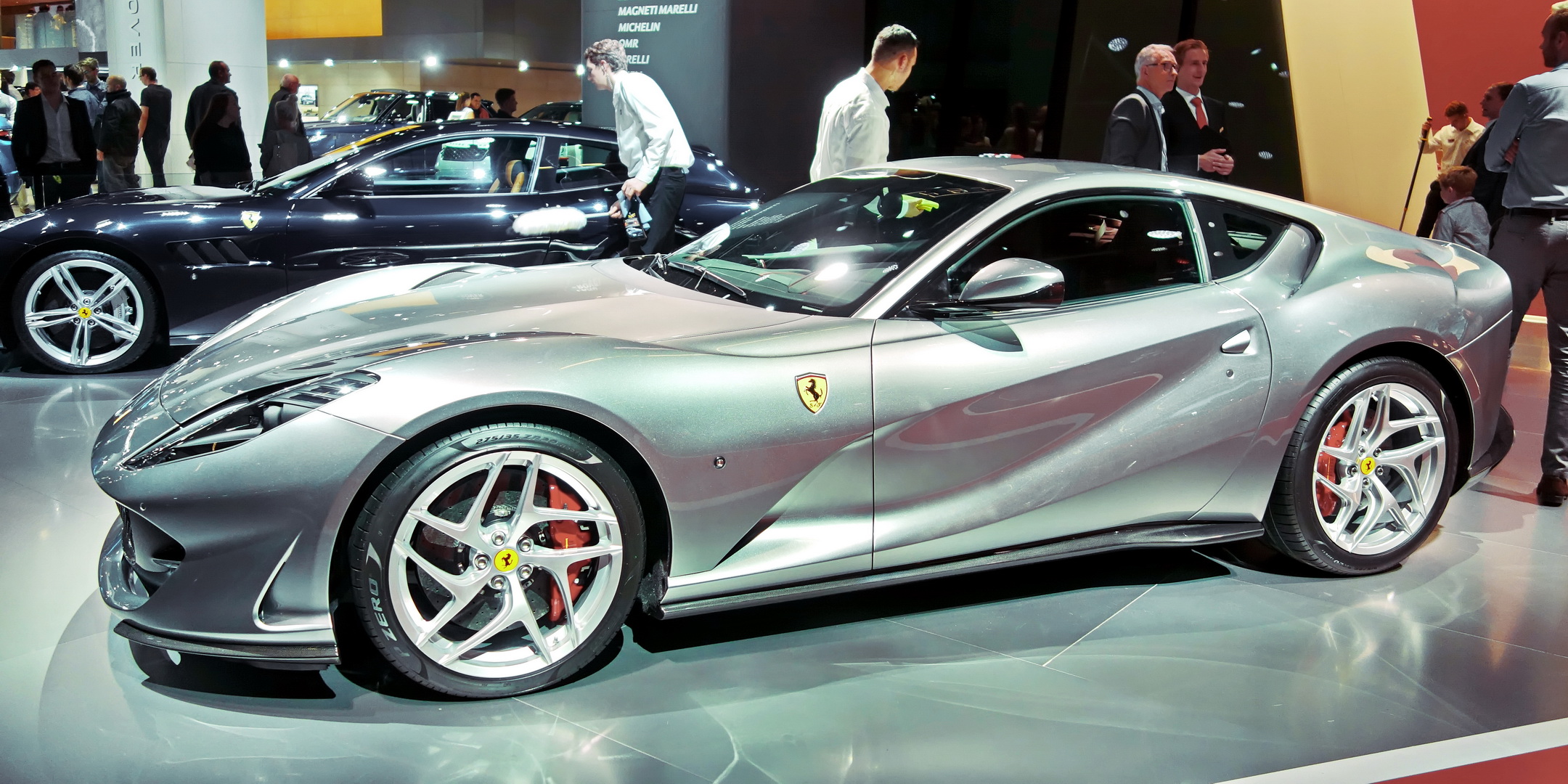
The Ferrari 812 Superfast is a very powerful luxury sports car made by Ferrari. It has a V12 engine, which is known for strong performance. The podcast is highlighting how much power it makes and how the car’s transmission helps it deliver that speed.
A quick-change rear end is a race rear axle setup where you can swap the gear ratio fast. That helps the car match the track—more acceleration or more top speed—without taking everything apart.
A “six speed” refers to a manual-style gearbox with six forward gears, typically used for keeping the engine in its power band. Tremec (spelled “Tremac” in the transcript) is a well-known performance transmission maker, often used in race and high-performance builds.
The differential is what lets the two driven wheels spin at different speeds when you turn. That helps the car grip and turn smoothly instead of fighting itself.
Willow Springs is a race track in California. They’re saying they took the car there to run it on the track.
Car
32 Ford three-window coupe
A “32 Ford three-window coupe” is a classic 1932 Ford body style. Here, the builder is taking that old body and turning it into a modernized, track-focused car by changing the chassis and key components.
Boxing the chassis means making the frame stronger and more rigid by enclosing it. A stiffer frame helps the car handle more predictably when you drive hard.
Titanium fasteners are bolts/screws made from titanium instead of steel. They’re used to reduce weight and can resist corrosion, though they’re typically more expensive and require correct torque procedures.
“Big brakes all the way around” means the car has upgraded brakes on all four wheels. Bigger brakes can stop harder and handle heat better, especially during track driving.
Moving the engine back changes where the car’s weight sits. Putting more weight toward the middle/rear can help the car handle better when you turn and brake.
“50/50” means the car’s weight is split about evenly between the front and rear. That can help the car feel more balanced and easier to control in corners.
This is a Corvette that’s been built with an aluminum chassis in an RS1 configuration. An aluminum chassis can make the car lighter and stiffer, which helps it drive more precisely.
Weight distribution means how the car’s weight is balanced front-to-back. Putting the engine farther back can make the car handle better because the front and rear tires share the work more evenly.
They’re talking about a 1957 Ford Thunderbird. It’s a famous classic American car from the 1950s, and people often choose it for vintage road trips and events.
Topic
Melamelia
Melamelia sounds like a specific vintage car event in Italy. The guest is talking about rules for who can drive in it and why his car is waiting for a new owner.
That’s the length of the trip—roughly 621 miles. It’s a long distance, so it matters that the car can handle the drive.
Concept
organized car competition
They mean a formal racing or rally event with rules. The government set a rule that limited participation by age.
Concept
Daytona 24 hour winter
That phrase is about long-distance racing at Daytona. It’s the kind of event where cars have to keep going for hours, and the “winter circle” is where winners are celebrated.
A carburetor is a device that helps the engine get the right mix of fuel and air. If it’s the wrong one, the car can run poorly because the fuel mixture won’t be right.
The Porsche 930 is the older 911 Turbo. It’s famous for being one of the early “real” turbo 911s, with a turbocharged engine and a very recognizable style.
Le Mans is a famous endurance race where cars run for about 24 hours. Teams have to manage speed, repairs, and driver changes to finish the whole race.
Amdahl Computer Company is a business the team worked with to help raise money for the race. The story also says it later got bought by a bigger company.
Street tires are the kind you’d use on a normal road car. They have tread for rain and general driving, and they usually don’t grip as hard as dedicated race tires.
They took normal road tires and shaved them down so they would grip more like race slicks. It’s a trick to get better traction on a track when slick tires aren’t being used.
Horsepower is a way of describing how strong the engine is. More horsepower usually helps the car go faster, especially when you’re accelerating on long straight sections.
A chicane is a part of the track with quick, tight turns that makes cars slow down. “Pre chicane” just means the area right before those turns, where the driving and braking are different than on the straight.
Boost is extra “push” from a turbo or supercharger that helps the engine make more power. If there’s no boost, the car can feel sluggish and won’t perform like it should.
If the brakes don’t work, the car can’t slow down safely. That can happen if there’s a problem in the brake system, and it’s a big emergency in a race.
“Free charging for life” refers to a promotional benefit that covers electricity costs for charging the vehicle at participating stations for as long as the owner keeps the car. It’s a real ownership cost lever for early Tesla buyers.
The G-Class is a Mercedes-Benz SUV with a very recognizable boxy shape. It’s built to handle rough roads and still feel like a luxury car. People mention it because it’s a popular choice when someone wants both toughness and comfort.
The Chevrolet Bel Air is a classic Chevrolet model that was popular decades ago. It’s the kind of car people recognize for its classic look. It may come up in stories about finding, owning, or collecting older cars.
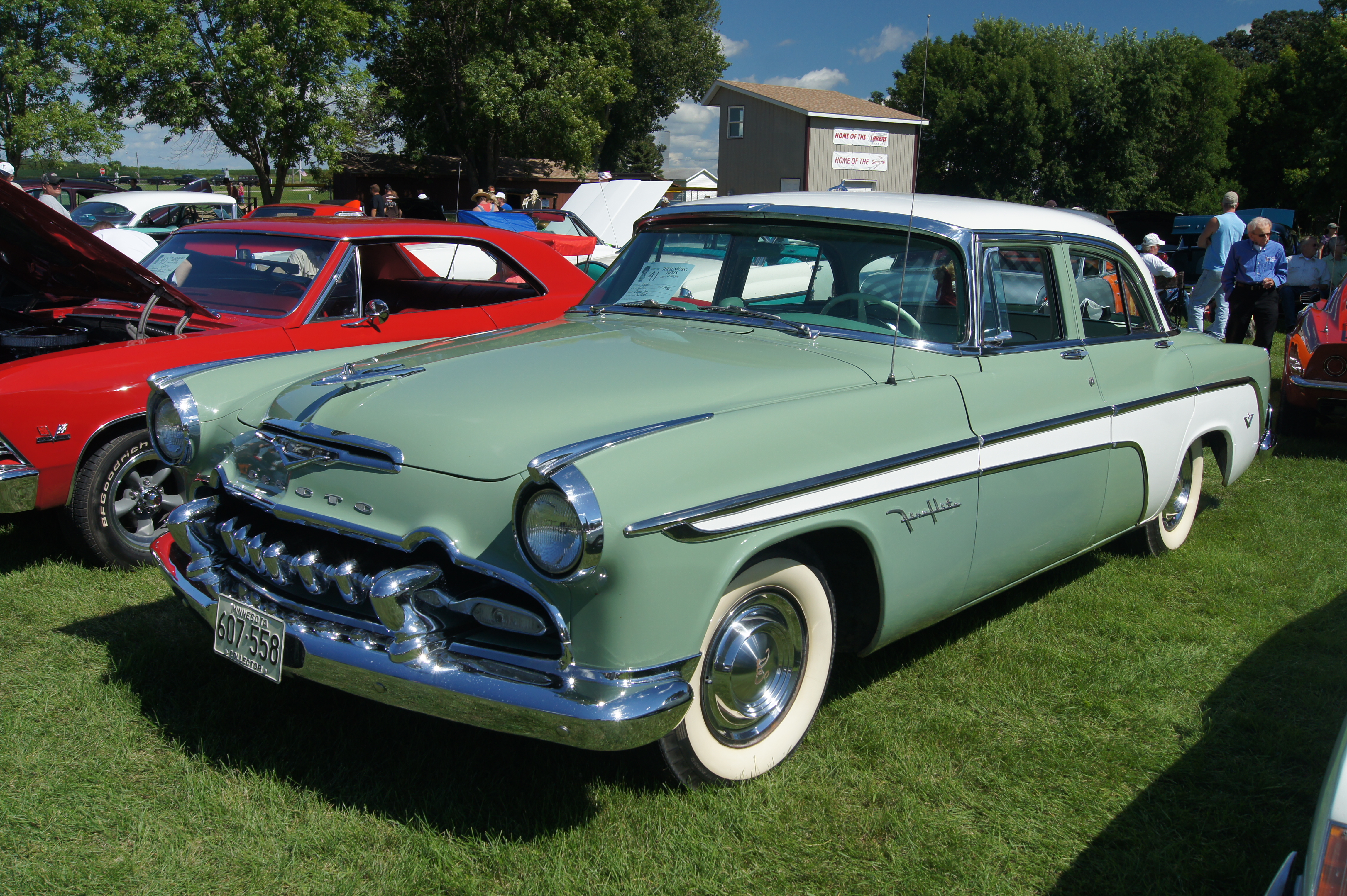
This is a 1950s DeSoto from Chrysler. The “two-door hardtop” means it’s a two-door car with a cleaner, more open side window look—there’s no fixed pillar in the middle like on many other cars.
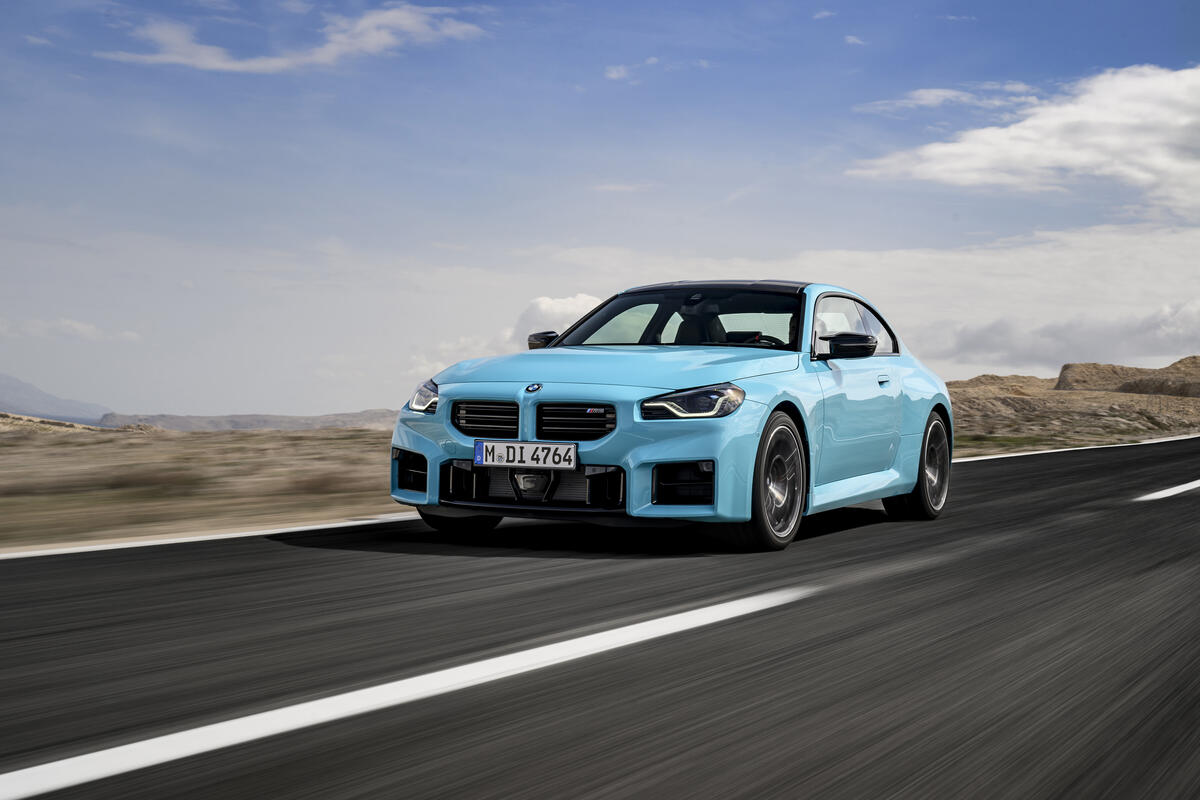
The BMW M2 is a smaller BMW that’s made to drive more like a performance car. It’s meant to feel quick and sporty, not just comfortable. People may bring it up because it’s a popular “driver’s” model.
Brand
M2 Dicast
M2 is a company that makes detailed model cars. If they make a model of your real car, it usually means the car is well-known and respected.
The 1971 Chevrolet K5 Blazer is a classic Chevy SUV from the early 1970s. Here, they’re pointing out it has a V8 and uses modern electronic fuel injection, which can make it easier to run than older carburetors.
FitTech EFI is an upgrade that uses electronic fuel injection instead of a carburetor. That usually makes the engine start easier and run more smoothly, because the computer controls how much fuel it gets.
Car
1994 K1500
The 1994 K1500 is a full-size Chevy pickup. Here it’s being talked about as a heavily modified truck—shortened frame and lowered suspension—which is why it looks so different.
A suspension drop means the car is lowered closer to the ground. A two-inch drop changes the look and can affect how it rides and how much clearance it has.
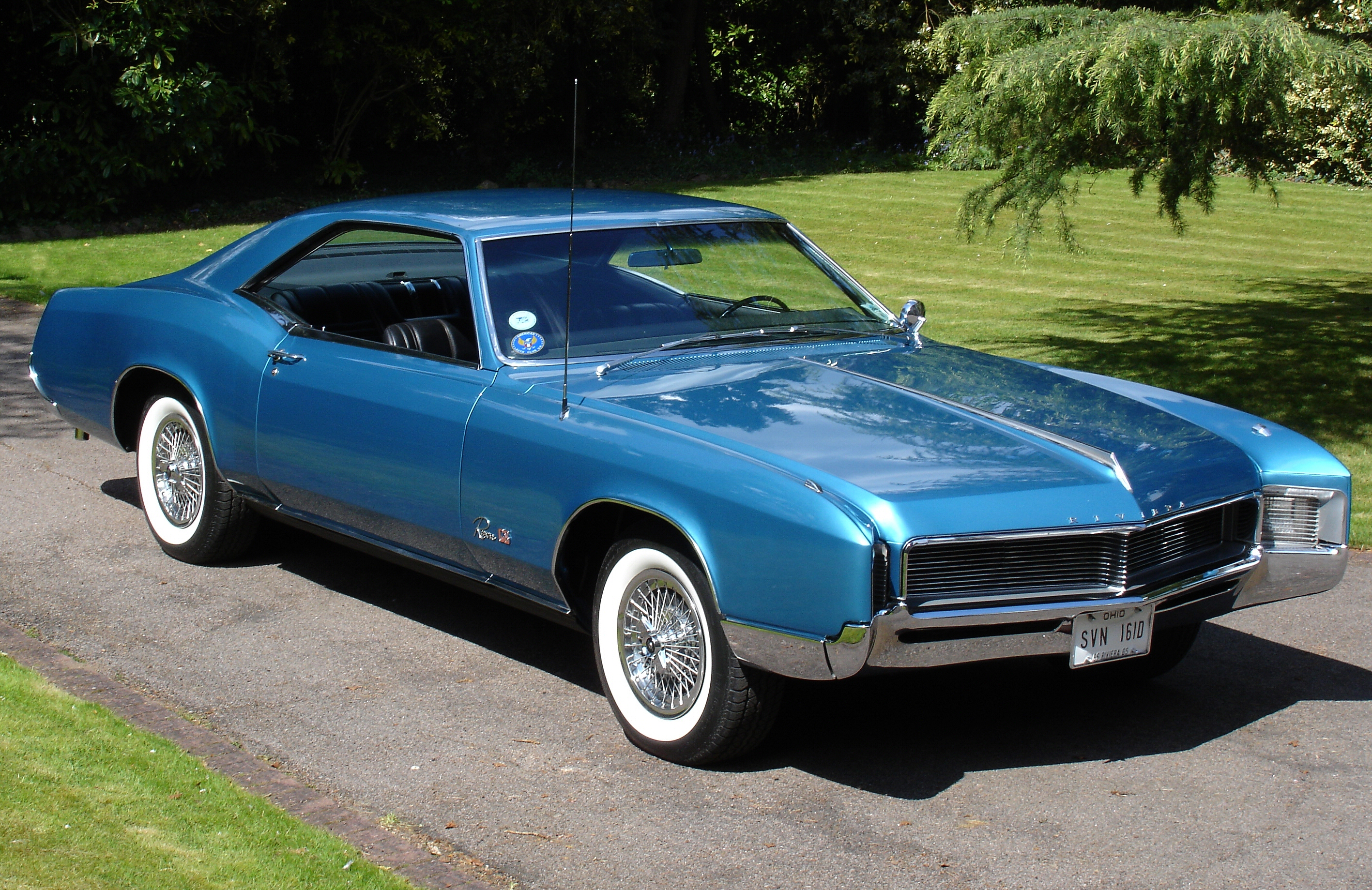
The 1992 Buick Riviera is a Buick luxury coupe. This one is called out with the Prestige Package SE, meaning it has a particular set of upgraded features compared to a standard model.
“3.8 liter V6” tells you the engine size and that it has six cylinders arranged in a V shape. That combination affects how smooth and how strong the car feels when you drive it.
The MGB is a classic British sports car that was popular in the late 60s and 70s. People like it because it’s light and enjoyable to drive, not because it’s complicated.
“1800cc four cylinder” means the engine is about 1.8 liters and has four cylinders. Smaller engines like this can still feel fun because the car is usually light.
The Austin 7 Chummy Club Tour is an old British car that’s very small and simple. Even though it doesn’t have a big engine, it can still be fun because the car is so light.
“Numbers matching” means important parts of the car still have the original identification numbers. Collectors like it because it usually indicates the car is more original and less altered.
“747cc four cylinder” means the engine is under 0.75 liters and has four cylinders. It’s a very small engine, so the car’s fun comes more from being light than from raw power.
A “three speed manual” is a stick shift with three forward gears. It’s typical of older cars and can make them feel more old-school and interactive to drive.
“Vinyl clad” means the car’s body has vinyl covering on it. It can be part of the original look or added during restoration, and it changes how the car is cared for.
This is a 1968 Ford Mustang hardtop. It’s a classic American muscle/pony car, and the host is saying this one is mostly original (“all stock”) and has the factory-style V8 and automatic setup.
Steve McQueen is a famous actor and car fan. The host is saying the Mustang is “iconic” partly because of that kind of movie-star association with classic cars.
Term
C4
“C4” is the name of a Ford automatic transmission used in some classic Mustangs. It’s a three-speed automatic, and the host likes it because it doesn’t make the car feel like it’s constantly running out of gears.
“289 cubic inch” is the engine’s size—how much space the cylinders have. Bigger displacement usually means the engine can make more power, and the 289 was a popular V8 in classic Mustangs.
A “two barrel” setup means the engine uses a carburetor with two throttle bores (two “barrels”) to meter fuel/air. On a V8, that typically indicates a simpler, more economical factory configuration compared with multi-barrel carburetors.
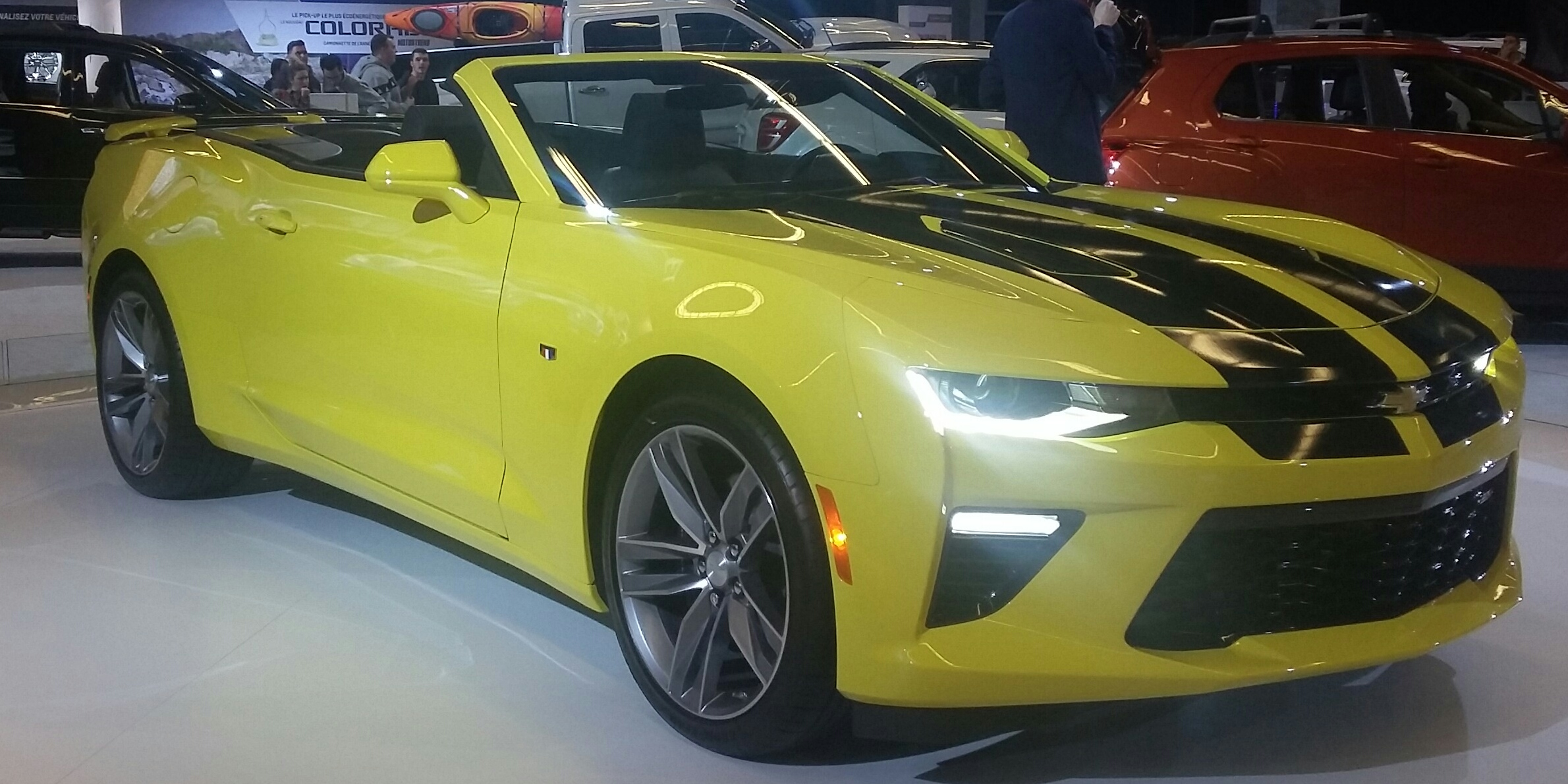
The Chevrolet Camaro is a sporty car made for faster, more exciting driving. It’s known for having powerful engines and a fun feel when you drive it. People may talk about how it shifts gears because that affects how it drives.
LIVE
This is the Classic Automall Show.
Broadcast from the studios inside the Classic Automall in Morgantown, Pennsylvania.
Just one hour west of Philadelphia at Pennsylvania Turnpike Exit 298.
Featuring nearly 1,000 classic vintage and barn-fine vehicles for sale under one climate-controlled roof.
Now, here's your host, Classic Automall President and the man with all the toys, Stuart Howden.
And welcome to show number 242. I had that wrong. I thought it was 243.
I somehow missed a show somewhere.
Hurry in a salon.
Yeah. So you'll have to post that picture.
We were messing around with my son in high gear. We were messing around with AI last night.
And he made me a lead guitar player or some unknown rock band.
A rock and roll maven.
It looks great. I got a leather jacket and a tattoo and a, you know, the neck one.
So when we play our bumper music later on and where she goes rock and roll, you have to shriek it with her.
Absolutely. Absolutely.
So like I said, welcome to the show. We want to guess how many cars in inventory right now.
JR, go first this week.
912.
It's not a Porsche, right?
Do you remember last year?
Yeah.
Last week?
Yes. Go ahead, Steve. Go ahead and smoke him.
802.
Oh.
783.
Oh, wow.
We're selling it now.
Still in the wrong direction.
We are selling like crazy.
So bring us your cars.
We need cars.
We need inventory.
We need, you know, whatever you got.
We'll take, well, we won't take a Camry.
Well, we might take a Camry.
Sure.
If it's a cool Camry.
Right.
Or a very low mileage.
Race Camry.
Race Camry.
A NASCAR Camry we would take.
Anyway, let's quit our jibber jabber and get right to our guest.
Great tool.
Joining us via Zoom this morning, afternoon, evening is Mr. Jim Busby, race car driver, race
car builder, team owner, hot rod aficionado.
I think I covered all the bases.
Good morning, Jim.
Good morning.
Nice to have you here.
I was just admiring your backdrop there and all your pit passes.
You know, we do the same thing with car shows and collect, you know, concordial
elegances.
We save all of our badges for whatever reason.
I'm not exactly sure.
Only for the memories, I guess, right?
Well, I think we all do.
Some of these that you see behind me actually are pit passes, but there are also ones for
the Porsche parade, Porsche deals they put on in Europe.
So I mean, I bounce around all over the earth and these are the passes that get me in and
out.
Got to love those.
I think you could just make up your own.
Well, with AI, we could probably make up, but we could probably go to a lot of places,
I think.
That sounds like a good idea.
By the way, before we go too far into this, our dear mutual friend, Bruce Meyer, said to
tell you hello.
What a special guy.
What in here great guy he really is.
We were at his collection back in January out in California and he was talking about,
he was goading you a little bit into getting your shop and putting stuff on the walls and
then you had a little event to kind of showcase everything.
It looks quite impressive from the photographs.
It's really quite nice and it says we took the entire workshop and converted it into
sort of a museum of our history and the front building, which was our offices has now been
leased out to Troy Lee, the famous helmet, and so forth.
And he soon will become the owner of this property after starting here in 1974, 11 years
old.
Wow.
And paint the very first helmet that Troy Lee ever painted was mine and it's hanging
on the wall in here in the shop.
Oh, how fantastic.
And what year did you move into that building you're in as well?
We came here in 19, I'm going to say, say 73.
Because I was paying rent in Costa Mesa and it was way too much.
So I found a building in Laguna Beach.
Everybody says, what are you doing with a race shop in Laguna Beach?
Well, I'll tell you exactly what I'm doing.
I could afford this.
I couldn't afford Costa Mesa.
Isn't that funny how that was back in the day?
And of course, I would imagine the rent back in 1973, a tear would come down our eye if
you told us the number.
Well, I was paying $700 a month to Tad Devine and Tad Devine was Andy the Divine's son
who handled his real estate investments in Newport Beach and I couldn't afford to stay
in Costa Mesa.
So I asked a friend, how do I get out of here?
And he said, come on to Laguna.
They're cheap.
And we bought this place for nothing.
And here's the funniest story about this.
I was sitting in my office here after we'd won at Le Mans.
We've been all over the world racing, had a separate shop in England where we got ready
for Le Mans and so on and so forth.
And my secretary walks in and flips a big manila envelope on my desk and says, the bank
sent our check back.
And I said, oh my God, we bounced our first check.
Well, we didn't.
What happened is I opened it up and paper clipped to the deed to this property was my
check, which had overpaid the balance.
That never happened.
And my crew moved the place out.
Right.
I got the pink slip on the joint.
Oh, that is fantastic.
It's funny you say pink slip.
We just got a call from a guy we sold a car to in California yesterday and he goes, when
are you going to be sending him a pink slip?
And my wife said, you're what?
I had no idea what he was talking about.
And of course, in California, people, we all know what pink, because you raced for pink
slips back in the day.
And we really did do that.
You know, we'd meet as Bob's driving in East Pasadena and for five bucks, you could go
down to the county strip, which separated Pasadena from San Marino and raced because
the Highway Patrol was supposed to patrol it while they didn't repulse patrol at all.
And we didn't have the Pasadena cops didn't go down.
There were no San Marino cops and we'd race our brains out.
The real picture with the girl jumping up and down with the flag and the whole enchilada,
it really didn't happen.
And what were you driving back then?
I had a 29 Ford Roadster pickup with a 283 Chevy in it.
That's Chevy three speed slicks, the whole enchilada.
Did you drive it there?
Did you trailer it to there?
I drove it from West Pasadena to East Pasadena to sign up from our races and it was five
bucks a race.
Oh, man.
And you put up your five bucks and go down to the county strip and race them up.
And I won a lot of money.
And we later moved to Newport Beach where we set the same thing up at Merle's Drive-in
and did the exact same thing.
How fantastic.
The good old days, right?
He really was.
He really was.
And of course, I mean, you probably made more money racing on the street than you did
when you got into even Porsches and all the other stuff.
There wasn't much money in the 70s and 80s in racing, was there?
Well, I fortunately was very blessed to have some people that took an interest in my career.
And the primary guy was Bill Cargas, whom I met Bruce Meyer through.
Bill Cargas was a friend of mine from junior high school, high school and car stuff.
And he went on to own Beverly Hills Porsche Audi.
All right.
Good to got to know.
And when I came back from Europe, it was crazy.
I was in Europe racing for Barclays Bank in the two-liter prototype class
and Guy Edwards and I were teammates.
And at the end of the season, I was supposed to go another season.
I got a notice from Barclays saying, hey, look, we're finished.
The Arab oil embargo hit and it closed down racing all over Europe.
So I said, look, wait a minute, I moved here with my family.
I live in England.
I'm supposed to race next year.
And they said, look, just go home and everything will be OK.
You'll get your paycheck.
Everything is good, but we can't be seen racing.
Right.
So they were burning fuel.
So anyway, Bill Cargas called me the day I got home and he said, hey, Buzz,
have you ever heard of IMSA?
And I said, no, I don't know what that is.
I've never driven a close real car.
I have no idea what they are.
So he said, meet me at Vashek Pollock's car dealer out here in Southern California.
And he had a Porsche RSR Carrera there.
And I said, so what do we do with this thing?
I've never driven with the door shut.
And it was really funny because I did come back.
There's a picture of me somewhere on my website of me holding my fingers in my ears
and trying to explain to somebody that my ears are ringing so badly
because I'm in a closed car for the first time with open exhaust.
And my ears are ringing so bad that I can't hear anything.
And I've just finished the first practice session at Laguna Seca.
And that's where Bill and I started racing.
And of course, the rest is history because the following year, Peter Greg hired me
to replace him when he moved into a BMW.
And didn't you have to work for somebody underneath him
because of his relationship with BMW and Porsche?
That's exactly what I did.
My boss at Brumos was Bob Snodgrass.
Bob Snodgrass sadly has passed away a wonderful kind man
who took me under his wing and we won some races.
And the following year when I completely replaced Peter,
we won seven races in a row and smoked everybody, including Peter.
I never forget.
There's a picture of me with Peter Greg walking up to me at Pocono
and saying, hey, Buzz, why do you race me so hard?
And my reply at that point was, Peter, that's what you pay me to do.
Yeah.
Yeah. What a conundrum for him, right?
It was really crazy.
You know, we hit each other often.
I was not afraid to push guys around to get by.
Sure.
And Peter was always near the front, Al Holbert, Peter and myself.
And I would come up on Peter and he had the BMW and more horsepower,
but I had better tires because the Porsche held onto his tires better than the BMW did.
Sure.
So I would get up close to him and he wouldn't let me buy.
So I would just push him out of the way.
And I wanted Ontario that way.
I wanted Laguna Seca, but at Laguna Seca, I won because he hit me
and he spun and I continued.
How about that?
So wasn't there a door that he gifted you that he signed Ontario or from somewhere?
And that's been lost or has it been found?
It was lost for sure.
But I do have a great photograph of it on a stand here in the workshop.
And it's a fun story because we were racing like hell
at Ontario Motor Speedway, their very first sports car race.
And I was running second.
Peter was leading on the very last lap.
I thought this has got to stop.
So I ducked up under the inside of him and tried to get by him going into turn one.
He turned into me and pushed me off in the grass and I spun.
When I spun, I hit him and pushed him off the road and sold his motor.
I got my motor cranking, but it smashed my exhaust shut.
So I take off in a wounded Porsche and I can see him coming and he is coming like gangbusters.
And as we cross the start finish line, I think he gets by me, but he doesn't.
He misses by about three inches and I win the race overall.
And when I was being interviewed in the winter circle, because I was pretty cold hearted racer,
they said, just so, Jim, what do you have to say about that?
I just said, that's racing.
So the following week at Lime Rock, Connecticut, I'm standing in the paddock
because you remember on Sundays, they had the blue laws and you couldn't race.
You couldn't race, you couldn't do anything.
That's right.
So and I liked fireworks a lot.
So we stopped in St. Louis on the way out there because I drove the truck at the time
and we bought a bunch of fireworks.
So I'm blowing up everything in Lime Rock, Connecticut.
And this day, John Bishop starts this picnic.
So Peter Gray walks up with a blanket over his door, which I had destroyed on his BMW
and didn't know he had.
And he says, I'd like to give a special gift to Jim Busby.
And he takes the cover off of this thing.
I'm standing there terribly embarrassed.
It's a picture of this door smashed to smithereens where I backed into it and tumbled it.
And on it is written, first play.
It says, Brummo's Porsche Audi or something or BMW or something.
Anyway, and then below that in hand painting that he had a sign painter do,
it says, first place, Jim Busby Porsche, Ontario Motor Speedway and such and such a date.
Second place, Peter Gray, BMW.
And then below that, that's racing because that's what I said when I was interviewed
in the winter.
So I was so cold.
I was such a cold winter.
Oh, but didn't you have to mean you had to be a little bit brutal.
You couldn't play favorites out there.
I didn't.
I didn't.
I swear I didn't knock anybody out.
But that was my nature.
Anyway, I did that in junior high school.
You get in my way and I'll knock you over because I didn't think I could win any other way.
You know, that was a funny study because I didn't have the confidence that it took to
be a great fighter or a race car driver or anything else.
But I always figured if that push came to shove, if I shoved, I could win.
Sure, sure.
Well, you see that, you know, when you go to even just a little local go kart track or
something where it's just a, you know, at a tourist trap or something that the people that
are ahead of the people banging each other and getting other people out of their way.
That's exactly right.
And when I taught my grandchildren how to run go-karts, I taught them how to hit people.
That's the number one thing.
Get them out of the way.
Could we do better with karting in the U.S. as far as leading up to full-time racing?
I think it's not apples and apples.
I did some karting a little bit because I tried to do anything to make money and we would restore
carts and build carts and so on and so forth.
But I don't think it's the same.
But what it does is it teach you how to compete, how to get around people, how to push them out
of the way.
But as far as the dynamics of the car or the kart, I don't think they're anywhere close to the same.
Sure.
Boy, teach them how to race and put them in a car and they'll learn how to race because boy,
if you won't shove somebody out of the way, I promise they'll shove you out of the way.
Yeah, shove or be shoved, right?
You know, you're talking about your shop in Laguna.
I'd be remiss if I didn't mention this.
I've heard stories tell that it's interesting to say the least backing a semi into your shop.
Oh my god, this is a funny story.
My shop has a very narrow driveway, but it would hold everything we had.
And we were a red building up in front that was firewood, basically.
And the rest of it is concrete block.
So I used my offices were up front and I used that every day.
The whole workshop in the back is quite large and we had a base set up for all the cars.
They'd arrive back in the 18 wheelers from a race and come down the driveway and be unloaded,
come into the back shop, be disassembled.
All the hard car parts and engines and so on would wind up in the main workshop to be rebuilt.
And then we would take the cars apart and any bent chassis or anything would go into the pad
and we would straighten them out, put them back together and load them back in the truck.
But what do we do with the trucks in the meantime?
There was only room for one 18 wheeler down the driveway.
So we parked them side by side.
I mean, they literally were touching each other
and we couldn't figure out how to get into one of the trucks because
so I come out one day and this guy who worked for me is out there with a saw,
saw him in the hole in the side of our plenu 18 wheeler that I just leased at least.
And I said, what in hell are you doing?
And he says, I figured it out.
We put a door on the side of one of them and we can walk into the door of the other one.
So literally we had two 18 wheelers side by side and then the lift gates went back up.
You're locked out.
But you had to go in one trailer and go across that trailer, open the door,
open another door and go into the other trailer.
And we did it for decades.
I remember a couple of guys came down to visit.
They was Mike Fulmer and maybe one of the RC Arrow boys came down to visit.
We were in Laguna Beach there in Newport.
And they said, hey, Buzz, we're always amazed to see your 18 wheelers side by side in the driveway.
How the hell did you do that?
And I said, it's easy.
You get them to touch each other and cut a hole in one of them.
That's classic.
I imagine when you took that truck back, they were wondering what that extra hole was for, right?
You know, when I sold the company, I sold it to a wonderful Canadian guy who owned a bunch
of real estate up in Canada and I sold my whole team.
And that happened quickly.
I jumped forward a bit.
What happened was I get a call from Mimson.
It's clear that I'm now with Nissan.
I had left Porsche and I reluctantly went to Nissan and Nissan was a great car.
They won a lot of races and then they had beat us the year before.
So I said, OK, we'll try that.
Well, it required a little more maintenance and going quite a bit more money.
Uh-oh.
This thing's ringing.
I'm going to kill it.
Yeah, they're fine.
Perfect.
So anyway, we signed a deal.
I wasn't as pleased as I could have been because they were much more maintenance heavy.
Well, anyway, what happened was is BF Goodrich had decided that's what they wanted to do.
So I said, look, I'd kind of like to sell out.
And I had a lot of sponsorship from Miller High Life and various companies that were
sponsoring us.
So I said, I'll sell the whole lot.
So this guy calls and within two days, we were prepping the cars for Lime Rock, Connecticut.
Within two days and two fax machines and two lawyers, we managed to sell my company
to a guy in Canada and the truck left here on Thursday morning for Lime Rock and went
straight through to Lime Rock and arrived in the paddock and we qualified and ran the race.
But I now am just a spectator.
Right.
So the guy had to pay me a certain amount to show up at every race to kind of get him acclimated.
And so I showed up and I sat in the Miller Brewing Motorhome talking to everybody and
having a good time and thinking to myself, I guess this guy doesn't really want him.
So he bought the team.
And so I said, let me ask you a question.
Do you really need me here?
Because I'm on a retainer to come to every race and make sure that you get off on the right foot.
And he says, I don't think that we need you here.
And I said, good, but you do have my address, right?
You know where to send the check because you stood to pay me.
I'm just not showing up, but I'm still getting paid.
And it was a wonderful deal.
And he eventually, I don't know whether he stayed another year or so, but I completely retired.
And it's the only time I ever cried in my workshop.
I came into work the following day after the trucks pulled out.
And if you've ever been to a race shop after the truck pulls out, there's pizza boxes and no beer
allowed, but playing Coca-Cola bottles and so on and so forth all over the place.
The place is a mess because they load the truck and leave.
And then we have people come in and clean it while they're gone.
So I walked into the shop, walked into my office.
It all looked the same except there wasn't a sound.
It was silence.
And so every bench was an empty pizza box or a Coca-Cola bottle,
or in some cases a beer hidden somewhere.
But I sort of sat down in my desk and I said, my God, after all of these years and decades
of doing this, it's over.
Wow.
And I didn't actually cry, but I sat at my desk and looked around at everything we'd done.
And funny enough, I'm sitting at that very desk looking around right now,
seeing all the photographs and all the leftovers.
And I got a tear in my eye and I sit there and almost burst into tears because the party was over.
Right, right.
And I was home alone.
That's the least thing you can prepare for when you sell a business, I think,
is the fact that you're just all of a sudden it's gone.
It's not about the negotiation or the money or it is, but the reality of it is, is like,
oh, damn, I just sold everything.
And I did.
And the funny thing is on Monday, I was getting the cars ready to go to the same people.
We had 24 or 25 employees.
We had everything going as humming and buzzing, machine shop running, everything going.
And on Friday, I was sitting in a morgue.
Well, so what did you spend your time doing from that point?
Well, I'm hot rod crazy, as you probably know.
And I decided I wanted to go to Bonneville and break records.
So a friend of mine, Richard Muntz, who was crazy about cars, had called me and I had built him a 32 Ford.
And he said, hey, Buzz, let's go to Bonneville and break the record.
I said, in what?
And he said, how about a 32 Ford Roadster, a high boy?
And I said, that sounds like my deal.
And so by God, I got a built an Arden Power.
It took a 49 murk engine, put a blower on it.
And Arden heads put it in a 32 Ford with an ass car, 34 speed transmission,
and all the right stuff lowered the car down to nothing and set it up really well.
And by God, we broke the record.
We went 151 miles an hour.
Two years later, we went back and went to 190 miles an hour.
And going to class.
And the following day, I went 202 in a 32 Ford Roadster high boy headlights on.
And I turned the turn signals on halfway down the track to just make sure everything
knew I was in the streetcar.
And I had veered off the course and they disallowed my time.
Oh, no.
And I put my son in the car for the next run and he ran 202 and got the red hat.
I do not have a red hat.
I was going to ask you about that.
You didn't get the red hat.
I don't have a red hat.
I have my sons, which I commandeered and said, this is staying here, buddy.
I paid the price.
Oh, that's so.
Did you have dice hanging from the rear view mirror as well, too?
No rear view mirror.
This is a roadster, man.
Heads out in the breeze.
Oh, I love that.
You built kind of a hot rod Ferrari at one time, a 400i that you turned into a 400 GTC.
That's quite interesting.
Well, here's the thing.
I did a little sheet time as we all know what that is when you're a race driver,
you wind up in the hospital occasionally and I had wound up in the hospital.
So I was sort of on drugs and which my wife times is the only saving grace that did to this story
is that I was stoned or something on something from the hospital.
And I'm lying there in the bed and I'm thinking, what is the almost awful Ferrari ever built?
What is the one that universally hated Ferrari?
And I said, it has to be the 400.
Yeah.
So I thought to myself, hmm.
So I look online and I find a beige 400.
Of course.
Automatic.
Every awful accessory that you could put on one.
And I buy the thing for $17,000 and I'm able to do this because my wife understands that
I've had narcotics.
And I am the last guy I don't drink.
I don't smoke.
I don't do anything.
But boy, I told her to put that hospital drugs that knocked me over.
And I'm laying there stoned out of my mind and I buy the stupid thing for $17,000.
I make my poor wife leave the hospital, drive to the bank and get a check for $17,000 and drive
to LA and hand them this thing and they hand me a broken car that doesn't run.
And boy, is it ugly.
Oh, yeah.
So I have my guys take the transporter up there, pick it up because now we're transporting
bottled cars and they bring it down and stuff it in the driveway.
Now I come out of the hospital.
I'm feeling great.
I go on to go back to the shop.
And by the way, we leased half of our shop to a gymnasium, which is all girls.
Now, very successful.
My wife works out there every day and it's full of beer and cigarette ads because those
are the people that sponsored it.
And I asked the girls the other day, I said, how awful is this coming in here to work out?
We love it.
But when your husband's smoking, drink, what do you do?
Well, we just look the other way and straight up.
But anyway, so what happens is this car is sitting there and I go back to the gym and
working out, getting myself back in shape again.
And I look out the door at the gym and I see that 400 sitting there and I say, you know what?
Fly yellow.
Yeah, fly yellow.
How about that?
How about in the dirt?
How about we drop it eight inches in the front, four in the back and get a 575 motor?
Port injected.
So we build this engine as a 800 horsepower bad ass Ferrari 12 cylinder motor and it's
going through a Tremac six speed to a quick change rear end right out of Bonneville.
Put a differential in it and I took that car to Willow Springs and wrote it on the racetrack
and with 18 inch wheels, all the right stuff.
It's a cool car.
We smoked everybody.
So I took it up.
I had had a guy tell me one time I was in a 32 Ford at the road race at Laguna sake.
And he says, Busby, what's wrong with you?
You like 32 Fords?
I says, no, I grew up in 32 Fords.
I just wound up in sports cars.
Right.
He says, well, they're not cool.
I said, I'll tell you what, I'll come back next year in a 32 Ford and beat you.
A road racer.
Yeah.
And that was a big, big statement.
Yeah.
So I bought a 32 Ford, three window coupe body, put it on a 32 chassis, boxed the chassis,
all anti we all titanium fasteners everywhere, big brakes all the way around,
moved the motor back eight inches, put the oil tank, replaced the fuel tank with an oil
tank in the back and got the car balanced 50 50 perfect.
Wow.
And we got that car going.
I took it up to Laguna sake for the hot days with guys with all their new Ferraris and everything
and I smoked them all.
Mic drop.
I absolutely love it.
Where's, where's, where, where's the Ferrari and the 32 now?
Are they both still in your car?
And the 32 are sitting in the room.
I'm in.
If I stood up, I could stand and stand a picture and you'd see him.
I'm going to do that.
Oh, I love it.
Absolutely.
We can do whatever we want.
I'm going to walk out of my office right now because my office faces the workshop.
Here's the workshop.
I love, oh my goodness gracious.
Now that Corvette right there is a brand new, never been run RS1 aluminum chassis car that
I bought as an investment.
There is the Ferrari right there.
Love it.
And that one is badass.
You want to see a badass motor take a look at this.
That's 575 motor is a great motor.
How about that?
Look at that.
How about that?
And in two or three of those cylinders still buried in the back.
See, I moved the motor way back.
Yeah, I got that.
Got to get that weight distribution.
Now these unfortunately the front tires on this car are down because they don't hold
everywhere.
That's a 32 Ford that'll beat any modern Ferrari around a road course any day of the week.
That is impressive.
Look, you can just tell it's built for speed the way it's lowered and all that.
What's the car with the 312 on it?
Oh, that is a car.
This is a Thunderbird.
This is how crazy I am.
This is a 57 Thunderbird police special, special wheels, special brakes, three speed,
soft top because it doesn't weigh as much.
And I got a call from the, this is a original race car that was raced in the 50s.
And I got a call from the people that the Melamelia wanted me to come and drive an
American car there.
And the last eligible American car was a 57 Ford T-bird for the Melamelia.
Wow.
So I said, what if I get one?
I found this in New York, bought it, brought it out here to rebuild it.
And I'm on the phone with them and I said, okay, guys, I'm going to come in a 57 Ford
T-bird.
My wife and I are going to drive the 1,000 kilometers or 1,000 miles of Italy in that
car.
They said, oh, we're so excited.
Bring it, bring it, bring it.
And they're willing to pay for everything.
So what happens is, as I get a call from Ken Roth, who's also a Melamelia guy.
And he says, hey, Buzz, I heard you go into the Melamelia.
I said, that's right.
He says, he says, but you're not.
And I said, why?
And he said, because your last birthday, you were 80 and a guy apparently went over
there in a Ferrari with his daughter and rolled the car over.
And either he was killed or she was killed.
And they said, and so the government, not the organizers, but the government of Italy
said, nobody over the age of 80 will ever be in an organized car competition,
which moved me out.
So this car sits here waiting for a new owner to run the Melamelia.
If you know anybody.
I'll give you a quick quickie here.
This is the workshop.
This was our fabrication shop right here.
Fantastic.
And this is on the wall.
My favorite cars were dragsters when I was a boy and I hung one on the wall.
Oh, how fantastic.
There it is.
That is it.
It's amazing.
So that's it.
And there is the nose off of our Daytona 24 hour winter right there.
And I'll tell you, that's a funny story too.
One day I'm looking for a carburetor for a Porsche 930 or a 911.
And I call a guy in Canada and I say, let me ask you a question.
You've got the car, yeah, okay, I'll take it.
He says, but I got something you'd like to have even more.
And I said, what's that?
He said, I have the nose off of your Daytona winning car.
There it is right there.
And there's the banner from the winter circle.
Yep.
There's the car.
This wall is all about that car.
That car.
But anyway, so he said, I said, how did you get that?
And he said, you sold it to me for $100.
And I said, and I said, you're right, I did.
What we would do is after every Daytona 24 hour, we'd take five noses for each car
because you always break them.
Sure.
And you can see this one still has the rubber on it.
It says dings in it.
Is everything as it finished the race.
Wow.
What I did is I sold it to him for $100.
And I said, so why don't I send you a hundred bucks and you send it back to me?
I'm hanging on the wall.
He said, how about sending me five grand and I did.
I love that.
That is one of the greatest liveries.
That golden white Miller Highlife is really a great livery.
And it really looked good to me when we got that banner right there because that was Porsche's 50th
win in AMSA and we did it.
Yeah.
There was a great ad that they did zero to 50 in 4.3 years or something.
I think it was.
I have that and our car is pictured in several.
I'm sorry, the lights are out in the trophy cases, but these are all the trophies that we want.
That is fantastic.
So I'm sorry, I'm not a cinematographer.
Well, you're doing a pretty good job there, Mr. DeMille.
And anyway, that's the car.
That's the model car that Yoke and Mass and I raced at Daytona.
And they put on a little race for the press and they nailed all these little cars.
And that was the one that Yoke and Mass and I drove.
I'll be fan.
That is so cool.
You know, that kind of stuff.
Like you said, when you sold that stuff, you wouldn't have even thought about it being a value
in years to come.
And all of that stuff is hugely valuable now.
I'm such a hoarder that this every picture that you see in this hallway right here.
And now watch this.
Who's this?
Who's this in that red Ferrari?
Is that Michael Schumacher?
I'm guessing it's me.
I won the race at Monaco in that car.
That's going up through Mass and they right before the Hotel de Paris.
And I drove for Ferrari for one rate for two races.
They hired me because they wanted to have an old guy and I could do it.
Drive some Ferraris so they could sell them to wealthy individuals.
So I did and I won the race.
And and who's that?
That's Michael Schumacher.
That's Michael Schumacher right there.
And then so on.
And then the story is going on.
But here's my favorite.
Who's that guy right up there?
That one is I can't see.
Can't make it out.
Can you go a little closer?
Sorry.
Can you?
You ever?
I can't tell who it is from this angle.
That is Bruce Jenner.
Well, no wonder I didn't recognize him.
Who's that?
That's Bruce Jenner.
Yeah.
When we co-drove the BMW Daytona.
And Jenner is a cool guy and a good race car driver.
Sure.
All alone.
I mean, I don't know what his life's like.
That's his business.
We don't judge, right?
So this room here is my favorite place.
Oh, I don't.
I can't.
I can't imagine any better place to be than there.
You know that.
So shall I go back to my desk?
We're having a good time with the tour.
You know, one of my favorite liveries of any car that you drove was the 924 or the,
yeah, the 924 GTR.
Oh my God.
That was a, that was a, that's a great looking car.
It's a great looking car.
And I'll tell you that that's a funny story.
I'm going to come back to my desk.
Sure.
And I'll re, and I hope I reset this up the same way.
But anyway, here we go.
You're perfect.
Absolutely perfect.
Hold it off.
It's like you've been doing this for years.
I got a call from Bea Friderich.
Now I'm at the time was racing some pretty fast cars.
So Joe Hoppin had called me and said,
would you ever like to do Le Mans?
I said, oh, of course I would.
And I already had done it.
I didn't want it for the Kramer brothers in a 935 number 44.
It's right here somewhere.
Anyway, I'd gone there with Rick Noop and Chris Cord.
And I had been asked to drive at Le Mans by the Kramer brothers.
And I said, but who would I drive with?
They said, well, you know, somebody's got to bring money.
And I said, well, that ain't me.
I'm a driver.
I'm not going to bring any money, but I'll bring myself and my helmet.
And so they said, well, find us a couple of American drivers
that can round up some dough.
And I said, OK, and I surrendered to Rick Noop's dad.
And Rick was a hell of a good race driver who had just started with us.
And I knew that he had great potential and he also could get together some money.
So and Chris Cord, of course, is a rock star.
I mean, he would that guy was you race Chris Cord.
You're in tough.
I mean, I did that and he was a bad ass guy.
So anyway, somehow we all get together and decide to go to Le Mans.
And the Chris Cord was a guy who raised money for new stock issues.
And he found a company called Amdahl Computer Company,
which later sucked up by one of the biggies.
But anyway, they got 20 grand together and off to Le Mans we went.
And I got paid to do it and they paid to do it.
And that's how we did it.
And so we end up winning the GT category, winning outright, not outright,
because the following year, the Kramer brothers won again.
But there wasn't any competition because the bigger cars were left out.
Not big, but faster, the sports cars.
Anyway, so I get a call from Joe Hoppin.
I had success at Le Mans, I didn't crash the car we won.
And he says, hey, how would you like to go back to Le Mans?
I said, sure.
Well, BF Goodrich is going to go.
I said, OK, but don't they just do street tires?
Well, maybe, I don't know.
And he kind of gets very nebulous.
So I know right then that something weird is going to happen.
So I sign up and I get to Le Mans and the car is perfect.
And you know, if anybody can make horsepower with a motor that's supposed to be small
and right, that's Porsche and they live.
So I get in this car at Vysok at the test track.
And I look at the tires and I say, wait a minute, these are street tires.
Aren't we going to put the slicks on?
There aren't any street tires.
So they took slicks.
They took street tires and ground them down to almost slicks off.
And they worked OK.
As long as you've got a lot of horsepower on Le Mans,
you just stay out front on the straight.
Because remember, this is pre chicane.
Sure.
You're humping.
And we could get those.
Jackie X told me down the street and qualifying and I moved up about five positions.
Wow.
So we could arrange things with Porsche and they were very, very good.
So I get in the car and I do two laps at Vysok.
And I come in and I say, OK, there's no boost and the brakes don't work.
And they said, OK, see you at Le Mans.
And I said, what?
What?
I've been sitting in my hotel room in Stuttgart for two weeks waiting for this car
and it isn't done because they got Yix and Bell's car ready first.
Right.
Which was the bigger car.
So now I'm off to Le Mans with my wife and daughter who I took out of school to go to
Le Mans experience it right before school was out.
And I get there and the car's there and it won't run right.
And I get in the car and I do about five laps and it doesn't go.
And it's the brakes don't work.
And it's just like it was in Stuttgart.
Right.
And I said, OK, this isn't going to work.
So our poor French driver, Francois Mignot,
who's a great driver, was in our car.
That would be me, Doc Bundy and Mignot.
Yeah.
He doesn't get enough time in the car.
So they just allow him.
So now the race is down to just black and I.
But now the car doesn't run.
So the night before the race, it's raining and on the back of a flatbed truck,
two Porsche guys in red Porsche uniforms are rebuilding the engine in the rain outside.
Now this is a story about Porsche.
These guys are miracle workers and they're hot rodders in the world.
Yeah, exactly.
And so I said, oh, this is good.
And I turned to my wife and I said, let me ask you a question.
Do we have dinner reservations tomorrow night because I think we're going to need them.
Oh, that is too classic.
She did.
So anyway, the long and the short of it is I get in the car in the morning and it's OK.
So I turn over to Doc and say run the whole session.
Now the morning session is four o'clock in the afternoon.
Right.
Because I'm sorry, the race starts at four.
Right.
So you're the morning warmup is like noon.
So he goes out and never comes back.
So I think, oh my God, it didn't.
Well, no surprise.
It didn't break it.
It didn't make it.
Right.
So I all of a sudden it comes in on the hook and is the whole right rear corner is missing
in the rear window and everything else.
Now that car was restored a few years ago and somebody pulled some tape off of one of the
bumpers and it's this red.
Why was it red?
Horsha had given Derek Bell, who's a friend of mine, a nice, beautiful, brand new GTR
for the street.
Right.
324 GTR.
Yeah.
He drove it from England to Le Mans for the race.
He and Jackie won overall.
Rick and I, Doc and I won in the GT category after our car was put back together.
What happened was is Doc had come up on a slower car at the hairpin at Malson
and they pushed him off the road into the barrier, destroyed the car.
Not really.
It gets towed back and three Porsche guys come clamoring out, look at the car, take off on
a dead run, jump the fence into the driver parking area and disassemble Derek Bell's
brand new car.
Pull the handers, pull the wheels, bring off the back of this thing, throw them over
the fence.
It's a locked compound.
Right.
And they throw them over the fence and they've got this bucket brigade going, bringing parts.
That's two class.
We built that car and they painted it with silver and black duct tape and you could not
tell and that car never missed a lick for the entire 24 hours and we won the race.
That is the mic drop moment of all mic drop moments.
Absolutely.
Wow.
What a great story.
And here's the best part of that story.
Porsche remains a hot rod.
I tell like every time I see them, I say, you guys are really good hot riders.
I really like you.
Yeah.
They don't understand what I mean.
Right.
I mean they can take almost, now think of a 911 winning races overall as a 935.
Come on.
The engine's in the wrong place.
Everything is wrong and yet they win.
And every time I got in a Porsche, it finished the race.
Do you know that I won a lot of races, but I think only one race that I win outside of a Porsche
and that was at Le Mans with the Lola Mazda, which we won the class at Le Mans.
I can't remember.
Second class with G2, whatever it was.
Anyway, we win and that was the only car that I ever drove other than a Porsche that won a race
in a big, serious sports car race.
And I drove a lot of cars.
Sure.
Wow.
That's a great story.
And, you know, of course we could do this all day long, which is the whole idea.
But we don't want to keep you.
I know you've got other things to do in the world.
My favorite last question to ask anybody and everybody is, what's your daily driver?
You're going to die.
I have a Tesla and I bought it brand new in 2013.
It's never missed a lick.
I plug it in at night and because I bought, this is how cheap I am,
because I bought it in 2013 when they were brand new.
You got free charging for life.
Oh, that's right.
I forgot that.
Yeah, that was.
I have not bought a gallon of gas through any problem for the last 13 years.
I love hearing that.
Well, when an LA, when we were in LA, it was either Teslas or G-Wagon Mercedes,
nothing in between.
It was like that was all we saw out there.
Jim Busby, thank you so much.
We could certainly do this again.
We'd love to have you on again and continue the conversation because this was delightful.
Well, anytime you'd like, I'm here.
And by the way, I am, as my grandchildren say, retarded.
This lady walks up and says, hey, this is the gentleman still okay.
And I said, I was watering the gardener and I said, what gentleman?
And she said, the gentleman that lives in this beautiful home.
And I said, well, okay, I'll play.
And she hears that I had been severely injured in an automobile accident, a racing accident,
sued Porsche, got millions of dollars, bought this glorious home.
And now I'm out of the gardener taking care of the home.
Way to grace, Suri.
Absolutely fantastic story.
Jim Busby, everybody, thanks for joining us.
We'll be back with the Classic Auto Mall show in just a couple of minutes.
Now, another Classic Auto Mall show.
Here's Stuart with Jay Ward of Pixar Studios as he talks about the movie Cars and the animation
of the character's eyes.
Before we made our movie, the Chevron commercials were out where the headlights are the eyes.
When you put the eyes down in the headlights, the whole face is down at the front of the car.
And so it becomes like a snake, right?
Little face down low.
When you move the eyes up to the windshield, you've got the head of a dog or a horse with
a long snout in the mouth in front and you open up all this acting.
Hear more of Stuart's conversation with Jay Ward of Pixar from February 2025 in episode 180.
Remember, if you haven't seen it, it's new to you.
The Classic Auto Mall has more than 1,000 vehicles for consignment in our huge 8-acre
climate-controlled showroom.
It's a real indoor mall.
If you'd like to know all the advantages of buying and selling a car through consignment,
the information is available on our website or you can talk to a classic car specialist
who can answer all your questions.
It's easy, safe, convenient, and it doesn't matter where you are, we sell worldwide.
See our huge selection of classic and collectible vehicles at classicautomall.com.
Now, more of the Classic Auto Mall show with your host Stuart Howden from our Showcase
Studio just inside the Classic Auto Mall, Morgantown, Pennsylvania, just off Turnpike Exit 298.
And we're back with the Classic Auto Mall show from the Classic Auto Mall Studio, Morgantown.
Did they get any better, I guess?
Wow, well, turbocharged.
That guy is just the stories and everything.
It's just absolutely.
You were just giddy after the interview.
Yeah, really.
It was amazing.
It's so cool because we are documenting history and these stories that are so great
and they're probably not the first time it's been told, but it just reaffirms stuff like that.
When you hear it from the first person, it's not somebody said or I heard a story about or
it's the guy who was there.
And to talk about the story about Derek Bell's car, they just went disassembly.
I'm sure they didn't even ask him either.
Hey, Derek, would it be OK if we disassembled your car?
No.
And the tour of his shop and he says I'm a hoarder, but that is not a hoarder's play.
Yeah, exactly.
That is a museum.
I mean, he could start charging for folks to come into that.
He didn't have anything on the walls until Bruce Meyer, our friend from California,
who's a good friend, dear friend of his, said,
you got to put this stuff on the walls and make something.
So he did.
And then they had an open house and it was Bobby Rahall was there and Derek Bell was there
and Justin Bell was there.
And all these guys were there that he grew up racing with.
And it was just a really neat event because he had all these pictures and stuff.
They were just in drawers.
You know, just didn't even think about it.
I love the semi story.
They were trying to kind of hold it to the side of the semi.
So many great stories.
Yeah, absolutely.
So where do we sell cars this week?
Where?
And how about Missouri City, Texas?
Oh, OK.
Hunlock, Pennsylvania, Northfield, Vermont, Mount Pleasant, South Carolina, Miami, Florida,
North Potomac, Maryland, Coopersburg, Pennsylvania, Emo, Pennsylvania, New Knoxville, Ohio, Levitown,
Pennsylvania, Greenville, North Carolina, Quincy, Indiana, Raleigh, North Carolina,
But I've already got a list of, you know, 20 things that either I want to do,
I have to do, or I should do.
And that's the reality of this, these old cars,
there's stuff that you're going to want to do to them.
I don't care how perfect it looks or seems or appears.
You can make them reliable because they're simple, analog machines.
But because they're 50 years old,
there's stuff that's worn out that you could never even,
you know, the distributor needs to be greased.
Take your pick.
And I'm not sure I have the energy to go through that process,
which is pick the car up, drive it, make a list, take it back.
But after four or five months, you've got a really great machine.
Well, sure.
And that's our goal is to do with this convertible cutlass,
is to make it a great machine.
But we're having trouble just getting the distributor out.
The distributor's set at the wrong dwell and all that.
And so it needs to completely come out and be turned.
And we can't get it to come out.
And that's going to take time and time is money.
And then, of course, you know, then I look at the date code on the tires,
and they look brand new.
But guess what?
They're like 12 years old.
And so they need to replace them before you.
And again, the list is need, should and want.
And the other problem is like with your distributor,
all it takes is one wrong tug and you've turned
what's kind of a minor problem into a major screw up.
That is, that is my MO.
One little nut trying to just, you know,
turns into a whole disaster.
And it becomes three day job instead of a three minute job.
I was talking to a friend of mine who's got a new Mercedes that it's got some leaks from
the valve covers, but they don't have gaskets.
They have sealant that they put on there.
That's right.
He said, you know, it's not that I looked it on YouTube.
I thought I could go do it myself.
And I, my friend, I said, Bill, I said, you're a grownup, right?
And like, right, you know what's going to happen?
You're going to get that car into your garage, get halfway through,
and something's going to screw up.
Now you've got a car that's broken in your garage.
You can't drive.
Are you going to think about how glad you are?
Are you trying to do it yourself?
Yeah.
Yeah.
The car that now can't be driven, a car that now has to be trailer down to the local shop,
which is going to be the same amount of money you would have spent if you'd taken
there in the first place without the trailer and without the aggravation.
You know, that's the thing.
And even the simplest things like replacing something like a strut on a trunk of a Mercedes,
those hydraulic struts that tend to go bad.
You think, oh, that's simple.
I'll just order some and you order them.
The bolts are facing the wrong way.
This was exactly for this car, but it's not.
And so it becomes a process.
So our point to all this is that you have to think these things through when you're
considering ownership or touring or whatever reason of owning an older car.
There are going to be things, no matter how perfect it is,
that are not perfect that need your attention in one form or fashion.
You also have to decide, Stuart, how much punishment you're willing to put up with.
And to drive a classic open sports car seven or 800 miles or two days,
that's a long time.
It's like locking yourself in a washer and spin cycle.
I like that analogy.
I'm going to use that.
Let me write that down.
Yeah, it's true.
It's not for the faint of heart.
And we see guys doing it like the Colorado Grand.
I mean, these are guys who live a pampered life who fly around in private jets and that
kind of thing.
And to get on an open car and it's snowing and cold and you're in a 300 SL Mercedes convertible
or you're in an Austin Healy convertible.
Man, that's, you know, you feel like you're in the pioneer days.
Yeah.
And you get cold.
Yeah, you guarantee you're going to get cold.
And it's going to rain and it's going to snow and it's going to be,
there's going to be some miserable weather.
There's never a perfect weather forecast for any of these events,
especially if they last longer than a day or two.
Some of the comments I got on the blog focused on take the Porsche because
then you get to spend time with your son.
And you know what, if that's not the most important part of the whole equation,
then I don't really know what is.
Is the camaraderie, whether it's with friends, new friends,
whether it's with strangers or whether it's with family.
That's what it's all about, really.
It's all we're doing if we want to be true to what we're really talking about here.
The best part in being in a car with friends, family or just friends,
is that you actually talk, you have a better conversation
when you're not looking at somebody.
Yeah. Yeah.
Isn't that funny?
Looking at the road and somehow you can talk easier.
Right. Isn't that funny?
If you try to look at them, first of all, it's going to be kind of weird anyway,
and you'll probably run into the side of a mountain.
And then, you know, you've got, I don't know,
there's just something about being out on the road that you get philosophical
and you talk about things that maybe you would never talk about if you were sitting,
you know, at a restaurant with somebody or at a bar or whatever.
So although a bar is kind of similar, you're kind of looking at the bar
and the person's beside you.
So maybe there's some correlation between drinking and camaraderie.
Yeah. But there's no check engine light at the bar.
Yeah. Well, there is not. No.
In the good old days, you didn't have a check engine light.
You just had a counter check.
And you had a generator light.
Yeah. Alternator generator, right?
I'm going to take one second here.
What I will never understand with my Jag,
why it has a voltmeter instead of an alternator warning light.
Right.
Because the voltmeter, it's not until you notice that you're screwed.
You're screwed.
Why does my battery have eight volts?
Yeah. What is, why is it now telling me?
Why can't it tell me ahead of time?
Hey, things are starting to go sideways here.
And maybe you should look into this.
So anyway, I don't, I don't, the other thing we could just fly to Tahoe.
Exactly.
Well, I'm just, I'm just kind of musing over.
I'd like to go because it's a once in a lifetime deal.
I think you're correct with that.
But how you go is, is going to be the conundrum,
was what you'd figure out.
What, what color combination,
Higley, if you could pick it, and you were going to buy one today
and you could pick any color combination, which one would you pick?
There's some great ones on Bring a Trailer right now.
Oh yeah.
And my last one was a red with white coves.
Oh, it's a pretty combo.
But also there's dark green, there's red with back coves.
Yeah.
There's a new tricarb one just showed up.
Again, the problem is that you know that no matter how good they are,
you're going to have to screw with them.
Yeah, you're going to, it's just part of it.
And I mean, the advantage that people have that have some mechanical skill
is, you know, sometimes pretty immeasurable
when it comes to owning these classic cars.
If you've got the skill to do some things that you don't,
that don't turn a three minute job into a three day job,
then that certainly helps.
And, you know, people that can do their own work
obviously save a lot of money when it comes to that.
And you get a car that's better sorted.
You can, you know, in theory, sell it for more money
and maybe not have to pay the local shop quite as much money.
But you've always got to have that one guy as a knowledgeable guy
because there's always going to be something that you're not going to know
and YouTube's not going to show you how to do it properly.
No.
And you want to, I'm, I, it's hard for me to work on cars.
And so, you know, I used to travel with a bag of tools in my trunk.
And I don't want to, to be on the side of the road now.
It's never fun, is it?
Well, Keith, so glad to have you back.
And I hope that all is well in your world.
And we'll look forward to next week's blog
and something fascinating to talk about.
I'm certain.
Well, if you find me a big Healey, let me know.
I'll keep you, keep you in mind.
Everybody, we'll catch you next week
on the Classic Automall Show.
We'll see you then.
And thanks for stopping by.
The Classic Automall Show with their host Stuart Howden,
executive producer Steve Sefair,
produced and engineered by your truly JR Russ,
video editor Randy Lamby, available on ClassicAutomall.com,
YouTube, or wherever you get your podcasts.
Music, courtesy of the Pat Travers Band,
for tour dates, contact, and stuff, visit pattravers.com.
Produced by CarSmart Media, copyright all rights reserved.
Too many memories, too much to handle on your own.
If you'd like to sell your home fast,
we can help at the Home Buyers Hotline.
We can help you sell your home, as is.
No cleaning, no showings.
And there are absolutely no hidden fees
or real estate commissions.
We'll pay you a fair price for your home in cash.
Whether you're downsizing, handling an estate,
or just ready for peace of mind, call us.
Call 800-378-3502.
800-378-3502.
We'll help you walk away from your problem property
in no time at all,
and get you the cash in your bank account with little hassles.
If you'd like to sell your home fast, as is,
we can help at the Home Buyers Hotline.
Call what to sell your home now,
for a free quote to sell your home in any condition.
Call 800-378-3502.
That's 800-378-3502.
About this episode
Stewart Howden and Jim “Buzz” Busby trade stories that move from shop history and inventory banter into deep racing memories. Buzz recalls early street racing, IMSA, Le Mans, Bonneville, and a string of Porsche, Nissan, and Ferrari projects, while Keith Martin joins to talk collector-car market coverage and the Austin-Healey 75th anniversary gathering in Lake Tahoe. The conversation mixes race-team logistics, classic-car ownership realities, and a few memorable shop-floor anecdotes.
Show #242 airdate 05-06-26 Stewart welcomes Jim "Buzz" Busby, Race Driver and Race Team owner who raced Porsche, Nissan and Ferrari. Discussed are his career with @IMSA on tracks like LagunaSeca, Limerock, and on the bonneville Salt Flats for sponsors like Miller Beer and CocaCola.. We also tour his race shop/museum collection and he tells interesting stories of Dismantling DerekBell's car for parts and cutting a hole in a truck to get in it! Also stopping by is Keith Martin from Sports Car Market with his special offer. #BruceMeyer, VasekPolakCollection.com, TheBrumosCollection.com, @BFGoodrichTires, @F1, @Tesla, @BobbyRahal, PorscheBeverlyHills.com, @JustinBellTV, #DerekBell, #Monaco, #Amelia, #LagunaSeca, #LeMans, #BruceJenner, #AlHolbert, #Ferrari400, #KremerRacing #Germany
GET OUR FREE APP: https://ClassicAutoMall.appimize.app When it opens click on the ORANGE button to install on your phone or computer for DIRECT ACCESS to our VIDEO and AUDIO shows and our website.
CONTENT NOTE: Contests, Prizes, Offers, Vehicles & other items may no longer be available or offered after each show's original broadcast or posting date.
Recorded in our Showcase Studio just inside the entrance of the Classic Auto Mall in Morgantown, PA, Host Stewart Howden, Classic Auto Mall President and Classic Car Specialist Steve Saffier talk about this unique and amazing place often with amazing guests.
YES...Classic Auto Mall is a REAL former shopping mall that covers almost EIGHT football fields with an average of nearly ONE THOUSAND classic vehicles under one, climate controlled roof and they're all FOR SALE!
Be sure to LIKE and SUBSCRIBE to be informed of new episodes and SEE them on the Classic Auto Mall YouTube Channel. We also invite you to VISIT US IN PERSON at Classic Auto Mall, one hour west of Philadelphia at PA Turnpike Exit #298, VISIT us online at ClassicAutoMall.com or talk to real, live people about visiting, buying or selling your classic on consignment at 610-901-3804.