
Classic Auto Mall - #242 - Stewart Howden with Guest Jim "Buzz" Busby, Race Driver & Team Owner + Kieth Martin of Sports Car Market
About this episode
Stewart Howden and Jim “Buzz” Busby trade stories that move from shop history and inventory banter into deep racing memories. Buzz recalls early street racing, IMSA, Le Mans, Bonneville, and a string of Porsche, Nissan, and Ferrari projects, while Keith Martin joins to talk collector-car market coverage and the Austin-Healey 75th anniversary gathering in Lake Tahoe. The conversation mixes race-team logistics, classic-car ownership realities, and a few memorable shop-floor anecdotes.
Show #242 airdate 05-06-26 Stewart welcomes Jim "Buzz" Busby, Race Driver and Race Team owner who raced Porsche, Nissan and Ferrari. Discussed are his career with @IMSA on tracks like LagunaSeca, Limerock, and on the bonneville Salt Flats for sponsors like Miller Beer and CocaCola.. We also tour his race shop/museum collection and he tells interesting stories of Dismantling DerekBell's car for parts and cutting a hole in a truck to get in it! Also stopping by is Keith Martin from Sports Car Market with his special offer. #BruceMeyer, VasekPolakCollection.com, TheBrumosCollection.com, @BFGoodrichTires, @F1, @Tesla, @BobbyRahal, PorscheBeverlyHills.com, @JustinBellTV, #DerekBell, #Monaco, #Amelia, #LagunaSeca, #LeMans, #BruceJenner, #AlHolbert, #Ferrari400, #KremerRacing #Germany
GET OUR FREE APP: https://ClassicAutoMall.appimize.app When it opens click on the ORANGE button to install on your phone or computer for DIRECT ACCESS to our VIDEO and AUDIO shows and our website.
CONTENT NOTE: Contests, Prizes, Offers, Vehicles & other items may no longer be available or offered after each show's original broadcast or posting date.
Recorded in our Showcase Studio just inside the entrance of the Classic Auto Mall in Morgantown, PA, Host Stewart Howden, Classic Auto Mall President and Classic Car Specialist Steve Saffier talk about this unique and amazing place often with amazing guests.
YES...Classic Auto Mall is a REAL former shopping mall that covers almost EIGHT football fields with an average of nearly ONE THOUSAND classic vehicles under one, climate controlled roof and they're all FOR SALE!
Be sure to LIKE and SUBSCRIBE to be informed of new episodes and SEE them on the Classic Auto Mall YouTube Channel. We also invite you to VISIT US IN PERSON at Classic Auto Mall, one hour west of Philadelphia at PA Turnpike Exit #298, VISIT us online at ClassicAutoMall.com or talk to real, live people about visiting, buying or selling your classic on consignment at 610-901-3804.
.
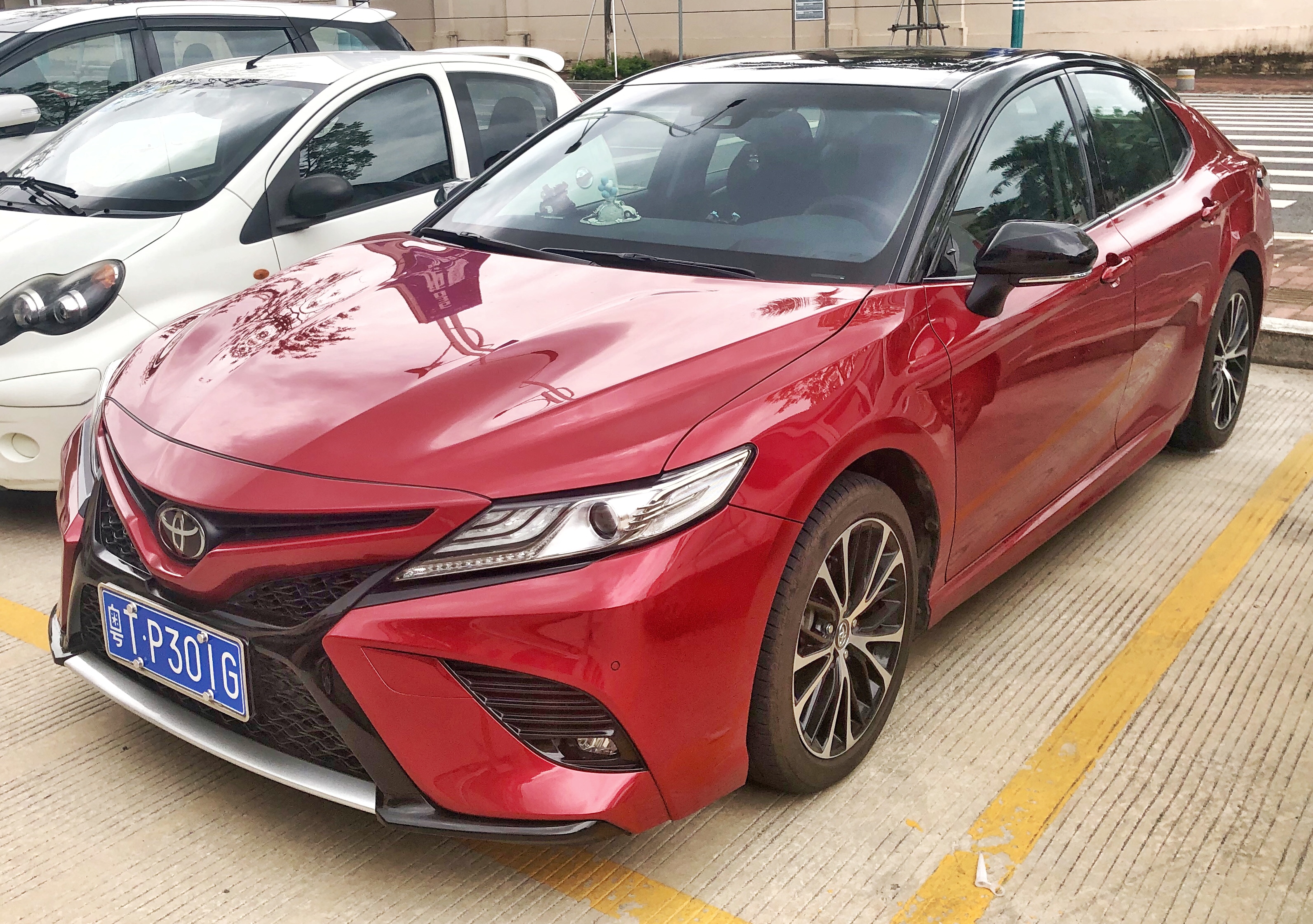
Toyota Camry
"...atever you got. We'll take, well, we won't take a Camry. Well, we might take a Camry."
The Toyota Camry is a regular family-style car (a sedan) made for everyday driving. People talk about it a lot because it’s usually dependable and not overly complicated. It may come up simply because it’s a common, useful car to have or buy.
The Toyota Camry is a mainstream midsize sedan known for being practical and easy to live with. It often comes up in conversations about what’s reliable and widely available, which is why it can be mentioned as a “take it” kind of car. In a classic/collector context, it may be discussed as a dependable everyday option rather than a rare enthusiast piece.
283 Chevy
"I had a 29 Ford Roadster pickup with a 283 Chevy in it. [344.7s] That's Chevy three speed slicks, the whole enchilada."
“283 Chevy” is shorthand for a specific Chevy V8 engine size. It was a common engine choice for older hot rods because it made good power for the era.
“283 Chevy” refers to the Chevrolet 283 cubic-inch V8 engine, a popular small-block used in many classic hot rods. In this story, it’s the engine powering the speaker’s Ford pickup for street racing.

Ford Roadster pickup
"And what were you driving back then? [338.8s] I had a 29 Ford Roadster pickup with a 283 Chevy in it."
They’re talking about a classic Ford pickup/roadster that was modified for racing. Instead of staying stock, it had a Chevy engine swapped in so it could go faster.
The speaker says they drove a Ford Roadster pickup, which is a classic Ford truck/roadster-style hot-rod setup. It’s notable here because it’s described as being fitted with a Chevrolet V8 (a 283), turning it into a street-racing car rather than a stock pickup.
three speed slicks
"That's Chevy three speed slicks, the whole enchilada. [348.4s] Did you drive it there?"
They’re describing a racing setup: a three-speed manual gearbox and “slicks,” which are special tires made for racing. Slicks have little or no tread so they can grip better when the road is dry.
“Three speed slicks” is describing a drivetrain and tire setup aimed at traction and acceleration. “Three-speed” points to a manual transmission with three forward gears, while “slicks” are race tires with minimal tread designed to grip hard on dry pavement.
street racing
"And I won a lot of money. [362.9s] And we later moved to Newport Beach where we set the same thing up at Merle's Drive-in [368.1s] and did the exact same thing. [370.0s] How fantastic... [373.5s] ...you probably made more money racing on the street than you did when you got into even Porsches..."
Street racing means racing cars on regular public streets instead of a race track. It’s usually informal and risky compared with organized racing.
Street racing is racing on public roads rather than a sanctioned track. The segment contrasts the speaker’s early street-racing money with later racing/ownership of higher-end cars like Porsches.
two-liter prototype class
"I was in Europe racing for Barclays Bank in the two-liter prototype class and Guy Edwards and I were teammates."
This sounds like a racing class where the cars were purpose-built race cars, but the engine size was capped at around 2.0 liters. That kind of rule affects what the teams can build and how they compete.
A “two-liter prototype class” refers to a racing category where prototype (purpose-built) race cars are limited by engine displacement—here, to about 2.0 liters. That rule strongly shapes car design and competition, since teams tune engines and aerodynamics around the displacement limit.
Arab oil embargo
"The Arab oil embargo hit and it closed down racing all over Europe. So I said, look, wait a minute, I moved here with my family."
The “Arab oil embargo” refers to the 1970s oil-supply shock that led to fuel shortages and higher fuel prices. Motorsport was affected because many series were seen as wasteful “burning fuel,” so racing activity was curtailed in Europe.
IMSA
"So anyway, Bill Cargas called me the day I got home and he said, hey, Buzz, have you ever heard of IMSA? [441.4s] And I said, no, I don't know what that is."
IMSA is a big sports-car racing series in North America. It’s the kind of racing where teams run race cars for long events and different car classes compete.
IMSA is the International Motor Sports Association, a major North American sports-car racing organization. In practice, it’s known for endurance-style racing and classes for production-based race cars, which is why a driver might pivot from European prototype racing to IMSA.
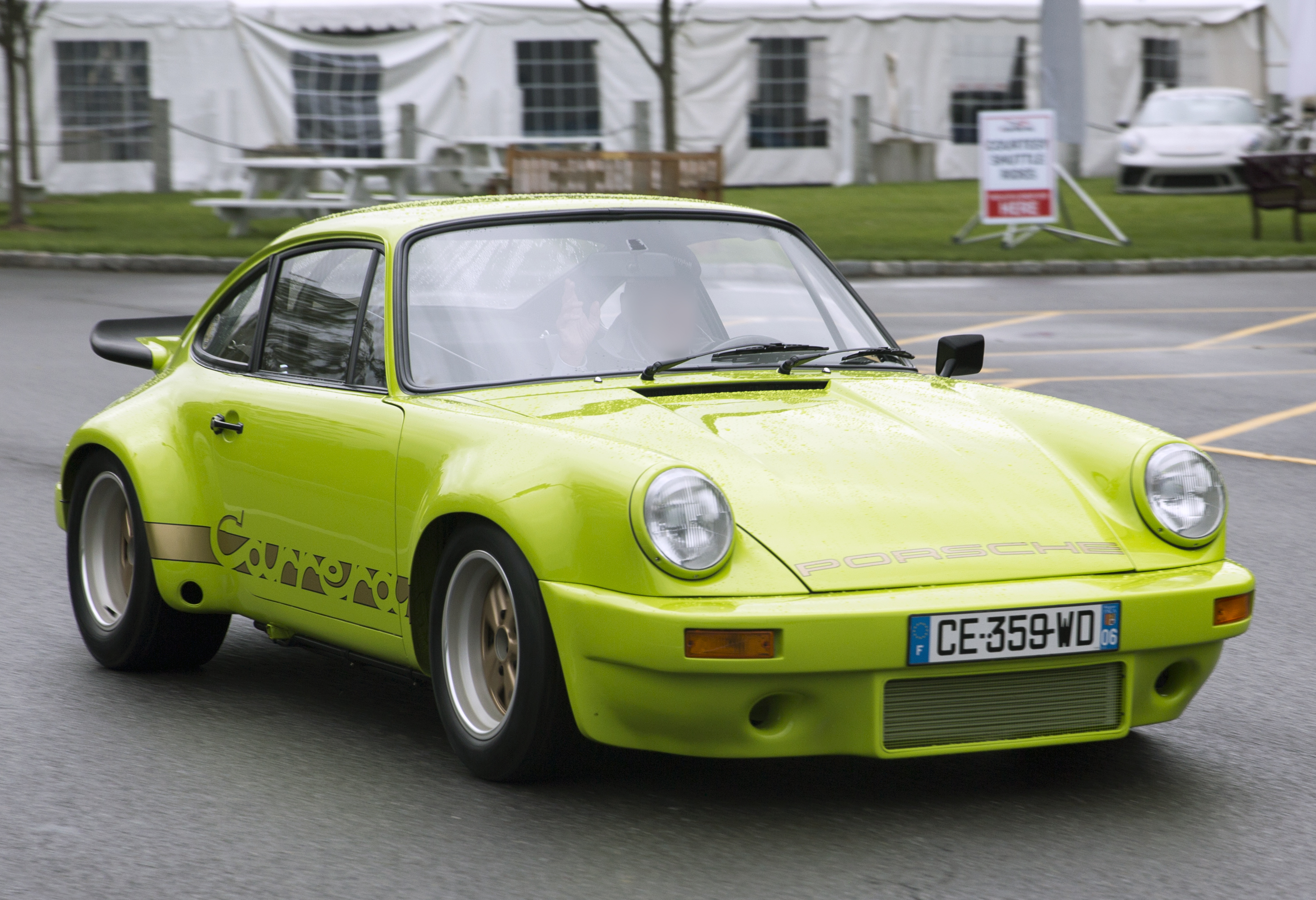
Porsche Rsr Carrera
"...here in Southern California. And he had a Porsche RSR Carrera there. And I said, so what do we do with this thi..."
The Porsche Carrera RS is a high-performance version of the 911. It’s made to be faster and more track-like than a regular version. People talk about it because it’s a special, performance-heavy model.
The Porsche Carrera RS is a performance-focused version of the 911 line, known for being stripped down and track-oriented. It’s significant because it represents Porsche’s approach to making a road-legal car that emphasizes speed and driver engagement. The podcast context suggests it’s being discussed in relation to a specific car presence and what it might be used for or compared against.
open exhaust
"because I'm in a closed car for the first time with open exhaust. [478.0s] And my ears are ringing so bad that I can't hear anything."
“Open exhaust” means the car’s exhaust is louder than normal. With a loud exhaust, you can have trouble hearing what’s going on around you, especially in a closed cockpit.
“Open exhaust” means the exhaust system is not routed through a quieter setup (like mufflers or valves), so it vents more directly. That typically increases sound dramatically and can make it hard to hear even basic instructions while driving or during practice.
Laguna Seca
"And I've just finished the first practice session at Laguna Seca. [484.9s] And that's where Bill and I started racing."
Laguna Seca is a famous race track in California. Drivers practice there because it’s a real racing course with tricky corners.
Laguna Seca is a well-known road course in California used for racing events and driver practice. It’s also famous for challenging corners that test braking, traction, and driver confidence.
Pocono
"There's a picture of me with Peter Greg walking up to me at Pocono [525.1s] and saying, hey, Buzz, why do you race me so hard?"
Pocono is a well-known race track in the U.S. The speaker is referencing a photo from there showing a moment from their racing rivalry.
Pocono (likely Pocono Raceway) is a major U.S. racing venue where drivers and teams compete. The mention is used to anchor a specific memory about racing against Peter Greg.
spun
"I wanted Laguna Seca, but at Laguna Seca, I won because he hit me and he spun and I continued."
“Spun” means the car lost grip and started rotating the wrong way. It’s a big mistake in a race because it usually slows you down a lot.
“Spun” describes a loss of traction that causes the car to rotate uncontrollably, often from oversteer or a traction break during braking or corner exit. In racing, a spin usually costs significant time and can change the order immediately.
Ontario Motor Speedway
"And it's a fun story because we were racing like hell at Ontario Motor Speedway, their very first sports car race. And I was running second. Peter was leading on the very last lap."
They’re talking about a specific race track—Ontario Motor Speedway. This is where the story’s race happened, including who was leading near the end.
Ontario Motor Speedway is referenced as the venue where the speaker raced during the track’s early sports car event. The episode uses it to frame a specific on-track rivalry and a last-lap finish.
Lime Rock, Connecticut
"So the following week at Lime Rock, Connecticut, I'm standing in the paddock because you remember on Sundays, they had the blue laws and you couldn't race."
Lime Rock Park is a famous race track in Connecticut. They’re describing what happened there during a race weekend.
Lime Rock Park in Connecticut is a well-known road course used for sports-car and vintage racing. The speaker references being in the paddock there and the event-day rules, which situates the story in a specific track environment.
blue laws
"because you remember on Sundays, they had the blue laws and you couldn't race."
“Blue laws” are historical rules that restricted certain activities on Sundays, often including commercial activity or events. Here, the speaker uses it to explain why racing couldn’t happen on Sundays at that time/place.
18 wheeler
"They'd arrive back in the 18 wheelers from a race and come down the driveway and be unloaded, come into the back shop, be disassembled."
An “18 wheeler” is a big truck-trailer setup used to move heavy cargo. Race teams use them to haul cars and equipment to and from events.
An “18 wheeler” is a common nickname for a tractor-trailer combination used to haul large loads. Race teams often rely on these trucks to transport cars, spare parts, and tools between events and workshops.

Renault Wind
"...ll the hard car parts and engines and so on would wind up in the main workshop to be rebuilt. And then w..."
The Renault Wind is a small convertible made by Renault. It’s designed to let you drive with the top down, but in a compact size. The podcast mention suggests it’s a car that may need repair or rebuilding work.
The Renault Wind is a compact two-seat convertible designed to be a smaller, more affordable open-top car. It’s often discussed as a practical way to get the convertible experience without moving up to larger, more expensive sports cars. In the podcast context, it’s tied to workshop or restoration talk, suggesting it’s being handled as a specific project vehicle.
bent chassis
"And then we would take the cars apart and any bent chassis or anything would go into the pad and we would straighten them out, put them back together and load them back in the truck."
The chassis is the main frame of the vehicle. If it gets bent, the car can end up “out of alignment,” which can cause handling problems and uneven tire wear.
In race-car and heavy-vehicle repair, the chassis is the main structural frame that everything else mounts to. If it’s bent, the car’s alignment and geometry can be thrown off, which can affect handling and tire wear even if the body panels look straight.
straighten them out
"And then we would take the cars apart and any bent chassis or anything would go into the pad and we would straighten them out, put them back together and load them back in the truck."
When a frame is bent, the shop has to pull it back into the right shape. They usually measure it carefully so the car goes back together correctly.
“Straightening” a bent chassis means restoring the frame to its correct dimensions and alignment. Shops typically use measurement tools and jigs to pull the structure back into spec before reassembly.
lift gates
"So literally we had two 18 wheelers side by side and then the lift gates went back up. You're locked out."
A lift gate is a powered ramp/platform at the back of a truck. It helps load and unload heavy items safely.
Lift gates are powered platforms on the back of a truck or trailer that raise and lower cargo. In a race-team context, they’re used to move cars, parts, and equipment between the shop and the transport area.
Bonneville
"And I decided I wanted to go to Bonneville and break records. ... And by God, we broke the record. We went 151 miles an hour."
Bonneville is a well-known salt-flat race location where people try to set land-speed records. You have to follow the course rules closely or your run can be disqualified.
Bonneville refers to the Bonneville Salt Flats in Utah, a famous venue for land-speed records. Drivers run measured passes over the salt, and results depend on meeting class rules and course requirements.

32 Ford Roadster
"And he said, how about a 32 Ford Roadster, a high boy? ... And the following day, I went 202 in a 32 Ford Roadster high boy headlights on."
A 1932 Ford roadster is an old-school car that hot-rodders love to modify for speed. Here, they’re using it as a purpose-built car to try to set land-speed records at Bonneville.
The Ford Model 32 Roadster is a classic hot-rod platform from the early 1930s that’s commonly used for speed runs because it’s light and has a huge aftermarket. In this story, it’s built specifically for Bonneville record attempts, including engine and drivetrain upgrades.
high boy
"And he said, how about a 32 Ford Roadster, a high boy? ... And the following day, I went 202 in a 32 Ford Roadster high boy headlights on."
“High boy” is a hot-rod look/stance where the car is raised compared to a very low street car. Builders do it for fitment and handling reasons, especially when trying to go fast.
“High boy” is a hot-rod style where the car sits higher than a typical lowered street setup, often to fit specific components and improve packaging. In land-speed builds, ride height and chassis setup are tuned for stability and traction at high speed.
blower
"It took a 49 murk engine, put a blower on it. And Arden heads put it in a 32 Ford..."
A blower is a device that forces extra air into the engine. More air usually means more power, which is why it’s used on cars trying to go very fast.
A blower is a forced-induction device that compresses incoming air so the engine can burn more fuel and make more power. On record cars, adding a blower is a common way to increase horsepower without changing displacement.
34 speed transmission
"Arden heads put it in a 32 Ford with an ass car, 34 speed transmission, and all the right stuff..."
A “speed transmission” refers to the number of forward gears in the gearbox. For high-speed runs, gear ratios and shift strategy are critical because the engine must stay in the right power band while accelerating across the measured distance.
lowered the car down to nothing
"and all the right stuff lowered the car down to nothing and set it up really well. And by God, we broke the record."
They lowered the car a lot. Going lower can help the car stay stable and cut wind resistance when you’re driving very fast, but it can also make the suspension setup more sensitive.
“Lowered… down to nothing” is hot-rod shorthand for an extremely low ride height. Lowering can reduce aerodynamic drag and improve stability at speed, but it also changes suspension geometry and ground clearance.
turn signals
"I turned the turn signals on halfway down the track to just make sure everything knew I was in the streetcar."
He used the car’s turn signals as a signal to the officials that the car should be treated a certain way for the rules. It wasn’t about driving—more about meeting the event’s classification requirements.
Turn signals are used here as a compliance cue for the event’s rules about what counts as being “on the street” or in a specific class. The speaker says he activated them halfway down the track to signal the car’s intended status to officials.
disallowed my time
"I had veered off the course and they disallowed my time. Oh, no."
Sometimes your speed run doesn’t count if you break the event rules. In this case, they said he left the course, so his time wasn’t accepted.
At land-speed events, timing can be disallowed if the run doesn’t meet rules—commonly including staying within the marked course. Even if the car hits a high speed, a course violation can invalidate the recorded result.
streetcar
"I turned the turn signals on halfway down the track to just make sure everything knew I was in the streetcar."
“Streetcar” in land-speed racing usually refers to a class or category where the car is expected to resemble a street-legal vehicle (or meet specific rules for that category). Officials may check compliance, and the classification can affect how your run is judged.

Ferrari 400 GTC
"You built kind of a hot rod Ferrari at one time, a 400i that you turned into a 400 GTC."
Ferrari 400 GTC is a modified/converted version of the Ferrari 400i. The guest is basically saying they turned a less-popular Ferrari into a more interesting one.
The Ferrari 400 GTC is a variant of the Ferrari 400 series that the speaker says they created by transforming a 400i. The way it’s discussed—along with the “universally hated” comment—frames the 400 GTC as a distinctive, enthusiast-modified take on a model that didn’t win universal love.
hot rod
"You built kind of a hot rod Ferrari at one time, a 400i that you turned into a 400 GTC."
A “hot rod” is a modified car meant to feel more exciting and faster than it did from the factory. Here, the speaker uses it to describe their Ferrari project.
A “hot rod” is a car that’s been modified for a more aggressive, performance-oriented character—often with engine, suspension, or styling changes. In this context, the guest describes turning a Ferrari 400i into a 400 GTC as a kind of hot-rod project rather than a stock build.

Ferrari 400i
"You built kind of a hot rod Ferrari at one time, a 400i that you turned into a 400 GTC."
Ferrari 400i is an older Ferrari model that many people don’t rate as highly as other Ferraris. Here, the speaker says they modified one into something else, which is why it comes up.
The Ferrari 400i is a mid/late-1970s Ferrari grand tourer that’s known for being a more unusual, less-loved model in the brand’s lineup. In this segment, the host/guest mentions building a “hot rod” version of it, which helps explain why it stands out to enthusiasts.
automatic
"So I look online and I find a beige 400. Of course. Automatic. Every awful accessory that you could put on one."
“Automatic” means the car shifts gears by itself. The speaker is saying the one they bought had that setup.
“Automatic” here refers to an automatic transmission, meaning the car changes gears without the driver using a clutch and gear lever. The speaker highlights that the “beige 400” they found was automatic, implying it had the “wrong” or least-desirable spec for their tastes.
Port injected
"How about we drop it eight inches in the front, four in the back and get a 575 motor? [1421.3s] Port injected."
“Port injected” means the car sprays fuel into the intake passages before it goes into the engine cylinders. It’s one way engines deliver fuel for power and smooth running.
Port injection is a fuel-delivery method where gasoline is sprayed into the intake ports (before the cylinders). It’s a common setup on many performance engines because it can be tuned for good throttle response and efficiency.
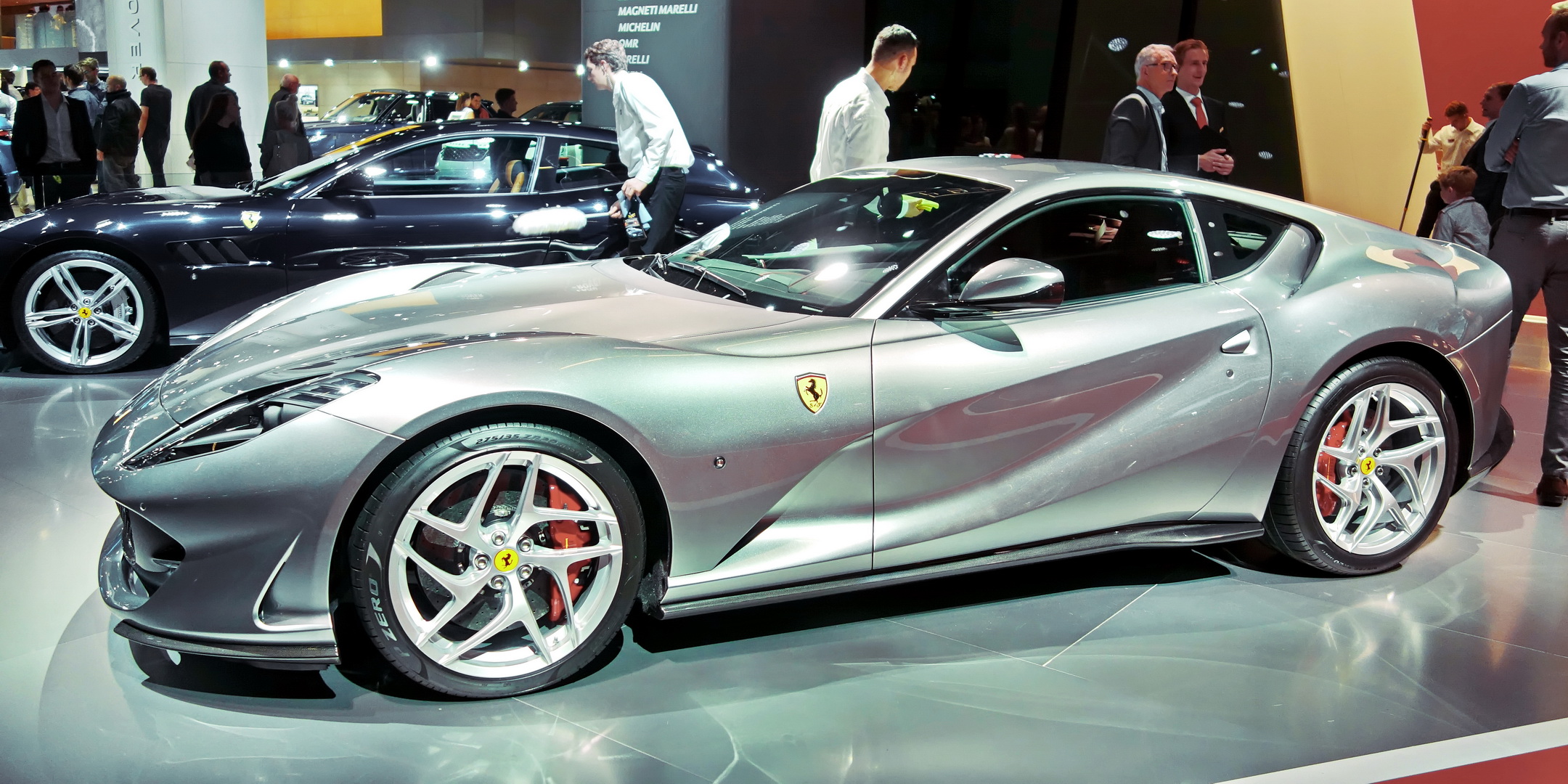
Ferrari 12
"... we build this engine as a 800 horsepower bad ass Ferrari 12 cylinder motor and it's going through a Tremac si..."
The Ferrari 812 Superfast is a very powerful luxury sports car made by Ferrari. It has a V12 engine, which is known for strong performance. The podcast is highlighting how much power it makes and how the car’s transmission helps it deliver that speed.
The Ferrari 812 Superfast is a high-performance grand touring car powered by a naturally aspirated V12 engine. It’s discussed for its extreme power output and its ability to deliver supercar performance while still being a long-distance-focused machine. In the podcast, the emphasis on building an 800-horsepower “12-cylinder” engine and the transmission highlights why it stands out technically.
quick change rear end
"So we build this engine as a 800 horsepower bad ass Ferrari 12 cylinder motor and it's going through a Tremac six speed to a quick change rear end right out of Bonneville."
A quick-change rear end is a race rear axle setup where you can swap the gear ratio fast. That helps the car match the track—more acceleration or more top speed—without taking everything apart.
A quick-change rear end is a racing differential assembly designed to swap gear ratios quickly between sessions. That lets teams adjust how the car accelerates versus how fast it can go on straights without doing a full teardown.
Tremac six speed
"So we build this engine as a 800 horsepower bad ass Ferrari 12 cylinder motor and it's going through a Tremac six speed to a quick change rear end right out of Bonneville."
A “six speed” refers to a manual-style gearbox with six forward gears, typically used for keeping the engine in its power band. Tremec (spelled “Tremac” in the transcript) is a well-known performance transmission maker, often used in race and high-performance builds.
differential
"Put a differential in it and I took that car to Willow Springs and wrote it on the racetrack"
The differential is what lets the two driven wheels spin at different speeds when you turn. That helps the car grip and turn smoothly instead of fighting itself.
A differential is the gear mechanism that allows the drive wheels to rotate at different speeds—especially important when turning. In racing builds, the differential type and setup strongly affect traction and how the car behaves under acceleration.
Willow Springs
"Put a differential in it and I took that car to Willow Springs and wrote it on the racetrack"
Willow Springs is a race track in California. They’re saying they took the car there to run it on the track.
Willow Springs Raceway is a well-known road course in California used by clubs and professional racing. Mentioning it signals the car was tested and driven on a real track, not just built for show.
32 Ford three-window coupe
"So I bought a 32 Ford, three window coupe body, put it on a 32 chassis, boxed the chassis,"
A “32 Ford three-window coupe” is a classic 1932 Ford body style. Here, the builder is taking that old body and turning it into a modernized, track-focused car by changing the chassis and key components.
The “32 Ford three-window coupe” refers to a 1932 Ford coupe body style with three side windows. In this story, the speaker builds it onto a 1932 Ford chassis and modifies it heavily for modern track use, including moving the engine and changing fuel/oil packaging.
boxed the chassis
"So I bought a 32 Ford, three window coupe body, put it on a 32 chassis, boxed the chassis,"
Boxing the chassis means making the frame stronger and more rigid by enclosing it. A stiffer frame helps the car handle more predictably when you drive hard.
“Boxing” the chassis means converting open sections into a boxed, enclosed structure. That increases stiffness and helps the car maintain alignment under hard cornering and braking.
titanium fasteners
"boxed the chassis, all anti we all titanium fasteners everywhere, big brakes all the way around,"
Titanium fasteners are bolts/screws made from titanium instead of steel. They’re used to reduce weight and can resist corrosion, though they’re typically more expensive and require correct torque procedures.
big brakes all the way around
"all anti we all titanium fasteners everywhere, big brakes all the way around,"
“Big brakes all the way around” means the car has upgraded brakes on all four wheels. Bigger brakes can stop harder and handle heat better, especially during track driving.
“Big brakes all the way around” indicates a brake upgrade on both front and rear. Larger brakes improve stopping power and heat capacity, which helps with repeated hard braking on track.
moved the motor back eight inches
"moved the motor back eight inches, put the oil tank, replaced the fuel tank with an oil tank in the back and got the car balanced 50 50 perfect."
Moving the engine back changes where the car’s weight sits. Putting more weight toward the middle/rear can help the car handle better when you turn and brake.
Moving the engine back changes the car’s weight distribution and can improve balance and traction. Shifting the engine rearward often helps reduce front-end loading and can make turn-in and mid-corner behavior more predictable.
balanced 50 50 perfect
"replaced the fuel tank with an oil tank in the back and got the car balanced 50 50 perfect. Wow."
“50/50” means the car’s weight is split about evenly between the front and rear. That can help the car feel more balanced and easier to control in corners.
A “50/50” balance refers to roughly equal front-to-rear weight distribution. That target is often used to achieve neutral handling characteristics, because neither axle is overloaded in normal driving and cornering.

Chevrolet Corvette
"Now that Corvette right there is a brand new, never been run RS1 aluminum chassis car that I bought as an investment."
This is a Corvette that’s been built with an aluminum chassis in an RS1 configuration. An aluminum chassis can make the car lighter and stiffer, which helps it drive more precisely.
This “Corvette RS1 aluminum chassis car” refers to a Corvette built with an RS1-style aluminum chassis. Aluminum chassis builds are notable because they can reduce weight and improve stiffness, which matters for performance and handling.
weight distribution
"See, I moved the motor way back. Yeah, I got that. Got to get that weight distribution. Now these unfortunately the front tires on this car are down because they don't hold"
Weight distribution means how the car’s weight is balanced front-to-back. Putting the engine farther back can make the car handle better because the front and rear tires share the work more evenly.
Weight distribution is how much of a car’s total mass sits on the front versus the rear (and left versus right). Moving the motor “way back” changes the balance, which can improve handling by reducing front-end heaviness and helping the tires work better.
road course
"That's a 32 Ford that'll beat any modern Ferrari around a road course any day of the week. That is impressive. Look, you can just tell it's built for speed the way it's lowered and all that."
A road course is a type of race track with lots of turns, not just a circle. Cars are judged heavily on how well they brake and corner.
A road course is a track layout built from paved roads or road-like sections, with a mix of corners and straights. It’s different from oval racing because braking and cornering performance matter more than just top speed.
soft top
"This is a 57 Thunderbird police special, special wheels, special brakes, three speed, soft top because it doesn't weigh as much. And I got a call from the, this is a original race car that was raced in the 50s."
A soft top is the fabric roof on a convertible. It can be lighter than a hard roof, which helps the car feel quicker and handle better.
A soft top is a convertible roof made from fabric rather than a rigid metal roof. Fabric roofs are often lighter, which can improve acceleration and handling by reducing overall weight.

57 Ford T-bird
"And the last eligible American car was a 57 Ford T-bird for the Melamelia. Wow. So I said, what if I get one?"
They’re talking about a 1957 Ford Thunderbird. It’s a famous classic American car from the 1950s, and people often choose it for vintage road trips and events.
The speaker is referring to a 1957 Ford Thunderbird (“T-bird”). The Thunderbird is a classic American personal-luxury coupe/convertible from the mid-1950s, and the 1957 model is especially recognizable for its distinctive styling and big V8-era presence.
Melamelia
"And the last eligible American car was a 57 Ford T-bird for the Melamelia. Wow. So I said, what if I get one? ... So this car sits here waiting for a new owner to run the Melamelia."
Melamelia sounds like a specific vintage car event in Italy. The guest is talking about rules for who can drive in it and why his car is waiting for a new owner.
Melamelia is the name of the event the guest is trying to enter with the 1957 Ford Thunderbird. The discussion frames it as an organized Italian car competition/drive with eligibility rules that affected who could participate.
1,000 kilometers
"My wife and I are going to drive the 1,000 kilometers or 1,000 miles of Italy in that car. They said, oh, we're so excited."
That’s the length of the trip—roughly 621 miles. It’s a long distance, so it matters that the car can handle the drive.
“1,000 kilometers” is a distance measurement (about 621 miles) used to describe the length of the planned Italian drive. It helps listeners gauge how demanding the trip would be for a vintage car.
organized car competition
"And either he was killed or she was killed. And they said, and so the government, not the organizers, but the government of Italy said, nobody over the age of 80 will ever be in an organized car competition, which moved me out."
They mean a formal racing or rally event with rules. The government set a rule that limited participation by age.
This refers to a structured motorsport or rally event with rules and oversight. In this case, the Italian government imposed an age restriction, effectively changing who is allowed to participate in that kind of event.
Daytona 24 hour winter
"And this is on the wall... And there is the nose off of our Daytona 24 hour winter right there."
That phrase is about long-distance racing at Daytona. It’s the kind of event where cars have to keep going for hours, and the “winter circle” is where winners are celebrated.
“Daytona 24 hour” refers to endurance racing at Daytona, where cars must run reliably for long stints rather than just sprinting for speed. The “winter circle” is the victory area where winners are recognized, so the speaker is tying the workshop display to a race-winning endurance result.
carburetor
"One day I'm looking for a carburetor for a Porsche 930 or a 911."
A carburetor is a device that helps the engine get the right mix of fuel and air. If it’s the wrong one, the car can run poorly because the fuel mixture won’t be right.
A carburetor is a fuel-delivery device that mixes air and fuel before it enters the engine. Older performance and race cars often used carburetors, so finding the right one can be critical for correct fueling and drivability.
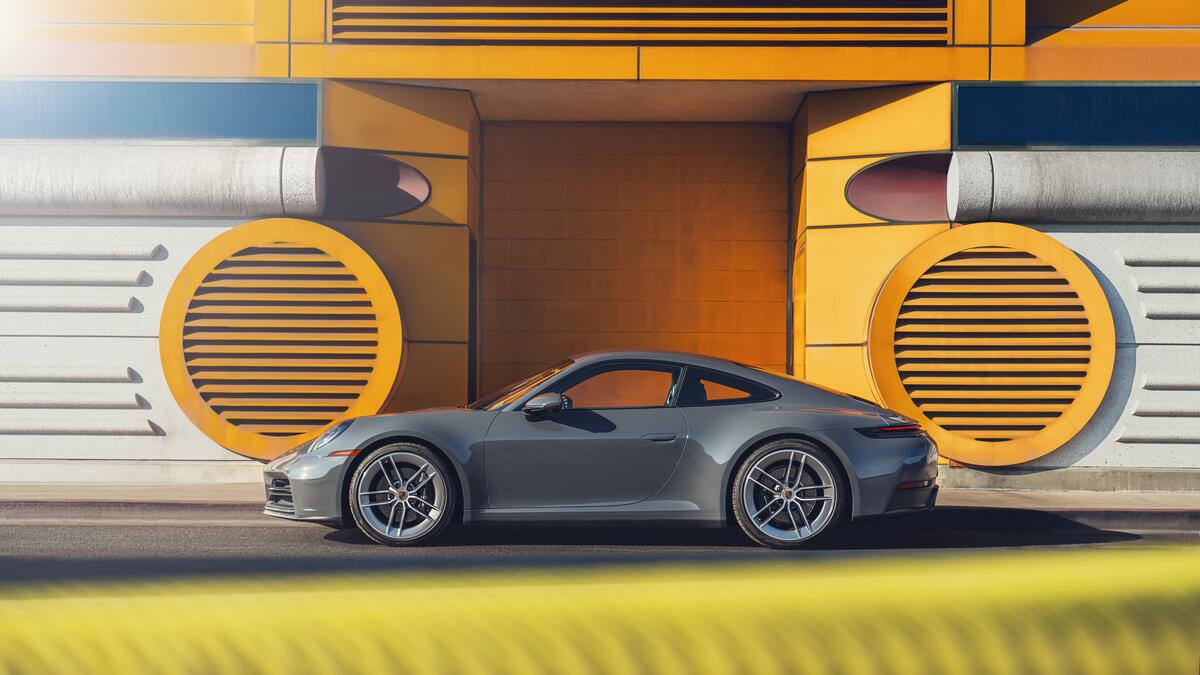
911 930
"One day I'm looking for a carburetor for a Porsche 930 or a 911."
The Porsche 930 is the older 911 Turbo. It’s famous for being one of the early “real” turbo 911s, with a turbocharged engine and a very recognizable style.
The Porsche 930 is the classic 911 Turbo of the 1970s–1980s era, known for its turbocharged flat-six and distinctive “turbo” look. In enthusiast circles, the 930 is a benchmark for how early turbocharging was packaged into a street-usable 911.
noses
"What we would do is after every Daytona 24 hour, we'd take five noses for each car because you always break them."
“Noses” here means the car’s front bodywork. Race cars often get hit in the front, so teams keep extra front pieces on hand.
In race-car talk, “noses” usually means the front-end bodywork/front fascia. Endurance races like Daytona can generate lots of front-end impacts, so teams keep spare nose sections ready to swap after crashes or contact.
livery
"That is one of the greatest liveries. That golden white Miller Highlife is really a great livery."
A livery is the car’s paint and sticker design. It’s basically how the car looks—colors, logos, and graphics.
A livery is the car’s paint scheme and graphics—often including sponsor logos and distinctive colors. In racing, liveries are part branding and part identity, and they can become iconic when a team wins or runs a memorable car.
Miller Highlife
"That is one of the greatest liveries. That golden white Miller Highlife is really a great livery."
Miller High Life is a beer brand. In this context, it’s the sponsor name shown on the race car’s paint and graphics.
Miller High Life is a beer brand whose name appears on the car’s racing livery. When a sponsor like Miller High Life is used on a race car, it’s typically part of the team’s sponsorship and branding for that event/season.
AMSA
"because that was Porsche's 50th win in AMSA and we did it."
AMSA is the name of a racing series/championship. The speaker is saying Porsche hit a big milestone win in that specific series.
AMSA refers to the American motorsports series the speaker is crediting for Porsche’s milestone win. In racing history discussions, acronyms like AMSA matter because they identify the specific championship/series where wins and records were earned.
zero to 50
"There was a great ad that they did zero to 50 in 4.3 years or something. I think it was."
“Zero to 50” means how fast the car gets from standing still up to 50. It’s a simple way to describe acceleration.
“Zero to 50” is a shorthand acceleration metric: how quickly a car speeds up from 0 mph (or 0 km/h) to 50 mph (or 50 km/h). It’s often used in marketing or performance discussions to compare how responsive a car feels off the line.
Le Mans
"So Joe Hoppin had called me and said, [1933.1s] would you ever like to do Le Mans?"
Le Mans is a famous endurance race where cars run for about 24 hours. Teams have to manage speed, repairs, and driver changes to finish the whole race.
Le Mans refers to the 24 Hours of Le Mans, one of the most famous endurance races in the world. It’s a grueling event where teams race for a full day, balancing speed with reliability, driver changes, and pit strategy.
Amdahl Computer Company
"And he found a company called Amdahl Computer Company, which later sucked up by one of the biggies."
Amdahl Computer Company is a business the team worked with to help raise money for the race. The story also says it later got bought by a bigger company.
Amdahl Computer Company is mentioned as a sponsor/funder that helped the team raise money for racing. The host also notes it was later acquired by a larger company, which is relevant to how racing teams secured corporate support.
GT category
"And so we end up winning the GT category, winning outright, not outright, because the following year, the Kramer brothers won again."
“GT” is a racing class for cars that are based on regular road cars. It helps race organizers group cars so they compete more fairly.
“GT” stands for Grand Touring, a class of race cars that are based on production models. In endurance racing, cars are grouped into categories like GT so competitors race against similar performance and rules.
street tires
"And I look at the tires and I say, wait a minute, these are street tires. Aren't we going to put the slicks on?"
Street tires are the kind you’d use on a normal road car. They have tread for rain and general driving, and they usually don’t grip as hard as dedicated race tires.
“Street tires” are road-legal tires designed for everyday driving, typically with tread patterns for water evacuation and durability. On a race track, they usually can’t match the grip of purpose-built slicks.
almost slicks
"So they took slicks. They took street tires and ground them down to almost slicks off. And they worked OK."
They took normal road tires and shaved them down so they would grip more like race slicks. It’s a trick to get better traction on a track when slick tires aren’t being used.
The team modified street tires by grinding them down to reduce tread depth, effectively making them behave closer to slicks. This is a workaround to increase dry-track grip when true slicks aren’t available.
horsepower
"As long as you've got a lot of horsepower on Le Mans, you just stay out front on the straight."
Horsepower is a way of describing how strong the engine is. More horsepower usually helps the car go faster, especially when you’re accelerating on long straight sections.
Horsepower is a measure of engine power—how much work the engine can do per unit time. In endurance racing like Le Mans, having strong horsepower helps you accelerate hard and maintain speed on long straights.
pre chicane
"Because remember, this is pre chicane. Sure."
A chicane is a part of the track with quick, tight turns that makes cars slow down. “Pre chicane” just means the area right before those turns, where the driving and braking are different than on the straight.
“Pre chicane” refers to the section of track before a chicane—a sequence of tight turns designed to slow cars and break up speed. At Le Mans, being “pre chicane” matters because braking and traction are different than on the faster straight sections.
boost
"And I come in and I say, OK, there's no boost and the brakes don't work."
Boost is extra “push” from a turbo or supercharger that helps the engine make more power. If there’s no boost, the car can feel sluggish and won’t perform like it should.
Boost is the extra air pressure forced into an engine by a turbocharger or supercharger. If there’s “no boost,” a turbo/supercharged car may feel weak or fail to make the power it’s supposed to, especially under load.
brakes don't work
"And I come in and I say, OK, there's no boost and the brakes don't work."
If the brakes don’t work, the car can’t slow down safely. That can happen if there’s a problem in the brake system, and it’s a big emergency in a race.
When the brakes “don’t work,” it usually indicates a serious loss of braking effectiveness—commonly from hydraulic issues, air in the system, or brake system failure. In racing, this is immediately dangerous and can also prevent the driver from hitting required braking points.
hairpin
"What happened was is Doc had come up on a slower car at the hairpin at Malson and they pushed him off the road into the barrier, destroyed the car."
A hairpin is a very tight turn. In races, it’s a place where cars can get close and accidents happen more easily.
A hairpin is a very tight, slow corner that forces heavy braking and sharp turning. In racing, it’s a common spot for contact because cars are packed together and speeds change quickly.
24 hours
"We built that car and they painted it with silver and black duct tape and you could not tell and that car never missed a lick for the entire 24 hours and we won the race."
“24 hours” means a long endurance race that lasts a full day. The hard part is keeping the car running and performing for that entire time.
“24 hours” refers to endurance racing, where cars must keep running at a high level for an entire day. Winning such an event usually depends on reliability, driver consistency, and managing wear—so finishing without major issues is a huge accomplishment.
free charging for life
"because I bought it in 2013 when they were brand new. You got free charging for life. Oh, that's right."
“Free charging for life” refers to a promotional benefit that covers electricity costs for charging the vehicle at participating stations for as long as the owner keeps the car. It’s a real ownership cost lever for early Tesla buyers.

G-Class Gwagon
"I love hearing that. Well, when an LA, when we were in LA, it was either Teslas or G-Wagon Mercedes, nothing in between."
The G-Class is a Mercedes-Benz SUV with a very recognizable boxy shape. It’s built to handle rough roads and still feel like a luxury car. People mention it because it’s a popular choice when someone wants both toughness and comfort.
The Mercedes-Benz G-Class (often called the G-Wagon) is a rugged, boxy luxury SUV known for its distinctive design and off-road capability. It’s frequently mentioned in car conversations because it sits at the intersection of luxury and toughness. In the podcast, it’s brought up alongside other high-end vehicles as part of what people see or choose in certain settings.

Chevrolet Bel Air
"...rolina, Quincy, Indiana, Raleigh, North Carolina, Bel Air, Maryland, Alexandria, Virginia, Birdsboro, Penns..."
The Chevrolet Bel Air is a classic Chevrolet model that was popular decades ago. It’s the kind of car people recognize for its classic look. It may come up in stories about finding, owning, or collecting older cars.
The Chevrolet Bel Air is a classic American car line that’s especially well known from the 1950s. It’s often discussed because it represents a big era of styling and mainstream popularity in classic cars. Mentions of specific locations and names suggest it may be part of a story about collecting, ownership, or finding examples in different places.
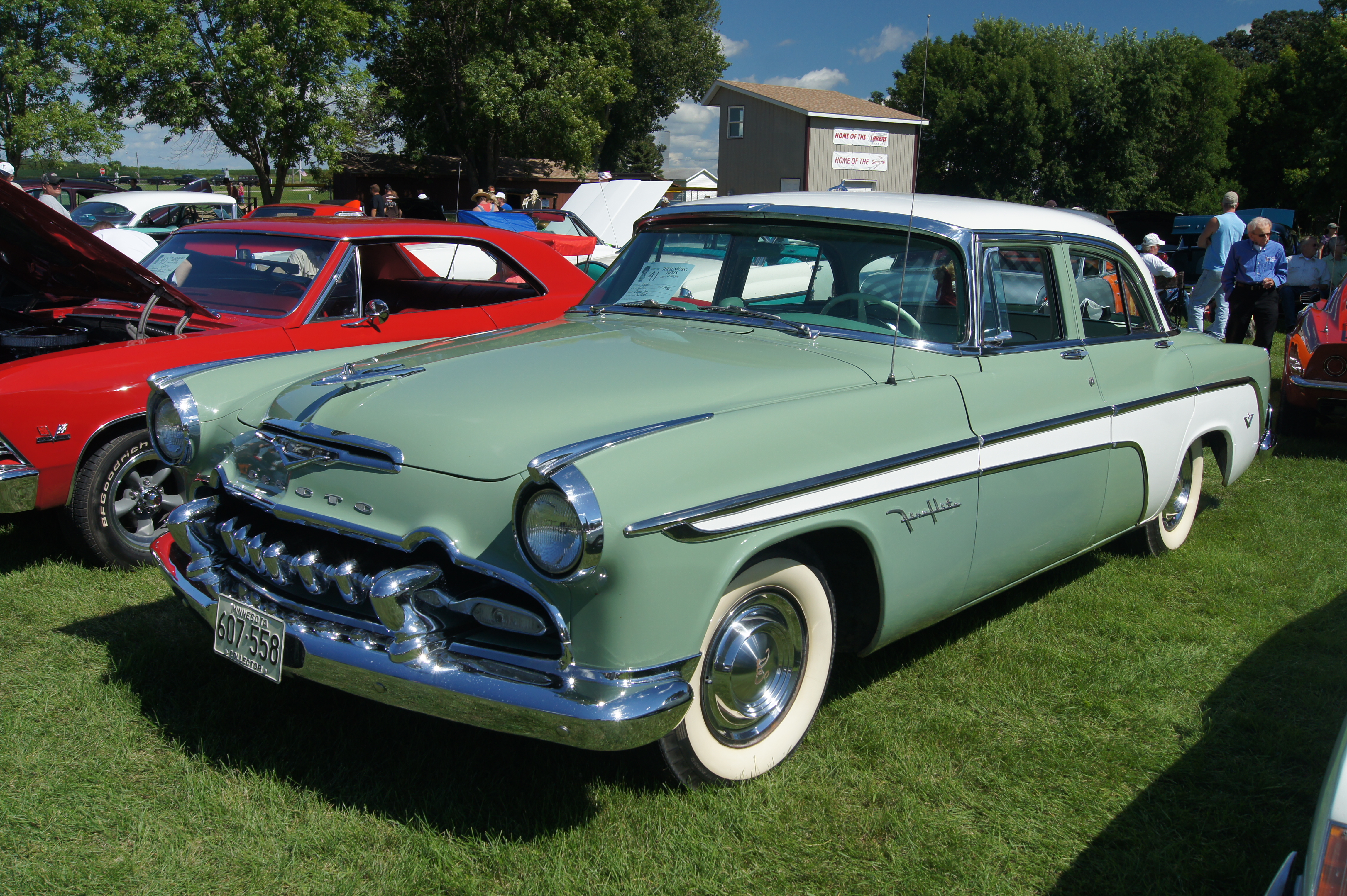
1955 DeSoto Firefly two-door hardtops
"So how about the new arrivals that we did get in? Yeah, about them. This week, the 1955 DeSoto Firefly two-door hardtops."
This is a 1950s DeSoto from Chrysler. The “two-door hardtop” means it’s a two-door car with a cleaner, more open side window look—there’s no fixed pillar in the middle like on many other cars.
The DeSoto Fireflite (spoken here as “Firefly”) is a mid-1950s DeSoto model from Chrysler’s DeSoto brand, known for its distinctive 1950s styling. A “two-door hardtop” refers to a body style with two doors and no fixed B-pillar, giving a more open, pillarless look compared with sedans or coupes with a pillar.
Mopar
"There is, I don't know, these 55s through 60s, DeSoto's, Chrysler's, Mopar, any, any finned Mopar from that era."
“Mopar” is a nickname car fans use for Chrysler’s brands. When someone says “finned Mopar,” they mean those bold, flashy 1950s Chrysler-era designs.
Mopar is the enthusiast nickname for Chrysler’s vehicle brands and parts—especially the Chrysler, Dodge, and Plymouth families. In the 1955–1960 era, “finned Mopar” points to the big, showy styling that became a signature of those cars.
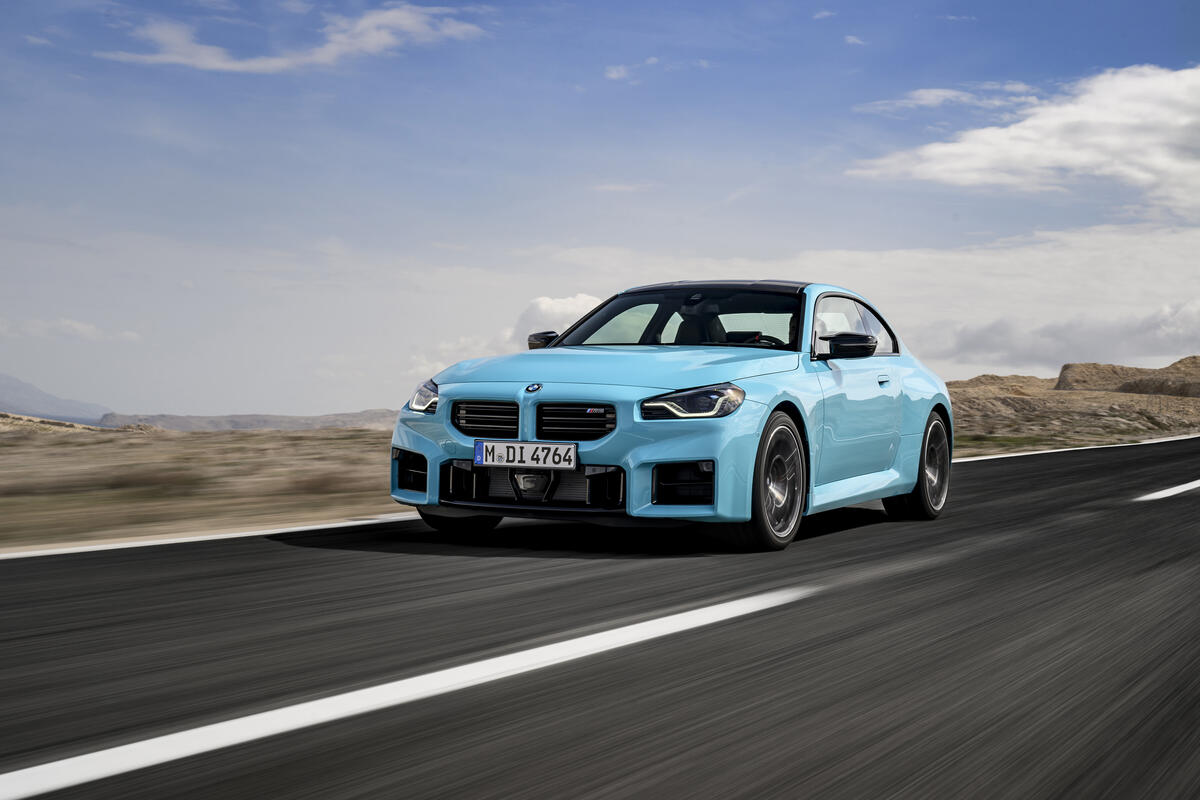
BMW M2
"... really great. And the consign is very proud that M2 Dicast made a little model of his car. Absolutel..."
The BMW M2 is a smaller BMW that’s made to drive more like a performance car. It’s meant to feel quick and sporty, not just comfortable. People may bring it up because it’s a popular “driver’s” model.
The BMW M2 is a compact performance car from BMW’s M division, built to deliver a more track-focused driving experience in a smaller package. It’s significant in enthusiast circles because it’s designed to feel agile and responsive rather than purely luxurious. In the podcast context, it’s also being referenced through a collectible model tied to the car’s history.
M2 Dicast
"And the consign is very proud that M2 Dicast made a little model of his car. Absolutely. How cool."
M2 is a company that makes detailed model cars. If they make a model of your real car, it usually means the car is well-known and respected.
M2 Machines (often spoken as “M2” in enthusiast circles) is a brand known for detailed die-cast model cars. The segment notes that M2 made a model of the guest’s feature car, which is treated as a compliment because it signals the car is notable enough to be replicated.

Chevrolet Blazer
"Another new arrival is the 1971 Chevrolet K5 Blazer. Don't this doesn't look stock? No, it does not."
The 1971 Chevrolet K5 Blazer is a classic Chevy SUV from the early 1970s. Here, they’re pointing out it has a V8 and uses modern electronic fuel injection, which can make it easier to run than older carburetors.
The 1971 Chevrolet K5 Blazer is a classic full-size SUV known for its rugged body-on-frame roots and iconic early-’70s styling. In this segment, it’s highlighted as a V8-powered Blazer with modernized fuel delivery (FitTech EFI), which helps it drive more smoothly than a stock carbureted setup.
FitTech EFI electronic fuel injection
"402 cubic inch of V8 with a FitTech EFI electronic fuel injection, which is a great way to go on these things."
FitTech EFI is an upgrade that uses electronic fuel injection instead of a carburetor. That usually makes the engine start easier and run more smoothly, because the computer controls how much fuel it gets.
FitTech EFI refers to an aftermarket electronic fuel injection system that replaces carburetors with electronically controlled fuel delivery. EFI generally improves cold starts, throttle response, and drivability consistency compared with carbureted setups—especially on older engines.

1994 K1500
"But this is on a shortened 1994 K1500 frame and a two inch suspension drop. So it's a. Interesting."
The 1994 K1500 is a full-size Chevy pickup. Here it’s being talked about as a heavily modified truck—shortened frame and lowered suspension—which is why it looks so different.
The 1994 K1500 (a Chevrolet truck) is a classic full-size pickup platform that’s commonly modified for stance and handling. In this segment, it’s specifically described as a shortened frame with a two-inch suspension drop, which changes the truck’s proportions and ride height.
suspension drop
"But this is on a shortened 1994 K1500 frame and a two inch suspension drop. So it's a. Interesting."
A suspension drop means the car is lowered closer to the ground. A two-inch drop changes the look and can affect how it rides and how much clearance it has.
A suspension drop is a lowering of the vehicle’s ride height, usually by changing springs and/or suspension components. A two-inch drop affects how the truck sits visually and can also change geometry, ride quality, and clearance.
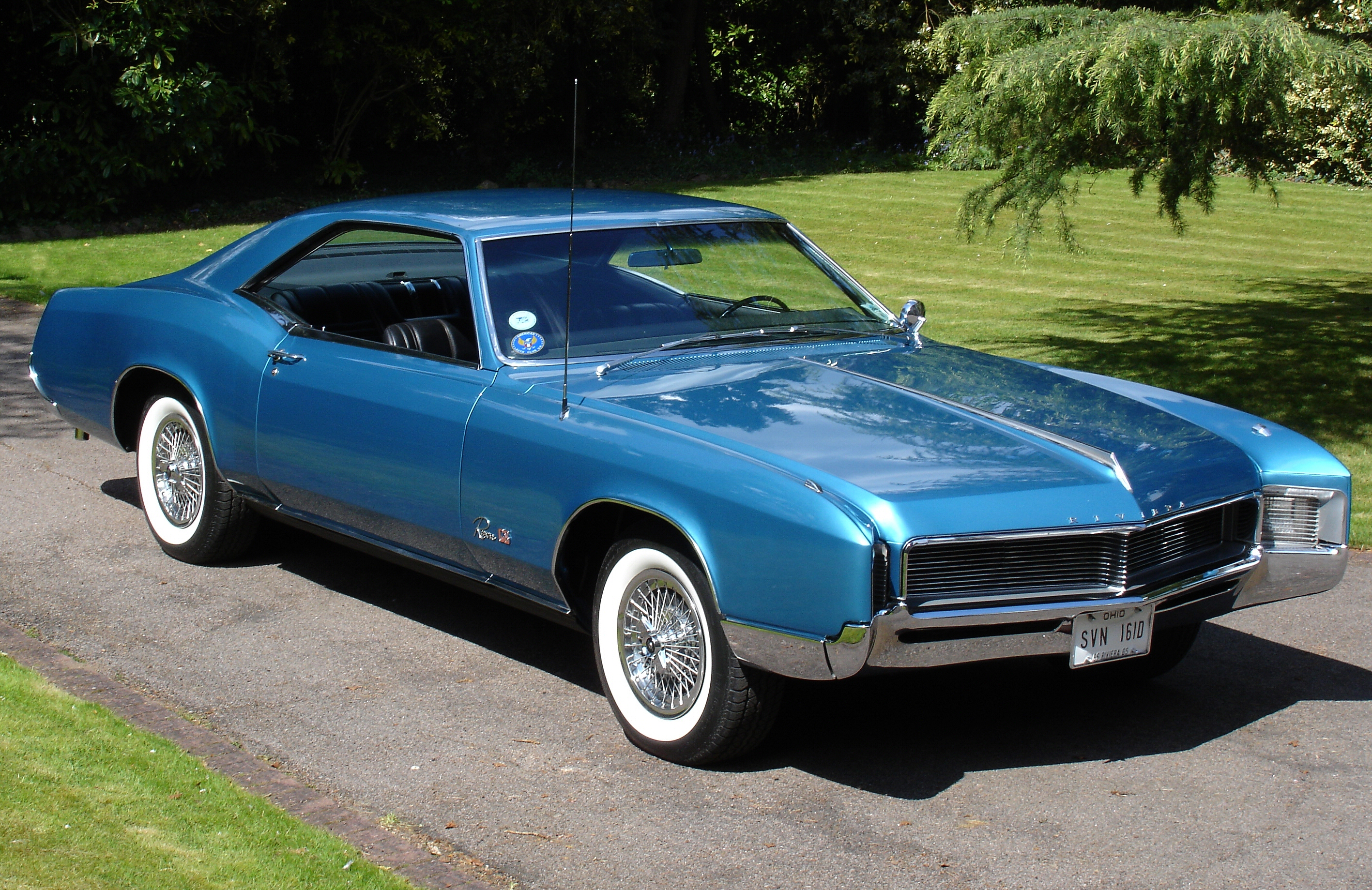
1992 Buick Riviera Prestige Package SE
"So another new arrival is the 1992 Buick Riviera Prestige Package SE."
The 1992 Buick Riviera is a Buick luxury coupe. This one is called out with the Prestige Package SE, meaning it has a particular set of upgraded features compared to a standard model.
The 1992 Buick Riviera Prestige Package SE is a late-era personal-luxury coupe from Buick, known for its upscale trim and cruiser character. The “Prestige Package SE” indicates a specific equipment/trim combination, making it more than just a base Riviera.
3.8 liter V6
"But yeah, this one's got 61,000 actual miles. Long term owner, 3.8 liter V6, the four speed automatic. Nice cruiser and a great way to, you know, pull up in a car show."
“3.8 liter V6” tells you the engine size and that it has six cylinders arranged in a V shape. That combination affects how smooth and how strong the car feels when you drive it.
A “3.8 liter V6” describes the engine’s displacement (3.8 liters total) and its cylinder layout (V6, meaning six cylinders arranged in a V shape). This matters because it largely determines the car’s smoothness, torque feel, and how it pairs with the automatic transmission.

MG MGB
"You know, the MGBs were the ones we all saw mostly in the 70s, late 60s, early 70s."
The MGB is a classic British sports car that was popular in the late 60s and 70s. People like it because it’s light and enjoyable to drive, not because it’s complicated.
The MG B (MGB) is a classic British sports car that became especially popular in the late 1960s and 1970s. It’s known for its simple, lightweight layout and easy-to-drive character, which is why people still talk about them as fun classics.
1800cc four cylinder
"This is an 1800cc four cylinder. And a four speed manual. So it's got, you know, a fun car to drive."
“1800cc four cylinder” means the engine is about 1.8 liters and has four cylinders. Smaller engines like this can still feel fun because the car is usually light.
“1800cc four cylinder” describes engine displacement and cylinder count: 1,800 cubic centimeters total for four cylinders. In plain terms, it’s a relatively small engine by modern standards, which helps explain the car’s light, lively feel.
four speed manual
"This is an 1800cc four cylinder. And a four speed manual. So it's got, you know, a fun car to drive."
A “four speed manual” is a stick shift with four forward gears. You control the gears yourself, which can make the car feel more connected and fun.
A “four speed manual” is a gearbox with four forward gears that the driver shifts themselves with a clutch. On classic cars, fewer gears often means a simpler driving experience and more direct, mechanical feel.

Austin 7 Chummy Club Tour
"And then of course, it's talking about small and powerful. The 1927 Austin 7 Chummy Club Tour."
The Austin 7 Chummy Club Tour is an old British car that’s very small and simple. Even though it doesn’t have a big engine, it can still be fun because the car is so light.
The Austin 7 Chummy Club Tour is a tiny early-20th-century British car built around a very small engine and simple mechanicals. It’s notable because its charm comes from being light and compact—so even modest power can feel lively and “characterful” compared with larger cars.
Numbers matching
"Blue and black over black. Numbers matching 747cc four cylinder with three speed manual."
“Numbers matching” means important parts of the car still have the original identification numbers. Collectors like it because it usually indicates the car is more original and less altered.
“Numbers matching” means the car’s key components (commonly the engine and sometimes the gearbox) retain the original serial numbers that match the vehicle’s identity records. Collectors value it because it suggests the car hasn’t been heavily modified or swapped.
747cc four cylinder
"Numbers matching 747cc four cylinder with three speed manual."
“747cc four cylinder” means the engine is under 0.75 liters and has four cylinders. It’s a very small engine, so the car’s fun comes more from being light than from raw power.
“747cc four cylinder” describes an engine with a total displacement of 747 cubic centimeters across four cylinders. That’s extremely small, which helps explain why these early cars rely on light weight and gearing rather than big power.
three speed manual
"Numbers matching 747cc four cylinder with three speed manual."
A “three speed manual” is a stick shift with three forward gears. It’s typical of older cars and can make them feel more old-school and interactive to drive.
A “three speed manual” is a gearbox with three forward gears that the driver shifts with a clutch. On vintage cars, three gears are common and often make the driving feel slower but more engaging, especially at low speeds.
vinyl clad
"It's a vinyl clad Bonnie. It's a wild odd."
“Vinyl clad” means the car’s body has vinyl covering on it. It can be part of the original look or added during restoration, and it changes how the car is cared for.
“Vinyl clad” refers to a body or trim that’s covered in vinyl rather than left bare metal or finished in traditional paint. On vintage cars, it can be an original style choice or a later restoration detail, and it affects how the car looks and how it’s maintained.

Ford Mustang hard top
"Other new arrival in 1968, my favorite year, Ford Mustang hard top. Highland green over black, which is a perfect color for iconic."
This is a 1968 Ford Mustang hardtop. It’s a classic American muscle/pony car, and the host is saying this one is mostly original (“all stock”) and has the factory-style V8 and automatic setup.
The Ford Mustang is a classic American pony car, and this mention is specifically about a hardtop version from 1968. The host highlights it as an “all stock” arrival with period-correct specs, including its V8 and automatic transmission.
Steve McQueen
"Highland green over black, which is a perfect color for iconic. Iconic, Steve McQueen connection with all it. All stock example, build sheet included 289 cubic inch, two barrel V8 with a C4"
Steve McQueen is a famous actor and car fan. The host is saying the Mustang is “iconic” partly because of that kind of movie-star association with classic cars.
Steve McQueen is referenced as a cultural touchstone for the Mustang’s “iconic” status. His association with classic American cars helps explain why certain Mustangs are especially desirable to enthusiasts.
C4
"All stock example, build sheet included 289 cubic inch, two barrel V8 with a C4 three speed automatic. People go, oh, an automatic and a Mustang."
“C4” is the name of a Ford automatic transmission used in some classic Mustangs. It’s a three-speed automatic, and the host likes it because it doesn’t make the car feel like it’s constantly running out of gears.
“C4” here refers to Ford’s C4 automatic transmission, a three-speed gearbox used in many classic Mustangs and other Ford models. The host notes it as a “great transmission” and emphasizes that it helps avoid feeling like you need more gears.
289 cubic inch
"All stock example, build sheet included 289 cubic inch, two barrel V8 with a C4 three speed automatic."
“289 cubic inch” is the engine’s size—how much space the cylinders have. Bigger displacement usually means the engine can make more power, and the 289 was a popular V8 in classic Mustangs.
“289 cubic inch” refers to engine displacement: the total volume of the engine’s cylinders. In classic Mustangs, the 289 V8 was a common, enthusiast-friendly engine size that helped deliver strong performance for the era.
two barrel V8
"All stock example, build sheet included 289 cubic inch, two barrel V8 with a C4 three speed automatic."
A “two barrel” setup means the engine uses a carburetor with two throttle bores (two “barrels”) to meter fuel/air. On a V8, that typically indicates a simpler, more economical factory configuration compared with multi-barrel carburetors.
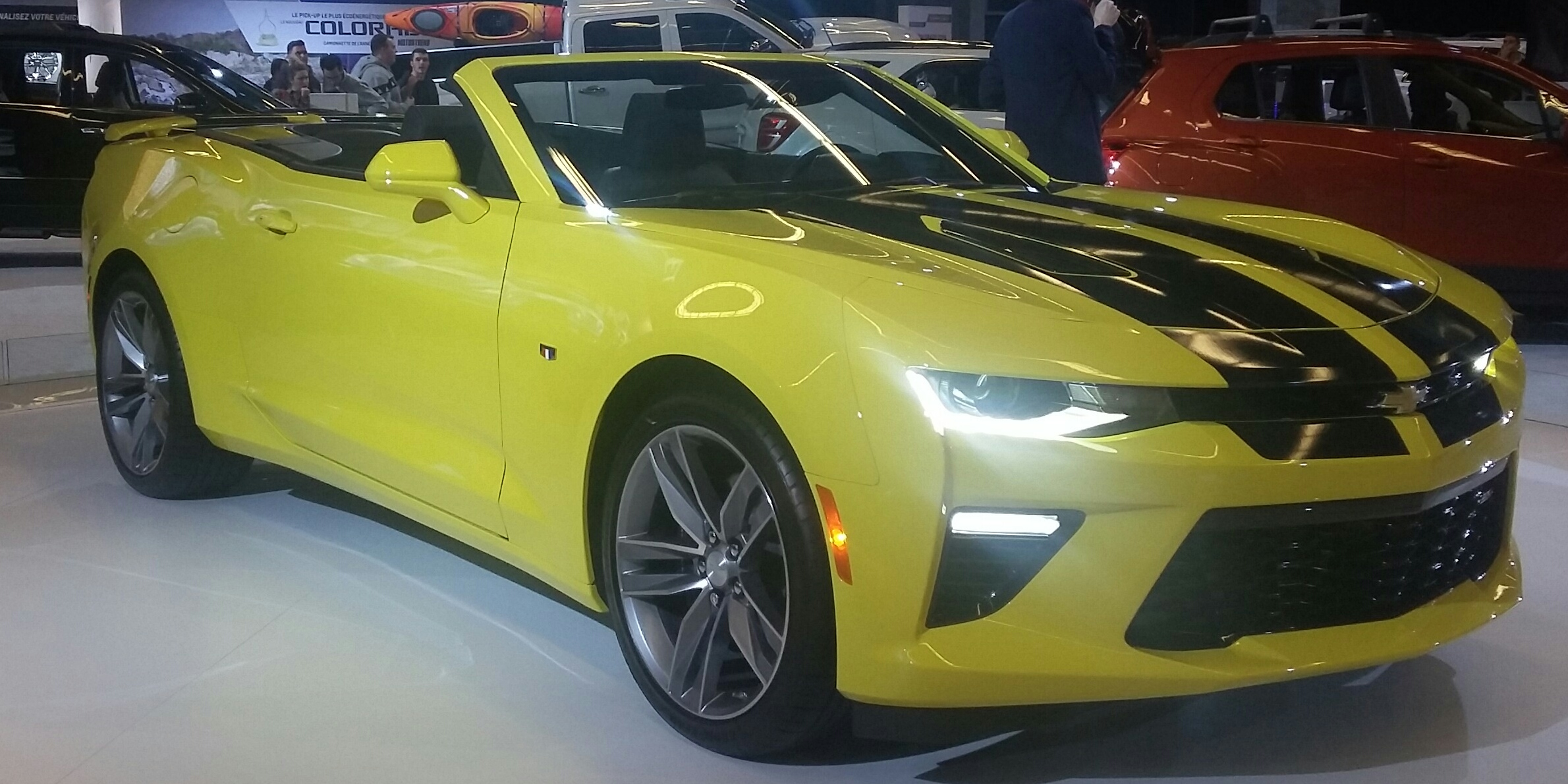
Chevrolet Camaro
"...always begging for the fifth gear. Whether it's a Camaro, whether it's a Mustang, no matter what it is. So..."
The Chevrolet Camaro is a sporty car made for faster, more exciting driving. It’s known for having powerful engines and a fun feel when you drive it. People may talk about how it shifts gears because that affects how it drives.
The Chevrolet Camaro is an American performance coupe/convertible that’s known for its strong engine options and sporty driving feel. It’s often discussed alongside other muscle cars because it’s a recognizable nameplate with a long enthusiast following. Mentions about “gears” and driving behavior fit how people talk about its performance characteristics.
Request an Explanation
Heard something you'd like explained? We'll add it to this episode.
Sign in to request explanations for terms you heard.
Want to learn more?
Browse our glossary for plain-English explanations of automotive terms, jargon, and concepts.
Help improve this episode
See something that's not quite right? Our annotations are AI-generated and can sometimes miss the mark. Click the flag icon on any annotation to suggest a correction.