
Classic Auto Mall - #246 Stewart Howden and Guest Kevin Mackay, Owner Corvette Repair, Inc.
About this episode
Kevin Mackay, owner of Corvette Repair, Inc., joins Stewart Howden for a Corvette-focused conversation rooted in provenance, judging, and restoration reality. They start with the Classic Auto Mall setting and inventory, then get into how Mackay learned Corvettes through Chevrolet dealership work and Bloomington Gold-style education. The shop’s approach favors “driver quality,” with specialization, documentation checks, and guidance on when not to over-invest. Rare-car stories, Le Mans verification, and market pricing—plus originality vs restomods—round out the discussion.
CAM Show #246 06-03-26 Stewart welcomes Kevin Mackay of Corvette Repair, Inc., a Corvette restorer who discusses his business www.corvetterepair.com, awards, accolades. satisfied customers and others in his specialized orbit. Steve joins later to discuss new arrivals at CAM, highlight where others have found new homes and reveal more about the upcoming CAM auction June 19, 2026. www.corvettemuseum.org. www.chipmiller.org, www.sonymusic.com, www.Barrett-Jackson.com, @BillyJoel #Corvette, #ZR1, # L88, restomods, #ReggieJackson, #carguy, https://www.facebook.com/waynecariniofficial, #BostonCeltics, #BowlingGreen. #AmeliaIsland, #WayneCarini
CONTENT NOTE: Contests, Prizes, Offers, Vehicles & other items may no longer be available or offered after each show's original broadcast or posting date.
Recorded in our Showcase Studio just inside the entrance of the Classic Auto Mall in Morgantown, PA, Host Stewart Howden, Classic Auto Mall President and Classic Car Specialist Steve Saffier talk about this unique and amazing place often with amazing guests.
YES...Classic Auto Mall is a REAL former shopping mall that covers almost EIGHT football fields with an average of nearly ONE THOUSAND classic vehicles under one, climate controlled roof and they're all FOR SALE!
Be sure to LIKE and SUBSCRIBE to be informed of new episodes and SEE them on the Classic Auto Mall YouTube Channel. We also invite you to VISIT US IN PERSON at Classic Auto Mall, one hour west of Philadelphia at PA Turnpike Exit #298, VISIT us online at ClassicAutoMall.com or talk to real, live people about visiting, buying or selling your classic on consignment at 610-901-3804.
GET OUR FREE APP: https://ClassicAutoMall.appimize.app When it opens click on the ORANGE button to install on your phone or computer for DIRECT ACCESS to our VIDEO and AUDIO shows and our website.

Chevrolet Chevelle
"... for Chevrolet, work on Corvettes and Camaros and Chevelles and Nova Citations and Palas."
The Chevrolet Chevelle is a classic car made by Chevrolet. It’s known for being a performance-oriented model, and many people restore them. That’s why it’s mentioned when talking about working on classic Chevys.
The Chevrolet Chevelle is a classic American muscle car that’s well known for its performance options and collector interest. In the podcast, it’s included in the list of cars a Chevrolet restoration specialist works on, which signals it’s a common target for restoration and customization. Chevelles are often discussed because they have a big enthusiast following and lots of support in the classic-car world.
driver quality
"[308.3s] But most of them, I would give them more of the driver quality. [312.3s] The condition two and a half, three that are not perfect, but perfect for what their [319.4s] purpose is and that's to be a driver for a guy."
“Driver quality” means the car is nice and reliable enough to actually drive and enjoy. It’s not restored to be flawless for judging or display—more like “ready to use.”
“Driver quality” is an enthusiast term for a car that’s good enough to be used and enjoyed regularly, without needing to be perfect. In this context, the speaker contrasts it with show-focused restoration—cars that look great but aren’t ideal for daily driving or frequent use.
showpiece
"And then they realize, oh, I don't think I restored it to be a driver. [328.4s] I restored it to be a showpiece. [329.8s] Right."
A “showpiece” is a car that’s restored mainly to look amazing for showing off. It may not be the best choice if the owner actually wants to drive it a lot.
A “showpiece” is a car restored primarily for appearance and presentation rather than everyday use. The speaker’s point is that some owners over-restore so the car becomes a display item, then the reality is it doesn’t match the buyer’s goal of using it as a driver.

1964 Corvette
"And of course, your first Corvette was a 1964. Was that your first Corvette, a convertible?"
A 1964 Corvette is a classic Chevrolet sports car from the 1960s. Here, it matters because it was the person’s first Corvette and they’re talking about how they bought it.
The 1964 Corvette is a classic American sports car from Chevrolet, known for its early C2-era styling and strong enthusiast following. In this story, it’s important because it’s the speaker’s first Corvette purchase, and the conversation focuses on buying and inspecting the car.
convertible
"Was that your first Corvette, a convertible? Wow."
A convertible is a car with a roof that can be opened up so you can drive with the top down. It’s a specific kind of car setup, not just a general description.
A convertible is a body style where the roof can be removed or folded down, allowing open-air driving. On classic cars like the 1964 Corvette, the convertible version is a specific configuration that affects desirability, weather protection, and sometimes structural rigidity.
Bloomington
"You did pretty well with that car, dragging it down to Bloomington, right? Yeah."
For Corvettes, “Bloomington” usually means Bloomington Gold, a judging event where cars are checked for how correct they are. He’s talking about going there to try to earn a top award.
In Corvette circles, “Bloomington” is strongly associated with Bloomington Gold, a judging program focused on how accurately Corvettes match factory specifications. The speaker’s mention of traveling there and aiming for “gold” indicates they were pursuing that kind of award.
M.I. class
"I got the highest score car at my M.I. class at the time and that's crazy."
“M.I. class” sounds like a category in a car show where cars are judged and scored. Getting the highest score means the car did really well compared to others in that same category.
“M.I.” here refers to a judging/classification category used in car shows, where vehicles are scored against a standard. Winning a high score in an M.I. class implies the car performed well in that specific judging group.
road gold
"I got a hold of the head guys named Dave Burrows, one of my mentors who actually found a road gold and he grew me once a month, he would talk me for an hour"
“Road gold” refers to a high-level award category in Corvette judging, typically tied to Bloomington Gold-style recognition for cars that are both correct and road-worthy. The speaker credits a mentor with finding a “road gold,” suggesting a benchmark example of an excellent, properly sorted Corvette.
Dave Burrows
"I got a hold of the head guys named Dave Burrows, one of my mentors who actually found a road gold and he grew me once a month, he would talk me for an hour"
Dave Burrows is the mentor the speaker credits for helping him learn about Corvettes. He’s described as someone who knew the judging standards and helped the speaker improve.
Dave Burrows is named as one of the speaker’s mentors and a key figure in Corvette judging/knowledge. The speaker says Burrows “found a road gold” and coached him regularly, indicating Burrows’ expertise in Corvette correctness and history.
Kevin McKay
"I was in my 20s at the time and I said, Mr. Burrows, yes sir, he goes off, must be Kevin McKay."
Kevin McKay is the guest being introduced here. He’s talking about how he learned about Corvettes and how he did well in judging events.
Kevin McKay is the guest being introduced in this segment. The conversation frames him as someone who learned Corvette history and correctness through early ownership and mentorship, including a 1965 Corvette.
Corvette Grand Sports
"One of the ones built in his collection. [571.6s] He had one of the original factory grand sports, one of five built."
The “Grand Sport” is a Corvette model line tied to racing heritage, and “original factory” emphasizes these are authentic, factory-built race cars. The host says there were only five built, which is why this specific Corvette variant is treated like a top-tier collectible.
Le Mans, 25 hours of Le Mans
"He had a black on black, this one built side factory side pipe car and the only [582.1s] C2 Corvette that went to Le Mans, 25 hours of Le Mans. [584.8s] And he had probably a half dozen C3 LED eights."
Le Mans is a famous long-distance endurance race. The “25 hours” detail means it’s about surviving and performing for a huge amount of time, not just a short sprint.
Le Mans is an endurance race where cars must run for many hours with minimal downtime. Mentioning “25 hours” frames the Corvette’s significance as a long-distance race car, not just a fast street car.
3300 horse car
"[710.7s] Always buy the very best that you did a beautiful job on your 65 Corvette. [714.3s] But it's just a 3300 horse car. [716.4s] Same body, same frame, same interior."
The speaker is saying their Corvette isn’t the highest-power version. In classic car collecting, the more powerful/special the engine is, the more valuable the car usually is.
“3300 horse car” is the speaker’s shorthand for a Corvette with relatively modest horsepower compared to special high-output versions. The key idea is that horsepower (engine output) is a major driver of collector value, even when the cars share the same basic body, frame, and interior.
435
"[730.2s] The only one like it was Tuxedo Block with red interior, 435 [733.1s] side pipe was all customized. [735.1s] I bought it a guy somewhere in PA at the factory tank sticker on it."
“435” is the speaker’s way of pointing to a more special, higher-performance engine setup. The takeaway is that cars with the rarer/higher-output setup tend to be worth much more.
“435” is shorthand for a high-performance Corvette engine rating/option package associated with 1960s big-block performance. In the transcript, it’s used as a marker of rarity and specialness—if it’s a “435 or something really special,” the car can be worth far more than a more common configuration.
Tuxedo Block
"[730.2s] The only one like it was Tuxedo Block with red interior, 435 [733.1s] side pipe was all customized. [735.1s] I bought it a guy somewhere in PA at the factory tank sticker on it."
“Tuxedo Block” is a named paint color. For classic cars, the exact original color and interior combo matter a lot to collectors.
“Tuxedo Block” is a specific paint color name used on classic Corvettes. Color and interior combination are part of how enthusiasts identify a car’s original specification and how desirable (and valuable) it can be when restored correctly.
side pipe
"[730.2s] The only one like it was Tuxedo Block with red interior, 435 [733.1s] side pipe was all customized. [735.1s] I bought it a guy somewhere in PA at the factory tank sticker on it."
“Side pipe” means the exhaust tips come out on the side of the car. It’s a noticeable styling/engineering detail that can signal a more performance-focused setup.
“Side pipe” refers to exhaust outlets that exit along the side of the car rather than through the rear. On classic Corvettes, exhaust layout is a visible, enthusiast-recognized detail that often correlates with a particular performance setup and era-correct styling.
factory tank sticker
"[733.1s] side pipe was all customized. [735.1s] I bought it a guy somewhere in PA at the factory tank sticker on it. [738.2s] So we restore that to a whole different level."
A “factory tank sticker” is an original label from the factory that helps show how the car was built. Collectors like it because it helps confirm the car’s original details.
A “factory tank sticker” is an original label placed on the fuel tank area that documents the car’s build information. In classic-car restoration and valuation, these kinds of original documentation help verify what the car was when it left the factory.
suspended body exhibits
"Displays, whether it be suspended body exhibits, we've done cars that were sideways, cutaway cars, see through Corvettes and a whole nine yards."
This sounds like a display where the car body (or part of it) is hung up so you can look at it from different angles. It’s a way to show off details that you usually can’t see when the car is sitting normally.
“Suspended body exhibits” refers to vehicle body sections or cars displayed hanging in the air, typically to showcase structure, design, or engineering details. In automotive shows, this kind of display helps viewers see underbody and chassis-related information that’s normally hidden.
cutaway cars
"Displays, whether it be suspended body exhibits, we've done cars that were sideways, cutaway cars, see through Corvettes and a whole nine yards."
A cutaway car is a car that’s been modified so you can see the inside—like the engine bay and other parts—without opening anything up. It’s often used for displays so people can learn how the car is put together.
A cutaway car is a vehicle modified so part of the body is removed or sectioned to reveal internal components. It’s commonly used for education, displays, and marketing because it lets people see how systems are packaged and built.
aligned
"Well, yes and no. What I do, I have a lot of people that want to restore their cars, because they're very sentimental and I don't do it. I tell people, because I have about 70 cars waiting to get aligned into my place."
“Aligned” means the shop is setting up the wheels so they point in the right directions. That helps the car drive straight and prevents uneven tire wear.
“Aligned” here refers to wheel alignment, the process of setting suspension angles so the tires track straight and wear evenly. Shops often schedule alignments after repairs or restoration work to ensure the car drives correctly.
fraudulent tags
"Or it's a car with the, you know, fraudulent tags on it happens, [866.4s] especially in this area, northeast part of the country."
He’s saying the car had fake or illegal license plates/registration. That’s a serious warning sign because it can create legal and paperwork problems when you try to own or sell the car.
“Fraudulent tags” means license plates/registration identifiers that are fake or illegally obtained. In a classic-car repair context, this can be a red flag for legal trouble and can also make the car harder to insure, title, and sell.
two speed power glide
"Somebody comes to me with that. [906.9s] That's a different conversation than the guy who comes to me with a 327 [910.1s] with a two speed power glide and, you know, not much history"
He’s talking about a classic two-speed automatic transmission called Power Glide. It matters because it changes how the car drives and also whether the car matches what buyers expect for that model.
“Two speed Power Glide” refers to a two-speed automatic transmission used in some classic Chevrolet applications. In restoration discussions, the transmission choice matters because it affects drivability, originality, and buyer desirability.
documentation
"And when cars come into our shop here, the first time I look at it, [921.1s] I look at the engine bed, I look at the documentation,"
He’s saying he checks the paperwork and records for the car. That kind of documentation helps confirm what’s original and what’s been changed over time.
In classic-car repair and restoration, “documentation” usually means records that prove what parts the car has and how it was maintained or built. This helps determine originality and can strongly influence value and buyer confidence.

Challenger Hellcat
"... comes in here with a 16 year old son who wants a hellcat with 700 horsepower. No, that's a terrible idea. ..."
The Challenger is a muscle car, meaning it’s built for strong acceleration and power. The podcast mentions it because someone wanted a very high-power version for a teenager. The concern is that a car with that much power may not be safe for a new driver.
The Challenger is a modern-era muscle car known for high-performance trims, including versions that can make very large horsepower. In the podcast, it’s brought up in a cautionary way—specifically about a 16-year-old wanting a Hellcat—because that kind of power can be a poor match for a new driver. The discussion is centered on safety and suitability rather than the car’s design details.

Volkswagen Beetle
"...hter and he wants to put her in a 1967 Volkswagen Beetle. No, that's an awful idea."
The Volkswagen Beetle is a small classic car made by Volkswagen. A 1967 Beetle is known for being compact, so it can be difficult to fit people or do certain modifications safely. That’s why the idea mentioned in the podcast is treated as a bad plan.
The Volkswagen Beetle is a compact, air-cooled classic that became famous for its simple design and long production history. In the podcast, it’s specifically mentioned in the context of someone wanting to put a person into a 1967 Beetle, which highlights how distinctive and tight the car’s packaging can be. That kind of conversation is common with classics because fit, safety, and usability matter when you’re modifying or using an older car.
Resto mods
"So tell me tell me your honest opinion about Resto mods, especially Resto Mod Corvettes."
A “restomod” is an older classic car that’s been fixed up, but also updated with modern parts or upgrades. People do it to make the car nicer to drive or faster, while still keeping the classic style.
“Resto mods” are restomods: classic cars that have been restored but also modified with newer technology or performance upgrades. The idea is to keep the classic look while improving drivability, reliability, or speed versus a fully original car.
Stock
"Yeah. Stock. And I love cars that race in very important races, like 24 hours of Le Mans,"
“Stock” means the car is basically as the manufacturer built it, without upgrades or modifications. Collectors often prefer stock cars because they’re original.
“Stock” means the car is in factory-original configuration, with no aftermarket performance or appearance modifications. In collector talk, “stock” is often used as a value benchmark because originality can matter as much as performance.
original drivetrain
"I'm the same way. I love an original car, love original. It's got the original drivetrain, all of that."
The “drivetrain” is what sends power to the wheels—engine and transmission-related parts. “Original drivetrain” means those parts are the same as what the car came with from the factory.
An “original drivetrain” means the car’s engine and powertrain components are the factory ones (or factory-equivalent) rather than swapped or heavily modified. For classic cars, keeping the original drivetrain is a big part of maintaining originality and collector value.
Bowling Green
"[1437.8s] And, and of course, you know, in the Corvette world, I mean, the Corvette, [1441.8s] I mean, Bowling Green is the Mecca, right?"
Bowling Green is where Corvette fans go to learn about the car’s history. It’s especially important because it’s home to the National Corvette Museum.
Bowling Green is a major Corvette hub because it’s home to the National Corvette Museum. In the Corvette world, it’s treated like a “Mecca” for enthusiasts, with displays that highlight the car’s history and development.
non-for-profit
"[1483.9s] Seems I imagine Chevrolet is very supportive of the museum. [1487.7s] It's a non-for-profit, a separate organization, right?"
A non-for-profit is an organization that doesn’t exist to make money for owners. Instead, it typically reinvests any surplus back into its mission—here, the museum.
A non-for-profit organization is one that isn’t run to distribute profits to owners or shareholders. In this context, the museum being non-for-profit is meant to explain how it’s organized and funded as a separate entity.
America Sports Car
"I love that the fact that, you know, America Sports Car. I mean, that's just that says it all right there."
The speaker is basically saying the Corvette feels like an American sports car—something that fits American car culture. They’re pointing out that you don’t just buy it for speed; you buy it because it’s “the” American sports car.
“America Sports Car” is being used as a shorthand for the Corvette’s identity as an American sports car—an enthusiast icon tied to American car culture. The speaker is emphasizing that the Corvette’s appeal is partly about what it represents.
running motor
"So we spare motor. So we built this running motor with a four speed transmission and a whole nine yards here, and it was a running car. So we did a video."
A “running motor” just means the engine can actually start and run. It’s more than a display piece—you can show it working.
A “running motor” means an engine that’s assembled and functioning well enough to start and operate under its own power. In a shop or display context, it usually implies the engine is not just a static mock-up—it can be demonstrated, filmed, and tested.
four speed transmission
"So we built this running motor with a four speed transmission and a whole nine yards here, and it was a running car."
A “four-speed transmission” is the car’s manual gearbox (or a gearbox setup) with four forward gears. More gears can change how smoothly the car drives and how it pulls at different speeds.
A “four-speed transmission” is a gearbox with four forward gear ratios. In classic Corvettes and other older performance cars, the exact number of gears and their spacing can strongly affect how the car accelerates and how it feels at different speeds.
Le Mans C2 Corvette
"We were fortunate up where my mentor Ed Mueller had a Le Mans C2 Corvette factory L867 and I was going through the scribe book and in there you had this entry list of the car and a special list and it had a serial number on it."
This phrase means a Corvette that was prepared for the Le Mans race. The “C2” part is a way people label a specific racing version of the car.
“Le Mans C2 Corvette” is a specific Corvette variant/entry tied to the Le Mans race program. The “C2” label is used by enthusiasts to distinguish a particular Corvette racing configuration used in that era’s competition.
factory L867
"We were fortunate up where my mentor Ed Mueller had a Le Mans C2 Corvette factory L867 and I was going through the scribe book and in there you had this entry list of the car…"
“Factory L867” sounds like an internal factory code used to identify a specific Corvette build or option configuration. These codes matter to restorers and collectors because they help match the car’s documentation to the exact production unit.
serial number
"…in there you had this entry list of the car and a special list and it had a serial number on it."
A serial number is like a car’s unique ID. Collectors use it to prove the car is the same one with the documented history.
A serial number is a unique identifier assigned to a specific vehicle or production unit. In collector-car contexts, it’s used to verify provenance—confirming that a documented car is truly the one associated with a particular history or race entry.
RM
"I wasn't even going to the auction at RM, same weekend as Barry Jackson. RM called me out for you, Mr. McKay."
“RM” is an auction company that sells expensive collector cars. If they call you, it usually means they’re inviting you to bid or attend their auction.
“RM” here is shorthand for RM Sotheby’s, a major auction house that specializes in high-end collector cars. When someone says “RM called me,” they’re talking about being contacted about bidding or attending an auction event.
auction
"I wasn't even going to the auction at RM, same weekend as Barry Jackson. RM called me out for you, Mr. McKay. Are you coming down to our auction?"
They’re talking about a collector-car auction, where rare cars are sold to the highest bidder. That’s how cars like this can end up selling for huge amounts.
The hosts are discussing a collector-car auction where rare vehicles can sell for record-breaking prices. In this context, the “auction” is the mechanism that turns a specific car’s rarity into a market price.

2026 Ford Bronco four door
"Well, this is a 2026 Ford Bronco four door. [2265.8s] Right. [2266.4s] The Sasquatch package."
The Ford Bronco is a rugged SUV designed for off-road driving. Here, they’re talking about a 2026 Bronco with four doors, which usually gives you more room and easier entry than the two-door version.
The Ford Bronco is a modern off-road SUV built around serious trail capability, not just highway comfort. In this segment, the host specifies a 2026 Ford Bronco with a four-door layout, which typically means more interior space and easier access than a two-door.
Sasquatch package
"The Sasquatch package. [2267.7s] Which means it'll climb up [2269.3s] but something further than vertical."
The Sasquatch package is an off-road upgrade bundle for the Ford Bronco. It adds features meant to help the truck handle rough trails and steep obstacles more easily.
The Sasquatch package is an off-road trim package for the Ford Bronco that bundles upgrades aimed at tougher terrain. It’s designed to improve traction and capability, which is why the host connects it to climbing ability beyond just “vertical.”
suspension package
"So, it's a suspension package, basically? [2275.5s] It is. [2275.7s] I don't know."
A suspension package is a set of parts that control how the car rides and handles over bumps. It can change the ride height and how the car feels when you turn or hit rough pavement.
A suspension package is a bundle of suspension-related upgrades (often including springs, shocks/struts, and sometimes control arms) designed to change ride height, handling feel, and how the car absorbs bumps. In this context, they’re talking about a specific set of suspension changes tied to the vehicle’s overall setup.
differentials
"Cosmetic. [2276.7s] Something about differentials and all that. [2278.4s] The cosmetic part of it is the 60th anniversary edition."
A differential is part of the drivetrain that helps the wheels turn at different speeds when you’re cornering. That can affect traction—how well the car can put power down.
A differential is the gear mechanism that allows the driven wheels to rotate at different speeds—especially when turning. When someone mentions “differentials and all that” alongside a suspension package, they’re usually pointing to drivetrain/traction components that affect how power is distributed.
60th anniversary edition
"Something about differentials and all that. [2278.4s] The cosmetic part of it is the 60th anniversary edition. [2281.0s] Okay."
An anniversary edition is a special version of a car made to celebrate a milestone. It often has unique looks (and sometimes extra features), like special stripes or badges.
A “60th anniversary edition” is a special model/trim that commemorates a milestone year, typically with unique styling cues and sometimes equipment differences. Here, they’re using it to explain the car’s cosmetic changes rather than a mechanical overhaul.
Wimbledon white
"It's white. [2289.4s] Wimbledon white. [2290.5s] And..."
“Wimbledon white” is a specific shade of white paint that’s given a proper name by the manufacturer. It helps describe the exact color, not just “white.”
“Wimbledon white” is a named paint color used on some vehicles, functioning like a specific factory color recipe rather than just “white.” In this segment, it’s part of the Corvette’s anniversary visual identity.
375, 17
"And the wheels are the coolest wheels you've ever seen. [2295.4s] They're like 375, 17. [2297.9s] They're like amazingly tall and big."
That “375, 17” is tire size information. It tells you how wide the tire is and what size wheel it fits, which affects how much rubber is on the road and how the car looks.
“375, 17” is shorthand for tire sizing: the tire’s width (375 mm) and the wheel diameter (17 inches). That size choice strongly affects grip and the car’s stance, which is why they’re calling the wheels “tall and big.”
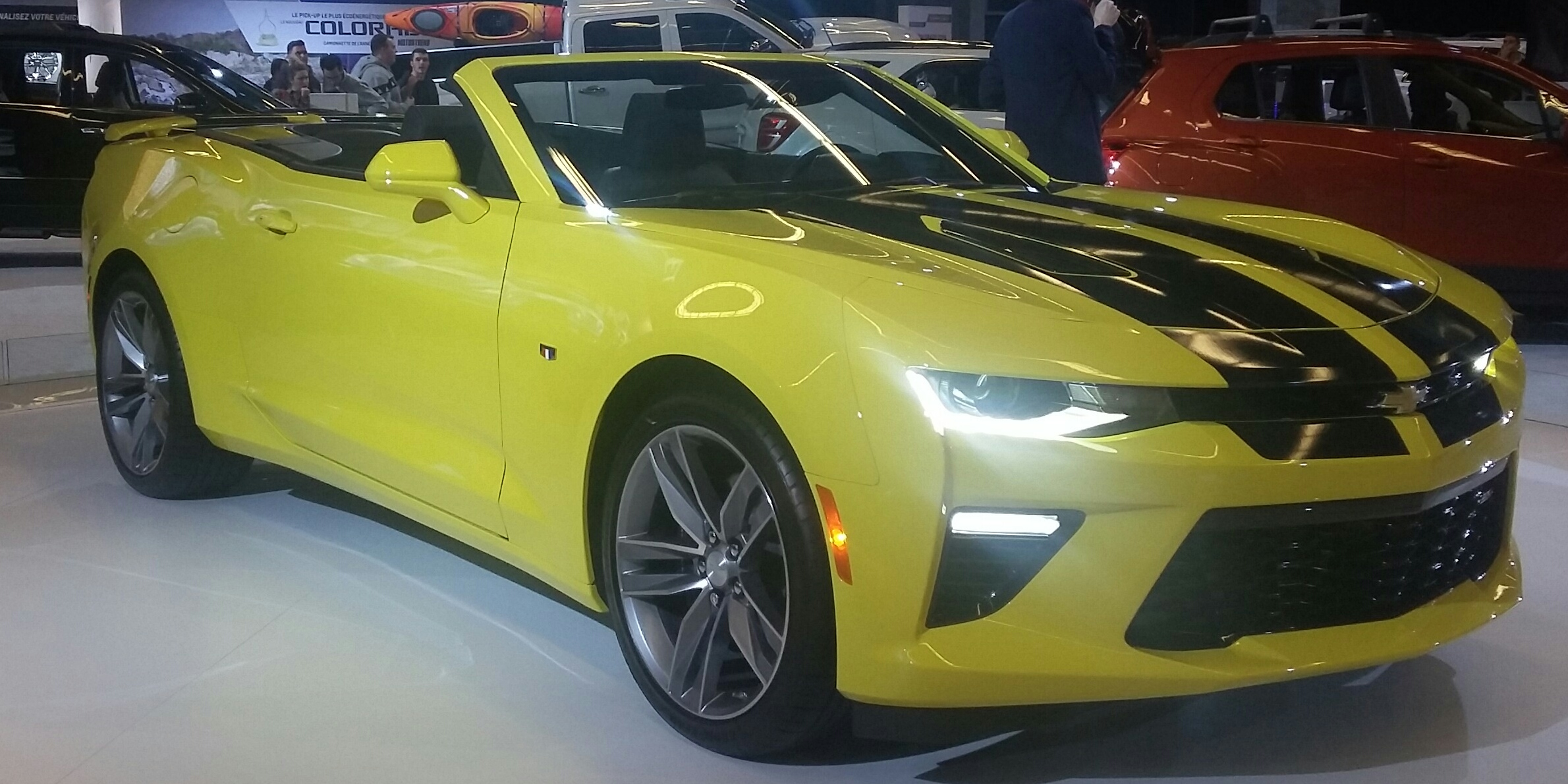
1968 Chevrolet Camaro SS Tribute Palomino Ivory over Black
"So, so anyway, 1968 Chevrolet Camaro SS Tribute Palomino Ivory over Black. [2399.8s] 16,637. [2401.9s] Actual, wow."
This is a 1968 Chevrolet Camaro, a classic muscle car from the first Camaro generation. The “SS Tribute” part usually means it’s been made to look like an SS, with the matching style and details, even if it may not be the original factory configuration.
The 1968 Chevrolet Camaro is a first-generation Camaro (1967–1969) that’s especially popular with classic-car restorers and collectors. In this case, the speaker describes a “SS Tribute” build finished in Palomino Ivory over Black, which is a common way to describe a car styled like an SS rather than necessarily being a factory SS.
383 Stoker
"Oh, the 383 Stoker. [2404.0s] So that's not the original. [2406.2s] That wasn't the original."
A “383 Stroker” is a modified V8 where the engine internals are changed to make more displacement. The goal is usually more torque (pulling power) than a stock engine.
A “383 Stroker” (here spoken as “383 Stoker”) is an engine build based on a 383 cubic-inch V8 that uses a crankshaft and other internal parts to increase displacement—commonly by “stroking” the crank. It’s a popular hot-rod approach because it can boost torque compared with a stock configuration.
inline six
"Probably an inline six on that car. [2411.0s] Aluminium cylinder heads. [2412.5s] Turbo, hydrophobic, 353 speed automatic,"
An “inline six” means the engine has six cylinders lined up in a row. It’s a different engine type than a V8, and here it’s being mentioned to highlight that the car’s engine may have been swapped.
An “inline six” is an engine layout where six cylinders are arranged in a single straight line. The speaker is contrasting it with the later mention of the 383 Stoker, implying the car’s current engine setup isn’t the original configuration.
Aluminium cylinder heads
"Probably an inline six on that car. [2411.0s] Aluminium cylinder heads. [2412.5s] Turbo, hydrophobic, 353 speed automatic,"
Cylinder heads are part of the engine where fuel and air get burned. “Aluminium cylinder heads” are made from aluminum instead of heavier iron, and they’re often used in performance builds.
Cylinder heads are the top castings of an engine that contain the combustion chambers and valve passages. “Aluminium cylinder heads” are a common performance upgrade because aluminum is lighter than cast iron and can help with heat management, depending on the exact design.
Turbo
"Aluminium cylinder heads. [2412.5s] Turbo, hydrophobic, 353 speed automatic,"
A “turbo” is a device that uses exhaust to push more air into the engine. More air usually means more power, but it also means the engine has to be set up correctly.
A “turbo” (turbocharger) uses exhaust gases to spin a turbine that forces more air into the engine. That extra air can allow more power from the same displacement, but it also changes how the engine needs to be built and tuned.
12 bolt axle
"and a 12 bolt axle and a splendid driver."
A “12 bolt axle” means the axle has a specific bolt pattern—twelve bolts—where parts connect. It’s mainly important for getting the right replacement parts during repairs or restoration.
A “12 bolt axle” refers to an axle assembly that uses twelve bolts to attach or secure key components (commonly the differential/axle housing interface). The bolt pattern is a practical identifier used by restorers and parts suppliers to make sure the correct axle/differential setup is matched.
1963 Crofton Brawny Bug and Trailer
"So, and next on our list is the 1963 Crofton Brawny Bug and Trailer. [2427.5s] Fire engine red over black."
This is a very rare 1963 Crofton called the Brawny Bug, and the discussion also includes its trailer. The point is that it’s an unusual classic with a distinctive look and limited production, so it stands out to collectors.
The 1963 Crofton Brawny Bug is a rare, small vehicle that’s being discussed here as a collectible classic, and it’s specifically mentioned alongside its trailer. The host highlights its distinctive “fire engine red over black” look and notes it was built in very low numbers, making it notable for rarity and period-correct character.
53 cubic inch inline four cylinder
"A 53 cubic inch. [2437.4s] That's it. [2438.2s] Yes. [2438.9s] 53 cubic inch inline four cylinder."
“53 cubic inch” is the engine’s size—how much space the pistons move. “Inline four cylinder” means it has four cylinders lined up in a row, which is a common engine layout.
“53 cubic inch” describes engine displacement, which is the total volume swept by the pistons. “Inline four cylinder” means the engine has four cylinders arranged in a single row, which affects how it runs and how it’s packaged in the vehicle.
overhead cam
"Yeah. [2442.6s] Overhead cam, though. [2443.4s] It's a real car."
“Overhead cam” means the camshaft sits up in the engine head. That helps control the engine’s valves more precisely than some older designs.
Overhead cam (OHC) means the camshaft is located in the cylinder head rather than in the engine block. This layout can improve valve timing precision and packaging, and it’s a key detail when comparing engine designs.
compound three speed manual
"Compound three speed manual. [2445.5s] What does that mean? [2446.0s] I don't even know what compound."
This describes a manual gearbox that’s more complex than a basic 3-speed. The word “compound” is the confusing part—it usually means the transmission uses extra gearing inside to create more usable gear ratios.
A “compound three speed manual” refers to a manual transmission that uses a compound gearset strategy to effectively provide multiple gear ratios beyond a simple three-forward-speed layout. In this context, “compound” is the key jargon term the host and guest are unsure about, suggesting it may involve additional gearing (like a compound planetary or gear reduction) to reach the usable ratio spread.

Ford Thunderbird
"And these are quite popular. Ford Thunderbird convertible. This one's in a great color."
The Ford Thunderbird is a classic Ford car that was made for comfort and style. A convertible version is one where the roof can open up. In the podcast, it’s mentioned because this particular one is in good condition and has an attractive color.
The Ford Thunderbird is a personal luxury car that became especially popular in the classic era, including convertible versions. In the podcast, the Thunderbird convertible is called out as being in a great color and described as popular, which is typical of how these cars are discussed at classic shows and auctions. Color, condition, and whether it’s a convertible are major factors for collectors.
soft top
"And it's 333 cars in one. That's right. It's a convertible. It's a soft top."
A soft top is the fabric roof on some convertibles. It folds down like a regular convertible roof, but it can wear out or leak if it’s not maintained.
A soft top is a convertible roof made from fabric or other flexible materials, rather than metal. It’s typically lighter and easier to package, but it can be more sensitive to wear and weather sealing over time.
hard top
"It's a soft top. It's a hard top, a soft top, and a convertible. Well, convertible."
A hard top is a rigid roof on a convertible, usually made of metal or solid panels. It tends to be quieter and more solid than a fabric roof.
A hard top is a convertible roof made from rigid materials like metal or composite panels. Compared with a soft top, it usually provides better structural stiffness and can reduce wind noise, but it may be heavier and less convenient to remove.
five-speed select shift automatic
"And a five-speed select shift automatic with a 3.9 liter double overhead cam v."
This is an automatic transmission with five gears, but you can choose the gear yourself using the shifter. It’s still automatic, just with more driver control.
A five-speed select-shift automatic is an automatic transmission with five gear ratios that also lets the driver manually choose gears using a selector (often for more control). It’s still an automatic, but it can behave more like a manual when you select a gear.
3.9 liter
"And a five-speed select shift automatic with a 3.9 liter double overhead cam v. Which was the thing that everybody always said,"
“3.9 liter” is the engine’s size—how much space the cylinders have. Bigger engines can make more power, but it depends on the specific design too.
“3.9 liter” refers to engine displacement, meaning the total volume of all cylinders combined. Larger displacement often correlates with more potential torque, though actual output depends on the engine design and tuning.

F-150 Raptor
"or maybe made a special edition one. Like a Raptor Thunderbird. That would be cool."
The Ford F-150 is a large pickup truck made by Ford. It’s commonly used for hauling and general driving. In the podcast, it’s mentioned as part of an idea for a special themed vehicle.
The Ford F-150 is a full-size pickup truck that’s widely used for work and everyday driving. In the podcast context, it’s mentioned as a reference point for a “special edition” idea—specifically pairing the concept of a Raptor-style truck with a Thunderbird theme. That kind of comment typically highlights how people imagine combining recognizable styling cues with different vehicle platforms.
Raptor Thunderbird
"or maybe made a special edition one. Like a Raptor Thunderbird. That would be cool."
“Raptor Thunderbird” sounds like a fun idea—mixing the off-road vibe people associate with the Ford Raptor with the classic Thunderbird name. It’s not a real factory car name in the usual sense.
“Raptor Thunderbird” is a playful mash-up reference, combining the Ford Raptor off-road brand identity with the Thunderbird name. It’s not a standard factory model designation; it’s more of a hypothetical “what if” about making a classic Thunderbird with modern off-road styling.
Bronco Raptor Bronco
"That would be cool. You know, they make a Raptor Bronco. They do."
The Ford Bronco is an SUV made for off-road driving. It’s built to handle rough terrain better than many regular cars. The podcast mentions it as part of an idea for a more extreme, off-road-focused version.
The Ford Bronco is a rugged SUV designed for off-road capability and outdoor use. In the podcast, it’s mentioned in the context of a “Raptor Bronco” idea, which suggests combining a high-performance off-road truck concept with Bronco styling and purpose. That’s the kind of conversation people have when discussing hypothetical builds or themed vehicles.
Design to ride rough
"Okay. First of all, you talk about riding rough. Yeah, yeah, that's true. Design to ride rough."
“Design to ride rough” means the car’s suspension is tuned to feel bumpy or firm on purpose. It can be intentional for durability or off-road use, not because something is broken.
“Design to ride rough” describes a suspension/ride-tuning philosophy where the vehicle is intentionally set up to feel less smooth. Enthusiasts sometimes prefer this for durability, off-road capability, or a more connected feel, even if it’s not comfortable in the usual sense.

2020 Kia Stinger GT2
"Another new arrival is very unusual car that we've got in [2564.0s] is a 2020 Kia Stinger GT2 sedan. [2568.0s] Micro pearl blue over black, 6,363 pampered, [2572.7s] a six year old car with that many miles."
This is a 2020 Kia Stinger, and “GT2” is the nicer, more performance-focused version. The dealer is pointing out the specific car they got in—its color and how many miles it has.
The 2020 Kia Stinger GT2 is a performance-oriented sedan built around a more driver-focused chassis than typical mainstream sedans. The “GT2” trim is Kia’s higher-spec Stinger, and the host highlights its color and mileage as part of what makes this particular arrival notable.
eco boost
"My Bronco has a twin turbo V6 with the eco boost. [2580.8s] I have no idea what that means. [2582.1s] It means it's economy, but it'll boost."
EcoBoost is Ford’s name for turbocharged engines. A turbo helps the engine make more power, and it can also help with fuel economy.
EcoBoost is Ford’s branding for turbocharged engines. The idea is to use turbochargers to make a smaller displacement engine feel stronger (“it’ll boost”) while improving economy compared with a larger naturally aspirated engine.
Eight speed automatic
"Yeah. [2592.2s] Eight speed automatic performance sedan. [2595.7s] Next on the list is 1965 Shell Valley Cobra."
An eight-speed automatic is a car’s automatic gearbox with eight different gear ratios. It helps the engine stay in the right “sweet spot” for smoother driving and often better efficiency.
An eight-speed automatic transmission uses eight forward gears to keep the engine operating closer to its most efficient or powerful range. More gears can help with smoother acceleration and better fuel economy, depending on the calibration.

Shelby Cobra
"Next on the list is 1965 Shell Valley Cobra. [2599.2s] Burgundy over black, which is unusual. [2600.9s] You don't see many of them in Burgundy."
The 1965 Shell Valley Cobra is a famous classic sports car known for being light and powered by a big V8. Here they’re listing the exact engine and drivetrain pieces—like a 428 V8 and a manual transmission—that help explain why it’s such a strong, old-school driver’s car.
The 1965 Shell Valley Cobra is a classic American performance car built around the iconic Cobra formula: lightweight bodywork with a big V8 and a driver-focused setup. In this segment, the host specifies a 428 cubic inch V8, a Tremac TR3550 five-speed manual, and a Ford 8.8 rear axle—details that define how this particular Cobra drives and what parts it uses.
Tremac TR3550 five speed manual
"428 cubic inch V8 with a Tremac TR3550 five speed manual [2606.8s] and a Ford 8.8 rear axle."
The Tremec TR3550 is the manual transmission in this car. It’s the part that sends power from the engine to the rear wheels, and it’s built for performance driving.
The Tremec TR3550 is a five-speed manual transmission used in many performance cars. It’s known for being a robust, enthusiast-friendly gearbox that can handle higher torque loads compared with many older manual transmissions.
Ford 8.8 rear axle
"428 cubic inch V8 with a Tremac TR3550 five speed manual [2606.8s] and a Ford 8.8 rear axle. [2609.0s] Holley Sniper EFI."
The Ford 8.8 rear axle is the rear drivetrain assembly that connects the transmission to the wheels. People like it because it’s durable and there are lots of parts available if you want to upgrade or service it.
The Ford 8.8 rear axle is a widely used rear-end assembly known for being strong and relatively easy to support with aftermarket parts. In a classic Cobra context, it’s often chosen because it can handle spirited driving and makes gear swaps and upgrades more straightforward.
Holley Sniper EFI
"and a Ford 8.8 rear axle. [2609.0s] Holley Sniper EFI. [2610.3s] Love that stuff."
Holley Sniper EFI is a fuel-injection system added to help the engine run better. Instead of a carburetor, it uses electronics to control how much fuel the engine gets.
Holley Sniper EFI is an aftermarket electronic fuel-injection system. EFI replaces carburetors with electronically controlled fuel delivery, and the host’s comments (“They’re all injected”) point to how this setup helps modernize drivability and tuning.

1977 Chevrolet Nova Concorde two door sedan
"And last but not least, the 1977 Chevrolet Nova Concorde two door sedan. Now this thing looks like a barn find."
This is a 1977 Chevrolet Nova Concorde, and it’s the kind of car people underestimate. Even though it looks rough with rust and patina, it has been built for real power and traction—so it can run hard once you drive it.
The 1977 Chevrolet Nova Concorde is a classic American two-door sedan that’s being framed as a sleeper—its appearance hides serious performance. In this segment, the host highlights a built 383 stroker and a rebuilt 700R automatic, plus a 10-bolt spooled axle, which is why it can surprise people who assume it’s just a rusted “barn find.”

Chrysler Concorde
".... And last but not least, the 1977 Chevrolet Nova Concorde two door sedan. Now this thing looks like a barn ..."
The Chrysler Concorde is a type of sedan (a regular car with four doors) made by Chrysler. In the podcast, the name is mentioned while describing a specific older two-door car and its appearance. The point is mainly about how that particular car looks.
The Chrysler Concorde is a full-size sedan from Chrysler’s lineup, and the podcast references a 1977 Chevrolet Nova Concorde two-door sedan. That phrasing suggests the discussion is about a specific car listing or a particular model/trim name used in that context. It’s brought up as a visual/condition example—described as looking like a barn—typical of how classic-car hosts comment on styling and presence.
sleeper
"Sleeper. The sleeper. It's just got the rust on it."
A sleeper is a car that looks slow or unimpressive, but it’s actually fast. People often don’t expect it until they see it run.
A sleeper is a car that looks ordinary—or even worn out—but has been modified to make strong performance. The point is to fool onlookers who judge by appearance, like thinking it’s “junk,” before it proves itself.
patina
"Oh, yeah, patina. Patina. Yeah, yeah."
Patina is the worn, aged surface look a car develops over time—often from oxidation and weathering. In classic-car culture, patina can be desirable because it shows the car’s history, even though it may also mean there’s rust underneath.
383 stroker
"It's got a 459 horsepower, 383 stroker, rebuilt 700R, 4-4 speed, 10 volt spooled axle, monster Nova."
A “383 stroker” is a V8 engine build that’s made bigger than stock by changing internal parts. The result is usually more low-end torque, which helps a car feel punchy even without high RPMs.
A 383 stroker refers to a small-block V8 build that increases displacement to 383 cubic inches by using a longer-stroke crankshaft (and matching rotating parts). It’s a common hot-rod recipe because it boosts torque and makes the engine feel stronger at lower RPMs.
10 volt spooled axle
"It's got a 459 horsepower, 383 stroker, rebuilt 700R, 4-4 speed, 10 volt spooled axle, monster Nova."
The “10-bolt” part is about the rear axle assembly. A “spool” means the rear end is locked together more than normal, so both wheels push with more force—great for acceleration, but it can feel less smooth in corners.
A “10-bolt” axle refers to GM’s 10.5-inch rear axle family commonly found in many classic cars, and it’s often swapped or upgraded in performance builds. A “spooled” axle typically means the differential is locked (or effectively locked), which improves traction off the line but can make the car behave more aggressively in turns.
rebuilt 700R
"It's got a 459 horsepower, 383 stroker, rebuilt 700R, 4-4 speed, 10 volt spooled axle, monster Nova."
The “700R” is an automatic transmission used in many classic performance builds. If it’s rebuilt, it means the transmission was taken apart and repaired so it should work better and last longer behind a stronger engine.
The 700R is a GM automatic transmission (often called the 700R4) that’s popular in classic hot-rodding because it can handle power and provides overdrive for better cruising. Saying it’s “rebuilt” implies the internal wear items were refreshed to make it reliable behind a built engine.
bucket seats
"And this has got pretty high dollar bucket seats in both the front and the rear. The rear two seats are bucket as well."
Bucket seats are the kind of seats that wrap around you more than a bench seat. They help keep you in place, especially when the car is accelerating or cornering.
Bucket seats are individual, contoured seats designed to hold you in place, usually with a higher side bolster than a bench seat. In performance builds, bucket seats are often chosen for better support during hard driving.
barn find
"So some of the barn find stuff that has been here. It needs to, project cars need to find a new home."
A “barn find” is a car that’s been sitting unused for years, usually in a garage or barn. When it’s found, it can be a great deal—or it might need a lot of work because it’s been sitting.
A “barn find” is a car that’s been stored away for a long time—often in a barn or similar outbuilding—before being discovered and sold. These cars can be exciting because they may have low use, but they also often need significant recommissioning and repairs after long storage.
project cars
"It needs to, project cars need to find a new home. There's everything from project cars to matching numbers, matching Corvette."
A “project car” is a car that isn’t finished or isn’t running right yet. People buy it because they want to fix it up themselves.
“Project cars” are vehicles that need work—mechanical repairs, rust repair, or restoration—before they’re road-ready or fully finished. They’re typically bought by enthusiasts who plan to invest time and money to bring the car back.
matching numbers
"There's everything from project cars to matching numbers, matching Corvette. "
“Matching numbers” means the important parts of the car still have the original ID numbers they left the factory with. Collectors like it because it usually means the car is more original.
“Matching numbers” means the car’s key components (most notably the engine and sometimes the transmission) have identification numbers that correspond to the original factory numbers. Collectors value it because it suggests the car hasn’t been heavily swapped or altered over its life, which can affect authenticity and resale value.

Porsche 911
"And then my Porsche is going to be in the 911. It's going to be in it."
They mention a Porsche 911. The 911 is Porsche’s famous sports car, known for being very well-engineered and popular with car enthusiasts.
The Porsche 911 is Porsche’s iconic rear-engine sports car, and it’s being referenced as the speaker’s car that will be featured “in the 911.” In enthusiast circles, the 911 is a benchmark for handling and long-term parts support, which matters in a repair-shop context.
three pedals
"It's that midnight blue metallic and tannin' tier. And it's got three pedals. That's exactly right."
“Three pedals” usually means the car has a manual transmission. You use a clutch pedal plus the brake and gas, instead of just using the gas and brake like most automatics.
“Three pedals” is a common way to describe a manual-transmission car layout: typically clutch, brake, and accelerator. It’s a quick enthusiast shorthand for how the car is driven, and it often signals a more engaging driving experience than an automatic.
McLaren Racing
"So when we return next week, we're going to have a great guest on us, Zach Brant. Oh, wow. CEO of McLaren Racing."
McLaren Racing is a major racing organization, especially known for Formula 1. The guest being the CEO means they lead a top-tier motorsports team.
McLaren Racing is the motorsport division of McLaren, best known for Formula 1 competition. Mentioning the CEO of McLaren Racing ties the guest to high-level racing leadership rather than the specific cars in the shop’s inventory.
Request an Explanation
Heard something you'd like explained? We'll add it to this episode.
Sign in to request explanations for terms you heard.
Want to learn more?
Browse our glossary for plain-English explanations of automotive terms, jargon, and concepts.
Help improve this episode
See something that's not quite right? Our annotations are AI-generated and can sometimes miss the mark. Click the flag icon on any annotation to suggest a correction.