
Navigating the classic car market can be tricky, and Jason Cammisa and Derek Tam-Scott share their insights on avoiding pitfalls when buying. They discuss the importance of pre-purchase inspections (PPIs) and share personal anecdotes about near-misses with fraudulent vehicles. The duo also dives into the nuances of car authenticity, detailing how even minor discrepancies can significantly affect a car's value. With humor and expertise, they emphasize the need for thorough research and caution in the collector car world.
How to not get ripped off when buying a used classic car! How to spot fakes, frauds and phonies! The importance of documentation and pre-purchase inspections, and other lessons learned over 50 collective years of car shopping!
===
This episode is sponsored by Vyper Industrial — America’s #1 rated shop chair, tool carts, and creepers, proudly made here in the US. Visit vyperindustrial.com and use code CARMUDGEON for $50 off.
===
We start off with a reminder to put fuel stabilizer in your car when it’s going to sit for a while – especially if you’re using garbage California gas. We debate what the acronym “smh” stands for, and discover there seems to be a cat-flatulence epidemic in France.
Then we’ll dive right into the importance of the pre-purchase inspection (PPI) – something Jason thought he was more than qualified to perform himself on a Le Mans-blue Alfa Romeo GTV at Monterey Car Week several years ago. However, at the urging of concours car-prep extraordinaire, Tim McNair, Jason acquiesced and let expert automotive consultant, Chuck Wray, take a look at the car, and almost immediately discovered that Jason was moments away from buying two GTVs that had been stealthily welded into one.
Derek will fill us in on how there can possibly be multiple “numbers matching” cars with the same serial numbers. And we’ll cover several of the factory-based archival certification programs like VW’s Birth Certificate, Porsche’s Kardex and Certificate of Authenticity, Lotus’ Certificate of Vehicle Provenance, and the British Motor Industry Heritage Trust. We’ll cover Ferrari Classiche (pronounced “classi-kay”), and the handful of exhaustive and painstakingly researched books detailing the specs of iconic models: Carrera RS, The Dino Compendium, and Simon Kidson's The Lamborghini Miura. Plus automotive engineering and restoration atelier, Pur Sang.
We take a trip to Esoteria once again to discuss the subtlest model changes on cars like the Scirocco, Rover SD1 3500, Porsche 911 Carrera 2.7 RS, Mercedes-Benz 190E 2.3-16 and what each change signifies (or doesn’t in the case of VW’s haphazard product planning). Jason even uncovers a handful of U.S.-spec C43s accidentally left the factory wearing a Europe-only paint color, Black Opal. Which is actually blue.
Jason’s approach to not getting screwed while buying a 996 cabriolet on eBay involves arriving at the seller’s in a blacked out E39 BMW 5-series wagon with Argentina plates and wielding a baseball bat – classic haggling. Meanwhile, Derek does everything by the book and pays for a $500 PPI on a Porsche 911 he found online, only for it to arrive smoking and in need of a head rebuild.
Both Carmudgeons revel in learning the histories of their cars (and others’ cars): Jason getting the original paperwork for the Ferrari 308 GT4 from distributor Chinetti-Garthwaite to dealer Schwing Motor Company in 1975, and Derek tracking down his friend’s 356’s Kardex and subsequently locating photos of the car with its original owner when the car was brand new. There's loads of automotive history, forensics, anthropology and archaeology in this one!
The question is, would you give up your original California plate if it meant no more SMOG checks? Leno's Law hopes to find out.
Learn more about your ad choices. Visit megaphone.fm/adchoices
"Porsche is giving away a 2021 Porsche Cayman GT4 in more color. Python green, which I felt like was maybe a bit of a missed opportunity..."
The Porsche Cayman GT4 is a sports car that is designed for performance. It's known for being fast and fun to drive, making it popular among car lovers.
The Porsche Cayman GT4 is a high-performance variant of the Cayman sports car, known for its powerful engine and track-focused features. It offers an exhilarating driving experience and is highly regarded among enthusiasts.
"... misspelling. It's a bad match. Okay, so can't be Viper green. It's Python green with a Y Python with a Y..."
The Dodge Viper is a super-fast sports car with a big engine that makes it very powerful. It's known for its bold look and is loved by people who enjoy driving really fast cars.
The Dodge Viper is a high-performance sports car known for its powerful V10 engine and aggressive styling. Produced from the early 1990s until 2017, it has a reputation for being raw and exhilarating to drive, appealing to enthusiasts who crave speed and performance.
"Thus exposing my beautiful Mercedes 190 E2.3 16 in the background, glimmering with all the dust covering it because I haven't been driving it much."
The Mercedes 190 E2.3 16 is a sporty version of a small luxury car made by Mercedes-Benz. It has a powerful engine and was designed for better performance and handling.
The Mercedes 190 E2.3 16 is a high-performance version of the 190 series, known for its sporty characteristics and engineering. It features a 2.3-liter engine and was part of Mercedes-Benz's efforts to compete in the compact executive car segment during the 1980s.
"No, I like those. That's one of the few modern cars. Okay, you make fun of it. Great. We're going to move this down only because oh my god. It's very well made. Exactly. It's real real materials. Thus exposing my beautiful Mercedes 190 E2.3 16 in the background, glimmering with all the dust covering it because I haven't been driving it much. Well, I'm sure your old gas is helping that is my the only car that I have what's it's the car that is most irritable about California gas on a fresh tank of gas."
The BMW 7 Series is a large luxury car that is very comfortable and packed with high-tech features. It's designed for people who want a smooth and stylish ride.
The BMW 7 Series is a full-size luxury sedan that showcases BMW's commitment to innovation, comfort, and performance. It features advanced technology and luxurious materials, making it a top choice for those seeking a premium driving experience.
Stabil is a product you can add to your gas tank to keep the fuel fresh for a longer time. It's helpful for cars that sit unused for a while.
Stabil is a fuel stabilizer that helps prevent gasoline from degrading over time. It is particularly useful for vehicles that are not driven frequently, as it helps maintain fuel quality and prevents issues like hard starting.
"...the gas that's in the tank had gone off and the gas that was in the injector line hadn't."
A fuel injector is a part of the engine that sprays fuel into the engine so it can mix with air and burn properly. This helps the car run smoothly and efficiently.
A fuel injector is a component in modern engines that delivers fuel into the combustion chamber. It atomizes the fuel for better mixing with air, which is essential for efficient combustion and engine performance.
"...But it's California gas is not the stable list, stable list. Yeah, unless you put stable in it..."
California gas is a type of fuel that is made to be cleaner for the environment. However, it can go bad more quickly than gas from other places, which can cause problems if you leave it in your car for too long.
California gas refers to the specific formulation of gasoline that meets California's stringent environmental regulations. This type of gas often has additives to reduce emissions but can be less stable than fuels in other states, leading to issues like fuel degradation when stored for long periods.
The Chevrolet Nova is a small car that was made by Chevrolet a long time ago. It was known for being inexpensive and easy to drive.
The Chevrolet Nova was a compact car produced by Chevrolet from 1962 to 1979. It is known for its affordability and simplicity, making it a popular choice among budget-conscious buyers.
"Pre-purchase inspections. And the importance thereof. I will tell some stories about this, but I'm sure you have some as well."
A pre-purchase inspection is when a mechanic checks a car for problems before you buy it. It's important to make sure the car is in good shape and doesn't have hidden issues.
A pre-purchase inspection is a thorough examination of a vehicle conducted by a qualified mechanic before buying it. This process helps identify any existing issues or potential problems, ensuring that the buyer is making an informed decision.
"I actually bought the 850 side unseen, which was... How is that working out for you?"
The BMW 850 is a fancy sports car made by BMW in the 1990s. It's known for being fast and comfortable, making it great for long drives.
The BMW 850 is a luxury grand tourer produced by BMW in the early 1990s. Known for its powerful engines and elegant design, it represents a blend of performance and comfort.
"What I've realized is, as I've gotten older and lazier, I no longer do the PPI's that I used to do, but I'm also buying cars that I can afford to typically afford to fix or make right if there's something wrong."
A PPI is a check you can get on a car before you buy it to make sure everything is working properly and there are no hidden problems.
PPI stands for Pre-Purchase Inspection, which is a thorough examination of a vehicle before buying it. This inspection helps identify any potential issues that could affect the car's performance or safety.
"I had driven your Ferrari 308 GT4, and fell in love with it, and sort of saved up a bunch of money to drive one."
The Ferrari 308 GT4 is a sports car made by Ferrari in the 1970s. It's known for its unique look and how well it drives.
The Ferrari 308 GT4 is a mid-engine sports car produced by Ferrari from 1973 to 1980. It features a distinctive design and is known for its performance and handling.
"I could buy either a Ferrari 308 GT4 or an Alfa GTV."
The Alfa Romeo GTV is a sporty car made by Alfa Romeo. It's known for looking good and being fun to drive.
The Alfa Romeo GTV is a series of sports coupes produced by Alfa Romeo, known for their stylish design and engaging driving experience. The GTV has had various engine options over the years.
Car
Alfa Gtvs
"...an Alpha GTV. And I'd driven a bunch of two-liter GTVs. I liked them. I drove a bunch of 1750s."
The Alfa Romeo GTV is a stylish sports car that many people enjoy driving. It has a cool design and is known for being fun to handle on the road.
The Alfa Romeo GTV is a sporty coupe that has been praised for its stylish design and engaging driving experience. Produced in various forms from the 1960s to the early 2000s, it remains a beloved model among enthusiasts.
Car
Alfa 1750S
"... two-liter GTVs. I liked them. I drove a bunch of 1750s. I liked them 1600s. I liked them."
The Alfa Romeo 1750 is an older car that many people love for its good looks and fun driving experience. It's known for being sporty and stylish.
The Alfa Romeo 1750 is a classic model known for its performance and elegant design, produced during the late 1960s and early 1970s. It is part of the Alfa Romeo lineage that emphasizes sporty driving and Italian craftsmanship.
"I had a Corolla that was red? 1994 Corolla DX. It was the one that I lemon-lawed."
The Toyota Corolla DX is a version of the Corolla from 1994. It's known for being a dependable and fuel-efficient car, making it a popular choice for many drivers.
The Toyota Corolla DX is a variant of the Corolla model, known for its reliability and efficiency. The 1994 model year is part of the eighth generation of the Corolla, which was popular for its compact size and fuel economy.
"Technically, I bought a 91 Nissan Central SE in red. Technically."
The Nissan Sentra SE is a version of the Sentra from 1991. It's a small car that was designed to be affordable and easy to drive, making it a good option for many people.
The Nissan Sentra SE is a sportier variant of the Sentra model, known for its compact size and affordability. The 1991 model year is part of the fifth generation of the Sentra, which featured improved styling and performance.
"The suspension was perfect. The steering was great. I mean, this was easily, and by far away, the best GTV that I'd ever driven."
The suspension is the part of a car that helps it ride smoothly over bumps and turns. It keeps the wheels in contact with the road for better control.
Suspension refers to the system of springs, shock absorbers, and linkages that connects a vehicle to its wheels. It plays a crucial role in handling, ride comfort, and stability during driving.
"The suspension was perfect. The steering was great. I mean, this was easily, and by far away, the best GTV that I'd ever driven."
Steering is how you control where your car goes. When you turn the steering wheel, it helps the car turn left or right.
Steering refers to the mechanism that allows the driver to control the direction of the vehicle. It includes components like the steering wheel, column, and linkages that connect to the wheels.
"Perhaps cars for concours, including he did a couple videos for Haggerty. He did a McLaren F1 detailing video."
Hagerty is a company that helps people insure classic cars and also makes videos about taking care of them.
Hagerty is a well-known company that specializes in classic car insurance and automotive lifestyle content, including videos and articles about car care and restoration.
"He did a McLaren F1 detailing video. And in here, actually, he did an F40 video."
The McLaren F1 is a very famous and fast sports car made in the 1990s. It has a special design where the driver sits in the middle of the car.
The McLaren F1 is a legendary supercar produced in the 1990s, known for its speed, advanced technology, and unique design, including a central driving position.
"And in here, actually, he did an F40 video. And he was like, why don't you have my friend Chuck look at the car?"
The Ferrari F40 is a very famous sports car made by Ferrari in the late 1980s and early 1990s. It's known for being really fast and having a cool design.
The Ferrari F40 is a high-performance sports car produced in the late 1980s and early 1990s, celebrated for its raw performance and iconic design, making it a favorite among car enthusiasts.
"...we put it up on the lift. And there was a seam at the top of the middle of the rear wheel arch..."
A lift is a tool that helps raise cars into the air so mechanics can work on the bottom parts easily. It makes it safer and easier to see what's going on underneath the car.
A lift is a piece of equipment used in automotive repair shops to raise vehicles off the ground, allowing mechanics to access the undercarriage for inspections or repairs.
"it's very easy to, or it's very tempting to make fakes out of them. And so this could happen with like Camaro's or Corvettes, right? And this is why Corvette guys are like vintage Corvette guys are so, so particular because a 63 split window,"
"...m. And so this could happen with like Camaro's or Corvettes, right? And this is why Corvette guys are like vi..."
The Chevrolet Corvette is a fast and stylish sports car that many people love. It's famous for being powerful and fun to drive, and it's been around for a long time, making it a classic choice for car enthusiasts.
The Chevrolet Corvette is an iconic American sports car known for its performance, distinctive styling, and rich history. It has been a symbol of American automotive engineering since its introduction in 1953, often celebrated for its powerful engines and agile handling.
"...if it's a 0, 6 is worth very differently than if it's a 250 horsepower automatic originally car."
Horsepower is a way to measure how powerful an engine is. More horsepower usually means a car can go faster and perform better.
Horsepower is a unit of measurement for power, commonly used to describe the power output of engines. Higher horsepower typically means better performance and acceleration in vehicles.
"...this doesn't happen with McLaren F1s because where you're going to find a carbon fiber chassis car that is the same chassis."
A carbon fiber chassis is a strong and light frame that helps cars go faster and handle better. It's made from a special material called carbon fiber.
A carbon fiber chassis is a lightweight and strong structure made from carbon fiber material, often used in high-performance cars to reduce weight and improve handling. This technology is common in supercars and racing vehicles.

"...nsive version of it, you know, Porsche 911 versus Carrera RS or Camaro or... This is not a disease."
The Porsche Carrera RS is a special version of the Porsche 911 that is made for speed and racing. It's lighter and faster than regular models, making it very popular among car collectors.
The Porsche Carrera RS is a high-performance version of the Porsche 911, renowned for its lightweight design and racing pedigree. Introduced in the early 1970s, it has become a highly sought-after collector's item due to its performance capabilities and limited production numbers.
"Is it like a 250GTO that has one more that have been documented?"
The Ferrari 250 GTO is a very rare and valuable classic car made by Ferrari in the early 1960s. It's famous for its racing history and is one of the most expensive cars ever sold.
The Ferrari 250 GTO is one of the most sought-after classic cars in the world, produced between 1962 and 1964. It is renowned for its racing pedigree and has fetched record prices at auctions, often exceeding $40 million.
"... track because there were, I think, over maybe 20 GTOs on the track at once racing because it was Ferrar..."
The Pontiac GTO is an early muscle car that became famous for being fast and powerful. It was popular in the 1960s and is now considered a classic car.
The Pontiac GTO is often credited as one of the first muscle cars, introduced in the 1960s. Known for its powerful engines and performance, it has become a classic symbol of American automotive culture.
"Per song does this with Grand Prix Bugatti's and Alpha 8C's"
The Alfa Romeo 8C is a stylish and fast sports car from Italy. It's known for its beautiful design and great performance on the road.
The Alfa Romeo 8C is a high-performance sports car that combines Italian design with powerful engineering. It is celebrated for its aesthetics and driving dynamics.
Distributors are parts that help send electricity to the engine to start it. They make sure the spark goes to the right place at the right time.
A distributor is a component in the ignition system that directs the high-voltage current from the ignition coil to the correct cylinder at the right time.
"those cars are sold as new cars that are very clearly copies of original cars"
Copies of original cars are new cars that look like old classic cars. They are made to resemble the originals but are not the same.
Copies of original cars refer to vehicles that are designed to resemble classic or vintage models but may not be authentic or produced by the original manufacturer.
"and Bugatti owner's club doesn't grant those cars."
The Bugatti owner's club is a group for people who own Bugatti cars. They have events and help members connect with each other.
The Bugatti owner's club is an organization for enthusiasts and owners of Bugatti vehicles, often providing resources, events, and community for members.
"They're called a BOC serial number, a Bugatti owner's club serial number. And if the car is like a replica that's based off of some original parts..."
A BOC serial number is like a special ID for Bugatti cars that helps prove they are real and can make them worth more money.
A BOC serial number refers to a unique identifier assigned by the Bugatti Owners Club for authenticating Bugatti vehicles. It can increase the value of a car, especially if it has original components.
"...it was raced at Le Mans, it was wrecked, and then completely destroyed..."
Le Mans is a famous car race that lasts for 24 hours. Cars race around a track to see which one can go the farthest in that time.
Le Mans refers to the 24 Hours of Le Mans, an endurance racing event held annually in France. It is one of the most prestigious automobile races in the world, where teams compete to see who can cover the most distance in 24 hours.
"I did it for my Daimler. I want to do one for my Mark I, I just haven't yet. Although I learned that that..."
The Jaguar Mark I is a classic luxury car from the 1950s that is known for its beautiful design. It helped make Jaguar famous for making stylish and fast cars.
The Jaguar Mark I is a luxury saloon car produced in the 1950s, known for its elegant design and advanced engineering for its time. It played a significant role in establishing Jaguar's reputation for producing stylish and high-performance vehicles.
"...any other cars. There's one about the Lamborghini Miura. By this, I mean a book, I mean a book that lists..."
The Lamborghini Miura is a very famous supercar from the 1960s that is known for its beautiful looks and incredible speed. Many people consider it one of the best cars ever made.
The Lamborghini Miura is a groundbreaking supercar that debuted in the 1960s, often considered the first true supercar due to its mid-engine layout and stunning design. Its influence on the automotive world is immense, making it a highly sought-after collector's item.
"...here's one about the Miura, there's one about the Ferrari Dino, the 246, and 206, called the Dino Compendium, th..."
The Ferrari Dino 208 GT4 is a special version of a Ferrari that has a smaller engine but still offers great performance. It's known for its unique look and is popular among Ferrari fans.
The Ferrari Dino 208 GT4 is a variant of the Dino series, known for its smaller V8 engine and distinctive design. It represents Ferrari's efforts to create a more accessible sports car while maintaining the brand's performance heritage.
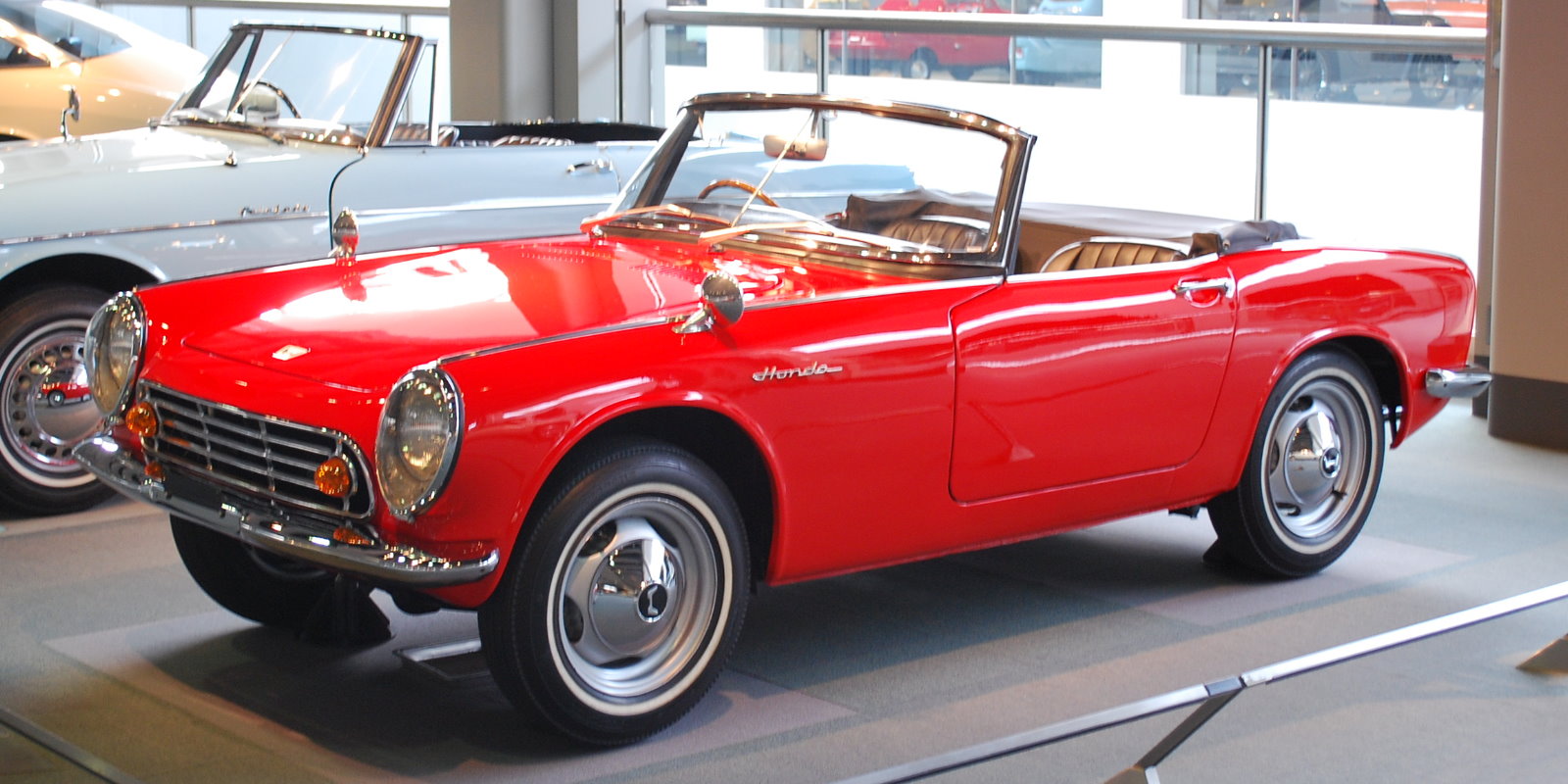
"... different for, you know, whatever. Like the W140 S500 has in late years has a, they 600 interior from t..."
The Honda S500 is a tiny sports car made in the 1960s that is known for being fun to drive. It's special because it was one of Honda's first attempts at making a sports car.
The Honda S500 is a small sports car produced in the early 1960s, notable for its innovative engineering and chain-driven rear wheels. It represents Honda's early foray into the sports car market and is cherished by collectors today.
"...I've recounted the story about my friend with the 356 who I managed to get a copy of the actual cardex."
The Porsche 356 is an early sports car made by Porsche that started production in the late 1940s. It's known for its beautiful design and is loved by many car fans for how well it drives.
The Porsche 356 is the first production car from Porsche, introduced in the late 1940s and produced until the mid-1960s. It is celebrated for its classic design and is considered a significant model in the history of sports cars, often praised for its handling and performance.
"the guy died a year before I bought the car. E30 touring, I've had that car for 22 years and have ..."
The BMW 3 Series is a small luxury car that has been popular for many years. It's known for being fun to drive and having nice features, making it a favorite among people who want a stylish and comfortable ride.
The BMW 3 Series is a compact executive car that has been a staple of the BMW lineup since the late 1970s. Known for its sporty handling and premium features, it has become one of the best-selling luxury cars in the world.
"because she said the coolest things. I said, you know, why, when this was the same price as an S-Class, why did you buy it?"
The Mercedes-Benz S-Class is a very fancy and comfortable car that is known for having the latest technology. It's often seen as one of the best luxury cars you can buy.
The Mercedes-Benz S-Class is a flagship luxury sedan known for its advanced technology, comfort, and performance. It often sets the standard for luxury vehicles and is favored by those who seek the highest level of refinement and prestige in their cars.
"...worked with Leno's guys who were working with the senator to push this through."
The Opel Senator is a comfortable car from the 1980s that is designed for people who want a nice ride. It's known for having a lot of space inside and being well-built.
The Opel Senator is a mid-size executive car produced in the 1980s and early 1990s, known for its comfort and spacious interior. It was aimed at the luxury market and is appreciated for its solid build and performance.
"...rend classic feature of that car together with an E30M3. That plate is the plate that will stay on the fr..."
The BMW M3 is a super sporty version of the BMW 3 Series that is made for speed and fun driving. It's popular among car lovers because of how well it performs on the road.
The BMW M3 is a high-performance version of the BMW 3 Series, known for its sporty handling and powerful engines. Since its introduction in the 1980s, it has become a benchmark for performance cars and is celebrated by enthusiasts around the world.
Select text to request an explanation
Hello. Hello. Happy Carm Mugin Day. This is the Carm Mugin Day show. My name is Jason Camisa. That is Derek Tim Hiveman Scott. And... Did you know that at Chevron you can fuel up on unbeatable mileage and savings? With Chevron rewards, you'll get 25 cents off per gallon on your next five visits. All you have to do is download the Chevron app and join to start saving on fuel. Then you can keep fueling up on other things, like adventure, memories, vacations, vacations,
quality time, and so many other possibilities. Head to your nearest Chevron station to fuel up and get rewarded today. Terms apply. See ChevronTexcorewards.com for more details. This episode is meandering or encompasses a variety of different topics, I should say. Yes. As all of you have some nerd information and some buying advice and some stories about buying things and working or not working.
One thing you would like to avoid and we're going to give you practical advice here is try not to buy two cars for the price of one. Which almost happened to me. And I've been in the same situation too. So yeah, we'll learn the intricacies, also a little glimpse into the collector car world and some of the things that happen when cars get very expensive that I deal with. Here's a hint. When things are very expensive, people are motivated to become scumbags. Fraud is a problem. So we'll talk about avoiding
fraud. Great. We'll be right back after the jingle. There's a thing on us. Do you think obstructing the view of the subject car? Is this car the subject of this episode? No, the subject is Fiber Chair because our sponsor for this episode. Fiber Chair is a family owned company in Green Bay,
who was concerned, formed or founded by two brothers who were car guys shocking given that the products are well optimized for use in automotive contacts. There are plenty of products that are ostensibly optimized for automotive applications created by people who have no desire or trying to be nice here ability to understand what car people actually want. However, these chairs are made out of only the best materials.
These are cat-plated bolts, actual heavy-duty casters and nothing but real metal and they're made probably in the United States. And so well, they could be exempted from the tariffs depending on where the raw materials originate. We'll never know. Yes, we might actually we might know depending on what happens with prices. We can return to tariffs in a moment, but first we should discuss the Porsche giveaway.
Fiber is doing I should discuss you go ahead because I was going to report from 411 to 622. Porsche is giving Porsche. Fiber is giving away a 2021 Porsche Cayman GT4 in more color. Python green, which I felt like was maybe a bit of a missed opportunity because there is also Fiber Green. It was paint disample so it also couldn't VYP are like my purchase. I think it's VIP are then it would be a misspelling. It's a bad match.
Okay, so can't be Viper green. It's Python green with a Y Python with a Y green every $5 you spend at Viper Industrial.com gets you entered for a chance to win the GT4 plus $15,000 in cash to help with taxes, although that would also be taxable.
Full rule details are available in Viper Industrial.com and that's VYP are industrial.com don't forget to use the coupon code carmogen for 50 bucks off.
So not only do you get this podcast for free, you could get 50 bucks off when $15,000 and a Porsche that I'll make fun of because you know I mean to Porsche's.
No, I like those. That's one of the few modern cars. Okay, you make fun of it. Great. We're going to move this down only because oh my god.
It's very well made. Exactly. It's real real materials. Thus exposing my beautiful Mercedes 190 E2.3 16 in the background, glimmering with all the dust covering it because I haven't been driving it much.
Well, I'm sure your old gas is helping that is my the only car that I have what's it's the car that is most irritable about California gas on a fresh tank of gas.
It starts on the first compression stroke no matter how long it's been sitting once that gas it averages about 180 days.
And I only know this because of course I have a spreadsheet. Of course, but at about the six month mark, it'll start to start hard and I'll just crank, crank, crank, crank, crank, crank, crank, crank, crank for like, you know, three, four, five seconds and then sputter up to idle and then it's fine.
And then as soon as I put fresh gas in it, have you tried stable or similar.
This is the easy solution and I resent you presenting me that answers that for whatever reason I have a couple of bottles of stable and it never occurred to me to put them and put it in any of the cars.
So you should just keep a bottle of it in this car. Well, each bottle is a tank because that fuel tank is so fucking bad.
Yeah, so starting from the next fuel. So my plan now is just to run this gas out as quickly as I can and then I will put stable in it.
So next episode will be sponsored by stable like we have cases of it for all the sitting my car stay I kid.
Yeah, no, I should probably put stable in it, but it's really wild because the car is sat for probably, you know, three weeks, hadn't really been driven anywhere for a couple months, like, you know, started moved in a couple short drives.
And I had a bunch of friends in the garage and I thought, oh, no, this is going to be embarrassing because the car has been sitting and I get on the car, turn the key and it goes, I'm just running before you could even hear the starter.
And then they're like, that's amazing. And I'm like, yeah, this is amazing when it works. And then I let it warm up for a couple minutes, moved it outside because we had some stuff to do. And then I went to go started to move it back in.
And it's when we're at that. No, because the gas that's in the tank had gone off and the gas that was in the injector line hadn't.
So now it's just going to be miserable until I put new gas in it. I see worse things can happen. But it's California gas is not the stable list, stable list.
Yeah, unless you put stable in it, presumably, which would require some fourth on end or intelligence, neither of which I have. Anyway, right.
Back to our regular site and intelligence, either of which are available here on the promotion show. We are going to advocate for it. However, because the subject of today's episode, you did a little nice like wrap around thing.
And I was putting out the crumbs, but you I already hate them. You ate them instead of seeing where they led. Okay. Well, this episode is about, yeah, the subject of sort of PPI.
IPP too.
A book about that was there. There was everybody poops, but not in everybody piece. It's not a shameful topic. I don't know. I'm not ashamed of my poops. I'm very proud of them.
Okay. Well, YouTube can be a proud parent.
We're doing a pre-purchase inspections for those of you who don't speak in acronyms.
It's going to be a joke in there about speaking in acronyms, IDK. Hello, well, OMG. SMH.
Face palm.
That's SMH.
Yes.
Sure.
That's my SMDH.
Mark my damn head.
Shake.
Not smack.
What?
Shake your head. Not smack your head, right?
It's...
Uh-oh.
We're going to have to have a pull.
SMH is shake my head.
No, it's smack my head.
It's definitely shake.
Oh, fuck.
We have to pause recording and ask.
I'm going to ask the chat, GPT.
Does UNO GPT is?
Uh, only in France.
You heard about this, right?
Shaw is a cat in France.
Yes.
And GPT means I farted.
So when they talk about...
When they talk about chat GPT on French, it's just the newscaster saying cat I farted over and over.
You didn't hear about that?
No.
I love linguistic stupidity.
Like the Chevy Nova.
Nova.
It doesn't go.
It's sponial.
No, I suppose.
Let's Spanish.
Okay, well, Jason has confirmed that it is in fact shake my head.
Not smack my head.
It is not shake my head.
It's shaking my head apparently.
Okay, well...
We have the correct...
Shit on the floor or whatever.
We have the correct verb in any case.
Okay.
Anything else before we...
I've smacked my damn head.
Anyway.
Pre-purchase inspections.
And the importance thereof.
I will tell some stories about this, but I'm sure you have some as well.
Have you ever, when you buy a car, what is your process?
I have bought a couple of cars, side unseen through the years, including high risk stuff,
like that $300 on the Excel.
I actually bought the 850 side unseen, which was...
How is that working out for you?
Well, it was the most expensive car that I ever bought by multiples.
And it's okay.
I mean, I bought that on the recommendation of a friend who knew the seller, but didn't
know the sellers well as he thought he did.
The car is not...
I thought I got an absolute steal on the car and I didn't.
Based on things that you saw when you saw it in person for the first time.
And, you know, if murder were legal, which is not, so I would never consider it.
I wouldn't consider murder, but I'd smack a bit around a little.
Oh, okay.
However, neither the car is fine and the car is great, but I have bought cars remotely.
And when I do that, I typically will put a deposit down or something and then go look at the car.
What I've realized is, as I've gotten older and lazier, I no longer do the PPI's that I used to do,
but I'm also buying cars that I can afford to typically afford to fix or make right if there's something wrong.
I no longer do compression checks on cars, which is probably stupid.
What I do is I'll try to pull a fuel pump fuse and listen to the cranking.
And so if you get a...
You're fine if you get a...
You know there's uneven compression, and so I just sort of do a quickie that way.
But there was one instance where I got saved.
My ass got so saved by an impromptu PPI.
We decided it was 2016.
It was down in Monterey car week, and I had driven your Ferrari 308 GT4,
and fell in love with it, and sort of saved up a bunch of money to drive one.
To buy one, your car, which you were a bastard and wouldn't sell me at the time.
At the time.
And that money was burning a hole in my pocket, and my choice was for the same...
About the same amount of money I could buy either a Ferrari 308 GT4 or an Alpha GTV.
And I'd driven a bunch of two-liter GTVs.
I liked them. I drove a bunch of 1750s.
I liked them 1600s. I liked them.
And I just sort of was waiting to find the right one in the sweet spot, or an Ice GT4.
And parked on the side of the road in Carmel during...
Car week was this beautiful blue GTV.
What color was it?
Orange blue.
It's kind of a periwinkle color.
Periwinkle?
Purple in it.
I just remember being blue.
Amazing.
You remember the car color?
Shocking, right?
I mean, the only car color server had a blue and silver and...
You know, I had a red car?
I had a Corolla that was red.
1994 Corolla DX.
It was the one that I lemon-lawed.
No more red cars for you.
Technically, I bought a 91 Nissan Central SE in red.
Technically.
I mean, I bought it for my sister.
I don't know, yeah.
God, that's pathetic.
Anyway, look at the car.
I wound up talking to the guy who was selling it who wasn't the seller.
He was friends with the seller.
The guy wasn't there.
Bubble, it was a little bit of a weird story.
So I said, let me take it for a drive.
We wound up driving it for like an hour and a half.
And it was the best GTV 2-liter that I had driven.
Because the 2-liter is kind of run out of steam at higher revs.
I don't know what had done to the motor, but it had all the personality of a 1750.
So love to rev.
It was tight.
The suspension was perfect.
The steering was great.
I mean, this was easily, and by far away, the best GTV that I'd ever driven.
So I went to the bank and I got a big water cash.
And I was talking to my good friend Tim McNair, who details cars, I shouldn't say details.
Perhaps cars for concours, including he did a couple videos for Haggerty.
He did a McLaren F1 detailing video.
And in here, actually, he did an F40 video.
And he was like, why don't you have my friend Chuck look at the car?
And I'm like, I don't need your damn friend Chuck.
I don't know who Chuck is.
Turns out Chuck Ray is a really good guy.
And everyone loves him, you know.
And he knows his shit.
I was like, I don't need this fucking douche nozzle.
Who doesn't know anything about shit.
What is your expression?
Doesn't know shit about fuck.
Yes.
Doesn't know shit about fuck.
Look at this car.
And so we're walking towards it.
And Chuck was very nice and very gracious.
And was like, yeah, look at the car for free.
Look, whatever bubble.
It's like a celebration shop in the piece somewhere.
It's like a mid-Atlantic.
It's like Maryland, I think.
That sounds more like it.
And we're like 25 feet away from the car walking towards it.
And he's like, nope.
He's like, what?
And he's like, something's wrong with the radius of the curve
under the rear fender.
And you know, you just kind of like one of those like,
you roll your eyes and you look at one of your friends.
And I look at Tammy and he was like, listen to the man.
And I'm like, what do you mean?
And he's like, I don't like the radius of how the fender goes into the fender flare.
Some's wrong, walks over to the other side.
He's like, hmm, something's up.
Look, what are you talking about?
He's like, just let's, we need to put the car in the air.
I'm like, we're in the middle of Carmell during car week.
What the fuck are you talking about?
And he walks right across the street to the gas station and says,
hands the guy a $50 bill.
And he's like, hey, can we just put a car on this lift for 30 seconds?
And the guy's like, yeah, sure, it takes the $50.
We put the car in the lift, goes up in the air.
And he's like, yep, there it is.
There's a seam.
It was two for the price of one.
It was a GTV that had been cut in half and welded back together.
Not half.
Probably thirds.
Third, the rear section of the car, the rear of the car was sectioned in from a different car.
Yeah.
And it was behind the suspension.
So it was less functional than it was or structural than it was visual.
But he was absolutely right.
And we brought in, he brought in another GTV and you could see,
there was that, I mean, he could barely see it with the cars next to each other.
But there was the subtlest of differences in the contouring of the rear fender.
And that made me realize, like, just because you think you know about cars
doesn't mean you're that kind of an expert.
Yeah.
Saved me a lot of money.
Deep subject matter expertise, for sure, makes sense.
That was amazing.
We had that happen also with an Alfa Romeo.
It was a Julia Super, though.
And we did the same thing.
We put it up on the lift.
And there was a seam at the top of the middle of the rear wheel arch going laterally across the car.
So basically the same location.
Yeah.
And because that car was called a Julia Super, we started calling it a Julia duper.
Because you get dual, dual, dual Julius.
But yeah, same thing happened.
I mean, that would be the most efficient way to repair a car that had really been waxed hard in the back.
It was crazy on this car.
Everything lined up and it was beautiful.
And when it was in the air, Chuck was pointing out, look, they actually went longitudinally around the wheel well.
They did this properly.
It was a really well done job.
Well done job.
Yeah.
But we ultimately learned what shopped it in.
It's a very well regarded shop restoration shop that knows those cars well.
And the quality of the work was really was very, very good at the at the same time.
No, you know, car like that is just not worth the same as a car that was structurally intact.
Singular car instead of a two for the price of one, which makes it less valuable, not more.
Just to confirm that you have two cars in one, it's worth less, not more.
That was amazing.
That was one of those like jaw drop moments like, okay, I sort of, I'm not worthy.
I cannot compete in this area.
And all this came back up in conversation between us over a lunch because you just pulled a move on someone's car that I...
Yeah, so this, when a car is very valuable and then there's a very intimate that's not very valuable,
it's very easy to, or it's very tempting to make fakes out of them.
And so this could happen with like Camaro's or Corvettes, right?
And this is why Corvette guys are like vintage Corvette guys are so, so particular because a 63 split window,
if it's a 0, 6 is worth very differently than if it's a 250 horsepower automatic originally car.
And so there's an incentive to fake these cars and anything where there's like a non,
this doesn't happen with McLaren F1s because where you're going to find a carbon fiber chassis car that is the same chassis
to make a copy out of it or a Ferrari F40s or whatever.
But if it's a car where it's like a pedestrian car and then they made a really desirable rare expensive version of it,
you know, Porsche 911 versus Carrera RS or Camaro or...
This is not a disease.
Aren't there a bunch of different Ferrari models where there are now more cars documented that were ever built?
Is it like a 250GTO that has one more that have been documented?
So even the factory couldn't figure out which was the real?
Well, what will happen with those cars is that the guys who own them, right?
If those cars are worth 70 million dollars and they're out getting vintage raced,
and I remember this in 2004 Ferrari was the featured market,
and I counted and there were billions of dollars circulating potentially trading paint on the track
because there were, I think, over maybe 20 GTOs on the track at once racing
because it was Ferrari's featured market and they had a GTO race.
And so a lot of the guys who own these cars,
we've talked about before how it's impossible to total a car if it's valuable enough.
What is that number?
It depends how complex the car is and how hard it is to make an exact copy of it.
But certainly there are companies out there who make tool room copies
is what they're called of either...
And sell them as such.
Per song does this with Grand Prix Bugatti's and Alpha 8C's
and they make two or three meaningful changes to the ignition system
so that it's not magneto-based.
I think you probably could do a magneto one if you wanted
but they use distributors instead.
But basically, the parts are good enough that you can use them in a restoration of a genuine car
if your car is missing a valve cover or a whatever,
a suspension arm or a steering, whatever this or that.
And so those cars are sold as new cars that are very clearly copies of original cars
and Bugatti owner's club doesn't grant those cars.
They're called a BOC serial number, a Bugatti owner's club serial number.
And if the car is like a replica that's based off of some original parts,
like a rear axle or chassis, but the body is redone or whatever,
you can get a BOC serial number and those cars are worth more than the Per song cars
which are just completely new.
But there are companies out there who are making everything you could need to reproduce these cars
and these cars are simple, they're mechanical brakes.
It's simple compared to a modern car with an ECU and a carbon fiber chassis
and castings that are unique to the alloy wheels and not the turn signal lenses on a McLaren F1.
Yes, those are from a lower A or wherever they're from.
But McLaren is out there supporting these cars in a really robust way.
So the guys who have these very valuable vintage race cars,
if they want to use them, this used to be frowned upon.
Some people acknowledge that it happens and that what they have done,
that people would try to hide it and it was unknown that they were actually racing
an identical replica to the real car instead of putting at risk the real car.
And it's a continuum guys would sometimes do this with engines too.
You take the original engine out, set it aside because it's matching numbers.
And if you hold that block, it's like, oh, you lose the matching numbers engines.
So you put in an identical not matching to that car engine and race with that one instead.
But at some point, if the car is valuable enough, people start doing that with the whole car.
And then if you're honest and transparent about which one is the real car
and that this is a replica or people use the term tool room copy or whatever,
that is owned by the guy who also owns the real one and that's the one that gets put in harm's way
and put on containerships or airplanes or driven at 100 miles an hour in whatever context.
That's okay.
So the other thing that would happen with race cars in period is like this happened to serial number 1999 GT
for a 250 SWB, it was raised at Le Mans, it was wrecked, and then completely destroyed.
And then another car with that identity emerges later on, allegedly with parts of the original still on board.
And heaven forbid if the engine ends up in one place and the chassis ends up in another place and some body panels end up somewhere else,
you could have three, two, three, maybe more claims for the same serial number if it's valuable enough car.
And then people start to get into it about which one has legitimate claims and then there's lawsuits and all this stuff.
But it's very common with race cars and it's, you know, the factories who are racing these cars just wanted something on the field that had was their car.
And so they would shuffle things around and return cars to the factory and then restamp the chassis
and sell it as a new car to someone else and then like the archaeology and forensics that go into unpacking the history of these cars
is really substantial.
And there's always stuff being discovered about the histories of various cars.
And so all of that is a long-winded way of saying that there is an incentive to make a copy of cars.
And so Porsche 911 Carrera RS, you know, they made 1,580 of these cars.
Number 406 was a car that has more than one claim to that, the real car.
And in 2006, I think it was, I was working at a dealer where 406 came through.
And an absolute food fight erupted over this car because people were like this car's fake and look at this and look at that.
And so, you know, fortunately it was a consigned car, we didn't own it.
And at the time, you know, the car was just a shade under $200,000, which is a lot less than they're worth now.
But at the time, a regular 911 T was worth 40, if you were, it was really good and maybe more like 30.
And so a bunch of people said, I need photos of this and that and this other thing and all these other things.
And I got a sort of schooling from someone who knew a great deal about these cars.
To be like, here's what you want to look for, this is wrong.
You know, it's one thing where if you just, if it's a car that's not valuable and not super collectible,
you're just there looking for evidence of accident damage and bondo and mechanical issues and all that stuff.
And that's the realm in which most of us live.
But when you get into these cars that are exceptionally valuable, where it's, there's incentive and it's reasonably feasible to make a copy,
then you're going to start looking at stuff like, oh, I want to see how the reinforcement plate is welded to the chassis that was added specifically for RS's
because there was a specific way the factory did this and if somebody you look for it and see if it's there, if it is there, then you make sure that it's crafted to the same standard
and welded in the same way and constructed in the same way and the car was built in the same way that the factory did it,
you have to know them well enough to be able to identify that stuff.
Or if it's not there at all, then you're like, okay, that's easy to see that this car is not a real one.
And so you have to start like, that is in the sort of transmission, rear transmission tunnel and rear bulkhead areas.
You have to be underneath the car and on top and start removing some parts.
There's also on these cars a production number, which is stamped on the frame that is not visible unless you start taking parts of the interior out.
I guess I'm going to be purposely vague here to prove, I mean this stuff probably exists widely on the web,
but I just don't want to enable people to falsify these cars anymore than they already do.
But I did show you in a car that I recently inspected that the engine number was very clearly, if you knew what to look for.
That's it, very clear. You showed me an engine number and I thought, okay, it's an engine number, it's a stamping on it and the engine casing.
And you're like, you boob, don't you realize that that is, yeah.
So yeah, you compare it to like three other ones that are known to be good,
or if they're all the same as each other and one is different from them, then you know, like that's the shape of the stars around the numbers
because it's a star before and after the number, the shape of various numerals, the shape, the depth of the stamping and all the stuff,
are all things that you want to look at.
Are you going to be able to show the audience the difference between the real one and the fake one?
No, I don't want to do that.
Damn, I don't want to, I just don't want to piss off of all the universe people with a lot of value of cars.
Well, I just don't want to put the information out there that's basically a guide on how to fake these cars.
Well, let me just say from my perspective that you showed me two serial numbers and they were the same.
There were different numbers, right, but the stamping was effectively the same.
But you were pointing out the subtlest of differences in the font, the spacing, the kerning, the little star, all the other shit that was,
I would have never in a million years noticed.
I would say, all right, this number matches this.
And of course, whoever did this to create a fake.
They were trying to make the car be matching numbers, which it wasn't.
In that particular case, would have fooled me, right?
And that's where when you enter this world of really, really, really specialty stuff, that's worth a lot of money to your point.
There's an incentive to do it.
And then it becomes worth it to send someone like you, frankly, to go and look at this stuff.
Yeah.
Because that could have cost somebody a lot of money.
Yes, it was being represented by dealer.
And I'm sure that they didn't know and hadn't bothered to look closely.
And frankly, neither would I have had I not been being, I don't know, now I probably would with these cars, especially with queer RSS.
But in that case, it was just the engine.
But in the case of 406, that was like every number on the car was wrong and it wasn't hard to spot.
Like the serial number plate on the shut panel area of the trunk lid is supposed to have certain fields.
And like the fields were not the right fields, for example.
That's like a super obvious one where you just compare the plate.
It doesn't even have the same information on it.
Like it has a serial number and the curb weight and all that stuff.
And that stuff's not in the right place.
Or the fonts are super wrong.
There can be differences in numerals.
Like does the one have a little hooky thing on it?
Or is it just a vertical line?
Is the three have a horizontal top or is it a rounded top?
Those are pretty easy, or the spacing between the numerals.
Like that is important for the chassis number, stamping, which is in the trunk area of those cars.
So you'd want to check the chassis plate, the stamping on the chassis itself, the production number,
which is the number that's hidden that you have to take part of the interior part to get to.
And then you sort of create a fact pattern, basically.
But so 406 was such an obvious blatant fake because every single little detail on the car was just wrong.
And anytime you're in the neighborhood of any of these numbers,
you also want to look for evidence of tampering around them.
Like if somebody cut the serial number out of a different car and welded it in.
And so it may not be visible from the top side.
But if you can get around to the back side of the area where that number is stamped,
then you're going to be looking and feeling for welds to see if people have...
They will cut things out and weld in entirely new things.
You want to check any numerically sensitive or anywhere that has information specific to the car you will want to look for.
In the case of a non-matching number in a RS, for example, what does that do to the value?
20%.
Between 10 and 20%.
It kind of depends on the circumstances and the documentation.
There's just no information, whereas if there's an invoice from a Porsche dealer in 1974
when the car was a year old about getting a new engine, then that's less material.
It's less impactful on the price.
And you certainly have to get to a certain value threshold for that to start mattering.
It probably wouldn't bother to do that with a $40,000 car.
I don't think most of my cars have engine numbers to begin with.
They probably do.
Somewhere.
Or say, you certainly do.
Do they?
Oops.
I mean, you know, maybe...
And what all fours do?
Really?
Yeah.
Stamped on the side of the block.
You have to be underneath the car with the belly pan off.
But where do you get that engine number?
Yeah, you'd probably have to get it from...
So from Porsche, this is the other thing.
So Porsche realized that people...
They were giving people the information that they needed to falsify cars.
And so they...
What they used to do...
You used to be able to get this thing called a certificate of authenticity from Porsche.
You would send them the serial number and then they would send you this information which came from a document.
They have a card for every single car that was built.
It's called a CARDEX.
And it has the engine number, the serial number.
Any warranty work that was done to that car by the dealer network,
color combinations, options on it.
And so if you sent them 100 bucks or whatever it was, 120 bucks, they would send you a certificate
nicely printed in a little folder thing that had all of the specifics of your car.
MSRP, delivery date, if it was available, and mail it to you.
And they realized that they were giving people information that was being used to falsify cars.
And so now they make...
I don't know exactly how the process works anymore.
I haven't done this in a while, but they will either make you take the car to a dealer that is certified to work or to do a classic dealer they call them
to visually inspect the car.
Or they will ask you what numbers are on the vehicle that you have,
and then they will tell you whether the number that you have matches what the car originally had or not.
And all of the sort of marks have...
Not, I don't know, all of them, but most of the marks have some kind of sort of authentication,
documentation thing in place like this, whether it is.
Volkswagen has this, it's called the birth certificate.
I'm actually just...
Funny, I just grabbed my phone to pull up the birth certificate on my...
Because I, of course, have one for the Shorako.
The question is, does it actually have an engine number?
Not that my car's got the original engine anyway, I don't think it did.
Yeah.
British cars, if it was ever part of BMH, BMC, the British Leyland,
then they will have a British Motor Industry Heritage Trust Certificate.
Which didn't we get that further over?
I think so, yeah.
I've done it for...
I did it for my Daimler.
I want to do one for my Mark I, I just haven't yet.
Although I learned that that car was originally white with red.
So I do have a Volkswagen, which is the Volkswagen.
Oh my God.
Archive, Siftung is a foundation.
So it shows the customer name, which was me, Vin, the model, which was the sort of submodel,
which they call Shorako GTX 16-L5 speed.
The engine code with horsepower reading and displacement, paint, color and code,
leather interior description, and then built date and the date that left the factory
of the country of destination and then a list of options.
That's it.
No engine number.
No engine number.
And I wonder if my load, so I did the load as well.
I did one for a bus and I can't remember whether that one had an engine number on it.
I did it for a 67.
The best part is now I don't have to worry about the, yeah.
Yeah.
Shorako not having a numbers matching engine in it because they didn't tell you.
They didn't tell you.
Interesting, the load is at least, which of course I no longer has, actually does a list in
engine number.
That doesn't surprise me.
Just more often than not, they have them.
Who else does this?
Ferrari has this entire process called Classique, sort of Classique.
Classique.
Yeah, everybody here mispronounces it.
Classique.
Is that what they say?
Classique.
They mispronounce it.
It's Classique, which is the plural of classic.
Classics is what it means, Ferrari Classics.
But it is a certification process that has to be done by an authorized dealer.
And they will not just inspect the car.
They start taking wheels off and they will list where the body has been modified
where the suspension is modified, like all sorts of different stuff.
It's a very deep inspection.
And it costs, you know, five figures to do a Classique certification.
It varies depending on what it is.
And the certification just lists stuff or will they give you a sort of check mark, yes or no?
Like your car is now.
They want to certify the car if it has been too far deep.
And too far deviated from what it originally was.
And there's a huge value jump, right?
Yes.
So it's worth whatever.
It depends what the car is.
And so I think the more valuable the car is, it really depends how you're connected and who you're connected to and whether they want to help you out.
And, you know, this is typical Ferrari of the games that get played.
But if they can make your car matching numbers again, if you give them enough money, they'll indicate that it was a Classique block.
But they will stamp it correctly.
And so it will appear to be matching numbers.
Ferrari's also have this thing called a numeral internal, which is not the engine number.
It is stamped adjacent to the engine number.
And the way that Ferrari's work and every car is different.
Some cars do this some don't.
The engine number is the serial number of the car.
And so it's very easy to tell looking at an old Ferrari, whether it is matching numbers and it's very easy to falsify.
And so then you have to refer instead to the numeral internal, because that is what needs to be matching.
And that information about what the numeral internal associated with that engine is is actually like what it's supposed to be.
So, you know, if you find a car where the engine number matches, but then you want to check if the numeral internal also matches.
So you have to go through that step.
But if you're like a non, you know, if you're not a super savvy buyer of a vintage Ferrari, then you don't know to...
Or you just are on the spot with a lot of cash when these cars were $20,000 or whatever.
Then you say, yeah, the number on the block matches the serial number of the car.
Hi, I'm Lexi, your friend and jeweler at Shane Company.
We'll help you find last minute gifts that don't look last minute, even if you're still planning to propose.
At Shane Company, we'll show you perfect gifts at perfect prices, in stock and ready to give.
Like hand-matched diamond studs, 14 karat gold chains, or the ultimate gift, a beautiful engagement ring.
We have longer store hours so you can skip the crowds and shop when you want, or visit us at shaneco.com.
Because a friend wants you to be a holiday hero.
Shane Company, your friend and jeweler.
But for most car companies, I would say the majority of car companies, the serial number is not used necessarily as the engine number.
And so you need some kind of reference to, and there are all kinds of books that do this, and also the manufacturers compile this information.
So a Porsche Certificate of Authenticity Ferrari Classique Certification.
Lamborghini has started doing Polo Storico, which is their version of Classique, because they realize that Ferrari was printing money by certifying their old cars.
They also get to know who owns what old cars, which helps when they are trying to do the allocations for the fancy new cars.
And so if you are a Ferrari customer and you buy some old Ferrari, even if it's 60 years old, you make sure that Ferrari, the manufacturer, knows that you have this car because it affects their, you are standing in their eyes as how committed of a Ferrari enthusiast you are.
And therefore how likely you are to get an allocation for whatever is new and honest.
Correct.
So before it has this for Marty reports, there's ways to decode GM engines and the Corvette guys will tell you all about that.
And you want to see whether you make sure that if you have a Corvette that the block was cast in Flint and not one of the other plants, because I think all Corvette and small blocks came from Flint, and they have date codes on them.
And you want to make sure that the date code corresponds to the date when the car was manufactured.
That's really deep, divy stuff that goes in, if you have money, financial stake involved in transacting any of these cars, and you have to learn all this stuff or know who knows this stuff.
So it's definitely a, you have to know which questions to ask and how to vet cars.
So yeah, with, with some, and then in addition to all of the like actual numbers portion, there's also sort of authenticity stuff that needs to be sort of verified.
And so with car RSS, there are so many little details, and I'm sure every car is like this.
I just don't have the knowledge about it that I do about 73 car RSS, but like the seat belts need to have a certain color of stitching on them.
There's a yellow, yes, sort of yellow orange. There's a certain type of sort of siamese double washer that holds seat rails to the, or the seats.
Yeah, seat rails to the floor pan.
You know, the, if it's a lightweight or a touring, so, car RSS, they made 1,500 and 80, 200 of them were lightweight.
55 of them were RSS, and then there were 17 homologation cars.
So the vast majority of those cars, you know, what is that?
It's probably over 1,300 of them are touring, and they're worth less than the other variants.
And so a lot of times people would fake a touring into a lightweight, and almost always they would disclose that because it's very easy to, there's a book out there about this car,
and there's a similar one about many other cars. There's one about the Lamborghini Miura.
By this, I mean a book, I mean a book that lists every single serial number of every car built, and it has all of the options, engine numbers, manufacturing dates, sometimes the original delivering dealer, what kind of tires the car originally had.
And so it's helpful to have this resource incredibly valuable to have these books about, there's one about the Carrera RSS, there's one about the Miura, there's one about the Ferrari Dino, the 246,
and 206, called the Dino Compendium, the Miura book is the Simon Kitson book, and then the Carrera RSS book is by Conrad Scheim and Gruber, Georg Conrad Scheim.
And I forget what Thomas Gruber, anyway, so this book has all of this information in it, and so it's very, if you have that book that's easy to tell where their car is a genuine lightweight or not,
plus there are all these little clues to look for because there were so many little details that were different.
The glass and the windows are different, the window frames are also there for different, you know, the window frames is in bolt-in window frames, the little chrome trims that go around the windows on 911s, they have a different shape when viewed in profile instead of being sort of flat, they're rounded, they're radiused on the lightweight cars.
And the glass is made from different suppliers, made by Glaver Bell instead of a securit or sigla for the touring cars.
So there's all these little things, you know, and most people won't, well, you can't find that stuff A, and they won't bother to replicate that stuff.
The easy stuff to replicate is to pull the steel bumpers off and put a fiberglass, steel rear bumper off and put fiberglass bumper on, and to put in the plain door panels and the lightweight seats and the lightweight carpets and all that stuff.
That's easy to do, although a set of real lightweight seats is probably very valuable, definitely very valuable.
So then there's this whole other layer, once you've confirmed it's in fact a real queer RS, like does it have all the details correct of the number of sun visors and the color, because some of them have one, some of them have two, the color of the headliner.
I mean, there's all the, it's just, it's crazy.
Product, running production changes is another thing, you know, I've talked about the Shell oil sticker which changed from yellow with red lettering to white with red lettering on it in March of 73.
I don't think you've talked about that.
We haven't.
So the production of these cars started in 72 and they didn't, they really in earnest started production in like sort of November of 72 and then they were making the cars until the first week of July of 73.
And in March, they changed the sticker that Shell oil sticker that's on the air cleaner and like they went from a 250 kilometer speedometer to a 300 kilometer speedometer and they moved the position of the warning light on for the handbrake within the gauge and like all of these details you want them to be internally consistent with the build date of the car.
So crazy.
The control arm mounting points moved within the last 200 car, maybe 100 to improve handling and homologated for racing.
Okay.
It's going to say if that sounds like it was.
Yes.
Yes.
Yeah.
So there's all these little things and you want to look at every single detail and the holistic picture that the car paints and see whether it has internally consistent with what it's supposed to be and when it was built and how it's equipped and all that.
The crazy thing to me is so look, I don't live in career 27 or Sville, but people often everyone's always sending me listings for every sure I'll go 16.
I bought my car at 28,000 miles on it and I it was I think fully unmodified at the time and I've had it since and so I know what I've modified and of course I've probably forgotten things over the years.
But there are people will send me links and I'll say, well, that's not it's not a 16 valve because it's missing this or that whatever the big things right there big changes between eight and 16.
But I've noticed over the years there were two different speedometers that were used.
There was a 160 mile an hour motor meter or 140 mile an hour video and there were two different instrument clusters within those that were not related to the speed.
There was a one had an upshift indicator at the top in the center of the gauge cluster, which then relocated the temperature gauge into the tack.
So if it had a upshift indicator, it had two gauges within the tack, one was fuel, one was temperature.
If it didn't have the upshift indicator, then the temp gauge was up top and you just had a sweeping fuel gauge.
And over the years, I've looked at this and I have never been able to find any sort of rhyme or reason.
These cars were all built within a two year window, so we had 86 and a half through.
So it could be just supply or variability.
So my car is 140 mile an hour speedometer and an upshift light.
It's an 87.
You look at the next 87 and it'll have 160 and maybe an upshift light or maybe not.
I can't figure it out.
So that's when it gets really tough because it's not useful.
That difference is just a difference as opposed to like a telltale.
But there's such a Porsche thing to be like, well, on this date we have changed this production to this much.
I mean, we do know, for example Mercedes-Cosworths.
It was what, hold on, that car was built on April, delivered on April 1st, 1985.
May, March 1st is when they switched from the Wiper on the...
Yes.
So it was originally, it parked on the passenger side as a regular sweep Wiper and then it became the eccentric.
And so this was like less than a month after that change.
But so that's like a telltale when you see which Wiper the car has.
But do you know of other car companies where there's like on this date from this point on this change was?
Mercedes, absolutely.
Does it all the time?
Like if you look at the running production changes list for any Mercedes, if it exists,
like there's one for a W126 that I've seen where it's like, you know, the upholstery pattern changes
and like the diameter of it.
So you do see, you'll see from Vin or Kevin, whatever.
But like the Volkswagen world, 300 SLs are like that too.
There's all kinds of stuff like that.
Jags are like that also.
So I love this continuous running changes.
It's not I get.
But what I love is like the Volkswagen world was so imprecise that there was apparently air conditioning was an option on a Citrox 16 valve.
But I've never seen a car without it except one and it didn't have air conditioning.
And you could see the firewall hadn't punched out and that was apparently not actually possible and didn't happen.
Right. So that's a weird one.
And but towards the end of the production run of the U.S. and Canadian spec sure our 16 valve.
Weird shit happened.
Like on those cars.
On the mark run out cars oftentimes.
It's wild.
The fuel injection system is on the driver side of the car.
So it's a CIS fuel distributor with all the lines and whatever else.
On the mark two 16 valves.
It's all the mark two cars.
The intakes moved to the passenger side.
So away from the battery and not directly above the transmission.
I have seen a Sriracha 16 valve owned by its original owner with original paperwork and photos from the car back in the day.
That had a passenger side fuel injection system which meant a completely different intake manifold.
And my first question and no air conditioning which was even weirder.
How the fuck.
They must have like oh no, we have this chassis at the factory.
We don't have any engines left.
Find one from a GTI 16 valve and plum the fuel line.
Make new fuel lines to run to the fuel distributor the other side.
It's just wild.
And that's the sort of thing I just can't imagine Mercedes-Benz are Porsche doing.
And so verifying the authenticity of a gauge cluster or anything else in these cars is impossible because they just weren't that precise.
Well, in those cars that doesn't really meaningfully or materially affect value.
Yes, it could.
It could be entire pennies.
Yeah.
Well, there's no reason why anyone would sort of fake something like that is what I'm saying.
You start to fake stuff and start to point.
Fair point.
Like financially incentivize to start faking stuff.
And so the cheaper the car, the less this kind of stuff matters.
The more expensive the car is when people start paying much closer attention and nitpicking cars much more.
This sent me a picture of a black Opel C43 AMG last week.
Yes.
That was another one.
That was my C43 AMG was black Opel, which is blue.
And that was not available.
And when I went to go look at this car, I've told the story of the past.
I went to go look at the car.
It was on Craigslist.
I thought some schmuck paint to the car blue.
How bizarre got there.
So it was black Opel.
It wasn't just blue, which is a pretty cool color.
And I saw the, there's a plate.
That has a paint card on.
That has a pink code.
And I thought it was 189 I think, right?
199 or 1199?
No, 199 is blotful.
Then it's 189.
So I saw 189 looked it up and went, oh my god, this car was originally this color.
Bought the car and then found the window sticker in the glove box within the manuals.
And sure shit, the car was black Opel.
Talked to Mercedes Benz.
They said, sorry, that was a special order that we never made this car in this color.
For the US market.
For the US market.
But Oh no, but you did.
And I sent them a copy of the window sticker after they argued with me.
And I said, no, this was a, this was a, you know, a PTS.
This was a, you know, a custom, a custom paint.
Like it wasn't there.
They would have paid $5,000 extra to have this.
No, I have the window sticker, sent it to them.
And that started, you know, the historian at Mercedes Benz scratching her head and saying,
well, wait a second, hold on.
And what they found were 13 of the cars.
And the first week of production, it was the end of 98.
End of 97 for 98 production.
They made 13 US cars that were blue.
That was not available.
And they must have realized they made this thing and didn't do it again.
And then they made one more of it for 99 for the next model year.
That was a special water color.
That to me was hilarious.
Oops, we made 13 before we realized we're not allowed to do this.
Yeah.
And they just arbitrarily decided that they weren't allowed to, that they weren't going to,
that they were going to keep complexity to a minimum for the US market for whatever reason.
And there's always these sort of individual market, individualities.
Like the very, and you're just like, oh, yeah, for whatever reason, Canadian,
well, Canadian car specs are different for, you know, whatever.
Like the W140 S500 has in late years has a, they 600 interior from the US market,
for example, or, you know, standard, heated seats or wipers because the weather's more inclement,
or it just, all kinds of the job of product planners to sort of look through a menu and say,
we want this, this, and this is how we'll price it and sell, we'll market it.
And so each market can make their own changes.
Yeah, fascinating.
So that does make it sometimes easy to spot Canadian market differences.
For example, we knew our rover, when we bought that SD1, was a Canadian market car,
because there's a V8 badges on the fenders.
Exactly.
Where the US car is at a union jack there.
And 85 mile an hour speedometer versus kilometer,
kilometer, 160, 180 kilometer hour speedometer.
Yeah.
So a part of my job for sure is sniffing out cars and figuring out what they are and aren't.
And sort of, I usually will try to review the documents before the car.
Because I will, but not always do I do that, actually.
And sometimes I will see things on the car and then I will see my,
the thing I notice corroborated in the documents afterwards.
So I try to now see, look at the documents before I look at the car.
But it's, there's benefits to doing both.
Because like that car I noticed some inconsistencies and stuff that wasn't cracked.
And then I looking at photos of the car taken 20 years ago when it was back in Europe still.
I was like, oh, yeah, this is wrong.
And this is wrong.
And then I realized why the details that they had corrected.
The car had been modified.
A lot of RS is the same way now, right?
Guys modify them for track use or whatever.
And then as they get more valuable, they get returned to stock.
And if the person returning in the car to stock either can't find or doesn't know exactly
what is correct for that specific build period or that date.
Like the washers in the sea rails come on.
Or like whether it should have a 300 or 250 kilometer hour speedometer or something like that.
You know, you can identify that some stuff is inconsistent with the period at which the car was built.
So this kind of forensics I guess is basically what is happening with these cars.
And then, you know, then there's had our sort of more normal level of just cars
that you and I are buying.
It's just a question of like if you buy something site and see who that knows.
Like this is certainly, I've been burned by this a number of times.
We all have.
I mean, I thought cars were that I've look on and looked out in person and been burned.
Yes.
Afterwards with just things I hadn't noticed.
Yeah.
On the street.
But I bought my 996 back in the day, almost site unseen.
And that was a tough one because the car was on eBay.
And it was a timed auction.
The nice thing about eBay though is that you don't have to perform.
Well, here was what was going on.
So I was in Pittsburgh, the car was in Buffalo four hours away.
The photos were gorgeous and numerous and told me everything I needed to know visually on the car.
But I, so I called the seller and I said, listen, you know, it was only like at that point like a day left on the auction.
And I said, please, it was a dealer.
You know, asked him to get me to give me the history.
Where did you get the car?
Now what he didn't realize is that I had already looked it up on manheim.
And so I had a friend that had access to manheim.
So I knew where he got the car at what auction and what he paid for it.
Which was great.
So right off the bat, he tells me I bought it at manheim, so and so, and I drove it home.
Okay, the mileage matches, right?
So I know he didn't disconnect his odometer or something when he drove it home from the dealer.
He didn't ship it.
He drove it.
And then I asked him for a list of all the things that were wrong with it.
And I just got a bit of an uneasy feeling.
And I, but I knew I was going to miss out on the car.
I wasn't going to be able to get to go look at the car in person.
And what I realized was, if I didn't bid on that car and win it, he was never going to hold it for me.
Because the only thing he concerned, it was concerned about was his online reputation.
And if he didn't deliver, if I gave him a deposit and somebody else outbid me,
he was just going to give it to the bidder because he was an eBay seller, basically.
So what I did was I entered my high bid and I won the car.
And when I called him when I said I'm putting my bid in there and I'm going to come and look at the car afterwards
and I'll come there with a check.
But I'm going to show up with a check in a baseball bat.
You get to decide which of those two options you get.
And he was like, whoa, whoa, whoa.
And I'm like, just fucking disclose everything to me right now, please.
And let's avoid an uncomfortable situation.
Of course, I've sort of said that with a sneaker.
He knew I was half joking about the baseball bat.
I did have a baseball bat in the car with him just in case.
In case I needed to go to batting range.
I'm not going to hit anymore with the baseball bat.
But it was really interesting to watch what happened when the threat of that happened.
All of a sudden he started disclosing all kinds of stuff.
Well, if you come up, I won't have a chance to replace the windshield in time.
What's wrong with the windshield?
Well, it's got a crack in it.
Why didn't you disclose it?
Because it's going to be done by the end of the auction.
But then the car doesn't have an original windshield.
No, no, I'm putting a Porsche windshield in it.
So it just started negotiation.
And I did show up in a black 39 525 eye automatic with tinted windows
and an Argentina front license plate on it.
And the guy just started backing away.
So I did get out of the car with the baseball bat.
And I'm like, I'm not going to use this.
Okay, can we be clear?
And he did, we had a laugh over it.
But I'm glad I did go there because there were 15 things that he failed to notice
that I said, I'm not taking the car unless you replace this.
You do that, whatever, blah, blah.
So it would have been a very, it would have been an expensive mistake
to not have gone and see that car in the person in person.
Yes.
It continues to save me.
It is worth the trouble.
It's painful to do.
When I bought the Jag Mark one, I took some ungodly flight to some ungodly place
and rented some ungodly car.
It was January in Michigan.
It was just not what I wanted to do.
But it's not the kind of car you want to buy blind.
And I saved some money by finding stuff and renegotiating.
You know, it more than paid for the flight for sure.
I flew to Germany to look at that car.
Yeah, there was no way.
As much as we counsel to do this, sometimes we don't do it though.
You know, on bringing a trailer, I bought a car blind and it was a shit heap when I got there.
It was 164.
Yeah, it was quite disappointing.
And then, you know, we've talked about that.
Another 164 that I didn't buy, the black one, that seemed cosmetically beautiful
but had a slipping clutch and all these massive oil leaks and just like $8,000 of needs.
So, you know, if you're going to buy something blind, you have to be okay with throwing the money away
as a worst-case outcome.
And really you want to go see it.
But it is money, I think, well spent.
As long as the person inspecting it is...
I was just in a good job because I had a compression check done on a 9-11 that I bought on eBay.
And it had a full PPI by a Porsche specialty shop in Pennsylvania.
And when the car came off, the truck it was smoking and I had to rebuild the heads.
And it was $10,000.
What?
Yeah, after the PPI.
So that was like, did they PPI the wrong car?
Yeah, I don't know.
The place was in Pennsylvania, I think it was called Dawson or Dawson or something like that.
Dawson, I think it was called Dawson.
But I spent $500 having PPI done including a compression check and they didn't disclose to me that the car was visibly smoking and using oil heavily.
And so that was like a huge disappointment.
And, you know, I sold the car for what I paid for it, but I spent $10,000 in the interim rebuilding the heads
and replacing the clutch while the engine was out and all that.
That's a huge issue.
So, you know, PPI has to be done by somebody who you feel, you know,
and there's an incentive issue.
If it's the mechanic that's always been looking after the car and the buyer, the seller has many cars
who that shop is going to continue to look after, then it's in their best interest to make the PPI favor them
because it's a customer that they routinely interact with versus some person whose thousands of miles away
who they're going to get $500 from for a single interaction.
Like, in that situation, who are you going to fuck?
You're going to fuck the guy who you're never going to see again.
That's what I loved about.
One of my favorite parts of that car was when I went to go the day before I landed.
I said to him, you need to run the car through TIFF, which is German safety inspection.
And he said, okay, well, I have a guy, whatever.
I said, no, no, no, no, you're going to go to the dealer.
And so I made him go to them.
I think it was the Mercedes dealer nearby to have a TIFF done because I know the dealer is not going to favor this guy
if he's got a guy.
Now, I don't think there's widespread fraud on TIFF because Germans are Germans.
Correct.
But when the car came back ona Menga, which means without any problems,
I thought, all right, I can just buy the car, probably side unseen.
And there were definitely things he hadn't disclosed on the car.
And things that I noticed while I was there, but we, those became negotiation tactics
rather than, you know, problems.
Unwelcome, surprise.
But it was definitely worth that inspection.
And I wish we had, let me be very clear about this.
I don't wish we had annual safety inspections here in the US because,
like everything they were painting, they just make a classic car ownership that much more difficult.
There are benefits to it, one of which is if you have that network of honesty, you're not.
And scrutiny.
And scrutiny.
No, in California, as long as whatever's coming out of the exhaust pipe is suitable,
then nothing else matters.
Like, you know, there's no horn check, or brake lights, or turn signals,
or windshield not being cracked, or pieces not falling off.
None of that in California, for as onerous and communist, or whatever,
as people describe California as, they don't look at any shit,
except for what's coming out of the exhaust pipe.
Right.
And even that we're trying to examine.
Yes.
I mean, but that is all so in California, our emissions test now for 96 and newer.
So all OBD2 cars.
96 cars are now old, right?
These cars are 30 years old.
Nearing 30 years old.
As long as the computer says everything's fine, it doesn't matter what's coming out of that tailpipe.
Now, you can still be pulled over and ticketed and sent to a referee if you are visibly smoking.
And, you know, your car stinks.
I don't know that that happens all that often.
But yeah, there is kind of a nice reassurance in a car that has, or a biennial.
So, in Germany, it's too far as every two years.
Every two years.
A really responsible car owner will keep copies of that.
And you'll then see the patterns of, oh, you know, this is starting.
Like, you know, we've passed you, but we've noticed that this is starting to go.
Yeah, advisory is basically.
You know, this boot on this CV is starting to look crunchy.
And then the next year, now it's ripped.
You have to replace it.
Yes.
But they go so far as to measure the break output at every wheel.
And I think this is, I have looked for years for a shop in the US that can do this.
And it's a dyno that the car is put on.
And they do two things for TIFF.
Number one, they measure the amount of newtons of force that your emergency break can hold.
And that's to make sure that the emergency break can hold the car on a steep hill.
Kind of important, especially with manual transmission, everything.
The other thing is, break bias.
So, they'll measure the breakout, maximum breakout output of each wheel.
And if you have, for example, the right side of the car is, you know, 50% higher brake force than the left side of the car.
And you slam on the brakes at the left.
250 kilometers an hour to start to slow down even in the dry.
And the car just sort of veers to the left and throws you in a spin.
You might die.
And I would love to put all of my car.
I would love for each of us to find someone in the US who has done TIFF.
And we take our best cars, like our newest cars, like whatever it is,
and try to run it through German TIFF because we will definitely fail.
Yeah.
Like, there is no car in America that's more than three years old that will pass a TIFF with nothing.
I don't know adjustments.
With no adjustments and no problems.
Yeah.
So, it'd be nice, but in lieu of that, I think the right thing is a BPF,
but the hard part is finding someone who's actually going to, to your point,
find real problems like mismatched stuff or detail work or just close everything.
Yeah.
In one case, for less expensive cars, you're just interested in condition.
And then when the car becomes valuable enough, it's not just about condition.
It's also about like integrity, authenticity, like correctness is the term we use.
Like, I'm just thinking, one time I had an awful red eye at a Chicago from the West Coast,
which is like, it's a four-hour flight.
So, the red eye, that means you're getting like two hours of sleep.
Maybe at best.
Yeah.
And so, it was a miserable red eye to Chicago for a customer to buy a, it was an 89 slant nose.
It's the only year of the five-speed slant nose.
And it wasn't that nice of a car, and I told him as much,
but he wanted an 89 that was black so bad that he bought it anyway.
But what I did notice was that the wheels were Chinese reproductions of fuchs,
even though they look like real fuchs, but they were very obviously fake.
And so, you know, he made them find a set of genuine wheels,
which was that, I think they were still available new at the time,
it was $5,000 for a set of new fuchs because they're turbo-specific.
They're nine inches in the back.
And so, that more than paid for the cost of my travel and the inspection.
So, one sort of discovery like that is absolutely worth it.
It's just painful to go evaluate like that.
I like cheap cars because, you know, knockoff wheels.
The loss is capped if the car is cheap.
Yeah, what was I going to lose out on that $300 Hyundai that I bought,
I didn't see.
Speaking of documentaries and documentation and history,
a friend of mine wound up with the files from many of the files from Kennedy Motors.
So, Kennedy was the...
Kennedy Garthweight.
Kennedy Garthweight, what a name.
What would you change your name to if your last name was Garthweight?
I think you would leave it alone.
I couldn't possibly be that grown up to have a last name like Garthweight.
And, you just randomly, out of nowhere, I can email from him.
Hey, what's the serial number for your Ferrari?
He's like, are you sure?
I'm like, from memory, it's done it on.
And he said, no check in whatever.
So, I verify that and he sends me a FedEx.
And in that FedEx is the original documentation of the sale between Kennedy Garthweight
and the dealer who sold the car new.
For distributor to dealer.
Do you know the name of that dealer?
No.
Swing motors.
Swing motor car.
Of course, I have to laugh.
Interestingly enough, so what I have is the original Windows sticker.
The Minerone hadn't been invented yet, but an actual MSRP document of Windows sticker.
And then the actual invoice from Kennedy to swing that showed exactly what swing bought the car from.
A copy of the cashiers check from Swing to do Kennedy.
And then a handwritten sort of itemized list of every one of the options
and what invoice and retail pricing was.
But then also a bunch of memos internally from phone calls and letters back and forth between Swing and Kennedy.
Apparently, Swing lost its Ferrari dealership.
A range of contracts.
One way or another or just left.
And this was their last Ferrari.
This was their last car in inventory.
And so they sold the car.
The car was produced according to Ferrari, January 20th.
In that packet of information, I have the original certificate of origin.
Which should have been turned over to the DMV.
It should have been destroyed to get the title.
It turns into a title.
But I think what happened was that they would use a duplicate.
Give that to the DOT or the, I guess, I guess.
Licensing agency.
Licensing agency to get the title.
But wouldn't release the COO until the car...
Everything was paid for.
So one way or another, they kept it.
And I have it.
A ridge on stamped and signed from the factory.
That was issued on January 24th.
The car was arrived in the US in March.
And then was sold May a year later.
A July later.
It wasn't sold until, I think it's July of 76.
And that point, the question was,
would this owner then be able to get warrant...
It was a one-year warranty.
So you got one year.
Fuck you.
After that, you're on your own.
Who would do the warranty work?
Because swing had lost its distributor ship.
And therefore couldn't do perform warranty work.
So there was some correspondence with them to tell what to tell the original owner of the car.
And then there's also a letter in there from a year later in 1977 saying,
hey, there's this literal carbon copy of the letter,
saying, hey, Mr. Rich guy who just bought this car.
We have received all the equipment to do the air conditioning system upgrade,
which Ferrari did on all these early cars,
because the AC was insufficient at first.
That packet of information is like,
I cannot tell you the joy that I had in reading to that.
That is my just dream.
Literally the stuff of dreams.
I think I've recounted the story about my friend with the 356
who I managed to get a copy of the actual cardex.
Normally you don't...
You get the certificate, but the cardex actually has the original owner's name on it,
which they will never give to you on the certificate.
And so we got a copy of the cardex from somebody internally ad Porsche.
And he found the name of the original owner,
because the car is a 63.
He had the history since 68.
He didn't know the first five years of his history.
He found the name of the original owner, tracked down his son,
who said, oh yes, my dad and mom were active PCA members.
They did European delivery of five different Porsche's.
Here's photos of them in the Alps with them.
Here's the car being delivered new in Stuttgart.
It's a photo of me as a teenager with the car,
like just stuff keeps coming through.
And so the car went from having merely history back
to when it was five years old to history from new...
With photos of the original owner taking delivery.
This is why I'm so mad that all of my cars
are aging out to the point where all the previous owners are dead.
Like 850 CSI, I know as European delivery,
the guy died a year before I bought the car.
E30 touring, I've had that car for 22 years
and have tried multiple times to contact the original owner of that car.
I know his name, I knew where he lives.
He just wouldn't respond to anything.
This cause worth, I spoke on the phone to the original owner.
So it was still titled to her when I bought it.
So technically I'm the second owner, but it was at a broker.
I spoke to her on the phone.
I should have recorded that goddamn conversation,
because she said the coolest things.
I said, you know, why, when this was the same price as an S-Class,
why did you buy it?
It was so cute.
So why didn't you have any repair receipts?
And she said, cause it never broke.
I'm like, that's the kind of thing,
and I'm like, but no oil changes,
and she owned a service station.
So she, like all of these little things,
I would kill to have that.
And I've sent her on the car's birthday, which is her birthday.
She bought the car on her 37th birthday,
and then I bought it from her on my 37th birthday.
I sent her a postcard on a picture of the car
in front of the Golden Gate Bridge,
and I'm like, happy birthday from here, whatever, blah, blah, blah.
I would love to hear from you, whatever, science.
It's so important for these cars document everything.
Yeah, if you care, if you care.
Which I think everyone should.
I think so.
When we went through the, one of the highlights
of driving that rover back from Saskatchewan,
or Edmonton, Alberta,
was going through this box of books.
And then putting it into a spreadsheet in chronological order,
and then sorting it in chronological order
so we can put all of the pieces together
from like it had an odometer replacement
twice by the dealer.
And just like when was it painted?
And when did this?
How many stereos did this guy buy for the car?
It's such a cool.
Yeah, it's very forensic in my opinion.
I think it's incredibly exciting and fun to do.
It's a certain type of human that gets value from that.
And that's why, you know, not everyone.
No, I don't think so.
But weird.
This is why I am so particular about license plates.
I think it's part of that story.
And so the callousness with which you dismiss
license plates in California is disappointing to me
because overall you are, I think, on the right page
in terms of...
I have a conservation-minded enthusiast.
As far as I'm concerned, there's been some pushback
on the idea of, in California on SB712,
which is that, quote, unquote,
Leno's law, the idea that we should be exempting classic cars.
And there was some discussion.
I worked with Leno's guys who were working with the senator
to push this through.
And we talked about...
I've talked about in the past episode,
there was no such thing as classic car insurance
and the bill was originally written
to require classic car insurance, but there is no such thing.
So we talked about using California's definition of a collector vehicle.
And one of those definitions, one of the requirements,
can be that it has historical vehicle plates.
And the pushback right away was from California people
like yourself saying,
I don't want to get rid of the original plates on the car.
I want the original plates on the car.
And my point is, well, then you can't have it all.
Like, one way or another, we're going to have to make some concessions.
Keep the plates and put it in the folder that belongs to the car.
And if it's on a car show or something,
put the plates back on and put the classic plate in the window.
To me, that seems like it.
But you just don't understand the culture here.
How is that...?
Okay, is it the same thing?
You cannot have the car registered on those license plates
unless it has been continuously registered
in California throughout that period.
It is a sign that the car has been here continuously.
And it's...
It's not making it better.
Mr. California, are you...?
Well, I don't know.
Have you looked at the structures of cars that come from states like Pennsylvania?
Maybe it went to Oregon.
Which is the same climate basically as we have.
Or Arizona.
No, look, I get it.
I do get it.
Look, that car has the Cologne license.
That's a temporary export license plate.
Not a yellow plate.
Which is a temporary plate dated 13 of June 2012.
That was the day I went back to...
I bought the car in late 11, put it in my friend's garage,
and I went back in June of 2012 with my Shirako,
with that I shipped over.
And I did a feature...
For motor-trending, a motor-trend video,
which is still I'd think on YouTube.
And a motor-trend classic feature
of that car together with an E30M3.
That plate is the plate that will stay on the front of that car.
I totally understand.
But I also understand that I can't register that car on that plate.
And I couldn't keep the...
Yeah, but what if you could?
Would you do it?
And if somebody took that away, would you be disappointed?
Okay.
If there was a benefit on the flip side of it.
If I got to exempt the car from smog checks, for example.
Yes.
I get it.
I would continue to smog my cars to keep the plates.
There are cars...
I've lived in so many...
The differences.
I've lived in other states where the plates belong to the person.
Correct.
And so you never...
They don't ever go with the car.
Correct.
And every state is normal.
And California is special in that regard.
And it also happens to signify a certain sort of structural condition of a car.
It's just part of its being.
It's part of authentically presenting the car in exactly the same way that it looked when it was new.
I guess.
I mean, I have, for the 3-8 GT4, I have 5 or 6 different plates in its folder.
Right?
I've been registered under multiple different historical vehicle plates.
I registered it for a period of time with the custom plate on it.
And now it's just on historical vehicle plates again.
I have them.
I can mount them on the car.
And it's not the same thing.
But that car was originally sold in Maryland by Shwing MotorCore Company.
So, interesting.
We have digressed considerably.
But anyway, I'm sure this episode is more than over.
So, let us...
Buy you a new...
And there.
Done.
Go to viperindustrial.com. Viper with a Y.
Don't forget to use coupon code CarMudgeN for $50 off of your purchase.
And a chance to win a not viper green Porsche GT4.
And maybe Derek will find out if it's numbers matching.
Request an explanation for:
28 cars
Scroll for more
28 cars featured
Request an Explanation
Heard something you'd like explained? We'll add it to this episode.
Sign in to request explanations for terms you heard.
Want to learn more?
Browse our glossary for plain-English explanations of automotive terms, jargon, and concepts.
See something that's not quite right? Our annotations are AI-generated and can sometimes miss the mark.
Click the flag icon on any annotation to suggest a correction.