
COULD CRASH TESTS BE KELLY'S NEXT MICRO-HOBBY?
About this episode
Kelly and Lizz kick off with personal updates, then pivot into a deep conversation about IIHS crash testing and the 2026 Top Safety Pick reshuffle. They explain how the program works, why the updated moderate overlap test is tougher (including a 40 mph barrier test), and how front crash prevention and rear-seat protection factor in. The hosts also discuss why five-star ratings can be driver-focused, how child restraints change the picture, and why third-row testing isn’t planned.
crashworthiness tests
"And so we use the top safety pick program... But it also is important for the automakers to really push them with those new really difficult tests."
Crashworthiness tests are safety tests that check how well a car protects people during a crash. The idea is to measure real protection, not just how the car looks or drives.
Crashworthiness tests evaluate how well a vehicle protects occupants in a crash, including how the structure manages impact forces. In this segment, the speaker emphasizes that IIHS uses increasingly difficult tests to push automakers to improve vehicle safety.
top safety pick
"And so we use the top safety pick program. One is a way to kind of bundle up all of our ratings into an easy to understand way for consumers to pick vehicles."
“Top Safety Pick” is a safety award label for cars. It means the car did well in crash tests, and it’s designed to be easier to understand than reading every single test score.
“Top Safety Pick” is an award designation from the Insurance Institute for Highway Safety (IIHS) that summarizes how well a vehicle performs in crashworthiness tests. It’s meant to be an easy label for consumers, rather than requiring them to compare many individual test results.
updated moderate overlap test
"So the first thing we did is we required a good rating for updated moderate overlap test in order to get the base level top safety pick. And so that is the test where we are running a vehicle into a barrier at 40 miles per hour. And we have a driver in the driver's seat"
This is a crash test where the car hits a barrier with only part of its front end, not the whole width. The goal is to mimic real-world crashes more closely, and it’s done at 40 mph with a driver in the seat.
The “updated moderate overlap test” is an IIHS crash test where only part of the front of the vehicle hits a barrier, simulating a more realistic offset crash. In this segment, they describe it as running the vehicle into a barrier at 40 miles per hour with a driver in the seat.
rear occupant crash testing
"And that test is the the rear. Adding the rear occupant has been a real challenge for some of the automakers, vehicles."
This is a safety test focused on people riding in the back seat. It checks whether the car does a good job protecting them in a crash, not just the front passengers.
Rear-occupant crash testing evaluates how well a vehicle protects people sitting in the back during a crash. It’s often harder for automakers than front-seat protection because rear seats have different crash dynamics and restraint/airbag packaging constraints.
front crash prevention test
"we added a crash, our updated front crash prevention test to the top safety pick plus award. So you needed to get a good or acceptable in that new front crash prevention test in order to get a top safety pick plus."
This test checks whether the car’s safety tech can help prevent a crash from happening in the first place. If the car doesn’t do well, it may not qualify for the highest safety award level.
A front crash prevention test measures how effectively a vehicle can avoid or reduce the severity of a collision using driver-assist systems. In this segment, it’s described as being added to the “Top Safety Pick Plus” criteria, meaning automakers must perform well to earn the higher award.
automatic emergency braking
"we are making sure vehicles can identify and break or warn for vehicles at higher speeds and motorcycles and truck trailers. So thinking about automatic emergency breaking, not just for other passenger vehicles,"
Automatic emergency braking is the car’s safety feature that can brake by itself if it thinks a crash is about to happen. It’s designed to either prevent the crash or make it less severe.
Automatic emergency braking (AEB) is a driver-assistance system that detects an imminent collision and applies the brakes to help avoid the crash or reduce its severity. The segment also emphasizes that the system is evaluated at higher speeds and for multiple target types, including motorcycles and truck trailers.
higher-speed AEB evaluation
"we are making sure vehicles can identify and break or warn for vehicles at higher speeds and motorcycles and truck trailers."
Evaluating crash prevention at higher speeds is important because braking distance grows quickly with speed. Systems that work well at low speeds may not perform as reliably when there’s less time to detect, react, and stop.
third row crash testing
"So at this point, we don't have plans to do third row crash testing. I will say when we when we developed the ratings program,"
This is crash testing for the people sitting in the back-most seats of a vehicle. It’s important because those seats don’t get as much real-world crash data, so it can be harder to design tests that match what actually happens.
Third-row crash testing evaluates how well a vehicle protects passengers seated in the rear-most row during collisions. It’s harder to study than front-row crashes because there are fewer real-world crashes involving third-row occupants.
crash data
"we did a whole deep dive into the field data. One of the things that's really hard to study is what happens in second and third row in the real world crash data"
Crash data is information from real accidents. Safety organizations use it to figure out what kinds of crashes and injuries are most common, so their testing can better match real life.
Crash data is real-world information collected from actual crashes, used to understand how often different injury scenarios occur. Safety programs use it to decide what to test and how to design crash tests that reflect real injuries, not just controlled conditions.
ratings program
"when we developed the ratings program, we did a whole deep dive into the field data. ... to design a crash test."
A “ratings program” is how an organization turns safety testing and real crash information into a score you can compare across vehicles. They’re explaining that the data they find influences which parts of the car they focus on.
A “ratings program” is the structured system that evaluates vehicle crash protection and converts test and real-world evidence into a consumer-facing score. The hosts describe using field data to decide which seating positions (like second vs. third row) should be emphasized in the testing.
rear seated occupants
"Is what happens in second and third row in the real world crash data because occupancy is so low in the rear seat? ... about 12 percent of crashes have rear seated occupants."
This means the people riding in the back seats. Safety testing has to consider them too, because injuries can be different depending on where someone is sitting—and there are fewer rear-seat crashes to study.
“Rear seated occupants” refers to passengers sitting in the back rows of a vehicle, not the front seats. Crash-test and safety ratings need this data because injury patterns can differ by seating position, but rear-seat crash data is less common in real-world statistics.
occupancy
"because occupancy is so low in the rear seat? ... occupancy is more around like maybe 12 percent of vehicles out on the road"
Here, “occupancy” means how often people are actually sitting in those seats. If not many people ride in the back, there are fewer crashes to study for the back seats, which makes testing harder to design.
In this context, “occupancy” means how often seats are filled by passengers (how many people are actually riding in a given row). Low rear-seat occupancy makes it statistically harder to study rear-row injuries and to build crash-test ratings that reflect those scenarios.
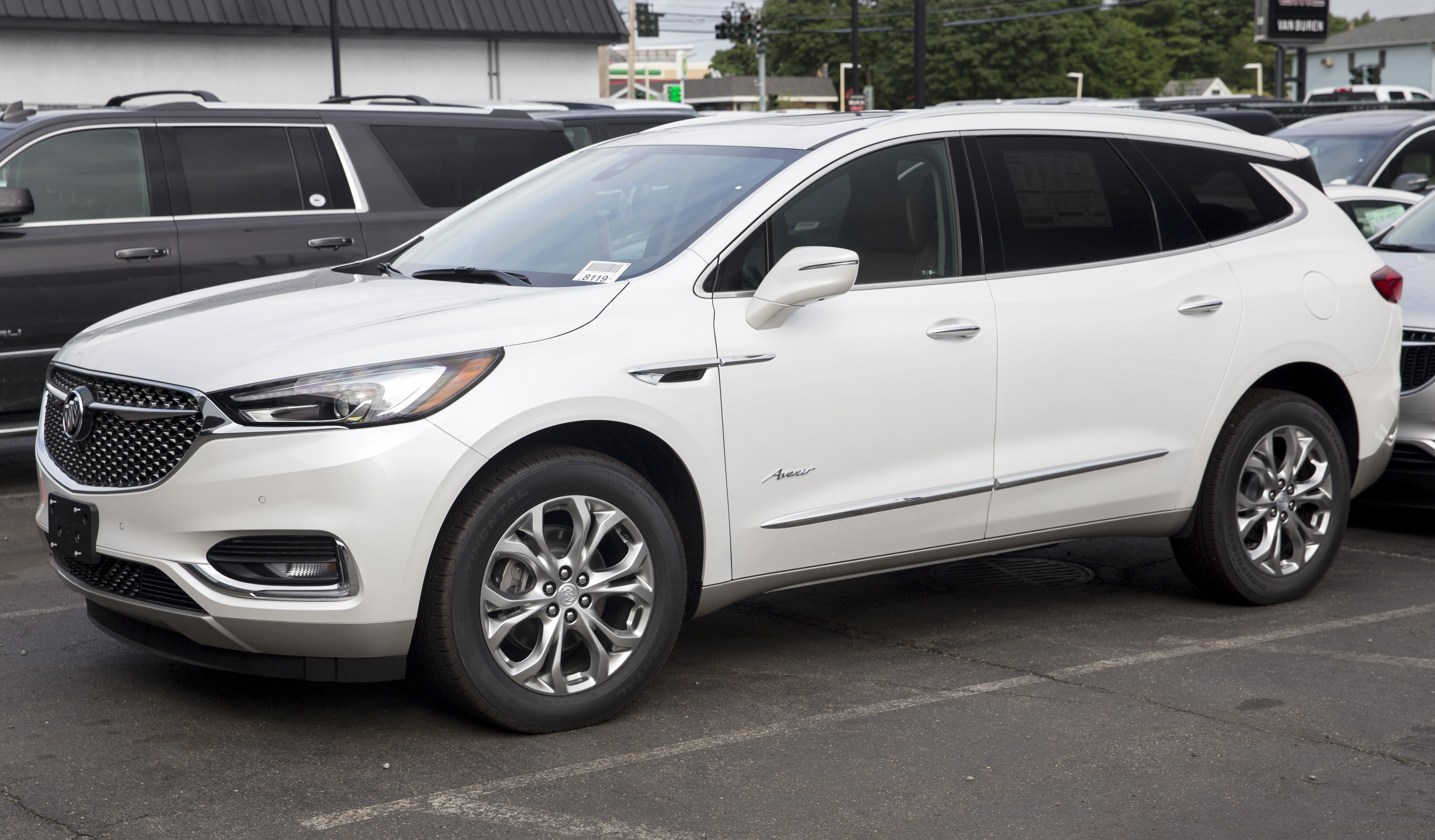
Buick Enclave
"But explain to me how in 26 the Buick Enclave made the list... So interesting that the Enclave, though, that is basically the same car as the Acadia did make it."
The Buick Enclave is a family SUV with three rows of seats. Here, they’re talking about how it did on crash-test style rankings compared with a closely related SUV.
The Buick Enclave is a three-row midsize SUV from Buick, built on a shared GM platform with several other family SUVs. In this segment, it’s discussed in the context of crash-test scoring rules, implying it was evaluated differently than the related model year results for the Acadia.
Buick Acadia
"In 25 the Acadia and the Traverse made the list... So give me an example that Acadia, you said, was one that no longer made the list."
The Buick Acadia is a family SUV with three rows. In this discussion, it’s about why its crash-test ranking changed from one year to the next.
The Buick Acadia is a three-row midsize SUV from Buick, and it’s closely related to other GM family SUVs. The hosts mention it “no longer made the list” due to crash-test evaluation criteria, which suggests changes in safety ratings rather than a completely different vehicle.

Chevrolet Traverse
"In 25 the Acadia and the Traverse made the list... But then in 26 the Acadia and the Traverse didn't make the list."
The Chevrolet Traverse is a three-row midsize SUV from Chevrolet, sharing a lot of underpinnings with other GM family SUVs. In this segment, it’s mentioned alongside the Acadia as a model that did (and then didn’t) meet the updated crash-test “list” criteria.
airbag
"So is that a level of like they have a different airbag, a different seat belt?"
An airbag is a safety device that inflates quickly in a crash to help protect your body. They’re suggesting that two similar cars might have different airbag setups, which can change safety results.
An airbag is a supplemental restraint system that rapidly inflates during a crash to help reduce injury by cushioning occupants. The segment suggests that even when two SUVs are “basically the same car,” differences in restraint hardware (like airbags) can affect crash-test outcomes.
seat belt
"So is that a level of like they have a different airbag, a different seat belt?"
A seat belt is the main safety strap that keeps you from being thrown forward in a crash. The discussion is about whether two similar cars might have different seat-belt setups that affect crash-test scores.
A seat belt is a primary restraint that holds occupants in place during a crash. In modern vehicles, seat-belt systems can include features like pretensioners and load limiters, and changes to the restraint setup can influence how a car performs in crash-test evaluations.
rear passenger
"So it would be 100 percent related to what's happening in the rear seat... It was really 100 percent related to that rear passenger."
They’re focusing on how safe the back seat is. The back seat can behave differently in a crash, so the testing looks at rear-seat protection specifically.
This segment emphasizes rear-seat occupant protection, not just front-seat safety. Rear passengers can experience different belt geometry and crash dynamics, so tests may target rear-seat belt fit and injury mechanisms.
vehicle structure held up
"The vehicle structure held up. It was really 100 percent related to that rear passenger."
In crash testing, “vehicle structure held up” refers to how well the body and frame resist collapse and maintain occupant space. Strong structural performance helps reduce the forces transmitted to occupants and can work alongside restraint systems like seat belts.
lap belt
"what happened in the Acadia is that the lap belt pulled up over the pelvis into the abdomen... And so it was something we specifically put in this test to make sure that automakers are optimizing for keeping that seat belt on the pelvis."
A lap belt is the part of the seat belt that goes across your hips. In crash testing, they check whether it stays on the hips or slides up toward the stomach.
A lap belt is the lower seat belt portion that should sit across the pelvis. In rear-seat crash tests, engineers pay close attention to whether it stays low on the pelvis or rides up, since that movement can drive injuries like submarining.
submarining
"which is a phenomenon we call submarining. And that is something that is really, really tricky."
Submarining is when the lap belt slips upward in a crash. Instead of staying low on the hips, it rides toward the belly, which can be more dangerous.
Submarining is when a lap belt rides up from the pelvis into the abdomen during a crash. That belt position can increase the chance of serious abdominal injuries because the belt is no longer doing its intended job across the pelvis.

Volkswagen Atlas
"because if I remember correctly, in 23 to 24 the Atlas finally made the list. The reason the Atlas made the list was because they changed their headlights."
The Volkswagen Atlas is a big family SUV with three rows. Here, they’re talking about how it showed up on a crash-test “list” after the company changed something on the car—headlights—so the results weren’t just about how it handles a crash.
The Volkswagen Atlas is a three-row midsize SUV that was discussed in the context of crash-test ratings. In this segment, it’s mentioned that the Atlas “finally made the list” after changing its headlights, implying the rating outcome was influenced by vehicle equipment choices rather than only crash performance.

Infiniti QX80
"And the only full size SUV, full size in my world is the QX80 and the Nissan Armada."
The Infiniti QX80 is a full-size SUV referenced as one of the only full-size options in the discussion. The hosts are contrasting it against the absence of minivans in the crash-test “list,” which frames how different body styles perform in specific test scenarios.

Nissan Armada
"And the only full size SUV, full size in my world is the QX80 and the Nissan Armada."
The Nissan Armada is a full-size SUV mentioned alongside the Infiniti QX80. It’s used to highlight that, in the crash-test “list” being discussed, minivans are notably absent while only a couple of full-size SUVs are represented.
child restraints
"Outcomes for belted occupants are actually problematic for installing child restraints. Like there are some tradeoffs there."
Child restraints are the car seats you use for babies and kids. Crash tests check whether the seat and seat belt hold the child in the right position during a crash.
Child restraints are car seats or booster systems designed to protect infants and children in a crash. In crash testing, engineers evaluate how well the restraint system positions the child and keeps the belt and seat geometry correct during impact.
rear seat tradeoffs
"And so the backseat is all about tradeoffs. It's all about how you're going to balance the needs of everybody who needs to be back there."
Rear seat tradeoffs means the back seat has to do several jobs at once. Designers have to balance adult seat-belt safety with making sure child car seats can be installed correctly.
“Rear seat tradeoffs” refers to the competing design requirements in the back row—like adult belt performance versus how well child restraints can be installed and positioned. The episode frames it as a balancing act: meeting multiple occupant-protection goals with limited space and fixed vehicle geometry.
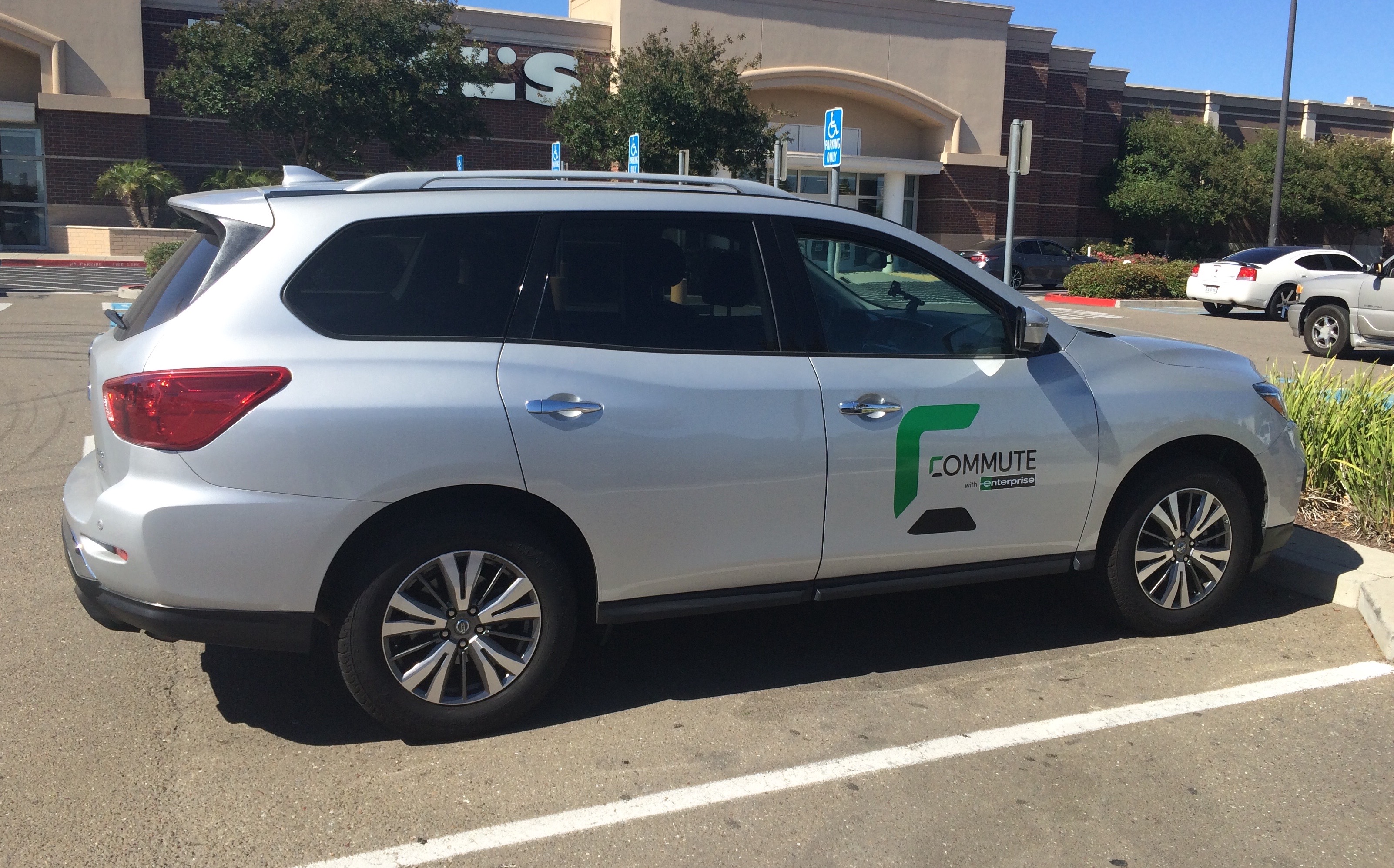
Nissan Pathfinder
"...ciate your perspective. But if like if the Nissan Pathfinder can do it, if the Nissan Pathfinder can get a top..."
The Nissan Pathfinder is a larger SUV with three rows of seats, meant for carrying people and gear. It’s built for everyday driving but also for trips where you need more space. The podcast is likely mentioning it as an example of an SUV that can handle bigger needs.
The Nissan Pathfinder is a midsize three-row SUV built for family use, with enough space for passengers and cargo plus the ability to handle longer trips. It often comes up in discussions because it’s designed to be practical—something you can live with day to day while still having room for a “bigger” outing. In your podcast context, it sounds like it’s being used as an example of what a mainstream SUV can accomplish.
Honda Odyssey
"Come on, yeah, Odyssey, come on. What's crazy about you look at because the Kia Carnival is on the list, right?"
They bring up the Honda Odyssey as another vehicle that can do well in safety testing. The takeaway is that its rear-seat setup can support the kind of restraint performance crash tests look for.
The Honda Odyssey is referenced in the context of crash-test recognition, specifically “top safety pick plus the highest award.” It’s brought up as another minivan/SUV example that can meet stringent rear-seat and restraint-related requirements.
Kia Carnival
"What's crazy about you look at because the Kia Carnival is on the list, right? ... OK, your Kia Sorento is and your Kia Carnival can be."
They mention the Kia Carnival as another minivan that can earn strong safety ratings. The discussion is about whether the back seat can be designed to work well with seat belts and child seats.
The Kia Carnival is referenced as being on the safety award list alongside other family vehicles. In this segment, it supports the argument that rear-seat packaging and restraint fit can be engineered to pass demanding crash-test criteria.
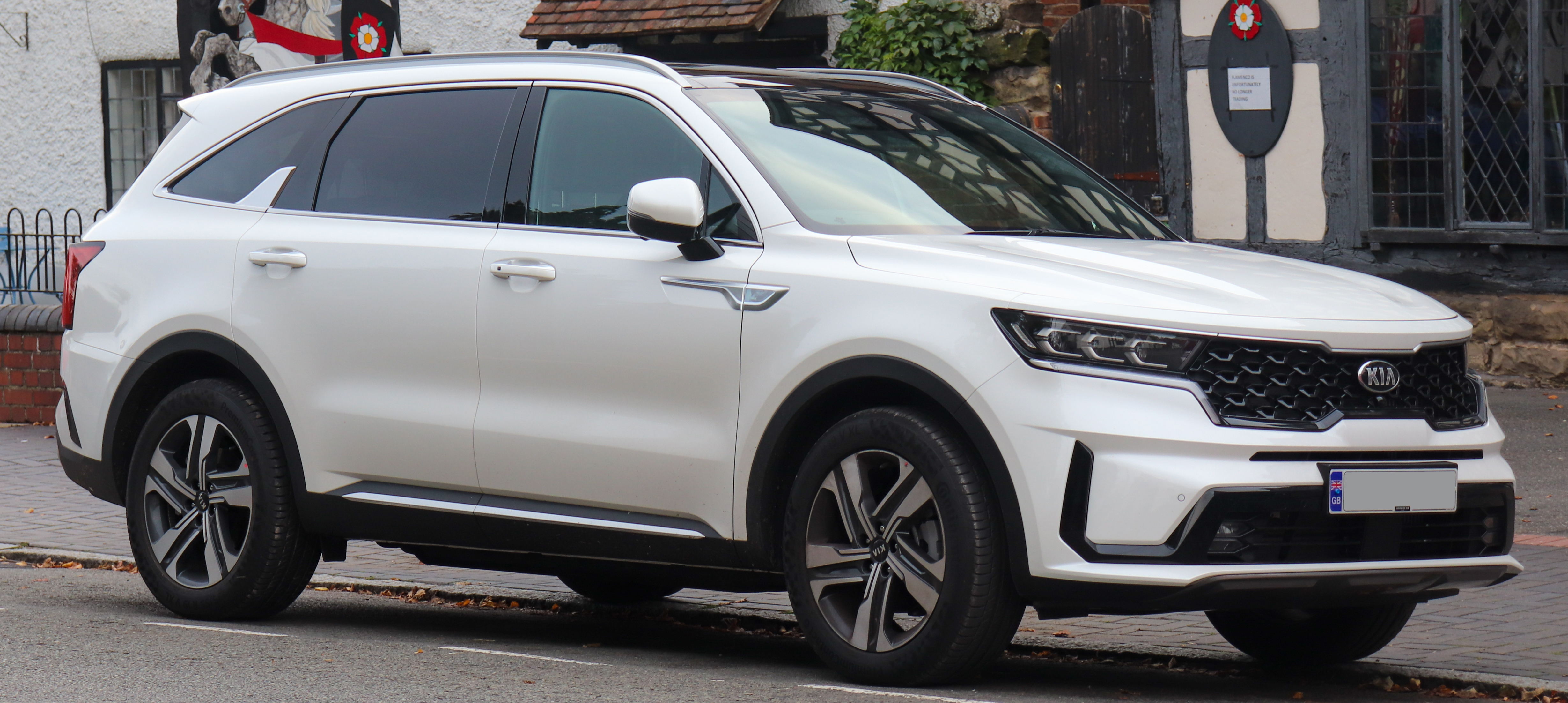
Kia Sorento
"... on the list, right? The key. No, no, no, the Kia Sorento. OK, your Kia Sorento is and your Kia Carnival ca..."
The Kia Sorento is a family-sized SUV that can carry several people, usually with three rows depending on the version. It’s meant for normal driving and practical errands, but it can also work for road trips. The podcast mentions it as one of the vehicles being considered.
The Kia Sorento is a midsize SUV offered with seating for multiple passengers and a focus on everyday usability. It’s frequently discussed because it sits in a popular size class for families and can be configured for different needs. In the podcast context, it’s being singled out as a specific option on a list, suggesting it’s part of the comparison set.
anchorage places
"But some of them are more involved like changing locations of anchorage places for the, you know,"
Anchorage places are the built-in attachment points where seat belts (and child-seat hardware) bolt to the car. Moving them usually requires more than just swapping parts—it can mean redesigning the seat area.
Anchorage places are the mounting points in the vehicle where seat belts and child-restraint hardware attach. Changing anchorage locations can be a major redesign because it affects belt routing, structural loads, and how restraints fit and perform in crash tests.
full model change
"So if you have something that will be phasing out and you'll be getting a full model change in a newer vehicle, maybe you put your engineering focus on that full model change versus trying to do a Band-Aid solution in in the older vehicle."
A “full model change” is when a car gets a bigger redesign. Instead of quick fixes, engineers can rethink the layout so things like seats and safety restraints work better together.
A “full model change” is a major redesign cycle where the vehicle’s structure, packaging, and systems are reworked rather than patched. The hosts contrast that with quick fixes (“Band-Aid”) for older vehicles, which may not address deeper constraints like seat-pan layout and restraint anchoring.
stow and go
"That they're trying to accommodate, removing seeds, stow and go, magic slide."
“Stow and go” is a minivan feature where the back seats fold down and disappear into the floor. It’s meant to make cargo space easier, but it can affect how child seats and seat belts fit.
“Stow and go” is a minivan seating system where the second-row seats fold and store into the floor. That creates a flat cargo area without manually removing seats, but it can complicate how seat belts and child-seat anchor points are packaged.
magic slide
"That they're trying to accommodate, removing seeds, stow and go, magic slide."
“Magic slide” is a minivan feature where a rear seat can slide to make it easier to get to the back. It can also change how you place and secure a child car seat.
“Magic slide” refers to a sliding second-row seat feature used in some minivans. By moving the seat, it changes how easily parents can access the rear and how child seats can be positioned and secured.
car seat friendly design
"you know, if they're designing it to be really car seat friendly and the car seat is keeping the children safe, like in the."
“Car seat friendly” means the car is designed to help you install a child car seat correctly. The goal is to make it easier to buckle it in tightly so it protects kids better.
“Car seat friendly” design means the vehicle is engineered to make installing child seats easier and safer. That includes providing usable seat-belt routing and/or dedicated child-seat attachment points so the car seat can be tightened correctly with less guesswork.
second row
"Something that Jessica said that really stuck with me was she was like, we're asking them to make the second row work for every type of passenger."
The second row is the back seat area of the car. In crashes, people in the back seat can be protected differently than people in the front. The hosts are saying it’s hard to make the back seat safe for everyone.
The second row refers to the rear seating area behind the front seats, which is where many families place children and other passengers. In crash safety testing, rear-seat protection is a major focus because occupants can face different forces than front-seat occupants. This segment highlights the challenge of designing vehicles so the second row works safely for every passenger type.
minivan class
"And especially in the minivan class, I really hope that we'll we'll get some top safety picks in the future."
A vehicle class is just a group of similar vehicles. The hosts are talking about minivans as a group, because families use them a lot and the back seats matter a lot for safety. They’re hoping future safety evaluations will recognize improvements in that category.
A vehicle class is a category used to group similar types of vehicles for comparison, like minivans versus full-size SUVs. The hosts discuss the minivan class specifically because rear-seat safety and family-focused features are central to how these vehicles are designed and evaluated. They hope for “top safety picks” in that category as testing and safety improvements progress.
full size SUVs
"Yeah. Why do the full size SUVs have so much problem problems with it? Because it was even just before this year, the full size SUVs have never crushed it."
Full-size SUVs are the biggest SUVs, usually meant for families and lots of space. The hosts are saying that safety testing for them has been limited or changed over time, and that’s part of why results may look different now. They’re connecting that to how automakers respond to testing.
Full-size SUVs are large, family-oriented sport utility vehicles, often with substantial mass and different seating layouts than smaller vehicles. The hosts suggest that these SUVs have historically not performed as strongly in certain crash-test results and that testing has only recently expanded to cover them more comprehensively. This matters because safety evaluations can change as test methods and coverage evolve.
crash tests
"Because it was even just before this year, the full size SUVs have never crushed it. So I think in a really interesting thing about the full size SUVs is we only just recently started testing them for any number of reasons. But they we've been we've been running crash tests for now 30 years."
Crash tests are safety tests where a car is tested in a controlled crash simulation. The goal is to see how well the car protects people inside. This episode talks about how crash testing has evolved and how it affects different kinds of vehicles.
Crash tests are standardized evaluations that measure how a vehicle protects occupants in simulated crashes. Results typically focus on injury risk to different body regions and how well safety systems and the vehicle structure perform. In this segment, the hosts discuss how long crash testing has been happening and how it applies to different vehicle types like full-size SUVs and minivans.

Mazda Cx50
"So I was invited by Mazda and not the IHS, but to see their new CX-5, CX-50 get crash tested."
The Mazda CX-50 is another popular SUV model. They’re mentioning it because it’s part of a crash test event to see how safe it is in a crash.
The Mazda CX-50 is a compact crossover SUV positioned slightly more rugged than the CX-5. The hosts mention it in the context of crash testing, meaning it’s being evaluated for occupant protection and structural performance in collision conditions.
crash tested
"So I was invited by Mazda and not the IHS, but to see their new CX-5, CX-50 get crash tested."
Crash testing is when a car is intentionally crashed in a controlled way so safety experts can measure how well it protects people. It helps show whether the car’s structure and seatbelts/airbags do their job.
“Crash tested” refers to controlled vehicle-impact tests where a car is driven into a barrier or struck in a standardized way to measure how well it protects occupants. These tests look at things like how the structure deforms, how restraints perform, and how forces are transmitted to the body.
covered track
"And then you see as you're cresting, kind of coming over the driveway, you'll see this huge dome. That's our covered track or we have an outdoor track that is open"
A covered track is a crash-test area under a big roof. It’s used so the test conditions stay more consistent, regardless of the weather.
A “covered track” is a test area enclosed by a large dome or roof so crash testing can be performed with more consistent weather and lighting conditions. That consistency helps reduce variables that could affect test outcomes, like rain, wind, or sun glare on sensors and cameras.
pass or fail
"because I know you guys don't score it, like it's very much a pass or fail to us, but I am curious like which minivan is like the closest to passing."
“Pass or fail” means the car either meets the safety rules for that test or it doesn’t. It’s usually based on whether the results hit required thresholds.
A “pass or fail” approach means a crash test result is treated as meeting or not meeting specific safety criteria, rather than being blended into a single score. That can make it easier to understand whether a vehicle clears a minimum standard for a given test.
individual test
"we actually give high level information, you know, whether it's a top safety pick, we go down to each individual test where you, but also even within each test, we give all the information"
Instead of judging safety as one big number, they break it into separate crash scenarios. That way you can see how the car does in each specific kind of crash.
An “individual test” refers to a specific crash scenario within a broader safety evaluation program. Looking at each test separately helps identify which situations a vehicle handles well and which it struggles with.
Request an Explanation
Heard something you'd like explained? We'll add it to this episode.
Sign in to request explanations for terms you heard.
Want to learn more?
Browse our glossary for plain-English explanations of automotive terms, jargon, and concepts.
Help improve this episode
See something that's not quite right? Our annotations are AI-generated and can sometimes miss the mark. Click the flag icon on any annotation to suggest a correction.