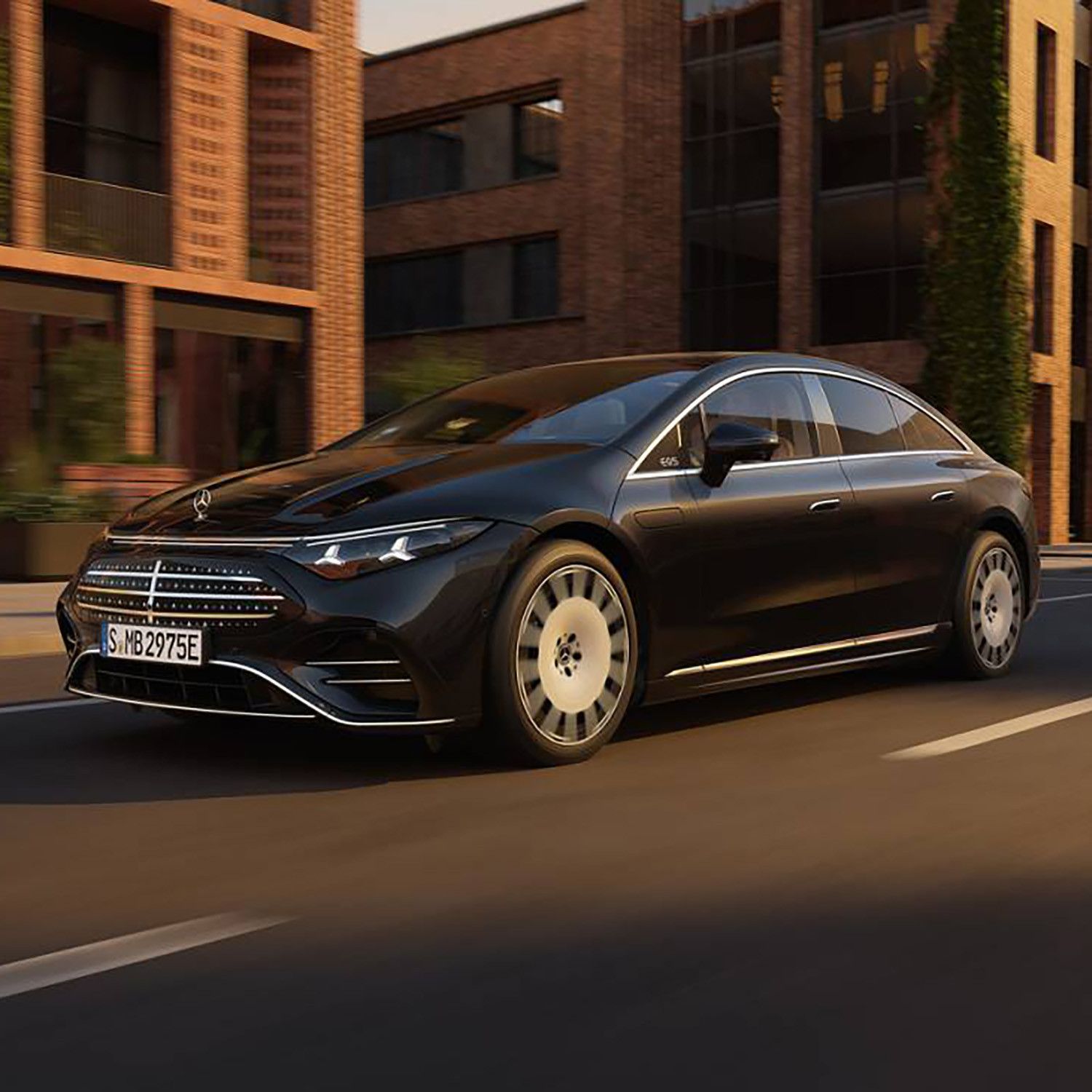
DAILY: Mercedes Updates EQS, Nissan Reveal Juke EV and Europe EV Sales Hit March Record | 14 Apr 2026
About this episode
Capital One’s “Chat Concierge” uses deployed multi-agentic AI to streamline EV shopping—finding cars, scheduling test drives, estimating trade-ins, and even helping with financing. News then pivots to major EV updates: Mercedes gives the 2021 EQS a substantial refresh with higher range, a move to an 800-volt charging system, improved regen, steer-by-wire, and cloud-connected Airmatic suspension. Nissan unveils the third-gen Juke EV for Europe. Europe hits a March EV registration record, while the show debates how fuel prices and charging buildout are influencing demand. Later, France expands social EV leasing and Volvo pushes long-haul electric trucking with 700 km range.
You can read all the latest news on the blog here: https://EVne.ws/blog
Subscribe for free and listen to the podcast on audio platforms:
➤ Apple: https://EVne.ws/apple
➤ YouTube Music: https://EVne.ws/youtubemusic
➤ Spotify: https://EVne.ws/spotify
➤ TuneIn: https://EVne.ws/tunein
➤ iHeart: https://EVne.ws/iheart
MERCEDES-BENZ GIVES EQS ITS BIGGEST UPDATE https://evne.ws/3QDQc1x
NISSAN CONFIRMS ELECTRIC JUKE FOR EUROPE IN 2027 https://evne.ws/4myW2gS
EUROPE EV SALES HIT MARCH RECORD https://evne.ws/4sqOs97
KIA CONFIRMS EV1 FOR 2027 https://evne.ws/3Q715c8
FRANCE PREPARES THIRD EV SOCIAL LEASING ROUND https://evne.ws/48ko6yH
FRANCE TIES ELECTRIFICATION TO ENERGY SECURITY https://evne.ws/4swljta
US SOLAR SURGE DEEPENS COAL DECLINE https://evne.ws/4dRChyN
VOLVO TRUCKS PUSHES ELECTRIC HEAVY HAULAGE FURTHER https://evne.ws/3Q9YRbZ
2026 EQS ADDS RANGE AND 800V CHARGING https://evne.ws/3Qb1uu2
Capital One
"Capital One's tech team isn't just talking about multi-agentic AI. They are already deployed one. It's called Chat Concierge and it's simplifying car shopping."
Capital One is a company that’s using AI to help people shop for cars. The idea is to make the process easier, like finding a car and planning what to do next.
Capital One is describing an AI product it has deployed to help people shop for cars. In this context, the “tech team” is using AI to guide shoppers through finding vehicles and next steps.
Chat Concierge
"It's called Chat Concierge and it's simplifying car shopping. Using self-reflection and layered reasoning with live API checks, it doesn't just help buyers find a car they love."
Chat Concierge is like an AI helper for car shopping. It can help you figure out what car to look at and can also help with things like booking a test drive and estimating your trade-in.
“Chat Concierge” is an AI assistant used to simplify car shopping. It’s described as using self-reflection and layered reasoning plus live API checks to support tasks like scheduling test drives and estimating trade-in value.
pre-approved for financing
"It helps schedule a test drive, get pre-approved for financing, and estimate trading value."
Pre-approval is when a lender checks your finances ahead of time and tells you what kind of car loan you might get. It can make buying easier because you’re not starting from scratch at the dealership.
Pre-approval for financing means a lender reviews your information and indicates what loan terms you may qualify for before you pick a specific car. This can speed up the purchase process and helps you compare offers more effectively.
Progressive Insurance
"This episode is brought to you by Progressive Insurance. Do you ever think about switching insurance companies to see if you could save some cash?"
Progressive Insurance is the sponsor. They’re advertising a quick way to see if you could pay less for auto insurance, especially if you also have home insurance with them.
Progressive Insurance is sponsoring the episode and promoting an online way to compare auto insurance savings. The ad specifically mentions bundling home and auto policies to potentially reduce premiums.
bundle your home and auto policies
"Just drop in some details about yourself and see if you're eligible to save money when you bundle your home and auto policies."
Bundling means you insure your home and your car with the same company. Many insurers give a discount when you do that.
Bundling home and auto policies means buying both types of insurance from the same insurer, often to receive a multi-policy discount. For shoppers, it’s a common lever to reduce total insurance cost.
Europe EV sales hit a march record
"Today, Mercedes updates the EQS, Nissan reveal the Duke EV, and Europe EV sales hit a march record."
The show says Europe hit a record for EV sales. That means more people than ever bought electric cars there in that time period. When that happens, it usually signals the market is growing and automakers pay closer attention.
A “record” in Europe EV sales means the monthly (or possibly year-over-year) number of electric vehicle registrations reached the highest level seen so far. This is important because Europe is one of the world’s biggest EV markets, and sales momentum affects automaker investment, supply chains, and government policy. It also influences pricing and incentives across the region.

XPeng Xpungs Gx
"heavy-duty trucking. Over on EV News China today, we're talking about VW's China EV slump, X-Pung's GX interior. That's the one that looks a lot like a Range Rover."
The XPeng GX is an electric vehicle model from Xpeng. The podcast talks about its interior design and how it’s styled. That matters because the cabin layout and features are a big part of what people notice when comparing EVs.
The XPeng GX is an electric vehicle model discussed in the context of Xpeng’s lineup and its interior design. The podcast also describes it as having an interior that looks similar to a Range Rover-like style, and it’s mentioned alongside broader EV news from China. It’s relevant because design, packaging, and feature content are major factors in how EV brands compete in fast-moving markets.

Land Rover Range Rover
"That's the one that looks a lot like a Range Rover. There's like a third of the sticker price of a Range Rover, though."
Range Rover is a luxury SUV brand/model people associate with a high-end look. If they say another car “looks like a Range Rover,” they mean it’s trying to look upscale and premium. It’s a way to describe the style without showing the car.
Range Rover is a luxury SUV line from Land Rover, often used as a benchmark for upscale styling and comfort. When the show says the GX looks like a Range Rover, it’s describing a design resemblance—likely aiming to capture buyers who want the luxury look without paying luxury-brand prices. This kind of comparison is common in China’s EV market, where new brands compete on both tech and aesthetics.
sticker price
"There's like a third of the sticker price of a Range Rover, though."
Sticker price is the price you see on the car’s listing or window, before taxes and extra fees. When the show compares sticker prices, they’re talking about how expensive the car looks on paper. The final price you pay can be higher or lower after deals and fees.
Sticker price is the advertised retail price of a vehicle before taxes, fees, and any discounts. In EV discussions, comparing sticker prices helps illustrate how pricing pressure can reshape consumer demand. However, the real cost to buy is often different once incentives and “out-the-door” costs are included.
security and cameras and data logging
"a lot about how Chinese EVs, if they're allowed into America, could destroy domestic manufacturing, there's issues around security and cameras and data logging and all those kind of things."
They’re raising concerns about privacy and safety with connected cars. If a car has cameras and sends data back, people worry that it could collect sensitive information or be hacked. That’s why some lawmakers want stricter rules for what data cars can collect and how it’s protected.
“Security and cameras and data logging” refers to concerns that connected vehicles—especially those with cameras and telematics—could collect sensitive data or be vulnerable to cyber issues. Data logging can include location, driving behavior, and media captured by cameras. These concerns often drive calls for stronger cybersecurity standards, privacy rules, and auditing for imported vehicles.
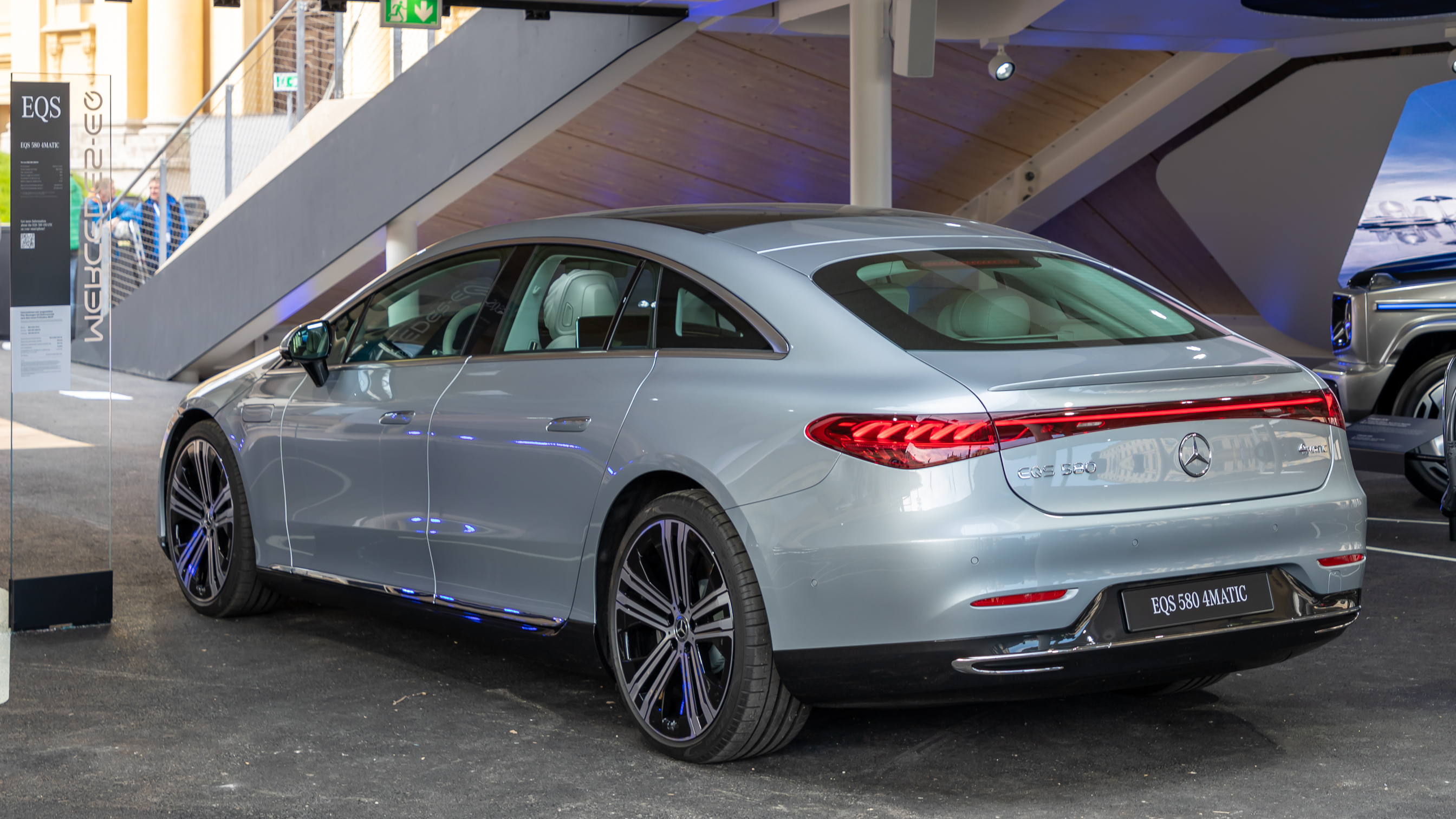
Mercedes-Benz EQS
"More than a quarter of the Mercedes-Benz EQS has now been newly developed, reworked or refined. Mercedes officially calls it an update, but the evidence suggests something a lot more substantial."
The Mercedes-Benz EQS is Mercedes’ main fully electric car. They’re talking about a refreshed version that’s more than just small tweaks—Mercedes says it’s an update, but it sounds like the car has been changed more significantly since it first came out.
The Mercedes-Benz EQS is the automaker’s flagship electric sedan built on Mercedes’ EV platform. In this segment, the host is discussing a major update to the EQS that Mercedes says is an “update,” but which appears to involve substantial changes since its 2021 launch.

Lucid Air Grand Touring
"It's a 13% improvement over the outgoing model, and yeah, that's up there with Lucid Air Grand Touring, which is Europe's longest range EV at the moment."
The Lucid Air Grand Touring is another long-range EV, and the host brings it up as a comparison point. They’re basically saying the updated Mercedes is getting close to the kind of range Lucid is known for.
Lucid Air Grand Touring is a high-range electric sedan from Lucid Motors, referenced here as a benchmark for long-distance EV range in Europe. The host compares the updated Mercedes-Benz EQS range improvement against Lucid’s reputation for efficiency.
energy density
"Mercedes achieved that by switching to silicon oxide graphite composite anodes, they say. Lifting both gravimetric and volumetric, energy density."
Energy density is how “packed” the battery’s energy is. If energy density goes up, you can often get more range without making the battery bigger or heavier.
Energy density describes how much energy a battery can store per unit of weight (gravimetric) and per unit of volume (volumetric). Higher energy density means more range without making the battery heavier or larger, which is exactly what the host claims Mercedes accomplished.
800 volts architecture
"They've moved it from a 400 to an 800 volts architecture. That means the EQS goes from 200 to 350 kilowatts of its peak charging."
Most EVs use either a lower-voltage or higher-voltage electrical system. The higher-voltage setup can let the car take in energy faster when you plug into the right fast charger.
An 800-volt EV architecture uses higher voltage in the battery and charging system, which can reduce current for the same power. That typically enables faster charging and can improve efficiency at high power levels.
kilowatts
"That means the EQS goes from 200 to 350 kilowatts of its peak charging. ... 800 volt, 350 is pretty much the ceiling of most public charges."
Kilowatts are basically the “charging speed” rating. More kilowatts usually means the car can take in energy faster.
Kilowatts (kW) are a measure of charging power for EVs. Higher kW generally means faster charging, though real-world results also depend on battery temperature, state of charge, and charger capability.
electric motors
"The drivetrain is also reworked. New electric motors, they're smaller, more efficient, more durable."
Electric motors are what actually move the car. Better motor design can make the car use less energy and last longer.
Electric motors convert electrical energy into motion, and their design affects efficiency, durability, and how smoothly the car delivers power. The segment says Mercedes is using new motors that are smaller and more efficient.
Regen braking
"Regen braking is up by 33%. It'll pull in almost 400 kilowatts of regen power."
Regen braking means when you slow down, the car can reuse some of that energy to recharge the battery. It can also reduce how much you rely on the friction brakes.
Regen braking (regenerative braking) converts some of the vehicle’s kinetic energy back into electricity during deceleration. Increasing regen capability can improve real-world efficiency and reduce brake wear.
steer-by-wire
"The EQS is also the first production car from a German manufacturer with full steer-by-wire. The system removes any kind of mechanical steering column and replaces it with virtual linkage, cutting weight, frees up space."
Instead of a physical rod or shaft connecting the steering wheel to the wheels, the car uses sensors and computers. Your steering input becomes an electronic signal that the car turns into wheel movement.
Steer-by-wire replaces the traditional mechanical connection between the steering wheel and the wheels with electronic controls. Sensors interpret steering input and actuators move the steering mechanism, which can reduce weight and packaging complexity.
Airmatic
"There's the new suspension system called Airmatic from Mercedes-Benz. You'll get that on the new electric GLC, the new plug-in hybrid S-class as well."
Airmatic is Mercedes’ air suspension. It can change how the car rides and sits using air springs, which can make the ride smoother or more controlled.
Airmatic is Mercedes-Benz’s air suspension system. Air springs can adjust ride height and damping characteristics to improve comfort and handling across different driving conditions.
vehicle to grid
"bi-directional charging is now included vehicle to grid and vehicle to home, but again, that comes later over the air."
Vehicle-to-grid means your EV can send electricity back to the utility grid. It’s useful for grid balancing, and sometimes owners can benefit depending on local programs.
Vehicle-to-grid (V2G) is the ability for an EV to export electricity back to the power grid. In practice, it can help balance demand and supply, and in some markets it may enable compensation programs for participating vehicles.
vehicle to home
"bi-directional charging is now included vehicle to grid and vehicle to home, but again, that comes later over the air."
Vehicle-to-home means your EV can power your house. Think of it like using the car’s battery for backup power during outages or peak times.
Vehicle-to-home (V2H) allows an EV to power household loads through an inverter/charging setup. It’s essentially using the car’s battery as backup or supplemental home energy.
0 to 60
"So over 200 horsepower, very usable, 7, 8 seconds, 0 to 60. That's not what this car is all about."
“0 to 60” tells you how fast a car accelerates from a stop to 60 mph. Lower numbers usually mean quicker acceleration.
“0 to 60” is shorthand for acceleration time from 0 mph to 60 mph. It’s a common performance metric used to compare how quickly different cars feel responsive.
Benchmark Mineral Intelligence
"That's according to benchmark mineral intelligence. Global EV registrations up 3% to 1.7 million last month."
Benchmark Mineral Intelligence is a market-research firm that tracks EV and battery supply-chain data. Citing them signals the registration and growth figures are based on industry research rather than a single automaker’s reporting.
Global EV registrations up 3% to 1.7 million
"Global EV registrations up 3% to 1.7 million last month. The timing matters."
They also mention worldwide EV registrations reached about 1.7 million, up 3%. It’s meant to show whether the momentum is only in Europe or happening globally too.
The segment also reports global EV registrations rising to 1.7 million units, up 3% month-over-month (or versus the prior comparable period as implied). This helps contextualize whether Europe’s strength is part of a broader global trend.
petrol
"We see petrol, an average of about $4.20, maybe a little bit under diesel, [703.8s] heading towards $6 per gallon in the US."
Petrol just means gasoline. When petrol prices go up, driving a gas car costs more, so EVs can start to look like a better deal.
Petrol is the common term for gasoline in many countries. In the context of EV adoption, higher petrol prices can make EVs look more attractive on a cost-per-mile basis.
global oil prices
"So yeah, the US has its own oil supply, but it plays global prices, doesn't it? [729.7s] So these are really interesting times to look through that lens."
Global oil prices are the worldwide prices for crude oil. Even if a country produces some oil, gas prices can still move because the world market sets the tone.
Global oil prices are the worldwide market prices for crude oil, which influence gasoline and diesel costs across countries. Even regions with domestic oil production can still see price changes because fuel pricing often tracks global benchmarks.
Iberdrola
"Utilities like Iberdrola in Spain, EDF also reporting record installations of DC charging in March."
Iberdrola is a big energy company in Spain. They’re helping build more EV charging stations, which makes it easier to find a charger.
Iberdrola is a major Spanish energy company that’s investing in EV charging infrastructure. When utilities like Iberdrola expand charging networks, it can improve coverage and reliability for drivers.
42 or the 61 kilowatt hour pack
"Two battery options could come if they can fit the big pack in, either the 42 or the 61 kilowatt hour pack. If they can squeeze in the big pack,"
Those numbers are battery size options. A bigger battery (more kilowatt-hours) usually means you can drive farther before recharging.
The “42” and “61 kilowatt-hour” figures refer to battery capacity options. Larger kWh typically means more potential range, but it can also increase cost and weight.
DC fast charging
"If you're always DC fast charging in Europe, but I don't know, a euro or a pound per kilowatt hour in some of the DC charges on the motorways,"
DC fast charging is the quick-charge option you use at public stations. It can get your battery up fast, but it often costs more than charging at home.
DC fast charging is a high-power method of charging an EV directly from a DC supply, typically used on highways and for quick top-ups. It’s usually more expensive per kWh than charging at home, so the cost of DC charging can erase some of the EV savings.
heat pumps
"By 2030, France wants to add a million domestically made heat pumps. That matters because heat pumps cut demand and fuel use, delivering between two and maybe up to four units of heat per unit of electricity."
A heat pump is a home heating and cooling system that transfers heat instead of using gas flames. It can warm your house in winter and cool it in summer by switching modes.
A heat pump is an HVAC system that moves heat rather than generating it by burning fuel. In heating mode it extracts heat from outside air (or ground) and delivers it indoors; in cooling mode it reverses to remove heat from the home.
gas boiler
"And we'll do the same when the gas boiler finally gives up ... we certainly can't afford to replace the gas boiler that works."
A gas boiler is a home heater that uses natural gas to make heat. When gas gets pricey, it can cost a lot to run.
A gas boiler is a home heating system that burns natural gas to produce heat, usually for radiators and/or hot water. It’s common in many homes, but it can be expensive to run when gas prices are high.
US Energy Information Administration
"In fact, the US Energy Information Administration put out their forecast to say that solar will be 17% higher on the grid this summer than last summer."
The EIA is a U.S. government group that tracks energy data and makes forecasts. Their numbers are often used as a reference for how energy supply might change.
The U.S. Energy Information Administration (EIA) is a government agency that publishes energy data, forecasts, and analysis. When the EIA forecasts solar growth, it’s typically based on modeled capacity additions and expected generation trends.
battery electric truck
"Finally, Volvo Trucks will finish us off today, widening its battery electric truck range with two launches."
A battery-electric truck runs on electricity stored in batteries. The big questions for owners are how far it can go and how easy it is to charge it.
A battery-electric truck (BEV) uses an electric motor powered by onboard batteries instead of a diesel engine. For fleets, the key considerations are battery capacity, charging time, depot charging infrastructure, and total cost of ownership.
payload
"[1434.1s] 460 kilowatts of power, 48 tons payload. [1437.8s] Sorry, 48 tons combined weight and 28 tons payload."
Payload is how much stuff the truck can carry. The speaker is saying the EV truck aims to carry enough weight, not just drive far.
Payload is the weight a vehicle can carry (cargo, equipment, etc.) while staying within its legal and engineering limits. The segment emphasizes that the truck’s design targets both range and payload to address common EV truck objections.
Request an Explanation
Heard something you'd like explained? We'll add it to this episode.
Sign in to request explanations for terms you heard.
Want to learn more?
Browse our glossary for plain-English explanations of automotive terms, jargon, and concepts.
Help improve this episode
See something that's not quite right? Our annotations are AI-generated and can sometimes miss the mark. Click the flag icon on any annotation to suggest a correction.