
DAILY: Rivian R2 Configurator Opens, Used EV Prices Begin To Grow and Green Tech Shapes Home Buying | 17 May 2026
About this episode
Rivian’s R2 configurator is opening up for reservation holders, with early pricing and a positioning check against Tesla Model Y variants. The show then pivots to used EV prices rising in the UK and how green tech is reshaping home buying—energy efficiency, EV charging, heat pumps, and battery storage are moving toward “non-negotiable.” Charging satisfaction is also under the microscope, from smart-tariff confusion to studies linking costs and education to lower satisfaction, plus a North Sea trial using parked EVs to power ferries.
You can read all the latest news on the blog here: https://EVne.ws/blog
Subscribe for free and listen to the podcast on audio platforms:
➤ Apple: https://EVne.ws/apple
➤ YouTube Music: https://EVne.ws/youtubemusic
➤ Spotify: https://EVne.ws/spotify
➤ TuneIn: https://EVne.ws/tunein
➤ iHeart: https://EVne.ws/iheart
RIVIAN OPENS R2 CONFIGURATOR EARLY https://evne.ws/4duA9uW
USED EV PRICES LEAD UK MARKET https://evne.ws/3RcfRio
RIVIAN ASSISTANT REACHES R1 OWNERS https://evne.ws/3RbsH0i
GREEN TECH NOW SHAPES HOME BUYING https://evne.ws/3RfZCRp
GRIZZL-E CLUB HITS 10,000 MEMBERS https://evne.ws/4nxM1km
GERMAN TRIAL TURNS PARKED EVS INTO FERRY BATTERIES https://evne.ws/43baVNk
RISING POWER BILLS HIT EV CHARGING SATISFACTION https://evne.ws/4ul4hQH
DISNEYLAND AUTOPIA GOES ELECTRIC IN 2027 https://evne.ws/4wyjU8G
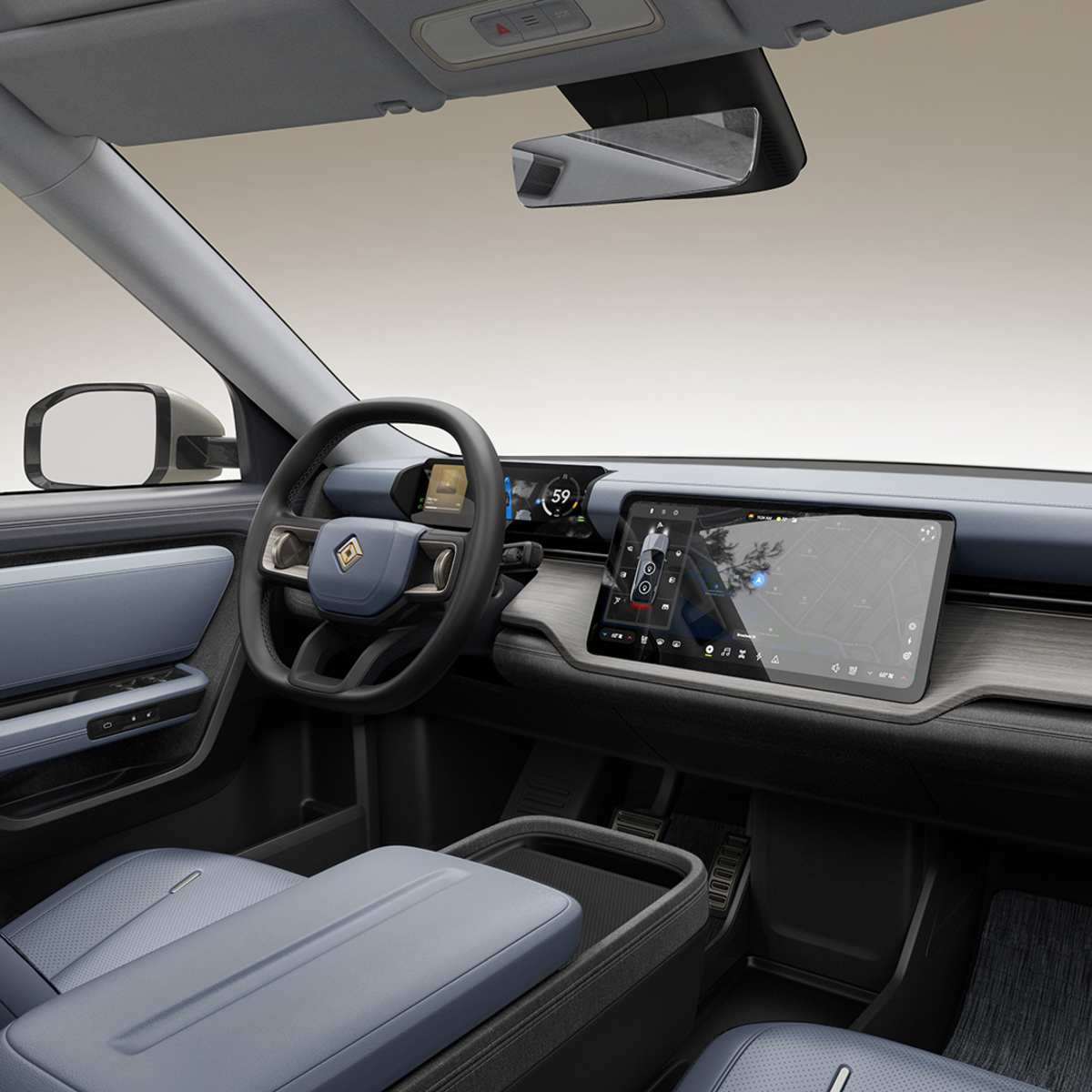
Rivian R2
"Rivian's opened the R2 configurator reservation holders can now begin specifying the midsize electric SUV as deliveries move from reservations to confirmed orders ... for now buyers can only configure the R2 performance there's three trims"
The Rivian R2 is an electric SUV that’s about to start being ordered for real, not just reserved. The show explains what buyers can choose in the online configurator and how its price and specs stack up against the Tesla Model Y.
The Rivian R2 is a midsize electric SUV that’s moving from reservation status into confirmed orders. In this segment, the hosts focus on how the R2 configurator lets buyers pick trims and options like wheel choices and launch packages, and they compare pricing and range/performance targets against Tesla Model Y variants.
R2 configurator opens
"Rivian's opened the R2 configurator reservation holders can now begin specifying the midsize electric SUV as deliveries move from reservations to confirmed orders"
A configurator is the website where you pick the version and options of a car. Once reservations turn into real orders, that’s when you can start making those choices for your specific vehicle.
A configurator is the online tool that lets buyers choose a vehicle’s trim and options. When a reservation system transitions to confirmed orders, the configurator typically becomes the place where pricing and equipment choices get locked in.
EPA range
"the first version out of the gates is the performance 600 and 56 horsepower version ... EPA at 300 and thirty miles"
EPA range is a standardized estimate of how far an EV can go on one charge. It’s useful for comparing cars, but your actual range may be different depending on how you drive and the weather.
EPA range is the estimated distance an EV can travel on a full charge, measured under standardized U.S. testing by the Environmental Protection Agency (EPA). It’s commonly used for comparing EVs, but real-world range can vary with driving style, weather, and speed.
0-60 dash
"EPA at 300 and thirty miles and a nought sixty dash in three point six seconds"
The 0-60 dash measures how fast a car can go from 0 to 60 mph. It’s a quick way to compare acceleration between cars.
The 0-60 dash is a performance metric measuring how quickly a vehicle accelerates from 0 mph to 60 mph. It’s often used as a simple benchmark for comparing acceleration between different EVs and trims.
tow package
"with Rivian's autonomy plus a dash system tow package and a launch key fob"
A tow package is an add-on that helps a car tow things more safely and properly. It usually includes the parts needed for towing, and towing can also change how far an EV can go.
A tow package is an option bundle that equips a vehicle for towing, typically including hardware and software provisions such as tow wiring and hitch-related components. It’s especially relevant for EVs because towing can significantly affect range and performance.
launch package
"comes at the launch package as well with Rivian's autonomy plus a dash system tow package and a launch key fob"
A launch package is a bundle of extra features that comes with a car when it first goes on sale. Here, the hosts list some of the items included in that early bundle.
A launch package is a bundled set of features and accessories offered at the start of a model’s sales. In this segment, the launch package is tied to specific items like an autonomy-plus a dash system tow package and a launch key fob.
all terrain wheel
"the standard wheel option is twenty one's buyers can also pick a twenty inch black sand all terrain wheel"
An all-terrain setup is meant to work on more than just smooth pavement. Here, the hosts mention a 20-inch option that’s geared toward tougher surfaces.
An all-terrain wheel/tire setup is intended to handle a wider mix of road surfaces than a typical highway tire, including light dirt or rougher conditions. The segment mentions a 20-inch all-terrain wheel option, which signals a more rugged direction for the R2’s configuration.
compact spare tire
"either black crater or coastal cloud on the interior a compact spare tire will run you in the options list 700 and 55 dollars nothing comes with the spare tire now"
A compact spare tire is a smaller temporary spare you can use if you get a flat. The show points out it’s optional here and costs extra, so it may not come with the car by default.
A compact spare tire (often called a donut) is a smaller, lighter temporary spare designed to get you to a repair shop. The segment notes that the compact spare is an optional add-on and costs extra, which affects how “complete” the car’s standard roadside setup is.

Tesla Model Y Performance
"the R2 performance is about a thousand dollars cheaper than a model y performance"
The Tesla Model Y Performance is the faster, higher-trim version of the Model Y. Here it’s mentioned mainly to compare price and where the Rivian R2 Performance lands versus Tesla’s option.
The Tesla Model Y Performance is a performance-focused variant of Tesla’s Model Y electric crossover. In this segment, it’s used as a pricing benchmark against the Rivian R2 Performance, highlighting how the R2’s cost positions it relative to Tesla’s higher-end trim.
firmware updates
"TR1S [150.2s] owners through a new firmware updates the move replaces amazon's system in their flagship models [156.6s] the change comes with a clear trade-off enabling Rivian assistant disables amazon and all its"
Firmware updates are software updates that change how a vehicle’s electronic systems operate, often including infotainment, connectivity, and driver-assist features. In EVs like the Rivian R1, these updates can add or remove integrations (like voice assistant platforms) without changing physical parts.
active connect plus subscription
"assistant needs an active connect plus subscription and it's only in english and [192.5s] they unveiled their assistant at their autonomy day last december they promised an early 2026 launch"
This is a paid service the car needs to stay connected. The hosts are saying the voice assistant requires an active subscription to work.
An active Connect Plus subscription is a paid connectivity requirement for certain connected-vehicle features. The segment implies Rivian assistant functionality depends on having that subscription enabled.
on-device processing
"[209.6s] the chief software officer wasim ben saeed who i've interviewed on the podcast before [213.6s] has confirmed that both gen one and gen two are ones get it the processing is done on device by [220.2s] the way it doesn't send it to the cloud doesn't fall over when your mobile signals weak and so it"
On-device processing means the car does the “thinking” for the voice assistant itself. That can make responses quicker and can also help keep your data from being sent to the cloud as much.
On-device processing means the car runs the voice recognition and related computation inside the vehicle instead of sending audio to a remote server. The benefit is typically lower latency (faster response) and improved privacy because less data needs to leave the car.
latency
"it doesn't send it to the cloud doesn't fall over when your mobile signals weak and so it [225.6s] uses on device on device processing that's good for privacy and it's good for cutting latency [232.7s] as well of course i guess some things might need to go through the cloud and things like navigation"
Latency is the lag between your command and the car’s response. Lower latency means the assistant reacts faster.
Latency is the delay between when you speak (or trigger an action) and when the system responds. Doing voice processing on-device is meant to reduce latency so the assistant feels more immediate.
DVS led
"will inevitably have and entertainment will have inevitably some connection but it looks [242.8s] like the processing of the voice is done on device that's good let's move on use dvs led [248.7s] the uk car market for price growth in april last month for the first time this year actually"
The hosts mention a specific market indicator (the transcript says “DVS led”) to set up a discussion about used-car prices. The exact meaning of the acronym isn’t spelled out in this excerpt.
“DVS” here appears to be a shorthand for a data/market indicator the hosts use when discussing used-vehicle pricing trends. The transcript is unclear on what DVS stands for, but it’s being used to introduce the used-EV price growth discussion.
Used EV prices begin to grow
"[248.7s] the uk car market for price growth in april last month for the first time this year actually [253.9s] use dv prices rose 1.1 percent and that's the strongest increase of any fuel type petrol prices [259.4s] were actually down as fewer people wanted to go buy them as used vehicles higher fuel pump prices"
The hosts talk about how the prices of used electric cars are changing. They compare EVs to gas cars to show the difference.
This segment shifts from in-car software to market pricing, focusing on how used EV prices are moving. It also contrasts EV price movement with petrol and other fuel types.
Eon
"now eon next is in the news saying that green energy kit has moved from being nice to have [286.6s] to standard must have with home buyers eon did some research covering a thousand people planning"
Eon is a company mentioned in the context of home energy products. They’re saying that “green energy” equipment is becoming more standard for people buying homes.
Eon is discussed as a company doing research into how “green energy kit” is being adopted by home buyers. In this segment, the key point is that green home energy equipment is shifting from optional to expected.
green energy kit
"now eon next is in the news saying that green energy kit has moved from being nice to have [286.6s] to standard must have with home buyers eon did some research covering a thousand people planning"
“Green energy kit” means equipment for homes that helps produce cleaner energy or use energy more efficiently. The hosts say buyers are increasingly expecting it.
“Green energy kit” refers to home energy equipment intended to reduce emissions or generate renewable power (for example, solar or related energy systems). The segment frames it as moving from a “nice to have” to a standard expectation in home buying.
level one portable charging
"the weakest scores came from those who rely on level one portable charging and i'm not surprised that's absolutely painful on 110 volts uh i mean we've got 240 volts here"
Level 1 charging is the slowest way to charge at home, usually from a regular wall outlet. If you rely on it, you may not get enough charge in time, which can make owning the EV frustrating.
“Level 1” charging is the slowest common home setup, typically using a standard 120V outlet (often described as “110 volts” in the US). Because it adds energy slowly, it can make daily EV use feel painful if you need frequent or fast replenishment.
three phase
"240 volts here single phase and then in europe most of it's three phase or a lot of it's three phase"
Three-phase power is a different way electricity is delivered in many places (especially in Europe). It can help charging work better and faster than setups limited to single-phase power.
“Three phase” refers to a type of electrical power distribution where the current is split across three synchronized phases. Many European home charging setups rely on three-phase power, which can support higher charging capability and more efficient operation than single-phase-only systems.
level two permanently mounted charger
"amongst level two uh charges is much higher and if you've got a level two permanently mounted charger they score the highest"
Level 2 charging is faster than plugging into a regular outlet. If it’s installed permanently at your home, it’s usually easier and more dependable to use every day.
“Level 2” charging uses higher-voltage power (commonly 240V in North America), allowing much faster charging than Level 1. A “permanently mounted” Level 2 charger is installed at home, which tends to improve reliability and user satisfaction compared with portable setups.
smart charging
"they've got wi-fi connectivity mobile apps smart charging and integration with utilities as well which means that they didn't always work as they should"
Smart charging means your EV charging can be managed by an app or system. It can help you charge at times that cost less or match utility programs, rather than just charging immediately.
Smart charging is EV charging that can be controlled or optimized using software—often via Wi‑Fi, mobile apps, and communication with the electric grid. Instead of charging whenever you plug in, it can shift charging to cheaper or preferred times based on utility pricing and incentives.
time of use incentives
"only 12 percent have enrolled in them half of ev owners said the utility offers variable rates or time of use incentives"
Time-of-use incentives mean electricity is cheaper at certain times (like overnight). If your EV charges during those cheaper hours, your charging bill can be lower.
Time-of-use (TOU) incentives are pricing structures where electricity costs vary by time of day. For EV owners, TOU rates can make scheduled charging financially beneficial if you charge during lower-cost windows.
plug your car in
"it used to be plug your car in tell us what you want it to get to and we'll make sure that by the time you want to leave tomorrow your car is at that level"
This is the idea that you just plug in your EV and the system figures out the charging schedule for you. The goal is to have the battery ready by the time you want to leave.
The described “plug your car in” workflow is an EV charging automation concept: you connect the car and the system handles the scheduling to reach a target departure charge level. It’s essentially a simplified user experience for smart charging without manually managing times.
cheap rate
"quiet at the back i heard that and i've read it several times and it's they're doing a six hour limit of cheap rate but then your overnight 11 30 till 5 30 is cheap but then one of the bit says midnight not 11 30 there's a typo in it which is very un-octopus um"
A cheap rate is when electricity costs less during certain hours, usually at night. EV charging can be timed to those hours to lower your bill.
A cheap rate is a time-of-use electricity price where the cost per kWh is lower during specific hours (often overnight). EV chargers and smart charging systems use these windows to reduce charging cost.
time-of-use electricity pricing
"it's messy there's like four different scenarios and if you plug your car in at this time you'll get six hours but is your six hours cheap rate also including the six hours overnight because then in that case just take me off a smart tower if and i'll just charge 11 30 every night because that's my six hours if that's all you're gonna give me"
Time-of-use pricing means your electricity price changes depending on the hour. If you charge your EV during the cheaper hours, it can cost less overall.
Time-of-use electricity pricing charges different rates depending on the time of day. For EV owners, this matters because charging during the lower-rate window can significantly change the total cost.
Octopus
"then in that case just take me off a smart tower if and i'll just charge 11 30 every night because that's my six hours if that's all you're gonna give me then forget all the smart stuff it's ... all right just okay i mean i'm not going to leave octopus because it's they do a very good job"
Octopus is an electricity company. Here, the host is talking about how Octopus’ EV charging pricing/scheduling can be confusing to figure out.
Octopus is an energy provider known for EV-focused electricity tariffs and charging-related tools. In this segment, the speaker discusses how Octopus’ smart charging rules and cheap-rate windows can be confusing.
California Air Resources Board
"disneyland will replace the petrol powered cars at its autopier ride in tomorrowland with electric vehicles next year disney says it's part of their plan to go net zero by 2030 the california air resources board also pointed out that the little mini honda engines they use in the little kids cars don't have emissions controls"
The California Air Resources Board is a government agency that regulates air pollution. In this story, they flagged that some small gas engines used for kids’ cars weren’t properly controlled for emissions.
The California Air Resources Board (CARB) is California’s agency that sets and enforces air-quality and emissions rules. The segment references CARB pointing out emissions-control issues with small gasoline engines used in children’s vehicles at Disneyland.
net zero by 2030
"disneyland will replace the petrol powered cars at its autopier ride in tomorrowland with electric vehicles next year disney says it's part of their plan to go net zero by 2030 the california air resources board also pointed out"
“Net zero by 2030” means aiming to cut pollution a lot and then balance what’s left. Here, it’s used to describe Disneyland’s plan to switch from gas cars to electric ones.
“Net zero by 2030” means reducing greenhouse-gas emissions as much as possible and balancing any remaining emissions with offsets or removals. The segment frames Disneyland’s switch from petrol-powered cars to electric vehicles as part of that goal.
emissions controls
"the california air resources board also pointed out that the little mini honda engines they use in the little kids cars don't have emissions controls so disney had to pay a big fat fine to settle the matter"
Emissions controls are parts that help reduce pollution coming out of an engine. If an engine doesn’t have them, it can pollute more.
Emissions controls are hardware and systems that reduce pollutants from an engine, such as catalytic converters and related exhaust-treatment components. Without them, an engine can produce higher levels of regulated pollutants.
Honda
"the california air resources board also pointed out that the little mini honda engines they use in the little kids cars don't have emissions controls so disney had to pay a big fat fine to settle the matter"
Honda is the brand of the small gas engines being used. The issue raised is that these engines didn’t have emissions controls, which led to a settlement with regulators.
Honda is the engine brand mentioned in the segment—small Honda gasoline engines used in children’s cars at Disneyland. The point is that these engines reportedly lacked emissions controls, which triggered regulatory action.

Buick Century
"...vron took over sponsorship around the turn of the century and even then said at some point they'll have to ..."
The Buick Century is a type of car that Buick made for a long time. The podcast mention sounds like it’s about the car’s role in marketing or sponsorship during a certain time period. It’s not about how the car drives or its technical features.
The Buick Century is a midsize sedan that was produced for many years and is often discussed as part of Buick’s broader history. In the podcast context, it appears tied to sponsorship or branding timelines “around the turn of the century,” which suggests the car is being referenced in relation to marketing and public visibility rather than technical details. That makes it relevant to a business-and-technology EV news show when they’re talking about how brands and partnerships evolve over time.
Request an Explanation
Heard something you'd like explained? We'll add it to this episode.
Sign in to request explanations for terms you heard.
Want to learn more?
Browse our glossary for plain-English explanations of automotive terms, jargon, and concepts.
Help improve this episode
See something that's not quite right? Our annotations are AI-generated and can sometimes miss the mark. Click the flag icon on any annotation to suggest a correction.