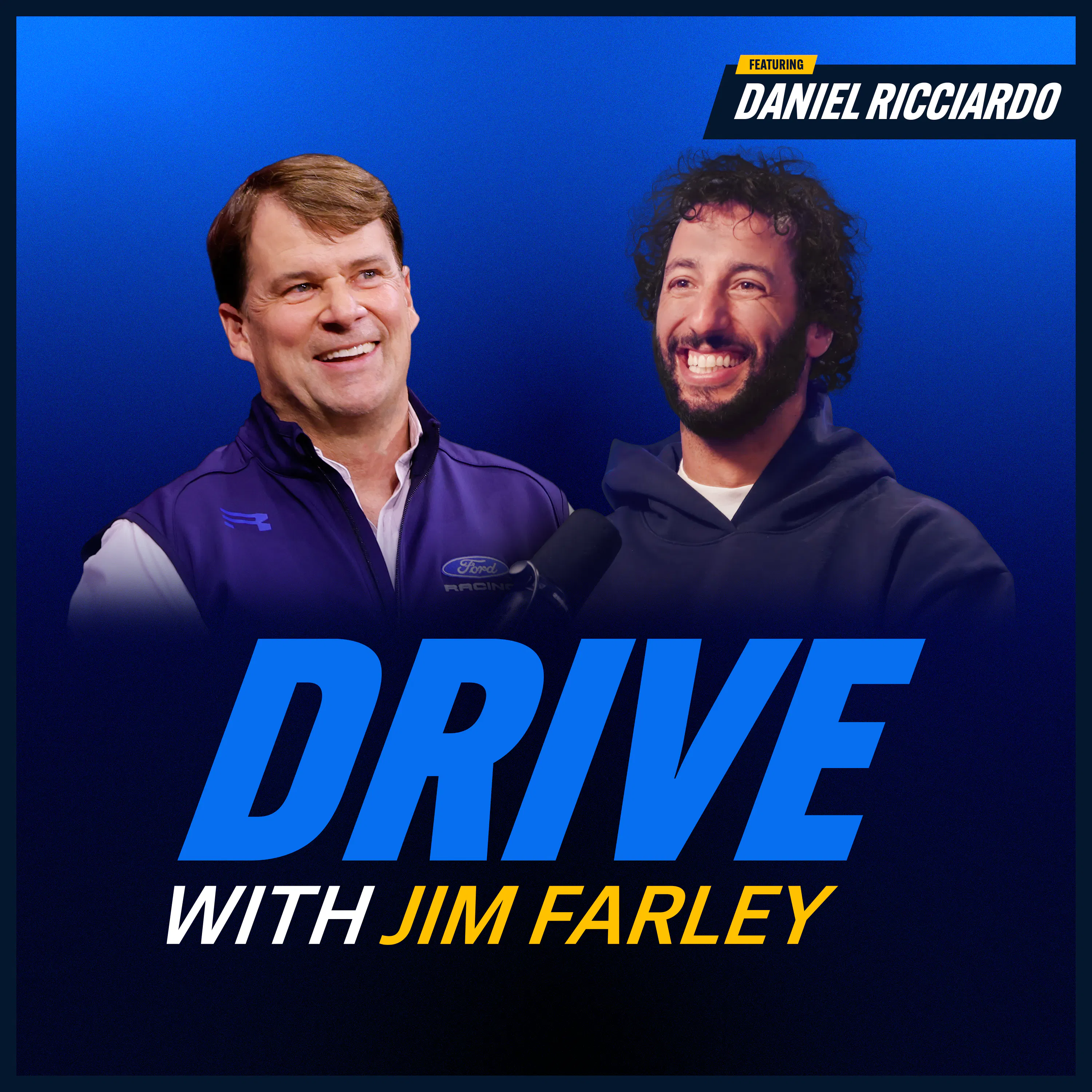
Daniel Ricciardo on Winning in F1, Knowing When to Retire, and Why “Fun” Matters
About this episode
Daniel Ricciardo talks about what it really feels like to be “best in the world” for a moment—powerful, prideful, and surprisingly grounding. He gets candid about the lows of racing, noting how most weekends are disappointment due to mistakes, failures, or bad luck. The conversation also covers his iconic Shoei champagne celebration, his pre-race mental rituals (helmet on = go time), and how he decided when to retire after losing the fire. Ricciardo closes with “fun” as the core driver, plus how off-road freedom helps him stay human.
Formula One
"Daniel Ricardo knows a lot about what that moment feels like. He won eight Formula One races out of more than 250 starts, which tells you something about how hard it is to get to the top of that podium in Formula One."
Formula One is the highest level of car racing. Winning isn’t just about the driver—it’s also about the car and the whole team working together.
Formula One (F1) is the top tier of open-wheel motorsport, with races held around the world. Success depends on the entire team—car development, strategy, and driver performance—so reaching the top is extremely difficult.
podium
"Daniel Ricardo knows a lot about what that moment feels like. He won eight Formula One races out of more than 250 starts, which tells you something about how hard it is to get to the top of that podium in Formula One."
In racing, the podium is the top-three finish. If you’re on the podium, you finished first, second, or third.
A podium finish in F1 means finishing in the top three positions—typically celebrated with trophies and ceremonies. The host uses podium success as a benchmark for how hard it is to reach the very top.
retirement
"In thinking back about my talk with Daniel, what really stayed with me wasn't his wins, it was how honest he was about his losses, and about that moment you realized something inside of you shifted, that it might be time just to move on."
In motorsport, retirement is often a psychological and performance decision, not just an age-based one. The host frames it as recognizing a personal internal shift—when the motivation or competitive drive changes.
Stan Gurney
"So first kind of topic I'd like to talk about is the Shoei because it was so, now the reason why I think it's cool... is that my hero racing here was Stan Gurney growing up and Dan was the first person to take champagne and spray people."
Stan Gurney was a famous race car driver. In this story, he’s used as a reference point for how racing traditions and personalities started.
Stan Gurney is a legendary American racing driver, referenced here as the host’s hero. The story uses his era to connect to how celebrations and driver personality became part of motorsport culture.
champagne spray celebration
"So first kind of topic I'd like to talk about is the Shoei because it was so, now the reason why I think it's cool... is that my hero racing here was Stan Gurney growing up and Dan was the first person to take champagne and spray people."
Spraying champagne is a tradition people do after winning big races. The podcast is saying the driver in the story helped make it a signature celebration.
Champagne spraying is a motorsport tradition used to celebrate wins, especially in F1 and endurance racing. The segment frames it as an innovation—changing how drivers celebrate on the podium.
hammer and dolly
"Yes, his bubble, he was too tall for the car, and Phil Remington took a hammer and dolly and made it big enough for the Gurney bubble."
A “hammer and dolly” is a basic metal-shaping technique. You use a hammer and a shaped backing tool to bend/form metal into the right shape.
“Hammer and dolly” describes a traditional metalworking method used to shape and form sheet metal. In racing contexts, it can be used for quick, precise bodywork adjustments when time is critical.
Gurney bubble
"Yes, his bubble, he was too tall for the car, and Phil Remington took a hammer and dolly and made it big enough for the Gurney bubble."
The “Gurney bubble” refers to a bulge/clearance added to a race car’s bodywork to accommodate a driver’s helmet/head height. In this segment, it’s explained as a fitment solution made after the driver was found to be too tall for the original cockpit space.
Singapore
"Oh yeah, because a few months later I remember I was at Singapore and I got a podium. And after I did the first one, I was like, okay, maybe this is something I just saved for when I win."
“Singapore” refers to the Singapore Grand Prix, a Formula 1 race held on a street circuit in Singapore. Street circuits are known for tight corners and limited runoff, which makes qualifying and race execution especially important.
go-kart
"So I still remember the first time I drove a go-kart, you know, at the indoor rental cart place. I remember I wanted to go in Perth."
Go-karts are small, lightweight racing vehicles that many future professional drivers start with. They’re popular because they’re relatively affordable and teach core driving skills like throttle control, racing lines, and close-quarters overtaking.
strap into the car
"And even as it got, you know, more serious and up into Formula One, you, as soon as I'll strap into the car from the outside, everyone probably thinks, oh, this is like the hardest time for them during the weekend because this is now business."
“Strap into the car” refers to the driver getting secured in the cockpit with the seatbelts and safety harnesses before going out. It’s a key mental transition in racing—once you’re strapped in, you’re committed to performance mode.
paddock
"And I could just be, you know, there's not only the team itself, but then you've got the crowd, the fans, everything. The paddock is so full of distractions, I guess. That when I would strap in, put the helmet on, I was like, okay, I can finally be free."
In F1, the paddock is the busy area where teams work and move around between races. It can be loud and distracting compared with being in the car.
The paddock is the team and support area at an F1 event where cars, engineers, and personnel operate between sessions. It’s also where distractions and social energy are highest, which is why drivers often describe it as mentally different from being in the cockpit.
visor
"Was there a moment like when you pull away and the noise goes away other than the car? Was there a moment when you go, now's my time? Yeah, I think it was really putting the helmet on. I would, you know, try to start with putting music on, you know, so maybe walking into the garage, just to already start kind of drowning out some of the noise."
The visor is the clear front shield on the helmet. Some racers use closing it as a way to focus and block out everything else.
The visor is the front part of a racing helmet that covers the face and helps protect the eyes. Drivers sometimes describe closing the visor as a ritual to block out distractions and mentally “lock in.”
garage
"I would, you know, try to start with putting music on, you know, so maybe walking into the garage, just to already start kind of drowning out some of the noise."
The garage is the team’s enclosed work area at an F1 event where the car is prepared and where drivers and staff gather before sessions. It’s also a place where noise management and routine can matter because the driver is transitioning from the paddock environment into race mode.
helmet
"[415.9s] that was also very symbolic of not only, okay, it's go time, but the helmet is a massive [421.9s] bit of safety equipment."
A helmet is the driver’s main head protection. In racing, it’s not just a ritual—it’s there to help protect you if something goes wrong.
In Formula 1 and other motorsports, a helmet is a critical piece of safety equipment designed to protect the driver’s head in high-speed impacts. Ricciardo describes putting it on as both a mental cue (“go time”) and a reminder that racing is dangerous.
F1
"I mean, I was, I was 17 and four years later I was in F1, but I didn't, there was no way I thought that was going to happen."
F1 stands for Formula 1, the highest level of professional race car driving. It’s not just about the driver—teams build and tune the cars, and small problems can ruin a weekend.
F1 is Formula 1, the top tier of open-wheel racing run by the FIA. It’s a highly technical, team-based series where drivers rely on car setup, reliability, and strategy as much as raw driving skill.
bad decision at the wrong time
"...I get in a situation where I just make a bad decision at the wrong time and crash or whatever."
Racing is as much about timing as it is about speed. If you push or react at the wrong moment, the car can lose traction and you can end up in trouble.
This describes how timing and judgment are critical in racing—especially when managing grip, traffic, and tire/vehicle limits. Even small errors at the wrong moment can lead to loss of control, contact, or a crash.
crash
"...and crash or whatever. And then the weekend's over and it's a lot of money."
A crash is when the car hits something or spins out and can’t continue normally. It often means repairs, lost track time, and a lot of wasted effort for the weekend.
A “crash” is a central risk in racing that can damage the car and force repairs or replacement parts. It also affects momentum: even if you’re fast, one crash can wipe out the weekend’s progress.
weekend's over
"And then the weekend's over and it's a lot of money."
Racing weekends are short, with only a few chances to drive and compete. If you crash or break something early, you may not get another real shot that weekend.
“Weekend’s over” highlights how motorsport is structured around limited sessions (practice, qualifying, race). A single incident can eliminate your chance to score or progress, making reliability and risk management crucial.
team sport
"You know, I compare it to a team sport, for example, maybe their record is 50%, probably better. A lot of teams, but so the good days or the real good days are far and few between."
Even though the driver is the one you watch, F1 is really a team effort. The engineers and strategy people play a huge role in how well the car performs.
The comparison to a “team sport” highlights that F1 performance is collective: engineers, mechanics, strategists, and the driver all contribute. Even if the driver is the face of the sport, the car’s competitiveness and race execution are team-driven.
controlling
"Yeah, it's more violent, but you're doing the controlling. So it, it's kind of like done."
In racing, “controlling” refers to actively managing the car through inputs like steering, throttle, and braking while the vehicle is being pushed hard. That’s why the experience can feel intense—because you’re both experiencing high forces and staying in charge of them.
right time to retire
"I saw a great video of Johnny Rutherford who in our country for a period of time was the IndyCar driver and he, he was asked once, how did you know when it was the right time to retire?"
They’re talking about how a top driver figures out when it’s time to stop racing. Sometimes it’s not just age—it can be about safety, risk, and whether you still feel you can do the job.
The discussion centers on how elite drivers decide when to step away—especially after a major incident. It’s about recognizing when the risk, motivation, or ability to compete has changed, and when it makes sense to hand leadership to someone else.
methanol
"He was upside down. Methanol was pouring over his body. He had to take a big breath quickly before he's, because if there was a fire, the biggest risk for him was inhaling the fire."
Methanol is the racing fuel being discussed. In a crash, it can get on you and create danger, including breathing problems if there’s a fire.
Methanol is a fuel used in IndyCar racing. In a crash, it can pool and spread quickly, creating a serious hazard for the driver—especially if it’s involved in a fire or inhaled.
upside down
"He was upside down. Methanol was pouring over his body. He had to take a big breath quickly before he's, because if there was a fire, the biggest risk for him was inhaling the fire."
When a driver ends up upside down, fuel and fumes can flow toward them differently. That can make breathing and survival more urgent during the first moments after impact.
Being “upside down” in a crash changes how fuel and fire hazards behave around the driver. It also affects how quickly the driver can manage breathing and avoid inhaling combustion products.
inhaling the fire
"Methanol was pouring over his body. He had to take a big breath quickly before he's, because if there was a fire, the biggest risk for him was inhaling the fire. And that would burn his lungs and he saw many of his competitors do that."
They’re talking about breathing in smoke and burning gases. Even if you don’t get badly burned, breathing the fumes can seriously hurt your lungs.
This refers to the immediate danger of smoke and combustion gases during a fire. In motorsport safety, avoiding inhalation of burning fumes can be as critical as avoiding burns, because lung injury can be fatal quickly.
seat
"[1245.6s] But then, you know, so I got back into the seat halfway through the season. [1250.6s] I got a drive, second race, I think second race in or third race in. [1254.8s] I broke my hand and it was such a nothing accident, but I missed however many races."
“Back into the seat” means back behind the wheel racing again. It usually happens after someone has been out for a while due to injury or something else.
In racing, “getting back into the seat” means returning to driving duties in a race car after missing time due to injury or other reasons. In F1 specifically, it can also imply regaining a race seat after being replaced by a substitute driver.
out for 10 weeks
"[1254.8s] I broke my hand and it was such a nothing accident, but I missed however many races. [1260.2s] I think I was out for 10 weeks or something. [1263.5s] So then that happened."
Missing multiple F1 races due to injury can disrupt a driver’s rhythm, fitness, and car development feedback loop with the team. It also creates pressure to return quickly and perform at a high level despite lost seat time.
being let go
"And I lasted another year in F1 and then got, yeah, look, ultimately got let go."
In Formula 1, “let go” typically means a driver is released from their contract or not retained for the next season. It’s often tied to results, performance relative to teammates, and whether the team believes the driver can meet current development and performance targets.
Ford
"Daniel, I want to say just as the CEO is Ford, you're one of the most engaging, genuine and wonderful people in the racing business. You have made all of our lives better because you are here. And I ask everyone the same question at the end of the podcast, which is, what advice would you give me as the CEO of Ford?"
Ford is a big car company. Here, they’re talking about what advice Daniel would give if he were the CEO of Ford—basically how to lead and stay motivated.
Ford is a major American automaker and, in this conversation, it’s referenced through its CEO role. The discussion uses Ford as a stand-in for leadership and culture—how executives should keep work meaningful and enjoyable.
off-road driving
"And I kind of think driving off-road is kind of, for me, a lot of normal folks who love cars, driving off-road is kind of getting back to that freedom thing... And I think you are absolutely the perfect person."
Off-road driving means taking a car or truck on dirt, gravel, or rough ground instead of normal roads. The idea here is that it can feel more free and less complicated than everyday driving.
Off-road driving is using a vehicle on unpaved or rough terrain where traction, suspension travel, and driver inputs matter more than on-road grip. In the context of this conversation, it’s framed as a way to feel “freedom” and rediscover simpler, more instinctive driving.
unfiltered driving
"...there's something about off-road that's very unfiltered and something about driving a vehicle in an off-road environment that kind of rediscovers the simplicity of freedom."
“Unfiltered” here means you’re not driving on smooth, predictable roads. Off-road is messier and more real, so the driving feels more direct and less “managed.”
“Unfiltered” driving describes how off-road conditions expose the driver and vehicle to real, changing traction and terrain. The speaker implies that this removes some of the artificial feel of on-road performance and brings back a more direct, instinctive connection to driving.
no-boring cars philosophy
"If there's one person on literally the planet of all the billions of people on the planet that could connect kind of our no-boring cars philosophy to off-road for the right reasons, it's you."
“No-boring cars” is basically the idea that cars should be fun and exciting to drive, not just practical. Here, they connect that to off-road because it can feel more real and less controlled.
A “no-boring cars” philosophy is an enthusiast mindset that prioritizes engaging driving experiences over simply getting from point A to point B. In this segment, it’s linked to off-road because off-road driving can feel more raw, unfiltered, and less constrained by normal road rules.
Request an Explanation
Heard something you'd like explained? We'll add it to this episode.
Sign in to request explanations for terms you heard.
Want to learn more?
Browse our glossary for plain-English explanations of automotive terms, jargon, and concepts.
Help improve this episode
See something that's not quite right? Our annotations are AI-generated and can sometimes miss the mark. Click the flag icon on any annotation to suggest a correction.