Ford's recent decision to discontinue the F-150 Lightning marks a significant $20 billion shift away from electric vehicles, while Nissan expands its Nismo performance lineup. Luminar faces bankruptcy after losing a major contract with Volvo. The episode features insights from John Irwin on the new supplier distress tracker, revealing over 60,000 job cuts in the automotive supply chain due to rising tariffs and EV program cancellations. Additionally, Rivian CEO RJ Scarrange discusses the importance of understanding the Chinese automotive market and the upcoming R2 launch, which aims to compete with Tesla's Model Y.
Reporter John Irwin talks about the new Automotive News Supplier Distress Tracker, which finds that auto suppliers have cut more than 60,000 jobs across North America and Europe in 2025. Ford is discontinuing the F-150 Lightning after less than four years. Plus, Rivian CEO RJ Scaringe discusses threats from China and the launch of the electric vehicle maker’s first mass-market vehicle in 2026.
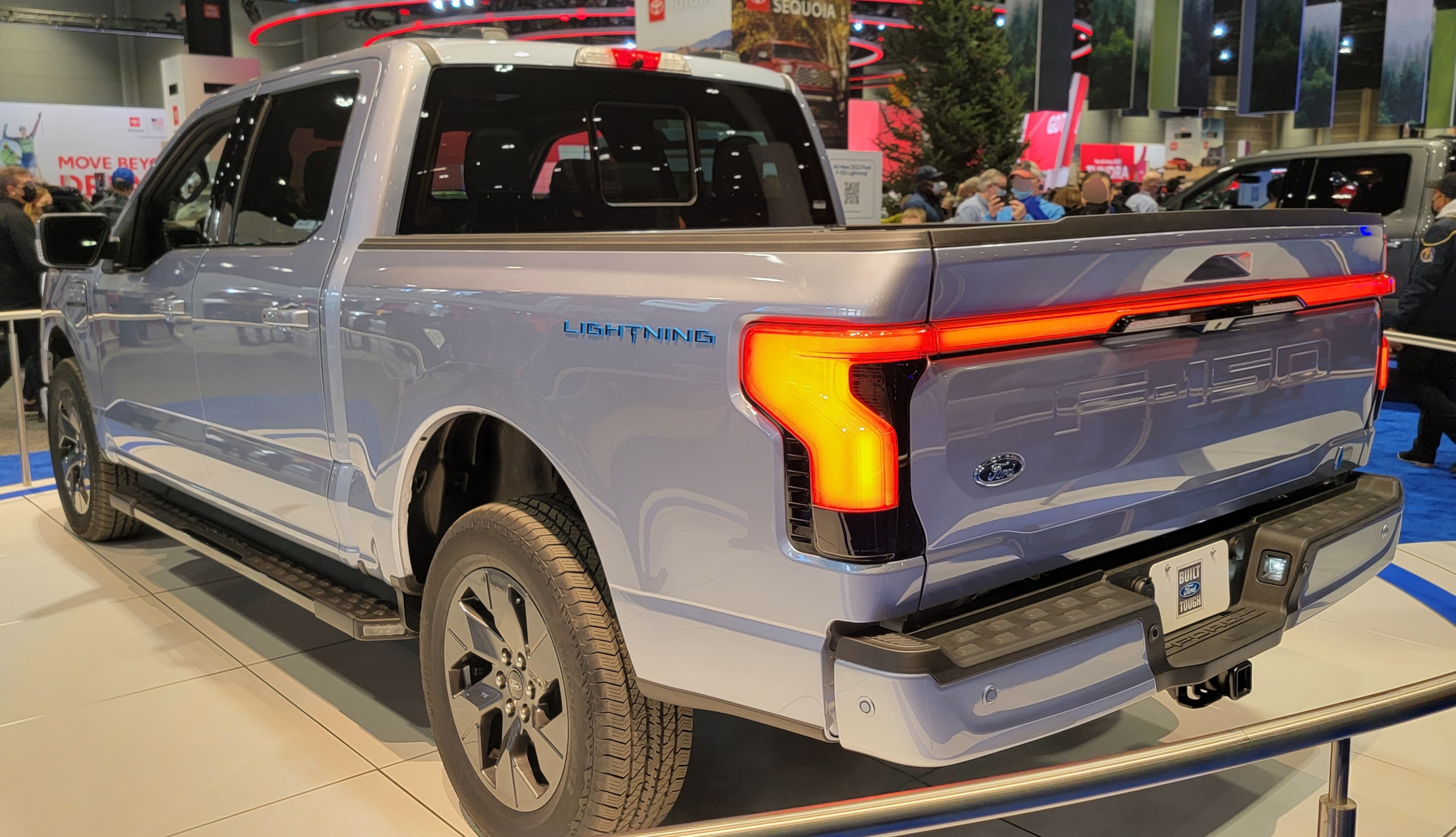
"[30.0s] Today on the show, Ford drops the F-150 Lightning in a $20 billion pivot away from EVs. Nissan doubles down on its NISMO performance sub-brand, and Luminar which supplies Tesla and Volvo files for bankruptcy."
It makes special cameras that let self‑driving cars see their surroundings, and it’s now filing for bankruptcy.
Luminar is a company that develops lidar sensors for autonomous vehicles, supplying tech to Tesla and Volvo.
"[30.0s] Today on the show, Ford drops the F-150 Lightning in a $20 billion pivot away from EVs."
It’s a truck that runs entirely on electricity instead of gasoline, giving it zero tail‑pipe emissions and the same payload as a regular F‑150.
The Ford F‑150 Lightning is an all‑electric version of Ford’s best‑selling pickup truck, featuring a large battery pack and dual electric motors for high torque.
"[30.0s] Today on the show, Ford drops the F-150 Lightning in a $20 billion pivot away from EVs. Nissan doubles down on its NISMO performance sub-brand..."
Nissan makes cars like the Altima and the electric Leaf, and it also has a performance sub‑brand called Nismo.
Nissan Motor Company is a Japanese automaker that produces cars, trucks, and electric vehicles such as the Leaf.
"Infinity showcased a 650 horsepower QX80 track spec concept this summer with 50% more output than standard."
The Infinity QX80 is a big, fancy SUV from Nissan’s luxury brand. A track‑spec version means it has extra power and performance parts for racing or fast driving.
The Infinity QX80 is a luxury SUV produced by Infiniti, the luxury division of Nissan. The track‑spec concept refers to a high‑performance version designed for racing or spirited driving.
"There have been big announcements we've seen from Bosch, ZF, some other companies in Europe where they've announced..."
Bosch makes parts that help cars run safely and efficiently, like the brakes you use to stop or the sensors that tell your car when to change gears.
Bosch is a German multinational engineering and technology company that supplies automotive components such as sensors, brakes, and powertrain systems to car manufacturers worldwide.
"I mean, obviously the Chinese have kind of gotten ahead in EVs for a lot of reasons."
Chinese EVs are cars made in China that use batteries instead of gasoline. They’re growing fast and can be cheaper than similar cars from other countries.
Chinese electric vehicles (EVs) refer to cars produced in China that run on battery power, often noted for their rapid development and competitive pricing.
"I know you're doing this with Volkswagen or creating a new platform, working on costs, working on software, working on features, working on autonomy."
Features are the cool things a car can do, like parking sensors, heated seats, or lane‑keeping help. They make the driving experience better and safer.
Features are the functional options and amenities a car offers, such as safety systems, entertainment, or driver assistance technologies.
"I know you're doing this with Volkswagen or creating a new platform, working on costs, working on software, working on features, working on autonomy."
Think of a platform like a common set of building blocks that different cars can use. It lets manufacturers make several models faster and cheaper.
In automotive design, a platform is a shared set of components and architecture that multiple car models use to reduce development costs and streamline production.
"It's the, you know, the R1S is the market share leader for electric premium SUVs."
An electric premium SUV is a fancy, expensive family car that runs on electricity instead of gasoline.
An electric premium SUV is a high‑end, all‑electric sport utility vehicle that offers luxury features and performance comparable to traditional premium SUVs.
Select text to request an explanation
This podcast is brought to you by Reynolds and Reynolds, the industry leader in automotive technology. Learn how Spark AI Reynolds Unified AI Data Layer can help you unlock your full potential by visiting rayray.com-spark-AI. Welcome to Daily Drive for Tuesday, December 16th, 2025. I'm Kellan Walker in Las Vegas.
Today on the show, Ford drops the F-150 Lightning in a $20 billion pivot away from EVs. Nissan doubles down on its NISMO performance sub-brand, and Luminar which supplies Tesla and Volvo files for bankruptcy. Plus, an excerpt from Part 2 of our exclusive interview with Rivian CEO, RJ Scarrange, who says everyone should be watching China.
If you're a car company and if you're serious, you should really understand what's happening in China.
Let's run through all the news you need to know to keep up in the auto industry. Ford is discontinuing the F-150 Lightning after less than four years. The plan will cost the auto maker nearly $20 billion in charges, mostly this quarter.
The auto maker is pivoting to an extended range version built in Michigan, mirroring Stellantis' decision to cancel its fully electric ram.
Ford says it will redirect excess battery capacity into energy storage for data centers and residential use, investing $2 billion to convert its Kentucky plant and adding 2,100 jobs.
The strategy aims to make its Model E unit which lost $5 billion in 2024 profitable by 2029.
Ford says hybrid's extended range EVs and full EVs will hit half its global volume by 2030 up from 17% today.
Nissan is doubling its Nismo performance lineup from 5 to 10 models globally by 2028 targeting 150,000 annual sales.
The expansion could include Infinity's luxury vehicles which are collaborating with Nismo on high performance variants.
Infinity showcased a 650 horsepower QX80 track spec concept this summer with 50% more output than standard.
Like Mercedes and BMW, Nismo aims to boost both brand image and profitability.
Right now, US buyers can get Nismo versions of the Armada SUV and Z-Coup, with up to 60% of future Nismo volume expected from international markets.
And Luminar technologies has filed for Chapter 11 bankruptcy after losing a critical contract with Volvo.
The Florida-based LiDAR sensor supplier makes laser-based sensors for self-driving systems.
The company faced a massive setback when Volvo announced it would stop using Luminar's technology in its EX90 and ES90 models starting next April and had already begun production without the sensors.
Luminar listed assets up to $500 million in liabilities approaching $1 billion.
The company has agreed to sell its semiconductor unit for $110 million and is seeking buyers for its LiDAR business.
A group of creditors has approved $25 million in cash to keep operations running during the bankruptcy process.
And those are today's headlines. You can find more details on all those stories at autonews.com.
Auto suppliers have cut more than 60,000 jobs across North America and Europe in 2025 as companies grappled with mounting tariff costs and canceled EV programs.
That's the tally from the new supplier distress tracker created by automotive news.
Here to talk about it is our own John Irwin who covers the supply chain for us at automotive news.
John, welcome back to daily drive.
Thanks for having me.
So John, what was the motivation to create this?
Yeah, over the past year, so we've been monitoring all the changes in the supply chain, you know, kind of driven by tariffs, the pullback in electric vehicle investments and production.
All the impacts that's having supply chain and one of the larger impacts that's had is a lot of suppliers in North America and Europe have really hunkered down and just tried to focus on profitability.
There are ways that some companies have opted to do that is, you know, through, you know, some job cuts, whether that's closing a factory that maybe isn't, you know, producing parts anymore for a certain program or cutting back on a shift here if the EV production isn't where you thought it'd be moving the factory somewhere else in the future to account for poor tariffs and helping to adjust production cycles throughout North America and Europe.
It got a lot of wind of things like that over the past year or so.
There have been big announcements we've seen from Bosch, ZF, some other companies in Europe where they've announced, you know, big, you know, it's highest like 14,000 job cuts throughout Europe over the next several years.
Those have gotten generated big headlines as we've seen, but at the same time, there are a lot of smaller companies that, you know, don't generate the same headlines as, you know, a big supplier giant.
And a lot of those companies are the ones that are really right now kind of struggling. A lot of those are a little more in financial distress as we've seen, maybe more likely to, you know, be on the precipice of bankruptcy or other issues.
And a lot of times we're, you know, hearing about, you know, distress in those levels of supply chain, but haven't able to quantify it.
So, you know, this, we've taken some time to kind of go back over the course of the year and say, okay, let's dig through, you know, warn filings, let's dig through everything that we can to see.
Just try to quantify how much have suppliers, you know, had to cut back on how many jobs suppliers have to cut back on this year. And, you know, we've seen everything from, you know, small, a small little supplier, you know, laying off eight people all the way up, like I said, to the, you know, larger 14,000 level playoffs that we've seen some of the bigger suppliers.
And I think a lot of it just speaks, I think to a lot of the distress that we're seeing in the supply chain, obviously there are some suppliers that are doing well right now, when we clear it's not across the board, the other some suppliers who have, you know, maybe, you know, excess capacity in the US and companies are looking to, you know, boost up their domestic parts value.
And, you know, those companies are being able to, you know, be successful because of that and even higher people, but I think broadly speaking, we've heard a lot about this distress and supply chain and this is sort of a way to quantify it at least a little bit moving forward.
Well, you wrote a piece to go along with this about the overall state of the supplier landscape. What were some things that stood out to you from your conversations with executives and analysts.
On the one hand, I think, you know, we're talking about distress here, and I don't want to minimize that, but I think a lot of suppliers have demonstrated two degrees, some level of resilience, I just want to start off by saying, you know, that, you know, if you look back about a year ago, when a lot of talk about tariffs need to pull backs for, you know, beginning, there's a lot of fear in the supply chain that, you know, they're, we could see, you know, pretty wide range of bankrupt season solvents, and that sort of thing.
It maybe hasn't gotten to that level, which is good, obviously, and good for the supply chain, but automakers, suppliers have had to do a lot to help to keep, you know, some of these smaller companies up and running to make sure that they're able to, you know, supply parts that go into some of the larger components are into vehicles.
And I think that's sort of something that's going to continue to be the case moving forward. Obviously, you know, tariffs aren't going to be going away. We still will see kind of how North American trade talks play out this year.
That's going to end up, you know, playing a big impact or having a big impact on how, you know, things kind of shake out from a trade perspective.
But I think at the end of the day, you know, for five years, we've basically been saying the supply chain has been in a really fragile state for a variety of reasons.
And I think that's still the case, you know, despite the resilience that a lot of companies have shown, and we're going to continue to monitor this, and the supplier trackers, something it's not a static thing that will just publish and then leave up.
It's something that we're intending to periodically update, you know, as we hear about more layoffs, you know, just so, you know, people are aware of, you know, kind of where things are happening.
You know, what impacts, you know, some of these broader, you know, macroeconomic trends are having on the supply chain specifically.
So, you know, I encourage everyone to keep checking back, and you know, we'll continue to monitor everything that's happening in the supply chain and help keep everyone up to date.
The new automotive news supplier distress tracker will be live soon. You can check it out at auto news.com.
John Arwin, thank you so much for joining me. Thanks so much.
Coming up, more from our exclusive interview with Rivian CEO, RJ Scarrange.
That's next on Daily Drive.
When your AI tools are siloed, lost data, duplicate entries, and confusion are inevitable. Spark AI isn't another AI tool to manage.
Instead, it's a unified AI data layer, changing the game by ensuring your solutions are making life easier and working at their highest capacity.
Don't miss Spark at NADA. Watch Ray, our new AI assistant, bring everything together in one intuitive command center for smart, fast decision making.
Ray answers your questions at any time providing instant messaging, insights, help videos, or live support.
Instantly analyze your sales history and market trends or generate a sales report with one prompt.
You can even ask which cars to buy at auction today for the best return.
Schedule an appointment at our booth for everything from a short demo to a full retail management system demonstration using our core AI products.
Visit rayray.com slash NADA. That's rey rey.com slash NADA.
Welcome back to Daily Drive. I'm Kellan Walker.
Rivian is gearing up for its launch of its first mass market vehicle.
CEO RJ Scarrange says the R2 will be as important to his company's success as the Model Y and Model 3 were for Tesla.
In the second and final part of his interview with our own Lawrence Eyelift, he also talks about the threat from China and what US automakers need to do to stay ahead in the market in the coming decades.
They spoke on the most recent episode of the automotive news shift podcast.
Here's a piece of that conversation.
Now, I wanted to ask you about the Chinese competition because I did see that you were talking about this recently.
I can't remember exactly when but it was a podcast and you said something I really found interesting and that was that it seems like everybody's afraid of China, right?
But the Chinese make compelling inexpensive Chinese vehicles in the context of China, right?
Their labor costs, their supply costs, their subsidies, whatever they're getting.
And so I thought it was really interesting and I wanted to ask you.
I mean, obviously the Chinese have kind of gotten ahead in EVs for a lot of reasons.
But do you think that the US manufactures like yourself and even others, once with the presence here anyway, could catch up?
Is there a way?
I know you're doing this with Volkswagen or creating a new platform, working on costs, working on software, working on features, working on autonomy.
Is that the way to compete with the Chinese when the day comes that maybe they will be selling cars in the US?
Yeah, yeah.
I think it's an important thing to recognize that at least in the immediate to medium future, it's not likely the Chinese will be selling here in the United States but in the fullness of time who knows.
And because of that, I think if you're a car company and if you're serious, you should really understand what's happening in China.
And I do think far too often we look at Chinese cars and in a Wizard of Oz like way, imagine there's some magic happening behind the curtain that's allowing this cost structure.
And so we and a lot of companies have bought Chinese cars, you can take them apart, you can see what goes into them.
And I say this, I think this is a really important point, there's two areas you can think about that are important to note with a Chinese car.
The first is technology.
And so there are many Chinese brands, there's over 100 different unique brands that exist in China.
But only a small handful have the benefit of having approached the technology platform from a clean cheap point of view similar to how a Rivine or Tesla has approached it.
As a result, have a modern, zonal network architecture that moves away from the 50 to 150 ECUs that are all from different suppliers.
They're running a hodgepodge of software towards more centralized compute that runs a single common OS that's controlled by the manufacturer.
And so there's more than five less than 10 companies in China that have a technology stack like that.
And the ones that do, it's very strong and notably better than any sort of legacy or incumbent domain based legacy suppliers, you know, supplier sourced ECU based architecture.
And so Rivine and Tesla uniquely are the only two companies in the West that have built vertically integrated software and hardware.
And then as a result, these really like modern zonal based architectures.
And that that software and electronics architecture just described as what underpins the partnership we put together with Volkswagen, which was to take that architecture and apply it across the scale and breadth of a Volkswagen group.
So on the technology front, every company in the West needs to be asking themselves the question of how do they get to a modern software defined architecture and to do that, it's one of three things.
You have three choices, you either build that capability, which means you build, you know, a very strong computer design team and a very strong software development team.
Those are skill sets that don't typically exist within car companies.
It's option one, option two, as you work with a partner, somebody like us that does have that capability or option three is you accept that in the in time, you will lose market share because I think it's inconceivable to maintain market share and not be in a software defined architecture.
And that's independent of China now China just further amplifies that because of the second part of the Chinese vehicles, which is their cost structure is very low.
And here, this is one that I really think is important, understand what's really going on. It's not like they're built fundamentally differently.
In fact, they're buying our cars and taking them apart, we're buying their cars and taking them apart.
You have from a mechanical point of view and a manufacturing point of view, a lot of convergence of ideas, you see increased use of larger castings for some of the nodes in the body structure.
You see part consolidation, you see new fasting strategies, but these are all surprisingly similar across many different brands across the United States and China.
So what's different is the cost of labor is a fraction of what it is in the United States.
And then the cost of capital, you know, that to build capacity across the entirety of the supply chain from the tier three through tier two's to two ones to the manufacturers is very low and in most cases zero, meaning they're getting capital for free.
And this is, you know, when we talk about different policies, the Chinese government has taken a very clear policy to say we're going to really lead an electrification.
We're going to lead an automotive and we're going to fund these businesses to an extreme degree that allows plans to get build that provides land that builds out these supply chains.
But you can build this in a spreadsheet, you can say in a spreadsheet, if I take the cost of labor and I divide it by five and I take the cost of capital and I multiply it by zero, meaning it's zero cost of capital, of course, the overall cost structure vehicles a lot lower.
Now, those two things don't translate to a plant in the United States, meaning if you take a Chinese design and produce that with US labor costs and with a non subsidized cost of capital.
The costs look very similar to the United States. Now, so there, I'd say we need to sort of pull the click back on this wizard of Oz mindset that there's some magic happening because it's not magic.
It's just those two big massive variables, very low at labor costs, very low cost of capital that drive this.
The technology is very different, technology is there, you know, with the exception of ourselves, the exception of Rivian and I'd say Tesla, they are, you know, I'd say more than five less than 10 companies are meaningfully ahead of the non Chinese large OEMs.
Okay. Now, Rivian makes the, you know, the R1T and the R1S, but it's about to make its first maybe mass market car or volume car, I'll let you, I'll let you pick the words, but, you know, a $45,000 Model Y competitor.
I don't know how many the Model Y has sold, but I think it's probably maybe 300,000 in their best year or something in the United States.
Obviously, more globally, and that's kind of, you know, what you're shooting for.
I tell us about the R2, is it going to come out on time? Is it really going to be $45,000? I mean, maybe not next year, but in 2027.
And how many do you think it's going to sell if you want to tell us?
Yeah, well, you've said it really well in your question. This is our first mass market vehicle.
What we launched today is a flagship product, the average selling price on the R1 is over $90,000.
It's the, you know, the R1S is the market share leader for electric premium SUVs.
So it's, you know, electric SUV is over $70,000. We dominate that market.
And in fact, specifically, I know you're in California in the state of California, where the best selling premium SUV, electric or non-electric in California and the state of Washington.
So it's the R1S and really well. It's just the size of the market for a $90,000 plus dollar cars just fairly limited.
So R2 is super important for us. It's, it's very much analogous to Tesla's Model 3 Model Y.
And you know, it's priced very, very similarly to the Model Y.
And so it's on track. It's by far and away the best product that we've ever developed.
You know, just the benefit of learning so much through all the R1 ramp and subsequent improvements made to that vehicle.
R2 represents that aggregate set of learning that we've accumulated over the over the, you know, the years we've been building R1s.
And so it's an awesome car. It's the features are incredible. It drives great.
It's on track. We're working towards a very smooth ramp up and launch, which will be very different than what we experienced in R1.
And ultimately in terms of volume, we haven't given overall guidance like specifically, but we believe this will be a very high volume program.
I mean, our goals to as a company build many millions of units a year.
This is a key stepping stone to that. Of course, there's following products with R3 and you can imagine it's going to be in R4 and in R5.
But, but R2 is the first big step towards becoming a manufacturer's building millions of building and selling millions of cars a year.
So the first plant we're building it in is in normal.
We have a second plant that we've now broken ground on that's going to build both R2, R3 and invariance of both of those vehicles in Georgia.
That's a it's a 400,000 unit plant. And then we'll continue building from there.
You can hear our own Lauren Seiliff's entire conversation with Rivians CEO R.J. Scarrange in two parts on the most recent episodes of the Automotive News Shift Podcast.
That's available now wherever you get your podcasts. That's daily drive for today. I'm Kellen Walker.
Thanks to Automotive News Executive Producer Jake Nier, as well as Ron Michael Martinez, Irvash Kankaria, and John Erwin for their reporting for today's podcast.
You can get the latest news on tech and innovation, supply chains, and everything happening in the auto industry at autonews.com.
We'd love to hear from you. Let us know what you think of the show on the topics we cover today. Send us an email at dailydriveatautonews.com
or leave us a voicemail at 313-444-2774. And if you enjoy the podcast, remember to like, leave a review, and subscribe so you never miss an episode.
Request an explanation for:
5 cars
5 cars featured
Request an Explanation
Heard something you'd like explained? We'll add it to this episode.
Sign in to request explanations for terms you heard.
Want to learn more?
Browse our glossary for plain-English explanations of automotive terms, jargon, and concepts.
See something that's not quite right? Our annotations are AI-generated and can sometimes miss the mark.
Click the flag icon on any annotation to suggest a correction.