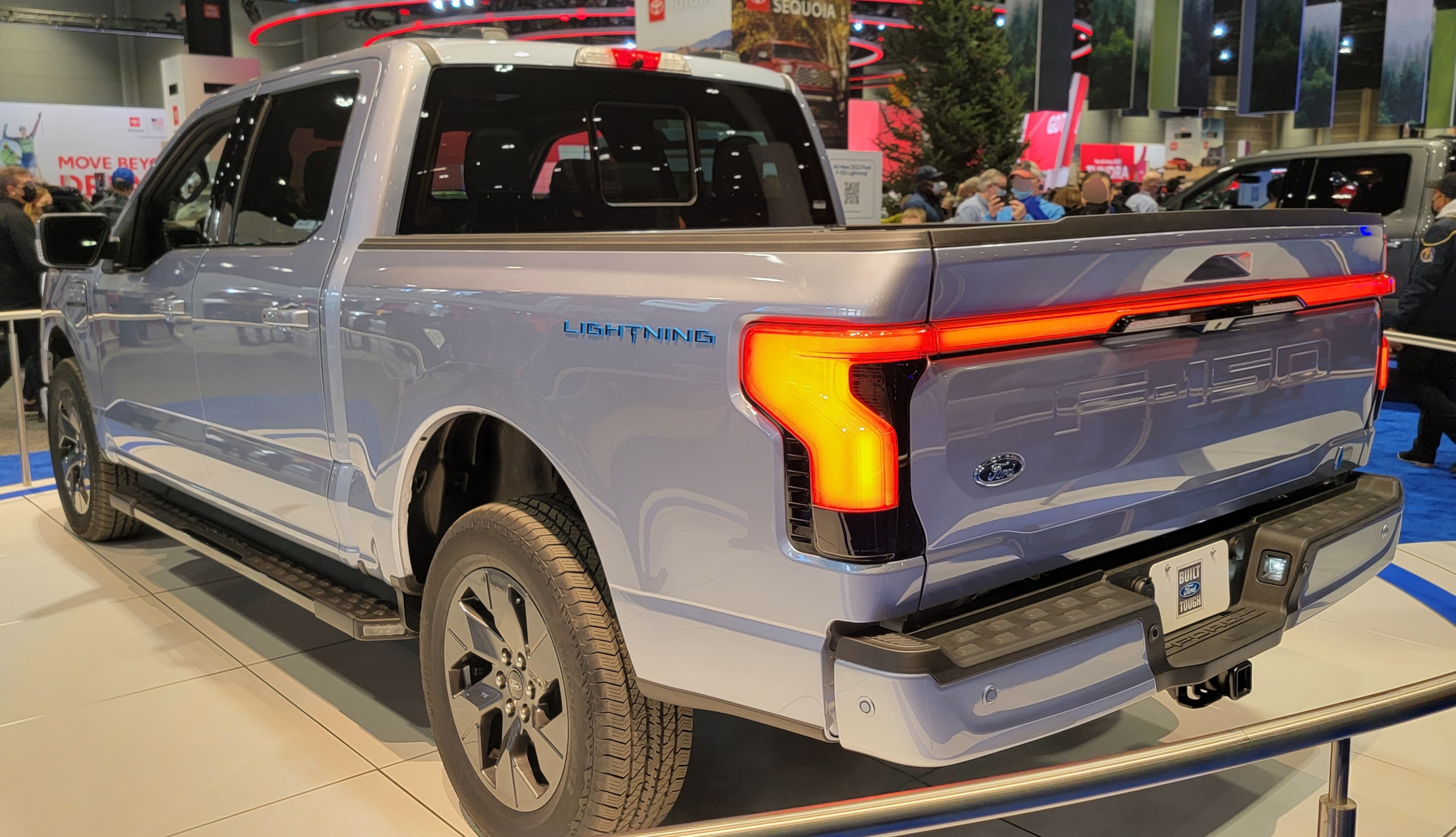
The podcast dives into significant shifts in the automotive industry, particularly the European Union's potential rollback of its combustion engine sales ban and Ford's $20 billion pivot back to gasoline vehicles. Guests Molly Boygon and Greg Lason discuss the implications of these changes, highlighting the divide between traditional automakers and EV manufacturers. They also explore the challenges of EV adoption, consumer preferences, and the impact of government regulations on the market. The episode wraps up with predictions for 2026, focusing on trade deals and the evolving landscape of the auto industry.
"You've got traditional automakers like VW and Stellantis pushing for this..."
Stellantis is a big car company that owns many brands like Jeep and Peugeot.
Stellantis is a multinational automotive group formed from the merger of Fiat Chrysler Automobiles and PSA Group, owning brands like Jeep, Peugeot, and Ram.
"When I was doing our story after the end of the individual EV tax credit in September and looking back on the history of the tax credit."
When you buy an electric car, the government can give you a discount on the price. This is called the EV tax credit and it helps make electric cars cheaper.
The EV tax credit is a government incentive that reduces the purchase price of electric vehicles, encouraging consumers to buy cleaner cars.
"In the background, looming is a domestic automaker who has been hugely successful manufacturing electric vehicles Tesla."
Electric vehicles are cars that use electricity stored in batteries to move, instead of gasoline or diesel. They don't emit exhaust fumes and can be cheaper to run over time.
Electric vehicles (EVs) are cars that run on electric motors powered by rechargeable batteries instead of internal combustion engines. They produce zero tailpipe emissions and often have lower operating costs.
"In the background, looming is a domestic automaker who has been hugely successful manufacturing electric vehicles Tesla."
Tesla is a company that makes cars powered only by electricity instead of gasoline. Their vehicles are known for being fast, having long battery ranges, and getting software updates like a smartphone.
Tesla, Inc. is an American automotive and energy company best known for producing electric vehicles (EVs) such as the Model S, Model 3, Model X, and Model Y. The company pioneered high-performance battery technology and over-the-air software updates for cars.
"Ford made some huge announcements this week dropping the F-150 lightning and taking nearly $20 billion in charges as it refocuses on gasoline and hybrids."
It’s a truck that runs on electricity instead of gasoline, giving it zero emissions and a lot of power for hauling.
The Ford F-150 Lightning is an all-electric version of Ford’s best-selling pickup truck, featuring a high-capacity battery and dual electric motors for off‑road capability.
"when Ford was talking about developing this uniform platform that it would use across its product lineup because that said to me, oh, this is really a move toward a unified ultimately electric software defined vehicle kind of transition."
It means the car’s main parts are controlled by computer programs, making it easier to update or add new features later.
A vehicle whose core functions—such as powertrain control, infotainment, and autonomous features—are managed by software rather than purely mechanical systems.
"Now, the F-150 lightning was once compared to the Model T by Ford executives. Now it's being discontinued after less than four years of production. That's quite a turn. What does this say about how badly Ford miscalculated EV demand?"
It’s the number of people who want to buy cars that run on electricity instead of gasoline.
The market demand for electric vehicles, reflecting how many consumers are interested in purchasing EVs.
"[1130.0s] What we now know in hindsight is that the EV buyer and the Ford F-150 buyer Venn diagram is really kind of like two circles."
An electric vehicle runs on batteries instead of gasoline, so it doesn’t emit exhaust fumes and is better for the environment.
An electric vehicle is a car or truck powered primarily by electricity stored in batteries, producing zero tailpipe emissions and often featuring regenerative braking.
"[1130.0s] What we now know in hindsight is that the EV buyer and the Ford F-150 buyer Venn diagram is really kind of like two circles."
A Venn diagram is a picture that shows how two groups of people overlap. In this case, it shows that most people who buy electric cars are different from those who buy the F‑150 truck.
A Venn diagram is a visual tool showing overlapping groups; here it illustrates that the customers who buy electric vehicles and those who buy Ford F‑150 trucks largely belong to separate groups.
"[1236.0s] Now, the blue oval city plant in Tennessee was supposed to be Ford's largest, most efficient manufacturing site for EVs."
The Blue Oval plant is a big factory in Tennessee that Ford planned to use for making electric trucks, but now it’s going back to building regular gasoline trucks.
The Blue Oval plant, officially the Ford River Rouge Complex in Tennessee, was intended to be Ford’s flagship electric vehicle manufacturing site but has shifted focus back to producing gasoline trucks.
"[1266.0s] But these are massive investments that auto makers have committed to electrification. And as we go back to the beginning of our conversation, some of it was because of sales mandates."
Electrification means making cars that run on electricity instead of gasoline.
Electrification is the automotive industry's shift toward electric vehicles (EVs) powered by batteries and electric motors.
"[1326.0s] It does, but here's why they're moving ahead and why it still makes sense. So Ford is completely out of capacity for these heavy duty trucks."
Super Duty trucks are big Ford pickups that can pull heavy trailers and carry a lot of cargo.
Super Duty refers to Ford's line of heavy‑duty pickup trucks (F‑250, F‑350, etc.) designed for towing and hauling heavy loads.
"[1346.0s] The output there is going to reach about 80,000 pickups once fully operational. They're going to start production in 2026. And now here is a key."
Tariff uncertainty means it’s hard to know how much extra tax will be added when cars cross borders, which can make production more expensive.
Tariff uncertainty refers to the unpredictable changes in import/export duties that can affect manufacturing costs and supply chain decisions.
"we just found out today as we speak that Prime Minister Mark Arnie said talks for the USMCA are going to start..."
USMCA is a trade agreement between the U.S., Mexico, and Canada that changes how cars are made and traded in those countries.
USMCA stands for the United States–Mexico–Canada Agreement, a trade deal that replaced NAFTA and affects automotive manufacturing and tariffs among the three countries.
"Now, Stellantis paused its Brampton retool GM is cutting a shift in Ashoah..."
GM is a big car company that makes cars like Chevrolet and Buick.
General Motors (GM) is an American multinational corporation that owns brands such as Chevrolet, GMC, Buick, and Cadillac.
Select text to request an explanation
This podcast is brought to you by Reynolds and Reynolds, the industry leader and automotive technology. Learn how Spark AI Reynolds Unified AI Data Layer can help you unlock your full potential by visiting rayray.com-spark-AI. Welcome to this weekend drive edition of Daily Drive for the third week in December 2025.
In Las Vegas, we're breaking down some of the biggest stories in the auto industry from the past week and looking forward to what's in store in the days ahead. Joining me today are Molly Boygon, tech and innovation reporter at Automotive News, and host of the Automotive News Shift Podcast. Molly, welcome to Weekend Drive.
Thanks, Kyle.
And Greg Lason, digital and mobile editor of our sibling publication Automotive News Canada, and the host of the Automotive News Canada Podcast. Good to have you back, Greg.
Thank you.
So, big news out of Europe this week, the European Union is expected to reverse the EU's effective ban on sales of new combustion engine cars from 2035.
This would be one of the most significant walkbacks in green policies we've seen from the EU. Greg, what's your read on this? What's driving this reversal?
Well, I think countries across the world have now hit a wall in terms of EV sales, and so then that means there's more money to be had making internal combustion engines.
I don't think countries can hit their targets, and I'm talking from a perspective from where I sit. It's really difficult to convince that middle class buyer to buy an electric vehicle.
So, why not roll back the standards and allow automakers to sell what it is the remaining part of the market wants?
And so, I think Canada is keeping an eye on it. The United States is keeping an eye on it. This is no one's alone in this.
We've seen problems in China, in the United States, in Canada, in Europe now. Bloomberg had a story this week.
This is the slow start to the unraveling, and then it happens quickly when these types of policies fall apart.
And this is what we're seeing now. It's just a domino effect around the world, I think.
Molly, it sounds like this decision has really divided the auto sector. You've got traditional automakers like VW and Stellantis pushing for this, but EV makers like Polestar are saying the technology is ready and consumers are ready. What do you make of that split?
It's really interesting because you read the story that we have up on our website, and there's a mention that these two different parts of the auto industry proceed.
The standards that are about to be rolled back as either benefiting or costing Chinese automakers.
So you have the traditional automaker saying, hey, how can we compete broadly with the low cost Chinese entrance that have entered the market in Europe if we can't even sell our internal combustion engine vehicles.
And then you have EV manufacturers like Polestar saying, well, then you're just seeding ground to the Chinese.
So it's really kind of like a different perception, depending on where you are in the industry. And the other thing that I'll say about this that I think is interesting.
When I was doing our story after the end of the individual EV tax credit in September and looking back on the history of the tax credit.
I was talking to people who said, you know, the US consumer is really different. There's a unique kind of independent spirit here in the US that really shapes against being told what to do.
Meanwhile, in Europe, these are people who are used to having different, you know, climate related standards imposed on the country.
They don't have the same natural resources of the United States. And then you look at this. And it's like, this is not actually, you know, this is, as Greg said, really a global trend.
And everyone is kind of watching what everyone else is doing. And it's really interesting to see the Europeans who have been so much on the cutting edge of some of this, you know, green climate driven race.
Regulation, walking some of it back Greg from a Canadian perspective, does this EU move have any implications for how automakers might be thinking about North American markets?
I think it has implications on how the government interacts with automakers. I think the Canadian government is watching closely what happens elsewhere because our zero emissions vehicle salesman, for example, is on pause.
And being reworked our tax incentives for purchases of EVs is on pause and being reworked. And so I think everyone is waiting for the other shoe to drop everywhere else.
And it is paralyzing production and development and R&D. I mean, how do you move forward when you don't know what the rules and regulations are going to be from not only year to year, but quarter to quarter?
I mean, we see these changes happening happening rapidly around the world and different parts of the world.
We're only 1.8% of the global auto business. And so rather than the automakers reacting, I think it's our government reacting to try and best benefit the automakers to make sure one, they still sell here too, they still build here.
And 3. That we're harmonized with as many countries or as closely as we can be harmonized with as many countries around the world as we can.
I just, I'm with Molly in that everybody's watching everybody else and no one is taking the lead. And typically there are two countries on the planet that take the lead.
It's either the United States or China. And they are rivals. And so eventually Europe and Canada are going to have to pick a side.
Now, from where I said, I think it's easiest to pick the side of our biggest trading partner, which is our neighbors to the south, the United States.
But this is really what's building is nobody really knows which card to play next because everything's changing so quickly.
Molly, you wrote a column this week that really digs into this idea of policy whiplash and the auto industry's role in creating it. Walk us through your thinking here.
Yes, so this was sort of driven by the back to back changes that happened in December.
First being the Trump administration's decision to propose a rollback of the corporate average fuel economy standards, which come out of NHTSA.
And the following week there was a hearing at the House Select Committee on China about China's encroachment and increasing relevance and threat to the domestic auto industry.
And for me, these two things stand in sharp contrast to each other. You have in one arena, the Trump administration doing everything it can to eliminate the federal support for the electric vehicle transition.
And then you have the next week, the domestic auto industry screaming about the threat to the domestic industry from China, which has enabled its electric vehicle dominance through among other things subsidies and a consistent domestic policy.
So I decided to go back and look at the receipt, which is kind of my playbook. So people act like the Biden administration and to an extent, the Obama administration imposed these regulatory standards on the innocent auto industry, which was looking up and shielding itself from the big wig beltway bureaucrats.
When in reality, the way that the industry responded was to first of all call for support for its own electric vehicle transition as Tesla was kind of breathing down everybody's necks.
And second of all, to cheer when the Biden administration announced these targets announced that it would be revamping the EPA mission standards and cafe.
And so I frankly got a little bit annoyed when I heard in the aftermath of the cafe standards, Jim Farley say we were forced to sell EVs because regardless of how you feel about the EV transition, that is not what happened.
The domestic auto industry worked hand in glove with the Biden administration to create these standards. Is it true that EV demand did not materialize as anticipated? Absolutely.
But you cannot say that the domestic auto industry was sort of outside of the larger conversation that the government was having around these standards.
And the other thing that I'll say that's newly making me annoyed is we are seeing average transaction prices on average above $50,000 for new vehicle sales in the United States.
There is all of this talk about oh, there's an affordability crisis. There's affordability crisis. On paper, I agree that's outrageous, but people are still buying these vehicles.
And the automakers are still selling them at MSRP above $75,000. So what is everyone talking about that EVs are driving up the average transaction price? That is true.
But you still have a internal combustion engine vehicles that are driving up the average transaction price. And you also have consumers still buying these vehicles.
And finally, you have the automakers either applauding or sitting idly by functionally as the government eliminates the incentives that it created for the EV transition as everyone is freaking out about China.
So I'll get off my soapbox now, but that's the basic thought behind the column.
Well, you pretty much answered my next question. Greg, do you have any thoughts on this?
Two actually, one, you know, average transaction price going up. I've heard from two different sources over the last month or so that prices for internal combustion engine vehicles aren't only going up because of tariffs in some cases.
They're going up because they have to pay for R&D for electric vehicles some way. So in a roundabout way, electric vehicles make internal combustion engine vehicles cost more.
Not only are EVs expensive and not affordable to many, it's increasing the price of the internal combustion engine. I mean, that is, that is an issue that hasn't been tackling it's tough to prove how much money they're moving around in those MSRP's to pay for the R&D for the electric vehicles.
I think that is something that needs to be known in terms of where I'm at.
Now, the government consulted with the automakers on the zero emissions vehicle sales mandate, but this up here was a mandate.
This was, they had to hit these targets of 20% zero emission vehicle sales in 2026, 100% by 2035.
These aren't necessarily in place in the United States, federally, as tough and as difficult as they were over here.
In some ways, well, yeah, it's, they're not forced to sell them, but they are penalized if they don't, and they are penalized in a big way in Canada if they weren't going to hit those targets.
And as I said, that policy is in review for those reasons because someone has to pay that penalty.
If an automaker has to sell pay $20,000 because it didn't sell enough EVs, so they, they felt 10 short and now they have to, they have to pay $200,000 to the government.
That's who's paying for that $200,000, the customer next in line.
And so these are the hidden costs of the EV revolution that don't get a lot of light shone upon them as we go through and develop all this policy at a governmental level.
It is definitely true that the automakers are subsidizing their electric vehicle production, R&D with, by, you know, by selling internal combustion engine vehicles.
That's absolutely true. And I'm also not here to act like EVs are not more expensive because they are.
I guess what I'm trying to get at is you have kind of the industry talking out of both sides of its mouth saying, you know, we can't do this.
We were never going to be able to do this. This was something that it was imposed on us by the government.
And then saying, you know, four years ago, we need to do this. It's imperative to our survival.
In the background, looming is a domestic automaker who has been hugely successful manufacturing electric vehicles Tesla.
And then you now have the domestic auto industry still warning about a threat from the encroachment of China, who's manufacturing cheap electric vehicles using the government subsidies that the domestic industry is actively seeking to dismantle.
So I take your point, Greg. And I also think that, like I said, I think that there were a lot of reasons why the industry got these projections wrong.
Electric vehicles are not right for the, you know, the volume of consumers that were anticipated.
And at the same time, I think that on some level, that's an industry problem more than it is a government problem and like a failure to sort of anticipate the consumer needs and the things that were actually going to drive people to purchase electric vehicles, which as it turns out, bringing it back around to the first part of our conversation is not going to end up being the climate play.
Here's my question. And this will answer what's gone wrong and all of this. Why didn't we let the auto industry act as if it was a cell phone industry or a computer industry?
You know, no one mandated the iPhone, no one mandated we carry computers in our pocket, but what happened was, and I can speak from a unique perspective because I did cover slightly on the peripheral blackberry when I was up in glove.
This is a company that revolutionized the cell phone industry and then suddenly almost went belly up and really did in the cell phone industry because Apple did something better. Google did something better.
All of these companies came along and no one mandated a thing. You know what happened? The market drove the decision, innovation drove the product and here we are now all carrying our personal favorite computers in our pockets.
We didn't need a government to stick its nose in and mandate that happen, but what happened all around the world at different levels of jurisdictions, whether it states provincial or federal.
People said you must make and sell electric vehicles. The automakers would have done it. Had you given them the time and they probably would have been better quality and cheaper.
And what happened to the domestic market for manufacturing consumer electronics?
It's true. Where is it? Where is it? Where is it? Oh, it's all in China. No, exactly. I totally understand that, but you can't have it both ways.
You can't mandate something and then still do it cheaply. You just got to let the market do its thing and look, the legacy automakers out of Detroit.
I have been saying since I started this job a decade ago that someday Ford is going to eat Tesla's lunch and Tesla's lunch is getting smaller and smaller by quarter by quarter.
They're not selling as many electric vehicles. They're focused on robots and robot axes, but Ford, for example, is still doing its thing. Yes, it cut the lightning, but the mocky still still doing well.
And I think there's a lot of people out there that would still bet on a legacy automaker over some of the other newcomers and choose one over someone from China.
Even the domestic automakers are not betting on the domestic auto industry. That's true.
See, ladies and gentlemen, this is what happens when I get backwards hat, Greg and turtle neck molly, holy heck. All right.
Coming up, we'll talk about Ford's massive pivot away from EVs and back to gasoline and hybrids and what it means for its Canadian operations. That's next on Weekend Drive.
General Motors is ramping its autonomous driving technology, targeting a 2028 launch for its eyes off driving system.
On this week's episode of the Automotive News Shift Podcast, GM's Ryan Fowler and Jason Equlement join the show.
They talk about how the automaker is rolling its former cruise robot taxi unit into its super cruise team and its ambitions for self-driving tech.
The cruise is bringing their expertise and just raw horsepower in embedded AI modeling.
I'm Molly Boygon. Join me and Automotive News General Motors reporter Lindsey VanHully on shift available this Sunday, wherever you get your podcasts.
When your AI tools are siloed, lost data, duplicate entries and confusion are inevitable. Spark AI isn't another AI tool to manage.
Instead, it's a unified AI data layer changing the game by ensuring your solutions are making life easier and working at their highest capacity.
Don't miss Spark at NADA. Watch Ray, our new AI assistant, bring everything together in one intuitive command center for smart, fast decision making.
Ray answers your questions at any time providing instant messaging, insights, help videos or live support.
Instantly analyze your sales history and market trends or generate a sales report with one prompt.
You can even ask which cars to buy an auction today for the best return. Schedule an appointment at our booth for everything from a short demo to a full retail management system demonstration using our core AI products.
Welcome back to Weekend Drive. I'm Kellyn Walker with Molly Boygon and Greg Lason. Ford made some huge announcements this week dropping the F-150 lightning and taking nearly $20 billion in charges as it refocuses on gasoline and hybrids.
Molly, this feels like a pretty dramatic shift. What stands out to you?
The thing that I'm really thinking about with this is it feels like sort of tone shift from earlier in the year when Ford was talking about developing this uniform platform that it would use across its product lineup because that said to me, oh, this is really a move toward a unified ultimately electric software defined vehicle kind of transition.
And as you said, it is a sort of dramatic shift at least tonally saying, okay, you know, this previous announcement was about advanced technology and this particular direction. And now we're kind of entrenching on internal combustion engine vehicles and gasoline.
Now, the F-150 lightning was once compared to the Model T by Ford executives. Now it's being discontinued after less than four years of production. That's quite a turn. What does this say about how badly Ford miscalculated EV demand?
The F-150 lightning is so interesting because I think that Ford said this is our flagship vehicle. It's really cool. People love it. People recognize it. And, you know, therefore it would make a great attractive option for a potential EV buyer.
What we now know in hindsight is that the EV buyer and the Ford F-150 buyer Venn diagram is really kind of like two circles. These are not really the same buyer. And so, you know, people who are going to transition to electric vehicles may be looking for smaller kind of, you know, more vehicles more conducive to city driving. And so I think it was kind of like a cultural mismatch on Ford's part.
Greg, what are your thoughts?
Look, the Ford F-150 has been the best selling vehicle, not truck vehicle in Canada for something like two decades. I mean, it's just it's unbeatable north of the border.
But the F-150 lightning buyer, as Molly said, is not the guy on the oil rig in Alberta. It's not the guy on the farm in Saskatchewan. It's not the guy driving his kid to hockey in northern Ontario.
They're completely different people with completely different needs while the vehicle seems to be similar. They're not. Now, the crazy thing is everyone that drives one loves them.
Anyone that gets in an electric vehicle loves them. But you got to get them in there. But that vehicle has to do what it is the consumer wants to do. And when it comes to the F-150 lightning, it just didn't meet the needs and the range and the convenience and other things that Canadians want in a lot of rural people.
In a lot of rural places where trucks are king. And that's why it failed up here. You know, at one point, I remember the first year they sold the average price in the first year that the Ford F-150 lightning was on sale in Canada. The average transaction price was $107,000 Canadian.
The average transaction price for an F-150 at that time probably roughly around $70,000. There are very few people who are going to plunk down an additional $37,000 for a vehicle.
Now, the blue oval city plant in Tennessee was supposed to be Ford's largest, most efficient manufacturing site for EVs. Now, it'll build affordable gas-powered trucks. That's a massive strategic reversal for what was supposed to be a flagship facility. Greg, what are your thoughts?
I mean, it's devastating for that community. What goes in there next? It's a huge investment. We kind of heard that it was on rocky ground right from the start in terms of hiring, getting quality folks in there.
But these are massive investments that auto makers have committed to electrification. And as we go back to the beginning of our conversation, some of it was because of sales mandates.
Because of electric vehicle incentives. And all of that has gone away now. And look, I'm not here to sympathize or empathize with the auto maker, but it's a difficult thing to be in to pour that kind of money into your business and then not be able to turn around and make a profit from it.
And all of it really predicated on government regulation, government incentives, and the lack of public appetite for those things. It's tough situation to be in. It's not business 101. Put it that way.
And Greg speaking of Ford's manufacturing footprint, the company is moving ahead with its super duty retool at the Oakville plan in Canada. Despite all this tariff uncertainty, that seems to put Ford at odds with GM and Stellantis up there. What's going on?
It does, but here's why they're moving ahead and why it still makes sense. So Ford is completely out of capacity for these heavy duty trucks. So we are making what it is Americans want and need and Canadians for that matter.
You stamping plant is nearly complete. So it's not just assembly. There are some other jobs and other parts of the supply industry within that facility.
The output there is going to reach about 80,000 pickups once fully operational. They're going to start production in 2026. And now here is a key.
The engines for those super duties come from Windsor. So there isn't a lot of transportation and logistics needed and you're avoiding some of the tariffs back and forth across the border. So it still makes it appealing for Ford to manufacture super duty trucks in Oakville Ontario and their engines in Windsor.
I've checked with sources everything that's going on with Ford south of the border has no impact on told on what's going to be built in Oakville. So it is full steam ahead.
They are profitable vehicles and the logistics and the supply chain are here and sort of self contained within Ontario to make it a little less burdensome for the tariff issue.
And of course, you know, we just found out today as we speak that Prime Minister Mark Arnie said talks for the USMCA are going to start in January and earnest. So we're getting closer to reviewing and reworking that deal and hopefully have something before those trucks are even rolling off the line in Oakville.
Now, Stellantis paused its Brampton retool GM is cutting a shift in Ashoah, but Ford is barreling ahead. Why do you think Ford is taking a different approach?
I think they were all in on this factory long ago. You know, you've heard me say this before an idle factory is the worst thing to have in your community and it's the worst thing for an automaker to have because it can just simply ignore it. It really couldn't ignore Ford Oakville because it had started retooling there long before.
Donald Trump was reelected long before the tariffs went in. Brampton was completely idle. And so it was easy to shift that projected Jeep Compass production to Belvedere, Illinois for general motors. It was easy to shift about 50,000 units out of Ashoah and into Fort Wayne because they had capacity there.
This is just a completely unique situation and Windsor for Stellantis is unique in that it's the only place that builds many vans. It's the only place that builds muscle cars for Stellantis.
So they are on solid footing and solid ground just because of what it is they make and when they started the retooling.
Molly, you have any thoughts?
I think it's really interesting this sort of hyper regionalization of supply chain like, you know, that was happening with the US MCA and with NAFTA and now the companies that are really are at an advantage are the ones who have even as Greg said more contained more
sort of manageable supply chain for these different products.
Great. Well, before we wrap up, I want to note that this is our last weekend drive episode for 2025 and we're definitely ending with a blast here.
Looking back at the year and ahead to 2026, what are your what are you most interested in seeing play out any predictions or just anything you're curious about?
For me, all lies on US MCA. I'm fascinated by it. I'm consumed by it. I think it is the single biggest trade deal that these two countries and Mexico will ever sign.
I think Donald Trump is contrary to what some people believe a strong negotiator in this particular deal. I'm not saying in all of them, but I think this has been fascinating for me to watch these elevated tariffs that he can pull away from the table.
While Mark Carney keeps his cards close to his vest and those cards are critical minerals, for example, and of course supply management.
And for those that don't know, we we pour out millions of liters of dairy every year and Donald Trump hates that.
And so the automaker is his bargaining chip and what he wants to give us. I mean, it is just fascinating from where I sit and it is going to be monumental.
And we hear it all the time fortress North America. I am shocked that we're not at this point yet to battle China in the auto industry together as three countries on one continent.
That's what I am most looking forward to watching. I think it's going to be an insane first six months of the auto industry as this deal expires on July 1st, but we'll see if they can get anything done.
I'll be watching USMCA the Supreme Court decision on the imposition of the tariffs and the rare earth's deal that the US struck with China is up for review next November.
And that is just industry managed to kind of kick that can down the road for a little bit, but it is a really long term interesting problem that the US continues to rely on China.
It's not just for material, but really for rare earth's processing that is just so key to automotive manufacturing here and everywhere else around the world.
And that's why we're here, Molly. That would be the bargaining chip. I don't think it's a coincidence that that's up for review in November after we get a new USMCA sometime in the middle of the summer. That is not lost on me. Keep an eye on it.
Thank you so much for joining me.
That's all for this weekend drive edition of Daily Drive. I'm Kellyn Walker. Thanks to automotive news executive producer Jake near for his help on today's podcast.
You can get the latest news on EV policy, manufacturing and everything happening in the auto industry at auto news.com.
Come back on Monday as we begin our year-end series looking back on all of the biggest stories and trends from 2025.
We kick things off with a conversation with our auto maker team about how manufacturers navigated tariffs and shifting federal policies with a focus on Stellantis and Ford.
For all the criticism that Ford has gotten probably rightly for their quality was it should be noted that they have made some improvements this year.
If you love to hear from you, let us know what you think of the show when the topics we covered today.
Send us an email at DailyDrive at autonews.com or leave us a voice mail at 313-444-2774.
If you enjoy the podcast, remember to like, leave a review and subscribe so you never miss an episode.
Request an explanation for:
1 cars
1 cars featured
Request an Explanation
Heard something you'd like explained? We'll add it to this episode.
Sign in to request explanations for terms you heard.
Want to learn more?
Browse our glossary for plain-English explanations of automotive terms, jargon, and concepts.
See something that's not quite right? Our annotations are AI-generated and can sometimes miss the mark.
Click the flag icon on any annotation to suggest a correction.