Defender vs. Grenadier, Tea on the Tailgate's origin story & are V8s the future?
About this episode
Land Rover fans get an off-road course walkthrough—complete with “Eddie's bomb holes,” traction-control moments, and stories about keeping cars together (or not) on the trail. The chat then pivots to community: Tea on the Tailgate’s origin in Dorset and how it grew into free, capped-capacity meetups. Along the way, they debate Defender vs Grenadier, discuss retrofitting real air con, and ask whether V8s are the future for daily driving and long commutes.
In this very special episode, Martin and Steve are in pride of place on the Salmon Sofa on a dauntingly large stage at the inaugural Big Land Rover Fest.
The boys talk the best entry point into Land Rovers, why they truly are the most capable off-roaders available, as proven on the Big Land Rover Fest off-road course.
The guys are joined by Grenadier owner (don't hold it against him) and off-road driving instructor Gareth Jex, whose Lantra training was instrumental in helping build and fine-tune the off-road course. Gareth also chats about the greenlaning tours that he runs with his company, Surrey 4x4 Tours and Training, and the electric EV Spartan 4x4 is capturing the imagination of show-goers.
Next up to the Salmon Sofa is Tim Brown from Dorset Land Rover Club, who is the man behind the recent Tea on the Tailgate revolution. How did it start? Where are things heading? Hear it all from the man himself as he joins Martin and Steve on the LRM Podcast.
Fitter Mat is back next, to talk all about his Range Rover and his ownership journey – from fault code clearing on-the-fly, optional extras and general wafting around.
As always, we love to get your feedback and questions, so fire them over! [email protected],uk – we'd love to read them. Enjoy the episode.
off-road course
"you've got to go [149.9s] through Eddie's bomb holes. So that's the trickiest part of the course. [152.8s] He's laughing because it's named after his good self."
An off-road course is a set path with rough terrain and obstacles meant to challenge the car. They’re saying that part of the route is especially difficult.
An off-road course is a planned route or obstacle layout designed to test and demonstrate a vehicle’s traction, ground clearance, and low-speed control. In this segment, it’s described as having “bomb holes,” making it the trickiest part of the event.
bomb holes
"you've got to go [149.9s] through Eddie's bomb holes. So that's the trickiest part of the course. [152.8s] He's laughing because it's named after his good self."
“Bomb holes” here means crater-like bumps and ruts on the track. They’re the kind of obstacle that can really shake up the car and test how well it grips the ground.
“Bomb holes” is an informal, event-specific name for crater-like ruts or potholes used as obstacles on an off-road course. The phrase implies a rough, uneven surface that can test suspension travel and traction.

Freelander two
"I looked at my Freelander two, which I just finished fixing. [168.5s] And I thought, I'm going to go in the Freelander two. [171.3s] And, and there's reasons for that. [174.0s] Yes. Is that because it has air conditioning?"
The Freelander 2 is a Land Rover SUV that can handle dirt roads and off-road trails better than most regular SUVs. They’re saying it’s a smart, more affordable choice for off-road events and camping.
The Land Rover Freelander 2 (often called the “Freelander two”) is a mid-size SUV built for real-world practicality with genuine off-road capability. In this segment, the host specifically chooses it for an event after finishing repairs, and argues it can deliver an excellent off-road/camping experience without Defender-level spending.
off-road and go camping
"to have an amazing time, come out to one of these events, [201.9s] go off-road and go camping, do all those things that we love. [205.3s] There are entry level options and a Freelander two is one of the best."
They’re talking about using the vehicle for off-roading and then camping at the event. It’s about having the right kind of SUV for the whole weekend, not just the trail.
This refers to using the vehicle for both trail driving and an outdoor camping setup, which changes what matters—like cabin comfort, storage, and the ability to handle dirt access roads. It’s presented as a realistic “entry level” way to enjoy Land Rover-style events without buying the most expensive Defender.

Jeep Wranglers
"In fact, my own nephew himself is watching there and he's proudly, uh, [267.7s] showcasing his Jeep T-shirt. [269.8s] So Jeep Wranglers is obviously a good, capable car. [274.2s] It is. You're getting silence from me, mate."
The Jeep Wrangler is a popular off-road SUV known for doing well on trails. The hosts mention it as another vehicle that can handle the kind of course they’re talking about.
Jeep Wrangler is Jeep’s iconic off-road SUV, built around a strong reputation for trail capability. Here, the hosts use it as an example of a “capable car” in the same off-road environment as the Land Rover discussion.

Toyota Hilux
"... have a few around yesterday and, uh, there was a Hilux and a Patrol. I don't know the model of Patrol so..."
The Toyota Hilux is a pickup truck made for hauling and tough driving. People like it because it’s built to last and it’s commonly used for work. The podcast mentions it because the speaker saw one at an event or gathering.
The Toyota Hilux is a rugged pickup truck known for durability and widespread use in work and off-road settings. It’s often mentioned in car conversations because it’s a dependable platform and a common sight in many regions. In the podcast, it’s referenced as one of the vehicles the speaker saw alongside another truck.

Land Rover Discovery
"We set out the elephants footsteps and every defender and every discovery and even every Freelander that's gone through there has done,"
The Land Rover Discovery is an SUV that can do more than just normal road driving—it’s meant for rougher terrain too. They’re using it as an example of a Land Rover that can handle the off-road course they’re describing.
The Land Rover Discovery is a Land Rover SUV line that’s designed to be both family-friendly and capable off-road. In this segment, it’s grouped with the Defender and Freelander as vehicles that have successfully navigated the same off-road route.
traction control
"They've been dropping each wheel in, the suspension's been moving, traction control's been working."
Traction control is an electronic system that detects wheel slip and reduces engine power and/or applies brakes to the slipping wheel(s). In off-road conditions, it helps maintain forward motion when tires lose grip, though it can’t always prevent getting stuck.
suspension
"They've been dropping each wheel in, the suspension's been moving, traction control's been working."
Suspension is what lets the wheels move over bumps and ruts. In this test, they’re pointing out that the suspension keeps moving so the tires can stay in contact with the ground.
Suspension is the system that connects the wheels to the vehicle and allows the wheels to move up and down over uneven ground. Here, the speaker emphasizes suspension articulation—how the suspension keeps working as each wheel is dropped into the obstacle.
recovery points
"[549.7s] It was a cosmetic extra, Martin. [551.9s] It was a cosmetic. [552.7s] I've got these little funky orange strips [555.0s] that go over my recovery points,"
Recovery points are strong spots on a 4x4 where you can attach a tow rope or winch cable. They’re used when you need to pull the vehicle out of trouble off-road.
Recovery points are reinforced attachment locations on a vehicle used for towing or winching during off-road recovery. They’re designed to handle the high loads involved when pulling a stuck 4x4 out of mud, sand, or snow.
turbocharger
"since we've had a Freelander turbo update."
A turbocharger is a device that uses the car’s exhaust to spin a fan that pushes extra air into the engine. That extra air makes more power, but it also creates heat—so the car uses an intercooler to cool that air.
A turbocharger is a forced-induction device that uses exhaust gases to spin a turbine, compressing more air into the engine. More air allows more fuel to be burned efficiently, improving power—especially under load. The segment’s intercooler failure is directly tied to how turbo systems manage heat.
intercooler
"And it turned out that the intercooler had split where I couldn't see it was behind the bumper."
An intercooler is a radiator-like cooler for the air that the turbo squeezes into the engine. If it cracks or splits, the turbo air can’t be cooled properly, and the engine can run poorly or be at risk.
An intercooler cools the compressed air from a turbocharger before it enters the engine. Cooling the intake charge helps improve efficiency and reduces the risk of knock/overheating. Here, the intercooler “split” behind the bumper, which is why the car needed a repair.
Spartan 4x4
"We've also got a fully electric Spartan 4x4. Do you know what?"
The Spartan 4x4 is discussed as a fully electric off-road vehicle with four-wheel drive (“4x4”). The host emphasizes it’s unusual and rare, and they want to see one in person—suggesting it’s a niche EV built for rugged use rather than mainstream commuting.

Ineos Grenadier
"Generally, if you were going to buy brand new 4x4 and you had to choose between a Grenadier, an Ineos Grenadier, or a new Defender, I want to know who would buy which."
The Ineos Grenadier is a tough off-road truck made to handle rough trails. It’s built with a traditional, rugged mindset—more “go anywhere” than “city comfort.”
The Ineos Grenadier is a modern, purpose-built off-road 4x4 designed around classic, rugged engineering. It’s known for a body-on-frame-style approach and a strong focus on durability and capability rather than luxury comfort.

Land Rover 110
"You have got Land Rovers as well. We have got 110, 130, two Disco twos and a Disco one."
The Land Rover 110 is a long-wheelbase Land Rover built for tough, practical use. The “110” is basically a model name tied to its size, not an engine spec.
The Land Rover 110 is a classic British off-road SUV/utility platform known for its long-wheelbase layout. In Land Rover’s lineup, the “110” refers to the wheelbase length, and it’s closely associated with the brand’s rugged, work-capable heritage.
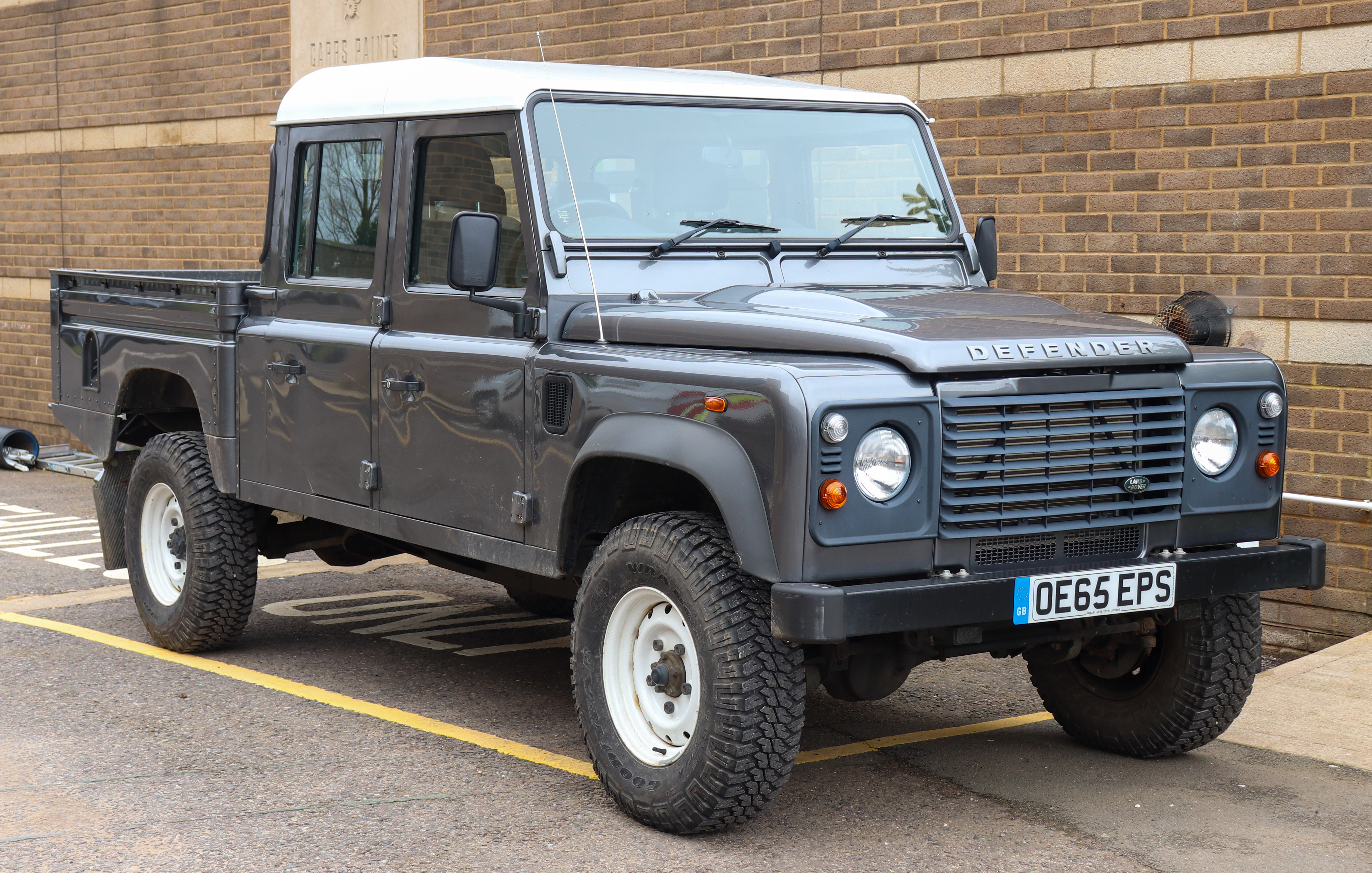
Land Rover 130
"You have got Land Rovers as well. We have got 110, 130, two Disco twos and a Disco one."
The Land Rover 130 is a bigger, longer version of the classic Land Rover. The “130” is part of the model naming that points to its length and capacity.
The Land Rover 130 is the longer-wheelbase sibling in the classic Land Rover utility family. Like the 110, the “130” is a wheelbase-based naming convention, and it’s typically associated with cargo/people-hauling versatility.
daily driver
"So you can dress it up and, you know. You need a nice daily driver, a practical car."
A “daily driver” is the car you use most days for normal life—work, errands, and commuting. It’s the opposite of a car you only take out occasionally.
A “daily driver” is the car you use regularly for everyday tasks like commuting, errands, and school runs. In enthusiast talk, it often contrasts with more specialized vehicles like off-road rigs or weekend project cars.

Land Rover 90
"One of our customers has just arrived in his 90, and he's on the phone to the AA."
This is a short version of the Land Rover Defender. It’s built to handle rough use, but in this story it’s having a major problem that’s bad enough to call for help.
The Land Rover Defender 90 is a short-wheelbase Defender variant known for its compact proportions and off-road capability. In this segment, it’s mentioned as a customer’s vehicle that’s experiencing a serious engine-related issue requiring roadside help.
head gasket
"We need a head gasket and a turbo."
The head gasket is a critical seal inside the engine. If it goes bad, the engine can start mixing fluids or overheating, and the repair is usually expensive and labor-intensive.
A head gasket is the sealing layer between the engine block and the cylinder head that keeps combustion pressure and coolant/oil passages separated. If it fails, you can get overheating, coolant loss, or oil contamination—often requiring significant engine disassembly to repair.
Land Rover ownership
"But we sold her on. It's what makes up the rich tapestry of Land Rover ownership, really, isn't it?"
“Land Rover ownership” is used here as a shorthand for the real-world experience of running these vehicles—often involving frequent tinkering, repairs, and parts sourcing. The speaker frames head-gasket/turbo trouble as part of the brand’s reputation for hands-on ownership.
roof tent
"Some people are towing, some people got roof tents. These cars are working hard, you know,"
A roof tent is a tent that sits on top of the car. People use them for camping because they’re easier to set up and keep you off the ground.
Roof tents are camping tents mounted on the vehicle’s roof rack, allowing people to sleep elevated off the ground. They’re common on overlanding-style trips because they’re quick to deploy and can be used in rough or uneven terrain.
cooling systems
"So they're cooling systems are under a lot of pressure."
Cooling systems are what keep the engine from overheating. When you drive hard off-road, the engine can get hotter, so cooling matters a lot.
Cooling systems are the parts that keep an engine and other heat-producing components within safe temperatures. Off-road work can increase heat load because of sustained low-speed effort, heavy throttle use, and airflow changes.
four by four
"and we were saying four by four as Land Rover is everything."
A “four by four” is a car/SUV that powers all four wheels. That helps it grip better when the road is slippery or rough, like dirt or mud.
“Four by four” (4x4) means a vehicle has drive power to all four wheels. That improves traction on loose surfaces like mud, sand, and uneven off-road terrain.
M 25
"take it off-road, do lots, and then you're on the M25 going home."
The M25 is a big highway near London. They’re using it to show that the vehicle can do off-road stuff and still handle regular commuting.
The M25 is a major motorway loop around London in the UK. Mentioning it emphasizes the contrast between off-road capability and normal highway driving in the same vehicle.
three-and-a-half-ton trailer
"so you can do such a thing, and then tow a three-and-a-half-ton trailer. Just brilliant."
That phrase means they’re towing a very heavy trailer. Hauling something that heavy puts extra demands on the vehicle, especially stopping and keeping the engine cool.
A “three-and-a-half-ton trailer” indicates a heavy towing load, which stresses a vehicle’s drivetrain, brakes, and cooling. Towing at that weight is a key real-world test of a 4x4’s capability and stability.
green-aining tours
"Another big part of what you do is you do green-aining tours. Yes. Tell us a little bit about that side of things."
This sounds like a type of guided tour they run. The exact wording is a bit unclear in the transcript, but it’s likely about taking people on off-road or countryside routes in a planned, organized way.
“Green-aining tours” appears to refer to guided off-road experiences focused on environmental or countryside routes, likely a local program name or a specific tour style. Because the transcript spelling is unclear, listeners may need clarification on the exact term and what the tours involve.
green lanes
"...we took people out on basically joy rides around the green lanes... and have maybe seen people green-lanning on social media..."
“Green lanes” are legal off-road tracks in the UK, usually dirt or rough lanes. People use them to drive 4x4s in a more adventurous way than on regular roads.
“Green lanes” are UK off-road routes—often unpaved tracks and byways—that are legal to use under specific rules. They’re popular with 4x4 owners because they offer a more adventurous driving experience than normal roads, while still being accessible for guided tours.
guided green lane tours
"So we stopped doing that, and we do passenger lane and guided green lane tours. We do our signature one is the Surrey Hills..."
A guided green lane tour is a planned trip where someone takes passengers along legal off-road tracks. Here, they changed how they operated because new local rules stopped them from running it like a taxi.
A guided green lane tour is an organized trip where a driver leads passengers along legal off-road routes. In this segment, the host explains that changes in local rules prevented their operation from being treated like a taxi service, so they shifted to guided tours instead.
Surrey Hills
"We do our signature one is the Surrey Hills, and everybody says, oh, there's no green lanes in the Surrey Hills."
The Surrey Hills is a countryside region in England. The host is saying it’s actually a great place for legal off-road “green lane” driving, even though people often think otherwise.
The Surrey Hills is an area in southeast England known for scenic countryside and—importantly for this discussion—access to legal green lanes. The host mentions it as their signature tour route and addresses the common misconception that there are no green lanes there.
Normandy
"...we've just started doing France as well. So we do D-Day tours and Normandy and the Somme, do the battlefields and all that kind of stuff."
Normandy is a region in France that was a major World War II battleground. The host mentions it because their tours include D-Day and related battlefield history.
Normandy is a region in northwest France that’s central to World War II history, especially the D-Day landings. The host ties it to their tour offerings, including D-Day tours and battlefield visits.
the Somme
"So we do D-Day tours and Normandy and the Somme, do the battlefields and all that kind of stuff."
The Somme is a part of France known for major World War I battles. The host is saying their tours cover those historic battlefield areas.
The Somme refers to the Somme region in northern France, famous for some of the most significant and deadly battles of World War I. The host includes it as part of their guided battlefield tour route.
byways
"So we're Green Lane Association tour guides. [1005.2s] And we show people how to use TrailWise 2, TW2, [1008.3s] showing all the byways on the internet."
“Byways” are specific kinds of roads or tracks you can drive on, often less maintained than main roads. The point here is that you need the right info so you don’t end up on the wrong or closed route.
In the UK context, “byways” are designated routes that can include unpaved or track-like roads used for off-road driving. The hosts emphasize that knowing the correct byways (and avoiding outdated listings) is key to staying on permitted routes.
TrailWise 2
"And we show people how to use TrailWise 2, TW2, [1008.3s] showing all the byways on the internet. [1011.8s] There's a lot of bad info out there."
TrailWise 2 is an app that helps you plan off-road routes. The idea is that it shows you where you’re allowed to drive and helps you avoid outdated or wrong trail information.
TrailWise 2 (often shortened to TW2) is an off-road trail-planning app/service that helps drivers find routes and understand where they can legally and safely go. In this segment, it’s positioned as a way to replace unreliable online info with curated, up-to-date byway guidance.
TW2
"And we show people how to use TrailWise 2, TW2, [1008.3s] showing all the byways on the internet."
TW2 is just a shorter name for TrailWise 2. It’s the same off-road route information system being discussed.
TW2 is the shorthand name for TrailWise 2. Here, it refers to the same tool used to map and access byway information for off-road driving.
glass
"Just join Glass, support the charity, [1026.9s] and then you get this TW2 access, which is fantastic, really good."
“Glass” sounds like a group or platform you can use to support the charity mentioned. The speaker says doing that gives you access to TrailWise 2.
“Glass” is referenced as a way to support a charity and gain access to TW2. In this context it functions like an organization or platform involved in membership/access, rather than a car-related brand.
Ordnance Survey map
"You can still use an Ordnance Survey map,"
An Ordnance Survey map is a very detailed UK map. Off-road drivers use it to double-check where routes and paths really go, especially if you’re relying on an app.
An Ordnance Survey map is a detailed UK mapping product known for accurate terrain and route information. In off-road planning, it’s often used as a reliable backup alongside apps to confirm where tracks and access points actually are.

Fiat Panda 4x4
"But like last weekend, I had a Fiat Panda 4x4. [1085.6s] Oh yeah. [1086.2s] Fantastic, bit low to the ground,"
The Fiat Panda 4x4 is a small car with all-wheel drive. They’re using it as an example that you don’t need a huge lifted truck to have fun off-road.
The Fiat Panda 4x4 is a small, budget-friendly compact 4x4 known for being surprisingly capable off-road for its size. The host mentions it to show that even a “bit low to the ground” vehicle can still handle countryside tracks.

Suzuki Jimny
"Fantastic, bit low to the ground, Jimny, lots of Jimny's actually, but mainly Defenders a..."
The Suzuki Jimny is a small SUV built for off-road driving. It’s popular because it’s compact and can still handle dirt tracks and uneven ground. The podcast mentions it as a common car people see often.
The Suzuki Jimny is a small, body-on-frame off-road SUV that’s popular for its simplicity and go-anywhere attitude. It’s often discussed because it’s compact, relatively easy to maneuver, and can handle rough terrain despite its size. In the podcast, it’s mentioned alongside other off-road favorites, with attention to how low it sits and how many are seen around.
box standard
"You don't need to put six foot's worth of suspension lift on a Disco, [1096.9s] it's just box standard. [1098.5s] Any 4x4 that's box standard is off-road capable."
“Box standard” means completely stock, unmodified factory configuration. Here, it’s used to emphasize that a Discovery doesn’t need aftermarket lift or off-road mods to be capable.
all terrains
"and a couple came round and beautifully presented L405 Range Rover, [1114.8s] on, it was completely standard, just a set of all terrains."
All-terrain tires are tires made to handle a mix of normal roads and rough off-road surfaces. Here, they’re the only change mentioned—everything else on the Range Rover was stock.
All-terrain tires are designed to work on both pavement and dirt/rock surfaces, typically with tougher sidewalls and tread patterns that provide grip off-road. The host uses them as the only modification on the standard L405 Range Rover to show stock vehicles can still be off-road capable.

Range Rover
"But we had a Range Rover for eight years, was it? ... I mean, even on road tyres, what it can do is just amazing."
The Range Rover is a luxury SUV that’s also meant to go off-road. The speaker is pointing out that it can still do impressive off-road things, even when it’s not set up with dedicated off-road tires.
The Range Rover is Land Rover’s flagship luxury 4x4, known for combining comfort with serious off-road hardware. The host specifically highlights how it can perform even on road tires, and notes that many owners use it more like a luxury vehicle than for off-road driving.
road tyres
"I mean, even on road tyres, what it can do is just amazing. Once you know how to drive it, once you know how it works, yeah, lovely."
Road tyres are the normal tires meant for regular streets. The speaker is saying the car can still do a lot off-road even when it doesn’t have special off-road tires.
“Road tyres” are tires optimized for paved surfaces, typically prioritizing grip on dry/wet roads, comfort, and efficiency over deep mud or rock traction. The host’s point is that the Range Rover’s off-road ability can still impress even without dedicated off-road tires.
off-target
"There's probably, it's probably a shame that there's so many of them on the roads, that never see off-target, I mean, they just get used as luxury barges."
They’re joking that a lot of these SUVs never really go off-road. Instead, people use them mainly for normal driving, like a luxury car.
“Off-target” here is being used as a humorous substitute for “off-road,” meaning the vehicle never actually leaves paved roads. The point is that many owners treat capable 4x4s as status or commuting vehicles rather than using them for trails.
prop shaft
"I don't know if that's front wheel drive, or if someone's taken the prop shaft off."
The prop shaft is a driveshaft that sends power from the drivetrain to the rest of the 4x4 system. If something’s off with it, the car may not move the way you expect on uneven terrain.
A prop shaft (driveshaft) transfers rotational power from the transmission to the transfer case and/or differentials in a 4x4. The speaker is speculating whether the Freelander 2’s behavior might be related to the driveline—e.g., whether power distribution or a component was affected.
front wheel drive
"I don't know if that's front wheel drive, or if someone's taken the prop shaft off."
Front wheel drive means the front wheels do most of the work to move the car. They’re wondering whether the stuck moment was due to the car only using the front wheels.
Front wheel drive (FWD) means the engine’s power is sent primarily to the front wheels. The speaker contrasts it with a 4x4 driveline situation, suggesting uncertainty about whether the vehicle was effectively using only the front wheels or the full 4x4 system.
low range
"okay, when was the last time you put the car into low range? ... have never put their car in low range."
Low range is a special gear setting for off-roading. It makes the vehicle move slowly but with more pulling power, which helps when the ground is slippery or uneven.
Low range is an off-road gearing mode (via the transfer case) that multiplies torque for slow, controlled crawling over obstacles. It’s typically used for steep climbs, deep ruts, or low-traction situations where you want maximum traction at low speed.
high range
"But that actually just goes to highlight that Matt did go around the off-road course, in his L322, in high range."
High range is the normal gearing mode in a 4x4’s transfer case, used for everyday driving and most light off-road conditions. Compared with low range, it keeps engine revs lower and is better for faster travel where you don’t need maximum torque multiplication.
Discovery 4
"…you were almost worthy of pulling the trigger on a Discovery 4 the other day. …I was so on the knife edge of buying a Discovery 4 at 2015 HSE, SDV6…"
The Land Rover Discovery 4 is a big, comfortable SUV that’s also meant for rough roads. Here they’re talking about a specific 2015 version with a diesel V6, and whether it’s a good buy.
The Land Rover Discovery 4 is a mid-size luxury SUV known for its off-road ability and family-friendly practicality. In this segment, the host discusses buying one specifically as a 2015 example with the SDV6 diesel engine, which is a common enthusiast target because it balances torque with long-distance usability.
SDV6
"…on the knife edge of buying a Discovery 4 at 2015 HSE, SDV6, …"
SDV6 is the engine type: a V6 diesel that’s boosted with a supercharger. The point is usually more pulling power at low speeds, which helps for towing and rough-road driving.
SDV6 stands for “Supercharged Diesel V6,” referring to a diesel V6 engine that uses a supercharger to help deliver strong low-end torque. On a Discovery 4, that matters because torque is what makes it feel effortless when towing or driving off-road at low speeds.
air conditioning (AC)
"Air conditioning. Beautiful. It makes you wonder how you ever got by without it, really."
Car air conditioning is what cools the cabin and helps keep the windows from fogging. It uses a refrigerant system to move heat out of the car.
Air conditioning in a car is the system that cools and dehumidifies cabin air using a refrigerant loop. The hosts are emphasizing the everyday comfort benefit and then moving into whether older vehicles can be updated with it.
retrofitted
"I have got air conditioning in the 130. Retrofitted? Yes."
Retrofitted just means the car was modified after it was built to add something it didn’t originally have. In this case, it’s about adding air conditioning later.
Retrofitting means adding a feature to a vehicle after it left the factory—often using parts and wiring not originally installed. Here, the host is saying their car has air conditioning that was added later.
recirculating air conditioning
"It's not like a knee-chiller. It's a proper recirculating air conditioning thing. It does work."
Recirculating air conditioning means the system keeps reusing the air already inside the car. That can cool the cabin faster and feel more effective than constantly bringing in outside air.
Recirculating air conditioning uses the cabin’s existing air, repeatedly cycling it through the cooling system rather than constantly pulling in outside air. That can improve cooling speed and comfort, especially when the outside air is hot or humid.
Puma dash
"because I've got a Puma dash in it. I can't one of the companies call Defender something or other. And they do an air conditioning kit."
A “Puma dash” means the dashboard design from the Defender’s Puma-era. They’re saying their Defender has that style of dashboard, which matters because it affects what other parts (like air conditioning) need to fit.
A “Puma dash” is the dashboard used on the Land Rover Defender Puma-era (2007–2016) models. In this context, it’s being referenced as part of a conversion, implying the speaker’s Defender has been updated with Puma-era interior components.
air conditioning unit
"And they do an air conditioning kit. I think the AC in the 130 on its own, without the dashboard and all the busy bits was about £1,000. Is that it?"
An air conditioning kit is a package of parts to install or upgrade A/C in a car. They’re talking about how much it costs for a Defender 130 and how it can be cheaper if you’re only buying the A/C unit versus the whole conversion package.
An air conditioning kit is a bundled set of parts used to add or retrofit A/C to a vehicle that may not have it from the factory. Here, the host compares the cost of an A/C setup for the Defender 130 and notes that complete “bolt screw-in” conversion kits can cost several thousand pounds.
bolt screw-in conversion kits
"Yeah, it wasn't outrageous. Because you can buy complete bolt screw-in conversion kits, and they're quite a few thousand pounds. So to hear that you managed to do it with that amount."
This phrase means a retrofit kit that’s meant to fit with straightforward mounting—basically bolting and screwing parts in. They’re saying full kits like that cost more than just buying the A/C unit alone.
“Bolt screw-in conversion kits” describes retrofit kits designed to install using existing mounting points and hardware, rather than requiring major fabrication or custom welding. The host uses this to explain why a full A/C conversion can run into the “quite a few thousand pounds” range.
driving in the heat
"They do test you, don't they, when you're driving in the heat, and you've got the vents open, you just get in blasted with more hot air. Hot air."
When it’s really hot outside, your car’s air conditioning has to work harder to cool the cabin. They’re saying if the vents are open, you can end up feeling more hot air coming in.
This refers to real-world thermal load on the cabin HVAC system—when it’s hot outside, the A/C has to work harder to cool the interior. The host’s point is that with vents open, you can feel more hot air, which affects perceived comfort and effectiveness.
V8
"Yeah, I'd like to downplay the fact [1451.1s] that that is the reason I didn't bring my Series 3, [1453.4s] as well as the, it's a V8 running a standard Series radiator."
A V8 is an engine with eight cylinders arranged in a V shape. More cylinders usually means more power potential, but it can also make the car run hotter—so cooling matters.
A V8 is an engine with eight cylinders arranged in a “V” shape. In this context, it’s being used as an engine swap or upgrade in a Land Rover Series III, which can change cooling needs and heat management.
standard Series radiator
"Yeah, I'd like to downplay the fact [1451.1s] that that is the reason I didn't bring my Series 3, [1453.4s] as well as the, it's a V8 running a standard Series radiator."
The radiator helps keep the engine from overheating by cooling the fluid that circulates through the engine. If you put a bigger engine (like a V8) in and keep the original radiator, it may not be enough for long or hot trips.
A radiator is the heat exchanger that cools engine coolant before it returns to the engine. Saying it’s a “standard Series radiator” implies the V8 is using the original-style cooling hardware, which can be marginal and lead to overheating risk on longer drives.
boil it up
"And I thought, if I get halfway to Nubri, [1463.6s] and then boil it up, and it sees the engine, [1465.9s] I'm not going to be in the good books."
“Boil it up” means the engine is getting too hot. When coolant overheats, it can start boiling, which can damage the engine if you keep driving.
“Boil it up” is a colloquial way to describe overheating—when engine coolant temperature rises to the point where it can start boiling. That’s especially relevant when a higher-output engine (like a V8) is paired with cooling hardware that may be undersized.
Defender
"And it involves owning a Defender. [1514.2s] You talk, well, I think you've mentioned this"
The Land Rover Defender is a classic, body-on-frame off-road SUV built around rugged durability and serious capability. In enthusiast circles it’s especially valued for its simple mechanicals and the way it can be used as a daily driver or a trail vehicle.

Freelander
"There's a lot of people. [1518.4s] Freelander, an entry level, massively underrated,"
The Land Rover Freelander is a compact Land Rover SUV that’s often remembered as an “entry-level” Land Rover. It’s discussed here as a budget buy because it can be found cheaply, yet still offers genuine off-road ability for the money.
high mileage car
"was 950 quid. [1531.2s] High mileage car that needed some work. [1533.1s] Yeah."
“High mileage” means the vehicle has been driven a lot, which increases wear on consumable parts and can raise the odds of needing repairs. In used-car buying, it’s often a trade-off: lower purchase price versus higher maintenance risk.
gear change
"The gear change is a bit more worn in. The 80,000 mile one, and it is an absolutely pristine example. Even the back doors, like the passenger side doors, are stiff because the back seat hasn't been used. The gear change is still really notchy."
“Gear change” is how the car shifts gears. If it feels “notchy,” it can mean the shifting feels rough or less smooth than it should.
“Gear change” refers to how the transmission shifts between gears, including the feel and precision of the shifter. Terms like “worn in” and “notchy” describe increased friction, play, or resistance that can make shifting feel less smooth.
notchy
"The gear change is still really notchy. And, you know, there's, I don't know, we're assigned down."
“Notchy” means the gear lever doesn’t move smoothly. Instead, it feels like it hits little steps or clicks when you shift.
“Notchy” is enthusiast jargon for a shift that feels segmented or resistant rather than smooth—often described as having distinct “clicks” or steps. It can come from wear in linkage, bushings, shift cables, or internal transmission shift mechanisms.
engine
"The next question was, how many engines has your Land Rover had? Your Discovery 4?... I don't want the pain of having to put an engine in one."
An engine is the main mechanical unit that makes the car move. They’re saying they don’t want the hassle and cost of having to replace an engine in a Discovery 4.
In this context, “engine” refers to the vehicle’s power unit that can require replacement or major work. The speaker’s point is that a Discovery 4 may have had multiple engines, and that replacing one is a costly, labor-intensive job.
emergency handbrake removal
"But you must know this button. Do they make a... Can you change the emergency handbrake removal thing"
This is about how you manually release the emergency version of the handbrake. The hosts are saying there’s a particular way it’s designed on the Discovery 4 that can cause problems.
This refers to the procedure for releasing the emergency/parking brake on the Discovery 4. The hosts are discussing a specific design detail—how the emergency release is actuated—and how it can be a weak point when the system fails.
automatic handbrake
"Because that's more or less the Achilles heel when the handbrake goes and the automatic handbrake goes."
An automatic handbrake is the parking brake that’s controlled electronically instead of just by pulling a normal lever. The hosts are saying that if it malfunctions, you may need to use the emergency/manual release.
An automatic handbrake (often an electronic parking brake) applies and releases the parking brake via a motor/electronics rather than a purely mechanical lever. The hosts connect it to the Discovery 4’s “Achilles heel,” implying that when the automatic system goes wrong, the emergency/manual release becomes critical.
emergency release
"And you have to pull that piece of string. Oh, pull the emergency release. And that's it. It's broken."
The emergency release is the manual way to get the handbrake off if the normal method doesn’t work. They’re describing it as pulling a cord, and they’re saying it can break.
The emergency release is the manual mechanism used to disengage the emergency/parking brake when the normal system won’t release. In this segment, the speaker notes that the release involves pulling a cord/“piece of string,” and that the setup can be prone to failure.
parking brake shoes
"we'll strip and clean and adjust the park brake shoes. And that normally makes them last indefinitely."
Your parking brake uses small friction pads (shoes) to grip the brake surface and keep the car from rolling. If they’re worn or not adjusted right, the parking brake can feel weak or fail.
Park brake shoes are the friction pads used by a vehicle’s parking brake (often on the rear brakes) to clamp and hold the car when parked. They can wear, glaze, or need correct adjustment so they bite reliably.
park brake
"we'll strip and clean and adjust the park brake shoes. And that normally makes them last indefinitely."
The park brake is the system that keeps the car from rolling when you’re parked. If it’s not adjusted or the parts are worn, it may not hold well and can make odd sounds.
The park brake is the dedicated braking system meant to hold the car stationary when parked, independent of the main hydraulic brakes. If it’s out of adjustment or worn, it can fail to hold the car and may create unusual noises.
modules
"You can get underneath it and take the cover off the module and unjam it manually before you... Without having to pull the cord."
Here, “module” means a boxed unit that controls or moves the parking-brake mechanism. If it jams, the parking brake can stop working and you may need to open it up and free it.
In this context, the “module” is the packaged control/actuation unit that operates the parking-brake mechanism (or its release). When it jams, the system can fail and the car may end up immobile until the module is accessed and unjammed.
pull the cord
"You can get underneath it and take the cover off the module and unjam it manually before you... Without having to pull the cord."
They’re talking about a manual emergency method—like a cord you pull—to get the car moving if the usual parking-brake release gets stuck. It’s a fallback when the system doesn’t work normally.
“Pull the cord” here refers to an emergency/manual release method for a parking-brake or drivetrain-related module so the vehicle can be moved if the normal mechanism jams or fails. It’s essentially a backup way to regain control without relying on the failed actuator.
Ingenium thing
"It's a bit like the Ingenium thing again, isn't it? They just don't have a thing."
“Ingenium” is the name for a set of modern engines used by Land Rover. The speaker is comparing it to another situation and saying it doesn’t have the specific “thing” they’re talking about.
“Ingenium” is Land Rover/JLR’s engine family name, used for a range of modern inline engines. When someone says “it’s a bit like the Ingenium thing,” they’re comparing how that technology or naming “doesn’t have a thing” (i.e., lacks a specific feature or distinction being discussed).
nobody reads the manual
"But that's the same when I need a modern car and nobody reads the manual. Yeah, definitely."
They’re saying people often don’t read the car’s instructions. That can make it harder to use the car’s features correctly, even if the car is otherwise great.
This is a reference to owner behavior: skipping the owner’s manual can lead to misunderstanding how a modern car’s systems work. For listeners, it’s a reminder that many features (driving modes, infotainment, safety tech) are easier to use when you actually learn the controls and settings.

Alpine A110
"So I had one as my first car, and then I got rid of my 19, I got a 110. And then I got rid of that 110"
The Alpine A110 is a small sports car made for driving enjoyment. It’s designed to feel quick and nimble through corners rather than being a big, heavy cruiser. The podcast mentions it because the speaker owned one and then moved on to another car.
The Alpine A110 is a lightweight, mid-engine sports car that’s known for its handling and driver-focused feel. It often comes up in conversations about first cars and enthusiast ownership because it’s compact, agile, and memorable to drive. In the podcast, it’s referenced as a car the speaker owned after getting rid of a previous vehicle.
scrappage scheme
"when the scrappage scheme was a thing, and I was driving that as my everyday, as my only car"
A scrappage scheme is a program that encourages people to turn in an older car for money (or a discount) toward a newer one. The host mentions it because it affected what they were driving day to day.
A scrappage scheme is a government or program incentive that pays you to scrap an older vehicle and replace it with a newer one. In this segment, it’s used as the reason the host’s Defender-era daily life changed.
ABS
"it's still got loads of kit on it. It's still got ABS, traction control, stability control, blah, blah, blah."
ABS is a safety system that helps stop your wheels from locking up when you brake hard. It lets you keep steering control on slippery roads.
ABS (anti-lock braking system) prevents the wheels from locking up during hard braking. That helps you maintain steering control while braking, especially on slippery surfaces like wet grass or gravel.
stability control
"It's still got ABS, traction control, stability control, blah, blah, blah."
Stability control is a system that helps the car stay pointed the way you’re steering. If the car starts to slide or spin, it can brake individual wheels and reduce power to regain control.
Stability control (often called ESC or ESP) uses sensors to detect loss of steering control and then applies brakes to individual wheels and/or reduces engine power to help the car stay on its intended path. It’s especially useful when grip changes suddenly.
Lantra course
"And when we did the Lantra course with you, you realise, actually, do you actually know how, what's actually happening now?"
A “Lantra course” here refers to a structured training program where drivers learn practical off-road driving techniques. The key idea is building understanding of what the vehicle is doing (traction, wheel behavior, and control inputs) rather than just “sending it.”
diffs
"Yeah, have diffs work. Yeah, I know for once something I learned from you"
“Diffs” are the parts inside the drivetrain that let the wheels on the same axle spin at different speeds. That helps the car move smoothly when the terrain is uneven or when you’re turning.
In off-roading, “diffs” usually means the vehicle’s differentials—gears that let the left and right wheels rotate at different speeds. That matters when you’re turning on uneven ground, because the wheels naturally travel different distances.
momentum
"And you end up getting stuck because you didn't give it some momentum, I think. But having that trust in the car and then accepting it,"
In off-roading, “momentum” means keeping enough speed/roll so the tires don’t lose traction. Going too slowly can make it easier to get stuck.
“Momentum” in off-roading is the stored kinetic energy you carry into a tricky section so the tires keep rolling and maintain traction. If you move too slowly, the vehicle can lose grip and get bogged down.
mechanical noise
"But having that trust in the car and then accepting it, we're going to be some mechanical noises. It's not going to break."
“Mechanical noises” are the sounds the car makes from its moving parts while you’re driving off-road. Some sounds are normal when the drivetrain is working hard, and the trick is knowing what’s expected.
“Mechanical noises” refers to sounds from drivetrain and suspension components during off-road work—like gears, differentials, and driveline angles under load. Enthusiasts often learn to interpret these noises as normal behavior rather than immediate failure.
Tea on the Tailgate
"Well, in fact, I'm sure the majority of them will have either been to a Tea on the Tailgate event and certainly will have heard about them, because for those not familiar, they are basically free events that you turn up to."
“Tea on the Tailgate” is a relaxed meet-up for Land Rover owners and fans. You show up, grab a cup of tea, and hang out and talk cars for a few hours.
“Tea on the Tailgate” is a casual, community-style Land Rover gathering where people show up, have a cup of tea, and chat while milling around. The episode frames it as a “free event” format that typically lasts a few hours.
Land Rover's
"chat to other people who are into Land Rovers, they generally go on for a few hours, don't they?"
“Land Rovers” are off-road SUVs made by Land Rover. In this episode, it just means the cars people are talking about at the meet.
“Land Rovers” refers to the British off-road SUV and 4x4 lineup from Land Rover, known for rugged capability and a strong enthusiast community. In this segment, it’s used to describe the people who attend the meet and the kind of vehicles they’re into.
trialing
"We've got a very good scene locally, very active with green-leaning, trialing, doing monthly social and things like that."
“Trialing” is an off-road activity where drivers try to get through difficult obstacles carefully. It’s usually about control and traction, not racing fast.
In Land Rover and 4x4 club culture, “trialing” refers to off-road driving competitions where vehicles navigate obstacles slowly and precisely. It’s less about speed and more about traction, control, and choosing the right line through rough terrain.
overlanding
"maybe you want to do off-roading, overlanding, come to events like this,"
Overlanding is long-distance, self-reliant travel using a vehicle equipped for remote roads and rough conditions. It typically emphasizes route planning, durability, and carrying gear for camping or extended trips rather than short recreational off-roading.
bmh4by4.com
"At bmh4by4.com, we've built a smarter way to get you back on track."
bmh4by4.com is a website that sells parts for Land Rover and Range Rover vehicles. In this segment, they’re pitching it as an easier way to find the right parts.
bmh4by4.com is presented as a parts website focused on Land Rover and Range Rover vehicles. The host claims it provides a faster way to find the right parts and accessories for specific model years and platforms.

Range Rover Sport
"Supplying quality parts for Defender 1983 to 2016, Discovery 123 and 4, Range Rover Sport 2005 to 2013, with Range Rover P30 here and L322 coming soon."
Range Rover Sport is a Land Rover SUV model. They’re saying their parts catalog covers Range Rover Sport vehicles from the mid-2000s to early 2010s.
Range Rover Sport is Land Rover’s performance-leaning SUV line, positioned between the standard Range Rover and smaller models. The segment specifies parts support for Range Rover Sport from 2005 to 2013.
BMC 2.2
"Yeah, the Series 1 won the taxi engine in it. [2702.2s] Was that a BMC engine in that? [2703.4s] Yeah, BMC 2.2 in that. It was..."
BMC 2.2 means a 2.2-liter engine from a British automaker called BMC. They’re saying that’s what was in their Series 1, and it didn’t impress for long.
“BMC 2.2” refers to a 2.2-liter engine associated with British Motor Corporation (BMC). In this segment, they’re talking about what powered the Series 1, and how it sounded for only a short time before the experience soured.
DPF
"It was single-handedly undoing the work of every EGR valve and DPF in the country. [2721.9s] Oh, Greta hated it, but that just made it so much more special."
A DPF is a filter that catches soot from a diesel engine. They’re implying the car was producing so much smoke/soot that it was defeating the filter’s purpose.
A DPF (Diesel Particulate Filter) traps soot from diesel exhaust and periodically burns it off through regeneration. The speaker’s “smoky” description suggests the car’s emissions system wasn’t managing soot properly, so the DPF’s job was being overwhelmed.
EGR valve
"It was single-handedly undoing the work of every EGR valve and DPF in the country. [2721.9s] Oh, Greta hated it, but that just made it so much more special."
An EGR valve is an emissions-control part that helps reduce pollution by sending some exhaust gas back into the engine. They’re saying their car was so smoky that it basically negated what those emissions systems are supposed to do.
An EGR valve (Exhaust Gas Recirculation) routes a portion of exhaust gas back into the engine to reduce combustion temperatures and lower nitrogen-oxide emissions. The speaker jokes that their smoky Land Rover was “undoing the work” of EGR valves, implying it was running in a way that defeated emissions control.
Maintenance is key
"Yeah, smoky Landravers. No smoke or no poke. [2743.4s] Maintenance is key, people."
They’re saying that regular upkeep matters—if you don’t keep up with maintenance, problems get worse. It’s the takeaway after talking about a vehicle that wasn’t running right and was producing lots of smoke.
“Maintenance is key” is the idea that keeping up with service and repairs is what prevents drivability and emissions problems from snowballing. In this segment, it lands after discussion of a smoky, emissions-control-beating setup and a Defender that “doesn’t run,” reinforcing that upkeep determines whether these vehicles stay usable.
gearbox
"He got tired of putting petrol in it, and the gearbox was playing up."
The gearbox is the part of the car that helps the engine deliver power to the wheels. If it’s “playing up,” it usually means shifting or power delivery isn’t working right.
A gearbox is the transmission system that changes engine speed and torque to match driving conditions. When the host says the gearbox was “playing up,” they mean it was malfunctioning or behaving unpredictably.
ex-embusy car
"Mainly because it's an ex-embusy car."
An “ex-embusy car” refers to a vehicle that previously served as an embassy car. These cars are often maintained to official standards and may have been used for official transport, which can affect ownership history and expectations.
supercharged
"It's a supercharged, but they've ticked no boxes at all on the exterior options. It's got no mud flaps. It's got no side steps."
“Supercharged” means the engine has a device that pushes extra air into it. More air usually means more power, even if the car doesn’t look flashy.
A supercharged engine uses a belt-driven compressor to force more air into the cylinders. That typically boosts power compared with the same engine without forced induction, and it’s why the car is described as “supercharged” even though it’s visually plain.
side steps
"It's got no side steps. It's as plain as you could make a supercharged. Then I think they tick to every option on the interior,"
Side steps are the bars along the side of the car that help you step up. They can hide parts of the lower body, so not having them makes it easier to spot rust or damage.
Side steps (running boards) are exterior bars or platforms along the rocker area that make it easier to get in and out. They can also cover or complicate inspection of the lower body, which is why the speaker later checks the “Sills” and notes the car “hasn't had side steps.”
mud flaps
"It's got no mud flaps. It's got no side steps. It's as plain as you could make a supercharged."
Mud flaps are small panels behind the tires that help stop mud and water from being thrown up. If a car doesn’t have them, it can look more “bare” or basic.
Mud flaps are protective panels mounted behind the wheels to reduce how much dirt, water, and debris get kicked up. They’re often missing on certain factory specs, which is why the speaker notes the car looks unusually plain for a supercharged model.
sills
"Then when I had a really good nose around here, I was like, actually, this is the Sills, because it hasn't had side steps. Never had the holes drilled in underneath, so the Sills are good."
The “sills” are the metal panels along the bottom sides of the car, near where you’d step in. Rust there is a big deal because it can weaken the body and be expensive to fix.
“Sills” are the rocker panels along the bottom edge of the body, running between the front and rear doors. They’re a common rust area on many older SUVs, and this speaker specifically checks them because the lack of side steps and drilling suggests the metal is in better shape.
rear arches
"The rear arches on it are one of the best I've ever seen for that age of range. There's a tiny little blister on one."
Rear arches are the curved panels around the rear wheel openings. They’re prone to rust because they get hit with water and grit, so “good” arches usually mean the car has been better protected.
Rear arches are the wheel-arch areas over the rear wheels, where road spray and moisture collect. The speaker highlights the rear arches as unusually good for the car’s age, with only a small blister on one—an important rust indicator.
100,000 miles
"and it's only just gone over 100,000 miles. It's hopefully going to start climbing in value."
“100,000 miles” is a rough benchmark for how much a car has been driven. Here, the speaker is saying the car isn’t too worn out yet and may become more desirable.
“100,000 miles” is a common threshold used by buyers to gauge wear and expected maintenance needs. In this context, the speaker notes the car is just over that mark and hopes it will start climbing in value.
Request an Explanation
Heard something you'd like explained? We'll add it to this episode.
Sign in to request explanations for terms you heard.
Want to learn more?
Browse our glossary for plain-English explanations of automotive terms, jargon, and concepts.
Help improve this episode
See something that's not quite right? Our annotations are AI-generated and can sometimes miss the mark. Click the flag icon on any annotation to suggest a correction.