Dr. Alex George opens up about the profound impact of his brother's suicide and the journey of grief that followed. He reflects on the importance of mental health awareness, the challenges of navigating life after loss, and the lessons learned from his experiences. The conversation touches on his career as a doctor, his rise to fame through Love Island, and how he uses his platform to advocate for mental health reform. With a mix of vulnerability and insight, Alex shares how he strives to live a life worth remembering while coping with the pain of his brother's absence.
What happens when everything you thought mattered… suddenly doesn’t?
In this episode of Road To Success, I sit down with Dr Alex George for one of the most honest conversations we’ve ever had on the podcast.
We talk about success, identity, cars, grief, anger, and the moments in life that completely change your perspective.
Alex opens up about:
Working hard and buying his dream car
Why success and material things can feel like they have “zero value” from the inside
Losing his brother to suicide and how that moment reshaped everything
Feeling anger after loss — and why that’s a normal human emotion
Not defining yourself by your job or public identity
Why most of the things we worry about never actually happen
This isn’t a conversation about titles or achievements. It’s about what really matters when life strips everything else away.
If you’ve ever chased success, struggled with grief, or questioned what a meaningful life actually looks like — this episode will stay with you.
👇 If this conversation helped you, consider sharing it with someone who might need it.
00:00 – “I worked hard and bought my dream car” 02:05 – Loving cars from a young age 04:10 – Not defining yourself by your job 06:32 – “Who are you, really?” 08:01 – Identity, purpose, and losing time 10:24 – Wanting to live a life worth remembering 12:08 – Opening doors and taking risks in life 14:42 – “Something happened that changed my life” 15:21 – Losing his brother to suicide 17:58 – The longest drive of his life 19:36 – When success and material things lose meaning 21:44 – Supercars and “zero value” from the inside 24:03 – How grief changes perspective 26:18 – Speed, invincibility, and reality 28:41 – Seeing trauma first-hand in A&E 31:02 – Anger after loss 33:14 – “Did you ever feel angry towards him?” 35:09 – Why anger is a normal human emotion 38:27 – Emotions we label as “bad” 40:51 – Grief is something you live with, not get over 43:32 – Public conversations vs private pain 45:10 – Worry, fear, and perspective 47:18 – “Most things you worry about never happen” 49:02 – What really matters in the end
⏱️ TIMESTAMPS
Don’t forget to subscribe to our channel for more exciting content about your favourite shows and celebrities. Hit the bell icon to stay updated on all our latest episodes👍 Like, Comment, and Share this episode. Join our discussion in the comments sectionCheck out Tweak: https://www.tweakuk.com/🔗 Follow Us:Instagram: @Roadtosuccessofficialpodcast@benedictfowlerContact: [email protected]
"This episode is brought to you by eBay. On eBay, behind every car and part is a story waiting to be shared."
eBay is a website where you can buy and sell things, including cars and car parts. It's a popular place for finding items at different prices.
eBay is an online marketplace where users can buy and sell a wide variety of goods, including cars and automotive parts. It is known for its auction-style sales and vast selection of items.
"I read about this guy who bought a nearly scrapped 2020 Porsche Cayman. He rebuilt the whole thing, all with parts he found on eBay."
The Porsche Cayman is a sporty car that is designed for performance and handling. The 2020 version is known for its good looks and powerful engine options.
The Porsche Cayman is a mid-engine sports car known for its balance and performance. The 2020 model features a sleek design and offers a range of powerful engines, making it a popular choice among driving enthusiasts.
"eBay has thousands of cars and the largest online selection of vehicle parts and accessories."
Vehicle parts are the different pieces that make up a car, like the engine or tires. Accessories are extra items you can add to make the car look nicer or work better.
Vehicle parts and accessories refer to the components that make up a vehicle and additional items that enhance its functionality or appearance. This includes everything from engines and brakes to custom wheels and floor mats.
"...superheroes that can't attain things like Audi R8s, Mercedes C63s, and stuff from all the car lovers that listened to this podcast..."
The Mercedes-Benz C63 is a sporty version of the C-Class sedan. It has a strong engine and sporty features, making it a fun car to drive while still being luxurious.
The Mercedes-Benz C63 is a high-performance variant of the C-Class, featuring a powerful V8 engine and sport-tuned suspension. It's well-regarded for its blend of luxury and performance.
"...d at the time, I had a, you mentioned it, I had a Audi R8 and Riviera Blue V10 Plus, which I remember that..."
The Audi R8 is a fancy sports car that looks really cool and can go super fast. It has a powerful engine and is designed for people who love driving and want a thrilling experience on the road.
The Audi R8 is a high-performance sports car known for its striking design and powerful engine options, including a V10 variant. It represents Audi's foray into the supercar market, combining luxury with impressive speed and handling, making it a popular topic among car enthusiasts.
"...I think, oh, God, I know what he'd say about, you know, Max Verstappen versus Lewis and like, I don't know, a lot of people have changed their mind on that."
Max Verstappen is a famous race car driver from the Netherlands who competes in Formula 1. He's known for being very skilled and has won several championships.
Max Verstappen is a Dutch Formula 1 driver known for his aggressive driving style and impressive performances. He has won multiple World Championships and is considered one of the top talents in the sport.
"...I think, oh, God, I know what he'd say about, you know, Max Verstappen versus Lewis and like, I don't know, a lot of people have changed their mind on that."
Lewis Hamilton is another very famous Formula 1 driver from the UK. He has won many championships and is known for being one of the best drivers in the history of the sport.
Lewis Hamilton is a British Formula 1 driver who has achieved significant success, including multiple World Championships. He is known for his speed and consistency on the track, as well as his activism off the track.
"I took a BMW S1000R on the racer in Almeer and it's 150 down that straight. Like, you know, I get it. I love the speed, but on the roads and stuff just don't..."
The BMW S1000R is a fast motorcycle that's designed for sporty riding. It's known for being powerful and easy to handle, making it a favorite among riders who enjoy speed.
The BMW S1000R is a naked bike known for its powerful engine and agile handling, making it popular among sportbike enthusiasts. It features a 999cc inline-four engine derived from the S1000RR sportbike, offering impressive performance on both the track and the street.
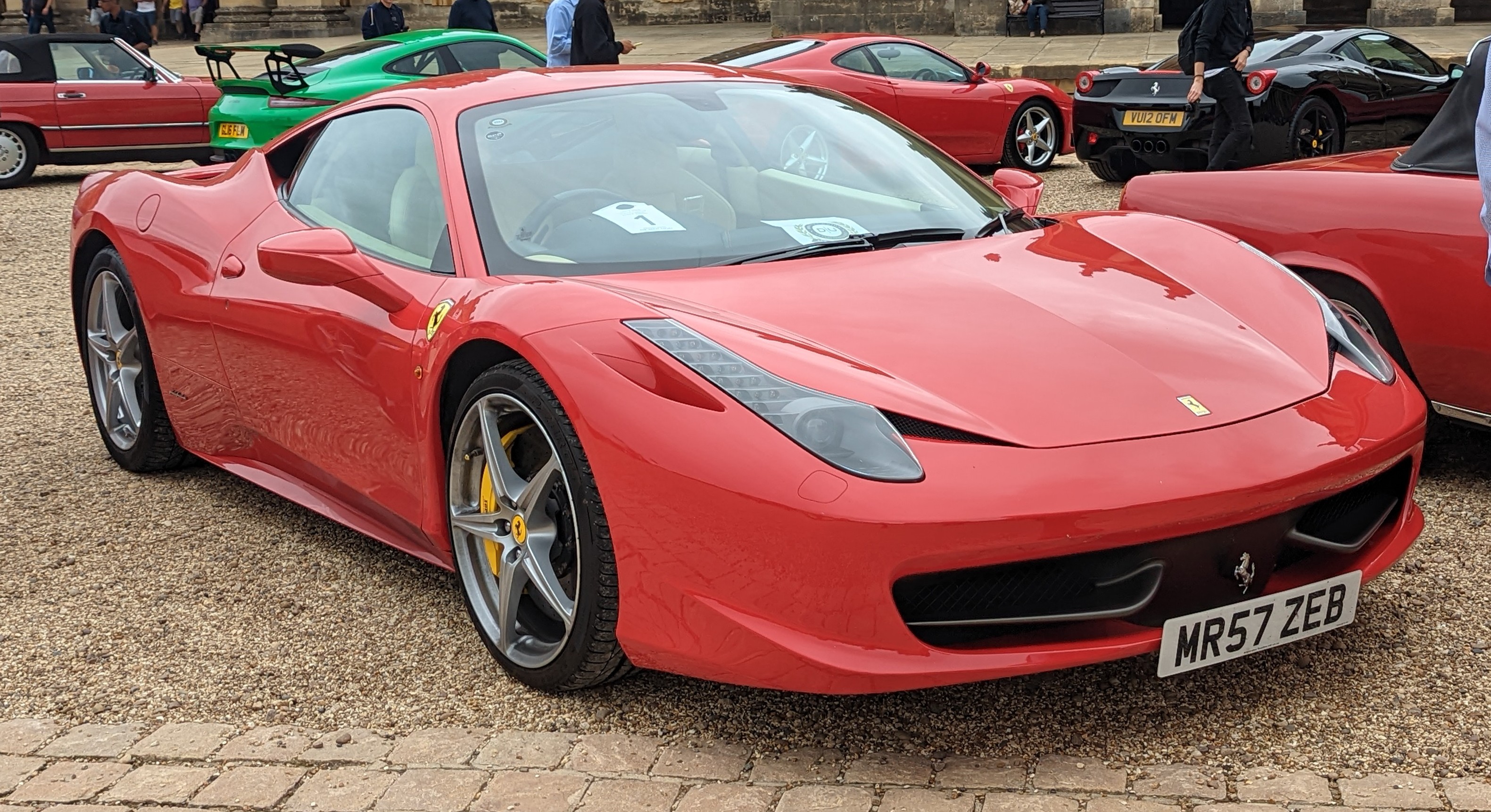
"...looking at the 458 whether I'll ever buy one or not I don't know I just have always loved them I think in my opinion the Ferrari 458 is one of the most complete sports cars super cars you could have..."
The Ferrari 458 is a high-performance sports car made by Ferrari. It's known for being fast and stylish, and many car enthusiasts admire it for its design and engineering.
The Ferrari 458 is a mid-engine sports car that was produced by Ferrari from 2009 to 2015. It is known for its stunning design, high performance, and advanced technology, making it one of the most celebrated supercars of its time.

"...i had the 992 target gts um which what i absolutely loved utterly miserable at that time..."
GTS is a label that means the car is a sportier version, designed for better performance and driving experience.
GTS stands for Gran Turismo Sport, a designation used by Porsche to indicate a sportier version of a model, often featuring enhanced performance and features.
– “I worked hard and bought my dream car”
– Loving cars from a young age
– Not defining yourself by your job
– “Who are you, really?”
– Identity, purpose, and losing time
– Wanting to live a life worth remembering
– Opening doors and taking risks in life
– “Something happened that changed my life”
– Losing his brother to suicide
– The longest drive of his life
– When success and material things lose meaning
– Supercars and “zero value” from the inside
– How grief changes perspective
– Speed, invincibility, and reality
– Seeing trauma first-hand in A&E
– Anger after loss
– “Did you ever feel angry towards him?”
– Why anger is a normal human emotion
– Emotions we label as “bad”
– Grief is something you live with, not get over
– Public conversations vs private pain
– Worry, fear, and perspective
– “Most things you worry about never happen”
– What really matters in the end
Select text to request an explanation
This episode is brought to you by eBay. On eBay, behind every car and part is a story
waiting to be shared. I read about this guy who bought a nearly scrapped 2020 Porsche Cayman.
He rebuilt the whole thing, all with parts he found on eBay. And now, that Cayman is
out tearing up the track. From Toyota to Ashton Martins, eBay has thousands of cars and the
largest online selection of vehicle parts and accessories. eBay. Things. People. Love.
The world moves fast. You work day, even faster. Pitching products, drafting reports,
analyzing data. Microsoft 365 Copilot is your AI assistant for work. Built into Word,
Excel, PowerPoint, and other Microsoft 365 apps you use. Helping you quickly write,
analyze, create, and summarize. So you can cut through clutter and clear a path to your best
work. Learn more at Microsoft.com slash M365 Copilot. It was the worst, most unimaginable pain
ever. The worst thing that's probably going to happen in your life, you were never worrying about.
I had to accept that I didn't reply to him. A dream trip for two brothers, right, to drive back in
the R8. And I run my dad said, are you sure? Like, are you sure? How has he died? And my dad said,
yeah, he's died. He died by suicide. And so he died twice that day for me. I'm Alex. I'm trying
recently to not define myself by what I do for work. Teacher actually said to me, I think we
just need to lower expectations. We shouldn't expect too much from Alex in life. There aren't
many doctors in the world that have the followings that I went on a lot in 2018. I went on there
with a private profile and 200 followers. I worked hard and I put my money aside and eventually
got my dream car, right? And I never thought I'd be able to buy a car like that. When your brother
committed suicide, did you feel any anger towards him in the weeks? I get angry at myself, I get
angry at him. I had to accept that I didn't reply to him. He texted me that I didn't reply,
but I'll catch up with him tomorrow. And I'll have to live the rest of my life knowing I didn't
reply to him.
Alex, doctors and nurses around the world are often given the superhero branding. But unfortunately,
superheroes that can't attain things like Audi R8s, Mercedes C63s, and stuff from all the car
lovers that listened to this podcast that you've been fortunate enough and enjoy. And you've done
that through a crazy route that not even you would have expected. But Alex, in your own words,
who are you and what do you do?
Well, yeah, I guess I've been quite lucky along the way. I'm definitely a car guy. I'm a motorbike
guy now. So it's been a big part of my hobbies and passions. Who am I? It's interesting because a
lot of people, if you ask someone that question, who are you? The first thing you go to is your
job and your career. It's really interesting. I've been trying recently to not define myself by
what I do for work. It's an odd thought, isn't it? As soon as you meet people at a party or whatever
it might be, it's like, who are you? Where are you from? What do you do? We're so attached to,
our identity is so attached to what we do for a living a lot of the time. So I'm going to try
and answer this a little bit in a different way. And so I'm Alex and I'm someone who is
a very passionate individual. I'm very driven. I love people, but I love being alone. I'm very
different to others. I'm someone that loves nature. And I am someone who wants to live a life
worth remembering. And I don't mean that remembering by other people. I want to look back on my life
and feel that I pushed myself and that I really lived. And I think actually when we dig into the
journey I've taken in my life and the directions I've taken, it's because I have this kind of,
and I've always had since I was a young boy, this dream to really use my time well. I've had this
kind of, actually funny enough, I'm going through an assessment at the moment for autism and I'm
getting the results for that actually on the weekend. And one of the questions I was asked
is what you're afraid of. My immediate answer without even thinking was time, specifically losing
time. And I think since I was very young, I've always had the fear of not making the most of my
life. And so everything that you've seen from becoming a doctor, you know, my parents aren't
medical, they're from Wales, they're very much like a grassroots kind of family, no one's been to
uni in my immediate or extended family. From that to working in an A&E hospital in London,
through to being on television, to writing books, to starting businesses, to running marathons,
doing all this kind of stuff that I've done. A lot of that is because I've been afraid of time.
And it's a good thing and a bad thing. And I think we probably can get into that, but it's been
both sides of the coin. So I guess that's who I am.
What's so fascinating there, and it made me smile straight away, is when I was a kid, I used to think
about what I wanted to do. And you alluded there to all the things that you've done that's come
into your puzzle. We never used to look at life as pieces of a puzzle. I think our parents and
grandparents would often look at life as the puzzle, you're going to be A, A, B, C, X, lawyer,
doctor, whatever it be. And that potentially would be in your early stages of development,
your view of I'm going to be a footballer forever, I'm going to be this forever, whatever it is that
you want it to do. And the idea of being, I used to think, oh, could I be on stage and have my own
show and also be the person that's in the cars on the film sometimes, but also have my own business
with racking in a unit or somewhere doing a product. And that was so unrealistic to our parents and to
our network then. But now it's actual reality. And do you find the same thing with everything
that you do? Did you have one purpose that you thought, or one profession that you thought
that's going to be me from an early age? I think from a young age, I realized that I generally
felt like I wanted to help people. And I know that's something people are often embarrassed of
saying or it feels like you don't want to sound like you're trying to help helping people altruistic.
But I generally kind of wanted to help other people. I've always been very sensitive,
perhaps that's why I've always been quite an empath. I really feel other people's feelings,
sometimes actually that's to my own detriment. And I also loved science. I literally, I think
I think science is amazing, the human body is incredible, the fact we can use drugs,
medicines, the fact that you can operate on people and affect whether they live or die.
I think all of that is so exciting. I love this idea that you can use like surgery to
affect whether someone kind of lives or dies, you can really like use science to help people.
So I kind of wanted to do medicine from a young age. It was something I was really interested in,
I wanted to become a doctor. But I always knew I kind of wanted to do more and do other things.
My grandfather was a businessman, but also used to race go-karts at like a kind of
world go-karting championship level. He raced with Nigel Mansell. I used to travel around the
world racing when my dad was old enough, used to tune the carts for my granddad and they go
like as a father and son and race. And so growing up, I always had like interests outside of
perhaps the school space. I loved the idea of business. I loved motorsports, I loved racing.
I guess I was always someone that was open to life and trying lots of different things.
So even though I was like, I want to be a doctor, I don't want to, and I don't see
this as any diminishing sense at all, because it's more than enough of a job being a doctor.
But I wanted to do that and more. There was never intention to become famous. I mean,
that's the story of itself. It was very accidental how I ended up on Love Island all these years ago.
But I guess in some ways, when you move in a certain direction, when you're kind of working
towards something, when you're open to life and its opportunities, it's funny how you end up in
certain places. I think a lot of the time, people say no before they know what's behind a door.
And you can only find out by opening the door, going through it, check out the room,
see if you're interested and then leave again, right? And I think I've generally had the mindset of
I want to try lots of things. I've tried writing books, I've gone into politics stuff,
done a bit of TV. I've done a lot of work in the charity space. I've done,
I've tried everything. I've done talks live on stage through to, I made a spoken word album
with universal music records, no one really listened to it, but that's fine. I did it because
it was fun and it was something to try. And I think that's kind of the approach I've had at life,
just go for stuff. One thing I have never suffered from is, I don't think I've suffered this too
much anyway, is that I've never been afraid to be seen to fail. Like I'm very happy to try things
and fail. I don't enjoy failure. Failure drives me to try harder, but it doesn't scare me. I'm like,
this might go wrong. What's the worst that could happen? I could do this record with the
universal and hardly anyone listens to it. Not many people did. Cool. I had a great experience
on to the next thing. It's a story, you know? Do you think that that open mindset maybe to just
do anything and not be afraid of failure actually comes from your experiences at school? Like you
talked a lot about the fact that maybe in secondary school you were bullied quite a lot, but it's
fascinating. You tend to think of the bullied as the kid in the corner that would be more introverted,
which is how you say that you are, but also maybe beaten down to the point that you wouldn't think
that they would do X, Y and Z, if you know what I mean. But you were that kid from the sounds of
things, yet you were still open to the fact that you could fit all this stuff into your life. Where
do you think that comes from? You know, I had a very difficult time at school and I was talking
to my mum about this the other day and I was known as such a naughty kid up to the age of like six
or seven at school. So when I was really young and like even when stuff would happen at school,
even when I was not at school, I was ill that day, I'd still get blamed for stuff and I wasn't even
in attendance. I can't remember being that naughty, but apparently I was when I was very little.
And so by naughty, when I look into it, basically, I was fascinated by everything. I was not
interested in what I had to do in the moment. I was like outside doing stuff or playing in the
classroom. Mum said that she'd turn her back in the kitchen. I'd be in the tumble dryer or be
out the door climbing a tree at like a really young age. I was always someone that was like
exploring and interested in other things. So I think that was part of me there, but I really
didn't get on at school well at all. Like it was a nightmare and I remember there's a moment in my
life actually where I was like, do you know what screw you? I'm not going to let the world beat
me down. I was probably only about nine or 10. I was in kind of year four or five. And I was
constantly getting kind of pulled out of class and put into like a separate room, which apparently
was to support me, but I was actually just separated from the mainstream class, not because I was rude
or naughty. I wasn't rude to teachers or anyone else. I just wouldn't concentrate that well.
And if I'm completely honest, part of it was because I am bright and I was very bright. I'd
usually understand stuff and be like done onwards. Like that was the kind of reality. School is
the education system doesn't allow much room flexibility. It doesn't allow you to be
more or less or be interested in this or that. It's just you've got to do this and then
you have to wait while everything else goes on to do something else. I get removed all the time.
And my mum came in one day and said, look, Alex is getting removed constantly. Like he's actually
just not even going to loads of these classes now, but he's applied kid as far as we can see at home.
He's bright enough. Like all right, when he's younger, he was a bit naughty, but he's he's
good. What is going on? And they said, look, as a teacher, actually, I said to my mum, look,
I think we just need to lower expectations. Like we shouldn't expect too much from Alex in life.
And that's what she actually said to me, said to my mum in front of me. And I remember it as if
it was yesterday. I can picture the hallway we're in outside the classroom. I remember the moment
it happened. My mum was like, not having any of it. She was like, no, no, no, Alex, we're not treating
him like this. That's it. No more of this. He's back in class. And, you know, this would not do
this is not happening, basically. But I had a moment where I thought, okay, so this is how it
is. Either if I go back in and I make sure I do the right thing, or I'm going to be excluded,
and I'm going to be outside the party here, and I'm going to be behind everyone else before you
can start. So it's a conscious decision. I was like going to prove you wrong. And I'm going to make
sure this works. So then for the rest of my school life, I forced myself to do what was needed
to get there. But only when I was 31 did I find out that I had ADHD and actually throughout my
whole childhood, I basically what was actually happening was that I was a bright kid with ADHD,
who didn't conform to the typical classroom setting. By the way, it's not just
neurodivergent people that struggle in class setting. I would say a significant number of
people don't get on with the current school system. Current school system is a Victorian
education system. It doesn't allow any flexibility. Most things you learn are not
applicable to life. You know, one thing I thought about, I love Tandems, by the way,
and one thing I really thought about when I got my first paycheck as a doctor, I looked at the
paycheck. I was like, I haven't got a clue. Any of this says, national insurance. I thought I am
the national insurance. What do you mean I'm paying like 12% national insurance? I am the
national insurance, my friend. And I just remember thinking, why am I stood here with a paycheck?
And I've got no clue what's going on. Surely an education system should prepare people for
real life. If you ask most adults, teenagers and adults, I do a lot of talks at companies,
do a lot of talks at schools. And I talk about financial health quite a lot, which surprises
people because financial health is an important thing. What's the number one cause of anxiety in
adults? Unsurprisingly, money causes a lot of worry. People worried about it. If you ask people
to explain very simple financial concepts like what's an ICER, most people don't know what an
ICER is, ask roughly what does inflation do? What does it mean? What does the Bank of England do?
What's an interest rate? What taxes do you have to pay and how are they calculated?
Most people would not have a clue how to look at the coding of their pay slip and know if they're
on the right code, right? That's not their fault. It's because the school system hasn't taught them.
And on a fundamental level, you go to school to develop a skill set that allows you to work and
become sustainable, self-sustainable to a level when you're an adult. And yet we don't learn these
basic things. And so if you go all the way back to the school system and you look at it, actually,
it's an academic-based system. In Europe, we don't score very highly. So we're the most academic
system really in Europe in terms of how we set ourselves up. Yet we perform very badly. We don't
give people the mental fitness toolkit I think that they need or resilience they need for life.
They don't provide them with the kind of day-to-day things that you need, like financial knowledge
or whatever it might be. There's loads of other skill sets you need, like teamwork, creativity,
all these kind of things. We don't develop those things in school. And then we're surprised when
we see what happens. We look at the situation the country's in. Other schools, other parts of the
world, for example, Norway, with some of the highest academic outcomes that you can see on the
charts, they literally top of the charts or up and thereabouts. And most of the criteria when you
look at academia and education, they learn through play to the age of like 10, 11. They then have
interest-based learning from then on. And then when you bring in the assessments, you've got
motivated kids that followed their nose that actually understand what they're doing, why they're
doing it, and then achieve. And I think that the education system, I mean, I felt I survived it.
And many people haven't survived it. Many people were completely let down and didn't end up as
fortunate as I did. My parents supported me all the way through. I was lucky to get to where I
got to, I think. Very lucky. There's a few moments along the way where I think it could have been
very different. New Year, same extra value meals at McDonald's. So now get two snack wraps,
plus fries, and a medium soft drink for just $8. For limited time only, prices and participation
may vary. Prices may be higher in Hawaii, Alaska, and California, and for delivery.
Well, the holidays have come and gone once again. But if you've forgotten to get that special
someone in your life a gift, well, Mint Mobile is extending their holiday offer of half-off
unlimited wireless. So here's the idea. You get it now. You call it an early present for next year.
What do you have to lose? Give it a try at mintmobile.com slash switch.
Limited time, 50% off regular price for new customers. Up-front payment required, $45 for
three months, $90 for six months, or $180 for 12-month plan. Taxes and fees extra.
Speeds may slow after 50 gigabytes per month when network is busy. See terms.
But instead of just continuously talking about the issues that you think the world faces and that
the country faces on podcasts, you ended up at a point where you were an ambassador at number 10,
physically putting money into the places that you wanted to see it to go to make a difference,
didn't you? Yeah, that's a story of its own. A lot of people know that I ended up
being UK mental health ambassador after personal tragedy in my family, but I actually went there
good few years early to start my campaigning around what we should be teaching at school
and the fact that we need to reform the education system to build mentally fit and resilient children
who have skill sets and eventually become adults with skill sets that are able to do what they
want in life. That was my simple ask, which I don't think is a massive one, but unfortunately it
took a personal tragedy for that to happen. Sometimes pain is a great energy to go out there
and do something with. What are we now, 2026, aren't we? In 2020, halfway through the pandemic,
something happened that has changed my life and shaped my life, I guess, for context for people.
I started my junior doctorate in 2015, but effectively I ended up in A&E,
that's where I worked. I went on Love Island 2018, I went back to A&E because that's what I knew and
enjoyed and started creating content around health and so on. The pandemic hit, as we all know.
When the pandemic was happening, my job was to work in the hospital, but I was also trying to
create content for people to understand what was going on. I had this weird moment of realisation
where I was like, God, there aren't many doctors in the world that have bigger
followings than I do. Certainly at the time, there are more now that have plenty bigger
followings, but at the time, I'd like one and a half million followers just on Instagram alone.
I was like, were you allowed to bring that quite easily into that environment? I've always been
fascinated by that because I had, you'll know, Callum Nicholas, the Red Bull pit crew technician.
I had him on and I always used to say to him, we'd like talk about how constrained he was in
Red Bull to actually be able to make his own content that he was building outside. Did you
ever have that? I talked to the chief executive of the hospital and I was like, look, people have
got to know what's going on in here and he agreed. He was like, we actually need to, people need to
understand what's going on in the hospitals and the state of things. I had to respect patient
confidentiality, which was simple. I was never showing people things. I was in the environment
explaining the situations, what was happening, bringing updates from it. So I felt like a real
responsibility and I remember that this crazy moment where there was one of these moments where
like, what am I doing? It was like 10 o'clock at night, well obviously because it was BBC 10 o'clock
news. It was 10 o'clock at night and I was in recess all day in the gown looking after loads
of patients and I worked at Lewisham. We were absolutely hammered by the pandemic. I mean,
it was really bad. Lots of young people as well. This is this idea that was only old people. I
can assure you sadly, it was every age group affected and it was a crazy shift and I had to
basically take off my gown, run into the relative room, which we were not using the relatives room
at the time for obvious reasons, put my iPhone quickly on against the book and be like, and
be on this call zoom call next second, right, you can be live 10 o'clock news in five seconds,
five, four, three, two, one, boom. And then I was interviewed. You might have noticed I've been wearing
a lot of Hera during the podcast recently, including some of the very latest hoodies and t-shirts.
Well, that's because Hera are now partnered with Road to Success, which is very exciting. So every
week I'll be wearing their latest hoodies and t-shirts right here in the van, keeping me warm
during my podcasts. I've been wearing Hera for years in my personal life, and you would have
seen it across my other channels too. It keeps me warm. It's super comfortable and looks awesome.
So if you see something I'm wearing during the podcast, do you think is really cool? You just
want to go and have a browse, take a look at the Hera website using the link in the description
below and use my code RTS because it will get you 15% off site-wide even during sales.
And if you head over to the post section on Road to Success or my Instagram,
you'll see some shots of me and my team wearing different items of Hera to give you a little
bit of inspiration to. And I had moments and I finished that interview. Bear in mind at that time,
the news was being watched by everyone, right? Do you remember the facade of it? Everyone was
glued to the news. The viewing was crazy, the number of people. And my phone was buzzing as I
forgot to turn the WhatsApp off of all the people being like, oh, you're doing really good, mate.
Thanks for the update of messages coming through while I was mid-interview.
Be like, oh, mate, I don't know if you've seen these. I'm just keeping up. It's good to see you again.
So I did, I did, I was doing stuff like that. My life was like that. And I was trying to share
that frontline moment. And during that time, I was away from my family. I was here in London
working Lucian, my parents and my family in Wales. My 19 year old brother at the time
was in lockdown at home with my parents. And basically, we came to the time of year where
the borders were lifting between Wales and England, you were allowed to start like mixing.
And at the time, I had a, you mentioned it, I had a Audi R8 and Riviera Blue V10 Plus, which
I remember that photo. You bought it from Dean Bartle, who was one of the early people on this
podcast. And you jumped, I remember you like jumped in the air like that was the picture of
you getting that car for me. Like, since I was a young age, I've loved cars and lots of people
watching this will love, they've watched it probably for lots of reasons, but a lot of people
will love their cars. And if you know, you know, it does something for you, right? Something in
your heart. It's hard to really explain. And I never thought I'd be able to buy a car like that,
right? But I worked hard and I put my money aside and eventually got my dream car, right?
And the pandemic had happened. So to kind of tuck that away.
And basically the plan was for my brother, Claire, who's 19 at the time, massive car fan as well,
like loved, he'd been in my C 63, which I'd had the year before, loved his cars. The plan was
him to come to London, be reunited, do a trip around London, go to all the car spotting places,
and then we rode trip back to Wales in the R8, a dream trip for two brothers, right?
Big brother and little brother to drive back in the R8.
Anyway, it was a few days before I was supposed to go. And my friend, Tom, unfortunately, his
father was very unwell and was sadly dying. He was actively in the kind of last few days of his life.
And he was, he was staying with me at that time. And I said to him, look, you know,
I'll stay with you for next week, because this is going to be tough and I want to kind of support
you. So I text my brother, Claire, and I said, look, can we do this next week? Because I need to
look after Tom, these reasons. And he said, yeah, yeah, no problem. And he said, like, how is Tom
doing? Okay. And then we, we went that night to the pub, allowed to, then everyone was lifting
out, lifting and so on, went to the pub. And then the next day, I kind of got up, did my things,
whatever. And I basically went to go and have lunch or someone with a friend sat down for lunch.
And we basically have a rule word on my phone is now where if, if someone needs to just call me,
so if I've got my phone, if someone needs to call me, my mom, usually my parents, I say to them,
just call once and like, I'll know, I'll see your name and I'll know it's nothing important. But if
you really need to get hold of me, ring through twice. So it did that. And I said, oh, I need to
answer guys, took the phone call and I could hear my dad's voice. And it was like shaking. And I,
I immediately said to him, like, who has died? Because I don't know what it was. It was like
a sense of like, this is, this is bad. Someone's actually died. And he said clear. And I was like,
what? And he's like, yeah, clear as passed away, clear as died. And literally, it was like a spotlight
feeling of like, Oh, my God, like, this has actually happened. And everyone around the
table, my friend Nathan was sat there, was like, what's happened as my brother's dad.
And Nathan walked me out of the, out of the restaurant in central and went back to the house.
And I run my dad and said, are you sure? Like, are you sure? How has he died? And my dad said,
yeah, he's died. He died by suicide. And so he died twice that day for me. And it was the worst,
unimaginable pain ever. And in a way, in that moment, I realized something which I've carried
forward in my life. Most things that you worry about never happen. And the worst thing that's
probably going to happen in your life, you were never worrying about. I didn't sit around thinking
that was going to happen. I was worried about all sorts of things. I've worried my entire life,
part of it's ADHD. I guess part of it's who I am being sensitive and things. I've always been a
warrior. And yeah, I never worried about that. And that was by far the worst thing that was
imaginable. Me and my brother, other brother, Elliot, who was living not that far from me,
came and picked me up and drove me home that night. And it was the longest drive of my life
going home. And it's a hard realization for me that I had to, I had to accept that I didn't
reply to him. He texts me saying, how's Tom doing? I didn't reply that I'll catch up with him
tomorrow. And I'll have to live the rest of my life knowing I didn't reply to him. And I moved
when we were going to see each other and he died. And that's something that I have to live with.
And so to answer your very, I'm terrible, long answers. I'm very sorry about that. To answer
your question, you either let that pain utterly destroy you or do something with it. So I use
it to bang on number 10's door. And I bang so hard with a hell of a lot of followers and people
that came behind me to say, you know, we need to change this stuff. This is not good enough. Like
people are dying every single day. 600,000 men a year die in the world from suicide. All of those
are preventable causes of death. In the UK, it's multiple men a week dying by suicide. We have
to do something about it. And they said, look, come and volunteer, work with us. And so I did.
So I went one day, went from being banging on the door, if you like, on social media. And then
I think two or three weeks later, I sat with Boris Johnson and he was like, okay, let's see what we
can do. And so yeah, that's what happened. It's insane how some of the most poignant things in
our life come from such tragedy. Like, okay, I can relate that in lockdown 2020, I had the biggest
grief of my life losing my dad. And it's amazing, though, that all so frustrating that all the
good things have accomplished since or a lot of them have come from that moment taking me off
the road that I was on. And it's like, I'd have loved to have done, why can't I've done all this
that I've done now? But with that, with that as well, do you often feel the same?
Yeah, I do. Sorry to drop that. I wonder, when you buy a new car or something happens,
who do you want to call? I accidentally, and I always think it's like, probably the seconds
are littler than I probably think that they are. But I always sometimes pick the phone up to do it.
And I very, very quickly realise I can't. But yeah, no, exactly that. I've done that many times
with my brother. Anytime with a car thing I've seen of cool, you know, seen a video online or,
you know, after a Formula One race, I sometimes just think I'm going to call, he's not around.
And you're right, I think it's really difficult because often these things, these reality checks
spur you on to live a life that you actually were supposed to live, or perhaps to kind of go for
things more, whatever it might be. And then in those moments where you want to share those things,
they're not there. And I think the reality is that I never, I have to accept, for example,
and which is an odd thing, that he is forever going to be 19 years old and is forever the
last conversation we had. And I will need to live the rest of my life with accepting that
he decided that, and this is the fact of the matter with suicide, he took an irreversible
decision for an impermanent problem. Okay, so whatever he was facing at that time,
and it's a complex situation, actually, we didn't really know at all that he was in the
situation that he was in, that he felt so dark. But the ultimate thing is that's very hard to
accept is that he must have felt so bad to do something. There's not many things in life that
you do that can't either be undone, or you can do something about, there's nothing you can do,
right? When you decide you're out of here, you're exiting the WhatsApp group for good, if you like.
That's it, right? There's no rejoining that group. And he felt that bad to do that. But ultimately,
no matter what he faced, it was something we could fix and sort out. And so that's why I've
spent my life since trying to reduce the number of families that experience it. Because what my
brother would have thought perhaps is that I will take, my pain will die with me. Of course,
it doesn't. It's compounding interest. The highest rate API you've ever seen slapped on top and passed
to everyone you know, it affects everyone. We all have to carry it with the rest of our lives.
And so, you know, it's one of those things where I really want to, as much as I can,
make an impact in this space. So as few people can go through that as possible. I watched my
parents go through that. Me and my dad carried his coffin, right, on that day. No one should do
that with a 19 year old boy. He's a boy, he's a kid really at that age. And so, you know, I think
if I can in some way make a bit of a dent, then I think that's important. And that's why I will
not stop talking about this topic and why won't accept that we stop talking about it until we
stop suicide happening. It's so fascinating that even during that conversation, because you mentioned
cars, how when, when the context of the conversation is so powerful as in that just then, how something
everybody wants to attain if they love cars like a super car for argument sake,
can feel such a sense of absolutely zero value and how a moment like that adds
so much value to the things that you didn't think had it before, you know,
replying to that text message that you've left, etc. But I asked him on this the other day,
does time heal in the sense of I find that I knew my dad so well that I still just know his
he's almost sometimes I'm still there because if he were if he was sat over there in the van,
I could say something and I'd look at him to know that he'd giggle at that certain moment
or something or would disagree with me on something. Do you have that with your brother?
Do you still like like, do you see, do you see that overtake on the F1? Like, do you still
have that where you almost feel like you're still a bit connected?
It's beautiful that you remember and think in that way because a lot of people try and
shut it out and I'm sure I'm certainly be very proud of you. You've done so well and I did say
that at the start, but I love this podcast. You know, I messaged you saying I enjoyed
enjoyed the episodes. I love watching it. So be very proud.
Yeah, I mean, I guess I do, but I think what's hard with my brother is that he
he was just becoming a man and we were about to go on to kind of that next
phase of being like adult brothers and like I was excited the adventures and things that
would happen. So I do think about him every day. I think about him in lots of situations.
I do have similar situations where I think, oh, God, I know what he'd say about, you know,
Max Verstappen versus Lewis and like, I don't know, a lot of people have changed their mind on that.
Well, that final race, I just know he would have been like, he'd been like, ah,
you know, we're the eighth, the eighth title, shall we say, was obviously contentious one.
He would have had a lot to say about that. But, you know, grief is something that is,
I think we get grief completely wrong in this country because we all kind of live our lives
as if we're here forever. We all kind of know everyone sensibly knows that they're going to
die one day, but no one lives like they're going to die. No one does. No one really lives like
they're going to die one day. Most people get up, take every day for granted, you know, and
I don't mean this in a, it's like a habitual thing that we're all guilty of. It's like almost this
this kind of feeling of, of, of permanence in, in a situation where you know it cannot be, you
know, we know we're not going to be here forever. But I do deeply feel that, you know, with, with
grief, because we ignore the fact that people die around us and that we'll die and the way that we
kind of deal with grief is kind of like, right, go to the funeral, get it done, move on quick as you
can. It's almost like a feeling that we escape death or we escape mortality in some sense.
And I think that's why when people are shown mortality in the way that you were losing your
dad at a young age or my brother, or if you have a serious car accident, for example,
or something happens to you, I've seen many people in A&E who come in and had a life changing moment.
And I think when you face mortality, suddenly you wake up and you go, oh my God, this is real.
This shit's real. Like life is.
The most remarkable turnaround in the history of college football.
The College Football Playoff National Championship presented by AT&T Monday at
7.30 p.m. Eastern on ESPN and the ESPN app.
Abercrombie knows how denim should fit and feel. And this year is about curating a denim collection
that carries your closet. Head straight to Abercrombie's baggy and ultra baggy fits.
These are the pairs that turn any tee or shirt into a full outfit. All of their jeans come in
classic fit with select jeans available in athletic fit designed for guys who want more room in the
thigh. Shop Abercrombie Denim in the app, online and in stores.
Real. I used to think I was invincible in my cars at an early age, a little bit like you.
Oh, it would never be me. I definitely had this sense of it would never be me either like,
I'm too good or I've done that driver training or whatever stupid stuff that you think at the
time like, oh, you know it all, but you don't. And it's amazing even just dealing with two
fatal accidents that have happened on my road. It is amazing how that's about my foot off the
gas. Like to the point at which I haven't even been on a, I said it to one of my friends that
operates driving tours. I said, I haven't been on one since 2019. It all just got too fast for me.
I think on a certain thing of working in any please guys, just like be careful of the cars
and stuff. I love speed. I've gone, I took a BMW S1000R on the racer in Almeer and
it's 150 down that straight. Like, you know, I get it. I love the speed, but on the roads and
stuff just don't, I've seen it like it's, it's life changes like that boom done and it's chaos.
Like it just one minute, everything's fine when it isn't. But just to finish the grief point briefly,
it's just the thing about grief in this country is that we try to get over something that you
cannot get over. You will never, I would imagine, wake up and be like, I'm cool. My dad's dead.
Like I'm actually, I'm actually like, nah, who cares?
I don't know. I don't know because for me, which is completely different to you,
he told me how he wanted to go so many times and it was exactly how he asked.
So you feel, you feel at peace with it? I feel completely at peace with that.
And I'm also, there's a degree of he was his own worst nightmare, because you know,
if you've got type two diabetes and lots of other things, and then you, you keep doing
things that aren't going to help that, you know, the heart attacks coming. And then it's a little
bit like me with my cars when I was younger, probably, I know it's not, I know it's, oh,
of course I'll always want him to be here. But there is a degree of peace with that for me.
I guess what I mean is that what I mean by cool that is not so much like,
you're at peace with the grief, you're kind of an acceptance. It's kind of like,
are you ever going to wake up and not care, I guess, is what I'm trying to say?
No, not so it dominates Africa.
Like where you kind of, I wish I could see them again, or what would you do to have a,
go another cup of tea, even?
Yeah, you can't, you care, but I think in a way, what society wants you to do,
to kind of get to the point where you don't care anymore, it's not just that you're a
piece of it. It's kind of like, this is unwritten rule that once one dies,
you go to the funeral, and a couple of months later, they should be getting over it.
We now even pathologize people who have prolonged grief. It's like in the diagnostic
criteria for illnesses, which I think is crazy. You know, I'm not going to be at a point where
I wake up and think, oh, I'm cool that I never see my brother again. I might be in acceptance of
this is what's happened, and I'm living my life now with the values and things I've learned.
But I don't believe that many people wake up, if you lose your mother, you know,
if you lose your sister, you lose your partner, like you're always going to care about that person.
And so I think it's better to think, I'm going to learn to live with this,
rather than get over, and that was the big thing for me. Like when my brother died,
I worked really hard, but I nearly, I nearly killed myself drinking so much as well as working hard,
eating terribly, not looking after myself. I was in such bad state, right? Really,
really bad with it. Because I was trying to do the wrong thing. I was trying to numb this thing
and make it go away and get over it and be okay with it, rather than going, hey, if I actually
just go right, I need to learn to live with this. Suddenly, I'm not trying to do the impossible,
and suddenly I can learn to kind of manage this thing.
No, I completely agree. I feel like I live.
And I quit the booze then, and I started taking that aspect, that angle or that approach,
and all of a sudden it changed my life, to be honest.
I feel like I live with my dad on my shoulder, like a parrot almost, like so it's, I completely get
get what you're on there. But I have so many questions based on the things that you've already
said. So let me just get into some of them, because I don't want us to lose sight of them so far away.
One of them was you mentioned the teacher early on. You still remember that. There's only a few
things in life that you truly remember in detail. One is where you were at a point of horrendous
grief, all the things around you, the phone call, I remember exactly the same thing when I had that
But moments like that, when you're younger from a teacher, or I remember the two kids they
picked from our year that they thought were going to be the highest achievers and asked
if they actually chose two kids and put them on stage, and they went these two are going to be
the highest achievers. That's mad really looking back on it now, but I remember that so poignantly,
a bit like the teacher situation with your mum. Do you though, because of the values that you
say that you have, and we can all see that you have being empathetic, do you ever feel the need
to go and confront that teacher and say? No, because I think hatred can ruin your life and
carrying hate for other people was a short way of swallowing. It's literally drinking a poison
deliberately, and I think that there are ways, don't get me wrong. I like the fact that I proved
her wrong, but from the perspective of I've created life, I wanted to, and it's not held me back
rather than I want to. If you'd asked me years ago, I might have had a different feeling,
maybe it's because I'm so at peace with it, but not really. My mum kind of did, because my mum
did bump into her a couple of years after I graduated. I ended up going to med school,
and I graduated with a distinction. I did really well, got my dream job at King's College London,
it was my poster on the wall job, and I got that job. And she said to her, by the way, Alex did
actually go on to become a doctor, and I think she had that moment, she had that moment. But for me,
for me, not so much. I think maybe it's because I've been in the public eye for eight or nine
years, and I've realized that if you place value on other people's opinions of you too much, if
you're kind of chasing approval, or if you're kind of needing to, if you're needing to prove a point
all the time, I think you end up not really living a life that's about your own kind of purpose and
happiness. I know that's difficult, and I do genuinely think that, because if you look at it,
I use what she said to motivate me as fuel, but that did transition in time to be like,
actually, I want to make a life that I want to live and I want to do this. I think carrying it
with you for too long. It translated into good things, which is such the challenge about moment
of grief, is you think of that situation, that impact for the rest of your life that your brother's
left on you, but it's amazing to think of the impact you were able to make by getting into
10 down and straight, and all these things. You still wouldn't have wished it to have happened,
but it's almost like reverse engineering your brain of like, okay, there is some good in it,
but it feels guilty to say there's some good that's come from it in other ways.
Do you know something that I've learned though as well? I think part of it is that you know
something that's probably, it's been a recent thing for me in the last few years, and I think
it's partly because I've done so much work understanding, like I'm neurodivergent, I have
ADHD, probably autistic as well. That's part of why I am. You could argue a lot of my success
might be my experience, but also the ADHD explains a lot of it. I guarantee you, right,
if you did a polling, a screening test at this door, the number of people who have sat here who
will end up being neurodivergent, it'll probably be pretty high. It's going to be 10, 15, 20%
general populations, four or 5% CEOs, business people. Why? Because we choose the path less
trodden. It's just kind of who we are, but something I've discovered over the last few years,
and I think it's been really important for me, is that I have always been incredibly self-critical.
I've nearly destroyed my own life many times about my self-criticism. I've actually,
to be perfectly honest, God, this podcast has been very deep, I have been suicidal several
times in my life, even a year ago, because I have beat myself up so badly for my mistakes,
to the point where I just don't want to be here anymore, right? And I am, and I don't feel that
way now, and I'm very much in a better spot. But I have learned over the last couple of years that
human beings are human beings. Most humans are fallible. No one's perfect. Everyone's done things
that they do differently. We've all had moments like the one I set up with my brother, there's
many more examples in my life that I'd go back and do completely differently. And I think remembering
to look at other people with that kind of ability to say, hey, they are also just human, they're
doing life for the first time too, is quite an important skill, not just for them, but for you,
because otherwise, every time someone pulls out in front of you or you're driving, right,
or they're sat on the outside lane, which is very easily infuriating, I don't know, I just,
it's not about excusing all behavior and things, but it's being able to kind of go, hey, everyone's
human, right? And I think it's the same with allowing people to grow. I think we are at a point
which I think is changing where we've been so obsessed with people being perfect. We're not
allowed people to make mistakes and grow. It's very important to tell young people that, hey,
we want to go out there and do our best. You should do your best in life to do things in the right
way, but people will make mistakes. You will get things wrong, and you are allowed to grow from
them. Like, should I, for the rest of my life, beat myself up that I didn't text my brother back?
I could, and I did for a while. Would it be helpful? Probably not. Probably I'll just learn from that.
And I learned from the other mistakes I've made. I, you know, I used to, I was drinking so
badly, I nearly killed my body. You know, I literally, do I, should I go and beat myself
up my entire life? Or do I go, hey, I'm a human. And I think that has really helped me looking
at other people to realize that there's no one that's perfect. No one's perfect. Now, if you're
enjoying this episode, which I hope you are, please do subscribe to Ben's channel. There's a few
good reasons. Number one, he's a legend. Number two, the podcast is brilliant. Number three,
by subscribing, you tell the algorithm is a great podcast and more people should listen.
And while you're doing it, please do think about getting a copy of my book, How My Normal.
Did you ever have, after you lost your brother, and I'm gonna, if you did, I'm gonna take a stab
that it would be a month or two afterwards. This moment of any, like, I was extremely wound up with
my dad, dying. I know it sounds unbelievable. I was mad at him because I knew, I knew decisions he
were making may, may lead to that. And then when he did this idyllic life that he always kind of
reassured myself and my mother that we'd have if anything happened to him, that it was all taking
care of everything's fine. You don't need to worry about all that other financial stuff that
that's fine. I've got my business got this. And it wasn't true. He left me in a complete
shit show for a year, massive over a million pound in debt on a director's loan. And like
everyone else thought I was fine. So that bit's covered off. And that was the bit for me that
drew me near suicidal was the financial side of it. And I absolutely was furious at him for a
day. You leave mum. I knew this was going to happen. You didn't listen to me. You knobbed
and like it. And then over time, I started to like have a little bit of less of that less
that letter. And then the full love just came back when I kind of after a while had seen the
whole picture. Did you experience any of that with your situation? Like, why didn't you get in
contact like annoyance? Why didn't you tell us this stuff? Why? Did you ever have any of that?
Yeah, I mean, definitely. I mean, I think it's so amazing what you've done actually to get through
that when you're grieving to also to take on we have to take on at that age. It's unbelievable.
But yeah, I definitely I still do at times, you know, I get angry at myself, I get angry at him,
I get angry at the world. I think that's part of the human experience. And, you know, I think
we're at with things at the moment. And I know it's something that that we've talked about.
You know, it's important that we don't pathologize every human emotion and experience. It's very
important we allow ourselves to feel everything. I mean, it's very interesting that basically,
you know, we decide as humans that certain emotions like being happy are really good. And,
you know, being say peaceful was brilliant. But being angry, sad, crying, all these other
emotions are like bad. But if they were truly bad and things that we should live without,
we wouldn't have evolved to have them. Being angry is an important human emotion,
because it's a driver for change. When you're angry, there's something that's a problem that you
need to address and change. It's really important. You know, feeling guilt is an important thing.
Because when you do something wrong, you feel guilty, it's a way of the emotion telling the
brain that hey, maybe we shouldn't have done that, we're going to do things different. We feel love
so that we bring community together to create the survival of our tribe and so on. So all emotions
are important. What we don't want to do is demonize stuff. What we want to do is acknowledge
when an emotion becomes stuck. So where I think is really important is that if you, for example,
were angry permanently, all the time to the point you couldn't function, it was ruining your life,
destroying your relationships, and it wasn't stopping weeks, months, many months later,
then it's something to really deal with. But transient experience of emotion
is an important thing. I think when we suppress emotions, when problem comes up, you can't suppress
it. It's like what I did drinking for years, I thought I could suppress grief with drinking.
I didn't. I pushed it down, charged interest, and it came back like an avengence. Whereas when
you learn to deal, that's what I want to do at schools, that's what I want to change. I want
people to realize that mental fitness, which is like physical fitness for the brain, is something
we should teach at school so kids can learn to understand emotions, to empower their emotions,
build resilience. They get stronger and more resilient. I want to create snowflakes. It's
a lot of those snowflake generation nonsense. It's about building a genuine, resilient group of
people who are not afraid of their emotions. They can experience them and manage them and
look after themselves. That's how you build a group of people that have less mental illness,
importantly, but also are able to go and enjoy their lives. If they experience things,
when they experience things like grief, they'll know how to manage that situation because they'll
go, hey, it's normal to feel angry or sad or all these things. Your brain is so fascinating
because you're someone that I could talk to for four, five, six hours. It's unbelievable because
of the way it works. I hope the audience feel it too. You have this sense of, you just ask
anything. It's very hard being a podcast, but I know you get it from being one. Sit down opposite
someone and ask when your brother committed suicide. Did you feel any anger towards him in
the weeks after? It's a great question. It's a tough question, Atomism, where sometimes
too afraid because of online response to ask a genuine question. Because sometimes we might get
it wrong in such a sensitive situation. But we said earlier, you're human and you will get
wrong and you will ask something at some point in the podcasting, the time podcasting, that you
think, oh, I asked that in the wrong way. So what you learn from move on, that question certainly
isn't one. You should feel like that though. I touched on it before you got in the van because
I wanted to do it in the right way as well and make sure I got my words right. But you just
mentioned there, the snowflake generation. I think it's a really good time to talk about
something that I really wanted to put your brains on, which is there must be times when
you're in a pub, you're in a restaurant and things that you've been through,
someone that would comment the same thing on Facebook, you hear something and it must make you go,
I want to go over there so badly and like debate you and sit down kind of thing,
whether it's just like, ah, now COVID wasn't real or whatever it was. Yeah, exactly.
Do how do you kind of deal with that when you're out and you hear something like that?
Like, do you feel the need to go and debate everybody? Can you let it stuff go that's
impacted you so greatly easily? Yeah, I don't think it's my place to lecture or educate other
people. My lecture people, I guess, what I try and do is go, hey, this is what I learned and
the stuff that I know, I want to show you the side of things or help you see this and then you can
decide whether it's something you want to agree with or not or live with or not and it's like,
it's like the mental health stuff. There's people that think that we're overdiagnosing ADHD, for
example, right, and all I can do is, hey, I'm not going to argue with you, but here's the facts and
this is the situation, you know, you've probably seen in the news, overdiagnosing ADHD is factually
wrong. I mean, a Lancet study back in March that was published, they looked at 9 million GP records
in the UK. And in primary care records, basically, any diagnosis you have received is coded and your
records very easy to pull up, like very quickly pull up all the data of how many people have been
diagnosed ADHD. In the UK, 0.32% of that 9 million people had a diagnosis of ADHD. The true prevalence
of ADHD is around 5%. So we're underdiagnosing by about 15 times. And yet, you know, and this,
and this thing sometimes I do could all gosh, that gets frustrating. And I did make a video
about it to kind of just to clarify some as to say, guys, just so you know, you hear this from
the government, but this is the facts, then I let people go and, and deal with that and whatever
they want to, why are people getting diagnosed because there's awareness, awareness equals
assessments, people in their 40s are going, Oh, this is why my life's been like this. Damn,
I've got ADHD and they're going to get assessed. The challenge is the problem that I feel is that
when you use the word diagnosed, it makes it seem like it's a problem. Some people obviously want
to avoid something. Now my view, my view, my little window of ADHD, for example, which I sometimes
think I've probably got because all the things that you describe is that to me, it's like I'd
want to have it because everyone I see that comes and sits opposite me has traces of it. Like you
said, it's successful people, there is there is a degree of a trace. So is it necessary to always
diagnose something that you could just leave as a superpower thinking you have it? Sadly, the other
side of the coin isn't. So if you're a man with undiagnosed ADHD, on average, you live six years
shorter life than a neurotypical. If you're a woman, on average is eight years. So that's only 10%
of your lifetime shorter out the bat because you've got ADHD. If you look at people with ADHD,
around 50% of people with ADHD have alcohol misuse disorder as a minimum all the way to addiction.
You look at female prisons, around 30% of female prisoners have ADHD. Remember 4% of the population
do so they're overrepresented in that space. Huge number of people with ADHD never make it to higher
education. Significant numbers end up in divorce and a homeless homeless population and neurodivergence
is extremely high. What you see set opposite use a select group of people that were lucky and that's
why I said to you at the start I was lucky. There are many times in my life I could have ended up
in a different path and I was drinking I was this close really to going down you see me here today
but I could have easily continued on that path and be there. So ADHD it is very misunderstood but
it absolutely is something that causes both good and bad things. The truth is and actually I wrote
I've written a book and my normal which which Alex the first ever guest I must say to say
you don't have to have it in the seats you don't have to have it near we don't even have to mention
it so I think that alone they came up exactly and which I do genuinely love the podcast that
there's nothing worse and if anyone's watching this who's writes books if you're going to promote
something in my opinion as someone's been podcasting for what is it six seven years whatever it is
you know mention it once allow explain what you're doing and then move on if people want to
read it they'll read it you know people want to read that book they'll have a look but you know
the whole thing the whole point of am I normal was to try and like look basically at my own life
and look through the lens of kind of how ADHD is assessed or parts of how it's assessed so I've
actually put the chapters of like what was school like what's your relationship with drugs or alcohol
or you know all these different things and the question I asked myself is am I normal is it me
or is it the world and I try to look at the parts that brought the strength and were positive things
like my sensitivity empathy my drive my ability to hyper focus that I looked at the other parts of
me which is my extreme parts of sensitivity my sometimes things were the attention but other
parts of my my I guess ADHD that cause problems in my life so ADHD came from this idea that this guy
basically saw a group of young boys or children that were bouncing around the room they weren't
concentrating well and they put them together and said this is attention deficit hyperactive disorder
it's a collection of symptoms rather than an explanation of what's really going on what it
actually is is a dopamine deficit disorder so in your prefrontal cortex which is the executive
function in part the brain think of it as the person in there who's controlling the levers of
like good decision badness and all that's impulsive let's not do that happiness sadness yeah let's do
that not going to react pulling all the dials in ADHD that person's had a few beers right and they're
not so good at controlling the impulsivity the very impulsive you know anger happiness sadness
concentration not concentration all these dials are just not working so well and that's because
there's a low level of dopamine dopamine's are reward hormone it's really important when you
achieve something good you've nailed a good podcast interview you feel fulfilled right you
feel positive and good that's dopamine we want dopamine encourages us to do things that are good
the problem is with ADHD is you're chasing the highs and the dopamine and it makes sense
look at people's lives with the up and down up and down and that is why i think it should be called
a a dopamine deficit disorder you could call it that or a dysregulation disorder is a better
way of looking at ADHD i think this episode is brought to you by state farm checking off the
boxes on your to-do list is a great feeling and when it comes to checking off coverage a state
farm agent can help you choose an option that's right for you whether you prefer talking in person
on the phone or using the award-winning app it's nice knowing you have help finding coverage that
best fits your needs like a good neighbor state farm is there
Kraft mac and cheese is better than 90s hip hop we'll remind you of your childhood without making
you feel incredibly old Kraft mac and cheese best thing ever
but word to be devil's advocate would those 30 percent of women in prisons with ADHD
would they not be in prison if they knew about it then um i think if if you were diagnosing people
what's the difference between them knowing about it to being to that making a decision to act
differently so if you look at populations who are diagnosed and treated not necessarily medication
but have basically understand themselves then you you diminish most of that life expectancy change
so what that means is knowledge is power and knowledge and power plus medication for some
people is the difference because you learn things like so the reason people the hypothesis of why
people die younger is because they're more impulsive they're more likely to become addicted to things
they might end up in financial trouble might end up in relationship issue trouble getting sacked
to work these kind of things anything that increase your risk of ill health basically is the problem
if you're aware of your propensity towards impulsivity towards dysregulation suddenly you
can start bringing in mechanisms to deal with that so if you're someone that ends up like impulsively
buying stuff all the time right a great trick i use is right 24 hours seven day and four week rule
so if i'm going to buy a new jacket it's 24 hour rule not now to buy unless if i see on the shelf
i come back and buy it tomorrow most of the time i never go back if it's going to book a holiday
that's at least a seven day thing if i'm about to you know start a new degree or do something random
move to a new city that's a four week rule that simple thing that i do has actually saved me
tens of thousands of pounds so there's there's lots of things that you can do that that they
change your life but i think the interesting question is would people with ADHD suffer the
way they do or some of them suffer the way they do if the world was different so if you took an
ADHD and you put them in a hunter-gatherer world they would thrive and survive right it's perfect
if you i always think it's often for people right place wrong person you put me in a nine to five
office i'll be sacked in a week guarantee it right you put me running you know multiple
businesses which i do lots of different projects charity stuff running content things creating things
never sitting still working in a and even never sitting still i'm literally like thrive so this
is what i think we got to focus on is that the point of working out someone has it the label
doesn't matter you can call it like purple hair doesn't matter what you're calling call it you
can call it red rose syndrome i don't care what you call it it's being able to help people understand
hey i've got this thing that makes that i am different you are structuring it is a physiological
difference by the way this is not a it's a real difference realized that you've got this thing
and now putting into place actions that allow you to go this direction rather than end up in a
difficult place so to answer your question absolutely if you diagnose people young age
they suddenly my school experience could be so different it may well have been you just
recognize that the school system isn't your best route that you're going to go a different way
but if you don't know and you just think you're a problem if you just think you're a
rubbish person or like that teacher was trying to say that i was never someone to be
you know getting excited about my achievements in life then what chance do you have a lot of
this about belief is saying hey alex you know what you are different to other kids but you
know what you're a smart kid and you're talented and actually a secondary teacher did say that to
me once there's mr harris who passed away i think a year or so ago a brilliant man he said to me
alex you're talented you've really got something and his belief he put in me was why i actually
applied to med school i thought do you know what i'm going to go for it he believes me i'm going to
go for it and that's what kids need a young age someone to say do you know what mate you can do
something with your life and that is why i should diagnose them because then they can they can they
can see that it's they're not a problem inherently i know that we have obviously covered the horrific
loss of your brother but i'm fortunately for you it wasn't your first experience with grief
you had dealt with grief before before that you had your friend freya wasn't it and i
from listening to your another podcast i found that extremely poignant because she was someone
that told you to do the love would have told you to do the love island gig et cetera which
we've got to talk about on road success because it's a huge part of your story your journey
would would she would would you have done that as alex without your friend's influence
no probably not um so freya barlow wonderful person was a med student and a friend of mine
and in the second year basically she discovered leukemia had to go into hospital immediately
acute myelodukemia very aggressive she underwent treatment and she actually had a bone marrow
transplant got better but sadly had remission again and um this is over a long period of like
eight or nine months and she was an incredible person and actually when when she got re-diagnosed
they literally said to her you've got a few weeks to live and i said to a couple of my mates listen
she's going back to home uh in a couple of days time just to kind of see it see her days with a
family let's throw a ball and they're like you're mad this is good ADHD i think they said you're
mad you can't do it it's 48 hours she's going i said we're gonna stay up for 48 hours and we're
gonna throw the best ball you've ever seen and in 48 hours we had hundreds of people hundreds of
friends and the people in the year turning up in suits to the Plymouth cathedral the town hall
had managed to get donations from the university donations from businesses free food drink bouncy
castle band playing limo picking up and dress because we brought together like 10 people
and it was i just was like i'm just you know it was a full ADHD i was like like challenge accepted
and we had that amazing moment and then she went back to her family and i got to see her at home
a couple of days before she passed and she said to me like i'm at the point where i want life to
continue and i can't it's the end for me go and live your life please like say yes and do things
and i do not think she meant love island which made me like i do not think she quite meant that
but then you fast forward to being asked to go on this show that i kind of seen some of the
i've had this crazy thing to be asked to go on love island obviously not going to do it and she
went pulled up on a love island water bottle and was like you're doing it go along to the interview
and well i went along to the interview and everyone in that room was very different to me and there
was like 30 other guys getting interviewed and i was like oh my god i'm a fish out of water like
these guys are like tanked and they're just very different um i was very fit i was cycling to work
but i was not in like gym shape or like you know very different kind of to the people i was very
different yeah and i was interviewed last and i was in there how am i normal definitely not i was
in there and um i did the interview and i went in and said look are you sure you want me to i
nearly left actually i was like i'm nearly not going to do this my friend was waiting in the pub
friend george and i said i'm going to leave mate they're all so different like to me i'm just like
i really shouldn't be doing they said stay there like stay there i'll be a good story went in and
chat to them and literally just had a long conversation with them about life and a any and
stories and then i was cycling home from work a couple weeks later or week later and my phone was
ringing out of my maps on a cycling cross london so pulled over to answer the phone they're like
hey this is exact for love island like basically we think we want you on the show and then fast
forward a couple of months and i was walking on to onto love island and i believed me when i walked
in i was like what the hell am i doing here this is not place for me reflecting on the show not your
experience necessarily on it but the show in general over the years is that show positive for
mental health for people watching yes or no i think it's too nuanced for yes or no i think it's
it's very difficult asked that i question the answer changes for each person watching it probably
the reason i'm asking is because the way that you so passionately talk about the school system
and it's almost an unfixable problem and then the whole of social society altogether needing
reform school system because you just have to decide to do it you go into the weight room and you
talk to the execs and all the rest of it but but everybody has a little piece of the show coming
together to be what it is no one actually always necessarily thinks of the beast that something
is in front of them if you know i think whether it's actually good or bad well the reason i said
that you can't say yes or no is because the answer is it's both and it's the same social media right
social media is horrifically bad people's mental health but also horrifically good
or amazingly good it's both the truth is for example with social media is a tool it's how you
use it that decides whether it's good or bad and by use i mean it's how the beings use it but also
how us as individuals use it so for example when i was diagnosed with ADHD i had way more community
and understanding and acceptance and even with alcol free journey actually i mean my youtube
channel is all about alcol free living that's why i talk about every week and share my kind of journey
i know from the side of the coin that that helped me way more and seeing content creators talking
about ADHD than anything i experienced in the NHS equally on the other side of the coin i've had
some of the most horrific experiences on social media which have made me very mentally like in a
difficult place so the truth is is how you use it that really matters when you look at love island
and reality tv shows some people find it's escapism and laugh and watch and enjoy it other people make
some judge their own bodies the truth is is what we have to do is look at things and think like
how do we mitigate what is bad and amplify what's good in this situation love island's evolved
a lot over the years i don't watch them watch it for years i don't really have an involvement at all
i don't have any involvement at all i think they've evolved some of the stuff they do internally
to look after people but you know at the end of the day it is a show that is putting people in
the hyperspace situation being judged and you're coming out being famous it's such a weird degree
of faith there because i can't really remember i say i i watched the season that you were on but
i can't really remember anybody else i'm old now it's a long time ago i was i was 34 what come on
eddie what when was molly on it the year after the year after the course i know molly exception
because my other half either follows every single thing that gets posted on her channel but really
the only two individuals that i've kind of still seen follow and then thrive molly with a business
life and everything that she does and everything and then yourself as well there's been so many
situations of peak drop did did you consciously fight the because you always say that you didn't
want that fame you never chased it you never but have you ever fought the fall off have you always
consciously felt the need to keep up doing things to be able to continue getting your message to the
world i i i went on there with a private profile and 200 followers and didn't know that an agent was
really a thing i thought that was just like a joke for film stars so i was very naive to it and when
i came out of the show i was very intentional i kind of came out with million followers my phone
actually blew up it broke when i opened it up because i'd like old iphone so i bought a new iphone
and i suddenly went well what am i going to do like i can't there's no jack back in the box suddenly
like you're in this situation so i knew what was very important to me was my grounding was always
the hospital i knew that's where i felt at peace walking today any no matter what i've worried
about it's cleared my mind it's fantastic so i went back to any and thought well let's see
what i can do with this i think what was very important to me is that i didn't want to ever
like not follow my own values like i've never done a club pa in my life i could have made
hundreds of thousands in the first year doing club pa's um i actually made very very little
money in the first year to be fair i find it fascinating because i i i i i kind of i kind of
was very i can't really remember like what revenue was like that year but we didn't make much money
because we said no i said no to almost most brand deals that's almost every brand deal which is
insane as a car fan as well because because there is something expensive you would spend it on
yeah and i didn't obviously i couldn't do that and that was bought well i went down the line
um it was very financially tight in that first year or so because i suddenly decided i was like
no if i'm going to have a profile here i want to build a profile and do something with meaning
and i'll build businesses off the back of doing something purposeful so you know i run what i
do like a business it is a business and we do do well as a business but the way that i do that i
think that i want to run a business where i add value and if i add value and i help people and
in that i can have a living doing what i love then that to me is the dream and that's what i
chase like so i didn't worry about drop off stuff i was like if i continuously add value to people's
lives everything else will take care of itself is that why you're still fulfilled even though
you're no longer in a&a because that must have been quite a big fear of leaving something that you
love doing with a sense of guilt that you've also moved yourself out the system yeah do you
because you still feel the sense that you're helping and giving back is that the thing that keeps
you on the straight and narrow i actually never felt guilty and there's a few reasons one i kind
of bled my blood i worked in a&e for a good number of years the pandemic was chaos i you know i
i did save a lot of lives in that hospital as did any other healthcare professional was there
so i think me leaving you know there's two things partly i'd bled my blood something
significant i'd chosen to be in work in a&e rather than be with my family and that was a dear cost
and that's the fact i didn't have to i didn't have to stay working in a&e i wanted to and my brother
died right so there is that whole thing but also i had this realization sat in a&e one day of like
i can see eight patients a day nine patients a day right online when i create a post that is
resonates or educates or supports how many people can i help how many people can i reach when i go
and do a talk at a school or like as i did a talk where i managed to get 40 000 students online to
watch this talk how many of those kids am i able to impact you know i realized that actually i was
i became a doctor in a different way so i feel i very much impact people i don't have and you
can't compare it like i don't save someone's life directly anymore i'm not there doing CPR
giving delivering the shock or stemming the bleeding on someone that's not what i do anymore
so i can't compare that to a doctor still doing that but i still help people in perhaps an indirect
way but i help people and so for me that's that's why i still feel purpose you mentioned on another
podcast years ago dr mike yeah i absolutely loved it when you mentioned him because i do this thing
i know i've just literally finished filming with mr max fosh and he mentioned several names
that he loves as well i think it's so good when we have like someone that we can take bits from
their recipe and look at what it is that they're doing and be like oh my god like i see that and
that and that is for you because you said that really there was no dr mike of the uk like when
did you realize that as you were building your profile well i think i when i became when i had
this kind of suddenly had a million followers and that's built to like two point something million
and instagram and ticktocks all this that you know i built of like a larger profile i guess
but when i started even with like one half one million followers there's like there wasn't
really other doctors with anything like that and i think there was a lot of eyes raised at that time
now which i think is a really good thing that loads of doctors are on there because actually
do you know what it's really expensive to see a dermatologist but when you've got dermatologists
and instagrams posting like advice and top tips on acne or you've got a specialist in arthritis
talking about best ways to manage arthritis suddenly like doctors are able to help a lot of
people that otherwise they're not they're not seeing so i think there's a really good place for
it so i'm really glad that a lot more creators are online but yeah it was scary like imagine for me
i was like i'm in a profession it's very much like people critique and it's like you'd be a professional
doctor and this is how you behave and suddenly i'm there with you know millions of people on my
kind of at the end of a post and i don't get it always go right sometimes i posted things oh gosh
i'd you know i'd got that wrong or they didn't land in the right way but you're just out there
trying to like just do it basically it was scary at times i'm less i don't worry about it too much
anymore but at the time of the first year or so i was like oh my god it was scary yeah it was scary
have you struggled to charge the right amount of money for things from a business sense with
your level of empathy um i think if i was the person negotiating probably maybe um that's why
you need that how it does make a difference you'll know this having a good team is very important
you know i've got you know i think a lot of people and this is really important i get a lot
of people say to me actually you do so much you do so much i'm like hey i only do enough as much as
one person can do me and what i might and the dr x brand if you want to call it i hate that word
but i guess it's understandable to see it's more than me we achieve a lot because i've got a team
with me right i've got my ea abby who's absolutely amazing and she's also really passionate about
what i what i care about and therefore we're an effective team i've got social media manager
you know i've got literary agent i've got a manager to manage these things if i start businesses like
metal our mental fitness app the men you know that's got its own team it's all about building
teams isn't it you understand this you can't you can't do all the things without the capacity to
do it don't get me wrong for a year or so i would say from the time i came out of the show till
about three years in so i guess towards the end of the pandemic i worked crazy hard and i think
this is really important when i talk about building mental fitness i want people to build
mental fitness to live their lives and i also i do believe there's times where you do have to work
really hard that you do have to sacrifice i don't believe and also tell yourself to be a bit tougher
to push through i think sometimes not always i think that not pushing through say depression
or things like that but there are times when disney plus wants to know are you ready for marvel
studios thunderbolts the new avengers now streaming on disney plus let's do this one of the best
marvel movies of all time is now streaming on disney plus hey you weren't listening to me i said
thunderbolts the new avengers is now streaming on disney plus meet the new avengers that's cool
then marvel studios thunderbolts the new avengers rated pg-13 now streaming on you guessed it disney
plus you know it's middle exam season you're pushing or you know there's projects running up to
christmas we were really busy it's like you know we've got to push through this you know but
it can't be forever but i did do a period of time i'd say two two years ish two three years ish
after coming out from going out the show for two or three years ish it was a real time of push and
i remember for at least 12 months working every single day and i would get up at six in the morning
i would film any content in the morning go to a and e i'd film content in my lunch time finish
any at seven eight o'clock whatever time it was come home i wrote my first book from kind of
eleven the evening to one in the morning before that i'd do any calls i needed the team edit any
videos i was doing two youtube videos a week as well as my tiktok instagram was just me at that time
no one else and i i did that for a year two years on the weekends i'd shoot all as much content as i
could to back up before the week start and then i do live television i do any meetings all this
stuff would happen and i knew that wasn't sustainable i knew that that needed to be done at that time
to get to the place where i am to then bring a team in and be able to suddenly start it's like
the start-up mentality i knew that i'd had to pedal very very hard to get to a certain place
before i could afford to bring people in and to help me make this into the machine is now
i couldn't do what i do now without the team does that make sense but at the time i had to pedal
push to make progress and i think that that's important for people to know don't like look
and think this is all down to like you know he's masterminded any of this or to think all of
its luck there's a lot of hard work you need decent chunk of luck which i had um a lot of hard work
and probably the least important thing is having a little bit of talent i've i guess i've got some
skill sets but actually hard work and luck was probably a bigger part for me i think than talent
for you is buying something that i know you're desperately looking at like a Ferrari 458 for
example is that something that you really require to feel fulfilled later in life because you talk
about managing your time so much and getting as much in is that a need to do rather than a one
no i mean i'm looking at the 458 whether i'll ever buy one or not i don't know i just have
always loved them i think in my opinion uh the Ferrari 458 is one of the most complete sports
cars super cars you could have how many weeks rule is that oh that's a several year rule
i need to be able to justify and afford it first but um no i mean i can i can i could i could buy
i'm fortunate enough that i could buy one but i often i i'm very careful that i want to balance
what i need with what i want and what and taking too much risk sometimes as well like things change
very quickly so um yeah i mean i might i might get the friend because because you're a thinker
yeah you are a thinker yeah and you think about something and think about something and go on
and on and on with the thoughts do you ever have a friend that would act a bit like me and just say
Alex buy the bloody Ferrari um yeah i guess i do but i've been also i'm like that now because
i was impulsive before i've i used to be very impulsive and i used to just do things so i was
very much the opposite now become more measured but the reason is to be honest is that am i
i may well buy that car one day but i to answer your question don't think things make you happy
i have been sat in at the time the r8 and been the most unhappy i've ever been with a lovely
shiny car i had a lovely Porsche a few years ago i had the 992 target gts um which what i
absolutely loved utterly miserable at that time i sold the car because like i'm so miserable and
this car's cost me a bloody fortune i need to sell this car because this is a waste of time
on the opposite end you know i don't have very much now very little material possessions at
all i love my motorbikes i love riding my motorbikes motorbikes are cheap um compared to supercars
they're not cheap compared to supercars they're cheap and i enjoy riding my bikes but to be
honest i don't really care about materialistic things i don't have that much interest in it
i don't think that they genuinely make you happy i think what would make me happy with a car with
a 458 would be taking my dad out you know smiling away all with my best friend all with my brother
in the r8 it would actually be seeing the joy it brings them and the feeling of driving the car
not the ownership of the thing so you know it's a difficult one sometimes but then you know i say
that having said that like almost how we started this driving cars give you something it does
something to you and i think it is important to live and it's an important balance that you only
get one shot in life time is limited so you need to find i think for me you need to find a balance
between a bit of yolo and living a life and a bit of like thinking about the future if you do
too much of one or the other you land at miserable does your opinions on life which you obviously
give on things like this on the podcast what we should do what we shouldn't do how to be happier
how to deal with things how much we should lean into a thought or how much we should deal with it
how much do your kind of core have have your core opinions changed since you've been through your
experience from love islander today usually you change i mean i went from being i 20 i was 26
27 i'm now the i was 26 i'm nearly 35 now right you change so much in your 20s and 30s i look back
there the day i was thinking like oh my god like i went to med school in 2010 we're now that 2026
like in that 16 years my life has changed but so have i and i think you do evolve your priorities
change when i was younger i loved the idea of driving fast cars a fast car on the road now i
just want comfort and i enjoy a bit of fast cars on the track or something i go from probably taking
very high risks in my 20s to being less risk driven now i think i become i was risk driven when i was
younger now i was in the middle now probably more strategy and lower risk and i think that changes
throughout your life and i think that that's okay like i i'm happy with that well i hope you fit in
everything to the time that you have that you possibly could want to but i think that's a
hell of a long list and one that i want to continue with another conversation one day in the back of
this van because there is so much more to you than can be fit in an hour and thank you that's
really kind thank you and i've and again the amazing podcast brilliant idea i've enjoyed and
i'll continue to to watch the episodes it's it's a brilliant format and you're great i've been
podcasting for quite a long time i think you're a very skilled podcast stomping you're a very
skilled podcast host thank you so much and likewise appreciate it so much thank you so much for
to everybody listening and watching
Request an explanation for:
5 cars
5 cars featured
Request an Explanation
Heard something you'd like explained? We'll add it to this episode.
Sign in to request explanations for terms you heard.
Want to learn more?
Browse our glossary for plain-English explanations of automotive terms, jargon, and concepts.
See something that's not quite right? Our annotations are AI-generated and can sometimes miss the mark.
Click the flag icon on any annotation to suggest a correction.