The RAV4 is a compact SUV made by Toyota. It’s designed to be an everyday vehicle that’s comfortable and easy to use. The podcast is saying they’ve owned one for a long time because it’s a convenient ride.
The Mazda CX-5 is a small SUV/crossover. In this part, they’re comparing how reliable it’s been versus the Toyota RAV4 and mentioning that both have had their own issues.
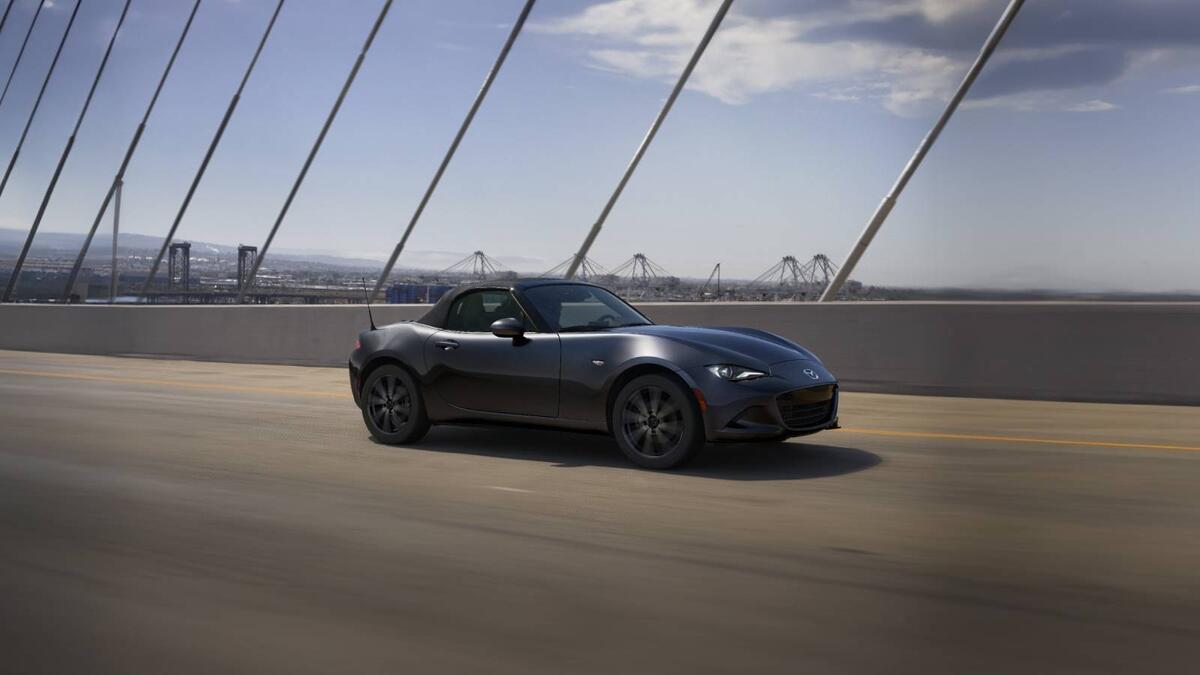
The Mazda MX-5 is a small two-seat sports car (a Miata). They’re comparing it to the RAV4 by talking about how many recalls each had in a specific year range.
A recall is when a car company admits there’s a problem and offers a fix. The host is mentioning how many recalls different cars had to compare their track records.
This is a Mercedes-Benz SUV called the GLK 350. The host is saying the one they’re looking at (a 2015) is in great shape and the air conditioning works really well.
A six-cylinder engine means the car has six combustion chambers. More cylinders can help the car feel smoother and give stronger acceleration when you press the gas.
A Thunderbird is a Ford car model. They’re joking that it’s broken—basically calling it “Thunder Turd”—as part of the discussion about cars that aren’t running.
A “hot rod” is a car that someone has modified to be more fun—usually for looks and driving. It’s often an enthusiast project rather than a completely stock car.
The Chevelle is an older muscle car made by Chevrolet. People often buy them to restore them or modify them into hot rods. The podcast is saying it might be a future purchase.
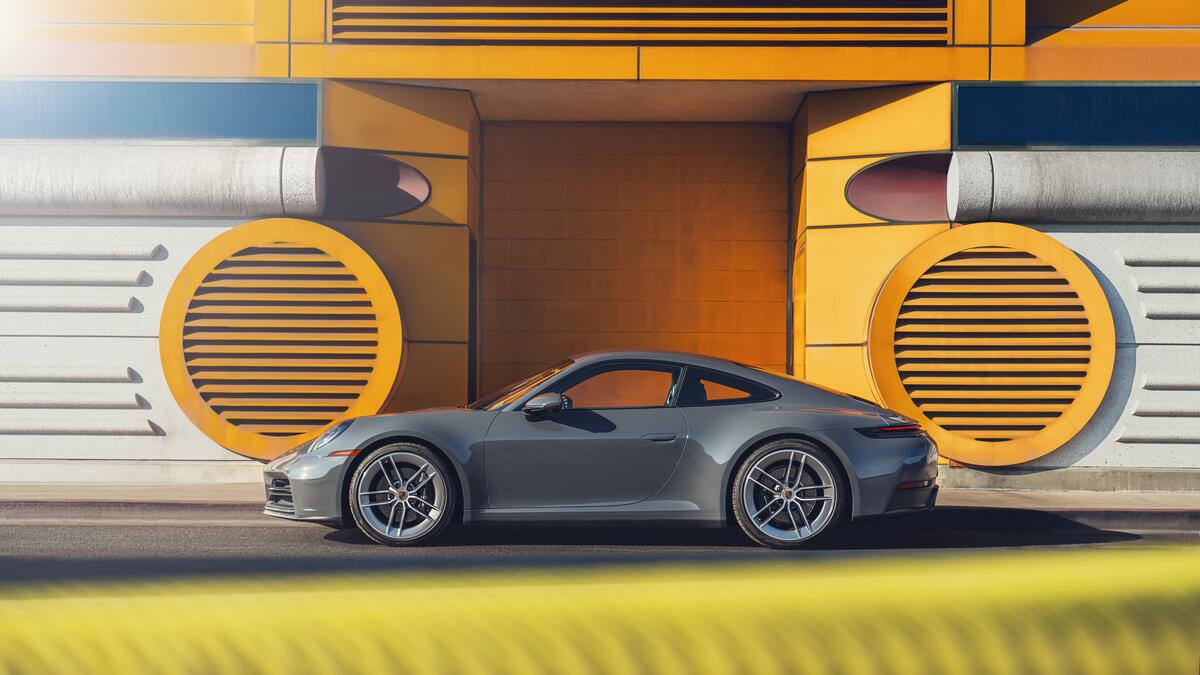
The Porsche 911 is a sports car made by Porsche. It’s known for its classic look and strong performance. In the podcast, it’s mentioned as part of a special “limo” style build.
A dragster is a race car built for drag racing—mostly going fast in a straight line. In this conversation, they’re using that style of floor/structure for a custom build.
A Cadillac V16 refers to an old Cadillac with a very unusual engine that has 16 cylinders. Engines like this are rare and take special work to build or repair. The podcast is talking about someone working on one and getting updates from a shop.
Laser cleaning is a way to remove rust and grime using a focused beam of light. Instead of sanding or blasting, the laser targets the dirty surface and leaves the metal underneath cleaner. It’s often used in restorations to avoid damaging the surrounding metal.
A pulsed laser sends energy in quick bursts. That can help control how much heat goes into the metal, which can be safer for delicate surfaces. The idea is to clean without cooking or warping what’s underneath.
Rust is the corrosion that happens when metal gets exposed to water and air. On cars, it can eat into steel and spread, so people try to remove it before repainting or sealing.
Spot welding is a body-assembly method where two metal sheets are joined by localized weld “spots,” typically in a grid along seams. In car bodies, those spot-welded joints are commonly covered with seam sealer to prevent moisture from getting into the seam.
A laser welder uses a laser beam to melt metal and join it. It’s a precise way to weld that can help avoid warping thin sheet metal during restoration.
A MIG welder is a common type of welding that feeds a wire into the weld and uses gas to keep the weld clean. It’s great for many jobs, but some restoration tasks prefer more precise heat control.
A TIG welder is a precise welding method that uses a tungsten tip and shielding gas. It’s often used when you want clean, careful welds—especially on thinner metal.
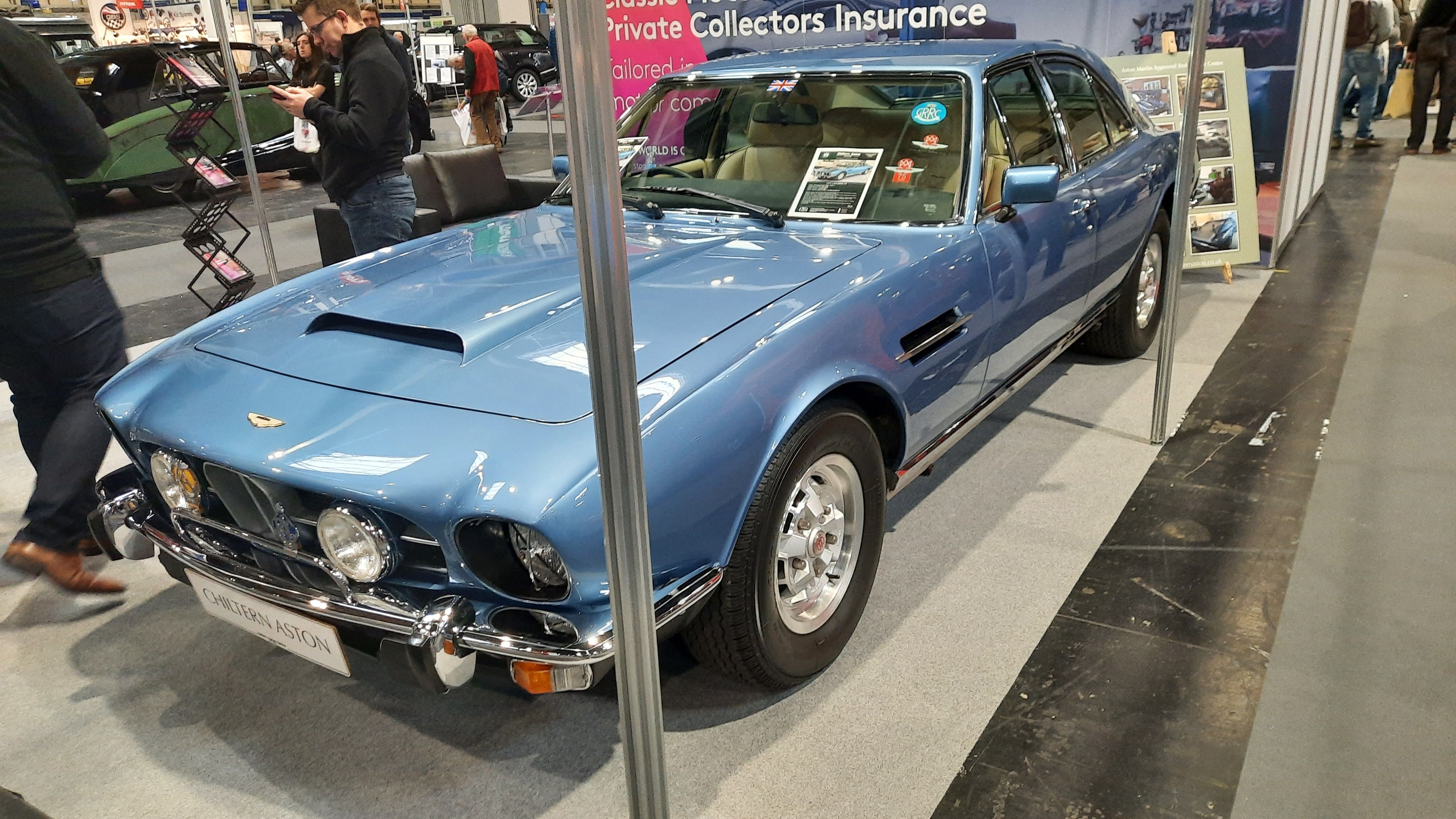
The Aston Martin Lagonda is a famous Aston Martin model, and this one is talked about because it had an early digital dashboard. The episode also explains that even though it had a modern-looking dash, the engine setup was still using carburetors at the time.
A digital dashboard is the instrument panel that uses screens and electronics instead of classic needle gauges. It’s a big deal because it was an early example of that kind of modern display in a car.
“Carbs” are carburetors, which are parts that help mix fuel and air for the engine. If the carbs are worn or out of spec, the car can run poorly, so they may need rebuilding.
Fuel injection is a system that sprays fuel into the engine using valves and sensors, rather than using carburetors. In the 1980s, many cars used it mainly to meet emissions rules, not to make them faster.
Here, “smog” means pollution that governments tried to reduce with stricter rules. The host is saying that many cars added fuel injection mainly to pass those emissions requirements, which sometimes hurt performance.
The V8 Vantage is a sports car made by Aston Martin. It’s powered by a V8 engine and is built for performance driving. The podcast is talking about how changing the carburetors can change how much power it makes.
“Bench flow” is like testing carburetor parts on a workbench to see how they flow fuel/air. It’s done so the carburetor will behave correctly once it’s installed on the engine.
Carburetors are the parts that mix fuel and air for the engine. Small adjustments matter a lot, so turning the screws too much can throw the setup off.
Here, “tuning” means adjusting the carburetor settings so the engine gets the right fuel mixture. If it’s already close, you can make small changes instead of starting from scratch.
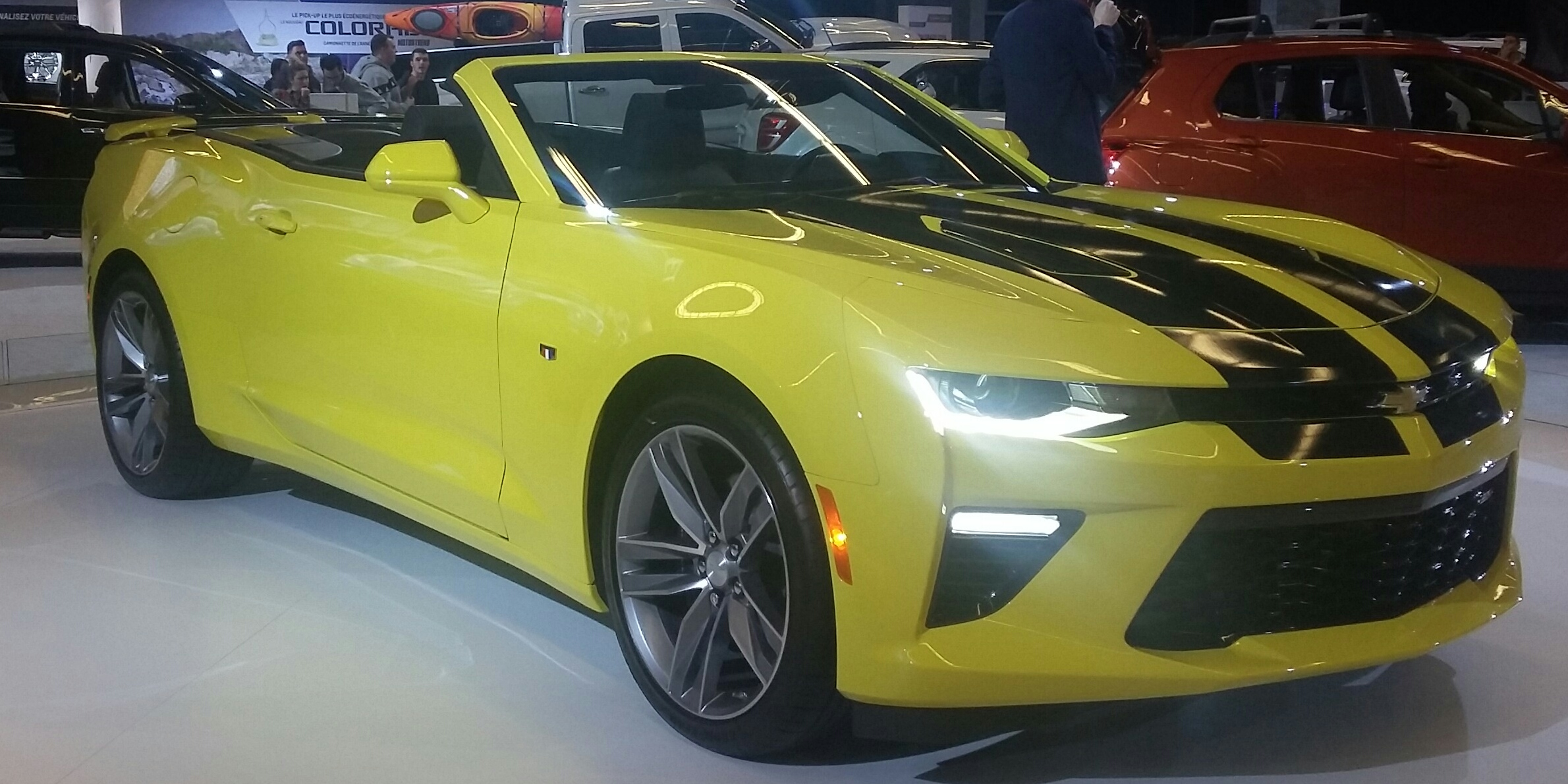
The Camaro is a muscle car made by Chevrolet. The podcast is talking about older 1980s versions and how they can be worth a lot to collectors. It’s mainly about resale value and what people want to buy.
The Corvette is a famous American sports car from Chevrolet. It’s the kind of car a lot of car fans dream about, and here it’s used as the “big dream” compared to a cheaper alternative.
The Ferrari 360 is a well-known Ferrari supercar. The host is basically saying that even a famous Ferrari might get less attention than a rare, weird-looking Lagonda.
A “wedge” design means the car’s shape looks like a wedge—tall and narrow on top, wider near the bottom. The host is saying his Lagonda looks so unusual that people can’t ignore it.
“Concours” is a fancy car show where people judge cars for being perfect and original. The point here is that these cars are meant to be driven, not just displayed.
Rally lights are extra headlights added to help you see better when driving off the usual well-lit roads. Here they’re saying the car is set up for real driving, not just looks.
The Porsche 356 is an older Porsche sports car. It’s famous for being a classic, and in this story it’s one of the cars being mixed and sold as part of a collection.
The Porsche 914 is an older Porsche with a mid-engine layout. In this story, they’re talking about a 914 engine being put into a different Porsche, making the car unusual.
Delamination means the windshield layers start to peel apart. When that happens, the glass can crack more easily and may not hold together the way it should. It’s something you can see more on older windshields.
A flow bench is a tool for measuring how much fluid moves through a part. “Analog” here means it uses real gauges and dials instead of computer readouts, so the person can directly observe the flow.
This pump’s job is to move fuel and build pressure so the fuel system can deliver it properly. The key idea is that they test whether it’s pumping the right amount at the right rate.
It’s a non-computer way to decide how much fuel the engine should get. The system uses physical parts that change the fuel amount as the engine runs, instead of using digital settings.
A turbo diesel is a diesel engine that uses a turbocharger to force more air into the cylinders. More air allows more fuel to be burned efficiently, which improves power and responsiveness compared with a non-turbo diesel.
The Cayenne is a luxury SUV made by Porsche. An SUV is a bigger vehicle that can carry more people or gear. The podcast mentions it while towing a trailer, which is a real-world test of how well it can pull.
Off-road recovery means helping a vehicle get unstuck when it’s off the pavement and gets stuck in dirt, mud, or sand. People use tools and techniques to pull it out safely.
“Side by sides” are off-road vehicles with two seats next to each other, usually used on trails. They can get stuck in rough terrain, which is why recovery shows feature them.
A Buick Roadmaster station wagon is a big American family car with a lot of space. Here it’s being used for a crazy long-distance stunt, not just everyday driving.
The PT Cruiser is a compact car made by Chrysler. It has a unique, retro-looking design compared to many other cars. The podcast is just noting that there were many of them around.
A Chevrolet Lumina is a regular family car from the 1990s. In this story, the host is saying it handled a rough, bumpy race course better than expected—without major damage.
The Chevrolet Cavalier is a compact car. In this segment, it’s mentioned because it was one of the very few cars that actually made it to the end of the run.
They’re talking about braking—when and how hard to slow down for a corner. Doing it smoothly and at the right time helps the car turn without losing control.
A steering box is the mechanism that turns your steering wheel into wheel movement. It can feel less immediate than some other steering designs, which can make a car harder to drive fast.
Rack and pinion is a common steering design where turning the wheel moves a bar that turns the wheels. It usually feels more direct than a steering box.
On a turbo car, “spooling” means the turbo is spinning fast enough to start pushing extra air into the engine. The faster it spools, the sooner you get that extra power.
SCCA is a big U.S. organization that runs amateur road racing and other track events. If they’re prepping cars for SCCA, it means they’re getting the car ready to race in an organized competition.
“Boost” is extra pressure from a turbo or supercharger that helps the engine make more power. More boost typically means the car feels quicker when you accelerate.
The Corvair is a classic Chevrolet with an unusual design compared to most cars. Here, they’re talking about turning one into a serious race car with upgrades so it can compete and potentially win a rematch.
The 1970 Toyota Corona is the “starting” car for a custom race build. The owner then mixes in parts from other Toyotas to make something unusual for racing.
A “1JZ turbo” means a Toyota 1JZ engine that’s been upgraded with a turbo. Turbos force extra air into the engine, which is how these builds can make a lot more power than stock.
“Arrive and drives” means you can come to the race and drive a car that’s already set up. The team takes care of most of the work, so you don’t have to build your own race car first.
“24 Hours of Lemons” is a fun endurance race where people compete in cheap, imperfect cars. It’s designed to be an easy way for beginners to get involved without needing a super expensive race car.
“Lemons” races are endurance races where the cars are cheap and often not very reliable. The challenge is that you have to keep a rough car running long enough to finish.
A 25-hour race is a long endurance event where the car has to keep going for about a day. It’s not just about speed—teams also need the car to stay reliable and manage stops and driver changes.
Car
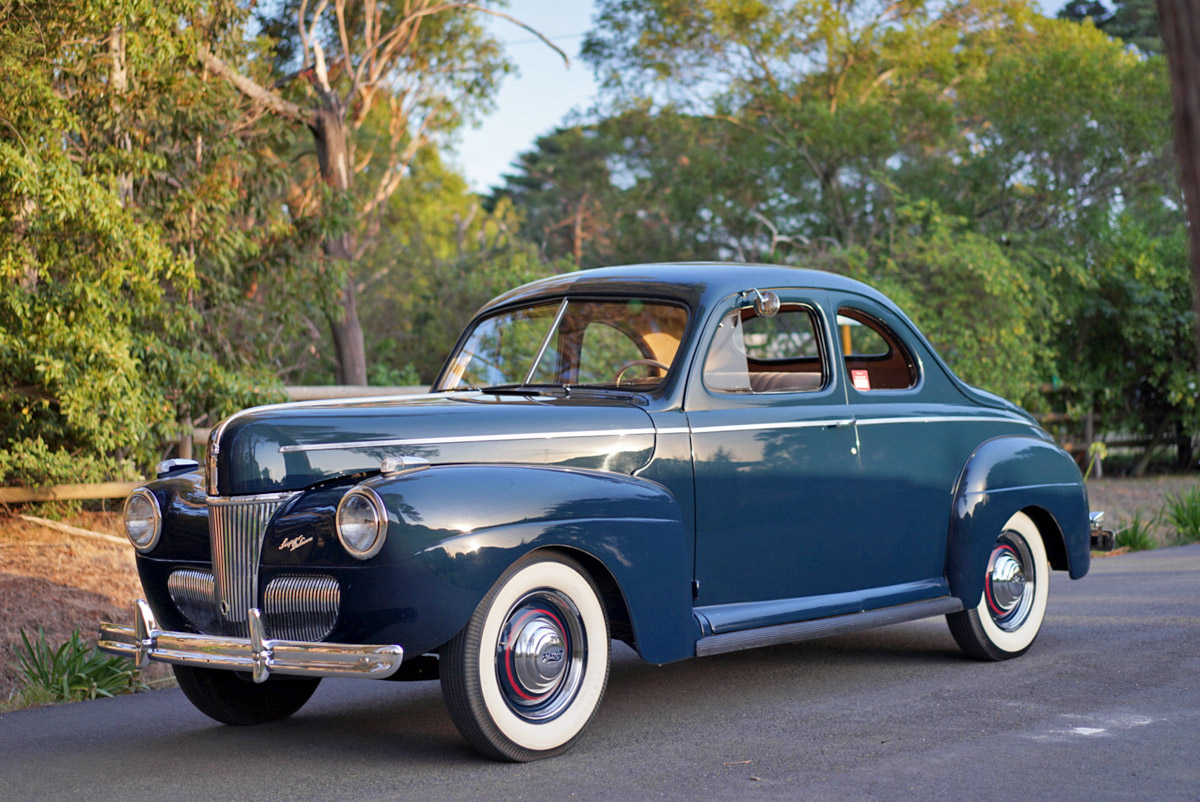
1941 Ford
This is a classic 1941 Ford that someone is racing. The interesting part is that it’s been modified with a much newer engine than the original.
They’re putting a Cadillac Escalade V8 engine into the older Ford. The “LQ9” is the specific engine version, and it’s popular for swaps because it’s strong and makes plenty of power.
A mid-engine car has the engine sitting in the middle of the car, not in the front. Putting the weight closer to the center can make the car handle more predictably in corners. That’s why many sports cars use this layout.
“Willwood brakes” are aftermarket brakes—parts made to improve stopping. The speaker is saying the car uses them on the back wheels. Upgrading brakes like this is often done to make a car stop better and feel more consistent.
“50, 50 balance” means the car’s weight is about equally split between the front and the back. When that’s close to even, the car often turns in more naturally and feels more controllable. It’s a big part of why some cars handle so well in corners.
A clutch is what connects the engine to the car’s drivetrain. If it “slips,” it doesn’t lock up properly, so the engine revs but the car doesn’t pull strongly—and it can get damaged if you keep driving.
Torque is the engine’s pulling force. If it “breaks it loose,” the tires can’t grip the road, so the car starts to slip instead of moving forward normally.
The throttle is the pedal that tells the engine to make more or less power. They’re saying pressing it didn’t help them accelerate safely when they needed to.
The Miata is a small two-seat roadster made by Mazda. It’s meant to be light and easy to drive, especially on twisty roads. The podcast is referencing how a Miata driver might react to something approaching from behind.
The Avanti is an older car made by Studebaker. It’s known for having a unique look and being a classic that people enjoy collecting. The podcast is mentioning it as part of their classic-car fun and talk.
In this context, “stock car” means a car that’s based on a regular production model, not a one-off race car. The speaker is using it to say it was fast even without being fully custom-built for racing.
A “speedster” is a type of classic sports car that’s usually lighter and more stripped down than a normal roadster. The host is describing one that’s basically just the mechanical parts and frame, with no body panels left. That makes it a project car rather than a complete car.
“Bones” is collector-speak for the underlying structural/mechanical foundation of a car—what remains when the body or other parts are missing or heavily damaged. Here, the speaker is talking about finding the chassis/frame and core components so they can restore or build the missing bodywork. In auctions, this distinction matters because a car with “bones” can be turned into a project, but it’s not the same as a complete, restored vehicle.
Panel beating is car body repair work. It’s the process of reshaping bent or dented metal panels so they look straight again before painting.
Car
Fiat Aero concept car
Fiat made a concept car called the Aero, and it’s famous for its super streamlined, egg-like shape. Concept cars aren’t normal production cars, but they can still sell for a lot of money at auctions because they’re rare and interesting.
A concept car is usually a show car—built to demonstrate ideas, not necessarily to be driven. This one is unusual because it’s described as actually working and being able to drive.
Car
1950 Packard
This is a 1950 Packard, a classic American luxury car. The interesting part here is that it’s described as having very low mileage and an original, well-preserved interior, which is exactly what collectors look for.
Term
forward look design
This phrase is about a particular styling direction—how the company designed its cars to look more modern. In the conversation, it’s used to explain how Packard’s look changed over time.
“Pickling” here means they stored the car in a preservation way to help stop rust and damage. It’s like putting it away so it stays in better condition for years.
A “straight eight” means the engine has eight cylinders lined up in a row. It’s a special, old-school engine type that many people don’t get to experience often.
“Resprayed” means someone repainted part of the car. If only one area was repainted, it can tell you the car has had some restoration work even if the rest is original.
Pebble Beach is a major automotive event in California known for high-end classic and collector-car culture. The host ties it to sponsorship and to getting more people interested in cars.
A 1976 Range Rover is a classic Land Rover SUV from the 1970s. The host is mentioning it because people argue about whether these older Range Rovers are reliable or not.
A roll cage is a strong metal safety frame inside the car. It’s there to protect you if the car flips or crashes hard, by keeping the cabin from crushing.
Three-point belts are the standard seat belts you see in most cars—one strap across your chest and one across your hips. Racing setups often use stronger multi-point harnesses, so three-point belts are usually considered less protective for track driving.
A dirt track is a race course made of dirt instead of pavement. Dirt racing usually means less grip and lots of dust, which can make it hard to see where you’re going.
They’re referencing a movie scene where the driver has to go through heavy smoke. The point is that dirt tracks can get so dusty that you can barely see the racing line.
“Gas mileage” means how far the car can go on a tank of gas. Better gas mileage usually means you stop for fuel less often and spend less money over time.
LIVE
You're going to love this.
Driven Radio Show.
Quiet, numbsculls.
I'm broadcasting.
Hey, all you gear heads and car fiends,
welcome to Driven Radio Show, your weekly automotive happy hour.
I am Brett Hatfield here with my co-host and engineer extraordinaire,
Mr. Mark Groves.
That's me.
We are coming to you from Driven Radio Studios,
where, hey, the power's on.
That was interesting.
At least we got an arrow down, man.
We only had to throw that breaker three times.
The power's on.
But don't turn on the light in the bathroom.
Yeah.
Just say it.
Just put that out there.
If you've got to turn on the fan, turn off the light.
Sit there in the dark.
And enjoy the show.
With the fan running.
All right, Mark.
I'm not picking any scabs this week.
You got anything to talk about?
No, just trying to find a new car.
Yeah, how's your car search going?
I think since the last show, sold the Nissan.
And a nice young kid.
And now, yeah, a young guy.
Cool.
I have to admit, the drive, his test drive was kind of funny.
Little jerky.
He's not real accustomed to a five-speed.
Well, he will be now.
Manual.
Yeah, he sure will.
And then he came back out that evening,
and he had dad and big brother in tow.
And they went through that thing.
It was practically, I know that my prostates
in good condition after they got done.
So, you know, well, that's off on the road.
And now I'm looking for a cockroach.
What, the last name, Jellyfinger?
Didn't key you into anything?
Well, at least he gave me a pat on the head.
But the.
He's an officer, Doc.
Looking now for a lazy man's good ride.
I'm running a RAV4 of some sort.
We had one for years.
And if that thing, we were running it into the ground,
and it was still running strong before it got rear-ended.
And then I also did some looking up,
and it seems like Mazdas have kind of risen in,
they can compete.
The little CX.
With the reliability.
Yeah, the CX-5s.
Oh, cool.
And they, you know, when you look across the board
between that and our beloved RAV4,
there is quite a bit of reliability overlap.
Yeah.
Oh, cool.
They each have a little bit of different problems.
Like there was one year, I think,
it was a 2015, 2017, MX-5 versus a RAV4.
And the RAV4 had like 11 recalls.
And the MX-5 had.
The RAV4 had recalls.
Yeah.
Yeah, they do.
They're very quiet about it because they take care of it.
Yeah.
They get this shit fixed.
And they, I've been surprised.
So, you know, it's been, there's been a couple of chances
to buy things that, one, I went out to test drive and buy it.
It was 9.30 in the morning.
And there was already somebody test driving it on a Monday.
On a Monday.
Yeah.
And guess who bought it?
The test driver.
The person test driving.
Yeah.
So we'll see what happens.
That's the most exciting.
I'm still trying to convince you of the absolute perfection
that is a Mercedes GLK 350.
A 2015 Mercedes GLK 350 with 47,000 miles on it.
Yeah.
A little white one with a tan interior and ice cold air.
You know, you have no idea how thankful I am
and how thankful Cami is because she was pretty adamant
about it the other night when I showed it to her.
And have you let her drive it yet?
Not yet.
If you let her drive it, I think this deal's done.
Wouldn't surprise me.
It's so comfortable.
You let her drive it and you tell her the price that I shot you.
And I think this one will be done.
So all you got to do is put her behind the wheel.
I will not lie to you.
It's going to be a little caution more to maintain
than a RAV4.
But it's a Mercedes that should run forever.
Yeah.
It's got really good reliability ratings.
It's got really cold air and it's surprisingly zippy.
I have been really impressed.
It's a six-cylinder.
But like just today in traffic, I had to put my foot
into a little bit.
And I'm like, ooh, that even pushed me back in the seat.
That does not happen with a RAV4.
Well, it's a six-bang.
But that six-bang's got 300 horsepower.
So that helps an awful lot.
Anyway, just let her drive it.
Let her drive the dang thing.
See what she thinks.
And I take, how's your stable?
Ha, ha, ha, ha.
Got all mighty, man.
Everything I own is either in the shop
or waiting for the shop.
Yeah.
This is the first time I can remember not having.
Rhonda's car runs, but she's driving it.
You know, that's what she uses to run errands every day.
This is the first time I can remember not having a running
car at home for a long time.
Both the old Corvettes are broken, just because old Corvettes.
Yeah.
And I'm down to Harley's.
Thank God I got a couple at home.
I was, I'm going to have to go back to the toy box
and find something.
Damn it.
Damn it, Jim.
Yeah.
Well, go ahead and pick at me about broken stuff.
Just when I said I wouldn't pick on you about your Thunderbird.
Oh, the Thunderbird, yeah.
The Thunder Turd.
Well, hey, that's going to iron itself out.
And I'm pretty sure that in the end,
it will either be unraveled or somebody
will come across with some money,
and then you can sell it to the next person for the right money
and come out at home.
Yeah.
You know.
And while I'm talking to you, I'm
scrolling through Facebook Marketplace looking
for, looking for your next hot rod purchase.
Ooh, look at the Chevelle.
That'll be a little down the road.
I'm a little scorched on this one.
This was an uncool experience.
And I'm just like, you know what?
I think I'll take a break for a little while.
Hey, in the meantime, as long as we're
talking about cool purchases that you could make.
And so we're talking about, oh, I didn't know that.
Would come to you whole and with everything revealed,
warts and all, I caved and bought a new set of tires
for that 1990 heritage because I thought
it would be irresponsible for me to sell it with the tires that
are on it.
Yeah.
And the tires are sitting upstairs.
Our good friend, Mr. Claxton, is going to help me put those
on the bike, I think, over the weekend.
And then that thing is 100% done.
I'm not doing anything else to it.
And I will sell it to you stupidly cheap for what I got in it.
Nice.
Nice.
Anyway, new set of white walls sitting upstairs,
just waiting for the bike.
That's going to make it sexy.
When you showed it to me over the weekend, it was like, oh.
Yeah.
Well, imagine it with much wider white walls.
Nice.
There you go.
Our special guest this week is John Fakara of Fakara Classic.
John is an automotive historian, marketer, and walking encyclopedia.
He owned a picture car company called Creative Film Cars
in New York City and ran an illegal cross country cannonball
event.
Illegaling quotes.
Illegaling quotes.
Illegally.
It called the 2904 for a decade.
He was the marketing director and in-house historian for Canapa.
He has been building and racing cars in the 24 hours of lemons for years.
He owns Fakara Classic, a company that
researches, restores, and markets collector, road, and race cars.
John is a regular guest on the VinWiki Car Stories YouTube channel
with over 30 million views.
And he hasn't updated that, so it's probably a whole lot more.
And he has his own YouTube channel that is a growing by leaps and bounds.
John's work has appeared in magazines such as Triple Zero,
vintage race car, classic Porsche, speed sport, and on the Lefkigolt website.
John, welcome back to Driven Radio.
Hello, boys.
Hello, boys.
You know, we've been talking.
How are you doing?
We've been talking about all the stuff you've been up to,
but I haven't had you on in almost a year.
So how have you been?
What's going on in the shop?
Oh, you know, it's so hard to keep track of all the stuff that goes on in the shop.
OK, your hardly addiction and your bad Corvette addiction.
I don't know what you what you driving.
What's going on?
This is something that almost certainly could use your help.
But not tons of stuff, tons of tons of cars in and out
and tons of changes and a lot of stuff on the YouTube channel
and weird adventures and all kinds of lots of stuff.
OK, plenty to talk about, my friend.
Why how much time do we all the time in the world?
It's your show, baby.
Why don't we go back to some of the stuff we talked about when we had you on last?
How is the Rocky Aoka Portion 911 limo progressing?
The Rocky Aoki machine is kind of went into
mothballs for a little while because, you know, there's this thing
where you have to kind of make money.
Yeah, isn't working for a living such a distraction from the stuff you want to be doing?
Truly. So the car sat on the rack for a lot.
We did a lot of things off the car.
So the transmission got rebuilt.
I did a video on that.
We took the engine, the 930 motor part that's already and been machine.
You put floor panels in that thing.
So we built that we built new floor pans for it because it has a four inch extension
for a four foot extension that was essentially originally what they had stuck in there was
like the wall off of a shed.
It was just like.
10 it was awful.
So I had this this awesome guy who makes
old school dragsters.
Yeah, yeah, yeah.
Watch out Corvettes like 10 feet so they wouldn't know
it wouldn't go in the area.
Let's kind of dragster. Yeah, that stuff.
He he built a dragster floor for it.
Essentially it's eighth inch steel with kind of a box down the center,
which a Porsche requires because all the linkage goes on the middle of the car.
Yeah.
And this guy was amazing.
He man I was like, here's kind of what I want.
He's like, OK, and he took a few measurements.
I mean,
nothing terribly precise looking to me.
Got measuring tape out pencil, you know,
little make some notes.
He's like, I'll give you a call on Monday with what I come up with.
Am I great?
So I didn't hear from Monday.
Tuesday comes, I call him.
I'm like, you know, are you working on it?
Can I see a design?
He's all, oh, you home?
Like, yeah, he goes, I'll be right over.
OK, comes over with the floor.
Oh, he made it.
No, no, like test fitting, no templates, no nothing.
Just from his minor notes made the floor.
The whole thing fits in like a sixteenth of an inch all the way around.
You're kidding.
It's perfection.
And I'm like, I blew my mind where you sit with your mouth on the floor.
I was just old school guys who know.
I might have it.
I don't have a metal break that can handle steel that thick that wide.
Sure. And I'm like, so I was like, I just kind of call somebody up
who knows what they're doing.
He's an old artist of a guy and he's like, well, I hope,
you know, because I know I didn't go through it's not exactly what you designed.
But I think it works better.
I'm like, that's great.
I'm like, how much?
And he's like, I don't know.
400 bucks.
Done.
It's like the steel is 400 dollars.
I'll make it rain.
Yeah, just quick, give him the money before he changes his mind.
So we got that test fitted.
I rebuilt to the front rear.
If you look under the car, the front and rear suspensions
looks like fully restored concor 911 early 911.
Wow. It's gorgeous.
It's way too nice for this car, but I can only work one way.
So I can't.
I see no purpose in putting.
No, I get it and I can appreciate it.
And it's, you know, when we had a detail shop,
didn't matter what you brought us.
It didn't matter how big a turd was.
You only approach things one way.
You do it right or you don't do it.
So that all looked beautiful.
The floor is tacked in.
And a couple of few days ago last week,
and I'm going to put a video out on my channel about this, a local guy.
I was I have this crazy V 16 engine I'm working on.
And the shop that it was at was doing it called me up and they go,
there's a guy over here with laser cleaners
because they do four by fours covered in rust and junk.
Oh, oh, oh.
He goes, he wants to use the laser cleaner on your engine.
I'm like, I'll be right over.
So I went over there and he had a 1500 watt laser and a 300 watt laser.
The smaller ones, a pulse laser, the big ones, continuous.
And they're taking the rust off the frames of these cars.
They don't have to disassemble the car anymore
and they're just ripping the rust right off the chassis down to the metal.
Perfect. Removes no steel.
I'm like, oh, so I told myself, listen,
I've got this terrible, rusty, partial emezine.
I agree, would you like to come over and I'll shoot a video for my channel?
He's all absolutely nicest guy.
And he's just starting the company.
He's kind of finalizing the designs.
So he came over last week, brought both of his toys
and we did the entire interior of the 9 11. Wow.
All the rust is gone.
Didn't have to disassemble it.
Everything, it just it evaporates literally.
The photons, it multiplies photons is what a laser basically is doing.
And the heat hits whatever the contaminant it is and evaporates it.
It turns it from a solid to a plasma in a nanosecond.
That's cool.
And as soon as it hits something that's reflective, like the steel, OK, it stops.
It bounces off. OK.
So it doesn't remove the metal.
All right, that makes sense.
No, for the the part where it hits that it heats up,
does it actually kind of almost liquefy the surface a little bit to
the porous? Literally you can run the 300 watt laser
you can run across and put your hand on the steel afterwards.
Oh, kidding. So the 1500 Watt laser is a little warm.
But it's 1500 Watts.
It's your hairdryer at home. Yeah. Yeah.
OK. When you see it operate, it literally just looks like it's ripping the rust off.
It's amazing. Just I have to get one.
So we're going to work out a deal at some point when he finally gets into production in the next month or so.
We're going to do some kind of deal where I get one at the shop because
all the years of using a wire wheel, like we've all done the wire wheel thing, right?
Oh, yeah.
And you get the man and you won't fit and then you're scrubbing trying to use sandpaper.
You can never, you don't need it.
If the light can get to it, it rips it away.
Wow.
All right.
It doesn't bother like you can you can change the settings on it so it doesn't bother the like the sealer, the seam sealer.
And of course, he uses a seam sealer because it's just basically spot welded together.
Yeah.
You can you can dial it in so it'll take the rust off and leave the seam sealer intact.
Stick with me here.
It doesn't bother the rubber.
Stick with me on this, at least till the end, because I want to know if you've done this too.
There are several YouTube channels I watch just because what they're doing on them is so weirdly satisfying to watch.
Yes.
I watch the guy who goes around and cuts the most horrific lawns you've ever seen just to get, you know, to show off the result.
And it's usually.
I watch those guys too.
Yeah.
They go, Blady's lawn and they cut it for free.
Yeah.
Because they can't, you know, whoever owns the house can't get to it or the house has been abandoned and it makes the neighborhood look like crap.
Or the other one I found out about and I found out about from watching Pat and Oswald says he watches the lawnmower guy, but he also watches people who clip horses and cows and goats hooves.
Oh yeah.
Yeah.
He's always fixing things and it's both gross and totally wild to watch.
It's just so weirdly satisfying to watch when it's finished.
And the third one is guys who's got, who have these lasers and they're cleaning off metal and they're cleaning surfaces and cars and stuff.
And I watch these videos and they're so stupendously satisfying to watch.
So if you put them on your channel, you can probably do an hour with no narration.
You don't need to talk.
You don't even need to tell me what the hell it is you're doing.
Just a video of you taking a laser and stripping all the corrosion off.
Crap.
And I'll sit there and watch the damn thing just because it's so strangely satisfying to me.
And so the video that we shot, right, I've been trying to edit it for the last few days because it's mostly me doing that.
Oh, cool.
The rough edit is an hour long.
I did the whole car.
I, I, he left me the lasers after we finished shooting.
He's all just keep them for the day and do the whole car.
So I spent the whole day laser to the entire interior of it.
I did anybody who's restored a car, right?
Aside from dipping it in a bath.
Yeah, yeah.
You don't have to, I didn't have to disassemble the car and not to dip it.
Same level of clean, like surgical level of clean.
Oh, that's awesome.
And if you said it just right, if you get especially the post laser, you said it's just right.
It almost polishes the steel like it starts becoming reflective.
Oh, that's so fantastic.
Oh, I thought it was all baloney.
I thought it was just Chinese AI nonsense, the stuff they had online.
And for most, a lot of it is, but this was like, it's, this is real.
And he's going to bring over next week.
He's got one of those laser welders.
Oh, no.
Oh, you're just, you're not even going to be right, man.
I, I, the laser welder.
You can throw your mig welder away and a TIG welder as well.
You can put, you can cut a soda can in half, put it together and weld it back together.
You're kidding.
I kid you not.
I want to see this.
I'm going to film that.
I don't doubt you.
I'm just now I'm excited to see it.
I want to, I want to see it.
Do it.
And the cool thing about it, apparently it's not only can weld, but it can also cut.
So you crank the laser up and you focus it and it will cut through steel just like a plasma cutter.
I want one of those.
Hell, I don't, I don't need that.
I don't, I don't even have anything I need to weld, but I just want the damn thing now.
I can cut through anything with a Harbor Freight welder.
You're going to catch me on the floor of my garage with 73 pop cans around me in different states of being cut apart and welded back together.
You know, half a Sprite and a half a Coke can.
Nice.
But I really want one of those laser, one of the laser cleaners because I'm not kidding.
I will sit and launch that and it's just so fascinating to me.
And again, so stupidly satisfying when you're done.
I will, I will put you together with him once his company started because I think his goal is that the big one is going to be 10 grand and the small one is going to be six.
And considering these were, these were like $75,000 five years ago.
So they're going to be like a CD player.
I guarantee you another five years, there'll be three grand, then they'll be like you can pick one up with Harbor Freight for a thousand bucks at some point.
Oh, I hope so.
I hope so because stuff like that is so cool.
And you look at the underside of your car and you think, I could make this better, but I'm not going to sit down here for the next three days with a mask on and a wire wheel trying to take all this crap off.
That's fantastic.
So that's what's going on with the Rocky Yoki car.
Okay, so very cool.
Also, last time we talked was either right before or right before, right after you'd gotten the Lagonda and I don't think you'd had a chance to do anything with it.
So tell us about the Lagonda and if memory serves you were talking about revamping the electronic dash.
No, no, that was already done.
Oh, oh, just so your listeners remember it.
So there is 82 Aston Martin Lagonda, which was the first car ever with a digital dashboard.
Yeah.
And they redid the dash and the paint before they put it into the French National Automobile Museum, which is where I got it from.
Okay, all functions.
What it needed was the carbs redone.
It's got four dual-throat webbers on it.
Doesn't it seem kind of odd that it would have a digital dash and carbs?
Well, you know, it was designed and it was the first one was designed in like 76.
The first one was built in 78.
So fuel injection at that time for the British at least wasn't going to happen.
They got into the fuel injection mid-80s.
So I think 83 or 84.
And that's when I discovered how to screw that up.
Yeah, and it wasn't very good.
It was primarily they put it on the car for smog rather than anything else.
Oh, okay.
Alrighty.
A lot of fuel injection.
People don't know that, but a lot of fuel injection in the 80s was for smog reasons, not for performance reasons.
A lot of the cars got slower.
Like the the carb version of that Aston Martin V8 made more power with the webbers than it did with the initial fuel injection.
I fix that.
But anyway, I the webbers I wanted to do right.
And so I sent them to Mike Pierce, who is he used to own Pierce manifold.
He is the Weber Guru.
There's a few guys left where they will do everything.
They have the old analog machines where they can bench flow them there.
Okay.
And they're, you know, and he rebuilt it, replated everything.
They come back looking like jewelry.
Like you're ashamed to put them back on the car.
Cool.
I love stuff like that.
And he's great because he's, you know, he's old.
I don't know how old he must be close to 80 now.
He's all like, OK, you got the car.
And now if you have to turn any of the screws more than a half a turn, call me.
Okay.
To get it dialed.
He goes, those are all dialed in because if you turn them more than that, you've messed them up.
He's like, you've done something wrong.
He goes, call me before you mess up my carburetors because it is after he's done them.
Yeah.
Sure enough, I got them on.
I've started tuning them and they're all within a quarter of a turn of the screw.
Oh, that's fantastic.
I love it.
And oh, it's yeah.
And so it's running now.
Right now I'm trying to find some good shows to take it to because unfortunately, and I've been, I've been talking to some of the people at different big concours about this is that, you know, it's an 83.
So people, a lot of these concours are like, we don't take anything after, you know, after 73.
Yeah, that's not old enough.
And Radwood is kind of had Hagrid is destroyed Radwood.
It's shrunk down to three shows.
They don't even do a show in California where it started anymore.
Oh, they're not doing one at Wannere, they're sure.
No, not that I know of.
If you look in their calendar line, it's just three shows and who cares, right?
Here's the issue is that Radwood had a shelf life to begin with, because eventually people are going to start doing 80s and 90s.
It was a great idea a decade ago.
Yeah.
And Hagrid is a good insurance company, but they're bloody awful promoters.
You know, they they shrank.
They bought concours Delemen's.
Yeah.
That is that shrunk down.
Radwood is shrunk down.
They were all both of those those concerns were growing when they were handed over and they've all shrunk.
Well, like you said, at some point, 80s car shows are just car shows because 80s is finally old enough to qualify for, you know, whatever car show.
Yeah.
Yeah.
And there's tons of big, big organized cars and coffees now.
Yeah.
Where you can where that is those are the cars that people want to see.
Sure.
Like this is what I like old concours dudes like granted, you know, you're 1914 white or your 1922 page.
Or your 1927 Rolls Royce.
Those are all amazing.
And nobody alive knows what the hell they are.
Yeah.
Very few.
You know, if you want to know what people want to see what they'll pay to see is go to these Euro Sunday shows and these these these cars and coffees.
The cars that people are gathered around those are the shows that should be at your concours.
They're going to sell tickets.
Yeah.
Like I, you know, I'm 57.
Right.
So if I took my son to a car show, what am I going to really talk to him about?
I'm going to talk to him about 70s and 80s and 90s cars because I know those knowing your son.
I know exactly what we're going to talk about.
Well, Cody, Cody probably could teach people about some of these cars.
But I mean, the normal dad wants to talk about the car he had in high school or new and that's not at a concourse.
So he doesn't feel connected to the stuff.
He's not going to have his kid connected to the stuff.
Well, I'll tell you what.
And this is if you want to see it all in a simple thumbnail, 80s Camaro sell for more than 80s Corvettes.
Period.
Yeah.
Full stop.
And that's so strange to me, you know, especially being a giant Corvette nerd.
But in high school, lots of guys wanted Irox because they seemed possibly achievable.
You know, you might get a Corvette might be on your poster on your bedroom wall,
but how the hell are you going to afford that sucker in high school?
You're not.
But you might be able to lay your hands on an Irock because it was half the price.
And now I rocks go for more than 80s Corvettes.
It's what guys wanted when they were in high school.
Yeah.
Yeah.
And people want to they want to see them.
Yeah.
So and they want to talk about them like getting back to the Lagonda.
Like if I took the Lagonda to a show and I parked it next to whatever, you know, some bland Ferrari,
like a 360 or something, nobody's going to look at the Ferrari.
They're going to look at my crazy lime green wedge sedan they made 600 of.
Yeah.
I parked that anywhere.
People lose their minds, right?
But people people are like, I'm sorry, that is too new for our show.
I'm like, you're you're an idiot.
Yes.
Just.
And but when when those shows finally do come around when the 80 year olds hand down
the keys to the 60 50 year olds, 50 year olds are going to be like, let's move this up to 1995.
Well, and that's I'll tell you one of the things I'm looking forward to
leaving car shows, car gatherings, cars and coffee, all of the above.
I am so ready for 50s music to go the hell away.
Oh, I don't want to hear it anymore.
Come on, you want to rock around the clock.
Don't you run, run me one more time.
I'm going to strangle somebody.
I'm going to just boom the hell out of you.
Yes.
Kill these people.
And I was at a concourse and the guys are like, OK, we're going to play some newer music.
Now I kid you not.
And he started playing Prince.
Like, oh, you're out on the edge now.
You're playing little red Corvette.
It's because I looked at it.
I saw a song the kids are listening to that's got Corvette in it.
Yeah, well, it's 1987 for the love of Jesus and all that is holy.
I'm telling you.
So. Everybody listens to the show knows I got old Corvettes. OK, great, terrific.
And if you go to get gas and you've got any kind of a show card or any kind of an interesting card,
all people will ask you questions about it.
I mean, it just that's the way it works.
I can't tell you how many times I've been asked, do you go to car shows?
And you always sound a little like a snot saying, no, I really don't.
Now, oh, why not?
Because I've heard rock around the clock so many times.
If you play us some bitch again, I'm going to put a hole in my head.
You know, you love it.
You know, you love it.
No, stop it.
Stop it.
The go to Radwood was to listen to the music.
At least it was something I was like, oh, no kidding.
That's that's what part of what was fun walking around at Radwood last year.
Get down some Kajugoo, baby.
Yeah, yeah.
Yes, great music and lots of great 80s cars and even some people who were dressed for it,
which was, you know, there was some real questionable choices there.
But yeah, I'm I am tired of seeing guys who have cartoons of their car on their shirt.
Oh, what?
If a car pulls up in a folding chair comes out.
Yeah, I'm done.
Yeah.
I love all the knowledge I've gotten from car guys who are older than me.
And it's it's been not an unsubstantial.
But I'm ready to be done with the 50s music and the folding chairs and the whole bit.
I celebrate all these old guys and their knowledge and I hope they pass it down.
And I have my videos on my channel.
Yes, pass knowledge.
Please engage the younger.
Please, you know, you are all founts of information that are I don't want to disappear,
but stop with the gatekeeping.
Yes.
They're gatekeeping their automotive classic car nonsense, and it's just killing everything.
Well, Radwood has to be on the other side of the fence to exist.
Then something's wrong.
Yeah, it all be grouped together.
It all should be the same thing.
Yeah, it really should.
So where are you going to take that thing to show it off?
And, you know, that's almost that that's such a specifically different car.
I'm not saying that you got to have the right crowd for it because I want to see that thing everywhere.
But you're going to have to hang around and explain it because they're shy of guys like me and a handful of others.
There's not going to be tons of people who know what the hell that is.
What?
Everything every car own is a placard car.
Of course.
They all need explanations.
So usually I hang out or I do have an explanation card with it.
Not the old man, you know, four by four by three poster.
No, I know pictures and correspondence on it.
But I have a little thing of just let people know when I go away from the car.
But it is it is difficult to know where to show it.
Alan Galbraith asked me to take it to the Concours de Lemons, put it and just crush the British category.
And which I might do because it probably would.
I submitted it to the quail and the quail quietly declined.
And I was trying.
There's no big British show.
Because like Porsche has the Porsche Works reunion.
And there's a Concours de Lille Italian for the Italian cars.
And it's not really a British.
There's not a British car show at Monterey.
I find that really surprising.
They do a British car show even here.
Yeah, it's not.
It's not like it's not big like the other ones.
I think there was one.
I don't know if there still is one.
Maybe somebody let me know.
But you know, so I'm going to be I'm taking it top Monterey for sure.
Because tons of people want to see it.
I will see it.
So you'll have to come and see it.
All right.
So on that note, are we going?
I'm going.
You're going.
Then we're going.
OK, well, you found a place yet?
No, I haven't found a place yet.
OK, I'll find a place yet.
I'm putting a tent on the beach, baby.
That's about what we had last time.
Last time we had a tent on the beach with running water.
Oh, that wasn't that bad.
The only bad thing that happened last year was that pie leaking
in the backseat of the truck.
That was unfortunate, but a good pie.
Yeah, it was a great pie.
It was a great pie.
It just it was messy as hell.
All righty.
So the Lagonda is up running, driving.
That's a guy.
Can't wait to see that thing.
It's that green is almost like nuclear waste green.
Oh, it's beautiful.
And I got a suit to match it.
I got a three piece suit.
Oh, do you really?
Oh, my God.
Oh, heck yeah.
Oh, that's freaking fantastic.
I love it.
You're magically delicious.
That's going to be awesome.
You ain't got a hair on your ass if you don't get a basket
and put some gold in it.
Did you order that suit off the interwebs?
Of course I did.
It's the best.
It probably is partially nuclear.
Well, it depends on how it gets here.
Very nice.
Straight of hormones, all that stuff.
I love this.
I found I just did a search for Monterey British car show
and there's Monterey British and this is this is boomer right
up front.
So you go to the page, I look at the page like, oh, join us in
California during Monterey car week for the British automobiles
and discover us.
And there's not a date, a time, a place, anything on the home
page.
There's not any information here.
And I don't like, like literally you have to go, I go to the
registration page and that's where I'm finding it's on.
Oh, that's why I'm not going.
It's on Monday.
Oh, okay.
August 10th, the beginning of car week.
That's why nobody is there.
That's why.
That's why I was going to say that's probably an invitation
for you to show up and run the sucker.
Good gravy.
Wow.
What a waste.
All right.
Well, before we find ourselves, Slit and RS over that.
What's next?
You have a vintage Nash Healy that we haven't gotten to talk about
before.
How'd that happen to join your collection?
So Dick McClure, who's on the board of the quail, was a friend
of mine and collector, very similar to me of just oddball
stuff, love saving cars.
Most of the time saves cars that should not be saved as far as
dilapidation and rust.
Lots of horses, a lot of early alphas.
And then he fixes them up as rally cars.
So they're not like concours done.
They're done until you can take them on a thousand mile rally
and have fun with them.
So cool.
He doesn't put bumpers on them.
He just puts rally lights on them.
They're all lots of fun.
And it gets like the drummer from, or was the guitarist.
I think it was the drummer from Pink Floyd drives around with
him.
He gets all these locks on to go do stuff with him.
And he has the best time.
So he had some health conditions earlier this year, or last
year, and he was sold off about 11 of his cars.
And he was going through what they were.
And it was a, you know, old 356 that Alan got.
And there was a 914.
And like the 356 has a 914 engine in it.
Like everything's kind of hodgepodgey together and weird.
So he had the Snash Healy, which he had bought, started,
painted, disassembled, painted, took the engine to an engine
shop, took the grill to a chrome shop and just was like,
I'm going to sell it as is, like where is.
And she made me offer, I couldn't refuse.
And he's like, you're the man to buy this because this is weird
enough for you.
And you know what it is.
I'm like, heck yeah.
So I always thought they were really cool looking.
They have that unusual narrow front grill kind of Jeep like where
the headlights are inside the grill.
They were America's first sports car after World War II.
And that's a fascinating thing.
So it was, it's a British chassis, it's an American engine,
and it was built in Italy.
So it's got a little bit of everything.
And so I basically, I've gotten the engine back from the engine
builder. That was the ordeal old school engine builder.
I've got the grill back.
I got all the parts, but I think I just don't have time to finish
it with all the other projects.
I'm going to be selling it soon.
I think I'm going to put it on the grill.
I'm going to bring a trailer as a project and see what I can get
for it.
Really?
It's just, this is why, and we talked about this before, I only
have one way of doing things.
And Dick's way of doing things is to get things together,
operational and run them.
And if I were to do the car, I would strip it down to metal
again and start over.
Well, you're about to have that laser thing.
You sure you don't want to wait around?
No, it's just, I've got too many things to do.
I've got the, I've got, because I just bought two new cars to play
with.
Yeah, we're going to get to those on the second.
Don't jump the gun.
So it's just, but I've got, got other priorities
beyond the Nash.
I think that's, I think that's for somebody else because I, what
I do is when I get a weird car, I try to find the hardest to
find part immediately.
Oh, well, that makes sense.
Missing it's windshield and the center.
That's three rear windshield.
How do you find a windshield for that?
Exactly.
So I've been looking for six months and I can't find one.
So I'm like, if I can't find one in six months, it's going to be
two years to restore this car.
Yeah, you're not, you can't find a windshield for one of those.
They just aren't out there.
I found it.
I found a guy on the East coast.
He has a one because he's doing concourse restoration.
So he's having a brand new one made.
Oh, for the love of God.
He was selling the older windshield, but you know, he wants
that for the windshield in the rear window.
And he's got a new one, like three grand.
But you can't.
This is the issue is that I've learned this over years.
You cannot transport vintage windshields.
No.
Oh, seriously.
Yeah, you're not ever, ever buy
one and say somebody's going to ship it.
The only way to do that is to go there with your car and a bunch
of towels and egg crate and whatever and pick them up yourself
and drive them yourself because they, I can't tell you how many
incredibly expensive windows I've lost to shippers.
And it doesn't matter what kind of a frame or a jig or whatever
you put it in.
Because the vibrations, you know, if they do pack it wrong,
there's one hotspot where it's hitting something and it's been
vibrating in the back of a truck in the heat and the cold and
the heat and the cold and the heat and the cold.
Yeah.
Something's going to happen.
Yeah.
It's not delaminating because those old windshields will
delaminate or I'm just crack.
If you get 14 cans of expanding foam crack filler, you might
be able to get the deal done.
I think you got a business there.
You got to work on that.
Yeah.
Well, I might have to get, get hold of the people
who make that stuff.
Were you serious about this guy running around with Nick Mason?
Yeah.
He runs, he, he, he, all of his cars, he's such a cool guy.
He does and he's got this great little collection and shop.
But Nick Mason collects really unbelievable Ferrari stuff.
He's got, I don't know the names because I'm not a huge old
school music guy, but he was, he was rattling them off.
He's all, what's this guy?
This guy and this guy.
And they, they, they all sign the cars when they do them and his
cars, every single one of his cars has multiple signatures of
famous people all over.
How cool is that?
And what he loves doing is he loves taking the, all these cars
are quail tour eligible because they're all old enough.
Yeah.
So he loves to take these cars that he's resurrected for 30,000
bucks on the quail tour with these $5 million cars.
And he's just laughing at them.
He's got this old Jag.
Now that, that myself would be really, really freaking cool is to
be able to do something like that that does not belong in the
midst of everything else.
It's so beautiful.
And the thing is, is he gets all the compliments because everybody
appreciates them.
Yeah.
He just builds them to drive them.
And I, and I, and then Dix, you know, for somebody who has
access and the resources to do everything right for him just to
do it the way he wants to do it, he finds no obligation for
somebody to tell him what to do.
You cannot tell Dick how to build a car.
He's saved so many different cars from, from the wrecking yard.
Nice.
It's fantastic.
Yeah.
That's really fantastic.
I love it.
Okay.
Before you get to your new cars, we got to talk about this
really interesting furniture you're making.
Yes.
I mentioned before.
Yeah.
The laser.
So there's a guy in South San Francisco who does my vintage
fuel injection, Pacific fuel injection, Gus, and he's 80 years
old.
Yeah.
You've mentioned him before.
It sounds like he just, he's just a wellspring.
Oh, he's, he's, he's awesome.
And again, he's, he's a lot like Pierce where he's got the original
flow, analog flow benches.
He's got this bench, giant test tubes and they fill with this
liquid and he puts the, the, the fuel ejection pump below it and
it sucks the liquid in and pours it out the bottom and he just
checks the flow and it's all just these analog thing, little
dials he's watching.
Yeah.
So he did my, like a, he did a RSR, 911 RSR pump for me and
they're like 25,000 dollars, right?
These, these fuel injection pumps and he can nail it down.
It's inside of it is a gate.
So how they meter themselves is completely analog.
There's a little metal wheel in it that is machined out in three
dimensions.
It's so it's like, it's like a cam and vertically it has steps in
it and as it turns, is it meters how much fuel is going in?
Depending on the speed of the engine and he can make these
little discs and he can just them.
Like, do you have a 3.2 liter, you know, blah, blah, blah,
twin, you know, twin plug, whatever he knows the map for it.
It's all, you know, wow, cool.
Analog fuel map.
It's anyway, he's brilliant.
So I was down there with picking up that RSR pump and he's like,
oh, it goes, I've shown you the, the, the big engine.
I'm like, yeah, I've seen it before.
He goes, come back on these like so I go in the back and this
engine's been sitting in a shop for decades and it's massive.
It's a V 16 out of a trawler.
Wind turbo diesel V 16.
Oh, it's about it's about seven feet long and about three feet
wide.
That's got away a time, man.
Well, I'll get to that.
Okay, sorry.
Didn't mean to jump again.
He's all, if you can get out of here, it's yours.
He's making room.
If you can get it out of the, is it even sitting on like a
cart or anything?
No, it's sitting on, it's sitting on the heaviest.
Like they made a frame for it made out of like 12 by six beams
that that was the box that was sitting in.
So we, I'm like, okay, yeah, let's, let's, you know, I'll figure
out a way.
So I went down there to give a talk, an automotive talk in
South San Francisco and I figured, oh, I'm going to be down
there.
I'll go pick it up.
So I brought my car trailer and the Cayenne pulling it and I
figured, okay, you probably need to weigh a few thousand
pounds, right?
You know, that'd be fine.
It's a 7,500 pound trailer and the Cayenne's rated for 7,700
pounds.
So I figured.
So he gets, he has to get two forklifts.
Oh my.
That pick it up from either side and raise it in the air.
Both these forklifts, big forklifts are tilting as they're
lifting and they're groaning.
He picks it up there and I drive the trailer underneath the
engine and they start lowering it down on the trailer and the
noise the trailer made.
This is a metal decked trailer.
This is a big metal trailer.
It's a 20 foot car trailer.
Open trailer, obviously.
And it starts creaking and the gap
on the fender well starts shrinking to the tires,
seem closer and closer.
Oh my God.
Like it sounded like it was going to go through it.
I estimate that engine's got a way, at least 6,000 pounds.
Where in the hell are you going to use that as a table?
Hold on.
I'm working on it.
I'm like, oh goodness.
We drag it home and the Cayenne's not happy.
The Cayenne's got 550 horsepower.
So pulling it's not the issue.
It's just like, what are we doing?
What are we doing?
It's creaking.
Even the hitch was making noise.
I'm like, we're at capacity right now.
Get it home.
And I was like, I thought I was going to drive it between the
legs of my lift and lift it off the trailer with my lift.
I wasn't thinking obviously because my trailer doesn't fit
between my lift.
So how do I get this off?
So in front of my own 4x4 labs, which they build,
it's a big fabrication shop.
They did the bumper on the six wheeled Range Rover.
They do a lot of heavy steel stuff.
And I had to go pick up, oh, I had to go pick up the
Lagonda.
Was that when it happened?
I forget.
I had to go pick up the Lagonda when that came in and I
needed it off of it the next day.
So Luke's like, oh, just bring it by my shop and we'll lift it
off of it and you can leave it here for a little while.
I'm like, great.
So I go over there.
He has his one forklift.
And we put, it's like, it starts tilting forward.
And he's like, let me get the big forklift.
And he goes back and gets the big forklift, which is like a
10,000 pound forklift or whatever around.
It was big.
And it's still groaning and lifts it off the trail.
I get it off the trailer, puts it down and bless him.
He's done my powder coating for years and he's done some
fab work.
He's like, this is the really the coolest thing I've seen.
I'm like, heck yeah.
He's all leave it here.
And he goes, we'll make, we'll make a stand for it.
I told him what I wanted to do.
He's like, we can make a stand and put wheels on it and turn
it into something.
So for the next couple of months, I'd go visit and we made
the I beams for it to sit on like a cradle.
It's got four huge heavy duty wheels on either side.
We welded the I beams to the original engine mounts.
Okay.
And what sits at table height, we removed the head.
So the pistons are exposed.
We took off the oil pan.
The oil pan had to weigh 800 pounds.
You're kidding.
It's a solid piece of cast steel.
That's a quarter inch thick at least.
That's seven feet long and three feet wide.
It's, it, when it came off, we were like, oh, we'll just pull
it out from underneath it.
Now with, not with four guys, it was like, we had to get a car
and drag it out.
I think now, I think now with the I beam, I think back at it,
I think it weighs about 5,000 pounds now.
Jesus.
I've taken everything off the deck.
I used the laser thing.
I've cleaned it and I'm going to get a giant glass, you know,
top for it, put some lights inside of it.
I'm going to put it on a trailer.
I guarantee you some rich guy is going to buy it for you.
Welcome to hold my beer decor.
Yeah.
Some guy who's got a V 16 conference table.
Well, this is some guy who's gotten bored watching the dude
from Blackthorn Studios make all the really interesting wood
tables is going to buy this thing up.
Man, when you put it on, bring a trailer, you have to make
the admonition.
Look, when you come to get this, this is going to tear the
hell out of whatever you bring with you.
I'm not kidding.
I'm going to make it quite clear about the challenges of
moving it and that they have to come pick it up.
It will not be delivered.
And we finally got we got it back to my house, my friend's
trailer.
We had to reinforce it with steel chairs.
Word.
Didn't go through the floor of his trailer.
I had to pull it out of his trailer with my rhino.
I couldn't do it by hand.
It's massive.
And on top of that, if you you have to have like a cement
floor warehouse, like you're not taking it into your apartment.
Yeah, you're not setting this down in your conference room.
It's going to go straight through the floor unless it's
traded for that live load.
Because I think the glass table top is probably going to be.
Oh, yeah, you're going to want to make it like three eighths
inch thick or something.
It's three quarters of an inch, three quarter of an inch glass.
Oh, yeah.
Well, that might do the trick.
Now you start to understand why your your fuel injection guy
had that in his warehouse forever.
Yeah.
Yeah.
That's why I was like, I need to move this.
Otherwise it will be, you know, the anchor taking up space.
I'm like, it's going to happen.
So it's sitting here at my house.
It's getting a paint job this week.
I'm going to order the glass top for it.
I figured out how to mount the glass to the top and.
Section cups.
Section cups.
It'll be fine.
Yeah, little text.
We're fine.
Little section cups.
You can run down to Hobby Lobby and grab a few of those.
I mean, I've got these quarter inch felt pads that I'm custom
cutting to the shape of the different pads on top of the engine
that held all the stuff.
They had it.
It had a deck at some point of some sort.
The car probably carried the turbos.
Yeah.
All these little pads at the same height across the entire thing.
So I'm just going to make pads for all of it.
Think.
They'll spread it out.
Think about how big and heavy the boat that had that in it had to be.
Oh, that's always I have.
I have that.
I actually have an article.
He gave me the article of it being taken out of the boat.
I bet that was a big damn boat.
It was a big fishing trollard that would do the Alaska run.
Oh, and what it would do what they would do is they would leave one
engine in port in the Bay Area.
They do their Alaska running.
Of course, the engine runs nonstop for the entire season.
Then they come back and they swap the engine out.
Oh, yeah.
I would go right back and do.
I would love to see that engine swap done.
I bet that's really impressive to watch.
I'm sure it is because the crane to lift it would have to be huge.
Yeah, it really would.
It was port cranes, you know, where they take the the box car.
Oh, yeah, with the legs on both sides.
Yeah, one of those.
But yes, that's that's the 16 engine project.
Oh, I just love everything about that.
That's so excessive.
It's wonderful.
Hey, you've been doing some interesting stuff with the guys from
Matt's off-road recovery.
Tell us a little bit about that.
And I've seen some videos.
Do you have the dirt out of your nose yet?
Okay, what's the story?
So that will, for those who don't know, Matt's off-road recovery is
like a 2000000 subscriber YouTube channel that he primarily
just rescues cars in Utah from morons who get things stuck in
cyber trucks that get stuck in side by sides that get stuck.
He does it for free and it's all for content.
And he's the nicest guy and he employs like his family and his
kids and all his friends and very popular.
So I got introduced to him and he was doing this this dirt track
race where he bought some land out in Utah and made a quarter
mile round, roundy round on it.
And he wanted team cannonball because he, I did the cannonball
of my 13 cannonballs.
One of them was in a Buick Roadmaster station wagon.
And apparently I didn't know this, but he did a cannonball in
a Buick Roadmaster station wagon with Christopher Michaels,
who's my friend.
I didn't realize that.
Oh my gosh.
Yeah, I didn't realize Chris had done that.
Yes.
So Christopher Michaels did it with him.
Okay.
And the, if he thought was that he had beaten my Buick Roadmaster
record or something.
And so Chris, Michael's like, we want to do team cannonball for
this, this race.
So he called me up with me, Christopher and Arnie Toman, who
holds the cannonball record.
Yes, he does.
39 minutes.
So the three of us were team cannonball.
And what we did is a mad bot, like eight $2,000 cars.
And we pick, we pick one, you dress it up.
And they do 31 hour stints on this dirt track.
And this is a freshly, freshly kind of dozer track.
So it's not packed in.
It's Utah silt that maybe had a little bit of water put on it
and some bulldozing, right?
Oh God.
We go there and it's so much fun.
It was a blast.
We are car that Christopher Michaels of all the cars he
picked out the 1991 Chevy Lumina 3.2 or whatever it was 3.1
six cylinder.
A God awful engine.
Oh God.
Horrible engine.
You know, we figured like we're going to, this is good to where
we'll be over fast.
So we drove out there.
Christopher Michaels paints on a gorgeous cannonball livery on
it.
And there were all kinds of vehicles out there.
A lot of PT cruisers.
There was a Mazda three.
There was a guy with a Audi A4 Quattro, which I knew was going
to do horrible because Quattros don't like doing roundy round stuff.
And it brought a couple of you two other YouTuber guys and we did
it.
And one by one, the cars start breaking, especially the PT
cruisers.
Oh God.
Yes.
I knew a little bit about dirt track as far as like I knew to
drill holes in the air box at the bottom of it so that dirt could
fall out of the air box.
Yeah.
We had to clear as much of the radiator as possible because
I was going to get packed in.
A lot of them just overheat.
So we did that, but we took out the back seat.
I was like, whole prep time as we took out the back seat.
One of the tires was a trailer tire.
Like, am I looking at him like, this is a trailer tire.
That'd be fine.
And over the next three hours, the cars died and ours survived and
then survived and then survives.
You're a lumina?
Christopher drove.
He drive first.
He, Arnie qualified because Arnie's never been on a track before.
So he was our sandbagger.
And because I know I had a feeling they were going to do a dirt
track style, which is a reverse grid after you grid a dirt track.
They put the last place people at first so you can watch the
fast guys pass them.
So we were on the front row being the last cars and Christopher
Michaels does a great stint and, you know, other cars are faster,
much faster than this thing.
And then Arnie does a great stint and then they gave it to me and
I'm like, we might as well send it home.
The track is deteriorating into like the Baja 1000.
The cars, ruts, ruts, like three feet deep were happening where
the cars were jumping out of these dirt ruts in the corners.
And I don't know why we didn't blow a tire or suspension.
I don't know.
This was a tough, the Chevy Lumina, 91 Chevy Lumina tough car.
Because in the end, other teams had to get spare cars by the end
of it.
Seven cars that started, seven cars that started only two original
cars finished only three vehicles.
Period.
But the three cars, the two cars that finished was a Chevy Cavalier.
Oh my God, really?
Yeah.
The Lumina and this guy had like taken his girlfriend's high
lander out of the parking lot to finish the run, which died on the
last lap.
They had to push it over the finish line.
She's got to be thrilled about that.
The only two cars finished under their own power, both old 90s
Chevy's, and we took second place.
Wow.
Amazing.
Yeah.
In a Chevy Lumina and the prize was art for second place.
We got a 1971 Honda CT 70 trail bike.
Those.
Yeah.
Those are awesome.
I wanted one of these since I was a kid and I was freaking out.
I've froked out so much that Christopher and Arnie were like, you
need to take this home.
You slept with it for a week.
I did.
I did.
I did.
I'd love it.
And so that became the, that started the relationship and Matt and I were
talking cannonball and we were talking other things and he's very into
Corvair's.
So he's like, yeah, yeah, he is.
Oh, very.
So him and his producer Colby were like, we'd like to do something more
with you.
I'm like, great.
I'd love to.
So a few weeks later they call me and they're like, Matt wants to put
his Corvair on a racetrack.
I said, great.
He goes, I want, he wants to race it against a 9 11 of similar vintage.
And I guess they had talked to this woman about racing against her
and she had like an 80s one or something.
And, but she moved away and he's like, you have one.
And I go, yeah, I've got it.
I got a 66 modified 66 9 11.
So, you know, original little two liter screamer in it.
He's like, we love to race you in it.
I'm like, fantastic.
So they rented Thunder Hill Raceway here in California.
Oh, wow.
They were serious.
Yeah, they were serious.
They drove there, both the him and his sons Corvair.
They drove out from Utah, 800 miles or whatever.
And came to my house, prepped everything, went to the racetrack and we did a full race day where I had to,
because I've been racing for years and I've coached and stuff.
So I said, I basically coached him for the first hour.
Showing him how to go because he's an off-roader, right?
So I'm showing him apexes and how to break and where to do things.
And very good student, very good guy, but he was obviously immensely overwhelmed.
And we raced the 9 11 versus the Corvair's and the Corvair's were turbos.
So they had a good chunk of power over the 9 11.
9 11 was about 200 pounds lighter.
I won't tell you who won because you should go to Matt's.
Yeah, yeah.
Yeah, I know.
Because it's much more fun to find out.
Matt's because he has got a second channel.
His main channel is Matt's off-road recovery, M O R R.
He's at a secondary channel called M O R R unsupervised.
And that's primarily all of his Corvair adventures.
So Ron, more unsupervised is the video of him racing me head to head.
And it's really well edited.
It's really well put together.
The 9 11 sounds amazing.
I'm sure that it does.
The early two leaders read the 7300 RPM.
Yeah.
So it's ripping.
It's a lot of sound and fury signifying nothing.
It's not the most powerful car, but we went back and forth all day.
He did great.
And we plan on doing some more together in the future on his channel,
like more, maybe some more road racing.
Oh, do the Corvair's handle pretty well?
So yes.
Well, no.
Define pretty well.
Look at that in context.
So the challenge on the show was we were going to do fat laps.
So we both take our cars out and we do five laps.
Who's got the fastest lap?
Then we swapped cars to see who could do the fastest lap.
And so I got to drive the Corvair in anger.
And the steering is wickedly terrifying in that it's got a steering
box instead of rack and pinion.
So you can turn almost a quarter turn and nothing happens.
Yeah.
That was upsetting.
The transmission is rubbish, but he had gotten it.
It was a used transmission he had in there.
So where he, for his laps, he was using second, third and fourth.
I couldn't find second without damaging the transmission.
So I did all my, did my entire run just in third and fourth gear.
And, you know, you trying to boost the kind of spool the turbo up as
much as I could against the break, but I couldn't use second.
I thought I told him, I said, if you fix the steering and you fix the gearbox,
the engines got tons of power, much more powerful than 911.
It couldn't really be something back in the day.
The Yanco or Vairs.
Yeah, the Stinger S8 racing.
Those were formidable race cars.
Yeah.
The Corvette was a wicked race car.
They were tremendous in autocross and road racing.
Yeah.
And there's a lot of history there with Don Yanco ordering 100 of those and
then prepping them for SCCA and taking them out and running them.
And yeah, they were not lame.
They were very formidable little cars.
Leno, I think, has one of the Yancos.
Stage one, stage two and stage three.
I think he's got one of the stage three cars.
Yeah.
They talk about giddy up.
Whoo.
Yeah, they boost them and they go.
They can be really be built.
So Matt, I talked to Matt and Colby today, in fact, and there's a lot of
secret preparations going on to his Corvair.
He's fixing everything that I suggested and he's doing some mods on it
because he wants a rematch.
Yeah.
When he brings the thing back, it might be a monster, man.
You might have your hands full.
I may be.
I think we're going to find out.
He's got stuff brewing where he's all like, OK, be prepared to come out to
Utah and race me on my own turf because he's got the Utah Motorsports Park.
Cool.
So I'm going to race him on his turf this time.
I think it's the plan.
Oh, very cool.
Well, that sounds like fun, man.
I'll have to go check out the videos.
Remind everybody where they find the video.
So that video is on more M. O. R. R. unsupervised on YouTube on
on YouTube.
Yeah.
OK.
I would recover the second site.
You are still racing lemons.
Yes.
Yeah.
Tell us about your latest entry.
My race car hasn't been operational.
The Suprona hasn't been going.
And and for the uninitiated remind them of the Suprona.
Suprona is a 1970 Toyota Corona with these front rear subframes from a
89 Toyota Supra, Mark III Supra, and it's got a one JZ turbo engine and
T 56 transmission.
So it's a Frankenstein car.
Yeah.
And the 20th anniversary of the 24 hours of lemons is this year.
And they're having a special race at Laguna Seca.
My years.
The first time they've never raced Laguna Seca before because it's so
expensive.
Yeah.
Right at the track and they're going to have a instead of a two day 24 hour
race.
It's going to be a one day race.
I think, you know, it might on the eight or nine hours or whatever.
And they're they're only allowing 45 cars.
Well, and, you know, with Laguna Seca, you've always with Laguna Seca,
you've also got the concern of the noise thing.
Yeah.
So because idiots built houses around Laguna Seca and then they were
just amazed there was a racetrack there.
They're the worst.
Those people are the worst.
So did they have over 300 applications for the 45 spots?
Oh, wow.
Wow.
On July 1st on, you know, on, I think on Instagram or somewhere,
they're doing a live selection of the cars.
And of course, are the I put the Soprona in there because I will get it
running.
It will be operational.
If they do that race, that car is going to be running again.
Another reason to get rid of the Nash hilly.
I got so many projects.
I'm looking at a picture of it.
It's from 2020.
It's on Facebook.
The Soprona is on the Soprona.
Yeah.
And your flare, your, your body, why?
Oh, oh, yeah.
It's truly a work of art.
It is.
Where is a work of, yeah.
Where did, where did at least the front parts come from?
Cause they look they, they actually came from a car.
So that's the actual fenders.
I cut them along the coach line and then put six inches of steel
straight out.
Okay.
Okay.
That tracks.
And then I like the rear flares too.
Those are, those are,
Yeah.
We made those out of license plates, like literally at the track,
the coat of many colors around the wheels was, is delightful.
It's good.
When you see the new iteration, we've got a whole new look for
it.
So God, it's even more extreme now.
But so the last race, what I've been doing is running with other
teams.
I can do it.
You can do lemons is great cause you can do arrive and drives.
So cause these, a lot of these teams need the money.
So they, you know, if you're one fourth of the team, you pay one
fourth of the cost.
Usually it's like, depends on the team can be from 500 to $1,500
depending on like how much tire and fuel the car uses.
Oh, and just for those who aren't hip, if you are a driver looking
for a car or a mechanic looking for a team who needs help, be
sure to go to lemons and click on the tab that says, okay, stupid.
24, 24 hours of lemons.com.
It'll tell you everything you need.
And it's, it's, it's the easiest way to get into racing because you
just, you just need your gear and go to car.
You don't have to build a car.
You don't do anything.
Go and drive it.
And they have a lot of beginner cars like me, Yada's and things like
that.
They're really easy.
And you can go out there and see if you like it.
Cause why build a whole race car and find out that you get car sick or
something, right?
Yeah.
So, yeah.
So anyway, I put the word out that I was interested.
One of the teams, really great guys.
Well, Neil Lausie is one of the more famous drivers because I think he,
he's driven more lemons races than any person alive.
In one year, he did every single race, like 20 races.
He's, he is a junkie.
He's made a thing out of it.
And he's a great driver and he's driven everybody's car.
So I called Neil up and I'm like, cause I raced with him in, in my
friend's Volvo, um, and Anton's Volvo.
And I was like, listen, I, I'm driving a car, but I want something,
want a team that I think will finish cause this was a 25 hour race,
like a real 25 hour, two minute race.
This isn't two separate days like it usually is.
It was a straight race.
I want to get, if I want to be on a team on, you know, somebody's
quick and has a possibility of finishing.
So we recommended, um, these guys and, uh, they drive a 1941 Ford.
In that Ford is a six liter Escalade LQ nine V eight.
Oh my God.
Uh,
with that's, that's behind the front axle.
So it's a mid engine car.
Um, it is.
Perotius.
It's got core.
It's got these things Corvette brakes.
I don't know if they're any good, but it's got Corvette brakes on
the front and willwood brakes on the back.
It stops on a dime, big tires, big wheels.
Uh, just looks massive.
It's not, she's a big girl.
She's not light.
That's for sure, but she's powerful and looks absolutely great.
Like looks, it has got patina paint job on it.
She's number 41.
If you ever, if you want to go check out, uh, the lemon site,
you'll see this big 41 Ford with 41 on it.
And, uh, we did the race and I did my first stint in the day.
Cause I never driven the car before.
I wanted to learn it before the nighttime and, um, really, I
mean 50, 50 balance.
You can go into a corner of this massive car and just turn it in
and it'll turn.
I was driving around BMWs.
I was driving around me, I was driving around all kinds of stuff.
And when a car that big and massive comes up on you, people
freak out.
Like you come up cause it has the brakes, the brakes were probably
one of its best things.
I come up on somebody on their ass coming into a corner and I
wait one extra brake marker to break.
They get out of your way.
Coming up in the rear, rear mirror and they're like, oh, I'm
God, he's not gonna be able to stop.
And they get out and they throw, they blow their line cause they
can try to get out of your way and you just send it through the
corner.
Um, it's got a lot of juice.
I mean, the engines got a lot of go.
And then what happened was, uh, my had my, my night stint, uh,
was like 10, 30 or 11.
And which driving at night is racing glorious.
And lemons, they have to light the cars.
Like usually nighttime racing, you know, he wants 24 hours of
Lamal or you watch Daytona or something.
The numbers are lit up on the car.
Yeah.
In lemons, the car is lit up.
It is LED strips all over it.
You know that they have these like 10 foot whip antennas, these
LED whip antennas for off-road racing.
Like you've seen Baja or the, oh man, I love it.
They have like seven of them on the roof.
So you just see like this, like gangly thing coming around the
corner, the lights all over it and under glow.
And it's, it's like a, it's like a crazy burning man parade at
a hundred and nine an hour.
It's glorious.
Unfortunately, uh, the clutch slipped a little bit at my first
stint.
And by the time I got it back, it was, it was slipping.
And I did, I was supposed to do a two hour stint.
And at the end of the hour, I just called in the radio.
I'm like, listen, I can, we have some choices to make.
I can finish the next hour just to finish it.
The clutch isn't going to get any better.
I can nurse it and try not shifting and just use two gears or
something like that.
Um, or I can bring it in and I don't, I don't want to, not my
car, don't want to be the one who blew it up.
Like I don't want this to be my responsibility.
So I was on the squawker with the owner and he's all like, you
know what, he goes, just bring it in.
So I brought it in and cause it got to the point where you just
couldn't, you couldn't get in the power.
Any torque would break it loose.
The horsepower was okay, but the torque end of it just broke it.
You just, I couldn't get down the straights and it got to a
point where I felt dangerous because I couldn't use the
throttle to get out of situations.
Like if something, this guy broke loose in front of me and I
wanted to power around him, there was nothing in the car, the
car wouldn't move.
So I was like, I'm not being the one, I'm not going to crash
your car.
Um, so we, we parked it for the night and in the morning, the
owner's like, you know what, let's just send it.
Like I want to cross the finish line.
So his best friend driver got in there and very good drivers,
the whole crew would very good drivers and, um, he nursed it
around for two hours.
No kidding.
But it's, it's a good lap times.
And you could hear him nursing it around the track, but decent
lap times, then the owner got into the last 45 minutes and
brought it through the checkered flag.
So eventually the car finished the race.
But when we were on boil before the clutch issue, we were, you
know, out of 120 cars, we were in the top 20 or close to it.
Wow.
Wow.
Um, so if it had, you know, it's always, it's always the, if
it didn't happen, racing excuse, right?
If everything had gone well, we could have had a top 20 finish.
This giant 41 Ford, but it was, it was a blast.
I just, I look forward to doing more of that.
Oh, here's a picture of you in the car.
Really?
Yeah.
It's, it's on your Instagram.
And that's why I took picture of me driving it.
Yeah.
Yeah.
Um, wow, man, I bet a guy in a Miata seeing that coming up
behind him is probably just, well, he's, he's going to need
new shorts.
I, I scared two or three cars.
Oh, I imagine, man, look at that thing.
When you know how to drive, you know how to use the size of
the car and know how to put it places to, to intimidate, let's
say intimidate people.
Um, with that car, it was just, that was the whole fun of it.
It was just shoving it where it didn't belong.
Instinctually, visually, you would say that car can't stop.
It can't turn and it's not that fast.
And it's opposite of both of all of those.
Wow.
That thing looks like it'd be a ton of fun to drive.
Oh, it's a, and it's, and the owner, awesome, really meticulous
guy built it from scratch.
Um, really fantastic team.
I had a fan, great time with these guys.
Absolutely great time.
Folks, you got to go find this on John's Instagram.
There's some great pictures of it.
It looks like they did a little photo shoot.
The thing has a little stubby wing on the back, like an old 9-11.
And it's got a license plate frame on it that says, I'd rather be
moonshining.
That's their, that's their gag.
They bring going to the track and give it to the judges.
Oh, okay.
Okay.
They also have a porch, not a Porsche, a porch.
Imagine the something the size of two, uh, kind of pallets,
shipping pallets.
Okay.
Okay.
That's on four wheels with a railing, a porch railing going
around it and a screen door on it.
And you can drive it.
It's got a rocking chair.
And they ride it around the pits that their pit vehicle, their
porch.
I want to find that.
I want to see that thing.
That's awesome.
I'll find a picture of it for you.
Okay.
Please send me a picture of it because I'm going to need that
for social media.
They're a wonderful bunch of guys.
Yeah.
That's fantastic.
And that thing moves.
Oh, and Buggies.
Yeah.
No, she's 130 under something down the straightaway.
Wow.
Wow.
The picture of you inside that thing looks like it's got a real
serious gauge to it.
Yeah.
He built, like I said, he built this car like an engineer would
build it.
It is.
I felt quite when I got into it, I was like, okay, I feel safe.
There's been lots of race cars where I'm like, there's a good
chance I'm going to get my head cut off.
This was like, you could go over and over in this car.
I would take this car to Pike's Peak.
It's tough.
No kidding.
Yeah.
It's a very tough car.
That's awesome.
Nice.
All righty.
Speaking of lemons.
I didn't realize that Alan was doing this and then I saw you
pop up on it.
The Auto Obscura podcast.
We conquered a lemons founder, Alan Galberth.
What are you guys talking about?
So Alan and I were like, gosh, any idiot can do a podcast.
Well, they're not wrong.
They probably prefaced it with that asshole Hatfield and his
buddy Mark had been doing it for eight years.
Why not?
Have you heard of the Driven Radio Show guys?
Yeah.
Those jack legs can do it.
We can do this.
Through positive.
So Alan and I share a passion and knowledge of, you know, we
always go back and forth with the weird obscure, crazy cars,
facts, racing and things like that.
We're like, there's no podcast out there that just does that
where every episode is some kind of little dive into some
weird corner of Automobilia.
So we started this podcast now that there's only teasers up.
You can find it where you can find your better podcast.
So like Spotify and Apple and places like that, you know, all
the places you'd find this show.
Yeah, exactly.
Right next to this show.
So go out there right now and let me feel a little bit more.
So we were like, so we named it Auto Obscura.
And we were like, we'll just do.
So we did.
We've already recorded like six that we're going to put up once
they're finished editing.
And it's like cheaty, cheaty McChase, cheaty McChic cars that
cheat was one of the episodes, I think.
So it's all about, you know, great card racing cheats.
We have one on the twos, all the cars that have two on them,
like the Chevy two and the Avanti two.
And like we just, we just have fun and we just talk for about
an hour and we, we, a lot of geeky facts like overly geeky facts.
We did, we did an episode on all of the drug runners from the
IMSA, you know, the stuff that I know about.
Oh yeah.
So we did a whole thing on that.
So we're going to try to release like one a week and just do,
and then use the comment section because and build a, you know,
a viewership or a listenership of geeks suggesting that we
are suggesting geeky topics to talk about.
And so I want to have, we, you know, like I said,
we've recorded six already and we have, we've had a great time with it.
You know, if 10 people listen to it, that's fine.
We're just having a great time of putting it together.
So yeah, it's just auto obscure.
It's going to be all about obscure auto facts and weird things.
Awesome.
I love it.
Welcome to this world.
Pretty like you guys always look so handsome with those giant microphones.
Is it fun in your face?
Yeah.
Right there.
It gives us an opportunity to hide.
Yeah.
Damn, you got a good looking pop filter.
And that is by design kids.
Alrighty.
Now we get to what you and I spent a good hour and a half talking about
this weekend.
Um, you lost your mind and bought a couple of museum cars,
Cydone scene over the weekend.
Uh, what did you buy and why and what were you thinking?
So one of my jobs for Fakara Classic is to advise people on car purchases at
auctions.
So people are like, Oh, well, there's a 935 or, or there's a Mercedes or
there's, you know, Jaguar or whatever.
And I'll make sure that the, the listing is accurate or, you know, it's not two
cars put together.
And I do months of research for these people and I charge them a good amount
of money to make sure that they either do or do not buy the right car.
I did the exact opposite of this.
Yes.
Um, I was, I did and I'm horrible.
And I know I'm horrible at this.
I'm the worst person at this, but I was the national automobile museum in
Reno, which used to be the Harris collection and with probably the
largest automotive collection in the world for a while.
Um, that they've got a ton of cars, mostly they can't show.
They don't have room to store.
And I've been, I've been kind of advising them for years, last few years to
be like, Hey, you need to get rid of a lot of these because they're all two
feet from each other.
Yeah.
Like it looks like car storage and not a car museum.
It's so packed in there.
I get there.
I'd have between them and they got a lot of significant cars there.
A lot of fantastic cars that people should definitely go see.
Um, so smartly they unloaded about 120 of them, all no reserve on Saturday.
And I, you know, they put their estimates up, you know, the car should be
worth 50 to 75,000 or it should be worth 100 to 150.
So you look at the estimates and they're usually a little, sometimes a little
high because they want to start people off.
Yeah.
Well, a lot of the, but also the auction house, the who would, that was
helping them do this is not really, yeah, they're not accustomed to, uh,
having a bunch of cars that need a little help.
Well, you know, when you people, people think of auctions now, they think of,
you know, the ones that are televised like me, come.
Yeah.
And, uh, you know, Russo and steel and things like this where everybody's
free drinks, everybody's hammered and they roll cars, roll across the thing
and people are screaming and they're like, oh, you need an all that.
And they have the auctioneer and they have a color commentary person who's
talking about the car and telling you all the facts and things like that.
This was the opposite of that.
This was, I, when I talked to people, I guess nobody was there in person.
So there was no energy, right?
I was watching it online and the, the, uh, I don't, I don't, you know,
I don't know who these people are, uh, but the, the auctioneer, the first
auctioneer reminded me of the accountant from ghostbusters.
Like it was, okay guys, here we go.
All right.
We're going to auction some cars.
Uh, their cars.
Here we go.
Cars.
Yeah.
I was like, oh my gosh.
It's already boring.
Usually you start off an auction.
You rhythm the auction.
You start off with something big and punchy to get people going.
Yeah.
It kind of roll into the, a lull, then in the middle, you start building
again and you build to the end to some big dogs, right?
To keep people in their seats.
Well, they started off with these like $15,000, 20s cars that don't run
and have no, you know, nothing in them.
And you're like, uh, and nobody was bidding.
Nobody was bidding.
And I'm like, so when I see an auction start like that, I have hope because I
just start looking at the estimates and I usually have like six or seven
cars that I'm interested in that have done a little research on.
And I was like watching and I'm like, if it comes, I will bid to half the
low estimate just for fun because you can't go wrong.
So if they say it's going to be worth 30 is low estimate and it's 15.
You're probably getting a deal.
Yeah.
It depends on the car.
So they had some, they had some cool cars.
They had a few, uh, we did a few cars really knock it out of the park,
but I would say 80% of them went for low reserve or under low reserve.
The auction did not do well.
It was financially.
I don't think so.
And so I was watching and then there was one car came up and I called a
car loosely because it was left of a car.
It's a 1922 page.
And in 1920 page was the fastest stock car made in America.
Um, they did a hundred miles over an hour on Daytona beach.
The page speedster, it's a six cylinder continental engine, like 300 cubic inch.
Uh, yeah, the big wheels, the narrow tires, the whole bit from that era.
And this thing is what was left of a speedster.
So it's basically the frame engine wheel suspension, but there's no body on it.
There's no floor on it.
There's no floor on it.
And I'm like, okay, low, low estimate on almost $35,000 and a restored page.
Six, 66 speedster is like 160, $180,000.
Um, so I'm figuring, okay, I, I, we'll see where this bidding starts.
I was interested in, because I've been wanting one of the things I've been
really pushing, I've been wanting a brass era race car.
Like I just, I want to play with one of these weird old, there's only breaks on the rear
and the band breaks and all the terrifying things that these guys went through.
I want to try one of these cars.
And most of them, you know, most of the built race cars from that era are still
very, very expensive.
Um, so I was like, maybe I can build one if I find the bones.
I can build a body for this thing.
You'll find a panel, right?
Build a speedster body.
So the bidding starts and the guys like, okay, we're going to start bidding, you
know, low estimate is 35.
So he's all like, oh, we start bidding at, um, $20,000 and crickets.
And again, no color commentary to be like, this was the fastest car in its day.
And you know, building any kind of ether or momentum, there's nobody in the room.
They're definitely not drunk enough, right?
So there's no energy.
Any, anywhere through this entire auction, there was no energy.
And then the second auctioneer came up and he was some German dude and he was
nice enough. They're just not the nice guys, but they just didn't create any ether.
Right.
Okay.
No excitement.
He's like, he's like, okay, all right, no bids, no bids.
He's like, uh, we'll start at 15 crickets.
He's like, we'll start at, we'll start at 10 crickets.
I'm sitting there going, no.
And he's like, okay, five.
And I'm just like, push my button five.
I will do five.
And, uh, we started at five and it starts building and they're only going by $500
increments.
And I'm like, this is just fun, right?
These, even if it's just for me to play with on my YouTube channel is worth it.
So I start bidding and it gets to like eight installs and I'm
like, oh, I'm going to get it for eight.
And then another person hopped in and I ended up getting it for $9,000.
They're a $35,000 low estimate.
And it's again, it's 160 to $180,000 car restored.
And I'm like, yeah, I go, I will totally pick that up and play with it.
It's so cool looking already.
It's a good school looking.
So I'm like, cool.
I got a car.
That was, that was fun.
And it was, I'm watching it with my girlfriend and she's egging me on.
She's like, oh, it's just another $500, just another $500.
So I got it.
Of course it's not her $500.
It's not her $500.
So I'm like, okay, that, that is going to be great for the YouTube channel.
That'll be great for me.
I have a lot of fun.
I can learn some new things.
Maybe I can go take some panel beating classes and make a body for it.
You know, these are things that I think would be a lot, a lot of really enjoyable.
So it, it, it lumbers on and lumbers on.
And a couple of significant cars.
They had this cool Fiat Aero concept car.
That was, I think that went for the most in the auction for like over a little over $200,000.
Really, really cool.
That was excited about that one.
Is that the little silver egg shaping?
Yes.
Yes.
It is.
It is a operational concept car.
They built it as a concept car, but it runs and drives, which is very unusual for concept cars.
It is super cool.
And I'm sure it's going to another museum because it's just that cool.
I will send you a video of what that reminds me of.
Okay.
And it involves Eddie Albert and Jaja Gabor.
No, it does not.
It involves Flava Flav.
Oh, nice.
That's what it involves.
So as the auction wore on, another car came up that I thought is a very handsome car, which is this 1950 Packard that they had.
And Packard, you know, that was their forward look design.
It was, it was the early Packards and pre-war Packards were the big cars.
They were, they were the American Rolled Royce.
Right.
And the post-war cars were really amazing.
They had straight aides in them.
This car is the lowest mileage Packard.
If that vintage, I think in the world, it has 17,000 original miles.
Well, the interior is original and it is immaculate.
It's dark blue.
It was in, it's been in the museum for decades.
They used it as a parade car, which means it ran at some point and then they pickled it.
And I'm like, that car is gorgeous and original.
And it just, they're all museum cars, none of them run, which was part of it.
There was no car running across like the platform.
They were all static.
There was no visual of the car moving, people pushing the car.
Again, no energy, right?
So the same thing.
They were like, let's start bidding at 15 crickets, 10 crickets, five.
I'm like, good, five, $5,000 for that perfect original Packard.
I mean, the chrome is perfect.
Everything it on is perfect.
That's killing me because I love the old Packards, especially the ones kind of shaped like that
because they've got that rounded, weird look to them.
And I did go, you know, stalking through your pictures and I'm like, sweet Jesus, this is, it's really nice.
Really nice.
So I mean, this other guy bid it up to $8,500, $8,500, which it has to be.
If I put that, I put it on, bring it to the right now.
I got it running.
It's a 20, 25,000 on a car without breathing hard at all.
Absolutely.
So I'm going to, the plan for that is like, I didn't mean to buy it, but I'm like, that's really cool and a value.
And I would like to never played with a straight eight before.
So I'd like to play with that.
Again, that'd be fun for the channel.
So I'm going to get it running.
I'm going to redo the engine bay is the only part that lets it down.
It just needs to be cleaned up, which I can use my lasers for.
I can laser up the engine.
And then, then, then I'll probably just drive it around for the summer and sell it and make a little profit and use my, I like to use my channel to introduce people to things to educate people.
Like as a McCartney.
So it'd be a good, good chance to talk to the people that watch my channel and teach them about 50s cars and straight eights.
And, you know, a lot of that is lost to the younger generation.
Because it's a really amazing car.
I got all the paperwork home last night and started going through it.
And sure enough, it was in Idaho.
Looks like, you know, this older couple just had it and just donated it to the Harris collection back when it was the Harris collection.
And then when it turned to the National Automobile Museum, it just moved into the museum.
Wow.
So this car hasn't been outside in daylight since the 90s, I think.
Wow.
Wow.
Do you think it's is it original paint on that?
It's original paint.
So I went through the whole thing.
I found one section I think has been resprayed.
I need to go.
Obviously, if they go over the car, I didn't see anything ahead of time.
And I was, it was a complete cluster picking them up yesterday.
Because they had everything had to be picked up by noon on Monday, which to me, most, most of these places will hold them for three or four days.
And they're not going to be paid for.
And they have the report for people and out of here by Monday at noon.
So there were like two big rigs and 15 trucks with trailers all trying to get in a small parking lot to get 100 cars out of their Monday morning.
Oh, wow.
So I didn't even really have a chance to.
I just kind of I looked at both of them was like, this is the best thing ever.
Got them on a trailer and came home like, OK, so I I'm guessing the peerless toad really nicely.
It probably didn't even feel like it was back there.
The peerless or the page, page.
Yeah, the page went behind my buddy, Vick's truck.
My buddy, Vick and Alan Galbraith came up to help me.
They bought a second thing couldn't await a thousand pounds.
Oh, there's nothing.
There's nothing to it.
No, there's nothing to it because there's nothing to it.
There's nothing to it.
The engines all this is the weight.
So that they told that.
And then I told the Packard behind the ambulance.
OK, that was.
Yeah, I'd like to see the Packard.
I think the thing's gorgeous.
That's really, really pretty.
They can offer.
I'm extraordinarily happy for you that you took away two very cool cars for minimal money.
Boy, talk about watching the right auction.
Yeah, but you know, I got it caveat to people out there.
It's like I do this for a living.
So me winging it is a lot different.
It's a lot different.
Yeah, then somebody who doesn't know anything about cars winging it.
Yeah.
Or someone who's never been to one of these auctions to see how I work.
And that's the stuff.
Yeah, absolutely.
OK, I know you're going to Monterey.
You have to explain to us why you have to.
Well, I mean, Monterey week.
Yeah, there's no excuses.
I live in California, Northern California.
So it's only a four hour drive from where I'm at.
It is, you know, a gathering of everything that we love about cars.
So you've got the historic races going on where you can watch cars from the teens to the 90s and 2000s on the track with some of their original drivers going around hammer tooth and nail for a couple of days.
That's brilliant.
You have the Pebble Beach, which is the top concours in the United States, which I have been asked to be a docent at.
I will be a docent.
And that's what we're digging for.
Yeah, tell us how you got nominated to do that or asked to do that.
Well, I think his name has come up a lot today is Alan Galbraith.
Yep.
And he is the head docent for Pebble Beach, which is hilarious because he runs the concours de lemon.
Yes, which which makes fun of the concours.
And he is the head docent at the top concours.
Yeah, it seems extraordinarily counterintuitive.
But yes, it's out.
It's all Alan's fault.
We can blame him.
And it's I think it's absolutely marvelous that the guy who started the show that makes fun of Pebble is the head docent at Pebble.
I think he's actually the perfect person for it because he's obviously we're 20 years younger than anybody else there.
But he's got immense knowledge of cars.
Yeah, he does.
He has a lot of passion for cars and he has no prejudice.
That's the important part.
Like we were talking about gatekeeping, right?
Yeah.
To him, it's about taking down all the barriers.
So the person you want showing you cars is a person that doesn't have a prejudice against any of these cars who's not going to be like going, wow, this is this and that's stupid and blah, blah, blah.
I've heard docents do that kind of stuff.
It's like your opinion doesn't matter what the facts are what matters.
Yeah.
Let the people decide when they look at it, where they hear it, what emotional reaction are they going to have to it?
It's like it's like telling people how they should react to art.
That's the most pretentious thing on the planet.
Yeah, do that.
So it's the same thing with cars.
A good docent is somebody who's not prejudiced but very knowledgeable and Alan's perfect for that.
So he asked me to be a docent, which will be fantastic as a docent's job essentially is to take around some of the donors and the rich folks and things like that for like private tours and walk them through specific
cars and get them interested because the people you take around are usually money people.
They're not car people.
So you have to make it interesting.
You have to get them engaged, involved and understand why they're there.
Sure.
And if you can get a few car converts out of them, great.
If the people from Rolex or Tankhauer or whatever, their wives and kids, you get them excited about this stuff.
That's good for the Pebble Beach sponsorship and so forth.
So I'm excited about that.
I've actually been to Pebble in a couple of years.
So it'd be nice to get back on the lawn and check that out.
Yeah, we didn't quite make it over there last year.
As long as we're discussing Pebble, can I ask how my ride from last year is doing the six wheeler?
Yes.
So the six wheeler, the ambulance was all packed up.
We had to go to the 25 hour race and the transmission let go.
No kidding.
Yeah, it was actually was the torque converter just grenade itself.
There was no power, nothing going anywhere.
So the night it was the night before I was heading out and so I had a towed back to my house and I threw everything in the six wheel.
And the six wheeler, I don't drive that often, right?
And you talk about 1976 Range Rover, right?
People malign this stuff all the time.
They're not reliable and mack mack.
Well, guess what?
It fired right up.
I threw all my stuff in it.
I didn't even check the oil or anything and I drove it to the track and it was awesome.
Fantastic.
Fantastic.
And I slept in it through my 25 hour tent.
I put little panels up in the windows and everybody at the track loved it.
They were just everybody like people were stopping.
I had to put that sign I made for it with all the info.
I had to put it aside because people were waking me up to ask me about it.
I'm like, you have to read the sign.
But yeah, it's doing great.
It's doing great.
So that's another thing is like I've got to narrow down the project so I can get to the ones I want to do because I still want to do the LS swap on that and make this make it full six wheel drive.
And the only thing you can say bad about the six wheeler is the poor thing cannot get out of its own way.
Oh, it's gutless.
Absolutely gutless.
It is.
The thing is, when I drive it on the highway, once it gets to 65, 70 miles an hour, fine.
It just hums along.
It's running great.
It's looking great.
I actually did a little bit more work to it.
I always all my cars, and I think I've got no shoot.
How many do I have now?
A lot.
A lot.
One or two.
Every time I drive them and they successfully accomplish whatever they're supposed to set out to do, I give them a treat.
So if you drive well, you get a new tail light lens or you drove well, you get, you know, the new fuel injection or you drove well and you get something.
So it's, it's, it's my way of humanizing the vehicles and then and also it helps me maintain them.
That way I'm always looking at them, making sure that they're operational.
Yeah.
But so the, the, the rain, the Range Rover got, I don't know if you remember, but the, the gas cans on the rack were just held on by bunchy cords.
Yeah.
So I got real genuine racks for like a fitment for the rack.
So they're, they are formally on there now.
That was its little prize for doing, going to the track and back really well.
And eventually we'll get its big engine.
So some of the people that I have on here, I asked this question and they've got an answer that is like, yeah, okay.
Well, you did the best you could.
Others, and it's typically my friends, it's you, it's Christopher, it's, it's people like, I asked the question and we spend 20 minutes trying to narrow it down.
And I've asked you, what's the dumbest thing you've done in a car more than a couple of times before.
So I'll help you narrow it down.
What's the dumbest thing you've done in a car or to a car in the last year?
I hate when you ask me this.
Well, because you can't narrow it down.
You always hit, I mean, every time we do this, you tell me that and I, you actually, I know this question's coming from the time you asked me.
And I still, I sit there and I'm like, I don't, I don't know.
Everything I do with a car can be, but from a certain perspective, can be called stupid, idiotic or ill advised.
Like, you know, I got into 41 Ford and raced it on a racetrack.
That's ill advised to most human beings.
That's a pretty good story.
About two cars, sight unseen.
That's not the smartest thing in the world.
Like I, I sat inside of a 9-11 with laser beams for eight hours.
That's, that's crazy.
Well, this is part of what makes you so interesting as you're willing to, you know, throw your meat on the table and go do whatever and hope for the best.
You know, we only go around once.
Yep.
Right.
And best as far as we know, yeah.
And it's like, yes, as far as we know.
So it's, it's just, just do the thing.
Like people ask me like, say, say yes.
I went in like, I went and raced a, an old Chevy Lumina with no roll cage and three point belts on a dirt track against.
Seven other idiots.
Like that to me, most people with in silt, you couldn't see around the track.
Like it was just dust.
I watched part of that video and I was just trying to figure out how the hell you could tell where you were going.
So, you know, the scene in days of thunder when the, he has to drive through the smoke.
Yeah.
And you know, maybe he's got to punch it through.
Yeah, that's the whole track.
That was the whole thing.
You just did that for an hour.
I will describe the video to you in a thumbnail mark.
Okay.
Imagine racing and baby powder.
Oh yeah.
And now the baby powder is brown.
That's it.
That's it.
That's it.
That's the whole stinkin' track.
Best of luck.
Have at it.
And I didn't bring a proper mask either.
So I was inhaling that stuff.
Oh, Jesus.
Oh, God, damn.
Did you pull your shirt up over your mouth?
No.
No, I just, just, I was, I, and you had to, it was hot and I had to keep the windows roll down a little bit.
So it's just coming into the car.
Yeah.
All, everybody was covered in the silt.
Yeah.
So none of this is advised.
So yeah, that was, that was not the brightest thing in the world.
What'd you do with the Lumina afterward?
Was it crushed or did you try to vacuum it out or what?
No, we, I left it there.
I was like, gotta get home.
So I left it there.
I think they still have it.
Somebody's got it there.
It's, it was still starting and running at the end.
Not, not well, but it,
No, but for a 31 to be able to start and run it all, that's fairly miraculous.
And, and we, when we got it, I think there was like two quarts of oil in it.
Like, like, Jesus.
Like, wow, the engine makes a lot of noise.
It's like, well, I guess if you put five quarts in it, they might squight down a little bit.
Silence.
I, you know, I got, I got a hand at two.
I will never malign the 3.1 Lumina again.
That was, that was an impressive feat for, you know, a lot of dust buster vans ran around with that 3.1 pulling.
I mean, I, I, I can involve a dust buster, but it had a 3.8 in it.
I think when's the last time you saw one of those?
Not recently, but I love them.
I love the dust busters.
Yeah.
They're, they're fairly.
They were so weird looking when they came out, but the concept car they had of those beforehand looked amazing.
And then the, the real van came out and it looked kind of lame.
I thought the old Zoolbeel was the best looking of the bunch.
The silhouette.
Yeah.
I thought that was, it's the catalac and minivan.
Yes, it is.
Mine had leather interior and it drove great.
It got good gas mileage.
It had a lot of interior room.
I thought it was actually besides its strange looks, which I grew to love because I turned mine into a space, a Star Trek shuttle.
Did you really?
Yeah, we, we can't involve it at the Star Trek shuttle.
Not one bit.
The only thing bad about those is if you lost anything at the base of the windshield, you were never getting it back.
Oh, never.
Never.
No windshield was about six feet long.
A formidable vehicle.
I mean, we, we cannonballed that car nonstop across the United States, flat out like over a hundred miles an hour, which is what it would do.
And didn't miss a beat.
New York to California in a used Old Zoolbeel silhouette.
That's phenomenal.
Well, and keep in mind, this is the same guy who tried to cannonball a front wheel drive RV.
Yes.
That was the same year.
That was the same year we did two vehicle, did two vehicles.
We did the RV and that, yeah.
And the RV made it to Oklahoma.
That's not, I'm not even starting on that.
That's for another time.
That's a whole other story.
We've been speaking with John Fakara, Fakara Classic.
John.
Hey, pal.
Tell everybody where they can find you online and on social media.
At Fakara Classic F I C A R R A Classic Fakara Classic.com.
So I'm on YouTube and Instagram.
Yep.
And you can even track.
And pretty soon, auto obscura.
Oh, yes.
Absolutely.
Absolutely.
Hey, thanks so much, man.
I really appreciate it.
I know it was short notice and I, I'm always grateful anytime I get to talk with you.
It's always a pleasure guys.
I love talking with you.
Yeah, we did roll two hours and John's just fun to talk to.
Yeah, that's an easy two hours.
Well, and he's doing a lot of interesting stuff.
Yeah.
And he and I, I'll tell you, and I was, I was going to try to tell this, but John was,
he was talking about stuff and I didn't want to interrupt him.
I met John for the first time at 24 hours of lemons.
Oh, wow.
We had talked to him on here before.
I had seen him do a bunch of stories on Vin Wickey and I thought it was really interesting
and I wanted to talk to him and send him an email and we went back and forth and then I wound up
meeting him face to face for the first time at 24 hours of lemons.
And he was there with his son with Cody and Cody, what a cool kid.
He's over, they've got vendors at the show and he's over at the car book vendor and he's
digging through stuff and finding books he wants.
Yeah.
And he found two books he wants and I think one of them was like, may have been history
of formula one and another book was about trans Ams.
Oh, nice.
Okay.
Good choice.
I'm pretty sure that's what it was.
And he's bringing it back to John and saying, I want these, I want these.
And John, you know, typical dad, he says, well, you can have one of them, pick out one.
And I kind of leaned down and told Cody, hey, you pick out one with your dad and I'll buy
you the other one.
And we walk back over to the book place and we get there and John goes to reach for his
wallet, but he realizes he left his wallet back in the, he's got the ambulance, right?
You know, the GMC ambulance.
And he looks at Cody and says, man, I just forgot my wallet.
I said, I don't care, Cody, just put them up there and let's get them.
And so I bought us a couple of books.
Yeah.
And John, just in a completely class move, I get back home and he sends me these two
encyclopedic books of Harley stuff.
Yeah.
And Cody writes me a thank you note.
And John wrote me a thank you note.
I took pictures of both of them and I posted them online because I just, it was so cool that he did it.
And I just love the idea that his son was kind of carrying the torch.
He was a young kid learning about car stuff.
And anyway, I could encourage that.
I wanted to do it, but John sent me two really beautiful books on Harley Davidson.
I know he's not a Harley guy, but he had them somehow or he found them somewhere.
And Cody wrote me a thank you note.
And I just thought it was the coolest thing ever.
And I still have both of thank you notes upstairs in my office.
Dude, that's all right.
Yeah.
That's all right.
Well, heartstrings move.
Yeah.
Good move on there, but heart really got me.
So we need to button this.
Yeah.
Y'all need to go do some work.
Thank you so much for spending time with Driven Radio.
We love what we do and we wouldn't be able to do it without the support of our listeners.
You can find us online at drivenradioshow.com.
Follow us on Facebook, Twitter and Instagram at Driven Radio Show on LinkedIn as Driven Radio Show podcast.
If you have a story you would like to tell or someone you would like us to interview, please contact me at Brett.
That's B-R-E-T-T at DrivenRadioshow.com.
I am Brett Hatfield for Mark L. Groves.
Yo.
Thank you for listening and we'll see you next time here on Driven Radio.
About this episode
The hosts kick off with quick studio banter, then jump into classic-car shopping and reliability talk, including a jerky test drive from a driver unfamiliar with a five-speed. John Ficarra of Fakara Classic takes center stage: his background spans building/racing in 24 Hours of Lemons, researching/restoring/marketing cars, and even an illegal cross-country cannonball run. The conversation then zooms into shop work—custom fabrication, laser rust removal, and auction/concours culture—before ending with where to find John online.
Brett and Mark welcome John Ficarra to discuss progress on the Rocky Aoki Porsche 911 limo, making the world's heaviest table, racing with the guys from Matt's Off Road Recovery, racing in the 24 Hours of LeMons, the Auto Obscura podcast, and working at the Pebble Beach Concours d'Elegance. This and more on Driven Radio Show!