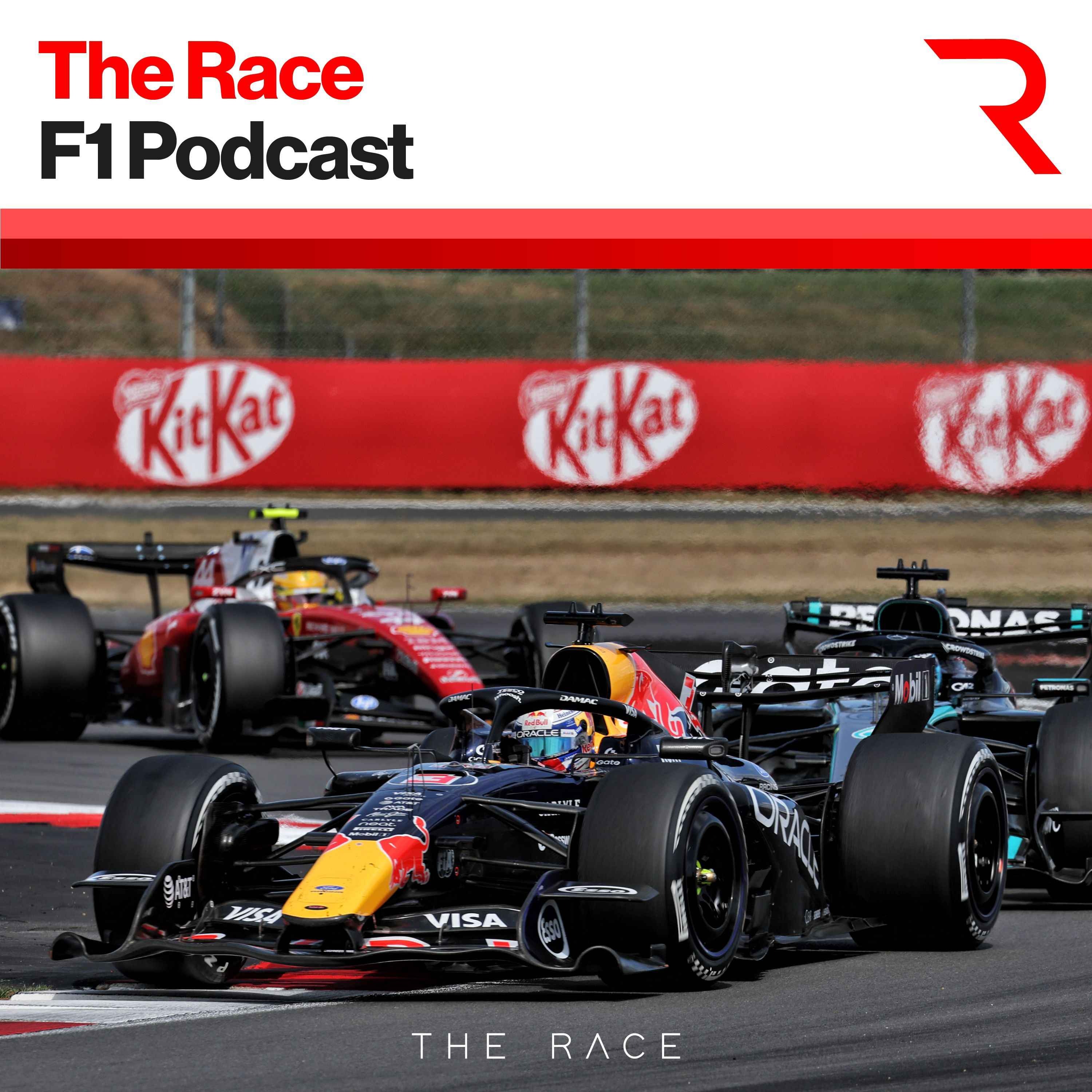
Max Verstappen is a top Formula 1 driver. Here, the hosts are talking about why he didn’t finish a race and what technical problem might have caused it.
This means the air wasn’t flowing smoothly over the car the way it should. When that happens, the car can lose grip and stability because the downforce drops.
An aero problem is about the car’s shape and wings not working the way they should with the air. That can reduce downforce and make the car less planted.
“Driver error” means the driver made a mistake. In racing, that’s usually something the driver could have avoided, and it often causes the car to lose time or stability. The hosts are saying that if it was only driver error, the ranking would drop more.
A rear wing helps push the car down onto the road so it sticks better. “Rear wing airflow” means how the air is flowing over that wing. If that airflow isn’t right, the car can feel less stable, so the driver has to be careful.
“Reattach” means the air flow has to start following the wing surface again. If the air separates, the wing can stop working as well, and the car may feel less planted. Drivers adjust their driving because the car’s grip can change suddenly.
“Margin” is the safety buffer a driver keeps so they don’t push the car right to the edge. If something feels uncertain—like how the car is sticking—the driver leaves extra room to stay in control. That helps prevent a small issue from turning into a big crash.
Hamilton is a famous, very successful Formula 1 driver. Here, he’s mentioned as one of the toughest opponents Verstappen was battling. The point is that even against a top driver, Verstappen still did well despite problems.
A “package” is basically the whole car and setup working together. “Unreliable” means it wasn’t behaving consistently or could break down. If the car isn’t reliable, the driver often has to be more cautious, which affects results.
The hosts are explaining how they rank drivers for the British Grand Prix. They’re also saying that being ranked outside the very top group doesn’t mean the driver was bad—just that the ranking is relative.
A jumpstart is when a driver gets moving before the race start is officially called. It’s against the rules and can cost the driver time or penalties, even if they still have a good race.
Antonelli is a Formula 1 driver. In this part of the show, they’re talking about whether he made mistakes in his race and how that should affect where he ranks.
A “race start” is the moment the race begins and cars accelerate from the grid. If a driver doesn’t get it right, they can lose places right away.
Person
Thomas Knight's
Thomas Knight’s is being used like an analyst or commentator whose observations the hosts are referencing. They’re using his notes to argue about what went wrong in the race.
“Ran wide” means the car didn’t turn in correctly and ended up going farther out than planned in a corner. It usually costs time and can sometimes cause damage.
A “wheel shield” is a small protective panel around the wheel area. If it gets broken after a mistake in a corner, it can mean the car hit something and the car’s airflow or protection may be compromised.
Term
XF one drivers
This sounds like they’re talking about Formula 1 drivers (the transcript likely misheard “F1”). They asked other F1 drivers whether the damage they saw could really be caused by the corner mistake.
Person
Rubens Baracalla
The host mentions Rubens Baracalla as an example of a driver who struggled with race starts at one point. They’re using it to explain that starts can be very sensitive to technique and car settings.
Brawn refers to the Brawn GP team (the 2009 F1 constructor) that won the championship that year. Here it’s used in a specific historical example: the team’s start setup made clutch precision critical, so start mistakes could be partly technical rather than purely driver error.
The clutch is a pedal/connection that lets the engine and gearbox “talk to each other.” At the start, the driver has to let it out very precisely so the car gets moving without shutting the engine off.
Anti-stall is a safety system that tries to stop the engine from turning off during a tricky launch. If you get the start wrong, the system may intervene and the car won’t accelerate as well as it should.
Track limits penalties are given when a driver goes outside the allowed area of the track. If you cut corners too much or run over the boundary, race officials can penalize you and you may lose time.
Car
Alpine drivers
Alpine is the racing team in Formula 1. When they say “Alpine drivers,” they mean the drivers who race for Alpine, and they’re using them as an example of speed versus mistakes.
Gasly is a Formula 1 driver. In this discussion, they’re saying he was the faster of the two Alpine team drivers, but something happened that hurt his overall result.
“Impeding” in F1 is when one car interferes with another car’s attempt to set a fast lap—most commonly during qualifying. It can trigger penalties because it prevents other drivers from using the track properly.
Teams adjust the car’s settings to make it work best for the track and for a specific session. These changes can help the car feel faster and grip better.
“Qualifying proper” is the main qualifying session that sets the grid for the Grand Prix. In sprint weekends, the sprint and qualifying are separate, so performance in qualifying can still be crucial even if the sprint didn’t go perfectly.
Term
eight points on offer
In sprint weekends, the sprint race gives points too. The speaker is saying there were eight points available from the sprint, which can affect who looks best overall.
Term
down the order
“Down the order” just means you’re in a worse position than the leaders. In racing, that usually makes it harder to catch up and win.
Concept
trajectory through the weekend progression
This is basically how the driver’s performance “moves” over the weekend—whether they improve session by session. It can be a good sign even if they didn’t do as well in the sprint.
“Methodology” means the system or rules someone uses to make a decision. In this case, it’s how they decide who deserves the top spot in their driver rankings.
Term
P1
“P1” just means first place. So when they say someone wasn’t on the radar as a P1 contender, they mean they weren’t expected to finish first.
Ollie Bearman is a British driver in Formula 1. In this segment, they think his finishing position was unfair compared to how well he drove after trouble.
A recovery drive is when a driver starts poorly or gets set back, then fights back to move up the order. It’s basically “damage control” done quickly and effectively.
Fernando Alonso is a well-known Formula 1 driver from Spain. The hosts mention him as one of the drivers in the middle of the ranking list they disagree with.
“Deployment differences” refers to how teams and drivers manage and use the car’s performance potential across a session—especially power deployment and energy usage. Two drivers can have similar raw speed but different “deployment” choices that change what they can achieve in qualifying or the race.
A “bell curve distribution” is a statistical pattern where most results cluster in the middle and fewer outcomes occur at the extremes. The hosts use it to argue that driver rankings tend to bunch up in the mid-pack, making small differences hard to separate.
Franco Colapinto is an F1 driver they’re ranking. They’re saying his results were close to the top 10, but not quite, partly because he wasn’t the faster driver in his team.
In race analysis, “overtakes” counts how many times a driver passes another car during the race. It’s a useful indicator of racecraft and car competitiveness, but it can also be influenced by strategy, safety cars, and the timing of pit stops.
A pit stop order is just the order in which drivers pull into the pits. Since they leave the pits at different times, it can change who is ahead on the track.
“Miami” here refers to the Formula 1 United States Grand Prix held in Miami, Florida. It’s one of the modern F1 venues, and results there can swing a driver’s position in season-long rankings.
They’re keeping a running “championship” based on how drivers rank after each race. After every Grand Prix, they turn those results into points using the same kind of system F1 uses for race finishes.
F1 uses a points table where the winner gets 25 points, and everyone else gets fewer points depending on where they finish. Moving up or down a few places can change your total a lot.
In Formula 1, teammates are the two drivers who drive for the same team. Since they usually have the same car, comparing how they perform helps separate driver skill from car performance.
The point system is the rules that decide how many championship points drivers get for finishing positions. It can feel harsh because a small mistake or bad result can drop you much further in the standings than you’d expect.
Person
Hadgel
“Hadgel” is a driver name being used in a comparison. The host is basically saying this driver hasn’t yet had a truly standout weekend that would make their performance look much stronger in the rankings.
Person
Carl Sight
“Carl Sight” is the driver the host says is doing especially well this season. Even though the car isn’t great, the host thinks he’s getting more out of it than you’d expect.
Person
science
“science” looks like it’s meant to be a driver name. The host is saying that driver is having a really strong season, but the transcript doesn’t clearly show which driver it is.
Sergio Pérez is an F1 driver. In this segment, they’re talking about how good his speed has been, but also how certain race moments can make his ranking look worse than his raw pace.
“Underlying pace” means how fast a driver seems to be when you look past one bad moment. The host is saying Pérez’s real speed has been strong even if the results don’t always look perfect.
Silverstone is the track where the British Grand Prix is held. They’re saying the racing there is so close that one mistake or incident can change how drivers are judged.
LIVE
The Athletic
The race is on.
And after a busy sprint weekend at Silverstone, it's time to rank the drivers once again.
But who has bagged the coveted number one slot this time around?
I'm Ed Straw, and joining me to discuss how I rank the drivers' performances after
the British Grand Prix is Josh Sutil.
Josh, welcome.
This is your debut in our revolving cast of co-hosts.
So looking forward to it, you of course were at Silverstone at the weekend.
Yeah, definitely.
I mean, look, I've, this of course, ranking appears on the race website and I've published
it for many years.
I've sifted through it.
I mean, I grew up reading many of your opinions, Ed, on all this sport as well.
So yeah, I've always had an opinion on your opinion.
And now I guess this is my chance to give the members' opinion on your opinion, as well
as my opinion on your opinion as well.
Opinions flying around everywhere and we like a good debate.
So feel free to be as punchy as you like and represent the questioners to the best of your
ability.
So we'll start off by giving the rundown from 22 to 1 in the rankings.
This is based on the full Grand Prix weekend performance.
So everything from the start of Friday through to the end of Sunday.
And effectively it's a companion piece to the article that Josh often publishes on the website.
So if you want to have a look at that, you'll see my full reasoning for all of the drivers.
So let's launch the rundown.
Oscar Piastri
12th Esteban Ocon
11th Ollie Berman
10th Isaac Hedger
9th Arvid Lindblad
8th Max Verstappen
7th Lewis Hamilton
6th Gabrielle Portoletto
5th Liam Lawson
4th Charlotte Clair
3rd Carlos Sainz
2nd Kimi Antonelli
And first, Lando Norris.
So Josh, what's grabbing you by the shoulders and demanding your attention there?
Where do you want to begin this interrogation?
Yeah, it's a tough one.
I think many different places we can start.
Obviously, I'm not interrogating you alone.
I've got the help of the Race Members Club on Patreon.
Every single time we publish those rankings, they're also published on Patreon.
And the Members Club get to grill you so they get to give their opinion on stuff
and query and interrogate.
And I think just a wonderful bit of debate.
And I've gathered the sense of what people are talking about.
And the number one topic that stood out to me was Max Verstappen.
Of course, Ed, he was eighth in your rankings, even though, as you say,
he was down on power when he was outqualified by Isaac Hedger on Saturday.
It's why Zephyr wants you to expand on those comments about Verstappen's mechanical DNF.
So there was a bit of Max maybe having a little bit of a say in that.
So can you just explain a little bit more about that based on what you wrote in your rankings?
Yeah, I mean, obviously, on this one, it's a little bit vague from Red Bull
in terms of what the problem is.
The basic thing is that I mean, he was completely exonerated from the Austria crash
because that's qualifying that you've got to be pushing.
And there wasn't a massive amount of warning on it.
This was, you know, late in the race, the rear tyres are past their best.
You know, you may have an airflow attachment problem
because the indication seems to be that it's more an aero problem.
So obviously you shut the wing and then the airflow reattaches
and then you've got your downforce.
And if you've got that problem, then a corner like Stowe is a prime place
for that to be a risk and you have to push on in the race
because he had Russell not so far behind him and he wanted to hang on to that podium place.
But it's just it's a really, really minor thing.
And again, it's the usual thing.
All of these drivers are operating at such a high level.
Really small things can make the difference of a number of places in the rankings.
So I just thought, was this a case where maybe you just needed to leave
a little bit more margin in a place where you could be at a fair bit of risk of that?
So if it was a normal, if it was a complete driver error,
then that would have tanked his ranking completely and it hasn't.
Eight is still a pretty good position.
So it comes down to that, that thing of drivers mitigating risks
and controlling what's within their control.
And if you're not confident in that rear wing airflow to reattach,
you kind of have to leave yourself a little bit of margin.
So it's not that it's Verstappen's fault fundamentally,
but I'm always giving credit to drivers for keeping things under control
and doing things that don't necessarily show so well.
So this is just a very minor thing where you think,
well, maybe that's a difference maker.
Again, when you've got a group of drivers.
And to be honest, everyone pretty much down to sort of 18th, 19th in this one
had to a greater or lesser extent at a good weekend.
So that just nudged him back a little bit.
Well, James Hoyle thinks you've been harsh.
I mean, he says it wasn't Verstappen classic, but it deserves higher than eighth
given the fight he put up against the likes of Hamilton
with a slower and unreliable package.
Now Ed obviously Verstappen always sets the bar high.
So when he has a weekend like this or a mistake, I guess, in the case of the race,
does that kind of affect your ranking?
The fact that he's usually at an incredibly high standard?
I don't necessarily think so.
It's always, it's always hard to judge.
But again, part of it comes down from as I kind of work out the ordering
of these rankings.
I don't think eighth is a bad position if you're the eighth best performer
on a weekend with 22 of the best drivers in the world.
It's not the 22 best drivers in the world, but it's 22 of them.
I think that's fair to say, given even the bad Grand Prix drivers,
there's almost no such thing.
Even the weakest ones are still exceptionally capable.
So I just, it just comes down to a look at, you think Verstappen's
well broadly in that group, he's probably not kind of a top few contender.
And so you can shuffle him around.
You can shuffle him up four places quite happily if you want to.
So I don't necessarily see it as particularly harsh, but
I don't tend to conceptualize these rankings of if you're not in the top four
or something, you're considered rubbish.
You're, you're still performing exceptionally high level.
It's always hard to say how expectations frame how you rank drivers
because some of that will be very, very difficult to understand consciously.
So you just kind of try and reason it through.
And he's, he's one place behind Lewis Hamilton who had an exceptional sprint
and sort of, you know, a slightly disappointing Grand Prix.
But still a pretty good one.
Very minor jumpstart mistake.
So I didn't consider it, I don't consider it particularly harsh
putting a driver in eighth anyway.
Yeah, maybe it is just because it's Verstappen.
I think it's always a bit strange to see him anywhere other than the top places
just because we know how good he is.
But yeah, you've added a bit more meat on the bone there, Ed.
So you have slightly convinced me because I think that's one I saw initially
has been a little bit low on the other end of the scale
amongst the members club is Kimmy Antonelli.
He was second in your rankings.
But as Thomas Knight's and our pro points out, didn't he make an error
with his race start ahead from total after the race?
And he sort of confirmed as much in a diplomatic way as possible
when asked if it was a car problem or a drive problem.
And Thomas Knight's also mentions of Antonelli ran wide and of course broke
or appeared to break the wheel shield when he did run wide.
So is that kind of two errors?
And if so, why is you second?
Yeah, well, on the the wheel shield, I actually consulted with three separate
XF one drivers just for an opinion on that, because I went through some of the
on boards and he is slightly wide.
But they I said, well, how much of that should be Antonelli's culpability?
And basically, they all said it's not really that curve, particularly now
that curve's got flat, even flatter than it once was.
That shouldn't be something that creates any kind of damage.
It shouldn't be a problem.
It should be an infinitesimal time loss.
So that was one where I was I was kind of going back and forth.
And sometimes I do get second or third or even fourth opinions
from from drivers, I know, and that kind of thing.
And yeah, all three of them gave me pretty much the same thing.
So I thought, well, that's that's a good consultation.
I was sort of thinking maybe it is that.
But equally, when you see a car in very slightly off, you think,
is that something that they're culpable for?
I mean, the race start, the race starts are really difficult with these cars.
And it's actually hard to appraise how much is driver error,
how much is just the difficulty of the start process?
Because there have been times where, for a good example,
is in 2009, at Brawn, early in the season,
Rubens Baracalla used to make quite bad starts.
And one of the reasons for that is he tended to something
was told to me at the time, the team, he tended to go with
kind of the theoretical best start setup.
But you had to be absolutely on the money with the clutch,
like really precise, or you did risk having a bad start
and dropping into anti-stall.
So that's kind of a driver decision, implementing it,
whereas actually the start procedures on these cars are pretty tough.
So it didn't count against him massively.
But and I think there was a lot counting for Antonoli as well.
He pretty much destroyed Russell in terms of pace.
I thought he was absolutely outstanding in the sprint race.
I think the way he took a very patient and strategic approach
towards passing Hamilton, because not only do you have to pass,
you have to know that you can stay ahead.
And he basically built up to it, knew he had the chance, went by,
and then he was out of range.
I thought that was really, really impressive.
You know, that's not a normal 19 year old way to approach that.
And again, obviously in the race, he'd have won it.
He was driving extremely well.
So those didn't really count against him.
There was that kind of tiny thing of could he have been a tiny bit calmer
when when the damage happened?
Could that have saved him losing a little bit of race time?
Could he have backed off a tiny bit more and avoided getting those
those track limits penalties there?
They're all those are all sort of, I consider hyper criticisms
on a weekend where he was very impressive.
But again, it's the usual thing.
If someone does a list and Antonoli is eighth on that basis,
although there is that I don't I don't look at that and think that's wrong.
Because, you know, if this was a race
where basically they're all crossing the line,
pretty much all of the drivers are crossing the line in one solid pack.
There's not sort of huge gaps between the difference between P1 and P12.
As I always say, isn't actually that big because they are very, very, very good.
I'd have probably put him number one, to be honest.
You had Landon Orris as your number one.
But I felt like Antonoli was was slightly more impressive, to be honest.
I mean, we'll come on to talk about Norris in a little bit.
But one of the reasons for me is something that Luke Sherman
from the Race Members Club talks about, which is how much
does pace weigh in on your rankings does a fast but sloppy driver rate
slightly above a more tidy teammate or significantly above them.
So Ed, for me, the fact that Antonoli, like you said, destroyed Russell
just had that really strong sheer pace.
And it wasn't like one of those
Antonoli weekends where he has that sheer pace and isn't able to translate it
because he would have won that race.
He'd have come away, I think, with the maximum amount of points.
So I guess for you, how much of that sheer pace come into it
and what stopped him from being the number one?
Yeah, the sheer pace certainly is part of it.
But the job is to deliver pace with consistency.
And actually, Antonoli is really good at that in races.
If you look at his race pace is really impressive.
That's the thing that has been so mighty about him this year, actually.
And it's it's very much kind of tending towards the along
the classic Alonso thing of just being relentlessly quick in races.
And I don't think he's massively dancing on the edge or anything
and on the verge of going off or anything like that.
I think there are there are times and the track limits has been a thing
that's cropped up a number of times this year.
I think there are a few times where you just think, well,
just temporary a fraction in a few key areas and I'll help, but that'll come.
He's 19, isn't he?
So you want to see the underlying pace comes into it.
And the good example of that is if you think as a driver,
whose pace was quicker, but external circumstances,
prevent them, say, beating their teammate and qualifying the race.
Lindblad in Barcelona was a good example of that.
Then I will rank them ahead.
But for me, it's the whole thing.
Your job is to beat as fast as the car allows you to go
and deliver that pace consistently and execute well
to get the best possible results.
So almost by definition,
if you're fast, but a little bit sloppy,
then that will drop you back.
I guess there's an example of the Alpine drivers.
Gasly was the quicker, not by a fast margin,
but he was the quicker Alpine driver.
You could see a little bit of that in the race pace as well.
But he had that impeding thing.
He was unlucky, but that did drop him down the grid
and that dropped him below Colopinto.
So there's the whole execution element, particularly when it's what I'd called
a really big, avoidable errors.
So that's how I kind of think about it.
And ultimately, on any given weekend,
a fast, but sloppy driver might be able to be ranked ahead
of their more consistent teammate.
But if you're just sort of being consistently pretty quick
and not far off and like a tenth off and do that all the time,
while the other drivers all over the place,
actually your more conservative driver is probably going to have the better season.
And that's not good for a team, really.
You want consistent deliverables, and that's what separates the great
from the very, very good.
It's that constant, relentless delivery.
So that's always what you're looking for.
It's a high standard, very hard to do.
Basically, you're saying no mistakes, really quick in all conditions.
But this is this is elite sport.
So that that is the game.
Should we talk champions rankings now?
And by champions, I mean the champions,
tier members of the race members club hit the link in the
episode description or head to Patreon and search for the race to find out more.
Basically, we let our champions tier do what I do,
which is rank the drivers one to 22 at the end of the weekend.
And then we compare how they came up with the ranking compared to mine.
And then usually later in the week,
I have a little chat through their rankings and the differences
to put a bit more meat on that bone, but that's exclusively for the members.
So, Josh, do you want to do the honours and reveal the champions top 10?
Yeah, very different top 10 to you as always,
which I think is always fascinating to see and shows how many different ways
you can can take a ranking like this.
So number one was Charlotte Claire.
You had him fourth in your rankings, Ed.
Kimmy Antonelli was second in both of the rankings.
Liam Lawson was third in the champions ranking and fifth in yours, Ed.
Gabriel Bortolato was fourth in the champions and sixth in yours.
Lando Norris, your number one pick, Ed, was fifth in the champions ranking.
Lewis Hamilton was sixth.
He was seventh in yours, so about the same.
Arvid Linblad, a couple of places up in the champions rankings,
compared to yours in seventh, Max Verstappen, all of you had him eighth.
Isakajat was ninth.
He was tenth in yours.
Carlos Sainz, one of the biggest differences in tenth.
And you had him third in your rankings.
Yes, there's a few differences there.
I'll be talking through those later in the week with my full reaction.
That's for the race members club exclusively.
So, yeah, if you'd like to do your rankings, be able to listen to that
and get all the other bonus material, head to patreon.com, search for the race members club.
I'm Paul Tenorio.
I cover soccer for the athletic.
And I'm Amy Lawrence.
I cover football for the athletic.
Whatever you call it, the biggest competition in the sport is happening right now.
And the athletics World Cup coverage has everything you need to follow the tournament.
This 48 countries taking part from the tiny island of Curaçao to the five time champions Brazil.
Even if you don't know your offside from your onside, if you're eager to know more
about the teams, the matches, all the stories on and off the pitch, we've got you sorted.
Maybe you're the kind of person who's already up early every weekend,
waking the neighbors when your favorite club scores will make sure you get equipped
with more information, more insight than anyone you know.
We've got more than 70 obsessive reporters on the ground covering the ins and outs from every game.
I almost forgot to mention the best part, Amy, free access to the athletics World Cup coverage in our app.
Download the athletic app and see you there.
Right, what are we going to look into now, Josh?
You know, look at a driver's first home race, Arvid Lindblad, Melmit Harko,
not the former Red Bull Motorsport advisor, says he thinks that Lindblad should be far lower than ninth.
Liam Lawson had a power deployment issue on his Q3 lab, which his engineer apologised for.
And it's the only reason Lindblad qualified ahead.
Otherwise, Liam scorched him on pace all weekend.
Suggesting Lindblad might have beaten Lawson in the Gompre is a stretch,
given how much faster Liam was, especially in the second half of his stints.
Yeah, well, the qualifying thing was that they told him he was slightly down on bat
at the start of the lap. That's always a tricky one to judge because that is within the driver's
control often with the way that they approach the out lap, etc.
So it was less a problem and fundamentally it was the balance that Lawson was struggling with
when it came to that. But I mean, lower than ninth, I thought Lindblad had a good weekend.
Yeah, Lawson was better, certainly. But Lindblad was not that far behind.
He was ahead initially in the race and he had a deployment thing,
which was a result of an enforced lift that meant he dropped back behind Lawson.
I think, yeah, Lawson was good. But Lindblad was sort of decent as well.
So I don't have a big problem with ninth place. Again, you can argue a few places down if you
want. I wouldn't have a problem if you had him 11th, 12th, but he was backing up Lawson well
on a weekend when Lawson was going well. I'd have actually felt him higher than you did.
I'd have probably put him maybe even above Hamilton just on the strength of his weekend,
I think, as a rookie to come here. On a sprint weekend is never easy and he was right up with
Lawson, keeping him honest throughout the weekend. As we have seen in recent races,
to be honest, I think he's having a really impressive season. So given his lack of experience
and I think overall execution, I think it was really solid. So I'd actually disagree with both
of you and possibly put him into the seventh, eighth range. Right, Josh, I'm going to hand
you a spotlight now. And it's a spotlight that you can shine on any part of the rankings that
interest you or that disgusts you to get a little bit more insight on why that's happened,
all indeed to challenge. So what are you pointing out? Yeah, so every time you do these rankings,
or even before you send the copy, I'm always thinking, you know, who is Ed going to rank in
number one? And I've got pretty good over the years, I think just learning some of your patterns and
the way you kind of look at stuff, I think I've got a pretty good on the prediction front. But
the number one this week, I think was quite difficult. I said earlier in the episode, of course,
I thought that Anthony was the number one. When I saw Lander Norris at number one, I thought,
I thought, oh, that's a bit strange. That's a bit left field. And then I kind of did what I think
you often describe and think, oh, who else should be number one? And they're always sort of different
reasons why other drivers shouldn't be someone like Charlotte Claire. There's a part of me that
just wants to put him number one, like the champions did, because of that strength of a Sunday drive.
So I guess part of my question would be on your logic of that, of with the strong way he ended
the weekend, once he's already been beaten by Hamilton in the sprint element, is he just limited
basically to not really being able to get to that number one spot? Is he doomed by then? And is
even a heroic Sunday like I think he had, is that still really never going to be enough to bump
him to the number one spot? Yeah, it makes it difficult, because whether you like it or not,
the sprint component of the weekend is important. And again, it comes back to that,
making the most out of the car, which he absolutely didn't, in terms of the sprint weekend, you know,
the setup stuff that he did for qualifying proper in the race that allowed him to outperform Hamilton
and take that win. And even if Anthony had finished, Leclerc would have been a strong second,
which is as good as that car could deliver. You still left stuff on the table, it was still in
that car, had he got onto it quicker to have excelled in the sprint. So yeah, you can say it's
harsh, but there's still eight points on offer in the sprint, he was further back down the order.
And so that just had that effect on Leclerc. It didn't completely disqualify him from it,
but it made it very, very difficult. And yeah, trajectory through the weekend progression
is a positive insofar as you can say, well, that's a good direction of travel. So that's
another plus. But ultimately, didn't make the most of the first part of the weekend.
Yeah, it comes down to different people's methodology of doing their rankings, isn't it?
Like, probably in mining, maybe it would be slightly higher just because I'd maybe favor
that strong finish more than the weaker start. Which you can. And methodologies would vary
from person to person. That's the wonderful thing about these. It's all about trying to find a
methodology you have and try and apply it consistently. And actually Norris being number one
was the consequence of that methodology. He wasn't really massively on the radar as a
number one contender until moderately late on insofar as most of the time, kind of at the end
of the Grand Prix or on the Sunday evening, you kind of think, well, before you've done sort of
a P1 and sometimes someone kind of comes up in the rails and Norris was just sort of
slowly just became the only logical choice in the end. And I think he was the only choice
I could come up with for number one, limited machinery, got the most out of it. There were no
kind of question marks about things that he may have left on the table. So I just thought it was
a very, very strong weekend. But it's a good example of you wouldn't necessarily have that
leaping to mind when you're following it. And then you dive into it and you think, well, what
that third place in the sprint, that was a significant overachievement.
Yeah, it's a proper stealth number one. I mean, I was looking at who else you've put
number one this season, you've got like Antonelli's great Monaco weekend. And that's the only time
Antonelli's been number one. You've had a couple for Russell, Russell's Montreal weekend, which
I disagreed with. I'd probably had Antonelli number one that weekend. You had his Austria
weekend as number one as well. I mean, that was strong. It was with Limblad was obviously his
first race in Melbourne. That was an impressive weekend. Carlos Sainz in China, which I think
was a glorious left field pick from you, Ed, and I think that's the strength of your rankings is to
have a number one like that. But on Norris, is it been a bit of a stealth number one pick? Is this,
and this sounds harsh, is this the kind of weakest number one placement of the season or
do you disagree? Yeah, in some ways, insofar as I think the third in the sprint was very impressive.
That was sort of a genuine elevating thing. And I think if he sort of been where he should have
been in the sprint, then probably that might have, that would have made it a bit harder to be
number one. And he didn't have the most tough mission overall in the race, given the performance
profile of the McLaren. So, you know, it's not, it's not an Antonelli Monaco weekend, which I
thought was an outstanding weekend. And even something like Russell Canada, don't want to
read you to take that. But the simple fact is he did keep beating Antonelli and he was beating
Antonelli when he retired, even though I think Antonelli had a bit more underlying pace there.
So, you often see those, those sorts of weekends where they're sort of really obvious and they
really grab your attention. I don't think there's ever really such thing as a, well, there will be
a weakest number one, I guess. So, in some ways, if I was to rank the number one over the season
so far, I don't think this is going to be in the top five, let's put it that way. And sometimes,
I don't normally think of it as you sort of end up marking people down from a high level. It's not
like, oh, they're 10 out of 10. And then you gradually whittle away the points. But the fact
that there were question marks over another, a number of the other contenders, the fact that
Russell was just sort of there delivering. And he's done that quite a lot this season, actually.
I think if you transplant Norris into a front running, genuine front running championship
contending McLaren, everybody would be saying, oh, look, he's taken a step on after winning the
championship. But because he's a little bit buried, and he's spending a lot of his time
faffing around in sixth place or whatever, it doesn't shine through quite as much. So, yeah,
it is interesting, not all rankings are equal. And you will have in any position,
P6 one week might be significantly better than P6 another week, because you're not dealing with a
consistent distribution of delivery. It's not like, that's, that's, there's 22 drivers, they all
deliver at a certain level, and they sort themselves into that order. Sometimes you have
ones where they will perform at a very, very good level, in fact, more often than not. So
it'll be a very boring sport when if everyone just performed to their maximum, and we just
have the same order every week. But exactly, exactly. Yeah. So I wouldn't object to calling it the
weakest number one. But yeah, there's no such thing as a bad number one. Let's put it that way.
On the Norris point, if he had the pressure of being back in that championship winning scenario,
or championship challenging scenario, I should say, you know, with that change, because obviously,
it's very easy. As Russell found last year, and I've made this comparison before,
he was doing great performances last year, but obviously away from the spotlight of
the championship picture. That's an extremely good point. And when I was just trying to reason out
the number one, I did think about that. Well, does Anthony just step forward because he's got that
extra pressure. I think it is something you're always aware of, in terms of that need to kind of
lose you the championship. And you know, if you get to the end of the season, you win a championship
or lose a championship by a few points, there's multiple weekends you can point to. So there was
this, this, this, and this, and your job as a driver is you want to make sure that all of those,
well, if that hadn't happened, happened in your ideal
season, you want all of those to be outside of your control, things you couldn't have done anything
about. But it is hard when you're having to do that week in week out. And actually,
Anthony is bearing up very well. But yes, you're right. You can't automatically transplant what
Norris is doing kind of to go a little bit against what I said. If he was in that championship fight,
maybe we would see greater pressure. Maybe he would be delivering fantastic. You don't really
know. But it does slightly change the parameters of what they're doing. It's always important to
bear that in mind, because the relentlessly high performance you have to deliver while in a championship
fight. And it's the reason why Russell has had some pretty good rankings this year, even when
people want to sort of say, oh, he's failing miserably or whatever, because he's still battling
at a very, very high level to kind of hang on in there as he has at times.
Yeah. And in fairness, Landon Orris, as we noted, had an awful lot of fans at Silverstone supporting
him. And he had a whole grandstand. He had multiple events to do before the race and a lot
of pressure to be fair to almost carry that race in a way. I mean, there were multiple home drivers
there, but I felt like probably he had the most pressure on his shoulders from the home crowd.
So in fairness, on this particular weekend, he delivered really well under enormous pressure.
And I quite like it as well when I'm slightly surprised by the number one. I always enjoy
that because I feel, oh, that's quite interesting. And again, that's what comes from trying as best
you can to work through a process, because sometimes you work through the process and you
get a very, very different result to what you get if you just sort of think where you feel
it, it would have been. And I always find that an interesting thing to go through.
Let's move on to part three. Now, what do you got for me, Josh?
Two more home drivers, Lewis Hamilton and Ollie Bearman, because Stuart Coulter says here,
you've been kind to Lewis's Grand Prix Sunday. Flattered deceive, I felt. So I would have had
him in the teens rather than in seventh. Conversely, I think Bearman is hard done by
with 11th place is his recovery drive. I felt was really good when it wasn't his fault,
why he dropped to the back. So Ed Hamilton and Bearman.
Yeah. Well, Hamilton ultimately his sprint performance was outstanding as well. Sprint
pole was a bit of an overachievement. He managed to nail it there. And I don't think he could have
done more in the race. So that was a big positive for him. If the sprint weekend hadn't been there,
I think Hamilton would have been lower. There's no question about that. And he still had a
decent race. He'd have been second in that Grand Prix, which isn't bad, is it? And the jump start
thing, it was his mistake, but you try and factor in the level of error. And it's a very,
very, that that is a very, very minor one. It did count against him a little bit. So I kind of,
I think, yeah, his Sunday was a bit disappointing. He had a bit of understeer. So struggling a bit,
didn't have the Leclerc pace, but he's helped a bit by the, by the sprint component of the
weekend. As for Bearman, yeah, I felt he was a bit hard done by saying with Colin Pinto that
there's actually, in the rankings, and it annoyed me, there was this just whole morass of drivers,
and it kind of goes all the way down to pretty much Fernando Alonso. And I didn't really like any
of them who had to be sort of lower than about ninth. But unfortunately, that's the format,
and you kind of have to decide where, where people go. And it's, it's very, very tricky. And I would
add to that as well. The, the problems with the power unit regs here as well, actually
make it significantly harder because the harvest poor circuits have been, so I'm sort of talking
here, Australia tracks like that. They have been some of the weakest signal. Well, they have been
the weakest signal in terms of driver delivery race weekends I've ever experienced. Because you see
these things in qualifying, you compare the qualifying pace, there's big deployment differences.
Sometimes you can work out or understand or find out where that's come from. Sometimes they just
seem a little bit random, and they're outside of the control of the driver or their other
circumstances. So it actually makes it really, really hard, particularly with that morass of
drivers. So yeah, Berman kind of ended up 11th. I didn't particularly like it. But I would say,
yeah, a lot of those drivers, particularly in that mid-pack, Hajar, Berman, Ocon,
Piastri, Colopinto, I'm not particularly happy with them being there. But then you, you sort of
think, well, they need to be a bit higher. And then again, you look at all the people they could go
above and think, well, there's this, that, there's the other. So it just becomes
very, very difficult to separate them. And again, as I always say, it's always going to be something
of a bell curve distribution. And that middle is going to be really, really, really condensed. And
the difference between 14th place and 7th place might be if you're rating them out of 10, it might
be like half a point or one point or something ridiculous like that. Yeah, let's bring in Colopinto
because you mentioned him. I mean, Gabriel Butola thinks it's ridiculous. You have Franco
Colopinto at 14. Franco was the driver with the most overtakes. Now, Ed, you did place him two
spots higher than Gasly in fairness. So Colopinto has ranked as the higher Alpine driver. But
I think you've partly answered this, but how close did he come to being in the top 10? And kind
of what more did he need to do to just tip the scales a little bit and get into the top 10 in
your rankings as well as in the actual race? Well, fundamentally, I think it needed to be
the quicker Alpine driver, which he wasn't. I think there's plenty of evidence of that. The
qualifying off wasn't his fault. So he's exonerated for that. And he had a good race. Again, it was
a good weekend for Colopinto. That's always the thing, I think, to remember that if you're 14,
that doesn't often mean you've had a bad weekend. You can have a good weekend there because again,
you're dealing with very, very good quality drivers. Gasly cost himself a little bit. But
remember as well, Colopinto only finished ahead of Gasly through luck. Alpine quite
rightly inverted the pit stop order, which they were correct to do, given the undercut pressure
that's on Colopinto. So you want to keep both cars ahead. And then that gave Colopinto the
undercut, but also then they messed up Gasly's stop. So that that switched it around. And then
Gasly was marginally the quicker. He wasn't quick enough to go past Colopinto. And ideally,
you don't want them battling. Anyway, so again, Colopinto could he could easily be sat ninth in
this as well. He was another of those drivers. I looked and saw I don't really like where he is,
but you cut the format basically forces you to try and make make a decision. And it was that
slight pace disadvantage. So he's one place behind Piastri. And Piastri was pretty close
to Norris's pace. Piastri's weekend was good. But his teammates number one and Piastri's 13th,
I'd say if anything, Piastri's probably the one who was the most harshly treated. But it just shows
how really tiny differences do have an impact. And Colopinto did a did a decent job. Some of
the positions again, through through circumstances, if you have slower cars ahead of you, then you
will get be able to get past them. So I never think number of overtakes actually is necessarily
a particularly valuable thing. If if you have the sake of arguments, take extremes just to
illustrate the point if you were to pass eight slower cars, is that a better achievement than
passing one car that you're basically the same pace of pace as but finishing ahead of them and
beating them? Because of it, I'd argue the latter is the most impressive, you know, you still have
to do the work to get through slower cars. But it was good weekend for Colopinto. And he's even
his sort of lower ranked weekends have been good recently and he's on a good trajectory. So this
was a good weekend, I think overall for Colopinto. It just happens that it ends up being 14th.
I mean, remember, he was second in Miami as well. So it's not like Colopinto has always
been at the bottom end of your rankings, but quite a big swings, I think, between his placement,
because I think there are still those little swings in his performance, I think at his best,
he's a very, very good driver and someone very performative in the midfield, but maybe hasn't
found that 100% level that we'd like to see from him. So let's see if we can and find that
future races. And he's in his first proper full season week at three season testing,
we're doing the full year and he's coming on really, really well.
It's a bit of a shaky start, but he's delivering now. And yeah, Alpine were very much a car that
needed some help to be in the points. Both drivers did overall a good job in the race.
To finish off, shall we have a look at what we call the driver's ranking
championship? This is where we take the rankings after each Grand Prix
and award them with points based on the usual 25 downwards,
top 10 scoring system from F1. So Josh, would you like to do the honors?
Yeah, this is always fascinating. It's a bit like what you just said, how
there's such fine differences between say fourth and 12, but obviously because we're
using a point system with the top 10, it's really, really important to be in that top 10.
So Antonelli is out front on 115 points. Hamilton has now jumped back ahead of Russell
into second. He's on 96. So you've got Antonelli, Hamilton, Russell. Norris has got fourth back
from Verstappen. So a bit of classic, you know, yoyo racing going on there just behind the leaders.
Leclerc dropped from 9th to 12th last week, but after Silverstone, he's up to P8.
So some of you may feel it's been a little bit harsh on Leclerc, but his ranking has
significantly increased now in that championship. He's just behind
Liam Lawson on 47 points. And Piastri dropped from P11 to P13. Of course, after that difficult
weekend, he's just behind Bearman and just ahead of Colin Pin. So quite a big disparity between
the McLaren drivers. Norris on 87, Piastri on 36. So yeah, as always, I think that championship
picture is really interesting because it shows some quite, you know, if you look at the actual
championship, not massive differences between teammates, but Ed in your ranking, some quite
interesting differences between teammates. Yeah, and obviously the point system can be quite harsh.
I think the Verstappen versus Hadgel, when I always mention, is annoying. But it is difficult when
your teammate to somebody like Verstappen. And ultimately, you always have to judge a driver's
performance against what they can get out of the car. And you can only be certain what they can
get out of the car by what has got out of it. And if you've got some like Verstappen in the other car,
it makes it very, very difficult because even when he's struggling a bit, he tends to get a lot
out of it. So that's made it quite hard for Hadgel, who I don't feel Hadgel's had his had his halo
weekend at all yet, yet this year, but he's going to have a big weekend at some point and leap up.
Carl Sight stands out, doesn't he? He's having a really, really impressive season in a car that's
poor. He's really, really, I would actually argue, proving better value to Williams this year than
last year almost, because he was very strong last year once he'd settled in. But he's putting the
Williams at times in places it shouldn't be. Sometimes he drops back and he was a very strong
threat for number one. I think he'd been number one at Silverstone. But for primarily the fact that
the first lap of the sprint got away from him a little bit, I think he dropped to 17th. And
that wasn't a bad start fundamentally. It was just sort of a little bit of car position,
a little bit of misfortune. So science is being really, really, really, really mighty this year,
I would say that's the thing that stands out. But again, yeah, Gassi to Colopinto, Gassi's
on 43, Colopinto's on 24. It shows Colopinto's having a good year considering he had a number
of races early on where he wasn't really a contender to be in the top 10. And the poor old
Aston Martin drivers who are the Aston Martins are basically impossible this year, because
you have years when there's a bad car at the back that it's quite easy to gauge performance in.
But then you have a car that performs profile like the Aston Martin and it's really, really
difficult because the car is just all over the place. And you could almost make a
make an argument for putting them first and second every weekend for living with it. So
ideally you want to try and make it, you ideally want to reason the car performance completely
out of it. But it becomes so hard when you've got one of these really unpredictable cars.
If it was just slow, that would be one thing. But there are times when the Aston Martin is just
being really, really unpredictable. And you just have to accept that makes it extremely,
extremely hard to judge what they're doing. And I think they're actually battling pretty gamely on.
One person who feels a bit low to me is Sergio Perez. I mean, he's got 11 points,
and he's ahead of what, five of the drivers. And I think you've sort of rated the season
quite highly, haven't you? But is it a case of execution, basically? Because there's sometimes
always something that maybe drops his ranking down, but his underlying pace has been quite strong.
That's the thing at Silverstone. If you hadn't clobbered Alonso on the second lap of the sprint
race, that would have been a much higher ranking again, because it's really, really tight. I think
he'd been in the top 10. Perez is having a really impressive season. It's why this,
the Drivers Ranking Championship, it's not a great metric of a driver's overall season. There's a
broad shape and it tells you a few things, but I think Perez is having a good year. And actually,
if you go through that field, there are very few drivers who you would say are having
anything other than a decent year. I think you can probably point to, say, an Ocon and say that's
been a bit disappointing, but there have been some problems with mitigation. Albon, a little bit
disappointing, but again, some problems in mitigation. And again, that just tells you
how strong a field of drivers this was. If we were doing this 25 years ago, it'd be much,
much more all over the map, just by the nature of the way things were. These drivers are all
at such a high level. The difference between, say, Sainz and Albon overall this year hasn't
been massive, but it's enough to stick Sainz up in the top six and Albon basically down
near the bottom. And it doesn't mean that Albon's been a disaster, because he hasn't been. And yeah,
there's drivers down there. Perez, I think if you're doing, as we do at the end of the year,
we rank all the drivers overall and come up with, say, your top 10 performers of the year,
that's the classic formulation of it. Perez is still a contender to be in that top 10,
because their overall contribution to a season and their performance isn't necessarily purely
aligned with the aggregate of the rankings, because, for example, specific mistakes do count
against you quite highly on rankings. But over a season, they aren't quite so damaging and
devastating. So you think, well, actually, there's a number of weekends where Perez is really strong.
So yeah, he is unlucky. I'm lucky to be that low. But yeah, he's amongst a lot of drivers who've
also operating at a high level. He's not many points behind Alonzo, is he? Anyway, I should
stop rambling about that now. Thanks very much, Josh. That's it for this week. If you're not in
the Race Members Club, like to get involved in the driver ranking and all the other fun,
including the thriving community of like-minded racing fans, head to patreon.com, search for
the Race Members Club to find out more there. We're going to have more rankings after the
Belgian Grand Prix, so stay with us for everything you need to know from the world at Formula One.
About this episode
After a busy Silverstone sprint weekend, Ed Straw and debut co-host Josh Sutil run through their full British GP driver rankings (22 to 1), based on Friday-to-Sunday performance. The big debate centers on why Max Verstappen drops to eighth despite a late mechanical DNF—Ed argues it’s a minor, risk-mitigated aero/wing issue rather than driver error. They also scrutinize Kimi Antonelli’s second place after a tricky start and slight track limits/damage concerns, weighing his standout pace and racecraft against tiny mistakes. Lando Norris and others are set up for further discussion.
Our rankings podcast returns following the British Grand Prix, where Mercedes suffered only their second defeat of the season. But does that automatically make Charles Leclerc a shoo-in for number 1 in Edd Straw's driver rankings? This week's interrogator-in-chief Josh Suttill probes Edd on how he ranked the drivers, backed up as ever by questions from The Race Members' Club.
Get bonus F1 podcasts, extra content and ad-free listening, sign-up to The Race Members' Club on Patreon today.