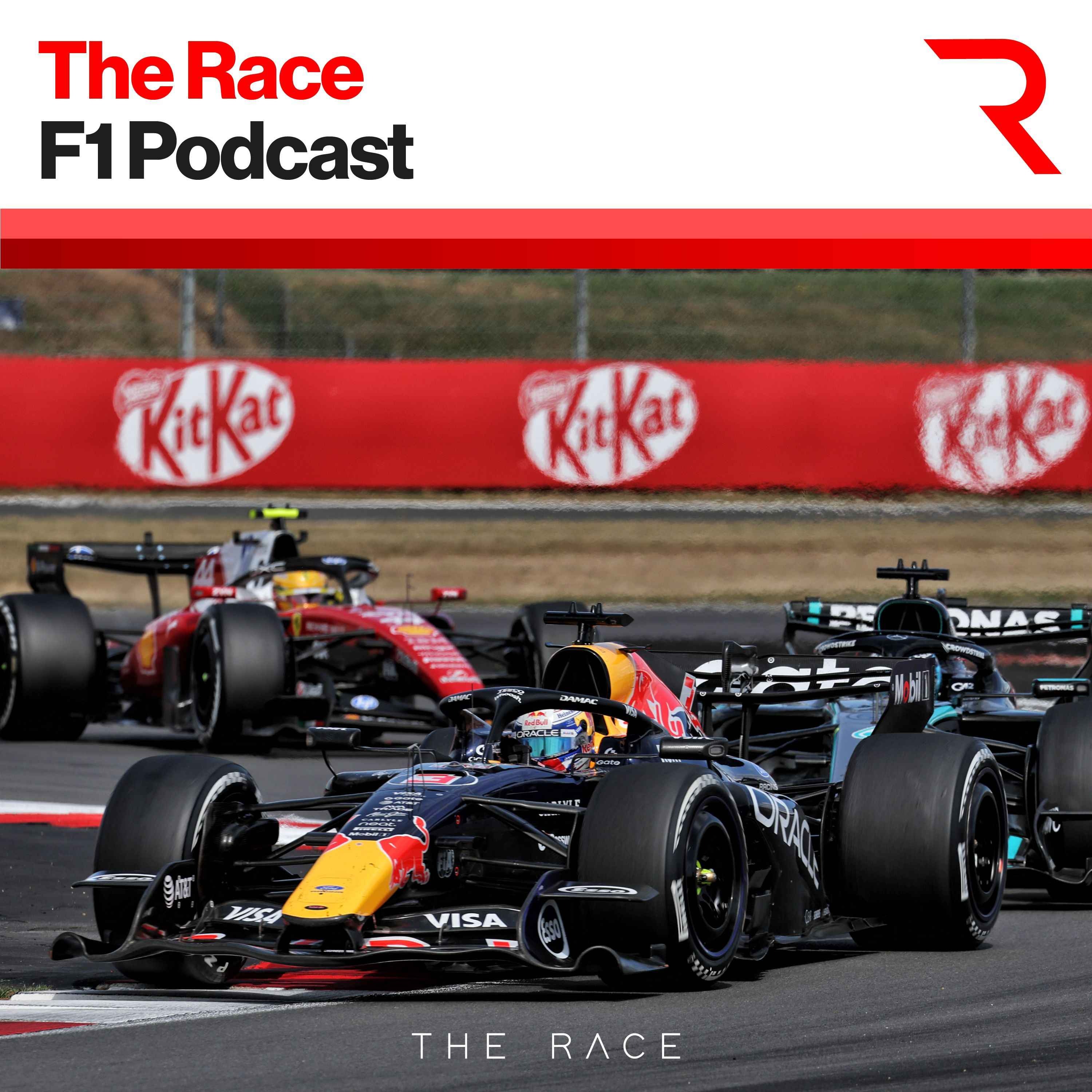
Driver Rankings: Who did we rank as the British GP's best driver?
About this episode
After a busy Silverstone sprint weekend, Ed Straw and debut co-host Josh Sutil run through their full British GP driver rankings (22 to 1), based on Friday-to-Sunday performance. The big debate centers on why Max Verstappen drops to eighth despite a late mechanical DNF—Ed argues it’s a minor, risk-mitigated aero/wing issue rather than driver error. They also scrutinize Kimi Antonelli’s second place after a tricky start and slight track limits/damage concerns, weighing his standout pace and racecraft against tiny mistakes. Lando Norris and others are set up for further discussion.
Our rankings podcast returns following the British Grand Prix, where Mercedes suffered only their second defeat of the season. But does that automatically make Charles Leclerc a shoo-in for number 1 in Edd Straw's driver rankings? This week's interrogator-in-chief Josh Suttill probes Edd on how he ranked the drivers, backed up as ever by questions from The Race Members' Club.
Get bonus F1 podcasts, extra content and ad-free listening, sign-up to The Race Members' Club on Patreon today.
Hosted on Acast. See acast.com/privacy for more information.
Max Verstappen
"And the number one topic that stood out to me was Max Verstappen. Of course, Ed, he was eighth in your rankings, even though, as you say, he was down on power when he was outqualified by Isaac Hedger on Saturday."
Max Verstappen is a top Formula 1 driver. Here, the hosts are talking about why he didn’t finish a race and what technical problem might have caused it.
Max Verstappen is a Dutch Formula 1 driver and one of the sport’s most dominant recent racers. In this segment, the hosts discuss his British GP performance and a mechanical DNF (did not finish) tied to a technical issue on his Red Bull car.
outqualified
"Of course, Ed, he was eighth in your rankings, even though, as you say, he was down on power when he was outqualified by Isaac Hedger on Saturday."
Outqualified means one driver was faster than the other during qualifying. In F1, that usually determines who starts closer to the front.
To outqualify someone means you set a faster qualifying result than another driver in the same session. In F1, qualifying pace often reflects car setup and performance, and it can affect race strategy and starting position.
down on power
"Of course, Ed, he was eighth in your rankings, even though, as you say, he was down on power when he was outqualified by Isaac Hedger on Saturday."
Down on power means the car wasn’t making as much engine power as it should. That can make it slower in acceleration and top speed.
“Down on power” means the engine or power unit is producing less output than expected. In F1, even small power losses can reduce acceleration and top speed, which can show up immediately in qualifying and race pace.
mechanical DNF
"It's why Zephyr wants you to expand on those comments about Verstappen's mechanical DNF. So there was a bit of Max maybe having a little bit of a say in that."
A mechanical DNF means the car had a problem and the driver couldn’t finish the race. It’s a big deal in F1 because it usually costs a lot of points.
A mechanical DNF means a driver did not finish the race due to a car problem (not, for example, a crash or disqualification). In F1, DNFs are especially important because they can swing championship points and driver rankings.
Red Bull
"Yeah, I mean, obviously, on this one, it's a little bit vague from Red Bull in terms of what the problem is."
Red Bull is the F1 team Verstappen races for. The hosts say the team’s explanation for what went wrong wasn’t very clear.
Red Bull is the Formula 1 team/constructor Verstappen drives for in this discussion. The segment notes that Red Bull’s explanation of the issue was vague, which is common in F1 when teams are still diagnosing a failure mode.
rear tyres
"This was, you know, late in the race, the rear tyres are past their best. You know, you may have an airflow attachment problem"
Rear tyres are the tires on the back of the car. If they’re worn out, the car loses grip and becomes harder to drive consistently.
Rear tyres are the tires on the back axle, and their grip strongly affects traction, braking stability, and cornering balance. The segment says they were “past their best,” implying the tyres had degraded enough to make the car more sensitive to aero or airflow issues.
airflow attachment problem
"You know, you may have an airflow attachment problem because the indication seems to be that it's more an aero problem."
This means the air wasn’t flowing smoothly over the car the way it should. When that happens, the car can lose grip and stability because the downforce drops.
An airflow attachment problem refers to aerodynamic flow not staying “attached” to a body surface as intended. When airflow separates, it can reduce downforce and change handling; the host links it to a possible aero issue that then affects performance in a specific corner.
aero problem
"because the indication seems to be that it's more an aero problem. So obviously you shut the wing and then the airflow reattaches"
An aero problem is about the car’s shape and wings not working the way they should with the air. That can reduce downforce and make the car less planted.
An aero problem means something went wrong with the car’s aerodynamics—how it uses airflow to generate downforce and stability. The segment explains a mechanism: shutting the wing changes airflow, which then reattaches and restores downforce.
downforce
"and then you've got your downforce. And if you've got that problem, then a corner like Stowe is a prime place"
Downforce is the “suction” effect that presses the car onto the road. More downforce usually means better grip in corners.
Downforce is the aerodynamic force that pushes the car downward to increase tyre grip. The host describes downforce being restored when airflow reattaches after adjusting the wing, which is why the car’s handling can change suddenly.
Stowe
"And if you've got that problem, then a corner like Stowe is a prime place for that to be a risk and you have to push on in the race"
Stowe is a famous corner at Silverstone. The hosts say it’s a risky spot if the car’s aero grip isn’t working correctly.
Stowe is a high-speed corner at Silverstone, known for being a key braking/turning point where aerodynamic balance matters. The host calls it a “prime place” for an aero-related risk because the car is loaded and needs consistent downforce and grip.
driver error
"So if it was a normal, if it was a complete driver error, [271.4s] then that would have tanked his ranking completely and it hasn't."
“Driver error” means the driver made a mistake. In racing, that’s usually something the driver could have avoided, and it often causes the car to lose time or stability. The hosts are saying that if it was only driver error, the ranking would drop more.
“Driver error” refers to a mistake by the driver—like misjudging braking, turning-in, or throttle application. In racing analysis, it’s important because it’s considered controllable by the driver and often leads to worse outcomes. The hosts contrast this with other factors that might explain a result without fully “tanking” the ranking.
rear wing airflow
"And if you're not confident in that rear wing airflow to reattach, [285.7s] you kind of have to leave yourself a little bit of margin."
A rear wing helps push the car down onto the road so it sticks better. “Rear wing airflow” means how the air is flowing over that wing. If that airflow isn’t right, the car can feel less stable, so the driver has to be careful.
The rear wing is designed to manage airflow so the car generates downforce at the back. “Rear wing airflow” refers to how air moves over/around the wing, which affects grip and stability. If the airflow is disrupted, the car can behave differently and the driver may need to be more conservative.
reattach
"And if you're not confident in that rear wing airflow to reattach, [285.7s] you kind of have to leave yourself a little bit of margin."
“Reattach” means the air flow has to start following the wing surface again. If the air separates, the wing can stop working as well, and the car may feel less planted. Drivers adjust their driving because the car’s grip can change suddenly.
“Reattach” here refers to airflow reattaching to the aerodynamic surface after it has separated. When airflow separates, the wing can lose effectiveness and the car may lose downforce or stability. Drivers watch for this because it changes how predictable the car feels mid-corner or under load.
margin
"And if you're not confident in that rear wing airflow to reattach, [285.7s] you kind of have to leave yourself a little bit of margin."
“Margin” is the safety buffer a driver keeps so they don’t push the car right to the edge. If something feels uncertain—like how the car is sticking—the driver leaves extra room to stay in control. That helps prevent a small issue from turning into a big crash.
In racing, “margin” means the buffer a driver leaves to avoid the car reaching the limit. It’s the extra safety space in braking, steering, or throttle so small mistakes or unexpected grip changes don’t cause a bigger problem. Here, it’s tied to uncertainty about aerodynamic behavior from the rear wing.
Hamilton
"it deserves higher than eighth [323.5s] given the fight he put up against the likes of Hamilton [326.0s] with a slower and unreliable package."
Hamilton is a famous, very successful Formula 1 driver. Here, he’s mentioned as one of the toughest opponents Verstappen was battling. The point is that even against a top driver, Verstappen still did well despite problems.
Lewis Hamilton is a multi-time Formula 1 World Champion and one of the sport’s benchmark drivers. The segment uses him as a reference point for the level of competition Verstappen was fighting, even with a worse car situation. That helps frame why the hosts think the result should still rate highly.
unreliable package
"it deserves higher than eighth [323.5s] given the fight he put up against the likes of Hamilton [326.0s] with a slower and unreliable package."
A “package” is basically the whole car and setup working together. “Unreliable” means it wasn’t behaving consistently or could break down. If the car isn’t reliable, the driver often has to be more cautious, which affects results.
In F1, a “package” means the overall car setup and performance combination—engine, aero, electronics, and how the team runs the car. Calling it “unreliable” means it had problems that could cause failures or inconsistent performance. That matters because it can force drivers to manage risk and can limit how aggressively they can race.
driver rankings
"But again, part of it comes down from as I kind of work out the ordering [349.7s] of these rankings. ... [388.9s] I don't tend to conceptualize these rankings of if you're not in the top four [393.7s] or something, you're considered rubbish."
The hosts are explaining how they rank drivers for the British Grand Prix. They’re also saying that being ranked outside the very top group doesn’t mean the driver was bad—just that the ranking is relative.
This segment focuses on how the hosts rank F1 drivers for the British Grand Prix, including how they interpret finishing positions and performance across the weekend. They also discuss whether being outside the top few should be seen as “rubbish,” arguing that even lower-ranked drivers are still exceptionally capable.
sprint
"And he's, he's one place behind Lewis Hamilton who had an exceptional sprint [412.5s] and sort of, you know, a slightly disappointing Grand Prix."
A sprint in F1 is a shorter race during the weekend. It helps decide where drivers start for the main race, and it can also award points.
In F1, a sprint is a shorter race held on a weekend that determines part of the starting grid for the main Grand Prix. Drivers can earn points from the sprint, so it can strongly influence how their weekend is judged.
jumpstart mistake
"And he's, he's one place behind Lewis Hamilton who had an exceptional sprint and sort of, you know, a slightly disappointing Grand Prix. [416.5s] But still a pretty good one. [418.4s] Very minor jumpstart mistake."
A jumpstart is when a driver gets moving before the race start is officially called. It’s against the rules and can cost the driver time or penalties, even if they still have a good race.
In Formula 1, a jumpstart happens when a driver launches before the official start signal. It’s a rules violation that can lead to penalties, and it’s often discussed because it affects race outcomes even if the driver recovers afterward.
Kimmy Antonelli
"[441.2s] amongst the members club is Kimmy Antonelli. [443.2s] He was second in your rankings. [445.1s] But as Thomas Knight's and our pro points out, didn't he make an error"
Antonelli is a Formula 1 driver. In this part of the show, they’re talking about whether he made mistakes in his race and how that should affect where he ranks.
Andrea “Kimmy” Antonelli is a Formula 1 driver discussed here in the context of the British Grand Prix. The hosts debate his ranking and point to race-start and on-track incidents that may have affected his result.
race start
"[445.1s] But as Thomas Knight's and our pro points out, didn't he make an error [448.9s] with his race start ahead from total after the race?"
A “race start” is the moment the race begins and cars accelerate from the grid. If a driver doesn’t get it right, they can lose places right away.
In Formula 1, the “race start” is the launch phase at the beginning of the race, where drivers accelerate off the grid and try to gain position. Small mistakes here—like timing or traction—can lead to immediate track position loss.
Thomas Knight's
"[445.1s] But as Thomas Knight's and our pro points out, didn't he make an error [448.9s] with his race start ahead from total after the race?"
Thomas Knight’s is being used like an analyst or commentator whose observations the hosts are referencing. They’re using his notes to argue about what went wrong in the race.
Thomas Knight’s is referenced as a source of analysis in the podcast discussion. The hosts cite his points about Antonelli’s race start and the incident details (running wide and potential damage).
ran wide
"[457.2s] And Thomas Knight's also mentions of Antonelli ran wide and of course broke [461.8s] or appeared to break the wheel shield when he did run wide."
“Ran wide” means the car didn’t turn in correctly and ended up going farther out than planned in a corner. It usually costs time and can sometimes cause damage.
“Ran wide” means a driver missed the intended racing line and went beyond the corner’s exit boundary. In F1, that often costs time, can compromise tire temperatures, and may lead to contact or damage if the car hits barriers or curbs.
wheel shield
"[457.2s] And Thomas Knight's also mentions of Antonelli ran wide and of course broke [461.8s] or appeared to break the wheel shield when he did run wide."
A “wheel shield” is a small protective panel around the wheel area. If it gets broken after a mistake in a corner, it can mean the car hit something and the car’s airflow or protection may be compromised.
A “wheel shield” is a protective aerodynamic/structural panel near the wheel area. If it’s broken or damaged after a driver runs wide, it can affect airflow around the car and may indicate the car struck something or loaded the suspension/aero parts unusually.
XF one drivers
"[469.4s] Yeah, well, on the the wheel shield, I actually consulted with three separate [475.5s] XF one drivers just for an opinion on that, because I went through some of the"
This sounds like they’re talking about Formula 1 drivers (the transcript likely misheard “F1”). They asked other F1 drivers whether the damage they saw could really be caused by the corner mistake.
“XF one drivers” appears to refer to Formula 1 drivers (likely a transcription error for “F1”). The host says they consulted multiple F1 drivers for an opinion on whether the observed damage would be caused by the cornering incident.
Rubens Baracalla
"for a good example, is in 2009, at Brawn, early in the season, Rubens Baracalla used to make quite bad starts."
The host mentions Rubens Baracalla as an example of a driver who struggled with race starts at one point. They’re using it to explain that starts can be very sensitive to technique and car settings.
Rubens Baracalla is referenced here as a driver who, in 2009 with Brawn early in the season, was known for making particularly bad race starts. The point of the example is to show how much start performance can be influenced by setup and technique, not just raw driving skill.
Brawn
"is in 2009, at Brawn, early in the season, Rubens Baracalla used to make quite bad starts."
Brawn refers to the Brawn GP team (the 2009 F1 constructor) that won the championship that year. Here it’s used in a specific historical example: the team’s start setup made clutch precision critical, so start mistakes could be partly technical rather than purely driver error.
clutch
"But you had to be absolutely on the money with the clutch, like really precise, or you did risk having a bad start"
The clutch is a pedal/connection that lets the engine and gearbox “talk to each other.” At the start, the driver has to let it out very precisely so the car gets moving without shutting the engine off.
In racing, the clutch is the friction connection between the engine and the gearbox. At a race start, the driver has to release it at exactly the right moment and rate so the car launches without stalling.
anti-stall
"or you did risk having a bad start and dropping into anti-stall."
Anti-stall is a safety system that tries to stop the engine from turning off during a tricky launch. If you get the start wrong, the system may intervene and the car won’t accelerate as well as it should.
Anti-stall is an engine/drive-by-wire strategy that prevents the engine from stalling when the clutch is released too slowly or the revs drop. In F1 starts, triggering it can still mean a slower, less effective launch compared with a clean start.
Russell
"He pretty much destroyed Russell in terms of pace. I thought he was absolutely outstanding in the sprint race."
Russell is an F1 driver. The host is saying the other driver was faster than Russell in terms of pace.
George Russell is a Formula 1 driver who has competed for top teams and is known for strong race pace and qualifying performance. The speaker compares another driver’s pace to Russell’s, implying Russell was the reference point for speed.
track limits penalties
"Could he have backed off a tiny bit more and avoided getting those those track limits penalties there?"
Track limits penalties are given when a driver goes outside the allowed area of the track. If you cut corners too much or run over the boundary, race officials can penalize you and you may lose time.
Track limits penalties happen when a driver exceeds the allowed boundaries of the circuit, such as running too far onto the grass or over the curbing limits. Stewards can penalize the driver by reducing race time, issuing warnings, or applying drive-through/time penalties depending on the severity and rules.
Alpine drivers
"I guess there's an example of the Alpine drivers. [782.5s] Gasly was the quicker, not by a fast margin, [785.4s] but he was the quicker Alpine driver."
Alpine is the racing team in Formula 1. When they say “Alpine drivers,” they mean the drivers who race for Alpine, and they’re using them as an example of speed versus mistakes.
Alpine is an F1 team brand, and “Alpine drivers” refers to the drivers who race for that team. In this segment, they’re used as an example of how raw speed versus clean execution affects results.
Gasly
"I guess there's an example of the Alpine drivers. [782.5s] Gasly was the quicker, not by a fast margin, [785.4s] but he was the quicker Alpine driver."
Gasly is a Formula 1 driver. In this discussion, they’re saying he was the faster of the two Alpine team drivers, but something happened that hurt his overall result.
Pierre Gasly is an F1 driver, and here he’s cited as the quicker of the Alpine team’s two drivers. The point is that even if one driver is slightly faster, incidents like impeding can still affect race outcomes.
impeding
"But he had that impeding thing. [791.7s] But he had that impeding thing."
“Impeding” in F1 is when one car interferes with another car’s attempt to set a fast lap—most commonly during qualifying. It can trigger penalties because it prevents other drivers from using the track properly.
British GP
"Basically, we let our champions tier do what I do, [866.0s] which is rank the drivers one to 22 at the end of the weekend. [881.9s] So, Josh, do you want to do the honours and reveal the champions top 10?"
“British GP” means the British Grand Prix, a Formula 1 race in the UK. The hosts are ranking drivers based on their results from that race weekend.
“British GP” is shorthand for the British Grand Prix, a Formula 1 race held at a UK circuit. In this segment, the hosts are ranking drivers based on how they performed at that specific event over the weekend.
Charlotte Claire
"So number one was Charlotte Claire. [893.4s] You had him fourth in your rankings, Ed."
The hosts are talking about a specific race driver they ranked. In their top-10 list for the British GP, Charlotte Claire is ranked number one.
This refers to a named driver in the podcast’s British GP driver-ranking discussion. The hosts are ranking drivers based on their performance across the weekend, and Charlotte Claire is placed first in the “champions” tier list.
Lando Norris
"Lando Norris, your number one pick, Ed, was fifth in the champions ranking. [909.9s] Lewis Hamilton was sixth."
Lando Norris is a Formula 1 driver the hosts are ranking. One host had him as their top pick, while the other list had him a bit lower.
Lando Norris is discussed as the host Ed’s number one pick, while also being fifth in the “champions” tier ranking. The segment is highlighting how different evaluators can rank the same driver differently after a race weekend.
setup stuff
"…in terms of the sprint weekend, you know, the setup stuff that he did for qualifying proper in the race that allowed him to outperform Hamilton…"
Teams adjust the car’s settings to make it work best for the track and for a specific session. These changes can help the car feel faster and grip better.
“Setup stuff” refers to the car adjustments teams make to optimize performance for a specific session and track conditions. In F1, small changes to things like suspension, aerodynamics, and tire management can materially affect lap time and race pace.
qualifying proper
"…the setup stuff that he did for qualifying proper in the race that allowed him to outperform Hamilton…"
“Qualifying proper” is the main qualifying session that sets the grid for the Grand Prix. In sprint weekends, the sprint and qualifying are separate, so performance in qualifying can still be crucial even if the sprint didn’t go perfectly.
eight points on offer
"…there’s still eight points on offer in the sprint, he was further back down the order."
In sprint weekends, the sprint race gives points too. The speaker is saying there were eight points available from the sprint, which can affect who looks best overall.
The “eight points on offer” refers to the points awarded for sprint results in that F1 format. Because those points are separate from the main race, a driver can gain (or lose) a meaningful chunk of the overall weekend score.
down the order
"…there’s still eight points on offer in the sprint, he was further back down the order."
“Down the order” just means you’re in a worse position than the leaders. In racing, that usually makes it harder to catch up and win.
“Down the order” means finishing or running in a lower position relative to other drivers. In F1 analysis, being “further back down the order” often implies more traffic, harder overtaking, and less control over race strategy.
trajectory through the weekend progression
"And yeah, trajectory through the weekend progression is a positive insofar as you can say, well, that's a good direction of travel."
This is basically how the driver’s performance “moves” over the weekend—whether they improve session by session. It can be a good sign even if they didn’t do as well in the sprint.
“Trajectory through the weekend progression” is about how a driver’s performance changes from session to session across the whole event. The speaker treats it like a positive trend indicator even if the driver didn’t maximize the early sprint part of the weekend.
methodology
"Which you can. And methodologies would vary from person to person. That's the wonderful thing about these. It's all about trying to find a methodology you have and try and apply it consistently."
“Methodology” means the system or rules someone uses to make a decision. In this case, it’s how they decide who deserves the top spot in their driver rankings.
Here, “methodology” refers to the hosts’ approach for ranking drivers—how they weigh a strong finish versus a weaker start and how consistently they apply those rules. It’s essentially their scoring framework for turning race results into a driver ranking.
P1
"most of the time, kind of at the end of the Grand Prix or on the Sunday evening, you kind of think, well, before you've done sort of a P1 and sometimes someone kind of comes up in the rails"
“P1” just means first place. So when they say someone wasn’t on the radar as a P1 contender, they mean they weren’t expected to finish first.
In Formula 1, “P1” means finishing first in a session or race. In this context, the hosts are talking about how Norris’s performance built toward being the top driver by the end of the Grand Prix.
overachievement
"And then you dive into it and you think, well, what that third place in the sprint, that was a significant overachievement."
“Overachievement” means doing better than you’d normally expect. They’re saying the sprint result was better than it should have been.
“Overachievement” means a driver performed better than expected given the situation—such as the car’s competitiveness, race circumstances, or what the driver typically delivers. The hosts use it to describe Norris’s sprint result as exceeding expectations.
Ollie Bearman
"Two more home drivers, Lewis Hamilton and Ollie Bearman, because Stuart Coulter says here, you've been kind to Lewis's Grand Prix Sunday. Flattered deceive, I felt. So I would have had him in the teens rather than in seventh."
Ollie Bearman is a British driver in Formula 1. In this segment, they think his finishing position was unfair compared to how well he drove after trouble.
Ollie Bearman is a British Formula 1 driver. The hosts argue his British GP result (11th) doesn’t reflect his actual performance, pointing to a strong recovery after being dropped to the back.
recovery drive
"Conversely, I think Bearman is hard done by with 11th place is his recovery drive. I felt was really good when it wasn't his fault, why he dropped to the back."
A recovery drive is when a driver starts poorly or gets set back, then fights back to move up the order. It’s basically “damage control” done quickly and effectively.
A recovery drive describes a driver’s effort to climb through the field after falling back due to an incident, mistake, or poor starting position. It’s judged by how effectively they regain positions and manage race pace despite being stuck in traffic.
understeer
"I kind of, yeah, his Sunday was a bit disappointing. He had a bit of understeer. So struggling a bit, didn't have the Leclerc pace,"
Understeer is when the car doesn’t turn in as much as you want. The front tires lose grip first, so the car tends to slide wide in the corner.
Understeer is when a car turns less than the driver expects, causing the front end to “push” toward the outside of the corner. It’s often linked to tire grip, aerodynamic balance, and setup, and it can make it harder to match a rival’s cornering pace.
Fernando Alonso
"As for Bearman, yeah, I felt he was a bit hard done by saying with Colin Pinto that there's actually, in the rankings, and it annoyed me, there was this just whole morass of drivers, and it kind of goes all the way down to pretty much Fernando Alonso."
Fernando Alonso is a well-known Formula 1 driver from Spain. The hosts mention him as one of the drivers in the middle of the ranking list they disagree with.
Fernando Alonso is a Spanish Formula 1 driver known for long-term competitiveness across multiple eras. Here, he’s mentioned as part of a wider cluster of drivers in the rankings that the speaker feels were placed too low.
power unit regs
"add to that as well. The, the problems with the power unit regs here as well, actually make it significantly harder..."
“Power unit regs” are the rulebook limits for the F1 engine package. They can change how fast the car can be and how predictable it is to drive.
In Formula 1, “power unit regs” means the technical rules that govern the design and limits of each team’s hybrid power unit (engine plus energy recovery systems). When those regulations change, they can affect how much performance teams can extract and how consistent drivers can be from weekend to weekend.
Australia tracks
"I'm sort of talking here, Australia tracks like that. They have been some of the weakest signal."
They’re talking about Australian F1 tracks as an example. The idea is that some circuits make it harder to judge who’s really performing best.
The hosts are referring to F1 circuits in Australia, using them as an example of how race-weekend performance can be hard to interpret. In F1 analysis, circuit characteristics can amplify differences between qualifying pace and race execution.
qualifying pace
"Because you see these things in qualifying, you compare the qualifying pace, there's big deployment differences."
“Qualifying pace” means how quick the car is during qualifying. It doesn’t always match how well the driver does in the race.
“Qualifying pace” is how fast a car is over a qualifying lap or stint, usually measured by lap times and sector performance. The hosts note that qualifying pace doesn’t always translate cleanly to race results because of setup, tire behavior, and race strategy.
deployment differences
"you compare the qualifying pace, there's big deployment differences. Sometimes you can work out..."
“Deployment differences” refers to how teams and drivers manage and use the car’s performance potential across a session—especially power deployment and energy usage. Two drivers can have similar raw speed but different “deployment” choices that change what they can achieve in qualifying or the race.
bell curve distribution
"it's always going to be something of a bell curve distribution. And that middle is going to be really, really..."
A “bell curve distribution” is a statistical pattern where most results cluster in the middle and fewer outcomes occur at the extremes. The hosts use it to argue that driver rankings tend to bunch up in the mid-pack, making small differences hard to separate.
Franco Colopinto
"let's bring in Colopinto because you mentioned him... You have Franco Colopinto at 14... how close did he come to being in the top 10?"
Franco Colapinto is an F1 driver they’re ranking. They’re saying his results were close to the top 10, but not quite, partly because he wasn’t the faster driver in his team.
Franco Colapinto is an F1 driver discussed here in the context of race performance versus qualifying and overtakes. The hosts argue he ranked lower than he might have because he wasn’t the quicker Alpine driver, which affected how close he was to the top 10.
overtakes
"You have Franco Colopinto at 14. Franco was the driver with the most overtakes."
In race analysis, “overtakes” counts how many times a driver passes another car during the race. It’s a useful indicator of racecraft and car competitiveness, but it can also be influenced by strategy, safety cars, and the timing of pit stops.
pit stop order
"Alpine quite rightly inverted the pit stop order, which they were correct to do, given the undercut pressure that's on Colopinto."
A pit stop order is just the order in which drivers pull into the pits. Since they leave the pits at different times, it can change who is ahead on the track.
In Formula 1, the pit stop order is the sequence in which cars come into the pits for service (tires, adjustments, etc.). Changing that order can shuffle track positions because cars may rejoin the race at different times relative to their rivals.
undercut
"So you want to keep both cars ahead. And then that gave Colopinto the undercut, but also then they messed up Gasly's stop."
An undercut is when one driver pits earlier than a competitor to get new tires first. With better grip, they can drive faster and come back out ahead.
An undercut is a pit strategy where a driver pits earlier than a rival to get fresh tires and rejoin in front (or close enough to pass). The goal is to use the tire advantage to build a gap before the rival completes their own stop.
pace disadvantage
"And it was that slight pace disadvantage. So he's one place behind Piastri."
Pace disadvantage means one driver is not quite as fast as the others. In racing, even a small speed gap can decide who finishes ahead.
A pace disadvantage means a driver is slightly slower than their rivals over a typical stint (lap-by-lap speed). In F1, even small pace gaps can determine whether a driver can defend, overtake, or finish ahead.
Miami
"I mean, remember, he was second in Miami as well. So it's not like Colopinto has always [2041.4s] been at the bottom end of your rankings, but quite a big swings, I think, between his placement,"
“Miami” here refers to the Formula 1 United States Grand Prix held in Miami, Florida. It’s one of the modern F1 venues, and results there can swing a driver’s position in season-long rankings.
driver's ranking championship
"To finish off, shall we have a look at what we call the driver's ranking [2089.4s] championship? This is where we take the rankings after each Grand Prix [2092.1s] and award them with points based on the usual 25 downwards, [2096.5s] top 10 scoring system from F1."
They’re keeping a running “championship” based on how drivers rank after each race. After every Grand Prix, they turn those results into points using the same kind of system F1 uses for race finishes.
This is the podcast’s described mini-championship that tracks driver rankings after each Grand Prix. They convert those race results into points using the standard F1 top-10 points structure, so it becomes a running leaderboard across events.
top 10 scoring system
"This is where we take the rankings after each Grand Prix [2092.1s] and award them with points based on the usual 25 downwards, [2096.5s] top 10 scoring system from F1."
In F1, you don’t get points for finishing outside the top 10. The top 10 finishers get points, and those points add up over the season.
In Formula 1, points are awarded only to the top finishers. The “top 10 scoring system” means drivers finishing 1st through 10th receive points, which heavily shapes the championship standings.
25 downwards
"and award them with points based on the usual 25 downwards, [2096.5s] top 10 scoring system from F1."
F1 uses a points table where the winner gets 25 points, and everyone else gets fewer points depending on where they finish. Moving up or down a few places can change your total a lot.
This refers to the points scale used in F1 races, where the winner gets 25 points and the points decrease for lower finishing positions. Because the drop-off is steep, small position changes can create big swings in the standings.
teammates
"championship, not massive differences between teammates, but Ed in your ranking, some quite interesting differences between teammates."
In Formula 1, teammates are the two drivers who drive for the same team. Since they usually have the same car, comparing how they perform helps separate driver skill from car performance.
In F1, teammates are the two drivers on the same team. Comparing teammates is a common way to judge driver performance because they share the same car and (mostly) the same technical direction.
point system
"interesting differences between teammates. Yeah, and obviously the point system can be quite harsh."
The point system is the rules that decide how many championship points drivers get for finishing positions. It can feel harsh because a small mistake or bad result can drop you much further in the standings than you’d expect.
The point system is how F1 awards championship points based on race finishing positions (and other rules like sprint results). It can be “harsh” because small differences in results can create big gaps in the standings.
Hadgel
"So that's made it quite hard for Hadgel, who I don't feel Hadgel's had his had his halo weekend at all yet, yet this year, but he's going to have a big weekend at some point and leap up."
“Hadgel” is a driver name being used in a comparison. The host is basically saying this driver hasn’t yet had a truly standout weekend that would make their performance look much stronger in the rankings.
“Hadgel” appears to refer to a specific F1 driver being compared against Verstappen. The host argues that this driver hasn’t had a “halo weekend” yet, implying a standout result that would boost their ranking.
Carl Sight
"Carl Sight stands out, doesn't he? He's having a really, really impressive season in a car that's poor."
“Carl Sight” is the driver the host says is doing especially well this season. Even though the car isn’t great, the host thinks he’s getting more out of it than you’d expect.
“Carl Sight” is presented as a driver who stands out for having an impressive season despite the team’s car being described as poor. The host credits him with strong execution and notes specific weekend factors like sprint position loss.
science
"So science is being really, really, really, really mighty this year, I would say that's the thing that stands out."
“science” looks like it’s meant to be a driver name. The host is saying that driver is having a really strong season, but the transcript doesn’t clearly show which driver it is.
“science” is likely a transcription error for a driver’s name (commonly “Sainz” in F1 contexts). The host says the driver is having a very strong year, but the exact identity is unclear from the transcript text alone.
Sergio Perez
"One person who feels a bit low to me is Sergio Perez. I mean, he's got 11 points, and he's ahead of what, five of the drivers."
Sergio Pérez is an F1 driver. In this segment, they’re talking about how good his speed has been, but also how certain race moments can make his ranking look worse than his raw pace.
Sergio Pérez is a Formula 1 driver known for strong qualifying and race pace, and he’s being discussed here in the context of the British Grand Prix driver rankings. The host argues his underlying pace is strong, but specific race incidents (like a collision) can affect where he ranks.
underlying pace
"Because there's sometimes always something that maybe drops his ranking down, but his underlying pace has been quite strong."
“Underlying pace” means how fast a driver seems to be when you look past one bad moment. The host is saying Pérez’s real speed has been strong even if the results don’t always look perfect.
Underlying pace is the driver’s true speed and performance potential, independent of one-off problems like strategy errors, incidents, or unusual race circumstances. In this segment, it’s used to separate Pérez’s consistent speed from occasional ranking drops.
Silverstone
"That's the thing at Silverstone. If you hadn't clobbered Alonso on the second lap of the sprint race, that would have been a much higher ranking again, because it's really, really tight."
Silverstone is the track where the British Grand Prix is held. They’re saying the racing there is so close that one mistake or incident can change how drivers are judged.
Silverstone is the British Grand Prix circuit in the UK and is one of F1’s most important venues. The host uses it to explain how close the competition is and how a single incident can swing driver rankings.
Request an Explanation
Heard something you'd like explained? We'll add it to this episode.
Sign in to request explanations for terms you heard.
Want to learn more?
Browse our glossary for plain-English explanations of automotive terms, jargon, and concepts.
Help improve this episode
See something that's not quite right? Our annotations are AI-generated and can sometimes miss the mark. Click the flag icon on any annotation to suggest a correction.