Join The Car Chick as she shares her adventurous journey driving in the UK, tackling the challenges of right-hand drive and navigating narrow roads. From the excitement of roundabouts to the politeness of British drivers, she recounts the unique experiences of her trip, including a visit to Stonehenge and the quirks of local traffic signs. With insights on car rentals and driving etiquette, this episode is packed with personal stories and practical tips for anyone considering a driving adventure abroad.
In this episode, The Car Chick® shares her experiences driving in the UK, highlighting the challenges and joys of navigating on the left side of the road for the first time. She discusses her personal reflections on her trip, some unusual driving challenges and the politeness of British drivers. The conversation covers various aspects of driving culture, including roundabouts, road signs, and the beautiful scenery of the UK. The Car Chick also shares her visit to Stonehenge and her thoughts on the different cars available in the UK, concluding with insights on driving protocols and the importance of courtesy on the road.
Takeaways
Driving on the left side of the road can be fun!
British roads are much narrower than American roads.
Roundabouts improve traffic flow and reduce congestion.
UK road signs are less cluttered than in the US.
Stonehenge is a must-visit historical site.
Different cars in the UK offer unique driving experiences.
Driving culture in the UK emphasizes courtesy and patience.
"...we get into this wonderful transport vehicle. It was a great Mercedes minivan. So we did get to ride from London to Southampton in luxury."
A Mercedes minivan is a large vehicle made by Mercedes-Benz that can carry many passengers comfortably. They're often used for family trips or group travel.
The Mercedes minivan refers to a range of spacious and luxurious vans produced by Mercedes-Benz, known for their comfort and high-quality interiors. These vehicles are popular in Europe for family travel and transport.
"And unfortunately, they did not have the Peugeot that I really, really wanted to rent. In fact, when we arrived, they didn't have anything but Volkswagen's."
Peugeot is a car brand from France that makes different types of vehicles, like small cars and SUVs. They are known for their good-looking cars and fuel-efficient engines.
Peugeot is a French automotive manufacturer known for producing a range of vehicles, including compact cars and SUVs. They have a reputation for stylish designs and efficient engines.
"It had a manual transmission and they said that I could bring it back the next day and swap it out for a different car that would be returned later that night."
A manual transmission is a system in cars that lets the driver change gears by using a stick and a pedal. It gives the driver more control over how the car accelerates and slows down.
A manual transmission is a type of vehicle transmission that requires the driver to manually shift gears using a clutch pedal and gear stick. This allows for greater control over the vehicle's power and speed.
"However, I don't think that was entirely my fault because the clutch on that Volkswagen,"
The clutch is a part of a car that helps you change gears when driving a manual transmission. If it's not working well, it can cause problems like stalling the car.
The clutch is a mechanical component in a manual transmission vehicle that engages and disengages the engine from the drivetrain, allowing the driver to change gears. A faulty clutch can lead to stalling or difficulty in shifting gears.
"it was a T-Roc, it was absolutely terrible. And that car was really big for English roads."
The Volkswagen T-Roc is a small SUV that is popular in Europe. It's designed to be easy to drive in cities and has a stylish look.
The Volkswagen T-Roc is a compact SUV that is designed for urban environments, offering a blend of style and practicality. It is often considered small compared to larger SUVs, especially in markets like the US.
"I think literally a mid-sized car is like the equivalent of a Toyota Corolla sedan."
The Toyota Corolla is a small car that is very popular because it's reliable and gets good gas mileage. Many people use it as a family car.
The Toyota Corolla is a compact car known for its reliability, fuel efficiency, and practicality. It is one of the best-selling cars worldwide and is often used as a benchmark for mid-sized cars.
"I think literally a mid-sized car is like the equivalent of a Toyota Corolla sedan."
A mid-sized car is a type of vehicle that is bigger than a small car but not as big as a large one. It's often used by families because it has enough space for passengers and luggage.
A mid-sized car typically refers to a vehicle that is larger than a compact car but smaller than a full-size car. It usually offers a balance of space, comfort, and efficiency, making it a popular choice for families.
"...especially with a sibling and you see a Volkswagen Beetle and you punch them and they're like, Punch Bug."
The Volkswagen Beetle is a small car that looks very unique with its round shape. It's famous and has been around for a long time, making it a recognizable vehicle.
The Volkswagen Beetle is a compact car produced by the German automaker Volkswagen. Known for its distinctive rounded shape, it has been an iconic vehicle since its introduction in the 1930s.
"...we created another game called Mini because there are so many Mini Coopers..."
The Mini Cooper is a small and fun car that is easy to drive and park. It's known for its cool design and is popular in many countries.
The Mini Cooper is a small car that is known for its sporty design and agile handling. Originally launched in the 1960s, it has become a symbol of British motoring.
"...There was a Vauxhall Corsa. There was a Cupra which is a very specific brand..."
The Vauxhall Corsa is a small car that many people in Europe drive. It's great for city driving because it's easy to park and use in traffic.
The Vauxhall Corsa is a small hatchback car popular in Europe, known for its compact size and efficiency. It is often favored for city driving and is available in various trims and engine options.
"...There was a Cupra which is a very specific brand that most people have never even heard of..."
Cupra is a brand that makes sporty cars. It's part of a company called SEAT and focuses on making cars that are fun to drive and look good.
Cupra is a performance-oriented sub-brand of the Spanish automaker SEAT, known for producing sporty versions of their vehicles. It emphasizes performance, design, and technology, appealing to enthusiasts looking for a more dynamic driving experience.
"There was little Fiat Panda. There were modern MGs."
The Fiat Panda is a small car that is easy to drive and park, making it great for city use. It's known for being budget-friendly and reliable.
The Fiat Panda is a compact city car known for its practicality and affordability. It has been popular in Europe since its introduction in the early 1980s.
"...ere were Citoyans. And of course our little Skoda Scala. That was the car that they gave us that morning"
The Renault Scala is a small car that is easy to drive and has a lot of room inside for passengers and luggage. It's a good option for people looking for an affordable vehicle that gets good gas mileage and is comfortable for everyday use.
The Renault Scala is a compact sedan that was primarily designed for emerging markets, offering a blend of practicality and affordability. It is based on the Nissan Sunny platform and is known for its spacious interior and efficient fuel economy, making it a popular choice among budget-conscious consumers. The Scala might be discussed in the context of its role in the competitive compact car segment.
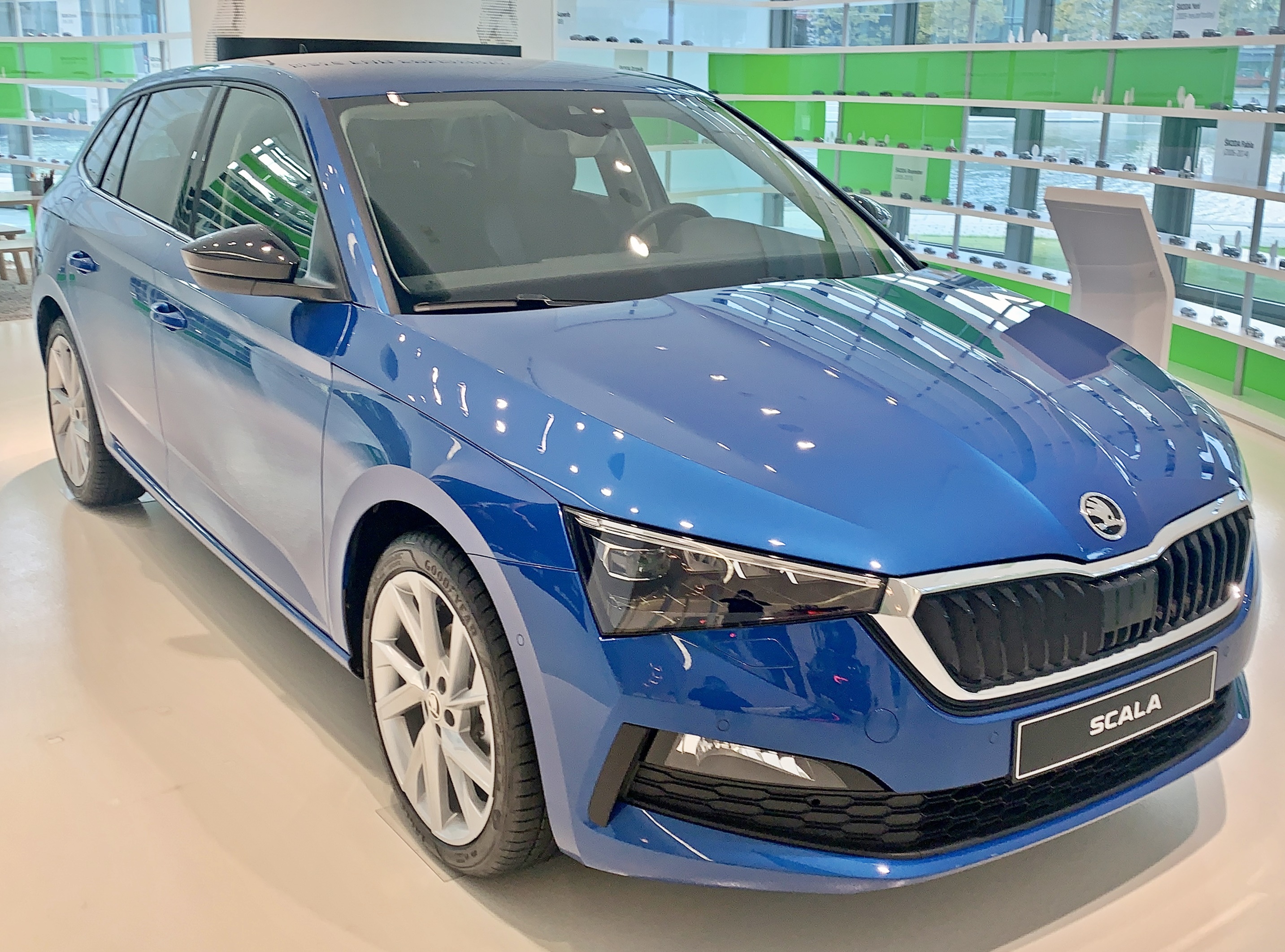
"And of course our little Skoda Scala. That was the car that they gave us that morning in exchange for that crappy Volkswagen. And the Skoda Scala was a wonderful little car."
The Skoda Scala is a small hatchback car that is roomy inside and good on fuel. It's a practical choice for families or anyone needing space.
The Skoda Scala is a compact hatchback that offers a spacious interior and a range of efficient engines. It is known for its value and practicality.
"...probably had that stupid start-stop technology. So maybe that was an indicator like,..."
Start-stop technology helps save gas by turning off the engine when you're not moving, like at a red light. When you press the gas pedal, the engine starts back up so you can drive again.
Start-stop technology is a feature in modern vehicles that automatically shuts off the engine when the vehicle is stationary, such as at traffic lights, to save fuel and reduce emissions. When the driver presses the accelerator, the engine restarts, allowing for a smoother transition when moving again.
Select text to request an explanation
Hey, everyone, and welcome back to the straight shift.
Today's episode is going to be a little bit different, and I hope a whole lot of fun for
you.
Because I'm taking you across the pond to the United Kingdom, I just got back from vacation
and checked off three huge bucket list items, including driving on the wrong side of the
road.
That's right, right-hand drive, tiny roads, double-decker buses, and more roundabouts
in Starbucks in Seattle.
Before we get rolling on that, I want to give you a quick reminder that you can
see this adventure on YouTube.
So check out my YouTube channel, karchic-tv.com, and you can watch the full UK driving experience
episode.
And while you're there, please subscribe to my channel so you can get more great car
adventures like my Shut Up and Drive series, great tips, and the usual shenanigans.
All right, let's get into it.
Before I hopped on that plane to the UK, a few important things happened that I
need to tell you about.
So first is good news, and that is I got my online mini course, How to Buy a Cheap Used
Car.
And by cheap, I mean anything less than $20,000, don't get me started.
That online course is now available along with a companion course that you can either
buy separately or it also comes free with the Cheap Used Car course, and that is
the Car Care Survival Kit, all about car maintenance 101, demystified so you don't get screwed
by your mechanic.
So you can check those out on my website, thekarchic.com.
I crammed to get those done before I left for the UK, and I did it.
The other thing that happened that is not so good news is that my 80-year-old mother,
who this was our bucket list trip that we've been planning for a year and a half, she
had to back out of a trip.
She was just not feeling well, having a lot of pain, and she just couldn't go.
So I cried for a little bit, but I very much respected her decision and it was the right
decision for her.
I think she would have been miserable on the trip.
So I had to rearrange some things at the last minute, and I made some changes that
would make the trip a little more special since it was just going to be me and my
husband, David.
So one of the things I did was I changed the hotel from just your typical holiday
and express, which we got for the mobility factor for my mom, to a beautiful manor home.
It's like think Downton Abbey, but on a smaller scale, just stunning.
And we also downsized the rental car.
So let's get into talking about that.
So picture this, I've just landed in Heathrow, London's humongous airport off the red
eye from the United States.
I am jet lagged.
I'm hypercaffeinated and we get into this wonderful transport vehicle.
It was a great Mercedes minivan.
So we did get to ride from London to Southampton in luxury.
And let me tell you, that is a fantastic minivan.
Mercedes really needs to bring those to the US.
I'm going to do a whole podcast on cars that you can get in Europe that you can't
get in America that I would really like to see here.
Our nice driver drove us to Southampton.
We got to see the beautiful countryside and just relax.
And then he dropped us off at the rental car place in Southampton.
Now I did make one of the mistakes that I swore I wasn't going to make because that's
why I had my friend Doug Hofer on the podcast a couple of weeks ago about renting cars.
So if you haven't checked that one out, it's well worth it.
But I still did not realize just how small of an airport Southampton is.
It literally has two gates.
So needless to say, it does not have a plethora of rental cars to choose from.
And unfortunately, they did not have the Peugeot that I really, really wanted to rent.
In fact, when we arrived, they didn't have anything but Volkswagen's.
It had a manual transmission and they said that I could bring it back the next day
and swap it out for a different car that would be returned later that night.
I'm like, OK, that's fine.
At least I get to experience the manual transmission shifting with my left hand,
which was interesting.
And so we started on our little adventure to find our hotel.
And it was just really interesting.
So, you know, I can drive a manual.
It's all I've really ever driven.
And I drove it left handed shifting from the passenger side of the car.
When I was little, my dad taught me that way.
But it was a lot easier doing it as a child because all I had to do was shift.
I didn't also have to work the clutch and the gas and the brake and steer
and figure out where the heck I'm going and make sure I was not on the wrong side of the road.
So while my brain is screaming, oh, my God, we're going to die, we did make it.
And it was very interesting.
But yes, I did stall it a couple of times.
However, I don't think that was entirely my fault because the clutch on that Volkswagen,
it was a T-Rock, it was absolutely terrible.
And that car was really big for English roads.
We don't think of that as being a big car.
It's like literally considered a tiny SUV by US standards.
But I was not convinced that the road was actually as wide as that car.
The roads in England are just so tiny.
It's fine when you're on the motorway, that's just a normal highway.
But the regular roads are so small.
And that explains why they have nothing but little cars over there.
I think literally a mid-sized car is like the equivalent of a Toyota Corolla sedan.
They just don't have a lot of big vehicles over there.
I would not even want to attempt to navigate even a mid-sized three-year-old SUV that we
have here in the States on the English roads.
It was crazy.
And you can check out some of the, oh crap, moments that we had driving the rally car
around these little bitty roads in Southampton where you've got brick walls over here, curbs
over there, hedgerows growing everywhere.
They literally just paved over dirt roads and cobblestone roads from the old times.
So these were carriage roads.
These were horse trails.
And they just, okay, cars came along.
Let's throw down some asphalt.
But nothing else really changed.
So it's much more exciting and entertaining driving.
But one of the advantages of that is it makes drivers a lot more cautious, a lot more
polite, and you really have to pay attention or you're going to run into somebody or something.
It's just not going to be pretty.
So that was what I was really the most impressed about in the UK.
And I'm going to talk about what I liked and what I disliked.
And that dislike list is very, very small.
But one of the things that was just so amazing was how nice and polite and courteous
British drivers are.
And not just while they're driving.
The British people are just very, very courteous and polite.
And maybe it comes from a history of, you know, courtesy to the king and whatnot.
But every single person we met was just delightful.
So that was a refreshing change.
But on the roads, you have to be courteous because a lot of times the roads are literally
only as wide as one, maybe one and a half cars.
Whether it's because that's just how wide the road is, or because you have cars parked
alongside either side of the road, making it super duper narrow.
If you have cars coming toward each other, somebody is just going to have to yield.
In Britain, they call it giveaway because it's just so much more polite than the word
yield.
And so there seems to be a very cute protocol around this.
Very often it's whichever car kind of got to the open space first, gets to go first and
the other person just pulls over and waits for them.
If you get there at the same time, I really think it's based on the law of lug nuts.
Now if you are not familiar with the car chicks law of lug nuts, I will refresh your memory.
In the U.S., I apply it to the rules of right of way on our roads here.
So whatever your state or federal law says about which car has the right of way in any
given traffic situation like at a stop sign or what you're merging, that is superseded
by the law of lug nuts, which states that the car with the largest and or the most
lug nuts just has the right of way.
And that seems to be how they do it in England as well.
The larger vehicle, you just let them have the right of way, especially if it's a
bus.
Buses are at the top of the law of lug nuts food chain in the United Kingdom.
And so they should be because they have these fantastic double-decker buses.
You're not officially in England unless you see a double-decker bus.
But it was just so refreshing that everyone just was very patient.
And even in the roundabouts, nobody was honking, nobody was running over each other.
Everyone was just very polite.
People take their turns when they merge onto the freeway.
They actually know how to merge.
It's amazing.
They get up to speed.
They look to see what cars are already on the road.
They find an open space of which there are plenty.
Unless you get into a road construction situation, I'm sure in the busier cities
like around London, the traffic can get a little bit hairier.
But from talking to other British drivers, they say, even in London, yeah, it's crazy.
There's cars everywhere, but everyone is still, for the most part, very polite.
They let each other merge in.
Everyone takes their turn and they communicate well with their signals or they just give
a little hand gesture.
Hey, I'm going over here.
It's just amazing.
There's just not the road rage and the rudeness.
I did not see a middle finger, even though I probably deserved one a few times.
I never even heard a car horn.
I had one single horn for two days.
It was absolutely unbelievable.
It was almost like there were adults behind the wheel of every car.
So let's talk about those roundabouts.
I know that is what most people absolutely freak out about when they think about driving
in England.
And we have started implementing them a little bit here in the US.
We have a few in Charlotte.
They are making more.
I couldn't be happier because roundabouts are the single most brilliant invention in traffic
engineering in the entire history of the universe.
You don't have to worry about a lot of red lights, although they do have red lights at
some larger traffic circles to control the flow of traffic into them, which is really
brilliant.
It's kind of like some freeways in the US have those as well.
But there's no gridlock.
You're not sitting there waiting forever to get that left turn signal.
It's just smooth, continuous flow of traffic.
But you do have to know what you're doing and understand the protocol of these traffic
circles, especially when you have multi-lane traffic circles.
Most of the traffic circles that we have in the US, at least in the Charlotte area,
are just single lane and people don't even understand how to use those.
But in England, you can have them to where they're two lanes or three lanes or in some
places like London, even four lanes.
And there is a specific protocol for how that works.
If it's just a single lane, it's very simple.
You give way when you come up to it and you look and you see if anyone is coming
because people who are already in the circle have the right of way.
And when there is an opening, you accelerate and merge in and then you signal when you get
to your exit on the traffic circle because there might be two exits or three exits or
four exits.
I even saw one with five exits.
So then you signal when you're getting off just so everybody knows and it's very simple.
But when you get into multi-lane traffic circles, this is where it gets a little
funky.
The outside most lane is for someone who is going to be getting off at the very first
exit.
But if you want to go to the second exit or the third exit, you get in this middle lane
or one of the other lanes.
They actually tell you where you're supposed to go.
So you really have no excuse unless you're not paying attention.
But if you are going up the second exit, you might get into the second lane and you
go a little more to the interior of the traffic circle and go around so that you're
not in the way of the people who are getting off at the first exit.
Or if you're going to the third exit, you stay in.
So when you get to where your exit is, you're coming up on it, then you use your
turn signal and you look and you make sure there's an opening and then you change
lanes so that then you're in the outermost lane when it's time to take your exit
at the traffic circle.
You have to really look and pay attention and watch your mirrors.
It works.
And as long as you use your turn signals, which granted, not every British driver does,
but I saw more turn signals than not.
They apparently know they come free with the car there, too.
And it was just so easy.
The only struggle that I had was figuring out which exit I needed because
the GPS was a little bit laggy.
And so I was trying to figure out what the GPS was telling me and then how
does that translate to the road and then looking for the street sign because
they gave you a sign when you're coming up on the roundabout that shows you
exactly what it looks like, what shape it is and where the exits are.
So if you can get a glimpse of that, that's helpful.
So my husband, David, was not only my cameraman, but he was also my navigator.
He was watching it and we decided not to really listen to the GPS lady
and just look at the map.
And so he would tell me, okay, we're coming up on a roundabout.
It's a four-exit roundabout.
You are taking the third exit.
So once I knew that, then I was able to just focus on getting into the roundabout
properly, getting into the right lane, following the right etiquette,
using my signal and navigating around it.
It was so much fun.
I absolutely love them.
And you know what? If you miss your exit, guess what?
You just go around again just like you should here.
It's not that big of a deal.
Now I never missed my exit, but there were a couple of times when I got off too early
and then had to find my way back and then go the right direction.
So there were a few little navigational glitches, but for the most part,
it was all good because I did not hit anyone.
I did not run over anyone.
I did get close to a couple of curbs.
However, I would argue that I was not nearly as close to the curbs
as David thought I was because as the passenger,
it really does look like you are so much closer than you really are.
So I think some of his panic moments were not necessarily justified,
but I totally got it.
So don't blame him one bit.
He was a fantastic navigator and a great passenger and cameraman.
One of the other things that I really liked about driving in the UK,
when we were going to Stonehenge, we were on the motorway a lot.
And the scenery, of course, was gorgeous.
When you're driving up the freeway, pick one, any highway in the US,
there's fricking billboards everywhere.
And they just mar the landscape and the skyline.
And then when you come up on the exit signs,
they don't just tell you, oh, there's a hotel here.
There's food here.
There's gas here.
No, they have to list every single business with their logo.
You can't drive up a highway in the United States
without being bombarded with advertising.
It's like, no wonder we're distracted when we drive.
There's way too much going on.
And in England, you don't have that.
You have the signs, but they're just very simple.
And they say, eat, sleep, petrol.
That's all you need to know.
You don't need to know specifics.
Like, oh, I can find some place to sleep here.
Oh, I can get some food here.
Oh, I can put some petrol in my car here.
It's so nice.
And you don't have the billboards anywhere.
You'll have these nice historical signs
that tell you where you're going.
Something cools over here, something cools over there.
We've got an English heritage site over here.
But everything is very, very subtle.
So you can just focus one on your driving
and two on these absolutely beautiful, beautiful landscapes.
And the sheep.
There are sheep everywhere.
It was so much fun.
Like in the US, when you're on a road trip
and you go cow, here it's like sheep.
Although there were some cows too.
But another fun game we played,
I don't know if you remember the game
growing up called Punch Bug.
When you're on a road trip, especially with a sibling
and you see a Volkswagen Beetle
and you punch them and they're like, Punch Bug.
We created another game called Mini
because there are so many Mini Coopers
in the United Kingdom as there should be.
I think in two days, I probably saw at least 200.
So we started playing that game of who spots the Mini first.
I won that game, of course,
because I am extra sensitive to the silhouette
of a Mini Cooper.
But in David's defense, he was also filming,
navigating, making sure I wasn't on the wrong side
of the road and not hitting anything.
So he had his plate full, but I still won.
Another great sign they have
is as you're coming up to your junctions,
there's a sign on the side of the road.
It's blue and it has three diagonal white lines,
then two white lines, then one white line.
So it's like a countdown to your junctions,
like three, two, one, exit.
It's very much like the braking zones on a racetrack,
those markers there.
So it was very familiar to me
and I found it very, very helpful
because when the GPS says in 800 yards, do this,
I don't know what 800 yards is
unless I'm watching a football game, give me a break.
But those were really, really helpful.
And they have some very interesting
and fun signs over there,
some of which I never quite got what they were.
There's one that's a T
and the vertical line of the T is white
and the horizontal top to the T is red.
And I think that refers to an intersection
where you can't see squat, it's a blind corner
and there are a lot of those in England.
So I think that one is warning you
that when you get to this intersection,
be extra careful because you can't see shit coming.
They have these things called restricted zones over there
and that genuinely does mean no stopping,
no parking, no stopping, no pausing, no nothing.
I think if you stop there,
your car will spontaneously explode.
So you're just pay attention to those and don't do it.
There's another part of the road
that you're not supposed to stop on
and that's when you come up on crosswalks.
They have what they call zebra crossings or zebra crossings.
It's a crosswalk for pedestrians
but several feet before and after the crosswalk
there are these zigzaggy white lines
hence calling it a zebra crossing.
What that means is that is also a signal to cars
don't stop in this zone.
It creates kind of a neutral zone, a buffer zone
for the pedestrians so that when you see a pedestrian
and a crosswalk, you stop further back.
You don't get four inches from them
as they're trying to cross the road.
It's courteous, it's polite
and it's protecting the pedestrians.
Some other fun signs when we were driving down the road
there was a reindeer sign.
It looks similar to our deer crossing signs
but it did have antlers.
I'm guessing it's just the type of deer
that they have over there
but it looks like a reindeer crossing sign
which I thought was really fun.
We finally got to Stonehenge.
It's about an hour and 15 minute drive
depending on traffic but traffic was perfect.
We were driving there on a Thursday
so it wasn't totally crazy
but it was just absolutely amazing.
You just start driving on the freeway
all of a sudden just like rising up on the hillside
you come over this crest and there is Stonehenge.
It's literally just right there
because it's been there for thousands and thousands of years
and they just decided to put the A-303 highway
right next to it.
So of course traffic slows down at that point
because everybody's going like that is a reason
for rubbernecking right there.
It was absolutely stunning.
So I can't really even describe how incredible it was to be there.
Those of you who know me well know
that I'm very sensitive to energy.
So what I felt there was just incredible.
It was like nothing I have ever experienced
and just seeing something that is so old
and still so mysterious
and part of our human heritage
that we still don't entirely understand.
It was absolutely spectacular
and like how the hell did they even build it
because those rocks did not come from that area.
They were brought in from Wales
which in a car is a couple hours away.
But like how did they actually do it?
Rolling them across the countryside several thousand years ago.
It was absolutely wonderful and absolutely amazing.
So when we were finished at Stonehenge
we went back to the car park
which is what they call a parking lot.
I like the term car park because it makes sense.
Park, hey.
So we kind of geeked out
over all these wonderful little European cars
that you can't get in the United States.
There was a Vauxhall Corsa.
There was a Cupra which is a very specific brand
that most people have never even heard of
and I will definitely talk about that
in the podcast that I dedicate to all these amazing cars.
There was little Fiat Panda.
There were modern MGs.
There were Renault's.
There were Citoyans.
And of course our little Skoda Scala.
That was the car that they gave us that morning
in exchange for that crappy Volkswagen.
And the Skoda Scala was a wonderful little car.
It wasn't automatic
because they didn't have any
with a manual transmission in stock.
Again, very small rental car agency.
But I was actually okay with that
because I'd gotten my jollies
figuring out how to shift with my left hand
on the first day in that Volkswagen
and between figuring out where we were going,
the navigating, making sure I stayed
on the correct side of the road
and navigating the roundabouts.
Actually having one less thing to worry about
was not a bad thing at all.
So I did not complain about the Scalia being an automatic.
The Scalia is just this little four-door hatchback,
a tiny little station wagon.
It's funny because over there
it's considered a mid-sized family vehicle.
You know, here it's like literally the size of a Corolla.
But it was a nice car.
I can't tell you how smooth and easy it drove.
The driver safety aids were not intrusive.
They did kind of nudge you a little bit.
And if you got way too close to something,
they would be like,
hey, you know, you're a little close over here.
But they were not obnoxious about it,
like the Volkswagen was.
The Volkswagen was freaking out
and panicking more than my husband was
when we were driving down the tight roads.
So I really liked it.
And it had a giganimous boot,
because of course that's what they call the trunk.
And we could get all of our luggage in there,
of which we had quite a bit.
The seats were comfortable.
It was just a really nice car.
I would have one of those as a daily driver
if I had to commute in traffic every day.
It was so comfortable and easy to drive.
Nothing fancy, very simple controls.
Once I found the start button,
which is underneath the steering wheel
and on the side of course,
between the wheel and the door.
So like, where is this thing?
But once I figured all that stuff out,
modern cars, it was really fun.
So I would have a Skoda Scala
if they would let me here in the United States.
It was just amazing.
Overall, the driving experience there was absolutely fantastic.
It was a challenge,
but it wasn't nearly as difficult as I thought it would be.
But that's because I trained for it.
And I think that's important
if you are going to another country.
Even if they have left-hand drive cars
and drive the same way we do,
the laws are still gonna be different.
The signs are gonna be different.
Even the traffic lights can be different.
And that was a cool thing in English.
When you come to a traffic light,
you get your red, amber, green, just like you do here.
However, the light doesn't just go from red to green.
It goes red, then red amber, and then green.
So it's like at the drag strip.
It's kind of a Christmas tree type of light.
So I call that stop, start your engines, go!
Now that might be because most of the cars there
are a lot newer than you will see here.
I didn't see a lot of really old cars over there.
So many of them probably had
that stupid start-stop technology.
So maybe that was an indicator like,
okay, now I gotta put my foot on the gas
to wait for my engine to restart.
And then I'll go, because there's a lag.
But I like to think it may be a throwback
to the racing tradition.
So anytime we got to do it,
especially when we had pole position right by the light,
it was like, ooh, ooh, ooh, ready, ready, ready, go!
So we had a little bit of fun there.
But that was a difference
than what you have in the United States.
So if you are planning a trip to any other country,
be sure you learn what the rules of the road are,
what their signs mean, and what the protocols are.
Because I never would have known
what those zigzaggy zebra crossing things meant.
Oh, it means I shouldn't get too close to the pedestrians.
The one thing I didn't like is that the center line
that divides the lanes going different directions is white.
It's not yellow.
And that wasn't particularly helpful to me.
I kind of wish that were yellow.
That would make a little bit more sense.
Now they will often make the curb line yellow.
Like, hey, don't get over here.
Like for some reason it's,
they really feel they need to warn you about the curb
more than the oncoming traffic?
I don't know.
But that is one thing I would change.
But again, it was something that I had learned ahead of time.
I had studied the protocol for the traffic circles.
And the way I did that
was I found a great YouTube series
by a gentleman who is a driving instructor in the UK.
He teaches teenagers how to get their driver's license
in the UK.
So I learned from a properly trained driving instructor.
And it was so helpful because I was not stressed
about the traffic and how to navigate around a bound.
I was only stressed about where the heck am I going?
So it made things so much easier.
And I also watched a lot of YouTube videos
from the first person driver standpoint
just to get my brain and my eyes used to
what it looks like when you're driving
in a right-hand drive car on the opposite side of the road.
And I just watched those over and over again.
The way I watch film of race tracks
when I am training for a race.
So that was actually really helpful.
And, you know, thank heavens for YouTube.
There's everything out there.
But that is a recommendation that I have
if you plan to drive in any other country.
There's so many things that I got
from this trip to England
that I think that we need to adopt in the US
and not just the roundabouts
and the cool traffic lights
with the start your engines stage,
but just the courtesy.
Everything was just calmer and more respectful.
I felt safer.
I did not witness a single traffic accident,
not a fender bender, no horns, nothing.
We didn't even get into stop and go traffic
until we found a construction zone.
Because of course, you know,
road construction is the one universal thing
around the planet.
But even that wasn't too bad
because people still managed to merge
and change lanes and exit the freeway
when they needed to.
It was amazing
because everybody was being courteous
and paying attention.
So as Americans, we need to just be more patient
just in life in general.
And I am very guilty of that.
Patience is not generally one of my strong suits.
You know, be kind, use your blinkers.
Remember, they come free with a car.
You know, you don't have to treat
every traffic merge like it's a competition.
This is funny coming from me, right?
Because I think everything is competition
and I'm a race car driver.
So, you know, everything is a competition
but I don't look at that way anymore.
And I had started not thinking about it
that way a long time ago
but when you're just out on the roads,
yeah, I still use racecraft.
I still maneuver in and out of traffic
because that's what I'm trained to do.
And I do it partly for my own safety reasons
but I'm also a courteous driver.
I will let people merge.
Please use your signal.
You're much more likely to have me be courteous
if you use your signal.
But we're all just trying to get to the same place.
We're all trying to get to work in the morning.
We're all trying to pick up our kids.
We're just all trying to get to where we're going.
And if we think about that more collectively,
like it is a group effort.
It's a team effort for all of us
to get to where we need to go safely,
alive in one piece without damaging our cars.
Think about how that could change driving in the US.
Think about how it could change traffic.
Think about how it could lower our insurance rates
for crying out loud, but just that courtesy
and the paying attention to where you're going
and paying attention to your driving.
I would move to the UK.
Honestly, maybe someday I will.
I will retire there.
It was just a phenomenal experience
and driving on the opposite side of the road
is not that difficult people.
You just have to prepare for it.
Now, if you again, if you want to see all this action
just check out the video.
I will put the link in the description below
or you can check it out on my YouTube channel
which you can get to at carchick-tv.com
and check out all my videos there.
And don't forget to check out my new online courses,
especially if you know someone who is going to be
in the market for an inexpensive used car coming up.
They can take advantage of all of my knowledge
and methodology.
Thanks so much for listening folks.
And again, drive safely.
I'm outta here.
The Straight Shift podcast is copyright
Lee Ann Shattuck, the car chick, 2017.
All views expressed by guest and or co-hosts
are those of the guest and or co-hosts
and not necessarily those of Lee Ann Shattuck
or the car chick.
Request an explanation for:
7 cars
Scroll for more
7 cars featured
Request an Explanation
Heard something you'd like explained? We'll add it to this episode.
Sign in to request explanations for terms you heard.
Want to learn more?
Browse our glossary for plain-English explanations of automotive terms, jargon, and concepts.
See something that's not quite right? Our annotations are AI-generated and can sometimes miss the mark.
Click the flag icon on any annotation to suggest a correction.