
Driving The BMW Z1 — The Carmudgeon Show w/ Jason Cammisa & Derek Tam-Scott — Ep 230
About this episode
BMW’s Z1 gets the full Carmudgeon treatment: a rare, non-US roadster built in small numbers as a “Zukunft” (future) tech showcase. The hosts dig into its concept-car vibe—thermoplastic/fiberglass body on a steel perimeter structure, electrically dropping doors, and a first-for-BMW multi-link rear axle. They debate whether it’s a meaningful BMW milestone or an evolutionary dead end, then compare its real-world driving: refined, composed, and surprisingly competent, but not dramatically more exciting than an E30.
Hagerty
"Okay. This is the Carmuggin show, which is driven by Hagerty, which explains why I have a Hagerty hoodie on."
Hagerty is a company that’s big in the classic-car world. They insure and cover collector cars, so it fits the theme of this episode.
Hagerty is a well-known classic-car insurance and media company. In the context of this episode, it signals the show’s focus on enthusiast and collector cars rather than mainstream daily drivers.
convertible
"Warm out. We have a convertible. [102.3s] Are those things related?"
A convertible is a car with a retractable roof, typically either a fabric soft top or a power-operated hard top. Converting to open-air driving changes how the car feels and can affect structural rigidity and weather sealing.
chassis code
"It's chassis code. It's not anything different... It's a chassis code. So this is an E30."
A chassis code is basically BMW’s internal “model ID” for the car’s platform. It’s how you tell what underlying body/chassis a car is based on.
A chassis code is BMW’s internal designation for a vehicle platform/body/chassis generation. It helps distinguish different models that may share some components while still being different cars structurally.
short wheelbase
"It's an E36 with E30 rear end. That's the short wheelbase. That's the hatchback."
Short wheelbase means the car is “shorter” between its front and rear wheels. That can make it feel more nimble and change how it drives.
Short wheelbase means the distance between the front and rear axles is shorter than on a longer-wheelbase version. Shorter wheelbases typically make a car feel more compact and can change handling and stability characteristics.

E30
"This is an E30 with an E36 for suspension. What? Yeah. Technically, it was not yet the E36 suspension because this car came out."
An E30 is a BMW 3 Series from the 1980s. It’s a popular car to modify, and here they’re talking about mixing parts from a later BMW 3 Series suspension.
The BMW E30 is the 3 Series generation that debuted in the early 1980s and is known for its simple, tunable chassis. In this segment, the host is describing an E30 that has been fitted with suspension components associated with the later E36 generation.
Zukunft
"Z stands for Zukunft, which means future in German. So this is future one."
“Zukunft” is German for “future,” and the hosts connect it to the “Z” in BMW Z1. This is part of the car’s branding story: BMW positioned the Z1 as a forward-looking, technology-forward project.
Foschung
"BMW love, the Germans love to be like, this is the new Mercedes F400. F means Foschung, which is research. And so they all have these weird names about like,"
The transcript appears to reference “Foschung,” which is likely a mis-transcription of “Forschung,” German for “research.” The hosts are explaining the naming logic behind BMW’s “F” reference as “research,” tying it to the idea of technology showcases.

BMW Z1
"So the idea behind this car was let's make a car out of thermoplastic... all of this to say the Z1 was not sold in the United States... the three sort of main things that make this car different than other BMWs of the moment were the Z-axle..."
The BMW Z1 is a special BMW roadster. It’s talked about here because it has some unusual engineering choices compared with other BMWs from the same time.
The BMW Z1 is a distinctive roadster from BMW, known for its unusual engineering and limited availability in some markets. In this segment, the hosts focus on what makes the Z1 technically different from other BMWs of its era.
thermoplastic
"So the idea behind this car was let's make a car out of thermoplastic. Is that the unifying concept?"
Thermoplastic is a plastic that you can heat up and shape, then it hardens again when it cools. In cars, it can help with weight and manufacturing.
Thermoplastic is a type of plastic that can be heated and reshaped, then solidifies again when cooled. Using thermoplastic in a car’s structure or body parts can reduce weight and allow different manufacturing approaches compared with traditional metals.
multi-link rear axle
"So the three sort of main things that make this car different than other BMWs of the moment were the Z-axle... the first multi-link rear axle that BMW did... So this was BMW's first multi-link."
A multi-link rear axle uses multiple arms to hold the rear wheels in better control. That usually helps the car handle more predictably when you drive hard or over bumps.
A multi-link rear axle uses several control arms (links) to locate the rear wheels more precisely than simpler axle designs. This can improve handling and ride behavior by controlling wheel movement under acceleration, braking, and cornering.
Mercedes
"Yes, I was just going to say in response to whom and what?... This is now, remember, almost a decade after Mercedes did a multi-link."
Mercedes is mentioned because they used a similar multi-link rear suspension idea earlier than BMW. The hosts use it to show how suspension tech developed over time.
Mercedes is referenced here as the earlier adopter of a multi-link rear axle design relative to BMW’s Z1. The comparison is used to frame the Z1’s suspension as a late entry into that specific technology trend.
electrically dropping doors
"This was the first time we'd ever seen electrically dropping doors from a BMW. So it may be also the last time anyone has seen it from anyone."
They mean the door opens by moving downward using a motor. It’s not a normal hinge-swing door, so it needs extra engineering to make it work safely.
“Electrically dropping doors” describes a power-operated door that lowers downward rather than swinging open normally. This usually requires a complex linkage and careful packaging so the door can travel into the body without interfering with the window or seals.
side sill
"And so the door goes down into the body, into the side sill, and the window goes into the door all at the same time."
The side sill is the strong lower part of the car’s side, near the floor. If the door has to drop down into the body, the sill has to be shaped to make room.
The side sill is the structural rocker panel area along the bottom of the car’s side. When a door drops into the body, the side sill often becomes a key constraint because it must provide space for the door’s travel while still protecting occupants and supporting the body.
hinged door
"There are two types of car doors that work really well. There's a hinged door and then there's a sliding door."
A hinged door is the normal door that swings open on hinges. It’s common because it’s straightforward and easy to use.
A hinged door is the conventional type that swings open on hinges at the front or rear edge. It’s widely used because it’s predictable, easy to operate, and doesn’t require complex vertical or horizontal packaging.
sliding door
"There's a hinged door and then there's a sliding door. They both work incredibly well."
A sliding door opens by moving sideways instead of swinging. It can be helpful when parking space is tight because it doesn’t need as much swing-out room.
A sliding door moves horizontally along the body, often used to save space in tight parking or for easier access. The hosts contrast it with the BMW Z1-style approach, noting that hinged and sliding doors tend to work well in practice.
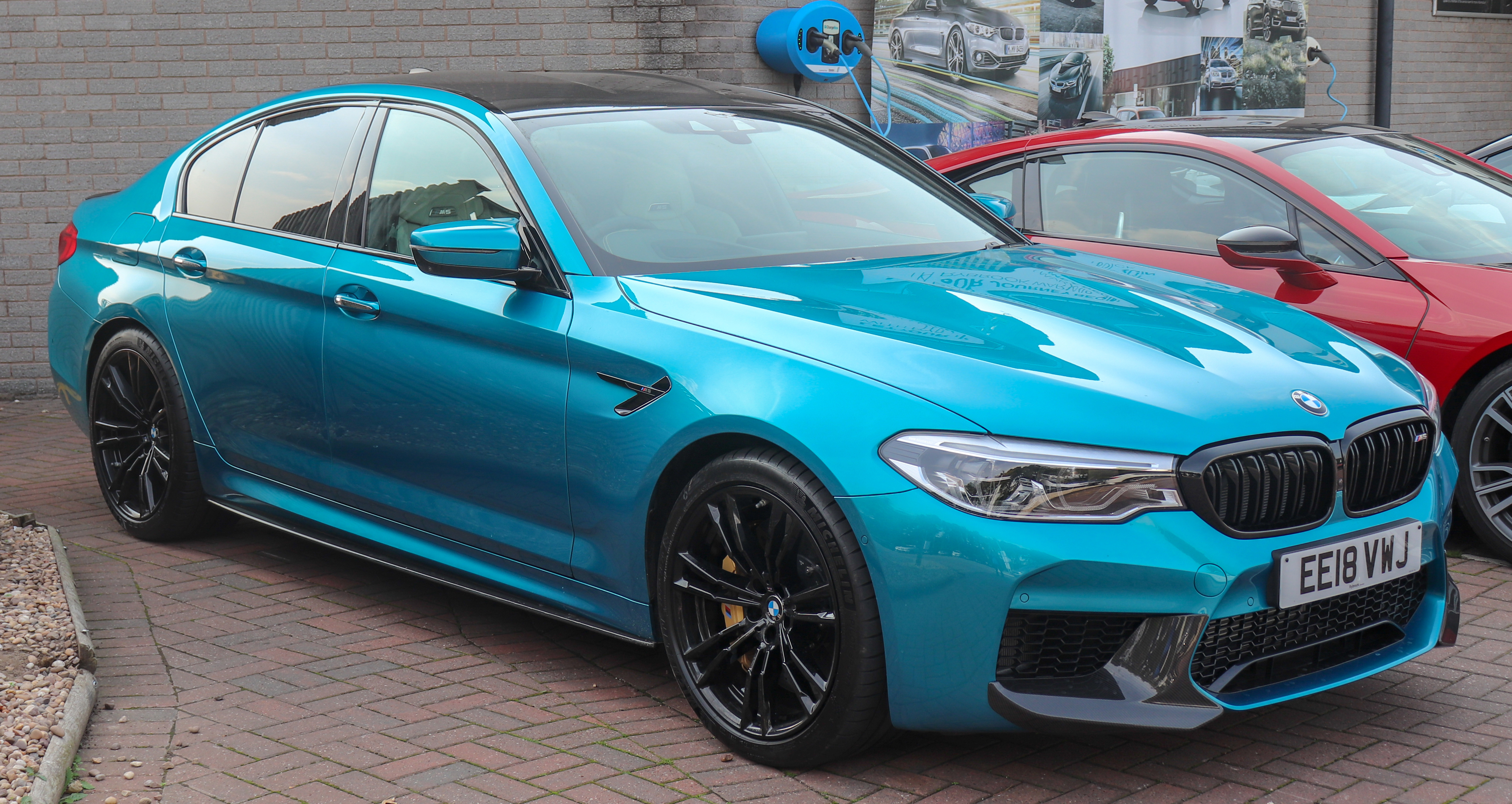
E28 M5
"I just remember hopping into that and an E28M5 with 11,000 kilometers on it..."
The E28 M5 is an older BMW M5—an early “M” performance model. They’re saying they got into one and drove it, then kept it for a short time afterward.
The E28 M5 is the first-generation BMW M5, built on the E28 5 Series platform. It’s a classic performance sedan/coupe-era M-car, and in this segment it’s referenced as the specific BMW the speaker drove during the Monterey Car Week trip.
pop-up headlights
"If you made those pop-up headlights, you would, you could see the family resemblance..."
Pop-up headlights are headlights that slide out from the front when you turn them on. When they’re closed, the front of the car looks cleaner or different.
Pop-up headlights are headlamps that retract into the body when not in use and rise for illumination. They often change the car’s visual “face” and can make design details—like grille shape—look different depending on whether the lights are up or down.
concept car
"It kind of, the whole thing to me, it feels like a concept car that sort of ended up in production, which is I think probably the coolest thing about the entire car."
A “concept car” is a prototype built to showcase new design ideas, technologies, or styling directions—often not intended for mass production. The speaker’s point is that the Z1’s interior/exterior styling feels like it came straight from a concept, but was actually produced.
volume
"Plastic molds for the volume. I mean, so speaking of volume, how many of these things approximately were made?"
Here “volume” means the number of cars that were produced. They’re asking how many of these BMW Z1 roadsters exist.
In automotive production talk, “volume” usually means how many units were built. The speaker is transitioning from design/material choices to production scale, asking roughly how many BMW Z1s were made.
limited production car
"Was it in their intent to have it be a limited production car? Or would they have sold more?"
A “limited production car” is intentionally built in relatively small quantities, often to create exclusivity or to test a concept. The discussion here centers on whether BMW’s Z1 strategy was meant to cap demand, and how production numbers affected its reputation and market impact.
recession
"No, no, there was a big recession, which I think. Killed off everything. I mean, it killed off so many."
A recession is a broad economic downturn that reduces consumer spending power. In the segment, the recession is blamed for killing off “frivolous” and “premium” purchases, which affected the market success of the cars discussed.
premium segment
"Anything frivolous. Anything premium. Any of the cars that I've covered for revelations that came out in that period all were marketplace failures..."
The “premium segment” refers to higher-priced vehicles aimed at buyers willing to pay more for brand, comfort, and features. The speakers argue that during the recession, even premium cars struggled because demand softened.
marketplace failures
"Any of the cars that I've covered for revelations that came out in that period all were marketplace failures because no one had the money to buy a Chizetta, Marota."
“Marketplace failures” here means cars that didn’t sell well enough to be considered successful in the market. The speakers connect these failures to the recession and reduced demand for premium, niche, or expensive vehicles.
economic realities
"...And I think that segment of the market was largely encumbered by economic realities. Oh, the pores are revolting again."
“Economic realities” refers to the practical constraints of the economy—like job insecurity, reduced credit availability, and lower discretionary spending. The speaker uses it to explain why certain luxury cars struggled even if they were otherwise appealing.
packaging reasons
"And my understanding with the E36 compact was that it had the trailing arm suspension from an E34 packaging reasons..."
Packaging reasons means “it has to fit.” Even if a design is better, it may not be possible if there isn’t enough space in the car’s body for the parts.
“Packaging reasons” refers to the physical constraints of fitting components into a vehicle’s body and underbody. Here it explains why BMW used a simpler trailing-arm setup in the E36 compact instead of a multi-link rear suspension.
intake
"Yeah. The intake itself, maybe there's a K&N filter or something in there, [1097.8s] but my God, it sounds good."
The intake is how air gets into the engine. If the intake is changed, it can change how the car sounds and how it feels when you drive.
The intake is the path where air enters the engine before it’s mixed with fuel. Changes to the intake can affect sound, throttle response, and sometimes power, depending on the design.
Refinement
"I think what you're going to get at next, if I had to predict where we go, is. [1109.8s] Refinement. [1111.1s] Yeah. [1111.8s] I think the defining characteristic of the car is. [1114.3s] Refinement."
Refinement is how smooth and “polished” the car feels. A refined car is usually quieter and less rough in everyday driving.
In car talk, refinement refers to how smooth, quiet, and well-controlled the vehicle feels—especially at idle and during normal driving. A refined car tends to have less harshness, fewer vibrations, and a more composed sound profile.
instrument cluster
"...the visceralness and the overall experience of looking at this instrument cluster, which is a little bit peculiar..."
The instrument cluster is the driver-facing panel that houses gauges like the tachometer and speedometer. The speaker calls it “peculiar” because the gauge layout, sizes, fonts, and colors create a distinctive visual personality that contributes to the overall experience.
snow tires
"I wonder if this would be... This particular car would be more fun if it had like snow tires on it. Right, so you could slide it around a bit,"
Snow tires are made to grip better when the road is cold or slippery. In this case, they’re suggesting the BMW Z1 would be more fun because the tires would let it slide around more easily (but still controllably).
Snow tires are designed with softer rubber compounds and deeper tread patterns to grip better in cold, wet, and snowy conditions. On a car like the BMW Z1, switching to snow tires can increase traction and also change how easily the car breaks loose, making it feel more controllably “slidey.”
slide it around
"This particular car would be more fun if it had like snow tires on it. Right, so you could slide it around a bit, and you could overwhelm the rears,"
“Slide it around” means the car starts to lose grip and you let it rotate a bit instead of staying perfectly straight. It’s basically about how much traction the tires have.
“Slide it around” refers to intentionally or naturally letting the car’s tires lose grip and rotate, typically in a controlled way. It’s often discussed in terms of traction limits—how easily the car transitions from gripping to breaking loose.
Request an Explanation
Heard something you'd like explained? We'll add it to this episode.
Sign in to request explanations for terms you heard.
Want to learn more?
Browse our glossary for plain-English explanations of automotive terms, jargon, and concepts.
Help improve this episode
See something that's not quite right? Our annotations are AI-generated and can sometimes miss the mark. Click the flag icon on any annotation to suggest a correction.