
David Buschur of Buschur Racing shares his journey from building DSMs to establishing a legacy in the automotive community. He discusses the evolution of his business, the challenges faced during his retirement, and the return to the racing scene with a 1G Eclipse. Buschur reflects on the importance of community, the camaraderie at the DSM Shootout, and the passion that drives him to innovate and create high-quality parts. The episode captures the essence of automotive enthusiasm and the personal stories behind the cars that shaped a generation.
In this episode, we sit down with David Buschur, the legendary founder of Buschur Racing – a name synonymous with DSM and Evo performance. David shares how he got his start working on domestic cars before becoming one of the most respected builders and tuners in the Mitsubishi community. We talk about his retirement from Buschur Racing, as well as his return! He’s basically the LeBron of the DSM world.
From early drag strip days to pushing the limits of the 4G63 and beyond, Buschur opens up about the highs, challenges, and legacy of building one of the most iconic tuning brands in the import scene.
Whether you grew up following DSM shootouts, own an Evo, or just love hearing how legends are made, this is an episode you don’t want to miss.
Topics Covered:
David’s early days in the car world
The transition from domestic builds to DSMs
Founding and growing Buschur Racing
Stories from the DSM/Evo golden era
Building a legacy in tuning and motorsports
2025 Behind the Wheel Podcast | All Rights Reserved
Thank you for tuning in, and if you enjoy our podcast, please SUBSCRIBE! We’re on Spotify, Apple Podcast, and iHeartRadio, and we always upload our full video interviews on our YouTube Channel: https://www.youtube.com/konigwheels (we’d love for you to subscribe there as well!) Thank you for listening!
"Let's say it like this. So in a world of turbocharged imports, there are legends and then they're going to be architects."
A turbocharged engine has a special device that helps it produce more power by pushing extra air into the engine. This makes the car faster without needing a bigger engine.
Turbocharged refers to an engine that uses a turbocharger to increase its power output by forcing more air into the combustion chamber. This allows for improved performance without significantly increasing engine size.
"...creating the DSM. Shoot out a pilgrimage and a staple from Mitsubishi fans and turbo fans worldwide."
DSM stands for Diamond-Star Motors, a company that made cars like the Mitsubishi Eclipse. These cars are popular among car enthusiasts for their speed and tuning options.
The DSM refers to the Diamond-Star Motors platform, which produced popular models like the Mitsubishi Eclipse and Eagle Talon. These cars are well-known in the tuning community for their turbocharged engines and performance potential.
"...put a Haltech on it, went there with no expectations..."
Haltech makes special computer systems that help cars run better, especially if they've been changed or upgraded. They help tune the engine for better performance.
Haltech is a brand known for its aftermarket engine management systems and tuning solutions. These systems allow for better control over engine performance, particularly in modified vehicles.
"I think you could buy a Festi that goes that fast. Wow. Speaking of the, the, the people that liked the event..."
The Ford Festiva is a small, inexpensive car that was made in the late 80s and early 90s. It's known for being easy on gas and affordable to buy.
The Ford Festiva is a subcompact car that was produced from 1986 to 1993. It's known for its affordability and fuel efficiency, making it a popular choice for budget-conscious drivers.
"...if you need a part, you put it on the loudspeaker and here's come somebody with a set of cans and lifters and a head gasket and head studs. And it is really like nothing else..."
Head studs are strong bolts that hold the top part of the engine in place. They help keep everything tight and working properly, especially when the engine gets hot.
Head studs are bolts that secure the cylinder head to the engine block, providing a strong and stable connection. They are essential for maintaining the integrity of the engine under high pressure and temperature.
"...if you need a part, you put it on the loudspeaker and here's come somebody with a set of cans and lifters and a head gasket and head studs. And it is really like nothing else..."
Lifters are parts in the engine that help the valves move up and down. They are important for making sure the engine runs smoothly and efficiently.
Lifters are components in the engine that help control the movement of the valves. They play a crucial role in the engine's performance by allowing the valves to open and close at the right times.
"...if you need a part, you put it on the loudspeaker and here's come somebody with a set of cans and lifters and a head gasket and head studs. And it is really like nothing else..."
The head gasket is a part in the engine that keeps oil and coolant separate. If it breaks, it can cause big problems for the engine.
A head gasket is a critical component that seals the engine block and cylinder head, preventing coolant and oil from mixing and maintaining compression in the engine. If it fails, it can lead to significant engine damage.
"...you've pushed out, you know, especially as you get into, you know, the GTRs and we went through EVOs and stuff like that."
The Nissan GT-R is a fast sports car that is famous for its speed and technology. It's well-known among car fans for being very powerful and great at racing.
The Nissan GT-R is a high-performance sports car known for its advanced technology, powerful engine, and exceptional handling. It has a strong motorsport heritage and is often regarded as one of the best performance cars in the world.
"...EVO was obviously the next piece, right? That was the expected move. And then the GTR thing, while we've seen a lot of..."
The Mitsubishi Lancer Evolution, or EVO, is a sporty car that is built for speed and handling. It's popular with racing fans because of its powerful engine and ability to drive well on different surfaces.
The Mitsubishi Lancer Evolution, often referred to as the EVO, is a high-performance variant of the Mitsubishi Lancer. It is known for its turbocharged engine, all-wheel drive system, and rally heritage, making it a favorite among car enthusiasts and racers.
"I picked up a really nice 3000GTV R4, maybe not ideally the car that I wanted, but it's a really, it's a really nice car to drive and own."
The Mitsubishi 3000GT VR4 is a fast sports car from the 1990s that has a powerful engine and can drive all four wheels, making it great for performance.
The Mitsubishi 3000GT VR4 is a high-performance sports car known for its all-wheel drive and twin-turbocharged V6 engine. It was popular in the 1990s for its advanced technology and performance capabilities.
The Nissan 350Z is a fun sports car that has a strong engine and is designed for good handling on the road. It's popular with people who love to drive.
The Nissan 350Z is a sports car that features a rear-wheel-drive layout and a powerful V6 engine. It is known for its sharp handling and performance, making it a favorite among driving enthusiasts.
"...I ended up with a whole busher front mount kit. And, you know, I bought cams from you guys before I bought a whole bunch of stuff..."
A front mount kit is a set of parts that helps cool the air going into a turbocharged engine. It makes the engine run better by keeping the air cooler.
A front mount intercooler kit is an aftermarket upgrade for turbocharged vehicles that relocates the intercooler to the front of the car, allowing for better cooling of the intake air. This can lead to improved engine performance and efficiency.
"...I remember going 12, two and thinking I was the fastest man alive. I mean,..."
'12, two' means the car could go a quarter-mile in 12.2 seconds, which is a way to measure how fast a car is in drag racing.
The term '12, two' likely refers to a quarter-mile drag racing time of 12.2 seconds. This is a common benchmark for measuring a car's performance in drag racing, indicating how quickly it can complete a quarter-mile distance from a standing start.
"...I think I had just put on one of those old ass AGP 60 dash ones. I mean, it was way too much terrible to go that fast..."
The AGP 60 dash one is a turbocharger that helps engines produce more power by pushing in extra air. This makes cars go faster than they would normally without it.
The AGP 60 dash one is a type of turbocharger commonly used in performance applications. It is known for its ability to significantly increase engine power by forcing more air into the combustion chamber.
"...I can't imagine trying to figure that ECU out, you know,..."
The ECU, or Engine Control Unit, is like the brain of the car's engine. It helps control how the engine runs by managing things like fuel and timing to make it work better.
An ECU, or Engine Control Unit, is a crucial component in modern vehicles that manages engine performance by controlling various functions such as fuel injection, ignition timing, and emissions. It uses data from various sensors to optimize engine efficiency and performance.
"...to be able to put that into software and kind of get the car to understand what you're telling it. I don't know. I don't, I mean, do you, do you feel that it was really that far? Do you think that that's what made such a quick adaptation to the software and tuning? I don't know..."
Tuning is when you change settings in a car's computer to make it run better or faster. It's like adjusting the recipe for a dish to make it taste just right.
Tuning refers to the process of adjusting the engine management system to optimize performance, fuel efficiency, and emissions. This can involve modifying software parameters or hardware components to achieve desired outcomes.
"...I had to start tuning AEM. So self-talk from, you know, day one. I don't know..."
AEM is a brand that makes parts for cars to help them run better and faster. They create tools that people use to adjust how a car's engine works.
AEM is a company that specializes in performance automotive products, including engine management systems and tuning solutions. Their products are widely used in the aftermarket tuning community.
"I can be on the dyno. I was just here with a customer last week. Yeah. And I was like, you hear that?"
A dyno is a machine that tests how much power an engine produces. It helps mechanics see how well the engine is working and if any changes are needed.
A dyno, short for dynamometer, is a device used to measure the power output of an engine. It allows tuners to assess performance metrics and make adjustments to optimize engine performance.
"It sounded like shut the car down and get out. It was a serpentine belt. It was slowly getting apart."
A serpentine belt is a long, flat belt that connects different parts of an engine to help them work together. If it breaks, those parts can't function properly.
A serpentine belt is a single, continuous belt used to drive multiple peripheral devices in an engine, such as the alternator, power steering pump, and air conditioning compressor. It is crucial for the proper functioning of these components.
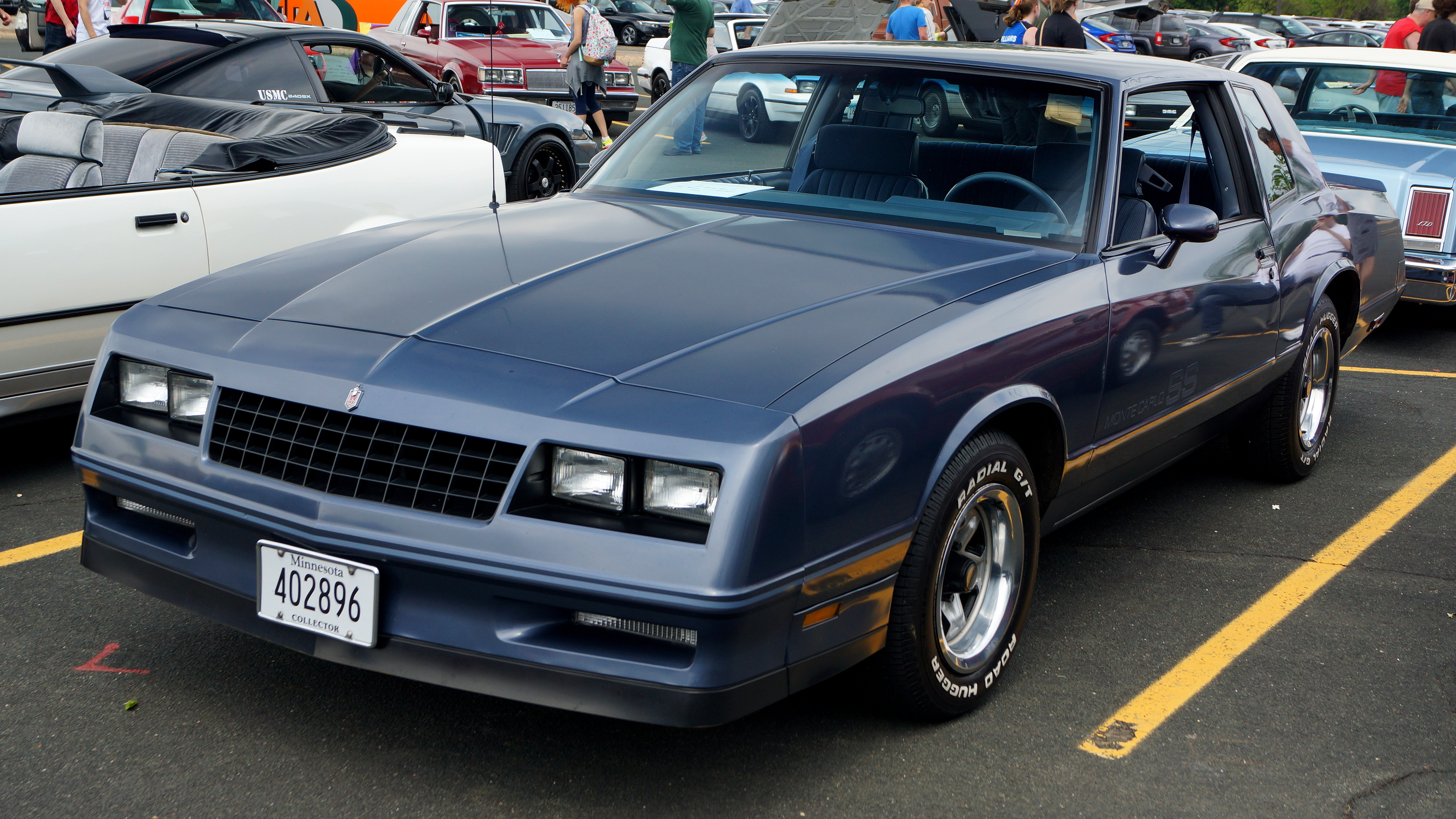
"...I had an SS Monte Carlo. I was driving by the Jeep Eagle dealer, which is, yeah, I had no idea it was a Japanese motor..."
The Chevrolet Monte Carlo is a type of car that looks sporty and was made by Chevrolet. It was popular for many years and had powerful engines that made it fun to drive.
The Chevrolet Monte Carlo is a mid-size coupe produced by Chevrolet, known for its performance and style during the 1970s through the early 2000s. It was popular among car enthusiasts for its V8 engine options and sporty design.
"...I don't know that if it would have been a Mitsubishi dealer with an eclipse sitting there."
The Mitsubishi Eclipse is a small, sporty car made by Mitsubishi that was popular in the 1990s. It is known for being fun to drive and can be modified to go even faster.
The Mitsubishi Eclipse is a compact car that was produced by Mitsubishi Motors, known for its sporty design and performance, particularly in the 1990s and early 2000s. It gained popularity among car enthusiasts for its turbocharged models and tuning potential.
"I did a Dynamax exhaust, which was a two and a quarter inch."
Dynamax exhausts are parts that help your car's engine breathe better, making it sound good and possibly perform better. The size mentioned helps with how much air can flow through.
Dynamax is a brand known for producing performance exhaust systems that enhance engine sound and efficiency. A two and a quarter inch diameter exhaust typically allows for better airflow, which can improve performance.
MoPAR is a brand that makes performance parts for certain car brands like Dodge and Jeep. They help make cars faster and more powerful.
MoPAR is the performance division of Chrysler, focusing on high-performance parts and accessories for Dodge, Jeep, and Chrysler vehicles. They offer a range of aftermarket products to enhance vehicle performance.
A K&N drop-in filter is a special part that helps your car get more air into the engine, which can make it run better. It's a replacement for the regular filter.
K&N drop-in filters are high-performance air filters designed to replace factory filters. They improve airflow to the engine, which can enhance performance and efficiency.
"Horton Engineering came out with a boost control."
Boost control is about managing how much extra air pressure a turbocharger puts into the engine. It's important for making sure the engine runs well and doesn't get hurt.
Boost control refers to the management of the pressure produced by a turbocharger. Proper boost control is essential for optimizing engine performance and preventing damage.
The Turbo T Type is a faster version of the Buick Regal that has a turbocharged engine, which helps it go faster. It was popular in the 1980s.
The Turbo T Type is a performance variant of the Buick Regal, known for its turbocharged engine and sporty features. It gained popularity in the 1980s for its performance capabilities.
The Vega wagon is a type of small car made by Chevrolet that has extra space in the back for carrying things. It was made in the early 1970s.
The Chevrolet Vega is a subcompact car produced in the early 1970s, known for its lightweight design and sporty variants. The Vega wagon variant offers additional cargo space.
The 355 is a type of engine that is 5.7 liters in size and is used in some Chevrolet cars. It's known for being powerful and can be made even faster with modifications.
The '355' typically refers to a 5.7-liter V8 engine used in various Chevrolet vehicles, known for its performance and tuning potential. It's a popular choice for enthusiasts.
"...when I bought that boost control, I bought the factory boost gauge work and they don't. No, I needed a place to put a boost gauge..."
A boost gauge shows how much extra air pressure is being forced into the engine by a turbo or supercharger. This helps you know if your engine is working well or if there might be a problem.
A boost gauge measures the amount of boost pressure produced by a turbocharger or supercharger. It helps drivers monitor their engine's performance and ensure it operates within safe limits.
"...I think when you have touched enough turbo cars to know like almost like what the standard progression path that you're going to do with modifications to be able to make a car faster."
Turbo cars have a special part called a turbocharger that helps the engine produce more power, making the car faster.
Turbo cars are vehicles equipped with a turbocharger, which forces more air into the engine, allowing it to burn more fuel and produce more power, resulting in increased performance.
"...so you don't hit that fuel cut limit, right. And then, and then that immediate..."
The fuel cut limit is a way to protect the engine from getting too much fuel, which can cause damage. It stops the fuel flow when the engine is working too hard.
The fuel cut limit is a safety feature in an engine management system that prevents the engine from receiving fuel when it reaches a certain RPM or load, helping to avoid damage. This is important for maintaining engine integrity during high-performance driving.
"...rst one, the 92 body style. Right. That car went 960s on that same VPC. I mean, it's then the two car w..."
The Volvo 960 is a safe and sturdy car that was made in the 1990s. People like it because it’s built to last and has good safety features.
The Volvo 960 is a mid-size luxury car produced by Volvo from 1990 to 1997, known for its safety features and robust construction. It is often discussed for its reliability and the brand's commitment to safety, making it a popular choice among families.
"...e were ever going to get man. 33 pounds of those 780s. So you, you go on. So, so after you, you make, ..."
The Volvo 780 is a stylish two-door car made by Volvo in the late 1980s. It's known for looking good while still being a safe and reliable choice.
The Volvo 780 is a luxury coupe produced by Volvo from 1986 to 1990, designed in collaboration with Italian designer Bertone. It is notable for its unique styling and combination of performance and safety, appealing to those who appreciate a blend of elegance and practicality.
"...as, I could go away and I'd steal the keys to my Chevelle, which I ended up, my mom had. That was my first ..."
The Chevrolet Chevelle is a classic car that was made from the 1960s to the 1970s. It's known for being fast and stylish, and many people remember it fondly as a cool car from the past.
The Chevrolet Chevelle is a mid-size car produced by Chevrolet from 1964 to 1977, often celebrated for its performance and classic styling, particularly in its muscle car variants. It holds a special place in American automotive history, especially among collectors and enthusiasts who appreciate its powerful engines and design.
"...rk dark old one. Yeah. Okay. And then we did some Mustang stuff, the GTR, SRT fours. So so then I mean, I ..."
The Ford Mustang is a famous sports car that started being made in the 1960s. It's loved for its speed and cool looks, and many people enjoy talking about it because it's a big part of car history.
The Ford Mustang is an iconic American muscle car that debuted in 1964, known for its powerful performance and distinctive design. It has become a symbol of freedom and rebellion in automotive culture, often discussed for its impact on the automotive industry and its enduring popularity among car enthusiasts.
"...e was parts from things I didn't even know. I had Q45 throttle bodies at one point. I had, you know, I..."
The Infiniti Q45 is a fancy car made by Nissan's luxury brand called Infiniti. It was popular in the 1990s and is known for being comfortable and having lots of high-tech features.
The Infiniti Q45 is a luxury sedan that was produced by Nissan's luxury division, Infiniti, from 1989 to 2006. It was known for its advanced technology and performance features, often discussed for its role in establishing Infiniti as a competitor in the luxury car market.
Select text to request an explanation
Let's say it like this. So in a world of turbocharged imports, there are legends and then they're
going to be architects. A few people can say that they didn't just race cars that they
built, but they built a culture around them. David Buscher is one of the few from carving
out horsepower records in his Ohio shop to creating the DSM. Shoot out a pilgrimage and a staple
from Mitsubishi fans and turbo fans worldwide. His fingerprints are everywhere, not only behind
the parts that he's built and some of the parts that it has inspired that others have built,
but behind all the trophies and the time slips, there's few stories that many don't know. And
that's obviously what we're trying to do here today. Building a business from scratch, selling it,
and then weathering a storm to come back out of retirement, dust off his cape and be able to say
hold my beer. So today we're going to dive into some history, some drama, and maybe even some of
the next legacy chapter of Buscher racing. David Buscher, thank you so much for doing this.
Thanks, man. Here, I just thought I was a guy that barely got through high school. That was
pretty good. No, no, no, no. So I, you know, like I said, I mean, I think I have this job has given
me tremendous amount of opportunity over the past couple of decades. I've met a lot of celebrities.
I'm not really an easy one to fanboy on. I don't really care too much. Everybody's a real person
to me. And, and I find that to be pretty true. This one has me a little bit right there. So I've
been to the shootout once. I have been up to your shop once. I didn't bring my car. I immediately
regret that. I kind of feel like I would have liked to do that. But I was there and I was
able to really absorb what, what Wakeman, right? Wakeman, if I remember correctly.
And, and just, just how incredible it was. I mean, you're like the freaking mayor.
No, but a mayor is a good friend of mine. Yeah. But it's like, you know, you go up there and,
and it just feels because the town, for people that haven't been there, the town is relatively
small. It's not a, not a big town. I think, I don't know, not too much to do there. But, but
Bushier Racing is, is the hub that everybody gravitates to, at least for, you know, during
that week. It was, it was impressive. And it was, it was, it was magnetic. Like you got up there
and you just felt something that was undescribable from all the events that I had ever been to,
that I really wanted to go do myself. The shootout to me was one of those ones where
I literally felt like I made a, like I checked it off the bucket list. You know what I mean?
Yeah. So I want to put something in on this. So this year, I guess we'll just get in this,
right? So this year, this car behind me, I bought it from Annika Morrison. Right.
Had a 93 just like this. She bought brand new after watching me race at Mylon. The very next day,
she went and bought this same car, not this car, but a green 93 all over it. Yeah. You know,
I lost interest in racing about 2016. That's why I sold the business. We can get in that later.
But anyway, this shootout got this done last minute, put a Haltech on it,
went there with no expectations. I had the best year I've had in 10 or 15 years. It all
across fun. It went 1180. Big deal nowadays, right? 1180. I think you could buy a Festi that
it goes that fast. Wow. Speaking of the, the, the people that liked the event, like you said,
right? I had more grown men come up to me this year that were, it'll choke me up almost in tears.
So the one guy cried to tell me how much this event meant to them. I don't think I've ever
been in a relaxed state of mind enough like I was this year where I could just like enjoy it.
I didn't have to worry about we're going to be the first in the age are going to be the first
in the sevens. This car's got to go. I just went there, drove the car, had no expectations,
but the people this year, I don't know if it's like the, like the ways the world is right now.
You know, everything's such turmoil. Oh yeah. People hate this religion or this race or it's,
you know, you get on social media and mine is at least just full of all that crap, man. And it
strengthens me out. The event this year seemed like a place where everybody went. They were
like-minded. They got to hang out with their friends. They got to eat ice cream and grill hot
dogs and camp and race. And if you need a part, you put it on the loudspeaker and here's come
somebody with a set of cans and lifters and a head gasket and head studs. And it is really
like nothing else. And I don't think I realized it maybe in 20 years until this year, how much it
means to people. It was overwhelming, man. Yeah. But first guys that had me uncomfortable like,
okay, bro, you're fucked up too. I get it. Right. But walk away before we both end up in
tears. It was incredible, man. It's really incredible. And here's the thing though. And I say this not
because you're on the podcast or because, you know, I'm having this great opportunity to sit
down with somebody that honestly, like I really admired, you know, coming up until a lot of this
car stuff. But, you know, you really were so monumental in building this community. And what
started around, you know, DSMs and, and I think that that's interesting, but we'll get there in
a second. But, you know, now just watching how, you know, you've pushed out, you know, especially
as you get into, you know, the GTRs and we went through EVOs and stuff like that. EVO was obviously
the next piece, right? That was the expected move. And then the GTR thing, while we've seen a lot of
shops that maybe have specialized in some of the EVOs and stuff like that, try to make a jump to GTR,
I think GTR is an extremely intricate platform that requires actual skill to make a really fast
car. And not only that, to make a car that doesn't blow up, right? So it's been, it's been incredible
watching you kind of, you know, kind of blossom out and kind of come back to this, this point,
we say come back, but this was like, it's almost 10 years ago now that you had to come back.
But, but, you know, even my friend, my friend, Mike Tolasio, he was the one that he had the
black R35 that that I think won the class of this year shoot out. So it's just, you know,
it's so interwoven into, into, I think, so many people now, what, what, not only what your name,
but the legacy and the people that you touch in the community that you help to spread and build.
And I really, and I don't say that, I'm not saying that just to suck up. I really, I'm not a big
suck up, although at this point, it probably looks that way, but it's, but I'm not. And it's just
been, it's just been, it's amazing. And that's why when, when, when Troy had, you know, linked up
and he said, Hey, like, you know, let me reach out to butcher, if you see if you do podcasts,
I said to him, like, he's probably not going to want to do it. Like, I don't really know why he
would. So this is, this is awesome. So the GTRs actually are super easy, man. And I think that's
why we got in the market really late on those things. But as soon as we started, I just put
all the information out, like, this is what we're going to do and try, like all these other shops,
I could name off if you want. It'd be top secret. Like this is like the hardest thing ever. Right.
I started on him. Tim Bailey came here from Cobb and we started tuning and he's like, man, here,
like, pick this up faster than anybody else I've ever seen. I just need to know the shortcuts. I
can tune a car. But we bought that car in 14, my white one. And getting nobody's gone eights on
a stock frame turbo until we did it. And we ended up going eight thirties. And then after I gave up,
other guys now have gone sevens. But honestly, if you can't make a GTR fast, you're mentally ill.
If they're super easy, man, I mean, it's a 3.8 liter with two turbos on how hard can it be,
right? Right. Yeah, they're awesome cars. Yeah, no, listen, I mean, there's definitely,
so I'm in the process right now of my own personal bucket list car collection,
because what's happening is I finally got to a point where my kids are just old enough that,
you know, I can, well, I'm still spending a lot of money on them. They're freaking expensive,
no matter how age that they get to. But, but I've gotten to a point where I have a little
bit of expendable income. And now I'm kind of walking back through going for all the cars that
I really wished I would have owned. And, you know, as I find the right ones, so like a few
months ago, I picked up a really nice 3000GTV R4, maybe not ideally the car that I wanted,
but it's a really, it's a really nice car to drive and own. And I have another project coming
that I think a lot of people don't know about, but I have an Evo, you know, six that I just picked
up. And so I've kind of started to kind of zone in on some of these things. I have a twin
Turbo 350Z. So like they're just, the Z was kind of a weird departure. I kind of went right from
DSMs. And then I was like, I touched on a Subaru and realized that that just wasn't me. Nice. That
just wasn't me. I mean, I can look at it and see the allure for it. But it just didn't give me any
of the feels. And so I ended up going from there. And then I'm friends with, I'm pretty good friends
with Vinny 10. And he had said, Hey, I got this Z. You want to, you want to check it out? You
haven't played with one of these before. So that car ended up staying. But like the fact that these
cars, they mean so much more to me than just the cars now. You know what I mean? Like, it's
more, it's not even just about nostalgia. It's about the fact that like, this is kind of what
all of my, you know, kind of younger adulthood was about. And in some of the very first parts
that I ever bought for any of my DSMs were where I bought a busher. Well, first I started out with
the, you know, your upper intercooler pipes and stuff like that. And then I ended up with a whole
busher front mount kit. And, you know, I bought cams from you guys before I bought a whole bunch
of stuff. And I mean, you talk about going 118, but like, I remember the first time I got my
car to around, I mean, this is gonna go back 2003, whatever. I remember getting my car to go,
it was 2004. I remember going 12, two and thinking I was the fastest man alive. I mean,
I had, and when I tell you what the, I think at that point when I went 12, two, I think I had
just put on one of those old ass AGP 60 dash ones. I mean, it was way too much terrible to go that
fast. And it was just, it was everything, it just meant everything. I felt like we were the fastest
people that ever lived. And we still had math translators and things that were just awful,
awful. But, but they worked, you know, so watching all this technology come in,
it really is kind of embarrassing when you see some people that still can't make cars
go fast. Yeah, it's pretty easy nowadays compared to them trying to figure out everything new on a
new car, right? Even the GS car, I got to give credit to those guys that started in like, when
did they come out? 2008 here, 2009 here, something like that. So by the time we got into it, a lot
of the computer stuff was figured out. I can't imagine trying to figure that ECU out, you know,
before COD made it easy. Right. So by the time I got into GTRs, I felt it was easy, but I hadn't
researched the car. But just for an example of, you know, how far things came, GTR, I say they
were super easy. They probably weren't easy from 2009, 2014. When I jump in, the tuning was figured
out from there. It's just a matter of building smarter parts. Right. Well, you know, and you
got guys like Tim Bailey, Tim, he's just a really good guy and super knowledgeable. So
I think that that obviously, you know, him being able to continuously work on those platforms to
make the software better and better, I think obviously helps. But, but, you know, you talked
about before about how when you started tuning, he said, you know, this is, it's pretty crazy to
watch you pick it up so quickly. I don't, I don't know. I mean, like, look, there's a software
element, right? There's a computer element to know where everything is. But, you know, I find
that the people that really actually know how things work and really are extremely mechanically
sound, especially like guys like you, you know what the car is doing. So it's a matter of being
able to just know what you want the car to do. Right. Like to be able to put that into software
and kind of get the car to understand what you're telling it. I don't know. I don't, I mean,
do you, do you feel that it was really that far? Do you think that that's what made such a quick
adaptation to the software and tuning? I don't know. Like, you know, I'd be PC, GCC stuff. We
went sevens on that garbage. Yeah. Yeah. And then I had it was working for me here. I'm not going
to bring his name up. He quit, left me high and dry. I didn't even know how to check my email.
Right. Like seriously, like beyond AOL, that's about as far as I could get with computer. Oh,
nice. And I had to start tuning AEM. So self-talk from, you know, day one. I don't know. I think a
lot of it is hearing the engine. Like I can be on the dyno. I was just here with a customer last
week. Yeah. And I was like, you hear that? He's sitting in the car with me and I got the windows
up. He's like, why do you dyno with the windows up? I can hear the engine better. What are you
listening for? Anything. Right. He's like, oh, I don't hear anything. I was like, man, I swear,
I heard something. A few pulls later. I was like, you didn't hear that? Right. And I keep checking
the car. I'm looking at the logs. Everything looks fine. About four pulls in. Something catastrophic
happened. It sounded like shut the car down and get out. It was a serpentine belt. It was slowly
getting apart. And that was a noise I was hearing. And then it finally blew off and went, you know,
under the car. That's crazy. People who do remote tuning. Yeah. I won't. No, I get that.
If I can't hear the engine, I don't want anything to do with it. There's so much to listening to it.
I don't know. Yeah. So this is tough. So about 10 years ago, you did a podcast with a
duet live for a living crew. And I watched that podcast because my goal with some of this stuff
is to make sure that I don't continuously repeat the same crap over and over and over again. The
internet is great. Everything lives forever, right? So people can go to that podcast and watch
a lot of details of your story. But for the people that don't have the attention span to go
backward, I do want to touch on a few things because I think that they're interesting.
So you're a buckeye. You're from Ohio. You are a blue collar worker when you started, right? You
know? And you're a domestic loving guy. I mean, your whole family, your dad, right? Dad was into
domestic. It's the whole thing. I heard this right from the podcast. The part that absolutely
is incredible to me is somebody that comes with such strong roots from that domestic side
ends up building their whole legacy. And again, I'm not saying you're done there, but most of
your legacy known for a four-cylinder all-wheel drive import car from Japan. Does that feel
for this? Yeah. When it came out, I had an SS Monte Carlo. I was driving by the Jeep Eagle dealer,
which is, yeah, I had no idea it was a Japanese motor. I never read anything about them. I was
like, oh, that's a cool looking car. I stopped and traded Monte Carlo in and left with it.
And then later on, I'm signing out. You know, it's a Japanese motor, but you know,
they were built in Illinois. To me, it's always, maybe it sounds stupid. It was always a domestic
car to me. That's interesting. So now it's Eagle. Yeah, no, I get it.
So it came out of Illinois. So, okay, so Mitsubishi motor and a big deal, right? So
I don't know that if it would have been a Mitsubishi dealer with an eclipse sitting there.
Would you have stopped? I stopped and bought it. I don't know that that would have happened.
That's great. But this wasn't your first turbo car, right? You had experience with
the, this was the first. Yeah. Jesus Christ. So let me ask you a question. So you get this turbo
car. November of 89. Yeah. So the problem, so the thing for me is, and so I have to acknowledge
this part, I was old enough to be in it when we were using some really crappy quote unquote
technology, but it was already, you had already been doing it for so long by the time I got my
first DSM in 2002, that there was enough internet that I could go start to look for things. How
do you make your own boost control or how do you do this? What do you take out? Get rid of the boost
cylinder and do this, do that. So there was that, but for you, there wasn't that. So where was it?
So you get this turbo car. What is the first thing that you F with? What is the first thing
that you like? Hold on. Wait a minute. What can I do here? I did a, so I did a Dynamax exhaust,
which was a two and a quarter inch. It was offered through MoPAR performance. Okay. And then I did
a, I think a K and N drop-in filter. Right. And there was a, in the back of Turbo magazine,
there was a place I can't believe I can remember this because I'm old. Horton Engineering came
out with a boost control. It was a developers paint regulator right off the spray gun. Yep.
I ordered that in the first trip of the track. So I worked in a steel mill at the time. Right.
Labor and a bunch of us drag race together. So my dad had a turbo T type. Okay. One of
the guys had a Vega wagon with a 355 and he was a fastest. Right. And I told those guys,
I think this thing will go 13s and they're like, you're full of shit. There's no four cylinder
ever going to go 13s. Well, a buddy of mine that worked there had a Monte Carlo with a 355 in it
that ran 1350s or so. Right. And I got where I was beating them on the street. So first trip to
the track with those three mods, the car went 1348 and we used to bet Italian sausages and a beer.
So next time we went to the track, I was fat eating sausage and drink a beer.
That's, so, so just walking through a little bit and I know we're jumping around, but again,
there's, there is information for people that want the detailed stuff. I don't want to spend
a ton of time because there's so many good things I want to speak about that's more current
and going forward. But so you start, so you, you know, you didn't set out to start a shop. You
started out by making parts for yourself. And then all of a sudden you end up in that area where
like natural people are looking around, they're getting these cars and they're like, well,
where'd you get that? And you're like, I made it and you start making these parts now. Right.
It kind of became a side hustle that almost pointed you in the direction of, hey,
you're going to do this for a living. Yeah. So the very first part I actually made,
when I bought that boost control, I bought the factory boost gauge work and they don't. No,
I needed a place to put a boost gauge. So the very first part I ever made, I took a sheet of
aluminum, drilled a hole in it and made it fit in the air vent to mount the gauge. And I was at
Norwalk and another guy with a, I think a laser came up to me and it looked factory. Man. He said,
hey, how did you get that? Did you order it? And I said, no, I made it. Can you make me once? I went
home with a diagramger, a whole saw, made him another one, and they caught on. And there was a
gentleman I'm still friends with, Mike Westwood, who got a taxi on Alamo Auto Sports. Yeah.
We had a magazine back then, the M-B-S-O-G. It was a newsletter and it's going to start right
before him. And he talked me into actually starting a business and when I first opened
the name of the business, this isn't out there very often, this is probably the first,
it's called Priority Performance. Right. And it got to where it was growing pretty big and
my dad at the steel mill one day said, why did you name it that? Why don't you just call it
Bush or Racing? I was like, I guess I didn't think about that and that's how that started.
Yeah. That's crazy. I mean, I just think like it's hard because, you know, we can look back at it
now and it's so easy. I think when you have touched enough turbo cars to know like almost like what
the standard progression path that you're going to do with modifications to be able to make a car
faster. But, you know, when you start out without a rule book, it's a lot of trial and error.
What were some of the some of the things that you remember doing on your own for your own
vehicle that you're trying to make this car faster that just turned out to be total nightmares?
I would say the biggest thing originally with DSM is with the fuel cut.
Yeah, that makes sense. There's no way to program the ECU. So you, you were limited, you know,
1820 pounds of boost you started running this fuel cut problem. Right. That's about the time that
HKS was going to release a VPC. Yeah. So before that, they had the F-con. I don't know if you
say daily, when's a VPC coming? When's a VPC coming? So they sent the first one to Mike Levitas
at Turbo Performance Center in Maryland. I got off work on a Friday, drove to Maryland.
They had to do the install because it's super complicated. Right, of course.
And we went out on the road with a digital voltmeter read me oh two sensor. Yeah.
How he tuned that was off a DVOM and we were looking for like 0.82 volts off the factory
narrow band wide. So we ran, I think that's when we got it on the 12th the first time.
And Mike put us in every ad he put in Turbo Magazine after that.
It's crazy. It's crazy because I think about the fact that like nowadays, you know, obviously
between technology and the cost of everything coming down, like you couldn't find, you find
cars that are barely modified with a wide band in them. And now to go back to thinking about
using a narrow band sensor, I mean, it's true. I remember the original thing I had was the air
fuel ratio gauge, which was like, you know, good for almost. And, you know, luckily, by the time
I started to play with these cars more and more, they had just come out with the first pocket
pocket logger. So we're able to, you know, plug in and record that stuff. And we felt
we're pretty high tech with this palm pilot in our hands, kind of letting letting everything
kind of occur so we can try to figure out what to do. And then we had AFCs, right. But we're
so far past that. So, so you go from a VPC, immediately you start, obviously,
dialing the airflow down so you don't hit that fuel cut limit, right. And then, and then that
immediate, what does that, what does that look like in the whole scheme of things?
I mean, it was magical. Yeah, we didn't have to cut anymore. You know, now the car could go fast.
Right. You ran 11 O's and had original all wheel drive. I had the black cherry car.
We built the rear wheel drive, the first one, the 92 body style. Right.
That car went 960s on that same VPC. I mean, it's then the two car went 781 and 174 with a
factory ECU, 660 injectors, 4 660 injectors. We're fueling it through the nitrous jet.
My God. 660 injectors. We're going to drive the car and run. Oh my God. It's crazy when you think
about the fact that like an EVO 8 still comes with like 565 injectors. You know what I mean? Like,
right from the thing. Yeah. 80s on 660s. That's crazy. That's crazy. How, how heavy do you think
that car was? 1950. That's, I mean, that's the power to weight ratio there is pretty enjoyable.
That's kind of crazy. Yeah, but think about how much that was in what, 2000?
Yeah. No, I know. It's crazy. We're 33 pounds of boost and thought that that was like the max we
were ever going to get man. 33 pounds of those 780s. So you, you go on. So, so after you,
you make, you know, the gauge pod, you obviously go on. What were in some of the progression?
What were some of the parts that you remember kind of pioneering for these platforms kind of in
somewhat of a chronological order? Downpipe. Now probably intercooler pipe max that we did
downpipe, off-road pipes, then the front mount, and full intercooler pipe kits. And then we started
doing motors. Yeah. The, the, out of my basement until 96. And to give you an idea, I put the steel
mill, got this all, my dad had already retired from the steel mill. And we're working in the
basement of my ranch home. We did $960,000 in sales. My dad and I out of the basement of my house
the year before I built this building. My God, you guys must have, you must have felt like on top
of the world as far as that thing. What a, what a, oh my God. I heard, you know, the profit margins
then were big. There's only two of us. I have no building payment, no employees. Matter of fact,
I'd like to go back there now. Oh my God. So, so what's funny is the original founder of Koenig,
you know, Rick, he, he's told me some stories about like right in that, right before the Fast and
Furious boom kind of hit and, and kind of where, you know, Koenig really started to, to grow like
exponentially and the stuff that they were doing, unloading containers, the two of them out in the
parking lot and, and different things like that. And he was just saying like, he's like, we had so
much money coming out. We didn't know what to do with any of it. I mean, it's crazy because I really
would have loved to experience that. I'm listening to you money. Oh man. I don't want that one.
I'll get rid of that one. Let me get another stack. Let me get another custom truck. Let's have,
I have 15 full cars at one time. That's nuts. Sorry. Yeah, it's, it's crazy to think like
how far things have come because it's, the truth is like, you know, I think
we look at some of the, the way, you know, parts are made or, or, or kind of where we've
gotten to some of the stuff. Some of the times I think it can make some of the people that have
remembered what it was like a little sour, right? Like it's, it's hard to like, you can't make anything
new anymore. You know what I mean? It's like every, and if you do 20 seconds later, somebody else's
got, is already, you know, grabbing it to do it. Yeah. So it's tough. I think that that's a, that's
it does a different progression. So one of the things that I loved in the podcast when I was
listening to it was the story that you actually told about when you started to accept credit cards
because I think that my favorite part about that is, you know, like, like you said, like you, you
come from a steel mill, it's not like you knew how to run a business, you know, like you had a, this
is, it's all trial by error, right? You're taking in money because you're making things that people
love. You're making good quality products. People are enjoying them. So they keep coming back to
you. Now the name spreads. Now, now all of a sudden this whole snowball just keeps going. And, but
at some point you have to actually run a business. So yeah, so, so my favorite, so what I love about
that is when you talk about some of the things where, you know, I don't know what I'm doing. I'm
writing things down on a notebook and ripping out the pages and handing them to my accountant.
That's how we keep track of things where, you know, like all this primitive, primitive, primitive
stuff and then to hear things like, like how opposed you were to taking credit cards, but then
tell the story about the credit card thing because I think it's fantastic.
So I don't remember the amounts because it's been a long time since I told that story. But
my old UPS driver retired and went to work for a credit card processor. Right.
And we're in our local restaurant one day. He said, yes, you're taking credit cards. I'm, no,
not interested. Anyway, he talked me into it and I don't remember, but I believe the very next month
what we did in sales doubled. And I believe the month after that it doubled. But it was, I mean,
it was huge. Yeah. And so, and you were like super opposed to using that credit card. You were like,
no, they sent me, because up until that point, if I remember correctly, it was send a check,
send the money order. When we get your money, we'll make you, we'll send you your parts.
Yeah, exactly. So, and the timing of that obviously matches, right? I mean, credit cards are,
so we're still in their earlier days of things, you know, the internet was just,
just a blossoming bud at this point for people that were using it for a commercial sense, right?
Yeah, for sure. Yeah. So, I don't know why I didn't want to take them,
you know, looking back on it. I think part of the processing fees and the risk.
Yeah. I'm not going to give them, I'm not giving them 3%. What are they out of their minds?
Oh, credit card. It's amazing how many crooked people there are in the world.
We just had a customer grab us for three grand because he didn't get his old junk parts out
of his motor back. I blew it up on Facebook. Yeah. He got the parts. And rather than reversing the
charge back he did, he told us to get back. We lost three grand. It's hard to make that back
nowadays. We're probably doing less gross sales now than we were the last year I was in my basement.
No, no, I get it. I mean, we've tried to branch out. We got the Toyota GRC.
That's been an absolute dead end money pit car for us. We think we make the best part,
but we just cannot get out there with that stuff. The GTR market got killed when Jimmy bought the
shop. You know, we've got shells full of the best enterprise you can buy from GTRs. Can't
get the name out there. There's roll cages in here. Can't get those sold.
I think one of the hardest things, you know, I mean, since we kind of got into it,
but like from a business standpoint is that marketing is a double-edged sword. It's the
smoke and mirrors that can sell things. It's also the smoke and mirrors that give us this
awareness. But the problem is that the smoke and mirrors also give a name and kind of a
perception of people that sometimes don't deserve it, right? Like, listen, I can't
speak for a lot of things. I try not, I never call brands out, you know, on top of things.
I think the Konig certainly has had its gauntlet of running, right? There was a period that,
honestly, especially when I came in, I think it was like one of the more darker periods for me.
Like, you know, when I came, when I started working here, you know, 2006, early 2006,
a lot of the wheels that had been there, I think that the direction had changed. There was,
there wasn't such thing as like these real original designs and stuff like that. And then,
you know, I'd been here for a while in about 2014. I started getting to a point where they were
letting me take my, you know, I had enough influence now where they were saying, all right,
well, you think you can design wheels? Go ahead, design wheels. And I don't know how to design
wheels. Not at all. But like, I know how to look at things and say, it would be cool if this did
this and this did this and this did this. And luckily, we have, you know, engineers that know
basically, you know, we did one and two. And then from that point on, like, they were like,
all right, well, you can, you can kind of oversee this. And my favorite part was I got to basically
say, all right, well, we're never going to ever do anything that is kind of like that
inspirational thing again. And, and we've been true to that. I mean, there's still a couple
legacy wheels. I wish I could shoot in the head, but they just keep selling. And that's a hard
part about being in business. But I think, I think for me, there's a lot of comp, like,
I legitimately know our intentions, right? Like, I mean, do we want to sell wheels? Yeah,
that's how we stay in business, right? Like, there's no, I don't think there's a secret there.
But, you know, there's a lot, but, but we care, like, we're really sponsoring grassroots people,
not just because it gets us a sticker on their car, but because we know that like,
by being in the community, that's how we're going to, you know, stay relevant and, and being able
to support the car community is what helps drive the industry forward. And at the end of the day,
I just want to build cars. Like, I really sometimes hate my job, because all I want to do is, you
know, go build cars. But I also know that the reason that I shouldn't do that is because I
think it would burn me out. I don't think I could do what you do. I think I would literally,
I think the people would burn me out. I'm not attacking people. I just get to a point where
I feel like, you know, when you, it's one thing when you do something as a hobby and imagine it
going all, you know, roses and, and rainbows, and then it's another thing when you actually make it
your profession. Have you ever gotten to a point where you were just like completely burned out
and you're like, that's it. I'm done. Yeah. When I retire, that's, I hated the cars. I hated the
people. I hated coming to this building when in the 42 months that I was gone during retirement,
I probably stopped by this building is one mile from my house. Like I drive by it
daily. Yeah. I probably came here a half dozen times in 42 months. Yeah. And that was maybe to
shift a box when I was, I was absolutely burned out. I want to, I want to hit on that real quick.
Yeah. Yeah. Yeah. Yeah, man. So I've always been, first I want to tell, I'm gonna, I don't
want to brag on myself. My honor and integrity are like it. There's nothing more important to me.
Right. Try to raise the kids the same way. Right. So I got a reputation to be an asshole.
I've never been called a crook. Right. I've never stolen anybody's money. I've never not
delivered parts of somebody who's owed. If you come here and you get me on the phone and you
ask me a question, I think stupid. I might even tell you you're dumb. Right. But at the end of the
phone call, if you listen to what I said, you're probably going to get the results you want. Yeah.
And you're going to get what you paid for. Right. I didn't work for probably the first,
I don't even know, 28 years of doing this. It was, this supported everything I've ever done.
And I'm like, I can't tell you how grateful I am. I barely got out of high school. Yeah. Like I was
dumb. Went to the army to the steel mill and started this and it blew up, you know, and I think my
some advice to get people is that there's something you really love. Go do it. You can probably turn
it into a business. If you're honest thing, you're passionate. But then for something just hit me,
I think, I think if you're really passionate about something, that's what I was going to say.
It's easy to argue and defend it. Like now I don't get on the internet and argue anymore.
I'm passionate about making sure that the guys at work here make a living and take care of themselves.
And then we're turning out a good product. I'm not passionate about the cars and the racing. I don't
have that fire in me anymore. And I don't, I don't guess it's okay. 36 years of doing this. I'll be
60 next year. I don't have that really hard passion. So I don't need to go argue. If you want to see
stupid on the internet, say it. I'm not going to argue with you. Just keep that dumb thought in
your head. I don't care. Yeah. Now I'm like that with the gun industry, which is kind of,
since I started the freedom shack. Yeah. I don't ruin another hobby because I'm really into shooting
now, but we make the best precision shooting bag you can buy now and a bunch of other products.
But it was like you see it about the wheels. You can see something and know what to do and
you get somebody to design it. Yeah. So who works here? He picked up the 3D printing stuff and
designing it and can. So I get a piece of something in my mind. I draw it on a sheet of paper. He
turns it into reality. We're selling, we ship more packages out of this building for the freedom shack
now than we do butchers on a daily basis. That's crazy though. It's like, it does, I think I know
the answer to this, but does that, is there a part of you that's bothered by that? Or you don't
really care anymore like from that perspective? You know, the Bushers and I was turned into we do,
nobody builds more engines than we do period. I don't care what anybody in this country claims.
There's nobody built more 4G, 6-3s to this day than we do. Forget about over 36 years.
I don't even know how many thousands upon thousands. So our main thing is because we,
you know, everybody, we build all over exhaust out of 304 stainless. We've got exhaust out there
from 1990 still running around. So once you buy it, you're not going to replace it. So I can't
expect when there's what, 10,000 ebos and we probably sold 8,500 exhausts. We're just not
shipping many exhausts anymore. We'd ship 40 a month. Now we ship 15 a month, which is still
pretty good on a car that old when they're not out there. So you can only sell so many of those
hard parts when they're quality. So now, you know, we're shipping engines and cylinder heads and
camshafts and, you know, we're doing tuning and there's just not a lot of little stuff you can
ship on a daily. Yeah. And I think it's hard too because a lot of these platforms, you know, have
kind of, you know, started to shrivel up, you know, there's only so many survivors left to some of
these older cars. And I'm sure the same thing is happening when you're trying to look for cores on
some of these engines, right? It's got to get into a point where you're like, like, you know,
somebody sends you a core and this isn't good. Go find another one. I can't. Like, there's nothing
left. Yeah. I think a hundred 4G, 6-3s, 6-bolts are in a junkyard somewhere. Oh my God. I mean,
I wish I had a file of them, you know. Oh, I know. I think a lot of guys are feeling that with a
lot of different car parts, which I actually think is what's causing such a big rise in kind of the
cost of everything for some of these older cars, not just the DSMs, like everything, because it's
like people are struggling to get their hands on the last of the survivors, right? The good stuff
and I think that that becomes super difficult. But you know, you know, DSM, they made a million of
them. Like, right, there was a million cars made, right? You know, some of them are turbo front-wheel
drives, blah, blah, blah. But there's still more cores out there for those than there are egos,
like Evo 8 cylinder heads. If you've got one, it's worth whatever you want for it. You can't get
them. Right. I know. It's hard, though. It's like, because there's just like, you know, we're seeing
it from us. I think there's, there's the level of shrinkage is there. And then I also think it's
just unfortunately, and I always want to be wrong with this, but the society and the kind of the
needs of some of these people, especially the younger kids coming up has just changed. They
want to have iPhones and Ubers and, and, and, you know, that importance of, you know, for, for us,
like driving was not only a right of passage, it was a, it was, it was our version of social media.
You wanted to go do something. You had to go, got to go. And so I'm shocked. I've seen in the last
couple of years, the kids that are 18, that don't have driver's license, don't even have them and
no desire to get them. I want a driver's license, man. That was, that was, I could go away and I'd
steal the keys to my Chevelle, which I ended up, my mom had. That was my first car. I grabbed the
keys when I was 14 and 15 to just drive a mile down the road and come back and put the car
in the exact same spot I had market. Right. So I couldn't, there was nothing more important
to driver's license. Now, I know that's when I turned 16, the only thing they said, what do you
want for your birthday? And the only thing I want to do is go to DMV to get my permit.
That's the only thing, that's literally what I got. They're like, Oh, and then on the way home,
they stopped just around the block and let me navigate it back to the house. Like that was my,
that was my birthday gift. But that's all I, that's all I really wanted. And, and for me,
I think cars from there on after, I was hooked. I really, I mean, that's what it was. I mean, it was,
it was from there on after everything I did, I just wanted to be surrounding cars. And that's,
that's really been my entire life, which is, which is crazy, not the same as your entire life.
You probably had a little bit more surrounding, but I can't tell you how, how,
how proud I am by the fact that like, I got to stay so far, I've made my entire career in
automotive. I've got to stay here. Like, you know, there's something, and I say this all
the time to the guys, there's something about a spreadsheet that sucks, but it's also made
immediately better by the fact that I know it's not about paper or pencils, it's about cars,
like this is all somehow tied in, right? I guess it gives me a level of, of comfort. I, I want to
kind of go right to the point where you, where you sold and you kind of went on hiatus.
We can call retirement, but we know what it is now. It's hiatus. I, I know this is a long post,
but I think it's important because I think there may be people watching that don't know this.
Do you mind if I read the post that you put up on May 27th, 2021, when you came back?
Go ahead. I don't remember. Fair. So today I'm going to try to explain to everyone what has
taken place in the course of action I'd like to recommend for anyone involved. I was completely
burned out in 2017, beyond ready to retire, trying to find somebody with the cash in hand to buy the
business, land, building, dino, etc. It would have been difficult. So I came up with an idea to sell it
over 15 years. I'd known Jimmy Bowling, uh, since him and his friend Aaron, since they were teenagers
and had done some machine shop business with Jimmy and the machine, uh, machine work was quality.
Jimmy and I met with an accountant. Uh, we went over the financials. He was advised it was a great
deal. We had contracts drawn up. Jimmy became the new CEO, uh, an owner of Bush Erasing,
Incorporated in November of 2017. Now for some info, it cost Jimmy zero. Yes. I said zero to
step into the business. Uh, good thing because he had zero dollars. He was to pay off 40,000, uh,
$40,000 credit, uh, line the day he took the shop. It was, it was in our contract. Most of that line
was used to pay off the shop, uh, GTR before I retired. That was gone over, uh, that was gone
over with his accountant in the contract. Day one, the contract was breached because he said he
didn't understand that part and didn't have any money. I told him to make the payment in a timely
manner and get it done as soon as possible. And I'd let it slide. There was not very many months.
Let's see. There's not many months over the next 42 months. The payment was late. He stepped, uh,
had 30 days to make the first payment to me of $4,625. The payments were to last 15 years. Uh,
and at the end of that time, I would sign over the building property, dyno, et cetera, all to him.
Stepping back in this week, I found that he owes in the excess of $60,000 to vendors for parts.
And every single bill that has come here is delinquent with, uh, with the gas service, garbage
service, and water all being suspended. The shop had what I'd guess $100,000 in inventory when I left.
A lot of outstanding unbuilt cars, uh, orders, cars here, uh, to be built and zero debt other
than the credit line that I mentioned. No outsorting, no outstanding bills whatsoever.
Over my nearly 30 years in business, I never had any 30 day accounts. I believed in paying
for whatever I ordered when I ordered it. COD, credit card in advance, didn't matter.
We also, uh, build customers at the time of work was completed and ready to go. The bad for me.
I had to end my retirement on May 14th, 2021, as the contract was breached again. And Jimmy told me
he didn't have the payment. The credit line was never paid off. All the inventory is wiped out
and gone. There are about 30 engine cores and 50 crankshafts here along with the image, uh, along,
let's see, along with the inventory all gone. There are 12 cars here. All were taken in with
large deposits. Zero parts were on order for, uh, from that money to put them back together.
Now they sit taken apart, no money, no parts to reassemble. I've been in contract, contacted,
about no less than 16 customers, uh, who have engines that have failed and they can't get
them resolved. There is a car here that was in its place in Cincinnati that was involved in,
in the floor situation there. Um, wait, what's that? It was in a flood. Oh, well, it says four,
but I know what you mean. Flood makes more sense. I wasn't really sure what the floor situation was.
I spoke to the two customers who offered, uh, who offered Jimmy to buy their cars after, uh,
failing to complete them after one and a half years of having them. Uh, he, he gave them some
money, still has the cars for a year and a half. This goes on and on and on. I mean,
all the different, different things here. The, the reason I wanted to read so much of this
is let's get to the end. Um, I already have things here running smoothly at the shop. The guys
see, uh, here seem to be eager, uh, to work, treat customers fairly and honestly and get
things back on track. I am too. As much as, as much as I thought I would hate coming back,
I enjoyed being retired. I'm enjoying the project of rebuilding. We all know just as
Bushers, uh, which worked out as our sign in front has always just been Bushers. Um,
as was my brother's 20 years ago. And then that's interesting because that also is you,
you touch on in the, in that podcast that you had done, how you and your brother
were there. And then he ultimately took over the service end, uh, of a lot of that.
It says, we are eager to help and rebuild. Please give us a call if you need anything
or, uh, for any type of vehicle. Um, there's the end of my novel. Uh, by the way, uh, little blue,
little blue dude, I hope the crown who ran this place soon, hope the clown who ran this place
soon in jail, getting drilled in the butt. Very, very, uh, very, very good ending from a
Busher post. But, but the reason I wanted to read so much of that is because I think that there's
so much that just happened there. So going back, I mean, I just, that kind of summarized the story,
but you, you decide, all right, I'm done. I'm kind of burnt out. I'm ready to take it on.
You find somebody that you believe is going to do the right thing with your business.
It will be a way for you to, it's hard to sell automotive businesses, but even if it wasn't,
you know, you find somebody that's going to carry out this legacy that's going to keep
going forward, pay you off over time. You're not in a crunch for money. You've always paid
your bills. You've paid everything off. You don't have debt. You're able to walk away,
get some, get some money every month or whatever it may be and kind of watch this business continue
to progress. And then it just doesn't. Yeah, man. So what's crazy is when I, after that was written,
we have a filing cabinet here. Oh, black filing. I opened it up with
stacks of envelopes in it. I don't remember any of this crap being here. I use it for like notes
for like all the dyno sheets. Like I'll do, there's packets of cam testing and intake testing and
all this stuff. I started opening these envelopes and I sold in November of 17 February of 2018.
These envelopes are bounce checks.
Oh, dude, when I tell you, there was a lot of money here back then. Like, like you said, you
know, there was, it was booming. Right. I left when it was busy, where the GTR stuff was full
blown going. Anyway, I just got a letter from the state of Ohio the other day, they keep sending
them here. And I finally got a hold of the attorney general because he sent it to my house
and pissed me off. Right. Now it was $197,000 in back taxes to the state of Ohio. It's crazy.
$200,000. Months and months ago, two years ago, we started figuring out all these people that got
screwed out of money that paid those 12, there's 13 cars here actually. The least down payment he
had taken, I think was $3,500. Jesus. The most was $23,500. So in between there for those other
cars, there was not a single part ordered for any of those guys. Where did the money go?
All within a year. We sent them all out. All the guys are happy as far as I know. But looking back
now, I'm thinking he ran off with about $420,000 in 42 months. That's a $10,000 loss per month.
Yeah. And I came back in within two weeks. So this is what I said to myself. I got a credit card
for $10,000. I had to open Bushers LLC because I took Busher Racing Inc. back over. I was
responsible for that debt. I don't mind helping the customers. It's not their fault. But I'm not
going to pay the debt that wasn't mine. Right. So I came in with a credit card with $10,000 on it.
And I think, no, I came back with a credit card with $30,000 limit and $10,000 of my own money.
Open the bank account back up. We're going to use this credit card to order the parts,
try to get stuff going. Within two weeks, we're profitable again. And I'm going,
what in the hell happened here? I fixed a mess that you've driven in the ground, went from making
over $2 million a year to the year before he took it back. I think he grossed $700.
How do you drive that car in 42 months, dude? And within two weeks, we're back to like,
okay, everybody's paid. I tried to catch you guys up on their paycheck as much as I could
because they're own back paychecks. And in two weeks, I'm like, it's running fine. How in the
hell did you mess this up? I don't know where the money, he drives an old piece of shit Chevy.
He doesn't have a race car. What do you do with that kind of money? How do you steal that much
money? I don't know. It's crazy. I struggle with the whole idea of how do you live with yourself
because it's not even just about living yourself. Can you imagine the drama it feels every single
day when you have to go to work and all you're going to do is deal with people that are pissed
off at you? That doesn't seem like anything I'd want to do ever. Yeah, this is a guy that's been
in DSM since he was 18. He can't show his face. Shoot out. Yeah. I mean, it's hard because I'll
never really understand the mentality there. But man, when you come back for those first two weeks,
I can't imagine what it must have been like. I mean, people have to be calling. They're pissed
off. They don't understand the situation. I vaguely remember. I think some of my favorite
posts on your Instagram or your social media were when you were on your retirement because it got
pretty good. Some of the off-grid stuff was pretty interesting.
So now you come back. What does that first two weeks look like? I mean, I can't imagine the
stress. People have to be pissed off in epic proportions and they don't know where to direct
their anger. You know something weird? I remember I was telling you about being so passionate about
everything. If that stuff would have happened before I retired, I might have went on a shooting
spree. I don't know. But coming back, it was Colin. I had a guy here, Miguel. We're really good
friends still. He was like the manager up front. Jimmy had hired him. I didn't know him. So when
I came back, I'm like, who are you? Brandon, same way. Mike was still here. He's our roller
fabricator engine builder. But it wasn't that stressful. I just told the guys, get on the phone,
find the oldest customer we have, call him, tell him what happened. Tell him to try to make a charge
back, get their money back. When they get their money back, call us back. We'll take the money
that we need to get started and we'll finish the car. The problem was, man, most of those guys,
the cars had been here beyond six months. They couldn't get charged back. They couldn't get
charged back. And every one of those guys trusted us enough, right? I guess because of my name. And
like I said, I might be an asshole, but I'm honest. And he trusted me that if they sent me the money
again, it would get the car done and we'd finish them all. That's crazy though. I mean, I think
it's incredible. And maybe it's just the fact that, like you said, it's your name when they knew
that you had stepped back in. Because listen, the sale was public enough. If you were on the
forums or boards, whether it be a DSM tuners or whatever it was, you knew when you were stepping
away, you announced it. You flat out said, I'm retiring. This is going here and this is what's
going to happen. So I think people knew it. But I think that there's, unfortunately, a lot of
people are naive. So then you coming back, I think, I think it was the name, right? They're
like, all right, Dave's back. He's got to take care of it. He's going to do right. But man,
that's just a lot of carnage there to have to step back into. There was a lot of people who
thought I should pay everybody back. And I didn't have anything to do with it. That'd be like walking
down the street and somebody stealing your purse and expecting the next guy out behind you that
manufactured the purse that made you because it got stolen. Right? Right.
But ultimately, so you had, but all right, I know some of this is going to seem like almost
self-explanatory. But I'm sure there's people that are thinking it. So you're retired, you're out
of this thing. Why even come back? Like, is it the legacy? Is it the fact that I wanted to get
right? I know I still have a, there's still technically a lot of money in this business.
I should, you know, get straight. What is the motivation for saying, all right, well, I got to
go back. You're not going to believe this. Okay. When I retired, I want you to guess how much money
I had total in the bank. Every account I own, how much money do you think I had?
Ah, geez. I don't know. A couple hundred grand.
$1,200 bucks. No.
Everything I've ever owned, I hate debt. The shop's been paid for, I paid cash for the shop as I built
it. You know, I paid for the excavating and I paid for the poles and I paid for the siding.
And then we did the inside and I paid somebody to wire it. My houses, I hate debt. So the only
thing smart I've ever done with money is make sure that anything I own is paid for. Like,
right now I owe on that coyote, I finance it because it's a shop. I don't owe it to them.
My off-grid place down south on 80 acres didn't owe on it. So when I retired, I had $1,200 bucks.
That's it. How much I had? I had no 401k, no retirement. I spent every freaking cent I've
ever had on race cars and ebos and buildings and custom pickup trucks and street rides and
guns and you name it. So, and I've always paid myself $4,625 a month. That's all I've ever paid
myself. But everything else I want is car shit. So, right? I got $4,600 to manage my,
basically my utilities and pay for my house, right? So my fault was I sell it for 15 years.
I keep paying myself the same amount. In 15 years, I'll be able to get social security.
Hopefully, by then, I was smart enough to put a little money away out of this, which I wasn't.
And when I look, my old year is not doing anything and just kind of laying around beach
in a speed auto. I came back, I was broke. I had no choice but to come back because
what else am I going to do? Go get a job for, I couldn't be a greeter at Walmart. I was too big
an asshole. That's fair. Although, I really think I would like to visit that Walmart if
you're going to be there. I could just set up on the side and watch all day.
That joke about the greeter and the lady comes in and says, are those twins? I can't remember
how it goes. And obviously, the kids aren't twins. How the hell did it go? And she says,
do they look like twins? He said, no, but I couldn't imagine two guys being dumb enough
to fuck your ugly ass. That would be me at Walmart.
Yeah. That went right. You could see that that wouldn't be good for their brand.
Can you put this on his podcast? I probably will. Yeah. I mean, we've never proclaimed to be
we've never proclaimed to be a kid-friendly organization. So yeah, I think I will. I just can't
so I want to say, I had no choice but to come back. Right. And I want to say, geez, Dave,
that's terrible. You might, especially at, you know, because at that point you were about 50,
right? Yeah. A little 55. So like, I mean, this is like one of those things where some people
are starting to think about the idea of slowing down for real. And you're like, I got to start
it all back up again. Because that's essentially what it is. You may come to a building, there may
be cars, you may have a customer base, like, great, you still have to kind of start over again. Right.
But it's pretty incredible. Like, I mean, I want to say, like, oh, Dave, I'm sure there was a lot
of stress and different things, but I kind of feel like you're one of those guys that
just ignores that part of it, puts his head down and just goes to work.
Before I retired, man, stress would, I can't imagine working for me. But all you guys that
ever worked for me, I'm sorry. Oh, geez. Like, I was, I was rough to work for back then. I was
spending money as fast it would come in. Yeah. And they complained that there was no money.
Right. Right. Like, we weren't, we didn't have financial problems, but I need another 20,000
so I can buy another race car. Right. But us, I'm, and I would run around here screaming and
throwing stuff. And for whatever reason, man, not that I've come back. Brandon Dostle works here.
He's like my main sales guy. He does mechanics. He does shipping. He does everything. Mike Lester
still here. He's a fantastic fabricator engine builder. I come in in the morning. I'm here
two or three hours. I do all the financials, all the books, other than that, those two guys are
in the shop. So my stress level is basically other than, you know, finances, like, look,
we need to get some engines out of here this week, right? Other than that, and we're actually
working toward those two guys are going to own the shop. So I'm hoping next year we become employee
owned. That's great. That's, I mean, listen, I think that I'm going to still be here when that
happens. I won't make that mistake again. Right. The reality of it is for anybody that is watching
this, you're not really dealing with anymore dealing with me anymore, other than my name
owning the place and doing finances. Mike and Brandon run this whole place. So I'm pretty stress free.
Thinking about kind of what you went through. Would there be any advice that you would have for
people that are selling their businesses or planning to do something where they're looking to, you
know, sell off their business over an extended period of time? I mean, I think about a few things
that obviously happened here from a legalities side. There's the, you know, the IP that you had
within your name that you kind of had some conflict with. There's obviously, you know, I mean,
property, luckily, you know, you still held the titles and deeds and all that stuff. So it's not
like you didn't really have to get too involved on that end. But, you know, I mean, I think you
could all argue that damage was clearly done to the name in some capacity for a period of time and
then required you to kind of set it right, which I think you've done a great job because I don't
ever hear anybody, anybody talk about this period like nobody comes back and like, ah, those guys,
I've never heard anybody say it. So I don't hear it anymore. Yeah, I haven't heard it, you know.
So, so I think, but like, is there any advice like looking back at kind of what you went through
and maybe what you did? Would there be any things where you say to somebody, look, here's some points,
don't do this stuff, do this stuff? I think the biggest mistake was I didn't look into Jimmy at
all. I just knew him as a good machinist. I thought a lot of engine failures, but, you know, he's
done machine, he didn't assemble anything. He would like four blocks and then bring him back
just when we put him together. Right. Same thing, you know, machine works done off site, we do all
the assembly. Right. He didn't even give me a nickel. Like I sold, I think November 1st,
no money whatsoever exchanged hands. His first payment was due December 1st,
which is the same payment I've made myself for 30 plus years, right? Right. I think if, to look back
on it, if you're going to sell, you at least need a chunk of money down to start the sale. Yeah.
Like I didn't even get the first payment. I didn't even ask for 4600 bucks. Right. I left
and waited a month and I think the second month it was late. Like it should have been a sign right
there, right? Yeah. You had an attorney and everything that kind of orchestrated this whole
thing. Did he say, Hey, you know, David, no, no offense. You're out of your mind.
No, actually, I came up with a whole idea on how to sell it and it came from buying the dyno. So
when we bought this dyno, it was like a five year lease, I think. Yeah. Okay. So you buy it, but at
the end of the, I think that's how this works. Yeah. It's a dollar or something like that.
I think it was a dollar, right? Yeah. So that's the same way this work. I was like, Okay, cool. I'll
take the payment. You're buying the name, the inventory, you know, you get used to the building
at the end of the 15 years. If everything goes well, you're going to hand me $1 and I'm going to
transfer the deed to the building, the property, the lifts, the computers, the dyno, everything.
Right. Everything.
Luckily, I was smart enough to keep that and do it that way because as soon as he breached
a contract, all I had to do is step back in. Right. Yeah. I know. That's so
thinking about the time that you had when you were quote unquote retired.
Um, were there any parts during that retirement period that you kind of evolved or changed?
I mean, obviously you got a lot more into guns and shooting and stuff like that,
but like you could argue that you kind of always loved guns. That wasn't, yeah. So what was it?
What was it like being off for those 42 months? I say off, but like, what kind of things were
you doing every day? What was your schedule like? I don't really peg you to be the guy that rolls
over in bed, hits a snooze button and decides that he's just going to hang out in bed all day.
I don't know. I was busy, man. I bought a sawmill. We bought 40 acres down south from here.
So I started cutting my own trees down and learned how to do a bunch of like,
like mortise and 10 work, like, uh, I can't think of a timber framing. Okay.
I built a house down south and we were supposed to move there because I was retired after my
daughter got out of school, but about the time she got out, all the started falling apart.
And about the time I got it all finished and it was comfortable. You know, I did off grid solar
all myself. I wired the whole place. I plumbed it. It was, you know, I built this. You probably saw
pictures on Instagram. But so I was busy nonstop. I was either milling wood up here and then dragging
it three hours south so I could keep building this place. And I was, I don't know. I was just
busy, man. I mean, Jesus Christ. I mean, I feel like you could write, you could,
what a movie this would make because I mean, who sells an automotive business to buy a sawmill?
And then he ends up coming back in and taking his automotive business back. I mean, it's pretty
crazy. It's like, I mean, you have gone everything around, but in a straight line. You know what
I mean? Like your, your whole life story just kind of bounces around. But, um, I think that's
kind of fitting. It kind of is the, you know, I think, look, there's people like you and then
there's people like me. There's people like you that like put their heads down to go to work and
there's people like me that probably spend too much time researching things and don't just ever
just jump in hard enough. Um, I think, you know, I'm more risk adverse than I think you ever would
be. But like, I think that the risk reward thing for us is wholly going to be a set, a different
thing. You're, you're an entrepreneur and I'm a guy that works for a company in technicality,
right? They're not the same, right? Like I could run a company, but that doesn't necessarily mean
that, you know, that I have that same entrepreneurial, uh, spark because I don't think,
you know, somebody like you is meant to work for somebody, right?
Yeah. I mean, I don't know. I was a good employee.
Yeah. Okay.
So the steel mill, one of the best compliments I ever got the superintendent come by me one day,
he said, Hey, Bush, I was like, yeah, the name was Leo. What's up? He said, I just want to tell
you, if I had two more guys like you, I could fire every motherfucker on this side of the planet.
Yeah, that's a good compliment. That's a good compliment. If you go to work for somebody and
you ought to put in eight hours of work, not be on your phone, not strewn around. You ought to,
you need to produce something. Man, I feel like I'm going to have to record that and play it on
the loudspeaker like, uh, like a Bible and nationally at them, you know, when you, you know,
come in in the morning at school, they had to, you had to do the pledge. I think I'm going to
take that clip. I'm just going to, that's what's going to come in as everybody walks in in the
morning. Just going to, and I mean, somebody's paying you when I worked at the mill, when I was
in the army, you know, when I went in the army, that's probably the best thing I ever did, by the
way, went in as a E one, like everybody else. And within 14 months, I made it to E four. I don't
know too many guys that outside of combat made E four and 14 months, but you know, I was there to
do a job. I made sure my uniform was square to me. My boots were shine. I was the best physical
shape I could be in. I don't know. I mean, if you work for somebody, give them the effort.
I get tired of people saying, well, yeah, I'm not doing shit all day today. This guy's only paying
me $15 an hour. Like go work somewhere else, dude. Right. If you're worth more than 15 and go work
for somebody else and make more money, but the guy that's paying you 15, you thought was a good
deal when you started there. Give them your time and put some effort into the guy. Yeah.
These guys, man, I can't say enough about Brandon and Mike. They're both, they're in here after
hours. They're in here on the weekends. Brandon's got no problem going to pick up a customer's car
and drop them off somewhere. I mean, it's, these are the two guys that I probably should have worked.
Why didn't know Brandon then he was here when I came back, but
But now the, so these are the two guys that ultimately are going to start to become
eventually own this business too. I want to work to be an employee. I think
that the idea, somebody once said to me something, and this is obviously to, you know, to me
relative, but they said, look, you know, whatever you've done to this point, you know, you've earned
it. There's a reason that you are where you are and maybe others where are where they are. Right.
And so like those two guys, the fact that they put that extra work in, they put that extra effort
in the fact that they're, they don't, you don't have to ask them to stay extra. They know something
got to be done. They're doing it. They're just working on it. They're just doing the right thing.
Listen, man, it's hard for me to get them to give me their hours that they have after so I can pay
them. Right. I'm like, look, you're, we only have so much time. You ever seen the movie in time?
No. Oh, watch it. Sorry, I will, but I haven't seen it.
In time. It's just in Timberlake. Okay. And you're, when you get to be 25 years old.
Yeah, no, I did see that. I know what you're talking about. The one with the clock at the
currency is time. Yeah. That's your whole life. Yeah. If you're working for money, but you're
not, you're trading your time, right? To pay your rent, to buy your groceries, to buy the car.
It's funny because you're this laptop that I'm doing this on is sitting on Brandon's BSM that
runs nine. Honestly, that's really, that's really actually very fitting. And Brandon,
thank you for letting us use your car. We, we needed the tripods in bed.
You need paid for your time. Like I appreciate you stayed after work and you came in on a weekend,
but give me some hours to get paid because you can't just trade time for nothing.
Right. Even if you love it. Yeah, I came in and got the guy's card and he's happy. Cool.
Now we need to bill him so you can get paid. Right. No, no, I'm not worried about it.
That's not how life works for them. Yeah, but there is something to refreshing to know that,
that people genuinely care because I think that the best products in the world come out of passion
and for people that actually, that actually care about what they're doing. I mean,
you know, and it's hard, you know, I wish that I could sell that. Like I wish that I could sell
that because when I think about all the time that we scrutinize, you know, a wheel design and what
we put into every single thing and what we're really trying to do and how much time that we spend
behind the scenes, you know, everybody thinks you just draw a wheel, you put it to the thing,
you make it and it comes out. But like, it's far more, it's far more arduous than that. And it
really does take a tremendous amount. I mean, it takes months to come out with something you're
really happy with. And usually the problem with the last, you know, bit of time there, just spending,
it's all in this, you know, in this kind of this FEA stage, you're all in the idea of you're just
constantly trying to find the little tiny things. It's not changing the look of the wheel really
at all. It's all the little tiny radiuses and curves and different things like that to be able
to make it better. But you know, I think that there's a lot of cookie cutter stuff out there.
And then it's hard to get out of the cookie cutter. Listen, there is no wheel that we could
ever make anymore, that somebody wouldn't have some goal to say, well, that looks just like this
wheel. Because it's too difficult. And then the truth of the matter is, then you have perception,
right? Some people can look at any, you know, any 10 spoke wheel, and they're always going to be
the same. It doesn't matter what their difference is, right? So when it comes down to the products
that you guys develop, do you feel like that some of that kind of holds true? Do you like, you know,
you're not, people aren't able to see the value in kind of the effort that went into developing
or designing a part and others are quick to maybe come out with something similar, or you're able
to do people beat you up on price a lot by saying, like, hey, like this is just like this,
but they sell it for $200 cheaper. We get some of that, like especially intercoolers. Yeah.
We try to use only Garafors over the years. That's what's proven to be best. We also use some
Dell stuff for like the GTR. That's real good. But I don't think so, because typically, you know,
like the DSM stuff, we came out with the main. Each case had intercooler pipes, but they were
these snaked around things. So if you remember, ours was a short one, right? So when we did it,
it's an intercooler pipe, but it's different. Right. And same thing, like when the Evo came,
we had the first exhaust, the first intercoolers, like an example, this guy that used to work here.
I didn't want to make the intercooler pipe for the Evo snake around the battery. So the first
thing we did was ditch the battery, put a small battery in and make the intercooler pipe straight.
And I remember him telling me how stupid that was, because nobody's going to buy a battery to put
an intercooler pipe on. Dude, we've sold more of those batteries, it's an intercooler pipes,
and you can't find another company in Evo's that didn't copy the small battery in the straight
shop for the intercooler pipe. Right. So we're typically, I mean, I'm sure there's something
that we've done over the years that was similar to somebody first. But because we've always been
Mitsubishi, I feel like anything, I don't know, you know, not imitators, right? Or innovators,
not imitators was our thing back with the DSM. I remember. With the Evo's. So I think the most
of everything that came out for that car, but still popular, we invented the style of it at
least. Yeah, like the running and everybody else fell in line behind. You know, it's funny. It's
like, I actually think that you probably sold more of those intercooler pipes because you had the
battery. Like I, yeah, I vaguely remember when that was there and being like, oh, that's yeah,
that's that way that looks way and it made the engine bay look so much better. So much cleaner.
Yeah. And it's 20 pounds. Yeah. Right. Those batteries were mammoths. So I mean, the only
thing that sucked a little bit for a guy that lives up here in the northeast is that, you know,
you go to cold crank on some of those things and, you know, you got to, you got to have, yeah.
Yeah. I get it. But that was the only drawback. But, you know, the same thing was happening. We
were doing the same things with, you know, even with the DSMs, like my 2G, like we were,
you know, using that lower subframe there to be able to, you know, position a battery,
you know, down low and kind of clean things up and be able to keep it under the intercooler
pipe so we can wrap it, you know, wrap it back around. I think. I know you can't see it, but
with this DSM, we did the new intercooler for it. It's got nice curved tanks on it. It's the same
we use on the Evo. When we were doing the piping, I was like, this battery's got to go,
bro. So we looked and to this day, what's it been? 36 years. Nobody's made a nice battery kit for
these cars. I don't even know how that's possible. Like, to be honest, we could develop and stuff
for them in probably 98, 99. Yeah. This fits on the same stuff. So now we've got a drop-in small
battery kit for these that have an integrated billet catch can on it. And we just released it
at the shootout. And how can it be that nobody's come up with that in 36 years, man? It's a
product still after all these years. It's just a bolt-in and it offers two different size batteries
for the cold weather. Right. Listen, I mean, I think a lot of it has to do with like, and this
is what I see. You tell me if you think I'm completely off base. I think that's just a lot
of talented backyard fabricators that have made their own stuff and just gotten to a point where
they're not always going to look for others to come up with stuff. And for them, they make it,
but they're never going to sell it. It's going to be on their cars. That was always the appeal to me
by going to something like the shootout. I mean, I remember the year I went to the shootout,
when I came back from the shootout, I had a laundry list like a mile long of all these
different things I saw all these guys do. And I'm like, oh my God, how smart was that? They
routed this way. They did this. They got rid of this. They're doing this. And I just came back
and I was like, I have so many things. I remember making a list of all the projects I wanted to
do throughout the year. And I think that that is one of those things about that event that you
can't explain to people. If you're into those cars, the idea of walking around with people that have
similar interests, similar likes, similar builds, but all have approached it from different angles
really is like something that's incredible that you can't get. And that's what we used to get
with magazines. We used to try to look through and see what they're doing. I miss magazines. And I
think the magazines, the magazines falling off the car industry, I think it's hard. I think the hard
part is that the speed of everything goes so quickly that there's so much noise, right? Like
it used to be when, I know for me, when Super Street came out or more turbo and
sport compact car for me, but when they used to come out on the newsstands and I knew exactly
what day they were going to hit 7-Eleven. And I was there waiting for that issue to come out. I
bought that issue. I went home. I read the thing cover to cover. I would look, I circle all the
things that I thought were really cool, look at any of the different parts that were out. The problem
is now, if you look at your Instagram feed, you can get all that stuff that happened in the whole
year in a matter of like 12 minutes. And it's really hard to pick up and unless something
quote unquote gets a lot of steam or goes quote unquote viral, you don't really get the attention
to be able to put it, which is what makes advertising now so hard because you have to almost
have your content be first and the product has to just be good in it. And I think that that
really can skew what people end up seeing. And that's why I think some things that are really
deserve more likes just never get off the ground. Just because you can build great parts doesn't
mean you can make great content, which is a weird thing to have a priority scale that's kind of
shifted. That's going to have good content for everything now. I mean, the internet is the
way we get out there. How was before we kind of, and I don't want to take too much more of your
time, but as far as we start to kind of go through things, the shootout now is in exactly which year?
You have been doing this now because 32nd year. So the shootout now is officially around longer
than most of these people that are showing up have been alive. How many people called me Mr.
Bushier this year? I don't think it must be the beard. I don't know what's going on.
This was a weird shootout, man. I mean, I heard Mr. Bushier. I kept looking around for my dad.
But I think that that's a crazy sign of respect in a weird way. People look to you,
you're bigger than just Dave who makes some parts. You know what I mean? You are something that people
really hold up on a pedestal. And I don't think it's just because of the parts you've made or the
community you've established. I think a lot of it comes from the fact that you have commanded a lot
of the integrity and what parts mean to having a good quality part. And you made a lot of people
believe that that was the way things should be. I mean, really, I believe that. Everybody knew
when they bought a Bushier motor or whatever it was that there was an unwritten warranty that came
with it. You knew that they weren't going to ever do you wrong. You know what I mean? I appreciate
that. Yeah. So I think it's interesting. So the shootout this year, do you have any plans for
the shootout? Do you think the shootout will ultimately live on forever, whether you're doing
it or not? Or do you think this is one of those things that at some point you're going to have
to formally hand this thing over to somebody and say, So hold on. I sold the shootout. Well,
right. But didn't you take it back? Or no, that didn't happen. So Mike still owns it.
Mike owns it. He bought it in 2017. I'm still involved, but not very much. Actually, Brandon,
who works here, his girlfriend, Erica, they did all the marketing, all the videos, all the interviews
for it this year. Like Brandon, he loves covers. He loves it like I used to. So I mean, it's just
natural. Bushier has always been involved. It was our race. Him being here, I think it's helped.
There's a lot of drama year before last with other people that wanted to promote the race
and they got out of it this year and it grew this year and it was smoother this year and there was
no problems with payouts this year. Everybody's always gotten paid. But this year was great,
man. Like I'm looking forward to next year. When did you decide to put together the 1G behind you?
Annika had the car and I saw it and I said, Well, my mom had just one,
one just like that. If you ever want to sell it, let me know. So last year at the shootout,
she said, Hey, I think I'm going to sell that car, but I won't sell it to anybody but you.
And I bought it and it's sat here almost the entire year.
In my mind, I bought it to bring back a better front mount, bring our exhaust back,
bring back some intercooler bikes, make some stuff that we never did before,
like the battery kit that we've got. And it was more of like, to be honest,
a money thought because it's like going to the Buick Nationals.
Buick every time I go there, right? And then weeks after having it going,
I should just sell this because I'm not going to drive it. And I bought this from Annika,
excited. And then let's just make some parts so we can make some money,
bring back some old parts. But then when I got in it and drove it,
bro, I know, I get it. I know, I get it. I had fun for the couple of weeks leading up to and
through the shootout with this thing that I don't know, like I'm into it. Now we're going to do a
stroker for it. And we're going to, you know, do a bunch of other stuff that's coming up. It's,
I'm glad that I had, I've got the passion for the car. Yeah. But to the point where like,
I want to argue over stuff again. It's really hard to describe that. I look back at the stuff I said
on EOM a week ago, you know, like this constantly fighting every day. Dude, that's toxic. Yeah.
It's not. Right. So I like that I'm just, I'm chill now, man. I don't want to argue with anybody.
Yeah. Listen, I feel the same way. All I want to do is just come in here, do a really good job,
sell a good product. Like I really want people to feel like they got their money worth and then
some when they get something from us, you know? And, you know, and here's the thing, like at the
end of the day, I got my goal here is not to get rich. I, you know, I, my goal here is to be able
to prove, you know, make sure these people stay employed to make sure that, you know, obviously,
I, you know, keep things right for our, for my family. But to be able to continue a legacy,
they handed me a legacy. There was one man that founded this company, you know, and I still speak
to him. Like, I get to push that legacy forward. And that's what I want to do. And that's really
the only goals that I have. And I think when it's that simple, it's also, it keeps the priorities
where they should be. Because I think everybody, and this I think happens to you, people that
don't know you or don't know the kind of the scope of things, or don't know what, you know, what the
size of the people that you have there are, they look at these names that have been around for a
long time. And they think perception wise that these must be big companies and it makes it really
easy for them to get over on people, right? Like, the truth is, like, you know, when somebody says,
Oh, like, you know, you should give me a new wheel because I mean, this happened, this happens a lot
with them for the Amazon mentality, we'll hear somebody gets something and let's say the wheel
is misboxed, or it's the wrong, you know, they look at it, they say, Oh, I don't really get
damaged in shipping. All right, no problem. Like, you know, let's get it back. Like, you know, I
mean, let's get it back. Well, no, I'm going to keep this. Oh, okay. I mean, you know, and so
maybe sometimes they'll say, Oh, well, let me let me see if we can get you a little good discount
or something like that. Oh, no, no, you send me the new one, I'll keep this one too. Where did that
come from? Like, now they think like everybody's in Amazon, we're just so big, we can just absorb it,
we can just absorb it. Everybody thinks you just absorb it. Like, like, what do they think? What
do they think the margins are anymore? Like, it's not there. It's crazy. Yeah, that's what I was
telling about the charge back, I tried to explain to this customer, I was like, Listen, man, the
motor you bought was only $4,600. You sent on a whipped out piece of shit. Eagle crank in it,
the rods and pistons, none of it was usable. That's as soon as the motor, we were late getting it
back to you. It took us, it should have went right out, but Brandon didn't want to take these
old junk parts and put it in with this new motor. So he sent the engine out. And then a few weeks
later, in between the time that the guy got the engine and didn't get his old junk back,
he filed this charge back for $3,000. Listen, man, $3,000 today is a lot of money. I hate
to be honest with you, because there was times that $3,000 that had thrown out in the purple
out running over the truck. Right. It's not listed anymore. $3,000 is a hit. Yeah. That's,
it's all profit. And when you're only doing, you know, you're trying to ship two engines a week and
a couple of cylinder heads a week. Like you're saying, you can't just get stuff away. It's not
that big hit. Yeah. Well, and not to mention that like, there's this other piece that they're
affecting not one person, but five different families. Yeah, for sure. Yeah. Yeah. I mean,
this is, and you know, and that's, and that part I do take ultimately like with utmost seriousness,
right? Like my job here, no matter what I do, everybody can say it's not about, it's not about
selling wheels. My job here first and foremost is to make sure that everybody does, I mean,
most of these people have been here for a long time. And like, and my job is to make sure that
they all stay employed. And that comes by making sure that we're making money and being able to
sell wheels. But the truth of the matter is that whole thing comes to make sure that they stay
employed, like period. And so I think if you have that level of responsibility, you don't take
anything you do super light, you know what I mean? And yeah, it's crazy. That's that mentality, I think
is just totally killing some businesses. They just think that we're all like Amazon, we can just,
you know, take it in the tailpipe and no problems, customer service, put a smile on it and
send it down the road. It's just not how it is. So I don't know. So let me ask you a question,
go and just you put the one G together. You said how much it was invigorating for you being able
to drive that car and kind of the feels it gave you. You've also done some other platforms. There's,
you know, you've done two G's you've done. I don't know, did you ever build a glove the
glove for your for your for your own personal thing? Yep, I had a white one in my stepdad, Rick
had a dark dark old one. Yeah. Okay. And then we did some Mustang stuff, the GTR, SRT fours.
So so then I mean, I know you do and you do a fair amount of cars today. Still, I've seen
so you know, the website now has new new car lists that's kind of refreshed with parts on it.
That's very hard, man. Like we try to do the Maverick pickup truck with the super full one
we have in 20s. But the demographics of those truck owners, like we got treated like we were
dumbasses, they didn't know anything about cars, you know, we released the intercooler,
the exhaust, and the amount of haters that we got. And I hate to say this, but I'm going to say it
because it's who I am. There was this other company at the time doing those and everybody
was leaning toward these guys for some reason. And I finally I got this often just sold the truck
and we got rid of the market, right? This other company who everybody was praising went under
and screwed all these people. And I went back and looked at the forums and a lot of them got
screwed with the people that were like on my ass for no, and it was kind of kind of satisfying
to be honest with you. I just, you know, some of these platforms, the word that I would like to
abolish this year is the word stage. I hate the word stage, stage like state stage what I'm
stage two. What does that even mean? Like, it means you bought you bought a stage package,
because they thought it was I think that was HKS that started that way back when I think,
yeah, I think I'm pretty sure it was I just listen, I get it. It was a smart idea by the
Japanese. I mean, look how well it did for everybody. I just can't stand it. It's like,
you know, could you imagine us trying to figure out what stages I had shit all over the place.
There was parts from things I didn't even know. I had Q45 throttle bodies at one point. I had,
you know, ISC motors from other things remotely located. I mean, what would I call that? What
stage is that? You know what I mean? Like, it's crazy. With all the different you know what stage
it is, my checking accounts empty. Yeah, well, I've been there more than a few times.
With all the different platforms you've done, you know, you talk about getting the 1G, but like,
you know, when I think about a 2G or even an EVO, these are platforms you did, you went really
fast with them. And like, I think about some of these cars. And are there any that you,
EVO is not like a DSM. They're just not, they're just not. They have their own vibe. And now you
have the GTR. What are the platform, like, is there one that holds the cake for you more than
other ones? They're just different. I don't know. The GTR was cool, man. The GTR was super easy to
come out of nowhere and beat everybody else before us, not everybody else. Like, there was
guys going 7s and 6s. Yeah. That wasn't my intention. I didn't, I never wanted to build a GTR like that.
Yeah. I wanted one that would go 890s, which was super easy. Then it went 830s. We made a
bunch more power, got some weed out of the car, still had factory, well, not factory,
had nice seats in it. Right. I know the car would have gone 7s. Now a friend of mine owns it,
and maybe he'll put it in the 7s. But the GTR was fun, but the, the bish for me, my EVO was probably
the pinnacle of all cars. We're talking about the white car, the white EVO. Yeah. That I ruined
the rear wheel drive. Now, wait, you, yeah. That car was awesome. That car was like ridiculous.
I remember that car. Yeah, that car definitely put us ahead of everybody for the EVO stuff.
And that was like right, to me, that was like right in that, that EVO prime, where everything,
where, you know what I mean? Like, I remember that's when like, you know, you had, you know, the,
you know, especially like AMS that was really coming out hard with some of that stuff. And,
and it was just, that car was just, and the car was, the car was really nice. It was a really
good looking car, just the ultimate stock looking from the outside, but super clean with all the
details. It was just a great car. That car still holds a pump gas record.
That's been, I don't even know, that car went 972 on 93 octane. The GTR 870 on 93. I still hold
the pump gas record for GTRs. That's unbelievable. 16 maybe. Yeah. I mean, and you guys held like,
like even on, uh, what was it? It was the first gen that you guys had, you held a mile per hour
record for like a long time. No, not in the first gen. That was in the EVO 8.
Was it? Yeah. We were the first to go eights in the EVO, and then we had the mile per hour record
at like 172.7 or something. Yeah. That's crazy. I honestly like, I feel like I can think of things
to talk about with you all day long, but, um, but I'm gonna, I'm gonna actually, I'm gonna let you,
I think you've done, you've shared some really good stories, but I also think that, um, what do you
see to wrap things up? Where do you see, where do you see yourself in, you know, in five years?
Are we, are we at the point where you think you're gonna make it there? Cause honestly,
I think you're in better, better shape than I am. It ain't easy. I live four days a week trying to
stay in shape. I know. I got a five years. I don't know. My other business is growing pretty fast.
So I actually, I've got a grandson on the way. Congratulations. Yeah. He's doing about a month.
That's crazy. I'm hoping he grows up, but like the stuff I do so I can hand him some type of
business so he can do that maybe. Right. I mean, I'm getting old. I might even see him turn 18.
I think you'll, I think you'll make it. People like you, they're too stubborn to die.
So, so you think, you think maybe this could be one of those things where you'll,
you'll become employee owned on this side. You'll focus a little bit more on the other business
because it's just, just something else that has some passion to it. Yeah, that's a, that's a plan.
That's why that's why it's leaning already. Like I come in and like I said, I do all the paperwork
for Bushers. Make sure everything's cool. Check on maybe what needs to go or what needs to be
prioritized, but these guys handle it pretty well. And then I do the freedom check stuff, which is the,
the rifle bags and all this other stuff I come up with. Right. Like before I came in here,
I had to run up there and get seven orders ready to get shipped, which Brandon already took care of,
I'm sure, but that's awesome. That's really how you travel around and shoot and then take displays
and sell stuff that matches and yeah, that's, I listen, I think, I think it's awesome. I mean,
you still got the same, same fire. It's just, it just keeps shifting over a little bit, but I'm
glad that you were able to, it was nice seeing kind of the 1G, you put together a 1G and kind of
return to your own shootout. That's super cool. I can't wait to take this thing, the car shows
next year, man. Yeah. I can't believe how fun it is to drive. And it's weird because when I get
him in on a dyno, I'm like, man, what an uncomfortable pile of crap these are. Compared
to like the Evo, you know, the Evo's got nicer seats and yeah, but it's weird when I got in this
when I started tuning, I was like, why did I not like these for a while? Right. Like I really did
this thing, man. I get it. I love my favorite part about some of these cars is the fact that they
don't have like any electronics that I have to deal with. There's really nothing that I can't
fix in these cars. And that's that for some reason is super exciting to me. I really enjoy that.
Once you start getting into some of the other stuff, it gets like really complicated and not
complicated mechanically, just like things go wrong, especially like, oh, my God, folks,
so I don't get me started on Euro stuff. I just don't even want to, what a Christmas tree effect.
So yeah, the TRC is the same way, man. You can't touch. It's got a sensor for an exhaust valve that
you have to get around to put an exhaust on it. It's got a sensor for the air box. It's got a
sensor for crank, crankcase pressure. So if you want to do a catch can, you're screwed.
That car is a nightmare from front to rear. Yeah. Yeah, it's just that and stuff like that to me
just like gets to a point where I'm like, this isn't even worth it. You know what I mean? I don't
know. It's hard. Everybody's got to pick their poison, I guess. Yeah, for sure. David, thank you
so much for spending so much time with us. It's been awesome kind of getting to kind of be able
to speak to you, but also to have a little participation on the project that you were
putting together. That was super great. And if any of you or the team need anything,
feel free to reach out to us anytime seriously. Yeah, absolutely. David, thanks so much. Appreciate
it. I appreciate it. No, listen, I can't tell you, this is a bit, this is a really,
it's been a cool conversation. Not too many times you get to kind of sit down with people that
you really admire and have conversation just to kind of rack the brain. So thank you.
You're welcome. Well, that's it. We're out. Thanks, man.
You
Request an explanation for:
14 cars
Scroll for more
14 cars featured
Request an Explanation
Heard something you'd like explained? We'll add it to this episode.
Sign in to request explanations for terms you heard.
Want to learn more?
Browse our glossary for plain-English explanations of automotive terms, jargon, and concepts.
See something that's not quite right? Our annotations are AI-generated and can sometimes miss the mark.
Click the flag icon on any annotation to suggest a correction.