
DwD 0758: Race Setup Pro
About this episode
Race Setup Pro takes center stage as the hosts connect setup coaching to real track decisions—starting with why “Race Setup Pro” took “millions of times we rescheduled.” The conversation moves through how drivers progress from Miatas to an E36 M3, how teams diagnose issues with tire temps and pyrometers, and how software recommends cold pressures and prioritizes changes. They also cover limitations (not accurate for LMP3), data workflows, and practical trackside guidance like rake, corner balance, and driver preferences.
DwD 0758: Race Setup Pro
When we first started racing, we always assumed that the car wasn't the problem and essentially never changed. This error probably held us back for a good 3-4 seasons as we learned. If only there was a way to address car setup when you don't know anything, or even when you do but you don't have a full time race engineer/setup guru on staff. Now there is and we can't wait to tell you all about it with our guest Jeff Zisssulis.
Also, we get to add a new discount code for you and your team. For a 30% discount on the Race Setup Pro, please use the code GHITLIKESAPEX at checkout
Did we miss something? Please let us know at [email protected]
A link to the episode is: https://tinyurl.com/RaceSetupPro
We hope you enjoy this episode!
If you would like to help grow our podcast and high-performance driving and racing:
You can subscribe to our podcast on the podcast provider of your choice, including the Apple podcast app, Google music, Amazon, YouTube, etc.
Also, if you could give our podcast a (5-star?) rating, that we would appreciate very much. Even better, a podcast review would help us to grow the passion and sport of high performance driving and we would appreciate it.
Best regards,
Vicki, Jennifer, Ben, Alan, Jeremy, and Bill
Hosts of the Garage Heroes in Training Podcast and Garage Heroes in Training racing team drivers
Money saving tips:
1) Enter the code GHiT 25 for $50 off the Fire Links hardware system with a 1 year membership included and/or a an extra three months if you subscribe now at https://firelaps.com/
2) Enter code "GHIT" for a 10% discount code to all our listeners during the checkout process at https://candelaria-racing.com/ for a Sentinel system to capture and broadcast live video and telemetry.
3) Enter the code "ghitlikesapex!" when you order and Apex Pro system from https://apextrackcoach.com/ and you will receive a free Windshield Suction Cup Mount for the system, a savings of $40.
4) Need a fix of some Garage Heroes in Training swag for unknown reasons: https://garage-heroes-in-training.myspreadshop.com/
5) Want to show you support to help keep our podcast going? Join our Patreon at: patreon.com/GarageHeroesinTraining

2012 Boss 302
"So 2017, I did a track day in a 2012 Boss 302 in the rain. And at the end of the day, I asked my instructor, his name's Butch."
The 2012 Boss 302 is a special Mustang made to feel more like a race car. Here, it matters because the speaker drove it on a track day in the rain, where traction is much harder.
The 2012 Boss 302 is a track-focused Ford Mustang variant known for its high-revving V8 and motorsport-inspired tuning. In this story it’s notable because the speaker specifically used it for a rain track day, which highlights how the car was driven in low-grip conditions.

Mazda MX-5 / Miata
"And he said, go buy a Miata. And I took it seriously. So two weeks later, I had a Miata."
A Miata is a small, light sports car that many people use for track days. In this story, the speaker keeps upgrading it for racing—tires, suspension, and brakes—and racks up a lot of time on track.
The Mazda Miata is a lightweight, rear-wheel-drive roadster that’s become a go-to platform for track days because it’s relatively affordable and easy to modify. This segment describes the speaker’s progression from buying one in 2017 to adding track parts like slick tires, suspension, and brakes, then doing roughly 150 track days in Miatas.
slicks
"then bought an open trailer, then bought an enclosed trailer, then bought slicks and suspension and brakes."
Slicks are special race tires that have no tread. They usually grip the track better in dry conditions, but they’re not meant for rain or normal street driving.
Slicks are race tires with no tread pattern, designed to maximize contact patch and grip on dry pavement. They’re typically used for track days and racing because they can deliver more traction than street tires, but they’re not suitable for wet driving.
suspension
"then bought an open trailer, then bought an enclosed trailer, then bought slicks and suspension and brakes."
Suspension is what connects the car to the wheels and controls how it moves over bumps and during cornering. Upgrading it for the track helps the tires stay planted and predictable.
Suspension upgrades for track use typically mean changing spring rates, damping, and/or ride height to keep the tires working consistently through turns. In this context, it’s part of the speaker’s shift from casual driving to a more race-ready setup.
brakes
"then bought an open trailer, then bought an enclosed trailer, then bought slicks and suspension and brakes."
Brakes are how the car slows down, and on a track they have to work much harder than on the street. Upgrading brakes helps them keep stopping consistently even after lots of hard braking.
Track-focused brake upgrades are aimed at stronger stopping power and better heat handling during repeated hard braking. This matters because track driving can overheat stock brakes and cause fade, so enthusiasts often upgrade brakes when they start running slicks and more aggressive suspension.
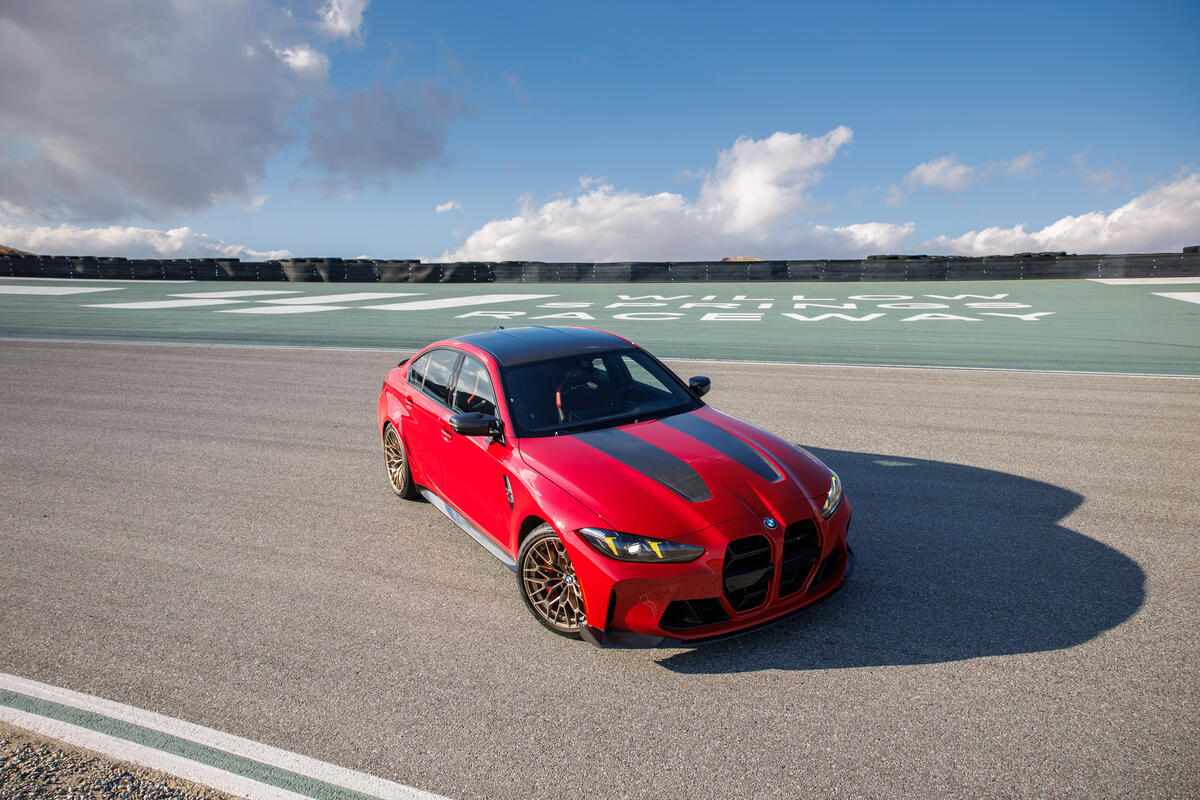
BMW M3
"So now I have an E36 M3. So I'm whopping mid 200 horsepower in my current car. It's like triple your Miata though."
The E36 M3 is an older BMW M3 that’s famous for being fun to drive and popular with track enthusiasts. In this segment, it’s the speaker’s upgrade because it has much more power than their Miata.
The BMW E36 M3 is a 1990s-era M3 generation known for its driver-focused chassis and strong aftermarket support. Here it’s used as the speaker’s step up from a Miata to a higher-power, more serious track car, with the speaker calling out the jump in horsepower.
time trials
"But I have done time trials, done a lot of HPD, did some wheel to wheel, did grid life last year."
Time trials are races where you try to set the fastest lap time. Instead of racing side-by-side, you’re mainly trying to beat your own best time and the clock.
Time trials are motorsport events where drivers compete against the clock rather than directly wheel-to-wheel. The goal is to set the fastest lap time under controlled rules, which makes tire management and consistent driving technique especially important.
wheel to wheel
"But I have done time trials, done a lot of HPD, did some wheel to wheel, did grid life last year."
Wheel-to-wheel means racing cars are side-by-side on track. It’s more intense than timed laps because you’re dealing with other cars right next to you.
Wheel-to-wheel racing means cars are competing directly alongside each other, with overtakes and close racing. It’s more demanding than solo timed runs because driver positioning, braking points, and contact-avoidance become critical.
grid life
"But I have done time trials, done a lot of HPD, did some wheel to wheel, did grid life last year."
Grid Life is a racing event series for car enthusiasts. The speaker is saying they did it last year as part of their track experience.
Grid Life refers to a motorsports event series focused on grassroots and enthusiast racing, often featuring track days and competition formats. In this segment, it’s mentioned as one of the speaker’s recent racing experiences.
GLGT
"My big claim is I came in eighth overall in GLGT. Oh, GT. GT, yeah."
GLGT is a racing category the event uses. Categories like this group similar cars together and follow rules about what’s allowed, so your results are compared within that setup.
GLGT refers to a specific racing class/series grouping (the speaker later clarifies it as “GT”). In amateur and club racing, these classes determine what cars are eligible and often how they’re prepared, so finishing position like “eighth overall” depends on the rules for that group.
Laguna Seca
"He finished third overall, but he blew up his engine at Laguna Seca. So he needed a car."
Laguna Seca is a famous road-racing circuit in California, known for its challenging layout and elevation changes. When the speaker says the friend “blew up his engine at Laguna Seca,” it signals the failure happened during a real race weekend at a track that stresses engines and drivetrains.
TC races
"But yeah, finished eighth overall, planning on doing a couple of TC races this year, hopefully Lime Rock and the Glen, but we'll see."
“TC races” is an abbreviation for a type of race series or event. It usually means a particular group of rules and classes, not just any random track day.
“TC races” likely refers to a specific racing series or event format abbreviated as TC in the local scene. In motorsports, abbreviations like this usually map to a sanctioning body or class structure, which affects rules, eligibility, and how cars are prepared.
Lime Rock
"But yeah, finished eighth overall, planning on doing a couple of TC races this year, hopefully Lime Rock and the Glen, but we'll see."
Lime Rock is a specific race track in Connecticut. Different tracks need different car setups, so mentioning it hints at what kind of racing conditions they’re planning for.
Lime Rock Park is a well-known road course in Connecticut that’s popular for club racing and driver development. Track characteristics like its tight corners and short lap times can strongly influence setup choices such as gearing, brake cooling, and tire management.
the Glen
"But yeah, finished eighth overall, planning on doing a couple of TC races this year, hopefully Lime Rock and the Glen, but we'll see."
“The Glen” usually means Watkins Glen, a famous race track in New York. It’s the kind of place where car setup matters a lot because the track has demanding braking and fast corners.
“The Glen” is shorthand for Watkins Glen International, a major road course in New York. It’s known for fast sections and heavy braking zones, which can make engine cooling, brakes, and tire wear part of the setup conversation.
NASA northeast NJMP
"So so any chance we'll see you at NASA northeast NJMP? I hope so."
This refers to NASA (a motorsports club/organizer) running events at NJMP (New Jersey Motorsports Park). The conversation is about whether the guest will attend upcoming track days/races there.
timing issues
"So having some timing issues with my S 52. Now that I'm driving my backup car, I realize that it's making a whopping 209 horsepower"
“Timing issues” means the engine isn’t firing at the right moment. When that happens, the car can feel weaker and not make the power it should.
“Timing issues” usually means the engine’s ignition timing and/or cam timing is off, which can reduce power and make the car run poorly. On track, even small timing errors can cause noticeable horsepower loss and drivability problems.
horsepower
"Now that I'm driving my backup car, I realize that it's making a whopping 209 horsepower instead of the 260 it should be."
Horsepower is how much power the engine is producing. If it’s lower than it should be, something is likely wrong or not tuned correctly.
Horsepower is a measure of engine output power. When a car makes significantly less horsepower than expected, it often points to a mechanical or tuning problem (like timing, fueling, or boost control).
GTS
"but I know he had the lightning for GTS three or two, whatever he ran in. So yeah."
GTS is a category/race class. It groups cars that are supposed to be comparable under the rules.
GTS is a racing class designation used by some amateur series to group cars by performance and rules. The speaker is referencing which class Matt Osalowski competed in when he set track records.
engine swap
"Most of our cars have engine swap. So, you know, it's it's like, oh, you'd be in what's what's the champ car top class?"
An engine swap means replacing the car’s original engine with a different one. In this case, they’re doing it because the old engine failed, not just to make the car faster.
An engine swap is when a car is fitted with a different engine than it originally came with. Here, the hosts clarify their swaps aren’t for chasing power or speed—they’re done because the original engine broke, which changes how you think about setup and reliability.
set up a car
"[773.9s] So, I have to figure out how to drive better and get my car to handle better. [777.7s] So, in those first couple of years was fixated on handling and, you know, just learned and read what I could. [788.1s] And then, you know, started getting asked a lot of questions."
“Set up a car” means tuning the car for the track. Instead of just going faster with more power, you change things so the car turns and brakes the way you want. It’s about making the car easier to drive at speed.
“Set up a car” in a racing context means adjusting multiple variables—like tire pressures, alignment, brake components, and suspension settings—to make the car handle predictably at speed. The goal is to match the car’s behavior to the driver’s style and the track’s demands, rather than relying on raw power alone.
tire pressure
"[791.6s] And the question that I get asked the most and I hear the most of the track is, [795.6s] what tire pressure should I start at? [799.0s] Or what brake pads are you running?"
Tire pressure is how much air is in the tires. On a racetrack, changing it can change how the car turns and how well the tires grip. People adjust it because the tires heat up as you drive.
Tire pressure is the amount of air in your tires, and it strongly affects grip, steering response, and how the tire heats up during a run. On track, the “right” pressure depends on tire construction, vehicle weight, and track conditions, so drivers often start with a baseline and then adjust based on feel and temperatures.
brake pads
"[795.6s] what tire pressure should I start at? [799.0s] Or what brake pads are you running? [801.0s] Those are the two."
Brake pads are the parts that squeeze against the brake rotors to slow the car down. On a track, the type of pad matters because it affects braking power and how well the brakes keep working after lots of hard stops.
Brake pads are the friction material that clamps onto the brake rotor to slow the car. Different pad compounds and shapes can change braking feel, fade resistance, and how quickly they reach operating temperature—especially important on track where repeated hard stops heat everything up.
track day
"[815.2s] What are your temps? [816.2s] And it was rinse and repeat at every track day, answering the same questions. [820.9s] And then I realized that I had this knowledge about how to, you know, help people set up a car."
A track day is when people drive their cars on a race track for practice. Since the car gets hot and tires wear differently than on the street, it’s a good time to test setup changes like tire pressure and brake parts.
A track day is an event where drivers take their own cars to a closed circuit for practice and testing. Because tires and brakes heat up quickly and conditions vary, track days are where setup questions like tire pressure, brake pads, and alignment become especially practical.
Race Setup Pro
"So Tim is the brains behind Race Setup Pro, but it's essentially a race engineer in your pocket. OK."
Race Setup Pro is an app that helps you set up your car for track days. You enter info about your car, and it gives suggestions so you’re not guessing as much.
Race Setup Pro is a software tool positioned as a “race engineer in your pocket.” It collects details about your car and then helps interpret track-day inputs to suggest setup changes like tire pressures and other baseline adjustments.
bone stock car
"Now, this still works if somebody has a bone stock car, your first track day, you're showing up in your brand new C8 Corvette."
“Bone stock” means the car is basically as it came from the factory, with no big modifications. They’re saying the app can still help you set up for your first track day.
A “bone stock” car is essentially unmodified from factory specification. The segment uses it to emphasize that the software can still help with baseline track-day setup inputs even if you haven’t upgraded parts.
sway bar
"your arrow, your sway bar, your brakes. And it can do a base analysis and just give some basic feedback on what it sees."
A sway bar helps control how much the car leans in corners. Stiffer or softer settings can change how the car feels when you turn.
A sway bar (anti-roll bar) connects the left and right sides of the suspension to reduce body roll. On track, changing sway bar stiffness can shift balance—often affecting understeer vs oversteer behavior.
cold pressures
"But the magic is when you do your first track day, you go in, you tell it the weather conditions, it's going to recommend cold pressures. If you're experienced, you may not agree with our pressures"
Cold pressures are the tire pressures you set before the tires heat up on track. Because tires expand as they warm, starting with the right cold value helps you target the desired operating pressure during driving.
pyrometer
"If you're doing track days and you do not have a pyrometer to measure your tire attempts, you're missing the boat."
A pyrometer is a tool that measures how hot your tires are while you’re on track. Knowing tire temperature helps you figure out if your car setup is making the tires work the right way.
A pyrometer is an infrared temperature gun used to measure tire surface temperature. On track, tire temperature helps you diagnose whether your setup is overheating the tire or not bringing it up to operating range.
oversteer
"asking you some key questions about what is your car doing on track? Is it oversteer? Is it understeer?"
Oversteer is when the back of the car slips outward in a turn. It usually means the car isn’t balanced—either the front or rear tires aren’t getting the grip you need.
Oversteer is when the car’s rear end wants to slide outward in a corner, making the car rotate more than you expect. It’s usually a sign of imbalance between front and rear grip, often influenced by tires, sway bars, alignment, and suspension settings.
corner exit
"Is it oversteer? Is it understeer? Is it quarter entry? Is it corner exit?"
Corner exit is what happens after you pass the middle of the turn and start going faster again. A good setup helps the car hook up and accelerate cleanly out of the corner.
Corner exit is the phase of driving after the car reaches the apex and starts accelerating out of the turn. Setup choices can target exit grip and traction, which affects lap time and how the car transitions from braking/turn-in to throttle.
quarter entry
"Is it oversteer? Is it understeer? Is it quarter entry? Is it corner exit?"
Quarter entry means the car’s behavior near the beginning of turning in. It helps describe whether the car feels balanced right when you start the corner.
Quarter entry is a shorthand for how the car behaves during the early portion of corner entry, often tied to where the car is in the braking/turn-in phase. It’s used to pinpoint whether the front or rear is losing grip too early or too late in the corner.
stickers
"So a bunch of drivers will run whatever tires they have for Saturday and then run stickers on Sunday and then wonder why their car handles differently on Sunday than it did Saturday."
“Stickers” is slang for fresh, grippy race tires. If you switch to newer tires, the car can feel noticeably different because you’ve changed how much grip you have.
In racing slang, “stickers” usually refers to fresh, high-grip tires (often race tires) that provide more traction than older or scrubbed tires. The key point is that tire condition changes grip and balance, so the car can feel like it’s handling differently between sessions.
heat cycle
"compared to, you know, your 20 heat cycle tires that you're running on practice day."
A “heat cycle” is when you drive the tires until they get hot, then they cool down again. Tires can grip differently depending on how many times they’ve been through that hot-and-cool process.
A tire “heat cycle” is one complete process of heating the tire up during driving and then letting it cool afterward. Race tires often change grip as they go through heat cycles, so comparing a fresh set to a set that’s been cycled many times can explain handling differences.
tire attempts
"So that's where there's actual data sources behind the scenes to look at tire attempts and pressures."
“Tire attempts” means keeping track of how a tire set performs across different runs. That way you can tell whether the car feels different because the tires changed, not because your setup did.
“Tire attempts” refers to tracking each run/usage of a tire set across sessions so you can correlate performance changes with tire condition. In practice, that helps explain why the car feels different after switching tires or after they’ve been heat-cycled and scrubbed.
Garmin
"we're not connected to your Garmin or your aim or your Firelapse. We do work. We partner with Firelapse..."
Garmin makes GPS devices that some racers use to record driving data. In this case, the system doesn’t require Garmin logs to work—it focuses on setup information.
Garmin is a brand of GPS devices commonly used for motorsport data logging, such as speed, location, and lap timing. The point here is that the platform isn’t dependent on Garmin data to understand the driver’s setup changes.
aim
"we're not connected to your Garmin or your aim or your Firelapse. We do work. We partner with Firelapse..."
Aim is a company that makes track data logging equipment for racing. The app described here doesn’t rely on Aim data to do its setup tracking.
Aim is a motorsport electronics brand known for data acquisition systems used to log sensor data during track sessions. The speaker is saying their platform doesn’t need Aim logs to record and analyze setup changes.
Firelapse
"We do work. We partner with Firelapse and have done some nice promotions with them. I like them. Me too. I have stopped downloading data since installing that in my car."
Firelapse is a brand of track-data tools some drivers use to record what’s happening during a session. The host says they personally stopped downloading data after installing it, but the new system doesn’t require that car data to function.
Firelapse is a motorsport data-logging brand the hosts mention as an integration partner. The discussion suggests some drivers use Firelapse to capture car data, but this platform can still work without directly pulling that car telemetry.
spring rates
"spring rates. I'm going to say about half the people actually know what their alignment is."
Spring rate is how stiff the suspension springs are. Stiffer springs help the car stay flatter and respond quicker, but they can make the ride harsher and sometimes reduce grip on rough pavement.
Spring rate is how stiff a suspension spring is, usually measured as force needed per unit of compression. Higher spring rates resist body motion more, which can improve control but may reduce ride compliance and traction over bumps.
hot pressures
"Now at the track, when you get out of the car, you're manually entering your hot pressures and your hot temps."
Hot tire pressures are the tire pressures measured after the tires have warmed up from driving or track laps. Because tires expand with heat, hot pressures are more representative of what the tire is actually doing during a session than cold pressures.
hot temps
"you're manually entering your hot pressures and your hot temps. And I am in conversations with a company that does have a smart pyrometer"
Hot temps are tire temperatures after you’ve been driving. They help you understand whether the tires are being loaded correctly or if the setup is causing uneven heating.
Hot temps are tire temperatures measured after running, used to infer how the tire is working under load. Temperature patterns help diagnose issues like too much/too little camber, tire pressure errors, or suspension balance problems.
aero
"everything from aero to spring rates to brake pads to yeah."
Aero is how the car’s shape and wings push down on the road. More or less downforce can change how stable the car feels and how hard the tires are working.
Aero (aerodynamics) in race setup means adjusting how the car’s shape and wings manage airflow. Changes to aero balance can affect downforce, stability, and tire loading, which then influences lap time and how the car behaves in corners.

C8 Corvette
"I had somebody that had four-way adjustable suspension on their C8 Corvette. I'm like, okay, nobody's tried it yet in our platform."
The Chevrolet C8 Corvette is a Corvette with its engine in the middle of the car. Because of that layout, the suspension and setup can work differently than on older Corvettes, so tuning matters.
The Chevrolet C8 Corvette is notable for being a modern Corvette with a mid-engine layout, which changes how weight is distributed and how the suspension needs to be tuned. That’s why setup tools and suspension adjustments can behave differently than on other platforms.
production vehicles
"I will tell you our software is not accurate for an LMP3 car. It is really designed for production vehicles."
“Production vehicles” are regular cars sold to the public. Race cars are built differently, so the same setup advice and temperature/pressure assumptions may not match what the tires and suspension are doing.
“Production vehicles” means cars built for consumers rather than purpose-built race prototypes. Setup recommendations and tire-temperature/pressure models often assume production-car hardware and tire behavior, so they can break down when applied to specialized race classes.
tires
"Let's just start with tires. I think I ordered organized these somewhat. So I may have to go back."
Here, tires aren’t just “the rubber on the wheels.” They’re treated like a measurable part of the car’s setup, because their condition changes how the car handles.
In this context, “tires” refers to race tires being managed as a performance variable over time, not just as a wear item. The discussion focuses on how tire condition (like hours used and heat cycling) affects handling data.
Handcook RS4s
"So could we kind of cheat a little bit and say, let's just pretend we're running Handcook RS4s. Could we say Handcook RS4-0 and Handcook RS4-8s and Handcook RS4-16s"
They’re talking about a specific tire model (“Handcook RS4s”) and how its grip changes as it gets used. The point is to compare the car’s behavior when the tires are fresh versus when they’ve been run for a while.
The speaker is using “Handcook RS4s” as a specific tire model to illustrate how teams can compare performance across different tire ages. The idea is to treat the same tire compound/model at different heat-cycle or usage levels as effectively different “states” for analysis.
preventive maintenance
"Is there any functionality for like a preventive maintenance? Like you need to change your brake pads or you need to look at your rotors because the last 10 times when you went 20 races, your rotors cracked on race 21."
Preventive maintenance means you check and service things before they break. Instead of waiting for a problem, you use past experience to decide when to inspect brakes and other wear parts.
Preventive maintenance is planning inspections and service ahead of failures, based on patterns from past events. In racing, that can mean checking brake pads, rotors, or other wear items before a known risk point (like after a certain number of sessions).
rotors
"Like you need to change your brake pads or you need to look at your rotors because the last 10 times when you went 20 races, your rotors cracked on race 21."
Rotors are the metal discs the brake pads squeeze to slow the car. If they get overheated repeatedly, they can crack, so it’s smart to check them before they fail.
Brake rotors are the metal discs the pads clamp onto to generate stopping force. Heat cycling and repeated hard braking on track can lead to cracking or warping, so teams may inspect rotors on a schedule based on prior sessions.
tire tracking
"We just don't know how far down those rabbit holes to go. Like when we're driving tires, tracking rotors, brake pads, oil chips."
Tire tracking means keeping notes on how your tires are doing as you use them. That helps you know when they’re getting worn out or losing grip so you can adjust before it hurts lap times.
Tire tracking is recording how tires perform over time—often by logging stints, pressures, temperatures, and lap/sector behavior. The goal is to predict when grip will drop or when a tire is no longer consistent, so setup and strategy can be adjusted.
oil chips
"Like when we're driving tires, tracking rotors, brake pads, oil chips. Yeah, I've got thousands of them."
Oil chips refers to small metal particles found in used oil, which can indicate abnormal wear inside the engine. In motorsport, teams may analyze oil to catch developing mechanical issues early—before they turn into a failure.
Blackstone data
"Yeah, like you could enter your Blackstone data in there. Not that I've already thought about this, but you know, it's fine."
Blackstone data is information from an oil test service. They look at used oil to see if there are signs of engine wear, helping you catch problems earlier.
Blackstone data typically refers to oil-analysis reports produced by Blackstone Laboratories, which test used oil for wear metals and other indicators. Teams use those results to infer engine health trends and decide whether to adjust maintenance intervals or investigate issues.
endurance racing
"Okay, specifically for endurance racing. Yeah. Does it ever suggest that you get a different driver?"
Endurance racing is long-duration racing where the car has to keep performing reliably. Since drivers swap in and out, the setup has to work well for more than one person over time.
Endurance racing is motorsport where the key challenge is staying fast and consistent for a long duration, often with driver changes. Because multiple drivers and long stints are involved, setup and maintenance decisions focus on repeatability and durability, not just peak speed.
different driver
"Does it ever suggest that you get a different driver? Oh my God. That's a real thing. Every track day I do at the end, I complete the day and the advice is let someone else drive your car. Get a different driver."
Different drivers drive a car a little differently. In endurance racing, the team often needs a setup that works well for everyone, not just the fastest person in the car.
In endurance events, “different driver” advice reflects that each driver has different driving styles, braking points, and steering inputs. A car optimized for one driver’s habits may not be the best compromise for the whole team, so teams aim for a setup that multiple drivers can drive consistently.
test in tune day
"[1841.1s] your test in tuned out is going to be key, because you're gonna be able to go back and look and say,"
A test-and-tune day is when a racing team practices and experiments before the main event. They use what they learn (and the data) to make the car better for the race.
A “test in tune” day is a practice/testing session where teams run planned setups to learn what changes improve lap times and drivability. The key idea here is using that session’s data to decide what to do after each driver’s session.
pit stops
"[1865.0s] and everything that gets a little weird with traffic, but you know, generically, I can clean up the data that goes in, I think. Yeah."
Pit stops are scheduled stops in endurance racing to change tires, refuel, and sometimes make adjustments. In data analysis, pit stop timing and driver stint assignment can complicate which driver’s inputs correspond to which on-track behavior.
endurance racers
"[1875.3s] so generically, I can clean up the data that goes in, I think. Yeah. So for endurance racers, it's more about race prep."
Endurance racing is about doing well for a long time, not just one fast lap. The car setup you learn during practice often matters more than what you can change during the race.
Endurance racing focuses on staying consistent over long stints, managing tires and fuel, and preparing the car based on practice conditions. This segment contrasts endurance prep—what you learn before the race—with the race itself, where conditions and traffic can differ.
butt dyno
"[1966.7s] and, and educate her butt dyno. And then I was going to say, where exactly are you going? [1974.4s] I'm going to land this plane."
“Butt dyno” means judging the car by how it feels to you while driving. The idea is to learn what changes you made actually did to the handling.
“Butt dyno” is a slang term for using seat-of-the-pants feel to evaluate car changes. In this context, it’s about training a driver to notice how setup adjustments change traction, balance, and handling.
race environment
"not only is she going to get the feel, the differences, and then so she could tell me when [2000.5s] we're in a race, in a race environment that, hey, the back ends loose, we probably need to,"
A “race environment” is when you’re driving like it’s a competition—harder braking, faster cornering, and more repeated laps. The car’s handling differences show up more clearly.
A “race environment” means the car is driven under race-like conditions—higher loads, repeated hard laps, and less margin for error than normal driving. Setup changes that feel small on the street can become obvious when tires are stressed and the car is pushed consistently.
day at the track
"is there a way to, [2016.4s] to use this supposed theoretical day at the track that I've been dreaming about for five years"
A “day at the track” is when you drive the car in a controlled environment. It’s the best place to test changes because you can push the car safely and repeatedly.
A “day at the track” is used as a controlled setting to validate setup decisions under real cornering and braking loads. It’s where drivers can gather feedback and adjust settings based on what the car does lap after lap.
sweep
"one of the things that we're [2048.8s] trying to figure out with them is, I mean, they refer to it as a sweep, but where you would take"
A “sweep” here means running a planned series of tests. You change the setup step-by-step so you can tell what each change does to how the car drives.
In this racing-coaching context, a “sweep” is a planned sequence of setup tests across sessions. Each step changes a variable (like sway bar stiffness or tire pressures) so you can map how the car’s behavior changes.
HBD weekend
"they refer to it as a sweep, but where you would take [2057.2s] a HBD weekend and every session would have a, like a designed, here's what you do."
An “HBD weekend” sounds like a track event where you follow a planned schedule. The goal is to change one thing at a time so you can learn what actually improves the car.
“HBD weekend” appears to refer to a structured track event format where each session is planned with specific setup changes. The point is to run controlled tests so drivers and coaches can learn cause-and-effect.
compression rebound
"you'd start with 100% soft on compression rebound sway bars, [2072.7s] or just compression rebound, go drive it with your tires at your normal pressures,"
Suspension damping controls how the shocks move. “Compression” is how the car settles, and “rebound” is how it comes back up—together they affect ride and grip when you’re pushing hard.
Compression and rebound are the two directions of suspension damping: compression slows the suspension as it moves down, while rebound slows it as it extends. Adjusting them changes how the car responds over bumps and during weight transfer in corners.
full stiff
"[2077.6s] come back in, go full stiff. Okay, now go to the middle, but then put your front tires to 35 and [2083.4s] your rears to 25."
“Full stiff” means you set the suspension adjustment to the hardest setting. The car will move less, but it may ride harsher and feel different on grip.
“Full stiff” refers to setting suspension adjusters (like sway bars or damping) to their most resistant setting. It typically reduces body motion but can also make the car less forgiving and change traction behavior over bumps.
PSI
"let's say 28, 30, 32, 34. And the PSI that we really won is like 31. Correct."
PSI is how much air pressure is in your tires. Changing it can change how the tires grip and how the car feels during cornering.
PSI means pounds per square inch, a unit used to measure tire air pressure. In race setup, small PSI changes can noticeably affect tire temperature, grip, and how the car responds to steering and braking.
rotation
"Do you want more rotation? Do you want more stability? Do you want it to be more neutral?"
“Rotation” is how easily the car turns into a corner. If it has more rotation, it tends to feel like it wants to turn in more confidently.
In race setup talk, “rotation” describes how readily the car turns into a corner and changes direction. More rotation usually means the car feels more willing to pivot (often linked to balance and alignment), while less rotation can feel sluggish or understeery.
stability
"Do you want more rotation? Do you want more stability? Do you want it to be more neutral?"
Stability is how “steady” the car feels when you’re driving hard, especially in corners. A stable car feels predictable instead of twitchy.
Stability is the driver’s sense that the car stays composed and predictable during cornering and transitions. Setup changes that increase stability often reduce rotation and make the car resist turning too aggressively.
neutral
"Do you want more rotation? Do you want more stability? Do you want it to be more neutral?"
Neutral is the “in-between” handling feel—neither too pushy nor too loose. It usually means the car responds predictably as you steer harder.
Neutral refers to a car balance where it neither pushes wide (understeer) nor snaps into oversteer as you change steering input. In setup discussions, “more neutral” typically means the car transitions smoothly and feels consistent at the limit.
clickers
"set our camera to here and our toe to there and our clickers to there"
“Clickers” are the adjustment settings on adjustable suspension. Turning them a few clicks changes how stiff or soft the suspension feels.
“Clickers” refers to the numbered adjustment knobs on adjustable suspension components (commonly shocks/struts). Each click changes damping or ride settings in small increments, letting teams fine-tune grip and balance.
cambers
"I'm not going to run cambers at the track in between races. I'm just, I just can't do that. So for your data points, what would you say would be the percentage of maintenance..."
Camber is how much your wheel tilts in or out. Changing it changes how the tire sits on the road, which can affect cornering grip. The point here is that it’s not something you want to keep changing between races.
Camber is the inward/outward tilt of a wheel relative to vertical. On track cars, camber affects tire contact patch shape, which changes grip and how the car behaves in corners. The host is saying they don’t want to re-camber between races because it’s a bigger change than typical in-session tweaks.
struts
"Like I can go ahead and make the adjustments on a sway bar and go ahead and make the adjustments on, you know, cranking up my struts or whatever. Correct. But tire pressure."
Struts are part of the suspension that help absorb bumps and control motion. If you adjust them, the car can respond differently over bumps and in corners. The host is treating it as a tuning adjustment you can make at the track.
Struts are suspension components that combine a shock absorber with structural support. On track cars, strut settings (often damping or adjustability on coilovers/strut assemblies) affect how quickly the suspension compresses and rebounds. The host references “cranking up my struts” as part of trackside suspension tuning.
corner balance
"There's anything more internal that I would have to alignment? Yes. Alignment, corner balance. Right. Right. Right. Okay."
Corner balance is tuning the car so the weight distribution is right at each wheel. That can make the car handle more evenly and predictably. It’s a common track-prep step when you’ve changed suspension parts.
Corner balance is a method of setting the suspension so each wheel carries the intended weight, usually by adjusting ride height and spring preload. It helps dial in front/rear and left/right balance for consistent turn-in and traction. The host treats it as a key step after changing springs and before final alignment.
alignment
"The setups are just mostly tire suspension. There's anything more internal that I would have to alignment? Yes. Alignment, corner balance."
Alignment is adjusting the wheel angles so the tires point the right way. On a track car, correct alignment helps the car turn predictably and keeps tires from wearing unevenly. It’s usually more involved than quick tire pressure changes.
Alignment refers to setting the angles of the wheels—commonly toe, camber, and caster—so the car tracks correctly and the tires wear and grip as intended. After major changes like springs or engine swaps, alignment often needs to be redone to restore handling balance. The host lists alignment as part of the deeper setup work beyond basic tire/sway bar changes.
LS swapped
"So helping, helping same said friend who LS swapped his BMW. So now his suspension is completely different. I've been on the phone with them most of today."
An LS swap is when someone puts a GM LS V8 engine into a different car. That can change how the car sits and handles, so the suspension and alignment usually need to be adjusted. In this story, that’s why they’re doing a full setup cycle.
An LS swap means installing a GM LS-series V8 engine into a different vehicle. Because the LS engine is heavier and has different mounting and power delivery characteristics than many original engines, it often changes the car’s balance and requires suspension, braking, and alignment rework. The host ties the LS swap directly to the need for rake/corner balance/alignment adjustments.
quarter balance
"And we were focused on getting his brake within reason, because with the new engine, the quarter balance was not ideal. And it handled that way at CMP."
Quarter balance is about making sure the weight on each wheel is set correctly. If one corner has too much or too little load, the car can feel off in turns. The host is saying the car’s balance wasn’t right after the engine change.
Quarter balance is a tuning approach that targets the weight distribution at each “corner” of the car (front-left, front-right, rear-left, rear-right). It’s closely related to corner balancing, but the emphasis is on getting each wheel’s load where it should be for predictable grip and rotation. The host says the quarter balance wasn’t ideal after the new engine, affecting how it handled at CMP.
CMP
"And it handled that way at CMP. So we spent today getting the rake set up properly, then corner balancing it..."
CMP is the name of a track they’re referencing. They’re saying the car felt off there, which helped explain why they needed to change the setup.
CMP is used as a shorthand for a specific track where the car’s handling behavior was observed. The host says the car handled in an undesirable way at CMP, linking that behavior to the quarter balance and setup changes. This is mainly a contextual reference rather than a technical term.
air pressure
"he'll likely adjust air pressure, suspension settings, maybe sway bars. That evening, if he wants to get ambitious, because he now will be checking tire attempts,"
Air pressure is how much air is in your tires. On track, changing it can change how the tire grips and how the car feels when you turn.
Tire air pressure is the amount of air inside the tire, and it strongly affects how the tire’s contact patch sits on the road. Small changes can alter grip, steering response, and how quickly the tire heats up during a track session.
toe
"The toe, you know, and BMWs is pretty dialed in. So you adjust your camber, get your toe back to where it needs to be."
Toe is whether the tires point slightly toward each other or away from each other. It affects how the car tracks straight and how the tires wear over time.
Toe is how much the tires point inward or outward relative to the car’s centerline. It influences straight-line stability, steering response, and tire wear; track alignment often re-sets toe after other adjustments.
treadwear
"when I switched my race car from, it only ran slicks to 200 treadwear, so I could do grid life. For me, it took me four track days to get my alignment perfect."
Treadwear is a label that hints at how long a tire compound might last. Tires with lower numbers usually feel stickier but wear out sooner.
Treadwear here refers to tire rating (often the UTQG treadwear number) that roughly indicates how long a tire compound is expected to last. Lower treadwear tires are typically softer and grip more, but they wear faster.
1.4 Gs
"on 200 treadwear, I was pulling like 1.4 Gs. That's really good grip on a 200 treadwear tire."
“G” is a measure of how hard the car is pulling in a turn compared to gravity. Higher numbers generally mean more grip from the tires and setup.
“G” is a unit of acceleration relative to gravity, and “1.4 Gs” means the car is generating about 1.4 times the force of gravity at peak lateral grip. It’s a common way to quantify how sticky the tires and setup are during cornering.
pit race
"if you were to look at my Firelapse data from pit race, on 200 treadwear, I was pulling like 1.4 Gs."
Pit Race is mentioned as where the track data is coming from. It’s part of the system the driver uses to review what happened during the session.
Pit Race is referenced as the source/context for the telemetry being discussed. In track communities, it typically relates to a platform or event ecosystem where drivers collect and review session data.
AI
"So it does make recommendations. So this is where the AI can get confused. So if you said I run Ray Bestos super specials, like it's never seen them before, right? It literally has to do what AI does, which it can go on the internet and see what they are."
In this context, AI is being used to analyze track setup inputs and generate recommendations for things like starting tire pressure and alignment-related changes. The hosts caution that AI can be confused by unfamiliar brands or incomplete data, and that accuracy improves as more users feed it results. They also describe it as providing a baseline assessment even for drivers who are new to track driving.

Ford Mustang GTD
"And this can be for the, the, the, never ever the person that's never been on track. You guys said you just went out and bought something, you bought your, your, yourself a Mustang GT and you're going on track. Nothing's done to the car. It will literally just say like, here's a good starting pressure."
A Mustang GT is a sporty version of the Ford Mustang. Here it’s used as an example of a car that’s basically stock, and the software helps you figure out what to change for track driving.
The Ford Mustang GT is a performance-focused trim of the Mustang, and it’s a common “first track car” because it’s relatively accessible and has a big aftermarket. In this segment, the hosts use it as an example of a bone-stock car that an AI tool would still help baseline with track setup inputs.
HPDE
"You might not want to take that to the HPDE. You might need to dial it back just a little"
HPDE means High Performance Driver Education. It’s a track day where you learn how to drive faster and safer with coaching, not a race.
HPDE stands for High Performance Driver Education, which is a track-day format where drivers learn car control and track skills under instructor guidance. It’s different from racing because the goal is driver improvement and safe, repeatable laps rather than competition.
45 degrees of camber
"you know, I'm running a super stanced out car, you know, I've got the, you know, 45 degrees of camber. You might not want to take that to the HPDE."
Camber is how much the wheels tilt in or out. “45 degrees” is a huge amount, and it can make the car behave differently than you want for a normal track day—so they’re saying you may need to reduce it.
Camber is the tilt angle of the wheels relative to vertical; more camber can improve tire contact during cornering. “45 degrees of camber” is extremely aggressive—more typical of specialized autocross or show/competition setups—so they’re warning that such alignment can be too extreme for HPDE where you need broader tire contact and more predictable behavior over many laps.
super stanced out car
"you know, I'm running a super stanced out car, you know, I've got the, you know, 45 degrees of camber. You might not want to take that to the HPDE."
“Stanced out” usually means the car is lowered a lot and set up with extreme wheel positioning. That can be fun for shows or certain competitions, but it may not be ideal for a track day where you want consistent handling.
A “super stanced out car” refers to an extreme stance—typically very low ride height and aggressive wheel/tire positioning—often paired with unusual alignment angles. On track, that kind of setup can trade off tire wear, ride compliance, and predictable grip for a look or very specific competition conditions.

E36
"Yeah. So it is going to look at right now, because I have hundreds of track days entered in with an E36. And then Tim, having an E36, multiple friends that use the beta as an E36,"
“E36” is a BMW 3 Series from the 1990s. It’s a common car people use for track days, so the hosts are talking about using that car’s data to help with race setup.
BMW E36 refers to the 3 Series generation from the 1990s (commonly the BMW 3 Series E36). It’s a popular track and autocross platform, so it makes sense the hosts are using E36 track-day data to inform setup guidance.

93 Civic
"So it'll say like, hey, great job in setting up your 93 Civic. That looks like a real, you know, fun track car."
“93 Civic” means a 1993 Honda Civic. They’re using it as an example to show how the software reacts to alignment settings for track use.
The “93 Civic” refers to a 1993 Honda Civic, used here as an example of a track-car setup. The hosts are discussing how their software interprets alignment settings like camber and warns when they look unrealistic.
rear camber
"You know, it appears you're running more, you know, rear camber than what's recommended."
Rear camber is the tilt of the back tires. If it’s set too aggressively, the car can handle differently and the tires may wear in a way you don’t want.
Rear camber is the wheel tilt setting on the rear axle. Because the rear tires help determine how the car rotates and holds grip mid-corner, too much (or too little) rear camber can change balance and tire wear, which is why the software flags it as potentially wrong.
running 105s
"And then all of a sudden, we're now running 105s. Yeah. Okay, 145, sorry, 145, 105 seconds."
“105s” means the car is taking about 105 seconds per lap. They’re saying if your lap times suddenly get worse even when conditions are the same, the system should warn you to double-check what’s going on.
“Running 105s” means the car’s lap time is about 105 seconds. The hosts are describing a data-driven idea: if lap times suddenly change a lot under “perfect” conditions, the software should suspect something is off (like setup, tire condition, or measurement) and prompt a check.
lap times
"So this is where we do want to incorporate the data side of it. So we can look at lap times [3127.6s] early on in the in the beta, the initial launch, we were asking lap times."
Lap time is how long it takes to drive one full lap around the track. If the number gets smaller after a change, that usually means the car is working better.
Lap times are the measured duration for a car to complete one circuit of a race track. In setup work, they’re used to judge whether changes (tires, alignment, suspension, driving) are actually improving performance.
tire temps
"it's shocking how few people [3194.3s] take tire temps. So some of the people that I know that, I mean, they live in their data, [3199.7s] they live in race studio. They're looking at everything charts, graphs, but then they're [3204.7s] not looking at the tire temps, which is the best indicator of what's going on with your car on [3209.4s] track."
Tire temps tell you how hot the tire is getting while you drive on track. If one side of the tire is much hotter than the other, it usually means the car’s setup needs adjustment.
Tire temps are measurements of how hot different parts of a tire get during track driving. They’re a key diagnostic because uneven temperatures often point to setup issues like camber, tire pressure, or alignment problems.
thermocouple
"You said you used a long [3221.4s] acre, but you said perometer. Are you using the long acre thermocouple or the perometer? [3226.0s] I'm actually using the perometer, the probe style perometer."
A thermocouple is a sensor that measures temperature by turning heat into an electrical signal. On a race car, it can help you see how hot the tire is getting so you can adjust the setup.
A thermocouple is a temperature sensor that measures heat by generating an electrical signal from a temperature difference. In motorsport, thermocouples can be used to get more accurate tire temperature readings than simple surface methods.
perometer
"You said you used a long [3221.4s] acre, but you said perometer. Are you using the long acre thermocouple or the perometer? [3226.0s] I'm actually using the perometer, the probe style perometer. [3230.2s] Okay. Okay. All right. Cause that was, that was where I was going to the laser ones aren't really [3235.1s] getting the job done."
A perometer is a tool for measuring how hot a tire is. The point is to get accurate readings so you can tell whether the tire is heating evenly or not.
A perometer is a tire temperature measurement tool that probes the tire to estimate temperature across the tire’s surface. The hosts discuss using a probe-style perometer because it provides tighter accuracy than laser-style readings.
laser ones
"Okay. Okay. All right. Cause that was, that was where I was going to the laser ones aren't really [3235.1s] getting the job done. Yeah. So unfortunately, they're like plus or minus five degrees compared [3240.6s] to plus or minus 0.5 degrees."
Some tire temp tools use a laser to read the surface heat. The hosts are saying those can be less accurate than probing the tire, so you might chase the wrong setup change.
Laser tire temperature tools measure surface temperature from a distance, but they can be less accurate depending on surface conditions and measurement technique. The hosts claim laser readings can be off by several degrees, while probe-style tools can be much closer.
tire temperatures
"But that's what my car like. That's where the temperatures are nice and even right across. I have full contact patch. So this is what the temps tell you."
Racers check tire temperatures to see how the tire is touching the track. If one edge is much hotter than the others, it usually means the setup isn’t right.
Tire temperatures are used as feedback to judge whether alignment and pressure are working. Even temperatures across the tread suggest the tire is operating with a good contact patch, while hot spots can indicate issues like incorrect camber or pressure.
contact patch
"That's where the temperatures are nice and even right across. I have full contact patch. So this is what the temps tell you."
The contact patch is the part of the tire that’s touching the ground. The goal is for as much of the tread as possible to sit properly on the road so the tire can grip consistently.
The contact patch is the portion of the tire tread that is actually touching the road. Alignment and pressure are tuned to maximize usable grip and keep the contact patch working evenly, which is why setup discussions often reference “full contact patch.”
dialed
"So how long do you think it takes for the the data to really be dialed? Like, I imagine it gets a better understanding of you and your car at that track with more time."
“Dialing in” means fine-tuning the car for the track. You make small changes, then check what the tires and lap times are telling you until the car feels right.
“Dialing in” a race setup means iteratively adjusting alignment and tire pressures based on feedback (like tire temperatures and lap-time changes) until the car behaves consistently. The speaker contrasts first-time track results with later sessions to explain how quickly meaningful gains can appear.
compression and rebound
"I just checked all their their settings for compression and rebound. [3485.3s] I adjusted them."
These are shock settings that control how the suspension moves when you hit bumps and when it springs back. The right settings help the tires stay planted instead of bouncing or losing grip.
Compression and rebound are the two damping directions of a shock/strut. Compression controls how the suspension resists moving down, while rebound controls how it resists coming back up; getting both right helps the tires stay in contact with the road through braking, cornering, and bumps.
three way adjustables with external reservoirs
"Go through his entire car, but he's got three way adjustables with external reservoirs. [3508.6s] Like most people don't know what to do with that."
This describes advanced shock absorbers you can tune in more than one way. External reservoirs are extra fluid tanks that help the shocks keep their behavior more consistent when you’re driving hard for a long time.
“Three-way” adjustable suspension typically means you can independently tune compression and rebound (often in multiple stages/curves) plus an additional adjustment such as ride height or a separate damping circuit. “External reservoirs” are fluid chambers mounted to the damper that help manage heat and maintain more consistent damping during repeated track use.
feedback
"Is there any chance the feedback that you're getting could say [3545.6s] influence what the driver should be doing?"
“Feedback” is what the driver feels through the steering and pedals. If the car feels off, that feeling can help point to what needs adjusting, even if it’s not obvious at first.
Here, “feedback” refers to the driver’s sensory input (steering feel, balance, traction) that can reflect underlying setup issues like damping, tire pressures, or alignment. The point is that what the driver feels can guide what to adjust—though it may not always be perfectly diagnostic.
understeers
"So helping somebody that their car understeers into the corner and oversteers out of the corner."
Understeer means the car doesn’t turn in as much as you want. Instead of “turning,” it tends to push wide toward the outside of the corner.
Understeer is when the car turns less than the driver intends—typically the front tires lose grip first. The result is that the car pushes toward the outside of the corner instead of rotating into the turn.
Request an Explanation
Heard something you'd like explained? We'll add it to this episode.
Sign in to request explanations for terms you heard.
Want to learn more?
Browse our glossary for plain-English explanations of automotive terms, jargon, and concepts.
Help improve this episode
See something that's not quite right? Our annotations are AI-generated and can sometimes miss the mark. Click the flag icon on any annotation to suggest a correction.