
DwD 0759: Racing Pricey Cars - How and Why
About this episode
The hosts dig into why some people bring very expensive cars to HPDE events, pointing to insurance, wealth, and the lower-risk format of non-wheel-to-wheel driving. They also make the case that beginners should start in modest, forgiving cars rather than supercars, with a strong preference for around 200 horsepower and a manual transmission. Along the way, they suggest practical starter platforms like the Miata, Toyota 86/BRZ/FR-S, and BMW 3 Series.
DwD 0759: Racing Pricey Cars - How and Why
A recent post on the book of faces had a question: How can people ever race $50k, $100k, or even more expensive cars on track. Plus what would be our three cars to require everyone to start with on track. Who better to talk to about this than Ben Dawson. Let's Dominate!
Did we miss something? Please let us know at [email protected]
A link to the episode is: https://tinyurl.com/HighDollarCarsOnTrack
We hope you enjoy this episode!
If you would like to help grow our podcast and high-performance driving and racing:
You can subscribe to our podcast on the podcast provider of your choice, including the Apple podcast app, Google music, Amazon, YouTube, etc.
Also, if you could give our podcast a (5-star?) rating, that we would appreciate very much. Even better, a podcast review would help us to grow the passion and sport of high performance driving and we would appreciate it.
Best regards,
Vicki, Jennifer, Ben, Alan, Jeremy, and Bill
Hosts of the Garage Heroes in Training Podcast and Garage Heroes in Training racing team drivers
Money saving tips:
1) Enter the code GHiT 25 for $50 off the Fire Links hardware system with a 1 year membership included and/or a an extra three months if you subscribe now at https://firelaps.com/
2) Enter code "GHIT" for a 10% discount code to all our listeners during the checkout process at https://candelaria-racing.com/ for a Sentinel system to capture and broadcast live video and telemetry.
3) Enter the code "ghitlikesapex!" when you order and Apex Pro system from https://apextrackcoach.com/ and you will receive a free Windshield Suction Cup Mount for the system, a savings of $40.
4) Need a fix of some Garage Heroes in Training swag for unknown reasons: https://garage-heroes-in-training.myspreadshop.com/
5) Want to show you support to help keep our podcast going? Join our Patreon at: patreon.com/GarageHeroesinTraining
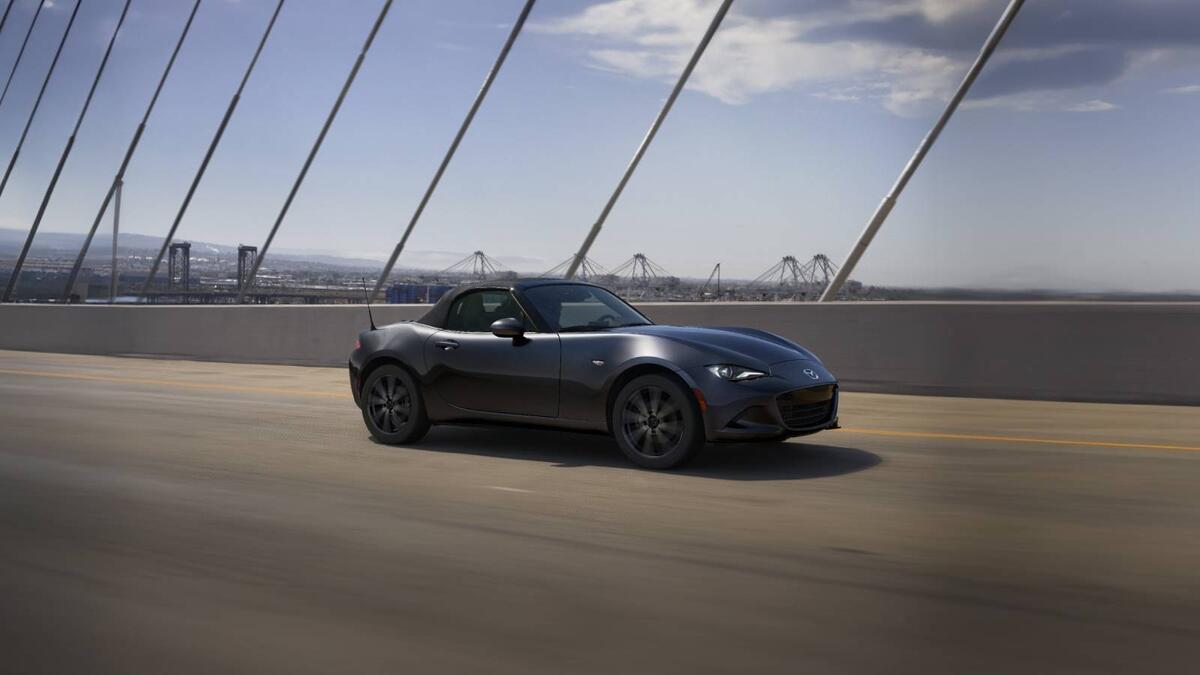
Mazda MX-5 / Miata
"...e ever sold or raised car for, I think we sold my Miata for like 8,500 bucks. I think we sold the Solar,..."
A Miata is a small two-seat car made for driving enjoyment. It’s known for feeling light and easy to steer, which makes it fun even if it isn’t expensive. People often talk about it because it can be a practical way to get a sports-car experience.
The Mazda MX-5, commonly called the Miata, is a lightweight two-seat roadster built for fun handling and simple, driver-focused driving. It often comes up in conversations about affordable, enjoyable cars because it’s relatively easy to own and can be found at lower prices than many performance cars. In a podcast, it’s a good example of a car people buy to enjoy driving rather than to be “high value.”

BMW E30
"...for like 8,500 bucks. I think we sold the Solar, E30 for like 9,500 bucks. So anyway, not high value ..."
The BMW 3 Series is a smaller luxury car, usually a sedan. People like it because it drives well and feels more “premium” than many regular cars. It’s also common on the used market, so some older ones can sell for modest money.
The BMW 3 Series is a compact luxury sedan (and sometimes wagon) known for strong driving dynamics and a premium interior. It’s frequently discussed because it spans many model years and configurations, including enthusiast-focused versions. In the context of the podcast, it’s mentioned as a car that wasn’t necessarily “high value,” which fits how common used examples can be.
DEs
"First of all, I've never driven anything that had everything I drove on track. ... I did my first DE in 2005 and the world of DE's was a lot different."
“DE” stands for a track day. It’s when people drive their cars on a track for practice (often with instruction), not to race for trophies.
“DE” usually means a track day event where drivers get coaching and run their cars on a closed course. It’s different from racing because the goal is driver practice and car handling, not competing for race results.
track insurance
"I understand that there was a whole bigger world of track insurance that didn't used to be a thing when I first started doing all this."
Track insurance is special coverage for when you drive your car on a race track. It’s meant to protect you financially if something happens during a track day.
Track insurance is coverage designed for cars used on closed-course events, where the risk profile is different from normal street driving. It can help with costs related to accidents, towing, and repairs that occur during track sessions.
NASA DE
"there was a guy who was in my same like intermediate group in NASA DE... Because it was a DE."
NASA DE is a type of track day run by NASA where drivers go to learn and practice. It’s not a race—more like organized driving instruction and practice.
NASA DE refers to NASA’s “Driver Education” track events, which are structured days for learning and practicing driving skills. The host uses it to set the context for how long ago the story happened and what kind of track environment it was.
hooked it to the left
"Coming out of turn three, VIR, he hooked it to the left. Like he got loose and hooked it to the left."
“Hooked it to the left” means the car suddenly turned the wrong way. It usually happens when the tires lose traction, and the car swings toward the wall.
“Hooked it to the left” describes a sudden, unplanned yaw where the car rotates and points toward the left side of the track. On track, this often happens when the car loses grip mid-corner or on exit, leading to contact with barriers.
VIR
"Coming out of turn three, VIR, he hooked it to the left... You straight into the left side wall."
VIR is a famous race track in Virginia. The host is saying the crash happened coming out of turn three at that track.
VIR is shorthand for Virginia International Raceway, a well-known road course in Virginia used for track days and racing. The host references a specific section—coming out of turn three—at VIR to explain where the incident happened.
DE
"So I think that's part of it. I think also during my time living in Northern California, I didn't do a lot of DE. I mostly raced lemons and chomped that whole time. But a couple of DE's I did."
“DE” here means a track day—an organized event where people drive their cars on a race track to practice. It’s not the same as a competitive race with a championship. They’re talking about who shows up and how people treat the event.
In car culture, “DE” usually means a track day event where drivers get on-track time for practice rather than racing for points. It’s common to see different skill groups (like novice) and a mix of street cars and purpose-built cars. The hosts are contrasting DE with other forms of racing they did in Northern California.
raced lemons
"I mostly raced lemons and chomped that whole time. But a couple of DE's I did. You know, this is in Northern California."
“Raced lemons” means racing cheap, beat-up cars on purpose. The idea is that the cars aren’t expensive or perfect—so you focus on getting through the event and having fun, not just having a supercar. The host is saying they mostly did that kind of racing.
“Raced lemons” refers to “Crap/Clunker” style endurance events where the goal is to race inexpensive, often unreliable cars—typically with strict rules to keep costs low. It’s a different mindset than DE or high-budget racing: the emphasis is on creativity, teamwork, and making the car survive rather than buying speed. The host uses it to explain their background versus more expensive track participants.
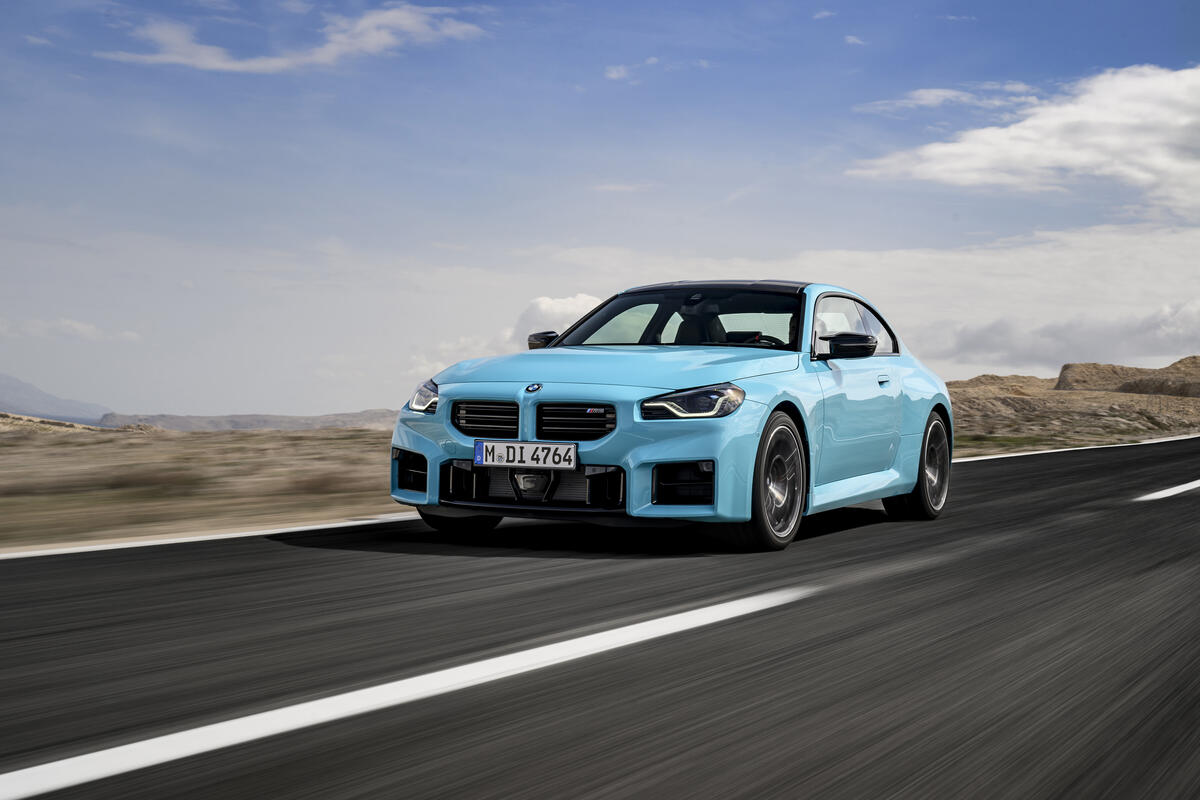
BMW M2 Competition
"But they, these are the kind of guys who will buy a brand new M2 competition. [384.4s] You know, it's already a fully built race car from BMW"
The BMW M2 Competition is a sporty BMW made by BMW’s performance division. The hosts are using it as an example of how some people jump straight to expensive, track-ready cars.
The BMW M2 Competition is a compact performance coupe from BMW’s M division, known for its track-capable chassis and strong turbocharged engine. In this story, it’s mentioned as a brand-new car that a group of racers/vandals would buy, highlighting how expensive modern performance cars can be even before track prep.
scale of economy
"So it's scale of economy too. [401.4s] They would sell. [402.0s] They were not worried about the car that they had just crashed"
They’re basically saying that bigger groups can handle expensive problems more easily. If you have more money and support, it’s easier to replace a car after an accident.
“Scale of economy” here is being used to describe how larger organizations or higher-budget teams can spread costs and handle logistics (like getting a replacement car) more efficiently than individuals. In motorsports, that can mean faster recovery after a crash because parts, service, and replacement vehicles are easier to arrange.
HPD
"At HPD, how many of those letters are R? No, I guess zero. Zero. So there's no racing in an HPD, right?"
HPD here sounds like an acronym for a racing-related group or program. The speaker is checking whether it actually means “racing” or if it’s not about racing at all.
In this context, HPD is being treated as a racing program or organization acronym, discussed alongside “R” letters and whether it implies “racing.” The speaker is essentially asking whether HPD is actually tied to racing or is something else entirely.
NASA vernacular
"And until you're like a three or four in NASA vernacular. Yeah. You shouldn't be pushing your car to the limit."
NASA is a racing organization that runs track events. They also use a skill/class system so drivers are grouped by experience, and higher levels generally mean you’re allowed to push harder.
The hosts are referring to how NASA (the racing organization) uses a driver skill/classing system in its event rules. Terms like “novice” and “intermediate” are part of that framework, and a higher number (like “three or four”) generally means you’re expected to drive closer to the limit.
winter beater
"I mean, there are people who have $50,000 cars tip and change. That's their winter beater. That's, that's different."
A “winter beater” is a car you use in winter weather, even if it gets dirty or takes some damage. It’s usually not the most valuable car you own.
“Winter beater” is a car-enthusiast term for a vehicle you use during harsh winter conditions, where you don’t mind extra wear, salt, and minor damage. The hosts use it to contrast people who daily/track expensive cars in winter versus those who keep a cheaper dedicated car for that role.
below the limit
"So that reduces the risk. And two, you should be driving in control and learning to handle the car and how the car handles and what it's capable of doing below the limit."
“Below the limit” means you’re driving gently enough that the car stays in control and doesn’t start losing traction. It’s where you can learn what the car does without getting into spins or big slides.
“Below the limit” means driving at a speed and input level where the tires still have enough grip to keep the car stable. In track instruction, the goal is to learn how the car responds before you push into sliding or loss of traction.
in control
"And two, you should be driving in control and learning to handle the car and how the car handles and what it's capable of doing below the limit."
“In control” means you’re driving in a way that keeps the car predictable and stable. On a track, that helps you avoid losing control.
Driving “in control” on track means maintaining predictable behavior—steering, braking, and throttle inputs that keep the car balanced. It’s a coaching focus because it reduces the chance of sudden oversteer/understeer and off-track excursions.
NASA one through four
"You know, as I'm putting through NASA one through four to instructing in the same me out of the entire time, but pretty much the same modifications."
NASA is a motorsports organization that groups drivers by skill level. The “one through four” levels generally mean you’re going from beginner toward more advanced track driving.
NASA (National Auto Sport Association) uses driver groups/levels (often described as 1 through 4) to classify experience and skill. Moving up levels typically means more advanced instruction and faster, more competitive on-track behavior.
full cage
"Along the way, I put better suspension in there in a full cage. But, you know, I would see people who would start out with relatively new cars at the track going through D one and two or novice and intermediate."
A full cage is a metal safety frame inside the car. It helps protect you in a crash and can make the car feel more solid on track.
A full cage is a roll cage installed throughout the cabin to add structural rigidity and protect occupants during a crash. On track cars, it’s often paired with harnesses and can also help the chassis stay more consistent under hard cornering.
D one and two or novice and intermediate
"But, you know, I would see people who would start out with relatively new cars at the track going through D one and two or novice and intermediate."
They’re talking about driver groups for track days—novice and intermediate are earlier experience levels. The idea is you start slower and learn the basics before moving up.
The transcript is describing track-day/club driver classifications where “D one and two” correspond to earlier experience groups like novice and intermediate. These groups usually run with tighter pacing and more emphasis on learning car control.
advanced or three and four
"And by the time we got to like an advanced or three and four, they might have that same car."
“Advanced” and “three and four” are higher skill groups on track days. Drivers are expected to handle the car at higher speeds and with less margin for error.
“Advanced” (and the “three and four” level references) indicates higher driver classifications than novice/intermediate. At these levels, drivers typically run faster and are expected to manage more demanding car behavior and traffic.
learning on a less-capable track car
"[605.9s] And realized that, hey, I don't learn as much when I've got a car that's got capabilities so high. ... [726.6s] Yeah. [726.6s] Yeah. I mean, it could be. I just, I would rather see them learn and like, you know, whatever their ego can handle less capable car."
They’re basically saying it’s better to learn racing in a car that isn’t so powerful that you’re always going near the danger zone. That way you can practice and improve without needing to push to extreme speeds all the time.
The hosts are arguing for a progression: learning driving fundamentals in a car with lower performance limits so you can explore braking, cornering, and car balance without constantly operating at extreme speed. The idea is that you can build skills more safely and repeatedly when you’re not forced to drive at the absolute edge every session.
back straight
"[612.2s] I can't come close to reaching the limit without, you know, in some cases literally taking your life into your hands because you're plus 180 going down the back straight. [625.2s] That's kind of, you know, that's not what you don't want to learn at 180 miles an hour."
A back straight is a long straightaway on a race track. It’s usually where cars go fastest, so it’s a place where mistakes can be especially dangerous.
A back straight is the long straight section of a race track, typically on the far side of the circuit from the main grandstand. Speeds can be very high there, so it’s where drivers often feel the limits of traction, braking stability, and car control most intensely.

Chevrolet Corvette
"...ese means and that's the end. I wanted to get my Corvette. I wanted to take it to the track. I wanted to go..."
A Corvette is a high-performance sports car from Chevrolet. It’s made to go fast and handle well, and many owners take them to tracks. In the podcast, it’s mentioned because the speaker wanted to use it for that kind of driving.
The Chevrolet Corvette is a performance sports car built by Chevrolet, known for its strong power and track-capable potential. It’s a frequent topic among enthusiasts because it’s designed to be driven hard, not just displayed. In the podcast, it’s brought up in the context of wanting to take the car to the track, which highlights its performance purpose.
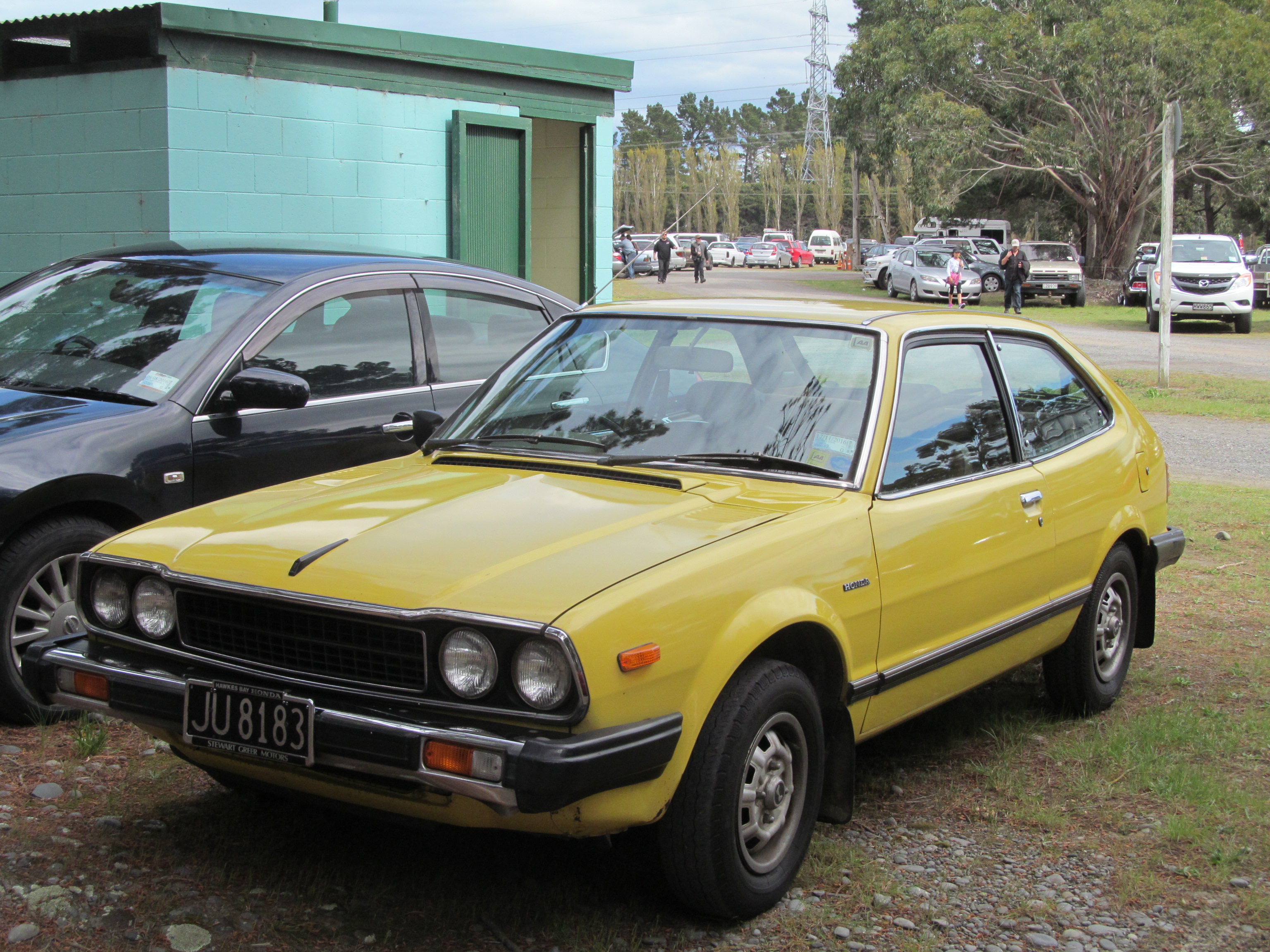
Honda Accord
"...wn Vic, 2003 Ford Focus wagon and third car Honda Accord. I was, I was being nicer than that, but yeah, t..."
The Honda Accord is a regular, everyday car that’s meant to be comfortable and easy to live with. It’s often chosen as a family or commuter vehicle. In the podcast, it’s mentioned as one of the cars the speaker owned.
The Honda Accord is a mainstream midsize sedan (and historically also a wagon in some markets) known for being practical and comfortable for everyday driving. It’s often discussed because it’s a common, reliable family car choice and tends to have strong used-market presence. In the podcast, it appears as one of the cars in the speaker’s lineup, suggesting it was part of a normal, sensible rotation rather than a rare collectible.

Toyota Crown
".... So, you know, I'm gonna say the three cars are Crown Vic, 2003 Ford Focus wagon and third car Honda Ac..."
The Toyota Crown is a bigger Toyota sedan meant to be comfortable for daily driving. It’s not the most basic model in Toyota’s lineup, so it usually feels more upscale. In the podcast, it’s brought up as one of the cars being discussed.
The Toyota Crown is a larger Toyota sedan that’s typically positioned above the brand’s smaller mainstream cars, focusing on comfort and a more upscale feel. It’s mentioned in the podcast alongside other cars as part of a short list, suggesting it’s being considered as an interesting alternative rather than a “high value” item. That makes it a good example of a less obvious choice people talk about when swapping or selling cars.

Scion Frs
"...hink the current or last generation Toyota H6 BRZ FRS, the triplets, great car. Sure. Sure. For being ..."
The Scion FR-S is a small sports car made to be fun to drive. It’s designed for responsive handling and a more engaging feel than a typical commuter car. The podcast mentions it as a good choice in that sports-car category.
The Scion FR-S is a compact sports coupe designed for rear-wheel-drive driving feel and enthusiast-focused handling. It’s often discussed alongside its “triplet” siblings because they share a similar platform and performance character. In the podcast, it’s praised as a “great car,” with the speaker referencing the related Toyota H6/BRZ/FR-S family.

Honda Civic
"We do Honda. So maybe we do Honda Civic or something. EG Honda Civic, just pretend they'..."
The Honda Civic is a smaller car designed for everyday driving. It’s known for being efficient and easy to find in the used market. The podcast mentions it as a likely Honda model to consider.
The Honda Civic is a compact car known for being efficient, practical, and widely available in many body styles and generations. It’s a common “starter” enthusiast car because there are lots of parts and many versions to choose from. In the podcast, it’s referenced as a possible Honda choice, including an example like the EG Civic.

Hyundai Elantra
"...t something that scoots a little bit, either the Elantra now or what was the one before that that they sto..."
The Hyundai Elantra is a compact sedan meant for everyday driving. It’s generally known for being efficient and easy to live with. In the podcast, it’s mentioned as a car that can feel a little quicker or more engaging than a typical basic commuter.
The Hyundai Elantra is a compact sedan built for efficient everyday driving and broad availability in the used market. It comes up in enthusiast conversations when someone wants something that’s a bit more lively than a basic commuter car. In the podcast, it’s mentioned as an option that “scoots” a little, implying a desire for extra responsiveness.

Hyundai Veloster
"...re that that they stopped making the three door? Veloster. Yeah, the Veloster. That would be a fun one. We..."
The Hyundai Veloster is a small hatchback, meaning it has a rear door that lifts up for cargo. It’s designed to be practical for daily use but still feel fun to drive. The podcast mentions it as a car that could be enjoyable.
The Hyundai Veloster is a compact hatchback known for its distinctive styling and practical layout, including a more unusual door configuration on some years. It’s often discussed as a fun, affordable car that still offers everyday usability. In the podcast, it’s called out as something that would be “fun,” which matches its reputation as an enthusiast-friendly hatchback.
front wheel drive
"So, but you know, just, that's if you are, if you're a front wheel drive kind of person."
Front wheel drive means the front wheels do the work of moving the car. Many everyday compact cars use it because it’s efficient and easy to build.
Front wheel drive (FWD) means the engine’s power is sent to the front wheels. It’s commonly used in compact cars because it’s efficient and packaging-friendly, and the hosts frame it as a preference for this kind of “first car.”
"first car" for a son or daughter
"So there's, there's no reason. It's kind of like the first car for your son or daughter."
They’re talking about choosing a first car for a kid. The goal is usually something safer and easier to manage—especially to reduce distractions and risk.
The hosts are discussing the idea of a “first car” as a deliberate choice: something safe, manageable, and not too expensive to maintain or insure. Their criteria focus on limiting risk (few passengers) while still giving enough capability for everyday driving.
manual transmission
"It's like 200 ish horsepower manual transmission."
A manual transmission is a car where you shift gears yourself, usually using a clutch pedal. It can make the car feel more “hands-on” to drive.
A manual transmission requires the driver to use a clutch and shift gears manually, which can make the car feel more connected and controllable. The hosts mention it alongside “200-ish horsepower,” suggesting they’re aiming for an engaging driving experience rather than a purely automated one.
insurance purposes only
"Ideally a back seat for insurance purposes only or for people with no legs."
They mean the car is mainly being kept for insurance reasons. The bigger point is they want fewer passengers and fewer distractions for a new driver.
“Insurance purposes only” is a practical ownership strategy where the car is kept primarily to satisfy insurance coverage or requirements, not necessarily to maximize passenger capacity or use. In this context, it’s tied to limiting distractions and exposure for new drivers.
Request an Explanation
Heard something you'd like explained? We'll add it to this episode.
Sign in to request explanations for terms you heard.
Want to learn more?
Browse our glossary for plain-English explanations of automotive terms, jargon, and concepts.
Help improve this episode
See something that's not quite right? Our annotations are AI-generated and can sometimes miss the mark. Click the flag icon on any annotation to suggest a correction.