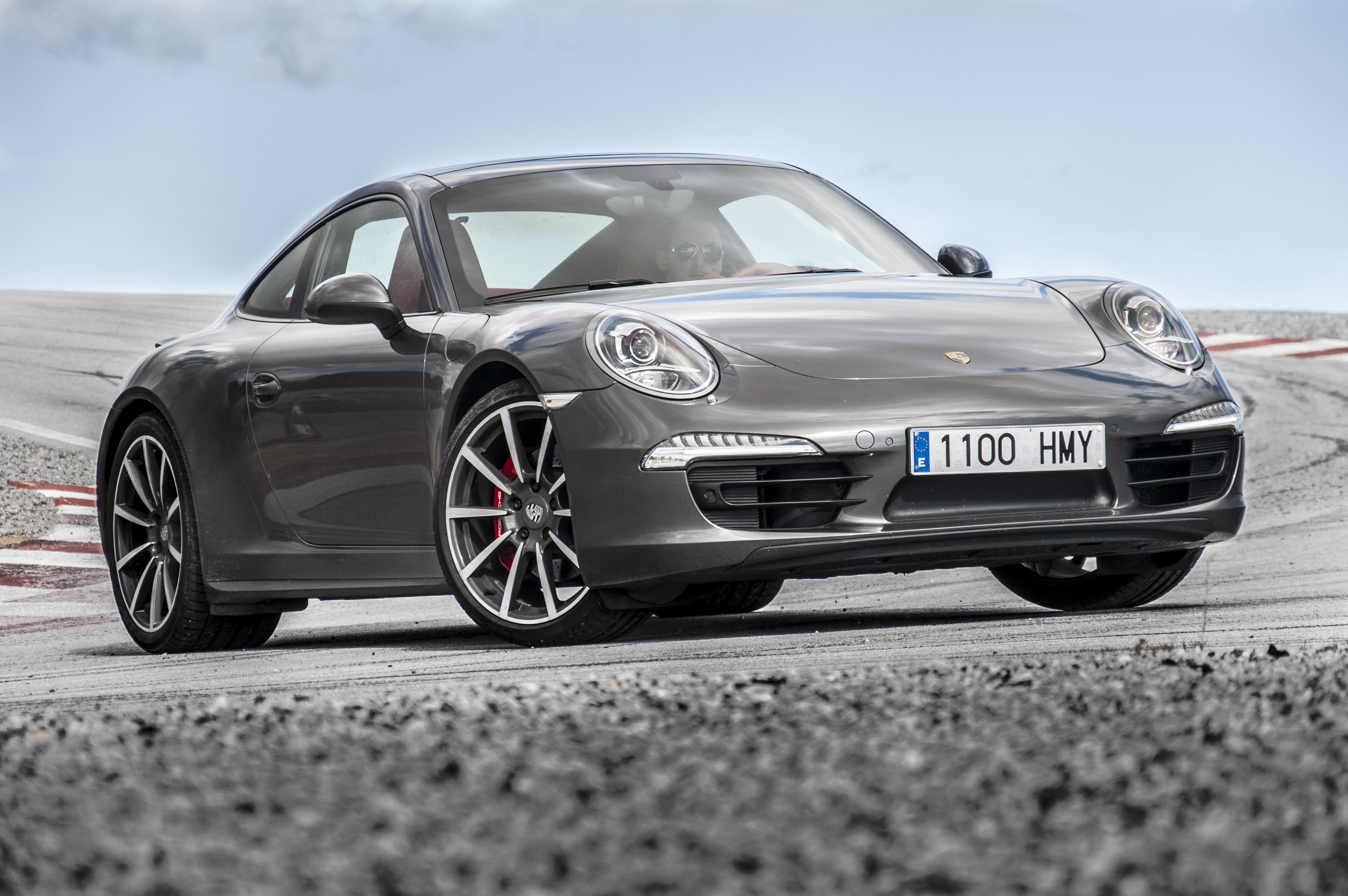
The Porsche 911 is a famous sports car known for its distinctive shape and performance. Models made between 1969 and 1973 are special because they have a longer body, which some people prefer for better handling.
The '2.2' is a measurement of the engine size in liters. In this case, it means the car has a 2.2-liter engine, which some people think is better because it offers a more traditional driving experience.
A liter is a way to measure the size of an engine. A 2.2 liter engine is one that can hold 2.2 liters of air and fuel in its cylinders, which helps determine how powerful it is.
A pole clutch is a part of a car's transmission that helps the engine connect to the wheels. It works by pulling to make the car go and can feel smoother than older types.
The 901 transmission is a special gearbox used in older Porsche 911 cars. It helps the driver change gears and was used until it was updated to a new version in later models.
Car
Porsche 915
The Porsche 915 is a type of transmission that helps the car change gears. It's known for being strong and reliable, especially in sports cars.
Autocross is a type of car racing where you drive through a course marked by cones. You compete against the clock, trying to get the fastest time without hitting any cones.
SCCA stands for Sports Car Club of America, which is a group that organizes car racing events and competitions. They help car enthusiasts participate in motorsports safely and fairly.
Air-cooled cars don't use water or antifreeze to keep the engine cool. Instead, they rely on air flowing around the engine to keep it from overheating, which is common in some classic cars.
The Porsche 914 is a small sports car made by Porsche that was popular in the 1970s. It was designed to be fun to drive and is known for its unique look and handling.
A cam carrier is a part of the engine that helps hold another part called the camshaft in place. The camshaft is important because it helps the engine work properly.
Heel-toe downshifting is a way to change gears while braking, using your heel and toe to press two pedals at once. It helps keep the car stable and smooth when slowing down.
Singer Vehicle Design is a company that takes old Porsche 911 cars and makes them look and perform better. They create custom cars that are very expensive and unique.
LIVE
Welcome to Porsche Patter with Bracken Helms, the show where we hear Bracken and his distinguished
guests from the Porsche community patter on about Porsches and all things automotive.
Porsche Patter is sponsored by Circuit64. Circuit64 creates authentic automotive apparel made for
life-minded automotive enthusiasts. The links for Circuit64 are in the shown notes. Okay, let's get to it.
Dwight Mitchell, part four. All right, some of the things I want to talk about in this one is he
says like his favorite model is like a 71 911. But when he's saying that, I'm thinking, well, why
couldn't it be a 70? As you see later in the interview, he says he likes the long wheelbase
more than the short wheelbase. So could it just be any like 69 to 73? I mean, 70 and 71 are the
same. They're both 2.2s. And there's a lot that I'm not going to get into about why the 2.2 people
prefer that over the 2.4. Mainly in the fact that like the 2.2 was the last pure car, the 2.4,
they were adding horsepower just to overcome things that like regulations on, I don't even remember.
And then 69 is a two liter. So you can say, oh, I'm a 2.2 liter person. Actually, there was more
like 2.4 guys for the longest time, because it's the last of it, kind of like with the 993. And
I'm overthinking this right now for the audience at home listening to this. But really, my main
question with what I started with is, I don't think any of that stuff really mattered to him.
He was going to alter the car and hot rod it or modify it anyway. So that's why I'm thinking like,
what did it really matter? And maybe it's me just getting on stuck on little things like I hear him
say like the 71. And it's just like, there's probably really no reason for it. And now you hear
me talking about it when really I shouldn't even said anything. But now I'm like wanting to comment
on it. And then when we got into the G body, I felt like his kind of memory was not remembering
things because he's telling me the SC's got the 3.2. And then every time I bring up the Carrera,
he's thinking I'm talking like the two seven Carrera. So I just kind of moved on past that.
But the main thing in this one that we need to get into is I said in the earlier one,
there was something we're probably going to get into later in the episodes.
And when I decided I want to interview him, I called him up and he was like thrilled and
everything was going and we had this long conversation for like, I don't know, he had me
on the phone for like half hour at least. And then he's like, well, I got to go. I got to take my
wife to this appointment, this doctor's appointment, just a normal appointment. So I call him back after
that initial call. And and without going into detail or too much, his wife was stuck in the
hospital. I felt kind of dumb. I didn't I'm just like, I can reach back out to you at another time
or we can just not do this. And he's saying no, call me back. And so for the next couple of weeks,
I either called him back or he called me back. And eventually he called me and said she died.
And he's still wanting to do the interview. He sets it up, tells me what day he wants to do it.
And I'm kind of unsure. So I reach out to friends and family and they're like, you know what,
this might be good for him. Just go with what he says. So I reach back out to him. Are you sure
this is what you want to do? Yes. And then you'll see in the further episodes that my friends and
family were right. But here's Dwight Mitchell part four. Okay, update. He called after listening to
the first part of this and let me know why he prefers 71 specifically. The clutch release mechanism
was improved to a pole clutch in 71 only. Also, the 71 model was the last year of the 901 transmission,
which had had many benefits in his opinion, including a better shift pattern, a wider range of
allowable gear ratios and weighed a lot less than the 915, which came in 72. But that still
doesn't specify the 71 any different than the other ones that could have been 70 had a 901 69
had a 901. I know he didn't like a short wheelbase. I guess just the clutch release mechanism was
improved to the pole clutch in 71 only. He said I'm sure there were some other ones, but he can't
come up with them in the moment. He also said that there were some secrets. I don't know if there were
secrets to the year 71 or there are just secrets and generally told me, but he doesn't want to
mention, but they were legal. Any horror stories with racing or driving? Okay, being at a race and
getting towed away in an ambulance, but did not happen in my car. And in all the racing I did,
I had my share of vendor benders and so forth, but I was never injured in a race car. This was at
a solo two event in Salina, Kansas in 1990. And I had just won the first of my national championship
races. The car had to go to impound or screwed here in to be checked to make sure it was legal.
And somebody had to be with the car was the last race of the day. So I asked one of the guys on
the crew, would you be kind enough to stay with the car? I've got something I want to do.
And he said, Yeah, but bring me a beer. I go case to fine. So we had a little golf cart thing.
And I went racing over to where the motor home was. And we had two ice chests out in front of the
motor home when I had soft drinks, one had beer in it. And I grabbed one of the beers and I started
to get back to the golf cart. I said, Oh, wait a minute. Now, you can't be doing anything without
alcoholic beverages while the event is going on. So I thought, maybe even though it was the last
race, maybe I could get disqualified if I handed the sky on my crew a beer. So I raced back into
the motor home, got you know, those foam cosies you put around the beer or soft drink, grab one of
those when racing down the stairs, caught an edge and flying out of the door. And I ruptured
the quad of my left leg completely ruptured. I'm laying there on the ground in extreme pain,
yelling, dumb shit, dumb shit, dumb shit. And they hauled me away in an ambulance. I told them,
I'm going to drive a race car tomorrow. I just thought I'd blend my knee out, not something
that's severe as a ruptured quad. I talked to this doctor and he finally made me a deal. He said,
Okay, I'll tell you what, he said, I'll give you a nice bandage and a pair of crutches and you're
on your own. Most hospitals never would have done that, but they did. So I was trying to get
around on crutches and I was going to drive the car. The fortunate thing was that I was able to
shift to 9-11 without using the clutch if I had to. Anyway, there was a fellow there with a super
V and he had packed all his car up with a bunch of foam so he didn't slide around. And he got me
in the car and he put a bunch of foam inside the car to support my leg so it wouldn't flop
around. And I was able to get the car started. I was able to lift my leg underneath, left leg,
push it down on the clutch belt, hold it down with my hand on the knee. And then when it time to go,
I was able to pull it off, but I had to shift to using the clutch. And the transmission was
probably not the best to wear, but I didn't win that particular race on the second, but I
know I believe that I ended up winning the championship. I came in off the course and
the guy on re-enter shot me. He said, one of the turn workers called in and said, he heard you
scream. I realized the pain must have been so bad. Oh, I forgot what I was saying. Of course,
I have it. I tried to make one shift with my leg and apparently I screamed loud enough
over the sound of the motors that this turn worker heard me and he called it in. But if it
was severe enough, I couldn't go upstairs in my home. We have two-story house for three years.
I got to tell you, this is going to cool. The next spring, San Francisco region decided to run
an autocross on Sears Point Raceway and she came a couple of corners down and I still had
my leg in what was called a blitz-o-brace, which is like a cast, but it's made with hinges and I
could drive the car. Because of my experience at Sears Point and for a lot of races against guys
that are just autocrossers, I whipped them all with this, including all the Corvettes in Mile 911.
I was all fine and got written up in the SCCA magazine, blah, blah, blah. And I got a call
in morning from this lady in the office of SCCA. He said, I wrote about that article,
you went at Sears Point, congratulations. But guess what? I go, what? I have to pull your license.
What do you mean you got to pull my license? He says, you're getting rehab, medical rehab
for your injury from SCCA and now you're driving, you can't be doing that. And they both, they pulled
my license. And so I had to find a doctor that would sign off and say, he's not going to hurt
himself driving the car. And they gave me my license back a few months later. Yeah.
What's your favorite track or race? I probably, I would probably say Sears Point. If I'd driven
on Laguna Saca with the new course, I probably would have said that. On a sea marine, it's changed
a lot. And when I was there, it was not the same, laid out the same as that why I probably say
Sebring had I driven on that. But on the courses that I drove on, I would say Sears Point,
probably because they didn't have any real scary fast corners on it. And you could be really
aggressive and drive in it and figure if you spin out, you spin out, you're not going to hit anything.
Was one exception was turn 11 or turn 10 at Sears. I lived the carousel and I looked passing cars
on the entrance to Sears Hill. And I, can I tell you a story about a race that I drove where you
started last? Yeah. Okay. Anyway, in the customer car, it was a 9-11 and it was at Sears Point.
And it was a national race, a regional national. And we had done some changes in the oiling system
in the car. And we had took care of the oil tank, which is in the front of the car.
And one of the guys in the shop put it back in the car. And everything was fine, went down there.
And I took the car out for the first practice session in the morning. And I could feel the engine
was starting to start it up. So I shut it off, coasted into the course. And I turned to my
technician. Did you clean that oil tank out before you put it in the car? He goes, no.
And it had put out some welding on it. And the guy that did all the welding, which was an outside
contractor, he put this thing in with things and metals in the oil. Anyway, so Millage was there,
he was in racing. And ours was the first race of the day. It was at Sears Point. And so about a
little over an hour drive to Sears Point, something like that. We put the car in the trailer. I
called up a parts house that I used, but had a set of bearings that were the right bearings.
Put an all-nighter, took the engine out. Fortunately, it was an air-cooled car. So I
get to take all the cylinder heads and everything on the upper end of the car and just set it aside
and split the case. Anyway, rebuilt the case, put it in, put everything back in the car and got back
in the paddock area by about seven o'clock in the morning. Of course, then qualified. So I had to
start at the back of the pack. And it was a pretty good sized field. The first race was the regional
race. And there was a guy that raced at Jaguar back when I was racing named Merle Brennan,
who was a very good racer. And he told me at a separate event that he had some kind of problem.
He started at the back of the pack. And when he was in pretty good in the paddock area,
he started going up to all the guys in the last five or six rows, who pretty much were very fast,
a little 10 minutes, so forth. He was well known. I was well known. And he would go up to the drivers
and say, I just want to let you know I'm back there and I'm coming through. And he said,
when that happened with the green flight drop, the two rows of the grid just separated. I passed
like 12 cars before the first corner. So I said, I'm going to try that. So I did it. And sure
enough, the grid in front of me just gave me this right up. And I finished second or third overall
of the 30 minute race. Oh, I would have one more lap. But I would have asked the winner to the second
and the national race. I finished third. Of course, I couldn't hear it. But there was a spectator race.
There was an answer. And the announcer was following me through the pack. And my wife was
telling me that about the only car who the announcers were talking about was me moving
through the pack. And how exciting it was that they could tell my progress and all the cars I
passed. That was a very, very fun thing. And watching this, the two lines just separating
and giving me this, my turn two, I'm sure I'd passed 10 cars.
Any race car team that you wish you could have been a part of?
Factory Porsche, obviously. But back in those days, people got killed driving race cars.
And I had a wife and two kids. And I probably could have been a semi-professional driver,
maybe even a pro. And I can remember when I was driving the 914, I remember driving down the road.
I came to a theoretical fork in the road. Should I turn left and try to be a professional race
car driver? Or should I turn right and take care of my wife and kids? And I chose to go to the
right. But because I was pretty good, I had many options to continue racing. And it was one of
the reasons I did autocrossing because the likelihood of getting hurt and an autocross
was pretty remote. But as I told you on the phone last week, my wife was 66 years passed away,
but we could go today. She was very supportive of racing. And the fact that I could still
support my wife and kids and still race was obviously was the right decision.
Yeah. Do you have any regrets with your career?
I think there is one, but I don't think I can remember it.
Yes, there is. And then there was a 914-6 that I prepared. There was only one individual in Texas
who had a bunch of money. Again, I was doing an instant trading of cost against being able to
drive a car. I think this was the first time. It was the same time I drove in the 24-hour race.
And so I was fairly familiar with it. Well, I was trying to keep the cost down,
and there's a component in the 911s called a cam carrier. The racing versions had four
bearing carriers. The street ones only had three. And I looked at it and said,
it'll be fine. It'll be fine. So I did not go to the expense of buying a racing cam carrier.
I put the street one in. And with two hours to go in the day to only 24 hours, we weren't going
to win, but we were doing well. And the cam broke. Racing cam had a bearing loss, but there was no
where there should have been a bearing supporting it, but there was no bearing supporting it.
And I had made that decision and not replaced that part. That's the last time I did any work
on a race car and compromised any parts that I put on the car. I was done in the car when it broke,
when the other guys was, but I figured I could nurse it the last two hours. And he talked about
bearing, flooring, racing. Today's only 24 hours where he only had five cylinders.
He finished the race anyway. Way down the line, but anyway.
What advice would you give to someone that wanting to get into autocross?
Drive a go-kart first. And do go a step at a time. I had a number of customers,
they had a car and they wanted to train an autocross car. They wanted to do everything
right up front. And there was one fellow, he did Porsche Coke time trialing. And there wasn't much
we could have done of the car and didn't do as a lot of money. His son drove the car
fairly good, but he was just never vast enough. The car unfortunately finally got total park
out on the street. He was in a class, the car had to look pretty much stuck, but underneath he could
do a lot of different things and a lot of tricks he could do. Many people would bring me a 911.
I wanted to do everything that everybody else says and they'd go out and they'd expect it to
some way faster time. And it'd be the same time that we did all the work on it. And they kind
of complained, why is my car faster? I said, the car is faster. You are not. So I learned early on
that if somebody came to the shop with that request to do everything you can do to the car,
I sent him down and talked to him and told him, you are not going to be fast until you become
fast. It's not the car at you. And so I learned the hard way because the guy that was one of my
early customers, and of course he badmouthed me, oh, I took his joint, spent all that money,
and I wouldn't any faster. That was a big wish of mine. And not people knew me that they pretty
much discounted it, but I didn't like having the talk that way. So I decided to be forearm and
tell people they're doing this that if you're getting started out across private stock,
see how fast he goes, dead stock, and then we'll go from there. So that's what we did.
What advice would you give to someone trying to excel at driving?
Get a coach. Get a really good coach. There's a lot of people that made money and they retired
from racing and became pretty good coaches. I'm trying to think of the guy who lives up in
E rights for excellence. Oh, E afar was a very good coach. I did coaching, but not in race cars.
Vanderbreek, something Vanderbreek, Vanderbreek.
Johannes, Johannes von. Yeah, he was professional drivers and he drove one class down in prototypes
and he was very good. He now rides and he drives car, I guess he does some road tests
and stuff like that. Get a good mechanic and get a good coach. Actually, that's the third thing.
Pick a target. Pick the guy that is the fastest guy in your class in the same kind of car
and compare your lap times to his lap times. And nowadays with all the computer stuff,
you can do segment times too. A lot of the teams do this. I'll take our teams, but if one guy is
a little slower, they'll look at the graphs and so forth that were really faster. But back in the
days, amateur racing, there were no computers in cars, although I have a funny story to tell you
about that too, which I'd like to get in. Bob John Millage. We're in the speech here. John, at the time,
was a computer programmer for Lockheed and he ran across some old old computer, found this thing that
was a look like computer and it had a tape drive on it and he rigged it up so that it would work.
It didn't log any data. It wouldn't connect to anything. We made it look like it was connected to
places in the car, cars, and we pulled up to pre-grid for the practice session.
Somebody looked at it and said, you go back there. We're going to try doing some computer
calculations on how we can make the car faster. And we made this big deal about when we came in,
back in the attic area, we were very secretive and we kept this thing covered and then we uncovered
and we went in one of our cars and looked at the data. It didn't show anything,
but we spoke to a lot of people. God, twice got a computer in his car.
True story, true story. We had a lot of fun. I won the race too and people were going around saying,
how could he do this? Well, it was a joke. Yeah. And Nick, I got a big kick out of it.
Yeah. Okay. Do you know much about Porsches? I was going to ask you more streetcar or Porsche
questions. Okay. So are you air-cooled or water-cooled? I'm an air-cooled guy. I sold the business
before the water-cooled came out. PDK or manual? Well, it depends on why you go faster, have fun.
You go faster in PDK and you have more satisfaction doing heel-toe, heel-and-toe downshifting.
Another true story. When I had this Triumph TR3, I would sit in my garage and practice rotating
my right foot to push on the brake pedal and the S-pedal at the same time. And I got really good
at it. And in autocrossing, I got really, really good at heel-toe downshifting. There's a fellow
that I worked with, was a gun enthusiast in the class he was at. The instructor was an autocrosser.
He was getting on not a shotgun and fired faster. The driver used an analogy of heel-toe downshifting
and he said, there's this guy named Dwight Mitchell and he was the best at heel-toe downshifting.
He got a practice practice practice. And one of my colleagues, the company I worked for,
was in there. He came in the next day and told me the story about my name came up as an example of
how to shoot a gun faster. True story. The fact that this came up in a gun class to get licensed
was crazy. Anyway, fire away, doctor. Favorite model series, Porsche. The most fun,
probably in early 9-11. The car was bought for a reason because it was light. It was very
user-friendly, handled beautifully, didn't have any faults. The later cars, like the turbos,
of course, the early turbos were called widow makers. I drove a lot of them, but they were dangerous.
9-14s, because they're so well balanced and you can do almost anything with them.
To me, it's a toss-up between the 739-14 2-liter and the 719-11, which I both had pleasure owning.
I owned some 914-6s that I bought in the shop just to make a little bit of money on. And I restored
one. I still like my 4-7 better. And all the autocrossing I did, only once ever was beaten
by 9-14, because of 9-14-6, only one time. Do you remember Dave Coleman, who wrote for
Excellence for a while? He had a beautiful 9-14-6 GT. I don't know if it was a genuine GT
or a conversion, it was probably a conversion, but he could never beat me with my 4-7 on a 9-14.
So there used to be the Porsche Corvette Challenge autocross once a year, and we competed
with Porsche people against Corvette people. It was all for fun, obviously. But the Corvette guys
never could understand how this little 9-14 could beat this big, bruising Corvettes.
So what about Short Wheel Base or the 69-73?
Oh, 69-73, definitely.
And would you say the Long Hood or the Classic 9-11 or G-Body?
Long Hood. G-Bodies getting too heavy. And they had the 2-7 motor in it,
which turned out to be a real dog, as you probably know. There's a lot of people that
took the G-Bodies and built them up and went fast in them. In fact, the guy, the boy 9-11,
always autocrossed it with the 2-7 motor. It came with the 2-2, but it was legal to put the 2-7 in
and I was never beaten by a G-Series car that had everything done to it. Never once,
and it was because it was lighter weight. And I made a point of doing everything I could legally
to make it light, like lightweight seats, lightweight battery, and keep everything magnesium.
I never used any aluminum engines. And the car just worked better. It had the combination
and that may be something like, what's the name of the guy that builds all the
multi-million dollar conversions? Singer. Singer, yeah. And that's one of the reasons he started
with the Long Hood, early Long Hood cars, because they're so light. They're based on a 964 body,
but he makes them look older. They were converted back to look like a Long Hood.
Right. Yes. Sorry. I apologize for that. Yes, you're absolutely correct.
So SC or Carrera 3-2?
A 73 or 74 Carrera. No, I'm talking like 78 to 83 SC or 84 to 89 Carrera 3.2.
The earlier Carrera's, there was definitely mechanicals. I worked on so many SC's,
3-2 SC's. There was a 78 Carrera, a 77 Carrera. Okay. Nice. I can draw. It's been 30 years since
I had my shot. Okay. What about 964, 993? 993. Do I go in the water cooled or you don't know?
I've never driven a water cooled. Okay. Well, that's not true. Our son-in-law had a water cooled
boxter and he also bought a water cooled 911, but they just feel heavy to me. I went to the
Colin Chapman School of Braves for our building, and lightness.
Thanks for joining us for today's episode. If you enjoyed the show, please subscribe,
comment, like, and share with your friends. Feel free to send questions or suggestions
to the email in the description of the show. Special thanks to our sponsor, Circuit64.
Goodbye for now. We hope we can get together again for our next episode. Now get out there
and enjoy the cars and the people.
About this episode
Dwight Mitchell shares his passion for Porsches, particularly the 1971 911, discussing its unique features and his racing experiences. He recounts a harrowing story of a racing injury and the challenges he faced while still pursuing his passion for driving. The conversation also touches on the importance of coaching in racing, the nuances of different Porsche models, and the balance between performance and safety. Mitchell's insights into the Porsche community and his personal anecdotes make for an engaging and heartfelt discussion.
Dwight Mitchell is known in Porsche circles for his dominance in PCA AX and as a 5 time SCCA Champion. 2 ASP Solo 2 National titles. 2 Class SPI Pro Solo Championships.
In this episode we talk about: -Horror stories he saw in racing. -Favorite tracks. -Crossroad of going pro. -Regrets in racing. -Advice with driving better.