They’re estimating how fast the car loses value based on time and on how much it’s been driven. That helps compare cars that are similar in age but have different mileage.
Cross-shopping means looking at several similar cars and comparing them. Instead of judging one listing alone, you compare the options to find the best deal.
Affordability pressures refer to the combined effect of higher prices, higher interest costs, and higher everyday expenses on buyers’ ability to pay. In this segment, it’s linked to longer loan terms, smaller down payments, and higher monthly payments.
Negative equity means your current car is worth less than what you still owe on it. When you trade it in, that gap can get added to the new loan, making the new payment bigger.
They’re tracking how many people are signing up for car payments that are $1,000 a month or more. If that number is rising, it suggests more buyers are struggling to afford new cars.
An auto loan is money you borrow to buy a car, and you pay it back over time. The monthly payment depends on how big the loan is and how long you take to pay it off.
Car insurance is what you pay to protect yourself if something happens to the car. The price depends on things like who’s driving and what car you have.
Toyota is one of the biggest car brands. If Toyota’s sales are dropping too, it suggests the overall market is struggling, not just a few niche brands.
Honda is another major U.S. automaker whose sales trends help indicate whether the slowdown is broad-based. Including Honda in the list suggests the downturn is affecting multiple brands, not just one segment.
Year over year means “this month compared to the same month last year.” It helps you see if things are getting better or worse, not just if one month was unusual.
Incentives are deals the car company offers to make buying easier—like rebates or special financing. They can affect how many cars get sold and what people actually pay.
Unsold new cars are cars that are already on dealer lots but haven’t been bought. When that happens, dealers and manufacturers often start offering bigger deals to get them sold.
This was a big economic crisis in the late 2000s. When money got tight, people bought fewer cars, so dealerships and automakers had to change how they tried to sell.
Acura is Honda’s luxury brand. The host mentions an Acura dealership experience to explain how tough it can be to get people to buy during uncertain times.
Nissan is a major car brand. The host says Nissan’s sales are down compared to last year, even though Nissan is often seen as offering more affordable cars.
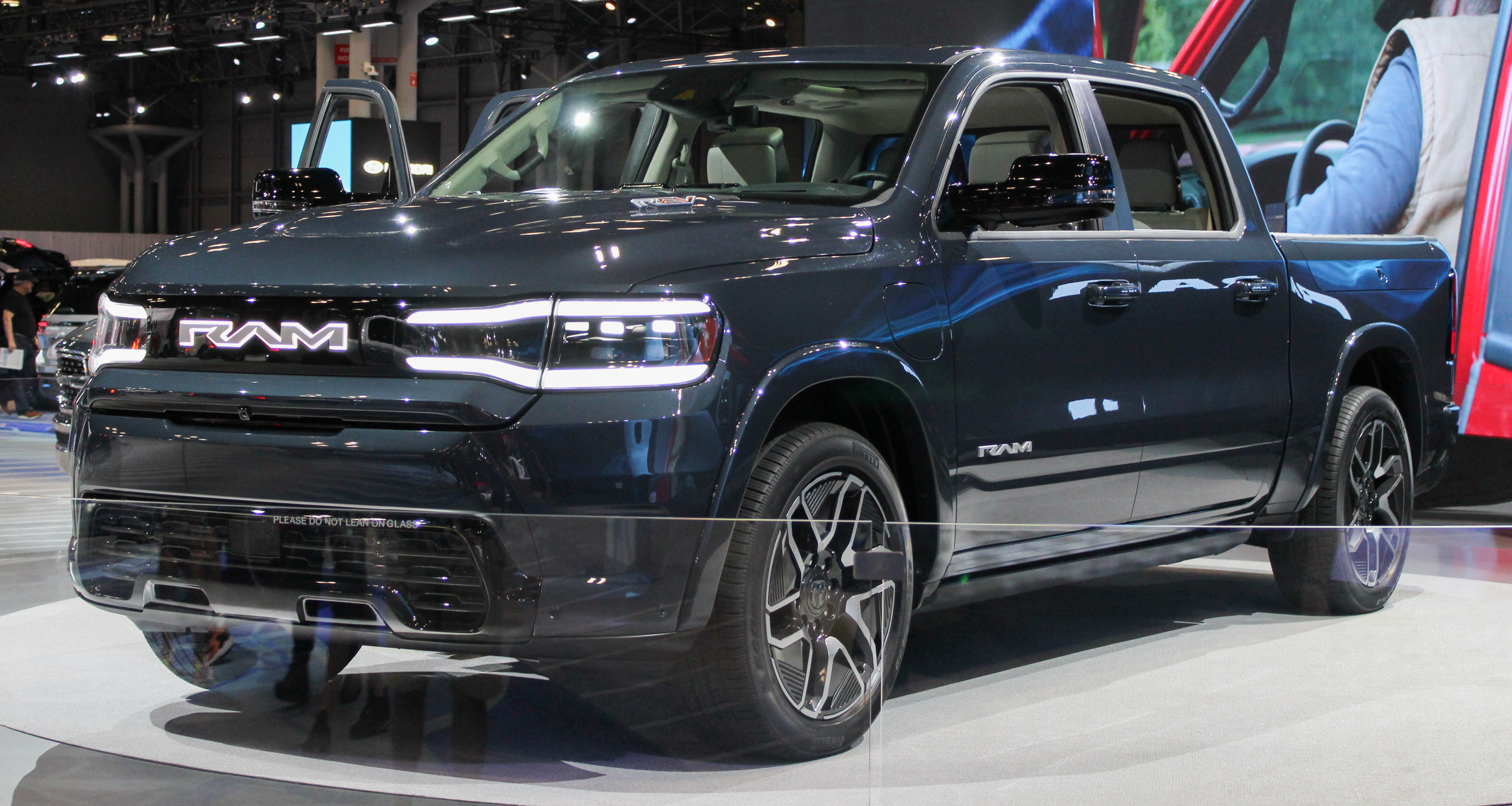
The Ram 1500 is a popular pickup truck. The hosts are basically saying there are lots of unsold Ram 1500s sitting at dealers, and that affects how much dealers discount them.
Jeep is a car brand that makes mostly SUVs and trucks. The host is saying Jeep priced its vehicles higher than many buyers were willing to pay, which hurt sales over time.
Brand
VW
VW is short for Volkswagen, a big automaker. The host is saying Volkswagen’s sales results are expected to decline more once the full data comes in.
Audi is a premium car brand. The host is saying Audi has some models that aren’t selling well in the U.S., and that will likely show up in the sales numbers.
The Toyota Camry is a very popular Toyota sedan. When people talk about deals on a Camry, they’re often talking about the real final price after taxes and fees.
LIVE
It's noon here in Ventner City, New Jersey, and our nation's capital, Washington, D.C.,
and this is Car and July for Thursday, April 2nd with your hosts, me, Ray, here in Ventner,
and Zach, hanging out in Washington, D.C., and I must say, there are some commenters that just
hate this opening. They hate the fact that I say it's noon. Well, what do you want me to say?
It's noon. I can't help it. That's the time of the damn show. How are you today, handsome?
I'm doing pretty good. I think I have a sty or maybe pink eye. I don't know. So, you know,
things could be better over here in my world, but you know what, Dad? It's noon on April 2nd,
and I'm hanging out with my pops, and we're going to talk about Edmonds and the latest data that
they just put out, which is insane, man. We've been doing this for so long, and I still can't get
over some of the information that we see coming through on these news headlines. Before we get
into today's show, a friendly reminder, folks, caredge.com. If you're unfamiliar, please do me
a favor and check it out. Me, my dad, and our incredible team provide a carbine service that
takes care of research, dealer outreach, and even negotiation. We learn what matters to you,
contact dealers, compare the offers, and help you get the best deal without the stress. We also have
caredge.com slash beta. This is a new car search that we've created, and Dad,
OMG. We released something brand new the other day. Give me a vehicle. What are you interested in?
A Mazda CX-30, dammit. Okay. Here's something really cool that we just released for used vehicle
shoppers. You go on the car search, you search for Mazda CX-30 used vehicles. Dad, now when you
click in, if you've got caredge pro, you're going to see the depreciation analysis for this vehicle,
which is so freaking cool. Now for used vehicles, the caredge pro, you'll see the original MSRP,
the dealer asking price, how much it's depreciated, how much it depreciates per year, per mile, and
other vehicles that have value scores as well so you can cross shop it. Anyway, we've got that added
now in caredge.com slash beta. We appreciate everyone that checks that out and shares their
feedback. Are you ready? Do you want to ask a question? Sure. Is there anything this team can't do?
There's plenty I think you can't do, but we're trying like how to do it.
No, it just fascinates me that every day we come up with more and bigger and better and
and so people can have more information to make the most informed decision they possibly can.
It's completely agreed. Dad, let's jump into the Edmunds data. You ready for this? This is crazy.
Ready? Yes. Average amount of finance for new vehicle purchases hits a record $43,899 in Q1
2026. Edmunds data shows car buyers are putting less money down in turning to longer loan terms
at record levels as affordability pressures persist. We're going to jump straight to that point.
Bear with me here. Where is it? There is it right here. Look at this. The average loan term length
is now up to 70.3 months. The average monthly payment has ticked up to $773. According to
$2206. This is where I want to start, Dad. The average loan term length continues to increase.
It will continue to increase and the down payment amounts will probably continue to decrease. The
reason for that is nobody's got any damn money. People are stretched to the max between credit
cards, car loans, increased utility costs, food costs, gasoline costs. I mean, people are stretched.
We know that a large percentage of the population has negative equity if they're trying to trade
their car. The more people that have negative equity that are trying to trade their car
is going to bring the average amount of money down to a lower number because
those people are rolling over their negative equity as opposed to actually bringing equity
to the table. It's not going to get better anytime soon or it might just collapse under its own
weight at a certain point. Let's go through the bullet points here, Dad. Consumers are financing
more than ever to buy new vehicles. The average amount of finance for new vehicles
climbed to a record high of $43,899 in Q1, 2026. Year over year, y'all, we're up from $473.
So think about that for a second. The average loan amount that's being taken out has increased
$2,500 year over year monthly payments as we mentioned a moment ago. Cox on a motive has it
at $805 or excuse me, automotive news does. Here at Edmunds, they say $773 and look at this, Pops,
$1,000 a month payments remain persistently high. The share of new car buyers committing to monthly
payments of $1,000 or more accounted for 20% of all financed vehicles up from 17.7% last year.
Think about that for a second. One out of every five auto loans is going to be $1,000 or more
per month just for the car payment. Yes, it makes no sense at all. Every day I sit here with you
and I try to rationalize how this can be and I can't. I hate to say this, but I think I've run
out of words when it comes to where we're at with A, the length of loan terms, B, the size of the
payments people are willing to take on and the large percentage, the 20% of those people who
are willing to take on a car loan of $1,000 a month or more. That doesn't seem like a
reasonable monthly expense. Just for the car loan, you haven't factored in the cost of automobile
insurance. You haven't factored in any maintenance. You haven't factored in any fuel. I know people
don't like to talk about depreciation because they say, well, it doesn't impact you unless you
sell or trade it, but it's part of the equation. If you were to actually look at how much that
adds up to and how much of a percentage of your income it represents, if you were clear-eyed when
you look at these numbers, you'd say, what am I out of my mind? How do you justify it?
I know exactly how you justify it. You justify it with the monthly payment. I want to put you
and our community to the test here. I want to go all the way back. Do you remember the year 2015?
Do you remember 2015? What was going on in your life in 2015?
I think I was helping the manager of MiniStore in the Townsend, Maryland.
All right. Go back to 2015, everyone. That's all taken a trip down memory lane. It's 2015.
What percentage of your consumers in Q1 of 2015 who bought new cars out in 84 months or longer
car loan? What do you think of that? Back in 2015, you were wearing that MiniZibler
and let me see. Actually, while you're doing that, I'm going to see if I can
find some photos of you from 2015. Give me a second here. There's got to be some photos of
me on my Instagram account for while I was at the dealership. Is this you in 2015? Let's see.
That wasn't you in 2015. No. Come on. That was in Lake Tahoe. That was when that was
you know, 20 something, but not 2015. It might have been 2005.
Was this awesome 2015? Was this 2015?
No. Look how young you were. What were you? I don't want to say anything,
but I think you might have had a pudger of your face than me at that time.
Also, those of you that don't think my dad worked in the car business for 40 years,
Acura hat, Acura sweatshirts. This guy worked for an Acura guy. I believe you were living
in Arizona at that time. That would be in the early 2000s.
All right. 2015. We're back in 2015. Maybe humor me for a second here. Maybe this is
actually 2015. You and mom at the Ravens game. Very well could have been. Yes.
All right. So, Pops, it's 2015. Look at you.
Yeah. That's my best Bruce Arians look. Yes.
2015. What percentage of new car loans, folks, and put some guesses in the chat here as well.
What percentage of new car loans has this guy given out to people
that were 84 months or longer for his customers? What do you think, dad?
2.3 percent. 2.3 percent. Come on. Let's get some guesses in the chat.
It's more than 2.3 percent, dad, back in 2015.
Oh, stop it. It couldn't have been. Really?
More than 2.3 percent. Okay. 3.2 percent.
More than that. It's not 45 percent. It's not 0 percent. No, trust me. We would have led with
the world has fallen apart since 2015. If it was 0 percent back then, 4 percent. A lot of people
guessing 4 percent, dad. Maybe 4 or 5 percent. I wouldn't believe that it was much more than that.
All right. If we go all the way back to 2015. Yes.
It was 7.8 percent. That's what that number is over there on the left at 2015.
In 2015, 7.8 percent of borrowers took out 84 months or longer loans. Look at the slope of
this chart since then. We are now up to 23 percent of borrowers are taking on 84-month car loans or
longer. Now, I know you said 2.3 percent, 3 percent, et cetera, and it does seem high. That all the
way back then in 2015, folks are hating off that long of a loan chart. But how does that put into
perspective what's happening now at 23 percent? Does Edmunds have data that reflect what the
average transaction price might have been or the average amount financed might have been?
I don't have that handy right now, but I'm sure we could for maybe tomorrow.
Because I think the increase in the amount financed is staggering from 2015 to 2026.
That chart going in the direction it's going, as rapidly as it's moving up and to the right,
is just a reflection of pricing. The first time it crossed 20 percent was in 2022 when,
well, what happened in 2022? New and used car prices were through the damn roof,
okay, and so people paid exorbitant sums of money to buy new and used cars.
As we know, what are most customers? They're payment buyers. That's why you see back in 2022
that huge spike over 20 percent for the first time because that was the increasing loan term.
Was the only way to make the monthly payment appear? This is the key word, appear affordable,
okay? Because the reality is for every year of payments you add, you're paying way more in
interest and your ultimate total cost in the vehicle is going up. Even though it appears
it's more affordable, you're actually paying more and it's less affordable.
We've got more data that corroborates that before we do. It has only tripled. The fact
that this is an accurate statement and also like asinine, it's like accurate and asinine
at the same time. Oh, it's only tripled. Yeah, which is crazy. The number of people who are
taking on 84 plus month car notes is absolutely crazy and at the same time to your point that
one of the other drivers that increases the amount that you're paying back in interest would be
the amount of money that you put down and your interest rate. What has happened to the amount
of money that's put down? Look at this step. Buyers are putting down less money to manage
upfront costs. Think about that. Of course, we don't have it. The average down payment for new
vehicle purchases fell to $6,206 in Q1, 2026, one of the lowest first quarter levels since 2022,
compared to $6,228 in Q4, 2025 and $6,500 in Q1 of 2025. So you've seen a dip in the amount of
money people are putting down, which increases the amount of principal that you're paying off.
Yeah, and think about this. What do you think interest rates were in 2015? I can help you with
that. They were dirt cheap. Okay, because we were still operating under the Fed guidelines where
we were at like one or 2%. And so car loans of 2.9% or 1.4% were common.
Yeah, here's your average APR for new car loans over the past. What is this, 2014 to now? Look
at that. Yes. So when they were taking out 84-month notes in 2015, even though they were paying back
more interest than had they stated a 72 or a 60-month note, the fact that interest rates were
significantly lower than they are today, the amount of extra interest that one paid would have
been considerably less than what it would be equal to today. And so what this really shows is you
can't compare in 10-year segments because there's too many factors that we forget about. Interest
rates were 4% as opposed to the average new car interest rate today is what, 7? 7.5?
Depends on your answer. But yeah, admins has it at 6.9%. Okay, I mean, that's a huge difference.
We know that the selling prices were considerably lower. We have been traveling down a path
in the automotive industry, in my mind, in my opinion, that is entirely unsustainable
for the vast majority of people who need transportation, who need vehicles. You can't
keep raising the prices. You can't keep extending the terms. You can't keep approving people who don't
really qualify and expect that this entire house of cards isn't going to collapse at a certain point.
I mean, how does it not? The foundation is mush, okay? My God, the foundation would have been
stronger if they built it on oatmeal. It is absolutely insane to me that we can continue
down this path. Sorry, didn't mean to make you laugh. But do you know what happens to oatmeal
when it dries? I mean, that stuff gets really hard, okay? It's a lot harder than mush. I'll be good.
More help. You're hired and you're hired. Shopify has the world's best converting checkout,
up to 36% better than other e-commerce platforms. What you do with those extra sales is up to you.
Switch to Shopify today at Shopify.com slash listen and get a $1 trial, Shopify.com slash listen.
Well, with the name your price tool from Progressive, you can get a better budgeter
and potentially lower your insurance bill too. You tell Progressive what you want to pay for car
insurance and they'll help find you options within your budget. Try it today at Progressive.com,
Progressive Casualty Insurance Company and Affiliates. Price and coverage match limited
by state law, not available in all states. And that leads us to the other story we need to talk
about today. So Edmunds lead in the charge sharing with us essentially some very, very,
very scary data about the state of automotive finance. Well, then dad, maybe you do have more
cracks in the foundation showing GM Toyota Ford Honda Nissan slide as US market downshift,
Stellantis is the only brand that gains traction. What's fascinating about last month's sales data
is the magnitude with which some of these automakers year over year for the month of March fell off
of a cliff. And yes, you can make a case that many buyers in March of last year boosted sales
numbers because they were trying to buy cars before tariffs. But even when we look at the
overall QQ one picture, it's some pretty staggering declines for many of these automakers. So let's
start here dad, year over year for the month of March, I'm going to read off a few automakers here.
Ford Motor Company sales off 13.8%. American Honda sales off 12%. Hyundai Kia sales off 2.7%.
Mazda sales off 25.7% year over year for the month of March and Subaru sales
off 23.5%. Toyota sales off 8.5%. Again, that's year over year month over for the month,
but still dad, that is some indication of that oatmeal foundation you're talking about.
Maybe getting a little bit too much water in it and now it's that type of oatmeal that you get
when you go to the hotels that they have the breakfast in the morning and it's always a little
too runny and you want it a little thick. You know what I'm talking about? No, I do. I do. It's like
you wish they would have cooked it like they cooked half the eggs to where they were where they were
hard not running at all. And you look at that chart and I don't know if you remember back in
January. The number of automobile manufacturers who, you know, we're talking about EV write-offs
and things like that, but they've got a plan for this year. And the plan is we're going to
we're going to dramatically increase our market share. And I don't know how many of the manufacturers
said, yeah, we're looking, we're looking, we anticipate a 10% increase in sales year over year.
Okay, because it'll be one of the ways that we'll be able to attack the affordability crisis.
Well, you can see how they've done it in the first quarter. They haven't done it at all.
Okay. And they had no intentions of doing it at all. And they knew they were blowing smoke up
everybody's butt when they said, oh, we anticipate a 10% increase in sales when everybody else in
the industry was going, sales are going to be down or flat for the year. Okay. And they're well
down a lot, a lot further down than anybody anticipated. And of course, in January, nobody
anticipated that we would be at war with Iran. Of course, there were a lot of things that nobody
but the point is that you look at the real numbers and then you can look back and you
can just say that all these people, all they do is put out press release after press release,
saying how they're going to improve things when they know they can't and they won't.
But dad, maybe it's a little unfair to just look at year over year for the month of March. When we
look at the first quarter, the manufacturer that actually becomes most concerning here would be
General Motors. Their sales year over year for the entire quarter down, the ML 10%, 9.6% there.
Now, General Motors, what's interesting here is they're one of the manufacturers, domestic
manufacturers especially, that has leaned heavily into restricting the supply of their vehicles to
their dealer body. They have tried desperately to restrict and constrain the amount of cars
they sell to their dealers. Kind of the inverse of the other brand on here that actually did
surprisingly well. Where are you, Stalantis? Whose sales are up 4.1%. So let's spend a moment here.
I mean, then we got to talk about Subaru dad down being 15% year over year. There are serious
issues in the domestic auto market. You cannot look at the Edmunds data and then look at the
sales data and just be like, yep, everything's going perfectly. You and I both know and we're
compiling the data right now for the month of April incentives from the manufacturers.
You and I both know. It's one of my favorite videos you ever did. What happens to unsold
new cars? They sell. You can't look at the Edmunds data then look at the sales data for General
Motors, for example, for Subaru as another and say, okay, they're going to do nothing. No,
they're going to get desperate and they're going to have to find ways to sell these cars.
Maybe. Typically, you would say, okay, the manufacturers are going to get desperate between
manufacturer incentives and dealer motivation to get vehicles off their lines. But if the public
isn't buying at realistically any price because of fear about what's going on, because I mean,
I think there was a comment in the automotive news article at the end. It all had to do with
consumer uncertainty. It's hard for consumers to really consider large purchases when
everything seems out of control. And at the moment, most many of the manufacturers might
look at it and go, we could put $5,000 worth of incentives and we could help underwrite the
to give 10% off of the price of the car. And it still might not be enough.
You know, I remember back in 2007 or 2008, during the great recession and I've told you
the story, my factory rep came to me. I was at the Acura store and he said, well, what do you
think we need to do? I said, I think you need to make the offer so compelling, so ridiculously
compelling that a consumer who would have second thoughts would look at it and go, honey,
there's no way we don't buy this. We have to take advantage of this situation. And Acura didn't,
and neither did anybody else. And my suspicion is that none of the manufacturers really do what's
going to need to be done if this downward trend continues. And I honestly believe in my heart
of hearts until things somewhat stabilize. We hear about how AI is going to be taking so many
jobs away from, I don't know, real people. I just think there's a pervasive underlying fear
of we don't know what the future holds and we can easily be replaced. And so if you have any money
at all, most people are probably trying to hold on to it at the moment. Some other brands they're
not buying right now would be Mazda. Mazda sales year over year for the entire quarter, down 14.4%.
You can see that right here, 40.4%. That Mitsubishi sales, cheap affordable vehicles,
down 15%, Nissan sales. Clarence struggle it. Yeah, well, I'm not going to extrapolate too much
out of 200 great pipe cars being sold. Nissan, dad, their sales down 8.3% for the group. Think
about that for a second. Nissan, a brand that has affordable options for consumers, their sales are
down 8.3%. Rivian sales down 12.1%. Obviously, we talked about Solantis. When you break down
the numbers here, it's fascinating because Chrysler and Alfa Romeo are on their way out.
Fiat gone. Fiat does not exist in North America, I don't think for that much longer.
They sold 139 cars for the entire quarter. Yeah, that's, yeah. Yeah, Fiat was like,
I don't know what all the dealers were thinking when they brought Fiat back and they said,
oh, yeah, yeah, yeah, yeah, we need to have that. Nobody needed to have it. Hell,
the Italians didn't even need to have it. But dad, Ram sales up 20%. So think about that for
a second and we're going to do a little bit of a live experiment here. What do you attribute that
to? I attribute that to price being something people couldn't take their eyes off of. Let's come
over to the car search really quickly. There are tons of new Ram 1500 leftovers still out there.
So let's come here. We're going to do year and we're going to say up the 2025. So this is within
100 miles of miles. Let's go nationwide. We've got 2000. Look at that, y'all. 2,107 left over
Ram 1500 still for sale out there on the market. And let's take a quick peek at one of these.
Let's not go to a derated dealer. Let's come here to this one. This is an $89,000, $90,000
Ram pickup truck, but the dealer's advertising $15,000, $14,250 off. Yeah, but still at 75 large.
You've got strong negotiation leverage on it, Pops.
My guess, and this is just a guess, that whatever increase in sales Ram trucks have seen,
it's not at the higher price points, but it's at the lower end of their price points.
Still, dad, 20% increase in sales when we're looking at these other brands, like Subaru
Nobody had dropped as much as they had over the last several years because they went too high
end too quickly and they abandoned their customers. And so the two brands within
Stellantis' Umbrella that saw sales increases were the two brands that they basically tried to
destroy by going up market too quickly. And that was Ram pickup trucks. And the other was Jeep.
And look what happens when they start lowering their prices again. Sales come back.
Yeah, Ram up 20%, Jeep up 3%.
And Jeep had been on a five year major decline in sales because they went up market too quickly.
So yeah, I'm guessing this is just a guess. But my guess is that the major increase in Ram sales
will be reflected in their lower priced Ram pickup trucks and not those $90,000.
And I know we had the conversation with that one gentleman from Ram who said,
you know, when it comes to the expensive trucks, we can't find the ceiling. We don't know where
the ceiling is for those because every time we produce a more expensive truck, it sells
maybe not so much anymore. For sure. But dad, still 20% increase in sales is indicative of one
thing. They've lowered the prices to a place where more people are choosing to purchase them.
Let me go through the list a little bit more here, perhaps we're almost at the end of it.
So obviously Stellantis up Subaru down 15%, Toyota dad flat. So that's interesting.
And then VW, we're just starting to get data from them. I think it's going to come in significantly
worse once VW and Audi numbers come in. We know Audi. They're the proud possessor of some of the
slow selling vehicles in the United States of America right now. So I think once we get the
data here from Audi and also from VW, they're going to have an even bigger decline in their sales
year over year. So, you know, juxtapose what we started the show with, which is, you know,
the Edmunds data, consumers are financing more money than ever before at longer terms than ever
before putting less money down than ever before carrying more negative equity than ever before
on longer terms than ever before. Can you tell me one positive in all those statements? I haven't
heard one. The positive would be that Ram and Jeep are finally starting to lower their prices
and up to inspire people to purchase them. That's the positive. Every other brand,
it's indicating that they've also gone too far up market and their prices are not affordable enough
for people to purchase them. That's the reality of what's going on. And we know that the average
advertised asking price for new cars keeps going up. I didn't look at the front page of automotive
news today on the digital side to see what, but the numbers were up $750 or so month over month.
So, as much as all these manufacturers said we need to figure out, okay, so, oh my God,
it's worse. Okay, it's up to $50,742 is the average marketed price, which is up $908
from 30 days ago and up $888 from a year ago. And this is from all the manufacturers who said,
yes, our intention is to address the affordability issues that are out there today. And this is
how they do it. They keep, the prices keep going up, not coming down. It is, I don't know how much
proof we need that 99.9% of the crap that comes out of their mouths is not worth the air that they
drew in this, to utter those words. It's just not. Now, some might argue the same for us. I,
however, feel differently. Today's show, again, folks, is brought to you by CarEdge.com. We have
our promotion ending, legitimately ending at the end of the day. Today, we have that, a car...
As opposed to when it's illegitimately ending? Yeah, you know, it's part of the fun, man.
We have a car buying service. Takes care of research, dealer outreach, and even negotiations.
So, folks, if we can help you out with that. And like we've demoed a couple of times on today's
show, we have a new car search that's in beta. All sorts of new features being built out over
there. I encourage everyone, CarEdge.com slash beta. Your feedback is greatly, greatly appreciated.
On this beta page, you can, as well, watch us live negotiate for customers. So, you can actually
see here what our team is doing in terms of which dealers we're reaching out to, and if we're getting
offers for vehicles, which is so cool. We received an OTD five minutes ago for our customer on a
2026 Buick Invista, for example, or seven minutes ago for our customer on a 2026 Grand Highlander
in Maryland. Really cool what you can watch here on the live page, and we encourage everyone to
check it out. A dealer just responded to us to add in Rock Hill, South Carolina on a 2026 Toyota
Camry. Oh, and you want to learn more about that dealer? You can. You can click on it to then go
view what that dealer's dealer transparency score is. And unfortunately, in this case,
this dealer is known to add add-ons. So, that's a bit of a bummer. But anyway, Pops,
all sorts of good stuff back over on CarEdge.com. That's great stuff. I know. It's useful. Yeah,
no, that is really useful information. Before we sign off, however, Pops, from Daniel earlier in
the show. Thank you for this, Daniel. I just bought a new pickup, $61,000. Sounds high,
but the average new is $51,000. Seems only a little high convincing myself.
Congratulations, Daniel. Hope you enjoy. Yeah, sounds like you convinced yourself. Good job,
Daniel. And that's all you got to do, folks. You just got to convince yourself it was a good price,
and then be happy. Yeah, Daniel's happy. Daniel wants to know how to get to the live page.
The live page is super cool. Oh my gosh, this is so, so fun. So, to get to the live page,
go to CarEdge.com. And then click on live up here at the top. This is part of our new beta
experience. Yeah, we just got an OTD on a Toyota Camry and saved someone $840. That is so cool.
This page is so much fun. Maybe someday we'll set this up to do like a live stream.
Yes. With this going to the internet. This is so cool. So again, CarEdge.com. And then click on
live. Look at you. I'll tell you, our team is, they are DynoMite as Jimmy J.J. Walker used to say,
and you have no idea who he was. But not at all. Trust me, everything was DynoMite. Folks,
we're back tomorrow for a Friday episode of CarEdge Live. We greatly appreciate everyone who
tunes in, supports me, my dad and our incredible team. We look forward to spending time with you
again tomorrow. Hey, have a great afternoon, handsome. And we'll see everybody back here
tomorrow at, I'm sorry. It'll start at noon Eastern, can't help it. And hopefully you'll
forgive me for using that hour of the day in the introduction of the show.
If you liked the show, please take a moment to rate, review and subscribe. It really does help
the show to grow. Thank you for listening.
About this episode
Ray and Zach break down fresh Edmunds finance data showing affordability cracking: average amount financed for new cars hit a record $43,899 in Q1 2026, average loan terms stretched to 70.3 months, down payments fell to about $6,206, and monthly payments are climbing (with 20% of financed buyers at $1,000+/month). They connect it to longer-term interest costs, negative equity, and consumer uncertainty. They also compare that with March sales declines across many automakers, while Ram and Jeep buck the trend—likely as pricing finally shifts downward.
Today on CarEdge Live, Ray and Zach discuss the latest data from Edmunds. Tune in to learn more! Hosted by Simplecast, an AdsWizz company. See https://pcm.adswizz.com
for information about our collection and use of personal data for
advertising.