
El Lado No Negociable de los Autos: Seguridad, Récords de Honda y el Nuevo Jetta 2026
About this episode
Entre noticias y anécdotas, el programa se centra en dos frentes: por un lado, historia y marcas (SEAT y CUPRA) y un repaso de ofertas de Peugeot en México con ediciones “Black Edition” para 3008 y 5008, incluyendo detalles de asientos, iluminación y confort. Por otro, cambia el enfoque a seguridad y privacidad en autos conectados: sensores/cámaras, riesgos de ciberataques y qué borrar antes de vender. También tocan cifras de emisiones y el rol de la tecnología en la conducción.
En esta emisión de Autos y Más, todo el equipo te acompaña en un viaje de dos horas lleno de adrenalina, lanzamientos exclusivos y datos fascinantes sobre el mundo del motor. Arrancamos con las celebraciones globales felicitando a los auxiliares de enfermería, concientizando sobre el Día Internacional del Tiburón y festejando los 50 años de Taboo de Black Eyed Peas. En las novedades de la industria, analizamos el impresionante récord de 26 millones de transmisiones de Honda en Ohio y la llegada a México de las exclusivas ediciones limitadas Peugeot 3008 y 5008 Black Edition. Platicamos con Iván Arriaga sobre la información que recopilan los autos modernos y revisamos con Vanne Gusmiau las últimas actualizaciones tecnológicas. Para el cierre, te contamos sobre Plasma Care UVC, la innovadora tecnología de desinfección de Hyundai y Kia, el brutal prototipo eléctrico de 500 hp de CUPRA, y nos subimos al Volkswagen Jetta 2026 para comprobar por qué sigue siendo el rey de los sedanes en México. ¡Acomódate y dale play! Recuerda escuchar la transmisión en vivo porque tendremos muchos regalos de lunes a viernes de 7 a 9 pm y sábados de 10 am a 12 pm por tu estación favorita MVS Noticias en el 102.5 de tu FM
See omnystudio.com/listener for privacy information.
seat
"“...talking and connecting this great moment of Spain with the motor, the Spanish brand Seat...”"
SEAT is a Spanish car brand. The host explains how SEAT helped build Spain’s modern car industry after World War II, and how some of its famous models became big sellers.
SEAT is a Spanish automaker known for building cars in Spain and for its long relationship with major European groups. In this segment, the host ties SEAT’s history to Spain’s post-war push to build an automotive industry, then traces key model milestones like the SEAT 600, Ibiza, and Leon.

Seat 600
"“In 1957, Seat 600, which was a madness, madness of sales...”"
The SEAT 600 was one of SEAT’s most important early cars. It became extremely popular and helped put cars within reach for many people in Spain.
The SEAT 600 is a landmark small car for SEAT and for Spain’s post-war motoring. The host calls it a sales “madness,” highlighting how it helped establish SEAT as a mass-market automaker in Spain.

Seat Ibiza
"“...in 1984 the famous Seat Ibiza was born, after they ended a relationship with Fiat...”"
The SEAT Ibiza is SEAT’s popular small car line. In this episode, they describe its launch as a major moment in SEAT’s history.
The SEAT Ibiza is SEAT’s best-known compact model, introduced in 1984 in this segment. The host frames it as a turning point for SEAT’s identity, especially after SEAT ended its relationship with Fiat and then developed the Ibiza in partnership with major European design and engineering influences.
Fiat
"“...after they ended a relationship with Fiat... because Seat at first was allied with Fiat...”"
Fiat is an Italian automaker that historically partnered with SEAT. Here, the host says SEAT initially allied with Fiat, then later ended that relationship before launching the Ibiza.
Giorgetto Giullaro
"“...they launched the Ibiza developed by Giorgetto Giullaro...”"
Giorgetto Giugiaro (spoken here as “Giorgetto Giullaro”) is a famous Italian car designer credited with shaping the look of many production vehicles. The host attributes the SEAT Ibiza’s development/design to him, emphasizing the car’s design pedigree.
Porsche
"“...they launched the Ibiza developed by Giorgetto Giullaro... in collaboration with Porsche...”"
Porsche is a German sports-car brand that the host connects to the SEAT Ibiza’s development. The segment claims the Ibiza was developed with collaboration involving Porsche, positioning it as a design/engineering influence rather than a purely local SEAT project.
Volkswagen Group
"“...then in 1986 they joined the Volkswagen group...”"
The Volkswagen Group is the large German automotive conglomerate that owns multiple brands. The host says SEAT joined the Volkswagen group in 1986, which is a major corporate shift that typically affects platforms, engineering resources, and model strategies.

Seat Leon
"“...in 1999 they launched the famous Seat Leon...”"
The SEAT Leon is SEAT’s compact/hatchback model line, introduced in 1999 per the host. The segment uses it as another milestone showing how SEAT expanded its lineup after joining the Volkswagen Group.
Cupra
"“...and in 2018, already with me there on board, they launched CUPRA”"
CUPRA is SEAT’s performance-focused brand. The host says that in 2018, SEAT launched CUPRA, marking a shift toward sportier branding and higher-performance versions within the SEAT/VW ecosystem.

Skoda Felicia
"...here we go, the three of friends, I go, I go too, Felicia is going like a fly, no scene is romantic, I prop..."
The Škoda Felicia is a small, everyday car made by Škoda. It was designed to be practical and affordable for regular driving. People mention it because it’s a well-known older model from that time period.
The Škoda Felicia is a compact car produced by Škoda, best known as a practical, budget-friendly model from the 1990s into the early 2000s. It’s often discussed because it represents a simpler era of small European cars and is a common choice in markets where affordability and basic reliability mattered. In a podcast, it may come up as a nostalgic or “everyday” vehicle rather than a performance icon.

Suzuki X90
"...his model. I bring the attitude and I bring Volvo X90, which we will talk about calmly, because if you ..."
The Suzuki X-90 is a small car with a sporty, different look compared to typical compact cars. It was made by Suzuki and is known for being a niche, less common model. People talk about it because it’s unusual and not like the standard options.
The Suzuki X-90 is a small, unusual-looking sports-style compact produced by Suzuki, notable for its distinctive “mini roadster” character. It’s significant because it’s a niche model that stands out visually and is often discussed as a quirky alternative to mainstream small cars. In a podcast, it may be brought up when talking about distinctive designs or lesser-known Suzuki models.
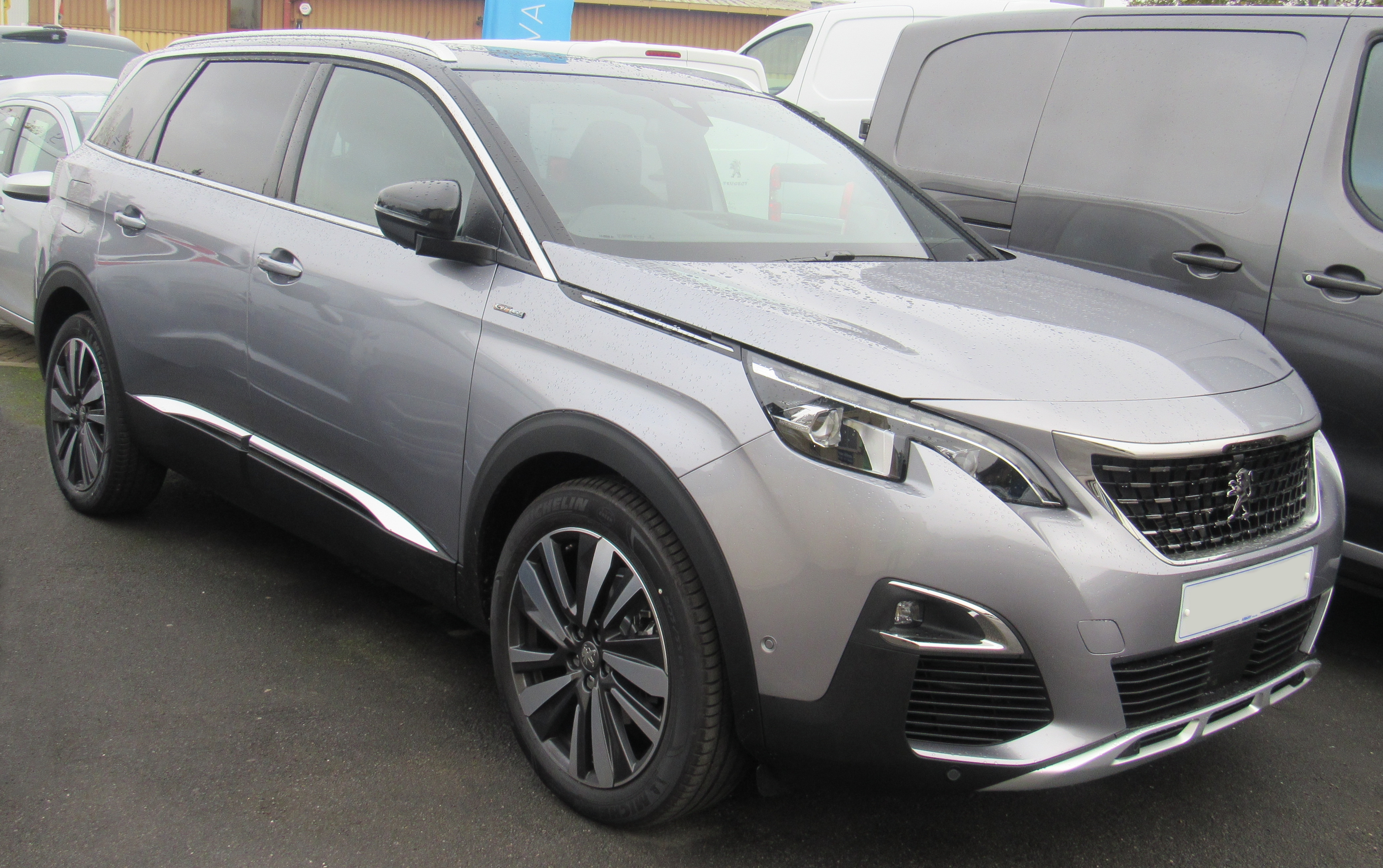
Peugeot 5008
"Yes, well, they're working on their Christmas offer in the Mexican market with the arrival of two... Well, of the special editions for 3008 and 5008"
The Peugeot 5008 is a bigger Peugeot SUV, usually aimed at families. In this clip, they’re saying special editions of it are coming as part of a holiday deal in Mexico.
The Peugeot 5008 is a larger, family-oriented crossover SUV from Peugeot, typically positioned above the 3008. This segment mentions it alongside the 3008 as part of special editions arriving for Peugeot’s Christmas offer in Mexico.

Peugeot 3008
"Yes, well, they're working on their Christmas offer in the Mexican market with the arrival of two... Well, of the special editions for 3008 and 5008"
The Peugeot 3008 is a small SUV made by Peugeot. Here, they’re talking about a special-edition version of it as part of a holiday promotion in Mexico.
The Peugeot 3008 is a compact crossover SUV from Peugeot. In this segment, it’s mentioned in the context of a Mexican-market Christmas promotion tied to special editions, which makes it relevant to what buyers might be shopping for.
black edition
"The special edition is called Black Edition [1705.6s] and they arrive for this couple of models,"
“Black Edition” is a special version of a car meant to look more exclusive. In this case, it’s the name of the special edition for the Peugeot 3008 and 5008.
“Black Edition” is a model trim/edition name used by automakers to signal a more exclusive look—often darker exterior styling, unique wheels, and distinctive lighting details. Here, it’s used to describe a special version of the Peugeot 3008 and 5008 arriving for the 2027 model year.
LED headlights
"with these LED headlights, [1753.5s] 19-inch rims,"
LED headlights use light-emitting diodes instead of traditional halogen bulbs. They’re commonly used for sharper “light signature” styling and can improve efficiency and design flexibility, which the host ties to the special edition’s exterior look.
19 inch rims
"with these LED headlights, [1753.5s] 19-inch rims,"
“19-inch rims” means the wheels are 19 inches across. It’s a spec that affects how the car looks and can slightly affect ride comfort.
“19-inch rims” refers to the wheel diameter being 19 inches, which is a common way to describe wheel size on modern cars. Larger wheels can change ride feel and styling, and here it’s part of the special edition’s exterior specification.
facial recognition
"Exactly, facial recognition, the fingerprints. You put it on the phone, you put it on the tablet, you put it on the TV."
Facial recognition is when a camera checks your face to figure out who you are. Some cars use it to unlock or set up the car for the right driver.
Facial recognition is a system that identifies or verifies a person by analyzing their face using cameras and software. In cars, it’s often used for driver identification, personalization, or security features.
fingerprints
"Exactly, facial recognition, the fingerprints. You put it on the phone, you put it on the tablet, you put it on the TV."
Fingerprints are your unique skin patterns. Some cars can use them to confirm it’s really you before unlocking or enabling certain features.
Fingerprints are a biometric identifier used to verify a person’s identity. In automotive contexts, they’re typically part of an access/security system for keyless entry, driver profiles, or protected functions.
cyberattacks
"Hey, but for example, the tablet cell phone, in some way they are exposed to cyberattacks, right? So imagine if the cars think they can be exposed to an attack that starts driving alone."
Cyberattacks are hackers trying to break into a system. If a car is connected, a cyberattack could mess with the car’s electronics or access your information.
Cyberattacks are attempts to compromise computers or connected systems through hacking or malicious software. When applied to cars, this can mean targeting the vehicle’s connectivity and electronics to disrupt functions or steal data.
sensors
"And the reality is that many of these cars have microphones, speakers, sensors, cameras that serve to make them safer, more comfortable and more intelligent. That's right, but at the same time it also means that there is a huge amount of information"
Sensors are the car’s “helpers” that detect what’s going on around it. They send information to the car’s computer so it can react and keep you safer.
Sensors are hardware devices that measure conditions around the car (like proximity, motion, or environment) and feed that data to the vehicle’s computers. They’re central to modern driver-assistance and safety systems, but they also increase the amount of data the car processes.
cameras
"And the reality is that many of these cars have microphones, speakers, sensors, cameras that serve to make them safer, more comfortable and more intelligent. That's right, but at the same time it also means that there is a huge amount of information"
Car cameras watch what’s around the vehicle. They can help with safety features, but they also collect data that needs protection.
Cameras in cars are used to see the road and surroundings for functions like driver assistance and monitoring. They help the car interpret traffic and hazards, but they also create privacy and cybersecurity considerations because they generate and transmit data.
microphones
"And the reality is that many of these cars have microphones, speakers, sensors, cameras that serve to make them safer, more comfortable and more intelligent."
Microphones let the car hear you for voice control. Since they record audio, it’s important that the car handles that data securely.
Microphones in connected cars capture audio for voice commands and hands-free features. Because they’re always part of the car’s information-gathering system, they can also raise privacy and data-handling concerns.
speakers
"And the reality is that many of these cars have microphones, speakers, sensors, cameras that serve to make them safer, more comfortable and more intelligent."
Speakers are how the car talks back—alerts, navigation prompts, and voice responses. They’re part of the car’s communication system.
Speakers in modern cars are part of the infotainment and voice interaction system, used to provide alerts and respond to voice commands. They’re tied to the car’s audio/communication features, which depend on the vehicle’s connected electronics.
Apple CarPlay
"when we connect our smartphone through Bluetooth, Apple CarPlay, Android Auto, [4517.7s] the vehicle can access a lot of information needed to offer functions like"
Apple CarPlay is a way to connect your iPhone to your car. It shows certain phone apps on the car screen so you can use navigation, music, and messages more safely while driving.
Apple CarPlay is a smartphone-to-car interface that mirrors compatible iPhone apps onto the vehicle’s infotainment screen. It lets you use things like music, navigation, calls, and messages through the car’s controls.
Bluetooth
"when we connect our smartphone through Bluetooth, Apple CarPlay, Android Auto, [4517.7s] the vehicle can access a lot of information needed to offer functions like"
Bluetooth is a short-range wireless connection used to pair a phone with the car. In this context, it enables the vehicle to access phone data and services for features like calls, messages, and media.
Android Auto
"when we connect our smartphone through Bluetooth, Apple CarPlay, Android Auto, [4517.7s] the vehicle can access a lot of information needed to offer functions like"
Android Auto is how you connect an Android phone to your car. It displays supported apps on the car screen so you can use navigation, music, and messages more easily.
Android Auto is a smartphone-to-car interface that brings compatible Android apps to the vehicle’s infotainment system. Like CarPlay, it’s designed to provide navigation, music, calls, and messaging through the car’s interface.
user profiles
"but many cars also store user profiles, [4541.7s] connected devices and even a recent history within the same multimedia system."
User profiles are saved settings in a car’s infotainment/vehicle system that personalize the experience for a specific driver. They can include preferences and history, and they may be linked to connected devices.
multimedia system
"connected devices and even a recent history within the same multimedia system. [4546.7s] And here comes something that I want to recommend"
A multimedia system is the car’s infotainment platform that handles audio, screen menus, navigation integration, and connectivity features. It’s also where the car may store recent history and device-linked data.
MBUX
"but many cars also store user profiles, connected devices and even a recent history within the same multimedia system. [4546.7s] And here comes something that I want to recommend that very few people know, [4551.7s] is that when we sell our car... [4570.7s] listen to the MBUX, that you tell me, for example Mercedes,"
MBUX is Mercedes-Benz’s infotainment and voice-assistant platform. The host uses it to illustrate how modern cars can use AI/voice features to perform tasks and integrate with accounts and connected services.
official brand application
"because in most cases, mainly the user, who can access the vehicle through the official brand application that many already have, which is where they will be able to check data about fuel consumption, or energy, or to lower the glass, to turn on the air conditioning"
It’s the carmaker’s phone app. It connects to your car so you can see info about it and sometimes control things like the air conditioning from your phone.
This refers to the manufacturer’s smartphone app that connects to your car. It’s used to view vehicle data and control certain functions remotely, like climate settings or checking status.
satellite
"so that this works, the vehicles have to send location through a satellite so that it can be connected with the application"
Here, satellite means the car can use space-based signals to report its location and data. That’s how the phone app can stay connected to the vehicle.
In this context, the car uses satellite connectivity to send its location and data to the cloud. That’s what enables the app connection and services like tracking and remote functions.
predictive maintenance
"also the brands can access this information, the brands and manufacturers, to be able to offer predictive maintenance, to perform certain remote diagnostics, to send software updates"
Predictive maintenance means the car (and the brand) tries to guess when something will need fixing soon. That way you can service it before it breaks down.
Predictive maintenance uses sensor and usage data to estimate when a component is likely to need service. Instead of waiting for a failure, the system tries to schedule maintenance before problems happen.
remote diagnostics
"to be able to offer predictive maintenance, to perform certain remote diagnostics, to send software updates, to improve the system operation"
Remote diagnostics means the car can send problem information to the manufacturer or service team. They can often tell what’s wrong (or what’s likely wrong) without you immediately bringing the car in.
Remote diagnostics are checks performed over the internet using data sent from the car. A service team can read fault information and vehicle health metrics without the car being physically in the shop first.
software updates
"to perform certain remote diagnostics, to send software updates, to improve the system operation, or to develop new technologies based on all this data"
Software updates are like updates for the car’s computer. They can fix issues and improve how the car’s systems work.
Software updates are new versions of the car’s electronic control software delivered after purchase. They can fix bugs, improve system behavior, and sometimes add features.
route history
"in some cases, also certified workshops will be able to access certain information, especially like route history, consumption, failures"
Route history is a log of the trips your car has made. It can help show where you went and can be used to understand things like consumption or problems.
Route history is a record of where and how the car was driven over time. It can include traveled paths, timing, and related consumption or failure data for analysis.
Request an Explanation
Heard something you'd like explained? We'll add it to this episode.
Sign in to request explanations for terms you heard.
Want to learn more?
Browse our glossary for plain-English explanations of automotive terms, jargon, and concepts.
Help improve this episode
See something that's not quite right? Our annotations are AI-generated and can sometimes miss the mark. Click the flag icon on any annotation to suggest a correction.