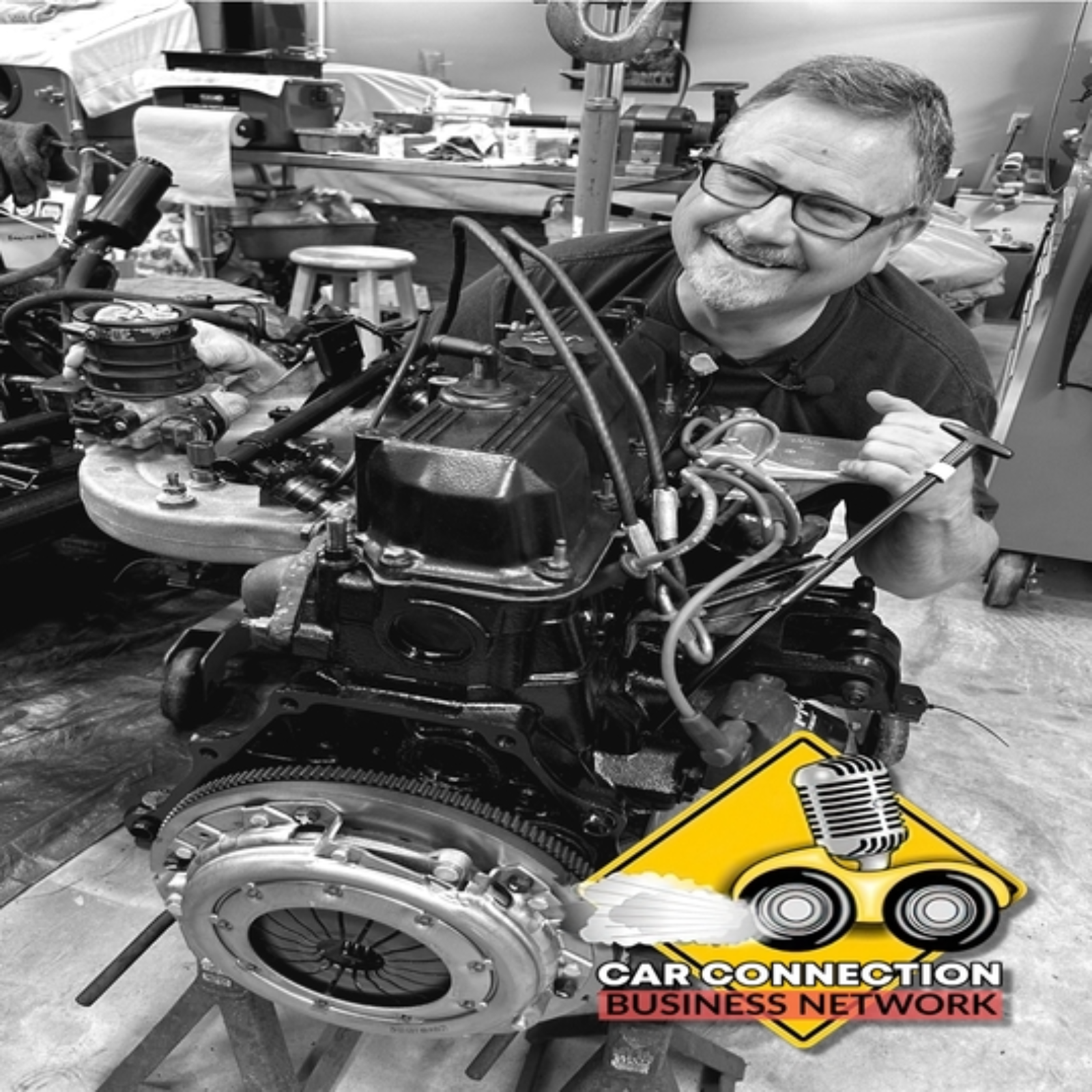
Engineers Are Saying It: Keep Your Old Car (Here's Why It Wins)
About this episode
The conversation centers on why older vehicles can be a smarter long-term choice than many newer ones, with the speaker arguing that simpler construction, solid structure, and aftermarket support make them easier to keep on the road. He contrasts that with modern cars he says are burdened by plastic, planned obsolescence, and expensive repairs. The episode also includes practical advice about learning car basics, plus sponsor reads, a used-car warning, and a brief weather update.
In this episode 156, we cut through the noise and talk about what's really... happening in today's automotive world. even former engineers are raising eyebrows at rising costs, parts delays, and design issues that shouldn't exist.
The truth? You don't win the car game by constantly upgrading-you win by holding onto a proven vehicle and maintaining it smartly.
We break down why older vehicles continue to outperform in reliability, how aftermarket parts are often improving on factory weaknesses, and why informed consumers are saving thousands while avoiding long downtimes.
It's simple: Understand the signal, ignore the noise, and keep your ride rolling.
" Even Engineers are saying-Don't Buy New Cars."
#CarReliability. #AutoRepair. #SaveMoneyDriving
Like,Subscribe,Comment, Share, Ring the Bell so you don't miss the next rescue project, maintenance tips, and real-world car ownership. Thank You Friends, Skippy❤️
Motormouth Merch available in our online store @ (ccbusnet.com) all proceeds to Total Freedom Addiction Campuses Canada & USA helping those in addiction break free for good! Thanks Again Friends you are amazing👍 Motormouth & Skippy
More Episodes and...project Details & Links are available at Car Connection Business Network.com (ccbusnet.com) you'll find everything on our home page if you'd like to follow the build & repair work w do & connect with our program partners. Appreciate you supporting them👍 Nile Motormouth Jenkins
Happy Healthy Motoring Friends, Peace Patience Kindness Always, NMJ
low mileage quality vehicle
"so if you're in the market to find a low mileage quality vehicle at fair prices you're in the right place at city auto sales and leasing with Earl Louise Grant husband and wife team for 25 years"
When someone says “low mileage,” they mean the car has been driven less than average. “Quality vehicle” is basically the seller saying it’s in good shape, not a problem car.
“Low mileage” is a way shoppers estimate how much wear a used car has seen, since fewer miles usually means less time in service. “Quality vehicle” is the seller’s claim that the car is in good condition, often supported by inspection or maintenance history.
pre-owned auto stores
"some junk onto their lot because they sell no junk quality vehicles at fair prices with low mileage greater Toronto areas premier pre-owned auto stores so check in with Earl Louise Grant"
This is about used-car dealerships and how they help you shop for a car that’s already been owned.
The hosts are discussing the role of pre-owned dealerships—used-car retailers that source inventory and help buyers find specific cars. This is a buying-channel topic rather than a technical automotive concept.
car facts won't save your bacon
"lipstick on a pig skunk and a mink coat they're just buying them cheap they could be smashed up before if none of that wreckage is ever reported the car facts won't save your bacon it won't"
The point is that if a seller doesn’t tell the truth about a car’s past, then the information you’re given might not be enough to protect you from surprises.
This is a metaphor for the limits of information and marketing claims when a car’s history is incomplete or dishonest. If accident or damage history isn’t properly reported, even “facts” presented to buyers may not protect them from hidden problems.
under hood fire
"...I've talked about that that's the seriousness about today's vehicles is the amount of plastic so if there is a under hood fire due to a leakage of some kind of flammable fluid by the time the fire department gets there..."
This means a fire started in the area with the engine. If something leaks and the fluid hits hot parts, it can catch fire fast.
An under-hood fire is a fire that starts in the engine bay. It’s often triggered by a leak of a flammable fluid (like fuel or oil) that contacts hot components, and it can spread quickly before help arrives.
flammable fluid
"...if there is a under hood fire due to a leakage of some kind of flammable fluid by the time the fire department gets there..."
A flammable fluid is a car liquid that can catch fire. If it leaks under the hood and touches hot parts, it can ignite.
A flammable fluid is a liquid in the car that can ignite easily. In an engine bay, common examples include fuel and certain oil or coolant leaks, and even small leaks can become dangerous when they reach hot surfaces.
write-off
"it's already a write-off because all that plastic is expensive and the cost to replace it [1077.4s] insurance won't do that they're just going to write it off instantly so planned obsolescence"
A write-off is when insurance decides the car is too expensive to fix, so they treat it as a total loss. You usually get paid based on what the car was worth, not fixed.
A write-off is an insurance decision that a damaged vehicle is not worth repairing because the repair cost exceeds the vehicle’s value. When that happens, the insurer typically totals the car and the owner receives a payout based on the car’s value rather than paying for repairs.
insurance
"[1077.4s] insurance won't do that they're just going to write it off instantly so planned obsolescence"
Insurance is what pays for damage after an accident. In many cases, it also decides whether the car gets fixed or treated as a total loss.
Insurance is the financial system that covers losses from accidents or damage, and it often determines whether a car is repaired or totaled. In total-loss situations, insurers use repair estimates and the vehicle’s market value to decide on a write-off.
circular economics
"a hundred percent opposite to what I'd been researching with regards [1232.7s] to planned obsolescence and circular economics so that's a term you're you're gonna want to [1242.9s] write down and do a little"
Circular economics is the idea of keeping things in use longer—repairing them, reusing parts, and recycling materials instead of throwing everything away. The host is comparing that to the idea of planned obsolescence.
Circular economics is an approach where materials and products are kept in use for as long as possible through repair, reuse, and recycling, rather than being discarded. The episode contrasts it with planned obsolescence, implying that one mindset pushes for longer life while the other pushes for earlier replacement.
two-day seminar at the airport international center in Toronto
"today because I'm going to tie this all into a really cool package is in 1992 I was not on the radio waves yet but thinking about it and was invited to a two-day seminar at the airport international center in Toronto where over 2000 automotive service technicians were going to be there for two days all day seminars"
The host is describing a big training event for car mechanics in Toronto. It helps explain where their ideas and experience come from.
This segment describes a large training event for automotive service technicians, with multiple instructors and rotating classroom sessions. It sets up the speaker’s credibility and the “pattern failures” theme that follows.
Linder Tech Services
"this little skinny blonde bombshell was an amazing automotive diagnostician she decided to change careers and took a job with a company called lender tech services in gasoline alley in Indiana"
The host mentions a company called Linder Tech Services where someone started working after leaving a different job. It’s brought up as part of the story about diagnosing car problems.
Linder Tech Services is mentioned as the company where the diagnostician took a job after changing careers. The speaker links it to work on vehicle issues and ongoing problem-solving.
Jim Linder
"and Jim Linder is the he is the CEO of that corporation I don't know if he's still alive but another fantastic compassionate person about the automotive world and and taking on car issues"
The host says Jim Linder was the CEO of that company. They’re using his viewpoint to talk about why certain car problems keep coming back.
Jim Linder is identified as the CEO of Linder Tech Services. The speaker uses his perspective to emphasize fixing recurring vehicle issues and questioning why problems persist.
lindertek
"the question jim linder from lindertek in indian and gasoline alley that's where they are humongous shop i think it's like 20 plus service base"
They mention “lindertek” as the group behind a challenge and the discussion. It’s basically a company/organization connected to the people running the training.
Lindertek is mentioned as the source of the challenge and as part of the speaker’s discussion about alternative fuels and fuel-injector technology. In this context, it functions like an organization or shop network involved in training or engineering discussions.
alternative fuel
"he said what do you think as service technicians will be the final choice in um alternative fuel and so we were all handed a paper"
Alternative fuel just means a fuel other than regular gas or diesel. The episode discusses different possibilities like hydrogen, natural gas, and propane.
Alternative fuel refers to energy sources used instead of conventional gasoline or diesel. The transcript contrasts multiple options—natural gas, propane, hydrogen, and mentions electric vehicles—showing how technicians were asked to think about what could replace traditional fuels.
hydrogen
"it was from natural gas to propane to um hydrogen and um and crazy just crazy stuff some crazy answers there weren't a whole lot of people saying electric vehicles at that time because they were busy trying to figure out how to use hydrogen water right get hydrogen out of water"
Hydrogen is a fuel that can be used to power vehicles. The speaker is talking about the hard part: making hydrogen and then using it effectively.
Hydrogen is discussed as an alternative fuel, specifically as a way to generate energy for vehicles. The transcript frames the challenge as figuring out how to produce and use hydrogen efficiently—here, by extracting it from water and then using it as the fuel.
fuel injectors
"then jim linder went on to say we we have access to fuel injectors that are been engineered that will get a vehicle 100 miles to the gallon"
Fuel injectors are the parts that deliver gasoline (or other fuels) into the engine. They control how much fuel goes in and when, which affects how efficiently the car runs.
Fuel injectors are the components that spray fuel into an engine in precise amounts and timing. The episode claims that engineered fuel injectors could dramatically improve fuel economy, tying the discussion to how modern engines meter fuel.
100 miles to the gallon
"that will get a vehicle 100 miles to the gallon that's right that's what i just said that have the capability to create 100 miles to the gallon fuel economy"
This phrase is a way of saying how far a car can go on one gallon of fuel. The speaker is using it as a big benchmark for fuel efficiency.
“100 miles to the gallon” is a fuel-economy claim expressed as miles driven per gallon of fuel. It’s used here to argue that the technology to achieve extreme efficiency exists, but isn’t being widely adopted.
internal combustion engine (ICE)
"it went it was adapted to just a basic regular old gasoline internal combustion engine what we call ice and i still have that packet"
An internal combustion engine is the kind of engine most cars use today. It burns fuel inside the engine to make the car move.
The internal combustion engine (ICE) is the traditional engine type that burns fuel inside the engine to create power. In the segment, the speaker says the water-burning device was adapted to a basic gasoline ICE, meaning it was meant to work with the familiar engine architecture rather than a totally new powertrain.
refurbish it
"i would go hunting for an older pickup from like late 90s early 2000s in good solid condition and i would refurbish it and drive that thing off into the sunset forever"
“Refurbish it” means you take an older vehicle and repair/restore it so it runs well again. The point is to keep using it instead of replacing it.
“Refurbish it” here means restoring or reconditioning an older vehicle back to good working order rather than buying a new one. The speaker frames this as a practical strategy for reliability and long-term ownership, aligning with the episode’s “keep your old car” message.

Toyota Corolla
"like a 70 something 73 or 74 toyota corolla was bright orange it was like jamaican orange [1915.1s] and i didn't like it it wasn't me and i sold it in a heartbeat i had a little 1600 engine and you"
The Toyota Corolla is a popular small car that’s often known for lasting a long time. Here, the host is using an older Corolla as an example of a car that was hard to break.
The Toyota Corolla is a long-running compact car known for being easy to live with and typically reliable over high mileages. In this segment, the host points to a 1970s Corolla as an example of durability, especially with its small-displacement engine.

Toyota Celica
"so then i got into toyota selicas or some people say selica i call them selicas my good my friend [1937.6s] alex at the time got me into toyotas and i'm grateful for that because i've had them ever since"
The Toyota Celica is a sportier Toyota model line. In this segment, it’s used as another example of a Toyota the host found dependable.
The Toyota Celica is a sporty coupe/compact sports car line that’s often discussed alongside Toyota’s reputation for dependable daily driving. The host credits their friend for getting them into Celicas and says they’ve never had major issues across multiple Toyota ownerships.
valve bodies
"to say this if their vehicles aren't dropping valve bodies out of the automatic transmission like [1971.4s] chiclets and the air their engines i mean they do have an engine problem at the moment but"
In an automatic transmission, the valve body helps control how the car shifts gears. If it fails, the car may shift poorly, so the host is saying they haven’t had that kind of transmission trouble.
A valve body is a key hydraulic control component inside an automatic transmission that directs fluid to the right clutches and bands. When valve bodies fail, shifting can become harsh, delayed, or erratic—so the host is using it as an example of a common automatic-transmission problem they haven’t seen on their Toyotas.
automatic transmission
"to say this if their vehicles aren't dropping valve bodies out of the automatic transmission like [1971.4s] chiclets and the air their engines i mean they do have an engine problem at the moment but"
An automatic transmission is the part of the car that shifts gears for you. The host is talking about it because some cars have transmission problems more often than others.
An automatic transmission is the gearbox that changes gears without the driver using a clutch pedal, using hydraulic pressure and electronic control. In this segment, it’s mentioned specifically because the host is comparing how often different brands experience transmission-related failures.

Honda Crv
"so what are these [2024.5s] other manufacturers doing my 99 Honda CRV first Honda i ever owned is still going it's like [2033.0s] fourth family and i sold it at 239 thousand miles miles i bought it in the americas"
The Honda CR-V is a popular family SUV. The host is using it as an example of a car that lasted a long time even after lots of miles.
The Honda CR-V is a compact crossover SUV known for practical everyday usability and long-term ownership appeal. Here, the host highlights a specific CR-V as their first Honda and emphasizes it still running after very high mileage, reinforcing the “keep your old car” theme.
designed these things to break
"well they just [2161.8s] designed these things to break and you'd hear oh no that's just conspiracy theory that's misinformation [2168.4s] is it is it i think we're getting our answers now"
The host is talking about the suspicion that companies build things so they wear out on purpose. The claim is that the car won’t last forever, even if you maintain it.
This phrase is describing the idea that manufacturers intentionally engineer products to fail after a certain time or usage window. In car talk, it’s often discussed as “planned obsolescence,” where parts wear out on a schedule rather than lasting indefinitely.
planned obsolescence
"well they just [2161.8s] designed these things to break and you'd hear oh no that's just conspiracy theory that's misinformation [2168.4s] is it is it i think we're getting our answers now"
Planned obsolescence is the idea that something is made to wear out or stop working after a while. The host is suggesting that this might be happening with cars.
Planned obsolescence is the concept that products are engineered to have a limited useful life so they’ll need replacement or major repairs after a predictable period. The host frames it as something engineers allegedly acknowledged, arguing that modern cars may be built to fail sooner than owners expect.
three-speed manual transmission
"[2207.9s] is a 1967 chevy c10 fleet side pickup truck born with a 327 v8 engine in a three speed manual [2219.7s] transmission on the column it came originally from georgia it was on a farm"
A three-speed manual is a manual gearbox with three forward gears. You shift it yourself, and on older vehicles it can be simpler and often easier to keep running.
A three-speed manual transmission is a gearbox with three forward gears that you shift yourself using a clutch. In older trucks like the 1967 Chevy C10 described here, this simpler setup can be durable and straightforward compared with many modern multi-speed automatics.
327 V8
"[2207.9s] is a 1967 chevy c10 fleet side pickup truck born with a 327 v8 engine in a three speed manual [2219.7s] transmission on the column it came originally from georgia it was on a farm"
A “327 V8” is an older Chevrolet engine with eight cylinders. The host is using this specific engine as part of the story about a classic truck that still gets used.
The “327 V8” refers to Chevrolet’s 327 cubic-inch V8 engine, a common small-block V8 used in many classic GM vehicles. It’s notable here because the host uses it as part of a long-lasting, older truck example.

Chevy C10 Fleetside
"now i go back to 1967 mr green jeans [2207.9s] is a 1967 chevy c10 fleet side pickup truck born with a 327 v8 engine in a three speed manual [2219.7s] transmission on the column it came originally from georgia it was on a farm"
The Chevy C10 Fleetside is an older pickup truck from the late 1960s. In the segment, they describe a 1967 one with a V8 and a manual gearbox that can still be driven, supporting the idea that older vehicles can last.
The Chevrolet C10 is a classic full-size pickup, and the “Fleetside” refers to the body style with a more integrated, smooth side panel. The host’s example is a 1967 Chevy C10 with a 327 V8 and a three-speed manual transmission, used to make the point that older trucks can still be driven long distances.
aftermarket parts
"...keep it because the aftermarket will keep that vehicle rolling for you with remanufactured and and brand new remanufactured parts... i don't have to go to the dealer for parts..."
Aftermarket parts are replacement parts made by other companies, not the car brand. They help older cars keep running because you can usually find parts without going to the dealer every time.
“Aftermarket parts” are components made by companies other than the original vehicle manufacturer. The key advantage for keeping an older car is that the aftermarket often offers replacement parts (including remanufactured units) that can be cheaper and easier to source than dealer-only parts.
remanufactured parts
"...with remanufactured and and brand new remanufactured not remanufactured parts but remanufactured and new parts and i've seen that for years..."
Remanufactured parts are old parts that get rebuilt and tested again. They’re often cheaper than brand-new parts but still aim to work like the original.
“Remanufactured parts” are used components that are taken apart, inspected, and rebuilt to meet specifications—often with new wear items. For older vehicles, remanufactured parts can restore functionality while costing less than brand-new parts.
dealer frustration strategy
"...this former GM engineer was that the dealerships want you to get so frustrated with that new car constantly breaking down... to the point where you abandon the vehicle and then buy another one..."
The host is describing a claim that dealerships make it so inconvenient or expensive to repair a car that people eventually quit and buy a newer one instead.
The speaker describes a “strategy” where dealerships price and availability choices are framed as pushing customers to keep paying for breakdowns until they give up and replace the car. The underlying idea is that frequent failures and long downtime can increase the likelihood of abandoning the vehicle.
abandon the vehicle
"...his terms abandon the vehicle and then buy another one from the same product line..."
Here, “abandon the vehicle” means giving up on fixing the same car and choosing to replace it instead.
“Abandon the vehicle” refers to the decision to stop repairing a problematic car and move on to a replacement. In the context of the episode, it’s presented as an outcome of repeated breakdowns and repair costs.
sweet spot (30 to 60 000 kilometers)
"...the plan and the strategy is his words not mine i'm not the message i'm the messenger 30 to 60 000 kilometers is where the sweet spot they want the vehicle to"
The “sweet spot” is a mileage range where the car is supposedly easiest and cheapest to keep fixing instead of replacing. The host says it’s around 30 to 60 thousand kilometers.
The “sweet spot” is the mileage range the engineer suggests as the point where keeping the vehicle makes the most sense—implying parts availability, cost, and repair practicality align best. The speaker frames it as the target range where owners are more likely to keep the car running rather than replace it.
warranty
"last get outside a warranty and then they don't have to pay anymore they want the vehicle to last pre-owned that has no warranty left on it they don't care it's your dime you're going to fix"
A warranty is like a repair guarantee for a limited time. After it expires, you usually have to pay for repairs yourself, which can make an older car more expensive to keep running.
A warranty is a manufacturer-backed promise to cover certain repairs for a set period or mileage. In this segment, the host is arguing that once a vehicle is out of warranty, the cost of repairs shifts from the manufacturer to the owner, which affects total cost of ownership.
back load the losses
"they back load the losses on the 10 they know that are going to be problematic so in turn who pays for that the consumer the consumer you have to become a prosumer not a consumer"
The idea is that companies plan for some repairs and build the costs into the price, even if the repairs happen later. The host’s claim is that the buyer ends up paying for those expected problems.
“Back load the losses” means shifting expected costs to later in the ownership cycle rather than paying them upfront. In this discussion, the host claims manufacturers price vehicles assuming some percentage will need warranty work, then spread those costs so the consumer effectively bears them.
prosumer
"who pays for that the consumer the consumer you have to become a prosumer not a consumer and that's why i'm very good at the car game i have been for quite some time"
A “prosumer” is basically someone who does more than just buy things—they also learn how to handle them. In this context, the host means you may need to be more involved in maintenance and repairs once warranty coverage is gone.
A “prosumer” is someone who acts as both a consumer and a producer—here, meaning the owner takes on more responsibility for understanding, maintaining, and repairing their vehicle. The host uses it to argue that keeping an older car running well requires more hands-on involvement than simply buying a new car and relying on warranty coverage.
wear and tear
"and i have a 2007 toyota fj cruiser it's all just basic maintenance that's it the wear and tear stuff that if you own a newer vehicle long enough outside a warranty you're going to pay"
“Wear and tear” refers to normal degradation of parts from everyday use—things like tires, brakes, belts, and other components that naturally age. The host contrasts this with unexpected failures, arguing that some cars mostly need routine replacement items rather than repeated major repairs.

Toyota Fj
"...licas and never have a bad one and i have a 2007 toyota fj cruiser it's all just basic maintenance that's it..."
The Toyota FJ Cruiser is a type of SUV designed to handle rough roads and light off-road driving. It’s known for being fairly simple to keep running, so owners often focus on routine things like oil changes and regular inspections. That’s why it comes up when people talk about dependable older vehicles.
The Toyota FJ Cruiser is a rugged, body-on-frame SUV built for off-road capability with a simple, durable design. It’s often discussed by owners because many report that it can run for years with straightforward upkeep rather than frequent major repairs. In a podcast context, it’s a good example of a vehicle where “basic maintenance” is the main theme.
Volkswagen
"[2709.1s] volkswagen that they right in the middle of production they would have the uh component [2721.0s] replaced by another vendor so they would have another vendor create the product that they want"
Volkswagen is a car company. The story here is about them fixing a part issue while cars were still being built, by changing suppliers so the new cars came out with the corrected part.
Volkswagen is the automaker being discussed. The host describes how Volkswagen handled a component problem during production by switching to a different supplier and shipping updated parts so cars left the assembly line already corrected.
vendor
"[2721.0s] replaced by another vendor so they would have another vendor create the product that they want [2728.8s] to their standards and get them shipped out while vehicles were still on the assembly line [2764.8s] superseded version from another vendor creating the product to their standards"
A vendor is a company that supplies parts to the carmaker. Here, the host says Volkswagen changed suppliers to get a better version of a part that was failing.
In automotive manufacturing, a vendor is a supplier that makes a specific component for the automaker. The segment describes switching vendors mid-production so the automaker could get a superseded version that met its standards and resolved a failing part.
assembly line
"[2734.9s] so they would leave the assembly line with the updated component on [2741.3s] i've never seen any other manufacturers do that [2745.9s] and that's what they did that was amazing so the vehicles coming off the line would already have"
An assembly line is how factories build cars step-by-step. The host is saying the fix happened during production, not after the cars were already finished.
An assembly line is a manufacturing process where a vehicle is built in stages, with parts installed as the car moves through the factory. The host emphasizes that the updated component was installed during production, so vehicles leaving the assembly line already had the corrected part.
superseded version
"[2758.6s] garbage on that was failing going down the assembly line they were putting the updated [2764.8s] superseded version from another vendor creating the product to their standards"
A superseded version is the newer replacement of a part. In this story, the factory used the updated part so the same failure wouldn’t keep happening.
A superseded version is an updated replacement for an earlier component revision that has been phased out. The host’s point is that the cars leaving the assembly line used the newer, corrected supplier part rather than the failing earlier version.
pattern failure
"[2764.8s] superseded version from another vendor creating the product to their standards [2771.4s] and making sure to their standards so they didn't have a reoccurrence of the same problem [2778.0s] at the service department vehicles coming in with in other words with a pattern failure"
A pattern failure means the same problem keeps happening to more than one car. The point of the story is that the manufacturer tried to fix it at the source so new cars wouldn’t keep having the same issue.
A pattern failure is a repeated defect that shows up across multiple vehicles or production batches. In the segment, the host says Volkswagen updated the assembly-line component to prevent the same failure from recurring and to address cars that would otherwise come into the service department.
save money own and operate an older vehicle
"people i'm here to help educate you on how you can save money own and operate an older vehicle keep the engine solid keep the transmission solid..."
The segment’s core idea is that older cars can be cheaper to own and run if you keep up with maintenance and avoid major failures. The host frames this as a “win” strategy because you’re not paying for frequent new-car purchases and financing. This is essentially a cost-of-ownership argument rather than a performance claim.
car payment vortex
"...and make that car payment and make another car payment and then get caught up in the same vortex pitch the keys say i'm out of this thing it's continuously breaking..."
It’s a way of describing a bad cycle: a car has problems, you buy another one, and then you end up paying for that new car too—again and again.
The “car payment vortex” is a metaphor for a cycle where repeated breakdowns push you to buy another vehicle, leading to ongoing monthly payments. The host’s point is that frequent replacement can become financially self-reinforcing, even if each individual purchase seems reasonable at the time.
Request an Explanation
Heard something you'd like explained? We'll add it to this episode.
Sign in to request explanations for terms you heard.
Want to learn more?
Browse our glossary for plain-English explanations of automotive terms, jargon, and concepts.
Help improve this episode
See something that's not quite right? Our annotations are AI-generated and can sometimes miss the mark. Click the flag icon on any annotation to suggest a correction.