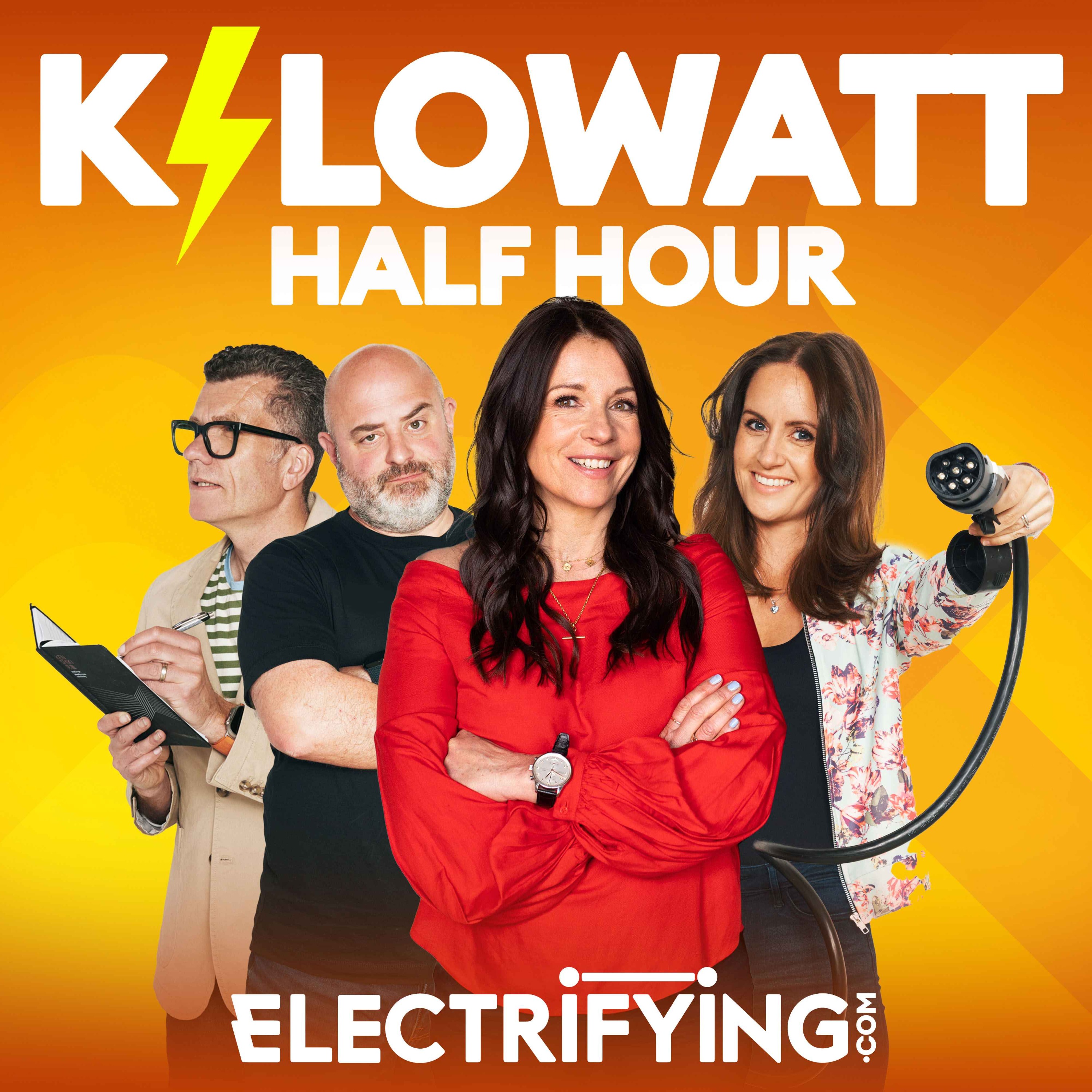
Ep 106: GTI Is Back, Jaguar Gets a Name & Used EV Sales Surge
About this episode
Financing and charging practicality take center stage: some mortgage companies offer “0% finance” for installing an EV charge point or solar, and the hosts argue home charging can beat headline range claims. The show also covers electrified hot-hatch momentum, including the “VW ID Polo GTI” with “226 horsepower,” plus Jaguar’s GT name shift to “type 01” and expectations of “more than a thousand horsepower.” Used EV sales are up “almost a third,” while Barnard’s bargains start with the “Volkswagen ID 7.”
James Batchelor has seized the host’s chair this week on the Kilowatt Half Hour, proving that in the glamorous world of podcasting, promotion can happen very quickly indeed. Joined by Tom and Lucas, the team dive into another packed week in the world of EVs, including the rebirth of a legendary hot hatch badge, fresh details on Jaguar’s long-awaited electric future, and encouraging signs from the booming used EV market.
Tom brings news of the electric Volkswagen ID.Polo GTI and asks whether it could become the EV hot hatch to beat, while Lucas talks us through the latest on Jaguar’s upcoming Type 01 and why the brand is leaning heavily into heritage with its naming strategy.
There’s also discussion around:
- Why used EV sales are surging in 2026
- The growing appeal of second-hand electric cars
- The complicated world of funding solar panels and home chargers
- Whether ultra-long-range batteries really matter
- EVs for caravan towing
- And the increasingly competitive electric hot hatch market, featuring the Corsa GSE, Cupra Raval, Alpine A290 and more
Barnard’s Bargains returns with more tempting lease and used EV deals, while the listener questions cover long-term EV ownership, keeping a Kia Niro EV beyond finance, and whether today’s technology is already “good enough” for most drivers.
Hosted on Acast. See acast.com/privacy for more information.
EV hot hatch space
"I'd quite like to also promise you dear listeners that that will, that blatant bribe will not be affecting my opinions on any upcoming Vauxhall or LeapMoto products... I'd quite like to mention the fact that the EV hot hatch space seems to be heating up quite nicely"
An “EV hot hatch” is a small electric car that’s meant to feel fun to drive, not just get you from A to B. The host is saying this type of car is becoming more popular and more exciting lately.
“EV hot hatch” refers to compact hatchbacks that are electric and tuned or marketed for lively driving. The host’s point is that this category is getting more attention and more competitive, which is why they’re doing deeper coverage like a long-form video review.

Vauxhall Corsa GSE
"Well I mean I'd quite like to mention the fact that the EV hot hatch space seems to be heating up quite nicely, I mean I went and did my first long-form video on the Corsa GSE which I'm sure we'll touch on a little bit later"
The Vauxhall Corsa GSE is an electric version of the Corsa that’s aimed at drivers who want a fun, sporty hatchback. The hosts are talking about it because it’s part of the growing wave of electric “hot hatches.”
The Vauxhall Corsa GSE is an EV hot hatch, meaning it’s a compact, performance-oriented hatchback powered by electricity. In this episode, it’s highlighted as a key example of the EV hot-hatch segment “heating up,” and the host also mentions doing a long-form video review on it.

C10 Leapmoto
"...thank you to Mason who is the PR for Vauxhall and LeapMoto, crafty so-and-so that he is, about half an hour ..."
The “C10” here is a car model name being mentioned during a discussion with a PR person. The podcast is treating it as a specific vehicle that’s being talked about or promoted. The transcript doesn’t give enough detail to say more about what it is beyond that.
“C10” in this context refers to a Vauxhall-related PR mention tied to Leapmotor, suggesting the podcast is discussing a specific model name or vehicle being promoted. Because the transcript doesn’t provide more detail, the key takeaway is that it’s a named car being talked about in a marketing/launch setting. It’s likely included because it’s part of the broader conversation about new or upcoming vehicles.
hot hatchbacks
"Lucas teased a little bit there about hot hatchbacks, this week there's been news of a famous badge... being electrified hasn't there?"
A hot hatchback is a small car (a hatchback) that’s tuned to be more fun and quicker than a normal version. It’s meant to feel sporty to drive, not just get you from A to B. The discussion is about electrified models trying to keep that same “fun compact” spirit.
Hot hatchbacks are compact hatchback cars tuned for stronger acceleration and sharper handling than a typical economy car. The “hot” part usually means a more performance-focused engine/motor and suspension setup, while the hatch body keeps them practical. In this segment, the hosts are discussing how an electrified GTI is trying to fit that enthusiast role.
electric
"news of a famous badge in the word of performance cars being electrified hasn't there?... and I... the GTI one does look nice"
Here, “electric” means the car runs on electricity from a battery, not gasoline. That can make the car feel quick right away because the motor responds instantly. They’re talking about electrifying the GTI name and what that means for driving fun.
In this context, “electric” means the car uses an electric motor powered by a battery rather than a gasoline engine. That matters because it changes how performance feels (instant torque) and how the car is packaged and marketed. The hosts are framing the GTI badge as being electrified, which is why they’re comparing it to other EV hot-hatch options.
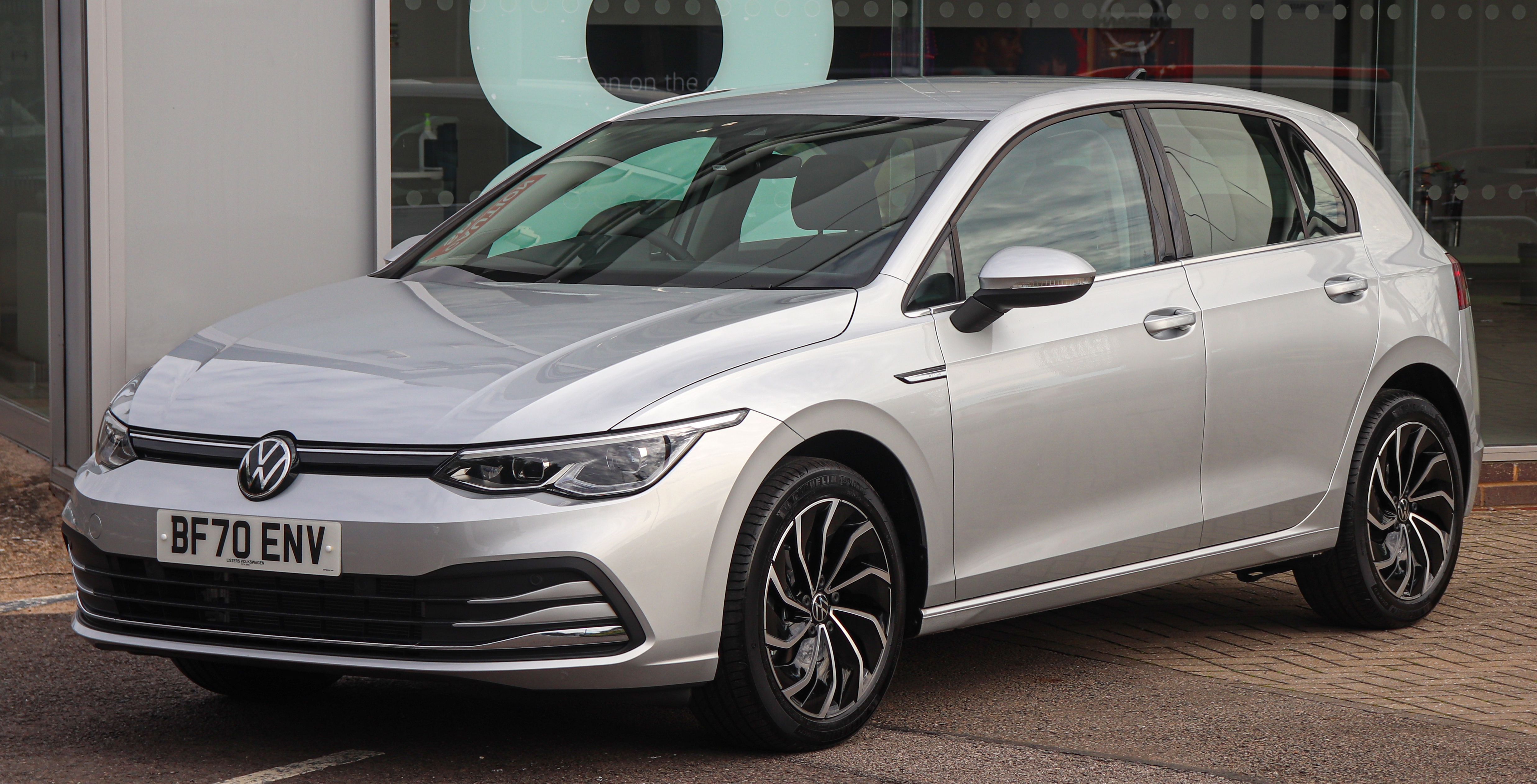
Volkswagen Gti
"...being electrified hasn't there? So the VW ID Polo GTI is back, it's been officially uncovered, there wa..."
The Volkswagen Golf is a popular compact car that’s meant for everyday driving. In this podcast, it’s mentioned in connection with electrification, meaning the model line is moving toward electric versions. That’s why it comes up in conversations about new technology in regular cars.
The Volkswagen Golf is a long-running compact car known for being practical, easy to live with, and widely available in many versions. In the podcast context, it’s brought up alongside the idea of electrification, which is important because it signals how the Golf line is evolving toward electric power. That makes it a natural topic when discussing what’s changing in mainstream car lineups.

Born Bourne
"...t's going to be 35 grand and you can buy a Cooper Bourne for that and it has similar power etc etc so I'm ..."
In the podcast, “Born” is a name used for an electric Volkswagen hatchback. The speaker is comparing its price and power to another small car. The point is whether it offers similar performance for less money.
“Born” refers to the Volkswagen ID.3 “Born” nickname mentioned in the podcast, where the host compares pricing and performance to another small car. It’s discussed because it’s positioned as a value option in the EV market, with similar power for a lower cost. That kind of comparison is typical when evaluating whether an EV is affordable and practical.
off the line
"[549.7s] I think to be honest I think I'd have an A290 despite having was it 20 horsepower less it's still quicker off the line"
“Off the line” refers to how quickly a car accelerates immediately from a standstill or near-standstill. It’s a common way to compare real-world launch feel, often tied to torque delivery and drivetrain response rather than top speed.
Prescott Hillclimb
"[564.5s] the Cooper or the Polo obviously but having taken an A290 up Prescott Hillclimb I can tell you that"
Prescott Hillclimb is a motorsport venue where cars are driven up a steep course against the clock. It’s often used as a practical benchmark for how a car behaves under sustained cornering and elevation changes, not just straight-line acceleration.
boot space
"[581.6s] you don't get anywhere near as much boot space I think it's more than 100 litres less on that car"
“Boot space” is the volume of the cargo area behind the rear seats (often measured in liters). It’s a key usability metric for hatchbacks because it determines how much luggage or bulky items you can carry.
rear seat room
"[581.6s] but yeah the A290 is just smaller you don't get as much rear seat room and you don't get anywhere near as much boot space"
“Rear seat room” is a practical packaging metric describing how much space passengers have in the back seats. In small hot hatches, it often becomes a trade-off against front-seat comfort and overall vehicle size.

Type 00
"...now which is always nice um we've known it as the type 00 in concept form and then just the Jag GT is a bit..."
“Type 00” is a name used for a car concept shown to preview what a future model could be like. The podcast compares it to another car mentioned as “Jag GT.” The key idea is that it’s being talked about as a preview of future design or direction.
The “Type 00” is a concept name the podcast refers to, later contrasted with “Jag GT,” suggesting it’s part of a design or model lineup discussion. Concept cars like this are often discussed to preview future styling, packaging, or technology direction. In this context, it’s brought up because the conversation is comparing what’s been shown in concept form versus what’s actually arriving or being discussed.

Jaguar Type 01
"but now we know it's going to be the type 01 which to be fair isn't a terrible name obviously the type bit of that refers back to some of the old Jags of the past I think E type, F type etc etc"
Jaguar Type 01 is the name Jaguar is planning to use for an upcoming GT. The “Type” naming is meant to echo Jaguar’s older sports-car history, and it’s part of how the brand is trying to feel more familiar again.
Jaguar Type 01 is the production name Jaguar is moving toward for its upcoming GT. The hosts connect the “Type” naming to Jaguar’s older sports-car heritage (like the E-Type and F-Type), and they discuss how the brand is repositioning itself as the car gets closer to launch.

Jaguar E-Type
"the type bit of that refers back to some of the old Jags of the past I think E type, F type etc etc"
The Jaguar E-Type is a famous old Jaguar sports car. Mentioning it is a way of saying Jaguar wants the new car’s name to feel connected to its classic history.
The Jaguar E-Type is a legendary classic Jaguar sports car, used here as an example of the brand’s older “Type” naming heritage. Referencing it signals Jaguar’s intent to connect the new Type 01 name to its historic sports-car identity.
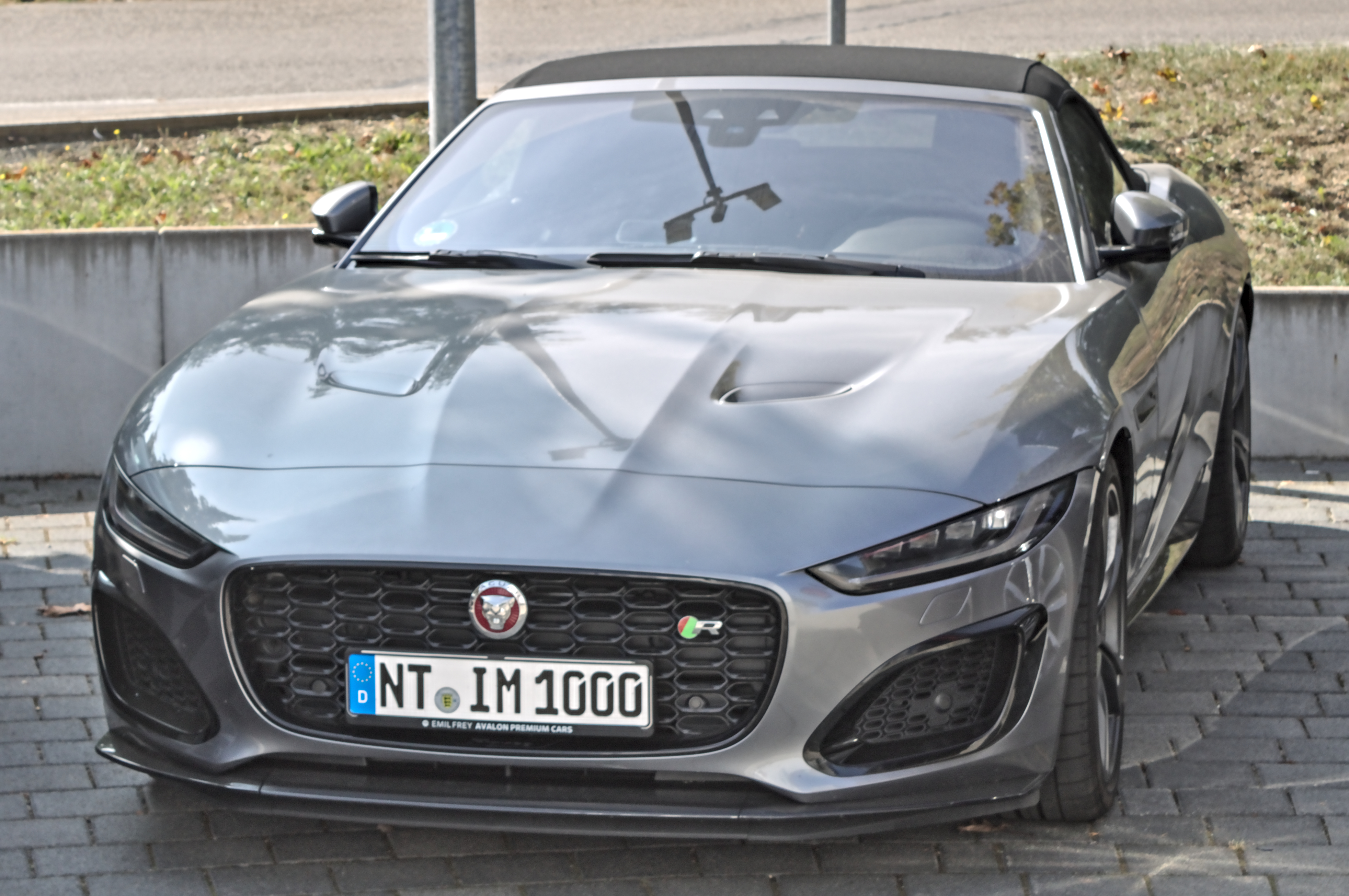
Jaguar F-Type
"the type bit of that refers back to some of the old Jags of the past I think E type, F type etc etc"
The Jaguar F-Type is a more recent Jaguar sports car. It’s brought up to show that Jaguar’s “Type” naming has history, not just a random new label.
The Jaguar F-Type is a modern Jaguar sports car name, cited here alongside the E-Type to explain the “Type” naming tradition. The hosts use it to argue Jaguar is leaning back into heritage as it approaches production.
camo
"we've seen it go around in all sorts of camo obviously we've seen the concepts quite freely and openly but it's been camouflaged as some very interesting things I think at one point"
“Camo” refers to camouflage used on test mules—prototype cars covered in patterned wrap or panels to hide their final styling. It’s common during development so photographers and competitors can’t easily identify the production look.
prototype
"so the sooner we can actually get it on the road it's going to be an exciting thing indeed I mean we're expecting more than a thousand horsepower and in excess of 400 miles of range so it'll definitely be expensive but considering where it started"
A prototype is an early, test version of a car. It’s built so the team can check how it drives and works before the final production car is ready.
A prototype is an early version of a car built to test real-world engineering before the production model is finalized. The hosts mention prototypes being driven and photographed, which is typical of the final development phase.

Land Rover Range Rover
"...ound the sort of Warwickshire area disguised as a Range Rover which is a difficult thing to do for a low slung ..."
A Range Rover is a big, comfortable SUV made for luxury and everyday driving. It’s also designed to handle tougher roads if needed. People talk about it because it stands out and is meant to be a versatile all-rounder.
The Land Rover Range Rover is a large luxury SUV known for comfort, off-road capability, and a high-end interior. It often comes up in discussions because it’s a “do-it-all” vehicle—capable of long-distance cruising while still being able to handle rougher terrain. In the podcast context, it’s mentioned as a difficult vehicle to “disguise” due to its distinctive presence.
horsepower
"I mean we're expecting more than a thousand horsepower and in excess of 400 miles of range so it'll definitely be expensive"
Horsepower is a way to describe how strong a car’s engine or motor is. “More than a thousand horsepower” means it’s expected to be extremely powerful.
Horsepower is a measure of engine or motor power—how much work the powertrain can do over time. When the hosts say they expect “more than a thousand horsepower,” they’re talking about the car’s very high output capability.
heritage branding
"that Jaguar is trying to lean back into this their heritage they are aware of the fact that Jaguar's got 75 years of sports cars it's you know and it's a quite a big shift away from how when they launched the type 00"
This is about a brand trying to use its past to make the new car feel more familiar. The hosts think Jaguar is doing that more now than it did when it first introduced the Type 00.
“Leaning back into heritage” is a branding strategy where a manufacturer emphasizes its history and classic identity to shape how people perceive a new product. The hosts argue Jaguar is shifting from the Type 00 launch era toward a more familiar, tradition-linked approach as the production car nears.
first quarter of 2026
"I was talking about new EV car sales this week it was the turn of used EV sales and they are for the first quarter of 2026 so these are official figures from the SMMT overall sales were flat"
“First quarter of 2026” just means the early part of the year—January through March. Breaking sales into quarters makes it easier to spot whether things are improving or slipping.
“First quarter of 2026” is a specific three-month reporting window (January through March) used for comparing sales trends. Using quarterly slices helps highlight changes that might be hidden in longer-term averages, especially when EV demand is shifting.
SMMT
"so these are official figures from the SMMT overall sales were flat"
SMMT is a UK organization that tracks car industry data. When they quote SMMT numbers, it means the sales figures come from an official industry source.
SMMT is the UK’s Society of Motor Manufacturers and Traders, which publishes industry statistics on vehicle sales. When the hosts cite SMMT figures, they’re referring to standardized, industry-wide reporting rather than anecdotal dealer numbers.
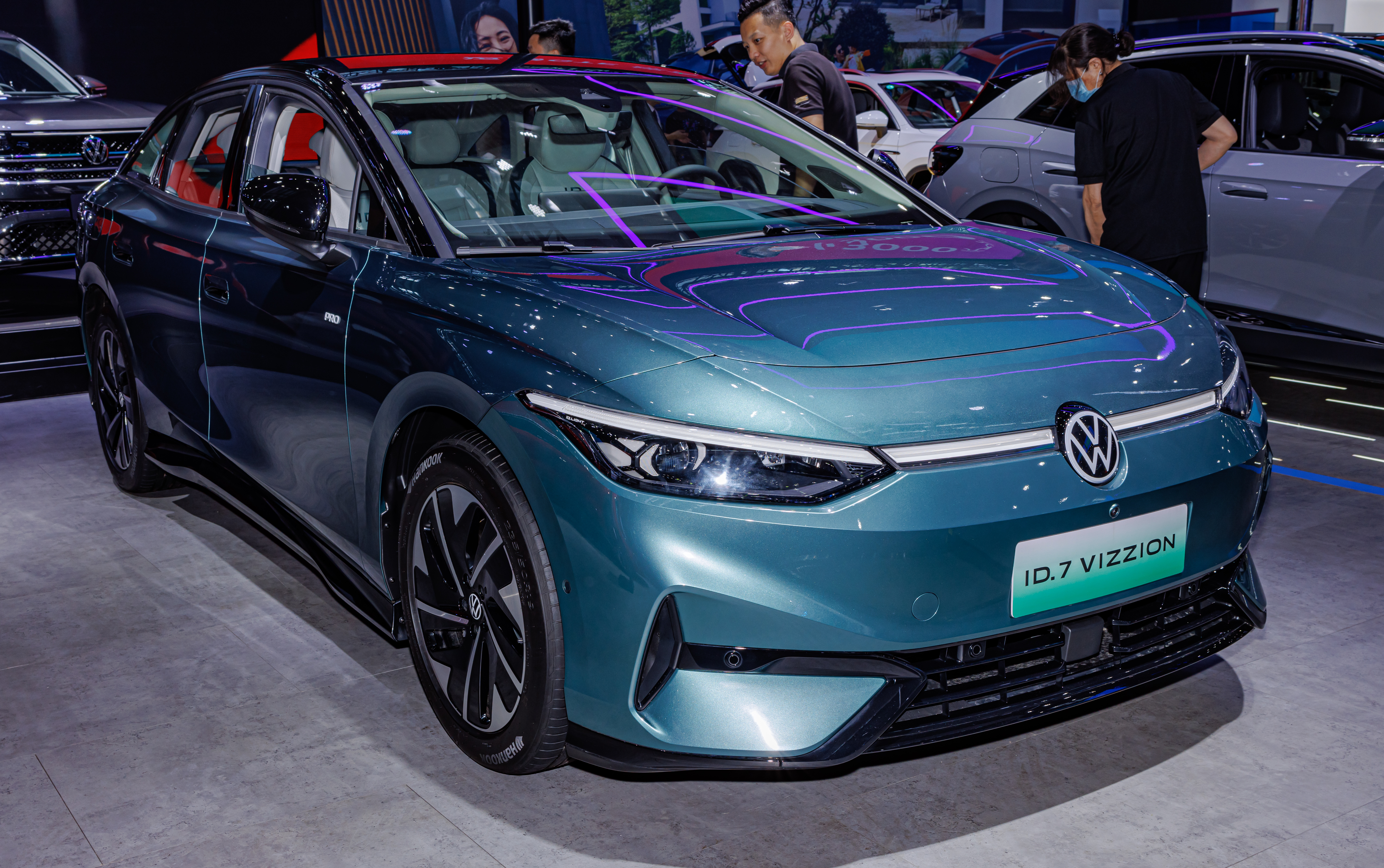
Volkswagen ID 7
"well it's one that since Vicky isn't on the podcast this week it's her favorite car so she won't witter on about it for hours we are safe from that it's the Volkswagen ID 7 which occasionally"
The Volkswagen ID 7 is an electric car from Volkswagen. It’s built to be a more normal-looking, everyday sedan—so it’s aimed at people who want an EV but don’t necessarily want a small hatchback or a crossover.
The Volkswagen ID 7 is an all-electric Volkswagen sedan designed around the brand’s ID electric-car platform. It’s notable because it represents Volkswagen’s push into the mainstream EV market with a more traditional, family-sedan shape rather than a crossover-only approach.

Volkswagen Id
"...about it for hours we are safe from that it's the Volkswagen ID 7 which occasionally pops up as a bit of a bargai..."
The ID. Buzz is an electric van-style vehicle made by Volkswagen. It uses a battery and electric motor instead of petrol. The podcast brings it up as part of Volkswagen’s electric lineup and what people are excited about.
The Volkswagen ID. Buzz is an electric version of the classic, boxy “people mover” style, built on Volkswagen’s electric vehicle platform. It’s relevant in the podcast because the conversation is about electric Volkswagen models and what’s coming or being discussed. The ID. Buzz stands out as a practical EV with a distinctive shape.
86 kilowatt hour battery
"isn't it 86 kilowatt hour battery 378 pounds a month which is really good you know you compare"
That “86 kilowatt hour” number is how big the EV’s battery is. Bigger batteries usually mean you can drive farther before needing to charge.
An “86 kilowatt hour battery” refers to the size of the EV’s battery pack, measured in kilowatt-hours (kWh). A larger kWh number generally means more potential driving range, and it’s being used here to compare value versus other cars at similar monthly lease costs.

Alpine A290
"that to some of the other cars that are around that money and it was like an Alpine A290 so this"
The Alpine A290 is another EV being mentioned as a price/value comparison. The host’s takeaway is that the Volkswagen seems like the better deal.
The Alpine A290 is an electric car used here as a comparison point for lease pricing and value. The hosts argue that the ID 7 they’re discussing offers “a lot more car for the money” than the Alpine alternative.
Chadamo plug
"now the only problem with it is that it's got a chadamo plug on it so if you do need to charge a lot when you're out then it's a little bit of a pain because it's slow and you're limiting the amount of charging points"
A “Chadamo plug” is a type of fast-charger connector for some EVs. The host is saying it can be annoying because it may charge more slowly and you might not find compatible chargers as easily.
A “Chadamo plug” refers to the CHAdeMO fast-charging standard, which is one of several EV DC fast-charge connector types. The host says it can be a pain because it’s slow and limits which charging points you can use—an important real-world consideration when planning trips.
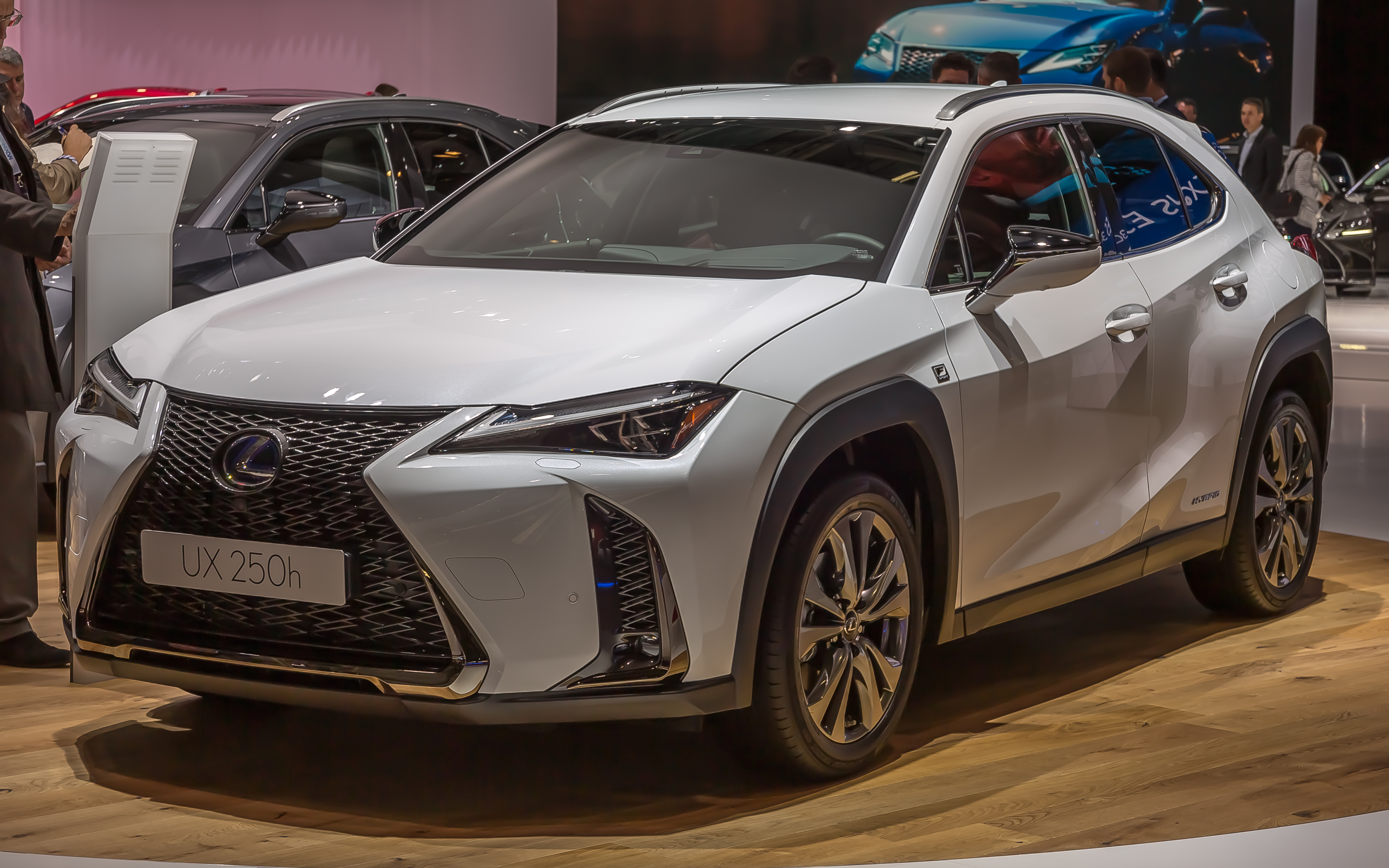
Lexus UX
"it's a Lexus UX if you remember those yes and it's this this one 2023 so not yet three years old because it's a 72 plate it's only got six and a half thousand miles on the clock and it's 14795"
The Lexus UX is a small Lexus crossover. Here, the host is talking about a used 2023 example and why the warranty and low mileage make it appealing.
The Lexus UX is a compact Lexus crossover, and in this segment the host specifically discusses a used example as an EV charging/ownership story. They highlight a 2023 car with a 72-plate, low mileage, and a service-activated warranty that can extend coverage to a maximum of 10 years.
service activated warranty
"you're right that's it's a service activated warranty isn't it so that basically that means if you take the car to a Lexus dealer"
This means the warranty can last longer if you keep getting the car serviced at the dealer. In this case, the host says it can extend coverage up to 10 years.
A “service activated warranty” is a warranty extension that only kicks in if you keep up with scheduled servicing at the brand’s dealer network. The host says Lexus will add an extra year when you service it, up to a maximum of 10 years of coverage.
wheel spin
"it was it was kind of a pointless press load but I do remember it was it was really nice apart from a bit of wheel spin I seem to remember it had difficulty getting its power down"
Wheel spin is when the tires spin but the car doesn’t accelerate as well as you’d expect. The host is saying the car sometimes struggled to put its power to the road.
Wheel spin is when the drive wheels lose traction and rotate faster than the car can move forward. The host mentions it as a behavior they noticed, implying the car had trouble putting power down smoothly.

Kia EV3
"... a little bit in the past few years what with the EV3 and and and neuroelectric cars but the basic pack..."
The Kia EV3 is an electric car made by Kia. The podcast talks about it as part of the newer wave of EVs and mentions the “basic pack,” which usually means the standard version with a certain battery/feature level. The point is what you get if you choose the simpler, lower-cost setup.
The Kia EV3 is an electric vehicle positioned as a smaller, more accessible EV option in Kia’s lineup. The podcast references it in the context of recent EV discussions and mentions the “basic pack,” which suggests a focus on battery/trim value and what you get for the money. That makes it a relevant topic for buyers comparing entry-level EVs.
carplay
"i would absolutely keep that if you like it I don't think it's it's going to change there's nothing like carplay or one of those other things that makes a real difference to your ownership experience"
CarPlay is Apple’s system that lets you use your iPhone through your car’s screen. It can make navigation and music easier because it uses the apps you already know.
CarPlay is Apple’s in-car software that mirrors a compatible iPhone’s apps and navigation onto the car’s infotainment screen. It’s often discussed because it can make day-to-day use—maps, calls, music—feel more seamless than a car’s built-in interface.
EVED
"the only thing about longer-term EV ownership which a lot of people don't think about is the EVED which is going to cost people three PMR isn't it from next year"
EVED sounds like a rule or fee that can add to the cost of owning an EV over time. The key takeaway is that it may change your future running costs, so you should factor it in.
EVED appears to refer to an EV-related cost or charge that affects longer-term EV ownership, discussed alongside “running costs.” Because the transcript doesn’t spell it out, listeners would benefit from knowing what the acronym stands for and how it impacts total cost of ownership.
CATL batteries
"we've had an interesting counterpoint to the discussion we had last which is about the CATL batteries with a 900 mile range"
CATL is a company that makes EV batteries. The point here is that bigger batteries can mean longer range, but whether that matters depends on how you charge your car day to day.
CATL (Contemporary Amperex Technology) is a major battery manufacturer, and the hosts are referring to its high-capacity EV battery packs. The discussion centers on how battery range claims (like a 900-mile figure) affect real-world usefulness depending on charging access.
900 mile range
"we've had an interesting counterpoint to the discussion we had last which is about the CATL batteries with a 900 mile range and we were kind of debating whether the batteries with long ranges were an improvement"
“900 mile range” means the car claims it can go about 900 miles on one full charge. The hosts are saying that for many people, that’s more than they need if they can charge at home.
“900 mile range” refers to the estimated distance an EV can travel on a full charge under a standardized test cycle. The hosts argue that such long-range batteries may be unnecessary for many drivers if they can charge at home, because the practical limitation becomes charging convenience rather than maximum range.
home charger
"whereas for most people once they've got a home charger they'll find that they don't really need a 900 mile range"
A home charger is a way to charge your electric car at home. It usually makes charging easier and cheaper because you’re not relying only on public chargers.
A home charger is an EV charging setup installed at a residence, typically providing faster and more convenient charging than public options. Having one changes the ownership math because you can charge regularly and plan around your daily driving.
charging moments
"one charge would last me nine weeks and I could pick and choose my charging moments when I'm near a cheaper one"
“Charging moments” just means picking the best times to charge your EV. If you can’t charge at home, timing matters because prices and charger access can vary.
“Charging moments” refers to choosing when to charge an EV, often to take advantage of lower electricity prices or better availability. This is especially relevant for drivers without home charging, who must plan around public or workplace chargers.
weight penalty
"seems yeah yeah I think the initial cost of the larger battery as well as the more than likely [1493.6s] weight penalty that you're going to be paying for lugging it around"
A “weight penalty” means the car gets heavier. Heavier cars use more energy, so you may not get as much extra range as you’d expect.
A “weight penalty” is the extra mass you add when you increase battery size. In EVs, more weight can reduce efficiency and make range drop faster—an effect that becomes more pronounced when towing.
charging at home
"we keep saying the way to [1504.2s] drive an EV cheaply is to be able to charge at home yeah if you can't do that then that's you [1509.2s] know all by the by"
“Charging at home” means plugging your EV in where you live. The point is that it’s usually cheaper and easier than relying on public chargers.
“Charging at home” is the idea that the cheapest and most convenient way to run an EV is to plug in overnight. The episode argues that if you can’t charge at home, the economics of EV ownership—especially with towing—can change significantly.
kilowatt hours
"but I don't know if necessarily piling on the kilowatt hours is necessarily going [1514.9s] to net you that much of a benefit"
Kilowatt-hours (kWh) tell you how much energy is in an EV battery. A bigger number usually means more range, but it can also make the car heavier and more expensive.
“Kilowatt-hours” (kWh) is a measure of electrical energy stored in an EV’s battery. More kWh generally means more potential driving range, but it can also add weight and cost—especially noticeable when towing.
towing caravans with an EV
"who said wouldn't this make EVs a better proposition for those who tow caravans well [1540.9s] I mean as I am a very proud tow car of the year judge"
They’re talking about what happens when you tow a caravan with an electric car. Towing usually makes the battery drain faster, so you may need a bigger battery and better charging options.
The segment focuses on how towing caravans affects EV range and efficiency. It highlights the tradeoff between needing more battery capacity to offset towing losses and the practical challenge of having public charging options that work while the trailer is still attached.
roadside charging bays
"plus having roadside charging bays that are long enough for you to charge without [1560.4s] unhitching your caravan or trailer they are the solutions for people who tow with an EV [1566.7s] but as we know you know that's that's cars with massive batteries are not going to be cheap"
“Roadside charging bays” are public EV chargers you can use on the way. The discussion is about whether they’re set up so you can charge while towing, without having to disconnect first.
“Roadside charging bays” are public charging locations designed for real-world use, including when a car is towing. The key point here is that chargers need enough space and the right setup so you can charge without unhitching.
roadside services
"and it's going to take a long time for roadside services to all have charging bays that are long [1581.3s] enough for you to to charge your electric car whilst being hitched up"
“Roadside services” are the facilities you find on trips, like places to stop and charge. The point is that they need to be improved so towing EVs is practical.
“Roadside services” refers to public infrastructure along highways—like charging networks at service areas. The episode’s argument is that these facilities need to be upgraded (including charger bay layout) before towing EVs becomes easy everywhere.
charging while being hitched up
"enough for you to to charge your electric car whilst being hitched up so yes I think larger [1588.3s] batteries a 900 mile range battery probably is the solution to to to your towing woes"
“Charging while being hitched up” means you keep the trailer attached while you charge. They’re saying the charger setup has to make that possible, not just assume you’ll disconnect.
“Charging while being hitched up” means charging an EV without unhitching the trailer or caravan. The episode treats this as a practical infrastructure requirement—chargers must be positioned and sized so you can plug in safely and conveniently while towing.
charging points at campsites
"do they have charge points at campsites badge um some do yes and it's it's something [1608.3s] that's very much in its infancy"
They mention charging at campsites, and that it’s still not common everywhere. The idea is that the charger has to be capable enough to actually work for EVs.
The segment discusses EV charging at campsites, where availability is still limited. It also implies that campsite charging must be “proper” (adequate power and correct equipment) to be useful for EV drivers.
proper charging point
"but this is one of the the kind the fallacies is that you do have to have a proper [1619.5s] charging point you can't just plug in your electric car into the same charging points which you [1625.6s] you plug into your motor for your motorhome to to power the fridge"
A “proper charging point” is the right EV charger for your car. They’re saying you can’t just use the same power outlet meant for a motorhome’s fridge and other stuff.
A “proper charging point” means the correct type of EV charging equipment with sufficient capacity and the right connection for the vehicle. The episode contrasts this with using the same power setup as a motorhome uses for appliances like a fridge.
2.5 kilowatt
"they only take 2.5 kilowatt but apparently it was the extended length of time that it was trying to take to what's the issue"
2.5 kilowatt is how fast the charger can put electricity into the car. It’s not a super-fast charger, but it can still work well if you’re parked for a couple of days.
2.5 kilowatt refers to the charging power available at the campsite EV charger. Lower kilowatt charging is slower than higher-power “fast charging,” but it can be perfectly adequate for overnight or weekend stays.
3.6 kilowatts
"yeah I suppose even if you got like 3.6 kilowatts it's going to be all right isn't it I mean because you're going to be it's not as if you're going to need a rapid charge because you're going to be there for a weekend at least aren't you"
3.6 kilowatts is the charger’s power level—basically the charging speed. It’s slower than fast chargers, but it can be fine when you’re parked for a long time, like over a weekend.
3.6 kilowatts is another reference to EV charging power, indicating a relatively slow charging rate compared with rapid chargers. The host frames it as sufficient for “destination charging,” where the car sits for a weekend rather than needing a quick top-up.
rapid charge
"yeah I suppose even if you got like 3.6 kilowatts it's going to be all right isn't it I mean because you're going to be it's not as if you're going to need a rapid charge because you're going to be there for a weekend at least aren't you"
A rapid charge is a fast way to charge an EV. In this conversation, the point is that if you’re only charging while parked for a weekend, you don’t need a fast charger.
A rapid charge is a high-power EV charging session designed to add significant range in a short time. The host contrasts it with destination charging, arguing that for a weekend stay you usually don’t need the speed of rapid charging.
destination charging
"go and park the car over by a charger plug it in and as long as it's ready two days later you'd be quite happy exactly yeah I imagine yeah I mean it is the definition of destination charging really"
Destination charging is when you plug in your EV at a place you’re staying or visiting, and you’re not in a hurry. Since you’re parked for a while, even a slower charger can work.
Destination charging means charging an EV while you’re parked at a place you’re visiting—like a hotel, campsite, or attraction—rather than charging quickly on the road. Because you’re typically stopped for hours or days, slower chargers (like a few kilowatts) can still be practical.

Genesis GV60
"sorry this is in reference to the um podcast that we uh recorded last week where I was talking about the Genesis GV 60 and I inadvertently said when you switch on the ignition the um glass ball rotates as the gear lever of course John T 60 recognized the fact that"
The Genesis GV60 is an electric SUV, meaning it runs on electricity instead of petrol. The podcast mentions a feature you notice when you turn it on. It’s the kind of thing people talk about because it shows how the car’s tech works.
The Genesis GV60 is a compact electric SUV from Genesis, designed to combine everyday practicality with an EV-focused driving experience. It’s mentioned because of a specific feature the host described when turning on the ignition. That kind of detail is typical of EV discussions, where user experience and onboard tech are a big part of the appeal.
Request an Explanation
Heard something you'd like explained? We'll add it to this episode.
Sign in to request explanations for terms you heard.
Want to learn more?
Browse our glossary for plain-English explanations of automotive terms, jargon, and concepts.
Help improve this episode
See something that's not quite right? Our annotations are AI-generated and can sometimes miss the mark. Click the flag icon on any annotation to suggest a correction.
1 community members have helped improve this episode.