Ep 113: Ferrari's hit, bargain Fiskers and Dacia's £12k shock
About this episode
Mazda 6E impressions kick things off, with the hosts debating whether the new EV feels like a “real” Mazda—no buttons, huge touchscreen, and a more “meh” drive despite impressive efficiency (around 4.4 mi/kWh in hot weather). They swap notes on going car-light (electric push-bike week) and app frustrations with connected EVs. News highlights include Ferrari’s “Luce” selling out in China fast, plus a UK price shock for Dacia and a roundup of the best seven-seat EVs. Buying questions and listener feedback close out the show.
This week on the Kilowatt Half Hour, the team dives into the biggest stories from the world of electric cars. We discuss the Ferrari Luce’s surprise sell-out success in China, reveal why Britain’s cheapest EV has just become even more affordable, and ask whether now is the perfect time to snap up a bargain Fisker Ocean.
There’s also a look at the best seven-seat electric cars on sale today, plus what we’ve been driving – including the Renault 4, Mazda 6e and a rather different take on electric transport.
As always, we answer your questions, from choosing the best used EV for £20,000 to why manufacturers give UK models different specifications. We also celebrate a new pair of “EV Virgins”, share an incredible AI vision of a retro-inspired electric Ford Fiesta from a listener, reveal Mike’s latest bargain lease and used car picks, and read through your comments on manual gearboxes, Ford’s future, car apps and just how many EVs you’ve owned over the years.
If you’re thinking about buying an EV, already own one, or simply love keeping up with the latest electric car news, this is the podcast for you.
Hosted on Acast. See acast.com/privacy for more information.

6e
"...traight in. Well, I've been driving the new Mazda 6E, actually. Bit of an interesting car, actually."
The “6e” is the name used in the podcast for a Mazda model the host has been driving. It’s being talked about as a car that feels interesting during their test. The episode doesn’t provide more detail beyond that mention.
The “6e” in the podcast refers to the Mazda 6E mentioned by the host, described as an interesting car they’ve been driving. The discussion is focused on the vehicle as a current test or experience rather than deep technical details. It’s included because it’s part of the host’s recent driving lineup.
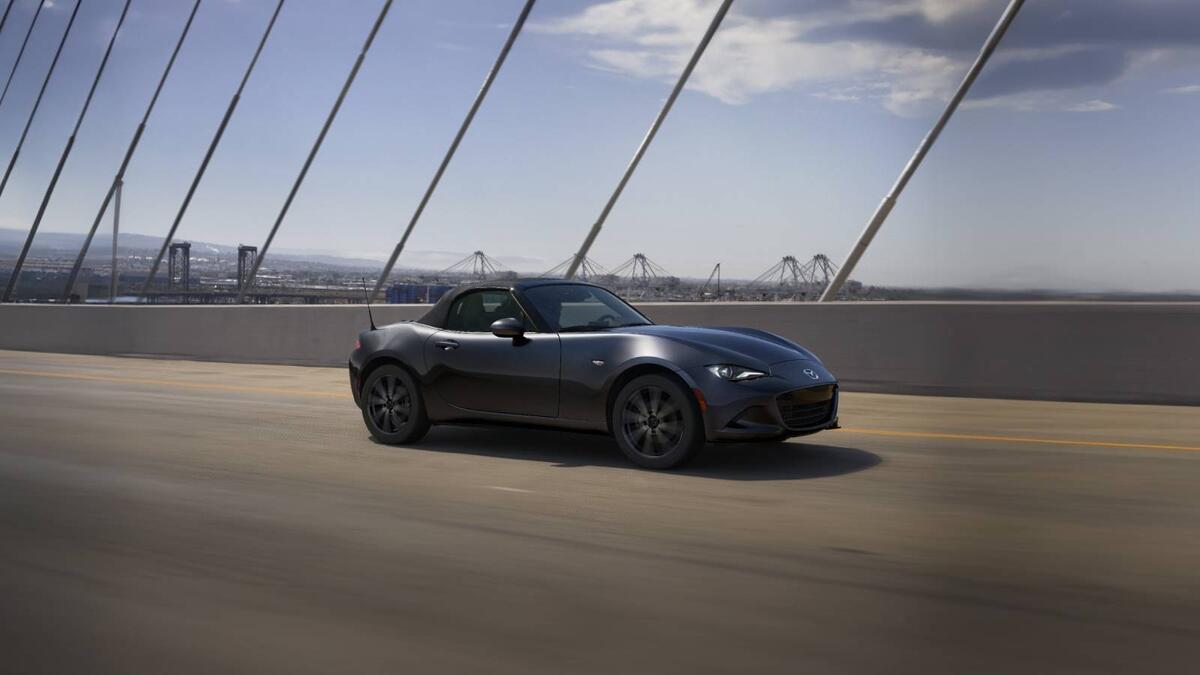
Mk1 MX-5
"Well, one of my probably top-favourite cars of all time, [144.7s] the Mk1 MX-5 with the pop-up headlights. [147.3s] That, to me, is a Mazda."
The host is talking about the first-generation Mazda MX-5 (Miata). It’s a small, fun roadster, and the early cars are known for their pop-up headlights—so it represents the “classic Mazda” they’re comparing the new car against.
The “Mk1 MX-5” refers to the first-generation Mazda MX-5 (Miata), a lightweight, driver-focused roadster. The mention of “pop-up headlights” is a defining styling cue of the early MX-5 era and is used here to explain what the host associates with “Mazda.”
pop-up headlights
"Well, one of my probably top-favourite cars of all time, [144.7s] the Mk1 MX-5 with the pop-up headlights. [147.3s] That, to me, is a Mazda."
Pop-up headlights are headlamps that are hidden behind the bodywork and then lift up when you turn them on. They’re a distinctive design feature on some older sports cars, and here they’re used to anchor the host’s “this is what a Mazda should be” memory.
air conditioning
"30 degree heat. Fans on, you know, the air conditioning on full blast."
In an electric car, running the cabin cooling can use battery energy. So in hot weather, efficiency can drop more than it would in mild conditions.
In EVs, air conditioning can noticeably affect efficiency because it draws power from the battery. That’s why the host calls out hot-weather testing conditions when discussing the car’s efficiency.
cooling seat
"Fans on, you know, the air conditioning on full blast. Cooling seat on as well."
A cooling seat is a seat with built-in airflow to keep you cooler. It uses electricity, so it can affect how efficiently an EV uses its battery.
A cooling seat uses built-in fans and/or ventilation channels to move air through the seat, helping reduce heat buildup. Like air conditioning, it can add electrical load, which matters when evaluating EV efficiency.
miles per kilowatt hour
"Over 180 miles. I average 4.4 miles per kilowatt hour."
This is an electric-car efficiency number. It means how far the car goes on one unit of battery energy—higher usually means it’s more efficient and costs less to drive.
“Miles per kilowatt hour” (mi/kWh) is an efficiency measure for electric cars. It tells you how many miles you can drive per unit of battery energy, so a higher number generally means the car is using less electricity to travel the same distance.
Mazda
"I'm sure it's got loads of redeeming features. [235.2s] I think just... [236.6s] I don't know about what you think, Mike, [237.9s] but for me, Mazda is just one of those brands out there"
Mazda is a Japanese car brand. The speaker is basically saying Mazda’s cars don’t all feel like they come from the same “family,” so it’s harder to describe what Mazda’s identity is right now.
Mazda is a Japanese automaker known for a distinctive design language and driving feel across many models. In this segment, the host is discussing Mazda’s brand identity and how consistent (or inconsistent) it feels compared with other automakers.
Kia
"It's the opposite of Kia, isn't it? [283.9s] Where everything looks exactly like a small, bigger version of the same car. [288.2s] Mazda are just like..."
Kia is another car brand. The host is comparing it to Mazda, saying Kia tends to make many of its cars look like the same design idea scaled up or down.
Kia is a South Korean automaker that’s often recognized for strong visual consistency across its lineup. Here, the host contrasts Kia’s “everything looks the same” approach with Mazda’s more varied model identities.
hybrids
"They're doing petrol, they're doing diesel, they're doing hybrids. And when it comes to EVs, I mean, the MX-30 was..."
A hybrid car uses two power sources—an engine plus an electric motor. The car can switch between them to improve efficiency compared with a petrol-only car.
Hybrids use both an internal-combustion engine and an electric motor/battery to move the car. In the segment, it’s part of a broader list of powertrain types Mazda is pursuing alongside EVs.
EVs
"They're doing petrol, they're doing diesel, they're doing hybrids. And when it comes to EVs, I mean, the MX-30 was..."
EVs are electric cars. Instead of burning petrol or diesel, they use electricity stored in a battery to drive the wheels.
EVs are electric vehicles—cars powered primarily by an electric motor and battery rather than an internal-combustion engine. The host uses “EVs” to contrast Mazda’s earlier EV efforts (like the MX-30) with what they’re doing next.

Mazda Mx30
"And when it comes to EVs, I mean, the MX-30 was... It was charming, but it was woeful, really. ... But it had a charm about it, but it was very inefficient, wasn't it?"
The Mazda MX-30 is Mazda’s first-generation electric car. The host liked the look and feel, but says it didn’t do as well as it should—especially in how efficiently it uses battery power.
The Mazda MX-30 is Mazda’s early EV attempt, built around a compact crossover layout and a distinctive design. In this segment, the host calls it “charming” but “woeful” and “very inefficient,” pointing to real-world EV shortcomings like limited efficiency and practicality versus expectations.
Chang-An
"So this is why Mazda's now... They've got this partnership with Chang-An. It's basically a Mazda-Rise Chang-An, this Mazda 6E."
Chang-An is a big car company from China. Here, the host says Mazda is working with them to help build EVs faster, which can affect how the finished car turns out.
Chang-An (Changan) is a major Chinese automaker. In this segment, it’s presented as Mazda’s partner for EV development and production, which is relevant because partnerships can determine platform, cost, and how quickly new EVs reach the market.
Mazda 6E
"They've got this partnership with Chang-An. It's basically a Mazda-Rise Chang-An, this Mazda 6E. That's why it doesn't feel like a Mazda, because it's a Chinese car underneath, basically."
The Mazda 6E is Mazda’s newer EV plan mentioned in this segment. The host’s point is that it’s being built using a Chinese partner’s base, so it may not feel as “Mazda” as people expect.
The Mazda 6E is described here as an EV that Mazda is rolling out quickly via a partnership, with the host emphasizing it’s “Chinese underneath.” That matters because the underlying platform and supply chain can strongly influence how the car drives, feels, and is packaged compared with a car developed purely in-house.
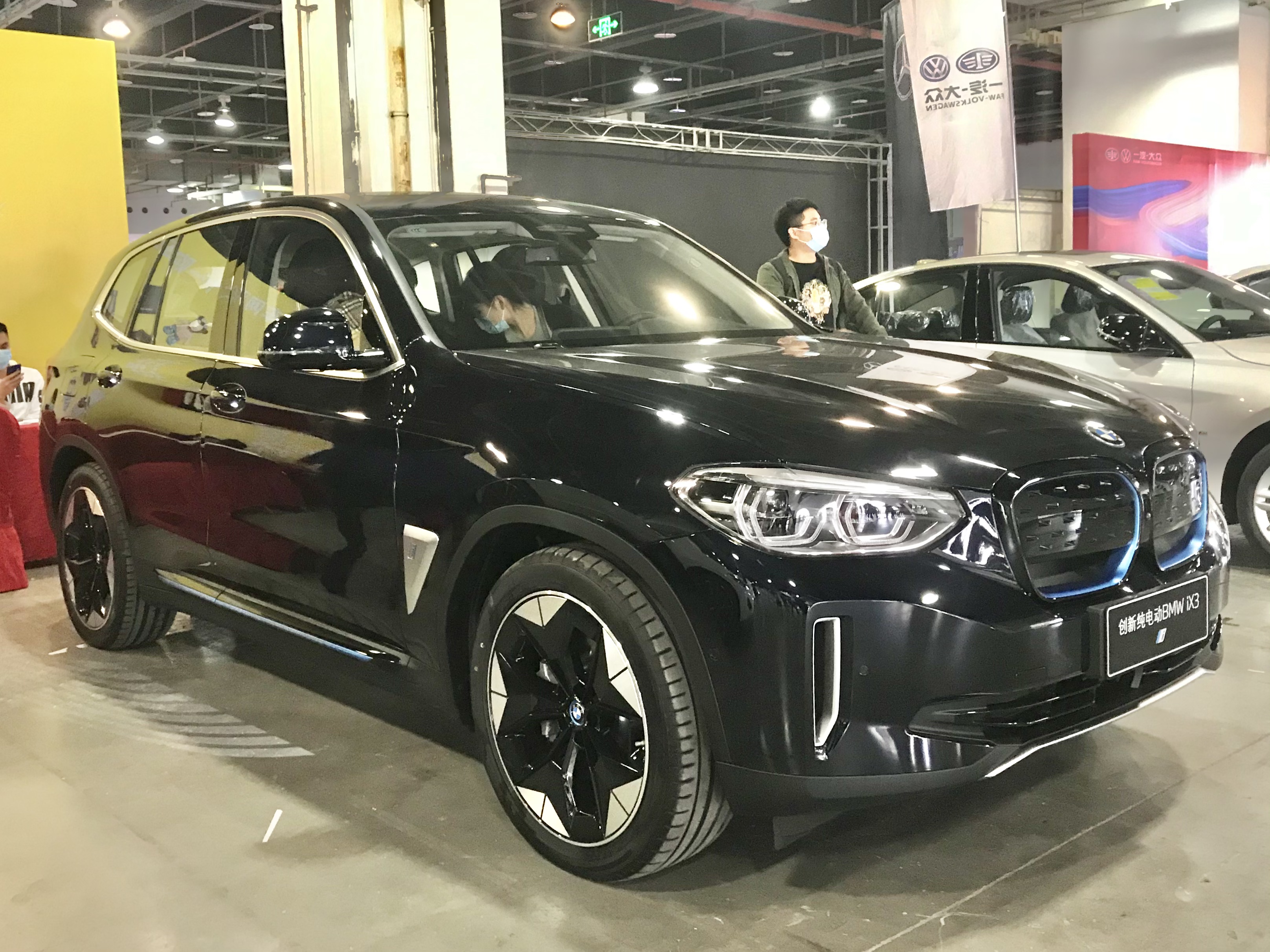
Bmw Ix3
"So I have just taken delivery of a BMW iX3, which is parked outside. [498.6s] I will be testing the efficiency on that car. [502.5s] I'm going to see if I can get 500 miles out of it."
The BMW iX3 is an electric SUV from BMW. Instead of using petrol, it runs on electricity, and the host is testing how far it can go on a full charge.
The BMW iX3 is an all-electric version of BMW’s X3 SUV, using an electric powertrain instead of a gasoline engine. In this segment, the host is focusing on real-world efficiency and range—trying to see if it can deliver about 500 miles from a charge.
efficiency
"I will be testing the efficiency on that car. [501.4s] I cannot wait. [502.5s] I'm going to see if I can get 500 miles out of it."
For an electric car, “efficiency” is how much electricity it uses to drive. If it’s efficient, you can go farther on the same charge.
In EV context, “efficiency” usually means how much energy the car uses to travel a given distance (often discussed as miles per kWh or kWh per 100 miles). The host is testing efficiency on the BMW iX3 to estimate real-world range.
VIN numbers
"But I just don't want to fathom around with putting VIN numbers in and then going into [531.4s] a menu and doing this."
A VIN number is like a vehicle’s unique ID card. It’s used to make sure the app is connected to the exact car you own.
A VIN (Vehicle Identification Number) is a unique 17-character code that identifies a specific vehicle. In the segment, the host complains about having to manually enter VIN numbers to set up the car’s app, which is slower than scanning a code.
QR code
"Can we all, can the car makers of the world just give us a QR code on your car somewhere [539.6s] where we go? [541.6s] There we go. [542.3s] We scan the QR code."
A QR code is a kind of barcode you scan with your phone. The host wants it on the car so setup is faster than entering details manually.
A QR code is a scannable 2D barcode that can quickly send information to a phone. Here, the host suggests car makers should place a QR code on the vehicle so owners can set up their app without typing VIN numbers.

ID Povo
"Although we will be driving, of course, the forthcoming ID Povo soon, which is very exciting. [691.9s] Okay, so that's what we've been driving. [694.6s] What news?"
They’re talking about a future Volkswagen electric car called the ID Povo. It sounds like it’s meant to be a cheaper, more mainstream EV.
The Volkswagen ID Povo is mentioned as a forthcoming model the hosts will be driving. It’s notable because the ID family is Volkswagen’s electric-car platform, and “Povo” implies a lower-cost, more accessible EV positioning.
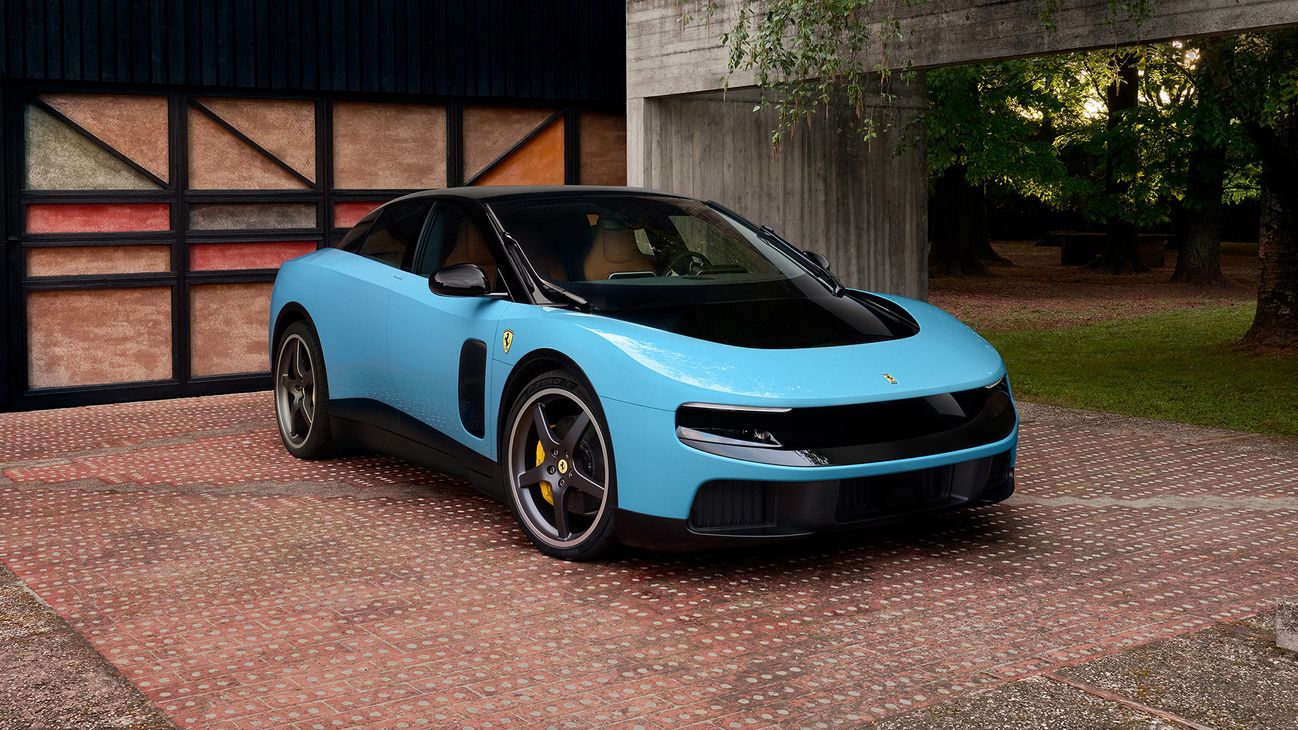
Ferrari Luce
"We'll shock the internet. We'll shock you too. [700.8s] Ferrari Luce? Sold out. Sold out. [705.5s] In China."
They’re talking about a new Ferrari called the Luce. It sold out in China almost immediately, which shows how strong demand is for new Ferraris.
Ferrari Luce is discussed as a new Ferrari model that has sold out in China. The key takeaway is demand/allocations: the episode frames it as a headline-worthy launch where the limited supply was snapped up quickly.
allocation
"So yeah, I think it was from memory, Sam wrote the article, that 88 cars, they had an allocation of 88 cars. [724.26s]"
An allocation is basically a limited quota—how many cars are allowed to be sold in a specific place. If only 88 are allocated, they can sell out fast.
In this context, an allocation is the limited number of cars a manufacturer (or importer) assigns to a market or dealer. The host notes an allocation of 88 cars, which explains why the Ferrari Luce could be “sold out” quickly.
Alipay
"4 million Alipay. That's what I know for China. [764.1s] 4 million in Alipay."
Alipay is a payment app used in China, kind of like a digital wallet. The host is saying the price they’re talking about is in Chinese money handled through that app.
Alipay is a Chinese mobile payments app used for paying for goods and services, including online purchases. The host is using it as a shorthand for how pricing and payments work in China, emphasizing that the “£4 million” figure is actually a local-currency amount.
Le Mans
"[815.8s] Le Mans. [817.0s] Who did you go to Le Mans with this year?"
Le Mans is a famous race track in France. The biggest event there is a 24-hour race, and it’s considered one of the most important races in motorsport.
Le Mans refers to the Circuit de la Sarthe in France, best known for the 24 Hours of Le Mans endurance race. It’s one of the most prestigious motorsport events in the world, so carmakers and racing teams treat it like a major proving ground.
Ronin
"[826.6s] From Ronin. [828.2s] Sorry? [831.0s] Ronin's a UK-based New Zealand racing team."
Ronin is a racing team. That means it’s the group that brings cars to races and helps the drivers compete.
Ronin is described here as a UK-based New Zealand racing team. In motorsport terms, a racing team is the organization that fields cars, manages drivers, and coordinates engineering and race operations.
EV
"to the UK's cheapest EV. [907.2s] Now, the Dacia Spring has had a massive price cut."
EV means electric vehicle. It’s a car that runs on electricity from a battery, not petrol.
EV stands for electric vehicle, meaning the car is powered primarily by an electric motor and a battery rather than a gasoline engine. In the UK context here, it’s used to describe the cheapest electric cars available.

Dacia Spring
"to the UK's cheapest EV. [907.2s] Now, the Dacia Spring has had a massive price cut."
The Dacia Spring is a budget electric car. The hosts are talking about how much cheaper it’s gotten, making it one of the lowest-priced EVs you can buy in the UK.
The Dacia Spring is a low-cost electric vehicle (EV) from Dacia, aimed at making EV ownership affordable. In this segment, the hosts focus on its recent price cut, positioning it as the UK’s cheapest EV.
cash price
"which if you do want a brand new car [924.2s] and you want to take a cash price for a new EV, [927.8s] I mean, that is, that you can't deny."
A cash price is what the car costs if you pay for it upfront. They’re saying the Dacia Spring is cheap even when you look at the upfront price.
A cash price is the amount you pay upfront for a car, as opposed to financing or leasing payments spread over time. The hosts use it to frame how low the Dacia Spring’s sticker price is for a brand-new EV.
Leap Motor
"Leap Motor announced that they had the UK's cheapest car [948.0s] because they increased their Leap Grant by about 3,000 pounds"
Leap Motor is the company that makes the Leap T03 electric car. In this segment, they’re mentioned because their UK pricing changed after a grant was increased.
Leap Motor is the automaker behind the Leap T03 discussed here. The segment frames the company’s UK pricing as being influenced by government support via a grant increase.
Leap Grant
"because they increased their Leap Grant by about 3,000 pounds [952.5s] or something. [953.0s] They trebled it or something like that,"
A grant is financial support that reduces the effective purchase price of a car. Here, the “Leap Grant” is described as being increased (and then “trebled”), which directly affects how cheap the Leap T03 can be marketed in the UK.
Leap T03
"which meant the T03 was the UK's cheapest car at 12,995 [959.7s] for 24 hours because then Dacia came out with the spring"
The Leap T03 is a cheap electric car from Leap Motor. In this discussion, it’s mentioned because it briefly became the cheapest EV in the UK before another car (the Dacia Spring) dropped its price.
The Leap T03 is a small, low-cost electric car from Leap Motor. The hosts use it as an example of how EV pricing can swing quickly when subsidies or grants change, since it was positioned as the UK’s cheapest EV for a short window.
T3 T03
"...rebled it or something like that, which meant the T03 was the UK's cheapest car at 12,995 for 24 hours ..."
The T3 is mentioned along with a deal where it was described as the cheapest car for a limited time. The podcast is focusing on the price and timing rather than how the car drives. It’s included because it’s part of that bargain discussion.
The T3 is referenced in the context of the UK’s cheapest car for a short period, with a price mentioned for 24 hours. That suggests the podcast is discussing a promotion or a specific listing rather than the vehicle’s technical characteristics. The car is included because it’s tied to a pricing or availability story.
undercut
"and undercut Leap Motor. [967.0s] So, yeah, Leap, Dacia Spring, 12 grand."
To “undercut” means to make your price lower than a competitor’s. Here, Dacia is described as dropping its EV price to beat Leap Motor’s cheapest-EV claim.
In car pricing, “undercut” means one brand lowers its price to beat a competitor’s offer. The segment uses it to describe how Dacia Spring pricing moved below Leap Motor’s EV pricing after Dacia announced its own spring-related deal.
used EV
"that buys you a pretty good used EV, doesn't it, still? Of course they're electric, one-year-olds."
A used EV is an electric car that someone owned before you. They’re talking about how much you can spend and still get a decent electric car.
A used EV is a previously owned electric vehicle sold on the secondhand market. The hosts use it to discuss affordability—specifically what “one-year-old” EVs cost and what buyers can realistically get for around £10k.
one-year-olds
"Of course they're electric, one-year-olds."
“One-year-olds” means cars that are about a year old. They’re pointing out that these newer used EVs can be relatively cheap compared with buying new.
“One-year-olds” is shorthand for vehicles that are roughly a year old, typically meaning they’ve already depreciated but aren’t fully “old” in terms of wear. In used-EV pricing discussions, it highlights how quickly EVs can drop in price early in ownership.
Bring the Spring campaign
"And it's a shame because we did campaign massively for the Bring the Spring campaign."
This sounds like a campaign to encourage bringing a particular cheap electric car (the Dacia Spring) to the UK. They’re saying they pushed for it, but the results weren’t as good as hoped.
“Bring the Spring campaign” refers to a promotional push aimed at getting a specific small EV model (the Dacia Spring) into the UK market. The hosts call it a campaign effort to influence availability and pricing, and then criticize the outcome.
AMI
"That and the AMI. Both disasters."
AMI here is mentioned like a government or industry program connected to EVs. The hosts are saying it didn’t work out well, but this snippet doesn’t spell out what AMI stands for.
AMI is referenced as another “disaster” alongside the Spring campaign, implying it’s a UK policy or scheme related to EVs. Without the expanded phrase in this excerpt, the exact meaning can’t be confirmed, but it’s clearly treated as an EV-related initiative.
liquidators
"Yeah, if you fancy a cheap fiscar ocean, yeah, the liquidators are selling off."
Liquidators are people who sell off what’s left of a company, usually after it fails. If they’re selling cars, it can mean lower prices, but you may need to think about future support and parts.
Liquidators are appointed to sell off a bankrupt company’s remaining assets—like inventory—so creditors can be paid. In car terms, that often means end-of-line vehicles can be discounted, but buyer experience and long-term support may be less certain.
company went bankrupt
"The fiscar oceans that got caught up when the company went bankrupt."
Bankruptcy is a legal process where a company can’t pay its debts and may be liquidated or reorganized. For car buyers, it can change how vehicles are sold, how parts and support are handled, and whether warranties or service programs remain reliable.
right-hand drive
"So there's 80 models left, 80 right-hand drive models left. And so if you want to get one, that now is going to be your chance."
Right-hand drive means the steering wheel is on the right side of the car. That matters in countries like the UK, where most cars are built this way.
Right-hand drive (RHD) means the steering wheel is on the right side of the vehicle. It’s important for markets like the UK, where RHD is standard, and it affects which cars are available when a limited number of vehicles remain.
long-term think
"You may be looking at long-term think, well, you know, lorians are worth a fortune now."
They’re talking about buying a car hoping it will be worth more later. The host doubts whether a cheap EV from a bankrupt brand will become valuable like older cars sometimes do.
This is the idea of buying a car as an investment and betting on future value—often based on rarity, brand desirability, or collector interest. The host is questioning whether a discounted EV from a failed brand will end up in the same “future classic” category as older, more established cars.
Goodwood Festival of Speed
"Because it's Goodwood Festival of Speed, which has now become basically a motor show. And there's everything there. EVs are being launched."
They’re talking about the Goodwood Festival of Speed, which is a big car event. They expect a lot of electric-car announcements and new reveals there.
The hosts call out the Goodwood Festival of Speed as an event that has effectively become a motor show. They’re planning lots of EV coverage there because it’s where new electric vehicles get launched and showcased.

Mercedes GLB
"if seven seats are your thing and you watch Batch's video of the Youth of 5008 and Mercedes GLB. There's a big roundup of all the best."
They mention the Mercedes GLB as another car to look at if you want seven seats. It’s a compact SUV that can be set up for families.
The Mercedes GLB is cited alongside the Peugeot 5008 as a seven-seat option. The GLB is known as a compact luxury SUV that can be configured with extra seats, making it relevant for buyers who want practicality without going to a full-size people-mover.
lease
"Leases, he says, Tom's with his ear to the ground as always, says the price is a bit up at the moment because we've started a new quarter and nobody's got any targets to hit anytime soon."
A lease is like renting a car for a fixed period. You pay a monthly amount, usually with some money up front, and there are rules like how many miles you can drive.
A lease is a financing structure where you pay to use the car for a set term (often 24–36 months) and then return it or buy it out. Lease deals are often quoted with a monthly payment plus an upfront “down” payment and mileage limits.
MG S6 trophy long-range
"But he has found one. He found an MG S6 trophy long-range, so a 77-kph battery, and that is £262 a month with 2,358 down, 24 months, 8,000 miles a year."
This is an MG electric car. The host is talking about a long-range version and how much it costs on a lease, pitching it as a practical family EV deal.
The MG S6 is an MG (SAIC/SAIC-owned brand) electric vehicle positioned as a practical family car. In this segment, “long-range” and the stated battery size and lease pricing are used to frame it as a value-focused EV option.

Audi S6
"But he has found one. He found an MG S6 trophy long-range, so a 77-kph battery,"
The Audi S6 is a faster, sportier version of a regular Audi A6. It’s designed to feel more powerful when you drive. In the podcast, it comes up as a specific car someone found, with extra details mentioned.
The Audi S6 is a performance-oriented version of the A6, built to deliver stronger acceleration and a more sporty driving feel. It’s mentioned in the podcast in the context of a specific example and battery-related details, suggesting discussion around an EV conversion or electrified setup rather than a standard S6. The key point is that it’s a higher-performance Audi model being considered or referenced.
down
"and that is £262 a month with 2,358 down, 24 months, 8,000 miles a year."
“Down” is the money you pay upfront to start the lease. Paying more up front can make the monthly payment smaller, but you’re still spending that money immediately.
In lease pricing, “down” refers to the upfront payment you put toward the deal. It reduces the amount financed over the lease term and can lower the monthly payment, but it’s still cash you pay at the start.
77-kph battery
"He found an MG S6 trophy long-range, so a 77-kph battery, and that is £262 a month with 2,358 down, 24 months, 8,000 miles a year."
They’re talking about the battery size. For EVs, the important number is usually in kWh (how much energy the battery holds), which affects how far you can drive before recharging.
The segment says “77-kph battery,” but in EV context this is almost certainly referring to a 77 kWh battery pack (energy capacity), not kph (speed). Battery capacity in kWh is what largely determines how far an EV can go on a charge.
8,000 miles a year
"and that is £262 a month with 2,358 down, 24 months, 8,000 miles a year. That's well under 300 kmph."
Leases usually come with a mileage allowance. If you drive more than the stated miles per year, you may have to pay extra when you return the car.
Lease mileage limits (like “8,000 miles a year”) are contractual caps on how much you can drive during the lease term. Exceeding the limit typically triggers extra charges at the end of the lease.
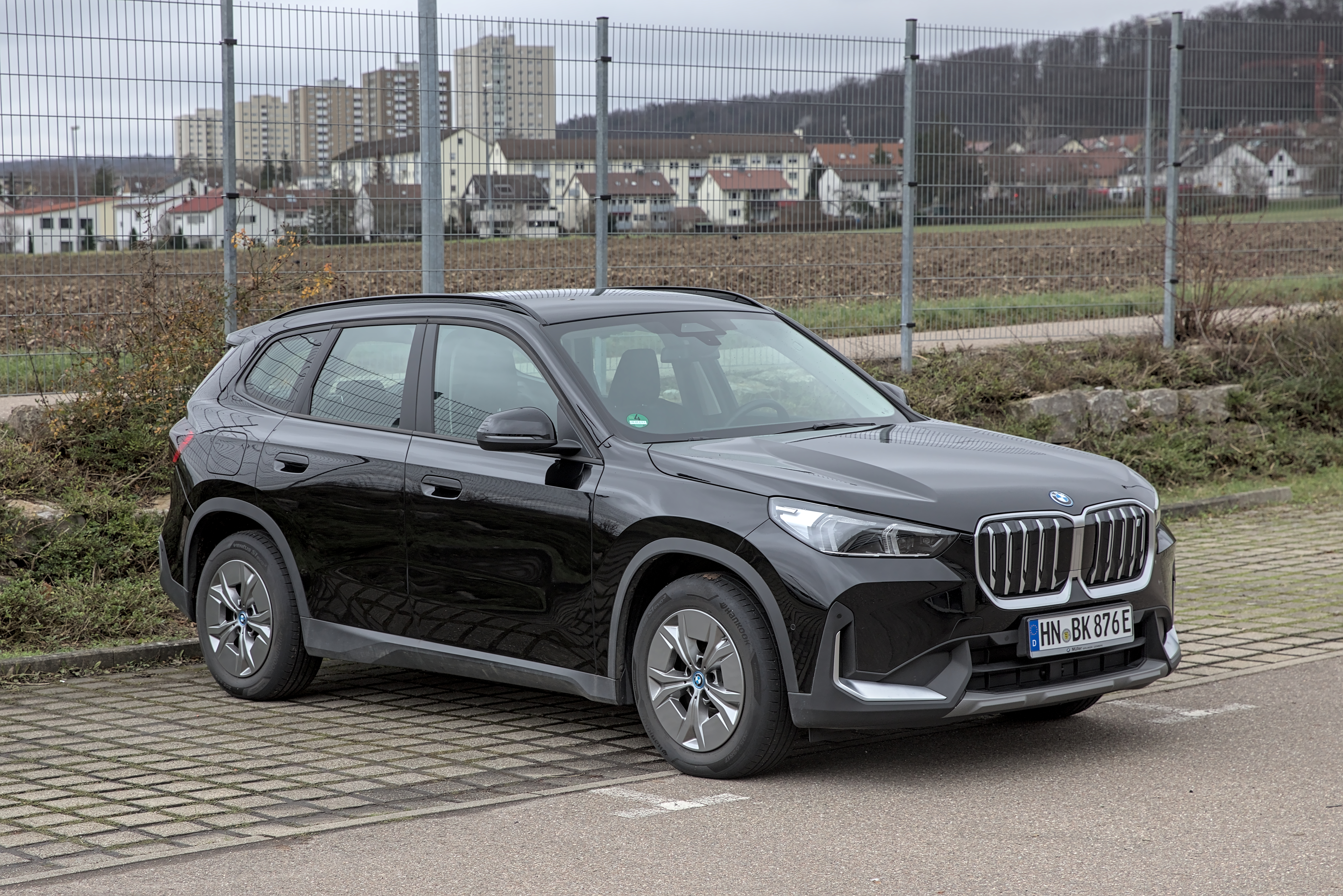
BMW iX1
"but he's found a two-year-old iX1. [1411.6s] I did the UK launch that. [1412.8s] I thought it was quite good. [1414.0s] It was a little bit sort of under-ranged,"
The BMW iX1 is BMW’s electric version of a small SUV. They’re talking about finding a used one that’s only a couple of years old and has relatively low miles, making it a strong value compared with the original price.
The BMW iX1 is BMW’s electric compact SUV, built on the X1 platform but with a battery-electric drivetrain. The hosts focus on a used, two-year-old iX1 deal—highlighting the UK launch context and the practical value proposition versus what it cost new.
280 miles
"What's the range on that? [1436.9s] Like 280 miles, something like that? [1438.9s] Yeah, yeah, yeah."
They’re quoting a specific driving distance—about 280 miles—on a full charge. The point is whether that number is enough for everyday driving today.
“280 miles” is the stated EV driving range figure being used to judge whether the iX1’s battery capacity meets modern expectations. It’s presented as a benchmark that has become less compelling over time as EVs with higher ranges became more common.
AI renders
"He has created some AI renders of what it will look like."
“AI renders” are AI-made pictures that show what a car could look like. They’re often used when the real car hasn’t been shown yet.
AI renders are computer-generated images created with artificial intelligence to visualize how a vehicle might look. In automotive coverage, they’re often used to show speculative designs before any official reveal.
Ford
"Reaction videos are everywhere. Ford, sign him up."
Ford is the car company being mentioned. They’re joking that Ford should hire the person who made the design images.
Ford is the automaker being referenced in a “sign him up” joke, implying the company should hire the designer for EV/vehicle visuals. It’s a brand mention tied to the Fiesta EV discussion.

Toyota Starlet
"It looks like a Toyota Starlet or something as well, isn't it?"
The Toyota Starlet was a small, compact car. Saying it looks like a Starlet is basically a way of describing the shape and size.
The Toyota Starlet is a small, compact hatchback nameplate known for its light, simple proportions. Comparing the EV render to a Starlet suggests the design is being perceived as compact and “cute” in silhouette.

Fiat 128
"It looks, it reminds me of like a Fiat 128 or something"
Fiat 128 is an older small Fiat car. The host is basically saying the new car’s shape reminds them of that older Fiat’s look.
The Fiat 128 is a compact car from Fiat that’s especially known for its classic, simple 1970s/early-1980s European hatchback styling. In this segment, it’s used as a visual reference point for how the speaker thinks the discussed car looks.
Volkswagen
"I think it's a Volkswagen guy a year or so ago. And he said, we're never going to listen to journalists."
Volkswagen is a big German car company. The speaker mentions it because someone from Volkswagen had an opinion about how car companies should think about journalists and what people actually buy.
Volkswagen is a major German automaker known for mass-market cars and a strong home-market presence in Europe. In this segment, the speaker attributes a viewpoint about media/journalist focus to a “Volkswagen guy,” making it relevant as the brand being referenced in the argument.
estate cars
"if we listen to journalists about cars, we'd just build manual estates with steel wheels and we'd sell none of them."
Estate cars are like sedans but with a longer back for more cargo space. Here, the speaker is saying some car writers obsess over that style.
Estate cars (often called station wagons) are passenger cars with extended cargo space behind the rear seats. The speaker frames “estate cars” as part of a journalist-focused checklist that they believe doesn’t match what most buyers want.
steel wheels
"So that's, he said, that's the, the journalist obsession is steel wheels, estate cars and manual gearboxes."
Steel wheels are the simpler, cheaper kind of wheels made from metal. The speaker is using them to describe the kind of car journalists talk about a lot.
Steel wheels are the basic, stamped-metal wheel type commonly found on entry-level trims. In the segment, they’re used as shorthand for “no-frills” cars that the speaker claims journalists over-focus on.

5 Renault 5
"...o see people looking happy with a Renault 4 and a Renault 5. Yeah."
The 5 E-Tech Electric is an electric car version of the Renault 5. It uses a battery and an electric motor. The podcast mentions it in a context that’s more about the car’s appeal than detailed specs.
The “5 E-Tech Electric” refers to the electric version of the Renault 5, which brings the classic Renault 5 name into a modern battery-electric format. It’s mentioned in the episode alongside other classic Renault references, suggesting the conversation is about vehicles that make people smile or spark interest. The key point is that it’s an EV carrying the Renault 5 identity.

Renault 4
"...Everyone needs to see people looking happy with a Renault 4 and a Renault 5. Yeah."
The Renault 4 CV is an older, classic car model from Renault. It’s the kind of vehicle people talk about for its history and character. In the podcast, it’s mentioned in a happy, nostalgic context.
The Renault 4 CV is a classic small car from Renault’s earlier history, known for being a popular, light, everyday vehicle in its era. It’s brought up in the episode in a nostalgic way alongside other classic Renault models. The mention is more about the car’s identity and charm than modern EV ownership.
without a home charger
"I'm now living in London without a home charger, have a family of four and would mostly use a car for short trips but also need to visit my family in Scotland."
If you can’t charge at home, you have to rely more on public charging. That means you’ll likely plan charging stops more carefully, especially for longer trips.
Not having a home charger changes how you plan EV charging, because you can’t reliably “top up” overnight at home. That typically shifts the routine toward public chargers and makes route planning for longer trips more important.
short trips
"I'm now living in London without a home charger, have a family of four and would mostly use a car for short trips but also need to visit my family in Scotland."
Frequent short drives can use more energy than you’d expect, because the car may not fully warm up or settle into its most efficient mode. That can mean you need charging more often.
EVs can be less efficient on frequent short trips because the battery and cabin may not reach optimal operating temperature before the drive ends. That can affect real-world range and how often you’ll need to charge.
longer trips
"We are keen to do longer trips for staycations, etc. We have a budget of £20,000 max and we are considering the following."
For longer drives, the EV’s real-world range matters, but so does where you can charge and how fast. If you don’t charge at home, planning the route and charging stops becomes a bigger deal.
Longer trips in an EV emphasize charging speed, charger availability, and route planning rather than just the car’s advertised range. It’s especially relevant when the driver depends on public charging.

Skoda ENYAC 80
"We have a budget of £20,000 max and we are considering the following. Skoda ENYAC 80, 60,000 miles, £20,000, £23,000, £19,000, Audi Q4, E-Tron, S-Line 70,000 miles,"
Skoda’s ENYAQ is an all-electric SUV. The “80” is basically the version with a bigger battery, which usually means you can drive farther before needing to charge.
The Skoda ENYAQ is Skoda’s battery-electric SUV, and the “80” refers to a specific battery/trim configuration. In EV shopping, the “80” typically correlates with a larger battery and longer real-world range than smaller-battery variants.

MG5
"Kia EV6 GT, goodness me, 60,000 miles, 2020, £18,000 or the MG5 with £10,000, 2025 for £20,000. All seem great options but wonder which one you would go for."
The MG5 is an MG electric car (a hatchback). Since the buyer doesn’t have a home charger, the big issue is whether it can comfortably handle both short local trips and longer journeys using public charging.
The MG5 is an MG-branded electric hatchback, often positioned as a value-focused EV. In a “no home charger” scenario, the key practical question is whether its real-world range and charging flexibility fit frequent short trips plus occasional longer drives to Scotland.
Skoda ENYAC
"So I would actually go for the Skoda ENYAC. It ticks every box, doesn't it really? ... The ENYAC is lovely but that is a pretty facelift one and pretty kind of new battery tech one."
The Škoda ENYAQ is an electric SUV. They’re saying it’s a well-rounded choice, but they weigh it against other EVs depending on battery and drivetrain details.
The Škoda ENYAQ is an electric SUV from Škoda that’s positioned as a practical family EV. The hosts mention it as a “ticks every box” choice, then compare it against other EVs based on charging, battery tech, and drivetrain updates.
800 volt system
"Yeah, only because if you're doing a long journey, it's got that lovely 800 volt system, really fast charging."
An 800-volt system is how the car’s electrical system is designed. It helps the EV charge faster when you use the right fast chargers.
An 800-volt system is an EV electrical architecture that allows the car to accept higher charging power more efficiently. In practice, that can reduce charging time at compatible fast-chargers compared with older 400-volt designs.
facelift
"I mean, the ENYAC is lovely but that is a pretty facelift one and pretty kind of new battery tech one."
A facelift is when a car gets updated partway through its life—usually styling changes and sometimes tech improvements. They’re saying the specific ENYAQ they’re comparing may be an earlier update.
A facelift is a mid-cycle update to a car’s styling and often its equipment or powertrain details without fully replacing the model. The hosts use it to suggest that an “older” ENYAQ variant may have different battery tech or drivetrain than a later updated version.
new battery tech
"The ENYAC is lovely but that is a pretty facelift one and pretty kind of new battery tech one."
“New battery tech” means the car’s battery is from a newer generation. Newer batteries can charge better and work more efficiently than older ones.
“New battery tech” refers to later-generation battery chemistry, cell design, or pack management that can improve real-world efficiency, charging behavior, and thermal performance. In this segment, it’s used as a reason to prefer a later ENYAQ with updated hardware.
different drivetrain
"So I would say that's, I think that if it was a slightly later ENYAC with the different drivetrain in it, I would go for that."
A drivetrain is the set of components that deliver power to the wheels (for EVs, that includes the motor(s), reduction gear, and related control hardware). The hosts imply that a later ENYAQ with a different drivetrain would be a better pick than the earlier one.
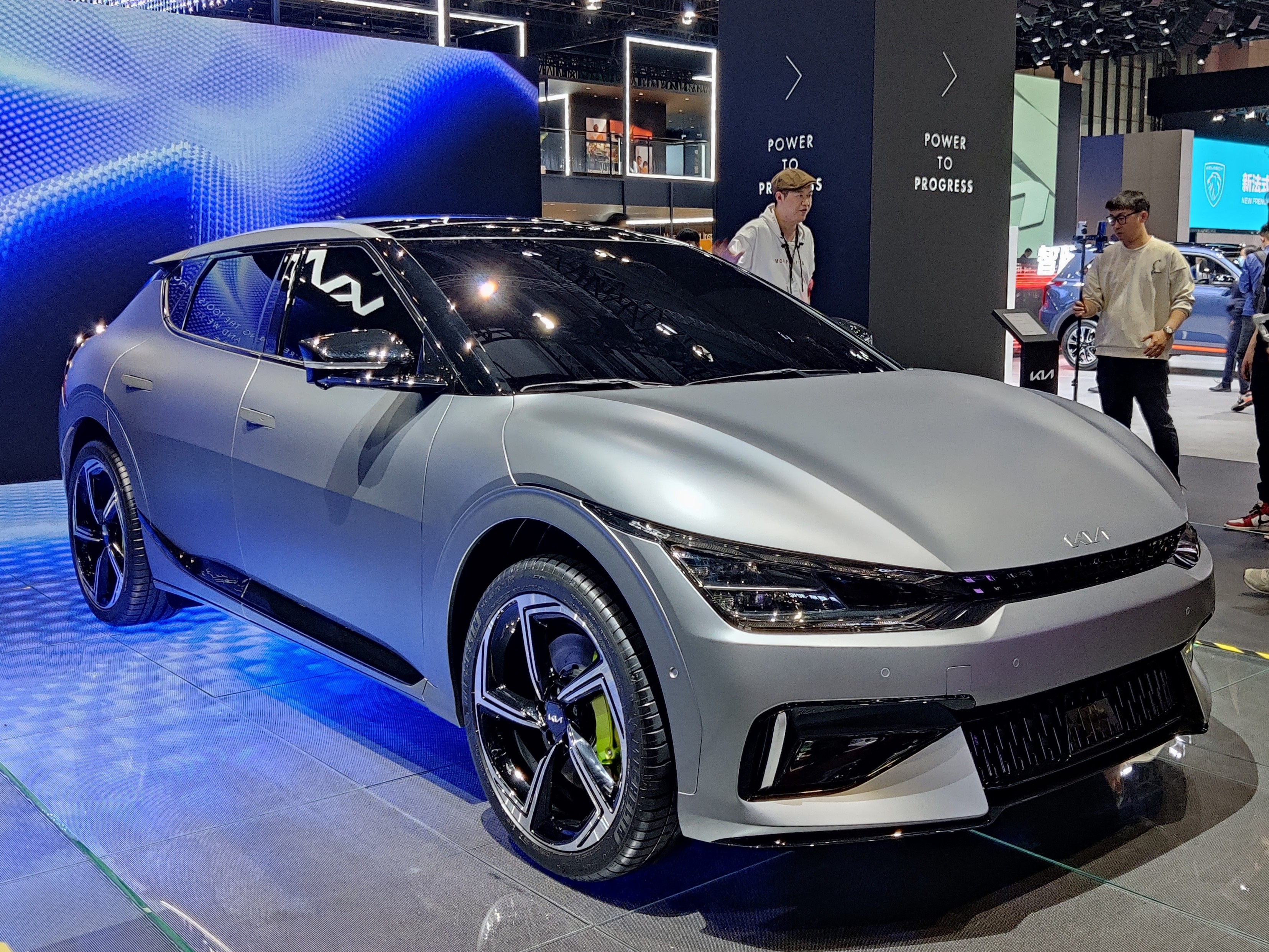
EV6
"But I would say of those four, yeah, I think the EV6 would be on my choose. I would concur, actually, for exactly that reason."
The Kia EV6 is an electric car that’s designed to work well for longer trips. They choose it because it makes charging easier and faster compared with the alternatives they’re discussing.
The Kia EV6 is a fast-charging-focused electric crossover that’s often praised for its efficiency and charging performance. Here, the hosts pick it over the other options for the same reason they liked the Kia earlier: long-journey practicality tied to charging capability and related drivetrain/battery considerations.
kilowatt charging
"For the longer journeys to Scotland, like here EV6, [1875.9s] is it up to 240, 260 kilowatt charging?"
“Kilowatt charging” is how strong the charger is. More kilowatts usually means you can add energy faster, as long as the car and charger can work together.
Kilowatt charging refers to how much electrical power the charger can deliver to the car, typically discussed for DC fast charging. Higher kilowatt numbers generally mean faster charging—though the car’s battery limits and charger compatibility still matter.
800 volt architecture
"Because of that 800 volt architecture, I think. [1882.0s] And also, if you're not on a charger in London,"
“800-volt” means the car’s electrical system is set up to use higher voltage. That usually helps it charge faster when you’re using the right fast charger.
An 800-volt architecture is an electric-car design that uses a higher-voltage electrical system than the more common 400-volt setup. Higher voltage lets the car draw more power efficiently, which can enable faster DC fast charging on compatible chargers.
fast charging
"you know, you probably go somewhere once a week [1889.5s] and you know, top up again fast charging for me, [1892.1s] I think is increasingly becoming something that I'm much more concerned about actually than range."
Fast charging is charging that’s meant to be quicker than normal charging. It’s especially useful when you only stop briefly to “top up.”
Fast charging is quicker charging (usually DC fast charging) compared with standard home or slower public charging. The key idea is that it’s optimized for shorter stops—so charging speed becomes more important than maximum driving range for many trips.
trim level
"[1946.4s] It's the trim level, isn't it? [1947.5s] I think rather than the actual."
A trim level is the “version” of a car. It’s how the manufacturer groups features and options, so two cars with the same model name can still be different depending on the trim.
A trim level is a specific version of a car model that bundles certain equipment and options (like wheels, infotainment, and safety features). When manufacturers change the trim spec between countries, the UK version may not match what you’d see on the same model sold elsewhere.
0-62 time
"[1949.5s] Oh yeah, not the 0-62 in three and a half seconds one. [1952.8s] It's definitely."
0-62 time is a simple performance number: how fast the car gets from a standstill to 62 mph. Faster 0-62 usually means quicker acceleration, but it depends on the exact car and configuration.
0-62 time is how many seconds it takes a car to accelerate from 0 mph (or km/h, depending on market) to 62 mph (100 km/h). It’s a common performance metric used in reviews and comparisons, but it can vary with engine, gearing, tires, and even the specific trim.
spec
"[1976.0s] Why do car manufacturers change the spec for UK models? [1989.2s] And you say, hang on, that's got, that's got these, these."
Here, “spec” means the exact setup of the car—what features and options it has. Even if two cars share the same model name, their specs can differ by country.
In this context, “spec” means the car’s detailed configuration—engine/trim equipment, options, and sometimes software settings—rather than just the model name. The hosts are discussing why manufacturers alter that configuration for different countries, even when the car sounds equivalent on paper.
UK models
"[1976.0s] Why do car manufacturers change the spec for UK models? [1979.0s] Surely it would work out cheaper for them not to do this."
“UK models” means the cars sold in the UK, which can be set up a bit differently than the same car sold in other countries. That can be due to local rules and what equipment the manufacturer includes there.
“UK models” refers to the specific configuration of a car that’s sold in the United Kingdom, which can differ from the same model sold in other European markets. Differences often come from regulations, equipment requirements, and how manufacturers package options into trims for that market.
residual value
"[2023.2s] that the RV, the residual value setters really like to look for in a car that they'll put [2027.5s] on."
“Residual value” is what a car is expected to be worth later on. If a car is expected to hold value well, companies may choose options that help it stay desirable.
“Residual value” is the estimated value a car will have in the future, often used in leasing and fleet planning. The discussion implies that manufacturers may tailor trims and options to hit what “residual value setters” expect buyers will pay for later.
heated seats
"[2028.2s] And also stuff like, you know, heated seats don't mean a lot to the Spaniards because [2031.7s] they don't really need them."
“Heated seats” are seats with built-in warming. Whether they’re popular depends a lot on the climate where the car is sold.
“Heated seats” are an option that warms the front (and sometimes rear) seats using built-in heating elements. The segment highlights how demand for this feature varies by region—more common in colder Northern European markets than in warmer climates.
interior trim colors
"[2041.8s] trim colors on the left hand drive cars. [2045.0s] But because they've got to make the moldings and everything for right hand drive cars,"
“Interior trim colors” are the colors and finishes inside the cabin. Different steering-wheel layouts can limit which colors are available.
“Interior trim colors” are the specific colorways used for cabin materials like dashboards, door cards, and upholstery accents. The episode suggests that left-hand-drive and right-hand-drive production can end up with different available color options due to manufacturing tooling.
moldings
"[2045.0s] But because they've got to make the moldings and everything for right hand drive cars, [2048.6s] you get a limited palette."
“Moldings” are the shaped trim pieces you see around the car’s interior or exterior. Different steering layouts can require different trim parts.
“Moldings” are shaped plastic or composite trim pieces used to finish and protect interior or exterior surfaces. The transcript implies that right-hand-drive versions require different moldings, which can reduce the variety of available interior options.
market preferences
"[2059.4s] It's to do with like market preferences as well. [2062.6s] That's what they do."
“Market preferences” means different places want different features. So the same car model can be offered with different options depending on where it’s sold.
“Market preferences” are the buying tastes and expectations that differ by country or region. Automakers and importers use those preferences to choose which options and trims to offer, which can lead to frustrating mismatches for buyers who want a specific spec.

Kia PV5
"I remember on the PV five, there's a fantastic green color with a brown interior that they [2093.0s] had in the launching career and it looked amazing. [2095.2s] Then spec it in the UK."
The Kia PV5 is a Kia vehicle. The hosts are saying they liked one specific color combo they saw at launch, but when it came to the UK, the available choices were more limited.
The Kia PV5 is a Kia model mentioned here specifically for its color-and-interior combination. The hosts highlight a distinctive green exterior with a brown interior that they saw on the PV5 during its launch, then note that the UK spec choices were less adventurous.
EV world
"Yeah, my Jason, my regular taxi driver who has joined the EV world a few weeks ago and [2138.5s] he's now ferrying passengers around in his Enyaq and it is that lovely electric blue [2143.5s] color and it's got a brown interior and it looks amazing."
“EV world” just means the electric-car lifestyle. Here it means the taxi driver has moved to an EV and is using his Enyaq to drive passengers.
“EV world” is shorthand for the electric-vehicle ecosystem—owning and using an EV, including charging and daily driving habits. In this context, it means the taxi driver has switched from conventional cars to an EV and is now using the Enyaq for passenger work.

Mitsubishi Imi Ev
"...had an eclectic mix of EVs, a 2015 Renault Zoe, a Mitsubishi IMI EV. IMF."
The Mitsubishi i-MiEV is an electric car meant for city driving. It uses a battery instead of petrol. The podcast mentions it because the speaker has owned one as part of their EV mix.
The Mitsubishi i-MiEV is an early electric city car designed for simple, practical commuting. It’s mentioned in the episode as part of an “eclectic mix” of EVs the speaker has owned, highlighting how they’ve tried different generations and types of EVs. The relevance is mainly ownership experience and variety.

ë-C3 Citroen Ec3
"...electric 2022 Renault Zoe, currently waiting on a Citroen EC3 on a two year lease and you will love it because ..."
The ë-C3 is an electric version of the Citroën C3. It runs on a battery instead of petrol. In the podcast, it’s mentioned because the speaker is waiting for one on lease and expects to like it.
The ë-C3 is an electric small car (Citroën C3 in EV form) that’s discussed in the episode as part of the speaker’s current or upcoming lease plans. It’s brought up because the host expects it to be enjoyable to drive and is comparing it to other EVs they’ve owned. The mention is about real ownership experience and what to expect from the car.

BMW i3
"...78. We are on our fifth EV, starting 2017 with an i3, then had another i3. S and the Model 3 IONX6 and..."
The BMW i3 is a small electric car made for everyday driving, especially in cities. It uses a battery instead of petrol. The podcast mentions it as one of the EVs the speaker owned.
The BMW i3 is a small electric car that was designed around efficient city driving. It’s often discussed because it was an early mainstream EV and has a distinctive lightweight construction approach. In the episode, it’s part of the speaker’s EV ownership timeline starting around 2017.

Ford Explorer
"...3. S and the Model 3 IONX6 and we now have a Ford Explorer. Also had a Passat GT8 and a Skoda Superb FEV as ..."
The Ford Explorer is a larger family car in the SUV category. It’s designed to carry people comfortably and handle normal driving needs. It’s mentioned because it’s one of the cars someone has owned or discussed.
The Ford Explorer is a mid-size SUV built for family use, with seating for multiple passengers and a focus on everyday practicality. It often comes up in EV-and-charging discussions because people compare how different vehicles fit real-world charging and ownership routines. In this episode, it’s mentioned as part of the host’s or guest’s vehicle history.

Volkswagen Passat
"...IONX6 and we now have a Ford Explorer. Also had a Passat GT8 and a Skoda Superb FEV as well. So depending ..."
The Volkswagen Passat is a family car that’s meant for comfortable everyday driving. It’s typically chosen for practicality and space. The podcast mentions it as one of the cars someone has owned.
The Volkswagen Passat is a mid-size family sedan/wagon known for comfort and practicality. It often shows up in ownership stories because it’s been widely sold and used as a long-term daily driver. In this episode, it’s mentioned as part of the speaker’s previous car lineup.

Kia Niro
"... the podcast and the reviews. So far I have had E-Niro 2021, Niro EV 2022, EV6 Earth 2024, EV6 Earth 202..."
The Kia Niro is a small crossover car, and there’s an electric version called the Niro EV. It’s designed to be practical for daily driving. The podcast references it as a car the speaker has owned.
The Kia Niro is a compact crossover that comes in electric form (Niro EV) and is built for efficient everyday use. It’s commonly mentioned in EV review and ownership discussions because it targets buyers who want a straightforward, practical EV rather than a performance-focused one. In the podcast, it appears in the speaker’s personal EV history.

e-Niro Eniro
"Love the podcast and the reviews. So far I have had E-Niro 2021, Niro EV 2022, EV6 Earth 2024, EV6 Earth 2025 and I have my EV4 GT line in order for 2026."
The e-Niro is the electric version of the Kia Niro. It’s meant for everyday driving and uses a battery. The podcast mentions it because the speaker owned one and is sharing their experience.
The e-Niro (Kia Niro EV) is an electric compact crossover designed for practical daily use. In the podcast, it’s specifically tied to the speaker’s ownership history, with them mentioning having an E-Niro in 2021. That makes it relevant to discussions about how EVs fit into routine driving and charging.

Kia EV4
"EV6 Earth 2024, EV6 Earth 2025 and I have my EV4 GT line in order for 2026."
This is a Kia EV4 that the listener says they’re planning to get. “GT line” usually means a sportier trim with different styling and extra features.
The Kia EV4 is an upcoming/next-generation battery-electric model in Kia’s EV lineup, and “GT line” is a trim package aimed at a sportier look and equipment. The key point is that it’s positioned as a more style-and-features-forward EV compared with base trims.

Tesla Model S70D
"Yeah, Michael Legend 98. He has had, so far, a Tesla Model S70D, brackets free charging."
The Tesla Model S is an electric luxury car. “70D” is a version of the Model S that corresponds to a particular battery/trim level.
The Tesla Model S is an all-electric luxury sedan, and the “70D” indicates a specific battery/trim level in the Model S lineup. In this context, the host is listing it as part of a personal fleet of EVs and charging setups.

Tesla Model
"Yeah, Michael Legend 98. He has had, so far, a Tesla Model S70D, brackets free charging. Renault Zoe on a £9..."
The Tesla Model Y is an electric SUV, meaning it uses a battery and an electric motor. It’s built to carry people and gear with a bit more space than a typical sedan. The podcast mentions it alongside other EVs and charging experiences.
The Tesla Model Y is a compact electric SUV that shares much of its technology with the Model 3 while offering a higher, more spacious layout. It’s commonly brought up in charging and ownership conversations because many drivers use it as a main family vehicle. In this episode, it’s referenced in the context of someone’s EV charging experience and car history.
free charging
"He has had, so far, a Tesla Model S70D, brackets free charging. Renault Zoe on a £99 per month with a free charger."
“Free charging” means you can charge the EV without paying for the electricity. That can make an electric car much cheaper to run.
“Free charging” means the electricity for topping up the EV is provided at no cost, typically via a promotion, employer benefit, or a specific charging plan. It matters because it can dramatically reduce the real-world cost of driving an EV.

Renault Zoe
"Renault Zoe on a £99 per month with a free charger. Tesla Model 3 performance, Kia Soul, Hyundai Ioniq 39 kilowatt, 2021 Audi e-tron 55 launch edition, 2025 VW ID7 GTX touring and a 2026 Citroen EC3 Aircross Max."
The Renault Zoe is an electric small hatchback. The host is mentioning it alongside a deal that bundles charging benefits to make it cheaper to own.
The Renault Zoe is a compact all-electric hatchback that became one of Europe’s most common EVs. Here it’s mentioned in the context of a monthly deal that includes a free charger, highlighting how EV ownership costs can be structured.

Ioniq Hyundai Ioniq 39
"...ree charger. Tesla Model 3 performance, Kia Soul, Hyundai Ioniq 39 kilowatt, 2021 Audi e-tron 55 launch edition, 202..."
The Ioniq 3 is mentioned as an electric car in a list of EVs. The podcast is using it to compare experiences across different electric models. No extra details are given beyond that it’s part of the speaker’s EV history.
The “Ioniq 3” in the episode appears to refer to a Hyundai Ioniq EV variant, mentioned alongside other EVs and charging-related details. It’s included because the speaker is listing cars they’ve owned or discussed, likely focusing on real-world charging and range experiences. The key point is that it’s part of the EV lineup being compared.
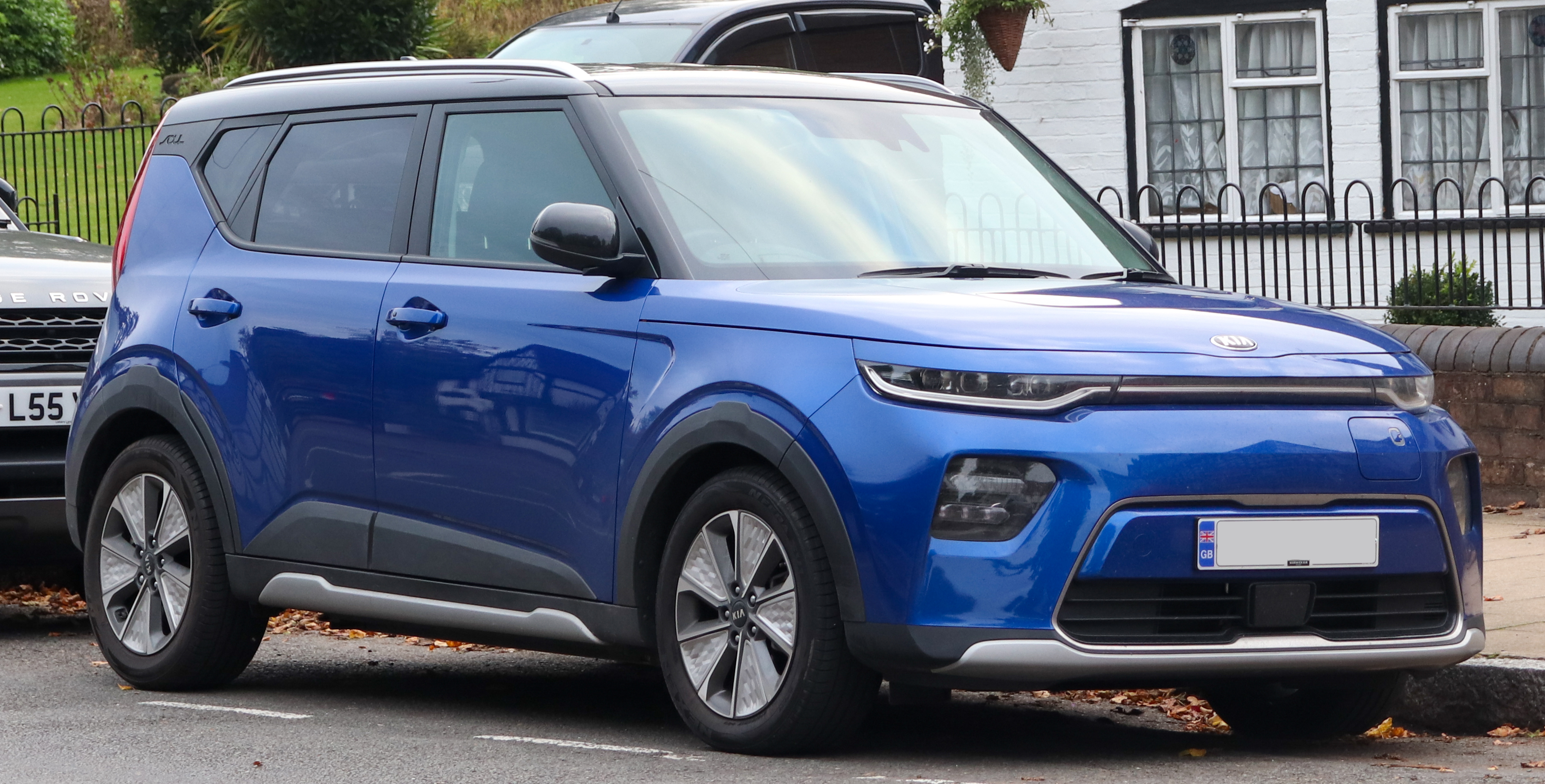
Kia Soul
"Tesla Model 3 performance, Kia Soul, Hyundai Ioniq 39 kilowatt, 2021 Audi e-tron 55 launch edition, 2025 VW ID7 GTX touring and a 2026 Citroen EC3 Aircross Max."
The Kia Soul is a small crossover-style car. The host is mentioning it as one of the EVs someone has owned.
The Kia Soul is a compact crossover/hatchback that also has an electric variant (Soul EV). In this segment it’s part of a list of EVs owned, used to show how many different EVs people cycle through.

Tesla Model 3 performance
"Tesla Model 3 performance, Kia Soul, Hyundai Ioniq 39 kilowatt, 2021 Audi e-tron 55 launch edition, 2025 VW ID7 GTX touring and a 2026 Citroen EC3 Aircross Max."
The Tesla Model 3 is an electric car. “Performance” means a stronger, quicker version compared with the standard Model 3.
The Tesla Model 3 is an all-electric compact sedan, and the “Performance” version is the higher-output variant tuned for quicker acceleration and sharper driving feel. The host lists it among multiple EVs to compare ownership experiences and charging arrangements.

2021 Audi e-tron 55 launch edition
"Tesla Model 3 performance, Kia Soul, Hyundai Ioniq 39 kilowatt, 2021 Audi e-tron 55 launch edition, 2025 VW ID7 GTX touring and a 2026 Citroen EC3 Aircross Max."
The Audi e-tron is an electric SUV. “55” is the stronger version, and “launch edition” means an early version with specific included features.
The Audi e-tron is an all-electric SUV, and “55” denotes a higher-output battery/trim level within the e-tron range. “Launch edition” indicates an early-production/initial-market version, which can include specific equipment and pricing.

ë-C3 Ec3 Aircross
"...ition, 2025 VW ID7 GTX touring and a 2026 Citroen EC3 Aircross Max. That's eight in total."
The ë-C3 Aircross is an electric SUV-style car. It uses a battery instead of petrol. The podcast mentions it as one of the EVs in the speaker’s overall lineup.
The ë-C3 Aircross is an electric version of the C3 Aircross, combining an SUV-style layout with battery-electric power. It’s mentioned alongside other EVs in the episode’s vehicle-counting context, indicating the speaker’s growing EV experience. The discussion is about having and comparing multiple EVs over time.
Request an Explanation
Heard something you'd like explained? We'll add it to this episode.
Sign in to request explanations for terms you heard.
Want to learn more?
Browse our glossary for plain-English explanations of automotive terms, jargon, and concepts.
Help improve this episode
See something that's not quite right? Our annotations are AI-generated and can sometimes miss the mark. Click the flag icon on any annotation to suggest a correction.
1 community members have helped improve this episode.