The Lexus RX is a popular SUV that many people buy for its smooth driving and high-quality inside. It’s a good choice if you want something reliable and comfortable.
Car
Audi
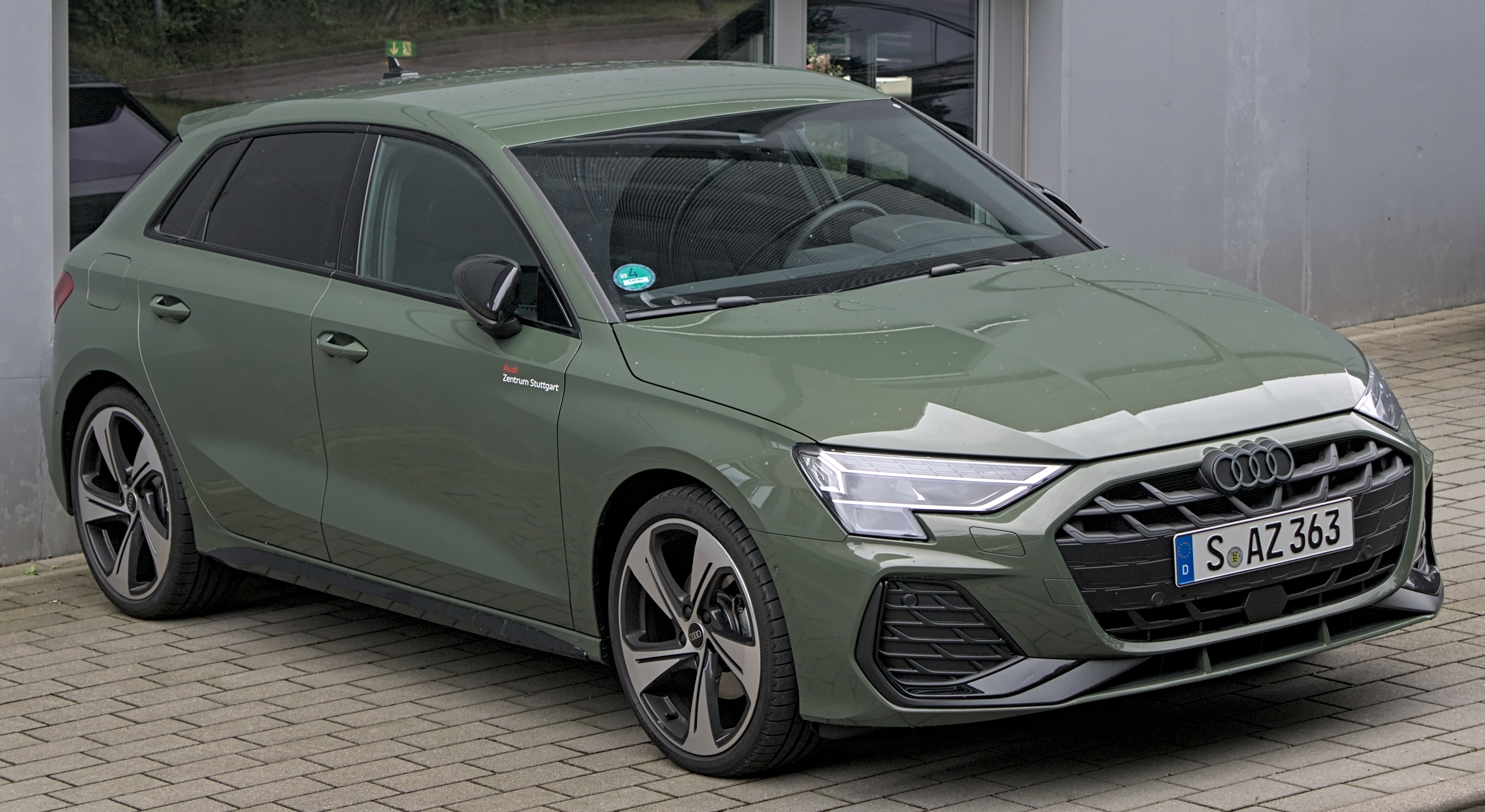
Audi makes stylish cars that are often very safe and fun to drive.
Some cars have outer panels made from aluminum instead of steel. This makes them lighter and less likely to rust, but if they do get damaged it can be hard to see.
Inside a car, the roof is covered with a soft material called the headliner. It can start to fall apart or look old if it’s been exposed to heat or moisture for a long time.
Cars have special bottles that hold the liquid used to keep the engine running smoothly (oil) and to stop it from overheating (coolant). Empty bottles mean those fluids are missing.
Hands-free driving means the car can drive itself in cities and near schools without you having to steer or brake. It’s a high-tech feature that needs very smart sensors and software.
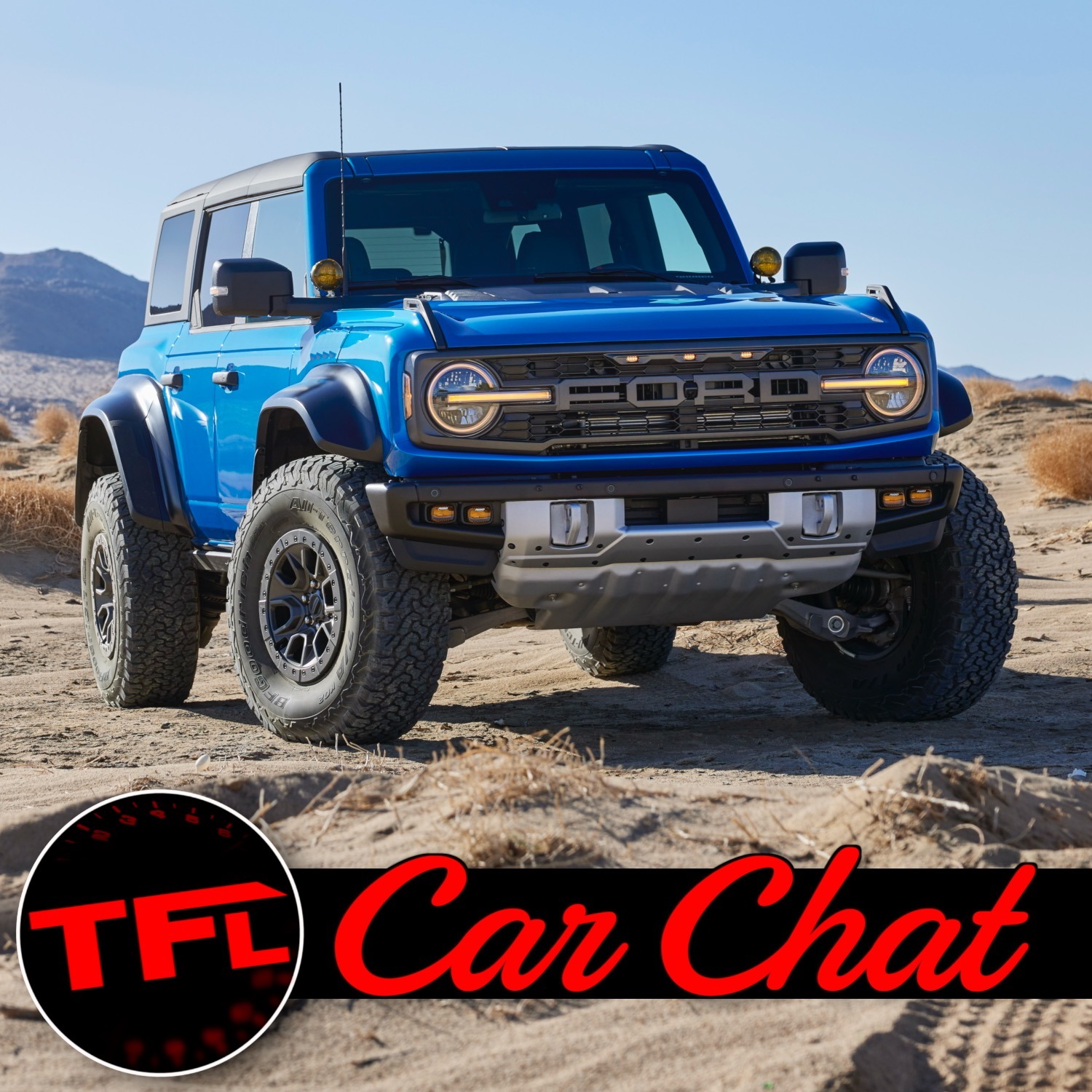
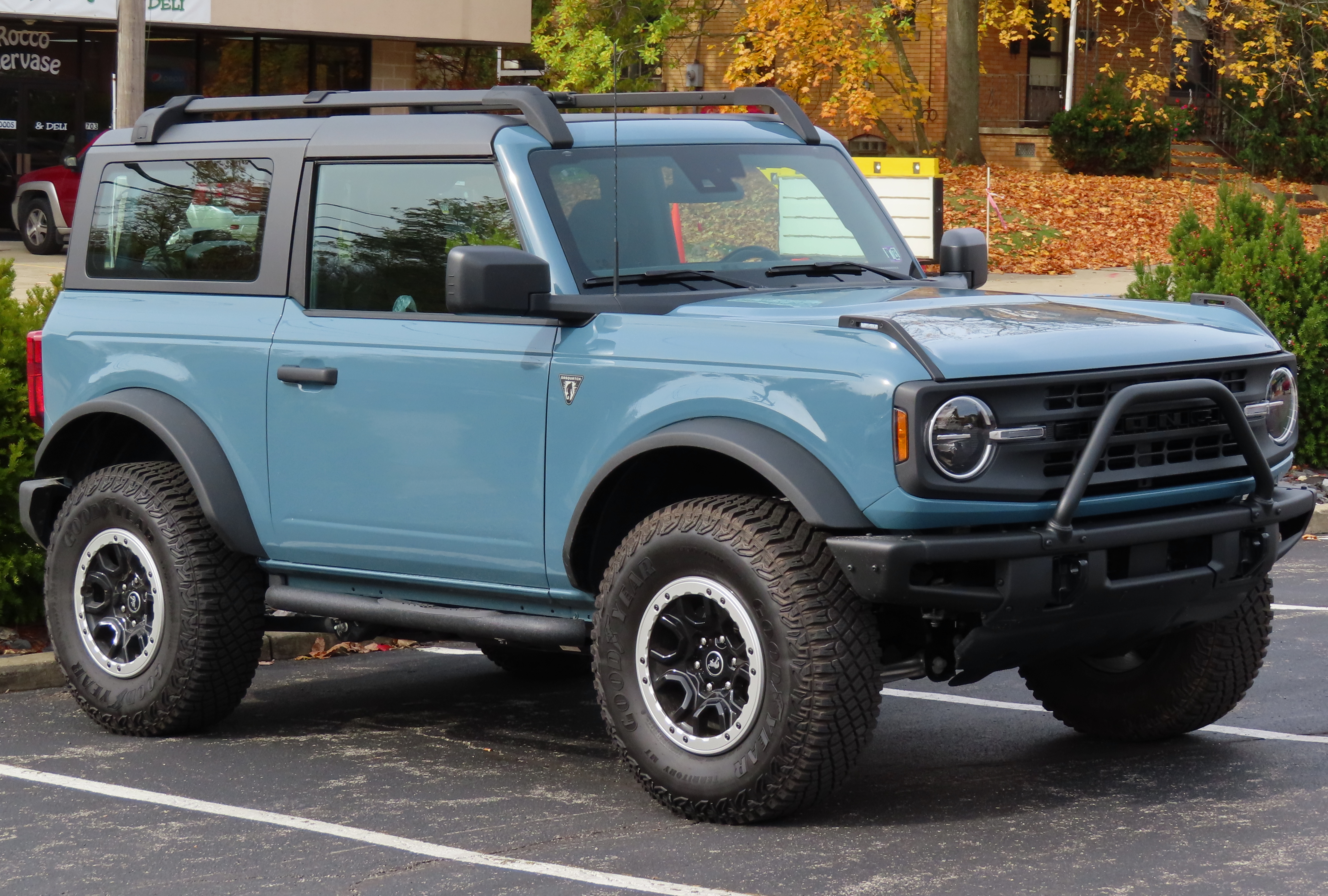
The Bronco Sasquatch is a special version of the Ford Bronco that’s built to handle tough off‑road conditions, with stronger suspension and bigger tires.
Think of it as a small fridge for the air that goes into your car’s engine. Cooler air is denser, so it can burn more fuel and make the car run better.
When a car has a big battery, it becomes heavier. A heavier car can be harder to drive over rough ground because it doesn’t grip the road as well and tires wear out faster.
The Cybertruck is a truck made by Tesla that runs on electricity. It has a big battery, which makes it heavy and can make it harder to drive over rough ground.
A mechanical locker is a part that keeps wheels locked together so they all turn at the same rate, which helps when driving on mud or rocks.
Car
AEI 2026 Recon
Audi is a German car maker. The 2026 Recon is a special prototype they showed to see what cars might look like in the future. It’s not sold yet, just a preview.
Normally a car’s wheels can spin at different speeds, but a locking differential makes them spin together. This helps the car get better grip when it’s slippery or going up a hill.
When a bike is made to be fast and smooth on paved roads, it might not handle rough trails well. Making it good for off‑road can make it slower on the highway.
Concept
on-road vs off-road performance
Cars and bikes that are great on smooth roads may struggle on trails, and vice versa. Designers balance these needs based on the vehicle’s purpose.
Wheel travel is how much a wheel can move up and down. More movement helps on rough roads, but it can make the car feel less steady on smooth streets.
LIVE
Hey, Tommy, how was your Thanksgiving?
Has it happened yet?
It has not happened yet.
We are recording this before Thanksgiving, but we have a lot to talk about because we
did a bunch of interesting things.
First and foremost, we just got back from Omaha, and we'll tell you what we did in Omaha.
That's right.
We had a road trip to deal with some off-roaders, and speaking of off-roaders, we're answering
the question, what the heck is happening to off-roaders?
It's a head-scratcher, and then we're going to be talking about what you do at the end
of this podcast when you don't have a spare tire because we have a great solution for
that.
All right.
Sounds good.
But first, I've got this little study from our friends at IC Cars, and this is an important
study at this time of year because they did some research to find out what holiday is
the best time to buy a new car.
Oh, wonderful.
Okay, so I would always think Black Friday is the time to buy a new car.
It's number nine on the list.
Really?
Number nine.
It's actually only, well, they did it by percentage more deals than average, so basically more
deals you can get than average, and it's only 9.5% better on Black Friday.
That's number nine.
Number 10 is Halloween, 6.8% better time to buy a new car.
Shall we do it in TFL order and go from 10 to number one?
Yeah, sure.
All right.
Number eight.
What do you think that is?
This could be a time of year, or it could be a holiday.
Mother's Day.
Nope.
It's December.
December, you're more likely 15.2% of the time to get better deals, followed by, it's
coming up, another holiday?
Mother's Day.
Christmas.
Well, that's December.
How have they broke apart Christmas and December?
Christmas, 15.2%, the same percentage.
How about your mom's birthday, or my lovely wife's birthday?
November.
What day, though?
The holiday.
11-11.
Yeah, Veterans Day.
Okay, yeah.
Buy a car on Veterans Day, and you're 23.1% more likely to get a good deal.
Wow, so the days have a really big impact.
All right, the next month is a month.
January.
Nope, February.
Apparently, February is a great time to buy a car, because 36.2% more deals in February
than the rest of the time of the year.
All right, let's keep going.
That's number five.
Number four.
It's a day named after important people in our government.
President's Day.
Exactly.
It's 47% more likely to get a good deal.
More deals.
More good deals done.
All right, number three is a month.
May.
No, January.
A great time to buy a car, apparently, is 55.6%.
That's a little surprising, because you think New Year's, they would try to get all their
inventory out December, so I'm surprised January is an interesting time.
Well, you just said number two, New Year's Eve, New Year's Day.
Yes, yep.
58.6, more deals than average.
And then number one.
What's the number one day?
It's a holiday.
Mother's Day.
No, it's a three-letter holiday, for short.
Xmas.
It's named after a famous African-American.
Oh, MLK Day.
Exactly.
Really?
65.5% more deals than average on MLK Day, so that is the day you want to go.
Now, converse of that, they also have the five worst times to buy a new ... This is
used cars, sorry, not new cars.
These are used cars.
Sorry, I screwed that up.
Used cars, guys.
All right, here we go.
Number five.
Just give me the list.
I can't keep guessing.
Father's Day.
Okay, don't buy it on Father's Day.
Yeah, don't buy it in July.
Don't buy it in May.
Don't buy it on 4th of July.
Okay.
And the one day or one month you never want to buy a used car, according to IC Cars, is
June.
Ah.
And then Black Friday surprises, of course, we just passed that.
Despite its retail hype, Black Friday only ranks ninth.
We know that.
Cold versus warm months, the best months are January, of course.
Winter holidays are also a good time, and summer holidays are the worst time for deals.
Yeah.
There you go.
All right.
Well, that's very interesting.
So our friend, The Car Pro, who I listen to, a podcast, he says all the time it's a good
time to buy a new car.
So this is used cars, not new cars.
Well, doesn't he benefit from lead generation?
He might.
Okay.
Or he might advertise.
He might advertise dealers, or they advertise with him.
Gotcha.
Anyway, there you have it.
So, one is a good time to go out and get yourself some new or new-to-you wheels.
All right.
Well, sounds good.
So that's an interesting little study, because I always thought that December was the time
to do it.
That's definitely one of the best months, because it's happy Honda days.
Happy Honda days.
Happy Honda days.
Are you a Toyotathon person, Cole, or a happy Honda days person?
Isn't there one called, like, deal to remember, or deal ...
That is one.
Wheel and deal, or ...
No, no.
It's Honda days and Toyotathon.
Those are the two big ones.
Yeah.
December to remember.
Some people are ...
Lexus, December to remember.
I know another one.
That's right.
It's December to remember.
It's interesting.
People get really into, like, the Honda day or Toyotathon thing.
Seriously, some people are Honda day people, some are Toyotathon people.
You know what the craziest part of all this is?
You've got these great commercials now of people being surprised by, you know, December
to remember at Lexus, right?
These happy families coming out of the house, and there's a brand new RX sitting in the
driveway with a big red bow, or Santa Claus is being driven by a bunch of Lexi and throwing
out presents.
Then you go to the dealership, and it's the worst experience oftentimes, right?
Yeah.
What can I do to get you in the car?
You know?
It's like this disconnect between what the commercials do and what the real life experience
is like, where you sit there for four hours waiting to sign some paperwork while they
make sure that your credit or your first born is also accounted for.
It's crazy.
Have you ever seen that video sketch of the SNL skit about surprising your wife with the
new car?
Yeah, that's a good one too, yeah.
And they're like, we can't afford this.
How much did you put down on this that she's not happy at all with the new Lexus?
That's a really funny skit.
I've bought your mom a new car.
My wife should never, ever, ever do that.
She's very upset.
I think we're squashing that.
I think it just creates more stress and more financial distress for a lot of families to
see a new Lexus parked out.
And I'm not picking a Lexus.
It could be Mercedes, Audi.
It could be any of the premium brands.
Any of the standard brands.
I think if I showed up at a Hyundai, she'd be like, why did you buy this without telling
me?
She'd be pretty upset about it.
Yes, yes.
All right.
So let's talk about what we were doing in Omaha.
We made another, well you made, not we, the company, you made another interesting purchase.
You have that rare disease known as Land Roveritis, where you went and bought a new Land Rover
that we probably, well tell them the story and tell them the clues that we had that this
thing was going to be bad and tell them how we're sorting it out.
And it only involved driving to Omaha for like 500 bucks in gas and not lodging.
So we went to Peak Auto Auction.
Yeah, our friends at the used car donated auction.
Yep.
So they run a donated auction.
And the thing about Peak Auto Auction is I've had some incredible experiences with getting
lucky with cars.
Because this is not a typical dealership where you can go and test drive cars in the history.
And essentially, say you donate a car to NPR, it ends up at a place like Peak Auto Auction
and then the team over there sells it off and gives the proceeds to NPR.
And then they also get a cut on top of that.
There's like an auction fee on top of that.
18%.
It's not cheap.
Yeah.
But then the cars don't go for a lot.
So Matt called me up and said, hey, I just bought this Land Rover.
This was not, I don't think, a donated car, by the way.
I think he just bought it.
He just bought it and he knows I have a problem.
He's also a used car dealer.
He's like, do you want it?
I'm like, well, let's go take a look at it.
So it's a 1996 Land Rover Discovery 1.
Which is your Holy Grail of Land Rovers.
I don't know why there are now five Discoveries with two in the middle being LR3s and LR4s
and then back to Discovery 5.
But there are five of them and you, for some reason, want the Holy Grail, which is the
first one, which is actually like a Defender underneath, which isn't grand.
Well, that's why you want them, though.
This is kind of the rawest of the Discoveries.
And there she is.
So it's a solid axle, V8 powered, off-road beast.
But the reason I love these is because when I was a kid, I was obsessed with Camel Trophy,
which was, of course, a very famous off-road safari where they took a bunch of Land Rovers.
Anyways, Discovery 1s are pretty hard to find.
I've been shopping on and off for like 10 years.
And they're either really expensive and really nice, or they're totally used up, they're
off-road rigs, they're just shot, right?
So finding one like this that still has paint on it, that doesn't have tears in the interior,
is a pretty good find.
The thing about it, though, is because we don't really know the history behind these
cars, it's kind of a gamble buying some of these.
So when I bought this from Peak, there's a couple of clues we had that something might
be wrong with it.
Well, first of all, the interior is in spectacular shape for a car with how many miles?
139,000.
And let's face it, these cars were meant to go 100,000 miles.
They were meant to go 30,000 miles.
100,000 was kind of the end of it.
But what's unusual is whenever you see one, either there's like clear coat is gone, or
there's just a ton of rust.
They have aluminum bodies, so it's kind of hard to spot because the outsides always look
nice, but then once you look underneath, you'll see the rot, or the headliner's falling down.
And here is the clue that this one may have not been so great, which is what we're looking
at right now.
What are we looking at, Tom?
We're looking at three empty bottles.
Well, it came fully stocked with the full Exxon Valdez supply of oil and coolant.
So two bottles of coolant, both empty, and a bottle of oil.
Was there oil in the bottle, or was it also empty?
No, that was also part full.
So basically, I thought it was profiting at this point, because someone was just giving
away a reservoir worth of coolant, which is awesome.
Of course, the known issue with these is the fact that they have these sleeves, right?
Because they kept boring the block out.
It's an old Buick engine.
They kept boring out, and they put sleeves in there, and then those sleeves loosen up,
and then they hit the head gasket, and then they blow the head gasket.
It's not so much a problem with this.
It's actually the other way around.
So the head gaskets fail, and then the engine overheats, and then the liners will slip.
When it overheats, it goes through a lot of coolant.
Yeah, right.
So having two empty bottles of coolant is a pretty good clue that there's something
going on with this powertrain.
So I thought maybe we got away with some magic, though, because even though it was out of
coolant, which I just ignored as maybe a leak, we did run it for a long time.
So we drove it around for like 15, 20 minutes.
I made sure there wasn't slurpy in the oil cap or the coolant cap, and it seemed fine.
So I drove it back to the office, 35 minutes.
Didn't overheat.
Like 10 minutes into driving it back home, the rear window came sliding down on its own.
Yep.
That's just another common problem.
If you're familiar with these cars, they go through regulators like you go through ICTs.
So put a new regulator in it, that was fine.
But 30 minutes on the way home, it drove perfectly.
Well, the oil pressure was...
Yeah, the other thing we figured out when it got fully up to temperature is the oil
light would flicker on at idle.
Which means that there may not be oil pressure, which means that there might be something
drastic.
Well, the engine might be cooked, right?
Yeah.
So drove it home, ran great.
Drove perfectly, except for that oil pressure light coming on.
Didn't overheat.
Then I drove it 35 more minutes from the office back to my house, and that's when things started
getting weird.
I noticed the temperature was kind of all over the place.
You're smoking there in the video.
Yeah, that's because you spilled oil all over the exhaust manifold.
Oh, you're blaming me.
Because you did.
You spilled oil all over the exhaust manifold.
Anyway, drove it up to my place and noticed the coolant temp's going to go in everywhere.
And then when I parked it in the garage, I heard it, even though the temperature was
reading fine, you could hear the cooling system boiling.
So you could actually hear the gurgling and the sloshing.
And then I parked it, came back in the morning, and there was coolant all over the floor.
So it clearly had bubbled over.
Anyway, so did some more investigating.
Next day, started it up.
It was blowing a little bit of coolant out the back, smelling a little weird.
So I think we've determined the head gasket's shot.
Yes.
But...
Maybe there's other things that are shot as well.
Yeah, I think it needs an oil pump too.
And that could just be the start.
Yes.
So I contacted a friend of mine I met this year at the National Land Rover Rally in Moab, Utah.
A guy named Joe, who runs an awesome YouTube channel called Lost Cause Ranch.
And all he does is fix old Land Rovers on camera.
That's like his...
He's got a couple other cars.
He's got a cool Maserati.
But his shtick is he's got 21 Land Rovers or something.
And he kind of brings you through the process of restoring them.
And so he was kind enough to actually meet us in Omaha.
Yeah, for some reason.
This is insane.
Because he's in Iowa.
Yeah, it was a five-hour drive for him to meet us.
But I pitched him.
I'm like, hey, can I just pay you to fix this Land Rover?
He's like, yeah, I'd love to.
And I said, well, let me figure out when we can tow it out.
He's like, even better.
I'll meet you halfway.
So Joe was the real MVP of this.
Because here's the thing about head gaskets, right?
We could try to fix it.
Yeah.
But ultimately, it would just end up back at a shop.
Yes.
Knowing our luck working on stuff.
No, we don't have the expertise, nor the time, nor the bandwidth to be actually working on these.
At least not something that a guy who's done it a million times could do in his sleep.
Yeah.
And there are shops that will fix them.
But we're in a very expensive part of Colorado.
And a lot of times, I mean, the quotes I've gotten in the past for head gaskets are like
$4,000 to $7,000.
Those are the typical quotes in our Boulder, Denver area.
And if you spend $3,500 on a car, that's a tough math equation to make.
So I trust Joe.
He's a really good guy.
He's going to make some content with it.
He just texted me.
He got it home safe.
Yeah.
He said the car looks great.
He said, definitely, he's got bad head gaskets.
OK.
Yeah, yeah.
So he said, for sure, that's a problem.
Because he did some investigating himself.
And it was blown cool and all over the place.
Well, here's the thing, though, that I think is important to remember.
So we spent, you spent, this is your car, you spent $3,500 on this for a car with a
blown head gasket.
Probably should have spent less.
Yeah, for sure.
But when you think about it, body work is a lot more expensive than mechanical work.
So you could probably replace the engine for, let's say, $3,000 to $5,000.
But if you actually had to repaint the car because clear coat was shot, or if you had
to bondo repair all the rust, that would end up costing a lot more if you wanted to do
a good job.
So in some ways, people are focused on the mechanical issues when the cosmetic ones can
be a lot more expensive to fix, at least fix well.
I mean, you could do it poorly.
And you could rattle can it.
But then you wouldn't have a very nice vehicle at the end of it.
Yeah, for sure.
No, I mean, look, I think we'll get it to a point where it's very good mechanically.
And hopefully, we'll fly out to Dubuque, Iowa, and then drive the 13 hours home or
whatever.
I think it'd be a really fun trip.
So we'll get it there where it's going to be good and solid.
It's just going to take a little bit of wrenching on his part.
And I really appreciate him meeting us out there because I was nutso for him to do that.
And of course, we want to do something else on the way out there.
And on the way back, actually, I was put in Super Cruise jail.
You want to tell them what happened there?
Yeah, so we towed it out there.
We have a video coming at altifl.com.
We took a press truck, which is a new GMC Sierra 1500 with the 6.2 liter V8.
And this is the Sierra Denali Ultimate, which has every possible bell and whistle.
It's also $87,000 MSRP for a 1500 with a 6.2 V8.
Which is nuts.
I mean, that's way too much money to spend on a 1500.
But we had massage seats, ventilated seats.
We got the beautiful leather and the cool wood dash.
So I mean, it's a nice truck, but it's a lot of money.
But one of the cool things about these new highly equipped GMCs is you get Super Cruise
that allow you to Super Cruise and tow.
It's the only, actually, it's the only manufacturer, GM, that allows you to tow autonomously.
Basically, eyes on the roads, hands off, feet off pedals.
Yeah, and this is different than a lot of other systems where you still have to have
a hand on a wheel.
Super Cruise is full hands off.
Now, you do, they're changing this, I think.
But for a long time, you had to be only on a mapped highway.
And they keep expanding the mapped highway.
So it keeps growing.
It's still geofenced to some extent.
They're putting it on side roads.
I recently tried it.
The thing we wanted to try, though, is can you actually tow across country autonomously?
That was, and right now, we're at level two autonomy.
There's five levels.
And level five would be.
No steering wheel.
No steering wheel.
No pedals.
No weather conditions.
There's no geofencing.
The car can drive itself under any condition, any weather, any circumstances.
But at level two, basically, you're the conductor of this train.
And you have to keep eyes on the road.
And what I hate about level two is, what I think a lot of people hate, is that humans
are really good at driving.
And we're really good at not driving.
So otherwise, we're really actually excellent drivers.
And we're really good at not paying attention, like texting or watching movies.
But what we're really bad at is sitting there watching the computer do its thing and then
taking over whenever it deems that it can't do it or deems that you're not paying attention.
So as a result of that, not only are you watching the road, but it's watching you to make sure
you're paying attention.
Yeah, it's nagging you a lot.
And it's telling you, keep your eyes on the road.
Because if you don't do that, it flashes at you.
The steering wheel has a little light on top.
It starts out blue.
And then when it goes into full super cruise, it turns green.
And then if I look at my phone, or if I look at you, or if I look at the person
next to me, that green will start flashing.
And eventually, it'll turn red.
And it'll turn super cruise off.
And if you do that enough, it puts you in super cruise time out or jail, as you called it.
Which is what happened to me.
I mean, the thing is, if you're looking out the windshield, you'll never, sometimes it
gets confused.
But for the most part, you'll never get the warnings.
It's when you start looking at the screen or at the side window, then it'll start flashing.
And if you do that too much, it puts you in super cruise jail.
And it locks you out for that drive.
Yeah, it's like GM is punishing you for not paying enough attention.
And we were driving through probably one of the most desolate parts of Colorado, which
is eastern Colorado.
There's nothing out there.
There are these towns that were built every 50 miles when they were building a railroad,
like Fort Morgan, Sterling, Ogalaga.
Ogalaga?
Is that how you pronounce it?
I think so.
Yeah, anyway.
And so between them, there's nothing.
And so we had an issue at work.
I got into a heated discussion.
And next thing you know, Super Cruise says, nope, I'm not going to do it.
And the other thing that it doesn't do when you're towing, which is actually kind of annoying,
is Super Cruise, if you signal, actually, you can have two choices.
You can signal a lane change, and it'll actually do the lane change for you, which is nice.
Or you can have it automatically do that.
So if you're coming upon a slower car or truck, and you're, let's say, doing the speed limit
and the vehicle in front of you is doing 65, it'll actually pass them automatically.
It'll check behind you.
It'll check in front of you.
None of that works when you're towing.
And every time you do try to actually change lanes, it kind of is unhappy with you.
Like, the seat vibrates.
Like, it feels like you're going to hit somebody.
I never understood why it just was so hard to change lanes while you were using Super
Cruise while towing.
Yeah, I mean, I think that even though it has its foibles, part of it, too, is like,
it's one thing to change lanes by itself.
It's another thing to be able to sense how long the trailer is, which some trucks can do.
And then also safely be able to maneuver a lane change with a varying number of trailer
lengths.
But all things considered, I really liked it.
Yeah, you said something smart on the way out there.
It didn't put me in Super Cruise jail.
What it did was it made like a nine-hour trip seem like a five-hour trip.
Yeah, so it takes like 40% off the fatigue, right?
Because you're still sitting there.
You still have to be engaged.
But you're not constantly babying the truck down the road.
And I think especially that was true today.
When we were coming through western Nebraska, we hit these really, really big crosswinds.
So probably 30, 40-mile-an-hour crosswinds.
And Super Cruise did an excellent job of making really small, delicate maneuvers through the
steering wheel to keep you centered in the middle of the lane.
And hitting every tumbleweed.
It did hit a lot of tumbleweeds.
But even while towing, it kept you right dead center in the middle of the lane.
Yeah.
And having to do that when you went in Super Jail, I see you're spending a lot of time
doing these micro-corrections.
I think the computer can do it better, faster, more accurately than a human can.
As long as it doesn't nag at me.
Just don't nag at me.
You know, I don't think...
Well, then just look out the window.
Designing a piece of technology that eventually says, no, you're...
And it's actually worse than that.
Because when it puts you in Super Cruise Jail, it just says, system deactivated, see owner's
manual.
And I don't know how you reactivate it because we never got there.
Because, you know, then you got to pull over.
If you were in a Tesla, what would happen is with full self-driving, it would basically
force you to stop the car, cycle it, turn it on and off, and start it up again.
And then you would have it again.
I don't know if GM system does that.
We never got there because I was so annoyed.
I just wanted to keep driving.
Right.
But yeah, it's not a good system when the manufacturer puts you in jail because...
And let's face it, I was paying pretty good attention.
There was nothing there to hit.
It just didn't like the fact that I looked over at you for more than two seconds at a
time.
It's a little silly at this point.
But it does, when it works, it works well.
It also kept disengaging a lot on the way back.
And that was not me not paying attention.
No, I think part of it was, like, especially going down 76 in Colorado, the pavement got
really terrible.
And it was just all over the place, right?
I think that the lack of very visual lines when you're going over essentially like a
rough, rutted out road really kind of confused it a little bit, which was disappointing.
It disengaged three times.
But I would say up until that point, we had used, we'd done 75% of the 16-hour journey.
And it doesn't work when you hit construction.
It does.
I went through construction.
Yeah.
I thought it worked great.
Mine didn't work really well.
Yeah, and I actually thought it did a really good job of keeping you perfect in the middle
of the lane.
And the other thing it doesn't do, and it's supposed to do...
So remember, we had the Hummer EV, which also had it.
And this also had the same issue.
And I've heard that it's gotten better, but it really hasn't.
There were moments when I was so close to the truck next to me that I felt uncomfortable.
So the newest systems are supposed to be more human in the way that they work, where if
you're next to a big 18-wheel rig, it actually moves over so that you're right not next to
it.
In this case, we were so close to one of the trucks that I almost had to take control
because we have a very wide trailer.
And the first thing I did was look over in my mirror to make sure that we weren't going
to hit the truck with the trailer.
So are you now anti-super cruise?
I'm just going to wait till level three.
I actually disagree.
I think that super cruise really made that journey easy.
And I did ultimately end up trusting it a lot.
Like I spent a lot of time with the Tesla system, the beta.
You can see the potential, but it's not there yet.
Yeah, but the Tesla system's all over the place, right?
Like it's really good.
And then sometimes it'll just try to take an exit, right?
Yeah, because they're being very ambitious with what they're doing.
Right.
And I haven't used blue cruise in a long time.
The early blue cruise was also kind of a mess.
It was pretty bad.
And keep in mind, these were dead straight roads.
Yeah, so I genuinely thought that super cruise did very, very well.
I was pretty impressed.
I think from Denver to Omaha, there's not a turn to be seen,
except for when you go from, what is it, 70 to I-80?
76 to I-80.
Yeah, that's the only turn there is.
And we've used it like going up I-70 into the mountains where it gets really twisty.
And it just slows down way below what the traffic is doing.
So let's say the speed limit is like 65 through some of those twisty bits.
It'll do like 45.
Yeah, but as a whole, I really like it.
I know.
Here's the other thing.
So we did a lot of talking on the trip.
And this is the part that I think Tesla also, I've been kind of down on Tesla a lot
because they have done a lot of things.
If you've been listening to this podcast, you know that I hate
the fact that they got rid of all our buttons.
They put everything in the screen.
The other thing that Tesla has done, which is unfortunate,
is it has made this practice, which I think is wrong, common.
And that is where you roll out a bit of software or you roll out a car.
It's not ready, actually.
It hasn't been fully tested.
Yeah, where they use the customer base as a beta tester.
And that's what I feel with Super Cruise.
I am the beta tester.
I didn't get that.
I got that.
Put me in jail.
Come on.
I am the tester.
But you are breaking the rules.
You break the rules, you go to jail.
No, a piece of software should never put you in jail that you paid for.
Yeah.
No, I do understand your point.
I respect your point.
But as a whole, despite all this, I still think 75% of that journey was done hands-free.
Yeah, it was under ideal conditions.
There was no rain.
But the wind was not ideal.
That's true.
35 miles an hour crosswind, that was not ideal.
But you see what I'm saying?
It's become commonplace now for many auto manufacturers and even the legacy ones to
roll out a car that is not ready for prime time and then sell it to people.
You can look at the EX90 Volvo where they actually had to replace the entire computer
because it wasn't ready to actually be completely functional.
Yeah, that is the new trend is to use the buyer as a beta tester.
Yeah, you're seeing it with Jeep now where they're recalling every 4xE.
Sure.
Well, that's another can of worms.
Right.
I don't know if that's a beta testing problem.
I just think they just messed up.
I think their software, initially they said the reason that the 4xEs weren't working was
that there was a software fix.
But now it's a hardware fix and people are supposed to park them outside.
So it's both, right?
It's like they haven't completely...
And maybe part of it has to do with the fact that we're really on the edge of cutting technology
with electrification.
And so obviously, the internal combustion engine has been around a long time.
So when you go from, let's say, carbureted to fuel injection, there might be some hiccups,
but it's still basically the same drive train.
But now that you're going into autonomy combined with electrification, combined with hybrid,
combined with...
Yeah, that's true.
There's just a lot of moving parts.
And so maybe if you were to actually fully test it by the time you got it out to the consumer,
the rest of the industry would have skipped ahead two generations.
Maybe, I don't know.
But I don't like being a beta tester for cars.
I think it's dangerous.
No, I think you're on the money.
I do agree.
I just think that Tesla's the worst at it by far.
I mean, the Tesla system, you can go full hands-free through cities and school zones.
And in my experience, that is not nearly ready.
At least GM's saying, OK, you can only do it at first on pre-mapped interstates, right,
where it's much simpler to do it when you're not battling cyclists and kids.
The computer was better.
So that's a computer.
Tesla is a computer.
Who said the computer?
You said the computer was better at driving than humans.
At the beginning of this, you said that.
No, I said in Crosswinds, the computer did better, was easier.
I thought you meant the computers are better at driving.
No, no, no.
I don't think that at all.
I said in Crosswinds towing, I thought it did a really good job, even better than I
could do at keeping the truck centered.
I actually think computers probably are better at driving than humans because they don't
get drunk.
They don't get sleepy.
They don't get frustrated.
They don't get road rage.
Yeah, but there's a lot of nuances that are tough for computers to work with, I think.
Yeah, a lot.
Yeah, and they've proven that, like, Waymo's, right, are doing really, really well.
Like, what's the difference between a duck and a ballard?
Yeah, like, yeah, sure.
Seriously, a computer's got to know that.
Because I'm saying that, and I'm being funny, but there is an inherent truth in that, and
that is a computer has to know that a duck can fly out in front of you, whereas a pole,
light pole, can't, right?
And so it has to identify everything and it has to know what that thing is capable of
doing, and that is very hard for computers.
You got some comments there you want to read, Tony?
Yeah, so if you guys are listening to the podcast and you want to join in on the live
discussion, we have an option to do so at Patreon.
Patreon.com slash tflcar, so huge thank you to everybody who follows this live.
So Jonathan has a question for us, transitioning us into our next segment.
Okay.
I was watching James May review the Ford Bronco Sasquatch earlier today.
He concluded that it looks good and probably would do great off-road, but as a road car,
it sucks ass.
I haven't seen his review, but I know what you're talking about.
He argued that it would handle better both on-road and off-road.
It had smaller wheels and tires.
I'm curious what your thoughts would be.
Have wheels gotten too big on off-road vehicles?
I'll take maybe a different stab at it.
I think a lot of that has to do with the fact that the Brits don't have the same off-roading
conditions that we have here in America.
And they're looking at it from a British, so actually we're going to talk about that
and that's a great transition.
So I think in Britain, when you look at Land Rovers and Range Rovers, for a long time they
have been like, and Land Rovers started as a replacement for a tractor.
So these are farm vehicles.
And if you ever see a British review, what is it?
Tell me.
It's always the same thing, whether it's Top Gear or Car Wow.
What do they do with their off-roaders?
What do they always do?
Well, the typical shot is usually a country knoll, like a grassy hill, and it'll be the
car really working hard to get up this wet, grassy hill.
So that is a very typical thing that ranchers in new camps battle.
Or they'll have green lanes where there's a very muddy road, right?
But I don't think they have the same regular access to rock crawling that we do out west
in the U.S.
Yeah, or even like in the east where they do these extreme buggies that go up these
very steep inclines in the forest that go over ruts and giant boulders, right?
Or King of the Hammers.
These are very typical American things.
And if you're going to go up a very steep hill with a grassy surface, you don't need
big tires.
If you're rock crawling and if you're going over some pretty hardcore western terrain,
either unmanicured mountains, because a lot of European mountains, let's face it, are
very manicured.
They've been around a long time.
There's paths everywhere.
There's dirt roads everywhere.
In America, a lot of it is the way that God intended it, right?
I'm just being very American now.
And that is natural.
And that is a much harder thing.
Just put an oil field in it.
That's what I say.
Yes.
That is a much harder mountain to traverse than this manicured dirt road that goes up
to the top of Zugspitz or whatever you're talking about.
And so I think that I'll give you an example.
I listened to this podcast.
It's called, what is it called?
Intercooler.
Those guys are the most knowledgeable two gentlemen I have ever heard about sports cars.
They know them backwards and forwards.
They have taken them on track.
If you want to know how a car handles, talk to those guys.
And then they were talking about, in the recent podcast, they were talking about off-roaders.
And they were kind of wondering whether electric off-roaders are going to be any good.
Because their logical thinking is, well, electric off-roaders should be really good because
they have a lot of torque and they have instant torque.
And yet, what they're missing, because they haven't done a lot of electric off-roading,
is the problem with electric off-roaders is the same problem with electric anything.
And that is that they're heavy.
And weight is the enemy of performance.
And we have seen that over and over again.
Even with the last quad motorivian that I took up a very steep incline.
The problem always is when you add 2,000 pounds of batteries, you're going to make the thing,
no matter how much torque you have, no matter how much instant torque you have,
you're going to make it very poor off-road.
And we've seen it over and over and over.
Whether it's the Cybertruck that we took off-road or the Hummer EV,
the weight always gets in the way.
And at best, right, you're smashing a lot more stuff into a pointy rock.
Sure.
Because you've got a lot more weight.
And at worst, the other problem with, in general, electric off-roaders is that they,
and Jeep just did this as well, I believe, with the Recon,
is that it's too tempting to get rid of the mechanical locker and substitute it with an e-locker.
And in our experience, e-lockers just aren't nearly as good as real lockers.
Here, run really quick.
Yeah, what e-lockers do is they allow the computer to decide how much wheel spin
and traction you need versus you.
Because once you lock it mechanically,
the machine has no option but to give you all the torque to all the wheels.
Yeah.
I still don't know, because I'm pretty sure Andre said in his review
it was a mechanical locker on that Recon.
But that's a really big...
Now, I wasn't there.
I could be wrong.
But Sam on his podcast, which is a great podcast, by the way,
Will Baring said that it was a mechanical e-locker.
Yeah, I want to read...
You want to fact-check me?
No, I want to...
Can you fact-check me?
No, no, I just did.
Yeah?
I mean, according to AEI, 2026 Recon with the e-locker electronic locker.
There you go.
But that is...
I trust Sam.
No, no, that's an e-locker.
That's just a normal locking differential.
An e-locker?
Yeah, electronic locking differential.
That's what a Rubicon has.
Not a mechanical?
So wait, so an e-locker is not electronic?
You're confusing an e-locker with a virtual locker.
Okay.
So the Hummer EV has a virtual locking differential.
Right.
Where it tries to simulate...
Right.
An e-locker is a mechanical locking differential.
E stands for electronically activated.
I know what you're saying.
It's a mechanical locker that's electronically activated versus like an ARB air locker.
Exactly.
Yeah, I get that.
So an e-locker, I think that's just a mechanical locking differential.
Okay, well...
Yeah.
So he would be right.
I think we're arguing the same thing.
Okay, right.
Any other comments before we keep going on this topic?
No, I mean, I think to finish your question, Jonathan,
yes, a Bronco, I think, would be better and is better on the road
if you get like a 33-inch tall tire one compared to a Sasquatch on 35s.
Because there's a lot less unsprung mass.
You also, excuse me, you also have a lower center of gravity, right?
You change the suspension geometry when you jack a vehicle up that high.
There is some truth in that.
It is fundamentally though, I think, incorrect to say it's better off-road in all terrains.
I think across the majority of terrains,
a Bronco with bigger tires is better than a Bronco with smaller tires.
But James, may I skim that review?
I know what he's talking about.
He's ultimately practical, right?
Sure.
He's always, you know, he's been the exact opposite of Jeremy Clarkson.
Yeah.
And the problem, I think, that he's, the point that he's missing is that,
A, people want bigger wheels and tires because they're cool.
I mean, that's why designers design all their concept cars with massive wheels and tires.
In the end, they look cooler.
And B, there's this inherent compromise and it's kind of the dual sport issue.
I'm talking about motorcycles now.
They're diametrically opposed.
What's good on-road is, except for weight, of course, is different off-road.
And so if you want-
Bad off-road.
Is bad off-road.
Yeah.
What's good on-road is bad off-road and what's good off-road is bad on-road.
Yeah.
So obviously higher center of gravity is bad on-road.
Yep.
A lot of wheel travel typically bad on-road.
A lot of body roll.
A lot of tire usually, you know, depending on what you, at least at the height of it, bad on-road.
Because you're much farther off the ground.
And so there's this compromise.
And I think the Bronco actually does a really good job of working that compromise
to the extent that it's, at least compared to the Wrangler, it's a lot better on-road.
And it might be because it doesn't have solid axles.
Because solid axles, in general, are better off-road.
But yet they're worse on-road.
I mean, I also think that the perspective depends on
really how good do you want your car to be on the road, right?
Yeah.
It's all about perspective.
So for example, like if I own that two-door Sasquatch Bronco in the UK
and had to drive down B-roads a lot, I think I'd be pretty miserable.
Because it's very, very wide, right?
The steering is pretty slow.
The suspension response is pretty poor.
But if I live in Omaha, I don't really care about all those things, right?
I spend a lot of time going straight, stopping, turning, going straight, stopping, turning.
And I think for that kind of use case, a Bronco is more than adequate.
You know, it's going to do what you need it to do.
And it's going to do it with enough confidence
where you don't feel like it's going to be a danger to yourself.
Well, and you also have like this thing with Range Rover and Land Rover
kind of springing full circle.
And that is they have done the best out of anybody
in trying to make it as transparent as possible.
So in America, let's look at the Wrangler and the Bronco.
If you want to go off-road, there are all these switches and things that do everything, right?
You can lock the rear diff.
You can lock the center diff.
You can rock the front diff.
You can disconnect the sway bar.
There's all this stuff you can do.
Land Rover and Range Rover have tried to make that invisible.
Sure.
So once upon a time, there was a little dial on a Range Rover or Land Rover
where you would kind of select the kind of terrain you were on.
And then the electronics would do their magic and make the car.
And then eventually they even got away from that
where the car, based on the computers and wheel speed, knows what terrain it's on.
And so it does it all.
And from a James May perspective, or maybe from a British perspective,
that's the best way to do it because it's completely transparent.
You're driving along and you hit snow.
All of a sudden, the car knows you're in snow.
You're driving along and you hit rain.
It did it just for rain.
But I think it is to the detriment of ultimate off-road performance as we found
because the latest Land Rovers or Range Rovers,
even though the Brits think that they're great off-road,
I think are nowhere near as good as a Wrangler or as a Bronco
when it comes to the kind of serious off-roading that we're doing here.
I would never want to take...
Some of it might have to do with the cost of it
because they're too precious and too expensive.
But I would never put up the current Defender against the Bronco.
The Bronco would just kill it.
Well, that also depends on like...
What do you describe as off-roading, right?
To a lot of people, what we do is not off-roading, right?
That's rock crawling, which is different, you know?
Okay, let's segregate the different kind of off-roading, right?
So a Bronco will kill a Defender on rock crawling.
It just will.
You know, that obstacle we do, the wall?
Sure, yeah.
The Defender won't do it.
Yeah, but if I had to drive the Lightroom Trail,
which is 100 miles of rough dirt road through Moab...
You're going to have a more comfortable ride.
I'd probably take the Defender.
But it's not better off-road, it's just more comfortable.
I guess if you value comfort over pure athletic ability,
then yeah, it's going to be better.
It's better, right?
Or if I have to drive from here to the top of the Dalton Highway,
right, maybe a LandCruiser would be the best choice for that.
Well, a LandCruiser is the one that's going to get you there and get you back.
At least in the past, it would have.
I'm not sure.
Nowadays, there are some questions about Toyota's reliability
and there's some real questions, so that's why I bring it up.
In the past, that would have been the one that would have gotten you there and back.
Right, well, I think any new car will get you there and back, any new car.
Yeah, I'm not sure.
To the Dalton and back?
Well, the 4X, you may not, Tommy.
Oh, you'll be fine.
Just don't park it inside.
Yeah, you'll be fine.
But yeah, I mean, I think we're at this interesting crossroads right now,
which is a little bit of a shame.
So the height of off-road commuting for me was like 2021,
because what ended up happening is you had the perfect confluence of
COVID shutting everybody out of work, right?
You had the introduction of things like Starlink and other services
that allowed people to work remotely,
and then you had people with tons of time who could then go out and explore.
So what we saw is this huge explosion of sprinter vans
and the off-road accessory world blowing up in 2021.
Dare I say overlanding, Tommy?
Yes.
In my opinion, though, the off-road world is kind of on the decline now.
I was just at the Overland Expo, and it's still very cool,
but you really get the sense that a lot of these big companies
have either merged, consolidated, or going out of business.
People were scared of being around other people because of COVID,
so they wanted to get the heck out of Dodge.
And now that we're back to normal, people aren't that scared of being at home.
The problem is right around 2020, 2021,
the car manufacturers realized,
ooh, people really want this off-road thing.
Let's build them.
But the problem is car manufacturers take four, five, six, seven,
eight years to get their products out the door.
So if you started working on your product in 2020, your off-road trim,
it's probably going to be ready 2024, 2025, right?
If you're just doing a trim version.
So now what we're seeing is, I think, a slight decline in interest in the off-road community
because everyone's back at work,
and all of these off-roaders are hitting the market now at the same time.
And I don't mean specifically hardcore off-roaders
like Broncos and Ineos and that kind of thing.
I mean XRT trims, right?
XRT, X-Pro, Wilderness, Tremor, right?
They're all just exploding on the market right now.
And that's an interesting thing.
And I think that fundamentally they do look cool.
And maybe they provide a little bit more of the equipment you need to go out into the dirt,
but they don't actually give you the confidence to regularly want to hit a trail.
Yeah, and it goes on both ends of the scale.
So you've got the, let's call them more affordable off-roaders,
the family hauling SUVs, like you said,
everything from the Passport, Trailsport to the Hyundai XRTs, right?
These things are kind of posers in some ways
because they have all of the off-road look,
but they don't necessarily have a lot of the off-road credibility
when it comes to the bits and pieces that you need.
Or even like the new RAV4 Woodland, the Woodster, as I like to call it,
that's just an appearance package.
100%.
Yeah, they have done nothing to change the suspension.
They have done nothing to change the powertrain.
They have done nothing to protect the underneath of it.
These are vehicles that look like they're off-roady,
but they're lacking the stuff that you really need to go seriously off-road.
And probably the manufacturers think to themselves,
and I think this is smart,
that most of these people will never take this car off-road.
So why do we want to add all this weight and cost and complexity?
Yeah, for sure.
When it'll never be used.
And on the other end of the scale,
now you have Land Rover, Range Rover, Mercedes, Lexus especially,
that have all the off-road goodies,
but the body cladding or the tires are designed in such a way
that you could never take them off-road
because either the tires are not meant to go off-road
or because the approach angle,
I'm looking at you, Lexus,
which is actually the real Land Cruiser underneath,
is so horrible that the first thing you would do
is you would tear off that giant chin of the thing right in the spindle grill.
It doesn't have the basics that you need,
which is a good approach departure.
And then the other problem with those real expensive ones,
same thing with the G-Wagon,
is that they're too expensive to take off-road, period.
I would not want, when we have done it,
but I would not want to take an LX or a GX or a G-Wagon seriously off-road
because you're going to break expensive things.
But what about when they're 10 years old?
Yeah, but that's a whole different story.
Well, that's good for the world, though, right?
So that leaves you with this kind of middle segment,
which you can probably count on one hand of real off-roaders
that you could actually take off-road and not be afraid of breaking something.
And I'm talking about rock crawling.
I'm talking about desert running.
I'm talking about the kind of stuff that we do in the American West.
I'm not talking about mudding,
right, which usually probably doesn't break things.
Yeah, but desert running breaks a lot of stuff.
I mean, I would say...
You could take a...
Let's say adventuring.
You could take a Gladiator Mojave.
Yeah.
And that's what it's built for, right?
And take a desert running.
You could take a Raptor and you could...
Yeah, but you couldn't take a Land Cruiser and take a desert run and you'd break it.
Right, that's what I'm saying.
There's only this middle segment,
which are like three serious off-roaders and a handful of trucks
that you can actually take off-road.
The ones that I would put on that list,
if you really seriously want to do any kind of serious off-roading,
whether it's rock crawling or desert running
or something that involves bashing the vehicle
beyond the tepid going up a steep hill in wet grass situation,
then you would get like a Raptor R,
a regular Raptor,
a Ranger Raptor.
Any of the Raptors are going to be really good.
Either a Canyon or a GMC.
84X.
84X or the AEB edition, right?
Because they have three lockers on them.
Those are serious trucks.
Maybe a Ford F-150 Tremor.
No.
You don't think a Tremor,
especially the one with the torsion front end?
Yeah, sure.
That one's fine.
So there's a very small segment of vehicles.
I think it's bigger than you think.
Okay, what else would be in that segment of vehicles that you could do?
I mean, you've got full-size trucks, ZR2, right?
You get Power Wagon in there.
That's a real off-roader.
I don't think any, I should say any three-quarter ton,
any heavy-duty truck is good off-road.
It's just too big and too heavy and too wide.
Power Wagon is pretty good.
You can put a third locker on anything and it's going to be pretty good.
You can, yeah.
It's just too big.
It's just too big and too heavy.
Yeah, but they do work.
Like they do, especially because they can fit 37s, I think, 35s.
I can tell you that I've taken every three-quarter ton off-road
and I've never enjoyed it.
Sure, but they do do it.
I did it one time with Nick where he was flat,
you know, Nick is from, at that time he was with Jeep.
Was he with Jeep?
Ram.
He was with Ram and the last version of the Power Wagon and the previous one,
he really took that seriously off-road and just had a lot of fun with it.
That was the only time I've ever had fun.
You didn't wipe out hill in Power Wagon and Moab.
That was pretty extreme.
Yeah, no, I didn't like that.
I had Nathan actually do the downhill part because I was too scared.
I'm getting thrown off by the desert running thing
because there's like two vehicles that desert run
and those two vehicles aren't good at rock crawling.
Raptors are good at rock crawling.
Raptor R is not good at rock crawling.
It doesn't fit on any trails.
It's way too wide.
All right, just Ranger Raptor.
Sure, Ranger Raptor.
But I think, let's look at the off-road space in whole.
Let's say vehicles that you'd regularly take on like a four or five out of ten trail.
I think any of the full-sized off-road trucks are fine.
Like you said, I think the Tremor with the front locker is good, Raptor is good.
But there's also a lot of trucks that are sort of kind of,
look, any pickup is built pretty tough.
So you could probably bash it pretty hard.
I don't know if I want to.
Let's say a Chevy Trail Boss.
That's got kind of half, I don't want to say it,
half-assed shocks that are kind of red.
Those shocks have really no real off-road credibility except for their color.
And so those trucks will do it, but you're going to punish them.
And I wouldn't want to do it.
I'm talking about like when we did Kelly Flats in the Ranger Raptor.
There are very few vehicles that I would take up that.
And that is hardcore rock crawling.
But that's a nine out of ten.
Yeah, that's what I'm talking about.
Then you're speaking specifically rock crawling.
That's what I want.
I want a vehicle that is serious.
But don't you think that's more extreme than what most people want?
Most people want to do a four or five.
Okay, agreed.
I agree.
But the problem is it's not like you're going on a ride
where you have to be this tall.
And then if you're this tall, everything is good.
The problem off-road is it goes from a one to a nine like that.
Let me try that again.
Like that.
Yeah, there you go.
So I want to be ready for that.
Well, that's why you need Onyx Off-Road.
So you're not on a nine, right?
See that sponsor plug?
That's pretty good.
But even in Moab where there are trails like Metal Masher
and Poison Spider that are known to be difficult,
you can still go on a pretty easy trail and then end up...
Like Black Bear is a good example of that.
That is an easy trail, but it gets pretty sketchy pretty quick.
But that's what Onyx will tell you.
Hey, this is a six.
Thank you, Onyx.
I know.
But you're missing out on a lot of cars.
Okay, what am I missing?
Nissan Frontier Pro 4X.
It's not flashy.
But there's that new Rush one.
Yeah, that thing is BS.
I'm not into that.
Oh, ouch.
Why would you partner with Roush, who's known for superchargers,
and then not do a supercharged version?
Because they gave it better shocks.
Oh, great.
But that's my point.
Any Pro 4X, including the Roush Frontier...
It doesn't have a front locker.
...doesn't need a front locker.
I'm saying, to me, the front locker is a litmus test of something that is going to be...
That is the litmus test.
If it has a front locker or a torsion, I'll even go with the torsion.
At that point, I'm good to go anywhere.
If it doesn't have a front locker, I'm like, eh.
That's a terrible comparison.
That's my litmus test.
Well, I just did the whole Rubicon trail and used the front locker maybe twice.
So you don't need a front locker, right?
Front lockers are one of those things that everyone thinks they need.
I agree, okay.
But the problem with that, it's a slippery slope,
and pretty soon you could be taking a 1970 LTD on that trail.
I think you need a rear locker.
I think you need real ground clearance.
How about a center locker?
Well, everything has a center locker.
Everything.
Yeah, name a car without a center locker.
Yeah, Cole's car has a center locker.
He's got a RAV4 just so you know.
But my point is like, rear locker is key.
And when you're off-road, you get the majority of your help from your rear locker
because that's where you're being pushed up the hill rather than pulled.
I'm just saying if the manufacturer, it's a litmus test.
It's not about how you use it, which is what you're saying.
You're saying it's based on what you need.
I'm saying it's based on what the manufacturer design criteria were.
And if the manufacturer put a front locker on the vehicle,
then they were serious about making this an off-roader.
And the problem with that, which I completely understand is
the G-Wagon has three lockers and yet that thing is too expensive
and too precious to take off-road.
So you run into this problem where the thing has the off-road goodies,
but because it's got the wrong tires and tires are the most important by far.
We agree on that?
Yeah, for sure.
Because it's got the wrong tires.
Easy to change though.
Easy to change.
Very easy to change.
I mean, look, I think that if you look at it more broadly, right,
it's not fair to say the new Land Cruiser isn't an off-roader
because it doesn't have a front locker.
That is a, I mean, I took that on a...
No, it's an off-roader, but put it up against a Bronco
and the Bronco will kill it because it has a front locker.
But that's a level of capability, I think, that people don't need.
Once again, it's people buy stuff not for what they need but for what they want.
Sure, I understand that.
But like I would, if I was buying a Bronco now,
I wouldn't get one with a front locker because I just never use a front locker.
You're very, you're contrarian, Tommy.
Well, but seriously, like if you don't need it...
That's fine, that's fine.
Like the Willys Jeep, right?
The Willys Edition Jeep.
That's your criteria.
This is my criteria.
Yeah.
I got a different criteria.
But your criteria is too hard to meet, is what I'm saying.
No, it's not.
It's not that hard to meet.
There's a bunch of vehicles, like I just named it, that have front lockers.
Okay, so Lexus...
And they're all actually relative.
They're all around 50k, which is, I understand, a big number.
But, you know, if I can get a $45,000 or a 50,000...
Actually, $55,000 Land Cruiser, which is what it starts at.
Right.
Or a $50,000 Bronco or Wrangler.
And if I want to use it for serious off-roading,
I'm going to go with the Bronco or Wrangler.
I'm not going to go with the Land Cruiser.
And, yeah, if you want to use it for, you know, going to this grocery store,
which is what most people use it for, right, I agree.
That is what most...
But people don't buy the thing that you mostly use it for.
Sure.
They buy it for what they think they're going to use it for.
I respect your point.
I just think that that...
Your perspective is a lot of what's the problem with the industry, right?
Is people buy way too much capability they never use.
It's...
Yeah, but like...
It's like...
So like...
But I'm not that person, right?
I'm going to use it.
I'm not going to buy a Wrangler...
You never use front lockers.
When are you going to use a front locker on the trails that we do?
We use a hell of a lot of the front locker.
And you tore up those wheels on Kelly Flats and the Ranger Raptor.
Sure, but that's because it was a 9 out of 10.
But we're never on 9 out of 10 trails.
We're always on 4 to 6, right?
If you look at Ironclads, 4 to 6.
Hell's Revenge, 4 to 6.
It depends where you go on Hell's Revenge.
Fins and things, 4.
Even stuff like Poison Spiders, like a 6, right?
I don't want to bicker, Tom.
You just accept that what I'm saying is what I...
I appreciate what you're saying.
I hear what you're saying.
That's my criteria.
It doesn't have to be yours.
It doesn't have to be yours out there in the listening audience.
You're limiting yourself to some...
You're excluding some incredible vehicles, like 4Runners, right?
By excluding front lockers, you're saying a 4Runner is not a serious off-roader.
I would argue...
What I'm saying is when I'm sitting there at the stoplight going to get my Starbucks,
and I'm in that Ranger Raptor, I'm in that AT4X, right?
And I see those big tires on the thing, and I'm next to the guy in the Tacoma.
I think to myself, you bought the wrong truck.
That's me, okay?
That is...
It's brutal.
That is me.
For the same money, you just spent a lot more money, and you didn't get the same capability,
especially if that person's in a TRD Pro or in a Trailhunter.
And yes, I agree.
Your perspective is just as valid as mine.
I think yours is valid.
But for me, that's what I'm thinking when I'm sitting there.
But here's the thing, though.
So then a 4Runner TRD Pro is not a valid off-roader in your mind.
It's not the one that I would pick as the one that I want in capability,
because I want to be the guy out there on the trail that can push that little...
And I think a lot of guys think like this.
It's a guy thing.
It's completely illogical.
I completely agree.
It's not practical.
None of it makes sense.
But I want to be the guy out there who can press that front locker.
And I'm not doing it because a lot of guys buy Raptors, right?
And they'll never see dirt because they want the biggest, baddest off-roader,
because to them, the Raptor represents the top of the line off-roader,
and they'll never take it off-roader.
I will take mine off-road, and I will push that button,
and I will be very happy when I push that button because I have that button.
I mean, the problem is, though, that you're equating front locker with the most capability.
And I would argue that's not always the case.
You can make that argument.
So let's say you're about to go down the Rubicon Trail, okay?
I give you a choice of two vehicles.
I give you a choice of a new 4Runner TRD Pro.
First of all, I don't want to...
I hate the Rubicon.
Okay, Kelly Flats.
We're sitting on Kelly Flats, right?
You're looking up Heart Attack Hill.
Yeah.
You have a choice of two vehicles.
Yeah, okay.
TRD Pro.
Yes.
Okay?
No front locker.
Yes.
But lots of clearance.
Mirror locker.
You get crawl control.
You get multi-turn select.
Choice number two.
Cybertruck.
Front locker.
Which are you taking up, Kelly Flats?
That's not fair.
Now you're comparing an electric heavy vehicle.
Okay.
You're going back to that argument I made about the battery weighing 2,000 pounds.
All right.
Argument two.
TRD Pro 4Runner.
Okay.
LX 570 Overtrail.
Front locker.
LX...
The new...
The one that James wants.
Here's my argument again.
I wouldn't take that off-road because it's too precious.
Well, I'm saying it's not your...
That's a $120,000 vehicle.
It's not your car.
It's Toyota.
I would feel...
Whether it's mine or not mine, I would feel horrible breaking it.
Yes, it's more capable.
But I would not want to take it up there.
This is what I'm talking about.
Like vehicles that just fall off because they're too expensive and they're too precious.
And I wouldn't want to do that.
So I'm looking at this very kind of limited $50,000 range where you get all the off-roading,
but yet they're not too precious to take off-road.
And you get the most capability.
That's where I'm at.
Don't you think the problem is though?
Like a Rubicon 392, that's a front locker.
But that's a $100,000 Jeep.
Right.
Right.
Why is that not too precious?
But a $65,000 Lexus LX is.
It's not too precious because even though it is very expensive,
it still has, you know, bumpers that are meant to get hit.
It still has all the underbody cladding.
So if you take it into some rocks and you smash it,
all you're going to do is damage its skid plate.
That's not the case with the LX.
You're going to do some serious, you're going to,
if you take the LX, a park brake hill, you're going to come down.
If you come down without rolling it, you're going to come down
because it's got the wrong tires to begin with.
But if you come down.
It's got good tires.
It's got Falcons.
Well, you're going to come down with like, I would guess,
$10,000 worth of body damage or more.
Sure.
Yeah.
But I'm just saying.
And the 392, you won't do that.
But that's my point is like, just because it's a front locker,
doesn't mean it's got the most capability.
Right.
In my mind, it does.
Well, the LX is a good example of why it doesn't.
The LX has a front locker.
No.
It does.
No, because I'm talking about $50,000.
Yeah.
So I'm excluding the LX.
I'm excluding the G-Wagon.
I thought I made that point already.
They're too precious.
I don't want those vehicles, nor do I want the inexpensive ones
that are kind of the posers.
I want the ones that have all the off-road cred and that the engineers,
to me, that is, like I said, a litmus test.
The engineers thought about it.
And yet this is what, because they understand that,
that is what eventually determines.
And I'm also not, okay, I'm going to use the word e-locker,
but I'm talking about virtual lockers.
Sure.
I also think virtual lockers, and I'm sorry, Rivian,
I don't think they work as well as just real mechanical lockers.
No, that's 100% true.
Yeah, I am on the same page with that.
I mean, I think for me-
Oh, did we beat this, that-
No, let me, here, you give me your list of what you would consider
an off-road machine that you would take regularly off-road.
I'm not saying you have to go do Pritchett Canyon.
I'll give you my list.
Okay.
The one that, around $50,000, that's where we're at.
Sure.
New.
Sure.
So Bronco.
Okay.
Wrangler.
Yep.
And then there's a handful of pickup trucks.
Okay.
Midsize pickup trucks.
So Ranger Raptor.
Yep.
AT4X.
You don't have to have the-
Sure.
AEV edition, just a regular one.
Yep.
What else is there?
Frontier, Pro4X.
Doesn't have a front locker.
I'm saying nothing.
Really stuck on this front locker thing.
I think a Raptor, just a regular Raptor, but they're getting too expensive.
Doesn't have a front locker.
It's got a Torsen.
I said including a Torsen.
By the way, if you don't know what a Torsen is, it simulates a-
ZR2 Silverado.
Oh, I'm not a big fan of ZR2 Silverado.
It's got your front locker.
Oh, yeah.
I'm not a big fan of that guy.
I don't know why.
Why?
It's, I hesitate to put full-size trucks on that list because-
You put a Raptor on the list.
I hesitated when I did that because I think there is a lot to be said to having a vehicle
that is small and relatively agile.
So especially in places where you're going through the woods or where there's a shallow
or a narrow canyon, you can get through.
Once you start getting into these big full-size trucks, it gets very awkward and very ungainly
very quickly.
So I think for my list, I agree with a lot of it.
Jeep, any, but I would say really any Jeep, you're good to go.
As long as you have good tires, any Jeep.
Well, we tried the base one and it almost rolled.
Well, that's because it had street tires.
Big emphasis, any Jeep with good tires.
And then we put on good tires and it still wasn't grand.
It was really good.
It was okay.
When you unlock that sway bar, oh, it was so good.
So any Jeep on good tires, any Bronco on good tires.
I think I would put actually any TRD 4Runner on that list.
TRD Offroad, TRD Pro, I think are going to get you where you need to go.
Same thing with Tacoma, TRD Offroad and up.
The problem with the TRD stuff and the trail stuff is it's just a lot of money for what
you're getting.
Those things, let me give you an example.
So our Canyon AT4X was $57,000.
If you're going to get the TRD Pro or Trailhunter Tacoma, you're looking at another $10,000
on top of that.
Sure.
That's a lot of money.
But they're capable.
I don't think they're the most capable.
But you don't have the front locker.
Yeah.
So you're missing that and you're paying more for it.
I think what I'm seeing here though, Dad, is I agree, they're not good values.
Then if you go for a Ranger Raptor at $57,000, you're also getting a six-cylinder and you're
getting adaptive suspension, which none of the other vehicles, including the Canyon,
have.
There is an argument to be made though.
Yeah.
I'm not saying it's valid now, but there is.
Toyota's going to hold its value better?
It'll have better resale value for sure.
Even our Ranger Raptor, Tommy, held its value really well.
We kept it a year.
We put on 10,000 miles and we only lost, I want to say, $5,000.
And I do think this is maybe less so with Toyota now, because it's a big argument,
but definitely true with Nissan.
That's a better made truck.
I think a Frontier, if you want to keep it 100,000 miles, is going to have less problems
than the Ford.
It's got two less turbos.
It's a six-speed automatic, or is it an eight-speed?
Maybe it's an eight-speed now.
Torque converter, no turbos, no interior gizmos, just a basic truck.
I like the Frontier.
And if you guys are out there and you hate the little turbos, and I don't like the turbos
in the GM products, and I don't like them in the Toyota products, because I think they're
buzzy and I don't think they're as fun to drive as the old six-cylinders in some cases,
even though they were pretty underpowered.
If you want that six-cylinder, you are going to get that in the Frontier.
So if you like that traditional, honest, naturally aspirated, non-turbocharged vehicle, then
that is the truck for you.
I agree with you.
I mean, I think the reason, all jokes aside, I've been pushing back on your locker problem
is that 20 years ago, when I tried to take my Discovery 1 through the trenches, it got
horribly stuck because it relies exclusively on open front and rear differentials, which
means it's a two-wheel drive car.
Now, if I were to run that car on my slip test, it would be a major fail.
But what I'm seeing now, and largely pioneered by Land Rover, and really pushed to the limit
by Toyota with crawl control, is these electronic systems, especially under a rock-crawling
situation where you want limited wheel spin in exchange for forward mobility thanks to
traction, the crawl control systems, the multi-terrain selects of the world are getting like 80% as
good as a front-locking differential.
They are so good.
I agree.
But let me ask you this.
You know, we had the INEOS Grenadier, which was specifically designed as an overlanding
vehicle, specifically designed, right?
That's what that was meant for.
And yet, Tommy, that also has three lockers.
Why does that have three lockers and not a traction control system?
Because I think, ultimately, the three lockers, the mechanical lockers, are a better solution.
I'm not saying that the electronic solution-
I agree.
They are better, but they're not the end-all, be-all.
And I also think they're a more satisfying solution because there's something really
satisfying about, like in that INEOS, right?
Pushing those little buttons up here.
You hated it, though, because you had to push it four times and then it blinks.
They made it too complicated.
You had to do it in the right order.
But I think Ford has nailed that one.
And I sound like a Ford fanboy, but they have nailed it right where you push it and it locks
and you push it and it locks.
Even the Jeep, you have that big lever and you got to kind of put it down, put it into
neutral, then put it into four low, and then hit the button for the trail control.
Whereas with the Ford, just boop, boop, boop, lock, lock, lock, boop, boop, unlock.
Especially with the sway bar disconnect, the Jeep always has a hard time when you try to
unlock it.
Whereas the Ford, unlock it.
In terms of all-out capability, you can't be triple locked.
But in terms of regular trail use, I think it's worse because then you have to unlock
it every time.
Yeah, it's like you wouldn't want to do Black Bear with all those S serpentines.
You'd be quite locked up because you'd be going off the mountain.
And this is a problem I actually have with the Fords and our Bronco is they rely so heavily
on lockers.
So just getting off of our trail that we use, the mud hole, there's this one part where
it gets really articulated.
Like when I drive my Land Rovers through there, it lifts the wheel, goes, g-g-g-g-g, lifts
the wheel, goes g-g-g-g-g, and then drives out.
I tried to do that in our Bronco and it was r-r-r-r-r-r-r-r-r-r-r, case locked up the
rear end, r-r-r-k, r-r-r-r-r-r-r-r-r, had to lock up the front end, k, r-r-r-r-r-r-r-r-r,
and then he pulled out.
You broke that rule.
You should have gone in there everything locked.
Yeah, but I didn't think I needed to because it looks just like a little bunch of lumps.
This is the mistake everybody makes, right?
They think like, well, I'll go in there, open, and then if I get stuck, I'll lock the rear,
and if I get stuck, I'll lock the front.
I haven't posted the video because it would-
And Eric will tell you you don't want to get stuck, period.
It would make Ford look bad if I posted this short, but it was such a dumpy little obstacle,
like it shouldn't have been stuck in the first place.
It should have just used its traction control system, which it already has.
Yeah, and there are different levels of traction control systems.
Some companies do a much better job.
I think Land Rover, Ranger, I mean, they invented it, and they do an incredible job.
Toyota had that weird one with that knob, right, that would control the-
Crawl control.
It works really well, though.
Yeah, but it makes like a drumming sound.
It's a lot of drama that you don't necessarily need.
You just want the kind of the quiet one like Range Rover has where it just does it.
Right, and I think I just, like maybe I'm just spoiled on that, but I just-
And Ford's isn't great, I agree.
If I'm going up the Rubicon, yeah, I want triple lockers.
If I'm just going out a five out of 10, there should no reason I have to lock the rear diff
15 times on a trail, right?
It's kind of fun.
It should just work.
It's kind of fun.
It's like having a secret power, right?
Should we cut to our-
Did you ever watch Underdog?
No, I don't know what that is.
Do you know what Underdog is, Cole?
It was this cartoon where there was a little dog, and then he had, yeah, I think he had
a little ring, and inside the ring was a pill.
Can you look up Underdog?
Yeah, Underdog.
2007?
That's the movie made from the cartoon.
Look up the cartoon.
So that was the movie that came from the cartoon.
There's Underdog.
Oh, yeah.
I do know this little guy.
Does this look familiar to you?
Anyway, so he had a ring, and in the ring was a little pill, and when he was in trouble,
it's like Popeye, right?
He would eat spinach.
Underdog would take the pill and turn into this super dog, and that's how I feel about
lockers.
It's my little magic pill that I push, and then, oh, look at that.
Everything's good.
And I don't want the takeaway here that Tommy hates lockers, because I don't.
I think it's a very valuable tool, but at the same time, I think there, in some cases,
especially front lockers, overrated and unneeded.
Sure.
That's where I'm at.
Yeah.
All right.
Should we cut to the next segment?
Yeah.
Because we have an interview.
Yeah, let's talk to our friend at Modern Spare, because this is more and more cars,
as you know, and look, Tommy, we actually curate our sponsors, because we want to make
sure that these, and this is something I'm sure that a lot of people don't do, but we
want to make sure that these companies are legit, are upfront, and are actually providing
value.
And I think Modern Spare is onto something, because I didn't know what the solution was
to all of these vehicles that no longer have spares.
Either they have fix-a-flat, which is problematic at best, or they have no spare whatsoever.
Yeah.
And with these guys, what they do is, well, let's cut to the interview, and we'll tell
you what they do, because it's a really smart solution.
Hey, guys.
Welcome to a very special guest, and that is Matt Koontz, who's the Director of Marketing
for Modern Spare.
And we're going to be talking about spare tires, or their lack thereof.
And Matt, here's a statistic that just blows my mind.
Half of all new cars no longer come with a spare.
How did that happen?
Where do we go wrong?
This may be considered kind of a boring topic, spare tires.
You know, it's of great interest to me, not just because of my job, but more so because
there's kind of a story behind it, more so than car makers just wanting to save costs.
They've been put into a situation that they have some constraints that they have to manage.
And that figure that you quoted of almost half of, it's technically almost half of all
new passenger cars don't have a spare tire anymore.
And there's a lot of different factors that are pushing the car makers into having to
make that decision.
I guess it is a cost factor, but they're under so much pressure to save weight and to meet
efficiency standards, you know, that every pound matters.
But one of the biggest surprises that we had in the very beginning of modern spare tires
is back in 2017, is that cars have become so much more advanced with their drive trains,
whether it's all wheel drive systems and traction control systems, that to design a spare tire
properly, what car makers used to be able to provide without too much trouble, a little,
donut spare, very simple thing that you never thought about having to buy or pay for.
Newer cars just won't tolerate them.
And that was kind of like an aha moment for us initially, when we recognized that there
were a few car models that could use an aftermarket spare tire.
Man, we kind of learned the hard way that just finding something that would work, it
wasn't that simple.
And it's gotten more technical over the decade where, man, we really have to do our homework
to make sure that the car is set up right to accept a spare tire.
Well, you guys are selling more than just spare tires.
I mean, you're selling peace of mind because I can't think of a worse situation than being
stuck somewhere in the dark, in the rain, in the snow with a puncture and not having
a spare tire.
You know, you go in the back of the trunk, you open up the trunk and you look underneath
the trunk and all you find is air.
And I'm not talking about the air that's in the tire, I'm just talking about air.
And then knowing that you're stuck out there and then, you know, let's say you're out of
phone service or your significant other is not available.
And what you guys have come up with is a really clever and smart solution to that problem,
which is basically not just a spare tire but a spare tire that specifically fits the vehicle
that you're in and comes with a jack and it comes with all the tools you need to be able
to, you know, to get yourself home.
You kind of walk me through how you came up with this concept and how you guys are, you
know, providing peace of mind.
Our founder, Cody Fulmer, you know, he's a sharp kid.
He's a deeply passionate car person.
And he, early on in his youth, really developed a passion for Corvettes.
And, you know, car people kind of have tribes, you know, like I'm a heavily, like, air-cooled
Volkswagen person, you know.
Some of the water-cooled stuff later on.
I grew up in the 80s when, you know, the GTI was the poster on my wall.
But Cody grew up around Corvettes and the Corvette was a car that eliminated the spare
tire.
I think the C5 was kind of the first rollout where they just said, you know, we really
don't need this.
And he was part of a Corvette club and they had an experience where they had gone on a
club road trip and somebody had gotten a spare tire in a remote area.
And that situation kind of ruined, like, the whole outing.
And it got him thinking.
It was like, you know, I bet that if I could come up with a simple solution that wouldn't
take up a lot of space, there would be a market for this aftermarket kit that would
enable me to get my Corvette home, right?
And that's kind of the genesis of modern spare.
A lot more simple than what we are now.
It makes sense.
So we just recently purchased a C4 ZR1, which is a first year one.
And if I'm not mistaken, I think the rear tires on that are 225s.
And, you know, you're not going to be able to put a spare 225 in a Corvette or, you know,
unless it's a pickup truck Corvette, because it's such a huge tire.
And then if you did have a spare, you'd probably have to have, you know, like no room for that
target top that the car has.
And so, obviously, these are cars that just from a practical standpoint probably can't
have spares.
But the cool thing is you guys have thought of that.
Uh, yeah, we actually went to the drawing board at, you know, the proverbial drawing
board of designing a spare, because there is the simple notion of just replacing, you
know, a spare tire with a full size version.
But good heavens, like if you look at a Honda CRV, a brand new one, even a hybrid touring
model, and you take the front or back wheel off, and that wheel and tire combination that
comes with that car, they're enormous.
You know, they're 19, 20 inch wheels to begin with.
And so, the thought of carrying a fifth one of those with you is just not practical.
So, the first thing that we realized is that it was going to have to be compact, you know,
didn't take up a lot of space, not unlike what the donuts, the donut spare tires were
that the car makers provided for so many years.
But again, we ran into that situation where we started realizing that finding something
off the shelf just wasn't suitable.
The cars are too intolerant of kind of this wide margin of specifications.
We have to have considerations, especially for weight capacity, not only in the wheel,
but in the tire when you factor in electric vehicles and, you know, how heavy a performance
Model 3 is, it's not a light car.
And so, to design a spare tire for that, there's a lot of factors you have to consider.
Just it's a different world we live in.
And that's, again, part of the reason why a lot of the car makers are deciding to just
mix the spare all together is it's just a different world.
Yeah.
And there are two other solutions that automakers use, of course.
One is run flats.
And I got to tell you, I don't know anybody who likes run flat tires.
They're just miserable, right?
It may get you home, but the 99.9% of the time that they're on the car, they make it
rough ride.
They make it ride rough.
They make it uncomfortable.
So, you're really paying a price for that.
And then, of course, the other solution is, you know, the compact air with some kind of
tire sealant that's in the back of the vehicle, which sometimes can work, but it depends on
the kind of puncture you get.
Or, you know, if it's a critical failure, obviously, you're not going to seal it.
So, sometimes that may work.
But in a lot of cases, that's not going to get you home either.
Yeah.
In both cases, run flats, in principle, actually are brilliant.
And I remember, you know, years ago, first reading about them, you know, and the concept,
I was like, oh, that's great.
And this is long before I was having anything to do with spare tires.
But it just made perfect sense.
BMW, as you probably know, leaned heavily into run flat tires going back almost 12,
15 years ago, just across the board.
It was like the perfect solution.
And I didn't realize how much people hated run flats until...
Because when I came on to Modern Spare, getting to know, you know, our little niche in the
industry, I spent a lot of time speaking with our customers.
And I was still kind of surprised at the level of hatred that they will express about their
run flat experience.
I'm part of that club.
All right.
So, you know, one of the things that surprised me was how fast they wear out.
And I can't speak to a particular brand, but this is what I'm hearing from my customers,
is they're getting 20,000 miles worth of tread life.
And I come from a frame of mind where if I'm buying a good set of Michelins or Continentals,
I'm wanting to get 60,000 or more.
And so that's crazy to me.
Well, besides the fact that they're handling and their ride quality is so poor.
I'll tell you a quick story.
My mom had a Mini, which had run flats.
And she calls me up and she's like, hey, there's this light on my dash.
And I'm like, okay.
So I go and I look and I go to her house.
I look and the light is, of course, the TPS monitor saying that there's not enough air.
And I'm like, mom, how long has this light been on the car?
And she's like, oh, I think it's been about two or three weeks.
And I'm like, you've been driving on a flat tire for two or three weeks?
She had no clue that her car actually was not very safe at this moment because she didn't
understand what that little icon meant.
Because of the run flats, it allowed her to keep driving it like it was normal.
So the first thing I did was I got rid of those and put on some regular tires.
Yeah.
And maybe in a sense, you could say that they served their purpose.
You know, they kept her mobile for a time.
Yeah, they did.
They got her home.
And what happens?
Been back and home and back and home and back for three weeks.
Yeah.
What we found is people will think, okay, I lost air pressure.
You know, I'm in a bad spot.
I'm going to make it to a tire shop.
There is a pretty strict range limit on run flats that you're allowed to drive on it without
air pressure.
And at a certain point, the tire shop says, I'm not going to repair this tire.
It's been compromised.
And they won't accept the liability.
Well, then you're thinking, okay, well, I need to replace that tire.
If you're in an all-wheel drive Audi or a BMW xDrive, a pretty sensitive all-wheel drive
system, and you're 40% down on tread life on all four tires, sticking one new run flat,
it's not going to happen.
And, you know, so in a case like that, that deflated tire now becomes a significant expense
versus a standard tire that can be replaced with a spare.
You're down the road as long as you need to, wherever you need to get to, get the tire
repaired, and you still have usable life out of that tire.
So this is what the customers have told us and why they have kind of that hatred for
them.
I didn't realize it was that bad.
So a lot of people are swapping out their run flats, getting a spare tire, and they
have a lot more choice.
I've actually had quite a few BMW people say, like, it's like getting a new car because
I've got...
Now I'm discovering how enjoyable the car is to drive.
It's truly a driver's car without having to run flats, performance quality.
I want to show our listeners, if you're listening, you'll have to just trust me on
this.
But if you're watching this on YouTube, you'll see it.
So you guys were kind enough to actually send us one of your modern spares.
And I love this because when you order one, this is what you get.
You may be thinking you just get the donut, but you don't.
You get an entire kit with this really nice bag that includes the tire specifically for
your vehicle.
So this is not a tire that's made for all catches.
It's your vehicle.
So it works with the specifications.
Let's say you've got a Model 3, Tesla, or Model S.
This works specifically with your vehicle.
And then inside this package, you also get the jack.
So if you don't have a jack, you can actually lift your car.
So it's kind of an all-in-one kit that you can just throw in the back of your trunk or
in the back of your car and get complete and utter peace of mind.
I think this is just brilliant what you guys have done, especially given that most cars
don't have these, or at least a majority of cars don't have these nowadays.
And this is what we're really talking about.
It's that.
And it's a comprehensive solution to, I think, an issue that a lot of people at some point
dread having.
I appreciate you taking the time.
That kit that you showed there represents a lot of work.
I bet.
I could talk for hours because, you know, anytime a car...
We'll actually get kind of indicated...
We'll be told by customers saying, hey, I'm getting ready to buy this car, and I found
it doesn't have a spare.
Sometimes the customers will learn that a new car model won't have a spare before we're
able to learn about it.
And so we kind of have to work quickly to get access to it and learn what that particular
car will need spare tire-wise.
And so, yeah, it requires a lot of work.
Even something as simple as the jack to raise the car.
Nowadays, cars have...
Not only do they have very specific and precise lifting locations, but many of them will use
all kinds of strange lift points that a universal jack just won't work on.
Yeah, we found that out with our Teslas, right?
They've got these little pucks that you have to have that are specific to a Tesla so that...
Because underneath, of course, you've got a battery tray, so you don't want to puncture
the battery tray.
So you have to have a little bit of a cushion between the jack and the battery tray so that
when you jack it up, it's safe and, you know, it's usable.
Right, right.
Yeah, good example there.
And we're seeing it more and more.
Honda kind of has their own style of lift point, and we have to design our jacks accordingly.
So let me ask you this, Matt.
What's your most popular spare?
Or what brand do you sell the most of?
Without a doubt, it follows the car models that are the most sold.
Okay, fair, yeah.
And so the Honda CR-V Hybrid is our number one selling kit as a single model because
Honda is selling a ton of those vehicles, and they're a great vehicle.
I want to say the CR-V is the second most popular car in America right now after the RAV4.
Yeah, and the RAV4 actually mostly comes equipped with a spare tire still.
So Toyota's kind of winning that game.
Then, of course, the Tesla Model 3 and Model Y, if you combine those, very significant
part of our catalog.
If you were to take all of BMW, that's a huge part of our entire operation.
But BMW, in their infinite wisdom, they tend to have, you know, 15 different versions of
the 3 Series on that platform, right?
And so we have to have variations in the different platforms to fit the different trim levels.
And, you know, you have your M and sort of M Series, you know, you kind of have to pay
attention to a lot of the brake specifications and make sure you have proper clearance and
tire diameters and all those factors that go into each one.
So BMW is kind of a monumental task to build out that catalog, and it occupies a lot of
our time.
I wish they were all as simple as maybe Honda, you know, but it's just not the case.
Yeah, I mean, the Honda, look, I think your business is just going to increase in the
future because the trend isn't going toward car makers providing spares.
It's going the opposite way.
And like you said, because of a number of issues, it's just a lot easier for them not
to include it, including liability, including, you know, weight, including specifications
for the car, including all kinds of different things.
And so this business is just going to keep getting bigger and bigger, and it's great
that you guys are out there providing an answer to a question that a lot of people might have.
And, you know, I think the spare tire business is like, you know, there used to be that saying,
like, there are two kinds of people, those who haven't had a computer virus and those
who have had one, right?
Or it's kind of the same way with a spare tire, right?
If you don't need it until you need it, and then when you do need it, you're going to
be like, yeah, the next time I'm going to have one.
So, you know, I'm glad that you guys have, you know, helped, you know, help us out with
help, come on board and help sponsor this podcast and sponsor the channel.
I'm very grateful for that.
And I just want to say to all of you guys out there listening, you know, if you value
peace of mind, and if you want a great solution, visit Modern Spare.
We'll do a link in the description below to your website, and then, you know, you can
go on the website and you can see if Modern Spare does make a tire for your particular
vehicle.
And you guys do a lot of different makes, models, brands.
And that number is just increasing.
Is that correct?
It is because the trend is definitely going, you could say, in our favor, even though,
you know, I have to be empathetic for a lot of frustrated customers that reach out to
us.
We have a pretty dedicated support staff, you know, so if anybody's unsure about fitment,
we'd rather you take the approach of getting confirmation and getting guidance rather than
make a purchase that you feel is risky.
But yeah, the trend is going in that direction.
We're getting ready to open up a significant catalog in Europe.
Europe is actually worse off than the United States, the number of cars that are sold there
without spare tires.
Well, they don't do pickups like we do.
Right.
Because most pickups still have spare tires.
All right, well, I think I'll take it.
Yeah.
Go ahead.
I'm sorry, I didn't mean to interrupt.
Go ahead.
No, I think I've taken up enough of your time.
I want to thank you very much for taking the time to come on this podcast and to tell people
about Modern Spare.
And look, you know, we're very grateful that you're sponsoring this, and we're also very
grateful that you provide this product because it is a solution that I think a lot of people
will find that they either need, or if they haven't found that out today, at some point
they will need.
So thank you very much for coming on and kind of talking about what you guys do.
I appreciate the time and the visit.
It's been enjoyable.
Yeah, thanks, dude.
Thanks for having me.
All right.
Well, Tommy, thanks for your insight.
I really appreciate it.
Yeah, you too.
Yeah, it was a fun one.
Thank you guys for joining us.
Where should they go if they want to see all these videos?
Video of us going to Omaha.
Yep, alltfl.com.
It'll be there.
Big thank you to everyone on Patreon for making this possible.
And we'll see you in the next one.
Without you guys, we couldn't do it.
And we'll see you next time.
Ciao.
About this episode
Exploring the evolution of modern off-road vehicles, this episode delves into the changing landscape of off-roading, including the rise of electronic systems and the decline of traditional spare tires. The hosts share their recent experiences from a road trip to Omaha, where they discuss the challenges of buying used off-road vehicles, particularly a 1996 Land Rover Discovery. They also touch on the effectiveness of modern technology in off-road vehicles, including Super Cruise and the debate over the necessity of front lockers. A special interview with Modern Spare highlights the growing need for spare tires in new cars.
( https://modernspare.com ) Please visit Modern Spare for the peace of mind of knowing you won’t get stranded with a flat.
( https://www.alltfl.com/ ) Check out our new spot to find ALL our content, from news to videos and our podcasts! In this episode of TFL Car Chat, Roman and Tommy break down what the heck is happening with modern off-roaders and what they actually look for in a proper trail-ready machine. From true capability features like lockers, gearing, and articulation to the fundamentals of durability and simplicity, they lay out the traits that matter most when the pavement ends.
They also dive into the current state of the off-road market — including the rise of ultimate builds from the factory that can take you just about anywhere, and the trims that feel more like marketing than machinery.
( http://www.patreon.com/tflcar ) Visit our Patreon page to support the TFL team!