
Ep.398 Landon of NE Auto Chateau
About this episode
Hosts kick off with banter about “efficiency,” then welcome Landon from New England Auto Chateau. The conversation bounces between unfinished Mustang projects, engine-swap details (S197 vs SN95, ECU wiring), and how IRS-equipped Mustangs change the drive. Later, the show shifts into Landon’s storage business: humidity control, monthly data-driven checks, dust-free handling, battery tenders, and the engineering behind fire suppression. They wrap with community plans like cars and coffee, plus a Bentley off-road experience at the Preserve.
This week, the boys sit down with Landon of New England Auto Chateau. From the ground up, Landon walks us through what it takes to build, own, and operate a vehicle storage business that caters to the enthusiast. The car storage business has turned into much more than just keeping cars in a building, find out what Landon has cooked up as we dissect the world of storage.
Support REVIVAL MOTORING:
Check out New England Auto Chateau
ECU
"Is there engine transmission ECU wiring too much to wiring? It's good power train, right?"
ECU is the engine computer. It controls how the engine runs, and when you swap parts, you often need the right computer and wiring so everything talks to each other.
ECU stands for Engine Control Unit, the car’s computer that manages engine functions like fuel injection and ignition timing. In swaps, ECU compatibility and the associated wiring harness are often the difference between a straightforward install and a frustrating “it won’t run” situation.

SN95
"It's 302 from like an SN95... I just, I'm worth the SN95s. That's those are the good ones... There's a new edge ones... but the new edge SN95... So that was 99, 99 to 04."
“SN95” refers to an older Mustang generation (roughly 1994–2004). They’re talking about which Mustang generation the engine came from, because that affects how the car’s electronics and wiring match up.
“SN95” is the chassis/generation code for the 1994–2004 Ford Mustang. The host contrasts SN95 with S197, implying that the engine source (and associated ECU/wiring expectations) changes across these Mustang generations.
IRS
"That was before IRS though. Yes. Yes. Cause the ones after that are the IRS ones that are great cars."
IRS means the rear wheels are set up so they can move independently. That usually helps the car grip the road better and feel more controlled over bumps.
IRS (independent rear suspension) is a suspension design where each rear wheel can move somewhat independently instead of being tied together. That typically improves ride comfort and traction because the tire contact patch can stay more consistent over bumps and during cornering.
five oh
"I rented just to like a five oh, if that's even a thing in that generation. Yeah. And it was, it was insanely good."
“Five oh” is how people often say “5.0-liter” when talking about a Mustang’s V8 engine. They’re saying they rented one and it was surprisingly good.
“Five oh” is a common enthusiast shorthand for the Ford Mustang’s 5.0-liter V8 (often referred to as the Coyote V8 in this era). In the segment, the host is discussing renting a “five oh” Mustang to evaluate how good it was, likely in the context of whether that generation had IRS.
boost
"the IRS, but obviously you go boost. That's a great platform either way."
“Boost” is when a turbo or supercharger pushes extra air into the engine. That can make more power, but it has to be set up and tuned correctly.
In turbocharged or supercharged setups, “boost” is the extra air pressure forced into the engine’s intake. More boost generally means more potential power, but it also increases stress on components and requires proper tuning.
assembly required
"There's a lot to do. It's assembly required. Let's go."
“Assembly required” means it’s not finished out of the box. You’ll need to put parts together and do the work needed before it’s usable.
“Assembly required” here implies the car or kit isn’t fully built and will need additional work to become road-ready. In enthusiast builds, that often means installing components, wiring, and sorting fitment before it can be driven.
cage
"It has a cage. A coop. Fast."
A “cage” is a roll cage, which is a metal frame inside the car. It helps protect you in a crash and can make the car feel more solid for track use.
A “cage” usually means a roll cage—an internal metal framework installed to protect occupants in a crash and to stiffen the chassis. It’s common in track-focused builds because it can improve safety and sometimes handling consistency.

Volkswagen Beetle
"...It's an air cooled Volkswagen with a sunroof from Beetle Times."
The Volkswagen Beetle is a small, iconic car with a rounded shape. Some older versions use an air-cooled engine, and they can also be found with options like a sunroof. People talk about them a lot because they’re recognizable and many are still kept running.
The Volkswagen Beetle is a long-running, air-cooled Volkswagen model famous for its distinctive shape and simple, durable design. When someone mentions an “air cooled” Beetle with a sunroof, it points to a specific style and configuration that collectors often seek. It’s a common topic in revival circles because many are still maintained or restored today.

Volkswagen Type 3
"Yeah, you know how they made all those those weird ones in Volkswagen times? There it is. Oh, it's a type three."
The Volkswagen Type 3 is an older Volkswagen car. It’s famous to car fans because it has a rear engine layout and a different design than the more common Beetle.
The Volkswagen Type 3 is a classic Volkswagen model line known for its rear-mounted air-cooled flat-four engine and distinctive, more “family car” styling than the Beetle. It’s often discussed by enthusiasts because it represents Volkswagen’s attempt to broaden beyond the Beetle with a different body and packaging.

Pajero
"The doesn't the Pajero was making noise when you hammer with the AC on turns out AC belt was loose. Boom. Done. So silent now."
The Mitsubishi Pajero is a rugged SUV made for off-road driving. Here they’re saying the noise was caused by the A/C belt being loose, so tightening/fixing that makes the car quiet again.
The Mitsubishi Pajero is a body-on-frame SUV known for off-road ability and durability. In this segment, the host connects a noise problem to the air-conditioning drive belt being loose, which is a practical example of how accessory-belt issues can create cabin/engine bay sounds.
AC belt
"with the AC on turns out AC belt was loose. Boom. Done. So silent now."
The A/C belt is a belt that helps run the air-conditioning compressor. If it’s loose, it can rattle or squeal, and the fix is usually tightening or replacing the belt.
An A/C belt is the accessory drive belt that spins the air-conditioning compressor. If it’s loose, it can slip or vibrate, which often shows up as noise—especially when you load the system by turning the A/C on.
new cannon
"Is the R 12. I don't think so, because I put the new cannon. Yeah, it's also kind of new."
“Cannon” sounds like a nickname for a part they replaced. Since they’re talking right after the A/C refrigerant/cooling discussion, it likely refers to something in the air-conditioning system that helps it cool better.
“Cannon” here appears to be a slang reference to an A/C component or related hardware that was replaced. In context, it’s being discussed right after the R-12 cooling claim, implying a change to the A/C system that could affect how cold the system gets.
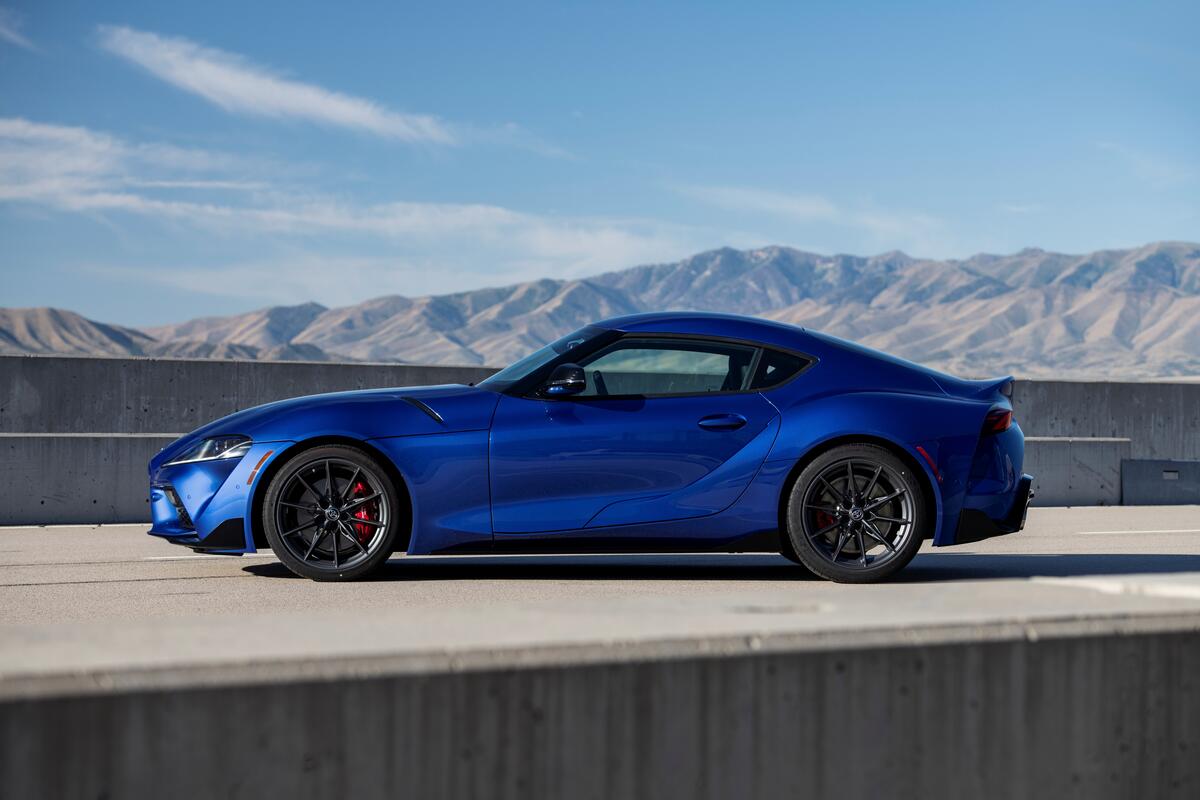
Toyota A90
"Yeah, it's also kind of new. It's a 90 something. Oh, that's one 34."
The Toyota Supra is a sports car made for faster, more exciting driving. The podcast mention suggests they’re talking about an older version from the 1990s. Different years can feel different, so the exact model year matters when people discuss them.
The Toyota Supra is a performance sports car best known for its reputation and strong enthusiast community. In the context you provided, it sounds like the discussion is about a specific older model year (“90 something”), which matters because different years have different engines and features. It’s often discussed in revival/enthusiast podcasts because of restoration, parts availability, and tuning culture.
Mitsubishi build quality
"It must be that. Definitely. It must be that 90s. Mitsubishi build quality that makes it so nice. Yeah. Quality."
“Build quality” just means how solidly the car is put together. They’re saying the Mitsubishi seems to feel well-made, which helps it stay nice and quiet.
“Build quality” is a non-technical but enthusiast-relevant term for how well a vehicle is assembled—panel fit, fastener tightness, and how solid the interior/exterior feels. Here it’s used to explain why the car feels nice and quiet, even with age.
partnership between Mitsubishi and Chrysler
"[846.2s] It was it was a partnership between Mitsubishi and Chrysler. [850.6s] And the devil. [852.0s] Yeah."
Mitsubishi and Chrysler worked together to build some cars. Because of that, different models could share the same core design and parts. That’s the reason people group them together under the DSM label.
This refers to the Diamond-Star Motors collaboration, where Mitsubishi and Chrysler jointly developed and built certain vehicles. The key idea is that the cars could be marketed under different brand names while sharing major engineering and components. That’s why DSM enthusiasts talk about multiple models as one “family.”
DSM
"Were you a DSM man? [856.2s] You weren't a DSM man. [857.0s] I was not a DSM man. [875.8s] You know, DSM, the factory for DSM was in normal Illinois."
DSM is a nickname for a Mitsubishi-and-Chrysler car partnership. Enthusiasts use it to talk about a specific group of Mitsubishi performance cars from that era. The question here is basically whether the guest was into those cars.
DSM is an enthusiast shorthand for Mitsubishi’s Diamond-Star Motors lineup, a joint venture between Mitsubishi and Chrysler. It’s most associated with the 1990s-era Eclipse, Talon, and Galant models that shared a lot of engineering and parts. In this context, the hosts are talking about whether someone was into that specific Mitsubishi/Chrysler performance family.

Eagle Talon
"...uck. There was Mitsubishi eclipses and lasers and talons and I read lots and quick, quick messages to TD's..."
The Eagle Talon is a sporty coupe that was made for faster driving. It’s from an era when people liked turbocharged performance cars. In the podcast, it’s being mentioned along with other similar cars.
The Eagle Talon is a performance-oriented coupe that’s closely associated with the 1990s era of turbocharged sports cars. The podcast context groups it with other similar models, suggesting they’re discussing that generation’s lineup and reputation. It’s often mentioned by enthusiasts because it’s part of the broader “fast coupe” history from that time.

Honda Crv
"... don't know. I get back into it with the with the CRV is one of those things. You can't do anything."
The Honda CR-V is a small SUV meant for normal daily driving. It’s built to be practical and comfortable. The comment in the podcast sounds like someone felt limited by it for what they wanted to do.
The Honda CR-V is a compact SUV designed for everyday driving with practical space and easy ownership. The podcast context suggests frustration or limits—“you can’t do anything”—which often comes up when people are talking about how the vehicle feels to work on, modify, or use for a specific purpose. It’s frequently mentioned because it’s common and widely used.
vents
"You popped the little the vents out on the back of the LX and there it is. I'm with you though."
“Vents” here likely refers to openings/grilles in the car’s interior or bodywork that allow airflow or provide access to components. The host says they “popped the vents out,” suggesting they removed or modified those parts to change how something functions—possibly airflow, sound, or access for the audio setup. Without the make/model and what the vents are connected to, the exact purpose can’t be confirmed.

Chevrolet C10
"...of those slim boxes to put under the seat of that C10 TDs. The thing that Phil built."
The Chevrolet C10 is an older pickup truck. People like it because it’s a straightforward truck that’s easy to restore and customize. The podcast mention sounds like someone built or added equipment inside the truck for a specific purpose.
The Chevrolet C10 is a classic 1960s-era pickup truck known for its simple, restorable design and strong aftermarket support. The podcast context mentions “slim boxes” under the seat and a “C10 TDs” build, which suggests a custom or audio/utility-focused project. C10s are frequently discussed because they’re popular platforms for restoration and personalization.
JDM speaker brackets
"about trying to find the JDM speaker brackets to put in the back of the Honda."
JDM speaker brackets are special mounting pieces made for Japanese versions of cars. They help you install speakers in the correct spots so the fitment matches the original Japanese setup.
JDM speaker brackets are mounting hardware designed for Japanese Domestic Market (JDM) audio setups. They’re needed because the speaker locations and mounting points in some JDM configurations don’t match what you’d find on other markets.

Honda EG
"So there was like you get an EG with like a gather speaker setup and it was a dual speakers in the rear door cards."
Honda EG is a specific older Civic generation. Here, they’re talking about adding special JDM parts so the car can have speakers mounted in the rear the way some Japanese versions did.
The Honda Civic EG is a specific generation of the Civic (late-1980s to early-1990s) that’s popular in the JDM scene. In this segment, it’s mentioned in the context of fitting JDM speaker brackets for a rear audio setup.
rear door cards
"and it was a dual speakers in the rear door cards."
Rear door cards are the plastic/trim panels on the inside of the rear doors. If speakers mount there, the panel shape and mounting points affect whether the speakers fit correctly.
Rear door cards are the interior trim panels on the back doors. Speaker systems are often mounted into or through these panels, so the exact bracket and cutout layout matters for proper fitment and sound.
Katie design
"So I finally tore their back into the car apart, put the brackets in. That's going to go with the Katie design. They're going to make it all pretty, pretty, pretty."
Katie design sounds like a custom shop or design brand that does the finishing work on a car build. In this clip, the host is saying they’re doing some of the install prep, and Katie design will make it look finished.
Katie design appears to be a custom shop or design brand the host is working with for a car project. The segment suggests it handles the “pretty” finishing work after the host installs brackets and prepares parts.
Gathers
"Gathers just did such crazy shit. They're like, just look at like 90s gathers. It's so cool."
Gathers is a company that makes aftermarket car parts, especially for Honda interiors and audio. Here, they’re being mentioned as the source of the dash speaker parts the host is trying to fit.
Gathers is an aftermarket parts brand best known for Honda-focused audio and interior components, including dash speaker solutions. In this segment, the host is talking about Gathers dash parts/pods and how they don’t match available speaker sizes.
speaker pods
"Like those stupid speaker pods that are totally blown on my beat. Yeah. Those are gathers parts for the dash and I can't find a single fucking thing"
Speaker pods are custom boxes or mounts that hold car speakers in a specific spot. People use them when the factory speaker location doesn’t fit the speaker they want, or when they want a cleaner, custom interior look.
Speaker pods are custom-molded enclosures that mount audio speakers into a specific location, often the dashboard or kick panel area. In a car, they’re used to fit a speaker where the factory mounting doesn’t work and to shape the look of the interior.
full repops
"You go like like Thailand's huge. Thailand's like big, big, big. They do like full repops and stuff in Thailand of like parts, right?"
“Full repops” means making brand-new replacement parts that copy the original ones. That helps people rebuild older cars because they can replace worn or missing pieces.
“Full repops” refers to complete reproduction parts—new aftermarket pieces made to match older OEM components. In the context of older Hondas, it means you can source enough replacement parts to restore or rebuild cars that are otherwise hard to keep on the road.

Acura Integra
"I guess when I started seeing, you know, 50000 dollar Acura GSRs or Integra GSRs and type Rs."
The Acura Integra GSR is a sportier version of the Integra. It’s a popular car to rebuild and modify because it has a big enthusiast following and lots of parts support.
The Acura Integra GSR is a performance-oriented trim of the Integra, known in the Honda/Acura community for being a strong platform for rebuilding and upgrades. It’s often mentioned alongside “Type R” cars because it shares the same general enthusiast ecosystem and parts availability.
bone stock
"People, you know, a really if you found like a bone stock GSX, I'm fucking pushing into the ocean, dude."
“Bone stock” means the car is basically unchanged from the factory. Collectors often prefer that because it’s more original and easier to compare to what it was when new.
“Bone stock” means a vehicle is kept in near-factory condition with no meaningful aftermarket performance or appearance modifications. In enthusiast markets, that matters because originality can influence desirability and resale value.

VR four
"Can you imagine trying to rebuild like a VR four? So the 10 mils fucking strewn. Never found."
“VR-4” is a Mitsubishi turbo model. The point here is that it’s not a simple rebuild—people treat it like a harder, more specialized project because it’s less common.
“VR four” is shorthand for the Mitsubishi VR-4, a turbocharged Mitsubishi model associated with the 4G63-era DSM lineup. The host is talking about the difficulty of rebuilding one, implying it’s a rarer, more specialized project than more common DSMs.
Brian Earl Spillner
"I don't like the Brian Earl Spillner ones. [1856.2s] Brian Earl Spillner. The big butts."
Brian Earl Spillner is a character from the Fast & Furious movies. People use his name to talk about a specific style of Nissan Skyline GT-R that fans copy or modify to look like his car.
Brian Earl Spillner is a fictional character from the Fast & Furious franchise, often associated with a Nissan Skyline GT-R. When people say they “don’t like the Brian Earl Spillner ones,” they’re usually referring to Skyline GT-Rs that were styled to resemble the character’s car (a popular fan/replica look).
big butts
"[1856.2s] Brian Earl Spillner. The big butts. [1858.1s] Yes. Yeah."
“Big butts” is slang for a car that has a noticeably wider, more flared rear. It usually comes from wider wheels/tires and fender flares that make the back end look extra wide.
“Big butts” is enthusiast slang for a wide, flared rear-end look—typically achieved with wider wheels/tires and rear fender flares. In the context of Skyline GT-R discussions, it usually points to the exaggerated stance associated with certain modified or replica builds.

Starion
"I started starting yesterday. Starions. I haven't seen one of those for a while."
The Mitsubishi Starion is a 1980s turbo sports car. It’s remembered by enthusiasts for its look and for being part of the Mitsubishi/Chrysler era that helped shape what came later.
The Mitsubishi Starion is a turbocharged 1980s sports coupe known for its distinctive styling and for being an early “DSM-era” Mitsubishi platform. In this segment, the hosts connect it to the wider Mitsubishi/Chrysler era of shared development and badge engineering.

Chrysler Conquest
"But that was like the start of DSM. Because that was a Chrysler conquest. Yeah, really weird voter for this thing."
The Chrysler Conquest is basically the same car as the Mitsubishi Starion, just sold under a different brand. It’s brought up because it connects to the same 1980s turbo-car scene that enthusiasts later called DSM.
The Chrysler Conquest is the badge-engineered version of the Mitsubishi Starion sold in the U.S. during the 1980s. This is why the hosts mention it as “the start of DSM”—it’s part of the same family of cars that later became closely associated with DSM (Mitsubishi/Dodge/Plymouth turbo culture).

Mitsubishi Lancer
"...that generation because it was the closest to the Lancer. Purple. Oh, no, you're right."
The Mitsubishi Lancer is a compact car. Some versions are known for performance, and the podcast seems to be talking about a particular generation and color. People remember specific years and styles, so the details matter in the conversation.
The Mitsubishi Lancer is a compact car that has had performance-focused versions, and it’s often discussed in enthusiast circles for its rally-inspired reputation. Your transcript references “that generation” and a “Purple” example, which indicates they’re talking about a specific Lancer era and appearance. It comes up because certain Lancer generations are especially memorable to fans.
GST
"Brother, that's a G.S. What was what? G.S. X. So GST is the front wheel drive."
GST is a model trim name, and in this episode they’re saying it means the car is front-wheel drive. Front-wheel drive means the front wheels do the work of moving the car.
GST is a trim designation used on some Mitsubishi turbo models, and in this segment the host explicitly ties it to drivetrain: “GST is the front wheel drive.” That means the GST variant uses the front wheels to propel the car rather than a rear-wheel-drive layout.
all wheel drive
"[1988.9s] G.S. X is the all wheel drive. [1990.8s] I don't know."
All-wheel drive means the car can send power to all four tires. That helps it grip the road better, especially when the surface is slick.
All-wheel drive (AWD) sends power to all four wheels instead of just the front or rear. That usually improves traction, especially in low-grip conditions like rain, snow, or hard launches.
turbo
"[2033.5s] Mr. was so little performance in there. [2035.2s] This it was all wheel drive in turbo. [2038.22s] "
A turbocharger is a device that helps the engine make more power. It does this by pushing extra air into the engine so it can burn more fuel.
A turbocharger (“turbo”) forces more air into the engine, which can increase power without needing a larger engine. In performance cars, turbocharging is often paired with stronger fueling and engine management to handle the extra stress.
wastegate
"That's all that mattered. You crushed the wastegate 300 horsepower. Right. Exactly. Yeah."
On a turbo engine, a wastegate is a valve that helps control boost (how hard the turbo pushes). It keeps the turbo from making too much pressure and helps protect the engine.
A wastegate is a valve on a turbocharged engine that controls how much exhaust gas bypasses the turbine. By regulating boost pressure, it helps prevent over-boost and keeps the turbo from making more pressure than the engine can safely handle.
front wheels
"That's as much power as you can get to the front wheels. It's not even usable at that point. Or arms to four arms back then."
When the speaker says “as much power as you can get to the front wheels,” they’re describing traction limits on a front-wheel-drive layout. In practice, front tires can only grip so much, so beyond a certain boost/power level the car can’t accelerate effectively without wheelspin.
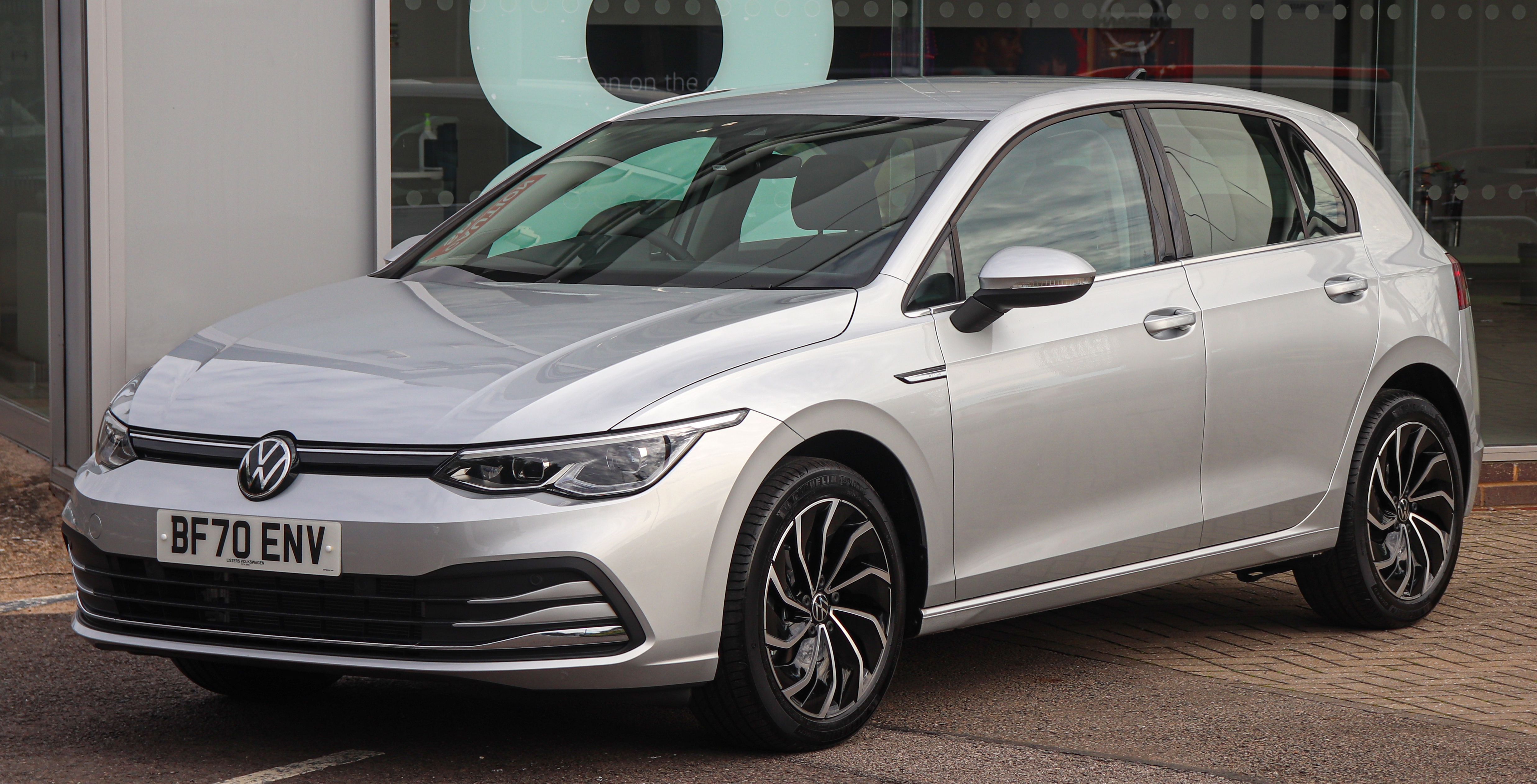
Volkswagen Gti
"Four arms are unreal. GTI is an SRT for it. A GTI never went that fast."
The Volkswagen Golf is a compact car, usually a hatchback, made for everyday driving. The podcast mention suggests they’re talking about faster versions of the Golf. People like these because they can be both practical and fun to drive.
The Volkswagen Golf is a compact hatchback known for being practical while still offering performance variants. In the podcast context, “GTI” and “SRT” are mentioned, which points to higher-performance trims people often chase for driving feel. Golf models are frequently discussed because they’re common, tunable, and have many generations.

Hyundai Sonata
"Yeah, there's no. And Sonata's Dodge Ram in the car. We're in Sonata's."
The Hyundai Sonata is a regular family-style sedan. It’s meant for comfortable everyday driving. The podcast mention sounds like it’s being listed among other cars, not necessarily discussed in detail.
The Hyundai Sonata is a midsize sedan aimed at comfortable daily transportation. In the transcript, it’s mentioned as part of a group of cars, likely in the context of what vehicles are present or being discussed. Sonatas are commonly referenced because they’re widely used and have had multiple generations with different features.

Dodge Ram
"Yeah, there's no. And Sonata's Dodge Ram in the car. We're in Sonata's."
The Dodge Ram is a pickup truck with a bed for carrying things. It’s made for towing and practical use. The podcast mention sounds like it’s just being named as part of a group of cars.
The Dodge Ram is a full-size pickup truck built for hauling, towing, and everyday work use. In your transcript, it’s mentioned alongside other cars in a list, suggesting it’s part of a broader discussion of vehicles in a collection or lineup. Ram trucks are often talked about because they’re common, practical, and have many configurations.

Nissan Altima
"We're in Sonata's. Altima's. And Sonata's."
The Nissan Altima is a regular sedan meant for daily driving. It’s designed to be comfortable and practical. In the podcast, it sounds like it’s just being mentioned as one of several cars in the conversation.
The Nissan Altima is a midsize sedan designed for everyday commuting with a focus on comfort and practicality. In your excerpt, it’s mentioned alongside other cars, suggesting it’s part of a broader set of vehicles being referenced rather than a deep dive into a specific build. Altimas often show up in discussions because they’re common and have many model-year variations.
nostalgia
"Anyways, reminiscing nostalgia. That's why everybody's paying so much nostalgia."
In this context, “nostalgia” means people wanting older cars because they feel connected to the past. That emotional connection can make those cars cost a lot more.
In car culture, “nostalgia” refers to the emotional pull of older models and eras—often driving collectors to pay more for cars that remind them of their youth or a specific period. Here, the hosts connect nostalgia to rising prices for certain cars.
Mopar's
"You know, that's why they paid absurd amounts for Mopar's."
Mopar is a nickname for Chrysler’s car and parts brands—especially Dodge and Plymouth. The hosts are basically saying Mopar cars have become extremely expensive to buy.
Mopar is the umbrella brand name used by Chrysler for its parts and vehicles (and it’s commonly used by enthusiasts to mean Chrysler/Dodge/Plymouth performance cars). The hosts are saying people have been paying unusually high money for Mopar cars.

Dodge Charger
"Think about the lot of. Yeah, 15 years ago, Dodge Charger, 69 Charger was $180,000 cars."
The Dodge Charger is a famous American muscle car. It’s the kind of car people buy because it looks cool and has a big engine, and in this chat they’re saying the prices have gotten crazy.
The Dodge Charger is a classic American muscle car from Dodge, best known for its big V8 power and long hood/short deck styling. In this segment, the hosts are talking about how the market has driven prices up for specific Charger-era cars.

Nissan Gtr
"I haven't seen the GTR since I inadvertently put a debt in it. Yeah, I'm..."
The Nissan GT-R is a very fast sports car. The podcast mention sounds like someone saw one and had a story about it. People talk about the GT-R because it’s known for performance.
The Nissan GT-R is a high-performance sports car known for serious speed and advanced engineering. In the podcast context, it sounds like the speaker has seen one recently and mentions “inadvertently put a debt in it,” suggesting a story about an incident or moment involving the car. GT-Rs are often discussed because they’re iconic and have a strong enthusiast following.
paper work
"The paper work. 64. I think technically it's a 64 and a half. The paperwork's a McDonald's napkin."
“Paper work” means the documents that prove the car’s ownership and identity. With older cars, the paperwork is important because it can affect whether the car can be registered and sold. The host is saying the paperwork they have isn’t very official.
“Paper work” here refers to the documentation that comes with a car—especially the title and related ownership records. For classic cars, these documents help prove what the vehicle is and who legally owns it. The host even compares it to a “McDonald's napkin,” implying the paperwork quality/legitimacy is questionable.
legit title
"No, no, no. It's a legit title. That says 64."
A “legit title” means the official ownership paperwork for the car is real and correct. For older cars, the title matters because it affects whether you can legally register and sell the vehicle. If the paperwork doesn’t match, buyers get nervous and the car can be worth less.
A “legit title” means the vehicle’s ownership document is valid and correctly reflects the car’s identity. In collector-car circles, title accuracy can be crucial because it affects whether the car can be registered, insured, and sold normally. Paperwork issues can also impact value and buyer confidence.
off-road driving experience
"A thousand dollars for up to three people instructed to assist in your off-road driving experience. Yes."
This is a guided session for driving on dirt or rough ground. The goal is to teach you how to control the vehicle safely when traction is worse than on pavement.
An off-road driving experience is a structured session where drivers learn how to handle vehicles on unpaved or low-traction surfaces. It usually includes instruction on throttle/braking control, line choice, and safety procedures.
two lane east direction road
"And that's right off of the fight of two lane east direction road. I know, right?"
They’re talking about the kind of road they’ll take for the drive—basically a simpler, two-lane route. The point is organizing a fun drive together.
This appears to refer to a specific type of public road setup—likely a two-lane route—used for the group’s planned drive. The key idea is route planning for a group outing, rather than a technical automotive concept.
cars and coffees
"And like I said, cars are meant to be driven. We'll get out early in the morning, meet up, get some coffee, and we'll be out and, you know, we hand out the route to everybody."
“Cars and coffees” are casual meetups where car people get together, usually in the morning, to show cars and hang out. The host is basically saying the best part is actually driving together, not just meeting up.
“Cars and coffees” are informal car meetups where enthusiasts gather—often early in the morning—to talk about cars and sometimes organize drives afterward. In this segment, it’s contrasted with the idea that the real goal is getting cars out on the road together.

Audi R8
"or like a beautiful R eight, our, our clients want to drive and being able to do it with a group of people"
The Audi R8 is a high-end sports car/supercar from Audi. The host is saying even cars like this are meant to be driven, not just kept parked.
The Audi R8 is a mid-engine supercar that’s built around the idea of everyday usability plus real performance. Here it’s used as another example of a “beautiful” car that clients want to drive as part of a group outing.
four post lift
"And so we got a four post lift. So people want to put their car in the lift. They can, it's no problem."
A four post lift is a garage platform that uses four posts to lift your car up. It lets you look underneath and do work safely. It’s the kind of lift you usually see in professional shops.
A four post lift is a vehicle hoist with four support posts that raises a car high enough to work underneath it. Because the car is supported at multiple points, it’s commonly used in shops and events to let people inspect the underside safely. Compared with a two-post lift, it’s often more stable for longer viewing and general access.
car condos
"And I think one of the big things is that, you know, between, you know, there's, there's car condos out there and like these massive places that store, you know, 300 cars or something"
“Car condos” are like storage units built for cars, usually with better setups than a normal storage unit. The goal is to keep the car cleaner and more cared for while it’s stored.
“Car condos” are private storage units designed specifically for car owners, often with individual bays and sometimes lift access. The idea is to keep cars organized and presentable, unlike generic storage where cars can sit neglected for months.
10 by 20 storage unit
"how many times have people like stored their car and, and it wasn't, it was at a, you know, a 10 by 20 storage unit, right?"
A “10 by 20 storage unit” is a typical self-storage space size people rent to store belongings. Here it’s used as an example of the kind of storage where cars can get neglected and not be ready to drive later.
A “10 by 20 storage unit” is a common self-storage size (about 200 square feet) that’s often used for storing cars. In the context of the episode, it’s contrasted with better-controlled storage where cars are more likely to be maintained and started periodically.
tires are flat
"it doesn't start. It's filthy. Your tires are flat."
If tires are “flat” after a car sits, it usually means they lost air pressure while parked. You may need to inflate them (and sometimes check for a leak) before the car can be driven safely.
“Flat tires” after long storage usually means the tires lost air pressure over time. That can happen from slow leaks, temperature changes, or tires sitting loaded in one spot for months.
jump starter
"I didn't know whether I was going to bring an air compressor, some Wendex, microfibers, jump starter, you know, starting fluid, whatever."
A “jump starter” is a portable device that can give a dead car battery enough power to start the engine. It’s handy when a car has been sitting and the battery isn’t strong enough to crank it.
A “jump starter” is a portable battery pack used to start a car with a weak or dead battery. It’s especially useful for stored cars that haven’t been driven in a while and may have battery drain or a depleted state of charge.
air compressor
"I didn't know whether I was going to bring an air compressor, some Wendex, microfibers, jump starter, you know, starting fluid, whatever."
An “air compressor” is a machine that pumps air. Here it’s mentioned because it can help you re-inflate tires if the car has been sitting.
An “air compressor” is used to pressurize air tools and, in this context, can also be used to inflate tires after storage. It’s a practical item when a stored car’s tires may have lost pressure.
starting fluid
"jump starter, you know, starting fluid, whatever. And, you know, you know, my dad is a, is a docent at the Newport car museum."
“Starting fluid” is a spray that helps an engine catch when it won’t start normally. It can be risky if overused or used on the wrong engine, so it’s not a long-term fix.
“Starting fluid” is a volatile spray used to help an engine start when it’s struggling, typically by providing easily ignitable vapor. It’s often associated with cold-start or battery-related issues, but using it incorrectly can be hard on engines.
vehicle storage
"And we're like, you know what, this is a good business and there's no vehicle storage like this on in the part of Rhode Island that we're at, you know, serving South County, right?"
“Vehicle storage” here means a place that keeps cars safe for owners. Instead of driving it all the time, the owner can store it in a facility that’s set up to protect the car.
In the collector-car world, “vehicle storage” usually means keeping cars in a secure, climate- and security-controlled facility rather than parking them at home. It’s often sold as a service for owners who want their cars preserved and accessible without daily driving.
buying cars for investments
"And now that like people are, are not just buying cars to enjoy, people are buying cars for investments."
They’re saying some people buy cars like they’re investments, not just for driving. The idea is that certain cars can become more valuable later.
This segment describes the concept of treating certain cars as investment assets rather than just transportation. That mindset is common in the collector market, where limited supply and strong demand can drive resale values.
Porsche
"Listen, you know, I hire Porsche. Somebody wants to bring me a GT three touring or an RS three or GT four or whatever the case may be."
Porsche is a well-known German car brand that makes sports cars. Here, they’re talking about storing Porsche cars for people who don’t want to drive them.
Porsche is a German sports-car brand known for performance-focused engineering and a large enthusiast collector base. In this segment, it’s used to describe the type of clientele and cars the storage business expects to serve.
insulated
"So when we paid attention to like the details, all the concrete in the foundation and in both levels of the floors are all insulated."
“Insulated” here refers to thermal insulation in the building’s foundation and floor levels, which helps stabilize temperatures. For stored cars, more stable temperatures can reduce condensation and help protect materials over time.
climate control
"They're incredibly difficult to climate control. [3339.3s] Yeah."
Climate control means controlling the temperature and humidity in a building. That matters for keeping cars clean and helping coatings or protective work behave properly.
Climate control refers to actively managing temperature and humidity in a space. For detailing or storage, stable conditions can reduce issues like dust, condensation, and paint-protection curing problems.
ceramic coating
"once they've either gotten a ceramic coating or something like that, or just gone through a [3387.8s] paint correction or PPF, they usually just covered in plastic."
Ceramic coating is a protective layer you put on a car’s paint. It helps the paint resist dirt and grime and makes washing easier because water and contaminants don’t stick as easily.
A ceramic coating is a liquid polymer/ceramic-like protective layer applied to a car’s paint. It’s meant to improve chemical resistance and make the surface easier to clean, often adding gloss and hydrophobic (water-repelling) behavior.
paint correction
"once they've either gotten a ceramic coating or something like that, or just gone through a [3387.8s] paint correction or PPF, they usually just covered in plastic."
Paint correction is basically polishing the car’s paint to remove scratches and swirl marks. It makes the paint look cleaner and more even before adding protective coatings.
Paint correction is the process of removing or reducing visible paint defects—like swirl marks, light scratches, and oxidation—using polishing compounds and pads. The goal is to restore clarity and uniform gloss before applying longer-term protection like ceramic coating or PPF.
PPF
"paint correction or PPF, they usually just covered in plastic. [3391.7s] Yeah."
PPF is a clear protective film that you stick on your car’s paint. It helps prevent chips and scratches from things like rocks and road debris.
PPF (paint protection film) is a clear, protective urethane film applied to high-impact areas of a car’s paint. It helps guard against rock chips, minor abrasions, and road debris; many films also have self-healing properties for light surface scuffs.
battery tender
"everything is hooked up to a battery tender. We learned the hard way this past year, [3412.5s] especially with a lot of the newer cars."
A battery tender is a device that keeps a car battery charged while the car sits. It helps prevent the battery from going dead and can extend battery life during storage.
A battery tender is a smart battery charger/maintainer that keeps a vehicle’s battery at an optimal charge level during storage. It’s commonly used to prevent battery drain and sulfation, especially on modern cars with higher parasitic draw from electronics.
active alarm systems
"New, new, new cars just are not always on. Yeah. Those active alarm systems and things"
An active car alarm is the kind that stays on and watches for problems. If something happens, it can set off the alarm and notify you.
An active alarm system is designed to monitor the car continuously and trigger alerts if it detects intrusion or abnormal conditions. Because it’s always watching, it can draw small amounts of power even when the car is otherwise “off.”
motion sensors
"Those active alarm systems and things [3430.1s] like that with the motion sensors."
Motion sensors detect movement around the car. They’re used so the car can react if someone approaches or tries to mess with it.
Motion sensors are part of many modern car security and convenience systems, detecting movement near the vehicle. When triggered, they can wake up systems or cause the alarm to respond, which contributes to small standby power draw.
comfort access
"like that with the motion sensors. They're like, even just like that comfort access stuff, [3434.1s] you walk close to it."
Comfort access is a keyless feature that lets you unlock and start the car without pressing buttons. The car detects your key when you get close.
Comfort access is a keyless-entry feature that uses proximity detection so the car can unlock or allow starting when you’re near it. Because it’s constantly listening for the key’s presence, it can keep certain electronics awake more than a fully “sleeping” car.
fire suppression systems
"but well water doesn't work with fire suppression systems. We have a 40,000 gallon [3481.5s] tank underneath the parking lot that feeds our fire suppression system for the building."
Fire suppression systems are safety systems that automatically help control a fire. In a building, they’re designed so a fire can be handled quickly without waiting for people to react.
Fire suppression systems are engineered setups (often using water, foam, or other agents) that automatically control or extinguish fires. For a car storage/building, they must be designed around water availability and the expected fire scenarios, which can heavily affect cost and layout.
85 kw generator
"We have to have an 85 kw generator, a massive fire pump, you know, just for the fire suppression [3502.2s] system"
An 85 kW generator is a big backup power unit. It can keep important safety systems running if the main power isn’t available.
An 85 kW generator is a backup power source sized to run critical systems—here, the fire suppression equipment. In facilities without reliable municipal power/water pressure, generator sizing is a key part of meeting safety requirements.
128,000 gallons of water
"we, and it sort of goes back to the fire system is even if we wanted to put [3552.5s] lifts in the building for all the cars, we couldn't because we would need 128,000 gallons of water on [3560.5s] site"
That 128,000-gallon number is how much water the building would need for its fire safety plan. It shows how expensive and complex the system becomes when you change the storage layout.
The “128,000 gallons of water” figure is a design requirement for the facility’s fire protection strategy if they were to install lifts for car storage. It reflects how fire risk assumptions and sprinkler/suppression coverage can drive very large water storage needs.
pressurized
"It has to be inspected every year. I was just saying, because it holds pressure, right? Obviously it gets, it's holding a particular amount of pressure..."
Pressurized means the system is under higher-than-atmospheric pressure. Here, they’re clarifying that the tank isn’t pressurized in the usual sense; instead, the fire pump generates the pressure needed for water delivery.
fire pump
"It's not pressurized besides like the weight of the water because the fire pump is actually producing all that."
A fire pump is the machine that pushes water with enough pressure to fight a fire. It’s the part that makes the water flow strongly when the system is activated.
A fire pump is the dedicated pump that provides the water pressure needed for firefighting. The host is explaining that the system’s pressure comes from the pump running, not from the tank being pressurized like a compressed gas container.
precast concrete
"So they're bonded together. So those are precast concrete, you know, portions of the tank."
Precast concrete pieces are made in a factory, then brought to the site and put together. It’s a common way to build large concrete structures efficiently.
Precast concrete refers to concrete components manufactured off-site and then transported to the build location. The speaker is describing the tank as being made from precast sections that are assembled together.
bonded and bolted
"So they're bonded and, and bolted"
They’re joining the tank pieces in two ways: glue/sealant (bonding) and bolts (fasteners). That helps the sections stay together and seal properly.
Bonded and bolted describes two methods of joining parts: bonding uses an adhesive or sealant to create a chemical/mechanical connection, while bolting uses fasteners to clamp and hold components together. The host is explaining how the tank sections are secured to work as one unit.
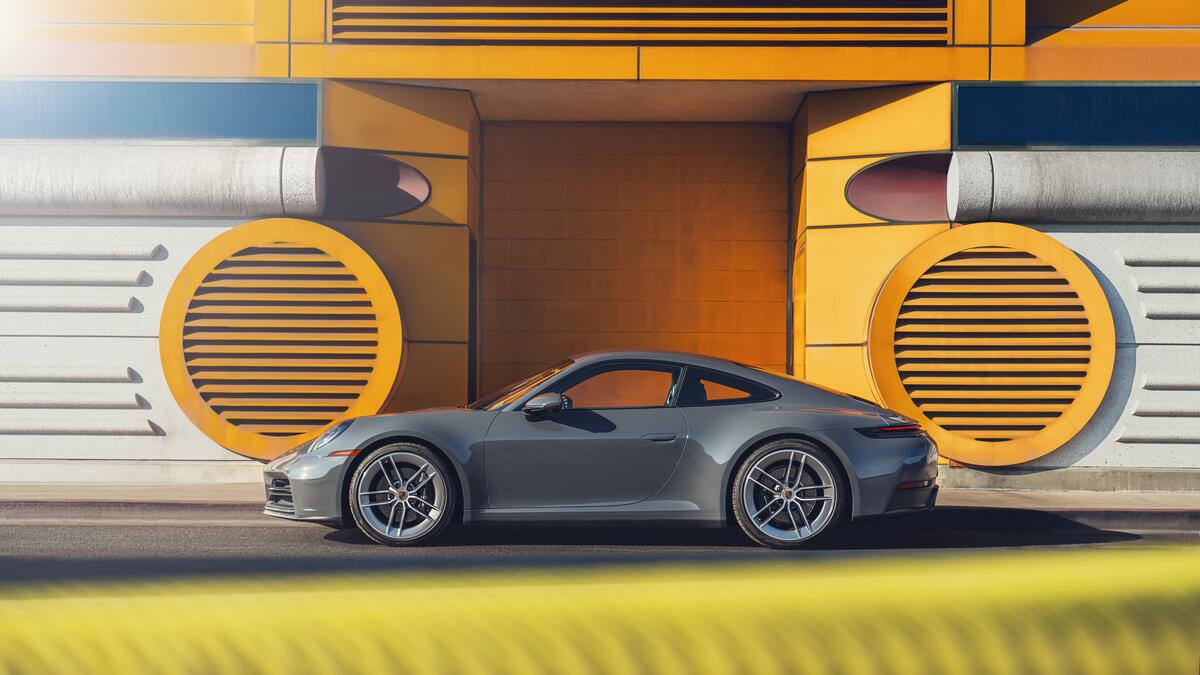
Porsche 911
"“...it’s interactive too. So I’ll just go up and open up a, you know, a 9 11 door or something like that.”"
The Porsche 911 is a famous sports car from Porsche. It’s known for having its engine in the back and being a long-running model. Here, the host mentions it as part of an interactive car display.
The Porsche 911 is Porsche’s iconic sports car, known for its rear-mounted air-cooled (in many classic generations) flat-six engine layout and long-running design evolution. In this segment, it’s referenced as part of an interactive display where someone can “open up” a 911 door, implying a detailed, model-specific experience.
retention rate
"“...I expect to probably have, you know, 85, 90% retention rate for, for our clients.”"
Retention rate is a way to measure how many customers stick around. The host is saying they expect most of their clients to keep using their service.
Retention rate is a business metric that measures how many clients continue using a service over time. Here, the speaker expects an “85, 90% retention rate” for clients, tying it to how well the facility and offerings are designed.
internal combustion engine
"“...there are still people that believe in the internal combustion engine like I do. ... we don’t store electric cars...”"
An internal combustion engine is the kind of engine that burns fuel to make the car move. The host is comparing that to electric cars and explaining why their setup doesn’t store EVs.
An internal combustion engine (ICE) is an engine where fuel is burned inside the engine to create power. The speaker contrasts ICE cars with electric cars, saying they still believe in ICE technology and that their facility doesn’t store electric vehicles.
electric cars
"“...we don’t store electric cars, which is, that's, I mean, that's just, no, you can't.”"
Electric cars run on electricity stored in batteries instead of burning gasoline. The host says their place doesn’t store EVs, and they clarify it’s not meant as an insult to electric cars.
Electric cars are vehicles powered by electric motors and stored energy in batteries rather than using an internal combustion engine. The speaker mentions that their facility doesn’t store electric cars, framing it as a practical limitation rather than a critique of EVs.

Ferrari 288 GTO
"“...Say for instance, I am blessed one day to have a 288 GTO or something ridiculous...”"
The Ferrari 288 GTO is a very special, older Ferrari known for being fast and rare. Here, the host uses it as an example of an extremely expensive car someone might trust them with.
The Ferrari 288 GTO is a legendary 1980s Ferrari built around a turbocharged V8 and homologation-style performance pedigree. In this segment, it’s used as an example of an ultra-valuable, high-performance car a client might own, raising the question of how the client experience should be handled.
fire blanket
"there's a Mach E with a fire blanket on top of 288 GTO. I'm fucking not"
A fire blanket is a thick, heat-resistant sheet meant to cover a fire to smother it. They’re describing it as a precaution people use when storing expensive cars.
A fire blanket is a specialized, heat-resistant covering used to smother flames or help contain a fire source. In this segment it’s mentioned as something placed on top of a car during storage, implying a practical attempt to reduce fire spread or improve response time.
fire suppression horizontally as opposed to vertically
"the reason why they, why they mandate, if you have lifts, you have to have fire suppression horizontally as opposed to vertically is because of parking garage fires"
Fire suppression is the system that puts out fires automatically. They’re saying that in parking garages, the way the system is set up matters—horizontal discharge is often required because of how fires spread there.
Fire suppression systems can be designed to discharge agents in different directions or layouts. The host’s point is that parking garages often require a horizontal discharge approach (rather than vertical) because of how smoke and flames move in that enclosed, multi-level environment.
parking garage fires
"fire suppression horizontally as opposed to vertically is because of parking garage fires"
A parking garage fire is especially dangerous because it’s enclosed and can spread through levels and ramps. That’s why fire-safety rules and systems are designed specifically for garages.
Parking garage fires are a distinct hazard because garages are enclosed, have ramps and multiple levels, and can trap smoke and heat. That environment changes how quickly a fire can spread and how effective different suppression approaches are.
platinum
"I mean, per month, platinum, four and 25 bucks a month. Look at all the stuff you get."
“Platinum” is the name of a higher level of a service plan. It means you pay more each month and get extra benefits compared to cheaper tiers.
“Platinum” here is a tier name for a car-related service plan, not a car trim level. It usually indicates a higher-priced membership tier that includes more perks (like pickup/drop-off and fueling).
fill up service
"with the gas prices now, you do a fill up service as well. Yeah. So incredible. So, and we don't charge extra for the fill up service."
They offer a service where they refuel your car for you. Instead of you worrying about the tank level, they’ll handle it as part of the plan.
“Fill up service” refers to an add-on service where the provider refuels your car for you. In this context, it’s part of a monthly plan and is tied to how the car is returned (fuel level) and how they handle low fuel.
E
"So if you inadvertently leave the thing on E, we're going to let you know, Hey, do you want us to take this car down the street and fill it up for you?"
On a gas gauge, “E” means empty. They’re saying if you leave the car with the tank almost empty, they’ll ask if they should refuel it.
“E” is shorthand on a fuel gauge for “empty.” The host is saying that if the car is left near empty, the service will offer to take it and refuel it.
93
"Put some 93 in it? Done. That's what I was just going"
“93” refers to 93-octane gasoline, a fuel grade measured by octane rating. Higher-octane fuel is often recommended for engines with higher compression or knock sensitivity, and using the specified grade helps the engine run as intended.
one throat to choke
"We use this term a lot in day-to-day stuff. A lot of customers want one throat to choke, which is a good and bad thing, right?"
It means you deal with one main company or person, not a bunch of different ones. That way, if something goes wrong, you know who to talk to.
“One throat to choke” is a service model where a single provider coordinates multiple tasks so the customer has one main point of contact. In this context, it’s used to describe how the shop manages drop-off, swapping, detailing, and other services without the owner having to juggle different vendors.
powder-coater
"So we have a powder-coater. If you want valve covers or wheels or something like that done, we have people that do German and Japanese automotive general repair."
A powder coater is a shop that covers parts with a special powder and then bakes it on. The result is usually a tougher, longer-lasting finish.
A powder-coater applies a dry powder coating to parts (often wheels or brackets) and then cures it with heat to form a durable finish. It’s commonly used for tougher, more corrosion-resistant coatings than basic paint in many restoration and customization workflows.
paintless dent repair
"We do paintless dent repair in the facility. Car never has to leave, right? It's good."
Paintless dent repair (PDR) is a bodywork method that removes dents without repainting by reshaping the metal from behind the panel. The host also ties it to “fine line scratches,” which are often handled by a detailer rather than traditional panel repair and repainting.
ceramic coats
"And, you know, all of that's taken care of, you know, in-house. And he does, you know, ceramic coats, paint, protective film, you know, interior extra detail, paint correction, he does absolutely everything."
A ceramic coating is a protective layer you put on a car’s paint. It helps the paint resist dirt and makes washing easier because water and grime don’t stick as much.
Ceramic coatings are a liquid polymer/ceramic layer applied to a car’s paint to add chemical resistance and make dirt and water bead up more easily. They’re meant to improve how the paint resists staining and how often it needs washing.
protective film
"And he does, you know, ceramic coats, paint, protective film, you know, interior extra detail, paint correction, he does absolutely everything."
Protective film is a clear sheet applied to the car’s paint in high-wear areas. It’s there to prevent chips and minor scratches from road debris.
Protective film usually refers to paint protection film (often a clear, urethane film) applied to vulnerable areas like the hood, bumper, and fenders. It helps protect against rock chips, light scratches, and road debris while keeping the original paint finish.
safety inspection
"Did a safety inspection on it, make sure the car was safe, full, you know, paint correction was done on the car. This car is going to be able to be enjoyed by the owner."
A safety inspection is a thorough check to make sure the car is safe to drive. It looks at important things like brakes and other safety systems before you take it on the road.
A safety inspection is a check to confirm the vehicle is safe to drive—typically covering critical systems like brakes, lights, steering/suspension condition, and other safety-related components. In a restoration context, it’s a gate before the car is returned to the owner.
charge up until about 80%
"So it's a, it's a, you know, it's a little bit quicker charge up until about 80%. And then it's a very slow trickle charge above 80%."
Chargers often fill a battery quickly at first, then slow down near the end. That’s because topping off a nearly full battery can be harder on it, so the charger uses a gentler approach.
This describes a common battery-charging strategy: fast charging is allowed only up to a target state of charge (here, ~80%). After that point, the charger switches to a gentler mode to avoid stressing the battery as it approaches full charge.
trickle charge
"And then it's a very slow trickle charge above 80%. It lets us know when it gets from 80% to 100%."
A trickle charge is a slow, gentle way to keep a battery topped off. It’s used after the battery is mostly full so you don’t overwork it.
A trickle charge is a low, steady charging current used to maintain or gently top off a battery after the main bulk charge is complete. It helps bring the battery to full charge while reducing heat and stress compared with higher-rate charging.
Request an Explanation
Heard something you'd like explained? We'll add it to this episode.
Sign in to request explanations for terms you heard.
Want to learn more?
Browse our glossary for plain-English explanations of automotive terms, jargon, and concepts.
Help improve this episode
See something that's not quite right? Our annotations are AI-generated and can sometimes miss the mark. Click the flag icon on any annotation to suggest a correction.
2 community members have helped improve this episode.