This podcast is sponsored by an EV website called electrifying.com. Since it’s EV-focused, it usually means the show will talk about charging and ownership stuff.
The Rolls-Royce Spectre is a luxury electric car. The point here is that some very high-end buyers may not need extreme range because they can use another car for long drives.
They’re talking about EVs that advertise 500 miles or more of driving range. The idea is that once you’re used to seeing those numbers, lower-range EVs feel less compelling.
The BMW iX3 is an electric SUV from BMW. The podcast mentions it because it came out before some other new electric models. It’s used to talk about the timing and rollout of EVs.
EX60 is an electric car mentioned in the podcast right after the BMW iX3. The host highlights that it has “over 500,” which usually refers to a big range figure. It’s brought up to show how EV capabilities are improving.
The Porsche Cayenne is a luxury SUV from Porsche. The hosts are basically asking whether an EV’s driving range would be enough to make people comfortable buying one.
Solid-state batteries are a newer kind of EV battery that uses a solid material instead of a liquid inside the battery. The promise is better safety and possibly faster charging.
Energy density is basically how much “battery power” you can fit into a certain size or weight. More energy density usually means more range or a lighter battery.
It’s a battery design where the “chemical goo” inside is more solid than liquid. That can help with safety and may work better in cold weather.
Car
MG4
They’re using an MG4 as a real-world example of an EV you can buy for relatively little money. Then they compare what it costs to run versus a diesel car.
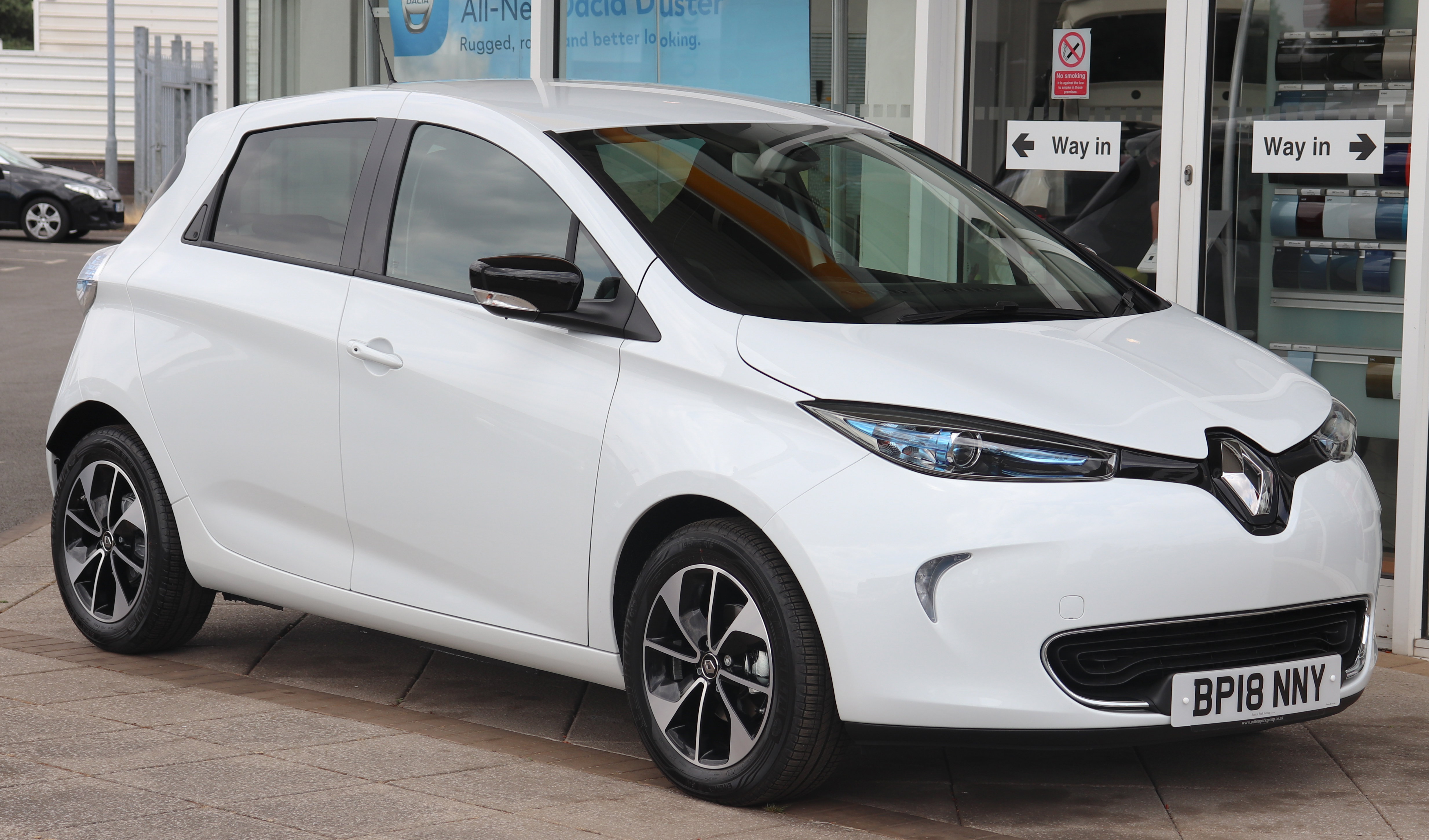
The Renault Zoe is a small electric car that’s been around for a while. The speaker is saying it’s the kind of EV they’d pick if they were looking at that price range.
The Leap Motor B10 is an electric car being talked about mainly because it can be leased cheaply. They’re comparing the monthly cost and how many miles you get.
“232 quid a month” is the revised monthly cost after adding the extra color charge. It underscores how option pricing can materially change the affordability of an EV lease/finance-style offer.
The Volvo EX30 is a small electric Volvo SUV. They’re saying it drives really well, and they’re also talking about how the screen and controls feel inside.
Infotainment graphics are what you see on the car’s screen—menus, icons, and the overall look. The speaker doesn’t like the style, even though they like other parts of the car.
A tariff is the pricing structure a utility uses for electricity, often varying by time of day, usage, or contract type. EV-focused tariffs typically reward charging during off-peak windows to lower total charging cost.
EV drivers are people who charge an electric car at home. These electricity plans are often set up so charging overnight costs less than charging during busy daytime hours.
Car
Kia E-Niro
The Kia E-Niro is an electric version of the Niro. The speaker is saying it was very efficient for them when it was new.
LIVE
Hello, and welcome to the Kilowatt Half Hour, a podcast about the world of EVs brought
to you by the team at electrifying.com Well, here we are again, and welcome to another
Kilowatt Half Hour. Now, I think we should start this by saying that we are on a bit
of a skeleton staff today, aren't we, Tom, because-
We're kind of scraping the barrel, I suppose, yeah.
I suppose we are a bit, aren't we? But hey, we're here. Ginny and Lucas, well, they're
both off seeing secret box bargains and Audis, Mike is off sipping Pina colladas, Batch is
off driving a new range extending Leap Motor, no less. I think Nicky's impersonating David
Attenborough, Nick's off gazing into crystal balls. Who knows? It's hectic, we're busy,
but we are here. And yeah, there's actually quite a lot to talk about, isn't there? So,
Tom, it's you and me today. What have you been up to this week?
I've been tapping away at my desk furiously because everybody else isn't here, but that's,
you know, could be worse, I suppose. It's been quite nice to be inside because it's gone all cold,
isn't it? I took the winter tires off my car last week in 17 degree heat in my t-shirt,
and jokingly said, it will snow next week. And yesterday, it snowed on me.
Amazing. It is extraordinary that, isn't it? It's just we had really heavy hail, the weather's
been mad. But yeah, well, there you go. So, it's all Tom's fault that we've had weird weather,
because you decided to change your winter tires, so therefore that's why it's, that's why that's
happened. Other than that, my wife has gone off in the barn on its first long journey,
so she rang me and said, what do I need to do to fast charge? But that went all quite quickly,
I think. She said it's 87 per kilowatt hour. Is that all right? I'm like, not really, but
just put in a little bit and get you home. Exactly. I know. Well, actually, I had that
the other day. I went to, I stopped at Winchester Services, and this was in my, I was in my previous
Volvo EX30 long term, which I mentioned in a bit, actually. And I only needed a really little bit of
electricity, and then it took ages to get a coffee. And I was like, hurry up, because I need to stop
the car charging. I kind of like had to, so I had to do it on the app and all this kind of thing.
So I ended up with more electricity than I'd wanted. So there you go. A new era of electric
car charging, where you actually kind of panicking because the car, especially if you haven't got
the app on your phone, because you don't want to put too much electricity into the car. But yeah,
anyway, I'm glad that she was all right. I also must apologize to the admin department of Volkswagen
Financial Services, who leased us the car for the amounts of letters they're having to send us
about the parking fines that my wife's getting for filling in the registration number wrong
at the car park at her new job. It's just like, oh, not another one.
Fair enough. Well, there you go. It's, yeah, hopefully she'll get away with that one then.
What have I been doing? So I have, well, I've driven a couple of interesting cars, so I have
been mostly desk based the last couple of days. But I drove a week or so ago, I drove the new Porsche
KN, which is quite interesting. Yes. Have you read about this tool, Tom? Well, I've watched the video
or the kind of the draft of the video that Nicola has done driving that car. And it sounds
astonishing. Well, she was a bit underwhelmed, I think. It's difficult to tell by the kind of the
standard car or possibly she was just overwhelmed by the turbo. Yes. Now, this is interesting,
because I drove both as well. So I was out in Spain driving it car of the year thing and
goodness me. I mean, it is an astonishing car. So the turbo get this 1156 horsepower when it's in
launch control mode, I would say. So when it's in its standard mode, you get 857 horsepower. Amir,
857 horsepower. Now you're talking about a car here that weighs, you know, over 2.6 tons,
naught to 62, two and a half seconds. It is, do you know what? It's one of those cars I sort of
didn't even want to like it because I don't really massively approve of the sort of trend
that we've got with electric cars having such phenomenal performance. I like it in things
like the Taycan, which I think sort of justifies it by being a fantastic performance car as well.
But stuff like the Cayenne, you sort of go into it thinking, well, this is a family SUV.
Does it really need this kind of performance? And I would say no, absolutely not. And it is
absolutely unnecessary. But what I would say is I was absolutely blown away by the way that car
handles and rides, especially on the it's got optional, the Porsche active ride, which has got
it's got sort of pistons on each corner. So it's got completely independent suspension at each
corner. And it even replaces the anti roll bars, which, you know, sort of things that help to
sort of control the lean on a car when you're going around a corner. It's a phenomenal suspension
system. And it's, you know, I mean, I had a passenger ride this thing with a pro driver
around a rally course, and it was outrageous. You've got to watch the video that Nick did,
because she was fantastic. She made all the right points, I think. And oh, my goodness,
it was just incredible. The standard Cayenne, I still really like it, but it feels much more
zen. It's a bit more, it's got different suspensions, so that gets standard suspension.
It's a little bit kind of floppy, but still it's so quiet. It's so good. My thing, I was thinking,
so the Cayenne gets in between about 380 to 400 miles of range. Is that enough for the Porsche
Cayenne, do you think? What do you reckon? I don't know. Is that a little bit disappointing?
I suppose it is. I mean, if you're going to be going up and down the motorway all the time,
then you're going to want a little bit more. But perhaps people who have that sort of car don't go
up and down the motorway all the time. You think about the cars like the Rolls Royce Spectre that
hasn't got ridiculously large range, because I assume that those people probably have another car
to do that sort of thing. And this will just be poodling around towns or something.
Oh, I don't think that's the case, though. It's still a Cayenne, isn't it? I think people will
still have this as their chief car, and they will do a lot of miles on it. But let's not forget,
I think the problem is this has arrived immediately after the BMW iX3 and the EX60 and all those
cars have turned up with over 500 miles of range. And so you go into the Cayenne thinking, well,
it's a bigger and a more expensive car. It should have more range or at least equivalent range.
And so you sort of sit there going, well, suddenly 400 miles doesn't feel that impressive,
does it? You sort of expect that car to maybe have more like 450. It is a bigger car,
not to mention more powerful, of course. I don't know. Let us know in the comments,
what do you think? Is that enough range for the Porsche Cayenne, or would that maybe make you
hesitate if you were thinking about spending, you know, $80, $90 grand on a Porsche Cayenne
is 400 miles enough, or indeed 130 and more if you're going the turbo. But anyway, I would say
it's a phenomenally impressive car. I don't know that it's charming or lovable, but it's just
relentlessly impressive. So yeah, check out the video and full review on electrifying.com, of
course, but that was astonishing. And at the other end of the spectrum, well, I have also
driven the Renault Twingo, but I'm not going to tell you what it's like, because I'm not allowed
to, because it's under an embargo. So check out the YouTube channel and the website in a few days
time. And there will be a full review. But what I can say, God, it looks so good. It looks so good,
the Twingo. I don't know if you can head to the website and see the sort of walk around
stuff and all the info on it. But have you driven the original Twingo at all time?
I did. You have? Yeah. When I look, I've got a little model of a Twingo here,
original Twingo. That's how much I like it's on my desk. But when I first started out in journalism,
and I was doing work experience, AutoCar had a long term one that they bought that was in
Corriander Green. I remember reading about that, actually.
It had an amazing sound system. And I think there was one of the journalists who a van drove into
and wrote it off and everyone was very sad. But I just looked at this thing and thought it was
fantastic. And they, all the people in the office are like, but there's a Lamborghini over there.
And I'm like, I don't care. I love that Twingo. I think it's brilliant. And I've kind of been a
little bit obsessed with them ever since. And I will have one one day. Yeah. Brilliant. It's
amazing, isn't it? And I find it amazing how, I think, like, you know, the average person out
there in the UK who isn't like a car enthusiast, most of them still seem to recognize a Twingo,
even though the Mark 1 never came to the UK. So it's quite an iconic design, isn't it? And I think
going on from the Renault 5 and the Renault 4, the design of it, they've just absolutely nailed it.
And we know that it's going to cost less than £20,000 when it comes to the UK later this year.
Very exciting stuff. And it was super efficient when I drove it as well. So I was getting nearly
five miles per kilowatt hour, which I am allowed to tell you. Does it have a big sunroof? Can
you get it in Korean agreement? Not yet. I did have a cheeky, I had Bruno Van El, the VP at Renault
did tell me that they had plans to obviously keep updating the Twingo after it was initially
launched and that they were looking at the gas roof and this kind of thing. So maybe one day,
maybe one. So here you heard it here first. Maybe there will be a sunroof on the Twingo.
But yeah, fantastic design. It just looks brilliant. But let's move on before I say something that
I'm not allowed to and I upset Renault. Tom, what news stories have we got?
Well, there's this thing about it's now compulsory to have solar panels and heat pumps on new
builds, which is a thoroughly good thing, isn't it? Excellent, yeah. Rather than trying to alarm
people. I mean, it's crazy at the moment to think that we could, you know, everyone's fussing and
gas is going up and petrol is going up and people aren't thinking, well, we can create our own energy
by having solar panels and then heating our homes with heat pumps. So if you make it compulsory,
then it's much easier for people to do rather than bolting them on afterwards and it will look better,
I suppose as well. Yeah, absolutely. I mean, I think it's a no brainer, really. I think it's been
well past time when we should be telling developers that they have to fit solar panels.
It's a good thing. It's interesting as well. So we're actually going to get the sort of,
well, I suppose, portable is the wrong word, but DIY solar panels that they've been available
in Europe for a while, haven't they? But you can literally, within a few months, they're saying
that you're going to be able to go down the middle of little and buy yourself a solar panel,
which you literally take home, hang off your balcony or prop it in the garden,
plug it into your normal plug in the wall, and the technology sorts it all out so that it will
feed electricity back into your house. How amazing is that? It's very clever, isn't it?
That is very clever. So I'm quite fascinated by that idea.
Well, now you need to make it kind of sensible.
I don't know. This is the thing. I wish I were clever enough. Maybe there's some
solar engineers out there who can tell us the sort of how much electricity you're actually
going to get from the average kind of portable system that we might be seeing. I don't know
enough about them yet to hazard a guess, but it's still, it's got to be a good thing, hasn't it?
So it'd be really interesting to see how people take to that. I hope so. And I very much look
forward to going and doing my shop at Lidl and also casually walking out with a solar panel.
I think it's going to be brilliant. And a wetsuit and a riding crop or something.
Kayak.
Kayak. I think I saw an automated welding mask. It's one of the weirdest things I've ever seen
in the middle of Lidl. So yeah, you've got to love it.
Talking of NewTag. Talking of NewTag, you've got solid state batteries or something at MG,
which was not quite what I expected. I was like, oh, they've got their first,
but I don't think it's what we've been hoping for.
No. Well, I mean, all credit to MG because it is the first brand that's actually managed to bring
a solid state, or I should be specific, a semi-solid state battery to the market.
So we're going to see this battery for the first time in the MG for EV Urban
at the end of this year in the UK. And that is exciting stuff. Now, as a very brief explainer,
so every battery in an EV has got a liquid electrolyte. A battery doesn't work without it.
You need that. And it's that liquid electrolyte, which is the volatile thing that will combust
if it meets oxygen. And that's what causes thermal runaway. So for various reasons,
semi-solid and solid state batteries have been researched, and they've been kind of around
the corner for a long time in the car industry. And we've been looking forward to this being the
next big thing in battery technology, because solid state batteries are resistant to thermal
runaway, and they can potentially offer improved charging, better energy density, this kind of thing.
But the battery that MG is bringing is a semi-solid state. So for some context,
the average EV battery has about 20% liquid electrolyte of its entire mass. And MG's new
semi-solid state battery has 5% liquid electrolyte. So still a little bit, but much less.
That's good because it helps with recyclability. It makes it a bit safer. But what is disappointing
is that we were told that it's going to have the same energy density as the company's existing
LFP batteries, which I was a bit disappointed by. And yeah, it just, it doesn't really seem to move
the game on that much, because we know that the standard LFP and NMC batteries that we already
everywhere, they're very safe. I know that these semi-solid state batteries, they are also going
to be, you know, they're going to perform better in much colder weather. So there are benefits,
definitely. It's a good thing and well done MG for bringing them. I think we just expected it to be
a bit more of a, you know, a lightning bolt kind of, oh my God, it's the next, the next era of battery
technology is finally here. And now they're sort of like, oh, well, you know, same energy density
as an LFP. Okay, well, what are the benefits to consumer then, you know, slightly faster charging,
less thermal, less chance of thermal runaway, which is such a kind of, you know, an unlikely event
anyway, we know that EVs are much safer in terms of the, you know, likelihood of catching fire
than a standard petrol or diesel car. So yeah, it's progress, but perhaps more marginal than
we'd hoped, I think is the headline. Yeah, I think when I've been to press conferences and they were
saying, oh, you know, it's just around the corner from people like Nissan, but also the battery
manufacturers, it was always that it was going to be twice the energy density, half the cost,
wasn't it? And twice the charging speed, I think as well, because you don't boil the liquid by
using fast charging. And that's like, wow. So when you hear that MG's solid state, there's
press conference, and it's going to be like, oh my God, it's going to be really impressive.
And it's like, it was just a bit, it was just a little bit odd. But what I would say,
they are already talking about their sort of second and even third generation of these batteries,
which are already basically in use out in China as well, I would add. And they are talking about
them having up to sort of a thousand kilometers of range. So I think ironically, yes, MG has done
well to bring this semi solid state battery to the market. And it is progress. And we are all for
that. But I think actually the sort of solid state batteries that we're all waiting for are still
around the corner, which does feel like it's been if it's one of those technologies, it's been a year
away for about eight years now, hasn't it? I think semi solid state. Anyway, well done MG. So yeah,
we look forward to seeing how that sort of plays out with the MG for urban and what kind of range
and cost are involved. Oh, they did say that it's going to cost much the same as LFP. So that's
another thing is that it's not not going to be a drastically expensive battery technology. So
hopefully it won't be won't be very expensive. So yeah, see how it goes. Talking of inexpensive
MG's. I went down a rabbit hole, as I often do, looking for bargains. But MG fours, I spotted
one the other day, that was 6,000 pounds. So one of the first MG fours. And you think, whoa,
and it wasn't super silly mileage, either. It's about 60,000 miles. But one of the early ones,
6,000 pounds. And I was like, Oh, well, that seems like a very sensible new car. Perhaps I'm just
getting old, but that seems like quite a new car for 6 grand. And I thought, well, let's start
doing some sums, because various people are now badgering me and people are all like, Oh,
electric cars are too expensive, saying their petrol is too expensive now. And therefore,
they're thinking about going electric. So I tapped into my spreadsheet and worked out that
one pound 75 a liter, which is what the average is for diesel. Now, although I drove past a place
here, 191 a liter. And that's not even a motorway services. That's just a local ESO 191 a liter
for diesel. But I worked out 175 a liter. If you're doing 45 MPG in your diesel car, and you're doing
10,000 miles a year, it will cost you 1,768 pounds to fill up the car for a year. But if you did the
same distance in an average electric car like an ID three or MG four, and you charged up at eight
people kilowatt hour overnight, it costs you 176 quid. So a tenth of the amount for your fuel. So
in three years, just over three years, you've paid for the car, you've paid for that MG four.
I see you did that. That's amazing. Isn't it that difference? And there's not just MG four. There's,
you know, there's actually the MG four six grab, but you know, you get 5,000 pound car,
which there are plenty 5,000 pound electric car, MG ZS, for example, 5,000 pounds. Would you have
for your 5,000 pound EV? Then Tom, what would you get? Possibly a Zoe quite like the Zoe.
Oh, I like a Zoe. I do like a Zoe. Yeah. Can you get the 52 for the for that sort of price yet,
or are they still a bit expensive? Spends a little miles and things. But
oh, well, I've got some friends have just bought a Mark 1 E Nero, and that was 10 grand
granted, but it's got 100,000 miles on it. But it's really nice, really, really nice. It still
feels really sort of solid and and that's done a battery test is still got I think over 92%
battery how it's good. They love it. I was quite, quite taken with that.
My other top one, let's just have a look. So kind of a, this article will be up as soon as I've
uploaded it. So the leaf from 1400 quid cheapest one I've found are those Zoe's are 1500 quid
solely V. That's quite an interesting one, although they've been acquired taste, isn't it?
Oh, I love the soul. I love it. It's so cool. It's just brilliant. I mean, it's almost sort of
Nissan Cubesque in the kind of in that kind of boxiness. I really like it. It's a good thing.
BMW i3, early one of those. Oh, yes, that would be my shout for it. Yeah, can you get an i3 for
£5,000 now the early ones? I saw one the other day, early one, three and a half grand. Oh,
oh, my God. This is not good that I know about this now. Now I'm going to be going and scouting
out really, really old i3s. I love those cars so much. Oh, no. What have you done, Tom? What have
you done? I haven't got any space for another car. Okay. It's only little. It's only small.
Nobody will notice. Okay. Right. Go on then. What have we got in Barnard's bargain?
Okay. Well, other than other than MG, here's a would you rather and I'm curious about
one of the cars because I know you've driven it and I haven't. So but I can guess which way
you're going to go. So a Leap Motor B10 has been the cheapest car to lease for a while.
And I've never seen a real one. I did see one at a show once, but so I'm curious about it.
It's £207 a month, 8,000 miles a year, two year deal on the same terms. A Renault 4
Techno comfort range of 52 kilowatt hour is 212. So five or more a month. Now,
I think you'd probably go for the Renault. Most people would. Do you need me to? Yeah,
I would go for the Renault. Yes, absolutely. But I'm just curious about the B10. What's
not bad? It's really not bad. It's just fine. It's just one of those cars. I mean, it's a bit,
you know, in terms of the way it drives, it's just okay. Lots of body lean, you know, the driver
alert systems and a lot of the driver awareness stuff is really intrusive. So you really have
to turn it off. Otherwise, it's just absolutely maddening. But I mean, it looks fine. It's spacious
inside the interior. It's really all right actually for the Leap Motor. But I think it is a car that
you can tell that they're still learning and still kind of trying to figure out how to match
some aspects of European standards and things. But it's really not bad at all. So for the money,
it's a lot of car actually. So I can absolutely see where you would have stopped. I'm not snobbish
about it. It's really decent for the money. So yeah, absolutely. And it's a lot bigger than the
Renault 4, isn't it? It's quite a lot more spacious inside. But I do love that Renault. It's the
styling of it, the way it drives. It's very good. So yeah, no, I would personally take the Renault 4,
but I can absolutely see because it's a much bigger car, the V10, and it does feel quite posh
actually inside. It's quite good for that. It does feel quite sort of smart. There is a little bit
of a care point, I suppose, on the Renault 4, which is that to get that price, I think you have to
have that metallic red, which isn't my favourite colour on those. If you want another colour,
it costs about another 20 quid a month, which I'd wince about paying extra 20 quid a month
or an extra 10% to have one in the colour you like. I know you would, Tom. I'm the kind of person
that would just pay 20 pounds a month and get the colour I wanted, I'm afraid. But yeah, that's
I do love it. I don't mind the red, but I know what you mean. It's all about they do that lovely
sort of pale green and the pale blue, don't they? It just sort of looks so good on them. I haven't
heard anything. The problem is with the 20 quid a month thing that you look at that and you go,
well, now it's up to 232 quid a month and looking at the price list of the cars for 232 pounds a
month, I can have this car and it's a nicer car. So I'll have that. And then you go down a whole
thing of, oh, yes, but I can't get that in the colour I want either. So you just end up going
backwards and forwards. Exactly. And then eight hours later, you're still kind of making it sort
of can't. Yeah, exactly. Lost in leasing costs, I know. It's such a cool car. I've not heard anything
about the scrolling roof on the Renault 4, which was supposed to arrive eventually, wasn't it? So
I wonder when that's turning up. I hope it does arrive. That would be cool, wouldn't it?
Should we do some comments and questions? Why don't we start? We should, shouldn't we?
So Mike's been talking about his EX30 and that's actually inspired quite a few people to write in
and we've heard from at Willie Martin on YouTube. Good to see Mike and his long-term EX30 cross
country. It seems like the EX30 has gone from one of electrifying poster children to that
jailbird uncle that nobody talks about. Could you possibly look into the ongoing battery problem
with some of the EX30s and see if there's any word on when owners can expect a fix? I am an owner
of an EX30 with a faulty battery, so I can only charge safely to 70%, giving me about 150 miles
between charges. Yeah, so this is the recalls on the Volvo, isn't it? That we're still kind of rolling
on. In answer, yes, we have asked Volvo for an answer to this and an update on what's happening,
but we've not heard back yet. I only had a chance to ask them earlier today, so we will update you
as soon as we can. So keep your eyes peeled on the website and we'll also mention that on the
podcast if we possibly can, but hopefully there'll be a solution to that soon. And we've got another
comment about the EX30 as well. At Cox Joule, read your comments about the EX30 lack of HUD or
binocle. The new EX60 has an interesting compromise with a pushed-back driver display. That could
be retrofitted, similar to third-party Tesla head-up displays. That's a good point, actually. I
suppose maybe you could do a sort of third-party head-up display. I just don't know if they look
back kind of good, but it solves the problem, doesn't it, I suppose? It crossed my mind when I
was thinking about this. Have you ever driven the Smart One, Tom? I have, yeah. And in fact,
it's on my potential lease list with the same price. Yeah, they're good value, aren't they?
And I mean, that is the Volvo EX30 underneath. It drives really nicely the Smart. I think
everybody's forgotten that it exists, haven't they, the Smart One? And yeah, it's actually a really
decent car for quite good value. I find the infotainment graphics all a bit annoying. They're
just a bit too childish and odd and a bit strange, but good car for a good price. And that has actually
got a driver's readout, just a proper digital driver's readout behind the wheel. So that could
be a good option if you like the EX30, but really want the readout. Yeah, it does feel like a better,
a more finished Volvo EX30, doesn't it, because they seem to have ironed out all the stuff on that.
I do remember being quite surprised at how nice that car was and how much I liked it.
It's quite big. It's bigger in person than or in the metal than it seems in the pictures.
It's quite a chunky thing. It is. It's quite high. It's quite SUV-ish, isn't it? When you
actually see it, you don't realise how big it is. But it's an interesting one. But I mean,
it's a tricky because I would still have the Volvo over the Smart because I think the Volvo,
I like the look of it. I like how compact the Volvo is. And I just think the EX30 is fantastic
to drive on it. This might be an unpopular opinion, but I actually think the EX30, especially the
single-motor, and I've lived with an EX30 single-motor, did a lot of miles in it. I think it's
the best driving car in that class, even better than the Kia EV3 and all that kind of stuff.
It's really lovely to drive. What is unbearable is the locking system, which I really, really struggle
with. So yeah, if they could just put a button on the key, the phone app makes it a lot more
reliable, but it's just such a frustrating locking system. Everything else about it I really
quite like. I don't even really mind that there's no speedo behind the wheel. It's a bit annoying,
but when I lived with the car, it wasn't really the be all and end all. And I'd say the same
about that Model 3 that I spent time in as well. So I don't know. I think it's a matter of opinion,
but I mean, I would also always say that it's better to have a proper speed readout behind
the wheel, isn't it? So yeah, I'm in favour of that. Right. What else have we got then, Tom?
You've got something else, haven't we? Energy prices. So we were talking about this last week.
Radio Graham says we've had notification our intelligent octopus go daytime tariff. So we
would juice from 28p to 26p per kilowatt hour from April 1st. Most significant, the overnight
rate for 6 hours will fall from 7p to 5.2, equivalent to just one and a half PM mile.
Well, yes, the prices are going to fall due to the off-gen price cap from the budget last year,
but they'd like to rise again later this year. There is an article about it, but also
it's getting very confusing because I think that last week I mentioned that I had gone to switch
to an intelligent octopus go and the prices had gone up and I had to have a fixed term contract
and it made more sense for me to stick to octopus go rather than the intelligent go because it was
cheaper. Then there was an email that went out and if you looked on their website, it did say
that it was 5.2 people per kilowatt hour and some customers I know, including Helen who works with
us, got something saying it was like 3.9 people per kilowatt hour of light. And we're like, well,
this is great. This is a bit of a turnaround from it being more expensive. Wonderful. Although the
daytime rate was more expensive. And then yesterday I looked again thinking it's not long until
like the first and I will change over and it's gone back up to 8p. So I asked octopus and said
what's going on and they run and hid because they don't want to answer, I think. Possibly they
don't know either. Certainly I spoke to somebody in their customer services. Somebody in customer
services was very confused, didn't know what was going on. So I don't know why that. I think we just
wait till April the first and then see where we are. Maybe it's something for existing customers
and something else for new customers. I don't know. But I think that I counted as a new customer
just because I was changing my tariff from go to intelligent, which is a bit annoying.
I thought I might have been considered an existing customer. It is an interesting
aspect of the intelligent rates, isn't it? That I've had some people comment. And I'll be honest,
I feel a bit like this as well is I understand that the intelligent rates are very often the
cheaper rates for, especially for EV drivers when you're charging overnight. And it makes
complete sense because I do understand also that it reduces the obviously demand on the grid. So
all good. But I do think that for a lot of consumers, that sort of sense of it being
unfixed and the fact that it can just change at any time for any reason is quite off-putting.
It bothers me a bit with instances like we've seen with global politics and that kind of thing
in the last few months. You sort of feel a little bit safer on a fixed price tariff, I think,
because then at least you sort of know where you're at for the next few months rather than
fearing that it might spike immediately. Don't get me wrong, I would definitely go to an intelligent
tariff. I'm on octopus go actually and have been for a while, but for various reasons. But yeah,
I do think that might put people off a bit. I don't know. Again, leave a comment and let us
know what you think about whether you do intelligent or fixed price tariff and how you feel about it.
And also what you're paying for. What octopus have told you you're going to be paying for
the first because I'm baffled? Or if there are any other deals from the other energy
suppliers as well, then let us know. Yeah, I was going to say that other energy suppliers are
available, aren't they? So yeah, let us know because it is an interesting one and it definitely
feels like we're sort of, it's perhaps even more peculiar because obviously prices are going down
because of the off-gen price cap off the back of the budget last year, aren't they? But even
while we're all talking about energy prices going up. Anyway, we'll see how that all pans out,
won't we? I suppose sticking a bit to the efficiency and cutting costs thing. We've got a
message about efficiency from at Paul D K4P. He says, in one of the recent podcasts you asked
for feedback about what sort of efficiency we're seeing on our EVs. Well, I don't normally monitor
it, but today I visited a friend in Sutton-Colefield and returned home in my Kona Electric 2021
bigger battery version and he had an average of 5.1 miles per kilowatt hour. So that's good
enough for 300 miles apparently and I'm quite impressed with that and I have heard that these
cars are very efficient. In fact, actually I did spend a lot of time in a Kia E-Niro back in when
they were new. I had one for six months and I was getting easily five miles per kilowatt hour in
summer. Those the E-Niro and the Kona, Mark 1 Kona, were so efficient. They were just absolutely
brilliant and I remember when the second generation Kona was revealed and I went to the launch and
noticed that the efficiency was noticeably worse than on the Mark 1 and it's inevitably because
they'd had to add quite a lot more safety stuff and it got heavier and that's what they how they
explained it. Maybe Sutton-Colefield to the Warsaw is all downhill as well. Yeah, maybe.
He did say the return journey too. It wasn't just a one really long downhill journey.
Could be though, couldn't it? I know that when we were in that, when I was at also car we were
talking about trying to do a feature with really early EVs and see if we could find a route that
meant that you spent so much time going downhill that you regenerated enough energy to get back
up the hill again and kind of do an endless circle. I think they did that on the Leaf Nissan Leaf
Facelift launch. Did they? You went up the hill and everyone's like, oh, efficiency is not very
good. Look, it's gone and then you went down with it in B mode and you got to the bottom of the hill
with more range than you had at the top. Amazing. I love it. That's a great idea. So yeah, so there
you go. But it's, well, I mean, suppose back to the Twingo again. So the official claimed
efficiency on that Twingo is 5.9 miles per kilowatt hour, which makes it one of the most
efficient cars out there. So yeah, there is actually an article on the site at the moment
as well about all the efficient EVs because we don't really talk about efficiency enough to
where we talk about range a lot, but efficiency gets overlooked and it's so important. So yeah,
that's really impressive. Good efficiency there from the Kona. Do you remember those first kind
of generation of German big electric SUVs like the Mercedes EQC? I do. I remember them well.
2.2, weren't they? And people were like, when you're getting 190 miles up, it's not good enough.
I think now there's the equivalent of those cars like the Mercedes GLC is 500 miles.
Oh, it's crazy, isn't it? I know. When you think about the progress that we've seen since 2019-2020
in those cars, you're getting double the range from the same battery capacity almost. It's
about the car industry. Goodness me, it's resilient and it moves quickly. So yeah,
it's so impressive when you think about that. I remember having Mark 1 Audi e-tron and getting
2 miles per kilowatt hour. That was probably one of the least efficient of the I-PACE and the
GLC and that e-tron, that trio. Yeah, amazing stuff. Talking of German efficient cars,
the Audi A2, which we were talking about last week. So Urban Strenkan says,
Alad's great podcast episode last week. Can't wait to see what Audi brings us with the A2.
Will they just re-badge an ID3 or will it be done properly? Well, we don't know yet.
There are some rooms that would be a modified MEB, which is the same as the ID3, and therefore
where we'll drive. But I think it's more likely that it will be the front wheel drive platform,
which is used on things like the Cooper Reval and the ID Polo. So it's not going to be bespoke.
It's not going to be aluminium, like the original A2, because they lost their shirt on that, didn't
they? And the BMW i3 shows how you can kind of make high-tech interesting cars, but not necessarily
entirely bespoke. So I think it will be good, but I don't think it will be as revolutionary as the
first car. I don't think it will be expected to be. No, I think that's the problem. As you
say, with the i3, it was a revolutionary car, but they didn't make any money on it. That's the price
of being revolutionary, sadly. And that's why we see so much parts sharing these days. That's what
manufacturers simply have to do to make it work, which is kind of sad. But having said that, we
have seen some amazing cars that share platforms. I mean, that KN I just talked about, same platform
as an Audi Q6, and it feels like a completely different car. And presumably it will be a new
Bentayga as well, won't it, that car? I presume so. The journalist in me would like to say, I
haven't checked, but I would presume so. Yes, absolutely. So yeah, so there's that. But anyway,
we'll see. I'm really pleased that Audi are bringing back the A2. And I hope, yeah, as sort of
inferred from that message, I think I desperately hope that they make it interesting and a bit.
Perhaps it'll be based on the KN. Perhaps it'll be 1100 horsepower.
It's going to do two. Yeah, exactly. It's going to be 1100 horsepower and the Audi A2. Can you
imagine? Okay, what other comments have we got? So we've got a lot of love for Lucas at Winfried
this 5767. Welcome, Lucas. Lovely to have the electrifying team extended by another fun
presenter. And similarly, at Fingalbat, welcome, Lucas, just following on from the,
do you turn off your computer and do you use MS Word discussion? Do you go around your home,
check in the top and bottom of your radiators? If so, pop down to M&S and purchase a pair of
dark brown or green corduroy or beige chinos because you are officially old. I will tell Lucas
that you said that because I think he's just turned 25, I think. But yeah, maybe he is.
Maybe he is officially old. I still work on Microsoft Word all the time. And I also check
my radiators regularly. So I'm definitely old and loving it. I'm embracing it.
There we go. We've also got a message at DS3 E-tense. Interesting color. He just loving the
new guy. He's so posh. Excellent. Good. As is the DS3 E-tense, which is actually on my list of
top electric cars under £10,000 because the DS3 E-tense is cheaper than a Peugeot
E-2008 or a Mocha. And it's like... It's like the smart. Everybody's forgotten it exists.
Right. Oh, I'm going to do this one as well, Tom. You'll forgive me because this is my
wheelhouse this. So because Ginny would be very disappointed if I didn't mention it in every
podcast. I am not being paid by Volkswagen, by the way, but we've got a message from
at disasterous one. And he says, just bought an ID7 with the 86 kilowatt hour battery,
three months old and £35,000. That's 20 grand cheaper than a new one. My goodness.
Drove it back from Harrogate and managed four miles per kilowatt hour in heavy rain and
temperatures around nine degrees C. Amazing efficiency. Real world range would be around
340 miles based on that, apparently. He says that his old MG4 struggled to reach 200 miles in
those conditions. I think I've joined Vicky in the ID7 Supporters Club. So there you go.
Finishing on a high note there with the ID7 efficiency.
Every podcast I'm going to do it, I'm going to make sure that it happens in every podcast.
I'm nothing against it. It's all right, but I'm not quite as evangelical as you.
I know. I don't know what it is about that car. It just sort of... I just really like really big
comfy cars. Like I said, I'm getting very old. So there you go. Everybody has a car that they
love, don't they? They say, you know, there's a sweet spot in everybody. So with Ginny,
we know it's the end act, don't we? I just... I really want one, but I want that and I want
something kind of lightweight and fun for the weekends, I suppose, and have that contrast.
It's always good fun, isn't it? Right. I think we're probably at the kilowatt hour, aren't we?
Yeah, not bad. So I would like to say that if you're still with us, thanks for listening.
If you're on a podcast platform, please give us a review. If you feel so inclined,
this pod is also hosted on YouTube. So if you really want to see what we look like,
then visit the electrifying.com YouTube channel and you can find a little playlist
there of all the podcasts and you can see us right there. And in the meantime,
I think that's goodbye from Tom and goodbye from me and we'll see you next week.
See you next time. See you later. Bye.
About this episode
A skeleton-staff Kilowatt Half Hour dives into EV reality checks and big-car impressions. Tom and guests discuss charging anxiety, including app-controlled fast charging and odd pricing swings on Octopus tariffs. Highlights include a drive of Porsche’s ultra-powerful Cayenne (launch-control numbers, handling, and the debate over ~400-mile range), plus Renault’s upcoming Twingo and its efficiency. News covers compulsory solar/heat pumps on new builds and MG’s semi-solid-state battery—progress, but not the “game changer” many expected. The hosts also run cost-savings math on bargain EV leases and tackle Volvo EX30 battery recall questions.
This week’s Kilowatt Half Hour comes to you from a slightly chaotic (and very depleted!) Electrifying.com team, as Vicky and Tom hold the fort while everyone else is off driving secret cars, sipping cocktails or… impersonating David Attenborough.
There’s plenty to get into, though. We discuss the upcoming all-electric Renault Twingo and whether a sub-£20k EV can really deliver, plus Tom shares his early impressions of the astonishing Porsche Cayenne Electric Turbo. We also dive into the latest news, including plans for solar panels and heat pumps in new homes, and MG’s upcoming semi-solid-state batteries.
Elsewhere, we crunch the numbers on EV vs petrol running costs, revisit used bargains like the MG4, and tackle your questions — from Volvo EX30 battery issues to real-world efficiency and future Audi A2 rumours.
As ever, it’s a mix of insight, opinion and a bit of chaos from the world of electric cars.