A safety car is an official pace vehicle that leads the field during cautions so drivers can slow down safely while track workers handle incidents. Under safety car rules, cars generally must maintain position and avoid racing until the track is declared clear.
They’re talking about race officials choosing to end the race early instead of finishing it the usual way. It happens when cautions and delays make a proper restart impossible.
A green checkered means the race ends (or restarts) under normal racing conditions, not during a caution. The checkered flag is the signal that the race is over.
A green-white-checker is a way to make sure the race finishes with a real racing finish. Green starts the restart, white means “last lap,” and checkered means the race is over.
“Grid life” refers to a motorsports event/club culture where drivers participate in track days and racing-style sessions. The speaker is giving caution-period advice to people who are going to experience it soon.
The pace car is a car that leads the pack during a caution. It keeps everyone moving at a controlled speed and spaced out until the race can go back to normal.
Those “orange cutouts” are designated pull-off spots on the track. If your car breaks, you’re supposed to move into one so you’re out of the way and the race can be managed safely.
IMSA is a big North American sports-car racing organization. Here, it’s being used as an example of a series that explains track safety details clearly.
Homologated race cars are race cars that have been officially approved to race. It means they meet the rules for that series, so everyone is playing by the same technical standards.
“Green to checkered” means the race stays “go” the whole way until it finishes. If there aren’t many yellow flags, it’s usually smoother and more continuous.
Place
Hallett
Hallett is a racing track they’re talking about as a good place for club racing. They’re using it as an example of a venue that runs races well.
Term
hot poles
“Hot poles” is about how the cars are staged for the start—basically keeping things ready and moving so qualifying or races don’t drag on. The goal is usually to reduce downtime when it’s safe to do so.
Place
Watkins Glenn
Watkins Glen is a well-known race track in the U.S. When something goes wrong on track, officials may slow everyone down for safety, which can cut down how much actual racing you get.
VIR refers to Virginia International Raceway, a road course in Virginia that hosts everything from club racing to major professional events. Because it’s a technical circuit, crashes can lead to full-course cautions that interrupt races and reduce time spent racing at speed.
SCCA is a big U.S. organization that runs amateur and club motorsports events. The speaker is saying the problem they saw wasn’t just typical club-racing behavior.
Road Atlanta is a race track in Georgia. “Turn five” is just one specific corner, and if crashes happen there, the race can get slowed down for safety.
A gravel trap is a safety zone next to the track made of gravel. If a car goes off course, the gravel helps slow it down, but crashes can still force officials to pause the race.
Time attack is a racing style where the goal is to set the fastest lap time. Instead of battling for position the whole time, you’re trying to drive the best possible lap.
Autocross is a competition where you drive a cone-marked course as fast as you can on a closed lot. You typically do multiple runs and your best time matters.
CMP is a track name the speaker is using as a comparison. They’re basically saying you might pick a different venue depending on how often cautions interrupt racing.
Nelson Ledges is another racing track name mentioned as an alternative. The point is that different tracks can have different levels of caution interruptions.
Formula Atlantic is a type of race series for open-wheel cars. It’s known for being competitive and for helping drivers move up to bigger racing categories.
Car
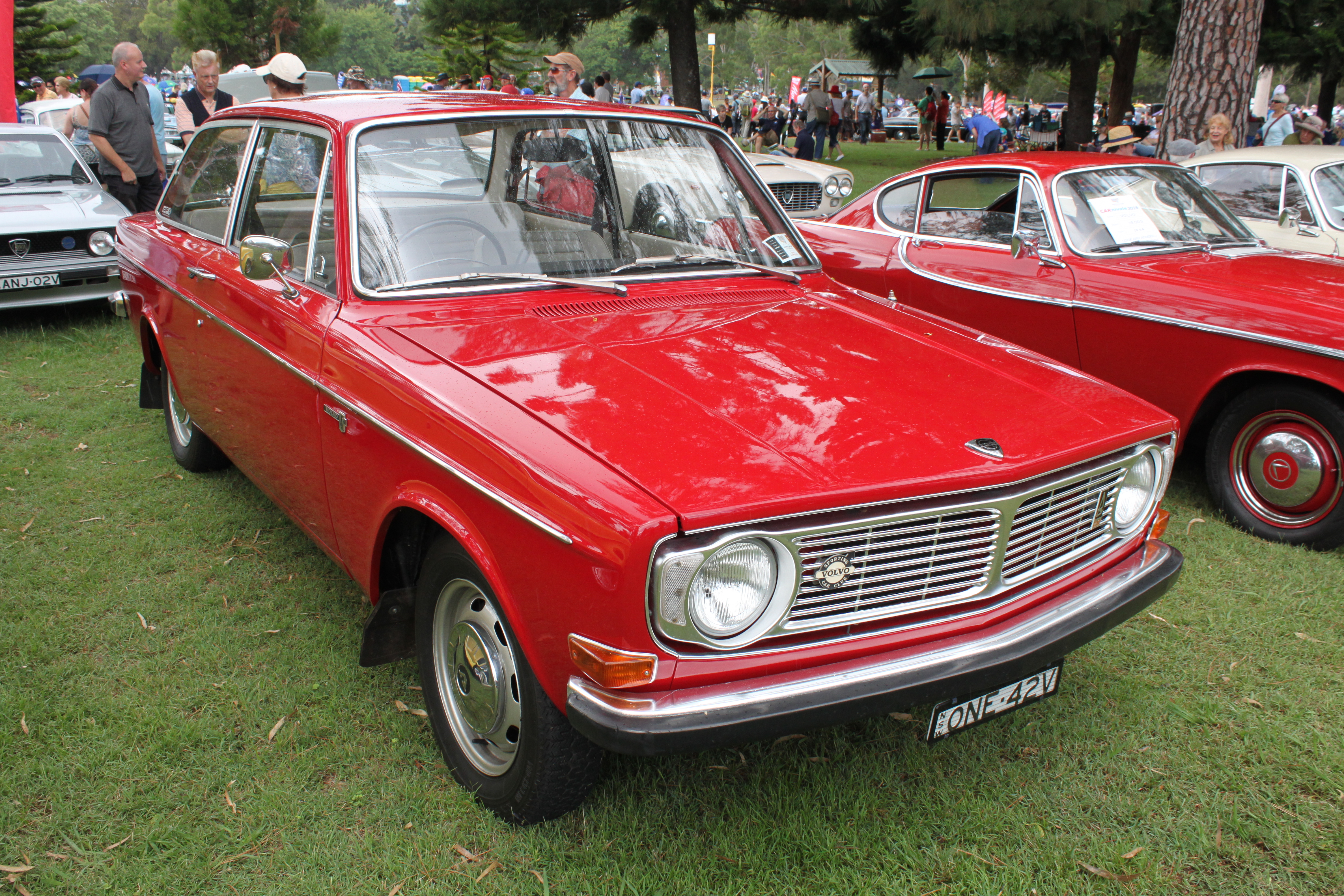
Volvo 142
The Volvo 142 is an older Volvo sedan with a very boxy, classic look. Here it’s being talked about because it showed up in a race group alongside other cars.
Term
H production field
“H production” is a race class for production cars. It groups cars with similar rules so they can race more fairly against each other.
iRacing is a racing video game/simulator where you can drive real tracks with other people online. It’s often used to practice driving and learn a track before going to the real thing.
This is a well-known race track in New York (Watkins Glen). People like it because it has lots of turns and changes in elevation, so it’s a fun place to drive and test how a car handles.
Here, the handbrake is used to keep the car from rolling while the driver builds engine revs. That lets the driver time the clutch release to get a cleaner launch.
The clutch is what lets you smoothly connect the engine to the gearbox. For launches, drivers use it to control how torque reaches the wheels so the car accelerates without excessive wheelspin.
“Wheel chirps” are the squealing noises tires make when they briefly slip. Getting a few chirps can mean you’re getting traction right at the edge of grip.
Mechanical sympathy means treating the car gently and thoughtfully. Even when you’re driving hard, you try to avoid stressing parts unnecessarily—like the clutch and drivetrain—by being too abrupt.
Car
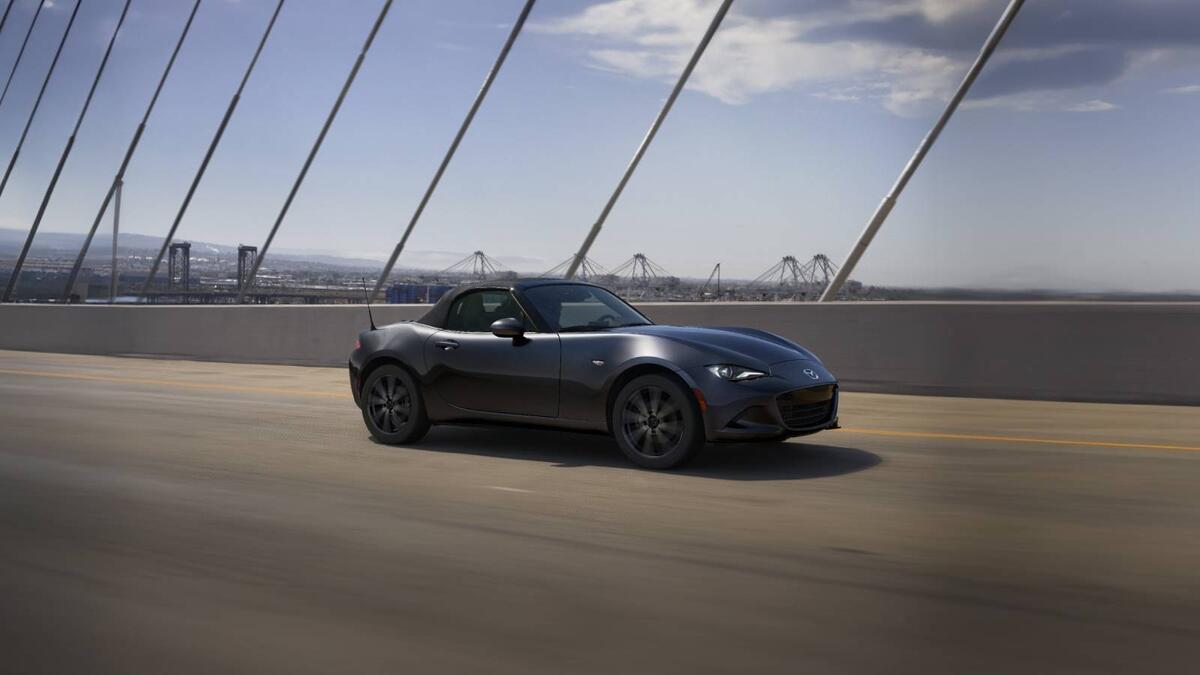
Miata
The Miata is a small, lightweight Mazda sports car that many people use for autocross. It’s popular because it’s fun to drive and forgiving enough to learn driving techniques on.
The Miata is a small two-seat car made by Mazda that’s designed for enjoyable driving. It’s usually not about being the fastest—it’s more about feeling connected to the road. That’s why people sometimes compare it to other cars that seem complicated for what they do.
Wheel spin is when the tires spin faster than the car is moving forward. In autocross, you sometimes want a little spin at the start so the engine doesn’t drop RPM, but you don’t want to spin for too long.
Lugging means the engine is turning too slowly for the amount of power it’s being asked to deliver. That can make the car feel harsh or jerky when traction comes back.
First gear is the gear you usually use to get moving from a stop. They’re saying that after the tires start gripping, you want the engine to be in a good RPM range so it can pull smoothly.
Bog is when the car feels like it falls on its face—RPM drops and it doesn’t accelerate the way you expect. It often happens when the launch is set too low, so the wheels don’t get the torque they need.
Here “cam” means the engine’s timing/where it’s operating in its power range. If you’re not in the right spot when you launch, the car takes too long to build speed.
It’s the part of the engine’s RPM range where it makes the most useful pull. If you start your launch in that zone, the car accelerates hard without losing traction.
It’s when the tires spin and don’t really move the car forward. It usually means you’re giving it too much RPM for the traction you have.
Term
C Street prepared
C Street is a rules class for autocross that limits what you can change on the car. The speaker is saying that in that class, the cars seem to fail more often.
“ND Miata” means a Mazda MX-5 Miata from the ND generation. The speaker is talking about how the car helps you on hills (hill assist) and how using the handbrake can make launches more consistent during autocross.
Hill assist is a feature that helps keep the car from rolling backward when you start on a hill. The speaker says it can make launches inconsistent, and using the handbrake can turn it off for more consistent starts.
“Pro solo” is a more competitive autocross event. The speaker is saying that on those starts—especially on hills—features like hill assist can mess with how consistently you launch.
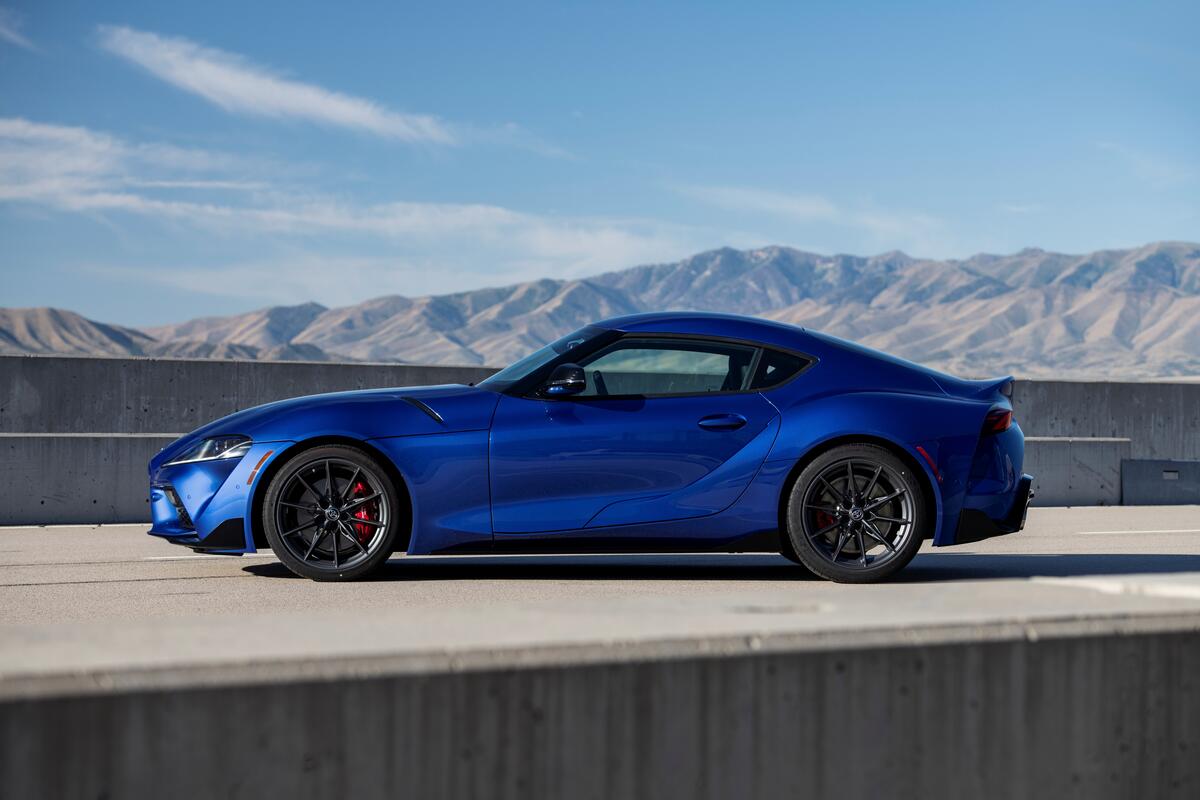
The Supra is a sports car from Toyota that’s made to go fast. People talk about it a lot when they’re showing off quick starts because it can accelerate strongly. The mention here sounds like it’s about how it performs after a hard launch.
A “full course caution” is when the whole track is slowed down for safety. Everyone has to drive carefully and follow the rules until the caution ends, which can completely change how the race is run.
On a track, “setup” means how the car is adjusted for that specific event. Small changes can make the car feel easier or harder to drive, especially when you’re trying to hit the same lines lap after lap.
“Drivability” is how easy and predictable the car is to drive in real conditions—how smoothly it responds to steering, throttle, and braking inputs. When drivability is “not up enough,” the car may feel inconsistent, too twitchy, or unwilling to follow the driver’s intended line.
The Honda Civic Si is a sportier version of the Civic. Here they’re talking about it running on regular street tires, which changes how much grip it has compared to track-focused tires.
The Honda S2000 is a sporty rear-wheel-drive Honda known for feeling quick and responsive. In this story, it’s on Hoosier tires, which are the kind of tires that usually give much more grip than normal street tires.
“Hoosiers” means Hoosier brand racing tires. Racing tires usually grip the pavement better than normal street tires, which can make a big difference in autocross performance.
“G Street” is a competition class that limits what you’re allowed to change on the car. Mentioning a “G street civic” is basically saying the Civic was set up to that ruleset, including limits that affect tires and performance.
They’re saying that when the road surface isn’t consistent—like on rough autocross pavement—you can’t drive the same way you do when everything is grippy. It’s similar to rain: if you push too hard, it’s easier to lose traction and get into trouble.
Sim racing is practicing driving in a computer game or simulator setup. It can help you learn how to steer, brake, and accelerate smoothly before you try it in a real car.
Motorsports just means organized racing and competitive driving. In this context, it’s about learning driving skills through practice and experience over time.
“Under driving” means you’re not pushing the car as hard as it can go. The tires aren’t being used to their full potential, so you don’t go as fast as you could.
Tires don’t grip the road the same way all the time. The surface and conditions affect how much traction you get, which changes how the car feels and how close you are to sliding.
Concept
rental carts
Rental go-karts aren’t always identical, so each one can feel a little different. That makes you practice adapting your driving instead of memorizing one car.
“Reps” here just means doing the same kind of driving over and over. Practice helps you learn how the tires and car behave so you can react better next time.
Concept
KJS
KJS is a kind of amateur rally event in Poland. Drivers race on mixed surfaces like gravel and asphalt, so grip changes a lot and technique matters.
Trail braking means you keep braking a little even while you start turning. It can help the car grip better and turn in more predictably.
Term
scanty flick
This is a driving move where you make a quick steering “flick” to get the car to start turning. The goal is to rotate the car smoothly so you can set up for the next part of the corner.
Term
guilt toe
This is a downshifting technique where you brake and “blip” the gas at the same time. It helps the engine and transmission work together smoothly when you drop to a lower gear.
HPDE means High Performance Driver Education. It’s a track day where you can drive your street car on a real racetrack, often with instructors and safety rules to help you learn.
The Nürburgring is a famous race track in Germany. It’s known for being very challenging and is used as a benchmark for how good cars and drivers really are.
Rally sprint is a type of racing that’s kind of in-between autocross and rally. It’s usually shorter and more controlled than full rally events, but it still feels rally-like, so it can be easier for normal cars to try.
Stage rally refers to rally events made up of timed special stages, usually on roads closed to the public. Drivers and co-drivers follow pace notes, and the key challenge is maintaining speed and control over varying surfaces while managing risk across multiple stages.
“First person” means the video looks like you’re in the driver’s seat. The host is comparing it to an outside view and saying some people learn better from the outside camera.
“Third person” means watching the car from an outside camera view. The host thinks that view can help you learn the right path and what the car is doing compared to the track better than seeing it from the driver’s eyes.
The ZR1 is a very high-performance Corvette. In this conversation it’s mentioned as an example of a car that’s more expensive or higher-end than what they’re talking about driving.
Under-tray panels are the aerodynamic and protective pieces mounted underneath a car. Cracking them is common when you scrape curbs or drive over rough surfaces, and replacing them is often a straightforward fix compared with major mechanical damage.
An A/C condenser is the heat-exchanger that removes heat from the air-conditioning refrigerant so the system can cool the cabin. If it gets damaged by debris (like rocks), the A/C can stop working, and replacement cost can range from relatively minor to very expensive depending on the car.
The Chevrolet Corvette is a performance sports car known for its V8 power and track-capable reputation. In this segment, it’s referenced as the kind of car that can have expensive cooling/A/C-related damage—contrasted with the much cheaper repair cost of the speaker’s situation.
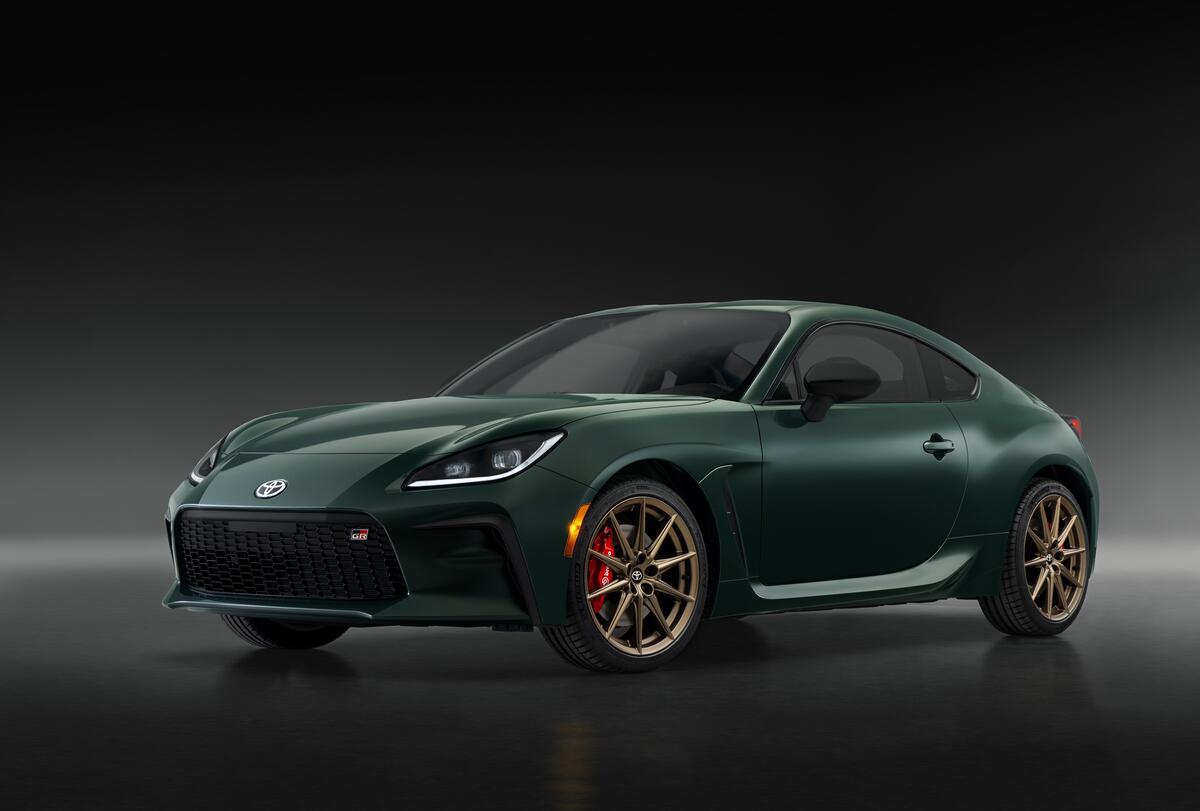
The GR 86 is a small sports car from Toyota made for fun driving. It’s meant to handle well and feel lively, especially on roads or tracks. The podcast mention sounds like someone is about to drive one and share what it’s like.
LIVE
Hello, everyone, and welcome to the Lizard Brains podcast.
I'm your host, DJ Alice Andrini.
I'm joined by my co-host, Tom O'Gorman.
Tom.
You got a lot of guitars behind you.
How's it going?
I'm good. You know, I'm glad you noticed.
Do you know what this one is?
Is that a Kiesel guitar?
That's my guitar.
Nice.
I'm at my brother's house.
My brother plays guitar.
He went through a huge phase, probably like a decade straight of like playing guitar a lot.
He loved to just like learn guitar solos, make up solos, whatever.
And he went on this guitar spree and he's probably got I'm trying to count.
There's at least there's over a dozen.
There's probably close to two dozen guitars in his basement here.
Yeah.
But when I got this guitar in 2017 from solo nationals,
I told my brother that I had won a guitar and he's like, what kind of set a Kiesel carbon?
It's gold sparkle flake.
And, you know, this is the model and he's like, what?
That's my dream guitar.
Oh, I have to play it.
I have to play it.
So I actually just loaned it to him and it's been in his basement ever since.
But nice.
I was like, I got to have it as the background for my podcast today.
Of course. Yeah. Of course.
Did you actually rearrange it or did you rearrange yourself so that your guitar was in the background?
No, I carried it across the river there, swapped it out.
Nice. Nice.
Drop the other one on the floor.
It's not worth anything.
This is the one that matters.
Yeah. That was like, look, that wasn't a solo nationals guitar.
So that one's basically garbage.
It's probably like a Gibson or something.
I don't, I know nothing about guitar.
So I told him either.
I had no idea the Kiesel carbon was such a big brand.
I, and then when he learned about it, he like freaked out.
He was like, Oh my God, that's, those are amazing guitars.
That's my dream guitar.
Can you imagine for like solo nationals, if we won like
sim racing equipment or, or, uh, mountain bikes or you got to name something for you, Tom, a jet ski, a jet ski.
Yeah.
So the national sponsored by CDU.
Oh yes. Please come on.
CDU, I know you're listening to this podcast.
There's no way you're not.
Let's get a jet ski for, for the, for like a golden, a gold flake jet ski for like top packs.
Yeah.
They have that boat sponsor.
I'll take a boat too.
Yeah.
Either, either you'll tow the jet ski with the boat.
That's how that works.
Right.
For sure.
Yeah.
For sure.
There's no way.
Uh, but anyway, on topic, I am okay.
I'm dog sitting for my brother.
I'm at his house all week.
I gave the dogs their early dinner and they're in their little crates back there.
Okay.
That's good.
How are you?
I'm, I'm doing pretty good.
I feel physically pretty good considering, uh, what Christine had me.
I just followed Christine, Christine around the woods all week.
That's what I did.
Uh, we went on a hiking vacation in, uh, Shenandoah national park and we
accomplished one of her goals, which was hiking old rag, uh, which apparently
national geographic called the hike of the year for 2026 or something along
those lines, somebody in the discord said something along those lines.
I don't know how the rate and hikes or whatever, but Tom, it was freaking awesome.
It was such a cool hike.
The second half of it kind of lame, but the first half of it for like the peaks,
like literally the peaks, but also like the emotional peaks.
It was freaking awesome.
It was so cool.
So you, it's really, really, really uphill.
It's 2600 feet of elevation gain, uh, in like four miles, which I think is a lot.
It felt like a lot.
Uh, I guess the way down felt like a lot up.
I actually felt pretty good, but the way down, my, my leg started turning and,
and, uh, to noodles, um, and yeah.
Okay.
So the last like mile of the trail is along the ridge of this mountain.
So when you look left, you just see a view and you look right.
And it's just a giant view.
And so like you get different views depending on which way you look, and
you're scrambling up these, there's like rocks that you kind of have to, like,
it's not like rock climbing where you need like ropes and stuff like that, but
you have to climb over rocks.
So like you have to like find handholds and like get your feet in certain spots
and like hoist yourself and like twist yourself like around rocks and stuff like
that.
And it felt like little puzzles to figure out of like, okay, let's see.
If I get my hand here and start with my left hand and then I can get my right
hand over here.
I just found that very satisfying without the pain of rock climbing.
I don't know if we've ever been rock climbing before, but you're just hands
hurt like crazy after like trying to do rock climbing.
And that was, yeah, Matt Martin says, no one tell DJ about rock climbing.
Trust me, Matt, I've tried it.
My hands just, oh, they only hurt for the first few times.
Okay.
Well, I don't know how much the lizarding I can do on all these lizard activities.
I kind of, I kind of can't lizard to the lizard needs to be focused.
I can't, I can't be like a shotgun blast of effort, but I found it very
satisfying of like solving puzzles and it was physical and just, uh, I don't
know, it was really entertaining.
And, uh, if you're able to, uh, old rag was a badass like should go do it.
That's cool.
I remember the exact same from the Alps last year that up really wasn't that bad.
You're kind of, you're huffing and puffing and whatever, but it's like
not hard and then on the way down, you're like, I want this to be done.
My feet hurt, my hurt.
You're trying to like step softer and it wasn't my feet.
It was my, my knees, my knees just give out.
There's like, it feels like the front of my knee gets tired.
And then after tired, it just hurts.
So you're just taking these little baby steps because you, like on the way
down, you're like stabilizing like the foot that's left behind you is
stabilizing where your next foot lands, uh, and that like lowering yourself
into your forward foot is just over and again.
It's just, it just wears on you.
So at some point there's a, there's a video on my Facebook of me just
taking like three inch steps and I am barely moving Tom and Christine.
I'm so glad you didn't leave me behind on the trail, but I was, I was, uh,
struggling, um, and I kept joking around to Christine.
Oh, you want, you ready to run?
You ready to run?
And then she would, she would thankfully say no, because I, I don't
think I could have ran, but, but I was trying to, you know, stay positive
and like we can do anything, but really my legs were going, no, please stop.
So, but it was, it was fun.
That, that part kind of sucked, but the rest of it was great.
Yeah, that's fair.
I totally get that.
I also remember I had just gotten in pretty good shape from working at the
go-kart track and one of my friends from that track loved rock climbing.
And we went there as a little group.
I think four of us went and I had plenty of strength in everything, but
my hands to do it.
And I had no hand strength, like no grip strength or endurance or anything.
I was like, Oh, this is not for me.
I have like way too dainty of hands at this point.
I feel like I have dainty hands forever to get in shape.
Yeah.
I feel like I have like little like, uh, dainty baby hands too.
Uh, like, do you, does your dad just, yeah, it's great for driving.
I just, I barely need to hold the wheel anyways.
Yes.
Pinkies out barely hold the wheel.
Uh, that's all you should be doing anyways.
Does, does your dad have, I have this like running theory that like,
as generations go on, we all just get like dainty here and dainty your hands
because I feel like my dad's hands look like they could smash rocks.
Uh, and they probably could just by like squeezing them.
They just look like vice grips and my hands are nothing like his.
And I feel like there's like a, uh, like a, almost like a meme of dad hands.
Are your dad's hands stronger than your hands?
I don't know how you would know that, but I know that for sure.
I don't know how I would know.
No, but my, I think it just depends on what you do in life.
Cause my dad was an IT guy.
He has IT guy hands.
I mean, he's like, they do, he does carpentry and like renovations on
houses now and stuff.
You hear that Mr.
O'Gorman IT hands.
You just got called out.
That's, you know what?
We need to see like a thumb wrestle between, uh, between baby O'Gorman here
and Mr.
O'Gorman and yeah, your baby O'Gorman.
I don't know if you caught the context of that, but baby O'Gorman is my brother.
Okay.
You're middle O'Gorman.
Yeah.
I'm just right.
I'm like, Oh, the Goldie locks at Gorman.
Yeah.
Okay.
Yeah.
I like that.
Anthony says there's more correlation between dads and calves.
I think that might be true.
Remember the, remember the show scubs?
It was like a running joke that the head doctor, the head of the hospital had
the crazy good calves.
No, I don't remember that at all.
Did you watch that show?
That was such a good show.
I saw a couple episodes.
Sure.
It was always on when I got home from school, but it was like a running joke.
The old man who was in charge of the hospital had these incredible calves
and he would always show them off.
I'm going to have to check out my dad's calves next time, Anthony, but I don't
know if I've really paid attention to them.
So there's a lot of miles on them legs.
That's why yeah, maybe my dad can tune it or chime in and, uh, and let me know
what the calf situation is, but I feel like, I feel like they're probably, uh,
similar to my calves, um, which, you know, he's, uh, 66.
So maybe that's, uh, maybe that's pretty good.
If he has the same calves as a 38 year old.
So, you know, I think it's unfortunate.
The only thing you get from race car driving really, if you're like, if
you're race car driving is a fat neck and no one really looks great with a fat.
No, you look kind of weird.
Honestly, yeah, we're, we're building weird bodies over here.
And then also like, like sitting for long periods of time is just really bad
for you and you're just doing that all the time.
It's just, yeah, it's, yeah.
We just get like, like ripped necks and then, uh, like bad posture.
That's like, that's what we're aiming for.
Oh, and dainty hands.
Damn, we're the weakest of the, we're the weakest of the pack, but we're athletes.
We are definitely athletes.
Our hearts are strong.
Like they are really good at pumping blood, but it's just they're pumping blood
to our, our necks and our brains.
That's about it.
Like there's nothing else is happening.
There's this ridiculous picture of a Charlotte Claire walking with his girl
friend, lady, wife, person, and she, her wife is the same in the picture
diameter as his neck, like as they're walking towards the camera.
Uh, dude, honestly, like, like, I remember when, uh, Max for stopping first
started an F one and he just, he's just a little scrawny, like teenager.
He's only like 17 years old or whatever, but like even at 17, like he, he looks
like a 17 year old, like tall and lengthy, but then his neck is like a tree
tronk at like 17 years old.
Yep.
Yep.
Yeah.
And we don't even need those necks.
No, but we get, I don't think I have that muscular of a neck.
Our necks are kind of similar.
I think you don't need that for autocrossing.
Actually, it's better to have a skinny neck for autocrossing.
So it's weight more and more aerodynamics for sure.
Right.
For sure, especially in, in open cockpit cars, you're so much faster.
Definitely.
Well, I'm glad you had fun on your vacation.
That's fun.
Um, is, was this a like a last minute plan because of one lap getting canceled?
You guys popped this into your schedule or something.
Yeah.
Basically, I kind of inadvertently had Christine rooting against one lap
because I was like, well, if I get those extra vacation days, I'll be
able to go to, uh, Shannon Doe with you and I could see her.
She was like, Oh no, hopefully, well, hopefully one lap happens and then it gets
canceled and she's in the background going, yeah.
Oh my God, there's the picture of Charlie Claire.
You can see it.
He's obviously in front of her.
So it's a little bit, a little bit funky.
Uh, anyway, I commentated the super tour from Watkins Glen this weekend.
Well, I commentated it from right here and it was at Watkins Glen.
Um, and it was great.
For the most part, except it was even worse than, remember the last time I
talked about a super tour, it was after Road America and I talked about how
like the track doesn't give you any leeway anymore.
Yeah.
Watkins Glen was even worse.
It was so bad.
In fact, that I texted Adam Jabay after we were done and just said, like, here's
what I saw from this weekend, just a heads up.
Like, I hope that this goes better for you guys.
Um, and I'm sure that they like meet with the track and everything, but they,
it was so bad for like organizationally.
We only had two races of the 18, uh, 16 without full course yellows.
And it was because every little thing that needed anything on the race track
meant that they put the full course yellow safety car goes out.
They also would not release safety vehicles onto the track until the whole
field had caught the pace car.
So like, you can't even have a car on the other end of the track that's
unpaste before we go out and then get out of the trucks and go help the person
doing, like there was one, a car had a flat tire and came to a stop like next
to the race track and there were still nine minutes left and we didn't go back
to green because there were like cars all over the race track.
They took forever to catch up, of course, and get all together.
And then by the time there was like three minutes left, the SCCA people decided
to pull the plug and not do the finish because they also started doing this
thing. The only part of it that's the SCCA's like fault that I don't love is
they will not do a single lap finish.
Like they won't do like a green checkered.
Yeah.
They have, they say they want to do a green white checker to give everybody
two laps.
And if there's not time for two laps, they just don't go back to green.
I don't really agree with that, but everything else is like the track just
won't, the track will not.
And then, and then it's like we were joking all weekend in production.
Obviously we can see the cameras and there's just like a meeting of the
minds for like five or six trucks that show up to like the smallest thing.
And then they, they're all standing around.
It's like a construction site.
And then there's like maybe one person doing something and then they all break
and all six trucks drive away.
It's like, oh my God.
So for the people going in for in a month in grid life, the advice I would give
is if you're on the race track and it goes yellow, catch the cars in front
of you as fast as fucking possible because they will not do anything until
everybody's caught the pace car.
And then also like, if you can, like those orange cutouts that they've
started talking about, like I, I didn't really notice them until I raced in
IMSA and IMSA was always really, really detailed on pointing out like where
they are.
Here's a track map of them.
This is the expectation.
If you have a mechanical issue, you're supposed to disappear behind one of
these orange cutouts that's on every major race track now.
And I think the club racers are a little more, they're not trained as well.
And they also can maybe be a little more selfish in a way.
Like I'm going to get back to the pits or I'm going to like,
keep driving.
I don't see pro drivers do that nearly as much.
I think they're a little more quick to like pull off the race track.
Yeah, maybe that's not fair judgment, but that's kind of my impression anyway.
And I don't think club racers are as trained to disappear like that.
Disappear behind the wall.
Like you're not going to make it.
You're not going to get back.
Everyone's waiting on you.
You're, you're messing up the whole event.
Like bigger out of way to disappear behind one of those because otherwise
it's just going to be a caution festival weekend.
You do a good job of this.
And I think my running theory is, is it's a bandwidth thing because you'll
notice something's wrong with the car before it's too late to have like a
cutout as an option.
And you'll quickly troubleshoot that your race is over and that you need to
get behind a wall, right?
I think the people that get stuck out on the track either it's an absolutely
catastrophic thing and there's not no cutout nearby and they literally never
had a chance or they recognize it too late and then they, they can't coast
into one of those orange spots, but you're really good at, can you think
of a race where you interrupted because you were broken on the side?
Yeah, I had, I've become good.
I think it's because of the train.
I mean, it's because of advice that I've gotten in professional drivers meetings,
to be honest, is the way that I've come to behave.
But in grid life, actually, in early GLTC, I was racing a car for fun in 2019,
Road America, and the shift linkage popped off the car coming out of turn eight,
nope, coming out of the carousel.
And by the time I processed what had happened and like gotten out of
everyone's way, I had missed turning into the bend.
So, and I was out of drive.
Like I could not get, there was no gear in the car.
So I was basically coming to a stop.
You were coasting.
I was coasting and I came to a stop just after the kink, which is like,
there's nowhere to go.
So I pulled all the way up against the wall.
And unfortunately, I made the bat at the time it seemed like the right call.
I was like, I don't want to be sitting in a car stationary in the impact zone
on the outside of the kink.
So I like got out of the car and hopped over the fence,
which was like the wrong thing to do.
That was the last time I think I really messed up.
Yeah, but I mean, okay, that's, that's an example of it literally,
literally happens to everyone.
I'm thinking of even like, even my crash at Road America, I still found
like a cut off, out spot and the car was crabbing,
but I've still like put my car into a spot.
I didn't realize that Cateal was had a totaled car behind me.
But like, even after I was racked, I was like, well, I'm going to,
I'm going to like, figure out a way for this race not to be over.
Yeah.
And I'm just kind of curious, like where are people's brains on that when
something's like broken on the car?
Because yeah, like what instantly flashes in my head is I don't want to be
the problem, the, the reason why the party stops.
You know what I mean?
Sure, sure.
And I'm just wondering if the, the people who do get stranded out,
if it's like a habitual thing, like if you find yourself always stranded
out in the track and like interrupting the session, then like, I don't know.
Maybe there's some blame to be played there.
I like, you can't be the most unlucky person ever.
I didn't like, you know what I mean?
You just cut out what was the last bit?
Oh, I was just, I was, I, what's the last part you heard?
That you can't, you can't be broken and stuck forever every time.
Yeah, that would be the most unlucky thing ever, right?
Like that, that just wouldn't, it's not going to happen every time, right?
So, right, but it's interesting.
So you brought up like, you noticed that pro racing doesn't, that doesn't happen
as much.
That's why I think it, it might be a bandwidth thing.
Yeah.
It's like, it's probably also the cars aren't as broken as often, like they're
brand new, nicely homologated race cars.
If it's broken, it's like limping.
It's not like broken ass broken.
Right.
Or it's wrecked, you know, it's fully broken.
But otherwise, I mean, yeah, that was a lot of it.
It was a little bit exhausting to like, after, like I said, we did 16 races
this way and only two of them, it took until the second day of racing to get
a clean, like full of green to checkered race.
So it gets a little, like when you're, no matter who you are in that situation,
every single time something like that pops up, you're like, oh, a car's broken.
We'll probably go on a full course yellow.
Like I guarantee you every driver, every person operating the event, every person
in production, all of us are just like, God, which made me think like, at what
point did we just stop going to these racetracks?
Like that would be such a bad, that would in a way, it would be sad to like not
go to road Atlanta and VIR and road America and Watkins Glen.
But if they're not conducive for club racing, why go?
Am I, am I off base with that?
You think like I compare it to like Hallett.
We went to Hallett, which is a really, really nice club track.
Yep.
And they did, they did hot poles when it was appropriate.
They kept the races green as much as possible.
It was some of the best quality of track time that I've seen.
And then we go to these big tracks that are supposed to be a big deal.
And you drive around under yellow because they won't let you do anything,
which is like such a boomer taken away.
But I'm like, what's, why not go to Hallett twice instead of Watkins Glen?
If it's just a waste of everyone's time.
It does, it does kind of detract the value of these like pinnacle of American
racing racetracks, right?
If, if that's like what keeps happening, then yeah, I know it does, it does kind
of make it less appealing, right?
Yeah.
I'm trying to think of an equivalent like what happens if every time at
Sola national, someone hits a cone, uh, the airport charges like $2 because it
might leave debris on the site or something.
Like at some point we just don't go back because that's ridiculous.
Or like, like for some reason the airport has a policy where if a cone's hit
and a course worker needs to run out there, you hold the start until that cone
is up and the course workers back at like their spot, it would make that run
so much slower to the point where you're like, well, this, this awesome venue
to hold this event is now a little less valuable because of like the restrictions
in place, but going back to our conversation that we had the last time we
were talking about this Tom, a lot of the times they have that policy because
somebody got hurt or it's, it's like an employee retention, uh, method.
It's because if the employees are feeling scared when they're out there,
because like maybe they should be scared, uh, or maybe they're scared
from a situation where they should have.
And it's hard for them to understand, uh, the differences being track
side of people who are in control of their cars and people who aren't, right?
I, I kind of get it.
Maybe what the solution should be if it's just like mechanical, uh, mechanicals
happening on cars is maybe there should be more penalties for, which I guess
having a mechanical in cars is probably penalty enough.
But if there's, if there's people that are regularly the issue with
mechanicals in the cars, maybe they should be taking the responsibility
for ruining everyone else's good times.
And I'm not saying anybody that had a mechanical at this thing.
They, their names was like, was part of the issue, but I, I think a lot
of the times when people have cars that are breaking, it tends to just kind
of be the same people over and again.
So maybe, yeah, I can think of examples for sure, but I'm also thinking
back from this weekend and it's like that one car broke down in that session
and never else at the rest of the weekend, the ones that were really
frustrating with the crashes then, cause it's like, but none of it's avoidable.
All of it's going to happen.
All of it's for the realities of motor sports and the part that's
changed, which is the fact that they just respond by neutralizing everything
immediately.
And it looks bad.
It sucks cause like even in the YouTube chat, there are people watching
like SCCA sucks.
I'm never even watching this again, but it's not even an SCCA thing.
Yeah.
First of all, who, who are you?
Who cares?
Go away.
You know, but at the same time it's like, it looks, it makes us all look bad.
And it's not, it's no one's fault except for Watkins Glenn's fault in this
case or in, you know, the previous case of Ron America's fault or in the past
VIR's fault.
It's like, ah, that was the biggest downer of the weekend.
Yeah.
It kind of goes against like the whole, like, let's make club racing look cool
and like, like make people want to come out and do this thing.
Uh, if the thing is interrupted by driving around slowly, you know, the one
majors or super tour, I don't even know what it was, but the, like the big
SCCA race that I went to, uh, I should have gotten an hour of racing.
And I think I raced for like 15 minutes, uh, an hour between two races.
And so I got 15 minutes between two races because people kept throwing
themselves into the gravel trap or the wall and turn five at road Atlanta.
And then they would just like, like they would have to do a full course yellow.
And then eventually like, they would just have to like end the race.
And then like, so like, I got hardly any racing, uh, at the thing.
And I didn't, I didn't pay for that weekend luckily, but, uh, if that's
how I was spending my hard earned money to like race for 15 minutes, I don't
know, I might go find something else to do.
Like time attack might start looking a lot more, uh, uh, entertaining.
Uh, autocross might look a lot more entertaining for like what, what you
spend and what you get because you're just, you're not going to, like, you
know what you're going to get when you go there.
I'm going to get set amount of runs and like this type of competition instead
of, oh, uh, I raced for seven minutes and then a yellow came out and then
my 25 minute race was over in like 10 minutes.
Right.
Yep.
Or you just, or you just gauge the tracks you go to.
I mean, I think the biggest takeaway for me is if you're listening to this
podcast as a driver and stuff, like consider that as a reality that as it
gets, as it is this way now, I think it just is this way.
It's not as it gets worse.
I think it's basically there with worse, uh, like if you go to a road
Atlanta or Watkins Glen or something, you might drive around under full course
yellow a whole bunch.
So maybe go to CMP and, uh, I don't know Nelson ledges instead.
I don't know which one.
Uh, but anyway, so there was some other, uh, generally still like some good racing.
I agree with you.
Actually, now that I've watched this weekend, this is the first time I've
commentated Watkins Glen.
It really is not the best race track.
No, it's so fun to drive, but the racing there is not necessarily great.
It's anti-climatic because the best passing opportunities in the beginning of
the lap.
So even if you have a last lap pass, it's like over right in the beginning.
And then it's kind of done.
And then like, what do you like as the commentator, you're like, oh, like,
there's a couple of corners left.
He might get them, but like really in the back of our heads, we're like, he
really has to mess up to like lose this race.
Like there's no way like the other cars just going to like make something
happen here.
Right.
Yeah.
Uh, but there were a couple of funny ones.
The first one was, I forget if I shared the pictures of it, but on Sunday in
the like winged formula car race.
So it's the fastest cars.
It's like formula Atlantic prototype cars and then formula continental
formula enterprises and something else.
And in that race, there was supposed to be a split start with the fastest cars,
the formula Atlantic's in the front.
And then another start for all of the other classes that are slower.
And multiple people had either broken or left by this point from the formula
Atlantic group.
So instead of it being like a seven car first wave on the split start, there
was one car behind the one pace car.
And then 35 seconds behind, there were like 10 cars in the second wave.
So the entire warmup lap, we're watching this one car go around the racetrack.
And then they come up onto the front straight and the guy waves the
green flag for the one car and he comes down the front straight away to turn one.
And we're like, how do we commentate this?
Was, uh, was this one car weaving and warming tires before a race start?
Cause that would just add to the comedic effect.
Yeah.
I mean, it's a formula Atlantic.
It's like a fast.
Yeah.
Where they weave in and warm in the tires.
Like they're like, I'm really, I need a strong first lap.
If I'm going to hang with everyone around me, right?
Oh my God.
And then the other, the other moment that cracked us up was, uh, in the production
car group, there was a Volvo 142.
It's like the old, old, old eighties box version, like giant steel box, Volvo.
Okay.
And Greg Ginsburg is reading off all the cars in the, uh, grid.
So it's right before their first race.
And he gets down to the H production field where this car is.
And he says the guy's name and whatever drive in the Volvo 142 sponsored by bad
motor racing.
And as he says that, he doesn't even know it's happening.
As he says that the cars in the, he cuts to the, the camera shot and the car's
blowing up as he goes through the camera shot, like pouring smoke out underneath
it and he's pulling off the track.
See, all right, this look, I don't know, but this seems like
somebody who's a problem with their car breaking all the time.
They literally have a fake sponsor called bad motor racing as they're blowing up.
Come on.
So on the nose, hey, he got off the racetrack though.
He did.
Okay.
He did a good good.
He's using that practice to good use.
Right.
Yeah.
He's got plenty of it apparently in this, in this version of reality that I just
created on the podcast.
Yes.
He has plenty of, yeah.
Well, so yeah, that was my weekend.
That's fun.
Uh, so wait, how did you guys commentate the one car starting?
You just say, and we're green so-and-so blah, blah, blah, gonna have a pretty
uneventful race.
All right, let's go to the next start.
Pretty much.
Yeah, Greg is the lead.
Greg or Brian, when they're, depending on who's there are the lead and then I'm
the color.
So I'm almost never talking at the green flag.
Gotcha.
Uh, but yeah, he, I mean, he was kind of making some, he was making light of it for
sure.
Okay.
It's like, I have a busy race.
I kind of like, I shy away from that.
I want to be, like I said, I want to be honest and I want to be like blunt in
some situations.
But I don't want to make it what we're talking about.
Like, look stupid, like sound stupid because humans are watching it.
So like, if you're acting too serious about something that's obviously not
serious, then I think, like, I think the broadcast kind of loses a little
credibility, you know what I mean?
So yeah, like you can't, you can't be like, and a great, like you can't be like
a normal start where it's like, and we're green and then like, it's like
exciting, it's just, it's literally just one car going away from the, away from
the line.
So yeah, all right.
Well, that's fun.
Tom, it sounds like you had some fun.
Kelsey in the chat said that Walkins is always very crashy, which I could see.
It does eat cars.
Yeah.
I mean, there's no margin.
You're just like, you're one car with off the track and you're into a wall.
Yep.
So maybe some tracks are better for racing than others.
If you want to race some tracks, maybe iracing is the best way to experience
those, uh, those tracks and how they race.
And then like on those tracks, if you want to drive them because they're fun,
like Walkins Glen is, I still haven't driven it, but apparently very fun to, uh,
to drive.
Incredible.
Then like, yeah, maybe like a time trial.
I think there is like an SCCA time trial is coming up at Walkins Glen, uh, soon
actually might be like next weekend or so, but we're like, maybe it was this weekend.
I don't know.
I feel listening to this right now and you're driving to Walkins Glen.
I knew it existed at some, on some of these weekends.
Uh, but I remember that they were trying to get, uh, people together to actually,
it might've been this last weekend.
That actually makes more sense.
Was there a time trial aspect to it?
I think they were trying to fill entries.
Okay.
Maybe I'm thinking of a different thing.
I think Adam Coback is about to save me in the chat.
Nope.
Nope.
He did not.
He said Imza is this weekend at the Glen.
Uh, but yeah, maybe some tracks are like better for time trials than, uh, actual
wheel to wheel racing, even though wheel to wheel racing is very fun, but sitting
behind those cars, not actually all that much fun.
Yeah.
I mean, like NCM is a perfect example.
That track races pretty like garbage and less people don't know where they're
going.
The first time GLTC went there, for example, and a bunch of people didn't
really know where they were going.
It raised amazing.
Like you end up side by side all the time and you have space and you can like
make moves, but when you're in a pack of people that know where they're going,
you can't make moves at NCM, but it's like the best lap, I think.
Yes.
Yep.
Um, what was the other thing?
Oh, did you happen to download the, the new NASCAR road circuit, uh, street
circuit racing?
Did you give that a shot?
No, should I have?
No, I'm not surprised you didn't, but that race was this past weekend and it was
speaking of crash fest.
Oh, my crash fest was so much crashing in the, in the NASCAR weekend.
It, it's not that, uh, air base in San Diego.
Okay.
Did you put it in an eye racing?
Did you drive it at all in eye racing?
Normally, look, this is why I didn't drive it.
Normally the NASCAR is like street circuit tracks are really uninteresting.
It's literally just for the show.
There's nothing complicated or flowy or anything about it.
It's just a track that navigates around some city streets and they can put on a
broadcast about it, but as far as like a lap or driving it, even in like a NASCAR,
it's probably pretty heartless or soulless.
I heard it was kind of fun.
That's why I was going to ask you, but the,
I've been driven it.
We'll have to try it out.
I mean, there's no real reason to have it for most people.
I don't think what I, what I have still in my, uh, like what I'm still tasting is
the Chicago street circuit that came out on eye racing, not, uh, like, you know,
like 456 years ago.
And that was, um, that was probably the most boring race track I've ever driven.
It was pretty bad.
That's the one that's like an bow tie shape, right?
It's just like two squares.
Yep.
Push together.
Yep.
Um, no, this one actually looked quite interesting.
I heard good things about it, but okay, I, I watched the highlights and stuff.
And it was like so much crashing.
Gotcha.
It was a little, it was a little confusing.
Uh, why, like they were racing so hard at the beginning of the race,
cause it's stages, right?
I don't really know how NASCAR works, but they were like, they were racing,
like their year's livelihood depended on the first stint of the race.
And like a bunch of crashes happened.
I was like, what are we doing?
It's a long race, friends.
Anthony in the chat said that was not a crash fest for NASCAR.
Uh, that was a clean race.
So shows what I know.
Yeah.
Apparently Tom, uh, that maybe it gets worse.
So I don't know what I would do if I was in the booth.
Anyway, um, do you have a topic or anything?
Or should we just do some questions?
Let's do some questions.
I'm down.
Let's do some questions.
Let's do it.
Uh, let me hit the button emails.
All right.
Okay.
Uh, Ross unburied a question.
I'm going to grab that one first, uh, so we can just jump into the pin questions.
Okay.
Ross writes in, can you walk us through your autocross launch process,
particularly on lower horsepower vehicles like E street or E street touring?
Uh, which is me out as like old me out as.
Uh, this is a skill I'm trying to learn since I've never had to worry about it
for track use.
And I got a couple of comments on how my launches are quote unquote aggressive
from two different nationals levels drivers, uh, riding shotgun in the
advanced school last weekend, uh, from watching nationals runs online.
My process has been rev up the 3000 while holding the handbrake let out to clutch
a bit to load up the engine and, uh, oh, the engine and transmission without
moving, release the handbrake and release the clutch just as fast to get three to
four wheel chirps, uh, that is usually, that usually has me starting at 2000 RPM
in first gear.
Hmm.
Uh, given your experience and curious how you feel, you achieve a solid start, uh,
to your run while balancing certain level of mechanical sympathy, especially when
co-driving, uh, while I understand it's a lot of practice repetition.
I'd like to start practicing the right way and know what to do, uh, and what
you feel in a good autocross launch.
Uh, Ross, one thing I could say for sure is that your 123 method
of the 3000 and the, the handbrake and the, that sounds wildly complicated for
just the Miata.
I was going to say the same.
This is the last stage of the run that you should overthink or really think much about
it all.
But since we're thinking about it, honestly, all I do is try to get just
enough wheel spin that the revs don't drop or like whatever it, and I, I'm mostly
out co-driving.
So in general, I trend towards like being a little bit easy on the car, but I feel
like 90% of autocross courses don't require a hard launch.
And the ones that do all you need to do is just slip the clutch, not slip the
clutch, just slip the tires enough that the revs don't drop after you leave the line.
So like if you're, if you launch and it's like, like more wheel spin.
Yeah.
I actually think it's probably better for mechanical sympathy to have the wheels
break away than it to like lug into the whole drive train and like catch all of a
sudden when you're leaving.
It's better to just like get the wheel spin right off the rip and then, and then ride
that out really like when the, when the tires stop spinning up, you should be mostly in
the power of first gear, like wherever the RPMs end up, like when the car finally
hooks up, you should basically be kind of in power.
Now, I think there's an optimal way to launch these like slower cars and it involves
like a clutch slip that matches with the tire slip.
And what I aim for is you get this like slingshot effect as like the, the, and when I say
clutch slip, it's not like you're just like riding the clutch, but your, it's not like
it's just like a sidestep clutch dump.
It's, it's like a measured load into the tire as it starts spinning up.
So it's not just like just a burnout.
And if it's done properly, you should be moving forward right when you leave.
And then you'll feel this like slingshotting effect as the tires like grab in and you'll,
you'll feel it like the car at the end of its like tires grabbing in and spinning.
You'll feel like a little extra surge of acceleration as like the tires grip in.
And that's generally what like, especially at like a pro solo, that's what I'm aiming for
on the like the launch RPM is do I get that like slingshot feeling?
Cause you can spin up the tires and then you never get that feeling.
That tells me that they spun up too much.
If the tires don't spin up enough and then I kind of just like bog and I don't get that
like that, that surge of acceleration feeling that I'm aiming for,
then that tells me I could launch it like a slightly higher RPM.
But the tires break away like right when I launch, they don't just like hook up,
especially in the slower cars.
I just, I think it's too important to have when the tires even out to have the car in power.
You can't be out of cam or whatever in a slow car.
You'll just be sitting there accelerating for too long.
Yeah. That's a good point.
You need to not slip.
Nope. Say that again.
You need it to be in the power band when the tires hook up.
Yeah.
And then otherwise just you just don't want the R's to drop when they hook up.
Yep.
Yeah.
And you don't want to overthink it.
Like it's literally, there's two.
If you bog or you just did an endless burnout and there's like an in-between zone that's
actually pretty big for like equaling all the same time, that's what you aim for.
So if you bog more RPM, if it just turns into an endless burnout, less RPM.
Somewhere in between that is the right RPM to launch at.
And I don't think you should necessarily be worried about like the mechanical sympathy
of launching the car.
Look at all these autocross cars.
They're doing like hundreds and of launches every single year
for decades.
And they mostly never break.
It's fine.
Yeah.
Except for C Street prepared me on us.
Yeah.
They break all the time.
Sorry to the seven of those.
But a good way to practice.
If you need to Ross, just go out in your neighborhood and practice at stop signs.
Yeah.
Yeah.
No problems.
Okay.
Good question.
Yeah.
I would say you could simplify your process and not think about it nearly as much.
That would be my now like the whole handbrake thing and everything.
That's a lot.
I've only driven one car that required that.
Go ahead.
Sorry.
Yeah.
I will say in the ND Miata, the handbrake thing was actually worth it because especially
if you're on a hill because and especially if it was a pro solo, maybe a tour would never
really matter.
But at a pro solo, if the hill assist was on when you went to go launch the car,
it got inconsistent launches and the inconsistency could lead to like red lights or a really
slow reaction time or whatever.
But if you pulled the handbrake up, it would turn off the hill assist and it would also
hold you if you, if like, if you were stage like slightly on a hill or whatever.
But basically when you launch and you flick the handbrake down, you got a more consistent
launch every time.
But that's a very pro solo specific thing, not just maximizing the car before you broke
broke the timing lights.
One thing that we did not touch on Tom is take note where the course timer starts because
it might not even be worth doing a burnout.
You might just like pull away slowly, maximize the radius of the thing and then drive away.
Correct.
Yeah.
More often than not, I see people way overdoing the starts.
Yes.
Like they want to do the most at the start.
And then, and then they immediately have to turn and they're like the rowdiest launch
you've ever seen into just silence cracks me up every time it does.
I do think it's fun though.
When somebody's like, they're just doing like a crazy like launch and then and then they,
you know, it's a 90 degree start and then they like turn around and then they just drive
away from it.
And I'm just like, they know, they know exactly what they look like.
At least I hope they do.
Yeah.
I hope they're not in the car thinking I'm killing it when it just looks, it looks like
they're trying to be funny.
So yeah, especially like camcars are the worst with this because they aren't that faster on
the rest of the course.
They can't use full throttle all that much.
So they do these big rowdy launches doing the most and then they launch and then you
don't hear the car over like 5000 RP of the rest of the run just kind of creeping around.
Well, you got to, you got to launch it.
Yep.
All right.
So, okay, let's jump into some of the pin messages.
Do you want to do this so I don't have to navigate my laptop as often?
Yeah, I can carry the questions this time around.
All right.
So this one is from Ryan also.
Thank you everyone for following what I said last week on the podcast where if you really
want your questions answered, you have to ask them right before the podcast starts.
This is way easier.
This is way easier than trying to keep keep note of the questions that are piling up.
So this is the way we're doing it from now on.
And if you want your question answered, you have to bump it to the top.
And if we keep not answering your question, then maybe rephrase it in some way.
So it's more appealing.
Okay, here we go.
This one is from Ryan and he says a fun one.
I have not read the rest of the question, but now I'm intrigued.
So that's maybe a cheat code for everyone else as well.
All right.
What is your favorite dish to cook at home for guests?
Tom, what is yours?
I haven't done that in a while, but I used to make this thing all the time that was,
I just called it like a ground turkey bowl.
It's like a grain bowl, but with no grains.
Ground turkey.
And you mix it in with a bunch of different stuff.
So it's got spices and good stuff in it.
And then separate dish, black beans and red peppers with taco seasoning.
Okay.
New dish, zucchini and squash, sauteed in a pan, a little bit of oil,
just get them a little nice and fresh.
Way more complicated than mine, but go ahead.
Last part, sweet potatoes, diced and sauteed in another pan,
little garlic salt, little basil on those.
And then you just mix those five things together in a bowl,
five things, four things together in a bowl, however you like.
You know, one thing I'm noticing is super easy and simple.
As I become an older adult and slowly less of a child is that everyone around me knows
how to cook and I still don't know how to cook.
What do you mean you don't know how to cook?
Like tell me.
I can cook some things.
I can like, I can like cook meat and like potatoes and like vegetables and stuff like that.
But when you're like, oh, I do like a pinch of this and of that and whatever.
I never do that because I just like get the food in my face.
I'm never like, I'm never like preparing a meal for like like
enjoyment or whatever.
I'm just like, cool, I'm cooking this and I'm eating it.
And then I'm getting back to whatever I was doing.
It's never like a, like I'm never like lighting the candle for myself.
And then like setting it all, you know what I mean?
Like I'm not, I, I, yeah, yeah.
I don't, I didn't guess I didn't really think about it much, but I started until like kind of,
that's a lie.
I did cook for myself a lot before this, before 2020.
But during 2020, I started to get into like some food content.
Okay.
But that was one of my rabbit holes and I was seeing someone at the time who loved to cook
and they taught me to use way more spices, like just get way more aggressive with the spices
and then everything tastes better.
Okay.
That's all you got to do.
I guess the spices are free there.
It's not like there are any calories or anything that's just like free flavor.
Yeah.
I just start with a flavor profile I want to hit and then I, and then I go from there.
Like, do I want something kind of like that I can put soy sauce on and then I go from there.
Do I want something that's kind of like a garlic or do I want something based
in like a tomato sauce and then I just make it up?
I don't really follow recipes.
Could you follow a recipe and cook something or you that even is like, no.
I mean, I'm sure I could.
It's not like I have, but I'm sure I could.
I'm, I'm going to cheat a little bit.
Never follow the recipe to make yourself a meal.
I mean, like mac and cheese.
Okay.
Does that count?
Not really.
When I cook ramen, it tells me how much water I should put in the pot.
All right.
So I guess you're not going to answer this part of the question because DJ doesn't cook for
other people.
No, no, no.
I will answer it because I, I'm going to use Christine as teamwork.
We make these vegan quesadillas and they're going to sound disgusting and I'm not entirely
sure what's in it because I don't do like that part of the cooking.
I do the cooking.
I don't do the prepping, but like when they get put in the corn tortillas and it's time
for me to like fry them up, I feel like I have a good feel of like the appropriate amount
of cooked for it.
So it's not like burnt, but it's got like a nice crisp to it.
I got a good feel for like the amount of oil that needs to be in the pan for it to not be
oily, but for it to be crispy.
I have a good feel for that.
I'm like, I'm, I'm good at cooking, not all the other stuff that comes up to that.
Does that make sense?
Yeah.
Oh, sure.
So Christine will do like the whole like ingredients prep, which is like, it involves like spinach
and beans and, uh, like sweet potatoes and all this stuff and whatever it ends up at
and it tastes cheesy, but, uh, so Emil says, so you're lazy.
No, come on.
I'm just not inspired.
All right.
Anyways, um, uh, I don't know exactly what goes in these quesadillas, but they have like
a cheesy like, like vibe or like texture to them.
Um, right?
So, so DJ just understands how to not burn stuff.
All right.
I realized this is making me look ridiculous.
Trust me.
I'm not, I'm not like completely oblivious here.
Uh, but anyways, those quesadillas are probably like our go-to if we're going to make food
for somebody now saying that it's not like we're having people come over all the time.
I just, before the podcast started with a story on how I locked myself into a closet
and had to ask a coworker to come take me out of the closet.
Okay.
So it's not like I live around a bunch of people that I know.
And then what was the second part?
Was there another part?
No, that's it.
Of this question.
Oh, oh yeah.
Sorry, sorry, sorry.
Uh, all right.
Uh, so what's your favorite dish to cook just for yourself?
Um, uh, guilty, uh, guilty pleasure, maybe.
Oh, favorite thing.
I mean, look, I'm a sucker for cinnamon rolls.
And I feel like those are really easy.
I never, that's not, that's not cooking.
That's, that's using a microwave.
No, no, no.
It's the one where you put an oven.
Doesn't that count?
If you got to put, if you got to pop the thing open and put it on a tray, that counts.
No, I think it counts if you like, you don't have to make your own dough,
but you have to start with a dough and then make your cinnamon rolls.
That's what he's asking about.
No, that's bullshit.
Look, look, I got to get the thing out of the freezer and I got to put them in the
toaster and then they pop.
They're called toaster strudels.
That's my guilty pleasure to cook.
You guys ever heard of toaster strudels?
Kind of a sleeper hit.
They're mainly in Ohio, but you learned about it here on the podcast.
No, I don't, thought that was for rich kids when I was a kid,
like the kids who got toaster strudels or the rich kids for sure.
Oh, apparently I was a rich kid then because like my, my mom would go grocery shopping
and then come home and I'd go straight to the freezer and find the toaster strudels
and I would eat the entire freaking box.
Nobody else in my family got to have toaster strudels.
I'm the only one in my family with toaster strudel memories.
Because you're the only one.
Yeah, that's, that makes sense.
Yep.
Uh, okay.
I'm trying to think, obviously as I've grown up, I've learned that's not the case
because it's just something that my parents wouldn't buy us that other kids got.
Yeah.
But toaster strudels, festivals, that's the, the cool rich kids had those,
obviously not in, in hindsight, but we never got those and everyone else would get them.
Yeah.
Uh, and, um, Go Gert, Go Gert was for the cool kids and the rich kids
and in hindsight, obviously not.
Um, what is my favorite thing of guilty pleasures?
I don't know.
If I'm going to like properly make something, I love to make a good avocado toast.
I learned how you can make like a good balsamic glaze, cover it in like some pistachios and
some pumpkin seeds and a little bit of like tomato and onion on it.
Smash up the avocado.
That's good.
See, I, I like to make this breakfast.
It's like white fluffy rice with a poached egg and an avocado with some soy sauce.
That's really good.
I like to make, uh, I recently liked to make like some pasta dishes.
I don't know where this came from, but like some, some like knockoff carbonara with some
like egg yolks and you like emulsify, you like mix them together just right to make the sauce.
I like doing that kind of stuff.
I have cooking is more fun than driving half the time for me now these days.
I don't know what's wrong when times at the racetrack and he gets to cook.
He's like in his own element.
You'll just see Tom.
He's just like vibing, just like cooking around and we're all doing like race car
hands and Tom's just like off to the side, just freaking making food, just living life.
It's so fun to make good food out of stuff that would normally just be like whatever
you did.
You did good at that when we did that lucky dog race at a CMP because I think all we had was
cheese, bacon and hot dog buns.
Am I remembering that correctly?
Tortillas.
That's what it was.
Tortillas.
Yep.
And that was breakfast and lunch.
Maybe even dinner.
If I'm remembering correctly, I don't fully remember it, but I don't remember either.
Thank you for entertaining our food detour.
Yep.
Thanks Ryan for making me look like a man child.
No problem.
Have you ever seen that?
There's a meme that I keep seeing people do versions of now that's like,
it's some version of a compliment they would get and they're like, thanks.
I used to cry during math homework.
That's how I feel whenever someone's like, oh, you're such a great driver.
I'm like, yeah, thanks.
I used to cry during math homework.
That's you with cooking.
You're such a good driver.
Thanks.
I can sort of microwave things.
The other day Christine was, this was like last week or maybe a week before,
but she was stressing a little bit while packing for one of her like big backpacking trips.
And I was like, I got to help her somehow.
So I was just like, all right, verbally tell me how to cook one of your things.
And she like walked, like was telling me what to do and I was doing it.
I was adding like paprika and like, uh, like some garlic and like some cornstarch and all
this stuff.
And I was chopping them, how that needed to be chopped.
And I put them in the air fryer, like in the right way.
And then I flipped them and then I went off and like started cooking something else or
whatever, like that she was walking me through.
It was kind of fun.
It was kind of fun, Tom.
So maybe I, maybe I should, uh, use the kitchen in my house.
At some point, I don't know.
What I don't get is why working on cars is the worst thing ever.
And cooking food is kind of one of the best things ever in my brain, at least.
Uh, cause when you cook the food, you immediately get to eat it.
When you work on a car, you just get to go back to breaking it.
Cause that's true.
Can you imagine if you just cooked the food and then you had to immediately cook it again?
Oh, that would suck.
Uh, all right, uh, we'll jump over to this, uh, next question from Will.
Sorry.
Excuse me.
Uh, how well do you, or how do you deal with a day where your runs are fast, but you don't
feel like you can place the car through the course, this being in reference to an incredibly
bumpy and dusty course where the grip is just all over the place.
I asked because I was struggling with feeling like my runs were sloppy slash messy.
Um, but then it's within a 10th of the class leader and top packs.
And there's no way I should be faster than that person, uh, by a lot.
Um, do, do, do, do.
Uh, so, okay, that's, that's basically where the question ends.
So, uh, how do you deal with a day where your runs are fast, but you don't feel like you can
place the car?
Okay.
Well, I want to get to the second part.
I think there's kind of two questions there.
I think in general, why, if I'm struggling with that, there's two thoughts that come to mind.
If the first one is I try to think about where I've been looking, because if I'm
sterling to place the car or get the, get the car through the course the way that I want to,
probably what's wrong is I'm not looking where I want to end up.
So I sort of like have learned over the years that if I'm struggling, just like think about
that and try to be a little bit more strategic and maybe even just one spot on the course is
a problem.
And then I have to think about like, what are my eyes doing there?
And I don't think about what they have been doing.
I just think about, I just try to plan for like what I need them to do to try to alleviate
the problem.
And almost every time that works, just having the little zoom out moment, like, oh yeah,
I just need to make sure I think of that for that spot on the course.
Otherwise, if I can't repeat runs, the other thing that came to mind before you mentioned
the surface, which I'll answer that in a second, is that the setup, something about the setup
is not happy.
The drivability of the car is not up enough.
And that comes from years and of, you know, working through so
many different cars and working on my own driving and everything.
But at this point, if I can't get the car through the course the way that I intend to,
and I go through the exercise of like, why can't this, why can't I get there?
Why can't I repeat this?
Whatever.
I almost exclusively end up on like, it's kind of the drivability of the car is not where I
need it to be.
And then obviously you have to adjust my driving to that.
You can't always fix that.
But that is something that I've learned to go to faster than I used to.
Now, when you, when you introduce surface stuff, that one's hard because I've done that before.
Like there was one particular day and I feel horrible because I caused someone to like go
seven hours out of their way to do this.
But we went from the Charlotte pro solo in 2020 with Darian's S 2000 and instead of him
going home and me going home to Ohio, we both the next day decided to like impromptu drive
to Pittsburgh and go to pit race and go to a local event.
And the day before had been a drifting event.
And I think were they also resurfacing something?
There was just like gravel everywhere.
They just, they just repaved the whole surface.
So it was still like dusty and yeah.
So the only thing you could do is stay on the tightest line that everybody was driving.
And there were even sections where you couldn't really do that.
And it was like one of the worst days of autocross that both of us had had.
And we were both, and he's so, he's jokingly mad.
Like, why did you make me come here?
This place sucks and all this, but normally that place is great.
And that, I, I don't know what you guys are talking about.
That event, that event was awesome and it went great and I don't quite remember who got top
packs that event, but I don't know.
He's probably really cool and has a really good podcast with also, with a bunch of
badass listeners and stuff.
Yeah.
Yeah.
I can't quite, I bet though, if I could like, I don't remember who it was,
but I bet they can't hardly make themselves food.
Yeah.
DJ was in his, in a civic SI on street tires and was practically beating us on
raw time because we were struggling so much in this S 2000 on Hoosiers with arrow and stuff.
You know, not to discredit your struggles, Tom, but I think I was just kind of on fire
that day.
I could have top packs and anything.
No, it was definitely a G street civic was definitely the thing to have that day.
So, but my answer to the question would be in those situations, honestly,
I think you have to try less hard.
And by that mean you're, you're adjusting kind of like driving in the rain.
Like if you, if you go out and drive in the rain by, and you're trying as hard as you do in the dry
to manipulate the car the way you do in the dry and you're pushing the limits as hard as you do in
the dry, you're probably asking for a big mistake and maybe even bigger consequences than just
mistake.
And I think that's the case when you're dealing with like bad surfaces on autocross.
If there's a lot of gravel, if there's changes, like there's grippy and non-grippy patches,
like they have in DC or used to,
um, you have to drive it appropriately to that level of what the surface will give you.
And that almost always means underdrive slightly from what you think.
And there's no answer for like how much, but it's literally just like
attacking the brake pedal a little bit less, attacking where you hit the brake pedal a little
bit less, driving the car a little bit more precisely, trying a little bit less hard to like
manipulate the car around.
And then you're probably nine times out of 10 in my experience anyway,
going to do better for that, even though it feels like you're having to go slower in a way.
Yeah.
Do you agree with that?
Yes, I agree with this.
I think this is like a classic.
You have to drive what the car is giving you.
And if it feels like you're wildly out of control and it's hard to place the car or whatever,
and it feels like you're over driving, well, you're probably over driving, right?
Even if you're like, if your butt dyno is saying, but the car has more than this
and all other behavior is pointing at it actually doesn't,
then maybe you pay attention to the behavior and go, maybe I just drive the car that's
underneath me on this particular day, surface, course.
And I think that will always net the better result.
I think that's what I default to.
So what Will was experiencing here, I don't think I ever really,
I'm glad you like took the brunt of the question because I'm like,
man, I've never really experienced this like sensation of like,
like my runs are fast, but I can't place the car normally feels like I can't place the car.
My runs are really slow and it's because I'm doing a bad job.
Like that's, that's normally, that's normally what that sensation turns into.
So yeah, I feel like it just being in tune to what the car is giving you
and what you can get from it and just driving to that is going to be the better option.
Yeah. If I could, if I could expand on that a little bit, why you'd have an experience
this as much, maybe I kind of would maybe profile the type of driver that might deal
with this more often than other types of drivers as someone who is either
very naturally willing to push the car hard.
Like I'll use myself as an example, when I was starting autocross,
I would generally be very fast event to event, even though I didn't really know what I was doing yet,
but I would still have some days where I would either, I would hit cones every single run.
There were certain days where I wasn't fast, every once in a while, I would just be like,
I was kind of mediocre and I didn't understand why, but I think it's because I had the natural
foundation built from sim racing and stuff before I got into driving the real car that I
kind of knew what to do and I was willing to push the car hard and take risks and be at the
limit of adhesion and stuff, but I didn't really have a strategy with how to use that willingness
to do that, where I think you came from a much more like, oh, I'm going to get good at this and
I'm going to do it the right way kind of approach. If that makes sense, like I did motorsports and
learned how to do it over the first five years to like even figure out what I was doing, where I
think you came in with a little bit more awareness and what needed to be done and you tried to hit
that mark a little bit more early, maybe because you were older when you started, I'm not sure.
No, I feel like I like if you watch my early runs, it was a bunch of under driving followed
by a bunch of over driving followed up by a bunch of under driving. I just wasn't in tune with the
limit at all of the vehicle and like in my mind, I was I was trash in the car. I was getting everything
I could out of it, but like reflecting on the run at the end of it, it was just because I had that
one big slide because I completely made the car unhappy because I just wasn't in tune with what
I was doing and how the tires were interacting with the road and all that stuff, but when I
finished the run, I would think of that one slide I had and been like, that was it. That's all the
car had and then like if I watch those runs now, like with a little bit more experience and
just understanding of what I need to do, I would see that I was like under driving
in this part and then over driving in this part and then yeah, I just I think
I think really, I think it was driving a bunch of different cars,
like one autocross season and then like rental carts, I think is really good for this because
at some point you like you can't you can't tune in to what it should be because every
single cart you jump into is going to be different. So you just have to drive what you have and you
have to try to maximize whatever that is. So some carts like to have good grip. Some carts are good
in a fast line. Sometimes you get cars that are good at both. Sometimes you get cars that are
good at turning left and not right and then the other way around. So then like literally how you
end up on specific corners on the course will change like the line will change because you have
to overcompensate for its lack of left hand turns with the like like it's really willingness to
turn right and so I think that like driving what you got is honestly for me and my point of view
was from me driving rental carts because they were always different and the surface always felt
different and you had to adapt to what you were given and I think just the reps is you can do it
so often you really become in tune with what the tires are going to give you and I think if you can
be in tune with what the tires doing on the surface then you can literally drive anything on any surface
and be mostly completely fine. Yeah I think you kind of I think you kind of agreed with my question
it sounds like you were not as in tune with hitting what the limit of adhesion was in your early days.
I wasn't no. So that's why I'm that's kind of what I'm thinking is I think people who are naturally
more prone to being comfortable with driving at the limit but then they don't know what to do
with it that's what this question makes me think of. Yeah maybe I don't know why I'm trying to go
down that road it doesn't really matter but that's the answer to the question is the same as what we
said before. Yeah yeah gotcha I that made me think about rental carts so I those are really fun.
All right well thanks for writing in I'm just thinking about rental carts all of a sudden.
Anyways all right so this one is from Petor I think that's how you say that name
he is from Poland and he wrote this question in it's a very very long one but I'm gonna do my best
to read Peter. All right I've been listening to you guys for some time in fact I've already
listened to every single episode twice while at work even though this guy's sick of us Tom
even though I only started listening about two months ago so it's basically been on repeat.
Thanks to you guys I'm thanks to you guys I'm finally starting to understand what I'm doing
behind the wheel kind of sadly I won't have access to my simulator for the next three weeks
so I can't put any of that theory into practice just yet.
I wanted to ask if you could give me some tips or point me towards some good learning materials
I've only been sim racing for about seven months and he got his actual driver's license four months
ago and he's been a huge motorsports fan for ages we really don't have autocross here in Poland
but we have KJS which is basically amateur rally rallying on gravel asphalt and mixed surfaces
are you looking that up right now Tom? No I looked up how many that's that's 12.8 days of
listening that he's done in the last two months that is like on repeat dedication
all right we're going to answer the answer this question the best of any question we have right
okay okay okay sorry there's what you said the word as I was searching that okay what kind of
they don't have autocross but they have they have KJS okay okay so anyway I'm going to keep reading
the question I actually got super lucky if anybody if any of the listeners the live listeners in the
discord want to look that up and like post some pictures of it then like you'd be the heroes
I actually got super lucky with my driving instructor besides teaching the standard stuff
he actively competes in KJS himself thanks to his advice I was able to start practicing some
techniques on the sim like the scanty flick, guilt toe, trail braking without having to
unlearn any bad everyday driving habits my first instructor told me obviously nowhere near perfect
far away from that but I get all the concepts well enough to make them work I'd love to get into
circuit racing and pick up iRacing eventually but for now I'm happy I managed to get a PC good
enough to run other sims right now I'm running standard modded a set of Corsa and a set of Corsa
rally I don't have that much trouble breaking into the top 300 of a set of Corsa rally
as I love it I really want to transition more into circuit slash track racing
do you have any advice or tips on how to make that jump so he has two questions here Tom
one was like the learning materials because he has to be separated from the simulator for
three weeks and then the second question was do you have any advice of tips how to make that jump
and that jump is into circuit racing I'm not sure what the like the the ladder looks like in Europe
but I'm assuming there's plenty of like track day stuff and like in budget endurance racing where
you can like rent seats from teams and stuff like that I do think iRacing would be a good pickup
it sounds like your computer is good enough to do iRacing if you're doing a set of Corsa rally
because that's a relatively new game so yeah what do you think Tom I was looking up kjs as well
so I caught bits and pieces of this question sorry if I missed a detail and correct me if I missed it
but it sounds like you're mostly doing the right things I think the simulator stuff is great I
would say adding iRacing to your tool belt is ideal um just because it they all drive differently
and they all they all drive different from each other and they also all drive differently from
real world in small ways and in different ways so adding more sims to your tool belt will kind of
help you triangulate what reality actually is and like work within that rather than like learning
the physics of a subtle course so well you can't do anything else um I I would say that going to
real world events before you can drive and trying to participate and meet people in any way you can
is highly valuable um if there's not something super low impact like autocross to get into
yeah I just looked kjs looks like it looks like pretty legit like basically stage rally
like obstacle course through a parking lot on roads like it looks it looks definitely higher
impact than autocross then all cross like you need safety equipment it looks like and stuff like that
I don't know just a quick little scroll but um yeah going to events and uh and meeting people
and getting into getting getting trackside in a way that keeps you like your finger on the pulse
of the events I think is pretty powerful um and then the last thing I guess would be
um trying to find I don't yeah to your to your point about I don't know how you're
being motorsports work other than the Americans have an impression that it's even
more plentiful um so if you haven't already looked up a way to find events like in the
in America we have motorsports reg is the website and like at least I would say 70%
of motorsports events registration is on there I don't know it's it's pretty high like a lot of
motorsports yeah events just use motorsports reg dot com to register for events and and manage
all that so you can find events super easily I would recommend that you can look at the tracks
near you on their websites you can find calendars almost no matter what don't look at like you know
if you go to road america's main website the calendar is just going to tell you they're eight
pro races but then if you dig a little bit you can actually find their like day to day calendar
um looking up stuff like that to find events meeting people at the events will help you
learn about more events you know all that that's what I'm saying like getting your finger on the
pulse of yeah of real motorsports by being there is is a big thing I like the last thing I was
going to say is watching videos but I want you to answer yeah I like well I like the local track
idea because there's there's got to be a track near you so you could like look up on their website
if it's really readily available if not then I'm sure you could just google like events at
whatever the track name is that's near you you'll see like online signups for this or that like
get into some like uh some track days some hpde I don't know exactly what it's called
over in europe but it's going to be where you can just take a street car out there and you just
you can drive on the racetrack in your street car um like that that works I don't know how attainable
just like a cheaper track car would be but you don't need something fancy or expensive or
fast or anything like that you just need something that will circulate you could do that
get a dacha just like they race at the Nurburgring what is that is that that blue thing that was
like going kind of viral yeah okay yep I just saw it as blue um so yeah I think um I think
between iRacing and checking out your local track I think uh and then you know obviously the other
sims and stuff like that it kind of seems like like peter's really into rally and anthony in the
chat here uh said they have rally sprint which is basically autocross on steroids so maybe that's
a little like less like stage rally and a little bit more attainable for uh like normal vehicles
maybe uh anthony why didn't you enlighten me since uh you seem to know a little bit about it
said kind of in between autocross and a real track so maybe check out rally sprint
that's a thing but really to tom's advice going to these things and talking to the people who are
there doing it they're gonna know where you should go what you should do
like those are gonna be the people in the know because they're doing it they're literally doing
the thing that you want to do so talk to those people be friendly be open uh don't know anything
and that's perfectly fine uh just ask questions these people will love to help you because we're
all drug dealers and we just want more people to do this fun thing no matter where you are in the
world that's what it is it we're all enablers and we all want everyone to do this thing with us
yeah and you don't have to start with a stranger that's participating you can start with the person
who's working the gate the the registration table you can like someone on the staff to like get you
a little bit of a lay of the land that's where i would start um and then the last thing i i don't
know how much of this was asking about like how to become a better driver versus how to get
more into motorsports because those are kind of different things even though both are implied
whatever as the same thing i think there's a lot to be said for watching video
especially if you can find good video of cars similar to yours both first and third person
and i don't know if the third person thing maybe give me your opinion on this but i feel like i
learn better in some capacities watching third person than first person video meaning tv track
instead of uh in car and if you can find video of the same roughly the same at least the same track
maybe even the exact same car you know you can kind of find this maybe like an example would be
if there's a glt t-race that i posted a lap of and then you can watch like i i think that there's
actually um really powerful i don't i i know that i used to be obsessive over like watching replays
on video games though so i think maybe that's where that comes from for me do you watch third
person at all do you watch replays at all like when you say you're like third person you even
like what the car looks like like a third person of me driving um third person of anybody driving
so that you can start to correlate what fast driving looks like both from first and third
person that's kind of where i'm going with this yeah that's that's an interesting thought and
question um i don't think when i first started like in my mind i probably thought i looked like
the fast drivers but i think i would need the comparison of like that's what they look like
that's what i think i look like now let's see the the footage of what i actually look like
and like see what the difference is does that make sense try yeah yeah okay because i don't
think i would have the wherewithal to understand what i look like from the outside uh now i will
say some of the more entertaining racing racing videos that i've ever watched is from somebody
else's point of view and they're stuck behind me i love watching those videos sure yes anyway all
that that was just kind of a something i was interested in as a side topic i think finding
video finding videos of good drivers if you start to go to the events and learn who like the people
who are finding their in car like you can study video without having to do anything of yourself
really like you don't have to have been there or driven there or whatever and you can start to pick
up stuff as well uh and then also because we live in uh an algorithm based uh like content
feeding system intentionally make your algorithm give you like how to uh like i racing tip videos
so you are like when you do get i racing like you're just you you can hit the ground running
because your algorithm is your favorite person who's for creating that
type of stuff i think swelio does the best uh swelio okay yeah can you think of
somebody who does a better job than swelio i have zero of this in my algorithm okay kind of
kind of on purpose i don't really want to think about it i think i i i tune in i'll do that stuff
a lot just because sometimes they'll explain something that maybe i have two ways of explaining
but they explain it like a third and a fourth way and i'm like dang okay i like the way they
worded that like that actually i think that will resonate and make more sense with the people i'm
coaching uh so i that's why that stuff shows up in my algorithm and then sometimes just thinking
about driving like somebody's talking about like the nitty gritty and i think that's why people
listen to the podcast is we'll just talk about driving and it just makes you think about it a
little bit and i think just literally just thinking about driving uh will make you better at driving
because it's just reinforcing those pathways in your brain uh it's making them a little bit
stronger you're just imagining yourself doing the thing it's it can only help yeah yep i agree with
that so all right peter from poland thanks for writing in uh are so cool are probably uh one
listener in poland tell your friends so we can have a couple more so all right that's pretty cool
uh that's probably about it tom oh oh hold on one follow up question from peter i just saw it
uh favorite flavor of chips do you have a favorite flavor of chips tom oh man a food heavy episode um
this is maybe weird but i'm kind of cool with like a good tortilla chip
i was gonna say i know that's not what he's asking i he's asking like cool ranch for
this is nacho cheese doritos but yeah i'm not i'm not much of a chip person until either until it's
like like tortilla chips with salsa and then and then i will go crazy and i can't even stop myself
but if it's just like a bag of chips i i just i'm not not interested i can't eat them
you know like there's something it feels dirty to eat a bag of chips versus like if you buy
a bag of pretzels or you buy a bag of can't even do that it's too dry i don't it's too dry i don't
like like a dry snack okay you can you can dip your pretzels in sour cream oh then they're fixed
yeah if we look that's that's a little different like okay chip dip like if it's like some ruffles
with like some chip dip like chip dip is basically like sour creams cousin right uh i i can lose myself
in that like i will i will go to town i will lose count of how many bags of chips it took to
polish off whatever the container size of dip is can't even stop myself but if it's just the chips
itself then i'll pass it's fine yeah uh johnson combos great yep uh uh where'd it go roll so
what okay best salty snack yeah i get pretzels i feel like i'm a pretzel guy yeah nah not me if i
can dip the the pretzels in like hummus that's pretty good but if it's just pretzels all by
themselves it's too dry how are you guys eating this stuff you guys just like chugging water while
like eating pretzels or no i guess i never thought about it i like when they're like the big chunky
like sourdough really crunchy like you can't crunch wrong or you're gonna tear your mouth up kind of
crunchy i i save that uh experience for captain crunch so i don't know uh yeah i'm not much of a
chip person but i guess if you have some kind of dip or something i lose my mind i turn into an
animal uh what sam said goldfish hell yeah goldfish nope too dry your mess
it's uh am i the only am i on an island here like i just can't eat like dry snacks
it's just it's not good i think it's just you everyone else is pretty excited about this everyone
else is going nuts in the chat where you got pizza fishes you got goldfish uh uh doritos sweet
chili uh yeah bugles i'm surprised somebody hasn't said talkies yet i know christine would
because she loves talkies uh yep all right and you guys trail mix is good you know trail mix
if it was just those little bread loaf things you know the little bread slice things that i'm talking
about in trail mix or doritos yeah whatever those are if there's a whole bag of those i might be
able to eat those but okay yeah i everything else yeah you know what you know what's one chip i can
eat in orio i can eat that orio chips gotta orio chips yep we turn this answer so american
polish guy what's your favorite chips orios orios are basically chips with like built-in
dip let's be honest come on right yeah all right good all right thanks thanks for both uh both of
questions there peter all right tom what you doing this weekend uh this weekend i'm pretty much
just dog sitting but i have some news for you you don't even know about this yet oh yeah next weekend
not this week but next weekend i'm racing at rhodamerica oh in the new zenith
endurance series with uh the group the guys that i raced that janetta with in that janetta again
oh that'd be fun i wrote america that's fun do you know what the entries look like
because new series uh it's a little they posted their entry list um and there was i didn't count
there's at least 25 to 30 cars let me double check that's great that's awesome for like a one of the
first weekend zenith racing series oh no it's not numbered 1246 there's a lot there's
enough people to have a race enough look there's all those okay that's a lot tom show and all those
oh tom had to scroll to show everyone so it's enough of a list where the font was so small
i couldn't read it on a webcam and he had to scroll uh to show the full list so it seems like
enough cars to have a race so that'll be fun that's pretty cool um yeah i'm really curious to see
how that series goes i'm excited to drive the janetta again i think they actually have two
now i don't know which one i'm driving and i don't know in which state so i'm going to find out more
but i had to break the news on the podcast well that's i'm excited that's my my next race yeah
what are you doing this weekend uh i'm going to go do the cone killer classic on saturday which is
like four hours east of me and then i'm doing a teledo event uh on sunday which is like two
hours west of me so i'm going to be driving around a lot tom and then at some point i will
do autocross runs nice so i'm debating going to an autocross on sunday there's a local at the
place right by my parents house there i haven't decided yet the the site is really is that traders
mediocre traders world yeah they seem to do good courses there at least the one time i went
yeah maybe i don't know i don't think the courses are i don't think the lot is special so the courses
are whatever they're it's pretty small but they get like 150 people at that site so you get like
hardly any runs on this tiny little postage stamp i'm like i'm a little like one foot out on the
idea of going there i guess i'm jaded now yeah look guys i'm a big zenith driver you
know i can't yeah look tom drives a gt3 rs for one week and he can't even get this guy to
drive around some cones oh my god just he got ruined he's look tom's just been driving gt3 rs's
and playing forza uh and that's tom's motor sports journey so far this year
we got it we got a you got to go to the autocross event tom you gotta i'll look up what it costs
and the entry list and somebody reach out to tom with a really fun car to drive please
well richard had asked if i would drive his miata with him at some point that would be my first
okay that's probably pretty fun a cst miata the other way the value is not higher than a zr1 i don't
care to drive it that's what right just i only drive house valued cars now yeah if it if it's not a
very uh comfortable house for an entire family worth of car then uh then tom's not interested
i did get an update from dalis about the when i went off remember i mentioned that i'd cracked one
of the little plastic under tray panels yeah he said it was like 60 bucks for the new one
and it bolted right on and it's fine so i felt that's not bad i felt some relief in like hearing
the repair instead of just being like well i'm sorry i broke it i hope it's not hard to fix
that's not bad i um uh david marcus he had his car this was before one lap
he had his car at rodent lana and a car went off in front of him and threw rocks at him and he like
like broke his ac condenser like the ac condenser radiator uh and he was like oh man how much is
this gonna cost or whatever dude it was it was like i forget the exact amount but like if it was a
Porsche it would have been thousands of dollars this thing was like a hundred bucks like it was
like nothing it was like like and i think i think they did the work themselves so it was like like
super super cheap to like actually fix the perks of a corvette value to house is that it's made
with budget parts let's go wait yeah i think that's a perk it's at least it's the least i could do
yeah uh so uh i had 11 other thing to say oh uh i was supposed to on saturday go uh with
to eat dinner with my my dad but it just didn't work out we were going to do like a late father's
day thing uh at first i was going to drive with peter and then i was like oh i'm going to go eat
dinner with my dad so i cancelled with peter and then my my dad cancelled on that so then i
tried to get back to drive with peter but peter already filled the seat so then i was scrambling
for a seat today and i ended up in a another cst gr86 that's blue uh and so i'm going to be driving
another another blue gr86 on saturday nice wait is peter's blue yeah wait do you not i was white
what no are you much more excited to drive it now are you thinking of the silver one
the the d street car because he just bought a different car
we have your snore i thought peter snores car was white no it's it's that bright blue with
the orange wheels you've seen it have you not oh hell yeah i don't know why i didn't i didn't
remember that okay i'm so much more excited to drive it yeah the tom's driving it for the
finger lake store and i'm excited dude cst looks kind of stacked i wish we could have three drivers
and cst because i really want you to drive the car you can drive it no no no i'm gonna have i'm
gonna have fun on b street but cst looks freaking lit like that looks that looks like a good time
i'm a little jelly so uh yeah i'm driving with uh justin king's uh gr86 on saturday uh and it's
like basically the same car as peter so i found that kind of funny that i was like oh no i i'm
not going to get the drive peter's car up i ended up in a car exactly like peter's awesome
you guys should grade next to each other make it as confusing as possible you're going to get
the wrong cars just drive away at some point i'm going to switch the numbers around and then jump
back into his car all right cool have fun i will and you uh you also have fun you better go you
better go on sunday okay you want to he rolls his eyes all right do you want to carry us out of the
podcast here tom yeah but i didn't think of any things okay so i will try to at the last second
um for everyone who asked a question this week i love you here i hope you win
um
About this episode
Old Rag and full-course caution chaos set the tone: the hosts compare a steep Shenandoah hike to a driving-style “puzzle,” then pivot to race control gripes from Watkins Glen—frequent full-course yellows, safety-car timing, and how drivers should react on track. They share a Road America mechanical failure story and caution/disabled-car protocols, then get practical with autocross launch technique, grip-limit driving, and how to learn via sims, replay, and real events.