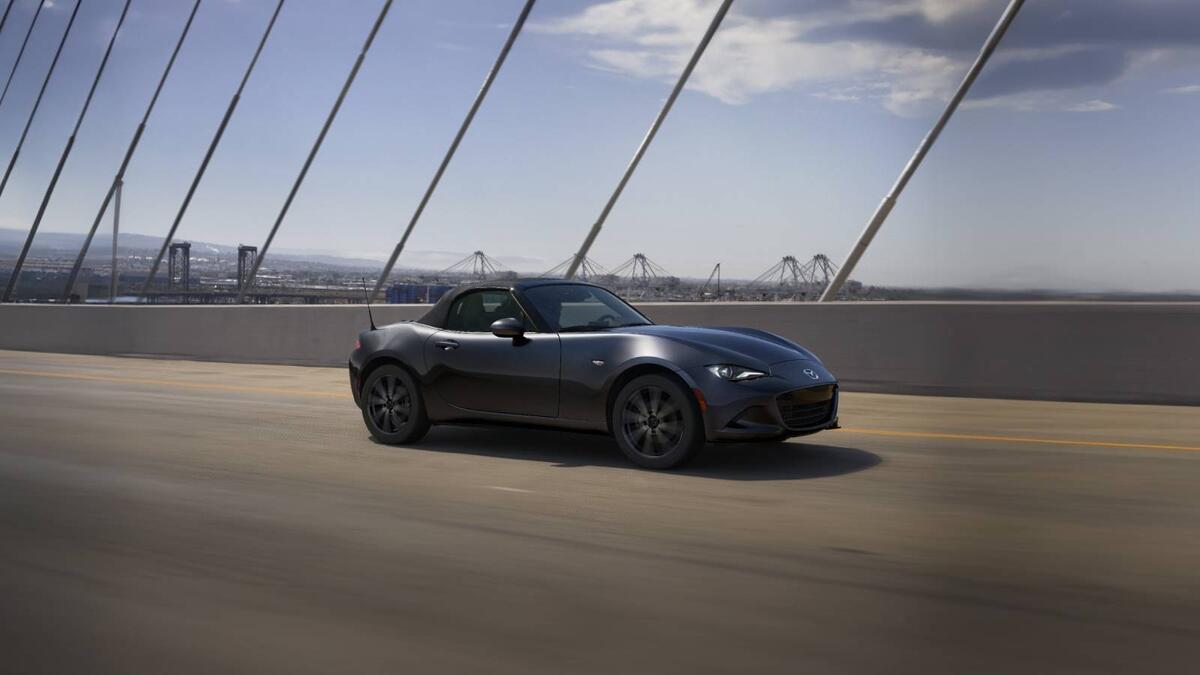
“D Street” is a category used in autocross so cars compete against similar setups. It usually means the car is allowed to be modified only in limited ways, compared with more heavily modified classes.
“D Street” is a category used in autocross. It’s basically a rulebook that limits what you can change on the car, so cars are more comparable to each other.
“Slidey” means the car feels like it’s losing traction a bit. Instead of gripping and going where you point it, it wants to rotate or slip more easily.
“Corner balance” is tuning how the car’s weight is distributed. The goal is to make the car handle the same way every time you turn in, especially in corners.
“Bristol” is another place they’re comparing the car’s feel to. Different tracks can make the same car behave differently.
Term
diff is locking too hard
A “diff” helps the left and right wheels spin at slightly different speeds. If it locks too strongly, the car can feel stiff and harder to steer smoothly in turns.
Some differentials have parts that “fight” wheel slip. Friction modifier is an additive that changes how strongly that limited-slip action engages, helping the car feel smoother and easier to control.
Bump stops are like safety cushions that stop the suspension from compressing too far. In race cars, teams sometimes adjust the setup so the suspension can move more—without hitting the stops—by tuning springs and shocks.
Car
Genetta G 56 GT four
This is a race car from Genetta that’s built for a standardized racing category called GT4. That usually means teams can buy it as a ready-to-race car and compete in organized series.
Manual brakes means the brake system doesn’t rely on power assist (like a vacuum or hydraulic booster) to multiply pedal force. That usually makes the pedal feel firmer and requires more leg effort, which can be preferred for consistent track feedback.
ABS is the system that helps prevent the wheels from locking up when you brake hard. “No ABS” means you have to control braking yourself, especially on wet or icy roads.
This means the car is based on the kind of frame you’d find in a normal production model. The host is saying it feels more like a dedicated race car than something that’s just adapted from a regular road car.
A “formula car” is a type of race car—often open-wheel and built specifically for racing. The host is using it as a comparison to say the car feels very race-focused.
A sports racer is a race car designed for sports-car style racing, often for longer events. Here it’s just a comparison for how the car feels—more like a dedicated racer than a road-car-based chassis.
A “formula style wheel” is the kind of steering wheel used in race cars. It’s usually smaller and built for fast, precise steering, often with extra buttons or controls for racing.
A “stint” is how long a driver stays in the car before taking a break or switching. The longer the stint, the more tiring and demanding the driving gets.
Endurance racing is when cars race for a long time instead of just a short sprint. Drivers have to stay consistent and manage fatigue, so things like braking feel can become more important.
Formula Ford is a racing class with simple, lightweight open-wheel cars. People mention it when they want to describe a car that feels raw and driver-focused.
“Roll” is when the car leans to the outside of a turn. More lean can mean the tires aren’t loading as evenly, which can change how the car feels and grips.
Qualifying is a timed period where drivers try to set their best lap. The results usually decide where they start in the race, and in some events different car classes qualify separately.
An open session is basically a flexible practice period on the track. Teams can get laps in without the strict timing/structure of qualifying or race stints.
Practice is time on track to test and get comfortable before the race. Teams use it to learn how the car and tires behave so they’re ready when it counts.
Scuffing in tires means doing a few controlled laps to “wake up” the tire and get it to grip better. It helps the tire perform properly right away instead of feeling slippery at the start.
This is a specific Bridgestone race tire they were using. Different tire models behave differently—some need more warming up, and the wrong prep can make the car feel bad early on.
“Grain” is when the tire surface gets rough or uneven. When that happens, the tire doesn’t grip as well, so the car feels worse until the tire settles in.
Term
cure overnight
They’re talking about leaving the tires to sit overnight so the rubber settles. The way you do that can change how the tire performs the next day, including how quickly it grips.
This means getting the tires hot enough to work the way they’re supposed to. If you don’t warm them properly, they can feel slippery and not grip well at first.
Autocross is a timed driving event on a closed course with cones. Tires can behave differently depending on how the car is loaded and how the surface feels, so a tire might not be optimized for autocross even if it’s good elsewhere.
Term
race track stuff
“Race track stuff” just means testing a tire for track driving. The speaker is saying the tire might not have been tested for the kind of driving you do in autocross events.
Bridgestone US is the part of the Bridgestone tire company that operates in North America. The point here is that the tire’s development and testing may not be done specifically for your local track conditions.
Heat cycles are how many times the tire gets hot from driving and then cools down again. Tires can change their behavior after lots of these cycles, so performance might feel better or worse depending on how the tire has been used.
They’re saying a Bridgestone tire specialist thinks the tire’s changing performance is caused more by how the tire heats up and cools down than by how worn the tire is.
Tread depth is how much pattern is left on the tire. When the tread gets shallow, the tire can grip differently—especially in wet conditions—because the grooves aren’t as effective.
When they say they’re still figuring out how the tire works, they mean the tire’s grip and behavior can change as you drive it more. They’re learning which conditions make it perform well or poorly.
“LS3” usually means a Chevy GM V8 engine (the LS3). People swap it into other cars because it makes a lot of power and pulls hard, especially in a straight line.
“E92” is BMW’s internal code for a specific generation of the 3 Series coupe. Here it’s being used as a reference point for what they were racing against in qualifying.
Power-to-weight ratio is basically “how strong the engine is for how heavy the car is.” A higher number usually means quicker acceleration, and racing rules sometimes use it to keep different cars more evenly matched.
The C8 Corvette is a Corvette generation where the engine sits behind the driver (mid-engine). That layout helps balance the car for handling, and it’s also a popular base for race cars.
The Honda S2000 is a small, sporty Honda roadster famous for revving very high. People also use it as a track/race car because it’s nimble and has a strong enthusiast following.
The Miata is a small two-seat sports car made by Mazda. It’s designed to feel light and nimble, which can make it enjoyable on twisty roads or a race track. The podcast brings it up as a practical choice for track-style driving.
The paddock is the team area at a race where cars are worked on and teams hang out between sessions. It’s basically the race event’s “behind-the-scenes” zone.
“LS motor” means a GM V8 engine from the LS family. People swap them into other cars because they’re powerful, well-supported by aftermarket parts, and easier to make fast than many other engines.
“Code 60” is a race rule that tells everyone to slow down to 60 km/h. It’s used when there’s a hazard on track, and it changes how you can drive and pass.
When a race car is in the pit lane, it has to drive slowly. A pit speed limiter is a system that prevents the driver from going faster than the allowed pit-lane speed.
A full course yellow means the whole track is under caution. Everyone has to drive slower, and that can make big differences in who gains or loses time.
This is when the race is run in a way that keeps cars closer together—usually because everyone is going slowly under caution. It can make it seem like you’re losing time for no reason, because the gaps get compressed.
A digital dash is the driver’s gauge cluster, but shown on a screen. Instead of needles, it displays numbers and information like speed and warnings clearly.
Motec makes race-grade electronics. A “Motec main dash” means the car’s main display is Motec-based, so the driver can see accurate racing data like speed and other important readings.
Aim makes race data displays. The “Aim Solo” is a small screen that shows useful driving information so you can monitor what the car is doing while you drive.
In racing, drivers need to know what the track is doing—like when there’s a caution. A “flag” display system shows those signals to the driver, often on a screen in the cockpit.
A “stint” is how long one driver drives before switching to another driver. In long races, the timing of stints can affect tires, fuel, and how hard it is to pass other cars.
An endurance race is a long race where the goal isn’t just to go fast—it’s to keep the car working and stay consistent for a long time. Drivers usually swap in and out, and tires and brakes matter a lot.
It means you hit the brakes so hard that a wheel stops turning and starts skidding. When that happens, the car can lose grip and steering, so it’s easier to miss the corner.
In endurance racing, teams stop in the pits multiple times. A “pit cycle” is one of those stop-and-rejoin sequences, and it affects where the car sits on the track relative to others.
“Lead lap” means you’re on the same lap as the front-running car. If you’re not on the lead lap, you’re behind by at least one lap, which makes it harder to catch up.
The splitter is a front aero piece that helps the car stay planted. The splitter mounts are what hold it on—if one breaks, the splitter can start shaking loose and cause bigger problems at speed.
A front splitter is a low front add-on that helps push the car down onto the road. If it breaks loose, it can shake violently and make the car feel unstable—especially on track.
Hood pins are extra locks that keep the hood from flying open. If they break, the hood can lift—dangerous at high speed because it can flap or block visibility.
A kink is a quick, tight bend on a race track. It’s the kind of corner where the car has to be stable and predictable—more so if something is loose or broken.
Hot lapping means driving the car around the track over and over pretty quickly. It’s used to learn how the car feels and to try changes without waiting a long time between runs.
A pit stop is when the race car pulls into the pits to get help during the race. It might be for tires or quick repairs, and how long it takes can change who wins.
Ratchet straps are strong straps with a handle that tightens them. Here, they’re being used to hold something on the car firmly while racing.
Term
arrow dependent
They mean the car’s behavior depends a lot on aerodynamics. If the airflow or ride height changes, the car can feel very different and may be less stable.
Pitch sensitive means the car reacts strongly when it tips forward or backward. If the nose dips or rises, the aero parts can change how much grip the car has.
Bottoming out the splitter means the front aero piece hits the ground because the car squats too much. That can hurt grip and can also scrape or break the aero part.
A rear splitter is a rear aero piece that helps the car “stick” by shaping airflow. If it stalls, the airflow stops working the way it should and the car can lose grip.
A diffuser is an under-car aero part that helps create downforce. If it stalls, the airflow under the car stops working efficiently, and the car can lose traction at the back.
A double stint means the same driver stayed in the car for two normal “shifts” before switching. It can be harder on the driver and may require extra care to keep the car performing.
In a race, the pit lane is the special area next to the track where the car comes in to get help. Teams use it for things like tire changes during the race.
A green flag means the race is on and cars can race normally. If they say they only had “green flag” time, they mean part of the race was run under normal conditions, not slowed down.
A “V eight” means the car has a V8 engine, which is an engine with eight cylinders arranged in a V shape. They’re talking about which car’s engine was doing well during the race.
Race craft is basically “how to drive smart in a race.” It’s about knowing when to pass, when to back off, and how to avoid wrecks while still fighting for position.
Brake travel is how much the brake pedal has to move before the brakes really start working. If it takes more pedal movement, you have to be more careful about timing when you lift off the brake and go to the gas.
The throttle pedal is the gas pedal. The speaker is saying the car doesn’t respond instantly at first, so you have to learn exactly how much pedal input it takes before the car really starts pulling.
“Tip-in” means the car’s reaction right when you first start pressing the gas. The speaker is saying there’s a slight lag before the car really responds, so you have to be precise with timing.
The “crossover point” is the exact timing where you finish releasing the brake and start getting power from the gas. If you switch too early or too late, the car can feel unsettled or not pull the way you expect.
They’re talking about “turn three” as a specific corner to explain what the car does. It helps them describe exactly when the car grips and when it starts pulling as they exit.
LMP3 is a class of purpose-built race cars used in endurance racing. They’re prototypes, but generally smaller and less expensive than the highest-level prototype categories.
LIVE
Hello, everyone, and welcome to the Lizardbrains podcast.
I'm your host, DJ Allison Drini.
I'm joined by my co-host, Tom O'Gorman.
Tom, Mr. Race Winner.
Mr. Janetta, driving extraordinaire.
How you doing?
I'm good. I am late tired.
I bet we're recording this on a Monday.
Yeah, we're getting full.
It's Monday. We usually record on Wednesdays, but we raced.
We're going to get all into it, but we raced for 14 hours this weekend,
and I drove almost seven of it.
Dang, that's a lot of driving. You feel good?
I feel good. I feel sore in places that are not usual for driving cars,
but I think it's because it was like a little bit of a different type of car.
Okay. How's your neck feeling?
Neck is great. Lower back is very sore.
Where else do we flex everywhere?
I think I'm just a little tired. My core is a little tired.
Tom's doing like a body check right now.
It's like when you navigate through all the menus in your BMW
and then you like ask it to check itself and it's like doing the thing.
That's what Tom just did.
Yeah, I did a little internal oil check.
Yeah, yeah, exactly.
That's mostly my lower back and my soul.
Not my core, my soul. My heart is a little tired.
Yeah, it's tired from all that excitement.
My being.
Tom, I don't know how you freaking do it, dude.
I tuned in because the discord was pretty hyped that you were driving
and there's like a live stream and they followed you for like most of a lap.
And it was like your fast quality lap, which is like cool that they caught that.
That's not necessarily 100% on purpose from them.
It just happened to line up where they're catching like your fast quality lap.
And dude, I just always enjoy watching you just out there driving a car, Tom,
because I'm telling you the way the car is gliding around,
you just know it's a well-executed lap.
You could just see it from the outside and it's just a joy to watch
and sure enough, yeah, you like kind of crushed everyone by like a second over the whole field.
But this is the part that I want to say is, well, at least I didn't watch the entire quality.
I just watched when you did the lap. Did they catch up to you?
They did. I was on pull by a little under three tenths.
Okay. All right.
So maybe Tom didn't absolutely annihilate, crush everyone,
but yeah, don't let the facts get in the way of a good story.
I was amazing.
Yes, obviously.
So you haven't driven a lot this year or even last year and you just jumped in the car
and you're just wicked fast.
Like I don't, I don't know how you do that.
I think your brain is just holding onto these pathways better than most brains.
You remember the line from a couple episodes ago?
No, what was that?
Thanks. I cried during math homework.
No, there's, I mean, there's truth to that, but yeah, I don't know what there is about that.
I know you feel like you get rusty faster than I do.
I would, you kind of feel like you get rusty faster than most people do in,
in what I remember in the past anyway.
Yeah.
I have a theory of what that is.
Tell me.
So like when I'm not racing, I'm really busy with other stuff.
So like those other stuffs is like covering up my pathways of like driving a car.
So like the more chaotic and busy I am that doesn't have anything to do with driving
a car, the quicker I will rust and I'm kind of just like go, go, going all the time.
So I think that's why I'm a little bit more prone to rust because I'm never,
I'm never idle.
I'm always doing something.
So I'm always like decaying those driving pathways if I'm not driving.
So you're in contrast to my lifestyle, which is very much motorsports focused,
like on a day to day basis.
I think you're, I think you're totally onto something.
Like even if I'm not doing driving for months at a time, I'm still,
we do the podcast every single week.
I'm sim racing a couple of times a week.
I watch motorsports content or motorsports like racing often.
Yep.
And I'm not having that pull in another direction as often.
Yeah.
I think that's a totally fair assessment.
Maybe I'm really lucky in that perspective and I've never realized it because most people
have to go away to something else and stop thinking about motorsports in a way that I don't.
Dude, it makes me wonder like people like me.
I should say don't.
Yeah.
It makes me wonder like, what if I, what if I didn't have to have a job?
Oh, oh, how fast could I get Tom?
Oh, uh, uh, Christine, are you ready for that?
She said no.
I think you could, I think you're already in a position to do that.
If you, I mean, it's such a risk.
It's such a big jump and it's so much work and there's, this is such a deep rabbit hole.
But I know for a fact that if you were to say, I'm going to quit my job and I'm going
to become a full-time coach and I'm going to figure out a way to make the rest of the
money in motorsports with contracts and jobs and whatever the same way that I have.
I 1000% know you could, but it's such a lifestyle shift and it's such a different world.
Yeah.
And it's not consistent the same way that you're used to.
I've thought, I've thought of this.
I think I can make it work.
Um, I might even be able to figure out a way to make more income than like an actual like
normal ass job.
The thing that makes me not want to jump into it full time and maybe I'll get over this
at some point is I want to compete like every weekend.
And if I'm coaching every weekend, then that gets in the way of competing and I see myself
as a competitor first and then a coach second.
So like I, I, in order to like make coaching my job, I would have to stop competing as
much and that's not how I see myself.
I see myself as a competitor.
So, uh, so for, for the meantime, I will have a normal job.
Uh, so I can go out and compete, uh, every weekend instead of do coaching stuff.
But if you set an alarm while you're at work for every like every hour, you take
five minutes to think about racing.
That would probably work.
That would probably help.
No, seriously.
So like, uh, like, uh, this was like two jobs ago, but I, so I was a medical
equipment technician and I was like just, I was just like fully lizarding into auto
cross.
And I would have whatever last week's fastest run was like on my phone and I would pull
up to like the next stop cause I would just travel around to different hospitals working
on equipment.
I would pull up to the next job and I'd watch, I'd watch the run like 10 times.
So I would just sit there in the, in the truck, like for 10 minutes, just watching the same
run over and again.
And I'd be like, okay, I'll watch this at some times and I'd throw it in my pocket
and I would go inside and like fix whatever the thing was that I had to fix.
And then, you know, I'd go to the next stop and whatever.
So throughout the day, I like wasted like probably like 40, 15 minutes watching, watching the
same auto cross run, but I got like the reps of it, like over and again.
And the thing I would be doing when watching it is I would like try to remember and imagine
what it was like in the car when I was doing that cause I was like trying to have these
pathways, like as ingrained as possible in my brain.
So when I had to wait an entire week to come back around and like try again, like I was
thinking maybe I would just kind of pick up more where I left off, uh, rather than like,
okay, how do I do this again?
Because I spent the whole week not doing the racing thing.
So I think there is some truth to that, Tom.
You know, the play is what to pick up quote unquote smoking.
Cause people who smoke get breaks in the middle of the day.
You take your little smoke break, but instead of smoking, you're talking about, you're
looking at your, your smoking, your motor sports fix.
Yeah. Yeah. I'm getting my, I'm watching my auto cross runs.
Uh, speaking of auto cross, how was this weekend?
You ought to cross at least once, right?
Yep. Yep.
I, uh, auto cross on Sunday and, uh, Tom, I still got it man.
D street, uh, it's, uh, it's still fun.
It's still fun.
It doesn't turn quite as well as CST.
Uh, but you know what?
It's, it's easier to drive than CST.
Uh, the D street car just feels so friendly compared to CST for whatever reason.
Maybe that's a crazy take because my only experience with D street cars is they were
one of the most difficult auto cross cars I've ever driven.
And I did not like them, which makes me not that excited about driving this CST
car in a couple of weeks. Oh my God.
Put more words to this.
What do you mean?
It's so like the D street car, like it, it like, you know, it's like a little bit
more slidey and, uh, uh, it, like my computer just dinged at me.
Um, it's like the D street cars, a little bit more slidey.
It's a little bit more active, like as like the way it acts on the surface.
Uh, but it feels all very like I can induce it with consistency.
Uh, but the CST car doesn't feel like sometimes it does.
Sometimes it really doesn't.
Uh, if we're still figuring that out, uh, Peter's getting, uh, like a full corner
balance and a bunch of like maintenance items and stuff before Grissom this weekend.
So I'm excited about that.
Can't wait to drive the car and kind of see what it does with an actual corner
balance on it and, um, and then some other stuff that we're doing to play with
the setup. So Tom, I promise you all have a halfway decent car to drive by, uh,
by Finger Lakes. It felt pretty good at Bristol.
It felt pretty good at Bristol.
Like it was, it was pretty, uh, there's like a couple, couple complaints.
Like I think the diff is locking too hard.
So we're going to put more friction modifier in it.
Um, and when, and when we do that, I think we can actually lower the rear a little
bit more.
Uh, and then like, I think the car will be like money.
Uh, but, uh, anyways, nice.
What was that?
What about the bump stops?
Uh, no bump stops.
You don't put bump stops in SD cars and this you're going on race track.
How do you tune it?
How do you know how to make it go around a corner?
You got these things.
They're like these big metal, metal cylindrical objects and they kind of
like, like curl on each other like a spring.
I got him.
I got him.
He's going right.
I got him.
You didn't get me.
You never had your car.
You never had me.
But, uh, yeah, I just, I felt like, uh, like I can induce behavior more
consistently in a D street car than in the CST car.
And maybe I'm just like still coming up to speed in the CST car or like
trying to like find that, like that little nuance.
But I just think that the windows of where the car, like how to get the car
in specific states with the D street car is like just larger.
Except on entry, on entry, it doesn't do anything you want it to do.
But on exit, it does all the things that you would expect it to do.
The CST car and entry like actually turns.
So which is nice.
Right.
Um, well, nice.
Glad you got that.
Yeah.
Uh, you got that little taste this weekend.
I did.
Um, you, uh, you were driving and, uh, as, as I alluded in the, the intro,
a genetta at road, road America.
Come on.
How did it, how did it feel out there?
It was so fun.
All right.
So I'm going to do a full review of, uh, uh, Zenith racing series,
which I, this is my first weekend with.
And I feel like is, uh, a lot of people are Zenith curious.
A lot of people are, it's a little bit of a mystery to a lot of people who
are maybe endurance racers in some capacity or club racers.
And they're like, oh, there's this new thing, or they never even heard of
it until we talked about it on the podcast, which makes me want to send
Zenith a little bit of a, like a marketing invoice.
We talked about you on the podcast.
Here's a hundred dollar invoice or something.
I don't know.
But, um, before, before I go into all that, yeah, I'll tell the story of the
race weekend.
So we were racing, um, Zenith endurance or Zenith racing series in a
Genetta G 56 GT four, which is a Ford V six Genetta.
Like it's kind of like a boutique, uh, sports, uh, sports car maker from
the UK that's been building like small, small production sports cars
since like the sixties.
It's like a kick car basically, isn't it?
It's kind of a kick car, but you don't, you don't build it yourself.
Like they, you buy it the way it is.
And it's kind of like, I don't, Genettas are kind of like the UK's Mazda
ladder, like you race in Genetta juniors and you like race your way up the
Genetta ladder and it has like the same feel here as like MX five cup and
speck me out and whatever.
Okay, cool.
So that's the car I was driving and it's, uh, it's super cool.
I drove one of them before.
This was a slightly different version of the one that I drove before, uh,
at Kota a couple of years ago, but, um, it's like, I said,
it's like a Ford 3.7 liter V six.
Uh, they actually had an engine.
It was out of a Lincoln MKX SUV, I think, or is that the MKX,
the sedan, whichever one it's like a six cylinder.
Yeah.
And they got this one for 900 bucks out of a junk yard.
That was the engine in the car.
Uh, otherwise it's like basically tube frame from the firewall forward.
It's got some tube frame in the back.
It's like a, uh, I don't know, like a hand built or I don't know what you
call it boutique super sports car thing and, uh, paddle shift, manual
brakes, no ABS, like 250 horse actually dino 240 horse after day one.
So somewhere in that mid 200 horsepower.
Is it like 1800 pounds?
I don't understand how it's as fast as it is.
27 30 was what it weighed.
So it's like, it's like the S 2000 GLTC cars, but with like 30 more horsepower,
but it's also like a tube frame race car.
Yeah.
Instead of like a production chassis car.
So it's, it's nothing crazy as far as specs go, but like,
you put the whole package together and it's like a proper race car.
Well, wait, I might not understand what this car is.
It's, that's not like GT four spec.
That's like detuned, right?
Correct.
It was pulled back a little for G for, for this.
I'm like that, like you just listed off everything and I'm like,
that seems not GT four speeds,
but they only pulled it back like 30 horsepower.
Really?
It's GT four.
Yeah.
But it's all GT four car.
This is like a, this is a 10 plus year old GT four car.
Okay.
That's a little, a little slower.
That's like when KTM expos were a GT four car.
Yes.
Totally that era.
Yeah.
Like, like a multiple generations ago of all of the production cars,
like the Porsches and stuff that we're used to.
Yeah.
Okay.
So ultimately, like all of that comes together.
It feels more like a, like a formula car slash sports racer
than a production chassis car.
Okay.
So the steering wheel,
I swear the steering wheel must have been like 250 mil.
It was like a tiny little like video game steering wheel, tiny,
like, and it's just a formula style wheel.
Look at you with your,
your logitech experience coming in Tom.
Yeah.
Right.
Good thing I got this.
Now I know the file is the size of wheels.
Okay.
So three pedals.
Like I said, manual brakes, no ABS.
It, it's not hard to drive, but it's,
it's interesting in the sense that like cruising around in it is not possible.
Like you have to be on top of it.
You have to be like, obviously the no ABS was difficult,
especially in endurance racing or for longer stints, but overall,
it feels more like, um,
if anybody ever gets a chance to even autocross something like an,
uh, an F 600, an F mod car, a C mod, like a formula Ford, um,
any of these mod cars are like a really,
really stripped production chassis car.
It's like lots of changes to it.
Like Dave Montgomery's nine 14 is a perfect example.
It shifts from this like production chassis style feel like a road,
like a road car feel to this like other thing where everything is much more,
uh, this role and direct and yeah, they're like finer movements,
smaller movements for sure, less weight transfer.
They kind of like skitter across the surface in a way rather than like roll
and dig into the surface.
So there's like all of these sensations going on rather than a normal,
like sports car in this car, which was super fun.
Um, so the format for the weekend, Friday was practice,
Saturday, Sunday was a seven hour race each and they're scored independently.
So we go, um, it's me, um, there, we actually have two cars,
the other ones of VA and it's in the faster class.
Um, and each of the car owners, Clark owns the VA and Anthony owns the V six
that we're driving are both entered in both cars.
And then we have another guy, John Swift, um, who's from Florida,
who was, um, driving with us this weekend.
So the four of us are entered in both cars,
but the plan is for like John and I to mostly drive the V 61
and then Clark and Anthony to mostly drive the VA one,
but the VA one was acting up all weekend long.
So we kind of like rotated us between the cars a little bit.
So we get into practice. Um, it's interesting how Zenith does it.
They break it out by like, there's two faster classes and two slower
classes and you each get 20 minute sessions to start the weekend off
like three each and you just get to go out for practice, like not,
not nothing, no, no, like pressure or scoring or anything.
So it starts a little different than WRL,
which is like almost straight into qualifying in a way on Friday.
Then in the afternoon, they do a three hour open session for all the classes
and you can just come and go from the track as long as you want.
Then at the very end, they do another,
I think it's 20 minute,
it might be 15 qualifying session for each class individually.
So across the day you go from practice to like full race group practice
to qualifying and, um,
I got one stint in the practice and then we ended up doing,
I drove a bunch in the three hour practice, just like scuffing in tires
because this team found that with the Bridgestone, uh,
71 RZ, which is what we were running that if they don't scuff them in
and then like let them cure overnight,
they grain really bad on these cars and then the cars drive like shit
for like the first hour of the race the next day.
What tire was this?
The Bridgestone, 71 RZ.
Oh, okay.
Interesting.
So yeah, I was surprised by that too,
but they said if they, if they scuff them,
like bring them up to temp once and then bring them down just like five laps
basically.
Uh, and it doesn't do it,
but if you just start on a freshest, a fresh set of stickers
and you start the seven hour race, the first like hour is junk.
I don't know.
I obviously didn't try it on stickers because they had me scuff everything in.
So I actually had an interesting conversation from somebody that works at Bridgestone
at Bristol because I was like, Hey, what's the,
because they don't test for autocross and they,
they hardly even probably test for like race track stuff.
Bridgestone US has nothing to do with the development of the tire.
They'd get the product from Japan.
Yeah.
What I was, what I was hearing is that like the asphalt in Japan is like wildly
different than the asphalt over here and tires like act differently on different
asphalt.
So it's just like circumstance that like,
that it's actually like a good fast tire here that has like good wear characteristics.
Right.
Like that's like, it's like, ah, yeah, cool.
I'm glad it worked out over here, but it was never like tested for over here.
So like in terms of how we use tires, which like it's a car,
like it's not that different, but like any kind of autocross scenario or whatever,
like the only information we're going to have is like the answer to a little
information.
So I cornered one of the Bridgestone people and was asking them about it.
And hey, hey, hey you with the hat.
Don't move.
And I, so I was like asking like, Hey, what do you like?
Cause I'm sure you're having conversations all the time.
Like what are you hearing?
And, and basically the first couple runs perfectly fine.
They're perfectly on pace.
Then they settle into like a not great period that lasts like 20 to 30 runs depending on
the car and the, you know, the heat cycles and all that stuff.
And then they get back to good again.
And then they're like, like great until like a bunch of varying number of runs cause it,
like I said, it's anecdotal information.
It's like some people are finding them to be good, like well over a hundred.
Some people are like, Oh, after 80, they're not that great.
Like, like people are like finding different stuff and it's kind of all over the place.
Like if it was a scatter plot, but what was consistent, it was like the 20 to 30 run area
is where they come back.
So they have like a slouch period and then they come back at like that 20, 20 to 30 run area.
And I don't know if that has to do with the where or the heat cycles or, or whatever.
Um, but the, the Bridgestone person, uh, thinks it has more to do with the, the heat cycles
than the actual like tread depth.
So yeah, interesting, uh, little like dump of information that, but he, he also stressed
that it's all anecdotal and we're still figuring out how the tire works and what works and
what doesn't.
Uh, so, you know, we'll just have to learn more with time, but that's kind of how we
learn is like we compare information and compare notes with other people and try to
understand the, you know, the, one of the more dominant tires and like the space at
the moment, you know, currently.
So at some point in the future, another tire will come out and we'll all be comparing notes,
trying to figure out how to extract a maximum performance out of that thing too.
Yep.
Yeah.
So I struggled to even truly believe any of the stuff that anybody tests on tires until
it, because it's so dependent on what your own thing is.
So anyway, so, so they found that.
So I spent, I got one of the practice sessions early in the day and then I spent most of that
three hour window cycling tires, um, which unfortunately, I think we misprioritized
slightly because the guy that was running with us, John got very little driving time
on the test day because we were spending time like prepping for the race day.
Yeah, it makes sense.
Doing things like that.
And he probably should have done the scuffing.
You're like, it's not like you have to do anything special, but either way, that's how
we did it.
So I was in the car for like a lot of the practice day too.
And then I did qualifying for the next day, which means I also had to start the first
race.
And I kind of just sort of repeated a very similar lap time all day because the track
got hotter.
It got significantly hotter on Friday from like low sixties to upper eighties, um, in
the air.
And then, uh, yeah, so we caught that.
You could, you saw that in qualifying.
Yep.
Uh, we were on pole by three tenths over an E 92 BMW or an E 90 BMW with an LS three
in it.
That was like way faster in a straight line and slower on the straights, but it's all
powered away.
So we were in the, there are four classes.
Um, there's the prototype class, but it's still a power to weight ratio based on prototypes.
And then there's average, is it average power to weight?
I don't know.
I don't know.
I'll give that caveat when I get to that.
Well, my caveat is I have not prepped a car or like read the rules for the cars on this.
Okay.
Gotcha.
I read parts of it, but I don't know like the ins and outs of all that.
Like I did for some.
Cause I'm under the impression that NASA has like this fricking average calculation of
power to weight, like cornered, and they'll like literally like go after anybody legally
that like tries to do it.
That's what I've been told.
I don't know if that's true or not, but like, like, so if they're, if they're doing an average
and they're not getting, okay, Christian says it's not true.
All right.
Then I don't know what other organizations are doing anyways.
Continue Tom.
I don't know either.
So there's the prototype class and then there's three sports car classes.
There's ZR two, which is GT four cars at like proper GT four power levels and fours.
There's like Porsche cup cars that are detuned into that.
Then there's ZR three, which is what we were in.
And that's like 10 and a half to one power to weight.
So somewhere between like GLTC and GLGT.
And then there's one slightly slower called ZR four, which I think is 12 and a half or
12.7 to one or something like that.
So it's like right on top of GLTC.
So the spread of the four classes is actually much smaller than WRL, which has like, uh,
I think they're slowest classes closer to 14.
Okay.
Maybe you're 15 even.
And then they have like faster prototypes.
Anyway, so all that to say, um, we were on pole in ZR three, which means we were like
right in the middle of all the spread pace cars.
Um, yes, competition weight is without driver series is peak horsepower.
Yeah.
I think this is peak horsepower.
And there's still modifiers for car prep and all this stuff.
Um, so anyway, comments right now in case you're confused.
Yeah.
Sorry.
This might be a little scattered.
I just took as many notes on my phone.
No, you're fine.
You're fine.
I'll try to keep it together.
I'm listening and I'll, I'll be the glue.
Um, so DJ, I gotta be honest.
The, the main thing for Friday was like, I knew it was going to be a good weekend
because when I got there and I like got in the car, everything just worked.
Like I fit in the car.
Well, I could get in the car.
Well, radio worked the very first try.
I would have to work on the radio at all.
Like the comms, like all of the stuff that's supposed to like the, all the stuff
that can be major teething issues with like ergonomics and technology and all
this stuff, it all just worked.
So that was like such a big like sign.
I was like, okay, this is, this is all like meshing.
Well, there's no resistance.
There's no like, I don't need to grease anything.
Like everything's just working really well from top to bottom, like with the
team and the run plan and everything, except for maybe like I said, John might
have, he should have benefited from more laps on that first day.
So the other funny part of that day was the, our friends from, well, our friends
from Andy and Aaron and Emil were there with Paragon Performance in a C8 Corvette
that they had detuned all the way down to the slowest class.
So there's this like brand new C8 race car on the racetrack and everyone's
noticing that it's like in the slowest class for this series instead of being
in the fastest class and it's like turning heads and obviously people don't
know that I know them.
So I keep hearing little comments like from our team or from other people that I've
met about this Corvette.
They're like, well, it's more like, well, why would you want to do that?
Why would you want to go that slow in that car?
Like, why would you do that?
And I love that because for years, these guys have been talking about in WRL
building like a production car, not a GT4 car and like taking it to the GT4 cars.
Like let's get a Corvette or let's get an S2000 or let's get a Miata and like
take it to the top class.
And instead they're getting all this attention for taking this car that could be
in the top class and detuning it all the way to the bottom.
Yeah.
And I got to be the person listening to those little comments all weekend.
Where was anybody like, why do they do it?
Yeah.
Was anybody like, well, they must be cheating or was there any of that in the
paddock going on?
No.
No, that's good.
That's a sense of good, like, like good, good paddock vibes.
Right.
Right.
So every time it would go by, I feel like I would hear something or I would hear
that repeating in my head.
There's the slowest C8 Corvette you've ever seen.
Yeah.
Okay.
So I'll move on to the start of the next race.
In the start of the race, the, the BMW with the LS motor, we started side by
side and we were right behind all the GT4 cars.
And of course the green flag comes out.
I got a great start, but he immediately just starts to like motor me after my
start and he was able to bully his way through on like two GT4 cars at the very
start of the race.
And I was stuck behind both of them.
And then on the second lap, I had worked my way by one of them.
So it was me and then a GT4 BMW.
And then the class leader was the next car on the racetrack, like basically right
there.
And this is a code 60 series, which means instead of a full course yellow, they
put out a code 60, which means you slow down to 60 kilometers per hour or 37.2
miles an hour.
That becomes important in a second instead of that.
So you just have to slow the car down, start like putting around at that speed.
So I'm behind this GT4 car.
And I realized like, I think I can just put my pit speed limiter on, but as the
code sixties going on for what ended up being almost four laps, the race leader
in my class was clearly going faster than I was enough that by the time it had gone
for like almost 20 minutes of code 60, I couldn't even see them anymore.
They were, they were, I caught out of the car and I, I found out the deficit.
It was almost 20 seconds that this car pulled on me in the first.
During like a full course yellow basically during a quote unquote full course yellow
like field neutralized scenario, because I found out later and kind of like started
to think about the circumstances.
I was on the pit speed limiter, which we had set conservatively to like 34.5 miles
an hour and 60 kilometers an hour is 37.2.
And then there's the wiggle room within whatever the series enforces.
So I guarantee you that BMW that they didn't get in trouble or anything.
They didn't really do anything wrong.
I guarantee you they were like right between like 37 and 38, 37,
maybe even like 39 every once in a while.
And I'm doing like 34.
And actually the BMW in front of me, the, the faster class car was also doing like 34
most of the time.
So he and I are both just like losing gap to this person that's leading our class
and then they're just gone.
And I never saw that car again, the entire stint.
And within the first 30 minutes of the race, I have a 20 second deficit and I did
literally nothing wrong, but like do a start and then a yellow flag.
Womp.
Womp.
So you said it was four laps.
So that's at like, at like 35 miles an hour or whatever, four laps.
That's like, what is it?
Like a 4.
What is it?
4.01 or something like that.
It's just over four.
So it's just over four for the length of road America and four laps.
Like what is that?
Like freaking like five minutes each lap.
Like, or no, it'd be probably more like eight minutes each lap.
Right?
So like you were right about five.
Yeah.
Five.
Okay.
So, uh, so yeah, you're 20 minutes of think about it.
55 miles an hour faster.
Imagine somebody running for 20 minutes and how much farther in front of them.
Uh, they would be in front of you.
Right.
For 20 minutes.
That's like, that's a lot.
That's a long distance.
Right.
So as soon as I realized it, I didn't even think about it much because the first
code 60, like you just kind of like I'm sitting on this on the pit speed limiter.
Barton along.
And all of a sudden I like kind of noticed that the car that's leading the
class is like way up the road.
And then by the time it's over, they're like gone.
I can't even see them.
Like I can't use this pit speed limiter under code 35 code 60 anymore.
Like I got to, I got to use my brain and my left, my right foot and like keep it
at 37 miles an hour and like maybe let it pop to 38 every once in a while
because otherwise I'm going to lose like gobs of time under this code 60 thing.
Does the genetic have like a digital dash or like a like a aim or something
where you could have like an accurate speed?
Yeah.
It had a Motec main dash.
Then it had a rear view camera just to the right of that.
Then it had a aim solo just to the right of that.
And there was something else.
Oh, the flag tronics.
They don't actually use flag tronics, but they, I forget what it's called,
but it's a even bigger screen, a higher res screen.
And it has like really nice text on it.
Okay.
So I'll get more into that with my series review, but that was,
there were like four screens on the car and that was what they all did.
Yep.
So after that, I did my whole first stint.
It was two stints.
So I did like almost a little over two hours for the start of that race
and basically held like right within that 22nd mark to them.
And then John got in, he did a double stint other than my little,
other than my 20 seconds that I lost under code 60.
I had to break lockups where I went wide with no ABS.
What I found was that it was really, really difficult to be around other cars
and be confident, confident.
I didn't even think about this in the past, but when you're endurance racing
like this, you spend, most of your passes are like on entry with the ABS as your
safety net to like make the corner.
If the person doesn't realize that you're trying to pass them.
Yeah.
You know what I'm talking about?
So in, in this car, like not having the ABS as a safety net to make sure that I
make the corner.
If they don't embrace what I'm trying to do.
Yeah.
Yeah.
Then I'm like in their door,
especially if your car is kind of like slower in a straight line that's like,
exactly.
Yeah.
You're never just going to get a better run out of the corner
and then just like motor on by them.
Right.
So I realized we were in like the worst case scenario for an endurance race,
but whatever, all that to say, I had two mistakes with break lockups that put me
wide at turn five and turn 81 each.
And it's like go wide a little off and then pull it right back on.
You lose like two seconds each time you do that.
So, uh, then John gets in, Johnston is pretty good.
He's like maybe two to three seconds a lap off of my average pace.
So he's right within the window.
Uh, he had one spin that lost him like 25, 30 seconds ish at Canada corner.
And then he resumed then the car owner, Anthony got in and by the end of the
race, we were two laps down from the race leader, one lap down,
one lap down from the race leader and we were coming on and off the lead lap,
like as our pit cycles kind of ebbed and flowed.
Yeah.
Then all of a sudden that car is leaving the pit lane and it like sputters
to a stop and it's broken and it's retired from the race.
And now where the race leaders, the other car broke and we inherited the
race lead and we ended up winning that race.
It was all that speeding on, on full course yellow.
Yeah.
Right.
That's fun.
Okay.
Nice.
So all day we had like a pretty strong day.
We lost like we could, I could justify where we lost the time other than like
just lap by lap pace and like whatever the car was and stuff.
Like you look at them like, okay, if we repeat that tomorrow, like that's pretty
good run, the pit stops were amazing.
I didn't even see this team do practice.
They just like, they were locked in.
They were ready to go.
This series is fast as you can do a pit stop.
Okay.
As fast as you can go.
So it's like,
So there's an intensity to it.
Yeah.
There's an intensity to it.
Yeah.
And well, I won't go into that yet.
So, so that was day one.
We ended up winning day one by we, we had a two lap deficit or a two lap
advantage to the next car.
So we won by quite a bit, but we were basically in a position to finish
second until this other car broke.
Then, um, day two is another seven hour race.
Um, that day I woke up in a full panic because I woke up with no alarm to
full daylight out the window.
And I'm used to being in the far west side of the time zone.
Far East side.
So I thought for sure, like I even had a moment where I'm like, God damn it.
Before I rolled over and I knew I had missed the start of the race.
I knew I was late.
I knew I'd have 17 phone calls.
Oh my God.
Like especially it's like, like, you just, all you had to do was drive the
car, Tom and like, you just through it.
Oh dude.
Did you just roll over in like, not even a panic, just to like,
you're like why exacerbated, exasperated.
It's five 30 in the morning.
Okay.
Cause it's, it's in the Eastern time zone of central.
So it's totally fine.
I get to the track and the race starts again and this one went to shit
basically right away.
So part of the problem with these like, I keep calling them boutique sports cars.
They're like super low production, just kind of like parts spin sports cars.
There's, they're kind of a dime a dozen.
If you really know motor sport stuff that they're cobbled together in a way
that's like, you've got to have, kind of have to have your hands on them
constantly the way that like a street car wouldn't all that to say the body
work ended up being like a complete pain in the ass because one of the
splitter mounts broke and that created enough vibration to start to vibrate
the entire front splitter bumper and hood assembly apart to the point that
it's buffeting at 120 miles an hour plus.
So badly that I got a meatball flag.
Like I knew it was bad in the car and I'm trying to like manage,
manage the speed a little bit, but I like, they're like, you're getting a penalty.
You're going to have to bring it in this time.
Oh no.
And they were trying to figure out like how bad is it?
Do we need to pit now?
So we obviously pit and they try to go at it with tape.
I go right back out the tape immediately blows off the car and it starts
buffeting again and it shears both hood pins on the back of the hood.
So the whole hood like pops up and that happens going into the kink.
So I turned into the kink at like 120 ish miles an hour and the right
front, like the passenger side of the hood blows up and I can see the hood pin
hanging and then it's like kind of flopping.
You're like, not like this, not like this.
You're right.
And at this point, I've already been through the pit lane twice.
I'm like, I'm at the point, I mean, my motorsports career, like you've been
through the pit lane twice in the first 20 minutes of an endurance race.
You're done.
Just pack it up and leave.
You're not winning.
You're done.
Like you lost.
You've already lost two laps, whatever.
So anyway, I come through that they, they try to rethread the hood pins.
I go back out with more tape, the hood pins fixed.
It blows up and again, again, right away.
The hood, like it breaks the hood pins again.
So their solution for my first stint was to grab a ratchet strap after
drilling a hole through the wood splitter.
They put the hook of the ratchet strap through on the splitter and then they
run it across the hood, like a racing stripe directly up towards the
cockpit.
They strap it to the firewall basically and like ratchet strap the car to
itself to try to get it stay together.
And I go back out and it DJ, it was the most like put together the car felt
all weekend.
It was composed, all the buffeting and vibrations were gone.
It was like super stable, but then the problem became the hook was like in
front of the splitter.
So every time I would break, I would drag the hook on the ground and I
nearly ground through the entire hook.
Yeah, you need the hooks again.
You kind of conserve the hooks during your, your hot lapping Tom.
Yeah.
Like what are we doing?
So then on the second pit stop, when I get out of the car, they spend more time.
They drill two more holes.
It's in the thumbnail of the video, I think, and I sent pictures in discord
of two ratchet straps, one on each corner of the front running straight up to
the middle of the cockpit of the car.
And that's how we race the rest of the day with ratchet straps on the outside
of the car.
And it was the fastest the car ever was because I, these cars are so, they're
so arrow dependent for what they are, even though they're slow cars.
They're like really pitch sensitive.
They're really, you know what my favorite?
The splitter bottoms out in the front.
It stalls the rear splitter in the rear spoiler in the back notes.
What's the thing on the back called when the fuser, it stalls the rear
diffuser underneath the car.
My favorite thing about this picture and the people listen to the audio
podcast.
Sorry.
My favorite thing about this picture is how you can, like you just told the
whole story out of like the tape and the this and the that and whatever.
And you just see like the failure that the tape was because the tape is just
discombobulated on the front of this car.
It's like, you could tell there was an attempt, like an attempt was made
with the tape and that attempt viciously failed because that tape is
everywhere and flapped and all sorts of different directions.
And then you have these like home depot orange ratchet straps, like from
each corner of the splitter and it meets into like the center of the windshield.
I don't even know what it's like hooked to, but like, I think it's like at
the very end of that ratchet straps too.
Or did they cut off like the remaining on the other side of the, the,
okay, they cut it off.
Okay.
All right.
Yeah.
Yeah, they cut it off.
Dude, this team sounds awesome.
They're like, they're really cool.
I, you know, for, I worked with a lot of different teams and a lot of the
pro-ish teams have a certain thing to them.
Like they wouldn't do this in a way and this team isn't quite like that.
Anyway, so I was watching them from the cockpit trying to do this tape for the
first, I think I came to the pit lane three times.
I think maybe four, but anyway, so I'm watching them take these big sheets of
tape and like use rolls and scratch.
I don't know what they're, I can't see what they're doing and I don't see it
until the end of the race, but having seen the picture now at the end of the
race, I'm not really sure what their intention was with the tape.
I'm not sure what they were going for.
It does look like a five year old took Band-Aid and stuck it all over themselves.
Yeah.
There's no way the tape, but they probably didn't realize how bad it was.
Right.
Cause all they know, all they know is what they heard on the radio, right?
Yeah.
Yeah.
And all, all you know is what you see in the car.
So like, yeah.
So obviously it was worse than like some like, like, I think any kind of like
hood flapping that tape would normally solve it, but it sounds like it was more
than just hood flapping considering like it was, the car was literally shaking
apart.
So, but man, what, like, what is this contraption?
I hope you guys got a ton of pictures.
Like, did you get like a team picture afterwards with like the straps?
Like, like everyone's like arm to arm and you got like this ratchet strapped
race car in the background.
I hope so.
No, we didn't do a team photo, but I mean, obviously a ton of everyone was
taking photos because none of us had seen it up close.
Half of us hadn't seen it up close.
Only the cut, like the two or three guys that go over the wall would see it
up close.
Otherwise you can't see it behind the concrete and stuff.
Good point.
So when I saw it at the end, I was like, boy, I can't believe we drove a race
like that.
And some people even in our discord were like, that seems kind of dangerous.
And in hindsight, it does look a little dangerous where those could have gone
if they had broken.
Yeah.
If you wouldn't have conserved the hook with your breaking, you might,
I don't know where does that even, that would have just like that ratchet
strap mechanism would have just been laying on the track somewhere.
Yep.
So I start the race off with technically a double stint, but over the time
of the car breaking and coming in and out of the pit lane and all this,
it was like almost two and a half hours, but it was really only like a stint
and a half of green flag, like pushing the car and lapping and not having to
minimize speed or going in and out of the pit lane and all this.
Then John gets in and it was significantly hotter on the second day of race.
I would say the second race day.
So by, I think there was something wrong with the cool shirt, which I don't
have a cool shirt, but he did.
And he said it was too hot by the end of his first stint.
So he wanted someone else to go back in and the V eight car was running well
enough that those other two drivers were like focused on swapping back and forth
with that.
So the option was for me to get back in.
So I get back in for another stint, which turns into another double stint.
And I didn't know I was doing another double.
So I ended up doing like, I think a little over four hours of that seven hour
race and the first, the first of the second stints.
So my third stint was fine.
It went by really fast.
Like some of my quickest laps were in that stint.
I felt great.
Then I do the pits.
It was 18 laps.
Then I do a pit stop and go back out.
And I realized after the pit stop and sitting still and having a chance
for my body to like settle into that like stagnant air and then going back out
by lap four of the next stint, I was done.
I was like, I'm ready to be on this car.
It's too hot.
There's the only air in the car was one Nacoduct, which is like one of those.
I don't know how to describe it.
It's a Nacoduct on the winch on the window of the car.
Was it at least air toward you?
Was that at least scooping air toward you?
No, because it was behind the mirror and it was aimed a little funny.
So it wasn't aimed at you directly, but it was kind of aimed just past your face.
The thing that was nice though, is if you're under code 35 and you pop the door open
or code 60, you pop the door open, then it was aimed directly at you.
Interesting.
But it was so hot that day that it was just blowing hot air in the car.
So I actually spent most of that second, meaning my fourth stint with my hand over it
to like stop blowing hot air because I could feel it in my, I could feel my eyes getting
like hot and like I felt like there were fumes all of a sudden.
I was just like, I was done.
I was ready to be done.
You sound, you sound like me with that, that Miata that, that me and Zach Rubin were racing
and we celebrated when it broke at our hotel.
We were dreading getting back into it.
It wasn't that bad, but it was like every lap was a bit of a slog and it went by very slowly.
Not to complain or anything, but this is the reality of doing these endurance races.
So by the time I was done, it was a 23 laps second stint, my fourth stint of the day and
I was toast.
I was like, all right, I'm completely done, but by that time we only had an hour left
in the race.
And after all that time, so I drove the first two, John drove.
By the time I got out of the car, we were six laps down because of all the ins and outs.
Then throughout the rest of the race, we ended up coming back to being on the lead lap because
with about an hour to go, the race leader who was a lap up on second, third and us in fourth broke.
So then first, second and us in third, we're effectively on the same lap, but like almost
two full laps apart from each other.
By the time you count like the cycle of, of lapping and whatever.
And we're lapping like seven to nine seconds a lap faster than both of the cars in front
of us and the car owner gets in with an hour to go.
The leader just broke.
Now we're on the lead lap almost and we've got to run him down and it all ends in this
like we're counting doing all the math and like figuring out if we've got time, but we
have to do a splash and go and the team had to do like the fastest splash and go ever
that they possibly could.
And we passed for the lead or for a second place in turn eight on the last lap.
That's pretty legit.
Second place.
Come on.
How exciting is that?
It was as exciting as endurance racing gets.
Yeah.
So we were like on a high.
We got the teams first win the first day.
We got like a last lap pass for a podium on the second day to get into second.
Uh, it like all went really well.
I would say it like in general for, for all those, for all this stuff, um, the things
I learned with the car really were like, obviously the ABS and race craft were, were
it was difficult.
Like you really do an endurance racing.
You, you go bowling like up the inside of somebody to prove a point.
Like as soon as, as soon as you lay over on somebody and you show that you're like, you're
a little bit more reasonable.
Like if you're more dominant, people lay over for you.
And if you show that you're not, you're, you're not able to do that.
Like they will attack in any way they can.
And it's usually on the brakes.
So that was really difficult.
And then the other part was interesting is like with the, the manual brakes, longer
brake travel, the throttle pedal also wasn't like initially super responsive.
It was like a little bit of a tip in and then it would respond.
So I spent so much time in the like whatever eight hours I drove this car this weekend
playing with that like crossover point from releasing my left foot off the brake to like
tipping into the throttle, but getting when the throttle actually responds to my request
just right.
And like playing with the terrain of where like turn three was a perfect example.
Turn three, you're going downhill into then leveling out and like, where does the car
catch?
So it's not like loose as soon as it catches the front end and brings the back end around,
but it like pulls you through the corner and then you pick up the throttle.
Like there was so much fun nuance to driving this car that like my example has been an
E46 endurance car.
Like just doesn't have, you're just kind of like cruising around.
It does what it does.
It's not that easy to make it do anything.
Otherwise you're managing what the car can't do a lot.
Whereas this car, like it really did reward like good proper like race car style driving.
There was, there was always a little bit more and you knew where it was.
You just had to go get it, which is like, those are the most rewarding cars to drive.
Are they not?
Yes.
I think you would absolutely love this car.
I wish more people got to experience what cars like this feel like.
And if you ever get a chance, like I said, if even if you're auto crossing, like a Formula
Ford or something, that's the flavor that this car has relative to a street car.
I don't remember if I did anything else.
I got some questions if you want.
Yeah, shoot.
Yeah.
So what was the first time you heard about this Zenith series?
Cause, or do you not want to talk about Zenith yet?
No, I mean, that's basically the rest of my, that's the weekend done.
That's my storytelling for the weekend.
So we can go into Zenith now.
Okay.
Let's just go into Zenith then.
Yep.
So what like, cause I heard about this like sometime last year, I think, and I feel like
you hear about series like this and then you just never see it.
But this one like actually exists.
So when did you first hear about it?
And like what, what market is it trying to fill that it doesn't already exist?
I heard about it in, I want to say 2024.
You're right.
You hear about these series that come up.
I remember there was one that was supposed to be like a, a slightly lower level IMSA
endurance series and it was going to include LMP three cars and GT three and GT four.
And I think it was called like the international GT, not international.
That's a different thing, but to your point, they kind of pop up and then you never see them.
So I heard about this series trying to come up.
I want to say in 2024, it's basically like a WRL competitor in that it's the types of
cars and the types of like team and infrastructure that it takes to run being at least a GLTC
car up to a GT four car or a prototype, like a small displacement prototype.
Two races, you know, you can rent the seats out.
Like it's a good, it's a good series for like a business model type thing.
The same way that WRL is.
I guess I'll start with that.
So I don't fully understand.
I don't want to do it.
There's a whole lot of speculation, I guess, about how it came about.
I don't really know all the details, so I don't want to propagate those.
But my understanding is it's either a person or a small number of people who are effectively
self-funding the series to get off the ground.
And they, I think they were running some of the WRL cars for a little while and maybe
it's getting fed up with some of the aspects of WRL.
So they decided to just start their own thing.
Dude, that's like the most common origin story of like every other sanctioning body.
Like they ran somewhere.
They were like, we could probably do this better and then they start their own thing.
Yeah.
But the first impression that I have is like they have clearly, they have clearly gotten
or are connected to like a ton of like really core, almost like insiders from pro racing.
So when I walk around and like I see staff and I see the people who are there and you
see who knows each other, there's a lot of like, you can tell like this team raced in
for that series and that person I've seen in registration for that other series and that
person I used to race with them on that race team.
And now they're here doing, you know, operations assistant and then, you know, that team I've
seen in WRL and that other, like there's a, it's a whole lot of like small world type
thing.
Yeah.
And my, my initial impression was like, this is a race series where you come to, to do
like a quote unquote budget or quote unquote amateur endurance racing when you already
know what you're doing.
It's definitely not champ car where you show up and you definitely don't know what you're
doing.
And it's really not even like WRL where you kind of like know about it at this point and
you hear about it and you think you can do it.
And there are teams that show up and they are learning how to do it in real time.
My initial impression was like, that's not what this series is.
But I think that's partially because those are the teams that have shifted, you know,
they've come over to Zenith rather than there, there's not like startups in Zenith yet,
if, if there ever will be.
Right.
A couple of notes.
When I registered for the event, I had to pay for a USAC license.
USAC is their sanctioning body.
Like that's like, that's like oval track.
Is it not like dirt, dirt oval, isn't it?
A lot of oval.
Yeah.
Okay.
They do a little bit everything.
Actually USAC was the sanction for parallel challenge when I started pro racing there.
Oh, okay.
All right.
They're kind of like a sanctioned body for hire.
I think my license was like roughly 450 bucks.
So that was what it cost to get the license for the event.
I had to supply a driving resume.
So they could approve.
They approve every driver.
And my understanding now is that they've kind of set the bar fairly low to get people to be there.
But yeah, I get you.
Anyway, they approve the resume.
That's what it costs.
When you get there, it's obvious like how much they're pouring into like branding and everything.
So everything is branded there.
They have a frames all around the racetrack.
Like those a frame boards, like you see at a cafe or a restaurant with branding telling you where to go everywhere.
There's like, even though there's not even allowed to have spectators, they have parking a frames, like telling you where to park.
Yeah.
So there's, there's tons of infrastructure like that.
You obviously you go to check in.
You get a hard card that's customized with your name and photo on it.
Okay.
That's like very pro racing.
I guess I CCA gives you a card.
That's a little different.
Anyway, you heard it here.
First folks, CCA very pro racing.
All right.
Yeah. I mean, that's a good, it's a good touch though.
Like there's hospitality, everything in hospitality, anything that has to do with hospitality is branded.
Obviously the decal package.
They had koozies for drinks.
They had three different hats for different things.
So this is my pole hat.
Oh, look at that.
And it's a completely separate hat.
If you go on the podium, this is the podium hat.
Okay.
And then there's kind of like their logo.
Yeah.
It's not bad.
Looks like it says PRZ.
So there's that all the media people are in their own branded.
They're in their own branded media vests with Zenith.
It's not like they borrowed them from the track.
Yeah.
My point, my point, I mean, like the hats, the, the, the, the speaker, like on the microphone,
the little box, like a news reporter, that's every, my point is everything is branded.
They've clearly gone like all in on every, every small bit of infrastructure.
They could possibly think of is custom.
So that tells you like they're putting a lot behind even stuff that a lot of
series would cut to like cut costs.
You know, you just, you just listed off all that stuff and does like add
like a stickers on the podium champagne, like an, like an ambiance to the whole thing.
Right.
Right.
Correct.
Yep.
I don't think I would notice any of that stuff, Tom.
I would just be like, hmm, where's the race car?
Like, like you're noticing all this, like, like the, the effort that the series has
put it into it.
And I'm just, I'm just want to point out that, that, that like that noticing is kind of,
kind of next level.
I don't think I would notice any of that stuff.
Like maybe, like maybe my, my thought would be like somebody walks by with like a Zenith
vest and I'd go like, Oh, I wonder where you get one of those.
And then it would just be gone and I would never think about it again.
Like that's that, that's like the extent of what, what my brain would have thought
about that.
Yeah.
I mean, I, I put my, I put, y'all know, I can be like kind of a picky bitch, right?
I'm like, I've said enough on this podcast about like the things I pay attention to,
but I put that hat on my head this weekend, like a lot of people don't know much about
this series.
I'm the first person maybe they'll hear about their experience with this series.
So I like paid attention to everything.
Yeah.
Um, they had podium boards for like when the, when the session was done, like F one, where
you like park up against the board.
That's kind of cool.
Look at all these nice little touches.
Um, uh, after qualifying, I had to get out of the car and like go for an interview and
they gave me the hat and they had a sticker and a pole award banner and they had like
an interview spot and they like cut to us interviewing.
I completely forgot how to do that.
I didn't know it was happening.
So I sounded like a complete idiot.
She kept being like, there was this girl, uh, she ended the interview by asking me what
I, yeah, banana.
She asked me what I had for breakfast and I said some bananas and she said, what did
you have for lunch?
And I hadn't eaten anything else that day.
So I said more bananas and she said, what are you having for dinner?
And I kept getting, I got confused.
I was like, am I supposed to say something right?
Like, am I supposed to say like bratwurst or a stereo sponsor or something?
And she's like, no, just what are you having for dinner?
I don't know.
It was such a dopey moment.
I forgot all my media training.
Uh, anyway, so they have, what else?
Um, they have a hospitality golf cart that drives around the paddock and it has free
drinks, free snacks, like healthy snacks, like hydration packets.
Um, uh, uh, what do you call those like cool, um, uh, like the rags,
like a cool rag, all for free.
You could just stop the golf cart and go grab whatever from it that you want.
Uh, they had a complimentary bar at the podium after both races.
They had a driver's lounge with coffee in it that was open all day.
So there's like, uh, and then there's tons of staff and media around.
You know, okay.
So for example, you go to an event, most club events, if you see a staff person,
they're mostly by themselves.
And sometimes they don't know the answer and they have to ask somebody.
Yeah.
That's like a general thing that never happened.
And in, in, in.
Frequence, frequently you would see staff in pairs, which means they're not
spread thin.
They're not like scrambling around.
They all know what's going on.
All of this to say it created like a very relaxed vibe that felt very organized.
It felt very like in control.
And that is very good job.
That's very pro racing.
That's exactly how IMSA feels at times.
That's how SRO feels.
Sometimes SRO can even go a little chaotic, but, um, I'll get some of my thoughts
on all that.
So I'm painting the picture.
Um, like I said, it feels like an endurance race for people who kind of
already know what they're doing.
You see a lot of motor sports insiders, people who make, they've been making a
living in motor sports for 10, 20 plus years.
Um, do you know what the prize money in this series?
I saw people in discord talking about it.
It's, um, like actually a prize pool.
Yeah.
So the three main classes, the prototype and the top two sports car classes
for a season championship, the winner, the team that wins that championship
gets $150,000 cash and a full season of free entries to either the Zenith
series for next season or one of the lower IMSA series because they have a
partnership with IMSA.
And then second place, I think also gets free entries to one of the other and
gets 75 grand cash and third place gets 50 grand cash of, of like all the classes
except one, if I, if I read discord correctly, right?
Correct.
And the new class that's the slowest class, they get like 30 grand.
I think it's 30, 15 and five.
Okay.
It's a, it's a late edition.
They didn't know if they were going to do this class and they're trying it out now.
So there's like some of the teams have gone over there because in my opinion,
for a ZR three car, which is the class I just ran.
Yes.
We were racing like a homologated GT four car, but to race a full season of a car
like that with a group of your friends at that pace, it's, it's not like you need
a GT four car.
It's not like absolutely crazy.
And I do think that you could probably do it for 50, 150,000 or less.
Yeah.
Which means that you could theoretically like, if you win,
make your money off of this series and make your money back if you win.
Um, so there's that going for it.
Um, I guess that's most of the picture that I can paint of the weekend.
So then the, the downside maybe to all that or the reality to all that is the
competition level is really not that high yet.
It will be.
At least in, at least in my experience from this weekend.
Now I did see for especially the, the prototype class, which is all
Sobeco, basically NASA NPO ones, those little like single seat sports racer prototype things.
Yeah.
Um, they looked like they had really good racing.
I saw them in pairs and triples and like wheel to wheel racing each other often
throughout the weekend.
But for everybody else, it was like kind of an HPD E track day endurance race.
And then you would like see other cars sometimes.
That was my impression and my experience from the class we ran.
Um, so that's maybe a bit of a downside.
It's like, it's really not, it's not as competitive as some of the other
budget series have become because they've had more time.
We'll see where that goes.
And then also like the quality of driving.
I was kind of hoping for a little bit higher for, for the picture that
everything else makes, right?
Like that very pro racing feel.
Oh, I forgot this cause it was in my other section of the notes.
The drivers meeting DJ, it was like seven minutes.
It had slides with graphics.
They told you exactly what you needed to know for road America specifically.
They covered the things about the series quickly that they said,
these are the things you need to know.
But this is another thing that I've learned from pro racing is they tell
you what you need to know.
You're expected to know it.
They're super chill about it.
And if you mess it up, you just get a penalty.
So for example, in the last qualifying session or one of the practice
sessions, this GT four car missed the checkered flag, not once, but twice.
And instead of it being like, well, don't do that again or like who was
driving, let's talk to them, whatever.
Five minute penalty for the race.
No question.
There you go.
Like you're supposed to know that you didn't do it right.
Here's a penalty.
We move on.
Yeah.
That's, that's like a total pro racing energy.
So it has this, I'm trying to paint the picture like this spectrum where it
has like a very amateur entry point in a way, but like there's so many
pro racing aspects.
And then like I said, all that to say the driving quality of what I experienced
on track was not as high as I had hoped it to be because of how everything
else felt.
Yeah.
So for example, you would still come across somebody who was maybe they end up
side by side somewhere they haven't been before and they panic or they end up
with somebody behind them in a place they're uncomfortable and they panic
and they don't know what to do.
So they way over slow and they like they're over their head or somebody in
the middle of the second race is thrown out the anchor and going like 70 miles
an hour through turn seven, which is 110 mile an hour corner.
Yeah.
Not turn seven, the kink, you know, they're, you're getting people that are
clearly like still on their more like amateur motor sports journey into this
series that has this big pro racing feel in a lot of ways.
Yeah.
And I don't know if it's cause there wasn't many cars on track that when you did
come across somebody like that, it really stood out like a sore thumb.
It was like they do, I do hope that they find ways to like identify people who are
in over their heads or are not like matching.
Maybe I'm being picky again, but like I'm, I do think that it could be a little
bit higher quality on track for some of the driving.
And then there were also people who were, you know, like they'll,
they'll race you to the brake zone, like their ability to get into heaven after
they die depends on it.
Like they will outbreak you for all of their self worth and value for no reason
in the middle of a race when they're out of class, like just like the,
the, the ability to zoom out and see what's happening is not there, which to
me is also a very like, you're kind of new at this, aren't you?
Or, you know, like we got, we got some journey to go here.
So all that still happens.
Granted, you did say that you kind of have to force the issue with how aggressive
you are. And then people will like, they won't like, they'll fold for you.
So you did say that and it sounds kind of like maybe they're doing that,
but they're like kind of taking it like the wrong way or the wrong direction
or maybe, maybe you were the victim of that.
I don't know.
Yeah.
I, yeah.
And honestly, and I also, I, I realized that some of the stuff I talk about is
like, you can't really tell people how to race because part of the fun is the
racing.
Yeah.
So they should meet a bar, but also like if they're a little slow in some of the
fast corners, that's not, that doesn't mean they don't deserve to be on track.
But I'm trying to, like again, I'm just trying to say like all of that,
all of that to say, I did wish the overall driving quality was a little bit
higher because the bottom was still a little below what it felt like it should
be.
Gotcha.
But I will give them credit.
So for another example, there was a BRZ in the race.
Oops.
I shouldn't have said that, but they were clearly like, I don't know if it was the
car or the driver or whatever, but it was like the second half of the second
day's race and they were out there doing like three minute lap times.
So that's like 30 seconds off my pace and I'm not even in the fastest class.
Yeah.
And then they're like three, oh 53 10, like, like they're like way off
pay.
Every time I saw the car, it was doing like, for example, in turn one,
that's like a, I don't know, mid 80s corner and they're doing like 50.
Yeah.
And they're, but they're not even, let me set a better example.
You're closing in on them into turn one at 130 and I would put,
I wouldn't put my own dollar on the fact that they were even doing 80 miles an
hour.
Interesting.
So they're, you're coming up on them at like, oh my God speed.
And you're like, I start to realize after I've seen the car twice, like that car
shouldn't be on the racetrack right now.
This doesn't feel safe.
Yeah.
Because I came up on them with, so they were trying to be, but when I came up on
them, like in a pack of cars, for example, one person at the front of the pack
didn't notice how slow they were going.
So then they checked up really late and I saw that coming.
So I have already checked out, it created chaos.
So I, that was too many details to say that they, the series radioed over the,
the, the full thing that that car needs to pit.
They got a meatball flag and they had to come off the racetrack and I didn't see
the car after that.
Yeah.
So they had identified like that car was kind of creating a problem in the same vein
that I'm talking about.
And they did something about it rather than like not doing something about it.
Yeah.
Because they're slow.
It doesn't mean they're not a problem or whatever.
I bet they like lost a coil or something like, like going 80 miles an hour or whatever
at the end of the front straight, if that's actually what they were doing, like that
car's not doing what it should properly.
Not doing well.
And it was, it was like smoking kind of bad.
Yeah.
Yeah.
Okay.
Just, just hang it up chief.
Yeah.
But in, in, in any other budget series, I've not seen them do that.
It's like, let them keep driving.
Let them keep going around.
Yeah.
I don't know.
And this one was like, you're not matching the, the quality that we need on the racetrack
right now.
So we're going to pull you off.
Yeah.
And I, I maybe don't know all the full details, but I do know that they had met,
they beatball flagged that car after I had thought that car doesn't feel safe to be on
the racetrack right now.
So maybe they, I mean, I, I, I talked to someone in the series after the race and they said
that they're like, there's some teething issues with how to set that tone.
Like, why would you black flag a car that's just slow and no other reason?
Yeah.
You have to like have, you have to have some precedent.
You have to have some rules in place.
Yep.
Yep.
Um, so I do feel like that they genuinely did seem to be aware of stuff like that.
Maybe they don't a hundred percent know what to do with it yet because they haven't experienced
it that much.
I think this was like their fifth event ever for, for the series dude.
Honestly impressive for just like just putting events together is tough.
So yeah.
Yeah.
Um, when the race was like 20 minutes to go, they had a person walking up and down pit lane
telling the teams that we're likely to be on the podium.
We need you at the podium by five minutes after the checkered flag, the ceremony is going to
start.
So everybody actually went to the podium.
They had like a whole thing done up.
It was very like I said, they had hats.
They had customized thing.
Um, I, I'm kind of running out of stuff to tell stories about, but I feel like it's
kind of maybe hopefully paints a decent picture.
Yeah.
I think if they can keep the quality of who goes there high, certainly no lower than
it was here and hopefully higher in general, that the competition, the competition level
goes up.
The, uh, the driving quality stays reasonably high.
You don't get shitheads trying to run you off the race track or like race use stupid
in the middle of endurance race.
Yeah.
So, uh, stuff like that.
It's good.
Jacob in the chat said that two MPO ones touched barely and they both got a one lap
penalty.
So it seems like they're, they're really strict on any kind of, uh, car to car contact
as well.
The fact that both of them got a one lap penalty kind of like, cause let's be honest
guys, look, I know in eye racing, you've gotten murdered a million times and it's
always their fault, but most of the time, except when Tom's playing eye racing, uh,
it takes you to tango.
Like if you, if you're crashing all the time, it's probably also you like, let's just be
honest.
So the fact that they penalized both cars to me, like shows an indication that, that
there's an understanding that it takes two cars to like have contact most of the time.
And they tell you that in the driver's meeting, that was one of the things they went more
than a sentence about was if there's contact between two cars, both cars will be penalized
unless beyond, I forget how they say it, but unless they can't.
Yeah.
I mean, if they can't identify that one car is a thousand percent at fault, they just
give both cars a penalty.
No questions.
Good.
And I like that approach actually.
Yeah.
And from watching them penalize people in, for other reasons in practice and stuff, like
you know, they're just going to do it and there's no debate.
You just, you get your penalty.
They seemed very, very quick to throw a penalty lapse.
The other thing I was going to talk about is the tire rules.
You can run any tire you want, but you can only change one tire and that includes slicks,
any 200 treadwear tire, any slick, any Hoosier, any Michelin, any whatever, but you can only
change one tire during the race for free.
And then every tire you change after that is a one lap penalty.
So for example, if you were racing on a set of slicks that needs two sets for the race,
you can change the first one for free and then the other three, that's a three lap penalty.
So, yeah.
So a set of Michelin's definitely wouldn't last seven hours.
So you wouldn't run that, but they would, they would be very fast though.
Maybe not at Road America, but maybe some other track they might.
Yeah.
Yeah.
There was an IMSA team testing their GS car, a GT4 Aston Martin this weekend.
I think they were obviously there just for testing because IMSA goes there this weekend,
this coming weekend.
Yeah.
And they, they were running the Michelin slicks and they were the fastest car in the race,
but they changed three sets of tires in one day or, you know, use three sets of tires
over the first half of the day or so.
So they kept getting penalty laps thrown at them.
It didn't matter how fast it was.
It didn't matter.
Yeah.
But great testing for them.
That's great testing for them.
Yeah.
Right.
Yeah.
Yeah.
Seriously, like that's what a cheap way to like go test the car for the day.
You know what I mean?
I'm kind of surprised they were allowed to most, most series like that.
I'm pretty sure IMSA has a rule that you can't test at the racetrack within like six weeks
of the race.
Oh, hmm.
Maybe you just outed somebody.
Maybe I did.
Yep.
I also asked if people had questions about the series.
Do you have any other questions?
DJ, before I read other people, let me see if there was any that were unanswered.
Oh, no, never mind you talked about.
I was going to, to ask about like, did you have to drive road?
America in a way where like you weren't touching any curbs or whatever, but it
sounds like yes, because the car was trying to rip itself apart.
Like road America does to cars.
Yeah.
And they, the car is like a weird parts bin special.
So let's say for example, the hubs on day one were working their way loose.
I don't really know how hubs work.
I didn't know this is how they work, but they just took a torque wrench to the
King nut on the rear axle and just like torqued it really hard.
Some hubs.
Yeah.
Some hubs work like that.
Some are like contained.
Some are not.
So maybe I'm only used to that second kind, but anyway, so for example, we were, we
were like salvaging the hubs all the way through the first race and that was like
a stay off the curbs, but they're like a Jaguar from the 2000s hub and then it's
like a Ford drive shaft and it's a Ford engine.
There's like all these different parts from the car, from all over the place, all
that to say they said there are still some fragile parts stay off the curbs.
Yeah.
Got it.
Kelsey asked now that you've raised WRL and Zenith, which both seem to be a
similar product in terms of endurance racing, tell us the similarities and
differences in which you prefer.
I think I already talked enough about each one, but for right now I do feel that
the WRL quality has dropped beyond where I'm interested at being.
And a lot of that came down to like, as I did more WRL races, the
stewarding really started to bother me because they didn't have a very good lock
on who could be at fault for what given thing.
And they would tell you things like it's the faster car's responsibility to
pass the slower car cleanly, but then you'd have like maniacs in GT4 cars
dive bombing people in slower cars and they would say stuff like, well,
it's your responsibility to get out of their way.
It's like, well, that doesn't match what you said, but there's like nobody,
it's nobody holding them accountable.
That's just the choices they make.
And to me, it started to cross in a way that's like, well, the stewarding isn't
very good at WRL, so I'm not interested.
So all that to say, I do think I would be more interested in effort at Zenith
right now than I would be interested at effort at WRL.
I also like that Zenith has the, the classes are tighter together on pace.
So there's a little bit less chaos in the multi-class, just a little bit,
but it's a little bit better.
What brand of ratchet straps are best for holding up a splitter?
Michael asked the orange ones.
The classic orange ones.
Yes, guys, everyone knows.
I think those are Home Depot, by the way.
I think they're Home Depot.
What's the energy like in the paddock of Zenith?
It's very chill.
It's like I said, it's kind of like pro racing chill.
It feels a little bit clicky because it is so many like pro racing insiders
in the same place and so many like teams that do this as a business
all in the same place.
Almost all of the teams that I saw running the GT4 cars were teams I've seen
in WRL and other places running customer programs.
So it is still customer focused.
Does everyone participating?
Appreciate the professionalism and our people stoked on it.
There's a little bit of the stoke that goes away with that level of operation.
Cause they've like, cause everyone's there for work and they've all seen it.
You know what I mean?
Yeah.
But the stoke comes from the media.
There's so many media people around those events.
It feels very grid lifey and there's, there's like camera people around.
There's like a person to shoot every, like I said, when I got pole,
there's like a videographer and a photographer there to like catch my reaction
and catch me like taking the flag and like putting the sticker on the car.
So like there's stoke in that aspect.
What are the organizers longterm goals?
I think that's an interesting one to end on.
Let me read the other ones.
Oh, there's a no spectator, not
but there's like a, we don't sell tickets for spectators rule sort of or not,
you know, a policy basically.
Okay.
So you can't just show up and like buy a ticket or like sign the waiver and get in
unless you act like, you know what you're doing.
I don't love that.
I don't really know why they would have all the media effort and all the stream
effort and everything else and not let people try to be there.
But the reality of events that wrote America is there's an autocross on the
go-kart track and there's like a car meet happening in this paddock
and our endurance race happening.
So there were lots of people around anyway.
Yeah.
I think it's, it's a race track thing.
If you start having spectators, the track will charge you more.
I remember that being a thing.
I think that's true.
I remember that being a thing for the Walkins Glen grid life weekend.
If I'm remembering that correctly.
Yep.
Okay.
So this question about what are the organizers long-term goals?
I think that's very interesting.
There's a lot of talk about that at in the paddock at the event because the way
the series came about the, the amount of funding that's clearly there,
the amount of like branding and effort and all this that they're putting forward
and it being like a business for customers, the teams are customers,
the drivers are customers, all this.
There's everyone's just talking about like, how are they doing it?
Why are they doing it?
What's the purpose?
What's the goal?
So far, even if it's just like one guy or two guys funding everything and
they're putting tons and of money behind it,
I think the idea and the general execution so far of the product is really good.
And if it takes a couple of people with a billion dollars to like make a series
and they just create their own playground at the end of the day,
they're doing what we always say we would do if we won the lottery.
That is true.
We would go, we would make a place for us to race with our friends or we would go do,
like they're kind of doing that.
The thing is though, if it is like a get in on the ground level and then balloon it
to the point that it's like now paying for itself because of all the customers,
you know, like five years from now, if that golf cart's driving around,
selling bottles of water for $10.
Whereas this past race, it was all free and just grab it off the golf cart.
That in my opinion is absolute bullshit.
And I will be heartbroken if that happens to a level.
I think it's probably inevitable in a way because you look around at the events now
and the general tone is like, how do they sustain this?
Yeah.
Cause there's so much money and to Kyle's point in the live chat,
I've yet to meet a billionaire who's in it for the love of the game.
I'd love to think there's a person who like they have,
if you have a billion dollars, what's $2 million a year to make a race series run
in the best way possible.
Look, but people like that are not wired that way.
They have to be, they have to gamify the business of it too.
I think I'm not doubting Kyle's influence here,
but how many billionaires is Kyle higher actually meeting around here?
He's typing right now.
He's going to be like, he's going to be like, I've been on Bezos's rocket.
Yeah.
Wait for it.
He's on a yacht in Saint Tropez right now.
Yeah.
So yeah, I mean, I think only time will tell, but if it,
I know the entry fees are fairly expensive for budget endurance racing.
The cars are expensive.
The pace is fairly high, but honestly, like the, the environment they're creating,
they're doing a lot of it in my opinion, absolutely correctly.
And there's still like, there's all sorts of stuff that I didn't talk about in detail,
but there's like, they have live telemetry.
I was talking to one of the series people that I know and have worked with in the
past who also has worked in IMSA and they're like the,
the infrastructure and tech that they've put in place for this series is at the
level or higher than IMSA in some ways.
So it's like they're putting all of this stuff behind,
and if they have to pay for it in the future by gouging everybody, that'll suck.
But I don't know how we know that.
Yeah, I don't know.
I guess IMSA.
Watch out.
I guess kind of sounds like they're, uh, I mean,
I'm sure they have some ambitions.
Like, like Kyle was saying, it's not like I would love it.
And look, I would love it if I was a billionaire and then I'm like,
I'm going to create something for all my friends, but let's be honest.
Like the lizard's getting a lizard.
I'd probably try to figure out a way for it to be profitable just because that
would be the entertaining part of it.
If you're, if you're money motivated like that,
I think if you end up with a billion dollars, you're money motivated.
So you're not, you don't just end up with a billion dollars and then go like,
you know what?
I actually don't care about any of this money.
That doesn't happen.
Or at least, at least the 12000000 it takes out of my.
Yeah.
So if you think about like, if you, if you spend a million of your billion
dollars, you still have 999,999,999 million dollars.
I would love to think that there's someone in the world who loves racing
enough. They started a series and they're willing to take the L on less
than a percentage of whatever their money sitting in whatever else makes a year
and they let it be so that we get free hydration packs and drinks at the podium
and now, you know, now we, you know what?
We need more time.
We need more jets and less healthcare.
That's what we need.
All right.
Should be wrapped to show up.
I don't know how long I've been talking.
Did I just ramble for ever and a half?
No, I think I did.
No, you're good.
You're good.
Do you have any, do you have any closing thoughts on it?
No, I enjoyed it.
I think I'm going to get to do more this year, I think, and I think it's worth
watching.
It's worth making an effort to be there.
If you have the ability, but it really is, like I said, it's, it feels like a
series for people who know what they're doing for the most part operated in a
very professional way.
And that's not to say pro and like they're good at what they do.
It means pro and that the things they prioritize can be like a professional
series at times.
And yeah, that's where it lands.
Sounds cool.
I enjoyed it.
Yeah.
Sounds cool.
Do you know if you're going to get to do it again or?
I think so.
Okay.
It's tentative.
Yeah.
The next one is the same weekend as Finger Lakes though.
Remember when I said I joked if I could do both.
Oh, well, dude, obviously you take the, the, the Zenith race and or I try to do
both.
Oh, because it's at Watkins Glen.
It's at the Glen, the same weekend as Finger Lakes, which are like 30 minutes
apart.
We'll see.
Okay.
We'll see.
Damn.
That would be pretty epic weekend, Tom.
I don't know how that would work.
I don't know either.
I'd have to call in some favors.
I think you would.
Yeah.
I need this class to run first heat.
I would do your work assignment for you.
Yeah.
And I need to work assignment.
I can be done with before I arrive there.
Who cares?
Who cares?
We'll figure out the details.
We'll figure out the details, but okay.
All right.
I, uh, it was fun watching, driving in Tom and it's always fun rooting for you.
So as always, good job this weekend.
Thanks.
What are you, uh, what are you doing next weekend?
Am I doing next weekend?
I am, you know, I have the Peru tour on my calendar for this weekend, but I don't think
I'm going to go.
Oh no.
Come on.
Come hang out.
Yeah.
I don't know.
Not much.
Uh, you know what is on my plan for this week is our lizard brain sim race on Wednesday
night.
The king of the curve.
It's open to all.
If you have eye racing, you can join us between like basically seven to 10, 30 PM live streamed
with Kyle higher and I commentating DJ will be racing.
You could take him down.
If you think you got what it takes, I love that doubt it doubt it.
Okay.
Have you been practicing your oval?
No, not at all.
Okay.
Kind of hard.
It'll be fine.
Nah, just, you just, you just turn left.
Just going in circles.
It's easy.
Yeah.
Yeah.
And then you got Peru going on this weekend, right?
Yep.
Yep.
Peru national tour.
It's going to be great.
Uh, driving with Peter and then hopefully we have a bunch of setup changes with the car
and then I can, I think, uh, like I think Lincoln's a little lower grip than Peru, but the surfaces
are kind of like from the same era.
So, uh, Grissom is like kind of a good test for what the car is going to act like.
Uh, compared to Lincoln, Lincoln just has more bumps.
Um, but yeah, should, uh, should get a good idea of how the car is driving.
It's like a nice little checkup.
Um, cause we can have, uh, no, the weekend after finger licks, I'm going to do the, um,
the Lincoln pro just because I want to get as much time on that surface as possible.
Um, but, but I'm going to be in a B street car, not, not necessarily, uh, the, the CST car.
So I feel like this Grissom event is like one of the last chances I get to drive the car
and kind of see how it's developed over the last like two months.
Yeah.
Nice.
Well, cool.
Uh, there's like a very small chance you'll see me there, but either way, good luck.
Woo.
I hope I see you over here.
I hope you've been all that.
Thanks.
Uh, all right.
Well, I think that's the show.
Um, I'm going to hit the button.
Tom, you ready?
Yeah.
All right.
Thanks for joining everyone.
Um, yeah, thanks for listening.
I hope everyone enjoyed my rambling review of the Zenith racing series.
And you know, whoever you are out there, I love your hair and I hope you win.
Yeah.
Yeah.
About this episode
After a 14-hour race, the hosts bounce from car self-check jokes to real driving details—live lap tracking, measurable gaps, and how practice, sim racing, and “reps” keep skills sharp. The conversation then zooms into Zenith: what they drove (a Genetta GT4), how the weekend is structured, and why tire prep, differential tuning, and corner-balance work matter. They also dig into endurance realities—codes, pit-lane limits, ABS/no-ABS braking, and the chaos that follows when rules and mechanical issues collide.