
Episode 21: Finally, A Pickup Truck For Protestants
About this episode
Jordan and Victoria kick off with podcast housekeeping, Patreon growth plans, and a new editor update before turning to their latest target: the Slate electric pickup. They break down the pricing and feature cuts—no speakers, no infotainment, no remote battery preconditioning, mandatory crank windows, and a resistance-heater setup. They also question the lack of EPA range confirmation, the single 63 kWh battery, and only 120 kW fast charging. The debate ties cost-cutting and battery chemistry choices to broader politics and skepticism about “Bezos” influence.
Hello! In this episode of Tran Girlismo, we finally dig into the Slate Truck. We both do not like it. Next up, President Deals decides to destroy his own trade deal because we live under textual fascism! Weirdly, we both have complicated feelings about this, because it turns out that global trade and American imperialism are not clear-cut issues. Finally, Jordan explains that Ferrari has invented a Real Fake Manual and Victoria can't decide if it's good or not but it sure is some shit Baudrillard would have soy-pointed at.
As always, our opening theme song is off Stella Spazzatura's Horse Tranquilizer Simulator!
Also: The Bangladesh factory collapse was actually two Tenerife airport disasters in terms of fatality count. Victoria regrets the error.
Referenced Stories:
EPA Rolling Coal Tuners Get Pardons @CarAndDriver
The BBC Had To Apologize For How Racist The Mexico Special Was @BBC
Slate Truck Details @CarAndDriver
Slate Truck Price Leak @TheAutopian
Tesla Gaming The EPA Numbers @CarAndDriver
Resistance Heater Planned For The Slate Truck @Facebook
Slate Truck Originally Planned To Use NMC Batteries @InsideEVs
Great Slate Battery Breakdown @Techcrunch
Cobalt Mining Feature @NPR
The Slate Truck Uses LFP Batteries After All @InsideEVs
Chevy Bolt Specs And Pricing @CarAndDriver
Daniel Golson's Slate EV Ridealong @Jalopnik
Slate Has To Sell 80,000 Trucks A Year To Break Even @Carscoops
Trump Blows Up The USMCA @CarAndDriver
USMCA vs. NAFTA @Investopedia
Matt Yglesias Being A Piece Of Shit @Slate
Trump Loves The USMCA He Made Until He Didn't Anymore @CNN
Real Fake Manual 12Cilindri @Top Gear
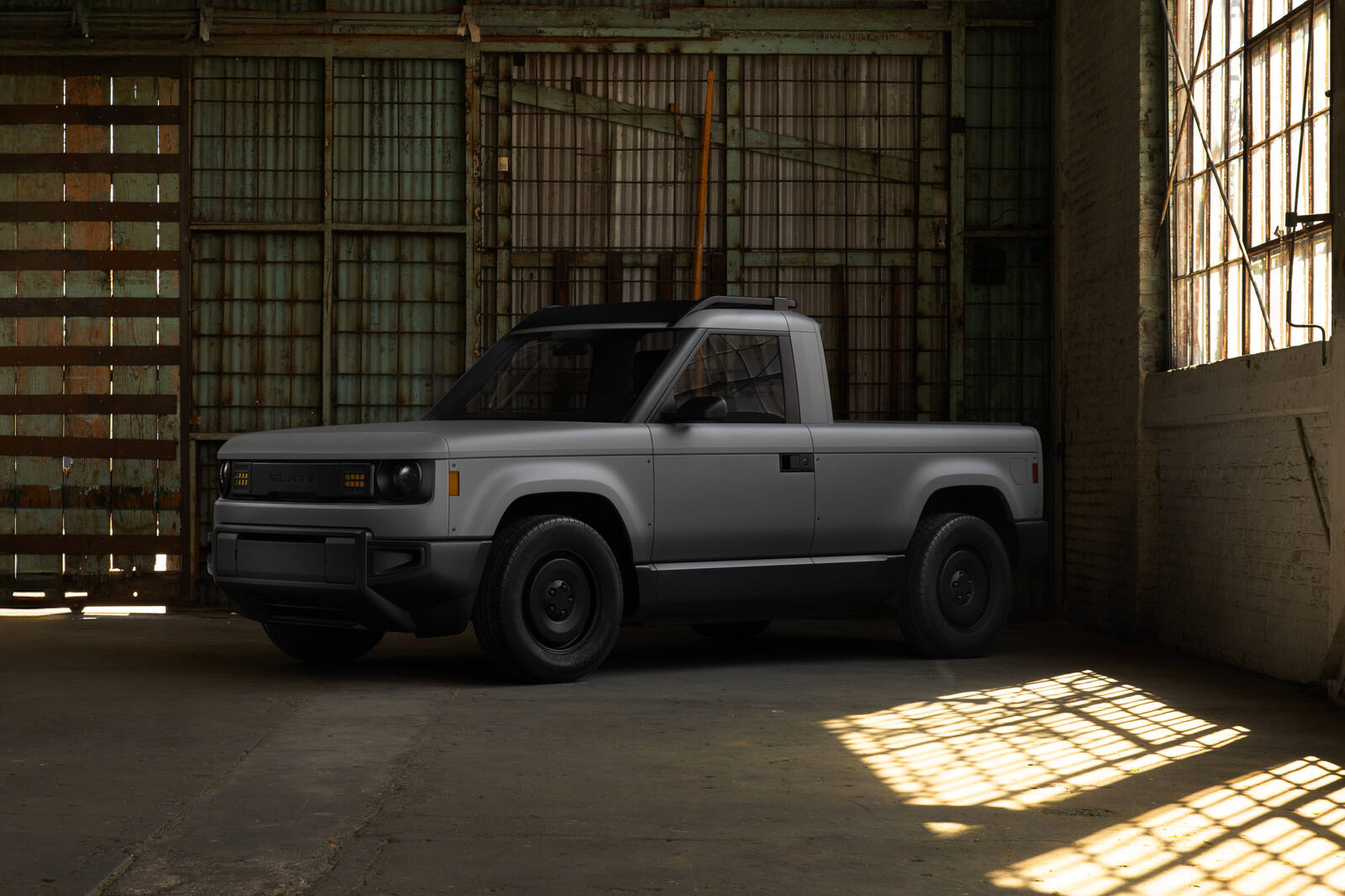
Truck Slate Truck
"...y hatred. Okay, so We finally have details on the slate truck the utopian was correct with their Like scoop tha..."
A “truck” is a vehicle with an open cargo area for carrying things. In the podcast, they’re talking about a particular truck and its details, but the exact model name isn’t given in the snippet you shared. The main idea is that the episode is discussing a truck specifically.
“Truck” in this context refers to a specific truck model being discussed as part of a broader topic, likely involving design details or a concept vehicle. Since the transcript doesn’t name the exact make/model, the key point is that the conversation is focusing on a particular truck’s characteristics. It’s included because the episode is talking about trucks as a theme.
heat pump
"It comes the slate the blank slate has no speakers no paint no infotainment no remote battery ... no door pockets no heat pump ... It does have heat and AC"
A heat pump is an EV heating system that can move heat around instead of just making it from electricity. That usually means it uses less energy than a resistance heater.
A heat pump is an HVAC system that moves heat rather than just generating it electrically. In EVs, it can warm the cabin more efficiently than a resistance heater, especially in moderate temperatures.
remote battery
"It comes the slate the blank slate has no speakers no paint no infotainment no remote battery ... Pre-conditioning"
The speaker is talking about features that let you manage the battery from far away, usually through an app. They’re saying the base model doesn’t have that.
“Remote battery” here appears to refer to remote battery-related functions (like charging control or battery preconditioning) via an app or connected service. The speaker lists it among features the base model lacks.
Pre-conditioning
"no remote battery ... Pre-conditioning no door pockets no heat pump"
Pre-conditioning means getting the car/battery ready before you leave—like warming it up or cooling it down while it’s still connected. That can make the first part of your drive more efficient.
Pre-conditioning is warming or cooling the battery and/or cabin before you drive, typically while the vehicle is plugged in. On EVs, it can improve efficiency and reduce battery stress when you start a trip.
resistance heater
"It does have heat and AC ... But the heat is generated with a resistance heater ... Which you might know as the least efficient way to create heat"
A resistance heater is basically an electric space-heater style system. It uses electricity to create heat, and in EVs it usually wastes more energy than a heat pump.
A resistance heater is an electric heater that makes heat by running current through a resistive element. In EVs, it’s often less efficient than a heat pump because it directly converts electricity to heat without extracting extra heat from the environment.
crank windows
"also also crank windows ... Not an option. They are mandatory no matter how much money you spend"
Crank windows are windows you roll up and down by hand. The speaker is saying this truck uses manual windows instead of electric ones.
Crank windows are manually operated side windows using a hand crank instead of power motors. The speaker emphasizes they’re mandatory on this vehicle, implying a cost/complexity reduction compared with electric windows.
electric windows
"They just dropped the electric windows entirely for the truck"
Electric windows are the power windows you control with a button. The speaker is saying this vehicle doesn’t use them.
Electric windows are power-operated windows driven by electric motors and controlled by switches. The speaker contrasts them with crank windows and says electric windows were removed for the truck.

Jeep Wrangler
"Well, this is what silly right is like they they also offer like an off-road package that allows you to take the doors off and shit ... Did it a Jeep Wrangler?"
The Jeep Wrangler is a popular off-road SUV. It’s famous for having removable doors, and the speaker is comparing the truck’s removable-door idea to that Wrangler vibe.
The Jeep Wrangler is a rugged, off-road-focused SUV known for removable doors and an open-air driving experience. The speaker’s question suggests the Slate EV’s off-road package (removable doors) is being compared to Wrangler-style practicality.
63 kilowatt hour pack
"[667.4s] There is one battery. It's a 63 kilowatt hour pack that slate rates at 205 miles [673.1s] But hasn't gotten any PA rating for yet. EPA ratings are like the strictest in the world"
That “63 kilowatt hour” number is how big the EV battery is. Bigger battery usually means more potential range, though real-world range also depends on how efficiently the car uses energy.
A “63 kilowatt hour pack” is the size of the EV’s battery, measured in kilowatt-hours (kWh). Larger packs generally provide more total driving range, while the exact range depends on vehicle efficiency and how the battery is managed.
EPA ratings
"[673.1s] But hasn't gotten any PA rating for yet. EPA ratings are like the strictest in the world [679.3s] and generally speaking"
EPA ratings are the government’s standardized test results for things like EV range. They’re meant to be a fair comparison between cars, and the speaker is saying they’re stricter than what some companies claim.
EPA ratings are official U.S. estimates of EV range and efficiency produced under standardized test procedures. The speaker argues that EPA testing is “the strictest in the world,” and contrasts it with how some companies may present more optimistic numbers.
regen
"[683.3s] Like there are some car companies that predict their batteries like I remember BMW with the i7 was like [689.4s] Oh, we think it'll be good for X and the EPA rating was actually better because it was very good at regen"
“Regen” means the car recovers energy when you slow down. Instead of wasting all that energy as heat, it sends some back to the battery.
“Regen” is short for regenerative braking, where the electric motor slows the car and converts some of that energy back into the battery. The speaker mentions BMW’s i7 as an example where regen performance helped it achieve better-than-expected EPA results.
state of charge
"[723.0s] That's 10 to 80 percent state of charge in about 30 minutes. Yeah, which is not [727.8s] It's not it's fine, but I it's not slow, but it's not fast. No, it's and okay charging"
State of charge is just how full the battery is, usually shown as a percent. Charging can be faster or slower depending on whether the battery is near empty or near full.
State of charge (SoC) is the battery’s current charge level, usually expressed as a percentage (e.g., 10% to 80%). Charging speed often depends on SoC because batteries typically accept power best at certain charge ranges.

Hyundai Ioniq
"...'s like the bad chargers that I settle for on the Ioniq Well and see so this is what's interesting so ori..."
The Hyundai Ioniq is a compact car designed to be more efficient than a typical gas-only car. Depending on the version, it can use electricity and/or a hybrid system. The conversation mentions it as an example of an electrified option.
The Hyundai Ioniq is a family of compact cars offered in electrified forms, including hybrid and plug-in hybrid versions (and in some markets, fully electric). It’s brought up in conversations about choosing an efficient vehicle and comparing different “electric/eco” options. In your excerpt, it sounds like the Ioniq is being referenced in the context of settling for a particular choice.
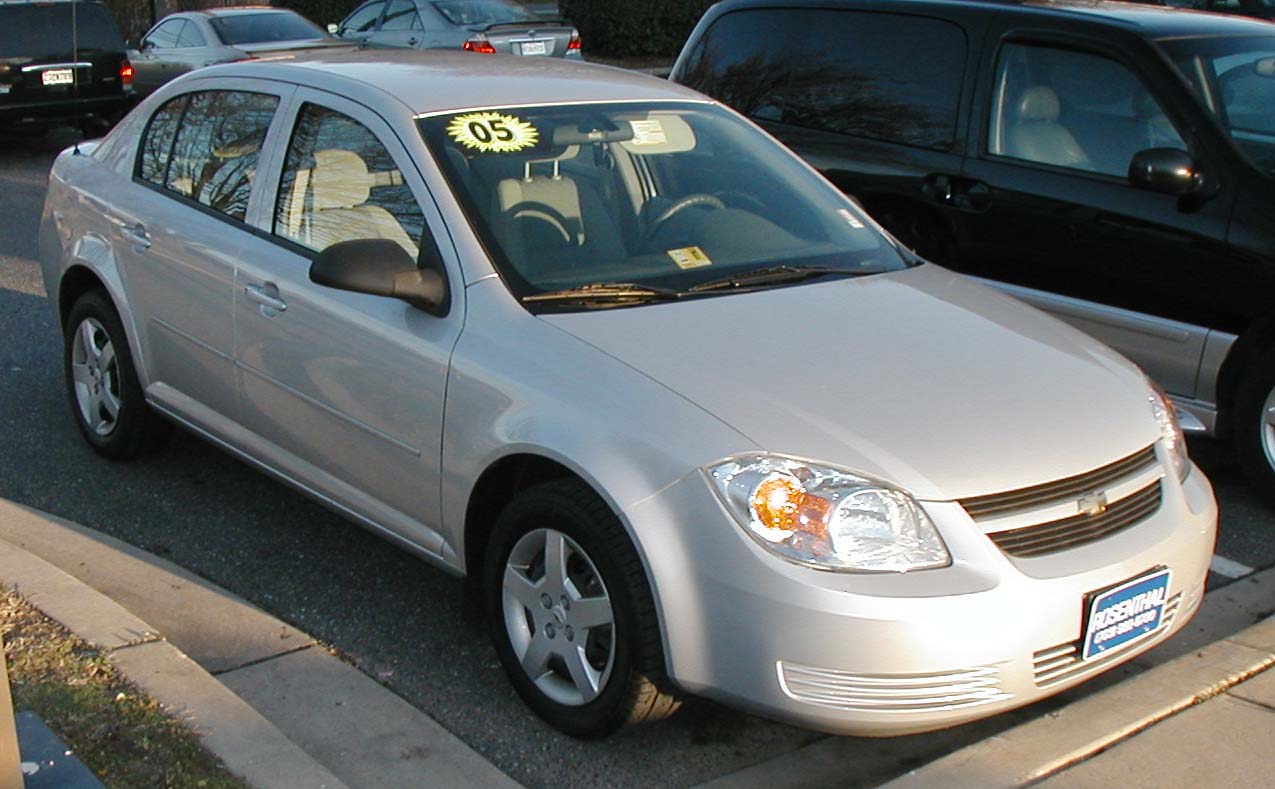
Chevrolet Cobalt
"...unced They were going to go with nickel manganese cobalt batteries NMC batteries which are more expensive ..."
The Chevrolet Cobalt is a compact car. In the podcast snippet, it’s mentioned in connection with battery technology and battery materials. The key point is that the conversation is discussing how batteries are made or chosen.
The Chevrolet Cobalt is a compact car that comes up in discussions about engineering and powertrain choices. In your excerpt, it’s tied to a conversation about battery materials—specifically nickel manganese cobalt (NMC) batteries—suggesting the topic is electrification or battery chemistry. That’s why it’s mentioned alongside technical details.
nickel manganese cobalt batteries
"[748.9s] Well and see so this is what's interesting so originally when the slate truck was announced [754.2s] They were going to go with nickel manganese cobalt batteries [757.6s] NMC batteries which are more expensive and generally speaking allow for"
NMC batteries are one type of EV battery chemistry. The speaker is saying they can be more expensive, but they may allow faster charging compared with other battery types.
Nickel manganese cobalt (NMC) batteries are a common lithium-ion battery chemistry. The speaker notes that NMC packs are typically more expensive but can support higher charging speeds, especially when paired with the right electrical architecture.
800 volt architecture
"[757.6s] NMC batteries which are more expensive and generally speaking allow for [763.3s] higher charging speeds, especially when paired with an 800 volt architecture and [768.8s] the idea behind this was that they were trying to comply with the"
“800 volt architecture” means the car’s electrical system runs at a higher voltage. Higher voltage can help the car accept faster charging because it can move power more efficiently.
An 800 volt architecture is an EV electrical system design that uses a higher voltage to reduce current for the same power. That can enable faster charging and more efficient power transfer, especially with compatible charging equipment.
$7,500 tax credit
"Basically the rare earth metals ban that was written into the language of the biden era $7,500 tax credit you couldn't use"
This is a U.S. government discount for buying an EV. Whether you can get it depends on rules about the car and its battery.
This is a U.S. EV incentive amount that can be reduced or made unavailable depending on eligibility rules. The speaker connects it to battery-material sourcing restrictions, explaining how policy can change which EVs/batteries qualify.
rare earth metals ban
"Basically the rare earth metals ban that was written into the language of the biden era $7,500 tax credit you couldn't use"
It’s a government rule that restricts certain battery materials. If the materials come from certain places, they may not count for the EV money you can get.
This refers to a policy restriction that limits which battery materials qualify for incentives. In practice, it targets supply chains for critical minerals used in EV batteries, affecting which battery chemistries and sources can be used to claim tax credits.
NMC batteries
"Metals that were from countries, we don't like namely China and NMC batteries which despite the fact they cost more"
NMC is a type of EV battery. It uses materials like nickel, manganese, and cobalt, and that supply chain can affect cost and eligibility for incentives.
NMC stands for a nickel-manganese-cobalt battery chemistry. It’s commonly used in EVs because it can deliver good energy density, but it depends on minerals like cobalt and nickel that come from complex global supply chains.
lithium-iron phosphate battery
"And so they swapped that plan as soon as the $7,500 tax credit was gone And they went with a lithium-iron phosphate battery, which is less energy dense and cheaper"
LFP is a type of EV battery. It’s usually cheaper and can be more robust, but it may not provide as much range for the same size battery and can be weaker at very fast charging.
A lithium-iron phosphate (LFP) battery is an EV battery chemistry that trades some energy density for lower cost and often improved durability. The speaker notes it can be less effective for fast charging and that it affects how much range the vehicle can fit into the same battery tray.
energy dense
"And they went with a lithium-iron phosphate battery, which is less energy dense and cheaper"
Energy density is how much “battery power” you can fit into a certain size or weight. If it’s lower, you usually need more battery to go the same distance.
Energy density describes how much electrical energy a battery can store for a given weight or volume. Lower energy density means you typically need a larger/heavier battery to achieve the same range.
fast charging
"But generally isn't like as good at fast charging and all that kind of stuff"
Fast charging is when you charge an EV quickly at a high-power charger. Not every battery type and car setup can take charge at the same speed.
Fast charging refers to charging an EV at higher power levels to reduce time spent at a charger. Battery chemistry and the vehicle’s charging system can limit how quickly a pack can accept charge.
800 volt batteries
"And they were never going to make an 800 volt batteries like charging system electric architecture, whatever you want to call it"
“800-volt” is about the car’s electrical system voltage. Higher voltage can help the car charge faster when using the right chargers, but it costs more to design and build.
An 800-volt EV architecture uses a higher-voltage electrical system to improve charging efficiency and reduce charging times (especially with compatible high-power chargers). The speaker suggests the vehicle can’t realistically be built with an 800-volt charging setup at that price point.
charging system electric architecture
"And they were never going to make an 800 volt batteries like charging system electric architecture, whatever you want to call it"
This is basically how the EV’s high-voltage electrical parts are designed together. That design affects charging speed and cost.
This phrase refers to the overall EV electrical design—how the high-voltage system is laid out, including voltage level and how power flows for charging and driving. It matters because it determines how well the car can accept fast charging and how expensive the system is.
battery tray
"There was a video they did on this the less energy dense 205 mile rated, you know, LFC pack fills the entire battery tray"
The battery tray is the spot in the car where the battery pack sits. If that space is limited, you can’t easily fit a bigger battery for more range.
The battery tray is the structural area in an EV chassis where the battery pack is mounted. Its physical size limits how large a battery pack can be, which directly impacts range and packaging choices.
range anxiety
"Now this is where I think things get interesting right because like on the face of it Range anxiety for people who live in cities isn't like a super real thing"
Range anxiety is worrying you won’t have enough battery to finish your trip. It’s especially a concern when you’re using the car in ways that drain the battery faster.
Range anxiety is the fear of running out of battery before reaching a destination or charger. The speaker argues it’s less of an issue for city drivers, but more relevant for EV pickup buyers because of how towing affects real-world range.
towing
"I would argue that it's probably a slightly more concerning for electric pickup truck buyers because towing Which this can tow like 2,000 pounds towing Kills your range instantly."
Towing means pulling a trailer. It makes the vehicle work harder, so an EV’s battery gets used up faster and you’ll go fewer miles.
Towing is pulling a trailer or load behind a vehicle, which significantly increases aerodynamic drag and rolling resistance. For EVs, that extra load can reduce range dramatically compared to non-towing driving.

Chevy Bolt
"Which is I would argue a much better car. I have Convinced people to buy them and I know that we have our listener who is mad at Marriabara Justifiably so but I still think the bolt is like a good EV"
The Chevy Bolt is an all-electric car that was popular because it was relatively affordable and usable for everyday driving. The host is defending it and saying GM ended it anyway.
The Chevrolet Bolt EV is a compact all-electric hatchback known for being one of the more affordable EVs with practical daily range. The host argues it’s a “much better car” than people give it credit for, and then explains GM’s decision to end it quickly.

Chevrolet Blazer EV
"Relatively speaking which is why GM had to kill it as fast as possible because they were like oh shit Hurry we have to crank the blazer EV production all the way to maximum"
The Chevy Blazer EV is an all-electric version of the Blazer nameplate. Here, the host is saying GM shifted focus to making more of this EV after the earlier Bolt program.
The Chevrolet Blazer EV is GM’s electric SUV/crossover that’s positioned as a mainstream EV with higher production priority. In this segment, the host contrasts it with the Bolt and frames it as the replacement GM pushed harder after the Bolt’s end.
EPA rated range
"But like that car has 262 miles of EPA rated range And it supports 150 kilowatt charging speeds"
EPA rated range is the official mileage estimate for an EV from standardized testing. Your real range can be different in everyday driving, but it’s still useful for comparing cars.
EPA rated range is the estimated distance an EV can travel on a full charge based on standardized U.S. testing by the Environmental Protection Agency. It’s a consistent way to compare EVs, but real-world range can be lower depending on speed, weather, and driving style.
150 kilowatt charging speeds
"And it supports 150 kilowatt charging speeds which are considered dog shit slow when people review the bolt just for the record"
Charging speed tells you how fast the car can take electricity from a fast charger. Higher numbers usually mean faster charging, and the host is saying 150 kW isn’t as impressive as some EVs.
Charging speed in kilowatts (kW) indicates how much power the EV can accept from a fast charger, which strongly affects how quickly you can add range. The host notes 150 kW is considered slow compared with higher-charging EVs, especially when reviewers focus on charging performance.
infotainment
"It has a electric windows air conditioning Infotainment"
Infotainment is the car’s main screen and electronics for things like music, maps, and phone features. It’s basically the dashboard entertainment and information system.
Infotainment is the car’s integrated system for media and information—typically the touchscreen, navigation, audio controls, and smartphone connectivity. In EVs, it often also shows charging status and energy usage.
polycarbonate
"It has what I like to call materials that are not polycarbonate. I yeah Is this is this where I could start putting my cards down where I was just I wanted to really like this thing"
Polycarbonate is a common plastic. The host is saying the car uses other materials instead, which they associate with a nicer interior.
Polycarbonate is a type of plastic used in some car interior and exterior parts because it’s lightweight and impact-resistant. The host’s point is that this vehicle uses different materials instead of polycarbonate, implying a more premium or durable feel.
cruise control
"It had one punitive cost cutting feature which is that you couldn't get cruise control in the base truck It took 150 bucks to do that at home and and like add cruise control to an excel annoying but doable"
Cruise control is a feature that lets the car hold a steady speed for you. Instead of pressing the gas the whole time, you set the speed once and the car maintains it.
Cruise control is a driver-assistance feature that maintains a set speed without you keeping your foot on the accelerator. The host calls out that the base Ford Maverick lacked it, making it a notable “cost-cutting” omission.

Lotus Excel
"...hat at home and and like add cruise control to an excel annoying but doable and the interior was like inc..."
The Lotus Excel is a sports car designed for comfortable driving over longer distances. People talk about it because it can be more “everyday” than some other sports cars. The podcast mentions it in the context of features you can add and what the inside is like.
The Lotus Excel is a grand touring (GT) car from Lotus, aimed at combining performance with longer-distance comfort. It’s often discussed among enthusiasts because it’s a more practical, usable Lotus compared with some of the brand’s more track-focused models. In your excerpt, it’s referenced in terms of adding features like cruise control and talking about the interior.
gauge cluster
"Like I if they had not put a touchscreen in this that's fine But the thing is is like the gauge cluster was like pleasant to look at the dash was still like thoughtfully textured"
The gauge cluster is the set of dials/screens behind the steering wheel. It’s where you see important stuff like your speed while driving.
The gauge cluster is the instrument panel behind the steering wheel that displays key driving information like speed and engine/vehicle status. The host contrasts it with the infotainment screen, saying the cluster looked pleasant even if the touchscreen approach was questionable.
touchscreen
"Like I if they had not put a touchscreen in this that's fine But the thing is is like the gauge cluster was like pleasant to look at the dash was still like thoughtfully textured"
A touchscreen is the screen you tap to control things in the car, like menus and settings. The speaker is saying the touchscreen they experienced didn’t feel well-made.
A touchscreen is a display that you interact with directly using your fingers, typically for infotainment and vehicle settings. The host argues that adding a touchscreen can be fine in principle, but in this case the screen and controls felt cheap and poorly designed.
door pockets
"Materials on it, you know, they had like door pockets in the doors that were designed for like a nail gene 1236.8s] You know, it wasn't like"
Door pockets are little storage bins built into the inside of the car door. The host is talking about how the truck’s interior details feel designed for a specific kind of buyer.
Door pockets are storage compartments built into the inside of a car door, typically for small items like bottles, maps, or personal accessories. In this segment, the host is pointing out how even small interior features are part of the overall “careful design” that can vary by trim or target buyer.
trim level
"Like you still got the same level of like careful design no matter what kind of trim level you bought because the issue 1245.4s] Like they knew they were only going to sell excels to basically like really cheap people or fleets"
A trim level is the “version” of a car you buy, where different versions include different features. The host is saying the design philosophy stays the same even when the trim changes.
A trim level is a specific configuration of a model that bundles equipment and features—like interior materials, tech, and sometimes powertrain options. The host argues that the vehicle’s design choices (including interior feel) are consistent across trims, even if the marketing targets different buyers.

Ioniq five
"Like a geo metro has a comparable 1296.3s] I I'm writing. I'm trying to write my uh Ioniq five more like long form thoughts for the for the blog we do"
The Hyundai Ioniq 5 is an electric SUV/crossover with a modern, tech-heavy cabin. The host is using it as an example of how far car interiors have come.
The Hyundai Ioniq 5 is a modern EV crossover known for its tech-forward interior and design. The host contrasts it with older interior design and suggests that car cabins have improved over the last couple decades, using the Ioniq 5 as a reference point.

1994 Toyota pickup
"Was a 1994 toyota pickup pre-tacoma pre-t100. This was just the the pickup It was a short cab short bed four-wheel drive five speed manual crank windows"
This is a 1994 Toyota pickup truck. The host is talking about a version with four-wheel drive and a manual transmission, which usually makes it feel more “old-school” and straightforward to drive and maintain.
The 1994 Toyota Pickup is a late-90s-era compact pickup known for simple, durable truck basics and easy mechanical service. In this segment, the host specifically describes a short-cab/short-bed, four-wheel-drive, and a five-speed manual—details that matter because they define how it drives and what ownership is like.
four-wheel drive
"It was a short cab short bed four-wheel drive five speed manual crank windows"
Four-wheel drive means the truck can send power to all four wheels. That helps it grip better on snow, mud, or uneven ground compared with two-wheel drive.
Four-wheel drive (4WD) is a drivetrain setup where power can be sent to all four wheels, improving traction on slippery roads and off-road surfaces. On pickups, it’s often paired with higher ground clearance and more capable tires for rougher conditions.
five speed manual
"four-wheel drive five speed manual crank windows"
A five-speed manual means you shift gears yourself using a clutch. It’s typically more hands-on than an automatic, and some people find it simpler to understand and maintain.
A five-speed manual transmission uses a clutch and gear lever, giving the driver direct control over gear selection. Compared with automatics, manuals can feel more engaging and can be easier to repair in some cases because the drivetrain is simpler.
battery powered truck
"Um, I don't know where I would have charged a truck And I drove to columbus for that really good sex from cleveland, ohio It would have been very difficult for me to make a battery powered truck"
A battery-powered truck refers to an electric truck that relies on a large battery pack for propulsion rather than a gasoline engine. The host’s point is about real-world charging constraints—especially for apartment dwellers without easy access to home charging.
3m vinyl
"You can't use traditional 3m vinyl because it supposedly won't stick to the polycarbonate finish that they're putting on the trucks"
3M vinyl is a type of wrap/sticker film used to cover a car. The point here is that this specific kind of vinyl may not stick properly to the truck’s plastic outer layer.
3M vinyl refers to adhesive vinyl wrap material made by 3M, commonly used to change a car’s color or add graphics. The speaker says Slate’s polycarbonate body panels don’t accept traditional 3M vinyl well, so normal wrap products may fail to adhere.
wrap
"Because again, they're all just plastic body panels. So if you want color Not only do you have to wrap it every couple of years"
A wrap is a vinyl film you put on a car to change how it looks. Instead of painting, you cover the outside with film—though in this case it may need replacing more often.
A car wrap is a vinyl film applied over the exterior to change color or add graphics without repainting. Here it’s central to the discussion because Slate’s plastic body panels require specific wrap materials and frequent re-wrapping.
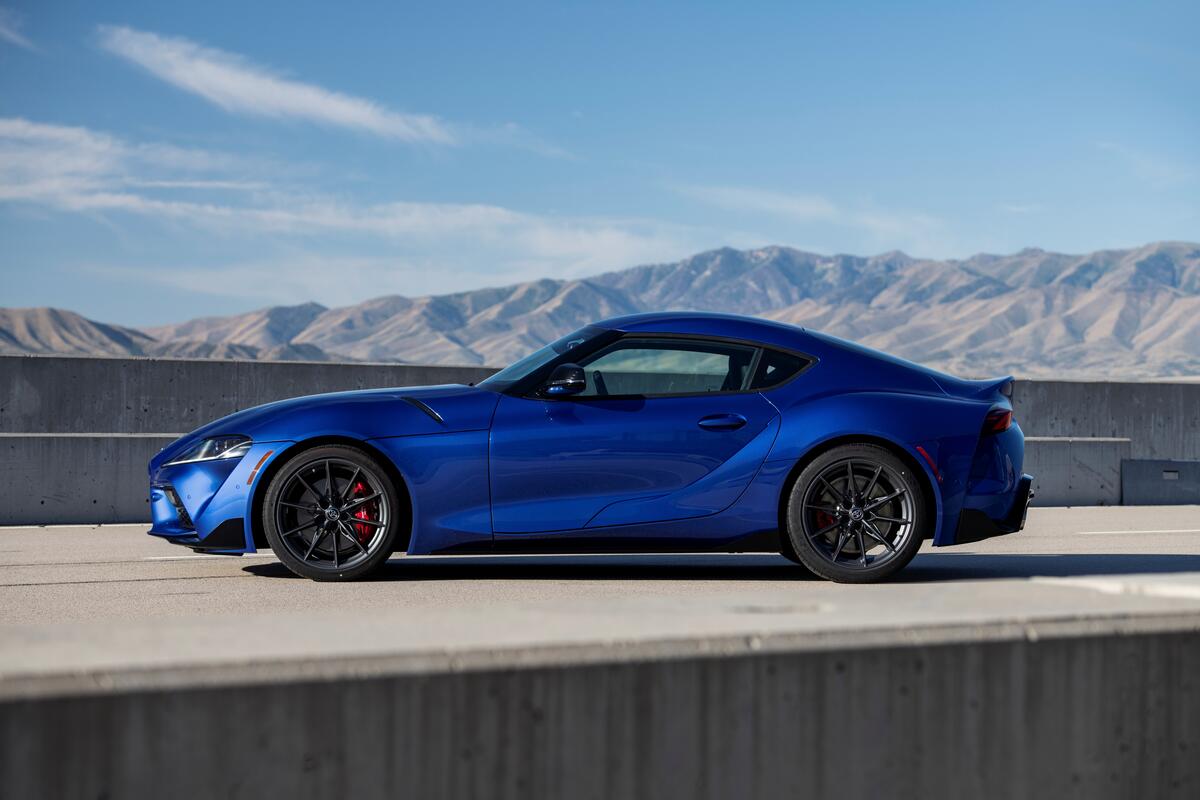
1988 Toyota Supra
"Um, I owned a 1988 Toyota Supra, which I wrapped half in black. It was otherwise half red"
The Toyota Supra is a famous sports car. This one is a 1988 model, and the host is talking about customizing it with a wrap—basically changing its look with vinyl film.
The Toyota Supra is a long-running sports-car nameplate known for strong performance and a big enthusiast following. This specific mention is a 1988 Supra, which is part of the A60 generation era and is notable here because the host describes wrapping it with a two-tone scheme and an “ad van” style livery.
ad van livery
"I did like an ad van livery thing on it. Um, that one's still wearing the ad van livery."
An “ad van” livery is a flashy graphic design meant to look like a vehicle advertisement. It’s basically a themed wrap/paint job with attention-grabbing branding-style visuals.
“Ad van livery” refers to a promotional, advertisement-style paint/wrap design—often bold graphics meant to look like a moving billboard. The host uses it as a description of the specific wrap pattern they put on the Supra.
paint subscription
"they outsourced the labor of making the car finished [1719.8s] To you and also made you pay a subscription fee for your paint and that to me feels like"
It sounds like the company wants you to keep paying after you buy the truck to get the paint/finish handled. Instead of one-time pricing, you pay a recurring fee for that service.
This refers to a business model where you pay ongoing fees to receive or manage the vehicle’s paint/finish services rather than paying once at purchase. In practice, it’s an example of “pay-to-unlock” style monetization applied to vehicle customization or completion.
over-the-air updates
"if you want over-the-air updates [1806.4s] You have to sync your phone to the truck if you didn't pay for that to get them through your personal device"
Over-the-air updates are software updates that get sent to the truck wirelessly. You don’t have to go to a shop to install them.
Over-the-air (OTA) updates are software updates delivered wirelessly to a vehicle, usually over cellular or Wi‑Fi. They let the car improve features, fix bugs, or add functions without visiting a dealer.
connectivity
"it doesn't come with a [1801.2s] Bowton connectivity [1803.9s] Standard so if you want over-the-air updates"
Here, “connectivity” means whether the truck can connect to the internet on its own. If it doesn’t include it by default, you may have to use your phone instead.
In this context, “connectivity” means the truck’s built-in ability to access the internet and communicate with services (often via a cellular modem). The speaker is contrasting having standard built-in connectivity versus needing to rely on a phone.
phone sync
"You have to so that's the other thing, right? [1801.2s] It's like it doesn't come with a [1802.1s] Bowton connectivity [1803.9s] Standard so if you want over-the-air updates [1806.4s] You have to sync your phone to the truck if you didn't pay for that to get them through your personal device"
Phone sync here means pairing the truck with a smartphone to enable functions like receiving software updates. It implies the truck’s connectivity features may be gated behind subscriptions or require your personal device for access.
telematics module
"You can get the little slate telemot telematics module installed and then it can get over the air updates"
A telematics module is a gadget inside the vehicle that helps it connect to the internet and send/receive data. It’s often what powers connected features like remote updates.
A telematics module is an onboard device that enables connected-car features like remote diagnostics, location services, and wireless data transfer. In this context, it’s what allows the truck to receive OTA updates without relying solely on a phone connection.
JBL
"I hope you I enjoy spending 80 dollars on like a jbl ... they'll sell you a speaker holder"
JBL is a well-known brand for speakers. The host is talking about paying extra for better audio hardware for the truck.
JBL is an audio brand known for car and home speakers and speaker systems. In this segment, it’s mentioned in the context of spending money on speakers to improve cabin sound quality.

Ford Maverick
"When when ford did the maverick one of the things I really loved is that they emphasized ... we're gonna put a bunch of downloadable stls on our website ... But at 20 grand it was I was like this is insane."
The Ford Maverick is a smaller pickup truck that’s notable for being able to come with a hybrid setup for good fuel efficiency. The host brings it up because Ford encouraged owners to customize it using downloadable files.
The Ford Maverick is a compact pickup known for offering a very efficient hybrid powertrain option. In this segment, it’s used as an example of Ford supporting owner customization with downloadable 3D-print files, which made the truck feel especially flexible for DIY-minded buyers.
3d print
"we're gonna put a bunch of downloadable stls on our website ... so if maverick owners want to 3d print themselves extra shit for their trucks"
3D printing is a way to make a real plastic part from a computer design. The idea mentioned is that owners could print their own add-ons for the truck using files provided by the manufacturer.
3D printing is making physical parts by building them layer-by-layer from a digital file. Here, the speaker is describing downloadable STL files that owners could print to add accessories or modify interior storage in a truck.
super efficient hybrid system
"in a super efficient hybrid system ... completely like very well engineered interior"
A hybrid system uses both a gas engine and an electric motor. The goal is to use less fuel than a regular gas-only truck.
A hybrid system combines an internal-combustion engine with an electric motor to improve efficiency and reduce fuel use. The speaker is praising the Maverick’s hybrid setup as well-engineered and especially cost-effective for the performance you get.
nickel and dime
"Customize yeah, but instead it's like hey, we're gonna nickel and dime you at every possible opportunity and here's the thing right?"
It means the company keeps adding lots of small extra charges. Instead of one clear price, you end up paying for many individual add-ons.
In car sales, “nickel and dime” describes charging small, separate fees for lots of individual options or services. It’s a way to monetize features that could have been bundled into the base price, making the total cost feel like it keeps rising.
Jeff Bezos
"Their amazon gray finished jeff bezos involved my my read on this has been for a while and I have to credit"
Jeff Bezos is being mentioned as a stand-in for the Amazon/tech-company vibe. The point is that the truck feels like it’s branded like a big corporate delivery vehicle.
Jeff Bezos is referenced here as a shorthand for “Amazon gray” branding and the idea of corporate/tech-style branding showing up on vehicles. The speaker is using his name to connect the truck’s look and marketing vibe to Amazon.
fleet vehicle
"It feels like a fleet vehicle Where you have stripped out every small joy that a person might experience inside while working their job"
A fleet vehicle is a work vehicle used by a company. The idea is that companies often make them cheaper and simpler, so they may feel less comfortable inside.
A “fleet vehicle” is a vehicle used by companies for repeated daily service (like delivery or work routes) rather than personal ownership. The speaker’s point is that fleet-spec vehicles are often configured to minimize cost and maximize throughput, which can mean fewer comfort features.
stereo
"And charge the money for it and they're just gonna sell it to other people because nobody wants to buy a car without a fucking stereo in it"
Here “stereo” means the car’s music system—radio and speakers. The point is that people expect it, and without it the car feels incomplete.
In this context, “stereo” means the in-car audio system (radio and speakers) that many buyers consider a basic comfort feature. The speaker argues that removing it makes the vehicle feel stripped down and less desirable.
Mini Cooper
"I'm sorry. That was an issue and the original mini cooper in like 1960"
The Mini Cooper is a famous small British car. The host brings it up to make the point that people have wanted radios in cars for a long time.
The Mini Cooper is a classic British small car known for its compact packaging and strong enthusiast identity. Here it’s used as an example of how even decades ago people wanted radios/stereos in cars, and manufacturers sometimes treated them as optional or controversial.

EDV Rivian Vans
"... the things we have in seattle is we have all the rivian vans Um, oh like the the amazon like rivian. Yeah. Yea..."
EDV usually means an electric delivery van used for transporting packages. It’s designed for everyday delivery routes, with lots of stops. The podcast mentions it as part of a group of electric vans in use.
EDV is commonly used to refer to Amazon’s electric delivery vans, which are built for route-based logistics and frequent stop-and-go driving. In the podcast context, it’s mentioned alongside other electric van examples, emphasizing the presence of electric commercial vehicles. The discussion is likely about how these vans are used and what they represent in the EV space.

Dodge Charger
"...l, I hope you brought a speaker and a radio and a charger for it Hope you brought your AirPods fucker like ..."
The Dodge Charger is a car that’s designed to feel sporty and powerful. It’s a well-known model that people often associate with fast driving and a bold look. The conversation mentions it as a familiar car name.
The Dodge Charger is a performance-focused sedan (and historically a muscle-car icon) known for its powerful engines and aggressive styling. It’s frequently mentioned in pop culture and car conversations because it represents “big, loud, fast” driving. In the podcast context, it sounds like it’s being referenced as a recognizable car type.

Ford Mustang
"...e implementations What you do is like in the ford Mustang which is now a styling characteristic of them You..."
The Ford Mustang is a sports car made by Ford. It’s known for its classic look and for being offered in different performance versions. People often mention it because its design is easy to recognize.
The Ford Mustang is a long-running American sports car known for its distinctive styling and performance options. It’s significant because many design cues—like the overall “pony car” shape—have become recognizable over generations. That’s why it comes up when someone talks about styling characteristics and how the model’s identity carries forward.

Ford Ranchero
"...shot of the the the Ford what they might call the ranchero I guess that's that that's the rumor. Oh, yeah, a..."
The Ford Ranchero is an older Ford model that mixes a car and a pickup. It has a passenger-car feel but also includes a bed for carrying things. The conversation is mentioning it as a possible model name people talk about.
The Ford Ranchero is a classic “car-based pickup” from Ford’s lineup, known for combining passenger-car comfort with a pickup-style bed. It’s often discussed as a unique historical model because it doesn’t fit neatly into modern pickup categories. In the podcast context, it’s referenced as a rumor or a specific model people associate with the Ford name.

Ford F-150
"They sold that many f-150s in a single month in may yes, um Ha they sell so many more of them than you think they do"
The Ford F-150 is a very popular full-size pickup truck. The hosts are basically saying it sells in massive numbers, so it’s a good example of how common pickups are.
The Ford F-150 is Ford’s best-selling full-size pickup truck, and it’s often used as a benchmark for how mainstream pickups have become. When the hosts talk about how many F-150s Ford sells, they’re referencing the truck’s huge market presence.
kit car
"I just don't think they're going to be able to build that man. I mean granted. It doesn't look complicated to build It looks like a kit car It looks like a kid car."
A “kit car” is a car that’s made from a parts kit instead of being built as a complete factory vehicle. The host is saying the truck looks like it might feel cheaply assembled or less refined.
A “kit car” is a vehicle built from a kit, often with parts supplied for the builder to assemble rather than being produced like a fully integrated factory car. The host uses “kit car” as a comparison to suggest the truck’s design feels like it’s assembled from modular components rather than engineered for refinement.
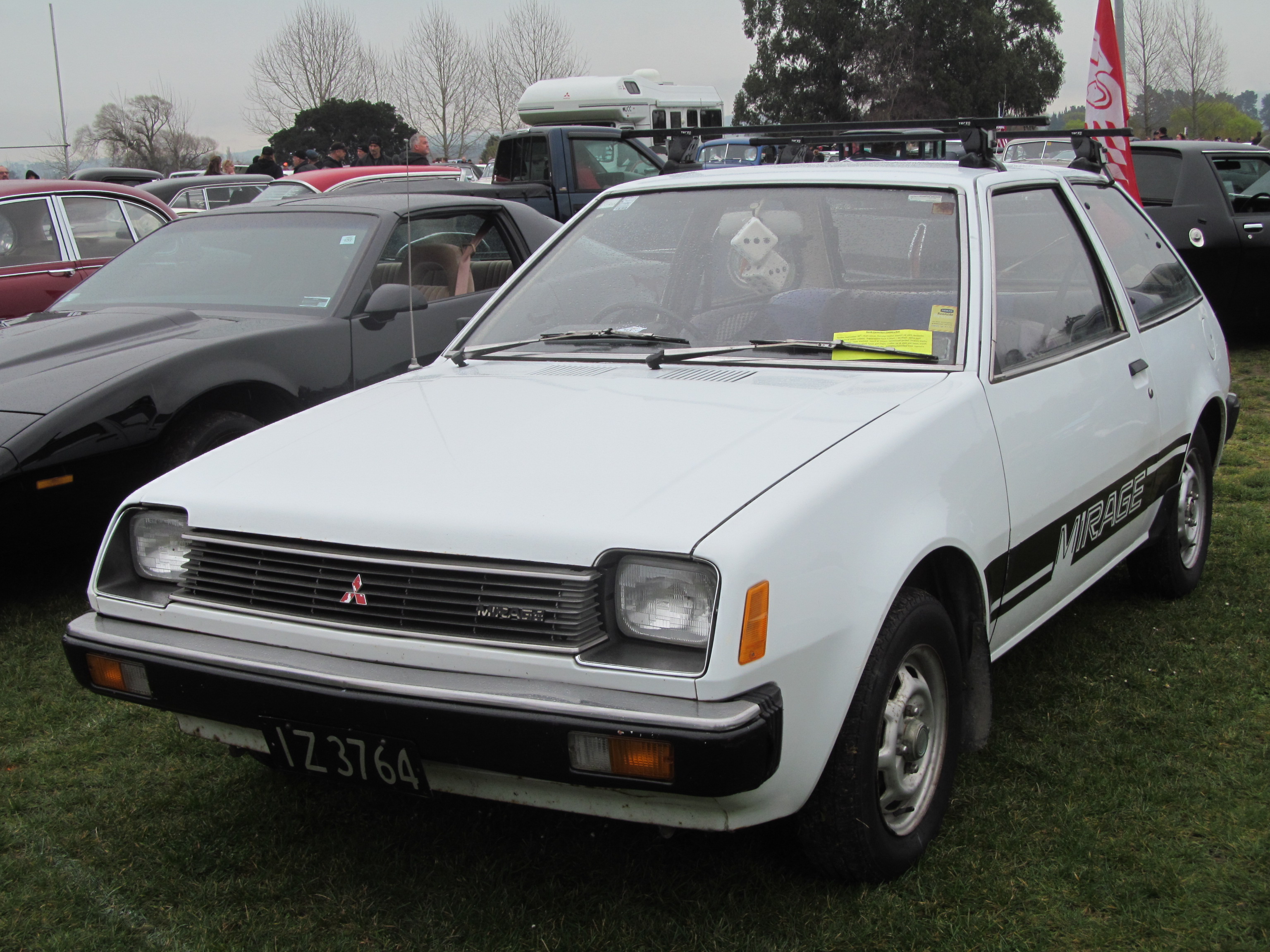
Mitsubishi Mirage
"Do you remember do you ever if you've ever driven a 90s Mitsubishi? Yeah, unfortunately my second car was a 92 Mirage"
The Mitsubishi Mirage is a low-cost small car. The host is using it as an example of a car that felt cheaply built, with rattles and rough fit between parts.
The Mitsubishi Mirage is a compact car known for being budget-focused, and the host uses it as a real-world example of poor fit-and-finish. They describe rattling noises and a harsh, low-quality feel to illustrate their expectations for another vehicle’s build quality.
fit and finish
"So bad so rapidly because the fit and finish is clearly garbage and it has to be to make it so modular because and I just think that like it's it's it's not going to be a pleasant ownership experience"
“Fit and finish” means how tightly and neatly the car’s parts are put together. If it’s bad, you might hear rattles, feel gaps, or notice the interior doesn’t feel solid.
“Fit and finish” describes how well a vehicle’s parts are assembled and how cleanly surfaces, panels, and interior components line up and feel. In the segment, the host argues that modular construction can lead to worse fit and finish, which they expect to show up as rattles and a less refined feel.

Ineos Grenadier
"It it feels it. Yeah the the I think when you said the inios grenadier is like It feels like the poor man's grenadier in some ways because it just feels"
The Ineos Grenadier is a tough off-road SUV designed for rough terrain. The host is comparing something else to it to say it feels similar in spirit, but maybe cheaper or less polished.
The Ineos Grenadier is a rugged, off-road-focused SUV built with a traditional, durable approach aimed at serious trail use. The host compares another vehicle’s feel to the Grenadier, implying it shares the “tough” vibe but may be less refined or more budget-oriented.

Ford Ranger
"...derstand why you wouldn't just go buy a used ford ranger for like 7000 dollars And then pocket the money o..."
The Ford Ranger is a medium-sized pickup truck. It’s meant to be easier to handle and cheaper than the biggest trucks, while still being able to haul and tow. The discussion is about whether it makes sense to buy one used.
The Ford Ranger is a mid-size pickup truck that’s typically aimed at buyers who want truck capability without the size and cost of a full-size pickup. It can come up in conversations about value—especially when comparing buying new versus buying used. In the context you provided, it’s being referenced as an example of a used truck option that can be relatively affordable.
charging centers
"[2704.6s] They'll probably put charging centers inside a lot of their warehouses to like use these for local deliveries [2709.8s] Um, and that will sustain them for a bit and then like I don't know three to five years from now"
Charging centers are places with EV chargers. The idea mentioned is to put chargers at warehouses so delivery vehicles can recharge easily for nearby routes.
Charging centers are locations equipped with EV chargers so vehicles can recharge between trips. Here, the speaker suggests putting charging centers inside warehouses to support local delivery routes.
local deliveries
"[2704.6s] They'll probably put charging centers inside a lot of their warehouses to like use these for local deliveries [2709.8s] Um, and that will sustain them for a bit and then like I don't know three to five years from now"
Local deliveries means transporting packages on shorter routes close to where they start. That can work well with EVs because charging can be handled more easily at nearby locations.
Local deliveries refers to short, repeated routes within a limited area, which can make EV logistics easier to plan. The speaker connects this to using warehouse charging centers to keep vehicles operating without long-distance charging stops.
Rivian R3
"[2733.2s] But I think the minute the r3 hits the market if they can actually get that below 40 [2742.8s] I think that a lot of people who would consider getting this fully loaded as an off-roader will instead go to an r3 [2748.4s] Which I don't even like how they do interior design, but at least a designer touched it"
The Rivian R3 is positioned as the model that could meaningfully shift buyer behavior, especially for people considering a fully loaded off-roader. The speaker’s argument hinges on whether Rivian can price the R3 under $40 (likely $40k), making it a more accessible alternative.
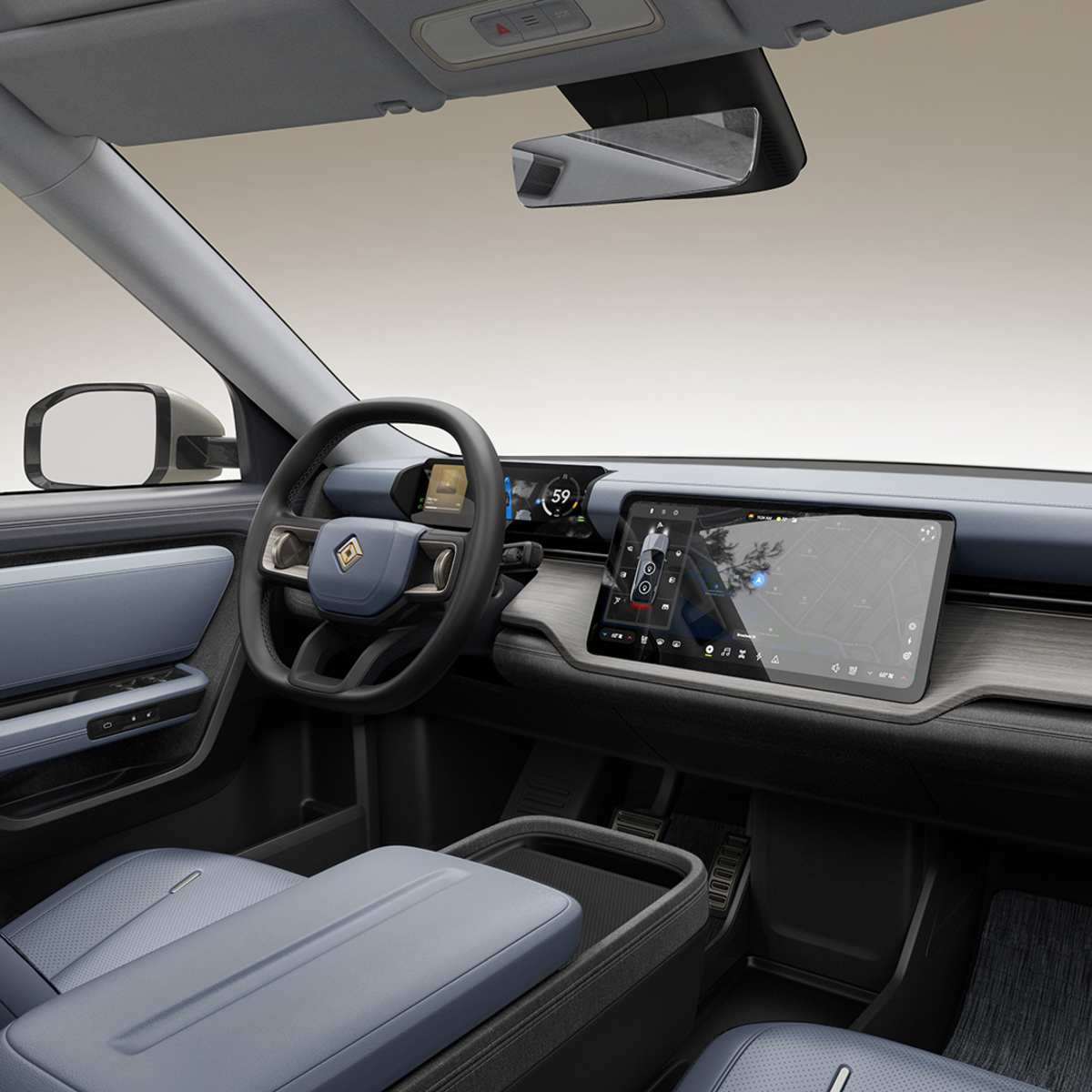
Rivian R2
"[2729.6s] But I think the minute the r2 and especially the r3 the r2 is on the market and it's doing okay [2733.2s] But I think the minute the r3 hits the market if they can actually get that below 40 [2738.4s] The minute the r3 hits the market if they can actually get that below 40"
Rivian R2 is a model that the speaker expects to come to market. They’re mainly talking about whether it will help Rivian compete, especially based on price and what kind of buyers it attracts.
The Rivian R2 is discussed as a future/next-step model that could help Rivian’s sales once it’s on the market. The key point here is pricing and positioning—how it might perform relative to other off-road-oriented EV options.
off-roader
"[2742.8s] I think that a lot of people who would consider getting this fully loaded as an off-roader will instead go to an r3 [2748.4s] Which I don't even like how they do interior design, but at least a designer touched it"
An off-roader is a vehicle meant for rough roads and trails, not just paved streets. The speaker is saying the R3 could appeal to people who were shopping for an EV that’s ready for that kind of driving.
An off-roader is a vehicle intended to handle rough terrain like dirt, rocks, mud, and uneven trails. In this segment, the speaker argues that a cheaper Rivian R3 could attract people who wanted a fully loaded off-road EV setup.
EV
"You're also they're competing with every used EV also at that price point"
EV just means an electric car. Instead of using gasoline, it runs on electricity stored in a battery.
EV stands for “electric vehicle,” meaning a car powered primarily by an electric motor and a battery rather than a gasoline engine. In pricing discussions, EVs are often compared based on how their battery technology and depreciation affect used-car values.
used EV depreciation
"Because while used EVs are going back up in price. It's like they're not going up that amount"
Used EV depreciation refers to how the price of electric vehicles changes after they’re sold new. The speaker is arguing that used EV prices are rising, but not rising as much as the new price being discussed.

BMW i3s
"Although I still would be mad at them for $18,000. I'm getting two BMW i3s and I'm I'm using them like roller skates to get around town."
The BMW i3s is a small electric car from BMW. The “i3s” version is the sportier take on the i3, meant to feel a bit more responsive and fun for city driving.
The BMW i3s is a sporty, compact electric hatchback with a focus on efficiency and quick urban driving. The “s” denotes the sportier i3 variant, typically tuned for sharper throttle response and handling feel compared with the standard i3.

Plymouth Prowler
"...ng them together I am turning one into a plymouth prowler style trunk that looks like the back half of the"
The Plymouth Prowler is a sports car with a very unusual, hot-rod-inspired look. People talk about it because it’s visually distinctive. In the podcast, it’s mentioned as a style reference for a custom trunk idea.
The Plymouth Prowler is a distinctive retro-styled sports car known for its hot-rod look and unusual design. It’s often discussed because it stands out visually and has a strong “period” identity. In your excerpt, it’s referenced as a style inspiration for modifying a trunk design.

Ford F-150 Lightning
"...ton monument lit up with like Neon freedom 250 as lightning struck dc behind it with just silhouetted people ..."
The Ford F-150 Lightning is an electric pickup truck. It uses electricity instead of a traditional gas engine. The podcast mentions it as the “Lightning” model name in a dramatic description.
The Ford F-150 Lightning is an electric version of the F-150 pickup, combining the familiar truck shape with an EV powertrain. It’s frequently discussed because it brings full-size truck capability into an all-electric format. In your excerpt, it’s referenced as part of a visual or event description using “Lightning” imagery.
12 cilindry
"For an extra 200 000 dollars premium over the the regular Ferrari, uh 12 cilindry They'll sell you a fake real manual transmission"
“12 cilindry” means the engine has 12 cylinders. Engines with 12 cylinders are usually found in higher-end performance cars and are known for strong power and smooth operation.
“12 cilindry” is shorthand for a 12-cylinder engine configuration (a V12 or similar 12-cylinder layout). A 12-cylinder engine is typically associated with high-end performance and smoothness, and it’s a key part of why certain Ferraris are special.
manual transmission
"They'll sell you a fake real manual transmission Yeah, you know, no, it's less of an up and down and more of a uh forward backward side to side thing."
A manual transmission is the kind of car where you use a clutch and a gear stick to choose gears yourself. The hosts are hinting that Ferrari’s “manual” might be more complicated than a simple old-school stick shift.
A manual transmission is a gearbox controlled by the driver using a clutch pedal and gear lever, rather than an automatic system. The hosts are discussing Ferrari offering a “manual” experience as part of a special vehicle, implying it may not be a traditional, fully mechanical manual.
six speed
"The california is the california you could get a california with a six speed up until i think 09 And the take rate was so hilariously bad that they just stopped after that"
“Six-speed” means the car has six forward gears. That can help the engine stay in the right rev range for smoother acceleration and better drivability.
“Six-speed” refers to a manual gearbox with six forward gear ratios. More gears can help keep the engine in its power band across a wider range of speeds, though the real-world feel depends on gearing and shift design.
take rate
"And the take rate was so hilariously bad that they just stopped after that um If you if you are a listener of the show and you bought a california with a stick shift"
“Take rate” means how many people actually choose an option when they’re offered it. If almost nobody picks it, the company may stop offering it.
Take rate is the percentage of buyers who choose a particular option (like a manual gearbox) when it’s offered. A low take rate can lead manufacturers to discontinue that option because it’s not cost-effective to keep producing.

Ferrari California
"You want to talk about a thing that eats shit and hair? It's the fucking ferrari california Don't get me stir"
The Ferrari California is a Ferrari that’s meant to be more usable for everyday driving than the most hardcore Ferraris. The host is basically saying it wasn’t a great Ferrari and didn’t live up to the brand’s reputation.
The Ferrari California is a grand touring (GT) model from Ferrari that’s known for being a relatively approachable, front-engine V8 Ferrari with a convertible body style. In this segment, the host criticizes it as a bad-performing/poorly executed Ferrari compared to other models.

Ferrari Roma
"It's like the the roma the roma and the roma spider were the first like This is why people are so funny. It's like the luce."
The Ferrari Roma is a Ferrari with a V8 engine that’s meant to feel more normal to drive than the wildest Ferraris. The host brings it up while comparing different Ferraris and their reputations.
The Ferrari Roma is a front-engine, V8-powered Ferrari designed as a modern “everyday supercar” with a more understated shape than some of Ferrari’s more extreme models. Here, the host mentions it in the context of Ferrari’s lineup and how the Roma (and Roma Spider) fit into the brand’s recent direction.
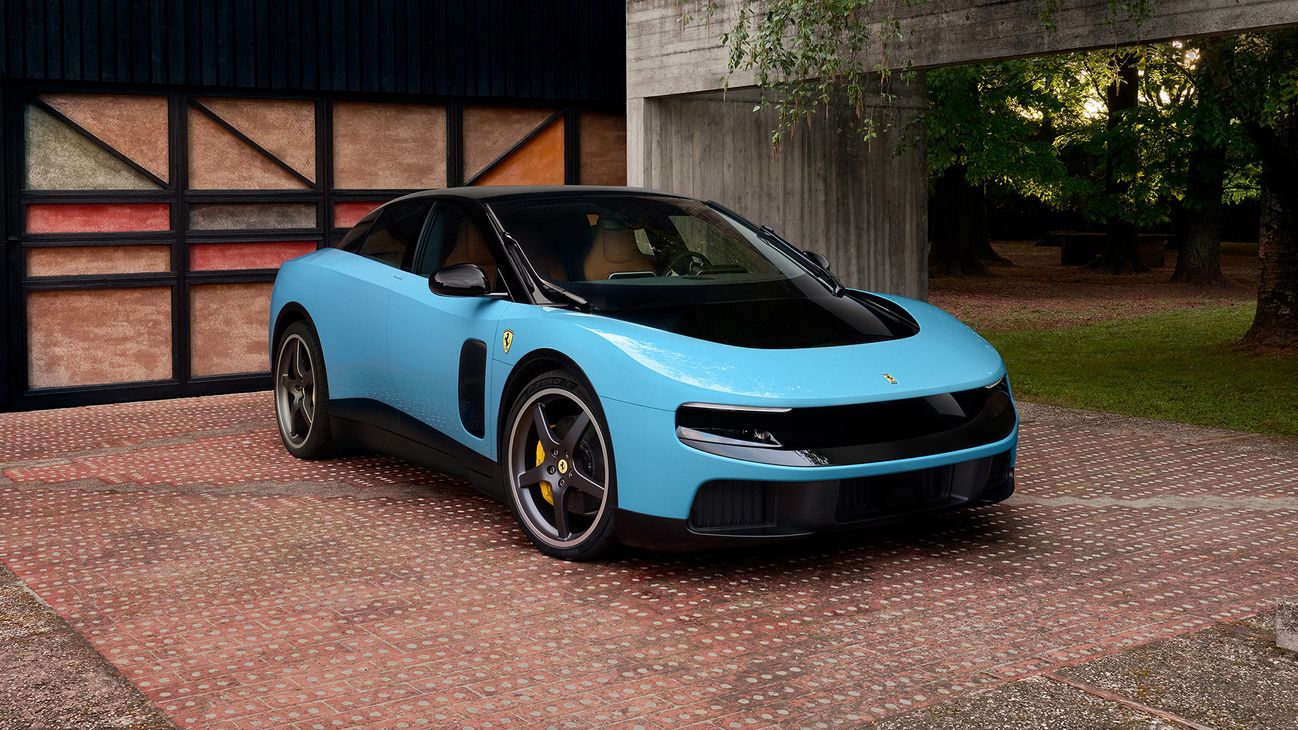
Ferrari Luce
"...ke This is why people are so funny. It's like the luce. They're like the luce is going to destroy ferrar..."
“Ferrari Luce” is a Ferrari name mentioned in the podcast. The snippet doesn’t explain what kind of car it is, so it’s hard to describe its exact purpose or features. If you provide more of the conversation, I can explain it more accurately.
“Ferrari Luce” appears to be a model name referenced in the podcast, but it’s not clear from the snippet whether it refers to a specific Ferrari vehicle or a nickname/concept. Because the transcript doesn’t provide details about what the car is, the safest takeaway is that it’s being discussed as a Ferrari-related name that people react to. If you share more context, the explanation can be made more precise.

Ferrari Portofino
"But turbo charged uh The portofino Still bad still a bad card."
The Ferrari Portofino is a Ferrari with a turbo V8 that’s built for comfortable driving, including as a convertible. The host is saying it didn’t turn out well compared to what people expect from Ferrari.
The Ferrari Portofino is a front-engine Ferrari grand tourer/convertible that uses a turbocharged V8 and is positioned as a more accessible Ferrari. The host criticizes it as still being “bad,” even after mentioning it in the same breath as other Ferrari models.

Aston Martin Vantage
"They made a bad drop top convertible as their entry level model until the roma And even then the roma i'm like i just think about tomatoes But like you know it at least was pretty they at least finally made it pretty and then they're like, oh It's like a v8 vantage, but it's just got the the horse on it instead of the astin martin wings cool"
The Aston Martin Vantage is Aston Martin’s main sports car. The host is comparing how it looks (and what badges/graphics it has) to a Ferrari, basically talking about styling and brand identity.
The Aston Martin Vantage is Aston Martin’s performance-focused sports car line, typically powered by a V8 and known for its distinctive styling and driving feel. In this segment, the host compares a Ferrari model’s badge/branding to the Vantage’s “wings” design cues, implying a visual similarity or branding contrast.
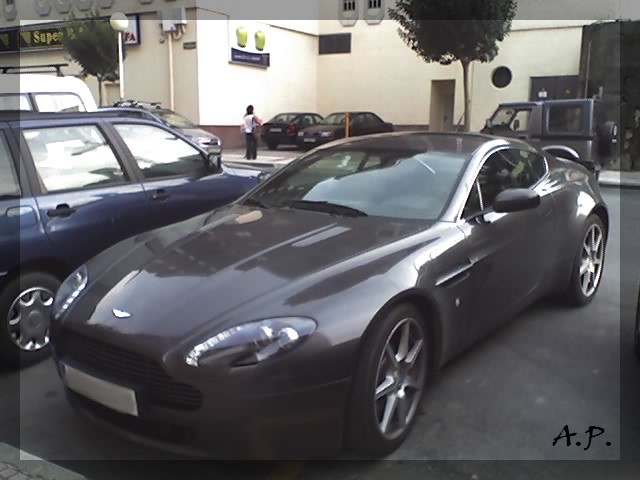
Aston Martin V8 Vantage
"...e it pretty and then they're like, oh It's like a v8 vantage, but it's just got the the horse on it instead of..."
The Aston Martin V8 Vantage is a luxury sports car. It’s designed to look and drive like a high-end performance vehicle. The podcast mentions it as a specific model people recognize.
The Aston Martin V8 Vantage is a luxury sports car known for its performance and upscale design. It’s often discussed because it represents Aston Martin’s blend of style and driving character, especially in the V8-powered Vantage lineup. In your excerpt, it’s mentioned as a recognizable model name tied to the “V8 Vantage” identity.
gated manual
"Uh, the first time a gated six speed was in a ferrari in years. Um Now listener you may be thinking well surely they just dusted off their old six speed that was back at the california."
A “gated manual” is a manual transmission where the gear lever is guided into the right gear slots. It usually makes shifting feel more controlled and less vague.
A “gated manual” refers to the shifter’s mechanical gate that guides the lever into the correct gear positions. Enthusiasts often prefer it because it provides a more tactile, predictable shift feel compared with looser or less-defined shifter mechanisms.
automatic prnd buttons
"There are still the usual ferrari automatic prnd buttons that sit behind the gate."
PRND are the common gear settings on an automatic car: Park, Reverse, Neutral, and Drive. The speaker is pointing out that the car still has the usual automatic gear choices, even though it also has a manual-style setup.
“PRND” refers to the standard gear selector positions: Park (P), Reverse (R), Neutral (N), and Drive (D). On many cars, these buttons/positions control an automatic transmission’s operating mode. The speaker is using this to explain how the car can behave like a conventional automatic even when it also has a manual-style shifter.
eight gears
"it'll just shift by itself through eight gears"
“Eight gears” means the transmission can use eight different gear ratios. The speaker is saying not all of them are always available—some are only used in certain modes, like when the car is optimizing for efficiency.
“Eight gears” refers to the number of forward ratios available in the transmission. The speaker argues that the car has an eight-speed automatic-style range, but only some of those gears are accessible depending on whether you’re shifting yourself. This matters because gear count alone doesn’t guarantee usefulness—some gears may be reserved for efficiency/emissions targets.
European emissions standards
"Seventh and eighth are just there to beat like European emissions standards and stuff"
European emissions standards are rules about how clean cars have to be in Europe. The speaker is saying the car’s extra gears are partly there to help it meet those rules by keeping the engine running in a more efficient/cleaner range.
European emissions standards are regulatory limits on pollutants (like nitrogen oxides and hydrocarbons) that vehicles must meet in Europe. The speaker claims the extra higher gears (seventh and eighth) exist partly to help the car comply with these rules. This is typically done by keeping engine speed lower during certain driving conditions to reduce emissions.
emissions cheats
"So i'm also arguing that it's kind of like a weird emissions cheats almost"
“Emissions cheats” is the idea that a car might act differently during emissions tests than it does in everyday driving. The speaker is suggesting the transmission behavior could be used to make the car pass tests more easily. It’s a serious accusation, because it implies the results don’t reflect normal driving.
“Emissions cheats” is a claim that a vehicle may be tuned to behave differently in real driving versus emissions testing, potentially to make test results look better than normal use. In the transcript, the speaker frames the limited access to higher gears as a kind of workaround. This is a controversial concept because it implies regulatory non-compliance or manipulation.
ratio
"You're getting to put the ratio for this it's so it's a gated manual that doesn't"
A “ratio” is how the gearbox multiplies the engine’s speed to turn the wheels. Different ratios make the car feel more responsive or more efficient. The speaker is saying the car’s gearing choices are part of the gimmick.
In a transmission context, “ratio” means the gear ratio between the engine and the wheels, which determines how fast the car moves for a given engine speed. The speaker is using “ratio” to argue that the transmission’s gearing strategy is being used in a gimmicky way. It’s not just “a number”—it directly affects acceleration feel and efficiency.
ECU
"Like the 5 9 9 also the amount of software changes that they had to do to the ecu of this thing [5009.3s] Because you can stall it using the manual"
ECU is the car’s engine computer. It decides things like how the engine responds and how the transmission behaves. Here, the host is saying they had to reprogram the ECU so the car could act more like a manual and still keep things safe.
ECU means engine control unit, the computer that manages engine and drivetrain behavior. The host says the software changes were needed in the ECU so the DCT can imitate manual-like actions (like stalling) and add protections.
money shifting
"It won't let you it money shift like right? [5033.8s] That's the one thing that it it will software protect against is money shifting"
Money shifting is a bad manual-driving mistake where you downshift into the wrong gear and the engine spins too fast. It can cause serious damage, so the host is saying the car’s computer tries to stop you from doing it.
Money shifting is when you downshift incorrectly—often by selecting too low a gear—causing the engine to over-rev. The host says the car’s software protection is designed to prevent this specific kind of driver mistake.
Request an Explanation
Heard something you'd like explained? We'll add it to this episode.
Sign in to request explanations for terms you heard.
Want to learn more?
Browse our glossary for plain-English explanations of automotive terms, jargon, and concepts.
Help improve this episode
See something that's not quite right? Our annotations are AI-generated and can sometimes miss the mark. Click the flag icon on any annotation to suggest a correction.