
Episode #220 - Actual Dream Cars as Kids
About this episode
The hosts trade childhood “dream car” stories and debate how adult nostalgia can feel disingenuous—especially when comparing kids’ poster-car fantasies to what people buy later. One side grew up in the boonies chasing mud-and-trail Bronco dreams; the other remembers the C4 Corvette, then pivoting through 90s Japanese tech icons like the 3000GT VR-4, DSMs, and the Mark IV Supra. They also run an ad-quiz game, then shift to project-car progress: a budget overlander Nissan Xterra cooling-system overhaul (SMOD prevention) plus a dead-battery and minor under-hood discoveries.
Frank has a theory that most kids of a certain age, didn't ever really dream of owning a Porsche 911. Does Chadwick agree? The dudes kick back and reminisce about the cars that they actually dreamed of as children, what they were and how that might have changed how they feel about cars today.
***Want to support the pod? Join our Patreon for insultingly bad perks, including unlocking the APA Pod "Late Night Confidential" Episodes!***

Porsche 959
"So dope. But like the 9-5-9 actually is more because like you and I today have no business, even like sniffing a 9-5-9 purely because we're adults now."
The Porsche 959 is a very rare, very expensive Porsche sports car. It’s known for being technologically advanced and extremely high performance. The episode mentions it as a car most people can’t realistically afford.
The Porsche 959 is a legendary performance car known for advanced technology and high-end engineering for its era. The podcast emphasizes that “we have no business” even sniffing one as adults, which reflects how rare and expensive it is. It’s mentioned as a dope, almost untouchable dream car.
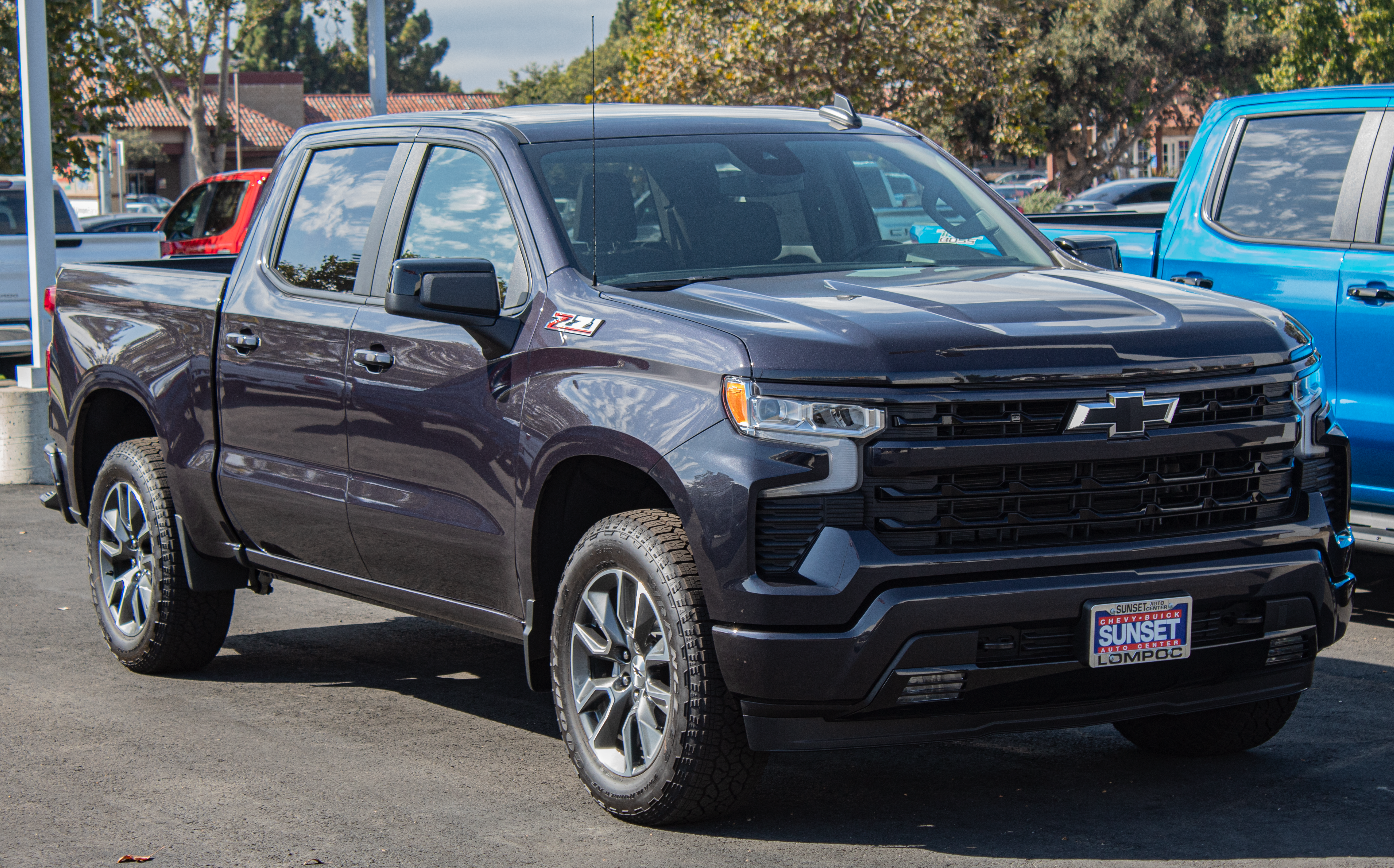
Chevrolet Silverado
"So I grew up with a lot of like, you know, OG Broncos, like lifted mud and romper tires, beat up old Silverado's F two fifties, because I grew up, I was a huge, I was a huge monster truck guy in the mid eighties to late eighties."
The Chevrolet Silverado is a large pickup truck. It’s meant for carrying things and towing, and it’s also common to see them modified for off-road driving. The podcast mentions it because it was around in the speaker’s childhood.
The Chevrolet Silverado is a full-size pickup truck built for everyday hauling and towing, and it’s also popular as a base for off-road and lifted builds. In the podcast context, it’s part of the speaker’s childhood world of big, rugged trucks and monster-truck style tires. That makes it a natural “grew up with it” car to bring up.
cut the fenders and the quarter panels for tires
"...it was just what you did. Yeah. So I grew up around the shitty ones, but I always wanted a really nice one, right? Like a totally done up one."
Cutting the fenders and quarter panels is a common off-road customization to fit larger tires and improve clearance. It’s often done when lifting the suspension or running bigger wheels, but it permanently changes bodywork and can affect rust risk if not sealed properly.
slot cars
"But I remember like, cause then you could go to, would go to like the local toys are us and they had a whole little section with slot cars."
Slot cars are tiny cars you drive on a special track with a groove. The track helps guide the car, and you can race different models like toy versions of real cars.
Slot cars are miniature cars that run on a track with a guide slot; the car’s electrical pickup and steering are controlled by the track. They’re popular because they let people “drive” at home and race on themed layouts, often with scale models of real cars.
glass packs
"So the kids in high school would have those with like cherry bomb exhaust [892.9s] and glass packs and all that fun shit. [894.8s] And I thought as a 10 year old, I'm like, that is everything I want."
Glass packs are mufflers that usually make the exhaust louder and raspier. People liked them because they gave a “hot rod” sound.
Glass packs are a type of straight-through muffler design that typically creates a louder, sharper exhaust tone. They were especially popular in older muscle-car and Mustang communities because they’re relatively simple and produce a distinctive sound.
cladding
"And what did you not think an IROC Z I'm still cladding. Like that's how much of an impact that generation of cars had on me. I still think cladding looks sick when I go back, especially now."
Cladding is the extra outer covering on a car’s body, usually plastic. On older cars, it can be part of the style, not just protection.
Cladding is exterior trim—often plastic or rubberized panels—used to cover and protect bodywork. On some 1980s performance cars, it became a defining visual feature and helped give the car a more rugged, “sport package” look.
motor was popped
"He got it cheap because the motor was popped on it. And then he had a friend who had a shop..."
“Motor was popped” means the engine failed badly. It’s usually not a small fix—you typically need a rebuild or replacement.
“Motor was popped” is slang meaning the engine suffered a severe failure—often internal damage—so it can’t run normally. It’s commonly used when an engine has blown, seized, or otherwise been destroyed beyond quick repair.

Porsche 911
"And side note is funny because I mentioned bagging on Porsche. Specifically the nine eleven. I remember at my elementary school, the principal drove a buttercup yellow three fifty six coupe."
The Porsche 911 is Porsche’s famous sports car. It’s the one most people think of when they hear “Porsche,” and the speaker is saying they had strong opinions about it even back then.
The Porsche 911 is the iconic rear-engine sports car line from Porsche. In the transcript, the speaker calls out the 911 specifically as a car they were “bagging on,” showing how influential the model was even in their childhood memories.
rust
"...mostly dirt roads. [1161.4s] So it was like if I saw something that wasn't 50 percent rust, I was like really [1165.8s] impressed, you know..."
Rust is when metal starts to corrode and flake. It’s a big deal on older cars because it can mean the body is deteriorating.
“Rust” is a major visual and structural issue on older cars, especially in areas with road salt or poor road conditions. The speaker uses it as a yardstick for how impressive a car looked in their neighborhood.
Pop up headlights
"Pop up headlights and it's still I still think when I see a 3000 GT VR for like clean in traffic, it still stands out incredibly."
These are headlights that are hidden until you turn them on. When you activate them, they pop up from the front. They were common on older sports cars and make the car look really cool.
Pop-up headlights are hidden headlamps that rise from the front fascia when activated. They were popular on many 1980s–1990s sports cars because they let designers keep a cleaner, lower-looking front end at rest. They also add a distinctive “mechanical” look that helps cars stand out even years later.
aftermarket wheels
"This is back when you'd get like a sport compact car and you'd have like the page of like all the different aftermarket wheels and like how much more and everything and what sizes were available."
Aftermarket wheels are rims you buy that aren’t the original factory ones. People swap them for looks and because they can choose different sizes to fit their car.
Aftermarket wheels are non-factory rims sold by third parties. Enthusiasts choose them for style, weight savings, and fitment options (like different widths and offsets), and they often come with a huge catalog of sizes.

Lamborghini Diablo
"[1672.7s] I was kind of what I was getting to was those cars were always super cool, [1677.4s] unattainable, but then the one that was like, oh, that's just too damn cool. [1683.0s] Was the Diablo. [1685.1s] And and it's still I'm with you on that one of me a little bit. [1702.1s] Frank, what was your exotic? [1703.8s] Would you say it's the the Lamborghini Diablo?"
The Lamborghini Diablo is a famous Lamborghini supercar. It’s the kind of car people dream about because it looks wild and sounds/feels like a true exotic.
The Lamborghini Diablo is a late-1980s/1990s supercar known for its aggressive styling and dramatic, V12-powered performance. In this segment, it’s discussed as the “too damn cool” exotic that stands out compared to other movie/celebrity cars.

McLaren F1
"I like that super car. McLaren F one for me in that it was too unattainable. ... it had a center driver's seat."
The McLaren F1 is a supercar with a special seating setup: the driver sits in the middle. The speaker likes it because it feels built around the driver, not just passengers.
The McLaren F1 is a legendary supercar famous for its three-seat layout, where the driver sits in the center. That “center driver’s seat” design is a big part of why the speaker calls it focused on being a driver’s car, and why it remains their dream exotic.
five speed
"Then I, you know, a 76 Celica lift back in my neighborhood. [2049.1s] Five speed, eight hundred dollars."
That means it had a manual transmission with five gears. Driving it would involve shifting yourself, which many people find more fun.
“Five speed” indicates a manual transmission with five forward gears. For enthusiasts, manual gearboxes are often part of the appeal because they give more direct driver control and can make older cars more engaging.
Gran Turismo
"But the aspirational shit was very much still led by Gran Turismo. And and also this was like early days of like you would get like."
Gran Turismo is a video game where you race and collect cars. The host is saying the game influenced what cars they wanted in real life.
Gran Turismo is a long-running PlayStation racing game franchise that helped many people learn about cars through virtual driving and car collecting. In this segment, it’s used to explain how the host’s “dream car” interests were shaped by the game before real-world ownership.
burnout
"That was like pretty infamous. It's a huge burnout and stuff. And just that era, you would download it off a fucking Napster or whatever."
A burnout is when you spin the tires while the car is stopped or barely moving, usually to make smoke and show off. The host is pointing out that the car was known for doing big burnouts.
A burnout is when a driver spins the driven wheels to generate tire smoke and heat, usually to show off traction or to warm up tires. In car-video culture, burnouts became a common “wow” moment, and the host mentions one as part of the infamous LS-swapped 240Z clip.
turbo
"And it was like, let me tell you about turbo. So I'm like, nerdy dude to put his hand on my shoulder."
A turbo is a device that uses the car’s exhaust to spin a fan and push more air into the engine. More air usually means more power.
A turbo (turbocharger) uses exhaust gases to spin a turbine that forces more air into the engine. That extra air allows more fuel to be burned, which can dramatically increase power without needing a huge engine displacement.

2002 WRX
"he managed to get a 2002 WRX. What a first for him."
A Subaru WRX is a sporty car that uses a turbo engine and all-wheel drive. The 2002 model is an early version that many car fans got excited about because it was fast for the money.
The Subaru WRX is a performance-oriented compact sedan known for its turbocharged engine and rally-bred all-wheel-drive system. A 2002 WRX is part of the early “bugeye” era (first-generation WRX in the U.S.), and it became a popular entry point for enthusiasts.

NSX
"And we had a one guy had a NSX, which was a little harder to get your hands on. But Mark for Supras were super available."
The Honda NSX is a high-end sports car from Honda. It’s not as easy to find as some other cars, so owning one was a big deal.
The Honda NSX is a mid-engine supercar that became famous for blending everyday usability with real track capability. It’s also known for being relatively scarce compared with more mainstream sports cars, which is why the speaker calls it harder to get.
80s through the mid 2000s
"This is our this is our dare I say famous automotive print ad quiz game show where we each take turns reading advertisements about vehicles fair game is 80s through the mid 2000s. We omit anything that gives it away."
They’re only using car ads from roughly the 1980s to the mid-2000s. Cars in that time period look and work differently than modern ones, so the ads give different kinds of hints.
The game is focused on vehicles from the 1980s through the mid-2000s. That era spans major changes in styling, safety tech, and engine management, so ads from those years often have distinct clues.
cab forward design
"Because of blanks, cab forward design. You won't find the windshield in the usual place."
Cab-forward means the driver and passengers are pushed closer to the front of the car. This can make the cabin feel roomier without making the whole vehicle longer.
“Cab forward” is a vehicle packaging layout where the passenger compartment sits farther toward the front axle. That lets designers move the windshield and front sheetmetal forward to create more interior space without increasing overall length.
features that were options are standard
"And this year, many features that were options are standard. So now the price of a well equipped blank may be lower than you'd expect."
Sometimes a car used to charge extra for certain features, but later they include them for free. That means the car can be better equipped without paying for add-ons.
This refers to a trim/market strategy where equipment previously sold as add-ons becomes included at no extra cost. That can make a “well equipped” version feel like better value and reduce the need for expensive option packages.

Chevrolet Lumina
"While the resale value is higher than Taurus, Lumina, Camry and every car in its class."
The Chevrolet Lumina is another older mainstream midsize sedan. If it’s listed in a comparison, the ad is basically saying “we’re better than the usual choices.”
The Chevrolet Lumina was a midsize sedan that competed in the same broad family-car segment as other mainstream models. Mentioning it signals the ad is targeting the same buyer pool and price/value expectations.
speed control
"standard speed control, I'm assuming that's a cruise standard power windows and door locks, standard 16 inch touring tires."
Speed control is cruise control. You set a speed, and the car keeps it there for you, which is nice on longer drives. It reduces fatigue.
“Speed control” is an older name for cruise control, which maintains a set speed without you holding the accelerator. It’s typically part of a comfort/feature package on many trims. Here, it’s listed as a standard equipment item.
bumper to bumper warranty
"Hmm, customer one care, three year, thirty six thousand mile bumper to bumper warranty and three and thirty six roadside assistance for more information."
A bumper-to-bumper warranty is a promise from the manufacturer/dealer to fix a lot of problems for a certain time and mileage. It’s meant to cover more than just the engine. In this segment, they’re talking about a 3-year/36,000-mile type of deal.
A “bumper-to-bumper” warranty generally covers most vehicle components, not just the powertrain. It’s often used to describe comprehensive coverage for a set time and mileage. Here, it’s quoted as “three year” and “thirty six thousand mile.”

96 Dodge Intrepid
"Yeah, 96 Dodge Intrepid, the cab forward and then the 3.3 liter [2866.0s] pretty much give you everything you need to know on that one."
The 1996 Dodge Intrepid is a mid-size sedan. It’s known for a design style where the cabin sits farther forward, so the car feels different inside even though it’s still a normal sedan size.
The 1996 Dodge Intrepid is a mid-size sedan from Dodge’s “cab-forward” era. Cab-forward packaging moves the passenger compartment forward to create a more compact engine bay, which changes how the cabin feels and how the dashboard space is laid out.
coolant
"So all that replaced new coolant and now I'm future proof, right? Like and it didn't cost anything, dude."
Coolant is the liquid that keeps your engine from overheating. It moves through the engine and radiator to carry heat away.
Coolant (often called antifreeze) circulates through the engine to absorb heat and keep temperatures in a safe range. When people say they “replaced new coolant,” they’re usually refreshing the fluid and restoring proper heat transfer.
mounted and balanced
"for like 500 bucks. And now I've got good tires mounted and balanced ready to go."
Mounted means the tire is put onto the wheel. Balanced means it’s adjusted so the car doesn’t shake or vibrate when you drive.
“Mounted and balanced” means the tires are installed on the wheels and then balanced to reduce vibration at speed. It’s a key part of getting a wheel/tire set ready to drive safely and smoothly.
battery
"[3425.1s] Click, click, click, click. [3426.2s] So I'm probably going to get a battery for it."
The battery is what powers the car’s electrical system and helps it start. If you hear clicking instead of the engine turning over, the battery is a common culprit.
A car battery provides the electrical power needed to start the engine and run electronics. If the car only clicks or repeatedly fails to crank, a weak or dead battery is often the first thing to check and replace.
belt
"So it's just like a regular width belt. Well, probably the outside towards the front of the car, 20 percent. It's just missing."
The belt is the rubber strip that transfers engine power to different parts. If the wrong belt is used, it may not fit right and can wear out or fail.
A belt transfers power from the engine to accessories like the alternator, AC compressor, and sometimes the supercharger. Belt width, length, and routing must match the correct configuration; using the wrong belt can lead to poor fit, slipping, or premature wear.
VIN number
"Oh, and then I also did figure out Nissan can cut me a fresh key off of the VIN number. Oh, that's killer."
The VIN is like your car’s unique ID number. Some key services can use it to make a replacement key that matches your car.
A VIN (Vehicle Identification Number) is a unique 17-character identifier for a specific vehicle. Many manufacturers and key services can cut replacement keys using the VIN, especially when the original key is lost or damaged.
Request an Explanation
Heard something you'd like explained? We'll add it to this episode.
Sign in to request explanations for terms you heard.
Want to learn more?
Browse our glossary for plain-English explanations of automotive terms, jargon, and concepts.
Help improve this episode
See something that's not quite right? Our annotations are AI-generated and can sometimes miss the mark. Click the flag icon on any annotation to suggest a correction.