Episode 249: Mercedes-Benz USA CEO Adam Chamberlain
About this episode
Adam Chamberlain describes returning to Mercedes-Benz North America by first listening to dealers, then stripping out layers of complexity and micromanagement. He outlines a dealer-first growth plan built around more than 30 new vehicles through 2029, a 325,000-unit U.S. target this year, and a longer-term push toward 370,000 units by 2028. The conversation also covers BEV pricing, flexible ICE/BEV strategy, tariff discipline, Chinese EV competition, and new tech ranging from AI to high-performance electric AMG models.
Mercedes-Benz USA CEO Adam Chamberlain
SiriusXM Business Radio
"Buckle up as Jason takes you inside the boardroom onto the track and around the bend on Cars and Culture on SiriusXM Business Radio."
SiriusXM Business Radio is the radio station/network where this podcast segment is aired. It’s just the platform for the conversation.
SiriusXM Business Radio is the radio platform/channel where the show is broadcast. It’s relevant here mainly as the media context for the interview, not as an automotive technology.
electrification
"Electrification has reshaped product plans, pricing has drifted, and dealers, the ones closest to the customer, have been navigating a system that, by many accounts, became harder to execute."
Electrification means automakers are moving toward cars that use electricity instead of (or in addition to) gasoline. That changes how companies plan their models and how they sell them.
Electrification is the shift from traditional internal-combustion vehicles toward electric powertrains, including full battery-electric and plug-in hybrids. In strategy discussions, it affects product planning, manufacturing, charging ecosystems, and how brands price and market vehicles.
Lithium Motors
"Adam Chamberlain returns to Mercedes-Benz North America after time inside Lithium Motors, the largest public dealer group in the United States."
Lithium Motors is a company that owns or operates many car dealerships. Because it runs dealerships directly, it can show what actually works for selling and servicing cars day to day.
Lithium Motors is described as a large public dealer group in the United States. Dealer groups like this operate multiple dealerships, giving executives a ground-level view of what sales and service processes work in retail.
Mercedes-Benz North America
"Adam Chamberlain returns to Mercedes-Benz North America after time inside Lithium Motors, the largest public dealer group in the United States."
Mercedes-Benz North America is the part of Mercedes-Benz that runs the brand’s business for the U.S. market. It’s the group that works with local dealers and makes decisions about things like pricing and how products are sold.
This refers to Mercedes-Benz’s regional organization responsible for the brand’s business in the United States and surrounding North American markets. In a CEO interview context, it’s the leadership structure that sets strategy for dealers, pricing, and product plans locally.
EV adoption
"But doing it in a world shaped by tariffs, geopolitical uncertainty, shifting EV adoption and rising global competition is anything but easy."
EV adoption means how fast people are buying electric cars. If adoption speeds up or slows down, car companies have to adjust what they build and how they price and market vehicles.
EV adoption refers to how quickly consumers and markets start buying electric vehicles. It directly impacts automaker forecasting for demand, production volumes, incentives, and the timing of new powertrain launches.
tariffs
"But doing it in a world shaped by tariffs, geopolitical uncertainty, shifting EV adoption and rising global competition is anything but easy."
Tariffs are extra taxes on imported products. If car parts or cars cross borders, those taxes can make them more expensive, which then affects pricing and planning.
Tariffs are taxes imposed on imported goods, which can raise costs for vehicles and parts. For automakers, tariffs can force pricing changes, alter supply chains, and complicate long-term planning.
OEM leadership
"In this conversation, we go deep on why simplicity is becoming a competitive advantage, how his retail experience is reshaping the way he thinks about OEM leadership,"
OEM leadership is how the car company at the top (the manufacturer) guides the brand. It includes decisions that affect dealers and how cars are sold.
OEM leadership means how the original equipment manufacturer (OEM) runs the brand and coordinates decisions across product, pricing, and dealer relationships. It’s about steering the company’s direction rather than just making individual cars.
general managers
"the importance of empowering general managers instead of over-managing from headquarters,"
General managers are the leaders who run operations and make key decisions day to day. The point here is that giving them more authority can make the business work better at the local level.
General managers are senior leaders responsible for running a dealership or business unit’s day-to-day operations and results. The episode frames empowerment of general managers as a way to reduce over-control from headquarters and improve execution locally.
powertrain strategy
"We also talk about the future of powertrain strategy, not as a mandate, but as a choice. Internal combustion, hybrid, electric. Let the customer decide."
Powertrain strategy is the company’s plan for what kinds of “engine setups” it will offer. That could be gas, hybrid, or electric, and it shapes what cars get built next.
Powertrain strategy is the plan for which types of engines and drivetrains a company will build—such as internal combustion, hybrid, or fully electric. It affects product roadmaps, engineering investment, manufacturing tooling, and how brands position vehicles in different markets.
Internal combustion, hybrid, electric
"We also talk about the future of powertrain strategy, not as a mandate, but as a choice. Internal combustion, hybrid, electric. Let the customer decide."
The hosts are talking about different ways cars can move. Some use gasoline engines, some use a mix of gas and electricity, and some run fully on electricity.
This is a high-level breakdown of major vehicle propulsion types: internal combustion (gas/diesel), hybrid (uses both an engine and an electric system), and electric (battery-electric). The episode uses it to frame how Mercedes-Benz might offer multiple options rather than forcing one approach.

S-Class
"And yes, we get into product, because when you're talking about Mercedes-Benz, you have to, from next-generation S-Class technology to high-performance EVs that behave like V8s,"
The Mercedes-Benz S-Class is the brand’s top luxury sedan. When they say “next-generation S-Class technology,” they mean new tech that will show up in the next version of that flagship car.
The Mercedes-Benz S-Class is the brand’s flagship luxury sedan line, known for advanced comfort, tech, and engineering. The episode references “next-generation S-Class technology,” implying upcoming updates that will likely influence Mercedes-Benz’s broader direction.
V8s
"from next-generation S-Class technology to high-performance EVs that behave like V8s,"
A V8 is a type of gasoline engine with eight cylinders. Saying an electric car “behaves like a V8” means it can feel similarly punchy and responsive when you accelerate.
“V8s” refers to engines with eight cylinders arranged in a V configuration, commonly associated with strong acceleration and smooth power delivery. The phrase “EVs that behave like V8s” is a marketing/engineering comparison describing how electric torque can feel similar to a V8’s response.
Formula One connection
"And along the way, there's a Hollywood tie-in, a Formula One connection, and a reminder that for all the strategy and complexity, this is still an industry driven by emotion, by design, by performance,"
They mention Formula One as a connection point. It’s probably used to show how racing and car culture influence what automakers do.
The episode mentions a Formula One tie-in, which is likely used to illustrate how racing technology, branding, or engineering culture influences the automotive industry. It’s a thematic reference rather than a specific technical component.
OEM world
"Yeah, so, I'm welcome back to the OEM world, and I want to talk a lot about your retail experience, but welcome back to the OEM role."
“OEM” means the carmaker itself, not a dealership. He’s saying he went back to working inside Mercedes-Benz’s main organization rather than working in sales/retail.
“OEM” stands for Original Equipment Manufacturer—meaning the speaker is moving from retail-side work back into the manufacturer’s corporate/brand organization. In automotive, OEM roles focus on product, strategy, and how the brand operates through its dealer network.
dealer board
"I came here in September time to meet the Canadian dealer board. We had a great conversation, a great dinner."
A dealer board is a group of dealership leaders. He met them to hear what dealers think and to help shape the brand’s strategy.
A “dealer board” is a structured group representing dealership owners/operators, used to share feedback and align on brand direction. Here, the CEO meets the Canadian dealer board as part of gathering input for a new plan.

G-Class
"We took the Canadian dealers to our G-Class Adventure and Factory place, and we launched the Canadian plan there."
The G-Class is Mercedes-Benz’s famous rugged SUV. Here, it’s mentioned because the company used a G-Class-themed trip/event to help introduce a new plan to dealers in Canada.
The Mercedes-Benz G-Class is the brand’s iconic, boxy off-road SUV line. In this segment, it’s referenced as the setting for a “G-Class Adventure and Factory” event used to launch or communicate a plan to Canadian dealers.
simplification
"And over the course of the last nine months, explain a little bit of the simplification, if you could. What did you try to attack first? What are your measurables?"
Here, “simplification” means making the business plan and processes easier to follow. The goal is to reduce confusion and help dealers do their jobs better.
In automotive retail/OEM operations, “simplification” usually means reducing complexity in processes, decision-making, and programs so dealers can execute more effectively. The CEO frames it as making a clearer plan and putting dealers back at the center of strategy.
measurables
"And over the course of the last nine months, explain a little bit of the simplification, if you could. What did you try to attack first? What are your measurables?"
“Measurables” are numbers or clear goals you can track to see if a plan is succeeding. He’s saying they want a clear way to measure progress, not just vague intentions.
“Measurables” refers to specific performance metrics used to track whether a business plan is working. In this context, he’s talking about how he’d define targets and track progress as part of simplifying and improving the dealer strategy.
KPIs
"...that you need to give GMs and the management teams and stores the bandwidth to get on and manage their business, walk the floor, [365.6s] not be spending hours in front of a computer managing spreadsheets and KPIs and all these things."
KPIs are numbers a company uses to judge performance, like sales targets or service metrics. The guest is saying they wanted leaders to spend less time staring at those numbers and more time helping customers and teams.
KPIs (Key Performance Indicators) are measurable targets used to track how well a business is performing. The guest contrasts spreadsheet/KPI management with being on the floor and leading customer-facing teams.
service drive
"Because by definition, then you're not out there talking to customers, you're not leading your teams, you're not on the service drive at 7.30 in the morning, [370.1s] you're not in the sales meeting at 8.30, which is when the rubber hits the road..."
The service drive is where cars pull in for maintenance and repairs at a dealership. The guest is saying leaders should be there early and actively involved in the service side of the business.
The service drive is the customer-facing area at a dealership where vehicles are brought in for maintenance and repairs. The guest uses it to emphasize that leaders should be present in the shop/service operation, not only in meetings or offices.
micro management
"So we just tried to back off some of the, and again, much more US than Canada to be really fair, [381.8s] but we tried to back off some of the micro management we had in the business and empower the teams locally. [393.5s] We put Regions back into the US..."
Micro-management means a manager closely controls too many small day-to-day choices. Here, the guest says they tried to back off that so teams at the local level can make decisions.
Micro-management is a management style where leaders closely control day-to-day decisions rather than delegating authority. In this segment, it’s used to describe reducing excessive oversight so local teams can act faster and better.
dealers
"We put Regions back into the US, Andreas had a team here in Canada, but we tried to empower them to take decisions closest to the dealers that impact [393.5s] the dealer being able to give a great performance and looking after customers."
Dealers are the car stores that actually sell the vehicles and handle service. The guest is saying local dealership teams should have more freedom to make decisions that help customers.
Dealers are the independent retail businesses that sell vehicles and provide service under a manufacturer’s brand. The guest emphasizes empowering teams locally so dealers can deliver better customer experiences and performance.
FAF organization
"So we're not going to place you into the FAF organization anytime soon, but you did become a retail, a student of retail I guess, [404.9s] when you left the OEM world..."
“FAF” sounds like an internal company group or program, but the episode doesn’t explain what it stands for. The guest is basically saying it’s not part of the near-term plan.
“FAF organization” appears to be an internal organizational unit or program name within the company’s structure, but the transcript doesn’t define what FAF stands for. It’s mentioned as something the guest says they won’t place the listener into “anytime soon.”
Lithia
"So we're not going to place you into the FAF organization anytime soon, but you did become a retail, a student of retail I guess, [416.2s] when you left the OEM world and you went to Lithia. [418.5s] Yes. [418.9s] So why Lithia at the time and what did you learn?"
Lithia is a company that runs lots of car dealerships. The guest is explaining that he learned retail dealership operations after moving to Lithia.
Lithia is a large U.S. automotive retailer that operates dealership groups. In the segment, Adam Chamberlain is describing his move from the OEM side into dealership retail operations at Lithia.
franchises
"We had 44 different franchises and if you think we had UK, Canada, US, but in 30 odd states of the US you have lots of differing things going on plus the 44 different franchises."
Here, “franchises” means the brand’s network of local dealerships. Those dealers are allowed to sell and service the brand’s cars, but they operate in their own local markets.
In this context, “franchises” refers to the dealership network structure where a brand authorizes local businesses to sell and service its cars under the brand’s umbrella. It’s a common approach for automakers to scale sales across regions while keeping brand standards.
10,000 foot level
"So trying to stay at kind of a 10,000 foot level and empower the teams to deliver the results... And you know, once that wheel starts, you want to bring the customer back and sell them another car is you can 10,000 feet, you can make it sound really simple, right?"
“10,000 foot level” means thinking big-picture instead of focusing on every small detail. The speaker is saying they manage strategy without getting stuck in day-to-day operations.
“10,000 foot level” is a management phrase meaning looking at strategy and outcomes from high above, rather than getting into day-to-day operational details. Here it’s used to describe running the business without micromanaging store-level operations.
customer engagement
"How did that retail background shape maybe how you're allocating capital and attention now between product, dealer support, customer engagement?"
Customer engagement means how the brand keeps in touch and builds a relationship with people after they buy. The goal is to make them want to come back for service and possibly buy again.
“Customer engagement” refers to ongoing interactions with buyers and owners beyond the initial sale—such as follow-up, service experiences, loyalty programs, and communications that encourage repeat purchases. In dealer-driven markets, it’s often tied to retention and lifetime value.
allocate capital
"How did that retail background shape maybe how you're allocating capital and attention now between product, dealer support, customer engagement?"
Allocate capital is basically deciding how to spend the company’s money. The question is about where the CEO puts resources to support cars, dealers, and customers.
“Allocate capital” means deciding where the company spends money and resources—such as product development, marketing, dealer programs, or customer-facing initiatives. In automaker leadership, it’s a strategic lever that affects both near-term sales and long-term brand health.
incentives or the programs
"Yeah, that's the mantra. And obviously, make sure we get the pricing right of the cars, make sure the incentives or the programs are good that we can be competitive and sell the cars and create the demand through advertising."
These are special offers the automaker gives to help people buy—like price cuts or financing/lease deals. The goal is to make the cars more attractive so more customers want to buy.
Incentives/programs are manufacturer-backed offers used to influence buying decisions—such as discounts, financing promotions, lease deals, or other customer-facing campaigns. The speaker ties these to competitiveness and demand generation.
OEM role
"I'm guessing that taken back now into an OEM role, you can appreciate a lot more of the chaos that exists... You're living your own chaos, which we'll get to in a second, but the chaos of the retail world through the lens that you had prior."
OEM just means the carmaker. The speaker is saying the problems look different when you’re inside the company that builds the cars versus when you’re running a dealership.
An OEM (original equipment manufacturer) role means working for the automaker itself, rather than a dealership or retail operation. The speaker contrasts the “retail world” chaos with the automaker’s broader planning and coordination responsibilities.
converting the leads to sale
"We've got to create more demand and be better at converting the leads to sale. And we've got to look after customers so they come back and buy another car and try and have a pure vision."
A “lead” is someone who shows interest in buying. “Converting” means getting that interested person to actually buy a car.
“Leads” are potential customers generated through marketing, and “converting” them means turning inquiries into actual purchases. The speaker frames this as a dealer performance metric tied to advertising effectiveness and sales execution.
NADA
"I said to the dealers at NADA, I was at NADA last Wednesday with you. Right. And I said to the dealers, you're going to hear me be so boringly consistent in our plans..."
NADA is a big U.S. organization that represents car dealers. He’s saying he talked to dealers there about how they should run their businesses.
NADA refers to the National Automobile Dealers Association, a major U.S. dealer trade group. The speaker mentions presenting to dealers at NADA to communicate strategy and expectations.
consolidation
"So the chance to do that and lead that company through a really difficult period, we're going to see consolidation. I wrote in 1994 for my thesis about consolidation in the auto industry."
Here, consolidation means the auto industry will likely merge or reorganize so fewer companies are competing in the same way. It’s usually driven by cost pressures and big changes in how cars are made and sold.
In this context, consolidation means automakers and suppliers combining, shrinking, or restructuring to reduce costs and improve scale during industry stress. The speaker connects it to what they expect to happen over the next five years in the auto industry.
annual retail sales
"So you put out some markers, and even just last week, you're not only the 325 that you just mentioned, but you're also pushing 400,000 annual retail sales in the United States by 2030."
Annual retail sales is how many cars get sold to regular customers in a year. It’s basically the sales volume the brand expects to hit through regular customer buying channels.
Annual retail sales refers to the number of cars sold to customers through the normal dealer/consumer sales channel over a year. The speaker uses it as a measurable growth target for the United States.
product cadence
"And we've got over 30 new cars that we'll bring to North America between now and at the end of 2029. So it's a massive product cadence."
“Product cadence” just means how often a company brings out new cars or updates. Here, it’s about Mercedes-Benz’s timeline for new releases.
“Product cadence” is a business term for how regularly a company introduces new models or updates. In this context, it describes Mercedes-Benz’s planned schedule of new cars for North America.
Bev
"And if I think about this year, we'll have a CLA. The first car we'll launch is a Bev. And here, I can announce pricing today."
“BEV” stands for a fully electric car. It’s powered by a battery, not by gasoline.
“BEV” means Battery Electric Vehicle—an electric car that runs only on battery power and uses no gasoline engine. In this segment, the speaker is talking about Mercedes-Benz bringing a BEV to North America and discussing its pricing and range.
four-wheel drive
"It's going to be $55,900 for the four-wheel drive Bev car. That car, that changes lots of the paradigm so that we're associated with cars."
Four-wheel drive sends power to all four wheels. That usually helps the car grip better when roads are slippery.
Four-wheel drive (4WD) means power is sent to both the front and rear axles, improving traction in low-grip conditions like rain, snow, or dirt. Here it’s used to describe the BEV’s drivetrain configuration.
real range
"The car got accredited by Edmunds to 434 miles real range. And they test those cars comprehensively to get that."
“Real range” is how far the electric car can actually go in everyday driving, not just in perfect test conditions.
“Real range” refers to the practical distance an EV can travel under real-world conditions, rather than an idealized lab number. The speaker says Edmunds accredited the car to a specific real-world range and that Edmunds tests it comprehensively.
charges back up
"It charges back up to 200 miles in about 10 minutes, just less than 10 minutes. So it solves that whole, take a day to charge it, and it's only going to be 200 miles, right?"
They’re talking about how fast you can recharge the battery. The point is that you can get back a useful amount of driving distance quickly.
This is describing EV charging time—how quickly the battery can be replenished after being partially depleted. The speaker claims the car can add enough charge to reach about 200 miles in just under 10 minutes, emphasizing fast-charge capability.

GLE and GLS
"Then we bring then facelifted S-class, and the summer, the car's amazing. Over 52% of the car is new. Then we bring a facifted GLE and GLS, an electric GLC..."
They mention updated Mercedes-Benz GLE and GLS SUVs. These are Mercedes’ luxury SUV models, refreshed with changes to design and features.
The speaker mentions a facelifted Mercedes-Benz GLE and GLS, which are Mercedes-Benz’s midsize and full-size luxury SUV lines. These are being positioned as part of the brand’s updated product plan.
Lexus
"We've moved away a little bit in our price corridors to be under Lexus. And you know, in the end, the product does a great job for you, but someone's going to make a monthly payment or sign a check."
Lexus is a luxury car brand. In this segment, they’re saying Mercedes is trying to price some cars closer to Lexus so shoppers see Mercedes as a better deal.
Lexus is Toyota’s luxury brand, and here it’s used as a benchmark for Mercedes-Benz pricing. The CEO is describing how Mercedes-Benz USA is adjusting its pricing “corridors” to compete more directly with Lexus models.
price corridors
"We've moved away a little bit in our price corridors to be under Lexus. And you know, in the end, the product does a great job for you, but someone's going to make a monthly payment or sign a check."
A “price corridor” is just a pricing range a company tries to stay inside. They’re saying Mercedes is tweaking that range so their cars are priced to compete with other luxury brands.
“Price corridors” is a business term for the target pricing band a brand tries to stay within for a given model or market segment. The CEO is saying Mercedes-Benz has adjusted those bands to remain competitive versus Lexus and BMW.
BMW
"So what we've done is got back. And we are right now, we're pretty much on the head of the compareable BMW products. So one product, huge range of new products."
BMW is referenced as a key competitor in the luxury market, specifically in terms of pricing and how Mercedes-Benz compares to “comparable BMW products.” The speaker is framing Mercedes’ strategy around staying within a competitive price range relative to BMW.
FaceSafe
"And we'll have FaceSafe, GLE, GLS, new GLC. Then we'll have other derivatives off those cars."
FaceSafe is a Mercedes technology that uses a camera to watch the driver. The goal is to help detect distraction or drowsiness.
FaceSafe is Mercedes-Benz’s brand name for an in-car driver monitoring system that uses cameras to track driver attention and behavior. It’s mentioned as part of a wave of new products and features.
incentive programs
"So we see huge products. We see strong incentive programs to convert customers. And we see changing our advertising just a tiny little piece."
Incentive programs are manufacturer- or dealer-funded offers (like rebates, financing deals, or lease specials) designed to influence purchase decisions. Here, Mercedes-Benz is using incentives to “convert customers,” meaning win shoppers who might otherwise buy a competitor.
lower funnel
"So you'll see us being a little bit more tactical and especially lower funnel,"
“Lower funnel” is marketing jargon for the later stages of the customer journey, where people are closer to making a purchase decision. The speaker is saying Mercedes-Benz USA will be more tactical in marketing aimed at shoppers who are nearer to buying.
conversion
"a little bit more tactical in marketing to allow conversion. So those are the three pillars."
In car sales, “conversion” means getting someone who’s interested to actually buy the car. Companies measure it by how many leads turn into real sales.
In automotive marketing, “conversion” means turning a prospect into an actual buyer—moving them from interest to a completed purchase or lease. It’s often tracked through dealer leads, test-drive requests, and sales close rates.
EV
"How do you balance product choice across internal combustion, hybrid, EV, while preserving brand integrity and, for dealers, retail simplicity?"
EV just means an electric car. Instead of relying on a gas engine, it runs on electricity stored in a battery.
EV stands for electric vehicle—cars that use electric motors powered by a battery. In the segment, EV is part of a broader lineup that includes internal combustion, hybrids, and battery-electric models.
plug-in hybrids
"So we'll have plug-in hybrids that you can do 80, 90 kilometers real electric range in."
A plug-in hybrid is a car that uses both electricity and gas. You can charge it like an electric car, and it can drive on electricity for a while before it uses gas.
A plug-in hybrid (PHEV) is a hybrid car that can be charged from an external power source. It typically runs on electricity for a limited distance, then switches to its gasoline engine when the battery is depleted.
real electric range
"So we'll have plug-in hybrids that you can do 80, 90 kilometers real electric range in."
“Real electric range” means how far the car can go on battery in normal life, not just in a perfect test. Things like speed and weather can make it shorter or longer.
“Real electric range” refers to the distance the car can actually drive on battery power in everyday conditions, not just ideal test-cycle numbers. It’s influenced by driving speed, temperature, terrain, and how aggressively the driver accelerates.
incentive change
"It's funny, my neighbors, we had an incentive change, which we haven't had here, thankfully, but we had an incentive change in the U.S. where the incentives got canceled."
An incentive change means the rules or money-saving deals for buying certain cleaner cars changed. If the incentives get removed, people may rush to buy before they disappear.
An “incentive change” refers to adjustments to government or program subsidies/credits that reduce the purchase cost of electrified vehicles. When incentives are canceled, demand can shift quickly, often causing short-term buying spikes.
incentives got canceled
"but we had an incentive change in the U.S. where the incentives got canceled. And so we had a real rush on electrics and hybrids up to the end of September."
When incentives get canceled, the discounts for buying these cars go away. That can make people buy sooner than they planned.
When vehicle incentives are canceled, the effective price of eligible electrified vehicles rises, which can reduce demand. The transcript describes a “rush” to buy electrics and hybrids before the cancellation took effect.
Gle 450
"So my neighbors bought a GLE 450 hybrid. They've only put gas in the one time since September."
The Mercedes-Benz GLE 450 hybrid is a Mercedes SUV that can use electricity in addition to gas. The example here is about how often the owner actually plugs it in.
The Mercedes-Benz GLE 450 hybrid is a version of the GLE SUV that combines an internal-combustion engine with an electrified system. In this context, the speaker highlights that the neighbor’s charging habits mean the SUV is mostly operating on gas rather than electricity.
plug-ins
"Because they run it doing 55 miles on a charge. It's those customers who don't charge their plug-ins."
Here, “plug-ins” means cars you can charge at home or a charger. If you don’t plug them in, you end up using more gas instead of electricity.
In this context, “plug-ins” refers to plug-in electrified vehicles (like plug-in hybrids and plug-in electric cars) that rely on charging from an external outlet to use electricity. The speaker notes that some owners don’t charge them regularly, which reduces the real-world electric usage.
electric car
"But I think what we've learned, particularly as Mercedes-Benz is, you can't have an electric car that's 50% more expensive than a counterpart of some, at least in size or dynamic or whatever,"
An electric car runs mainly on electricity from a battery. It doesn’t use gasoline like a typical gas-powered car.
“Electric car” here refers to a battery-electric vehicle (BEV), which is powered by an electric motor and a high-voltage battery rather than an internal-combustion engine. The discussion is about pricing and market readiness for BEVs versus other powertrains.
buyer readiness
"What's real buyer readiness, not just regulatory expectations going forward, right?"
Buyer readiness means whether people are actually willing to buy the new kind of car. It’s about real consumer interest, not just laws or targets.
“Buyer readiness” is how prepared consumers are to switch to a new technology—here, BEVs—based on factors like cost, charging access, and willingness to adopt. The speaker contrasts it with “regulatory expectations,” implying real-world demand matters as much as mandates.
returning off lease
"The other thing we saw, last year we had about 9,500 BEVs returning off lease, and 40% of those customers bought another BEV, so it's real."
“Returning off lease” means the lease is ending and the car is being turned back in. The speaker is using that group to show many people then choose another electric car.
“Returning off lease” refers to customers who are finishing a lease term and bringing the vehicle back. The speaker uses this to show that a large share of those customers choose another BEV, suggesting repeat adoption rather than one-time curiosity.
loyalty and retention
"which is, honestly, that's a pretty normalized level of loyalty and retention. [1302.7s] So we see giving that optionality is the most important thing."
This is about whether people keep coming back to the same car brand. If a lot of customers “stick” with Mercedes-Benz after their first purchase, that’s retention.
In automotive retail, “loyalty and retention” refers to how many customers keep buying from the same brand over time rather than switching to competitors. It’s often tracked through repeat-purchase rates and customer behavior after the first purchase.
Adam Chamberlain
"Now the continuation of my conversation with Mercedes-Benz USA boss, Adam Chamberlain. [1365.7s] To see more Cars & Culture interviews, visit the Cars & Culture YouTube channel."
This is the person the host is interviewing—he’s a leader at Mercedes-Benz USA. His job is to help guide how the brand sells and operates in the United States.
Adam Chamberlain is identified as the Mercedes-Benz USA executive being interviewed, representing the company’s leadership perspective on brand strategy and U.S. operations. The episode frames his comments as coming from the top of the U.S. business.

Mercedes-Benz Mercedesbenz Usa
"I'm your host, Jason Stein. Now the continuation of my conversation with Mercedes-Benz USA boss, Adam Chamberlain. To see more Cars & Culture interviews, visit the Cars & Culture YouTube channel."
The Mercedes-Benz SL is a luxury sports car. It’s designed for driving enjoyment and typically focuses on performance and comfort. In this podcast context, it’s referenced as part of the Mercedes-Benz interview material.
The Mercedes-Benz SL is a luxury sports car known for combining open-top driving (in many generations) with high-performance engineering. In the podcast excerpt, it’s mentioned as part of the host’s broader Mercedes-Benz conversation and interview content rather than a detailed technical discussion. It’s still a notable model because it represents Mercedes-Benz’s performance-and-luxury identity in a distinct segment.
competitive advantage
"How do you define, for the dealers in the room, how do you define your competitive advantage [1394.2s] and how should they articulate that to their customers?"
This is basically “why you should choose this brand over others.” The guest is telling dealers what reasons to emphasize to customers.
“Competitive advantage” is the strategy a dealership or brand uses to stand out versus other brands—such as pricing, product mix, customer experience, or service. Here, the guest is framing how dealers should explain why customers should choose Mercedes-Benz.
price position
"what maybe we lost track of a little bit was we had to be somewhat competitive and have a price position. [1413.7s] And we lost that, so I think if we can be in the price position with our products"
This means how the brand’s prices compare to other brands. If Mercedes-Benz is priced competitively, it’s easier to convince shoppers to buy.
“Price position” refers to where a brand’s pricing sits relative to competitors—whether it’s positioned as more affordable, more premium, or aligned with the market. The speaker links it to being able to attract customers while still offering a strong brand experience.
manufacturing footprint
"Manufacturing footprint, a lot of conversation today. [1430.5s] A lot of talking in the news of late about tariffs related to production, related to manufacturing."
This means where the company builds cars—its factories and production locations. They’re saying changes in those locations matter, especially with tariffs.
“Manufacturing footprint” is the geographic and operational footprint of where a company builds vehicles and components. The guest connects changes in that footprint to policy pressures like tariffs and to increased production in the United States.
CKD
"However, build where you sell, not take the tariff hits that you've taken. What's your view on it? First of all, I'd obviously love to be able to do something called a CKD. We do CKD in South Carolina for our sprint of business."
CKD means the car is shipped mostly as parts, and then it gets put together in the country where it will be sold. Companies use it to make importing cheaper or easier when trade rules change.
CKD stands for “completely knocked down,” a manufacturing approach where a vehicle is shipped as parts and then assembled locally. It’s often used to reduce tariffs or meet local production requirements while keeping supply chains flexible.
capex
"Trying to manage all those spinning plates at a macro level and you've only got so much capex. Your capex is tied, but it's something we will look at for sure."
CAPEX is the big spending a company does to invest in factories and equipment. They’re saying they can’t just spend unlimited money, so they have to be sure the investment makes financial sense.
CAPEX is capital expenditure—money a company spends to build or upgrade facilities, equipment, or production capacity. The CEO is saying there’s limited CAPEX available, so the business case for moving production has to pencil out quickly.
McLarens
"I mean, you're not producing McLarens, but you're producing expensive vehicles."
McLaren is a brand that makes very expensive supercars. They’re using it as a comparison to say they’re not making those, but they still sell high-priced cars.
McLaren is a supercar brand known for high-end, expensive vehicles. Here it’s used as an example of the kind of cars the company isn’t producing, while still producing expensive vehicles.

Mercedes-Benz GLS
"We did produce the Geely and GLS in Alabama. Alabama. And that will be 90,000 cars this year, 100,000 cars for North America."
The Mercedes-Benz GLS is a big luxury SUV. The guest is saying Mercedes makes it in Alabama for customers in the U.S. and North America.
The Mercedes-Benz GLS is a full-size luxury SUV. In this segment, it’s mentioned as one of the models produced in Alabama for the North American market.
Geely
"We did produce the Geely and GLS in Alabama. Alabama."
Geely is an automotive company that produces vehicles and has manufacturing partnerships with other brands. In this segment, it’s referenced as a model line produced in Alabama alongside the Mercedes-Benz GLS.
export credits
"We're still discussing, pushing for some sort of export credits. We also export a lot of vehicles."
Export credits are government-backed financial help for companies that sell products to other countries. They’re asking for this kind of support to encourage building and exporting vehicles.
Export credits are financial incentives or support that governments provide to help companies sell goods abroad. The speaker is saying they’re pushing for these credits to make exporting (and producing locally) more attractive.
pricing corridors
"Because I think I talked about earlier, our pricing corridors had crept a little bit, Jason, probably outside of the normal."
Pricing corridors are like a company’s planned “price range” for how much they’ll charge. They’re saying their usual price range had gotten stretched, so they tried to use the situation to reset and control increases.
Pricing corridors are internal target ranges or boundaries for how much a company plans to raise or hold prices. The speaker says their pricing corridors had drifted beyond what’s typical, prompting a decision to manage pricing more carefully.
price increases
"We stayed. And our plan of record this year is also not to go crazy with price increases."
Price increases mean raising what customers pay for cars. They’re saying they plan to keep increases more moderate than some competitors.
Price increases are adjustments to retail pricing, often used to manage costs, demand, or competitive pressure. The speaker says their plan is not to “go crazy” with increases, implying a more restrained pricing strategy.
elasticity impact
"Normally, what happens when we put prices up as an elasticity impact, right? [1667.8s] And the ambition to grow outweighs right now, grow and outrun the tariff cost"
Elasticity is a fancy way of saying “how much people change their buying when the price changes.” If prices go up, some buyers back out, so the company has to estimate whether higher prices will still lead to more total sales.
Price elasticity describes how sensitive car demand is to price changes. The “elasticity impact” idea here is that raising prices can reduce sales volume, so executives weigh that effect against the goal of selling more cars and managing costs like tariffs.
tariff cost
"And the ambition to grow outweighs right now, grow and outrun the tariff cost [1674.1s] is certainly they're listening to me in the board with that argument."
A tariff is a tax a government charges on imported products. If tariffs go up, companies like Mercedes may have to pay more money to bring cars or parts into a country, which can push prices higher.
Tariffs are taxes governments place on imported goods. When the podcast mentions “tariff cost,” it’s referring to the extra expense Mercedes (and its supply chain) may pay when parts or vehicles cross borders, which can affect pricing and profitability.
scenario plan
"How do you scenario plan all of that? [1682.7s] I've asked a couple of other people that today, including Duncan Aldred, [1686.9s] the president of General Motors North America."
Scenario planning means making a few different “what if” plans instead of betting everything on one outcome. If conditions change—like taxes on imports—Mercedes can adjust faster because it already thought through alternatives.
Scenario planning is a business method for preparing for multiple possible futures (different economic, regulatory, or cost outcomes). In this segment, it’s used to explain how Mercedes USA leadership thinks through tariffs and other changing conditions so dealers and operations can respond quickly.
General Motors North America
"I've asked a couple of other people that today, including Duncan Aldred, [1686.9s] the president of General Motors North America."
This is the part of General Motors that runs the company’s business in North America. The host brings it up to show that other automakers are dealing with similar pricing and tariff issues.
General Motors North America is the regional business unit of General Motors focused on the U.S. and nearby markets. The speaker mentions its president, Duncan Aldred, to illustrate that other automakers are also thinking through the same tariff and pricing challenges.
converting a sale
"Your job is to keep your managers focused on looking after that guest, [1742.7s] making sure you're either converting a sale, selling them the finance [1745.9s] or looking after their car and service, right?"
“Converting a sale” means getting from “someone is interested” to “they actually buy the car.” It’s part of the dealership’s day-to-day job.
“Converting a sale” is sales-funnel language meaning turning a lead or customer interaction into an actual purchase. The segment ties it to dealer responsibilities alongside financing and after-sales service, emphasizing the dealership’s role beyond just showing cars.
selling them the finance
"making sure you're either converting a sale, selling them the finance [1745.9s] or looking after their car and service, right?"
This means helping the customer set up how they’ll pay for the car—usually through a loan or lease. Dealers often earn money and close deals through the financing process.
This refers to arranging vehicle financing for the customer, typically through loans or leases. In dealer operations, financing is a key part of closing the deal and can significantly affect the customer’s monthly payment and the dealership’s profit structure.
war room
"You said you had a war room? We did have a little war room, yes. What'd that look like? Tariffs everywhere. Different rain."
A “war room” is basically a focused meeting setup. People gather to stay on top of a problem and make sure everyone keeps working on the most important tasks.
A “war room” is an internal, time-boxed command center where leaders and teams meet to track a fast-moving situation and coordinate decisions. In this context, it’s used to keep attention on dealer support and sales priorities while external pressures (like tariffs) change day to day.
KiaHun.ly
"You go from McLaren here in Toronto. You go to KiaHun.ly, everybody. Pagani, Pagati, everything."
This sounds like a mis-heard version of Kia. The point is that the speaker is naming different car brands in different places.
“KiaHun.ly” appears to be a transcription error for Kia’s brand name (likely “Kia”). The speaker is listing different brands encountered in the market.
Pagani
"You go to KiaHun.ly, everybody. Pagani, Pagati, everything. What did you learn about OEM bosses when you were on that side of the fence?"
Pagani is a luxury supercar brand from Italy. The hosts are just name-dropping it to show how many different car brands they’re talking about.
Pagani is an Italian manufacturer of ultra-exclusive supercars, best known for cars like the Huayra and Zonda. In this segment it’s part of a rapid list of brands, illustrating the variety of names in the market.
OEM bosses
"Pagani, Pagati, everything. What did you learn about OEM bosses when you were on that side of the fence? I've got a deep respect and admiration for Toyota Lexus..."
OEM stands for “original equipment manufacturer,” meaning the company that designs and builds the vehicles (or major components) sold under its own brand. “OEM bosses” refers to top executives at those vehicle manufacturers.
Chinese vehicles
"Our other main subject is about Chinese vehicles. It impacts you obviously less than it does Duncan. For now. What's your view on increasing quotas and the Chinese, the door cracking open in Canada?"
They start talking about cars coming from China and how that changes the market. The conversation also touches on government rules and how open Canada is becoming to those cars.
The episode segment shifts to Chinese vehicles and how they affect the market. This is discussed in the context of policy (quotas) and market access in Canada.
quotas
"What's your view on increasing quotas and the Chinese, the door cracking open in Canada?"
Quotas are rules that limit how many cars can be brought into a country. Here, they’re talking about whether Canada should allow more Chinese cars in.
Quotas are government-imposed limits on how many vehicles (or other goods) can be imported or sold. In this context, increasing quotas would change how easily Chinese vehicles can enter Canada’s market.
antitrust
"We have antitrust and everything in the Western world and we have a country supporting the development to get a unique position in a global marketplace."
Antitrust is about rules that stop big companies from unfairly squeezing out competitors. It’s meant to keep the market competitive so buyers have real choices.
Antitrust refers to laws and enforcement that prevent companies from using unfair market power to block competition. In an auto context, it can shape how manufacturers and dealers operate, price, and distribute vehicles.
Xiaomi 7
"The lady writer had a Xiaomi 7 for two weeks. It's a good article."
Xiaomi is known for electronics, and this “Xiaomi 7” is being used as an example of a newer competitor. The point is that even outside the classic auto brands, products can be good enough to challenge incumbents.
Xiaomi is a consumer electronics brand, and the mention of a “Xiaomi 7” suggests a non-traditional entrant into the vehicle space. The speaker is using it as an example of competitive pressure and product quality claims.
R&D
"So, and if you can't compete on price because of the price of R&D and technology, right?"
R&D means research and development—basically the cost of inventing and improving products. If it’s expensive, it can make it harder to offer the lowest prices.
R&D (research and development) is the work and spending companies do to create new technology, designs, and products. In auto competition, higher R&D costs can affect pricing and how aggressively a brand can compete on sticker price.
dealer enablement
"When we think about dealer enablement, retail execution, retail tools come to play."
Dealer enablement means helping car dealers do their jobs better. That can include training, marketing help, and tools that make it easier to sell cars.
Dealer enablement is the set of programs, resources, and support a manufacturer provides to its dealerships to help them sell and service cars effectively. It often includes training, marketing support, and sales/retail tools.
retail execution
"When we think about dealer enablement, retail execution, retail tools come to play."
Retail execution is how a dealership actually runs the sales process in real life. It’s about what happens on the lot and how customers are handled.
Retail execution is how well a dealership carries out the manufacturer’s sales and customer-facing processes day to day. It’s less about the car itself and more about the dealership’s operational effectiveness.
dealer margin
"...to make sure that they have all of the right tools and where are the opportunities as it relates to dealer margin, maybe profitability to get some added discipline into the operation."
Dealer margin is the money a dealership makes when it sells a car. If margin is squeezed, dealers may have less incentive to push certain models or invest in sales effort.
Dealer margin is the profit a dealership earns on vehicle sales (and sometimes related products/services). Manufacturers may try to influence margin indirectly through pricing programs, incentives, and how deals are structured.
hyper-local targeting
"And we've got some great tools now like hyper-local targeting where you can specifically, this example specifically to the U.S., but I can target Porsche McCann and Audi Q5 for my GLC."
Hyper-local targeting is advertising that’s aimed at people in a very specific area. Instead of one broad message, it tries to send the right message to the right local customers.
Hyper-local targeting is marketing that focuses on very specific geographic areas (down to neighborhoods or local regions) to deliver tailored messages. The speaker uses it to describe how Mercedes-Benz USA can target customers in the U.S. with more relevant offers.

Mercedes-Benz GLC
"this example specifically to the U.S., but I can target Porsche McCann and Audi Q5 for my GLC. We need to grow GLC sales like crazy."
The Mercedes-Benz GLC is a luxury SUV. They’re discussing how Mercedes-Benz USA wants to sell more of these by using better marketing tools and dealer support.
The Mercedes-Benz GLC is a compact luxury SUV line. In this segment, the CEO is talking about using marketing and dealer tools to grow GLC sales in the U.S.
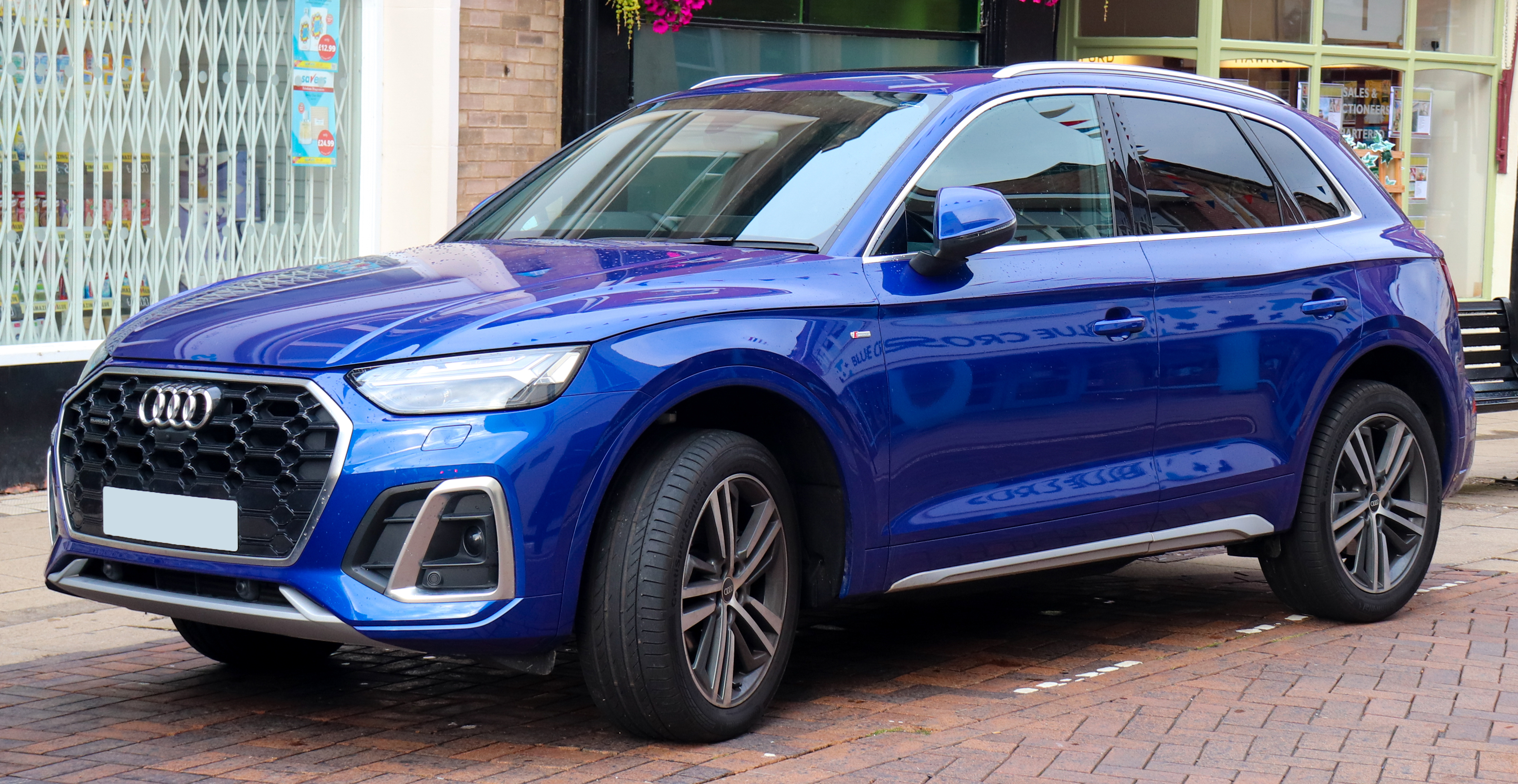
Audi Q5
"but I can target Porsche McCann and Audi Q5 for my GLC. We need to grow GLC sales like crazy."
The Audi Q5 is a luxury SUV. In this conversation, it’s mentioned as a comparable vehicle that Mercedes-Benz is targeting against when trying to sell more GLCs.
The Audi Q5 is a compact luxury SUV that competes in the same general shopping set as the Mercedes-Benz GLC. Here it’s used as a benchmark/target for marketing messaging aimed at customers.
connected services
"So, that's the way I think about giving them tools to help conversion. And that includes things like connected services, which drive retention, volume."
Connected services are the car’s online features. They let the vehicle communicate with apps and the internet, which can keep owners using the brand’s tools and updates.
Connected services are features that use an internet connection (often via the car’s built-in modem or a paired phone) to deliver functions like remote access, live traffic, and app-based vehicle control. In this context, they’re described as driving “retention” and volume by keeping customers engaged with the brand.
AI software defined features
"but in using connected services and AI software defined features to support dealers."
This means the car’s features are controlled by software, and some of that software uses AI to make the car smarter. The idea is that the car can learn and improve what it does for the driver.
“AI software defined features” refers to vehicle functions that are controlled by software and enhanced with AI, rather than being fixed hardware-only systems. The speaker links this to supporting dealers, suggesting the car and its digital ecosystem can adapt and improve experiences over time.
re-target the customer
"So, our websites now have quite a lot of AI embedded to actually target faster and re-target the customer, right?"
Re-targeting means showing ads again to people who already showed interest before. In this case, they’re saying the website uses AI to do that more quickly and effectively.
“Re-targeting” (retargeting) is a digital advertising technique where people who previously interacted with a website or offer are shown follow-up ads. Here, the speaker says Mercedes-Benz websites use AI to target faster and re-target customers.
AI embedded in the brain of the car
"that car's got AI embedded in the brain of the car to help make the driver experience more useful. Because think about how we operate in many walks of life now, but you get in the car and you still have to put the heated seats on."
They mean the car will have AI built in so it can learn from you. Instead of you manually setting everything every time, the car can help anticipate what you want.
This phrase describes onboard AI integrated into the vehicle’s control systems (often the infotainment and vehicle computers) to personalize and improve driver interactions. The speaker’s example is that the car can anticipate needs based on what the driver does and where they go.
operating system
"I think the first part is the operating system. So, the new tech inside the car is all new, developed with NVIDIA and other partners."
Think of the car’s operating system like the main software on a phone. It’s what everything else runs on—screens, apps, and some driving features.
In modern cars, an in-car operating system is the software platform that runs the infotainment, connectivity, and many driver-assistance features. When the CEO says the “operating system” is the first part, they mean the foundational software that enables new capabilities.
NVIDIA
"So, the new tech inside the car is all new, developed with NVIDIA and other partners. And I think we'll allow it to go to level 2++ driving, where geofencing permits."
NVIDIA makes computer chips that are especially good at AI. In this context, they’re helping Mercedes build the car’s advanced “brains” and software.
NVIDIA is a semiconductor and AI computing company whose chips are widely used for machine learning and autonomous-driving compute. Here, it’s mentioned as a partner helping develop the new in-car technology.
level 2++ driving
"And I think we'll allow it to go to level 2++ driving, where geofencing permits. And so, I think the brain in the car to be predictive and support the driver experience will be amazing."
This is a way of describing how “automated” the car is. Level 2++ usually means the car can do more of the driving work, but you still have to pay attention and be ready to take over.
“Level 2++” is an informal way to describe an advanced driver-assistance setup beyond basic Level 2. It typically implies the car can handle more driving tasks (like steering and speed control) more consistently, but still requires the driver to supervise.
geofencing
"And I think we'll allow it to go to level 2++ driving, where geofencing permits. And so, I think the brain in the car to be predictive and support the driver experience will be amazing."
Geofencing is like drawing an invisible boundary on a map. The car only turns on certain advanced driving features when you’re inside that boundary.
Geofencing uses GPS and maps to define specific geographic areas where certain automated driving features are allowed to operate. The idea is that the system only enables higher automation when it’s confident it’s in a mapped/approved zone.
Request an Explanation
Heard something you'd like explained? We'll add it to this episode.
Sign in to request explanations for terms you heard.
Want to learn more?
Browse our glossary for plain-English explanations of automotive terms, jargon, and concepts.
Help improve this episode
See something that's not quite right? Our annotations are AI-generated and can sometimes miss the mark. Click the flag icon on any annotation to suggest a correction.